
 |
 Last additions - Ephesus, 3/24/2006 Last additions - Ephesus, 3/24/2006 |
 |
|
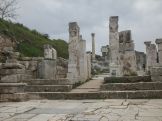
The Hercules Gate760 viewsOn Curetes Street.Jun 29, 2019
|
|
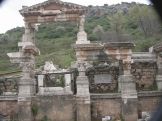
The Fountain of Trajan743 viewsDedicated (surprise!) to the Emperor Trajan (reigned AD 98-117), under whom the Roman Empire reached its greatest territorial extent.Jun 29, 2019
|
|
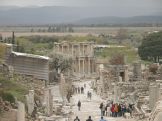
Houses on the Hill726 viewsThe modern-looking structures on the left of the Library were constructed to protect the ancient houses on the hill, which are roofless and open to the weather.Jun 29, 2019
|
|
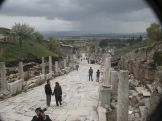
Curetes Street771 viewsLeading down to the Library of Celsus.Jun 29, 2019
|
|
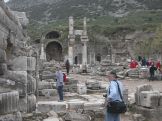
The Domitian Temple833 viewsChuck Mattox and Rick Gering contemplate what's left of the Temple. Jun 29, 2019
|
|
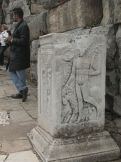
Bas-relief on Curetes Street705 viewsPastoral scene, most likely illustrating a well-known story out of Greek mythology, but I can't place it.Jun 29, 2019
|
|
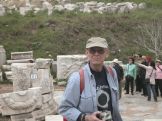
Chuck Mattox at Ephesus733 viewsThe notorious eclipse-chaser strikes again.Jun 29, 2019
|
|
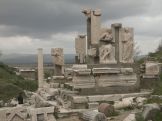
Memmius Tomb and Monument832 viewsErected by fiat of the Emperor Augustus in the first century AD to commemorate the achievements of Memmius' grandfather, the notorious dictator Sulla Felix.Jun 29, 2019
|
|
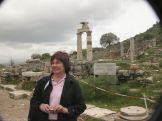
Sandie at the Prytaneion761 viewsThe Prytaneion held the sacred fire of Hestia, which was supposed to never be extinguished. To that end it was tended by priests called Curetes, for whom Curetes Street is named.Jun 29, 2019
|
|
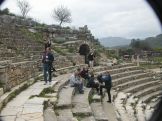
Attila at the Odeon807 viewsOur native guide, Attila Mahur, puzzles over how to don his raincoat while conversing with Pat Bush, Elouse Mattox, Jim Windlinger and Marvin Blaski.Jun 29, 2019
|
|
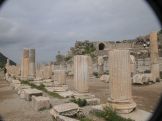
The Market Basilica684 viewsDating from the reign of Augustus (d. 14 AD), this was a 160-meter arcade which hosted both commercial activities and law courts. It was connected via three gates to the Varius Baths, presumably so people who felt soiled by their dealings with lawyers could quickly duck out to cleanse themselves.Jun 29, 2019
|
|
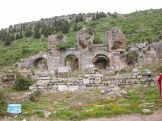
Varius Baths793 viewsThe Varius Baths (no, that's not a spelling error; Varius was the name of one of the builders) were first constructed during the Hellenistic period (334-129 BC) and expanded during Roman times, by Varius. Built of marble, the Baths consisted of three major sections: the Frigidarium (cold water), the Tepidarium (warm water) and the Caldarium (hot water), all with adjacent resting, sitting and reading rooms.Jun 29, 2019
|
|
| 58 files on 5 page(s) |
2 | |
|
|
|


