
 |
 Last additions - Aya Sophia, 4/1/2006 Last additions - Aya Sophia, 4/1/2006 |
 |
|

Reading room758 viewsThe X-shaped wooden stands held books for readers sitting on the benches.Oct 20, 2019
|
|
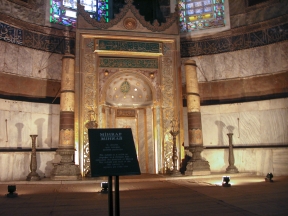
Candlesticks611 viewsThe two giant candlesticks on either side of the Mihrab were donated by Grand Vizier Ibrahim, who pillaged them from the Hungarian court church during the Turkish conquest of Buda in 1526.Oct 20, 2019
|
|
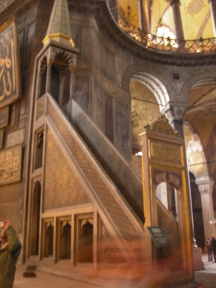
Minbar703 viewsThe pulpit from which the Imam delivered sermons on Fridays. Obviously not part of the original cathedral, the minbar was added during the reign of Murad III (1574–1595).Oct 20, 2019
|
|
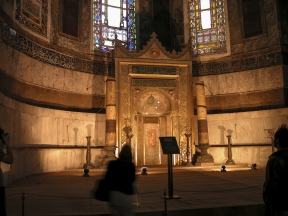
Mihrab707 viewsThe mihrab is a niche in the wall of a mosque that indicates the qibla, i.e. the direction of Mecca, toward which Muslims should face when praying. In Aya Sophia, it occupies the same spot as the Christian altar before the Turkish conquest.Oct 20, 2019
|
|
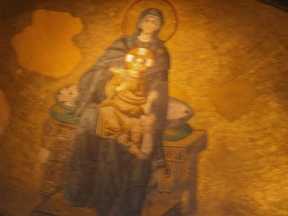
Apse Mosaic - Virgin and Child721 viewsDates from 867 AD. May be a reconstruction of an original mosaic destroyed during the Iconoclastic period of Byzantine history, when representations of deities and saints were considered to be idols and thus outlawed.Oct 20, 2019
|
|

The Apse687 viewsThe Virgin and Child mosaic appears at the top of the apse, which also features stained-glass windows and other decor, both Christian and Islamic.Oct 20, 2019
|
|
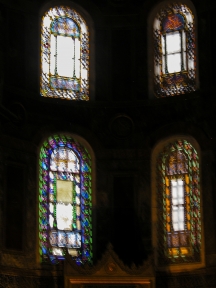
Colorful Windows649 viewsFour of the stained-glass windows admitting light into the apse.Oct 20, 2019
|
|
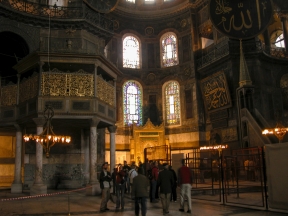
Sultan's Loge742 viewsThe hexagonal structure to the left of the apse was reserved as a place of prayer for the Sultan. It was part of the restoration of 1847-49 undertaken by Sultan Abdulmajid.Oct 20, 2019
|
|

Lustration Urn696 viewsDavid Lindquist with his mascot bear Hero kneels next to one of two huge urns carved from single blocks of marble. They date from the Hellenistic era - 300 BC or so - but were brought here from Pergamon during the reign of Sultan Murad III (r. 1574-1595).Oct 20, 2019
|
|
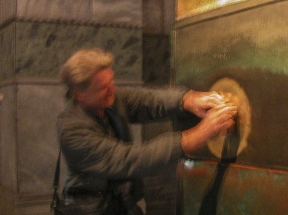
Trying His Luck713 viewsDavid Lindquist tries his luck at the Wishing Column. According to the legend, many people have been cured of illness after touching this column. David wasn't sick at the time, so this was not a valid test of that part of the legend.Oct 20, 2019
|
|

Stone Ramp759 viewsThe dimly-lit passageway from the upper gallery to the ground floor.Oct 20, 2019
|
|
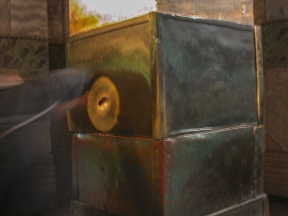
The Wishing Column711 viewsThis column, located in the northwestern part of Aya Sophia, has a hole in the middle left uncovered by the bronze plates surrounding it. Legend has it that if one puts one's thumb in the hole while making a wish, the wish will be granted.Oct 20, 2019
|
|
| 59 files on 5 page(s) |
2 | |
|
|
|


