
 |
 Most viewed - Aphrodisias, 3/26/2006 Most viewed - Aphrodisias, 3/26/2006 |
 |
|
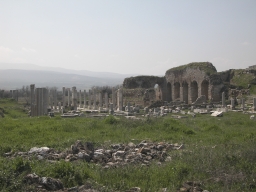
South Agora and Baths of Hadrian824 viewsThe Baths of Hadrian, built across the west end of the South Agora, were massively constructed from large tufa-like blocks faced with marble veneer and consist of five great barrel-vaulted chambers, with an imposing colonnaded court in front.
|
|
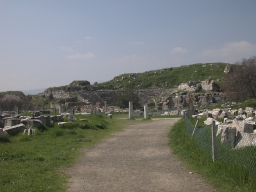
Amphitheater and Acropolis775 viewsLooking west. The Amphitheater was built into the side of the Acropolis.
|
|
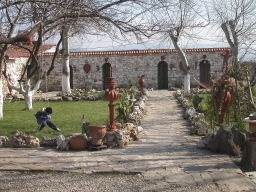
The Anatolia Restaurant - side entrance759 viewsThe side court of the restaurant, the entrance to the restrooms.
|
|
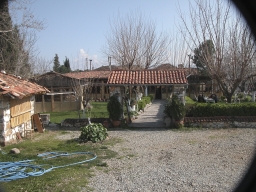
Anatolia Restaurant - Main Entrance752 viewsEntrance to the Dining Room.
|
|
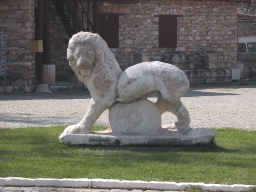
Stone Lion750 viewsOn display near the Aphrodisias Museum.
|
|
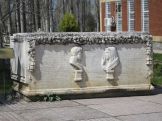
Sarcophagus748 viewsDon't know whose.
|
|
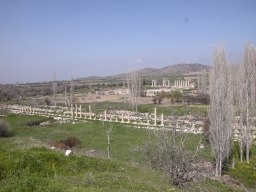
North Agora viewed from the Acropolis748 viewsThe north agora is a large public square (202 X 72 m), originally enclosed by stoas (porches) on all sides. Parts of the south and east stoas have remained standing since antiquity, and the north stoa was partially uncovered in excavations in the 1960s. Archaeologists believe this was the original center of Hellenistic Aphrodisias.
|
|
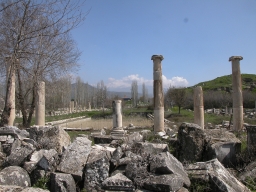
Skinny-Dipping Pool742 viewsIn the pool enclosed by the Portico of Tiberius, devotees of Aphrodite could frolic in the nude and disport themselves in all manner of lascivious activities. (Of course I just made that up.)
|
|
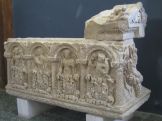
Intricate Stonework735 viewsA piece in the Aphrodisias Museum.
|
|
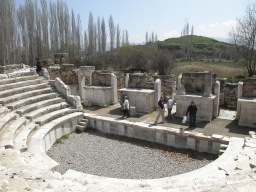
The Bouleterion, or Odeon734 viewsCity council meetings were held here. Originally had a vaulted ceiling and seated 1,750 people, but the upper seating rows have collapsed, along with the roof. Dates from the late second or early third century AD.
|
|
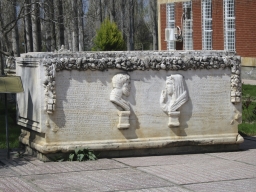
Sarcophagus734 viewsDon't know whose.
|
|
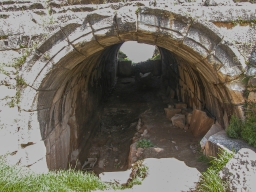
The Stadium at Aphrodisias732 viewsThe culvert-like stadium entrance.
|
|
|
|
|


