
 |
 Most viewed - Hierapolis-Pamukkale, 3/27/2006 Most viewed - Hierapolis-Pamukkale, 3/27/2006 |
 |
|
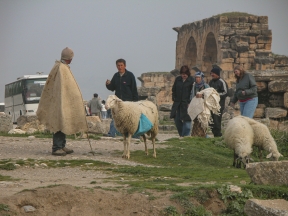
Sheep, Locals and Tourists724 viewsCherie and Sandie hang out with the locals and their ewes.
|
|
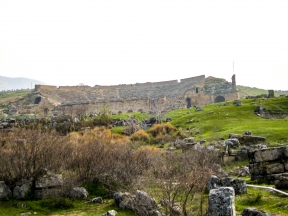
The Theater at Hieropolis715 viewsConstructed in the reign of Hadrian (117-138 AD), the Theater seated 15,000 people and was one of the largest and finest in the ancient world. It was wrecked by an earthquake in the 7th century AD.
|
|
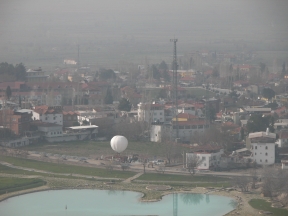
Pamukkale Village715 viewsThe town at the foot of the cliffs is shrouded in mist.
|
|
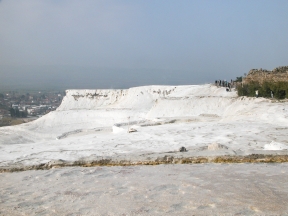
The White Cliffs of Pamukkale714 viewsThe hot springs located at Pamukkale are the source of mineral-rich water which flows over the cliffs, depositing calcium carbonate which hardens into travertine.
|
|
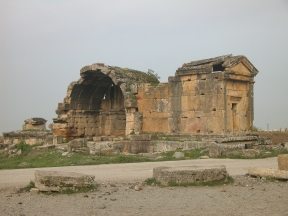
The Temple of Apollo708 viewsDeliberately built on an active earthquake fault, which emits carbon dioxide gas. See the description for the Plutonion.
|
|
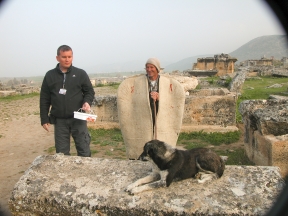
Shepherd706 viewsThe Hierapolis necropolis serves as a grazing ground for local sheep. Here Attila talks to a shepherd and his dog.
|
|
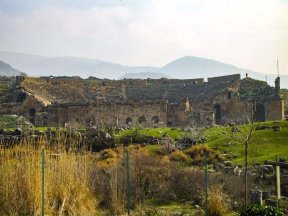
The Theater at Hieropolis699 viewsThe theater was undergoing restoration during the time we visited. You could still walk up the hill to see it, and some did - and shot some magnificent pictures - but Sandie and I did not, which I regret.
|
|
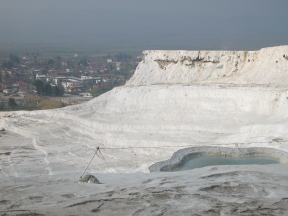
Travertine gel697 viewsWhen water from the hot springs, supersaturated with calcium carbonate, reaches the the surface, carbon dioxide degasses from it, and the mineral precipitates out as a soft gel - hence the slipperiness of the wading pools. Eventually the gel hardens into travertine.
|
|
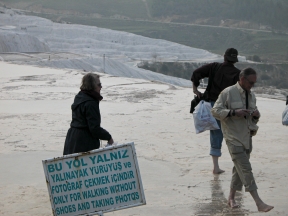
Barefoot in Pamukkale696 viewsChuck and Elouise Mattox wade in the pools of Pamukkale, where shoelessness is mandatory.
|
|
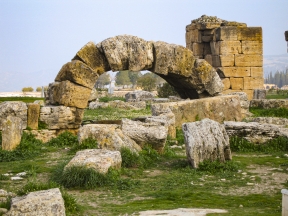
Unidentified Structure695 viewsI have no idea what this unique and bizarre edifice was called, but Sandie thought it was worth a picture, and so do I.
|
|
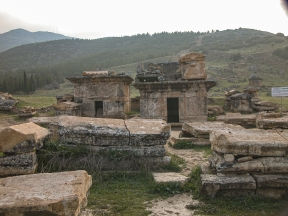
The Hierapolis Necropolis689 viewsTombs of rich people. Potter's field this ain't.
|
|
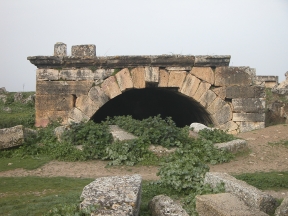
The Plutonion684 viewsThe Gate to the Underworld, next to the Temple of Apollo. Leads to a small cave filled with suffocating carbon dioxide gas. The local priests knew how to find pockets of oxygen, so that they could emerge unscathed, and pretend to be under divine protection.
|
|
|
|
|


