
 |
 Most viewed - Astronomical Images |
 |
|
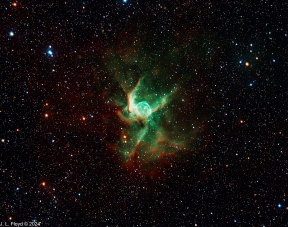
NGC2359 - Thor's Helmet698 viewsAn emission nebula in the constellation Canis Major. About 12,000 light-years distant and 30 light-years in size. Associated with the Wolf-Rayet star WR7.
|
|
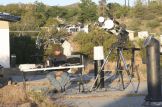
Squatter 697 viewsSomeone beat me to my pad, so I went up to the Upper Pads area, where I got a better view anyway.
|
|
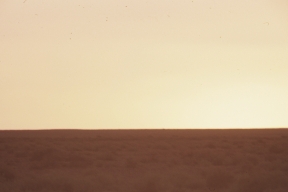
Gone697 viewsThe Sun has set. The flat and featureless terrain of the Outback stretches far away.
|
|
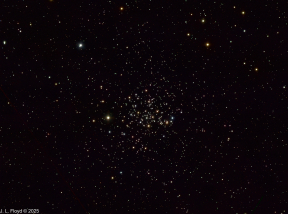
Messier 67 - Open cluster in Cancer697 viewsSometimes called King Cobra or Golden Eye Cluster. Distance 2600-2900 light-years. Estimated age 3.2 to 5 billion years.
|
|
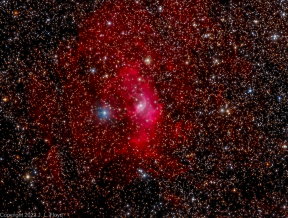
NGC7635 - The Bubble Nebula - H-alpha enhanced version696 viewsAn emission nebula in the constellation Cassiopeia. The "bubble" is created by the stellar wind from a hot, massive star within a molecular cloud which contains the expansion of the bubble, preventing it from dissipating, and is also itself excited by the star. The nebula is 7 light years across and 7100 light-years away.
|
|

NGC 4631, The Whale Galaxy694 viewsA barred spiral galaxy in the constellation Canes Venatici. Contains a central starburst - a region of intense star formation. The "calf" - the nearby dwarf galaxy - is NGC 4527.
|
|
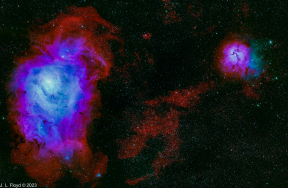
M8, the Lagoon Nebula, and M20, the Trifid Nebula694 viewsTwo jewels of the summer sky captured in the same frame with a bridge of nebullosity between them.
|
|

Partial Phase - One Hour before Totality693 viewsSecond Contact minus 59 minutes, 19 seconds
|
|
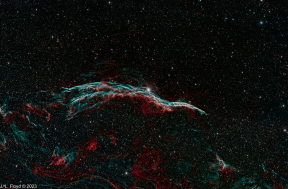
NGC6960 - The Western Veil Nebula693 viewsPart of the Cygnus Loop, a supernova remnant in Cygnus. Also known as the Witches’ Broom.
|
|

The Upper Pad area692 viewsI wound up camping out on the Upper Pad area at the OCA Anza site, where I had plenty of company.
|
|
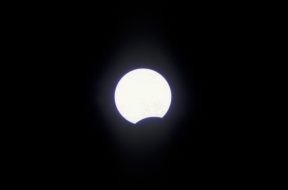
Pre-Totality 2692 viewsAnd here face down beneath the sun
And here upon earth’s noonward height
To feel the always coming on
The always rising of the night:
|
|
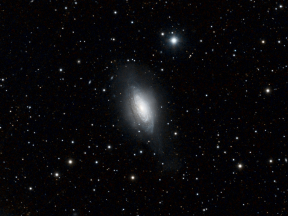
NGC 3521, "flocculent" spiral galaxy in Leo691 viewsNGC 3521 is termed a "flocculent" spiral galaxy because it has patches or clumps of stars breaking up the continuity of the spiral arms. Self-propagating star formation is thought to account for the patchiness. The galaxy lies about 26 million light-years away from us.
|
|
| 257 files on 22 page(s) |
|
|
|
|
|
|
|
|
16 | |
|
|
|
|
|
|


