
 |
 Most viewed - Astronomical Images Most viewed - Astronomical Images |
 |
|
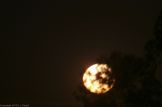
It's almost over639 viewsThe Sun is obscured by a bush as it nears the horizon.
|
|
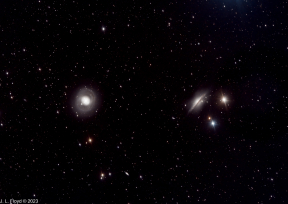
M77 and Friends637 viewsBarred spiral galaxy in Cetus (left side of picture), about 47 million light-years from Earth. A Type 2 Seyfert galaxy with an active nucleus. The spiral galaxy at right is NGC 1055. The spiral galaxy NGC1072 is also seen as a tiny oval near the bottom center of the frame.
|
|
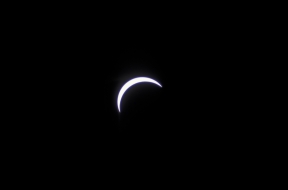
Pre-Totality 8635 viewsAnd over Sicily the air
Still flashing with the landward gulls
And loom and slowly disappear
The sails above the shadowy hulls
|
|
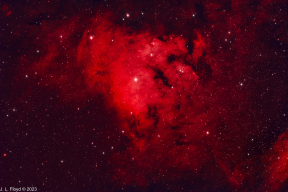
NGC 7822 - Star-forming region in Cepheus635 viewsIncludes the emission nebula Sharpless 171 and the star cluster Berkeley 59. Around 3000 light-years from Earth.
|
|

M14 - Globular cluster in Ophiuchus634 viewsAlso known as NGC 6402. 30,000 light-years distant. Contains several hundred thousand stars.
|
|
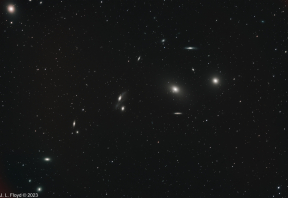
Markarian's Chain of Galaxies633 viewsA chain of galaxies in the Virgo Cluster, named after a Soviet astronomer. Right to left: M84, M86, NGC 4477, NGC 4473, NGC4461, NGC 4458, NGC4438 and NGC4435.
|
|
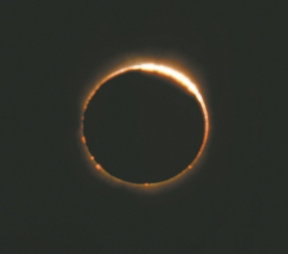
As good as it gets631 viewsThis image, captured near the end of totality, shows the rominences as well as the incipient diamond ring,
|
|
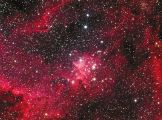
IC 1805 - The Heart Nebula in Cassiopeia630 viewsIC 1805, the Heart Nebula, lies 7,500 light-years away from Earth in the Perseus arm of the Milky Way. It is an emission nebula, drawing its radiance from Melotte 15, the cluster of bright stars in the center of this image.
|
|
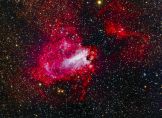
M17 - The Swan Nebula628 viewsIn the constellation Sagittarius. Also known as the Omega or Horseshoe Nebula. A prolific star-forming region, lying 5000-6000 years from Earth.
|
|
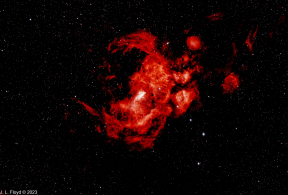
Sharpless2-11 - The War and Peace Nebula in Scorpius625 viewsHII region in Scorpius. Also known as Gum 66 and NGC 6357; ionised by the Pismis 24 and AH03 J1725−34.4 star clusters.
|
|
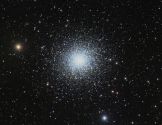
Messier 13 - Hercules Globular Cluster623 views145 light-years in diameter, consisting of several hundred thousand stars, this is the most famous globular cluster in the Northern Hemisphere and is about 22,000 miles from Earth.
|
|
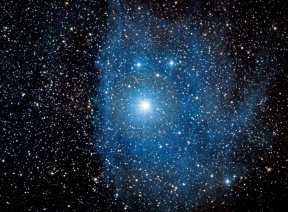
IC4592 - Blue Horsehead Nebula 622 viewsReflection nebula in the constellation Scorpius, lit by the giant septuple star Jabbah (Nu Scorpii). This photo shows only part of the nebula, so the horsehead shape is not evident here.
|
|
| 257 files on 22 page(s) |
|
|
|
|
|
|
|
|
|
|
|
|
20 | |
|
|


