
 |
 Most viewed - Astronomical Images Most viewed - Astronomical Images |
 |
|

IC417 and NGC1931 - The Spider and the Fly761 viewsEmission nebula in Auriga, 100 light-years across and 10,000 light-years from Earth. The Fly (NGC1931) is about 7,000 light-years away.
|
|
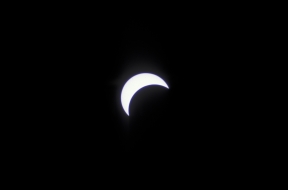
Pre-Totality 6760 viewsAnd Baghdad darken and the bridge
Across the silent river gone
And through Arabia the edge
Of evening widen and steal on
|
|
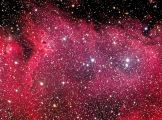
IC 1848 - The Soul Nebula757 viewsAn emission nebula in Cassiopeia, eastern neighbor of the Heart Nebula, IC 1805. About 6,500 light-years away, it spans 100 light-years, and is too big at that distance to fit into my telescope's field of view, so only part of it is seen here.
|
|
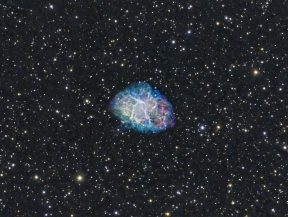
M1 - The Crab Nebula, narrowband version757 viewsA Hubble palette rendition of the remnant of the supernova seen by Chinese astronomers in 1054 CE.
|
|
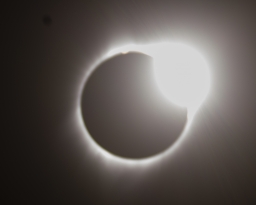
Diamond Ring756 viewsA blazing diamond ring heralds Third Contact, the end of totality.
|
|
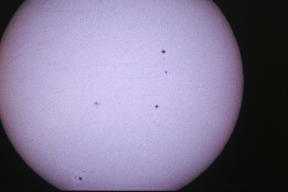
Sunspots756 viewsThe Sun in this early-pre-totality eyepiece-projection shot is too big to fit into the frame, but the sunspots do show up well.
|
|
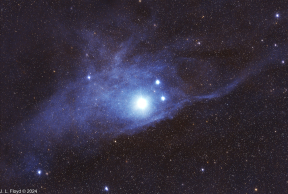
IC4592, the Blue Horsehead Nebula756 viewsReflection Nebula in Scorpius, lit up by Nu Scorpii. About 400 light-years away.
|
|
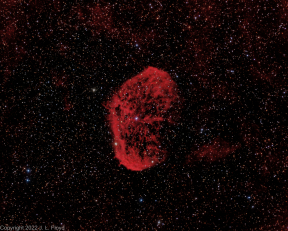
NGC 6888 - The Crescent Nebula755 viewsAn emission nebula in the constellation Cygnus, about 5000 light-years away from Earth; formed by the fast stellar wind from the Wolf-Rayet star WR 136 colliding with and energizing slower-moving matter ejected by the star when it became a red giant around 250,000 to 400,000 years ago.
|
|
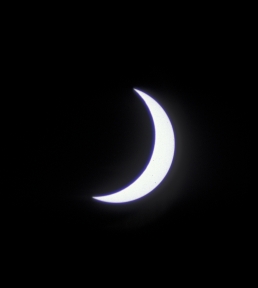
Post-Totality 4754 viewsAt this point I ran out of film, so I didn't make it to Fourth Contact with the post-totality images.
|
|
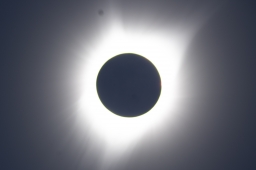
Totality - a few seconds after Second Contact753 viewsAfter the eclipse went total, I had to try several different exposure settings to get it right - 1/2 second seemed to work best.
|
|
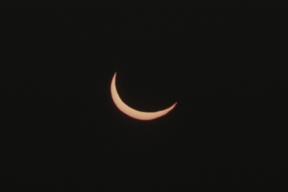
Post-Totality 2753 viewsThe Moon is rising, the Sun is setting. How will this end?
|
|
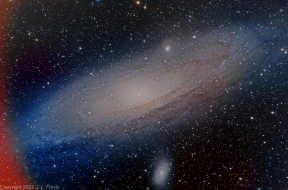
M31 - The Andromeda Galaxy753 viewsA wide-field view of the Andromeda Galaxy, 2.5 million light years away and 152,000 light years in diameter. Satellite galaxies M32 (above right of center, on rim of M31) and M110 (bottom center) also appear in the frame. Red swath at left was caused by a reflection of the red power-on light on the ZWO ASI2600MC camera, which sits in front of the telescope.
|
|
| 257 files on 22 page(s) |
|
3 | |
|
|
|
|
|
|
|
|
|
|
|
|
|


