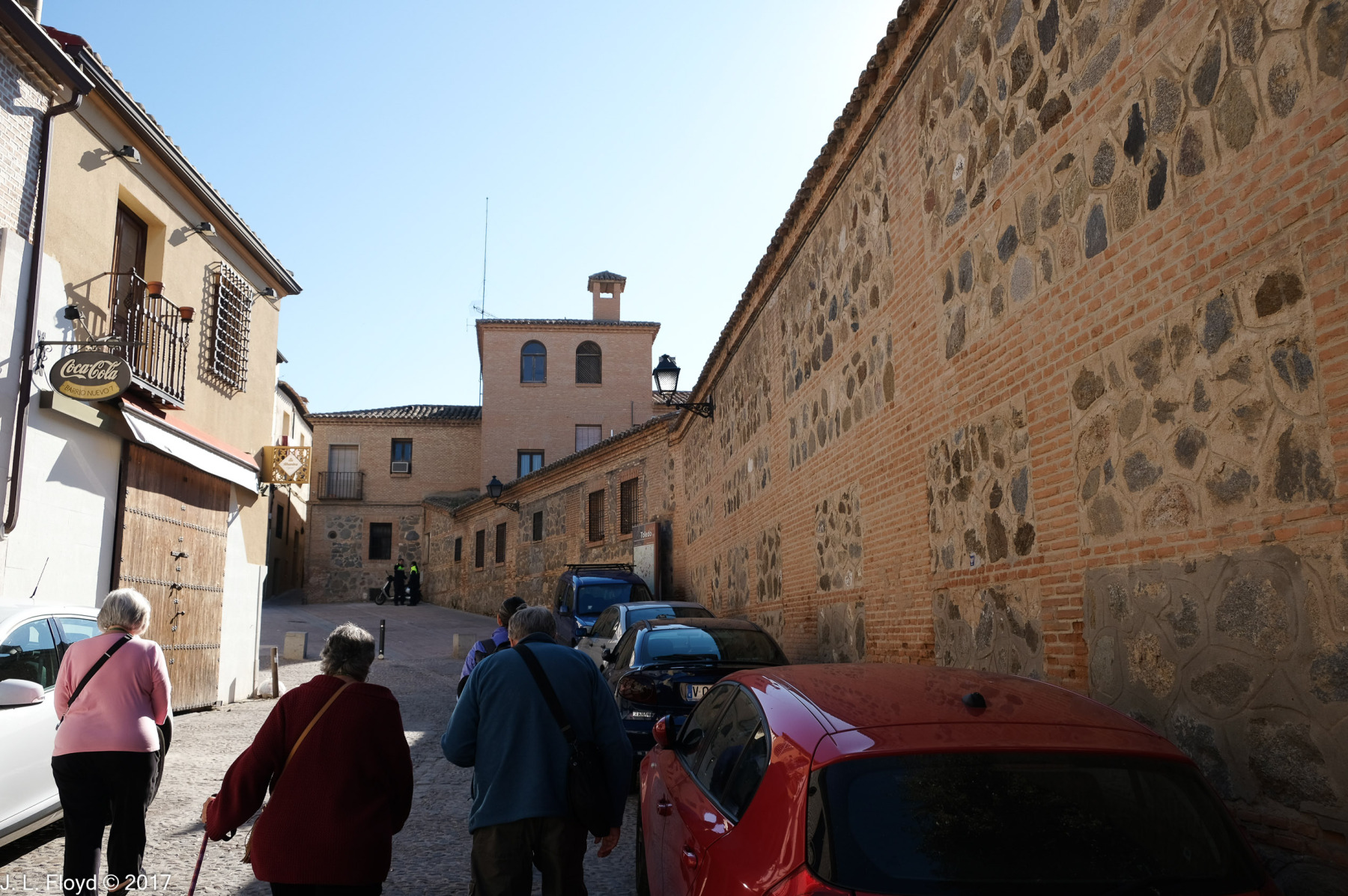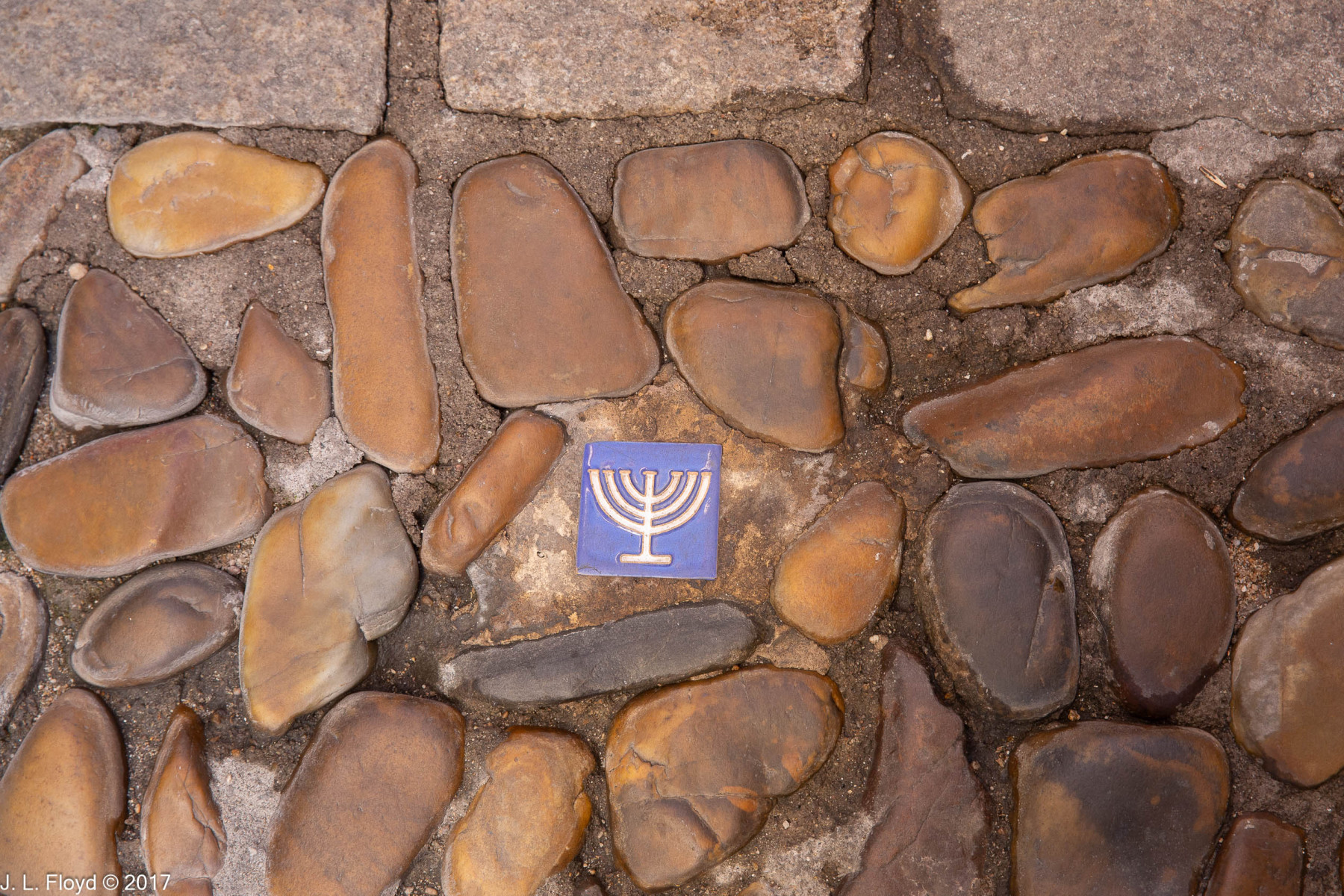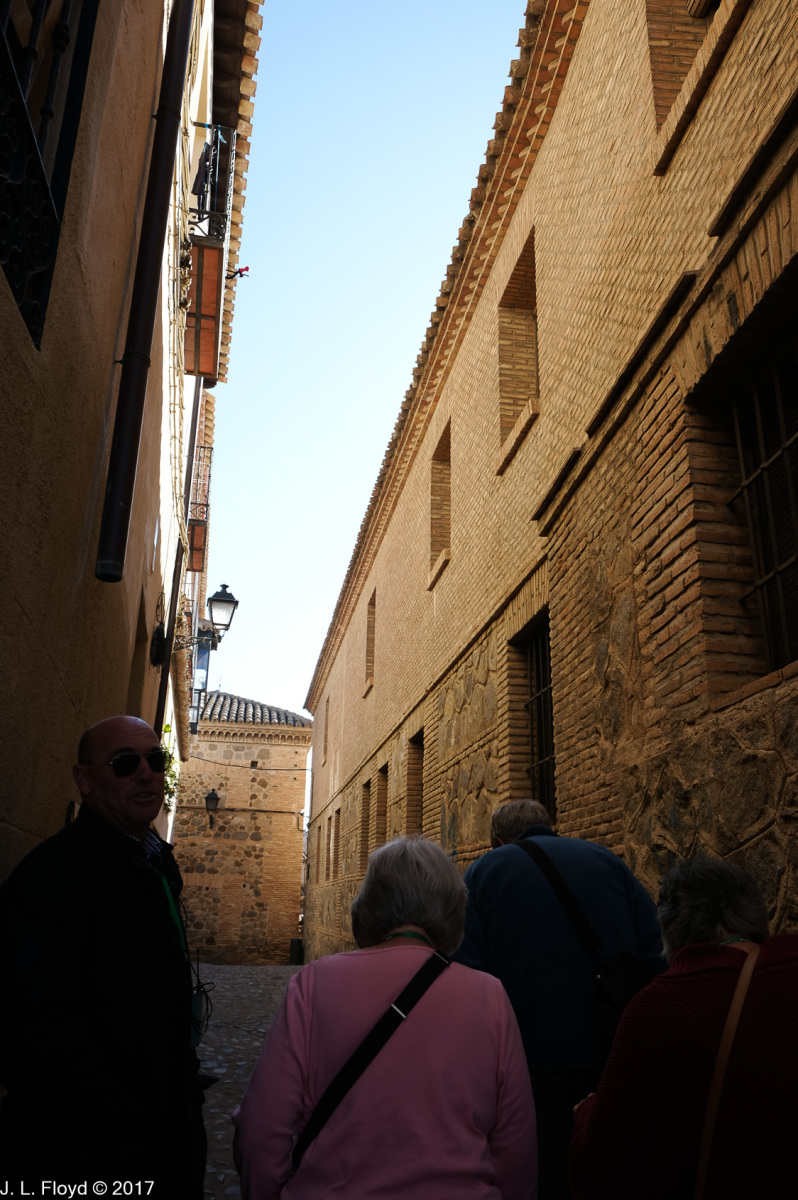
We had been in the Jewish Quarter (Judería) of Toledo ever since we entered the Old City, but up to this point we had seen little evidence of a Jewish presence. This was not surprising since all the Jews had been expelled five centuries earlier and to this day the Jewish community of Toledo is virtually nonexistent.
But all that changed with our arrival at the Synagoga de Santa Maria la Blanca – the Synagogue of Saint Mary the White – just past the Monastery of San Jose de los Reyes and the Escuela de Arte. It proved to be a stunning reminder of what was once the wealthiest and most populous Jewish community of the Kingdom of Castile.
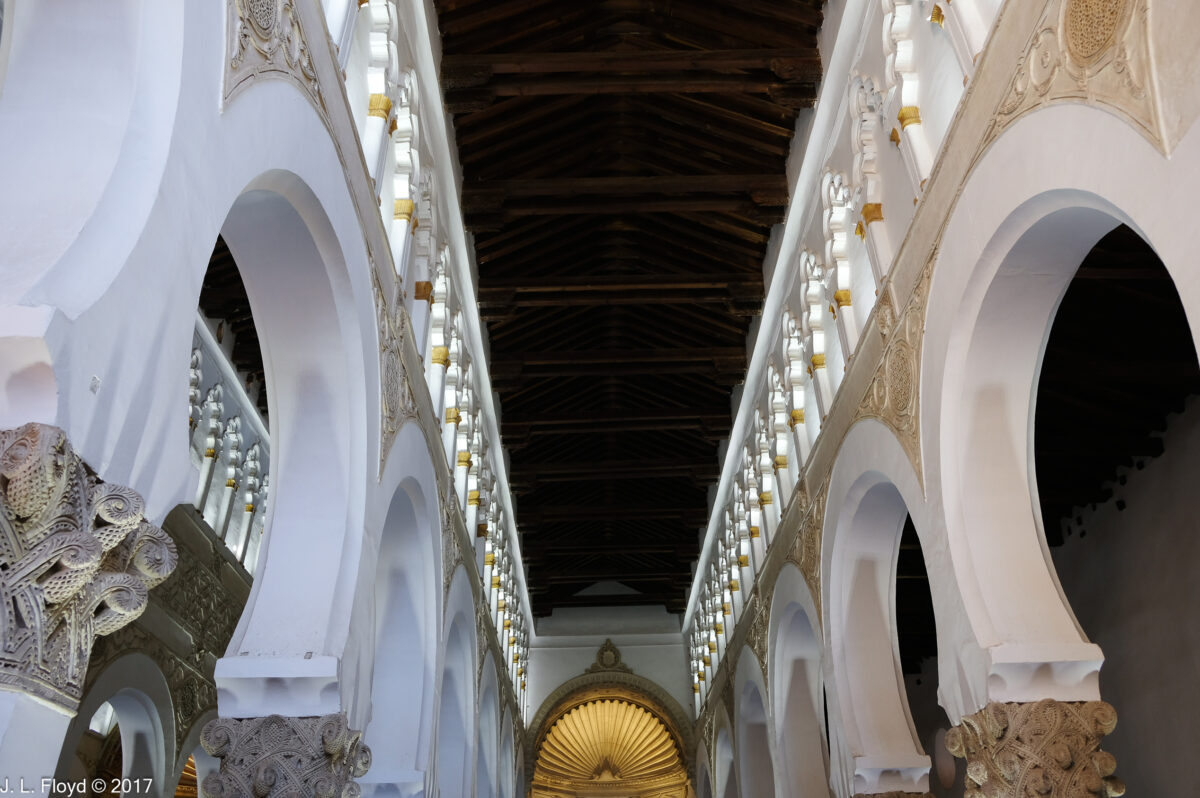
The Synagogue is a masterpiece of Mudéjar architecture. Although Toledo had been taken by the Christians from the Moors in 1085, at the time the Synagogue was built – probably sometime between 1180 and 1205 – the Berber dynasty of the Almohads still ruled southern Spain, and their architectural influence is evident in the plain white interior walls, the soaring arcades of horseshoe arches and the use of brick pillars instead of marble columns. Although constructed as a synagogue, Santa Maria la Blanca has much in common with a mosque.
The current name of the place, which seems incongrous – synagogues are Jewish places of worship, whereas “Santa Maria” is a Christian name – is a result of historic circumstance. About a century after its construction, in 1391, a terrible pogrom erupted in Toledo, in the aftermath of which the Catholic Church expropriated the Synagogue and consecrated it as a church. An effigy of the Virgin Mary was placed in the church, and that was the origin of the name Santa Maria la Blanca.
Nowadays, although Santa Maria la Blanca no longer serves as a church, it is still under the aegis of the Archdiocese of Toledo, which maintains it as a museum and tourist attraction. It is the third most visited such attraction in Toledo.
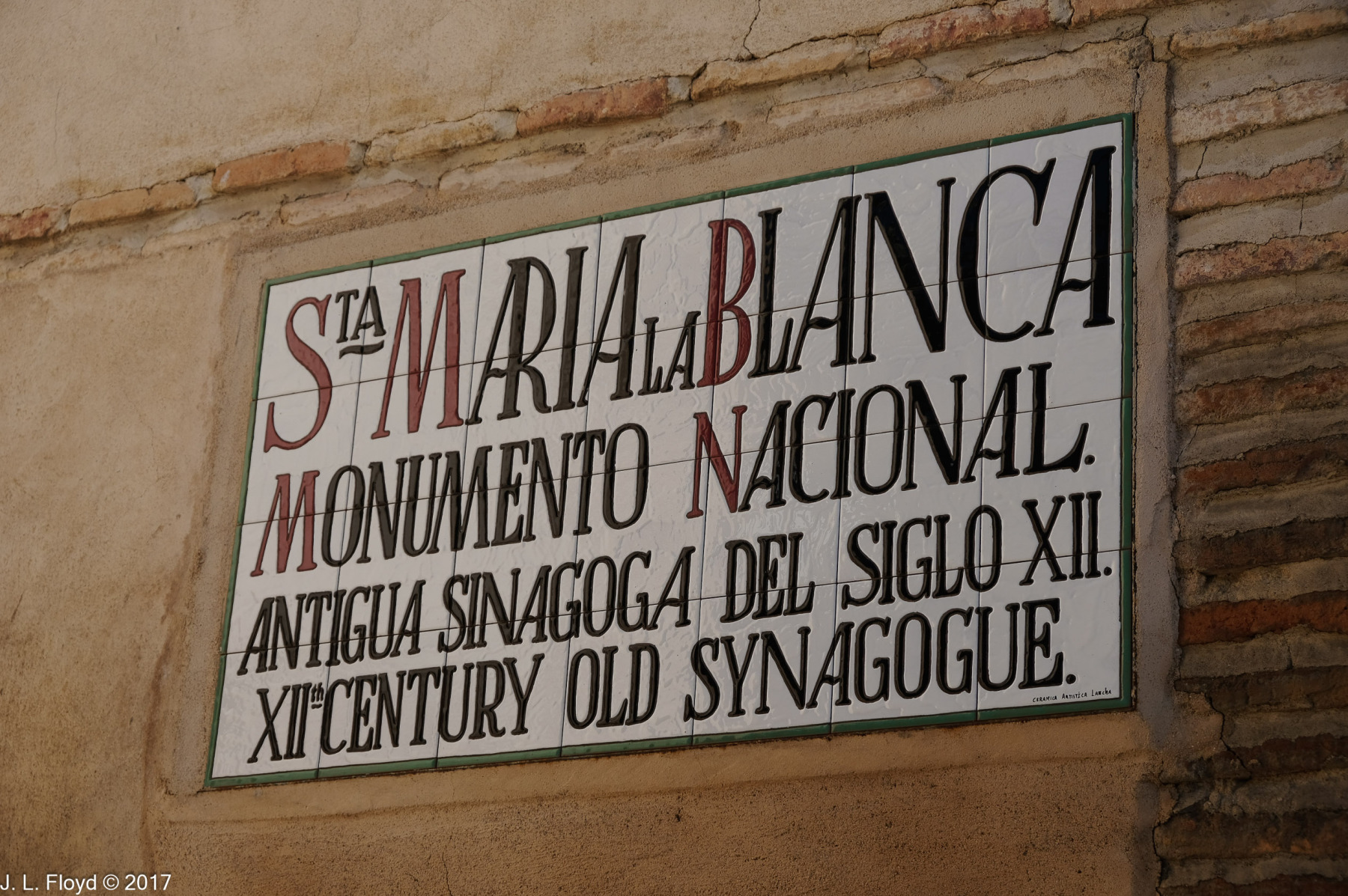
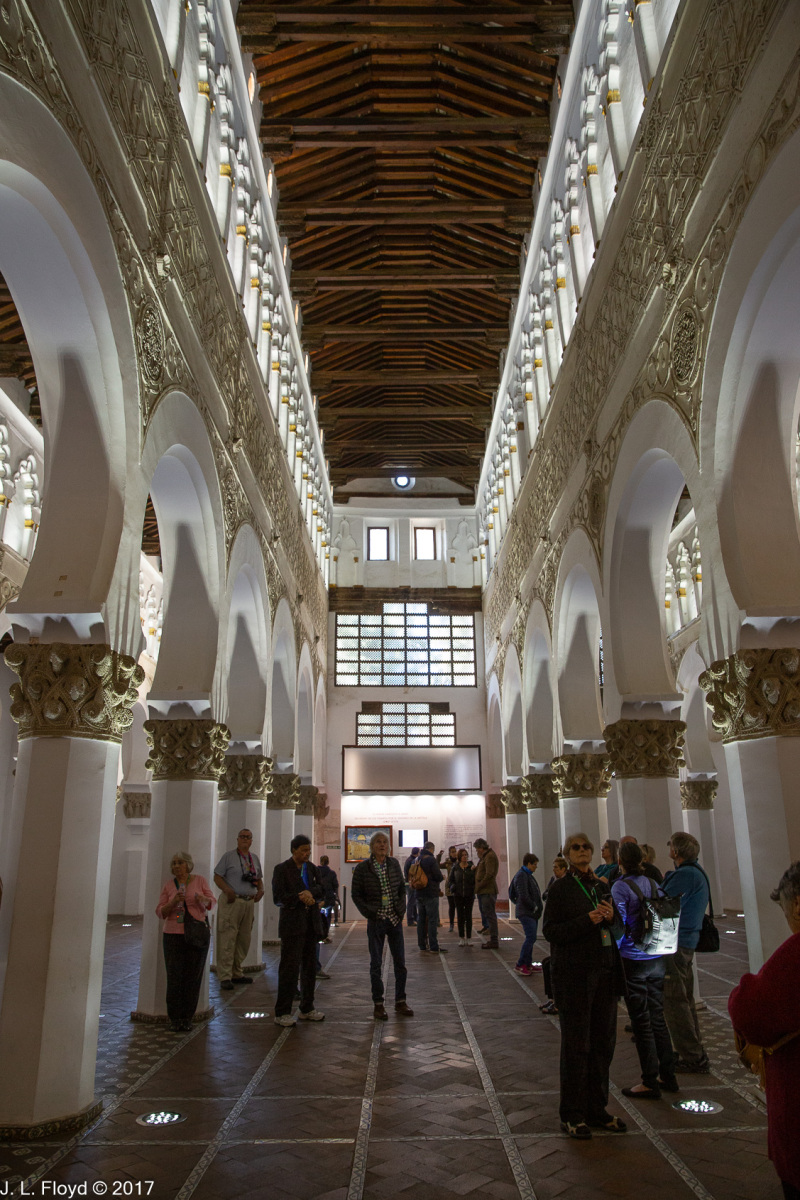
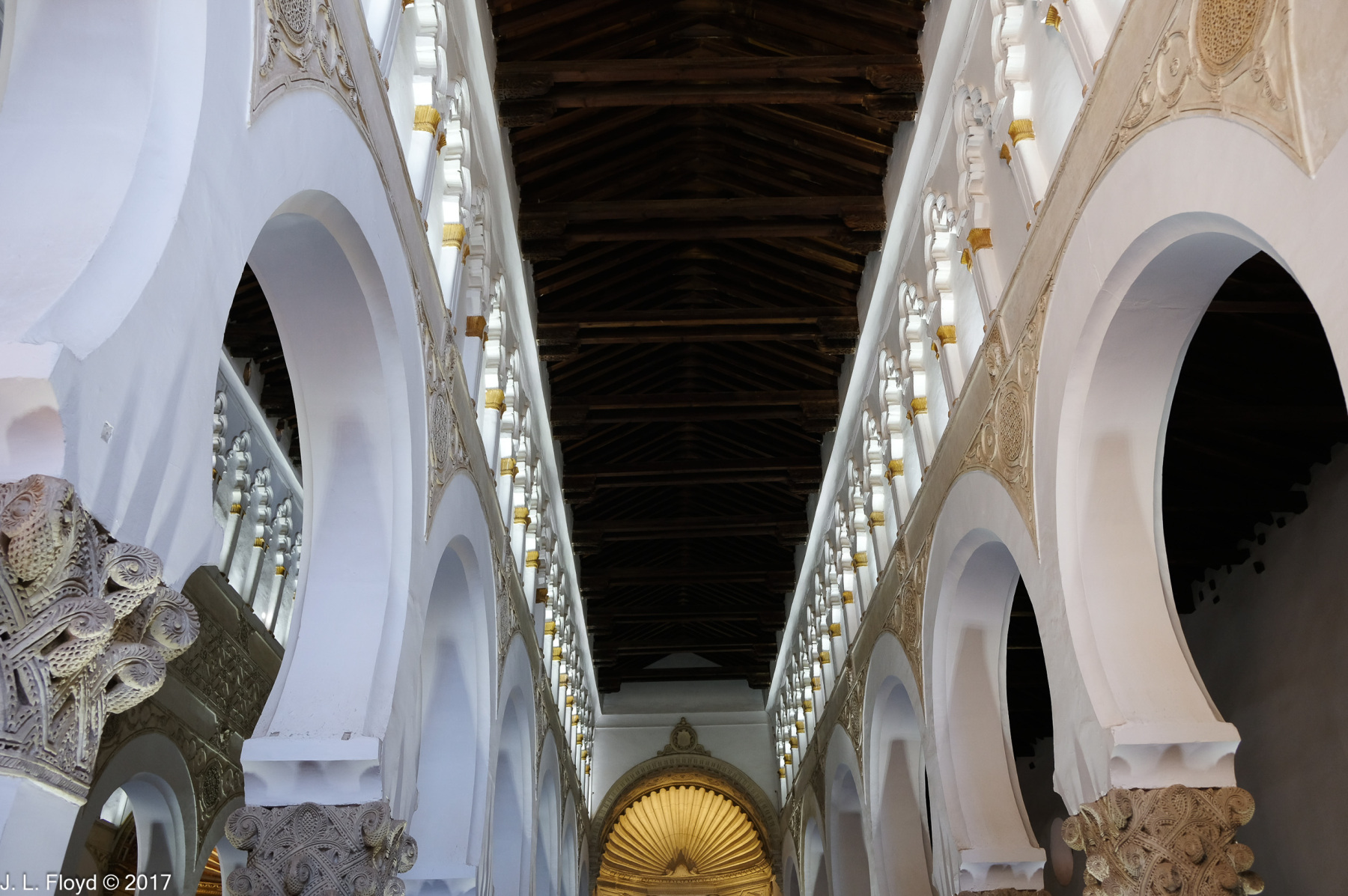
As one approaches the Synagogue, nothing unusual is visible – a squarish brick building with plain walls. Only an attractive tile name-plaque near the entrance, obviously of modern vintage, identifies the place. Stepping inside, however, the visitor encounters astonishing splendor. The floor plan is an irregular quadrilateral, with the east side slightly longer than the west. The interior seems much more spacious than the actual dimensions – length of 26–28 meters (85-92 feet) and width of 19–23 meters (62-75 feet) would suggest. It is divided into five parallel naves, with the central one slightly larger than the remaining four. The naves are separated by four rows of octagonal piers (as distinguished from columns, which are cylindrical) which support arcades of horseshoe arches.

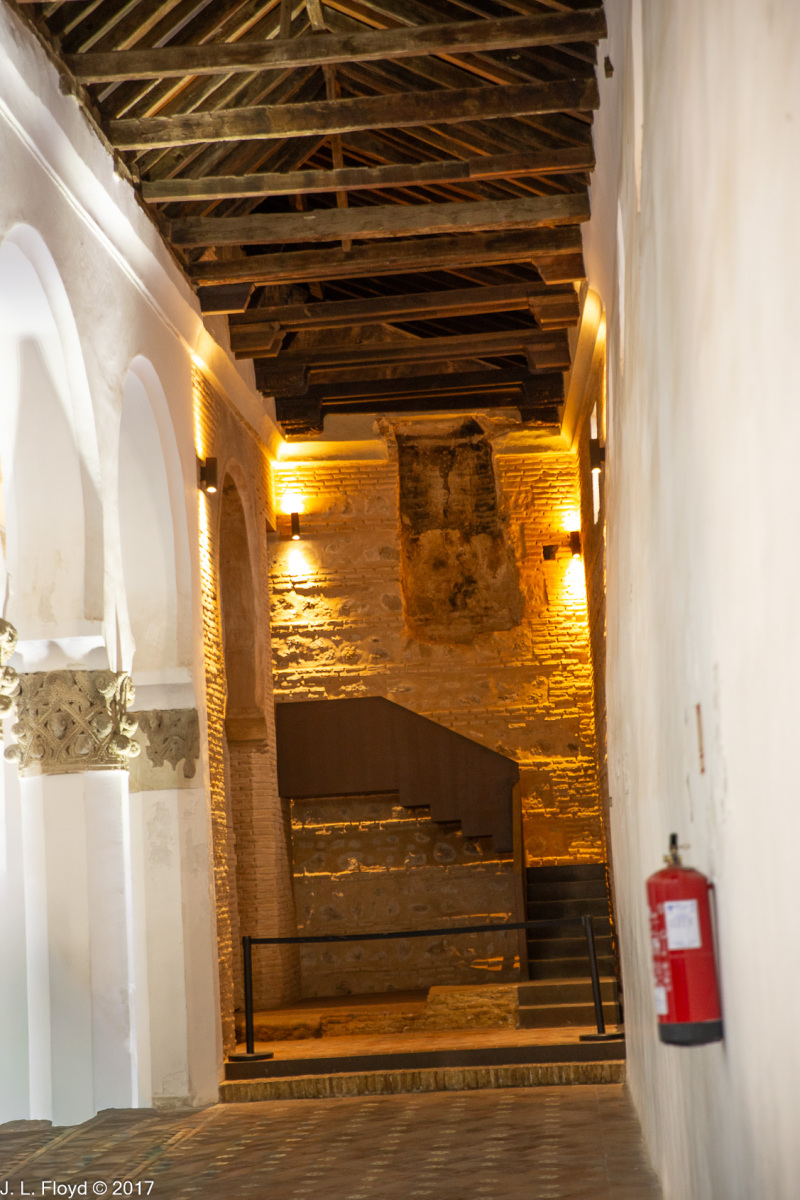
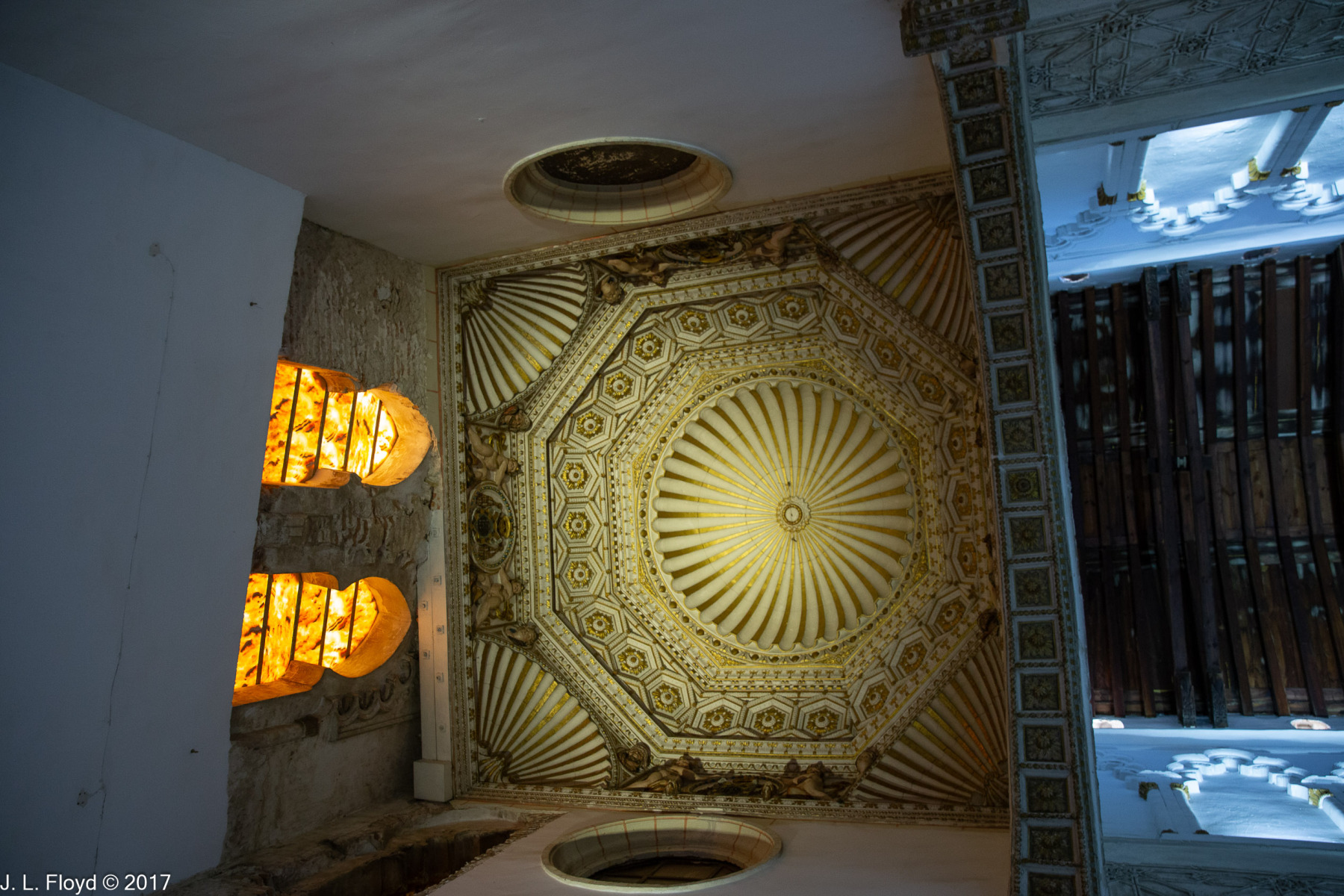
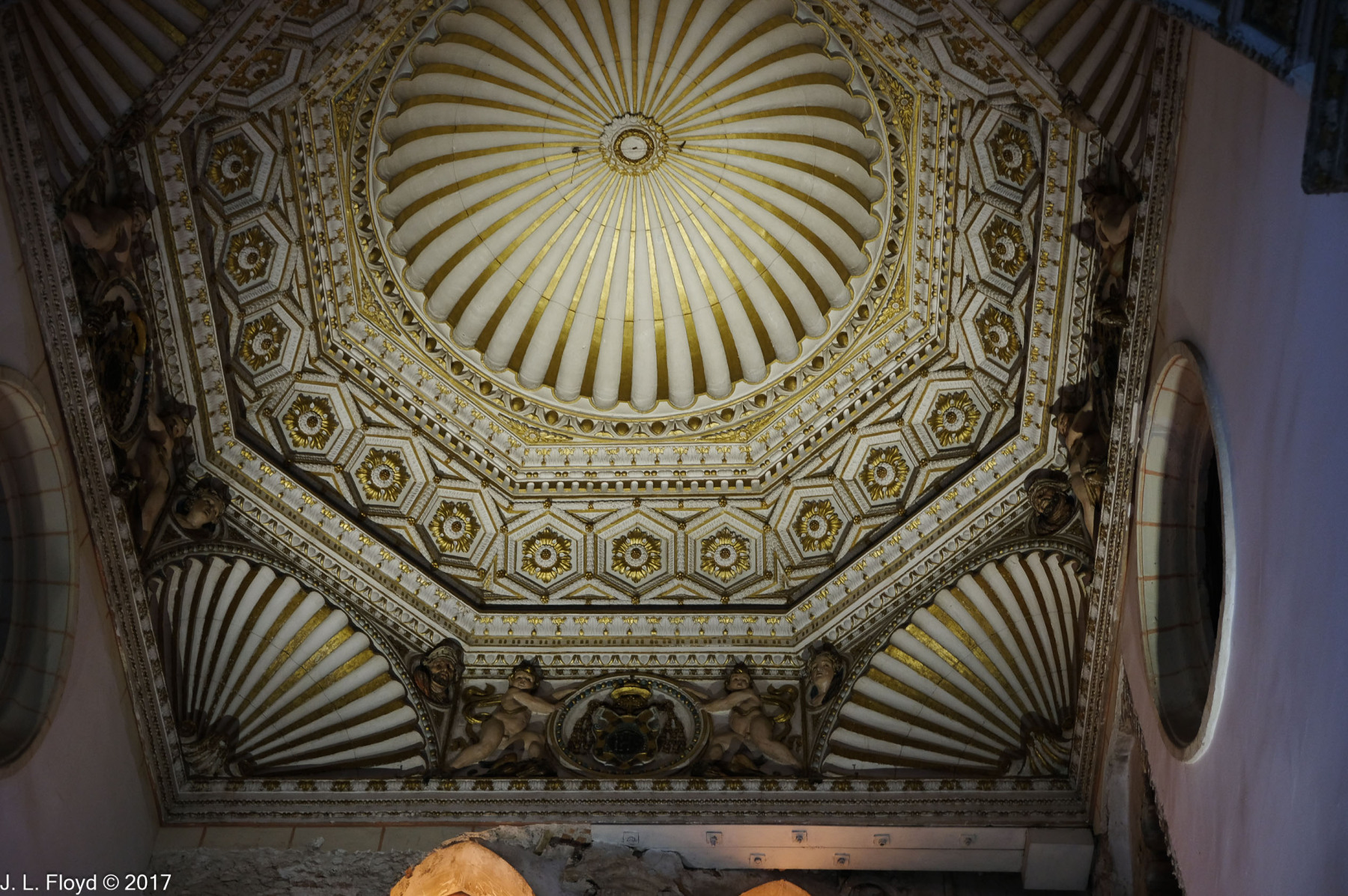
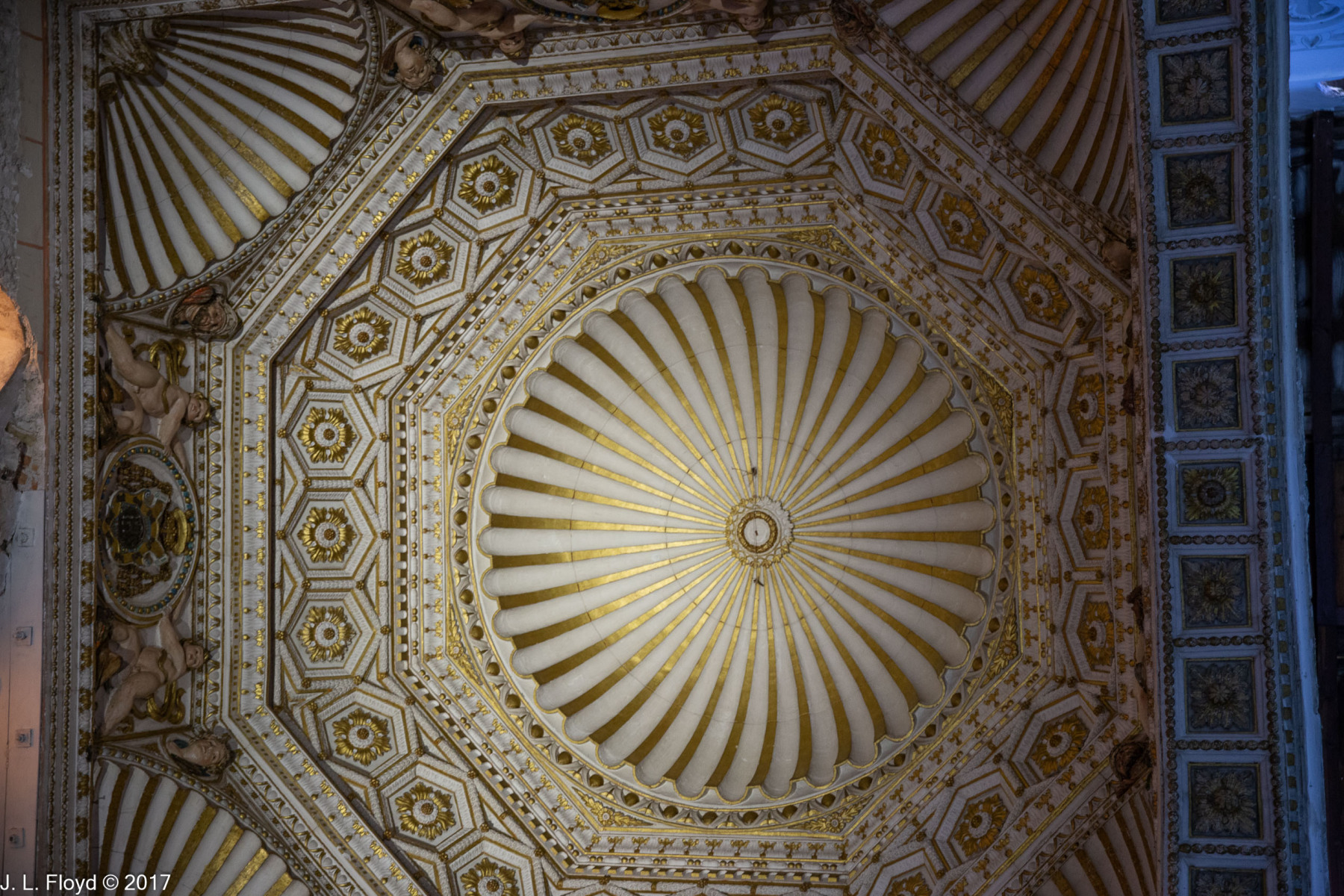
Sometime in the 16th century, probably between 1550 and 1556, three small Renaissance-style apses were added to the back of the building to serve as chapels. The apses feature scalloped ceilings, elaborate decoration and in some cases vegetal fresco-type artwork (maybe retained from the original Mudéjar decor?).
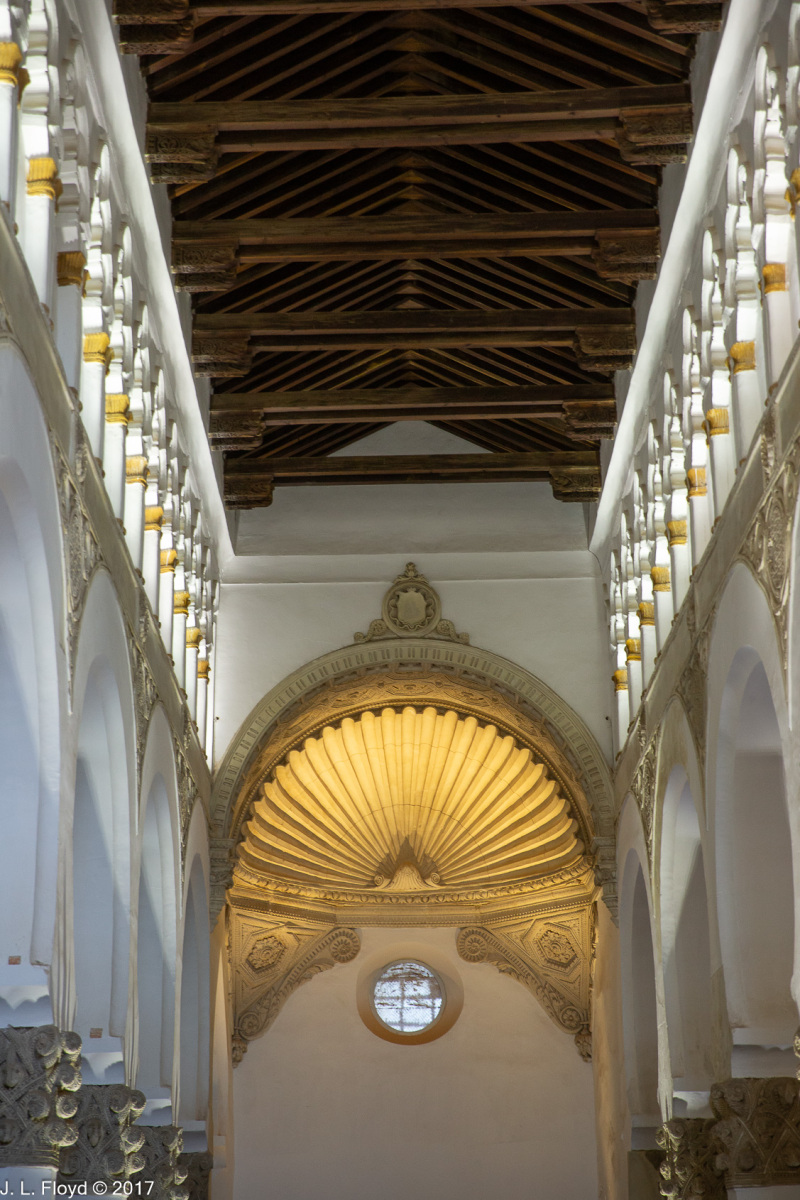
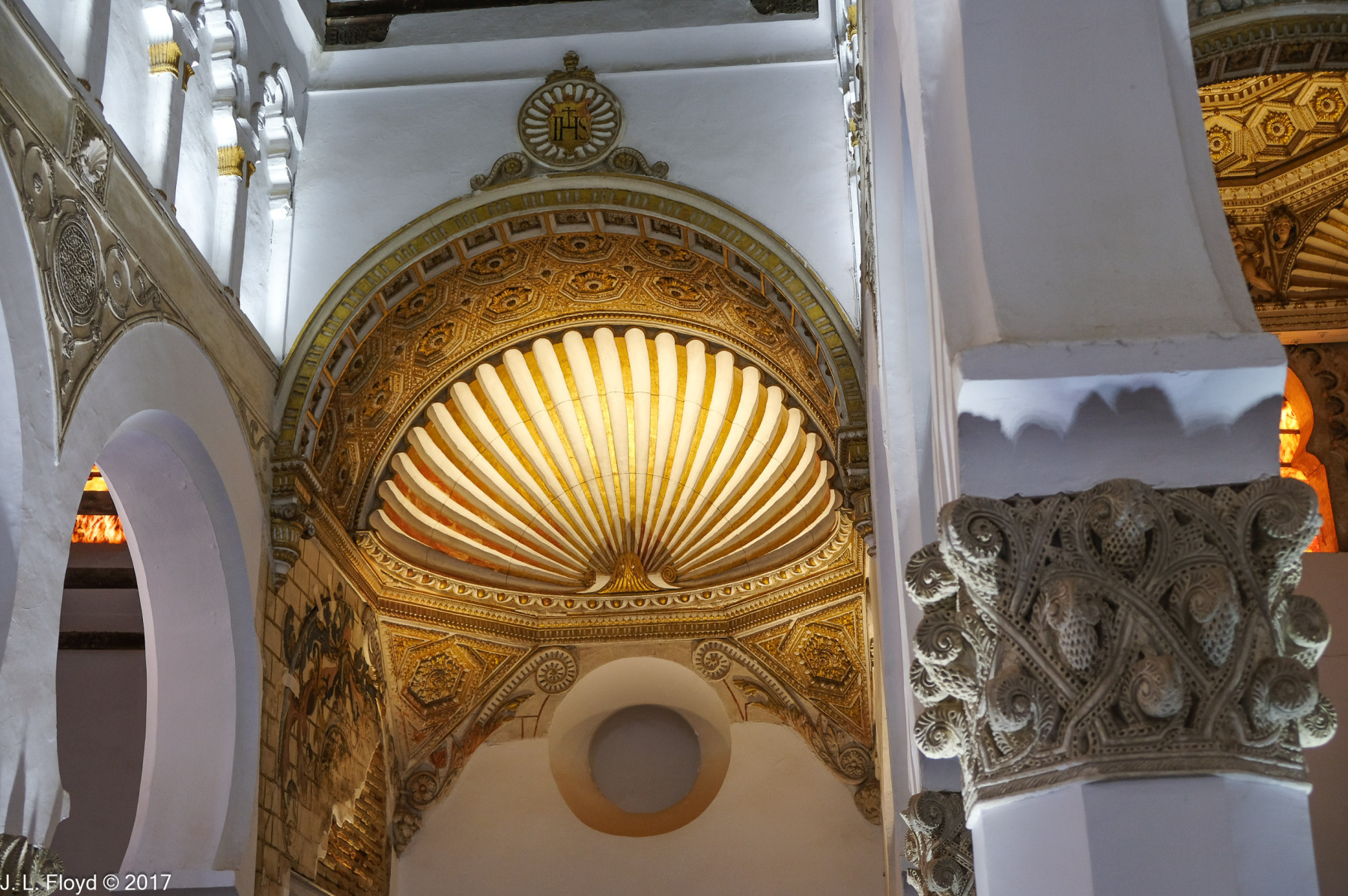

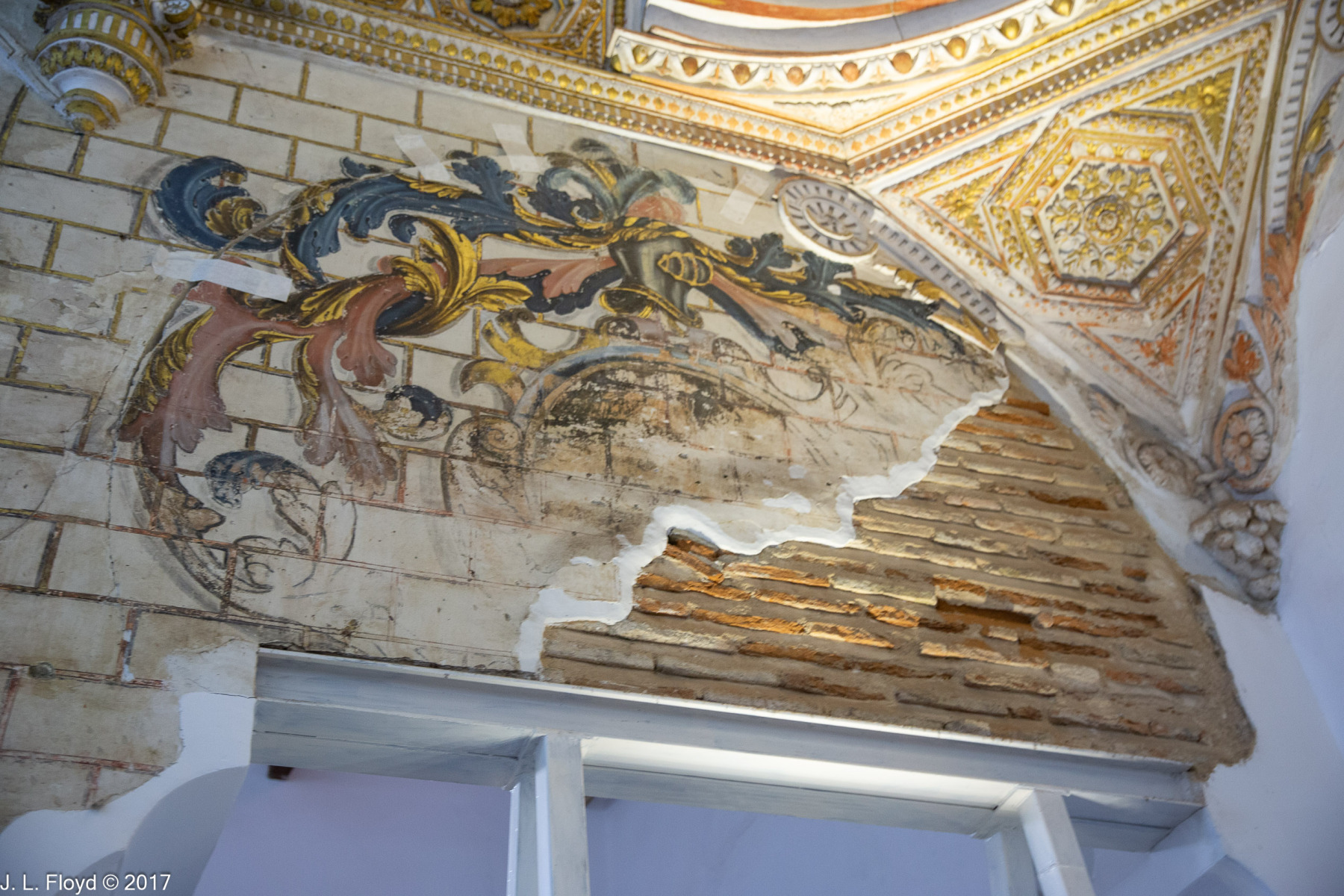
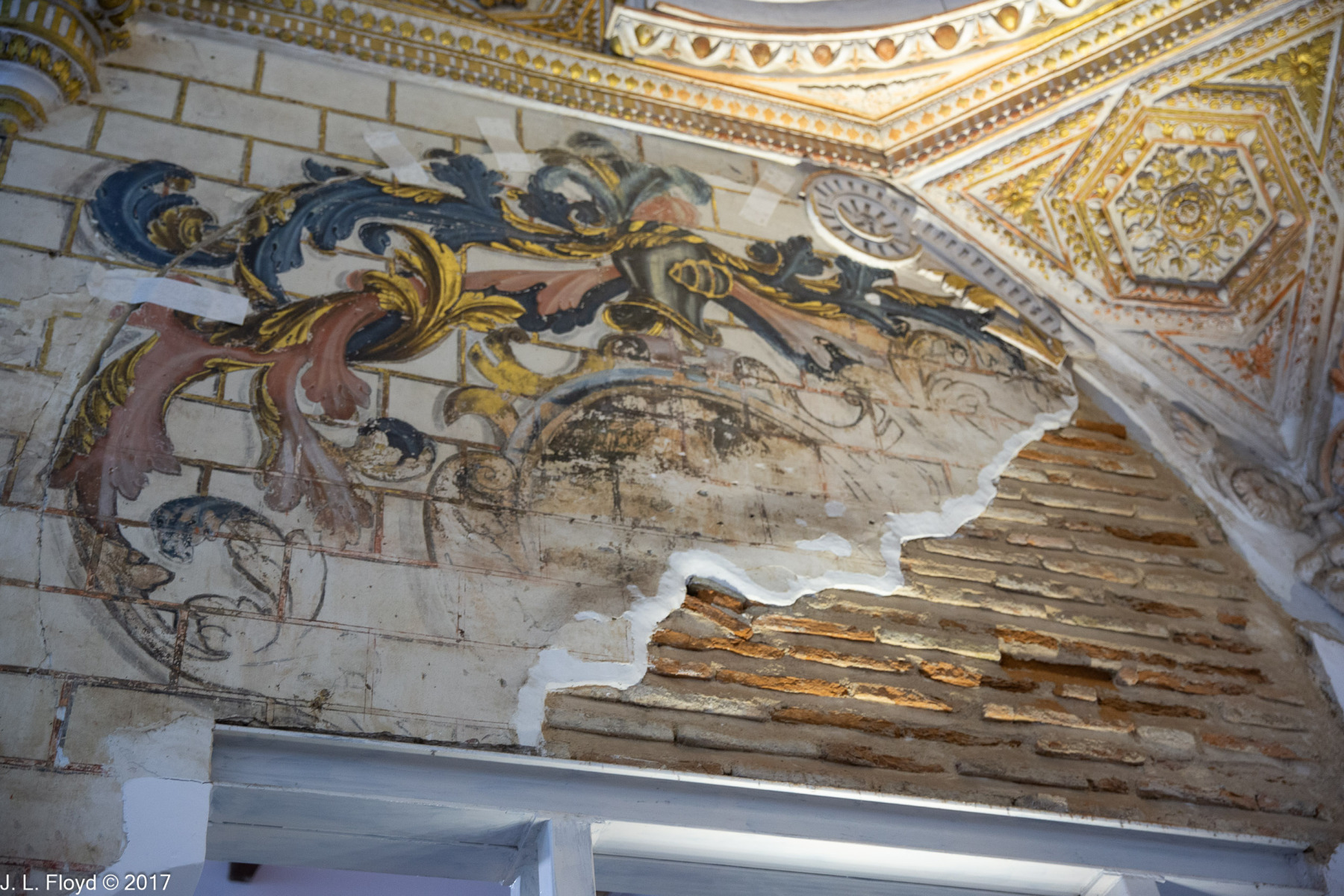
The largest and most elaborate of the apses is distinguished from the others by a Christian cross over the entry, and by two Mudéjar-style stained-glass windows illuminating the interior; it also boasts a quite extraordinary ceiling.
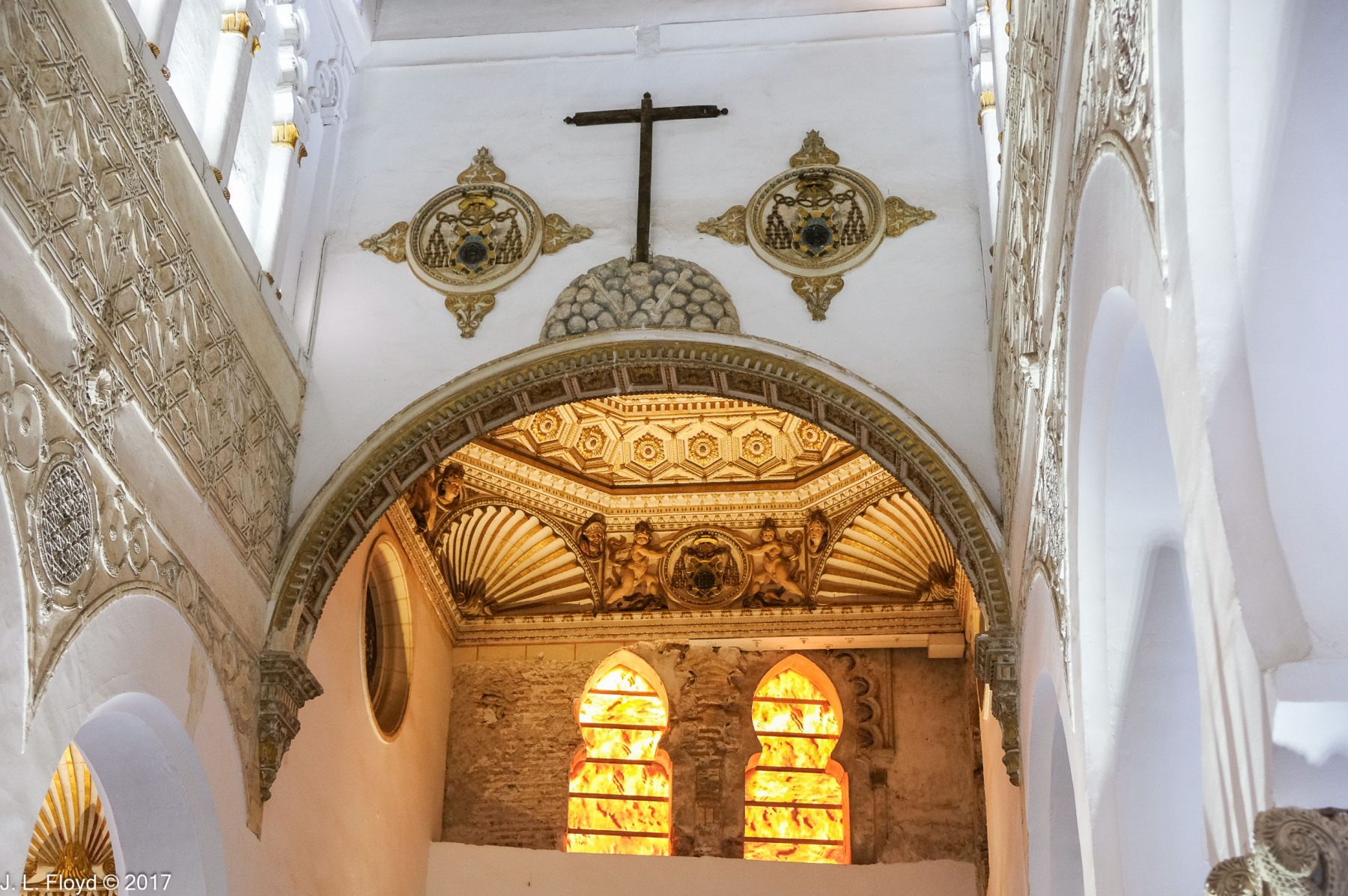

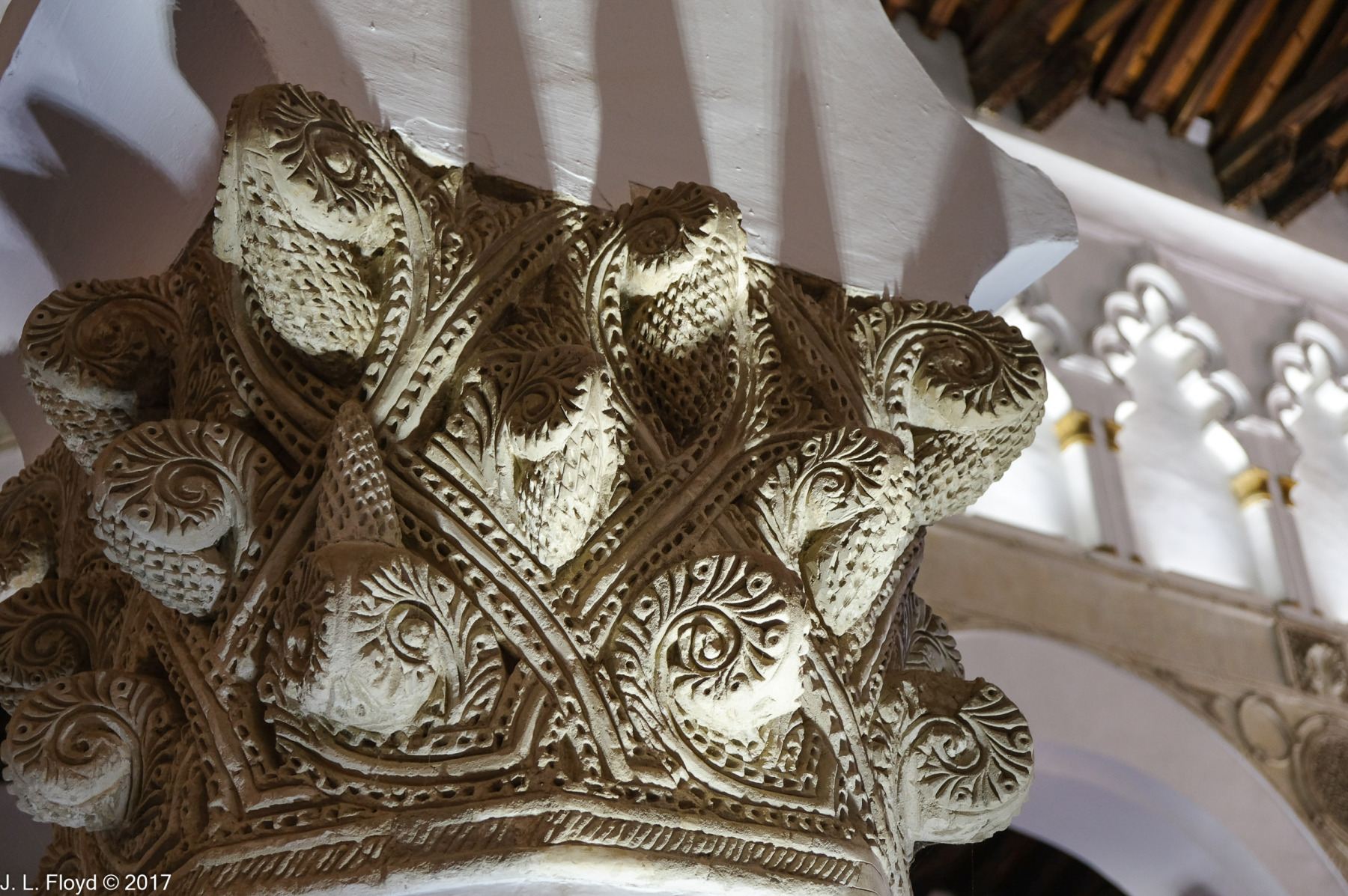
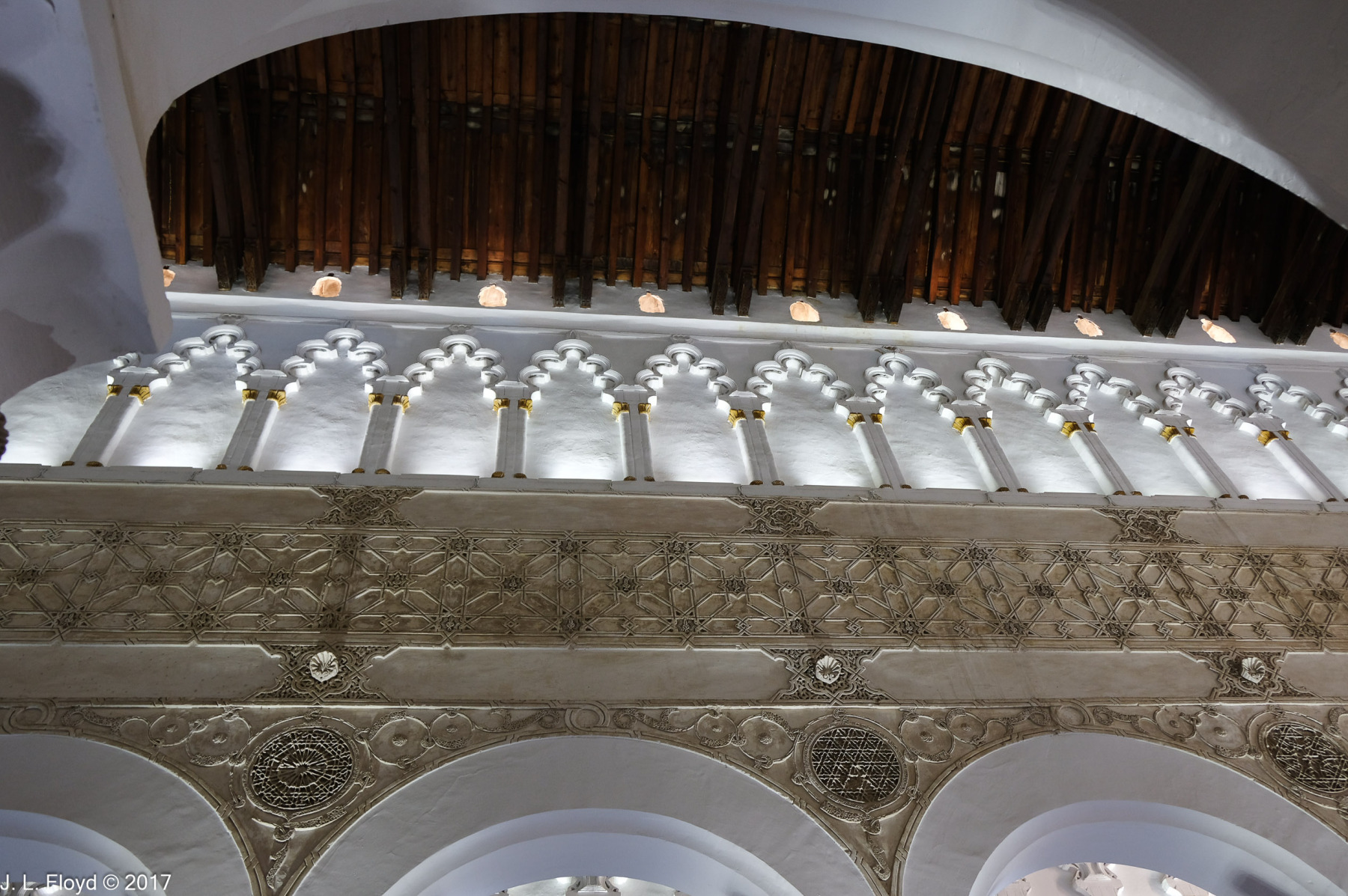
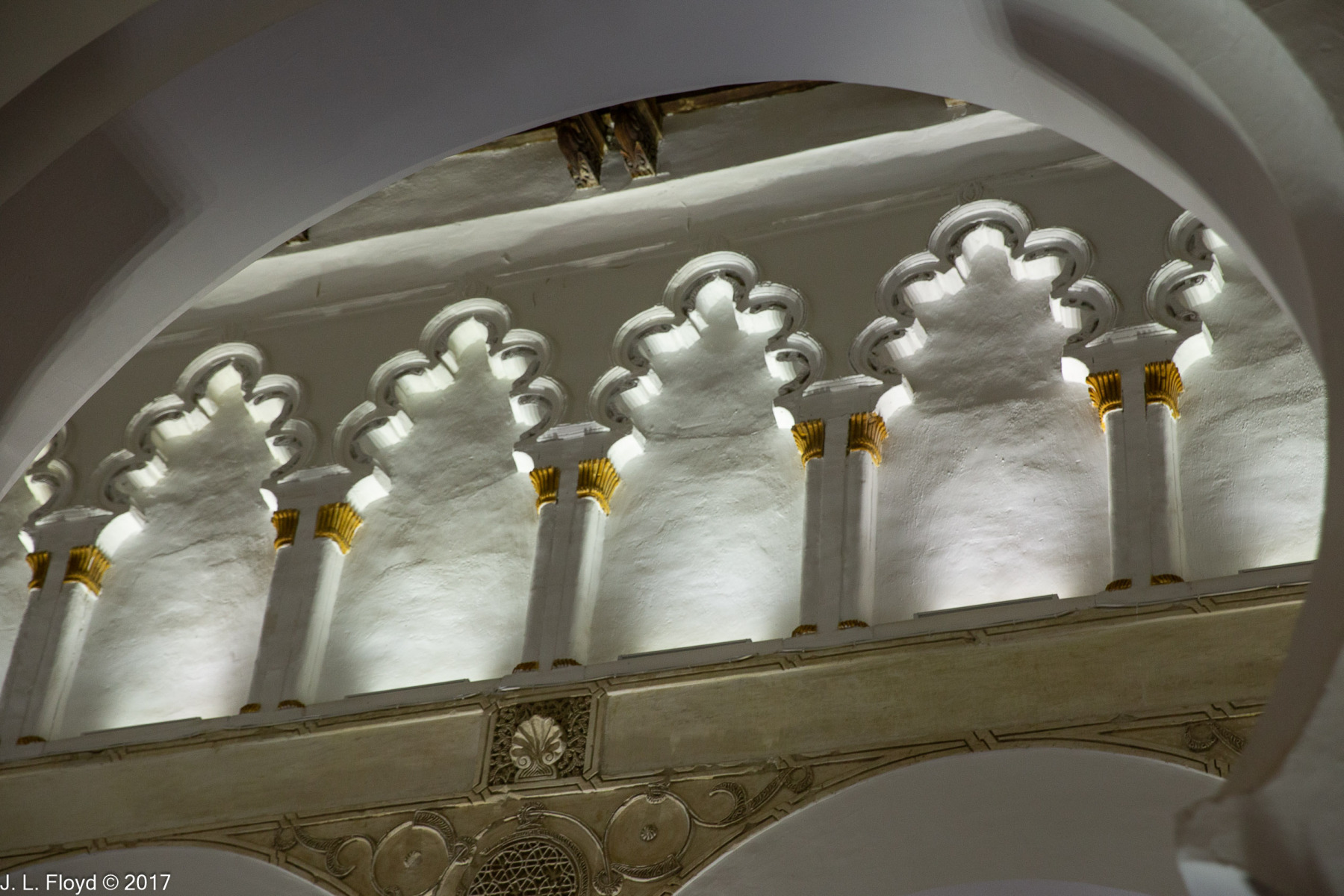
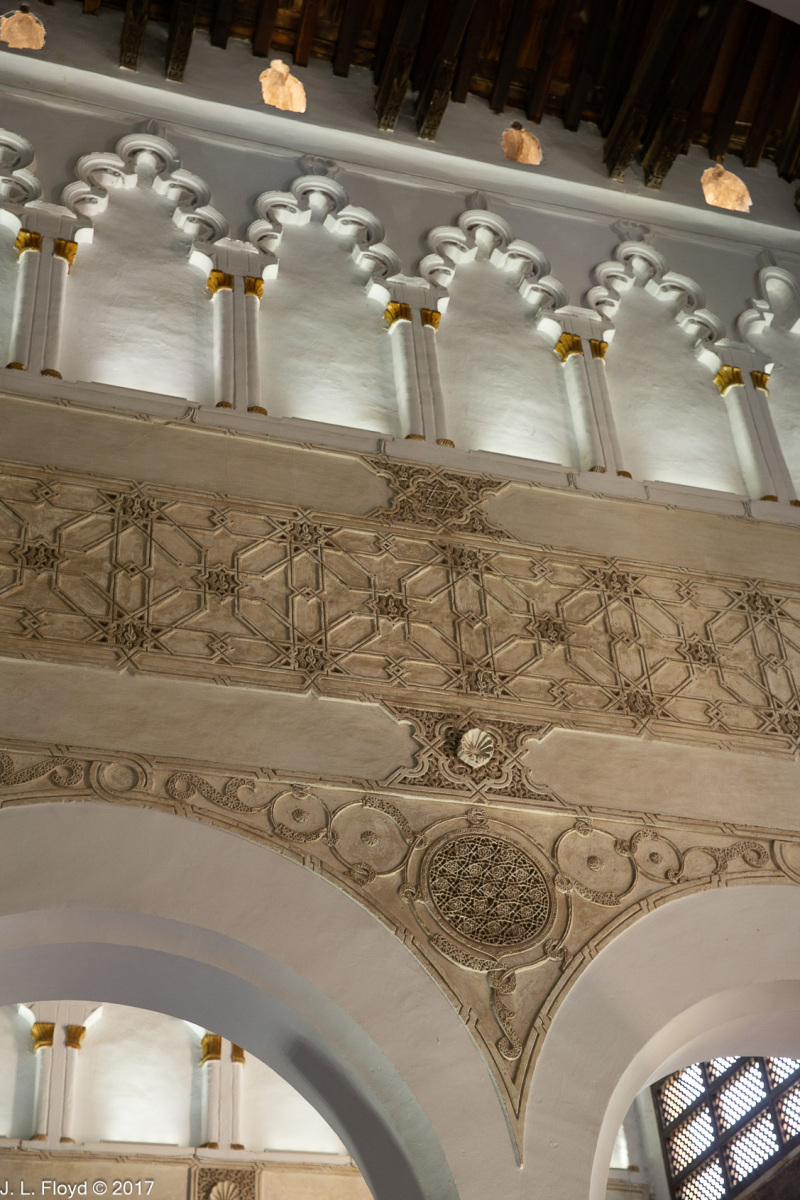
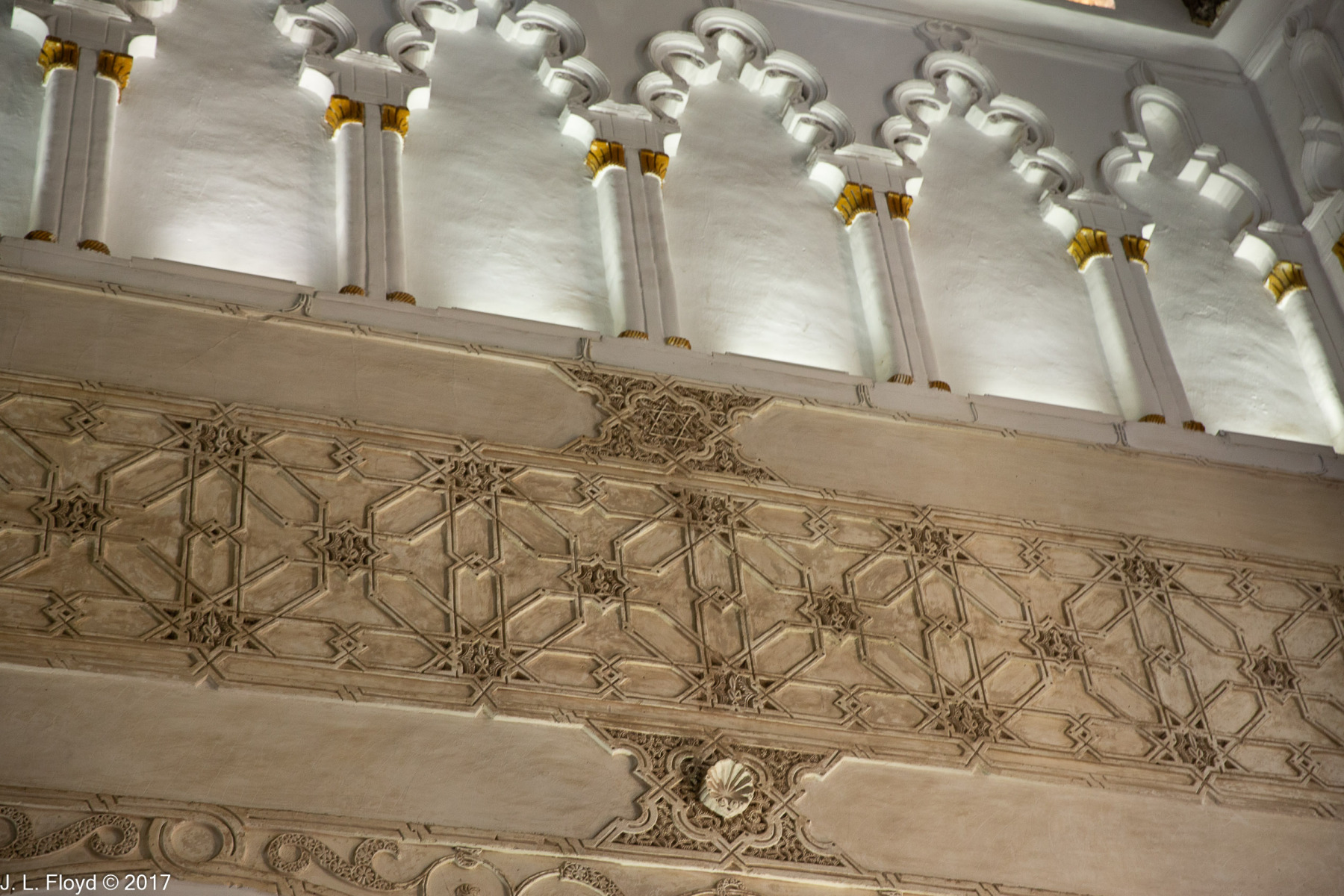
There are two sets of arcades, the lower and the upper. The octagonal piers supporting the lower arcades are topped by ochre-colored capitals, vaguely Corinthian in style but decorated with large stucco pinecones and volutes – spiral scrolls that project from the body of the capital (they look somewhat like snails).
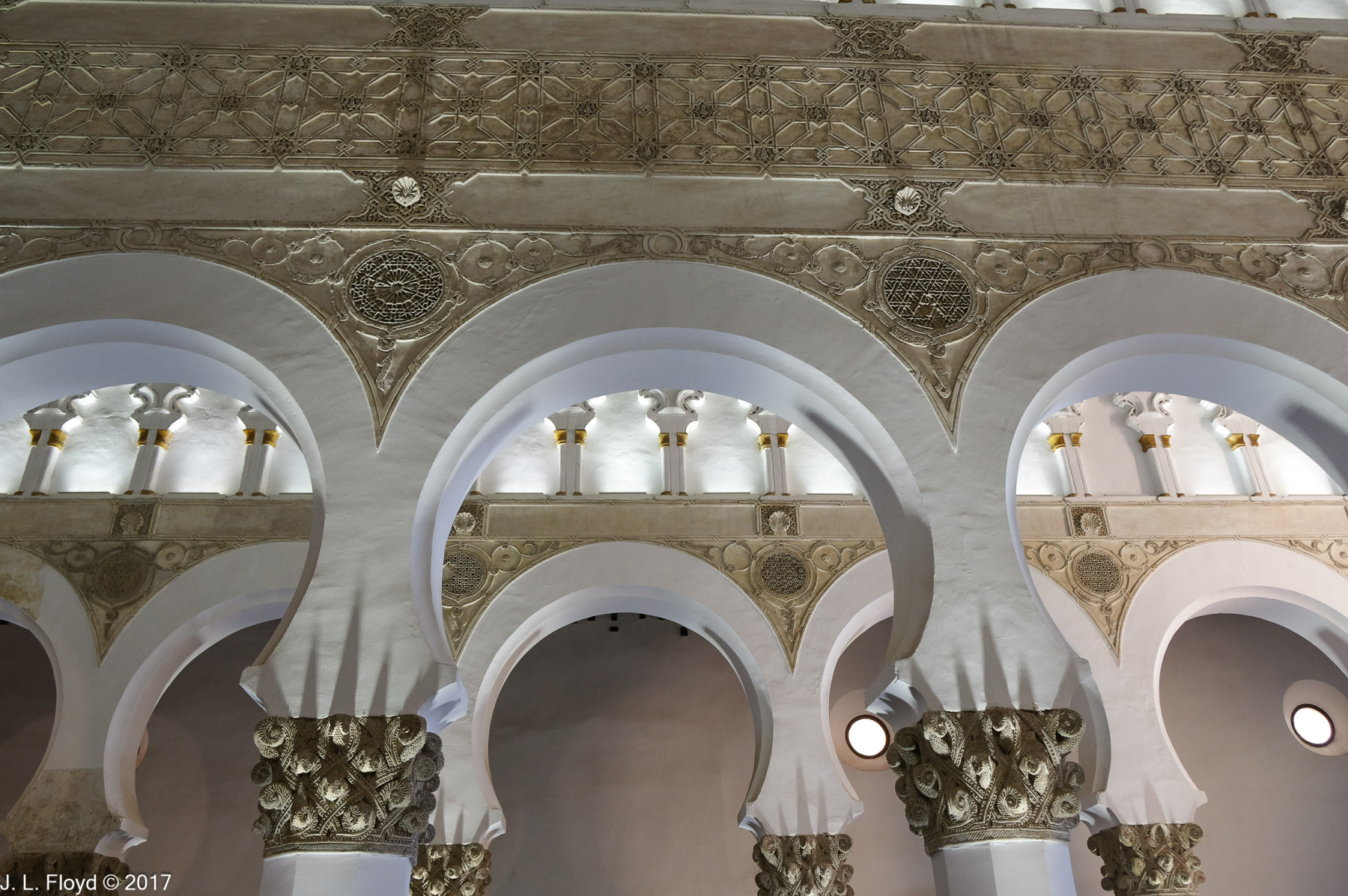
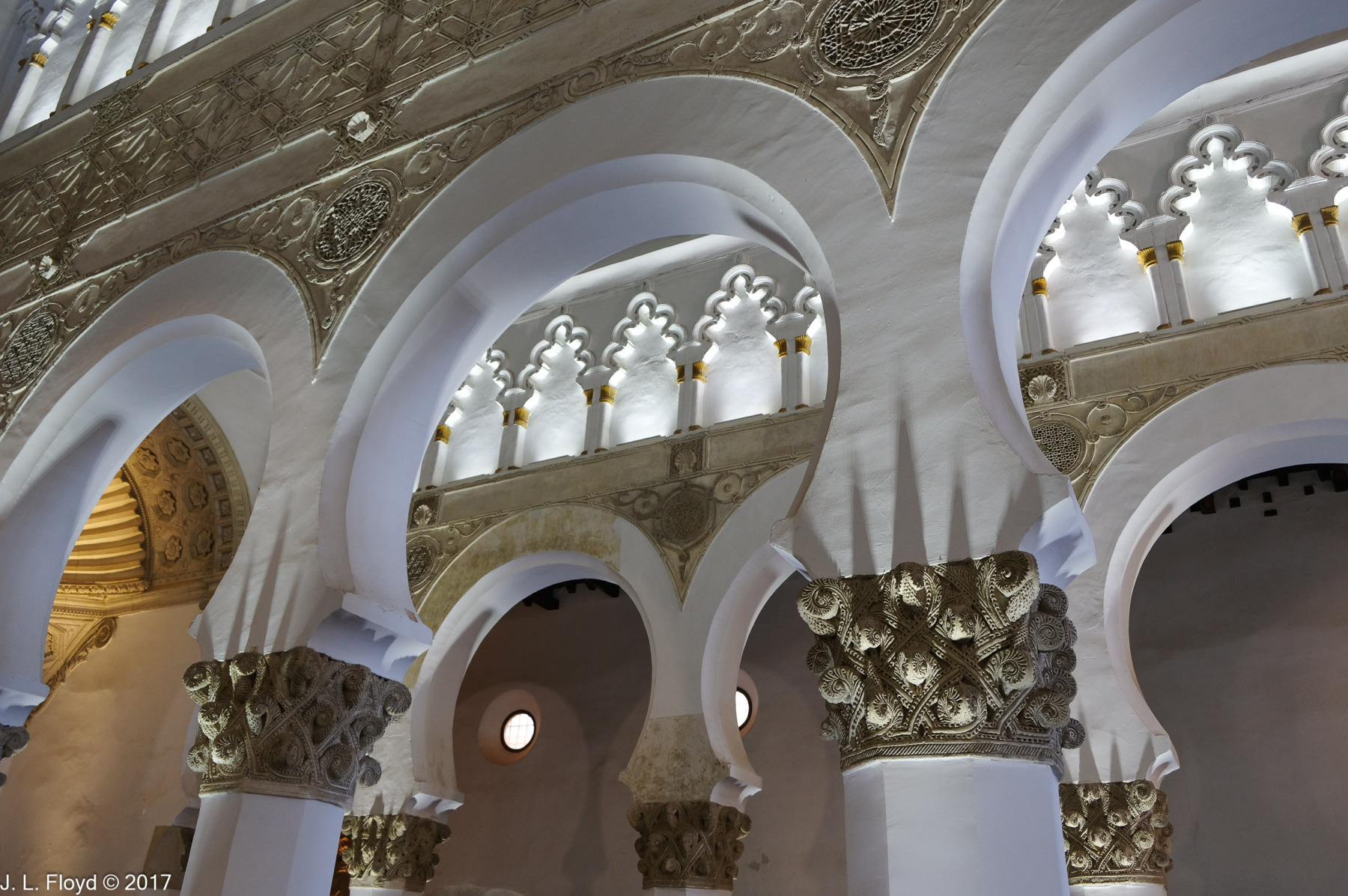
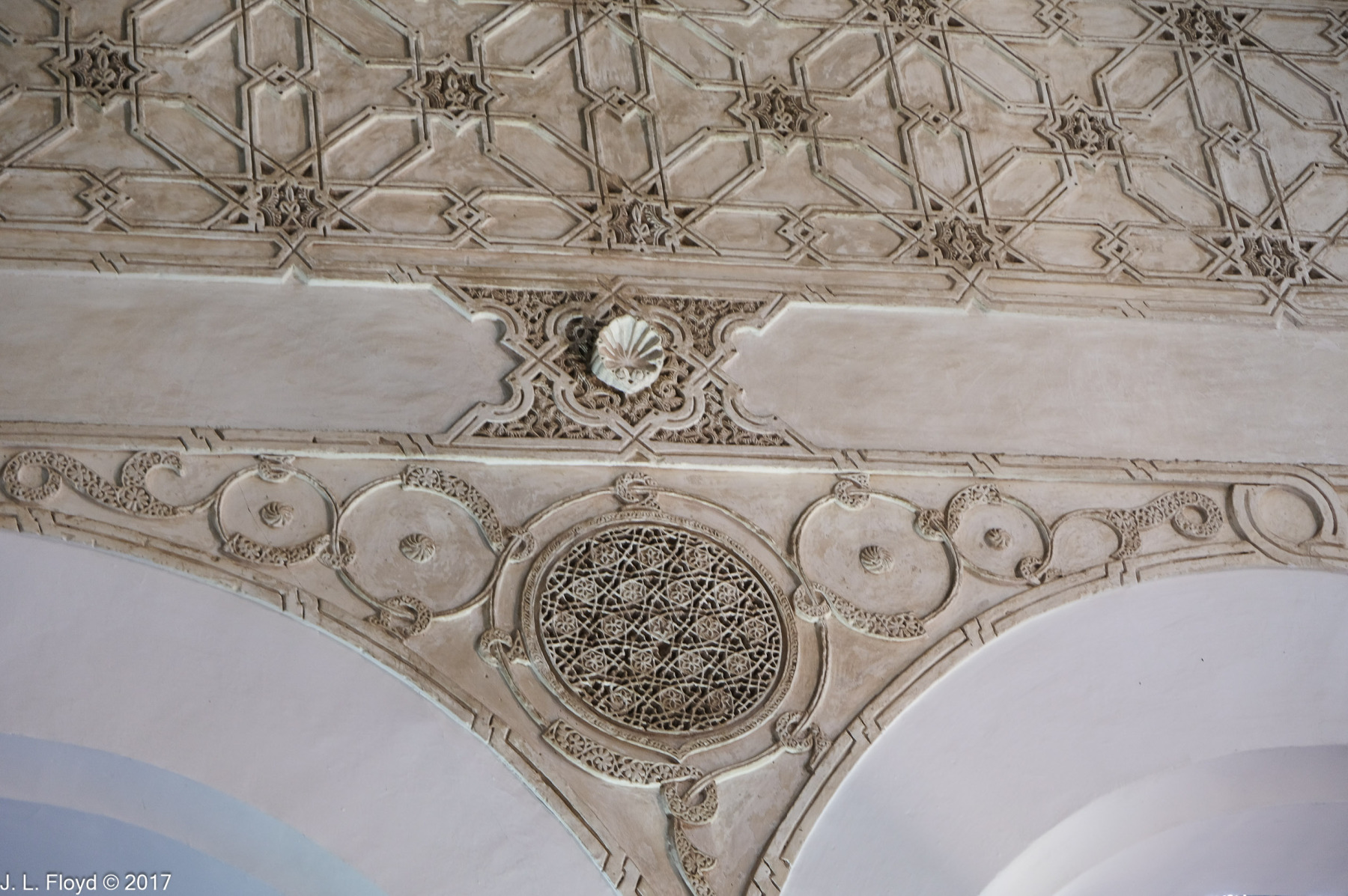
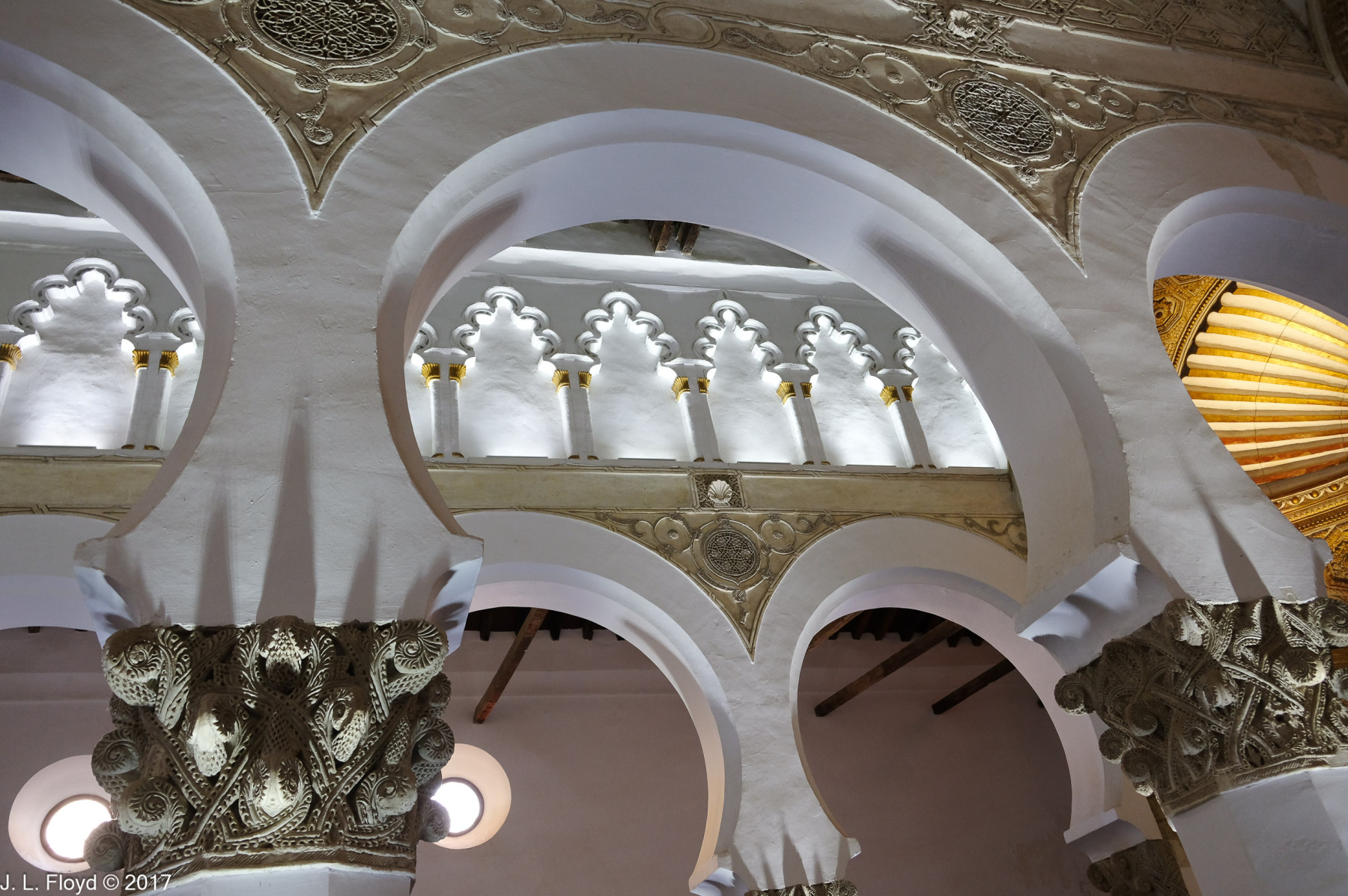
Above the horseshoe arches are walls with layers of low-relief decorations – stucco tendrils and roundels (round decorative figures), scallop shells and geometric interlacing. On top of the walls are piers supporting the upper arcades, which feature polylobed arches, and look as if they might have galleries behind them but in fact are blind, i.e. filled in.
After viewing the interior of the synagogue, we exited to a courtyard, around which were buildings which had once held the Rabbi’s residence, a ritual bath, a study hall, and other facilities serving the Jewish community.
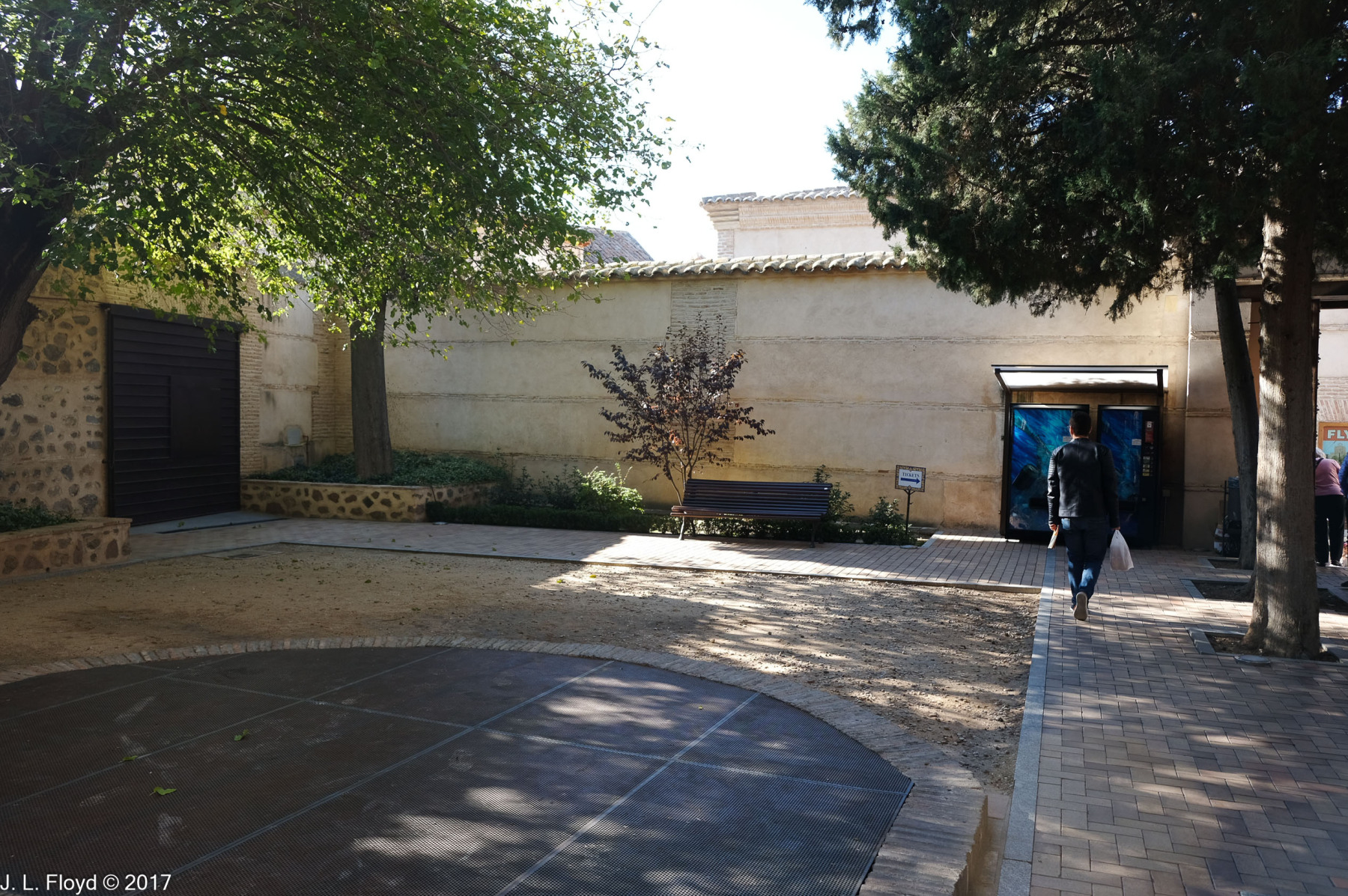
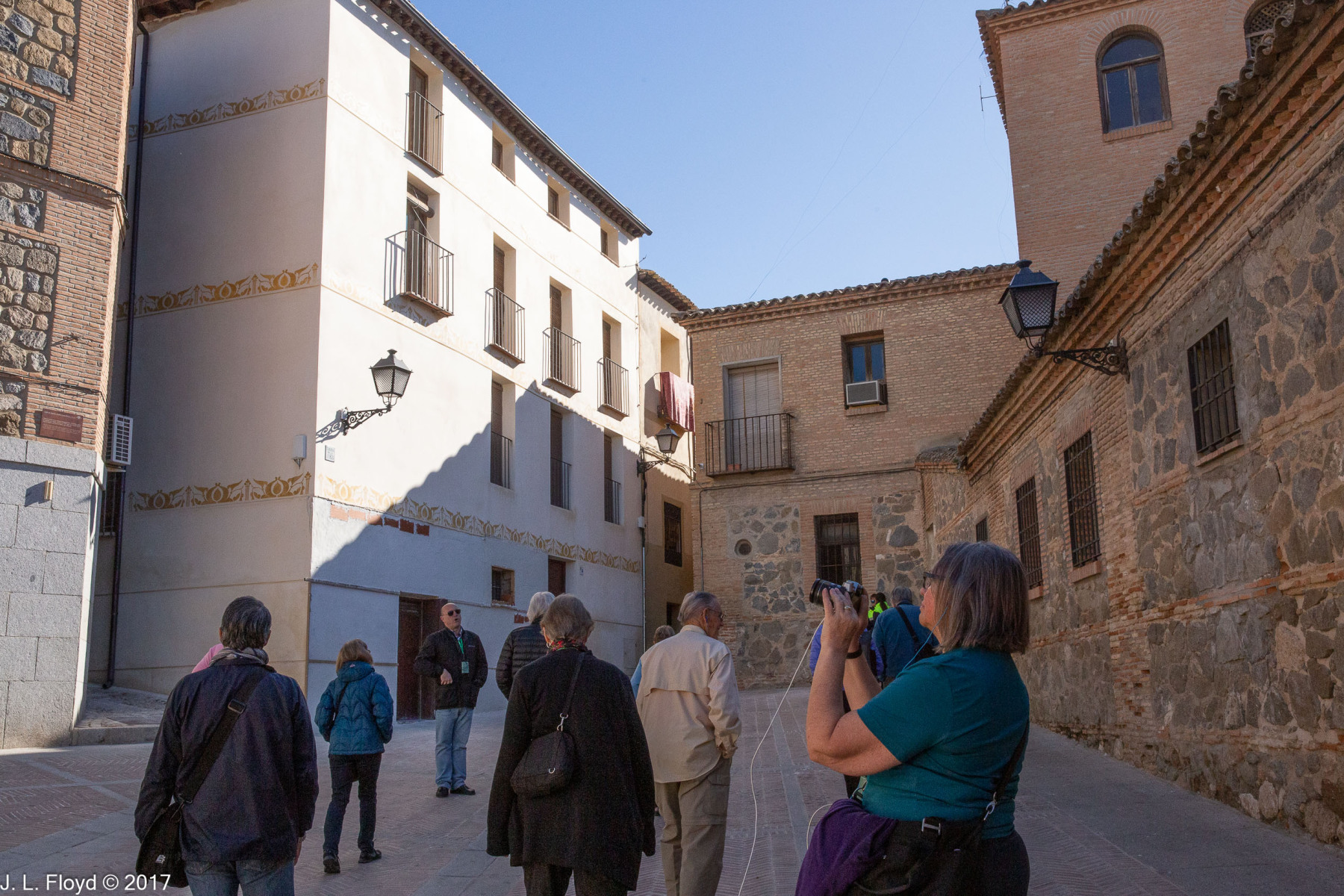
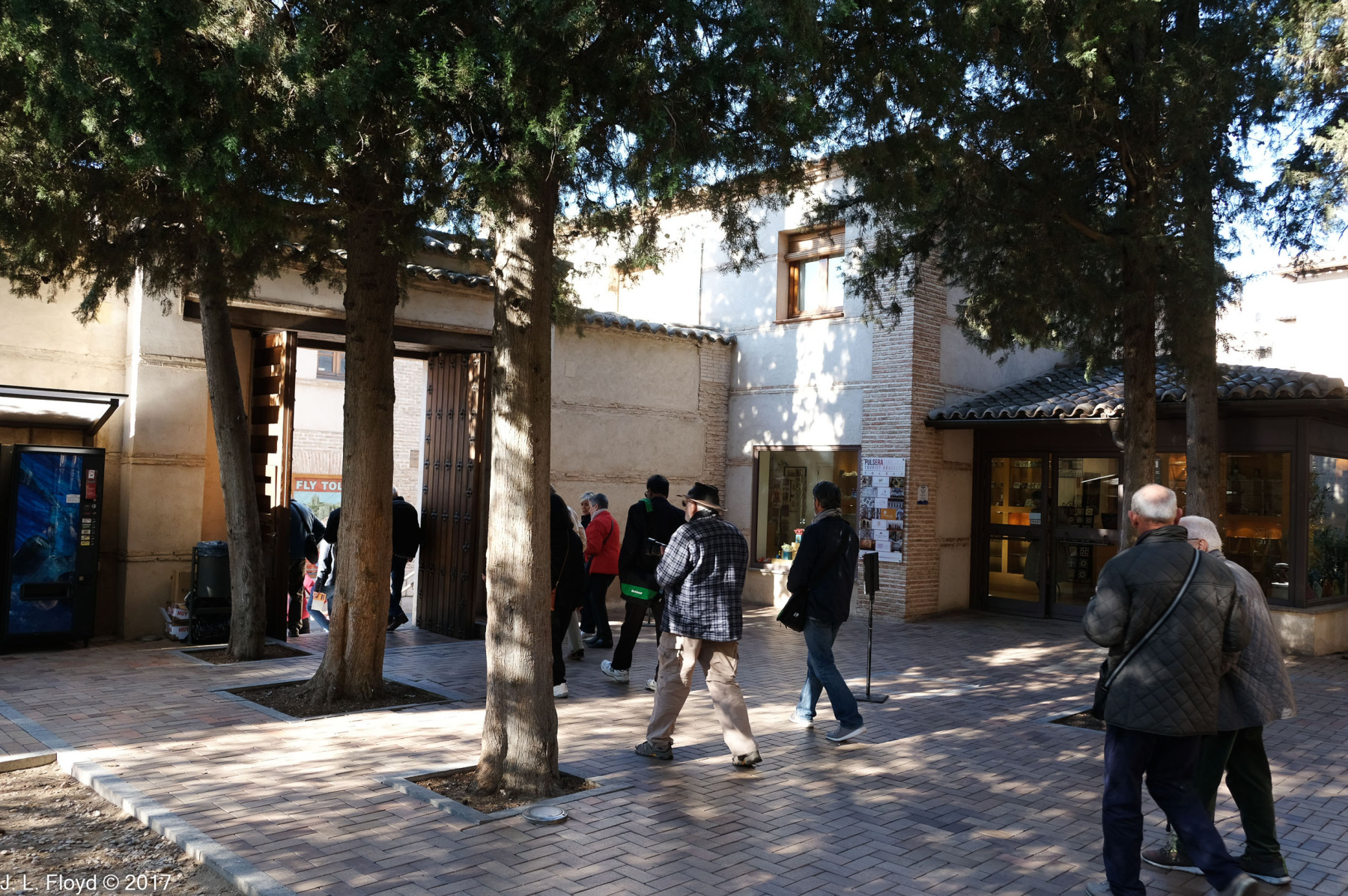
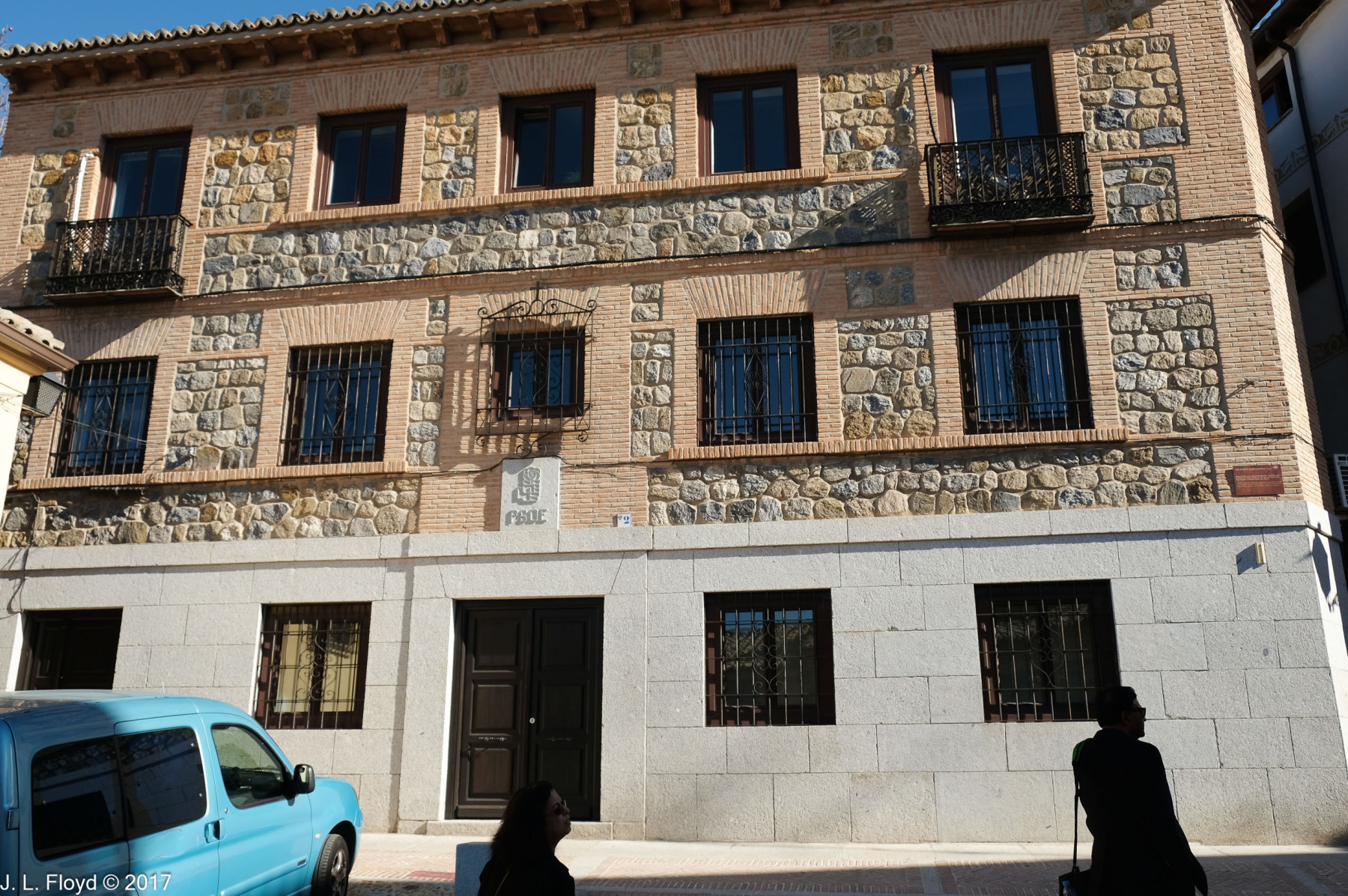
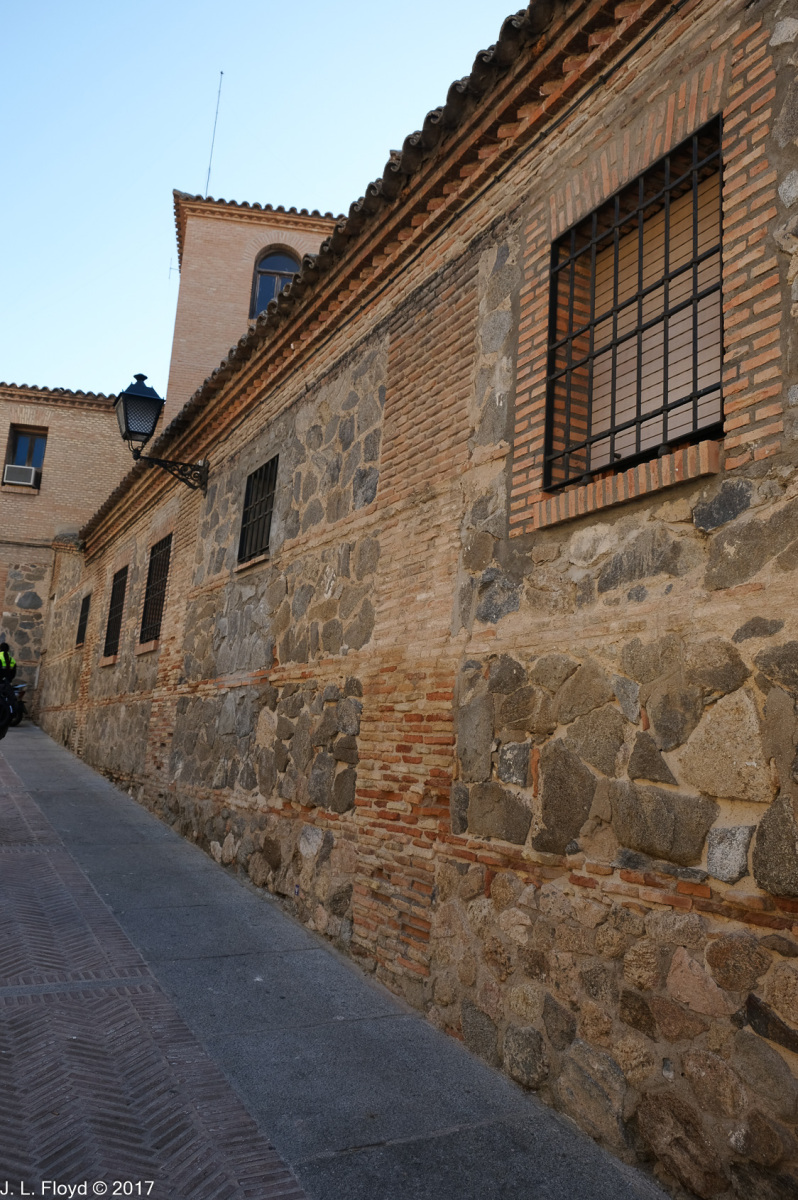
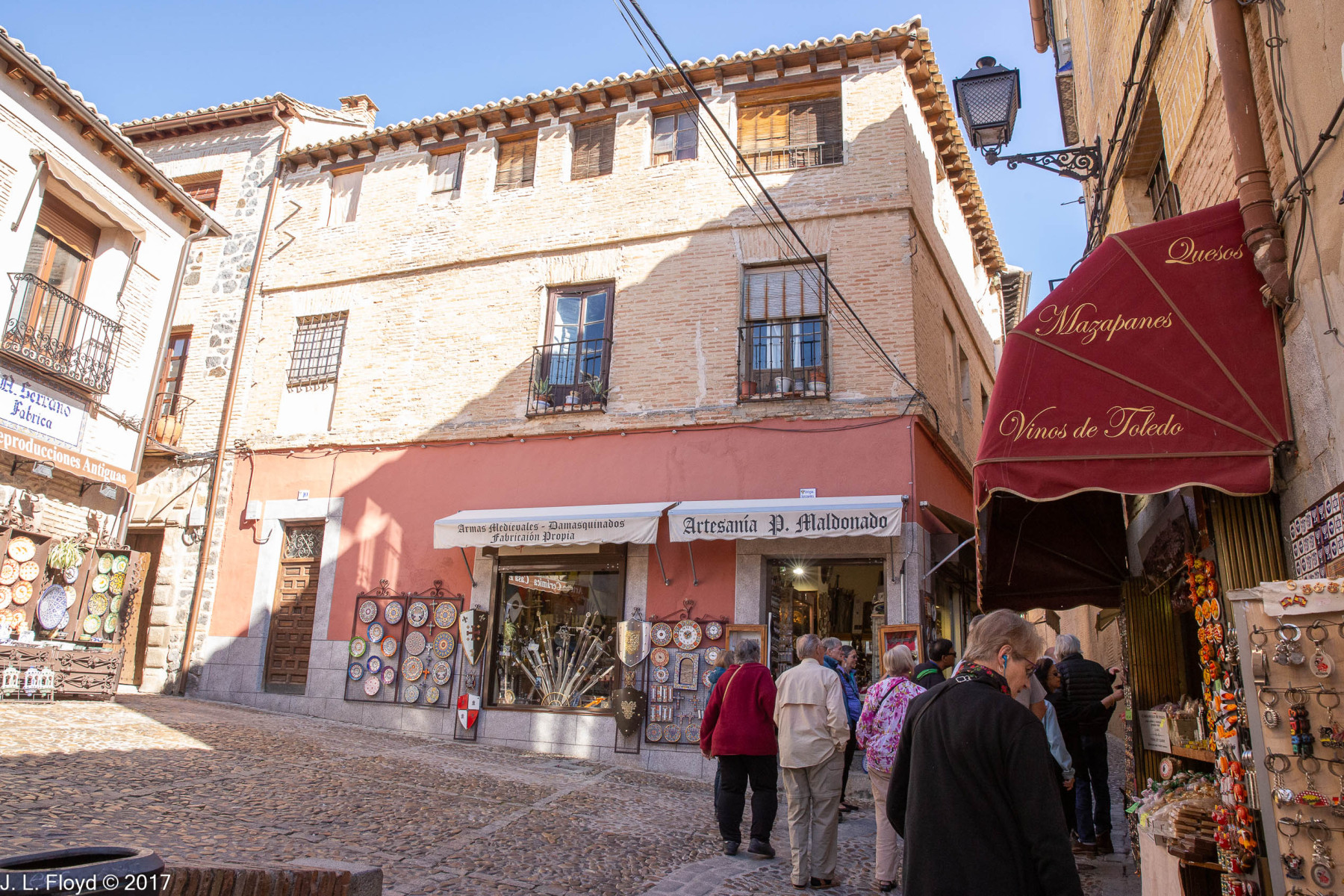
From the Synagogue we continued traipsing through the Jewish Quarter, enjoying views of the well-maintained streets, shops and houses. One particularly elegant structure with bars on the windows had a stone marquee above the door reading simply “PSOE”. I later found out that stood for Partido Socialista Obrero Español – Spanish Socialist Workers’ Party – of which the building housed the regional headquarters. The bars, which I originally thought were intended to keep out Christian pogromists, were likely there to ward off rock-throwing by members of rival political parties.
Eventually, at the end of the Travesía a Judería (Crossing to the Jewish Quarter, where we exited the Jewish quarter) we reached the Iglesia de Santo Tomé, where we were to view the famous painting of the Burial of Count Orgaz by El Greco. And with that, it’s time to begin a new post.