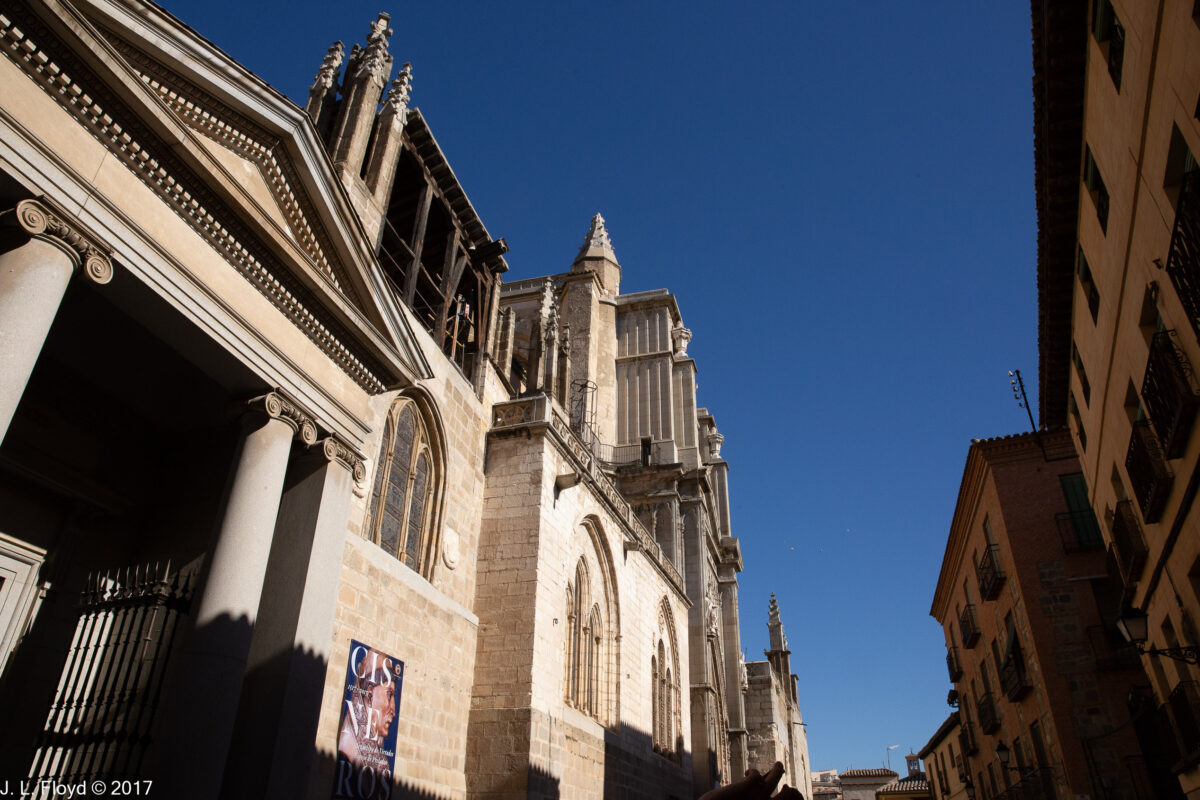
On our way out of the Jewish Quarter, we arrived at the Iglesia de Santo Tomé – Church of St. Thomas – which was founded after the reconquest of this city in 1085 by King Alfonso VI of León. Actually it was a Muslim mosque taken over by the Christians and converted into a church. However, after the reconquest it gradually fell into ruin until, at the beginning of the 14th century, Gonzalo Ruiz de Toledo (1260-1323), Count of Orgaz and mayor of Toledo, undertook to have it restored. Under his aegis the old minaret of the mosque was transformed into a majestic bell tower, in Mudéjar style.
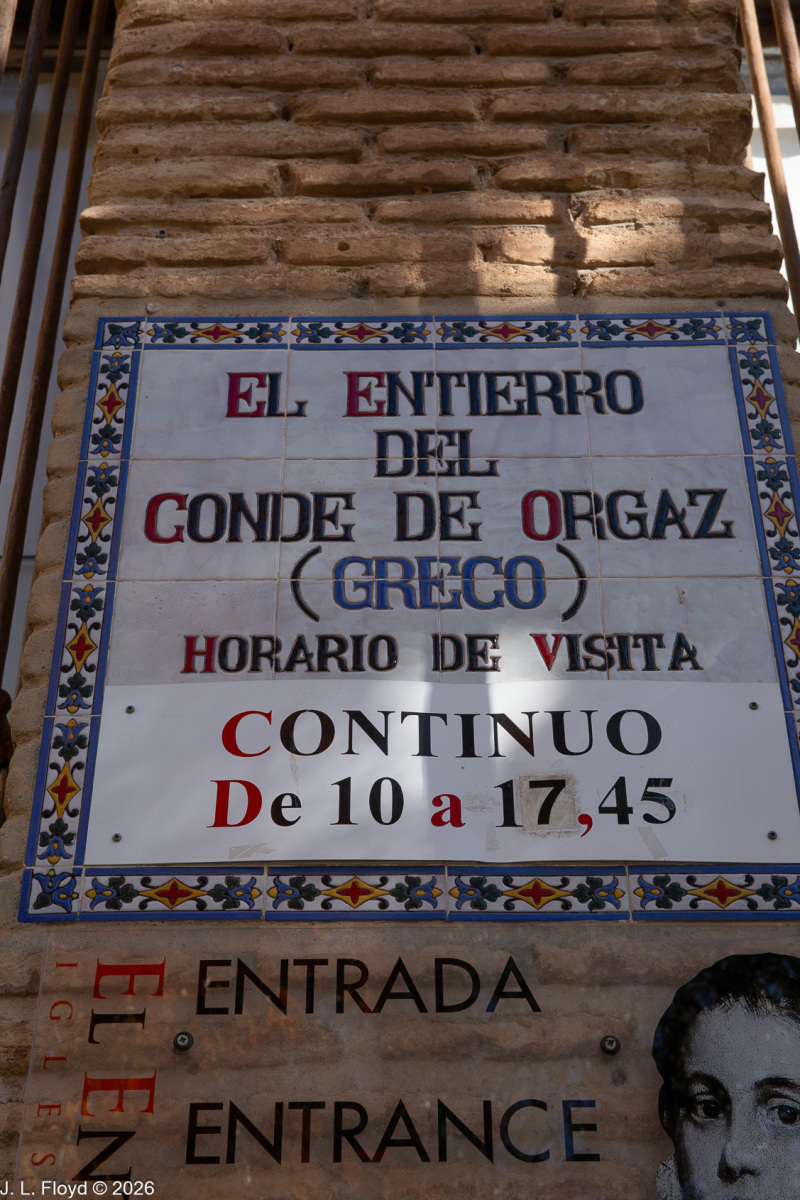
We did not visit the main part of the church, which is said to be quite beautiful, and where the Count of Orgaz is buried; instead we entered, via the back door, the chamber which houses the painting The Burial of Count Orgaz, the great masterpiece of the Spanish Renaissance artist Doménikos Theotokópoulos (1541-1614), commonly known as El Greco. He was in fact Greek by origin, having been born in Crete, which was held by Venice at the time (it was conquered by the Ottoman Turks in the 17th century). But he worked mostly in Venice, to which he emigrated in 1567, then Rome (1570) and finally Spain (from 1577).
The painting is the main attraction of the church and viewing it is the reason why most visitors go there. I am personally not a great fan of El Greco – I much prefer Velazquez and Goya – but the talk by the museum guide gave me a much greater appreciation of the genius of El Greco and made it clear why the Burial of Count Orgaz is considered one of the great masterpieces of Spanish Renaissance art.
We were not permitted to take photos inside the church, so I have none to offer and can only refer the reader to the web sites where they can be found.
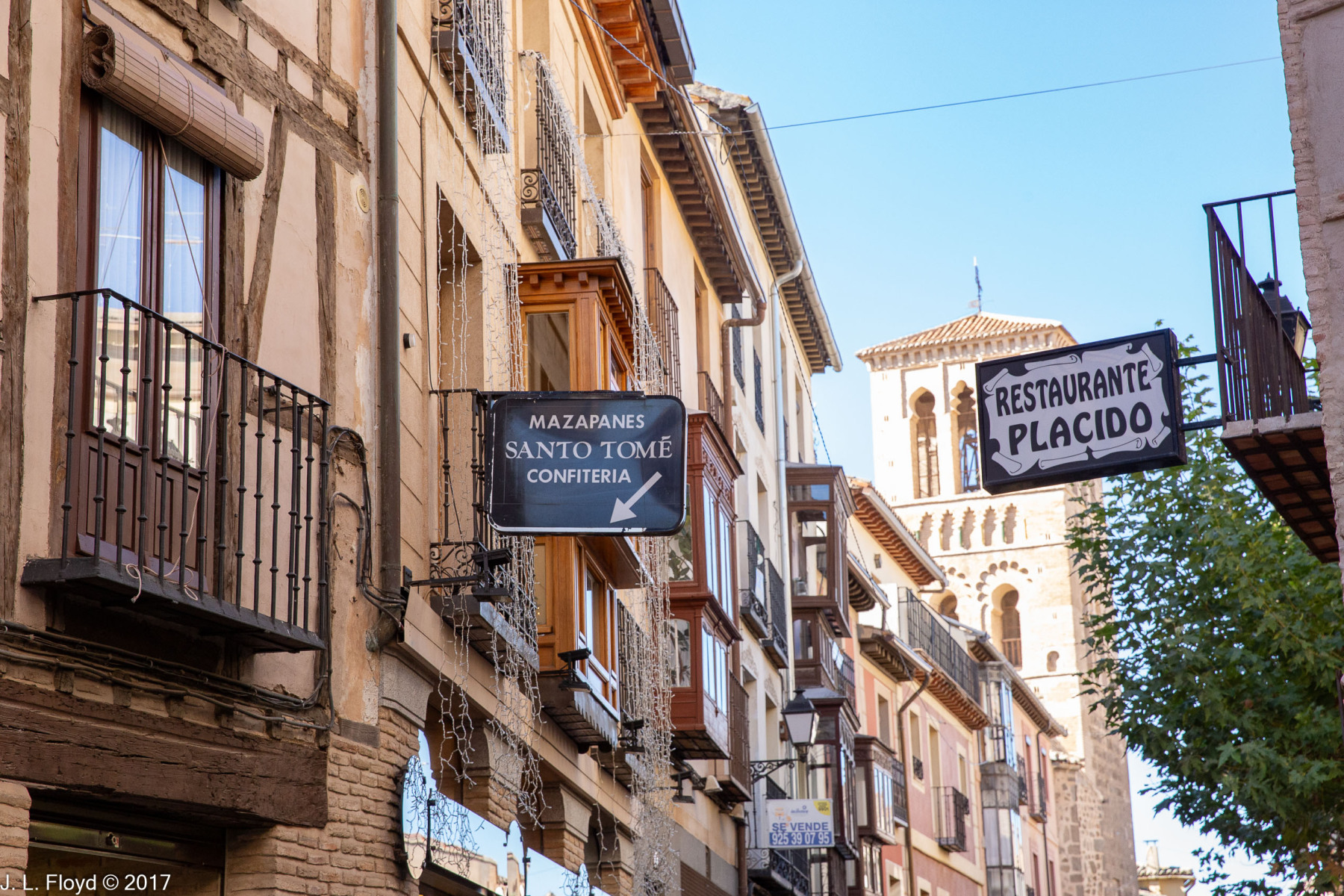
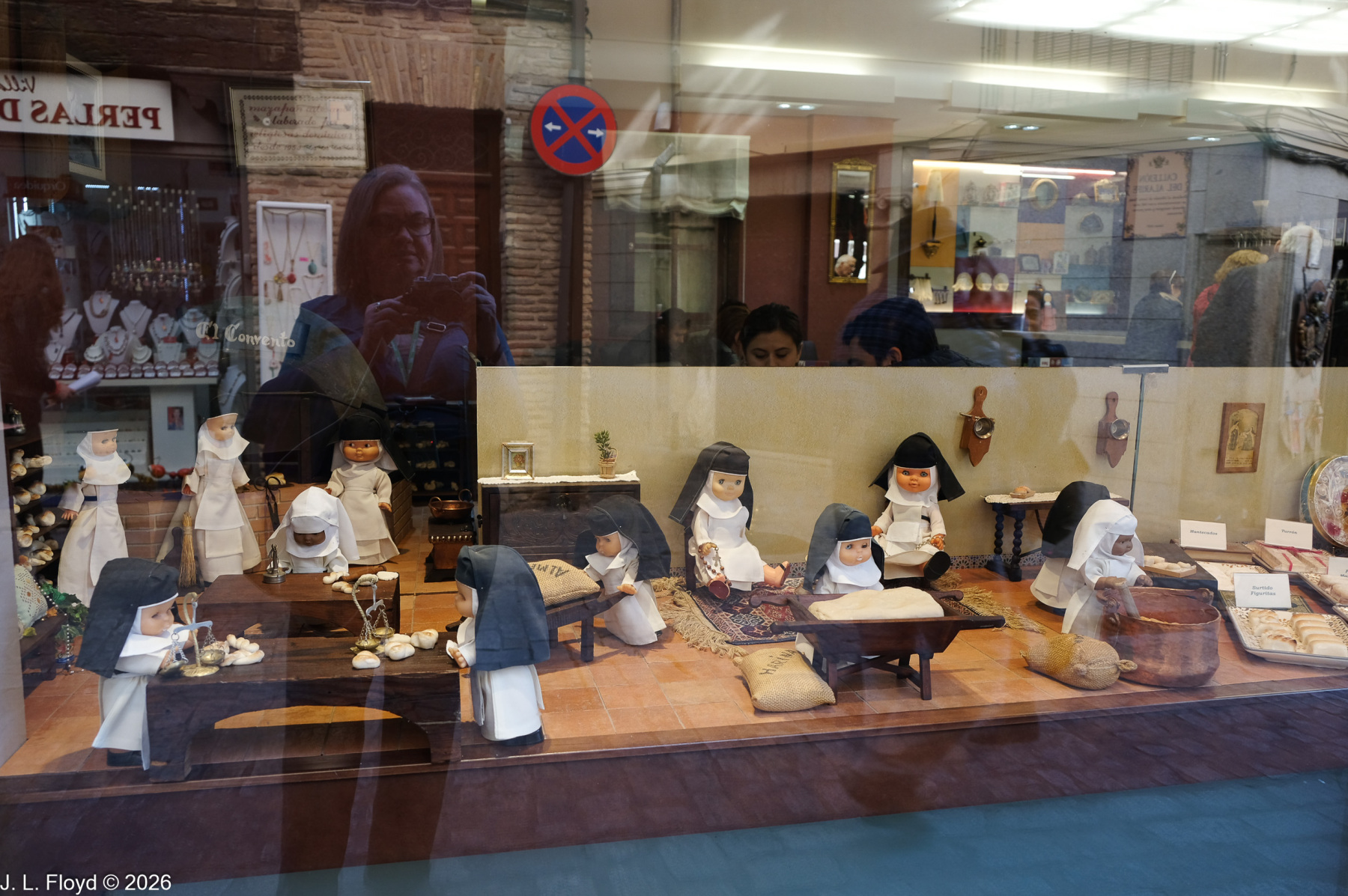
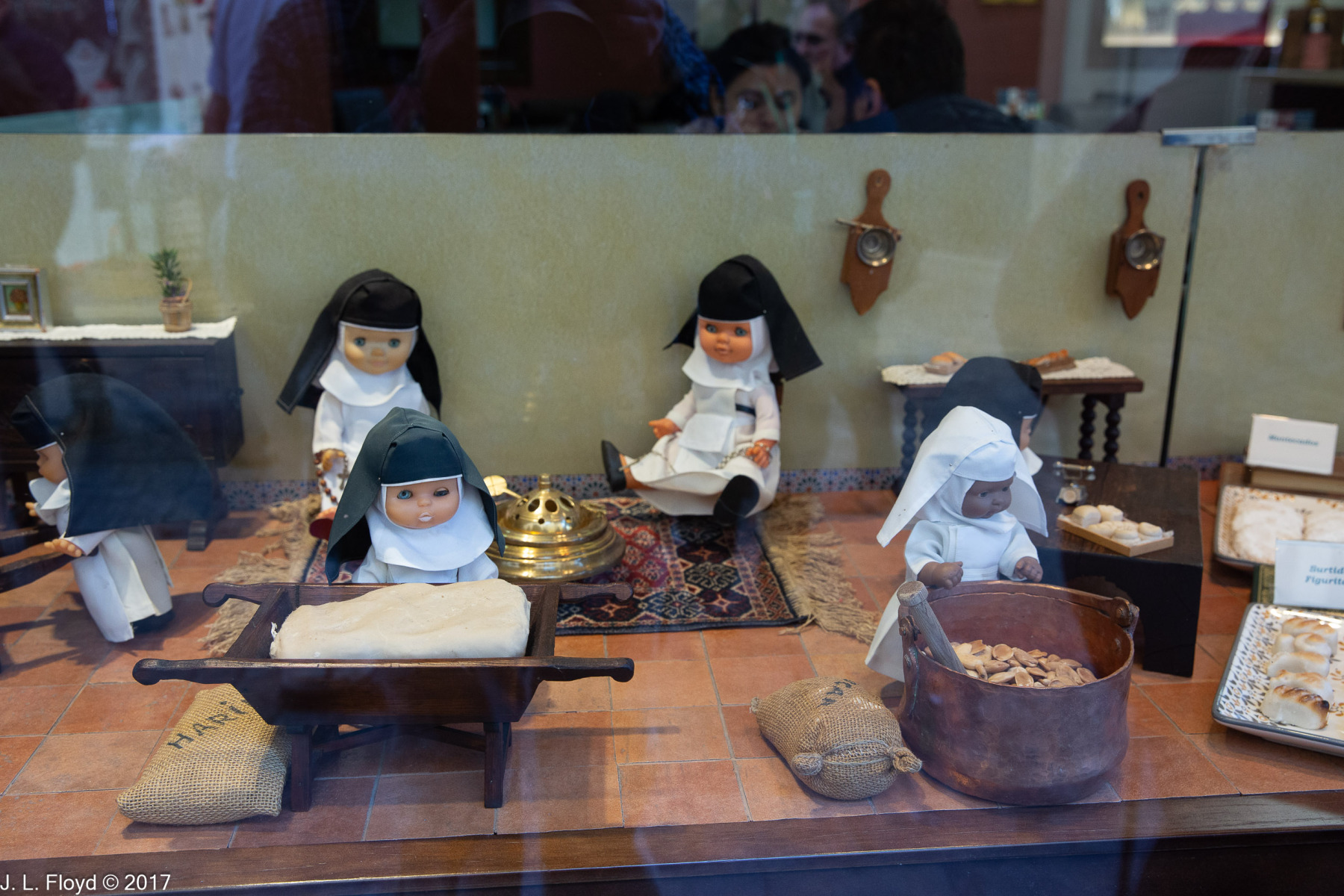
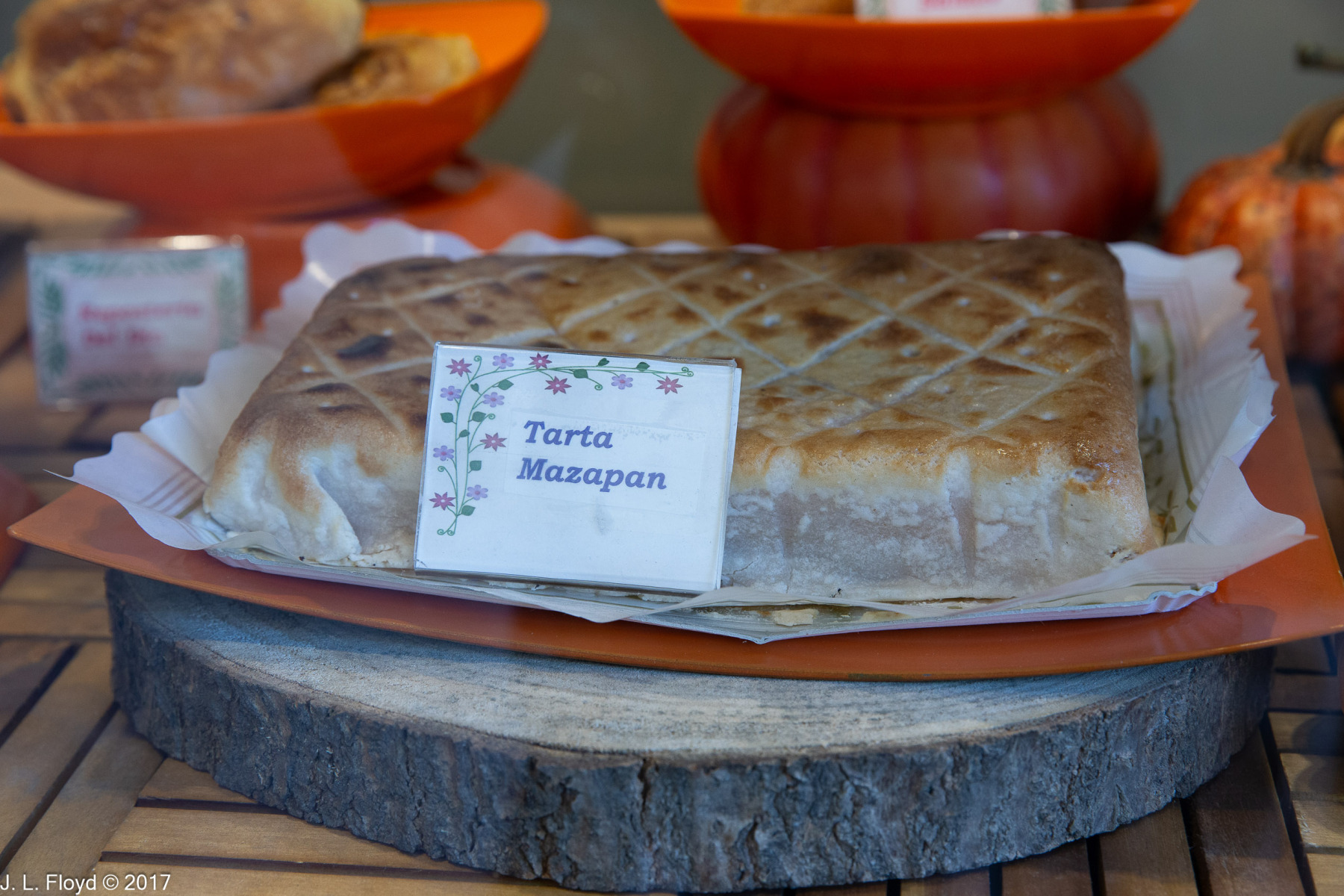
After viewing The Burial of Count Orgaz, we strolled down the street named for the church, window-shopping several attractive boutiques as we went. The most interesting was the Santo Tomé Confitería, which sells marzipan confections made by the Cistercian nuns of the Royal Convent of San Clemente. That convent was founded in the 13th century and is now housed in a large Spanish Renaissance cloister on Calle San Clemente in Toledo. Among its other attractions, it features a museum devoted to marzipan. We did not have time to visit the convent itself, but the shop window featured a charming display of minature nuns making marzipan as well as samples of the products.
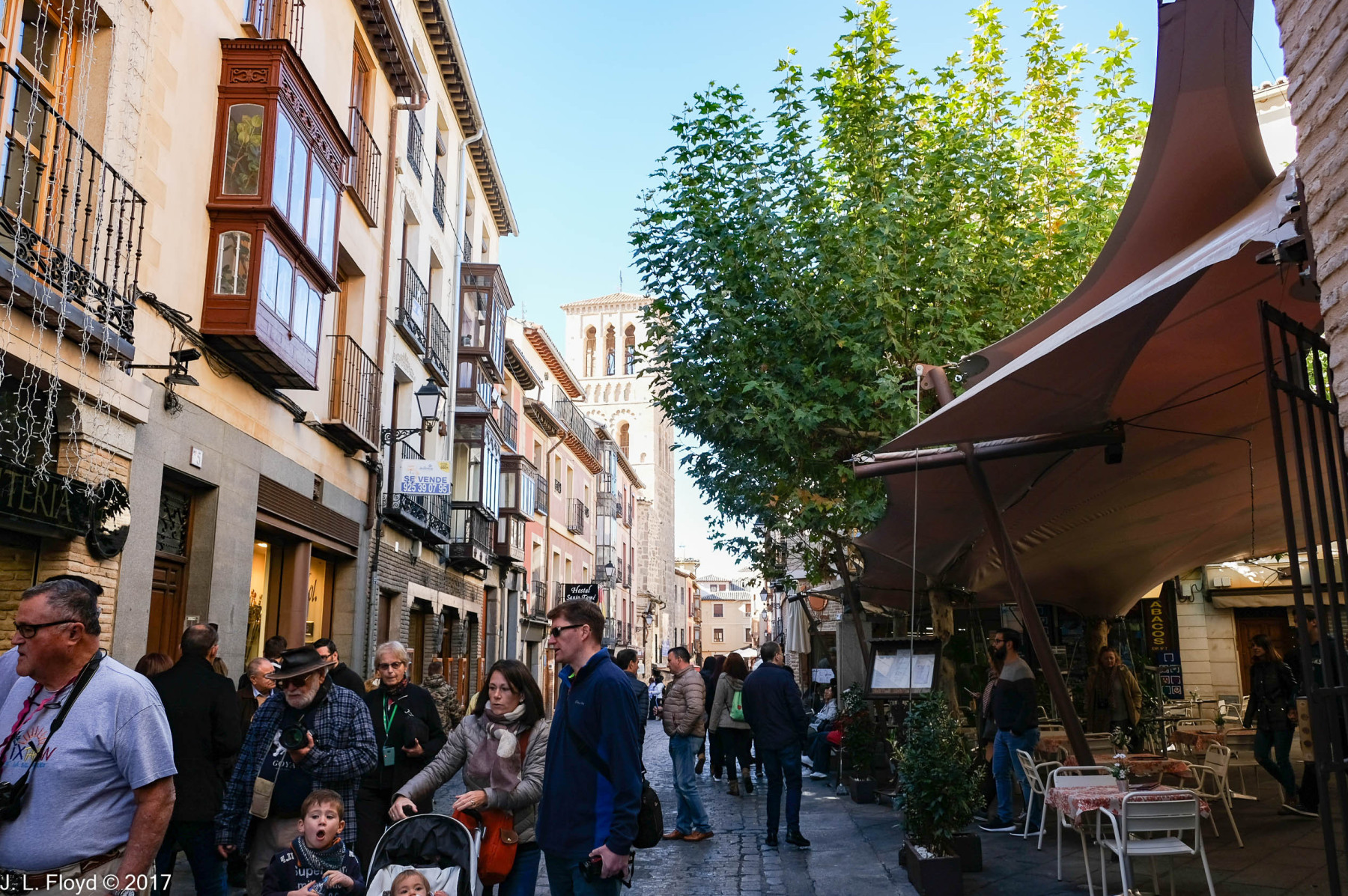
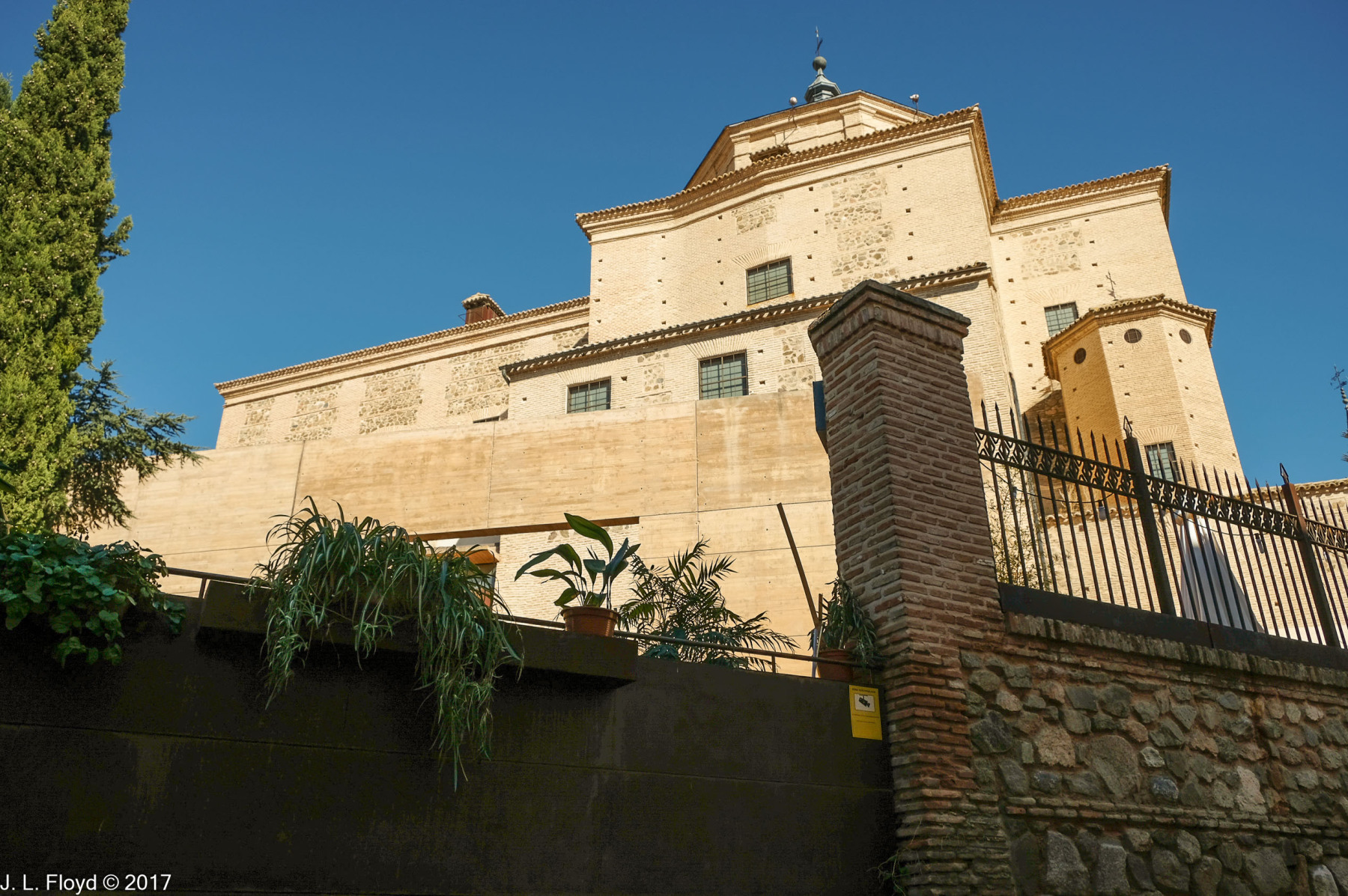
At the end of the Calle de Santo Tomé lies the Church of San Marcos, built in the 17th century as part of the Convent of the Holy Trinity. Construction began in 1628 based on plans drawn up by Jorge Manuel Theotocópuli (1578-1631), son of El Greco, who was Master Builder, sculptor and architect for the Toledo Cathedral, and was involved in a number of other projects such as the Casa Consistorial (City Hall) of Toledo. However, the main chapel and the dome above the transept were not completed until much later, in 1693. We did not visit the interior of the church, which has been described as Spanish Baroque in style, while the exterior is Toledan Mudéjar.
In the late 20th century the convent of which San Marcos is a part was remodeled and extended to become the Centro Cultural San Marcos, or San Marcos Arts Center in English; and it now houses the Toledo Municipal Archive as well as an art gallery, auditorium and the Historic Interpretation Centre of Toledo. However, as far as I could tell the interior of the church itself has not been changed.
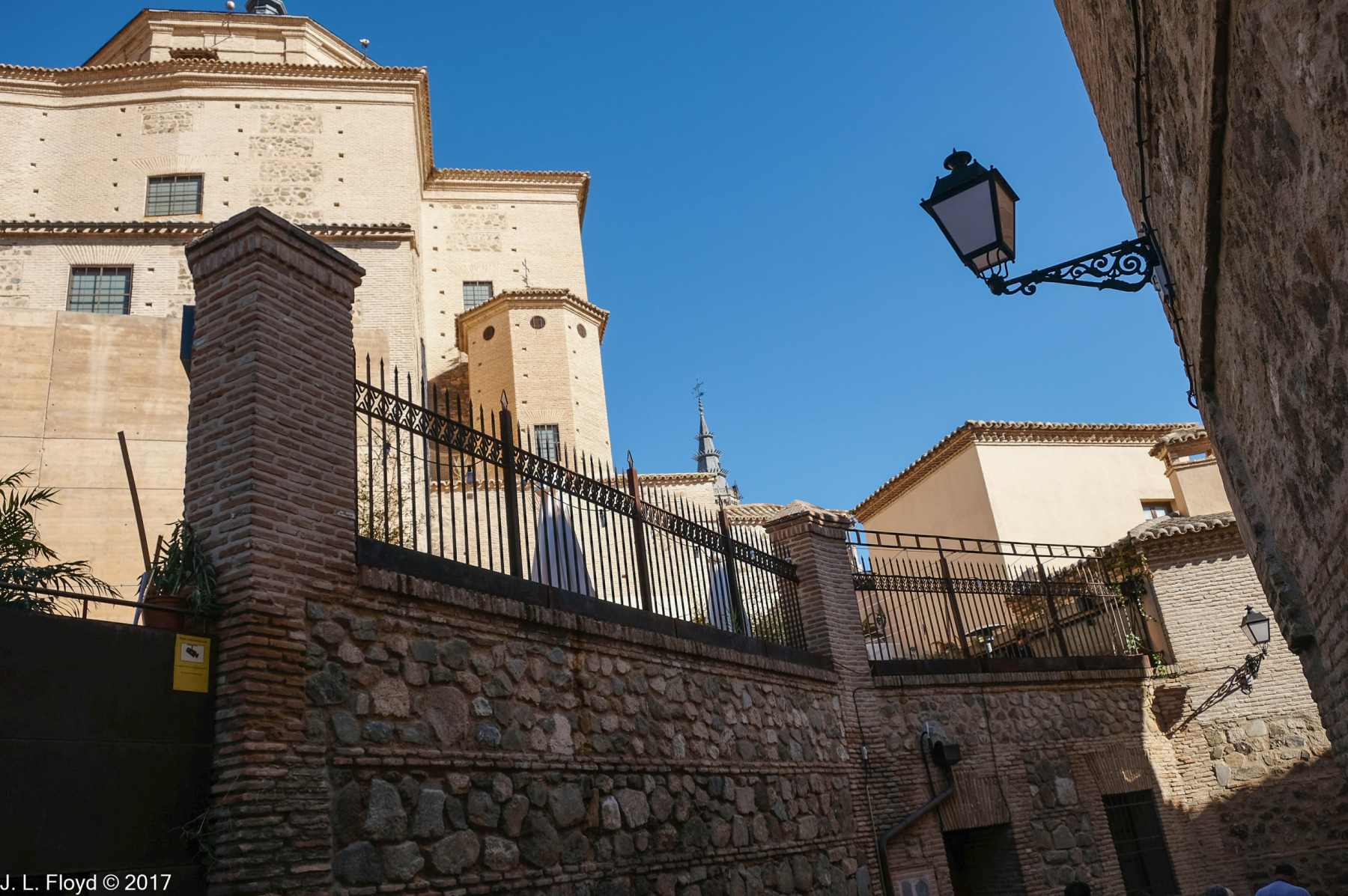
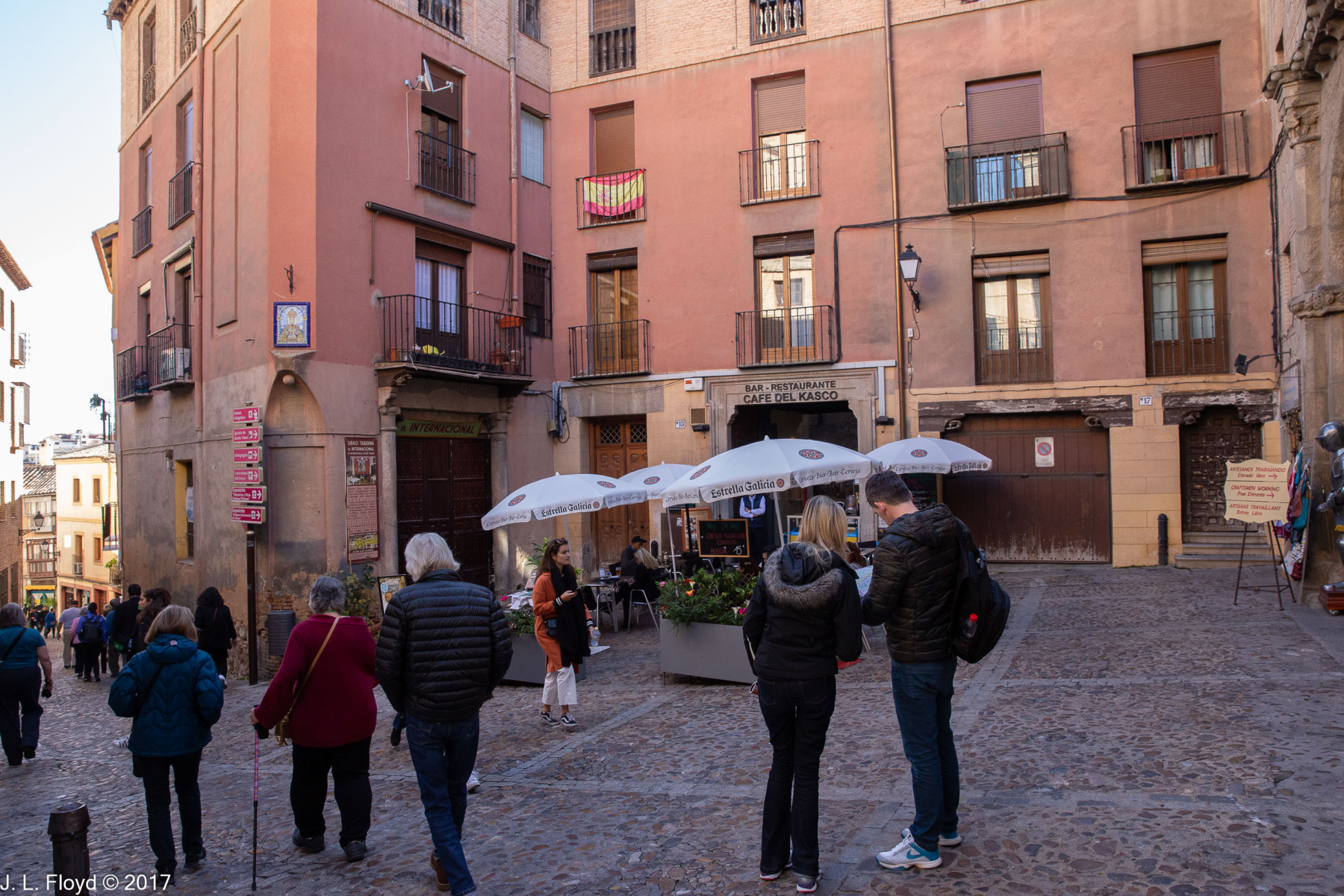
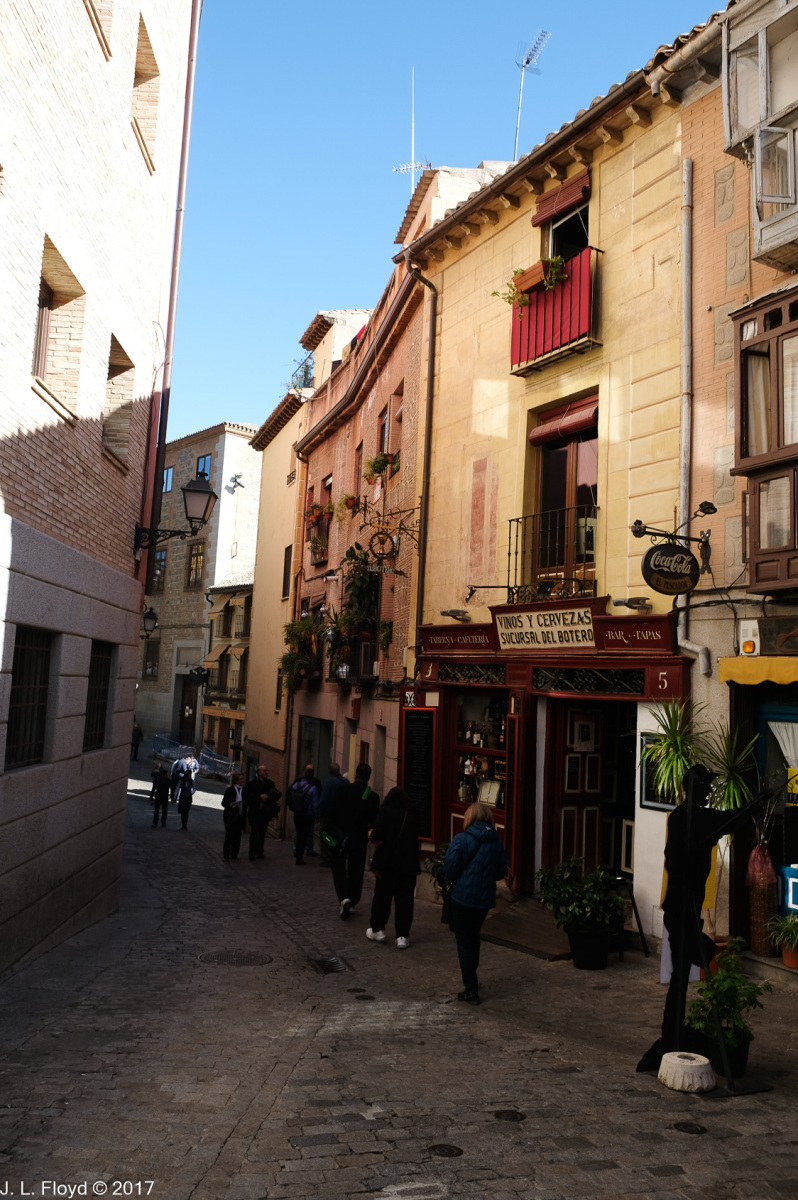
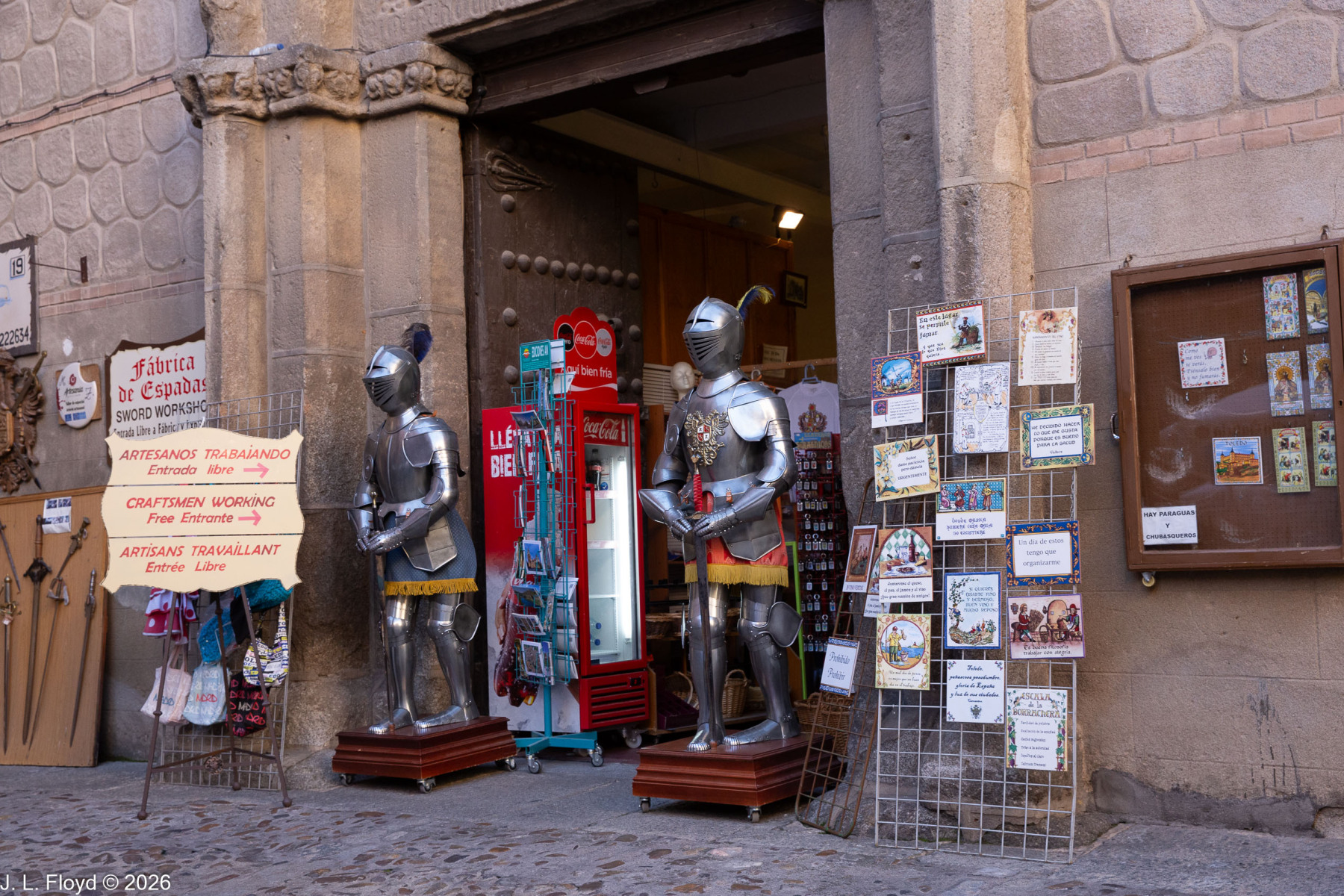
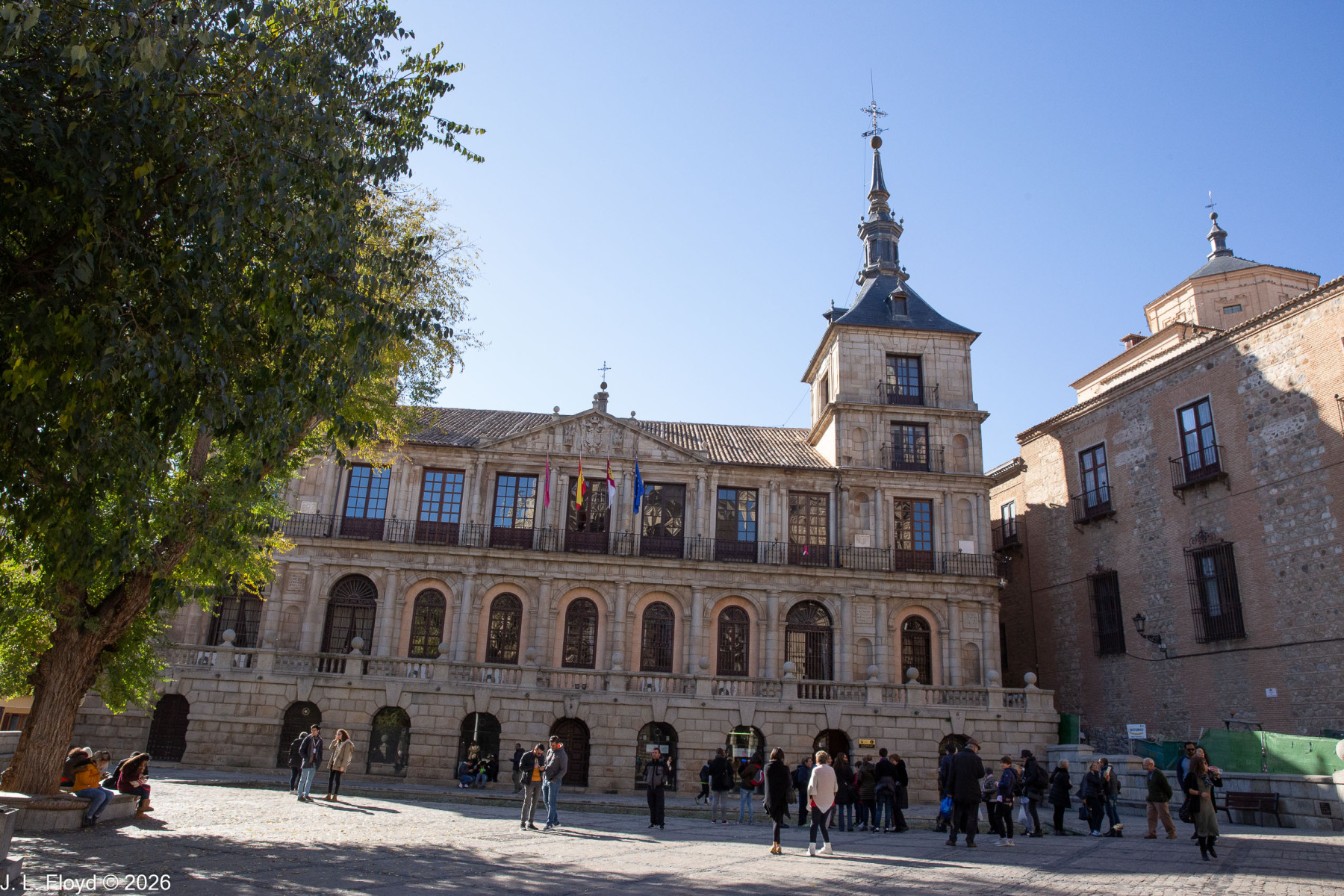
At San Marcos we took a right turn at Calle de El Salvador, then a left at onto the picturesque Calle de la Ciudad, which, after a short hike, led us to the Plaza del Ayuntamiento, the site of the Toledo City Hall. In 1575 the city elders decided that they needed a “civic palace” to match the grandeur of the Cathedral. They entrusted the design to Juan de Herrera (1530-1597), the same architect who directed the construction of Philip II’s Escorial. But he died before the project was finished, and the work dragged on until 1703. Nevertheless, the finished structure, featuring an “austere but elegant” façade with twin towers at either end, is an impressive example of the sober, geometric Herrerian style.
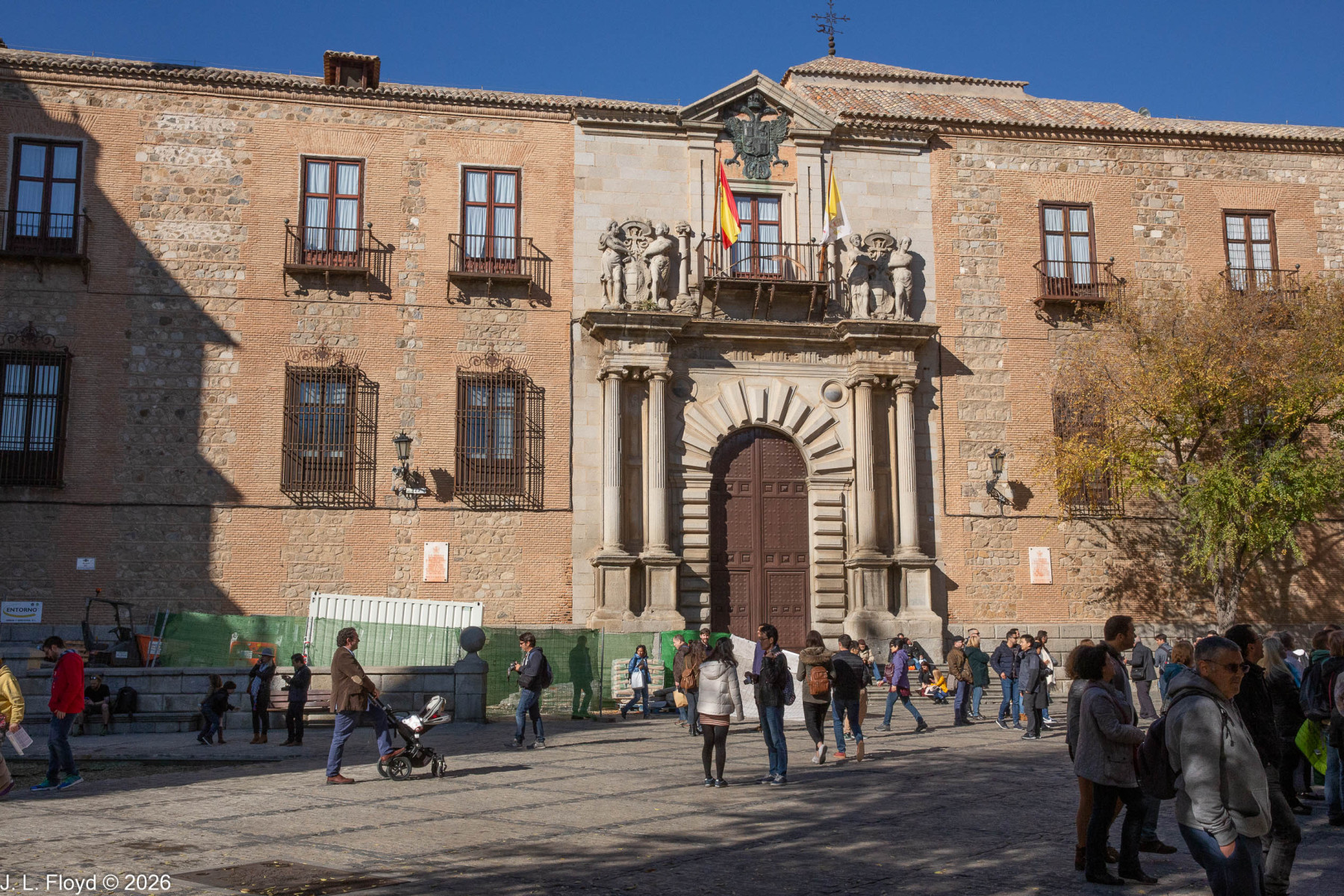
On the north side of the Plaza del Ayuntamiento, next to the Cathedral, is the Palacio Arzobispal de Toledo, the Archbishop of Toledo’s Palace. This is another edifice which took centuries to construct, and in which the son of El Greco was involved: he donated the land. The Archbishop’s Palace is connected to the Cathedral by a bridge crossing over the street between them, which, appropriately, is named Calle Arco de Palacio.
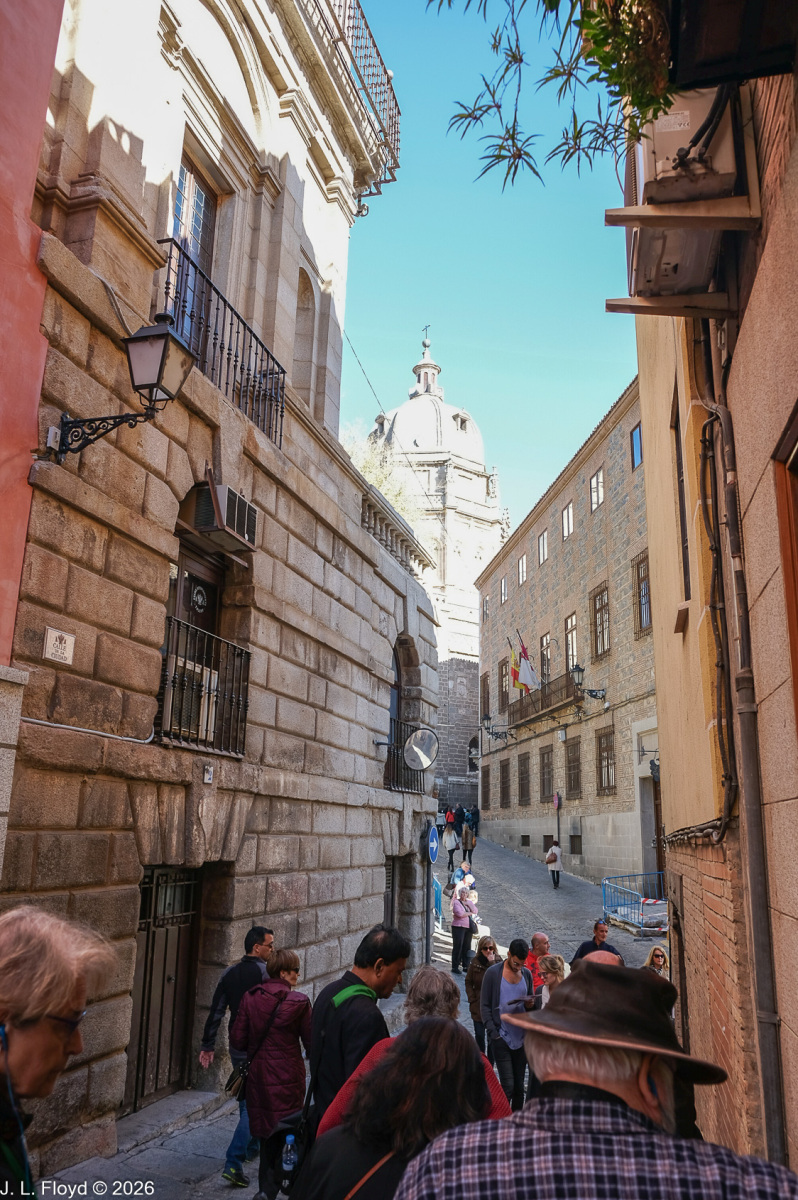
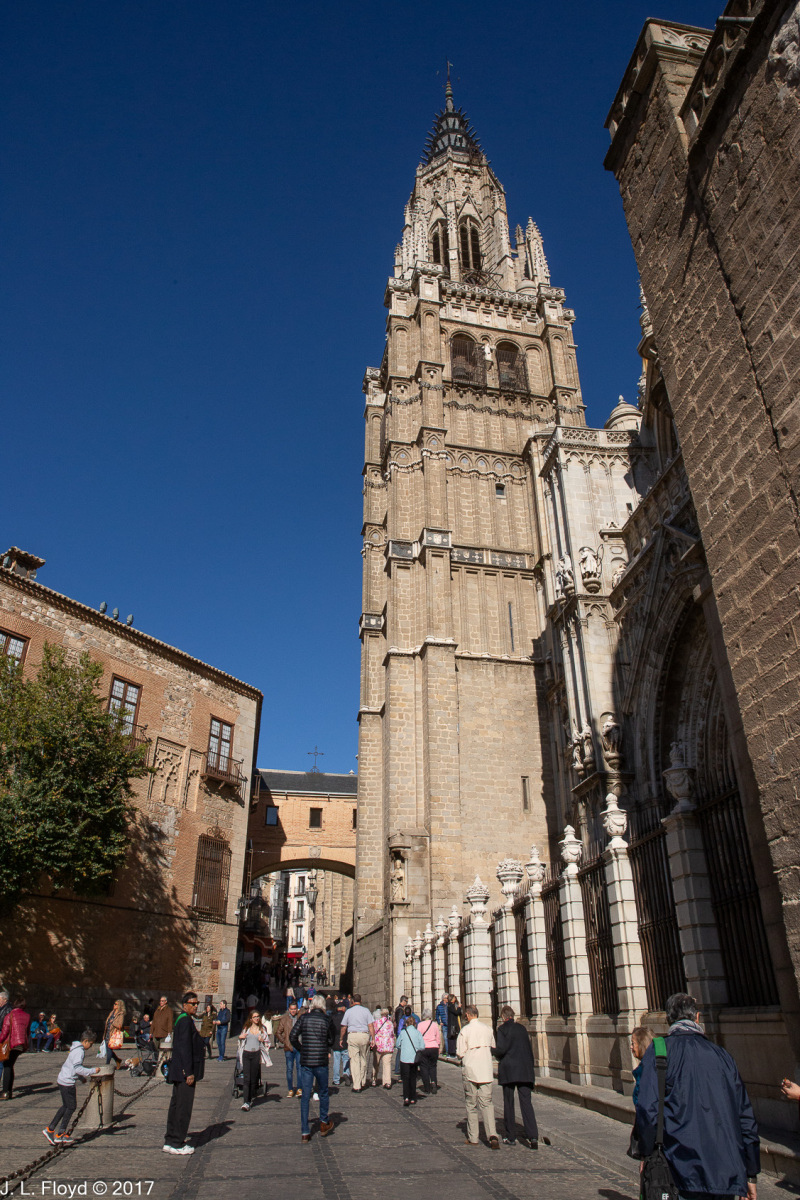
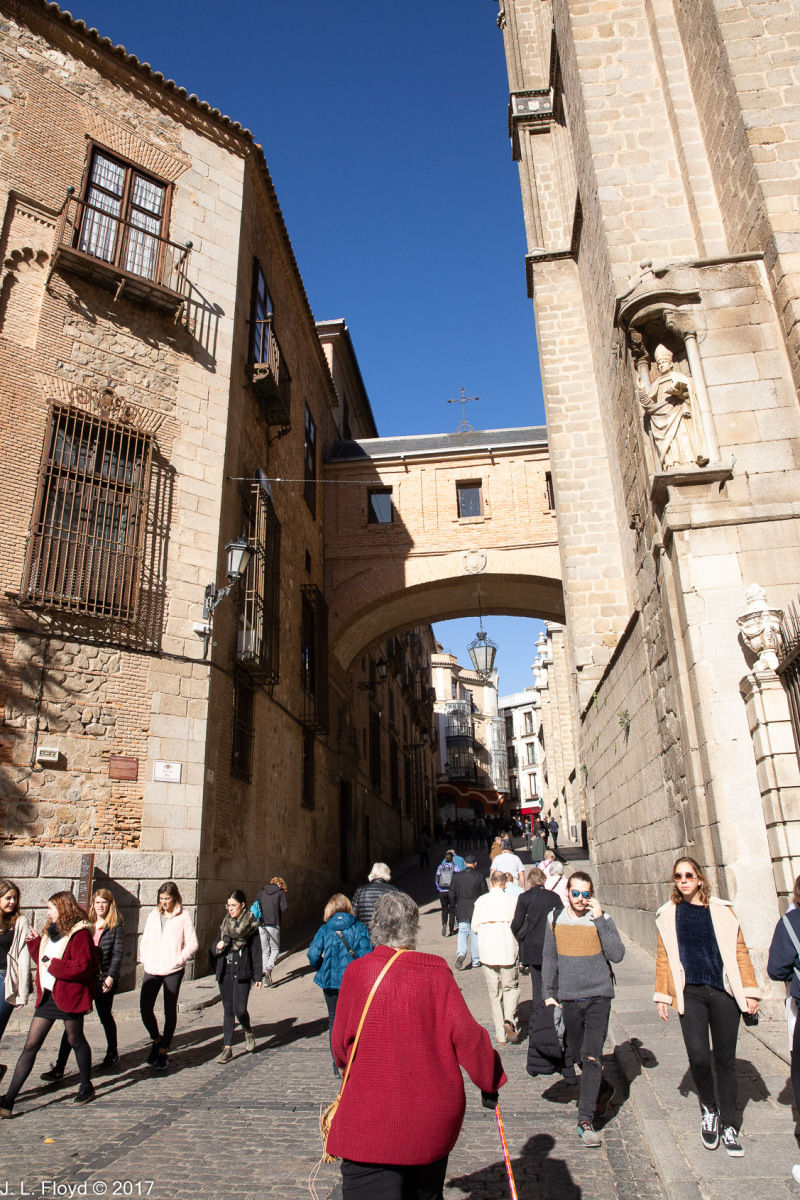
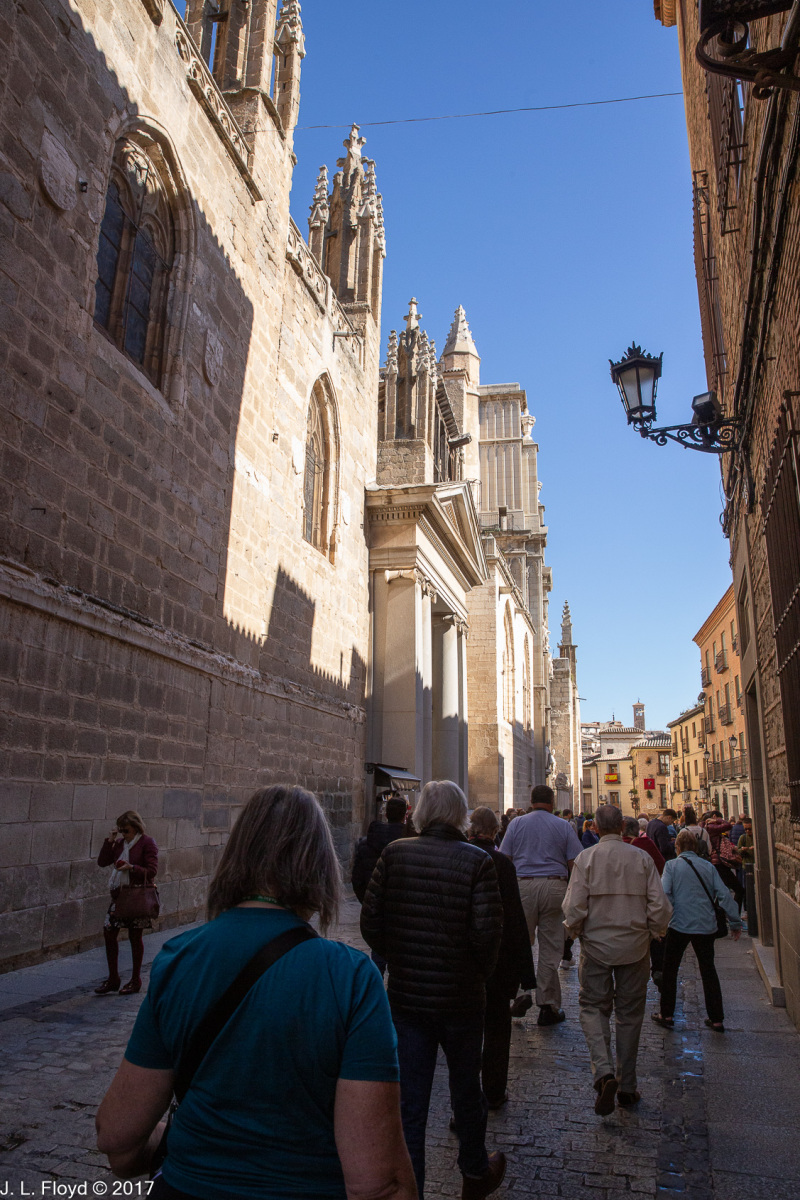
Crossing the Plaza del Ayuntamiento, we turned right onto the Calle Cardenal Cisneros, which runs along the south side of the Cathedral. Its formal name is the Catedral Primada Metropolitana de Santa María de la Asunción – in English, the Primatial Metropolitan Cathedral of Saint Mary of the Assumption. The honorific title of “Primatial,” granted by the Pope, means that it is the top-ranking cathedral of the Iberian peninsula, first among all the rest.
There has been a church on the present site of the Cathedral in Toledo at least since Visigothic times. Toledo was the episcopal seat of Visigothic Spain and several ecumenical church councils were held there. When the Muslims conquered Iberia in the 8th century, they did not suppress the archbishopric, but they tore down the existing Church of St. Mary and built the main mosque of the city on the site. In 1085, when King Alfonso VI of León and Castile reconquered the city from the Moors, among the terms of the capitulation that he signed was a promise to respect and preserve the Muslim religious and educational institutions, including the mosque. However, as soon as he left the city on state business, his queen and the fanatical Archbishop of Toledo, Bernard of Cluny, broke the promise, occupied the mosque by force, and converted it into a Christian church. The king was enraged when he found out about it, and threatened to execute everyone involved, but was dissuaded from doing so by the local Muslim leader Abu Walid, who also graciously persuaded his co-religionists to accept the legitimacy of the conversion. In 1088 Pope Urban II – who also instigated the First Crusade – designated the church to be the primatial cathedral of Castile.
But the Cathedral in its present form only began to take shape in the 13th century, when Rodrigo Ximénez de Rada (c. 1170 – 1247), Archbishop of Toledo from 1208 to 1247, having observed that the existing mosque-cathedral was falling into decrepitude, determined to build a new one worthy of the Toledan See. The early 13th century was a watershed period in Spanish history. In 1212 the combined Christian forces of Castile, Navarre and Aragon broke the power of the Almohad Caliphate once and for all in the Battle of Las Navas de Tolosa. Ferdinand III, who became King of Castile in 1217, became one of the most successful rulers in Spanish history, permanently uniting the crowns of León and Castile and going on to reconquer, in concert with the other Christian kings of Spain, most of the remaining Moorish areas, until only Granada was left to the Muslims. (In 1617 he was canonized by Pope Clement X. The San Fernando Valley in Southern California is named after him.)
Meanwhile, back in Toledo, Archbishop Ximénez de Rada was about to realize his dream of building a new Gothic cathedral. He was delayed for a while by the need to have King Ferdinand tear himself away from affairs of state long enough to be present at the laying of the cornerstone. This happened in 1227.
The new cathedral was modeled after the High Gothic cathedral of St. Stephen in Bourges, France, but incorporated some features of Mudéjar provenance as well, as an adaptation to Spanish tastes. Like all the great European cathedrals, it took many years, centuries in fact, to complete. The official year of completion was 1493, in the time of Ferdinand and Isabella, when the vaults of the central naves were finished, under the supervision of Pedro González de Mendoza (1428 – 1495), Cardinal-Archbishop of Toledo, Primate of Spain and Chancellor of Castile. Even after its nominal completion, significant additions, modifications and alterations were performed during the following centuries. Some of the most important of these were completed in the early 16th century under Mendoza’s successor, Cardinal Francisco Ximénes de Cisneros (1436-1517), whose name was given to the street from which we entered the cathedral. We encountered mementos of these two prelates, who were both key figures in Spanish history, at every turn during our tour of the cathedral.
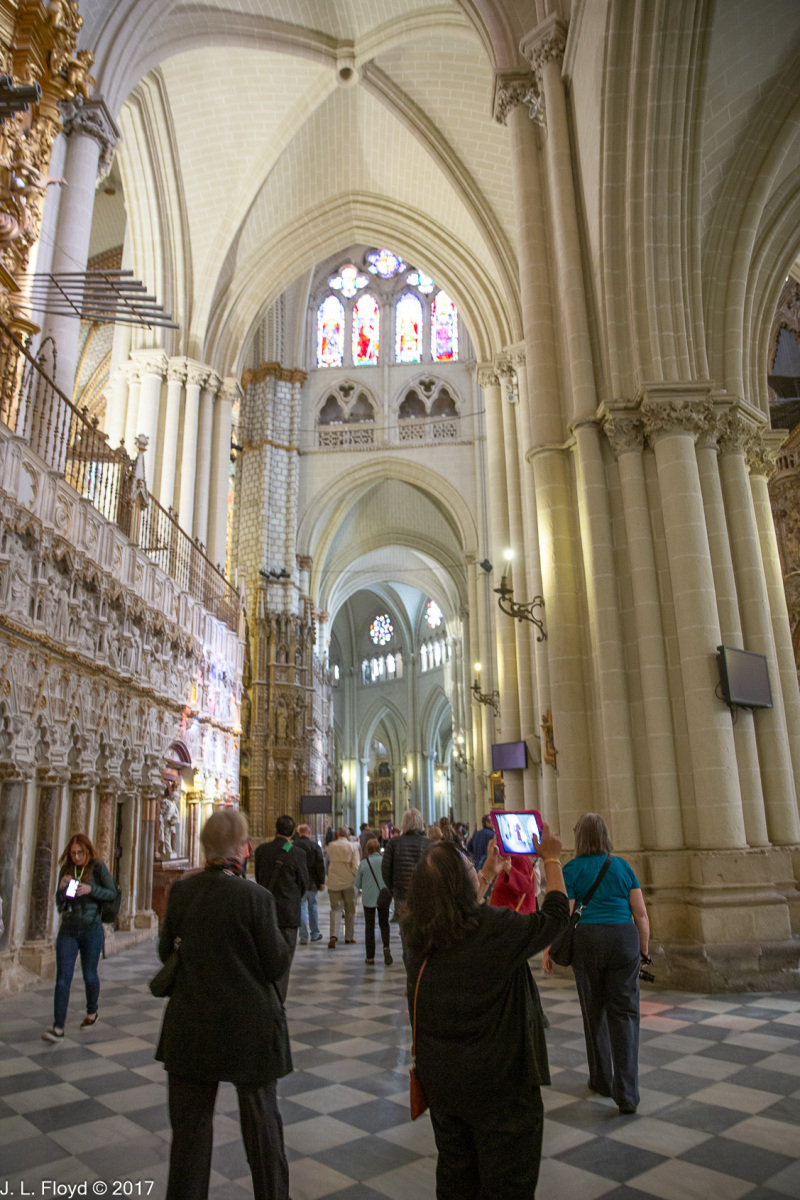
The cathedral is 120 meters (390 feet) in length, 59 meters (194 feet) wide and 44.5 meters (146 feet) high. It consists of five naves with a transept (crosswise passage) between the choir and the main chapel, and a double ambulatory encircling the latter. It has one spire, at the northwest corner, 92 meters (302 feet) high. The original plan called for an identical tower to be built at the southwestern corner, but while the north tower was under construction, the builders discovered that an underground water stream made the south side too unstable to hold the weight of another tower, so that idea was abandoned. Later, around 1500, a major chapel, the Mozarabic, was built in that location; this was the doing of Cardinal Cisneros.
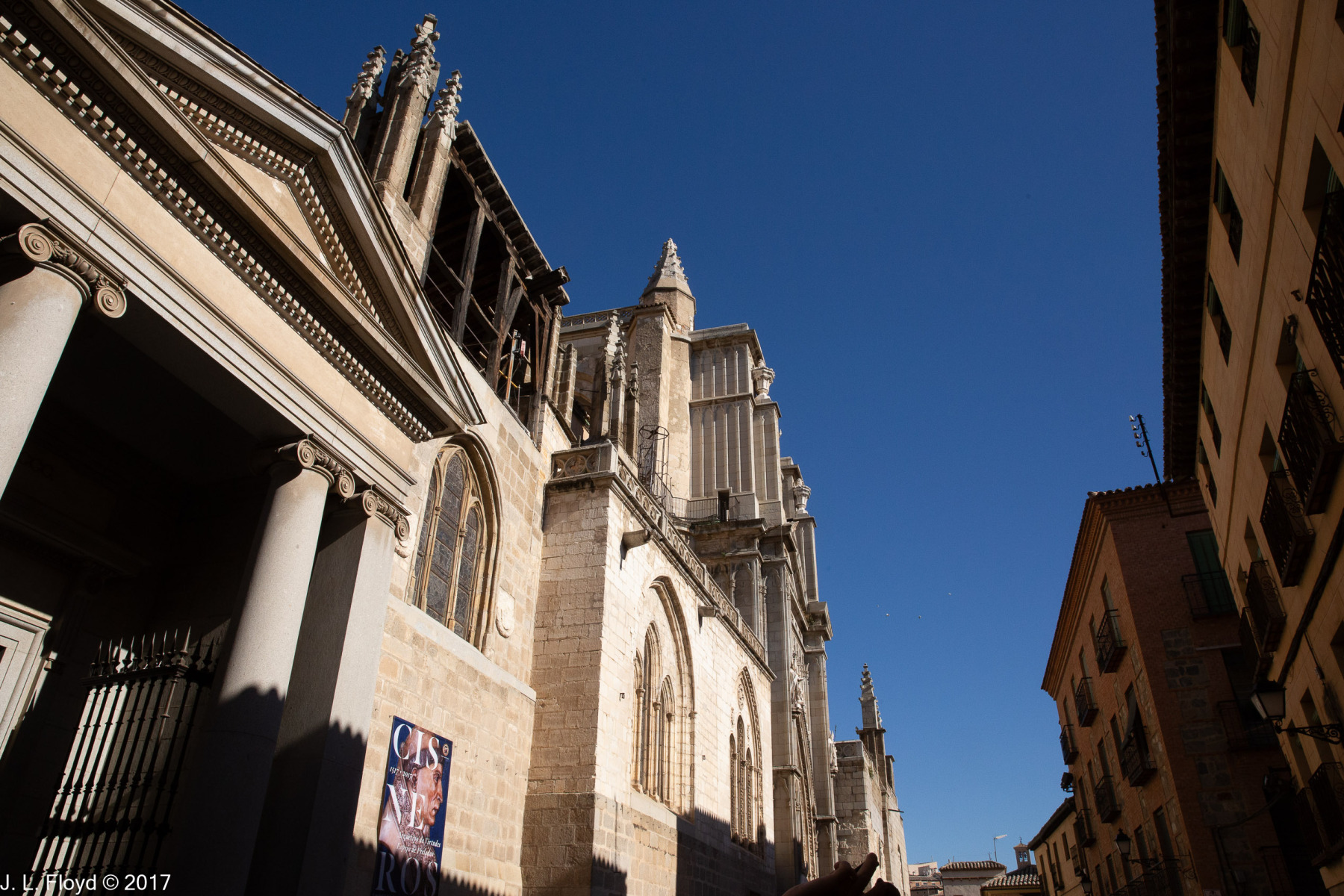
The Calle Cardenal Cisneros provides two entrances to the Cathedral. We first passed the Puerta Llana, the Level Portal, of neo-classical style, added in 1800, and so called because it is level with the street and has no steps; it was customary for processions to exit through it. We entered through the second portal on the south side, the great Puerta de los Leones or Lions’ Gate. This was built between 1460 and 1466, on the order of Archbishop Alfonso Carrillo de Acuña. The design, in a late Hispano-Gothic style, was conceived and executed by Flemish masters from Brussels.
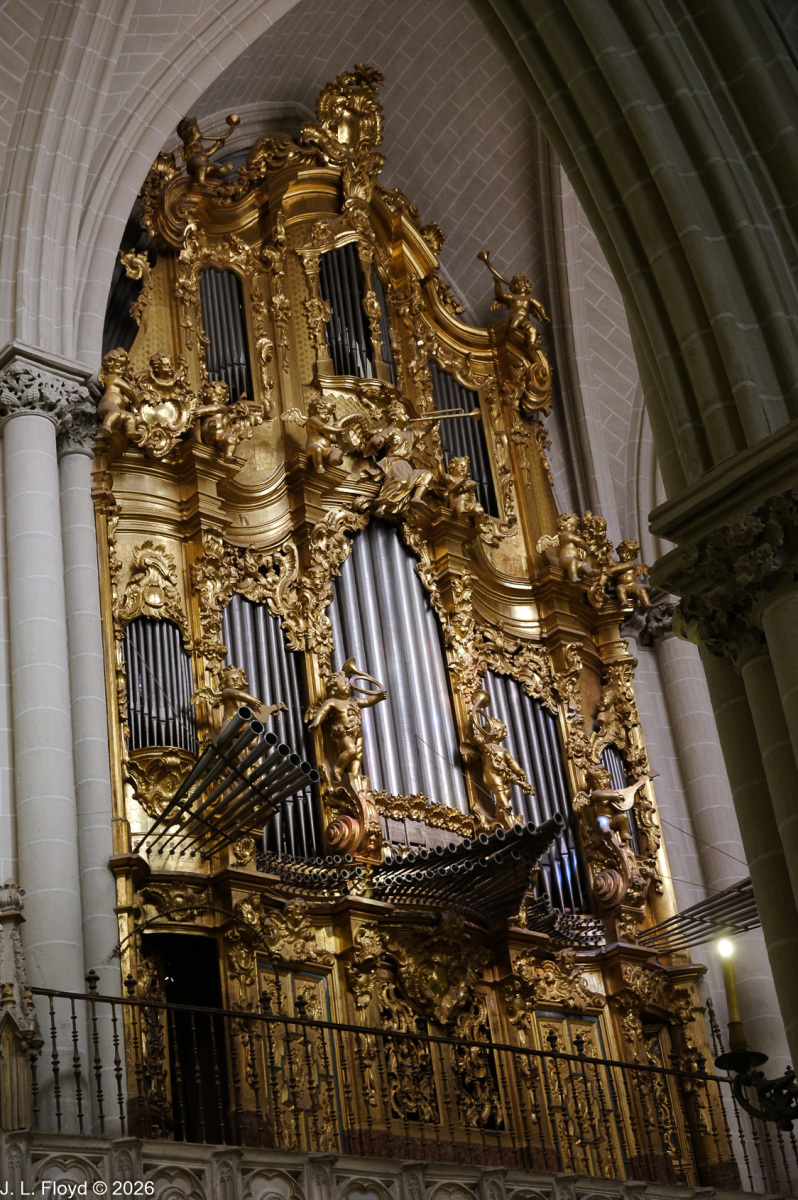
Entering the cathedral, we found ourselves on the south side of the transept. On an ornate balcony to the left was one of the many (nine, by my count) organs in the cathedral. It was a very impressive organ, but not the largest; that distinction belongs to the so-called “Emperor” organ, located above the Puerta de los Leones, which we had just passed through. It sits on a very tall balcony with balustrade, far above the doors of the portal, and the distance makes it look relatively small; until I found out differently, I thought that the Emperor organ was the one on the lower balcony, but that may be the one called the “General” (one of two in the choir) instead.
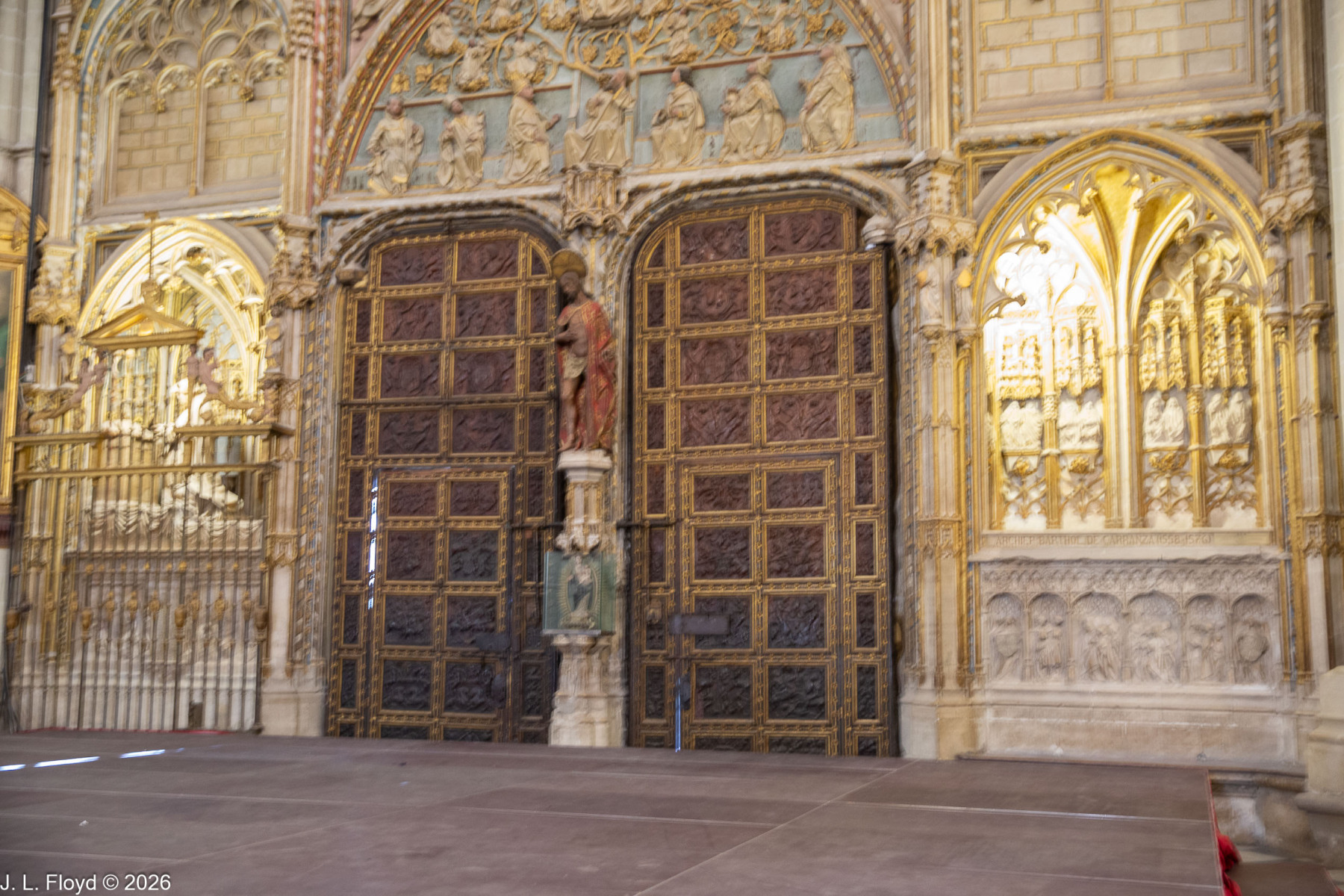
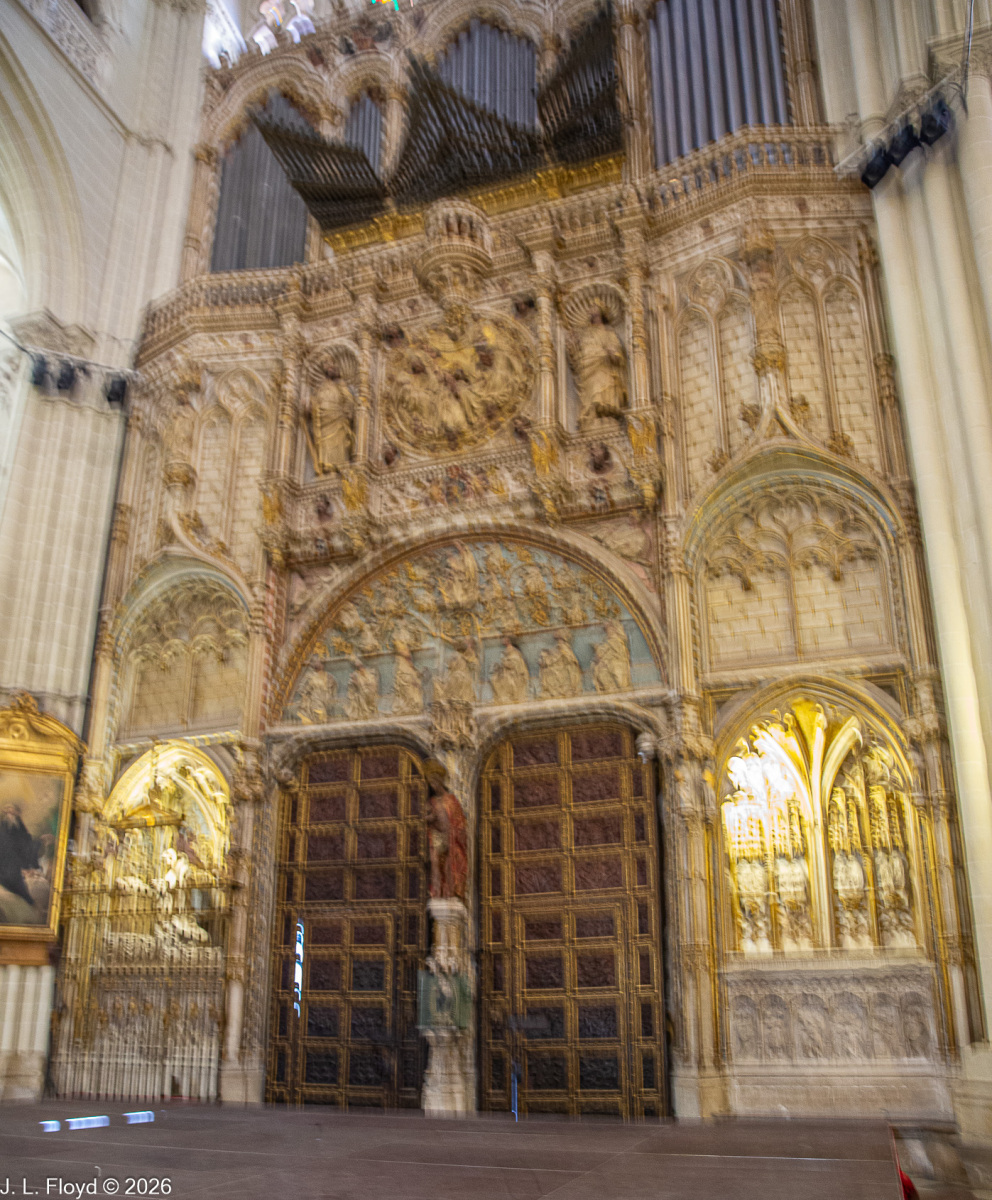

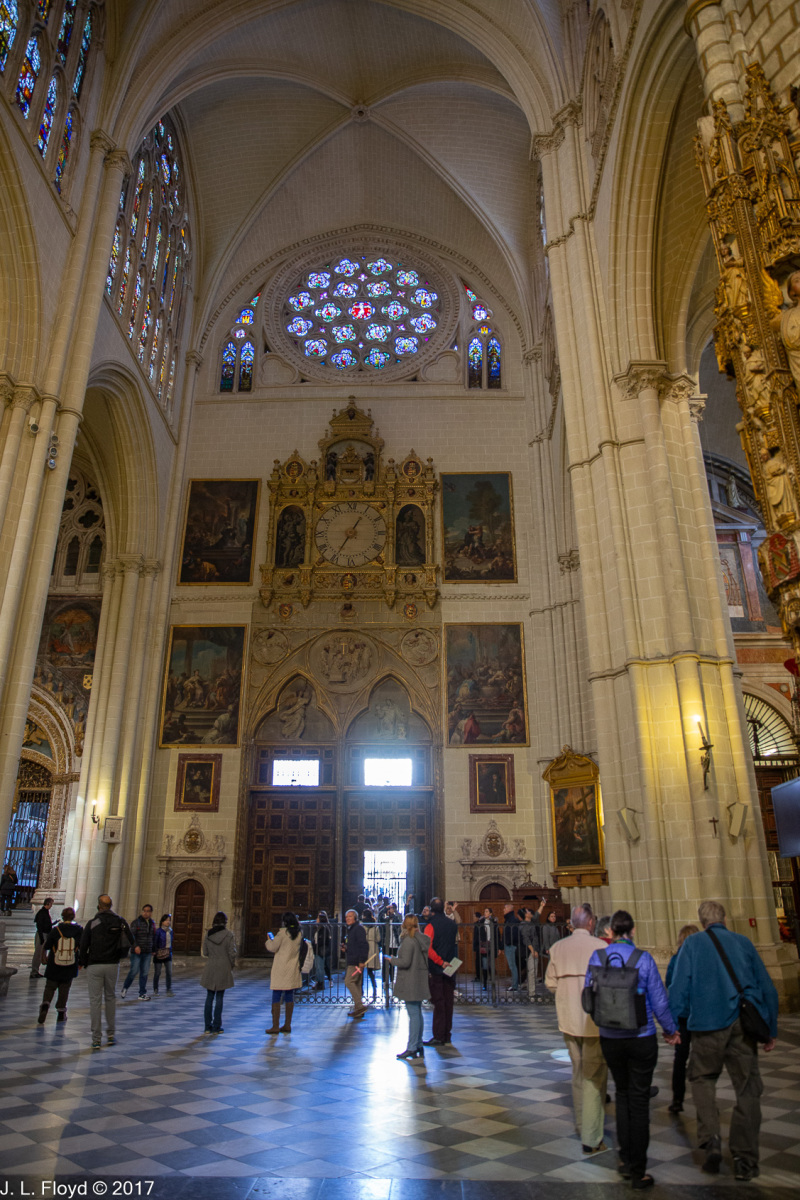
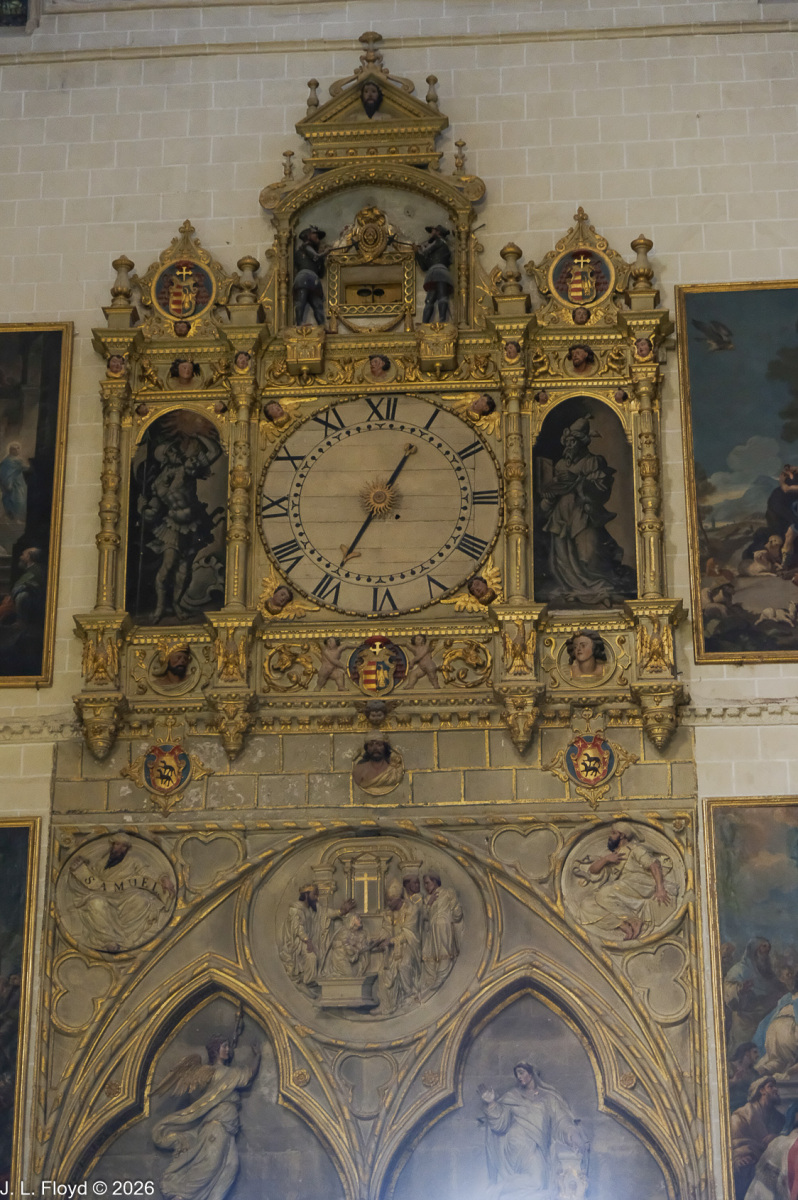
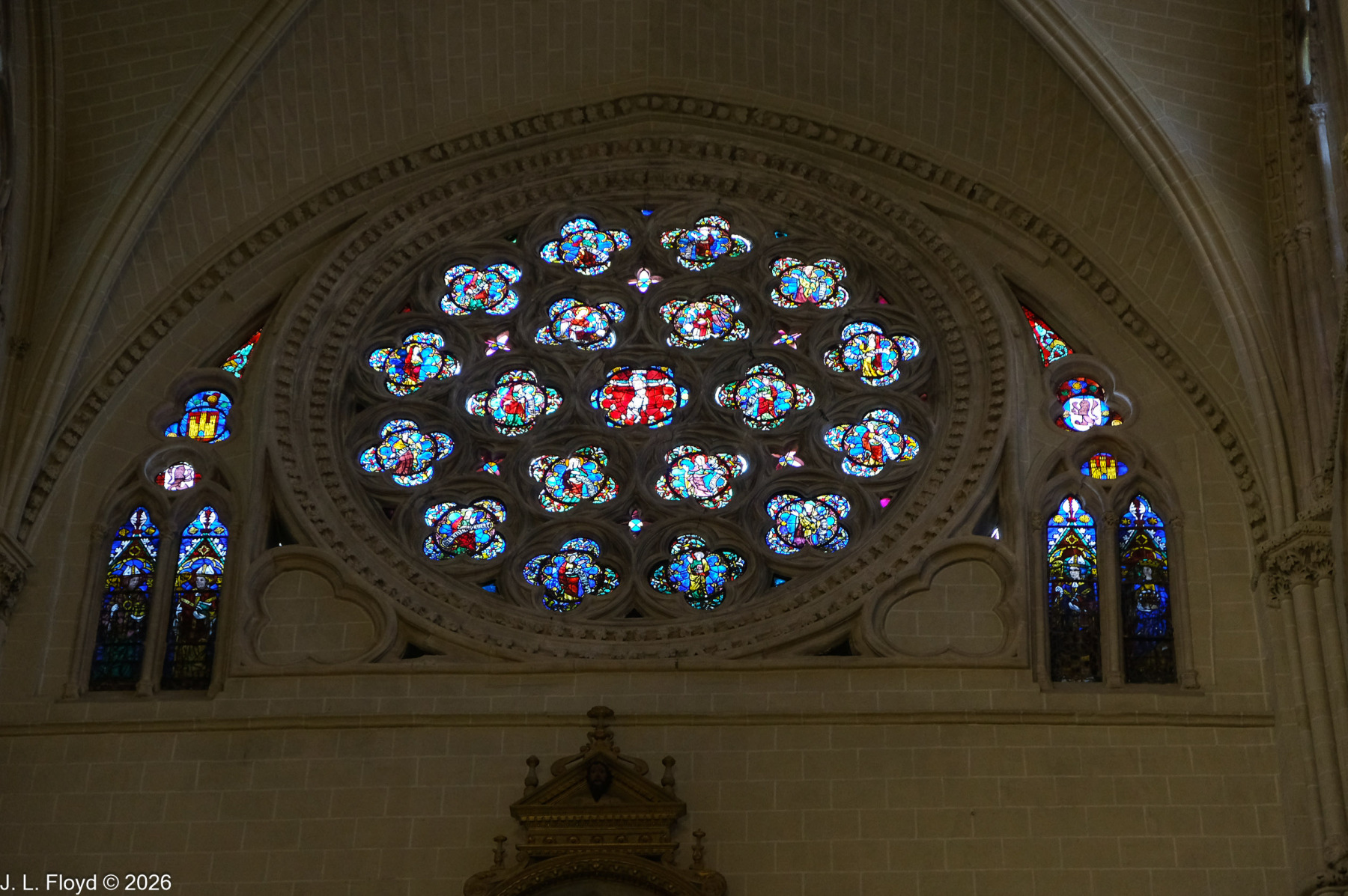
On the opposite (north) side of the transept, we saw the great Puerta del Reloj (Portal of the Clock), which does indeed have a clock above the doorway. Above the clock is the 13th-century Rose Window, the oldest stained-glass window in the cathedral. It has a counterpart above the Portal de los Leones; that is the work of by Nicolás de Vergara el Mozo (1540 – 1606), who as Master of Works was also responsible for several chapels and other celebrated additions to the cathedral. Unfortunately, I failed to scale my photo of the Puerta de Los Leones with the Emperor Organ to include the window.
While many great paintings, sculptures and other works of art are displayed in Toledo Cathedral, I was particularly enthralled by the rejería, or grillework. Rejas are decorative ironwork screens placed in front of the choir, the chapels and sometimes the altars. The ones in Toledo Cathedral were made mostly in the 16th century in Spanish Renaissance style by highly skilled craftsmen who specialized in reja-making. First forged in iron, they were then plated with gold or silver and adorned with mythological figures, medallions, candelabra, etc.
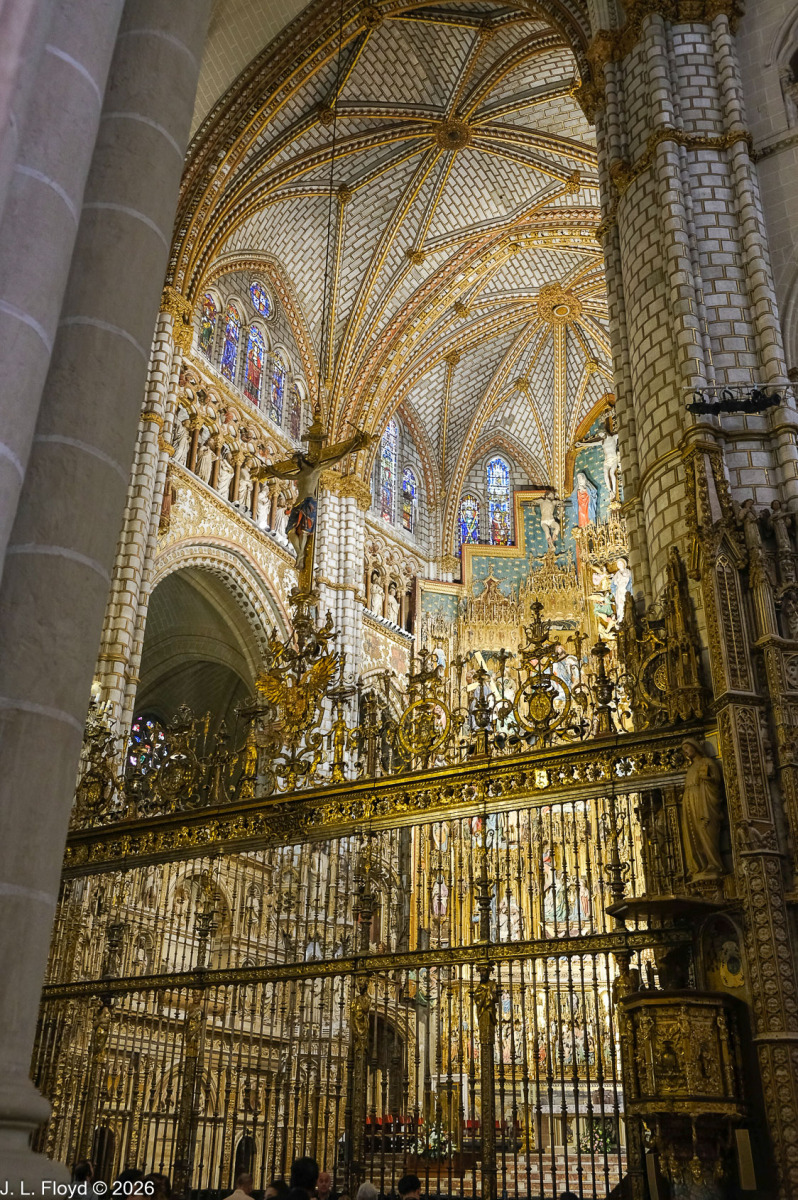

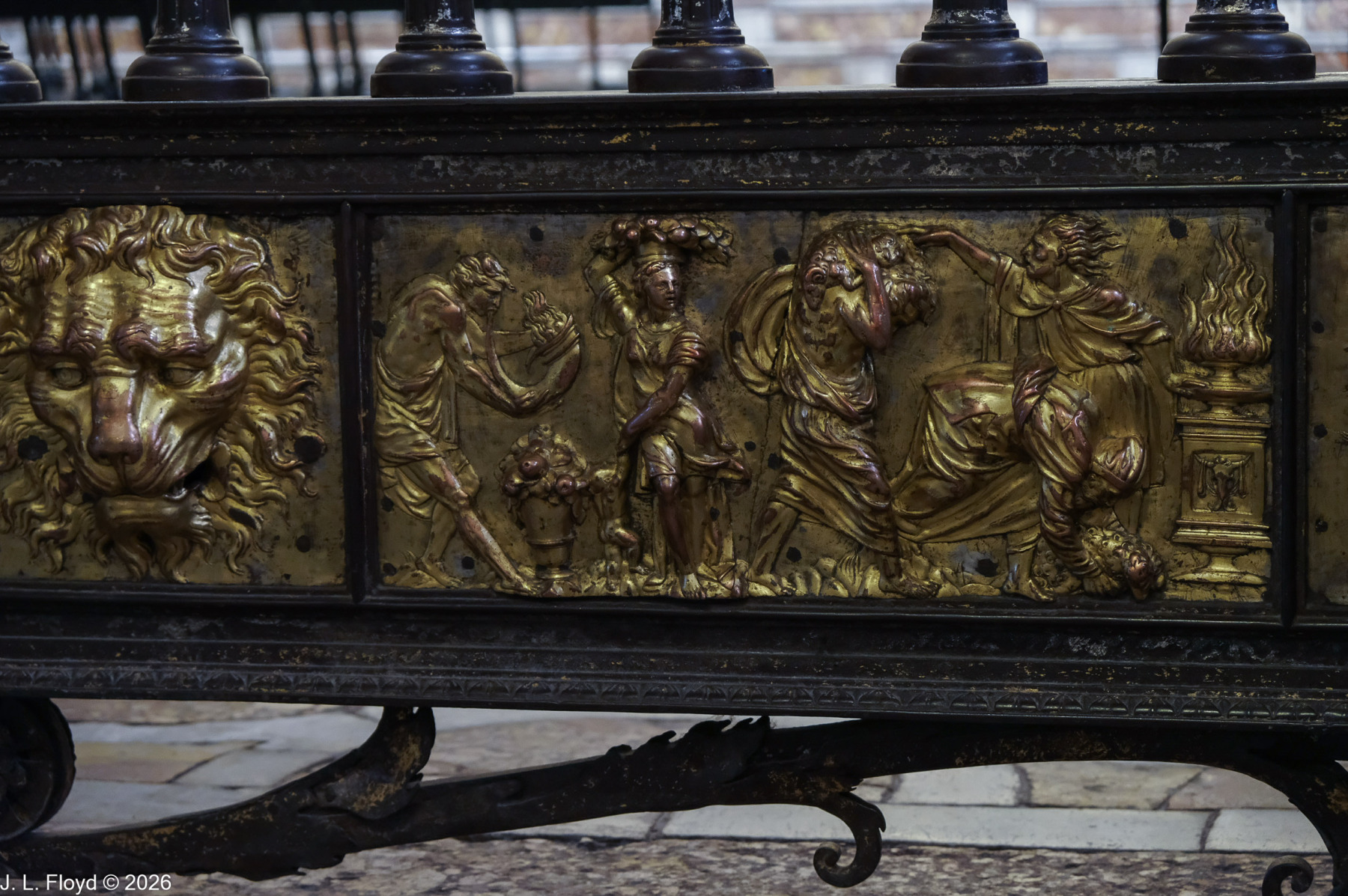
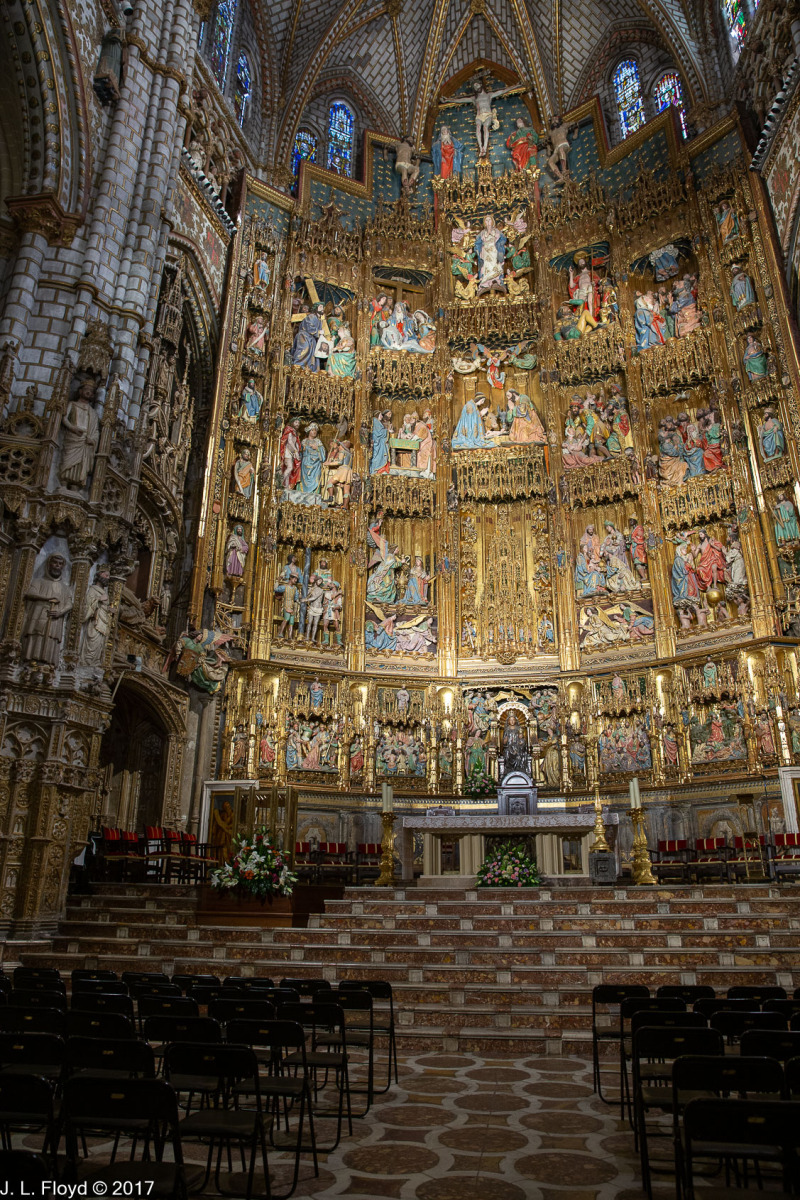
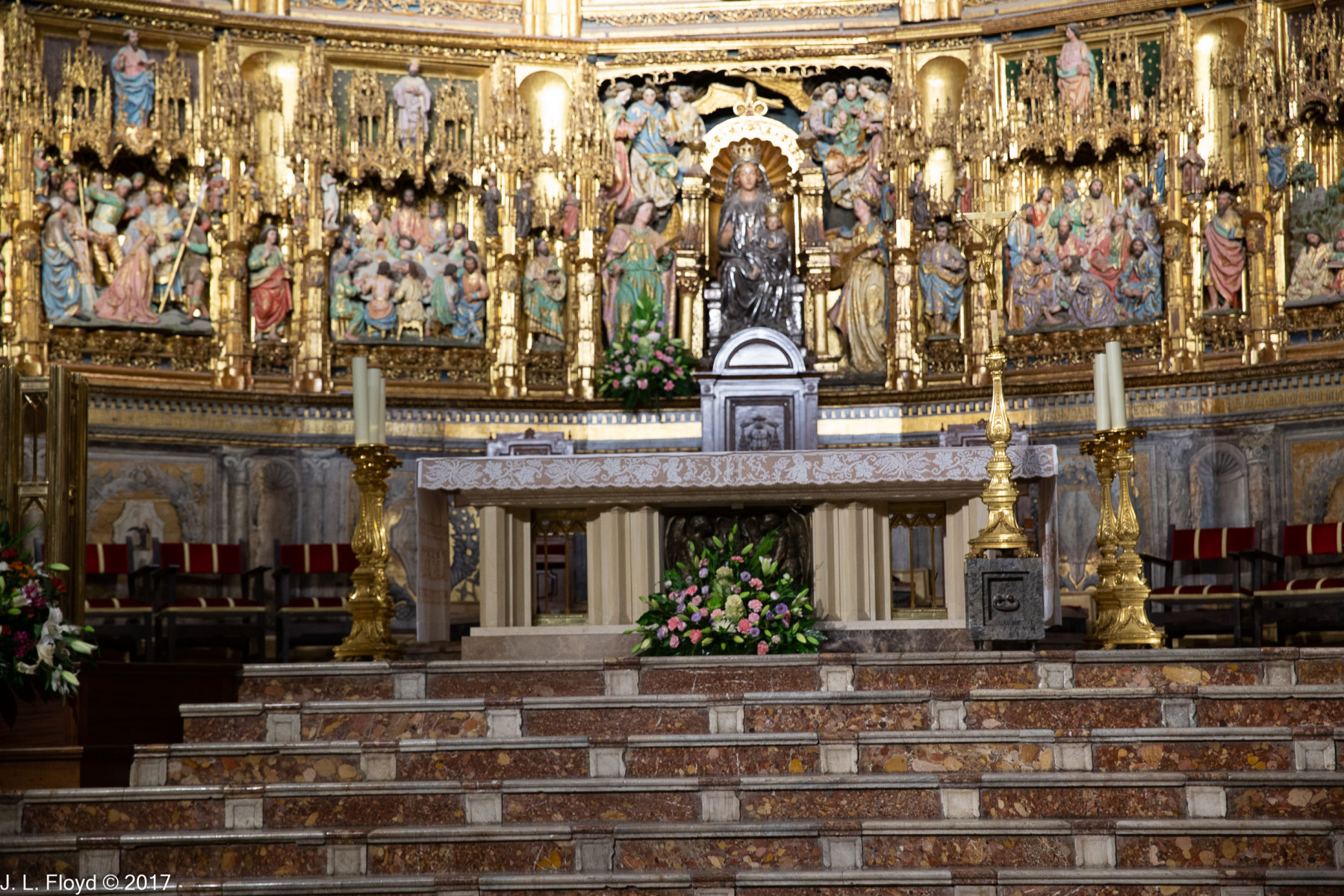
One of the most elaborate and beautiful of the rejas screens off the Capilla Mayor (Main Chapel) of the cathedral, which houses the High Altar and its retable (altarpiece), as well as the tombs of several Castilian kings. The altar and altarpiece were commissioned by Cardinal Ximenez de Cisneros. The existing Capilla Mayor was too small for the altarpiece that Cisneros wanted, so he called for it to be demolished and a new, expanded version to be built in its place. The cathedral chapter (governing body) strenuously objected to this, but Cisneros – as he demonstrated in Granada around the same time – was not one to take no for an answer, and he got his way.
Work on the retable he commissioned began in 1497 and was completed in 1504. It is one of the last great masterpieces of Spanish Gothic art, which was beginning to give way to Renaissance forms in that period. It is made of wood, intricately carved, painted and gilded; it is five stories tall, and depicts episodes from the life of Christ and the Virgin Mary, culminating in a monumental scene of the Crucifixion at the top.
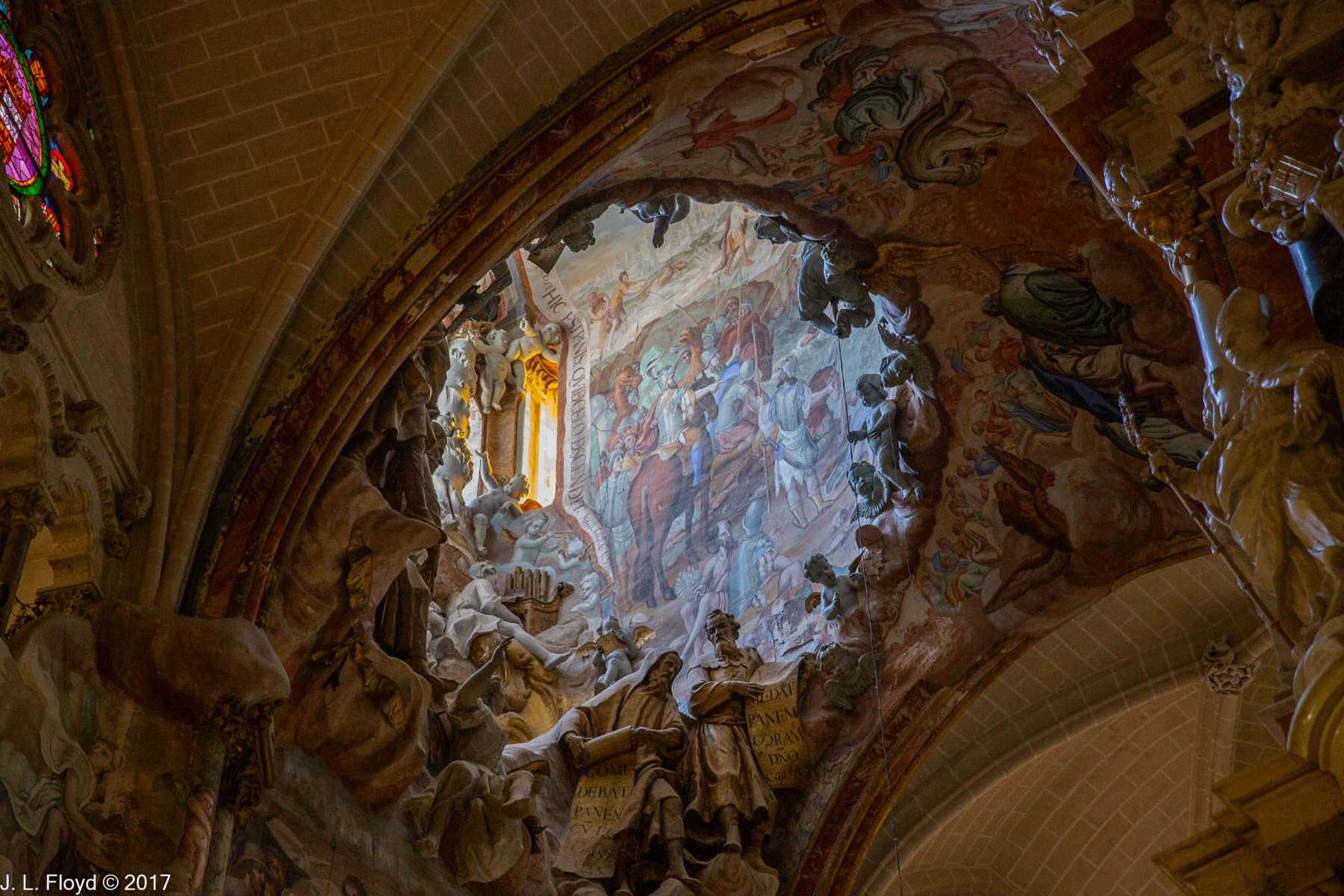
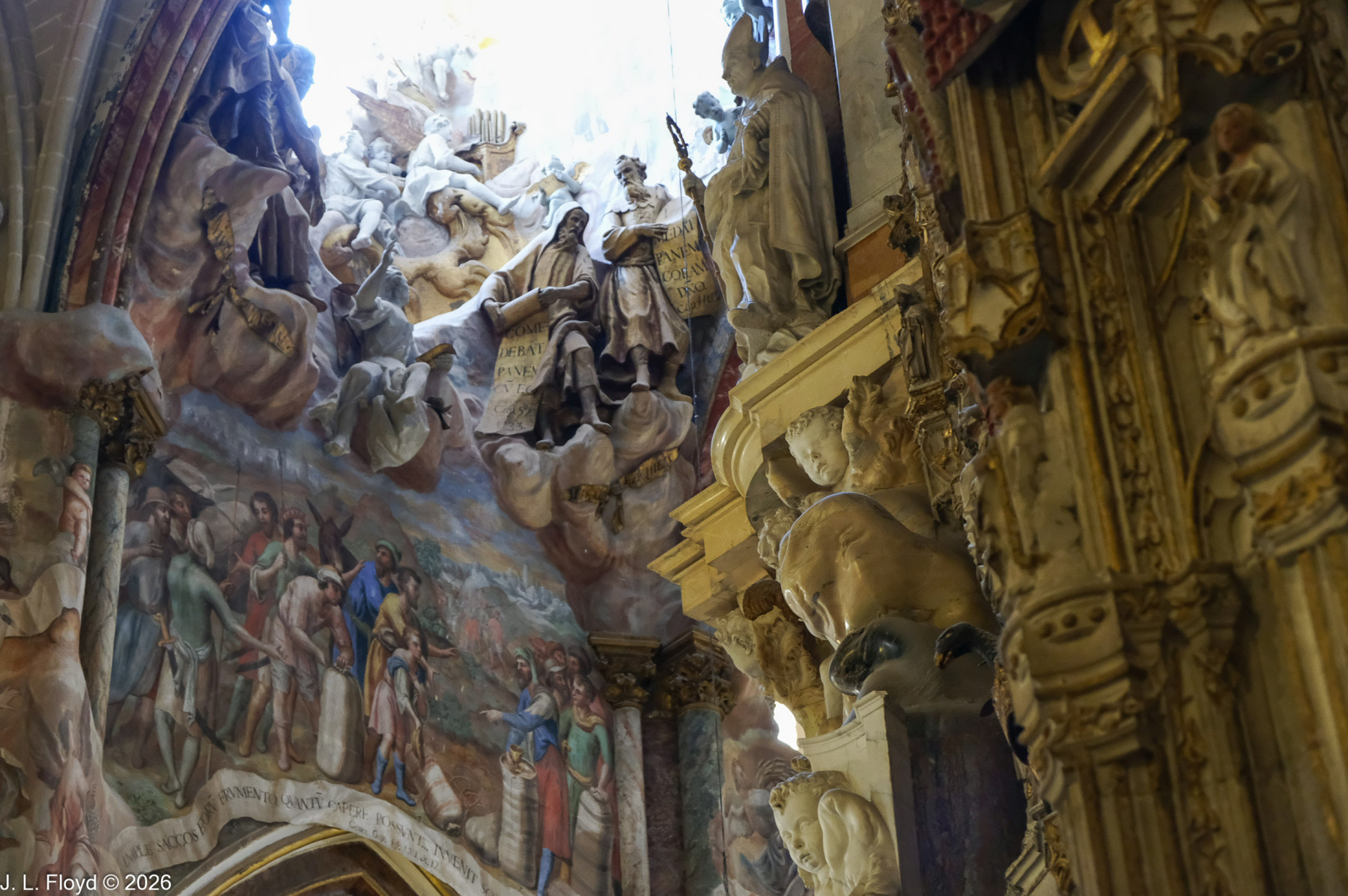
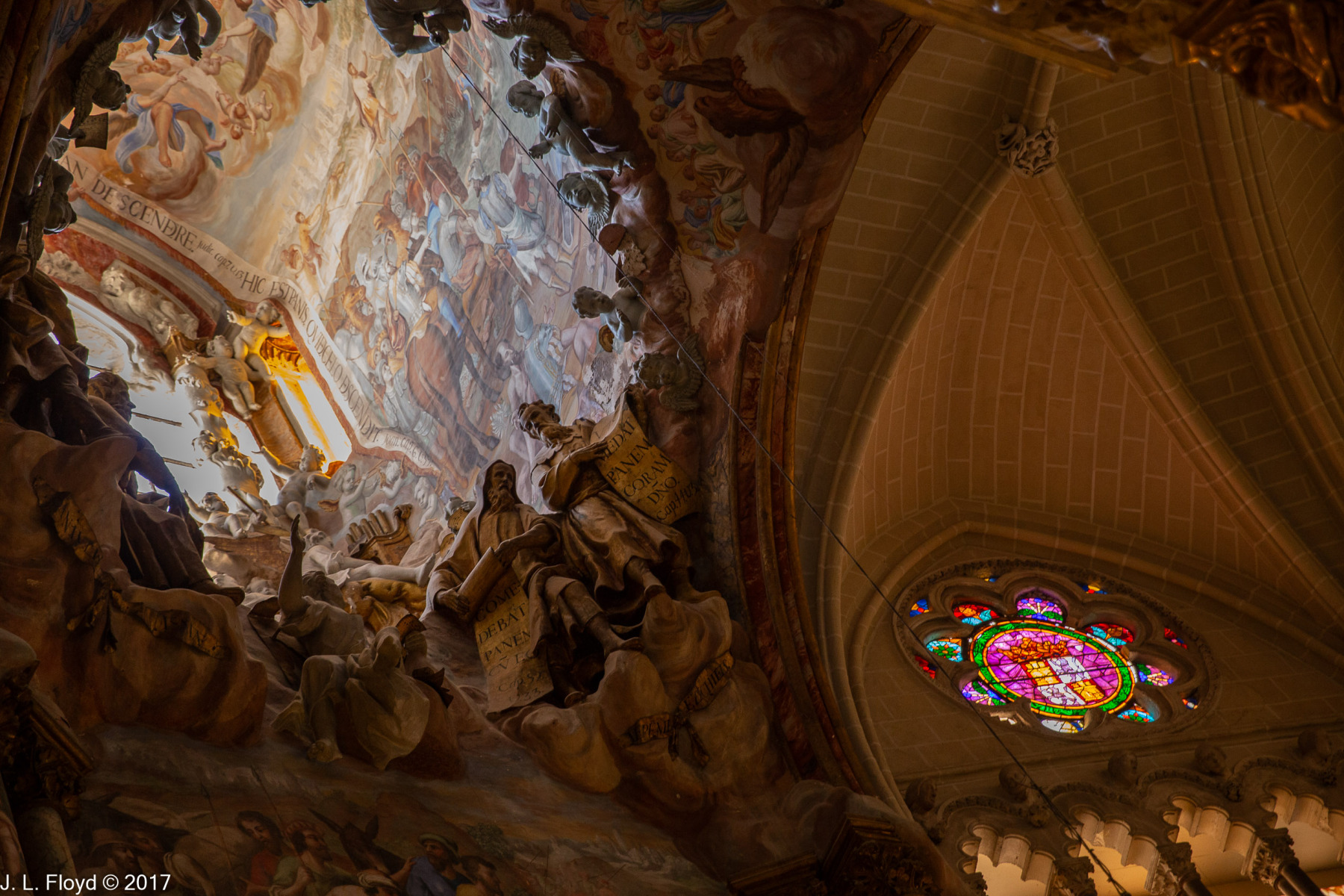
Venturing into the ambulatory, behind the Capilla Mayor, we encountered another of the chief glories of the Toledo Cathedral, a Baroque altarpiece known as El Transparente. This was a late addition, created in 1729-1732 by Narciso Tomé and his four sons. El Transparente is several stories high and has been described as a mixed-media masterpiece, with fantastic figures done in stucco, paint, bronze castings, and multiple colors of marble. However, it was not the altarpiece itself which captured my attention, but rather the manner in which it is illuminated. Two oculi (holes), one high up in the ambulatory, the other cut into the back of the altarpiece itself, allow shafts of sunlight to play over the area, producing a magical effect. Indeed, Sandie and I were so mesmerized by the view through the “skylight” oculus that we forgot to photograph the altarpiece itself. But there is a good image of it on Wikipedia.
#/media/File:FP_Toledo_Cathedral_2025_-_Transparente.jpg)

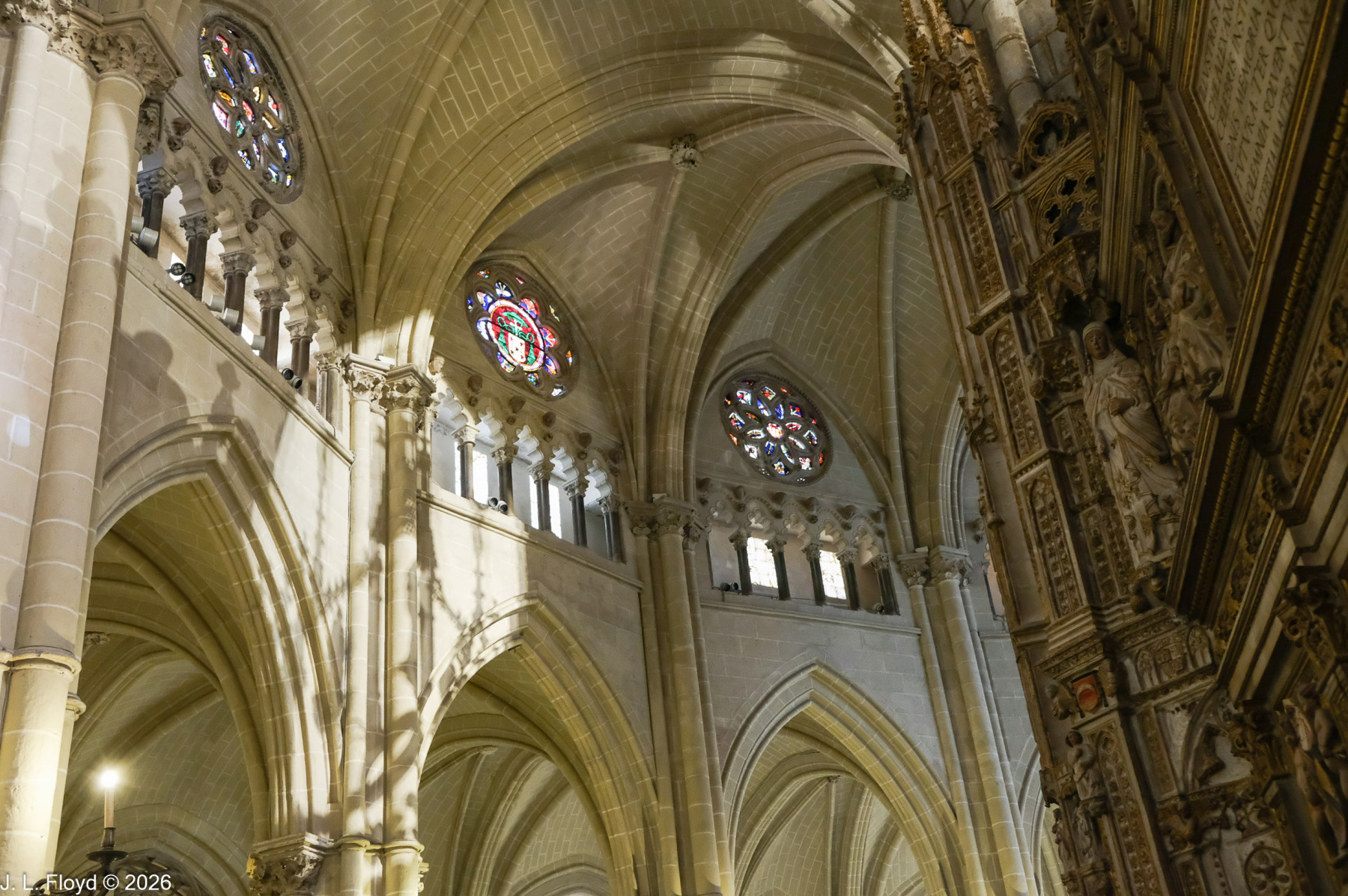
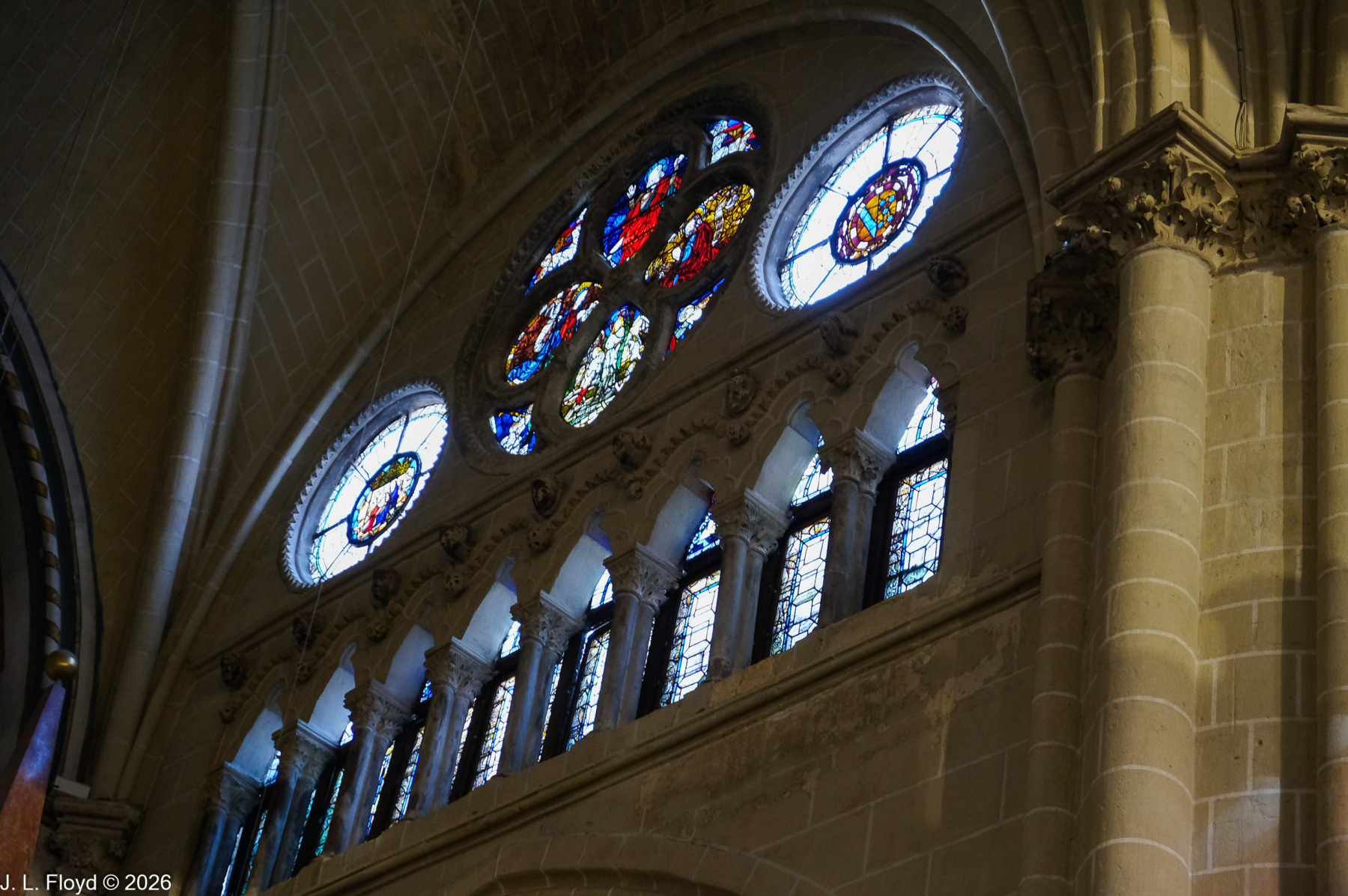
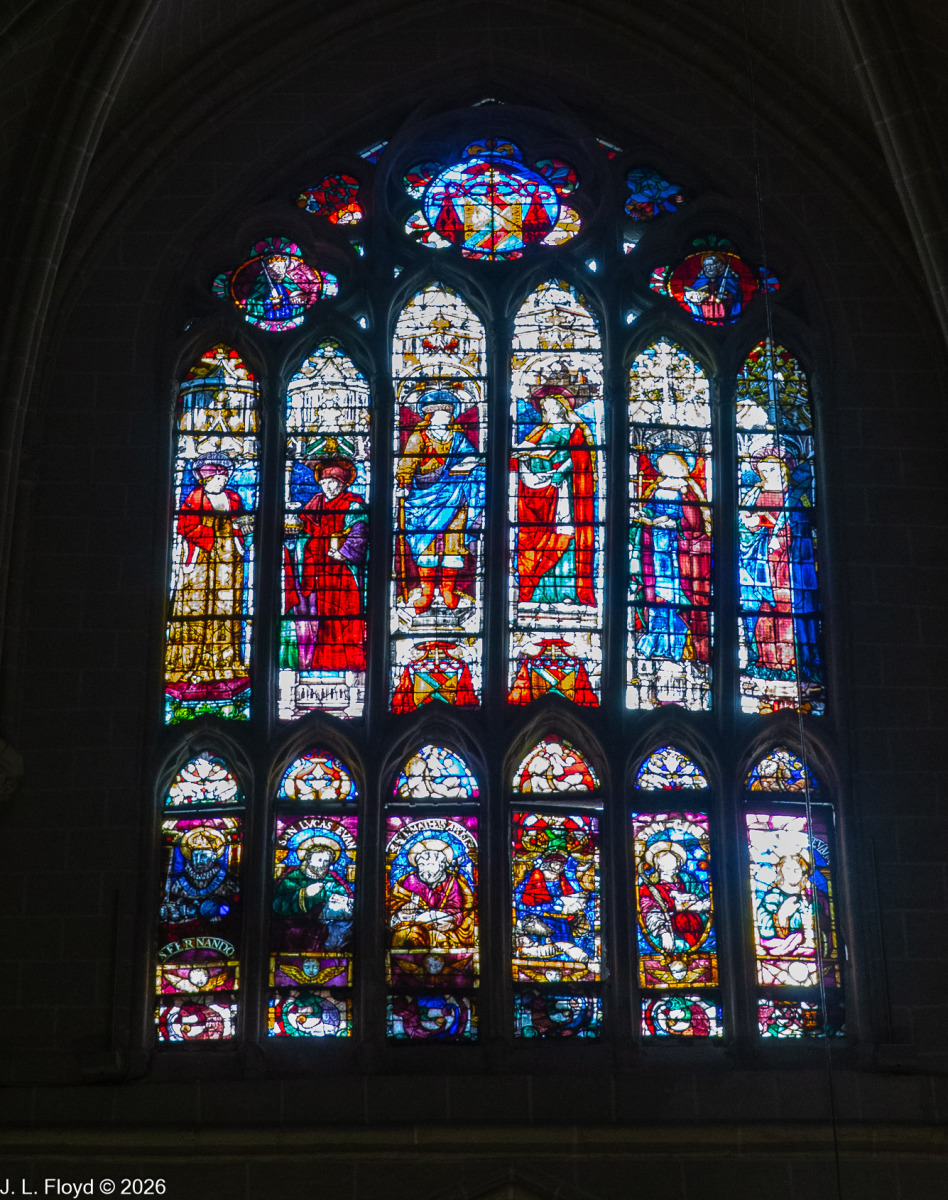
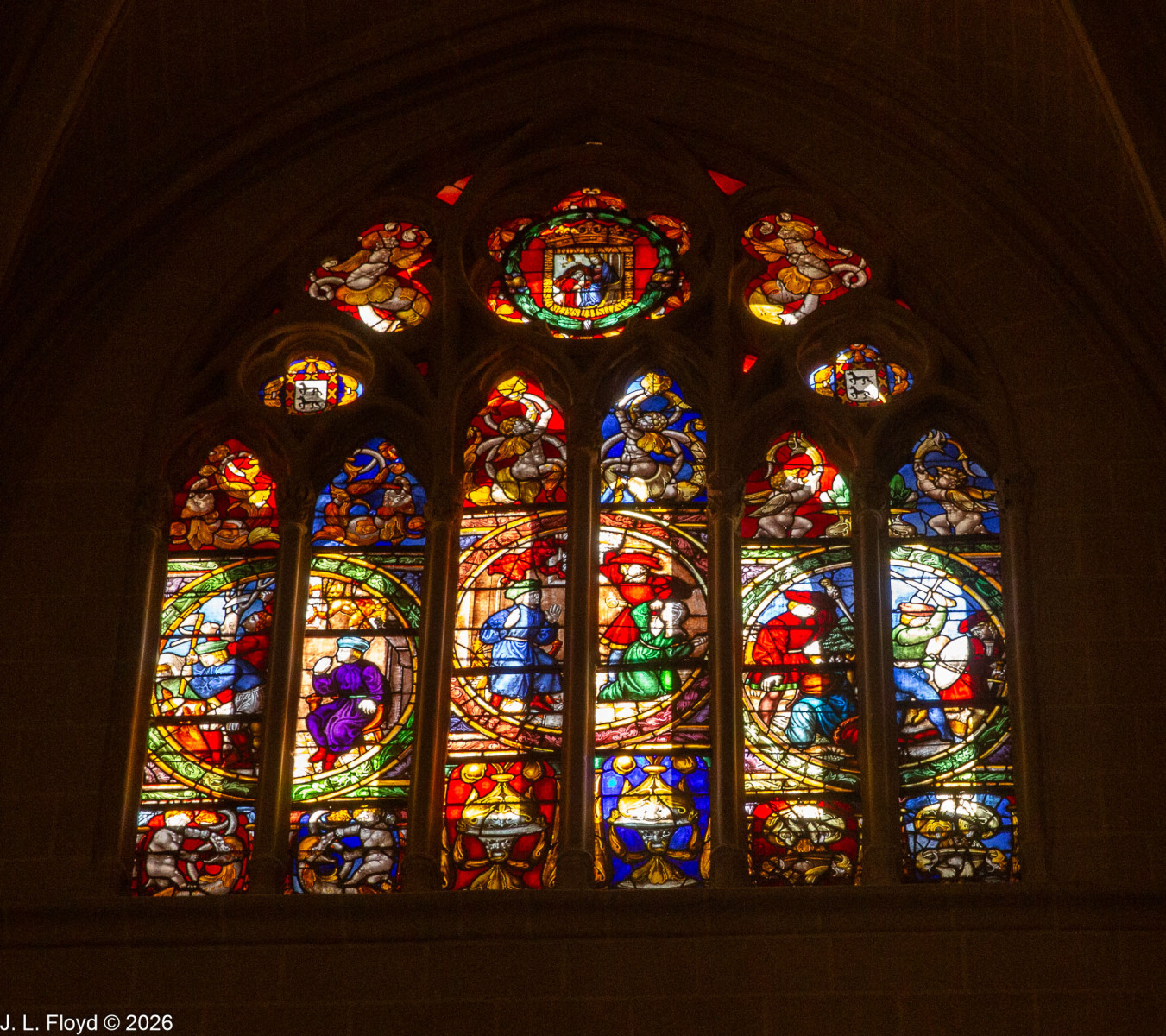
The Toledo Cathedral presents a collection of stained-glass windows that is second to none in Spain. Most of them were produced in the 14th through 17th centuries and many were restored and renovated in the 18th. The most famous and spectacular is the Rose Window in the transept, over the Portal of the Clock, but others are also awe-inspiring, especially those of the ambulatory, the main chapel and the north aisle of the east side of the transept.

Unlike a certain public figure who shall remain unnamed here, I have no affinity for gold or other precious metals, but because of its fame and artistic worth, I cannot pass over in silence one of the chief treasures of the Toledo Cathedral, the Great Monstrance (La Gran Ostensoria de Toledo in Spanish) of Enrique de Arfe. A monstrance is a sacred vessel used in the Roman Catholic Church to display the consecrated Eucharistic host during Adoration or processions. Most famously, the Great Monstrance of Arfe is paraded through the streets of Toledo during the Feast of Corpus Christi, observed on the Thursday after Trinity Sunday (60 days after Easter).
The Great Monstrance was commissioned by (who else?) Cardinal Ximenez de Cisneros, who wanted to outshine Queen Isabella’s patronage of the arts. For this purpose he hired the German silversmith Heinrich Harff, known as Enrique de Arfe in Spain. Beginning in 1517 and finishing in 1524, he produced an exquisitely detailed tower in the form of a late Gothic temple on a hexagonal base, supported by figures of angels and saints, ten feet tall in toto. It consists of 5,600 different pieces held together by 12,500 bolts and is extravagantly adorned with precious gems. Originally made of silver, the monstrance was gilded with gold in 1595, and topped with a cross in the 17th century. We viewed it in the Cathedral’s Chapel of the Treasure, stored in a bulletproof glass case and guarded by high-tech security systems. When it is removed from the case to be displayed in a festival, it is transported on a specially constructed float with an adjustable leveling mechanism.
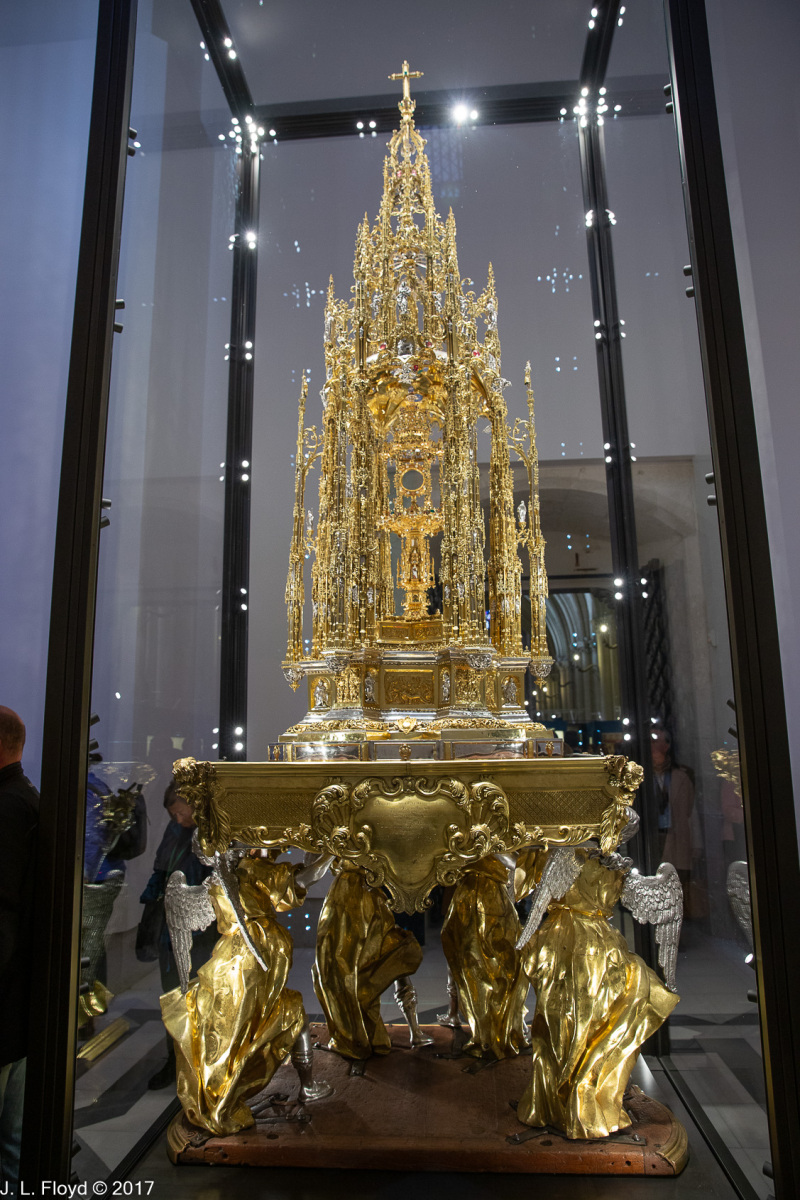
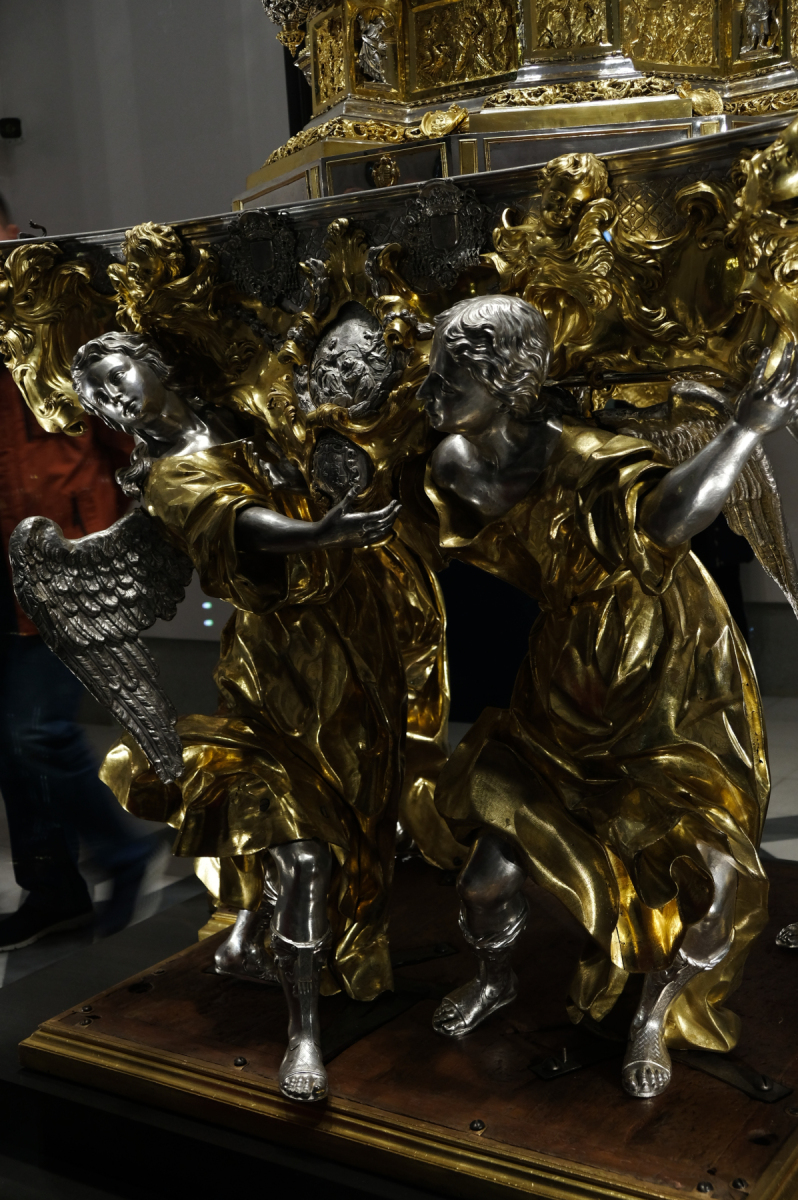
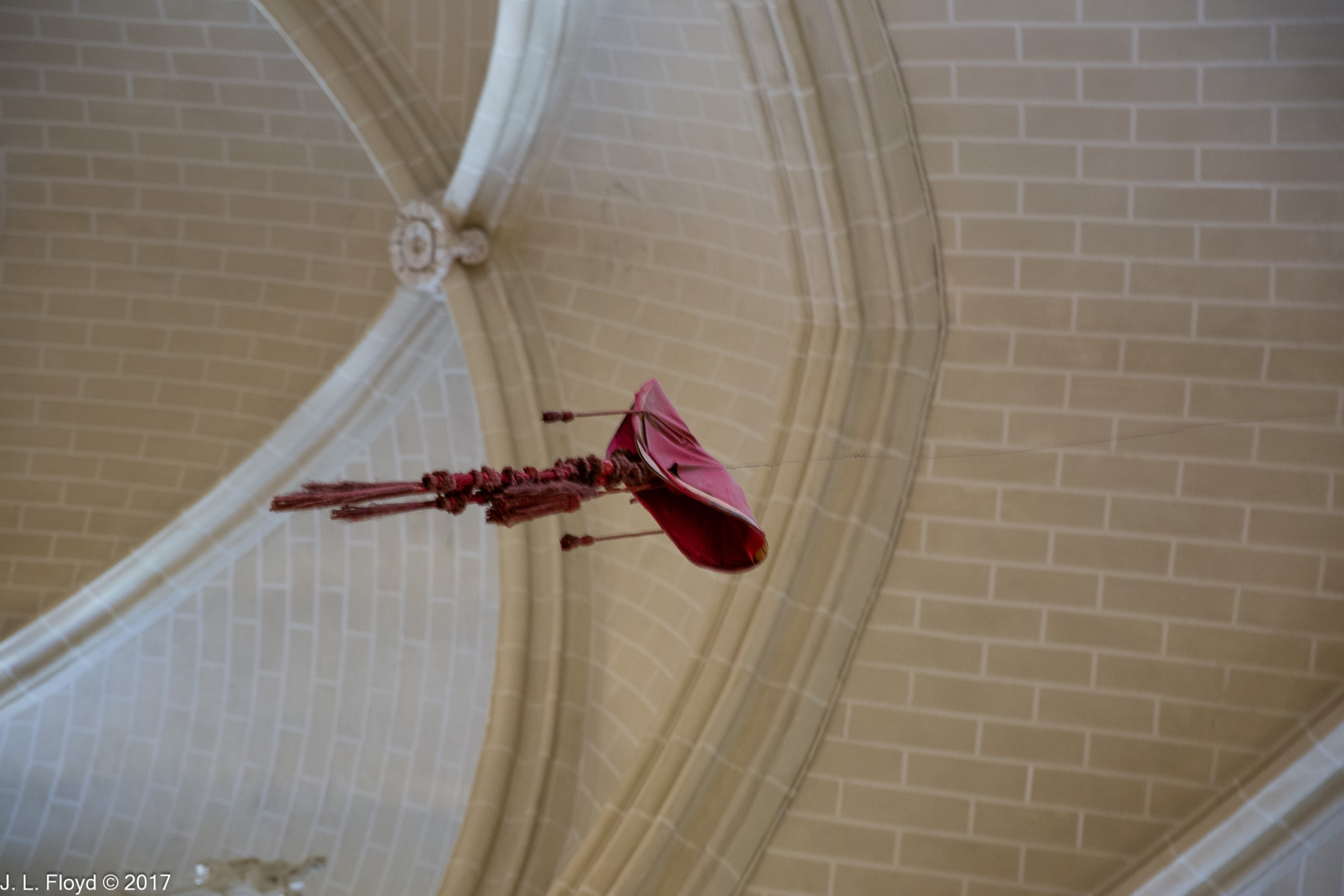
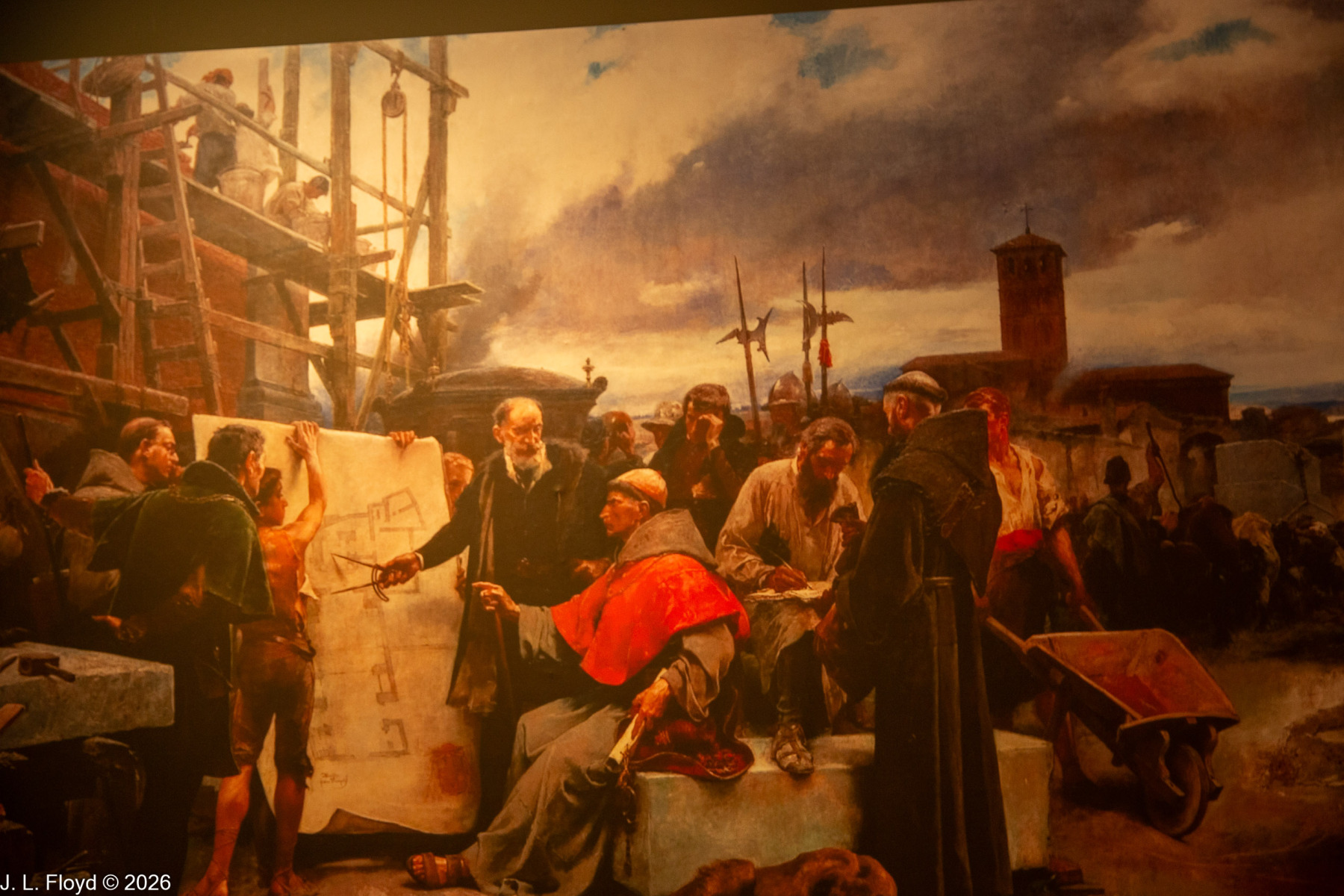
The monetary value of the Great Monstrance is difficult to estimate, but as presently constituted it consists of 18 kilograms (about 40 pounds) of 18-karat gold and over 183 kilograms (over 400 pounds) of silver. As of this writing, 18 kg of gold is worth $2,655,360 and 183 kg of silver is worth $514,000, but these figures do not account for the value of the jewels adorning the monstrance, let alone the artistic worth of the piece.