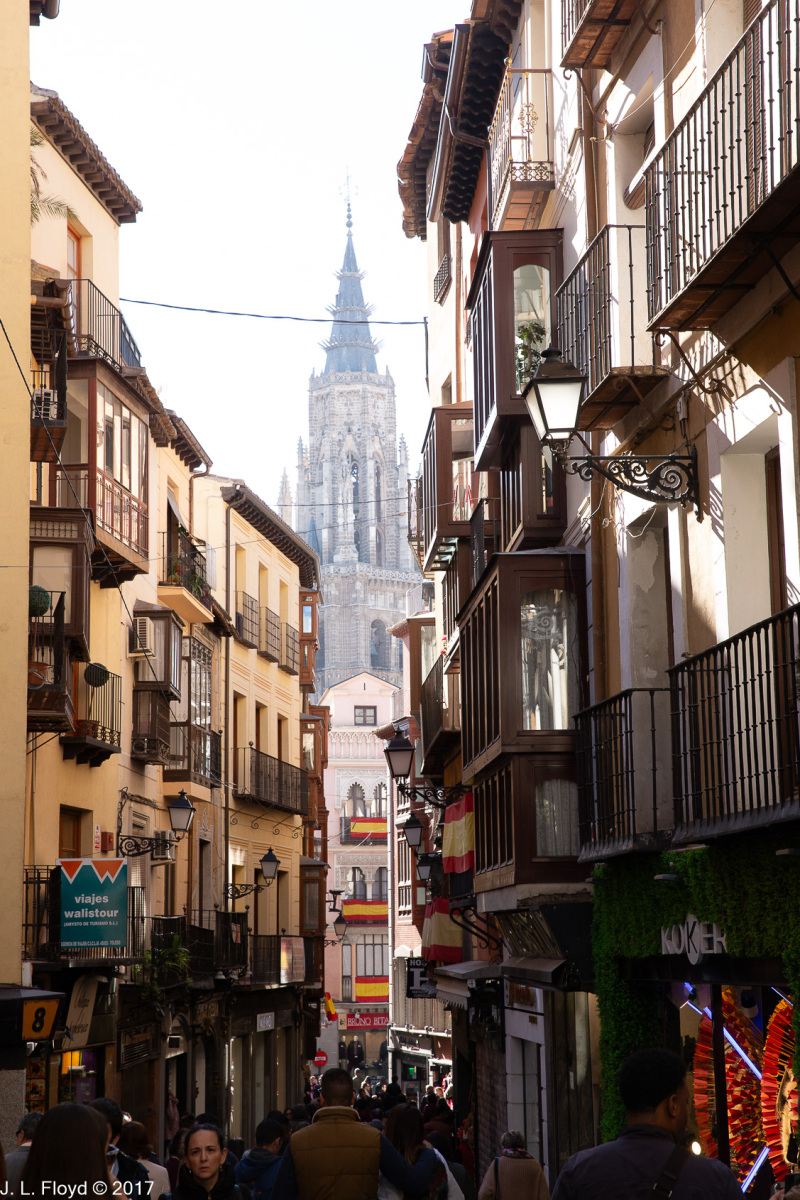
Leaving the Cathedral, we headed toward our last stop in Toledo, the Plaza de Zocodover. Our route led along the Calle del Comercio, a street which lived up to its name since it was lined with shops of all kinds. I paused now and then to look back and was able to shoot some nice pictures of the Cathedral with its spire framed in the narrow opening between the two sides of the street.
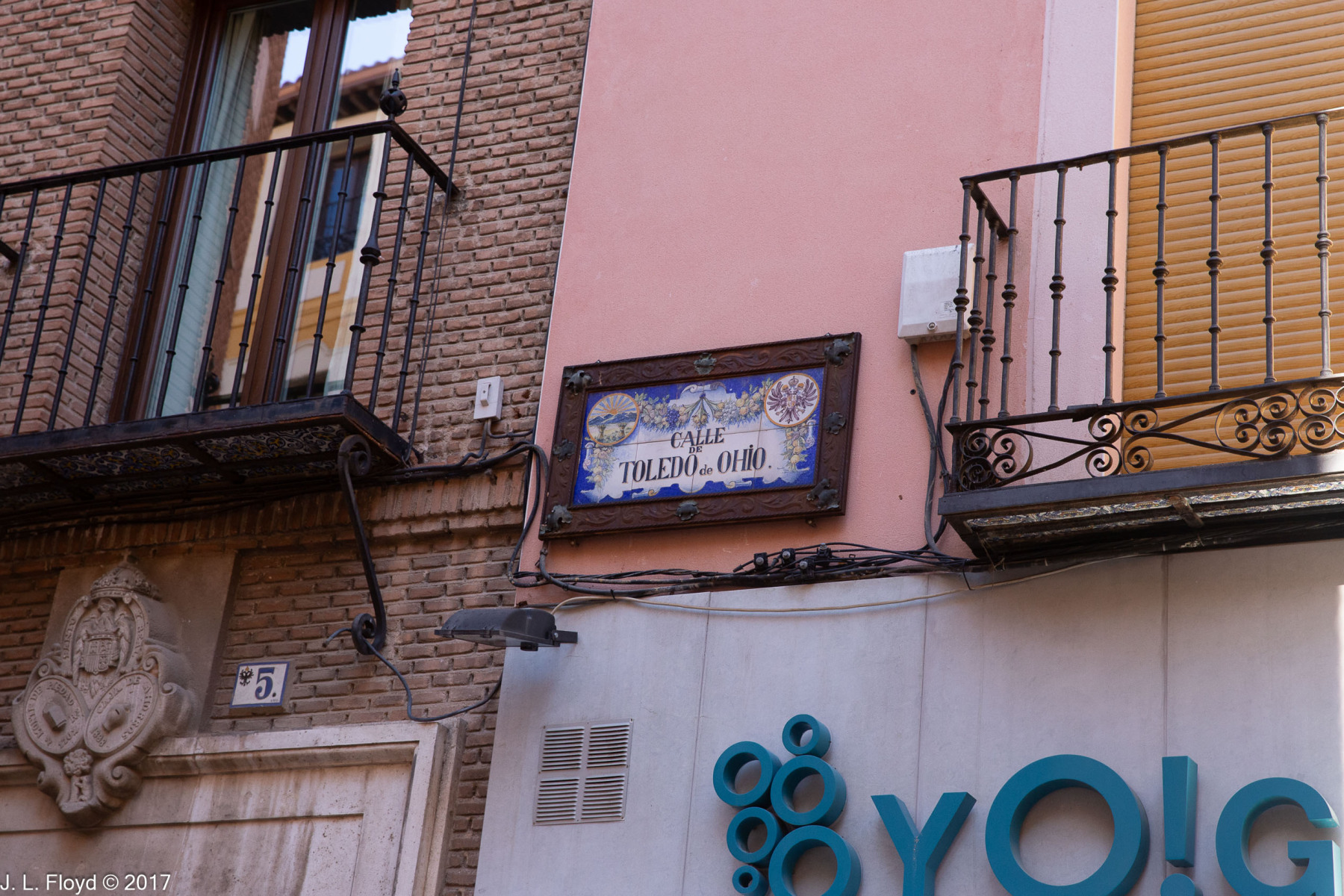
Drawing near to the Plaza de Zocodover, we came to a street with the improbable name of Calle Toledo de Ohio. I am quite certain that this was not the original name of the street, and was probably not its name much earlier than the twentieth century, but I never found out how the American city of Toledo – which took the name in 1833, for reasons unknown – came to be represented in the heart of its medieval ancestor.
Finally we came to the Plaza de Zocodover, which for most of Toledo’s history has been its main square. The name is Arabic in origin, a corruption of sūq ad-dawābb, “market of burden beasts.” The square was not only the hub of the city’s social life, but also the place where public executions and autos-da-fé were held.
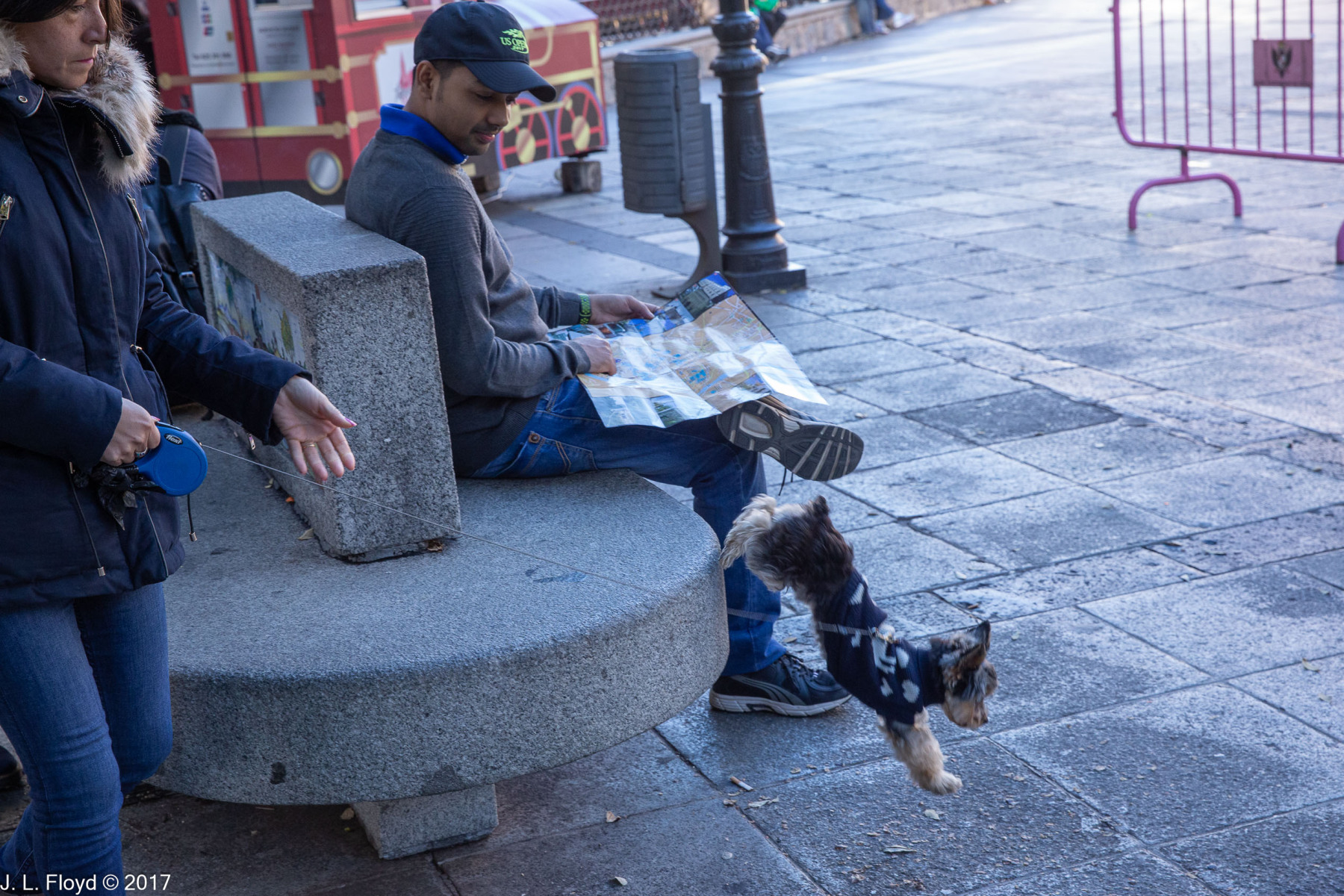
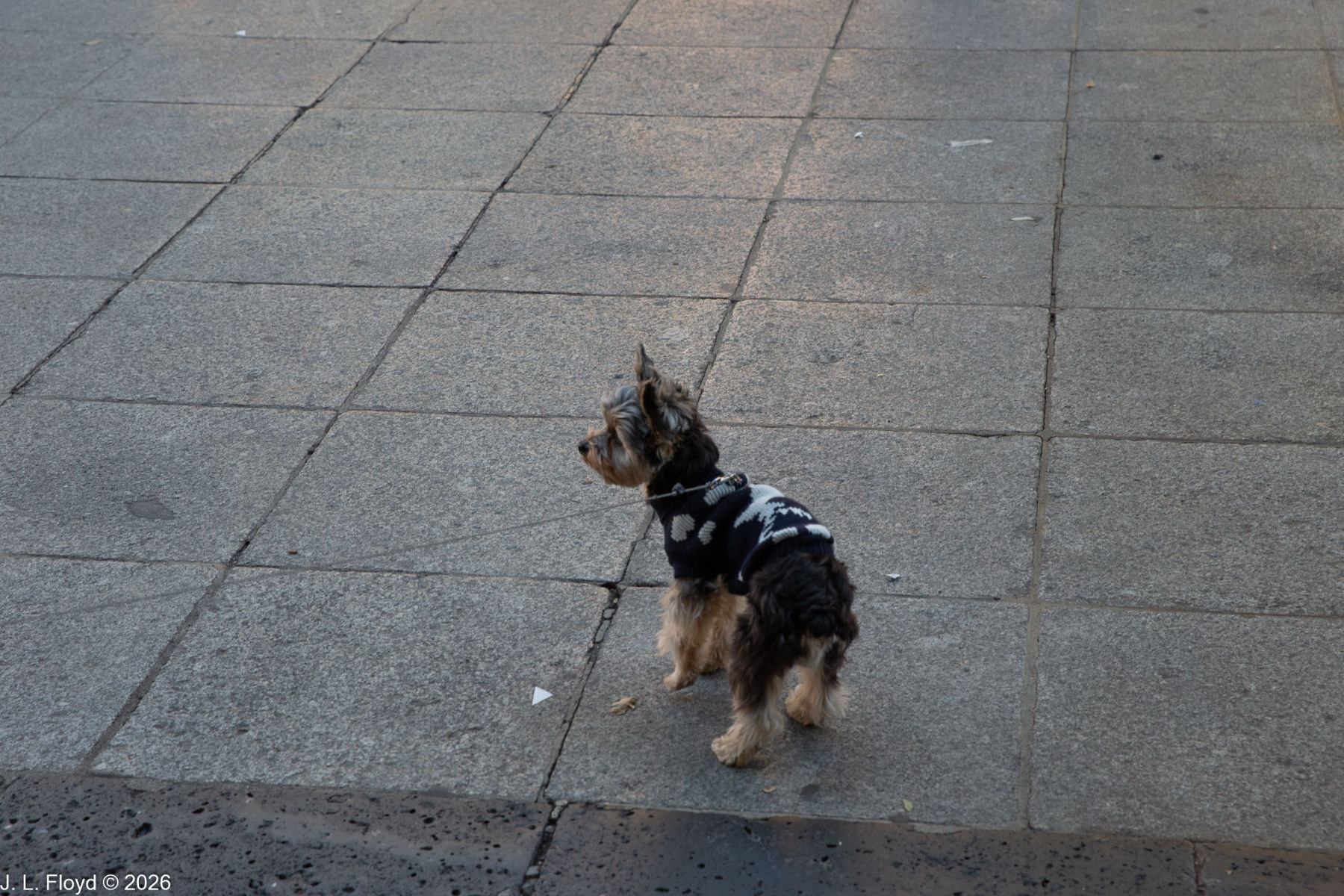
An encounter with a woman walking a small and very lively terrier reminded me of a story by Anton Chekhov, “Lady with a Dog,” (Дама с собачкой), written in 1899. However, I had no reason to think that the woman in Toledo had anything in common with the one in the story, and in any case the dog was the more captivating of the pair.
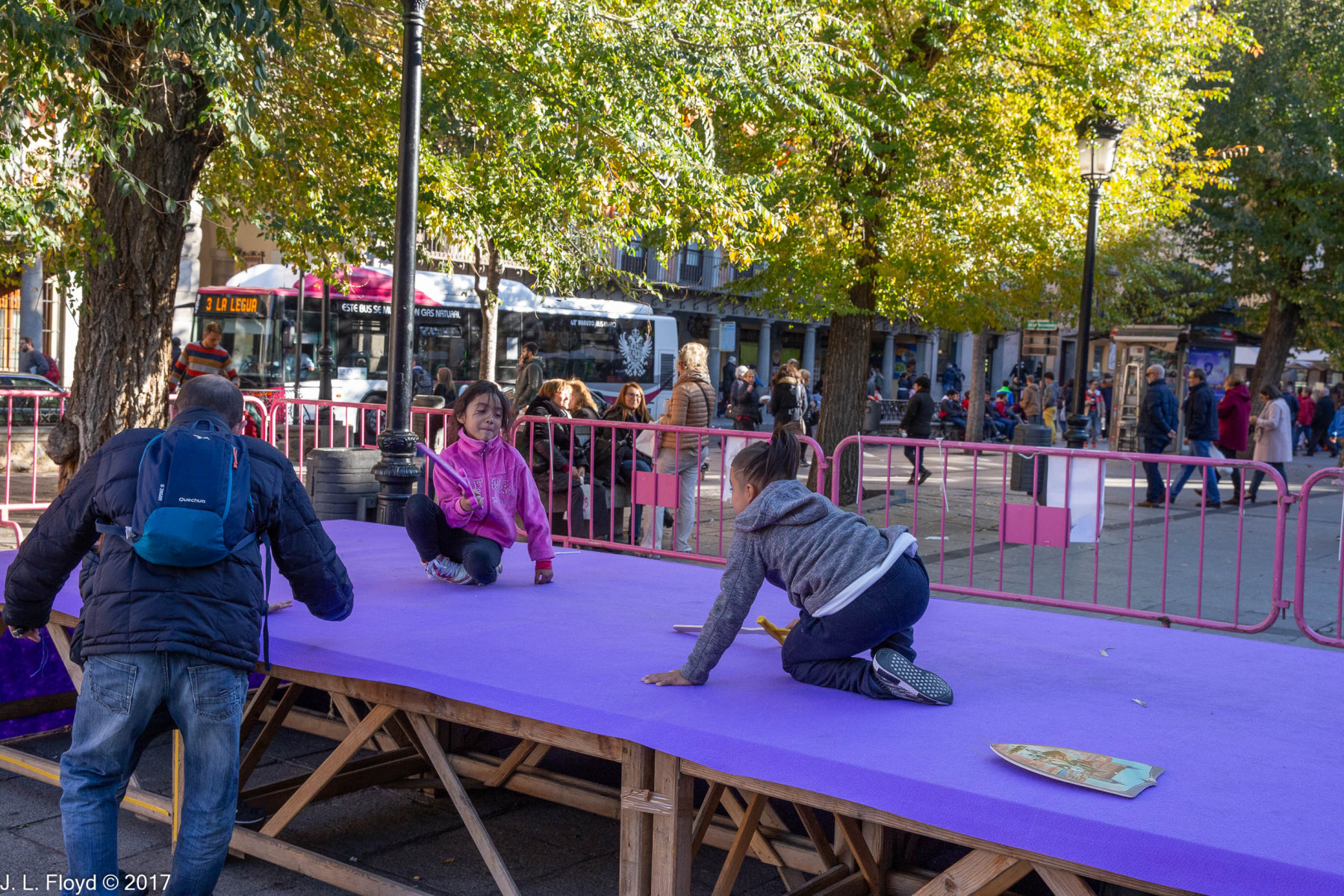
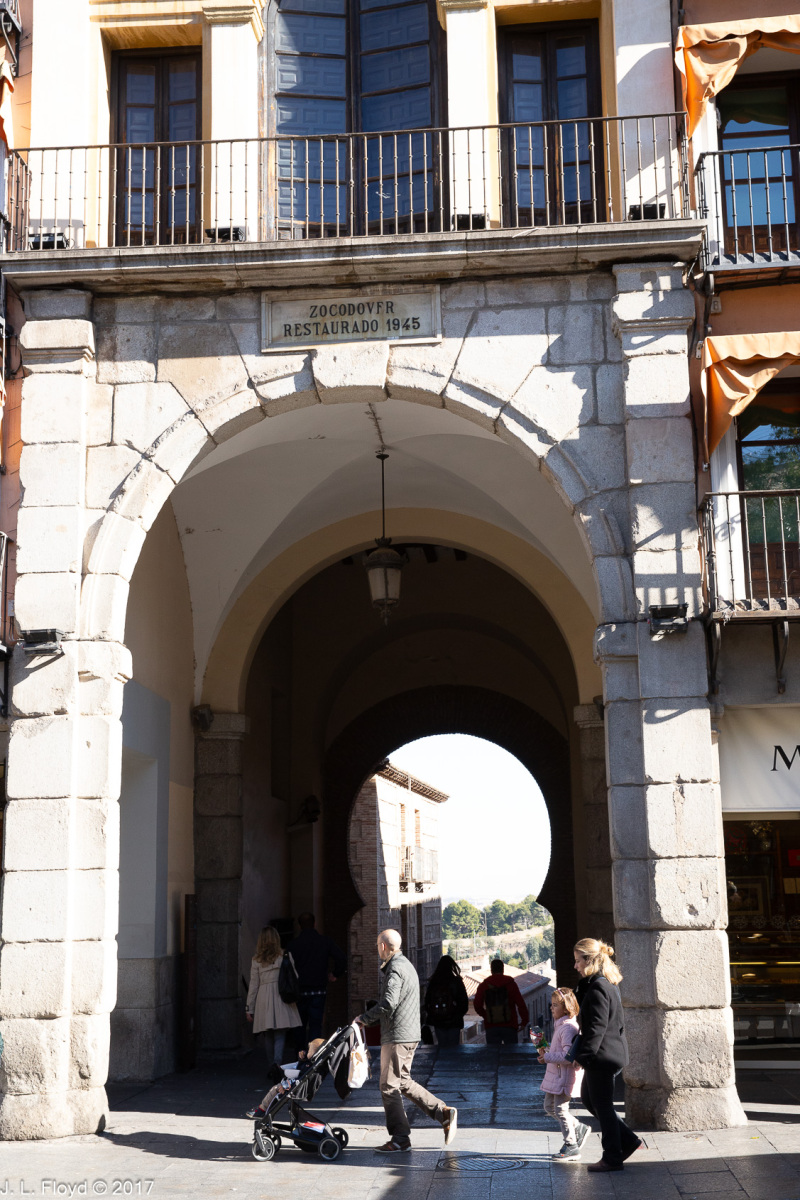
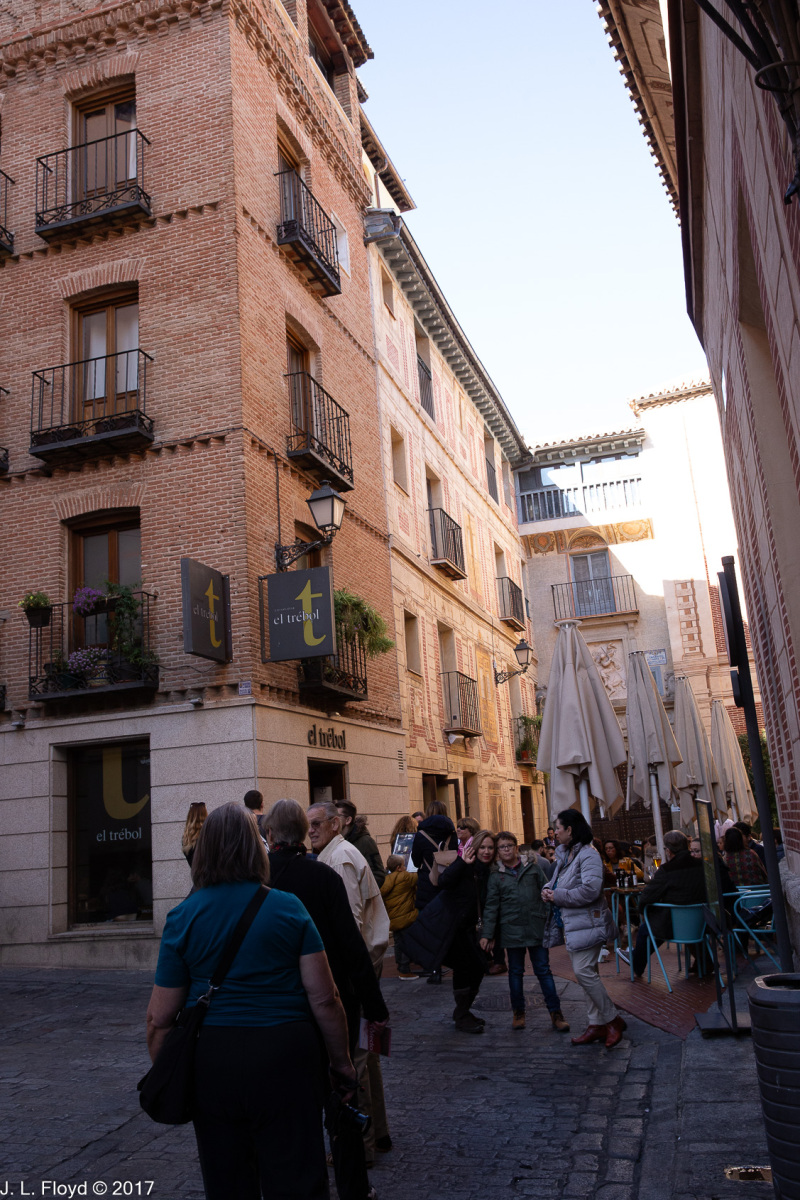
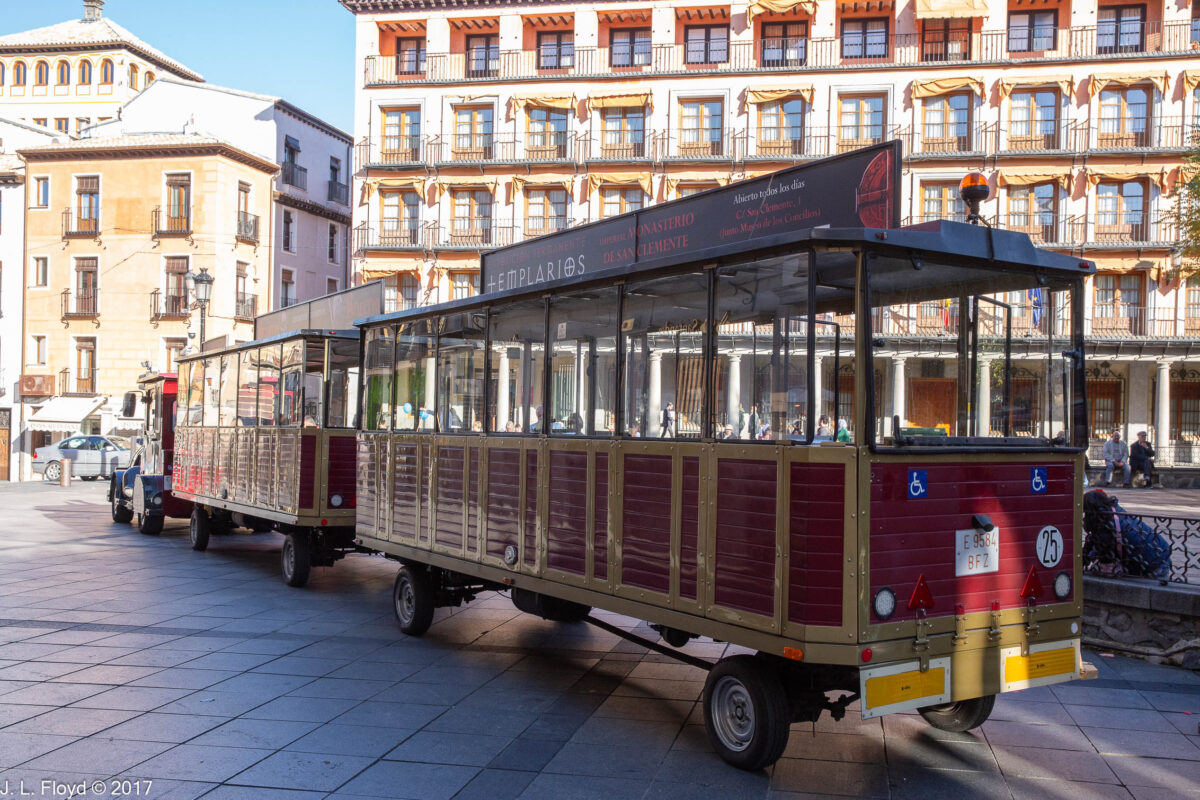
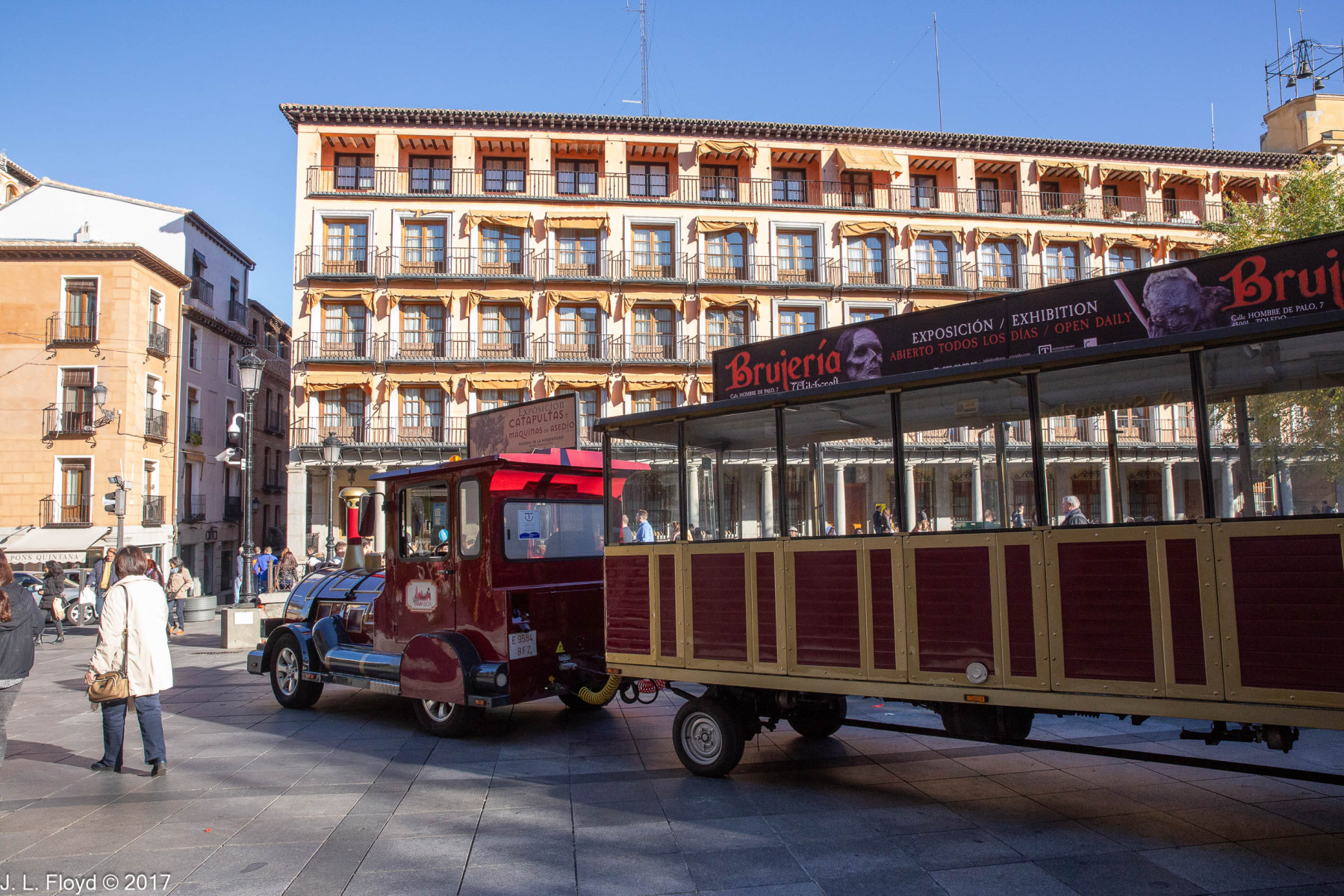
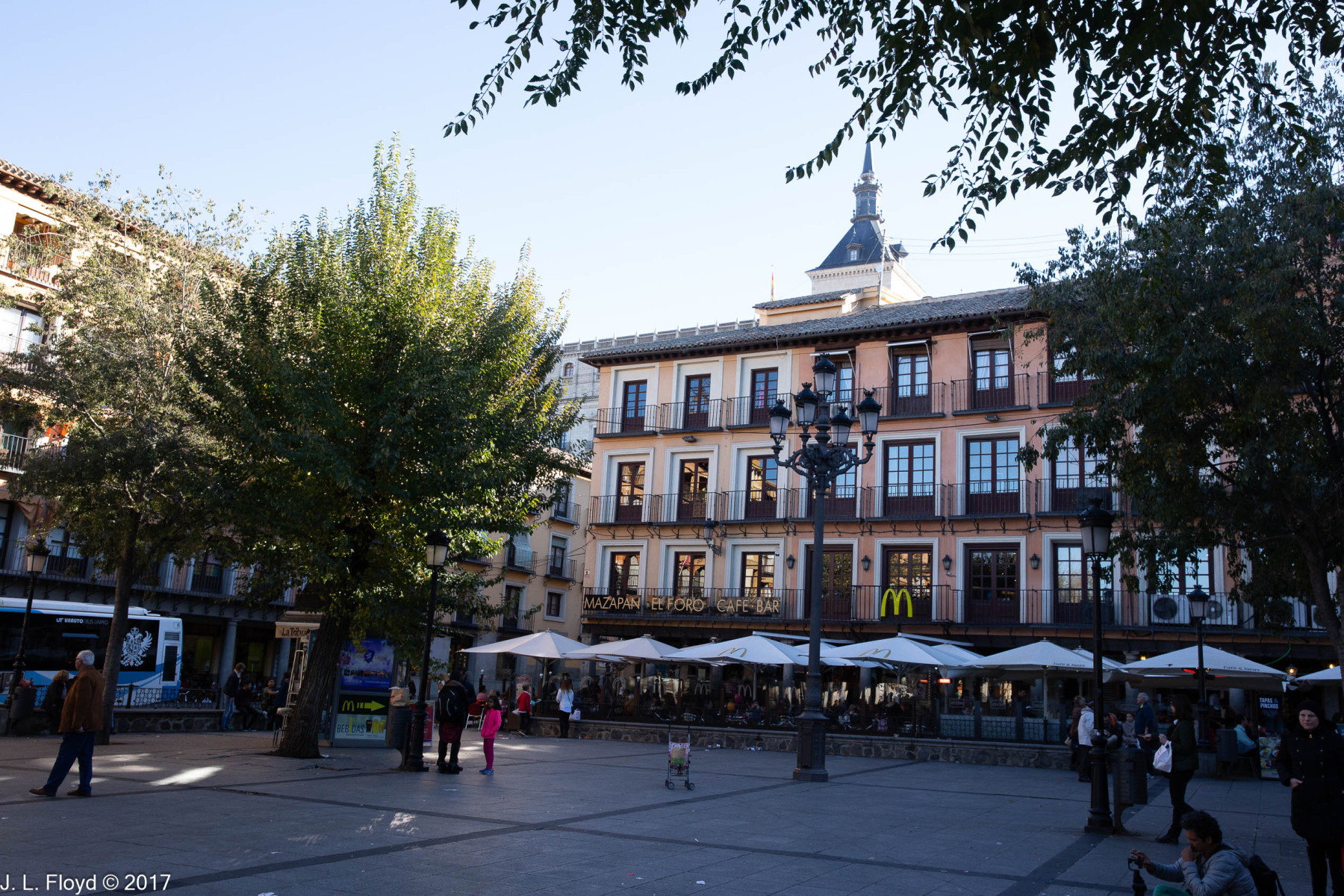
Nowadays the Plaza de Zocodover is overrun with tourists like us. The square is the departure point for many sightseeing tours, such as those conducted in trams like the one I drove during summer work in the Disneyland parking lot many years ago. But many local residents also come to the Plaza de Zocodover to hang out on the numerous benches and enjoy the ambience, which unfortunately is diluted by the presence of very un-Toledoish fast-food outlets like McDonald’s and Burger King. However, there are plenty of cafés and bars with local flavor to enjoy, and we had lunch in one such establishment.

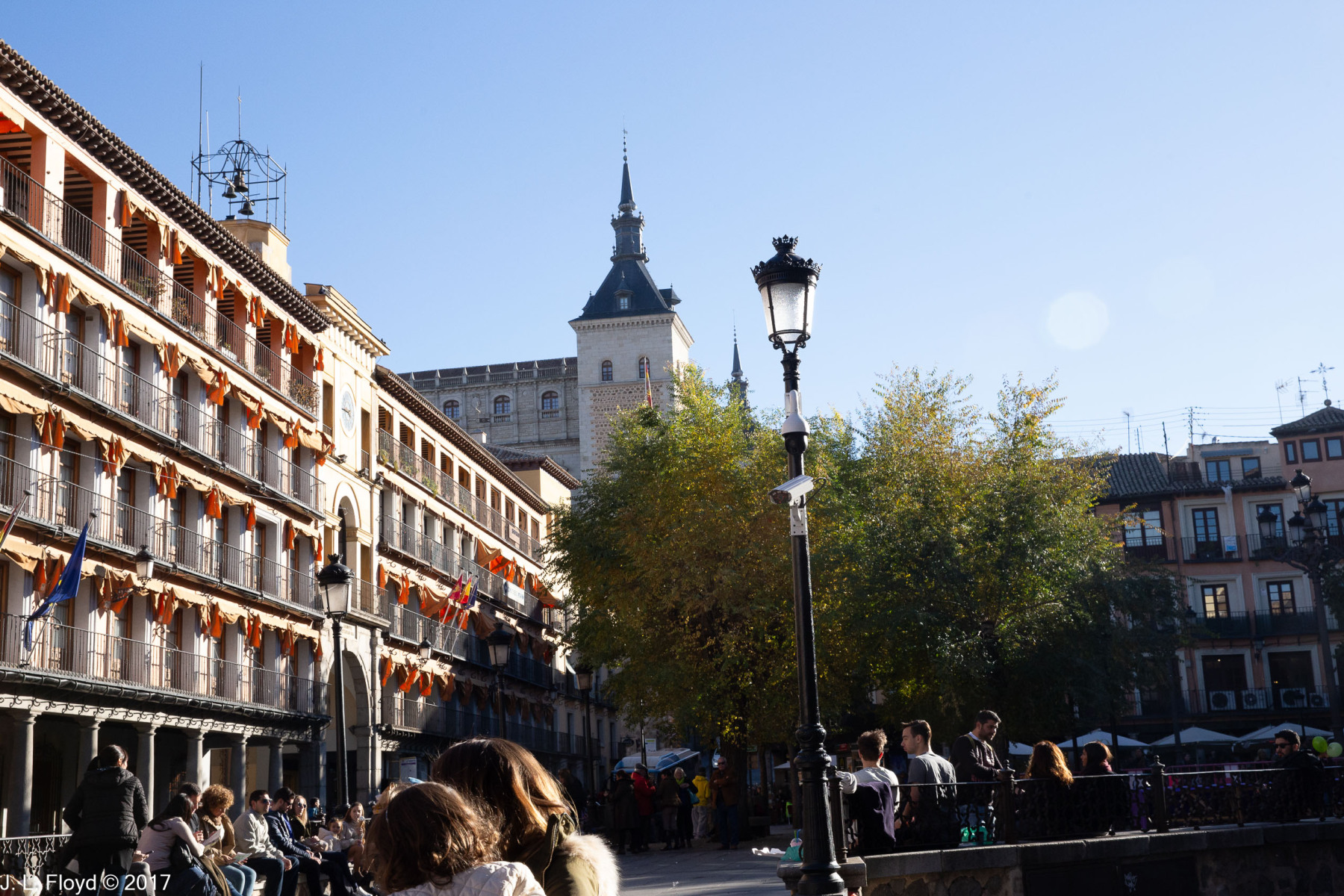
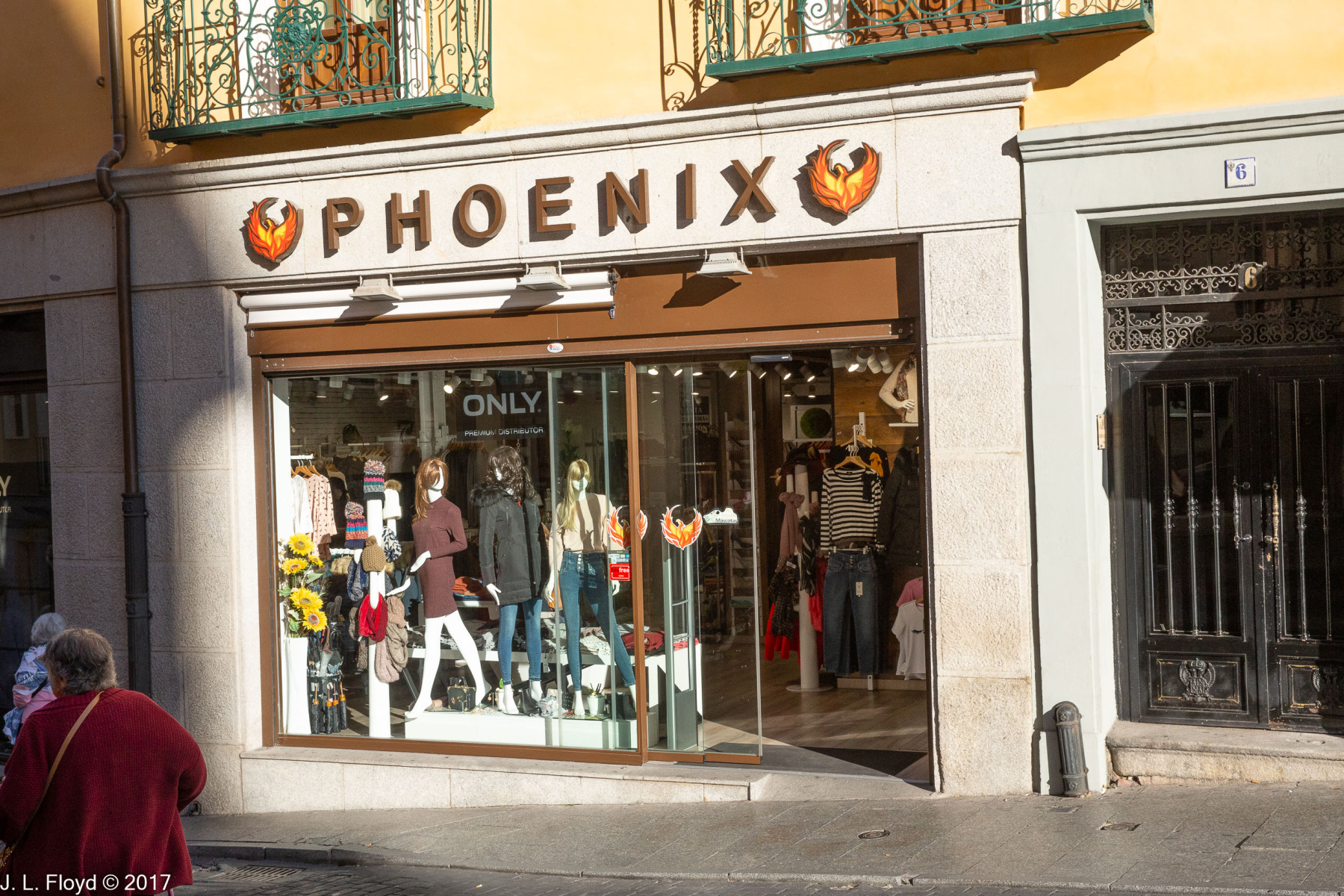
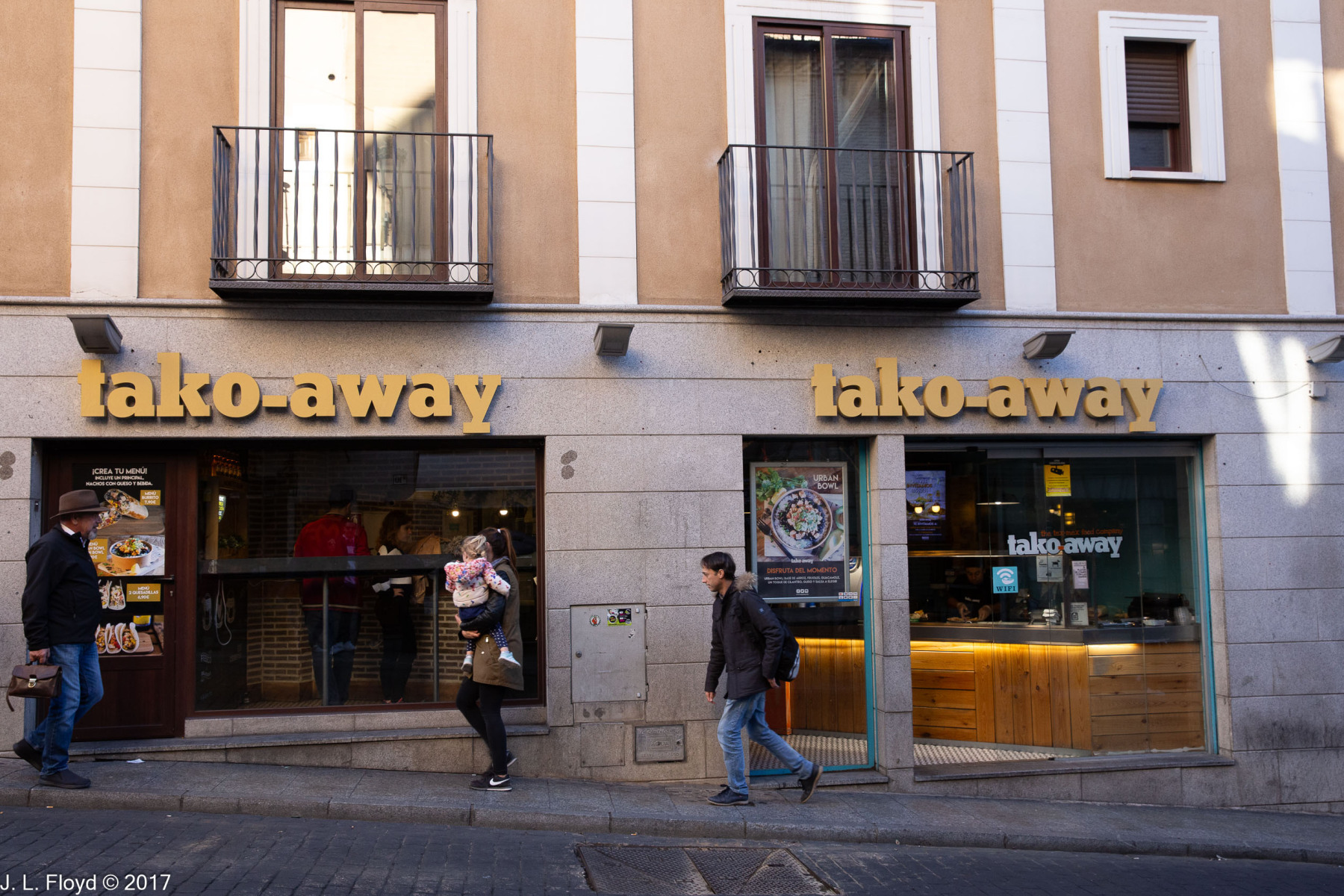
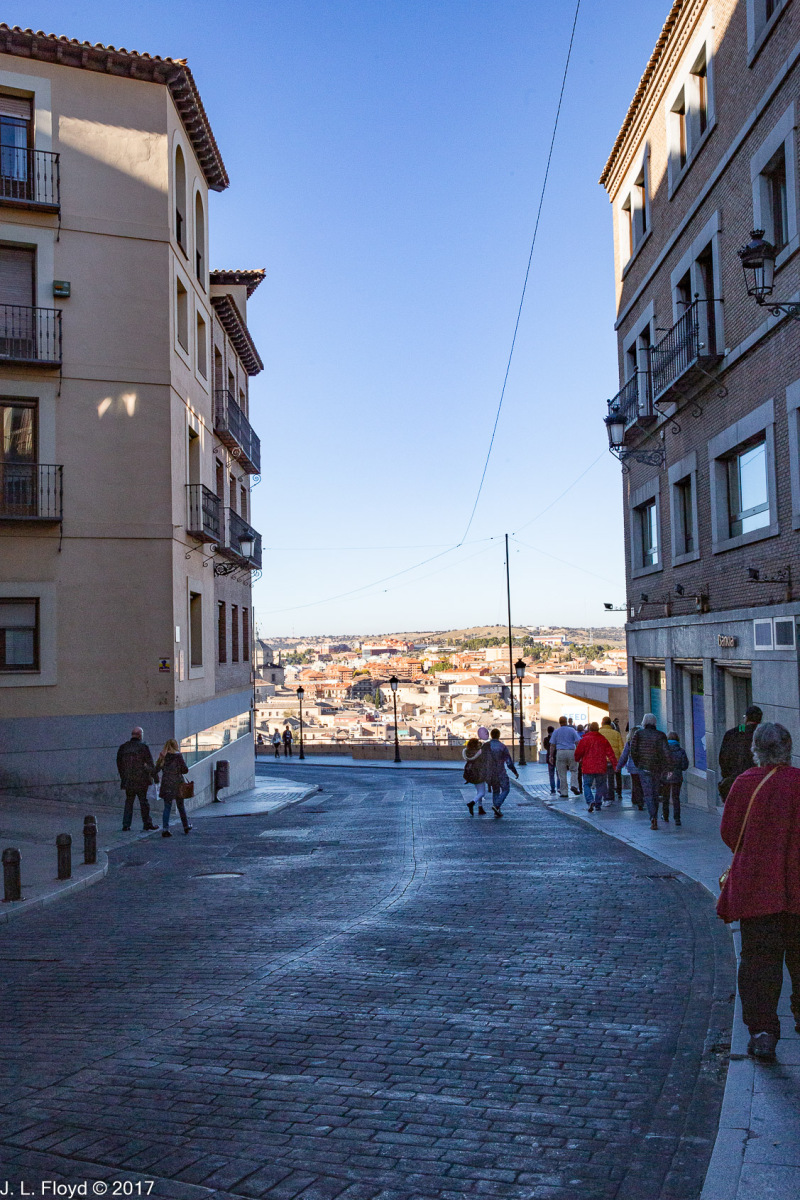
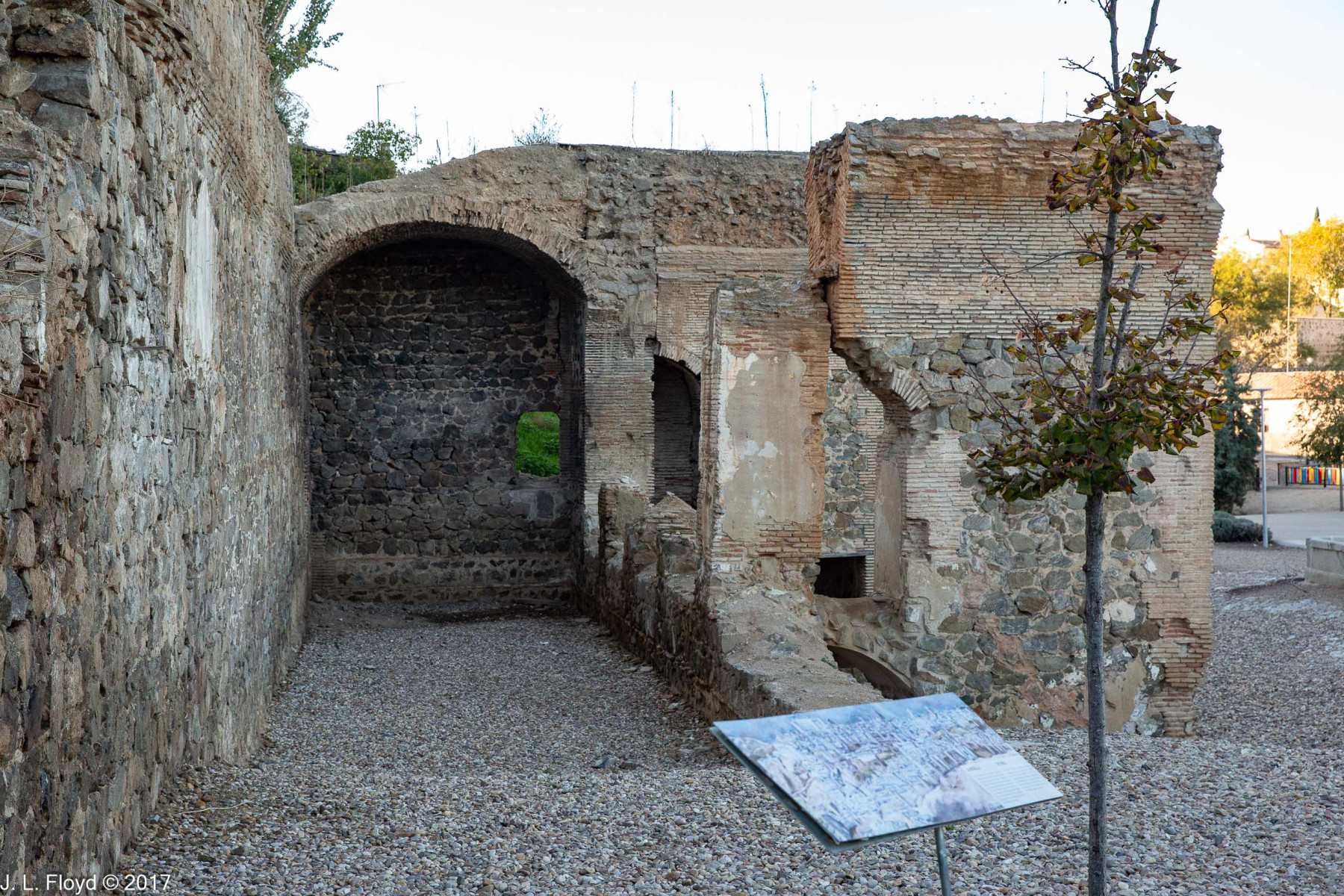
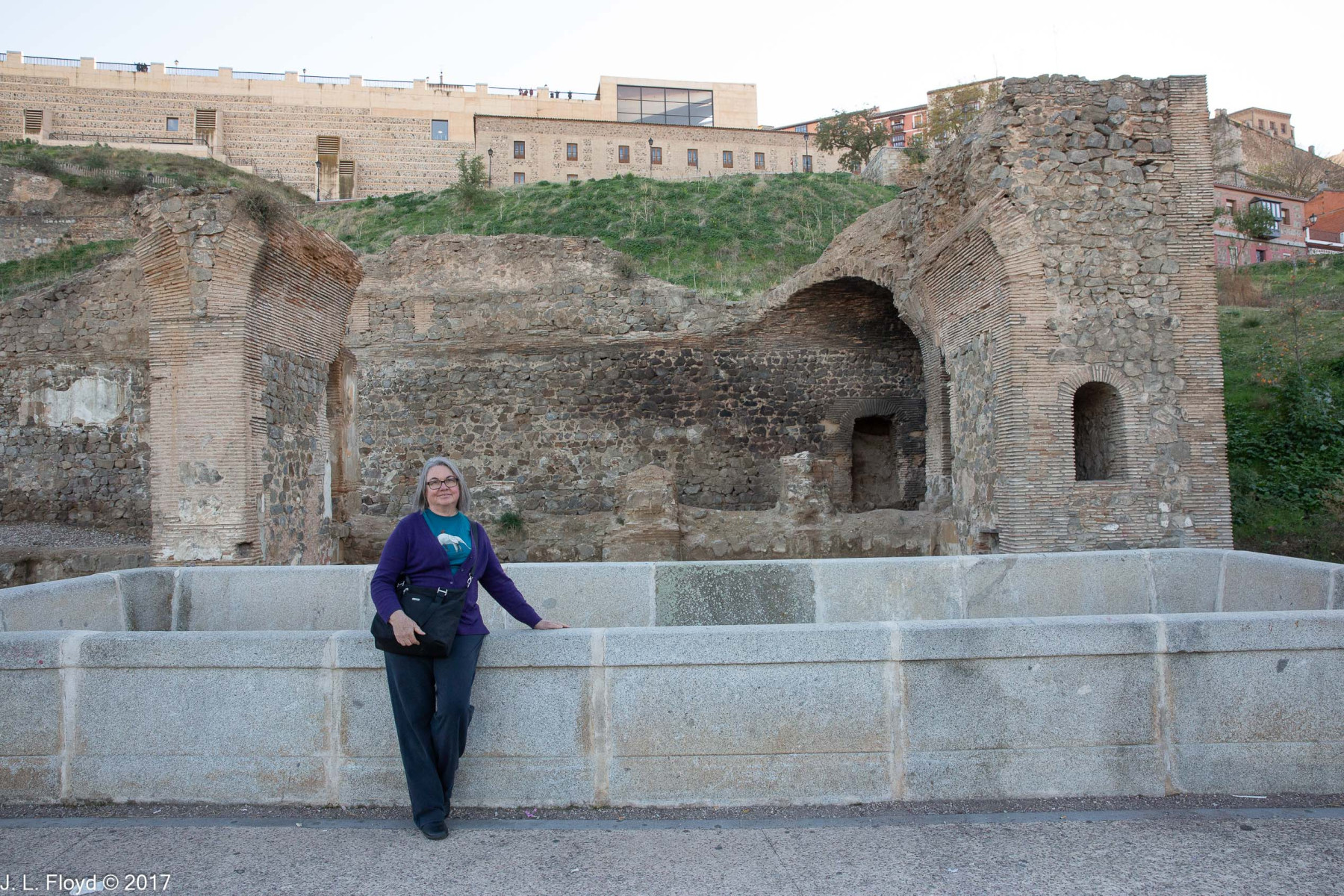
After lingering for a while in the Plaza de Zocodover, we were summoned to reboard our bus for the return to Madrid. Trekking back to the escalator by a different (and much shorter) route than the one by which we had arrived, we enjoyed some last late-afternoon views of the city before descending to the parking lot. While waiting for the bus, we were able to inspect the ruins of an ancient Roman bathhouse located near the portal to the escalator, which we hadn’t had a chance to do in the morning.
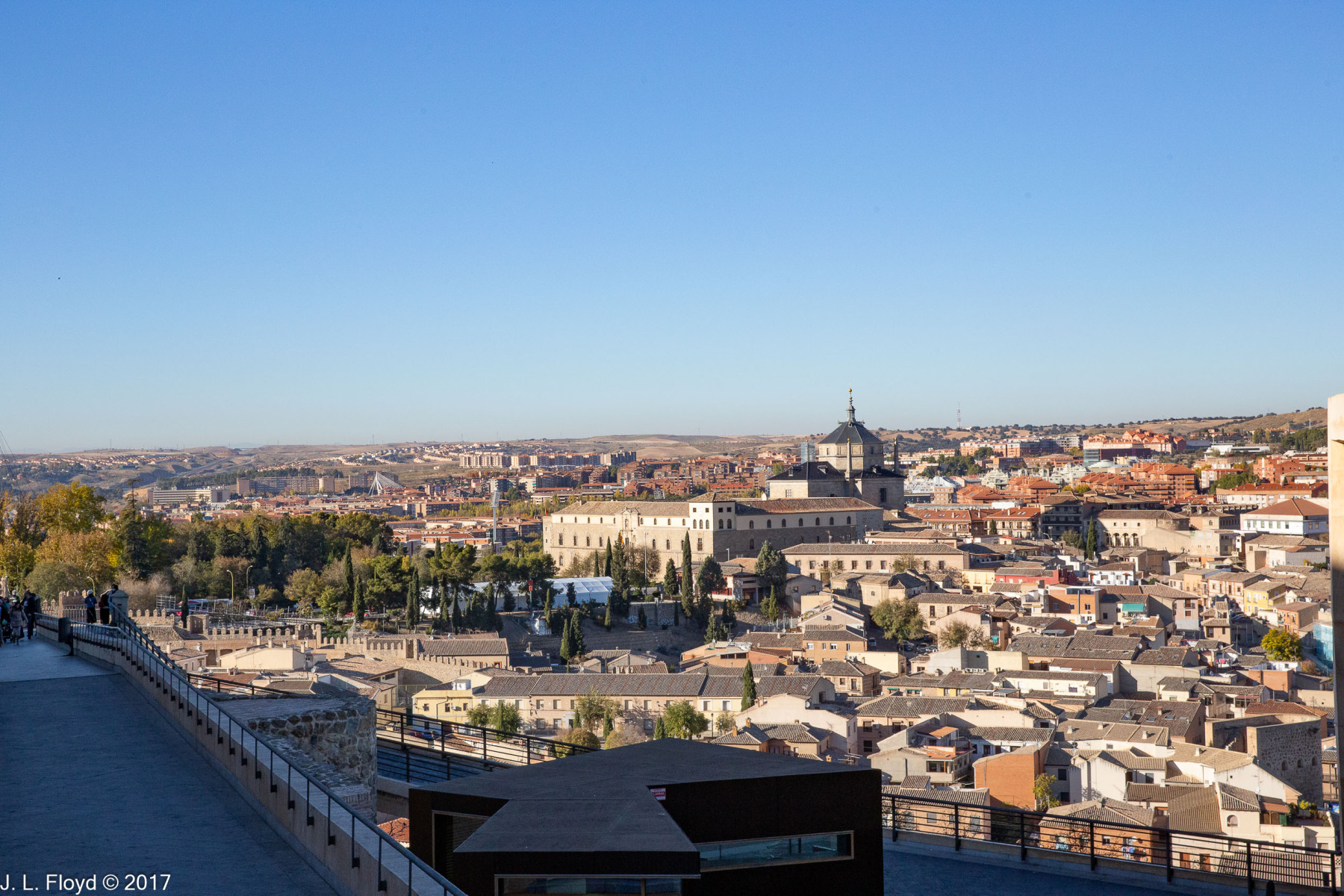
Toledo, once the capital of Spain, now boasts a population of around 87,000, not much larger than my current city of residence, Hemet, California, and tiny by comparison with Madrid (3.4 million), Barcelona (1.6 million) or even Seville (700,000). But its cultural influence and historical significance is nevertheless enormous, far out of proportion to its size. Although a one-day visit hardly does it justice, I departed with a profound sense of fulfillment, and I found that my life was greatly enriched by our brief sojourn there.