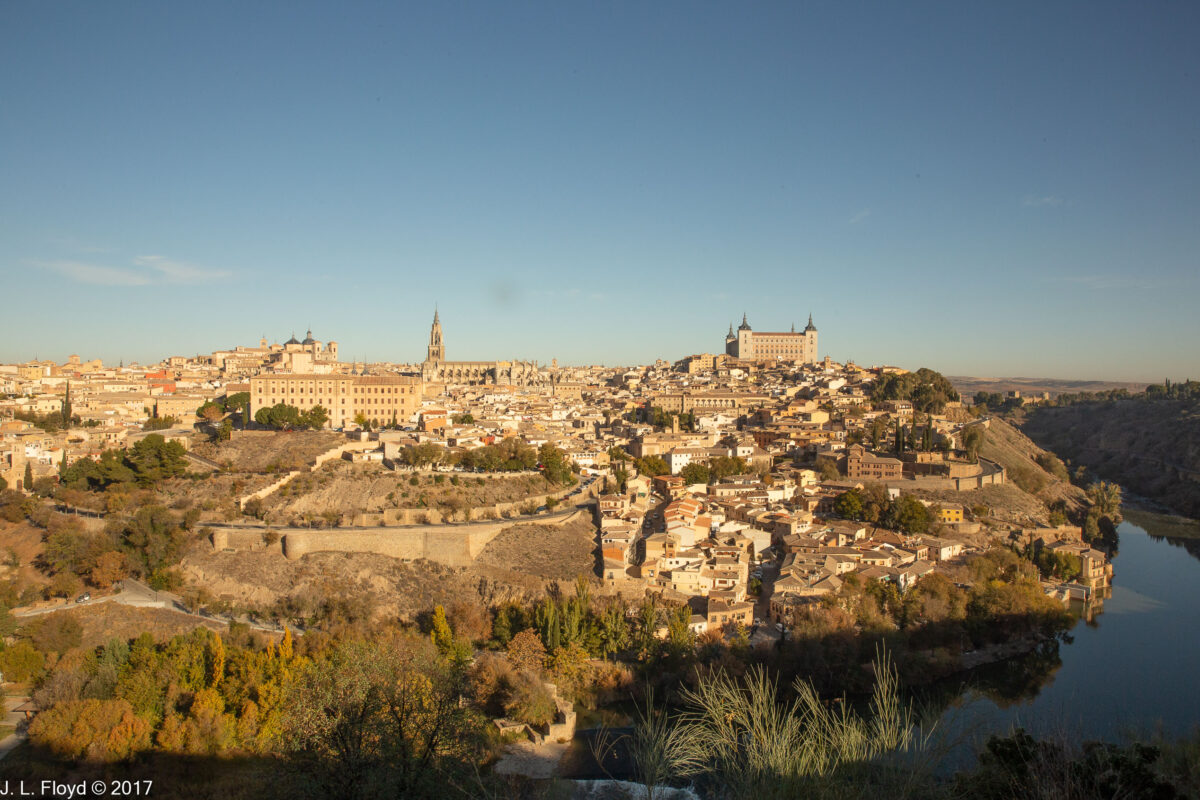
Toledo, whether viewed from nearby or afar, is the most strikingly photogenic city I have ever seen. The Old City sits on a hill about 100 meters (328 feet) high and is quite compact. On its south side are several hills with miradors – vantage points – from which it is possible to capture stunning panoramic views. And our bus driver, circling the city as we arrived early in the morning, made sure we had plenty of opportunities to do so.
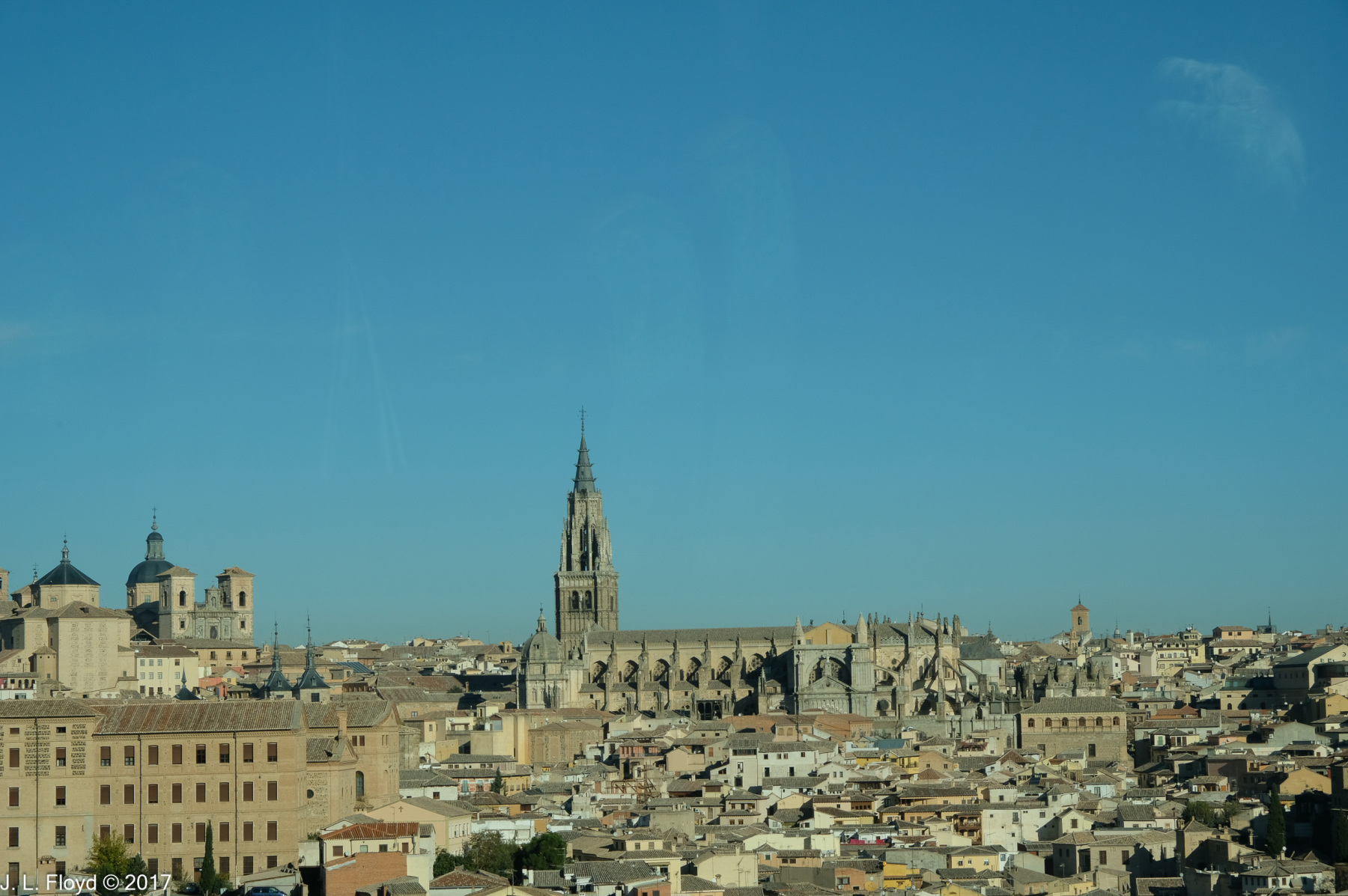
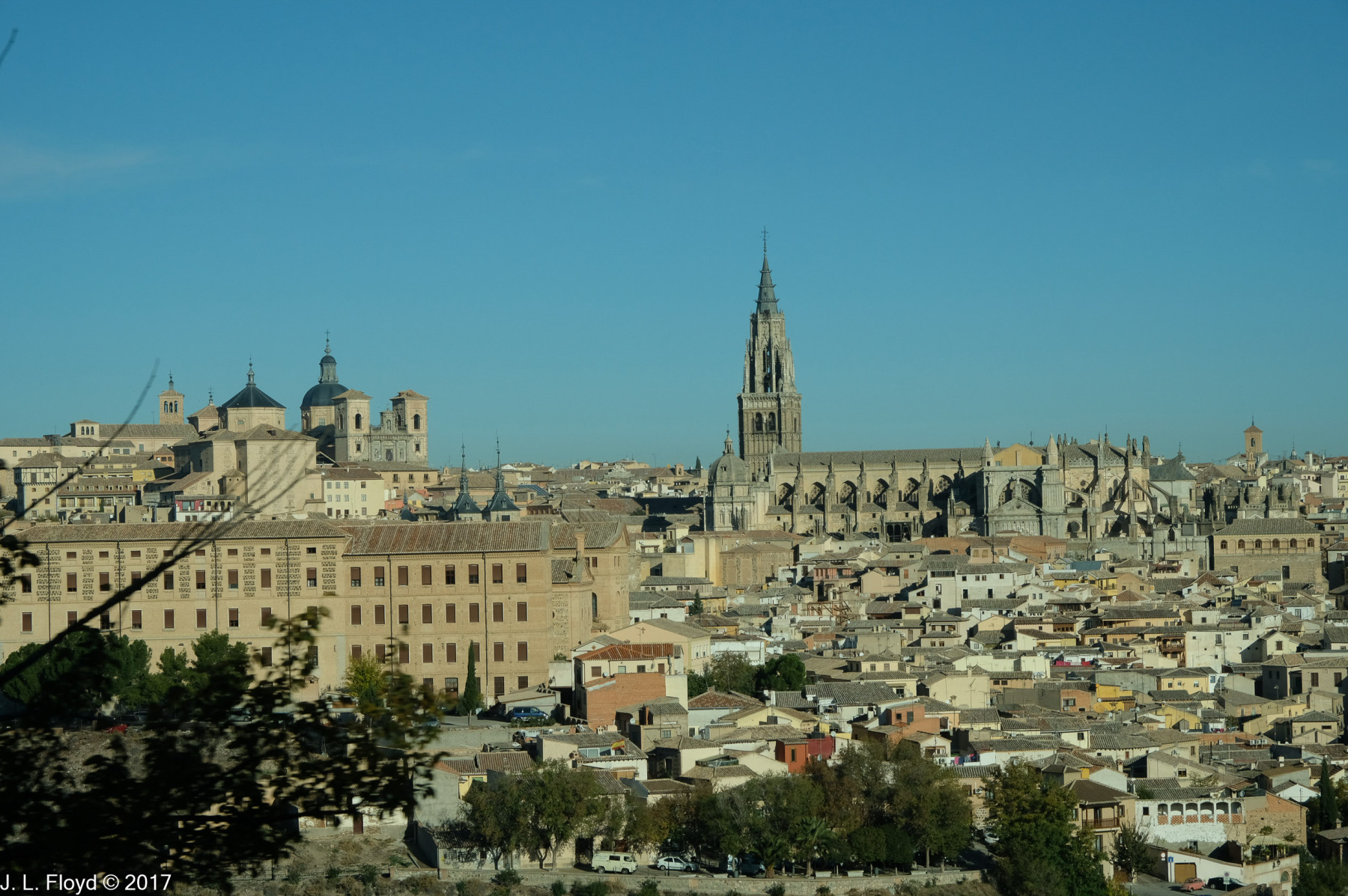
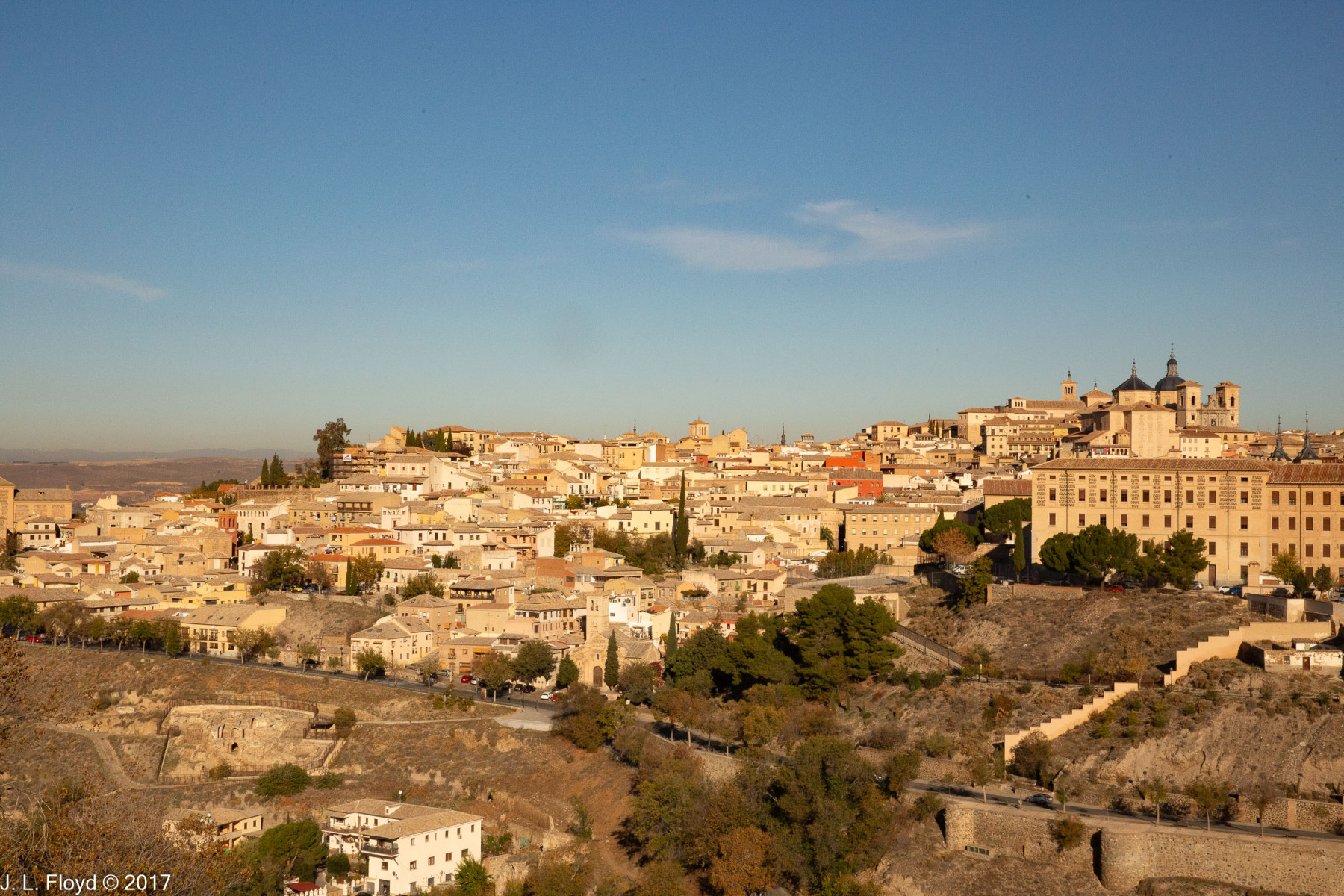
Viewing the city from the Mirador de Toledo, where the bus stopped for picture-taking, two structures stand out above all others and catch the eye immediately. Toward the eastern part of the city stands the Alcázar, an ancient fortress dating back to Roman times. It does not look ancient, however, because it was rebuilt many times over the centuries, most recently between 1939 and 1957, to repair the damage it suffered during the Spanish Civil War of the 1930s. It is a large quadrangular stone building, 60 meters on a side; at each corner there is a tower topped by a Madrid spire – a quadrangular pyramid with a metallic sphere, weather vane and metal cross on top. We did not visit the Alcázar in our tour of Toledo, but we did visit the other most prominent landmark, the Toledo Cathedral, seen to the left (west) of the Alcázar. Its 92 meter (301 feet) tower soars above the surrounding structures, making it easy to identify.
Visible to the west of the Cathedral was a cluster of structures which, although not rivalling the Cathedral or the Alcázar in height, nevertheless attracted attention. These included the churches of San Ildefonso, San Bartolomé and the Centro Cultural de San Marcos.
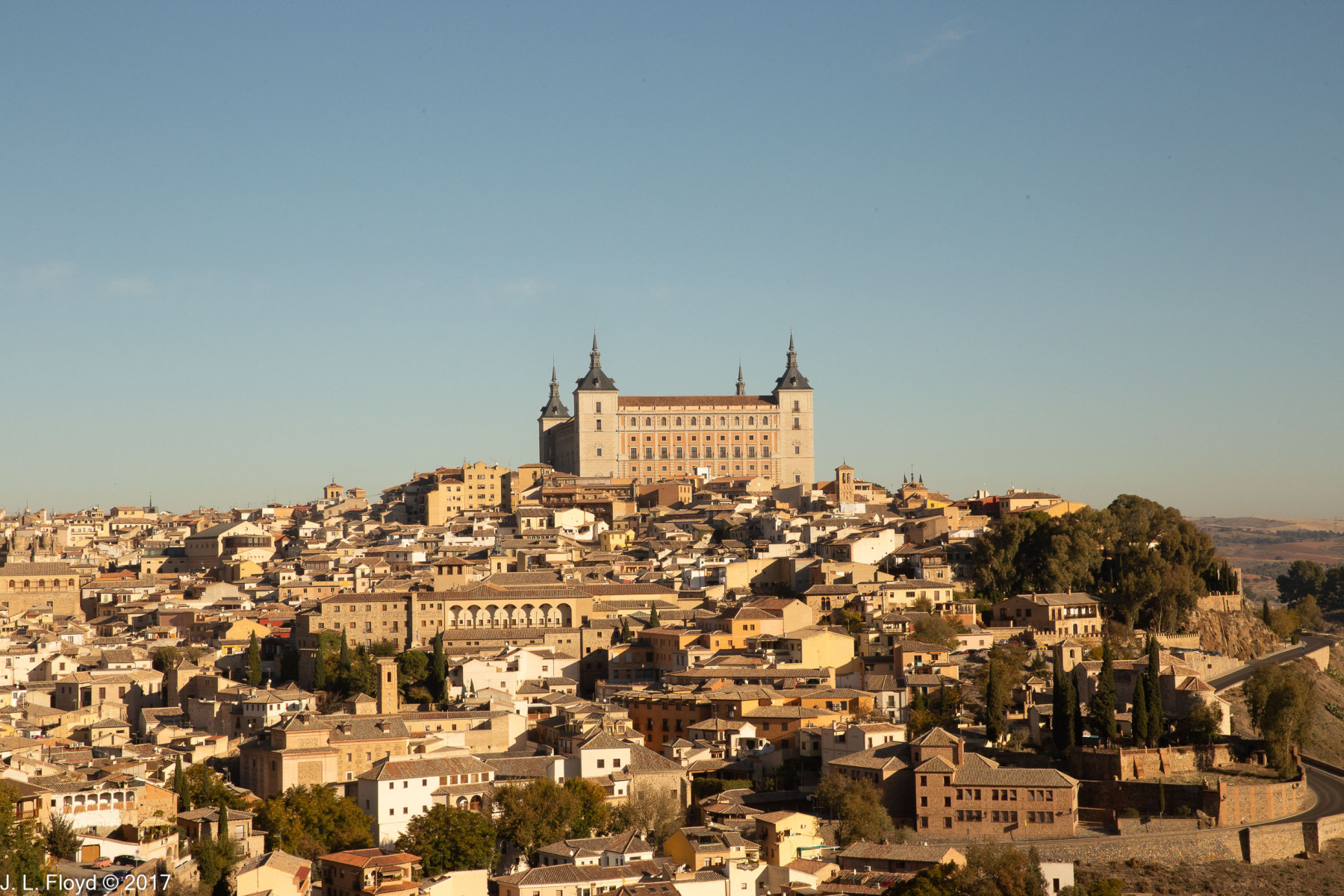
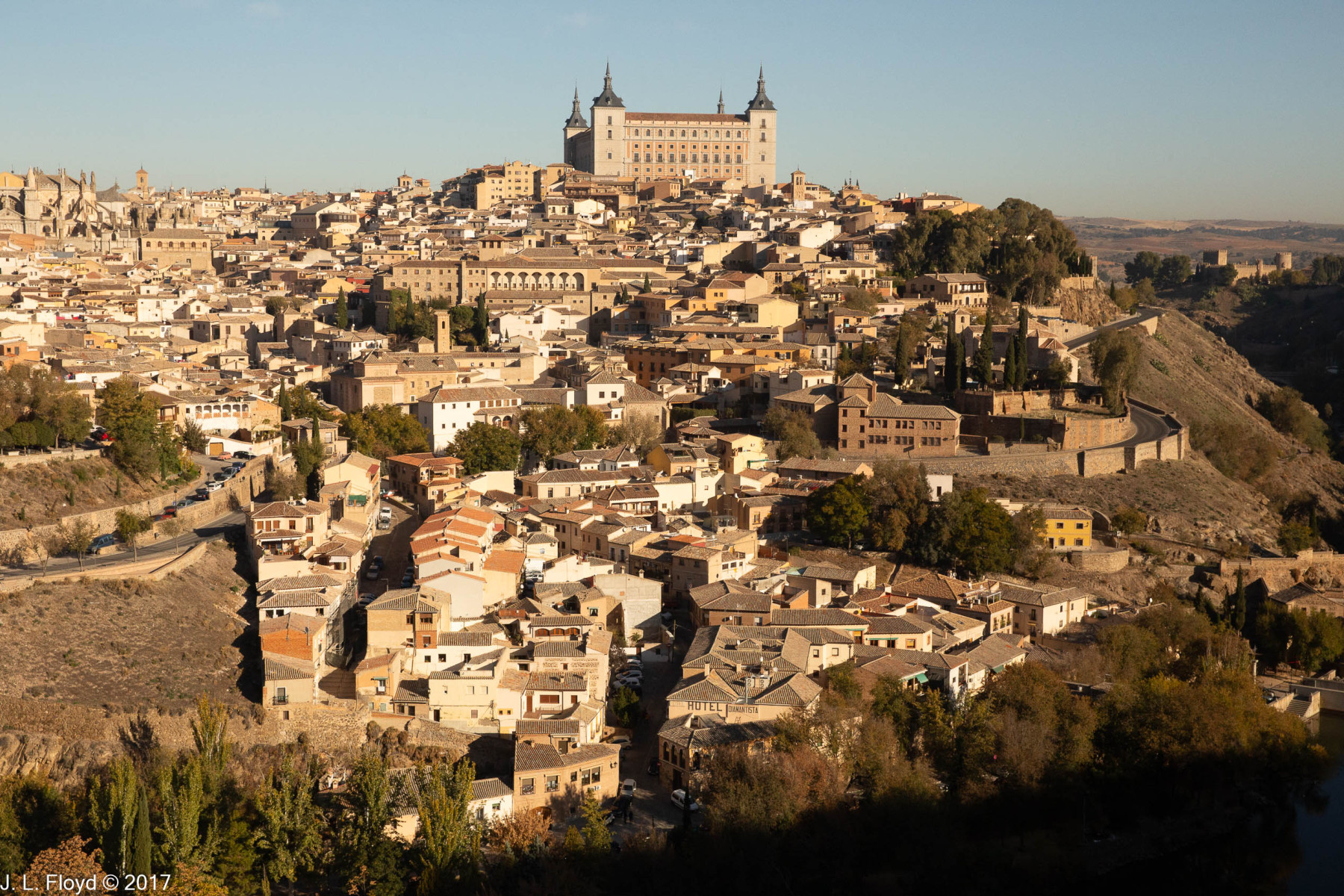
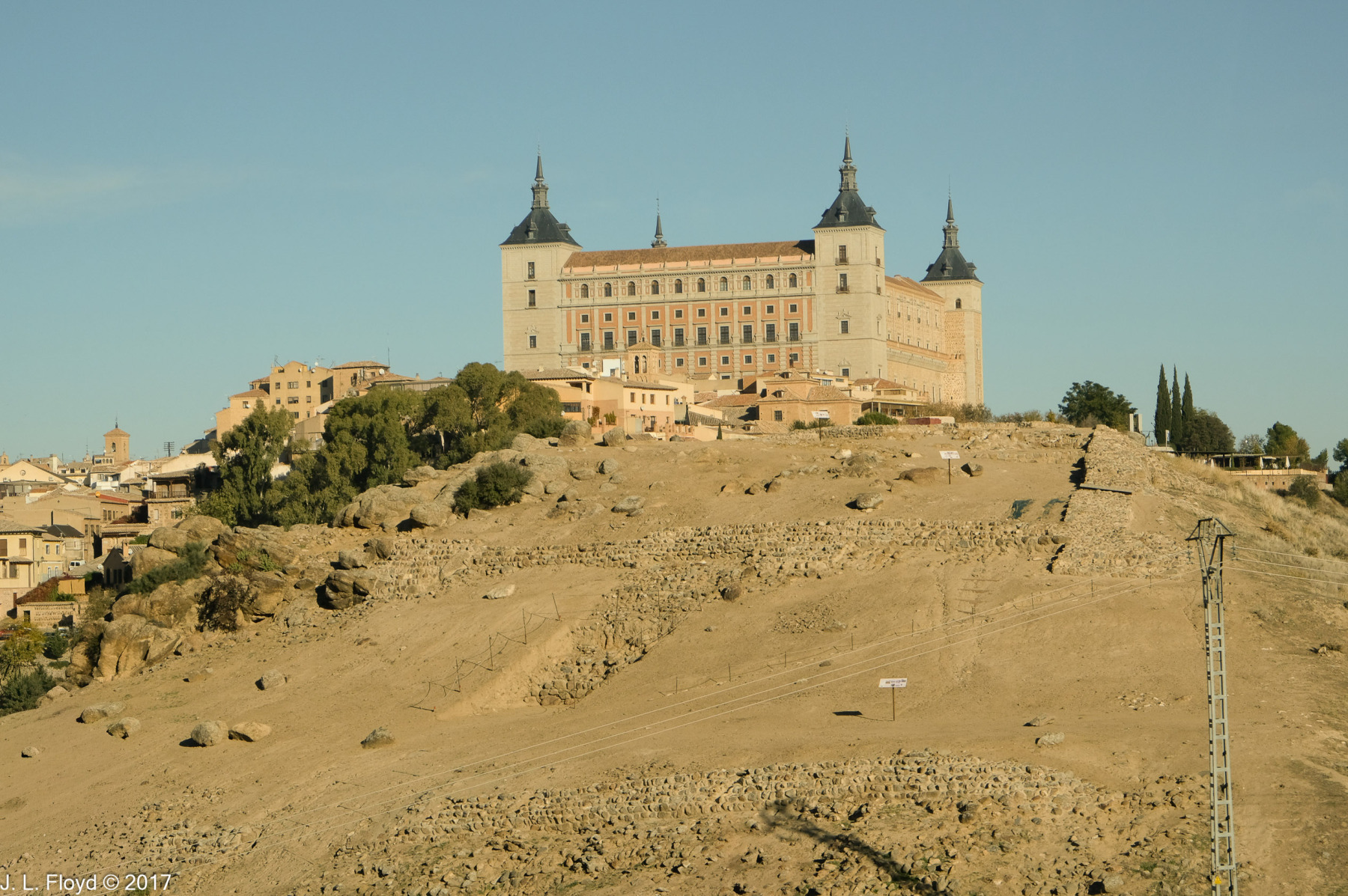
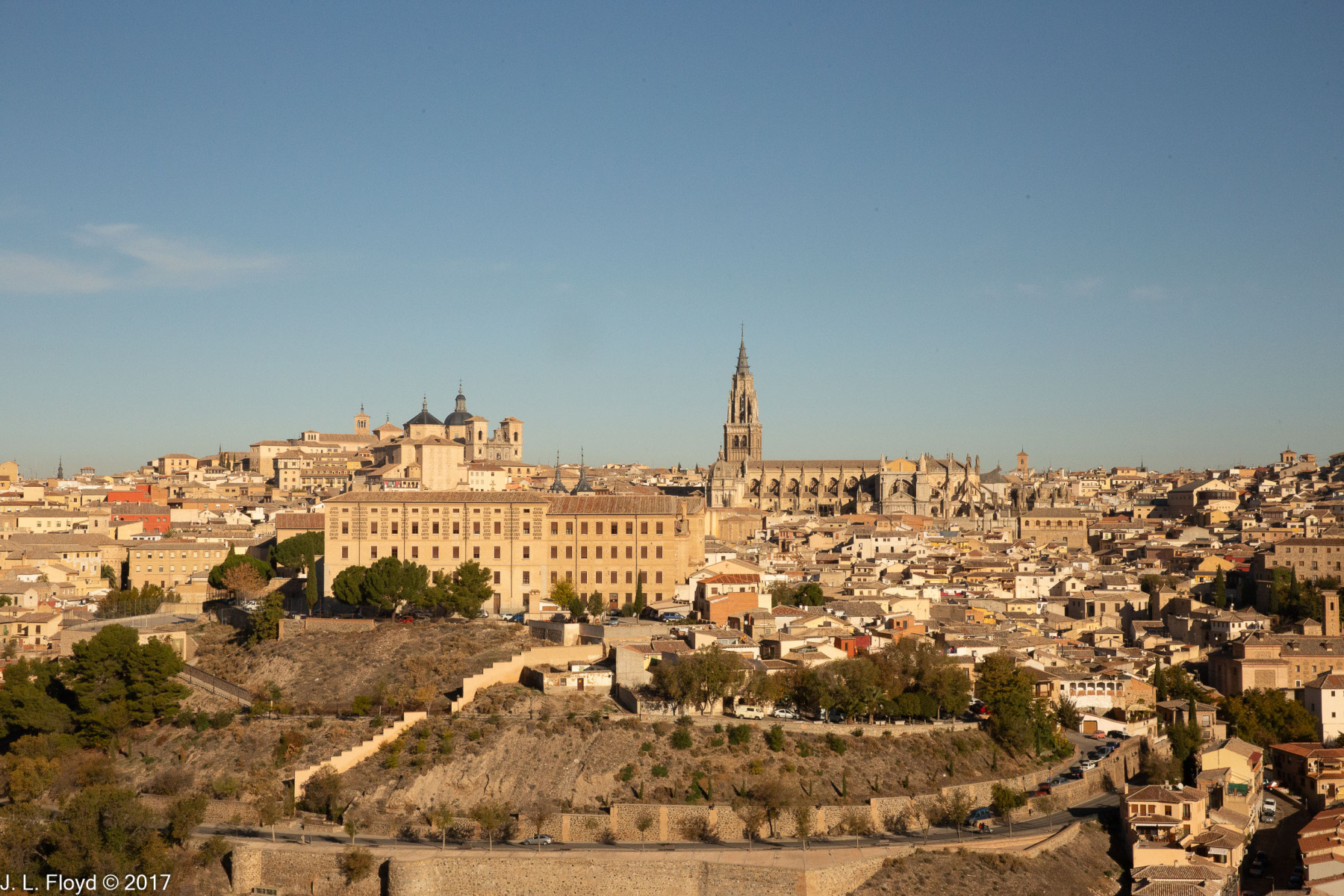
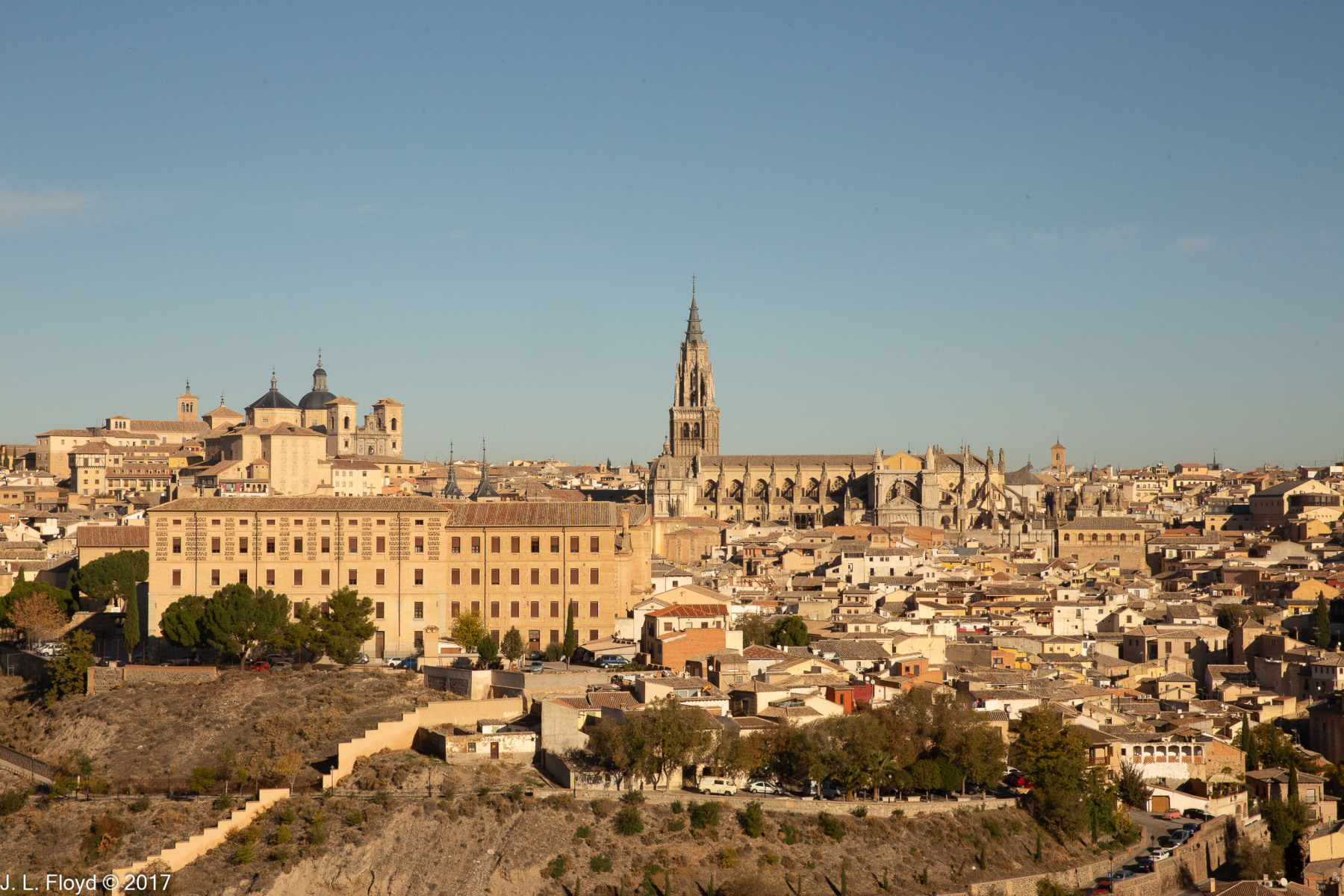
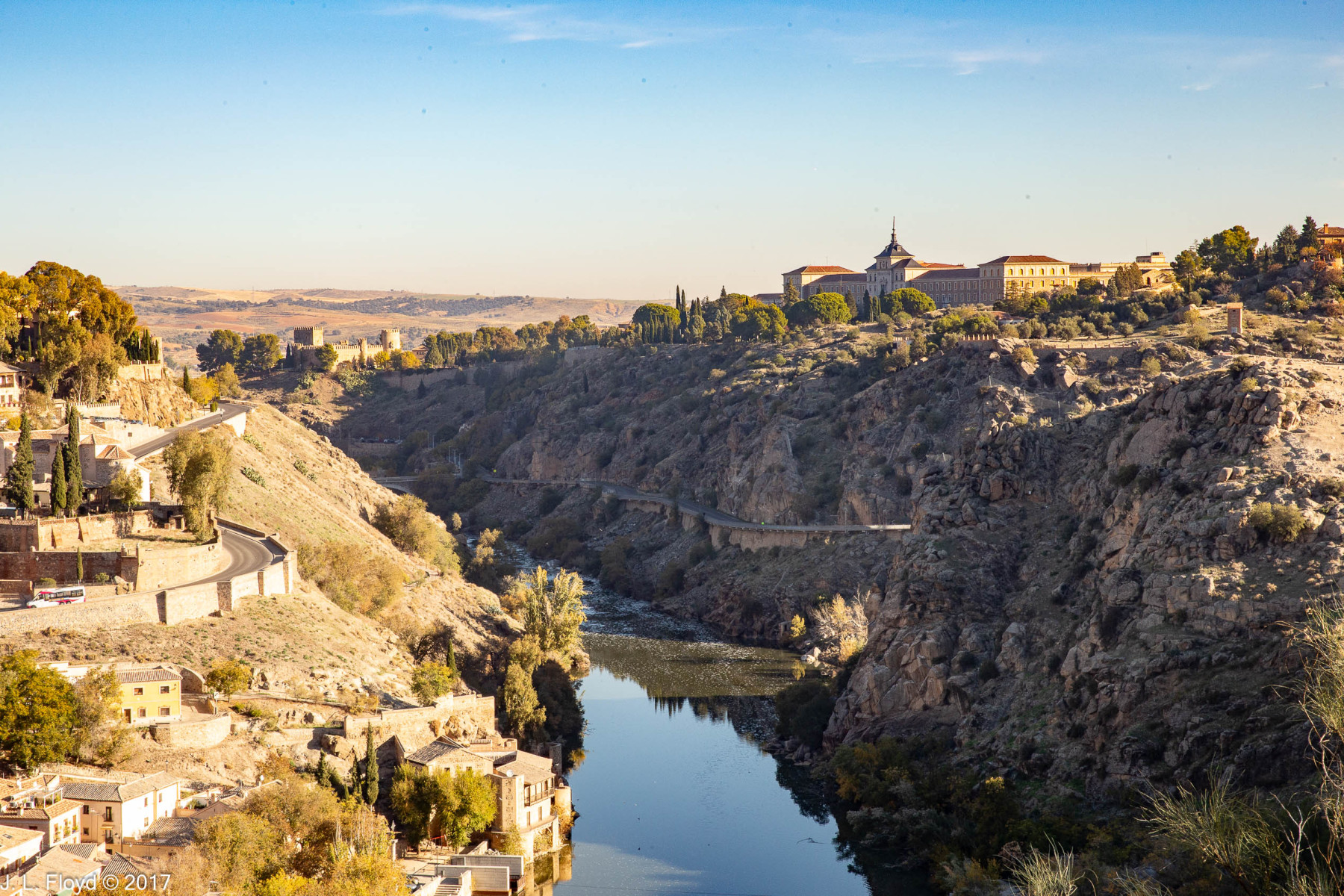
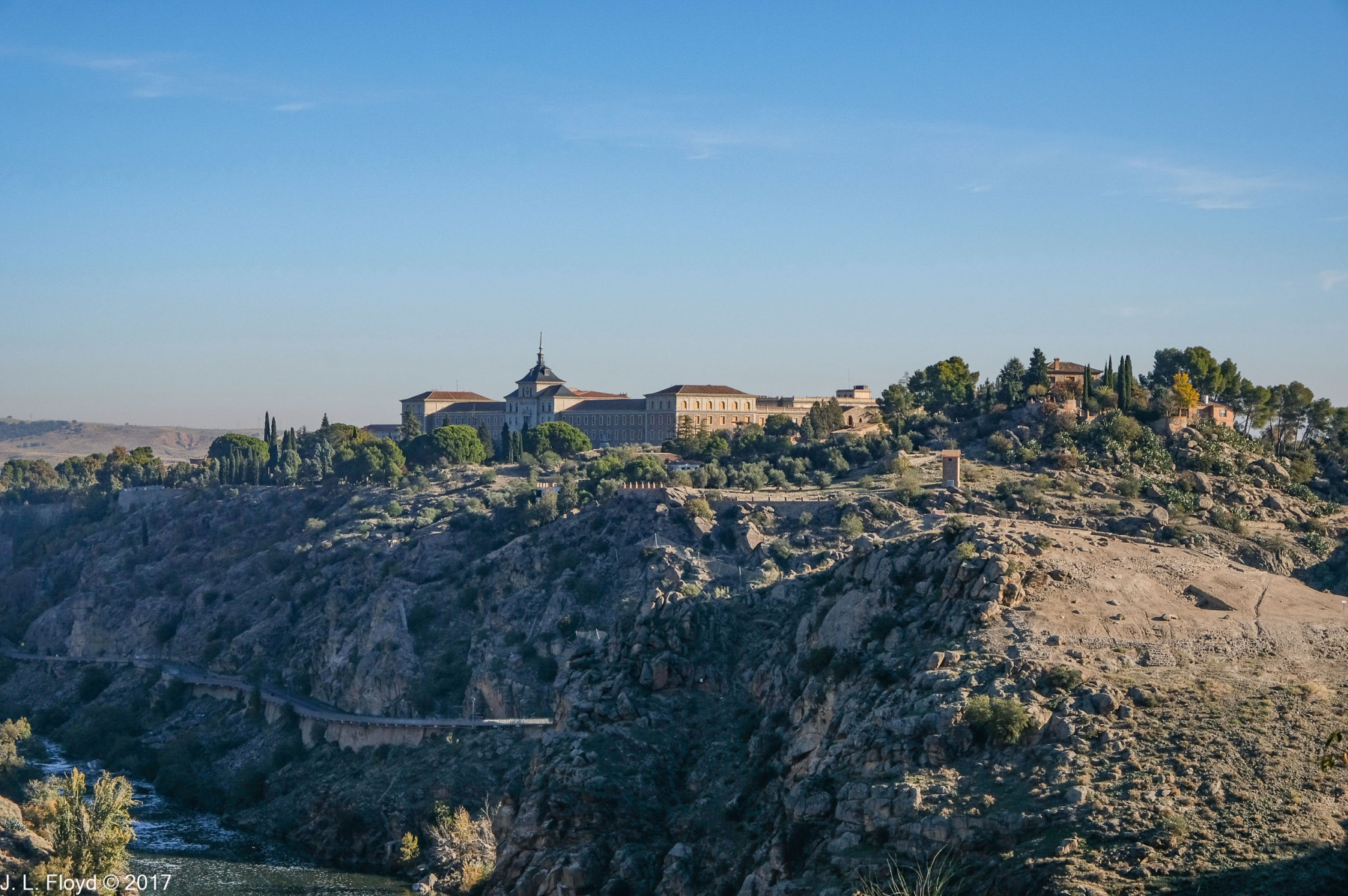
The Tagus River (Rio Tajo in Castilian Spanish) is the longest river in the Iberian Peninsula, flowing 1,007 kilometers (626 miles) from eastern Spain to its mouth at Lisbon in Portugal. On its way it curves around the city of Toledo in a sharp meander known as the Torno del Tajo, carving a spectacular gorge, most prominently on the eastern side of the city. We had an excellent view of the river from our mirador. To the east of the Alcázar the ground drops sharply to the river, and the opposite bank rises in a near-vertical cliff. On the side of the cliff, about one-third of the way up, is a rather precarious-looking road, the Ronda de Juanelo; perched at the top of the cliff is the Escuela Central de Educación Física (Central School of Physical Education), which belongs to the Spanish Army. Farther to the north, lower down, we could make out the Castle of San Servando, which was originally built as a monastery on the order of Alfonso VI, King of Leon and Castile, after his conquest of Toledo from the Moors in 1085. The castle also served as a fortress to guard the Alcántara Bridge against Moorish attempts to reverse the conquest. Nowadays it hosts a provincial hospital.
The Alcántara Bridge, a stone double-arch structure, was originally built by the Romans, although of course it has been rebuilt and repaired many times throughout the ages. It was the main point of access to Toledo for hundreds of years, and the only one through which pilgrims were allowed to cross into the city in medieval times.
We modern-day pilgrims did not enter Toledo via the old Alcántara Bridge; instead our bus we used the New Alcántara Bridge, which is south of the old one. As we crossed the river, we could see some ruined buildings on both banks of the river, along with what looked like a kind of dam, between the two bridges. Later I found out that the ruins were the remains of a complex built in the 19th century to harness the hydraulic power of the Tagus River to generate electricity. Known as the Vargas Turbines, this facility was demolished in 1999, presumably because it became obsolete, and now there remain only the ruins we saw.
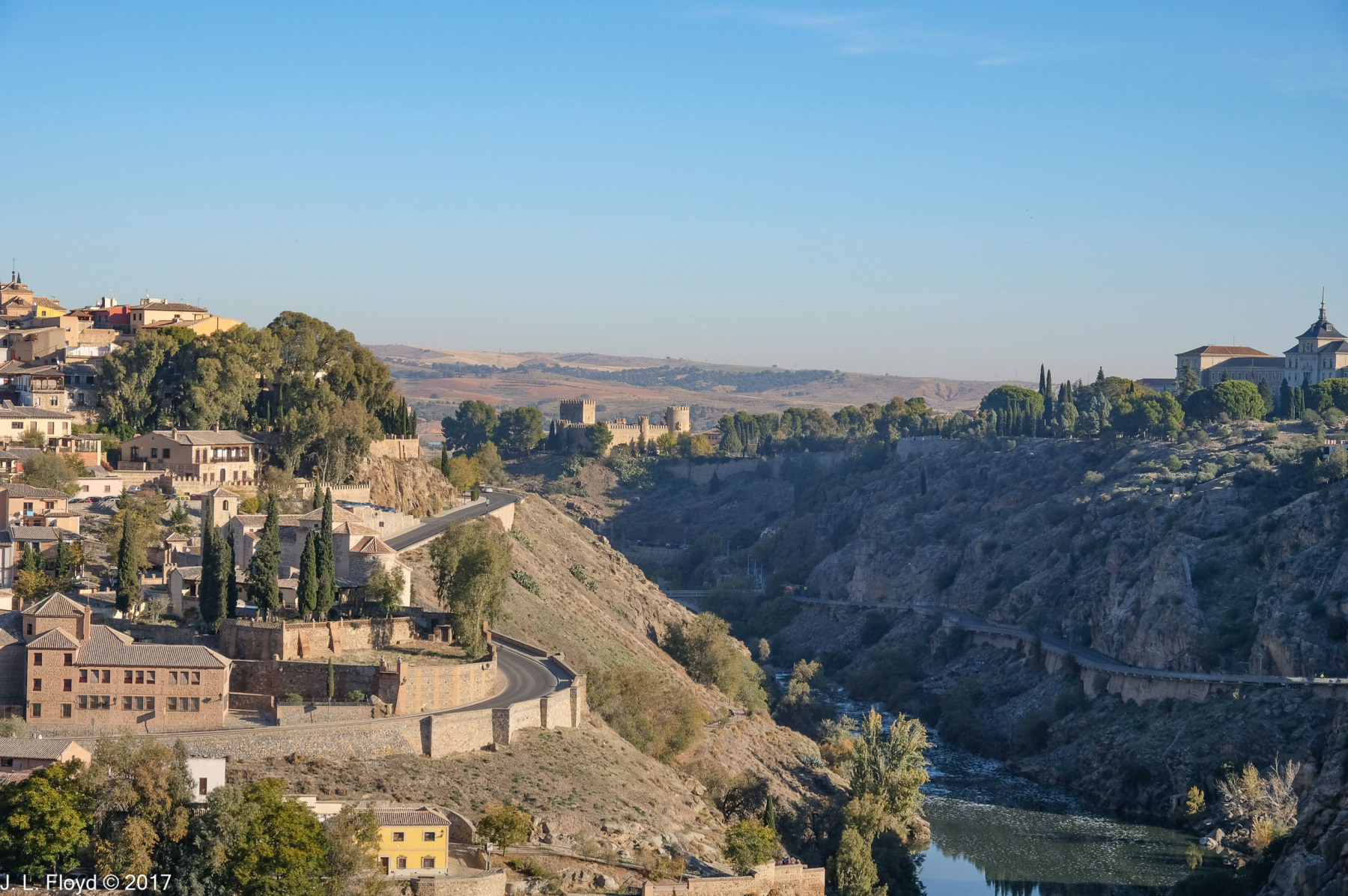
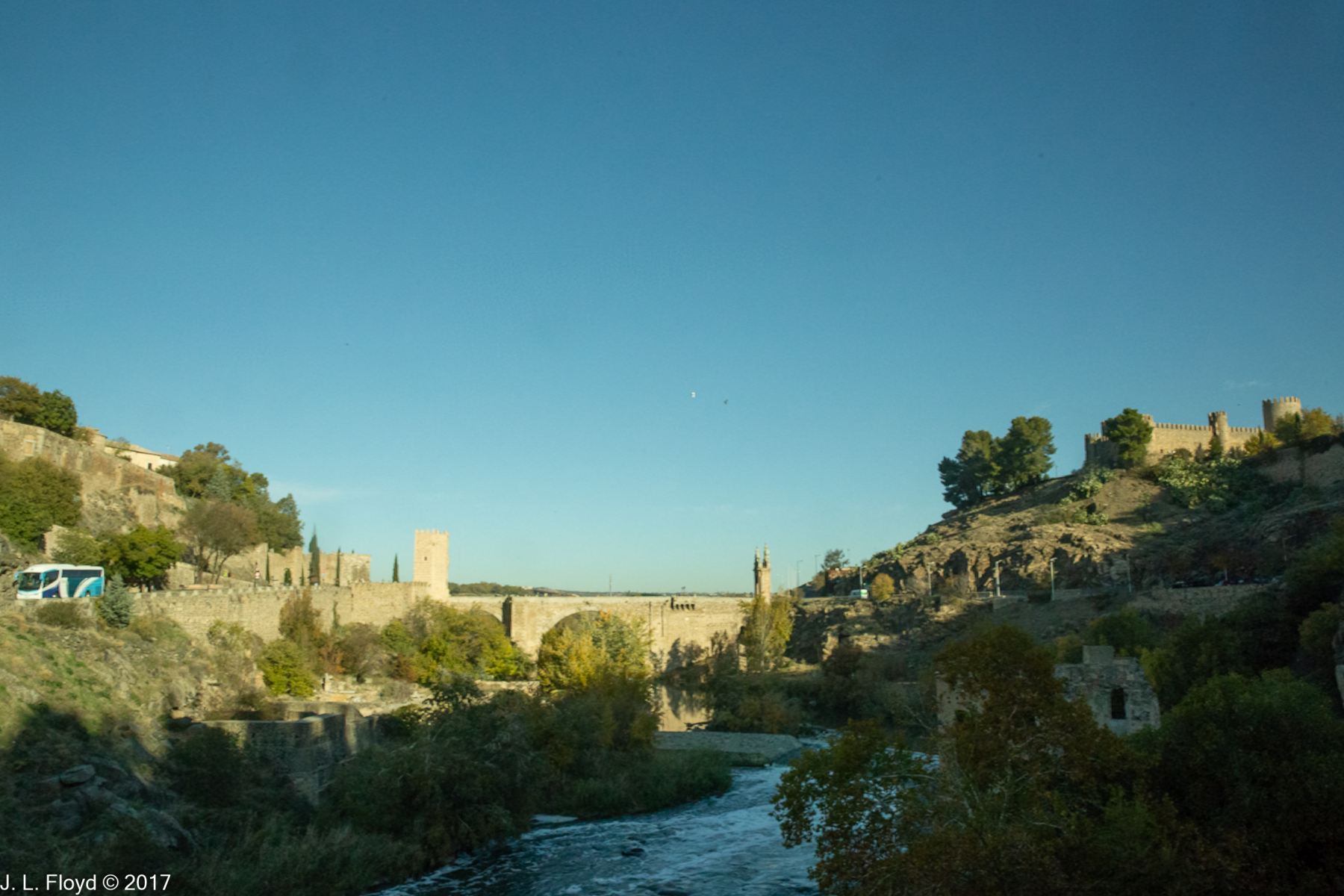
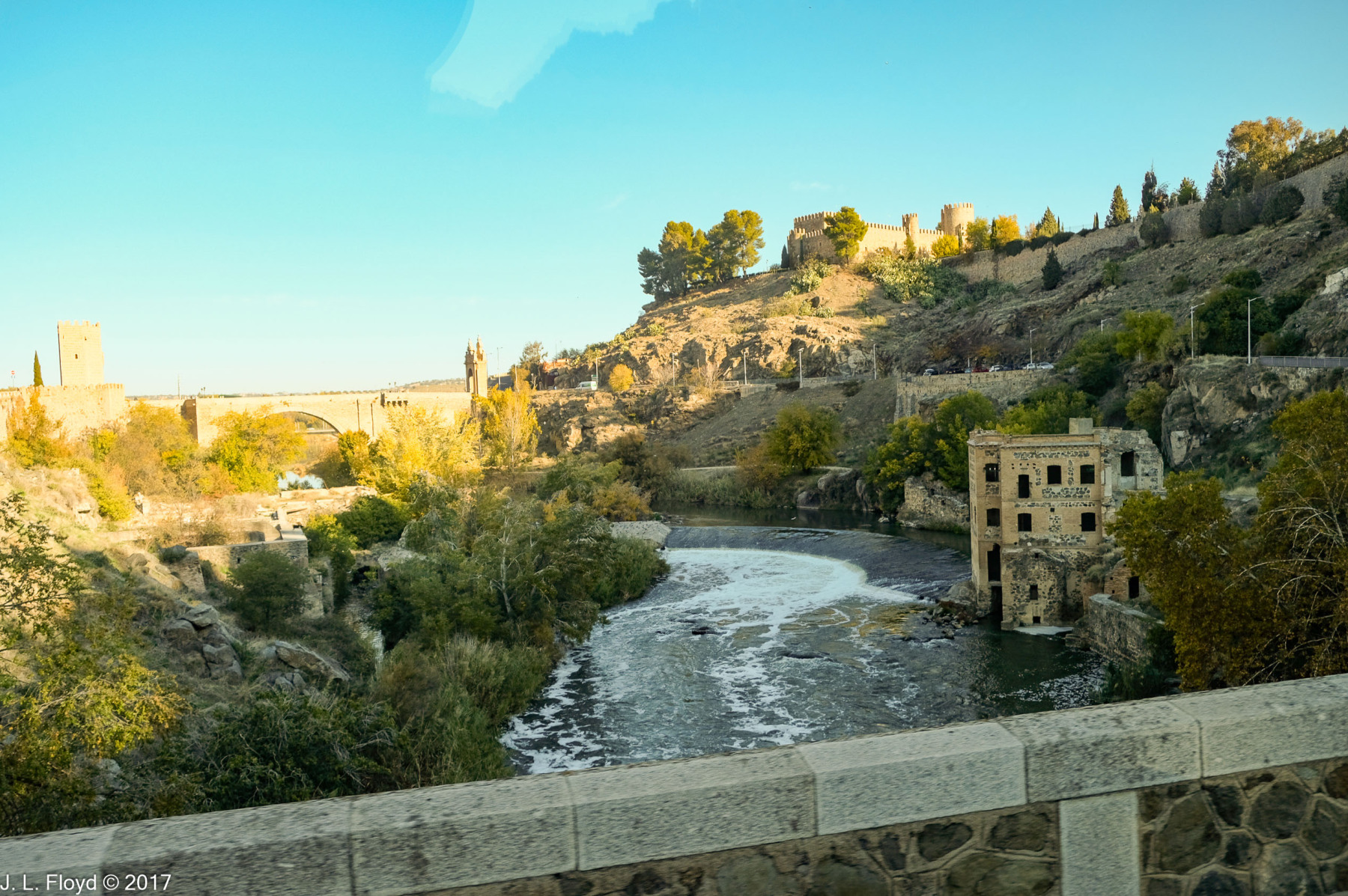
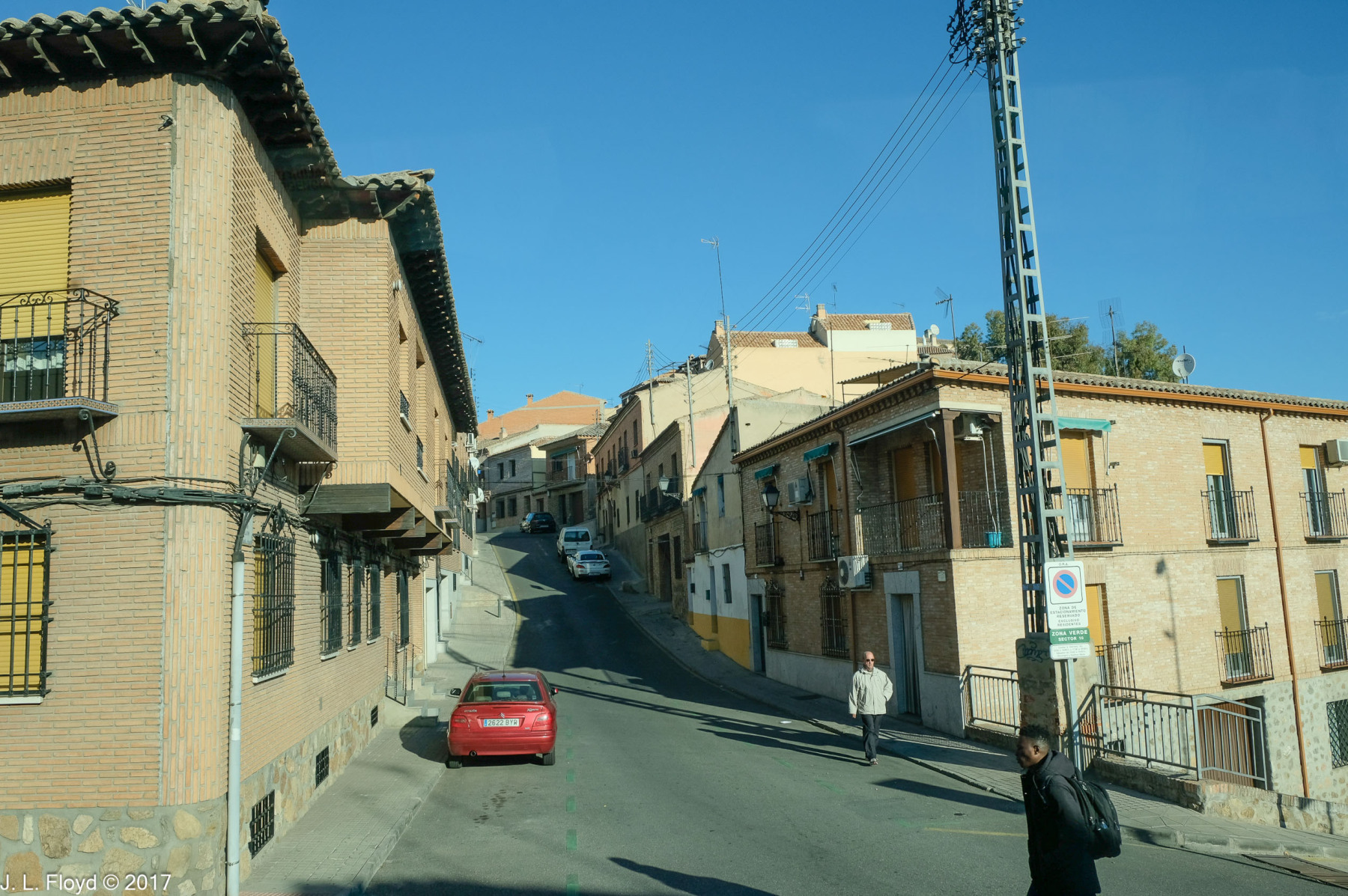
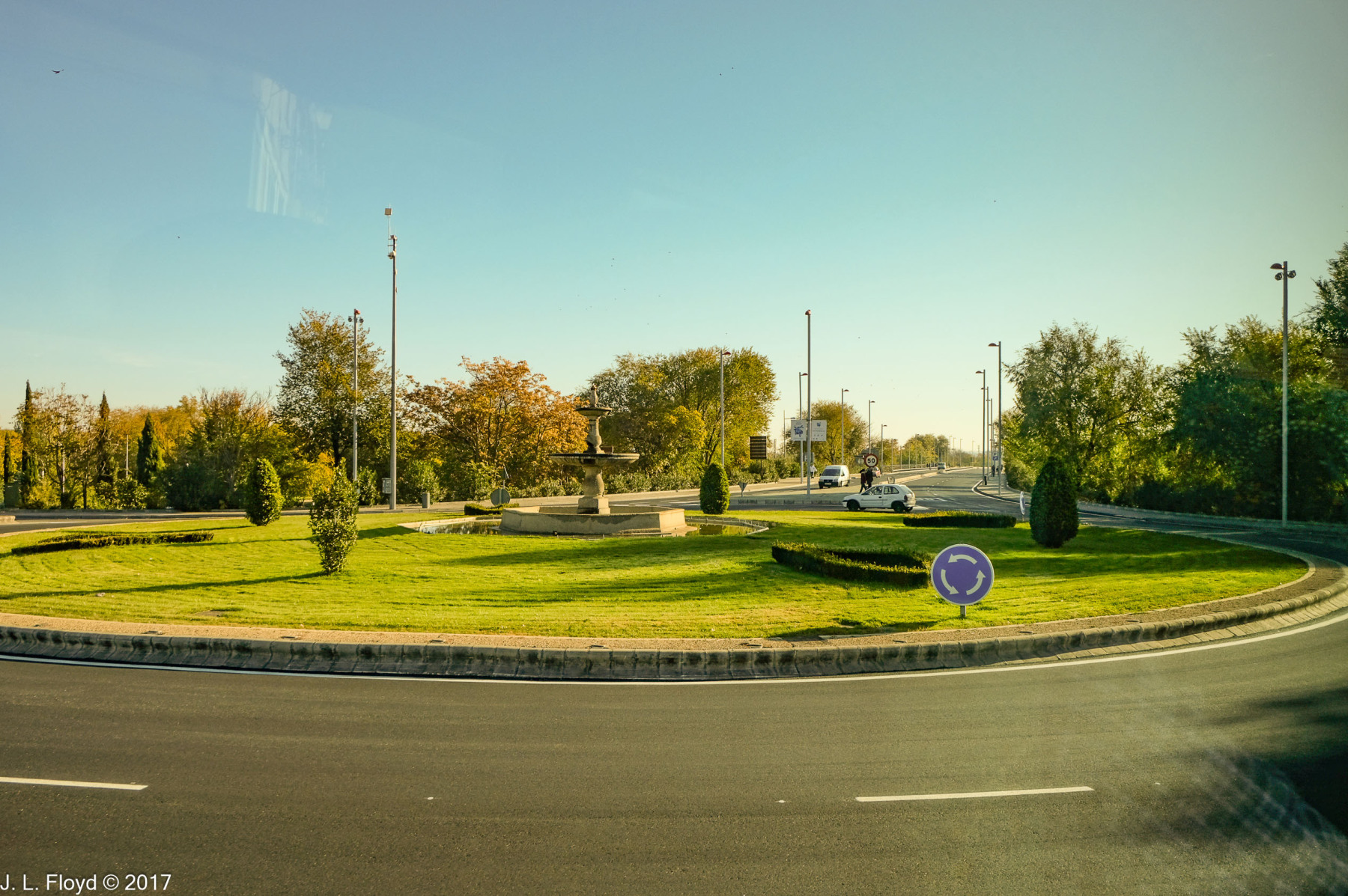
After crossing the river, our bus proceeded via a devious route to the north side of the Old City. Along the way we encountered several roundabouts – rotondas in Spanish – which seem to be ubiquitous in Spain, but add to the attractiveness of the views; we also passed close to the walls of the Old City, studded with picturesque towers which whetted our appetite for the experience to come.
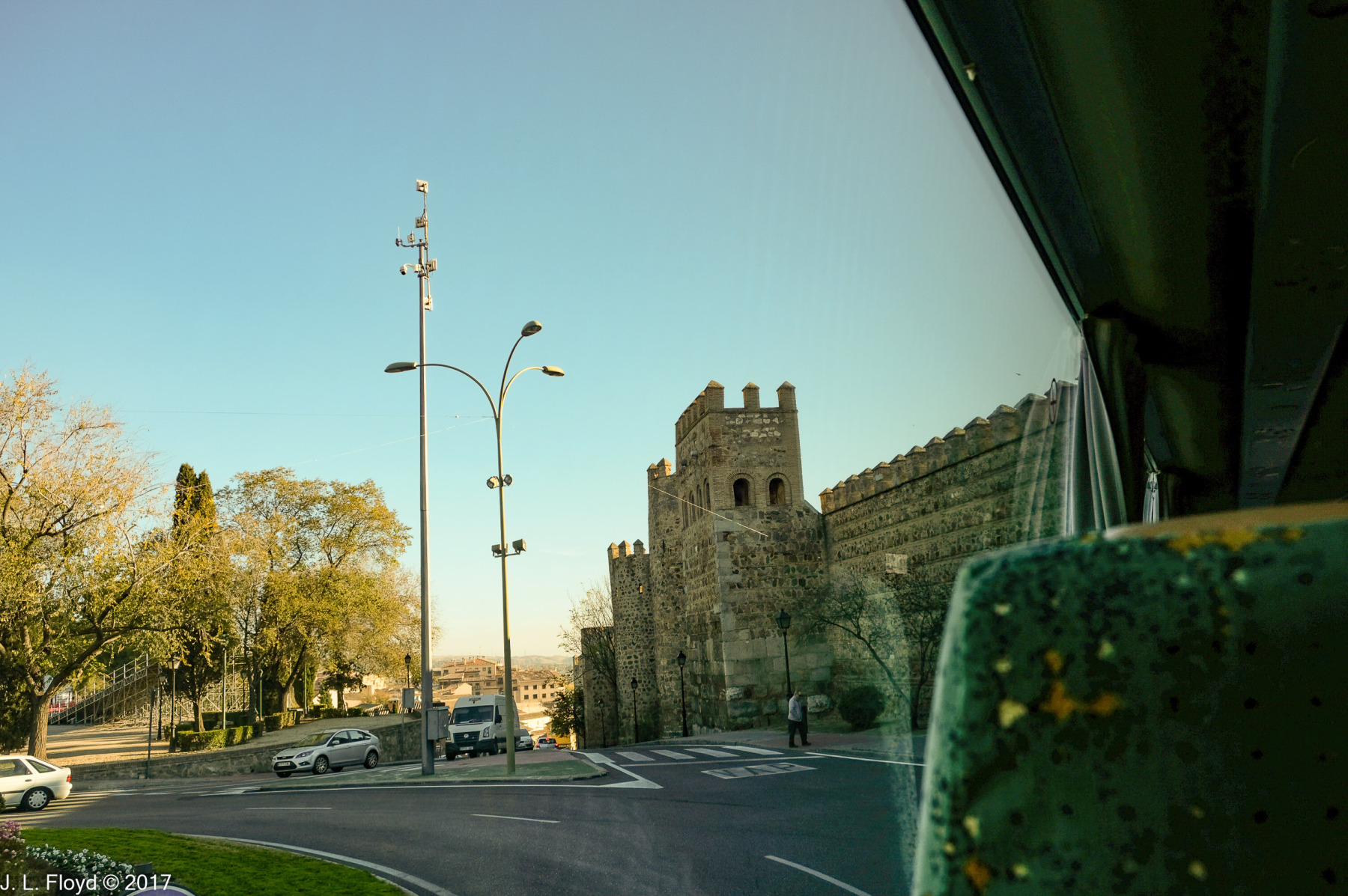
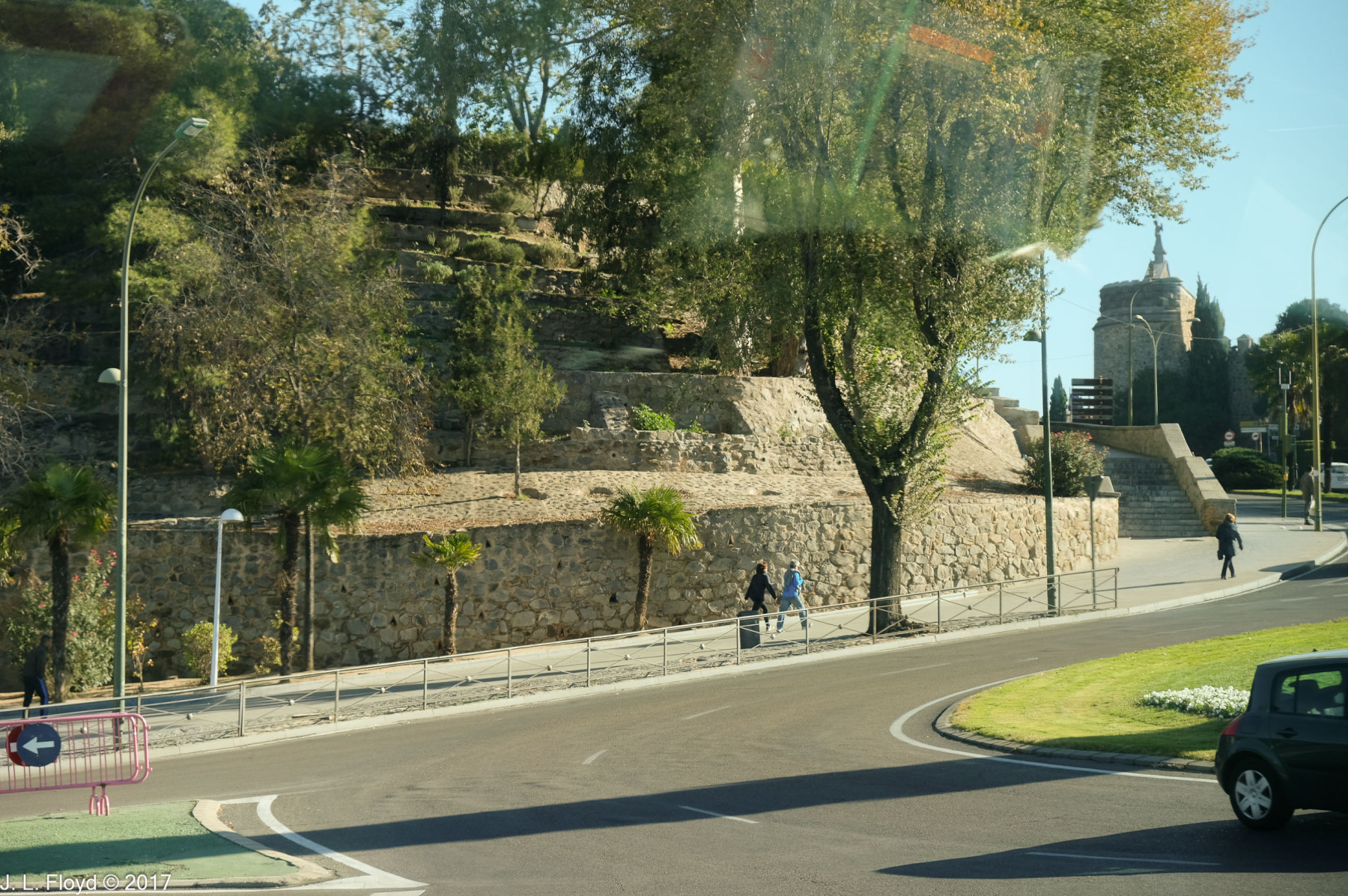
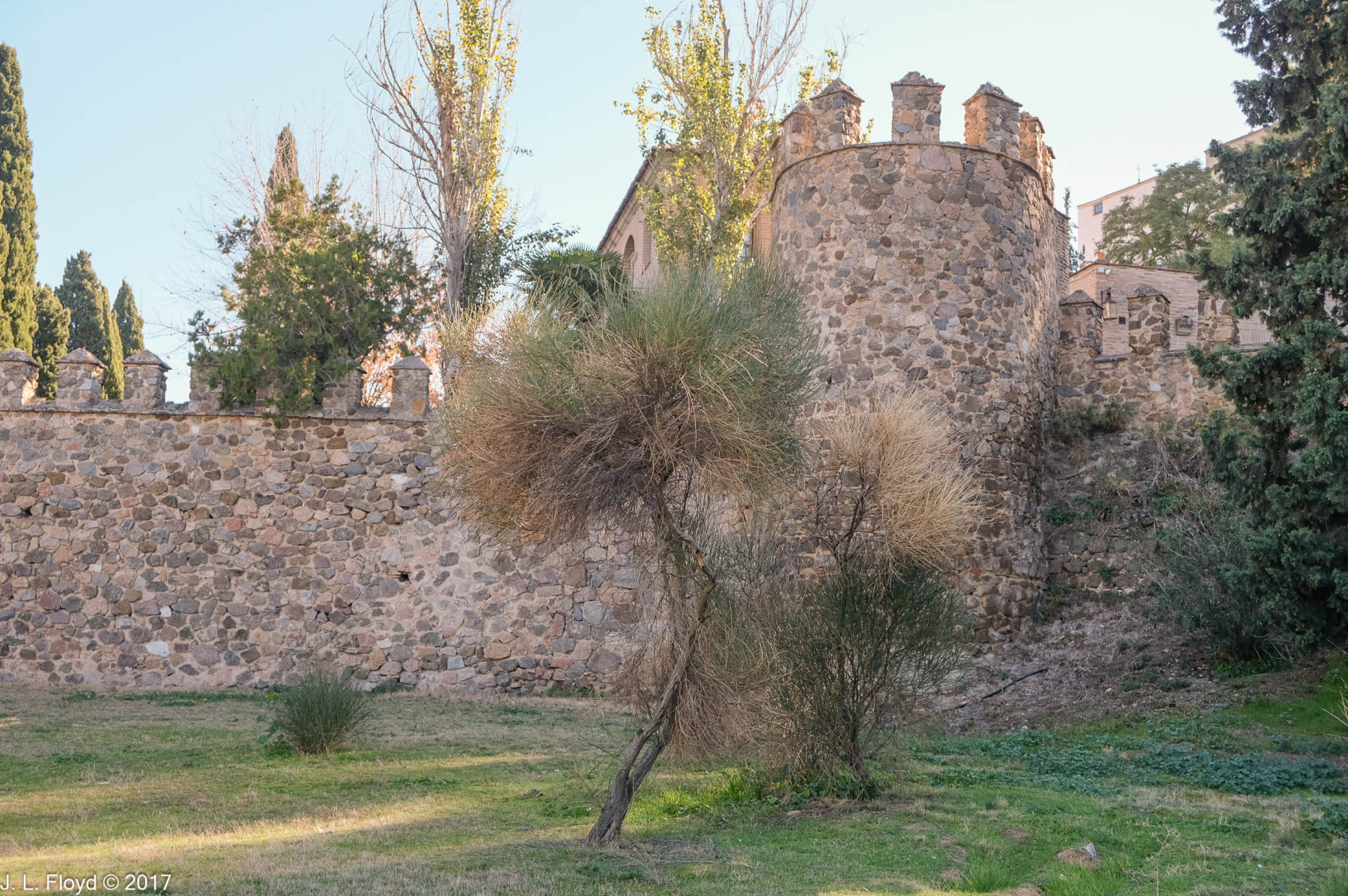
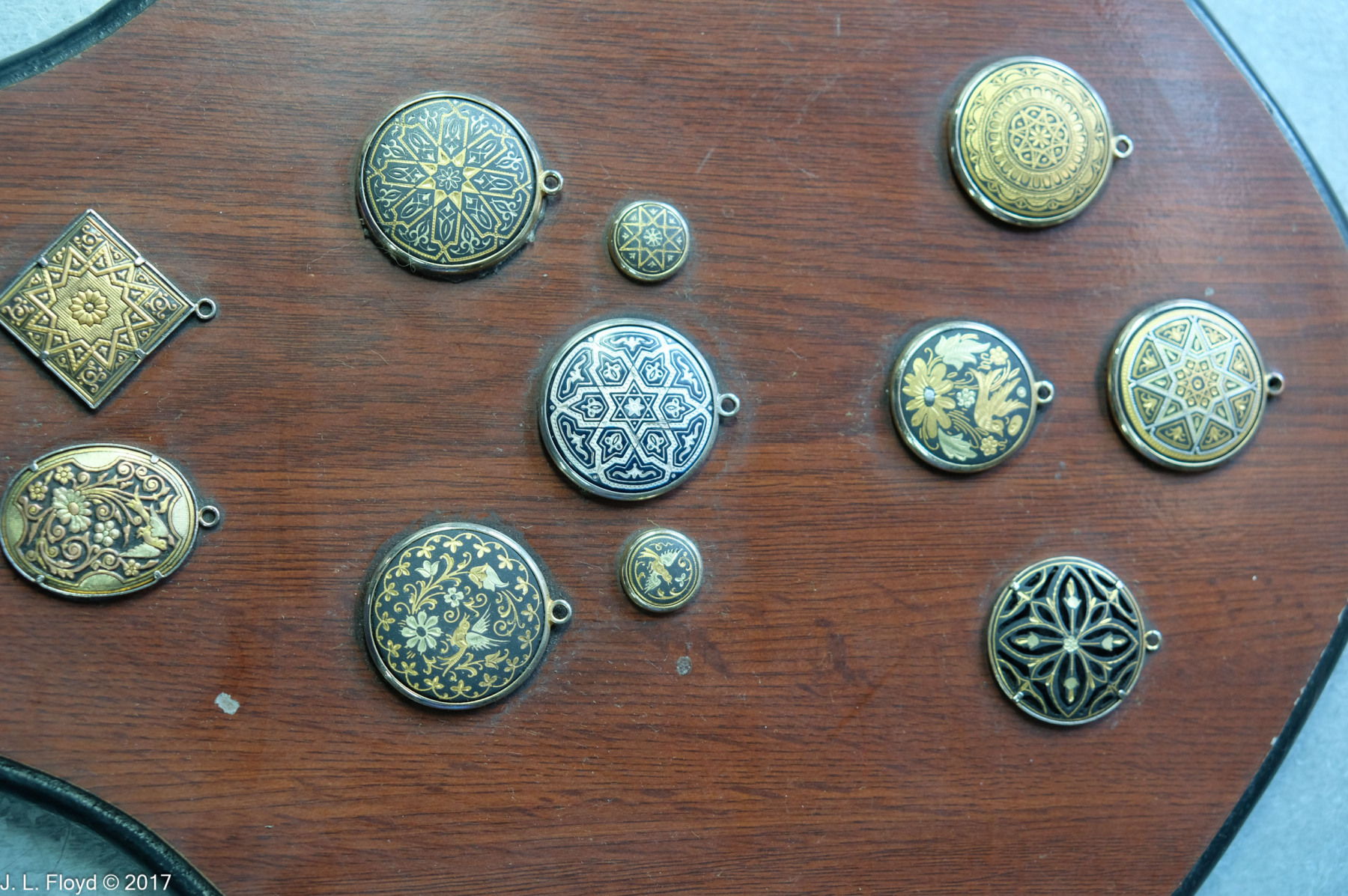
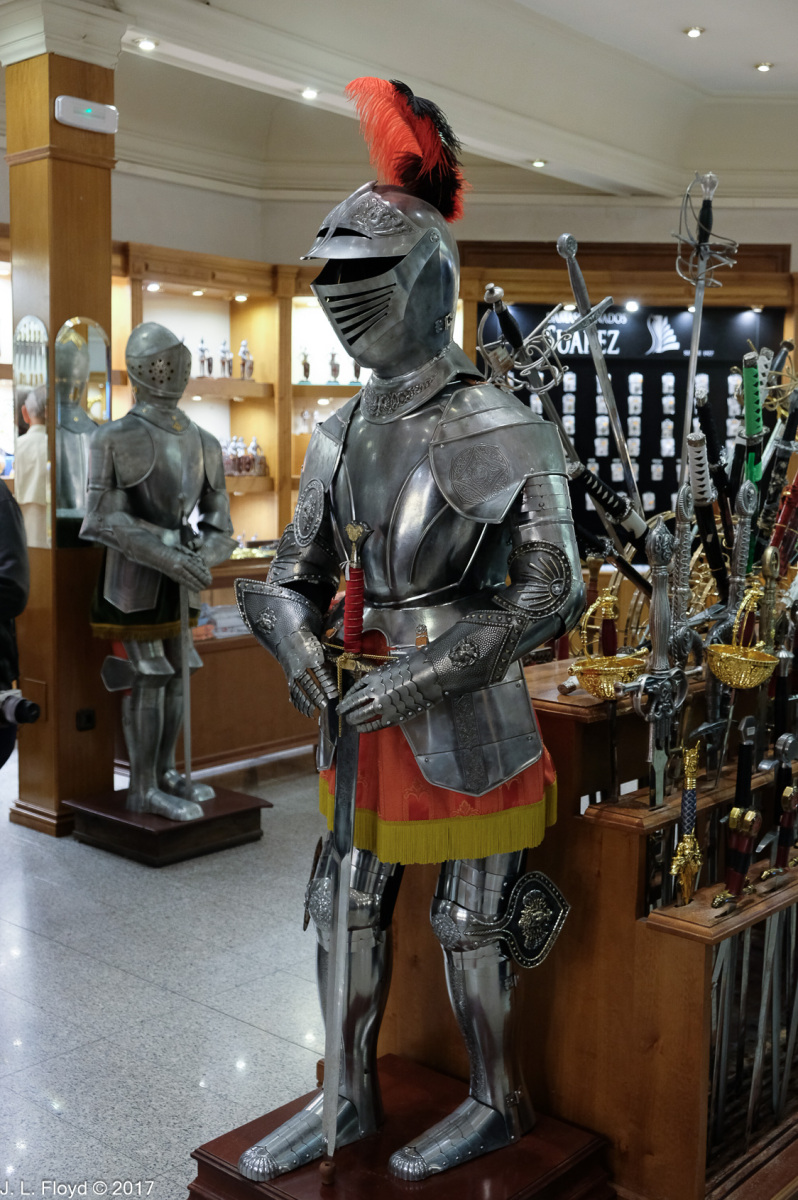
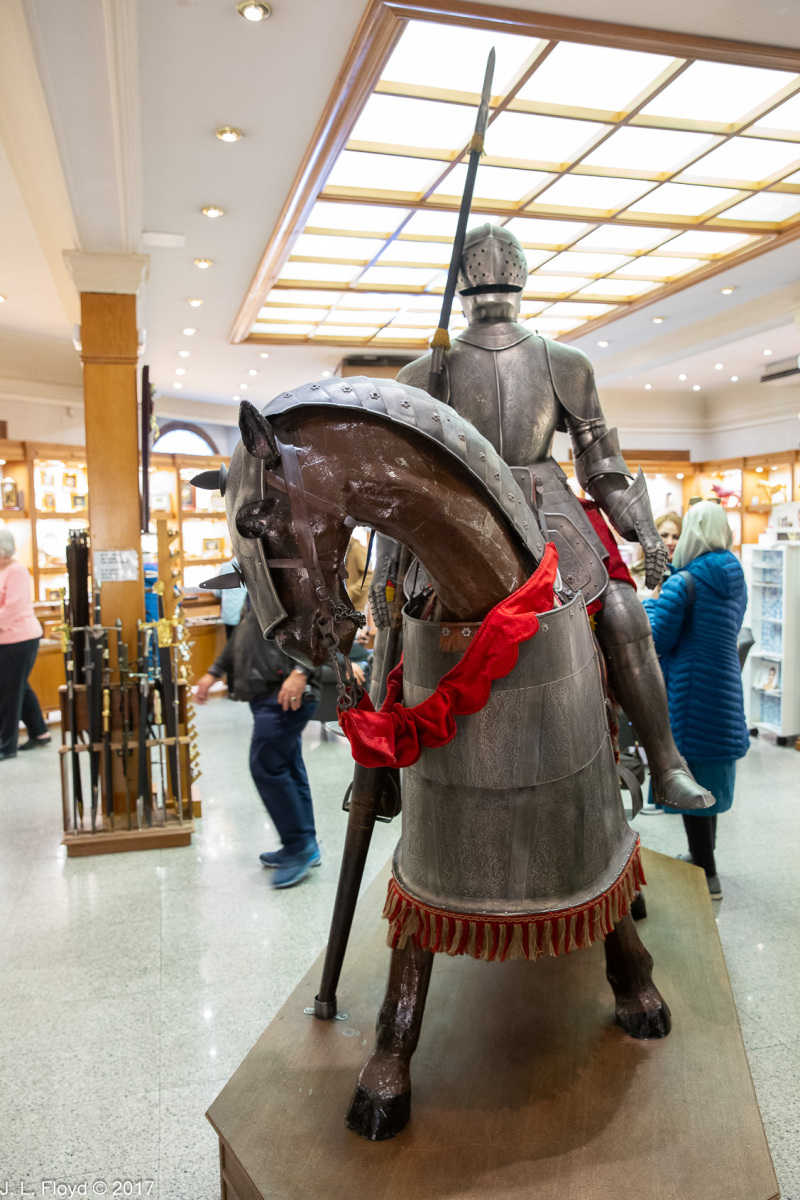
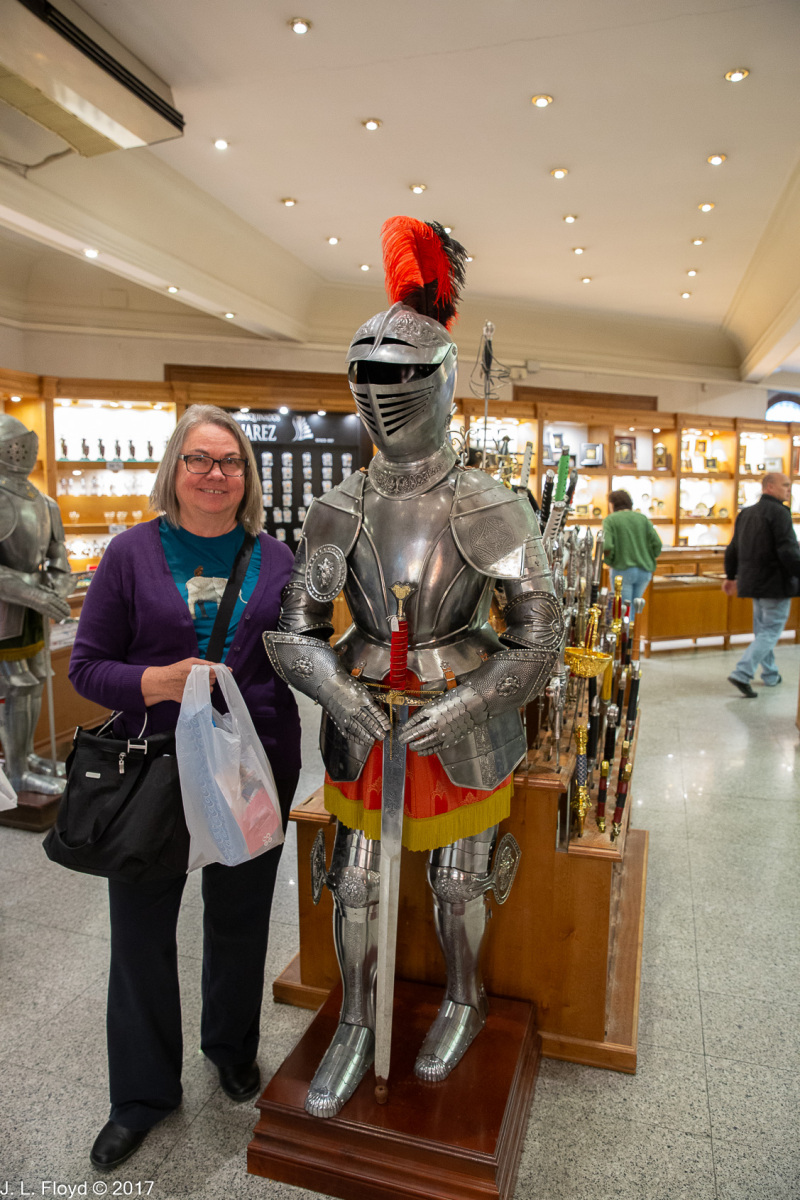
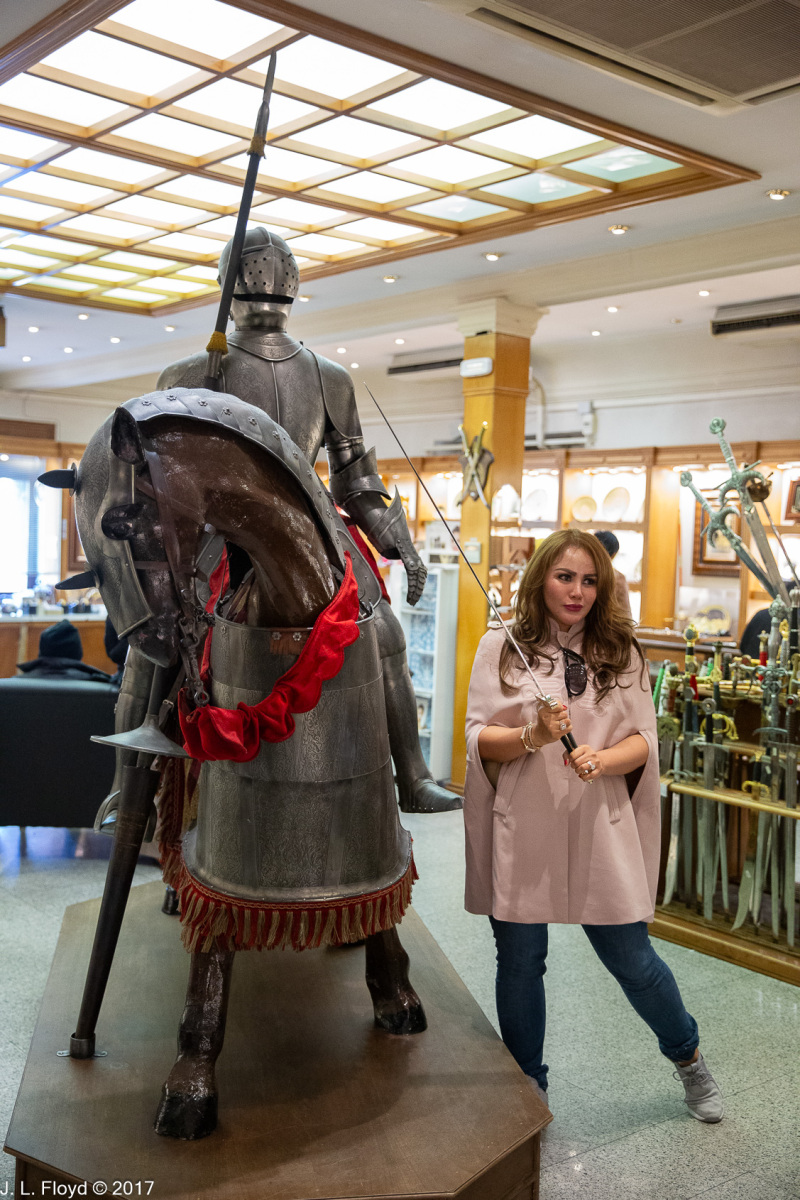
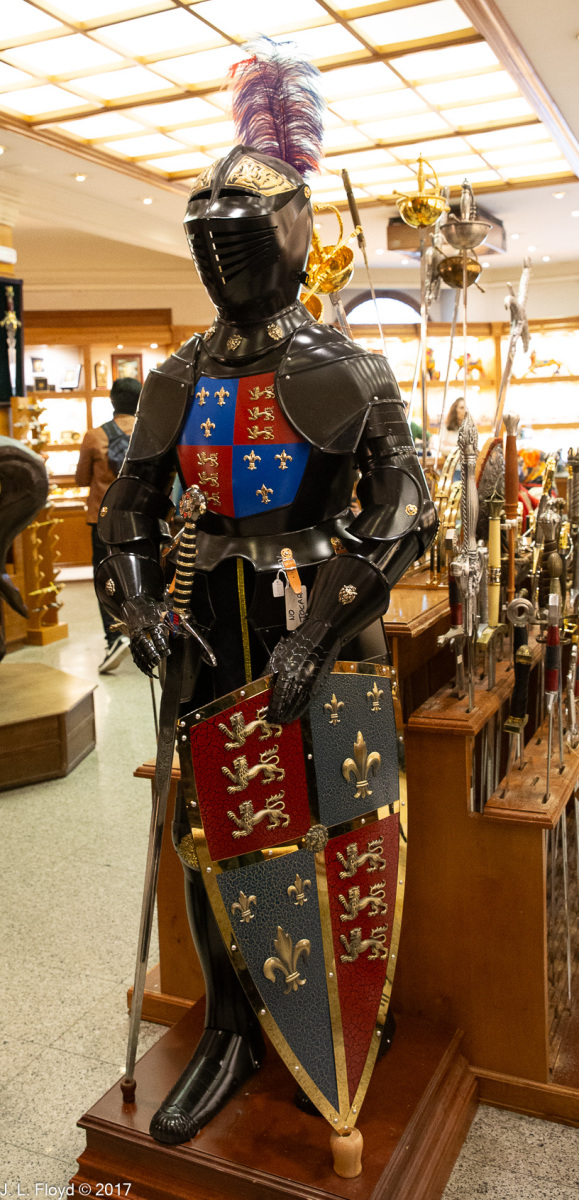
But before we entered the Old City, we had one stop to make, which was at an establishment called Damasquinados Suárez. It is awkward to render this name in English. Suárez is of course a Spanish family name, i.e the name of the family that presumably owns the place. The “Damasquinados” part translates as “Damascene” and refers to the fact that many of the wares sold in the shop are made of Damascene steel. But the term also connotes metalworking in general, and the artifacts produced by Damasquinados Suárez include not only swords and knives, and even medieval suits of armor, but also jewelry of various types.
Toledo steel was prized even in ancient times, and it was an important source of weaponry for the Roman legions. With the arrival of the Moors in the 8th century C.E., the Toledo metalworking industry profited and prospered by the acquisition of techniques and skills imported from Damascus. When the Christians regained Toledo in 1085, Toledo and its guild of swordsmiths became a vital asset in the Reconquista, and by the 16th century Toledo steel was regarded as the best in Europe.
At Damasquinados Suárez we were able to watch demonstrations of sword-forging and jewelry-making before visiting the showroom, where a vast array of wares were on display. These included, in addition to swords, cutlery and jewelry, suits of armor of the kind worn by medieval knights.
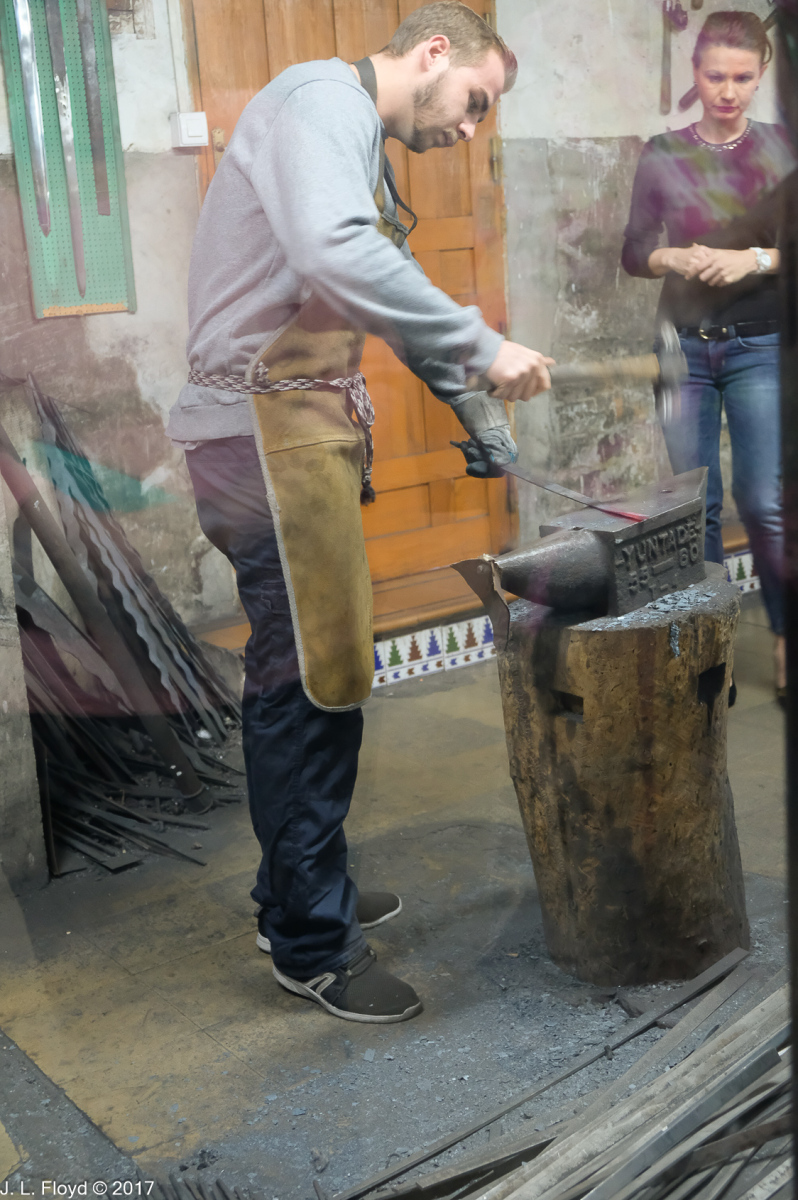
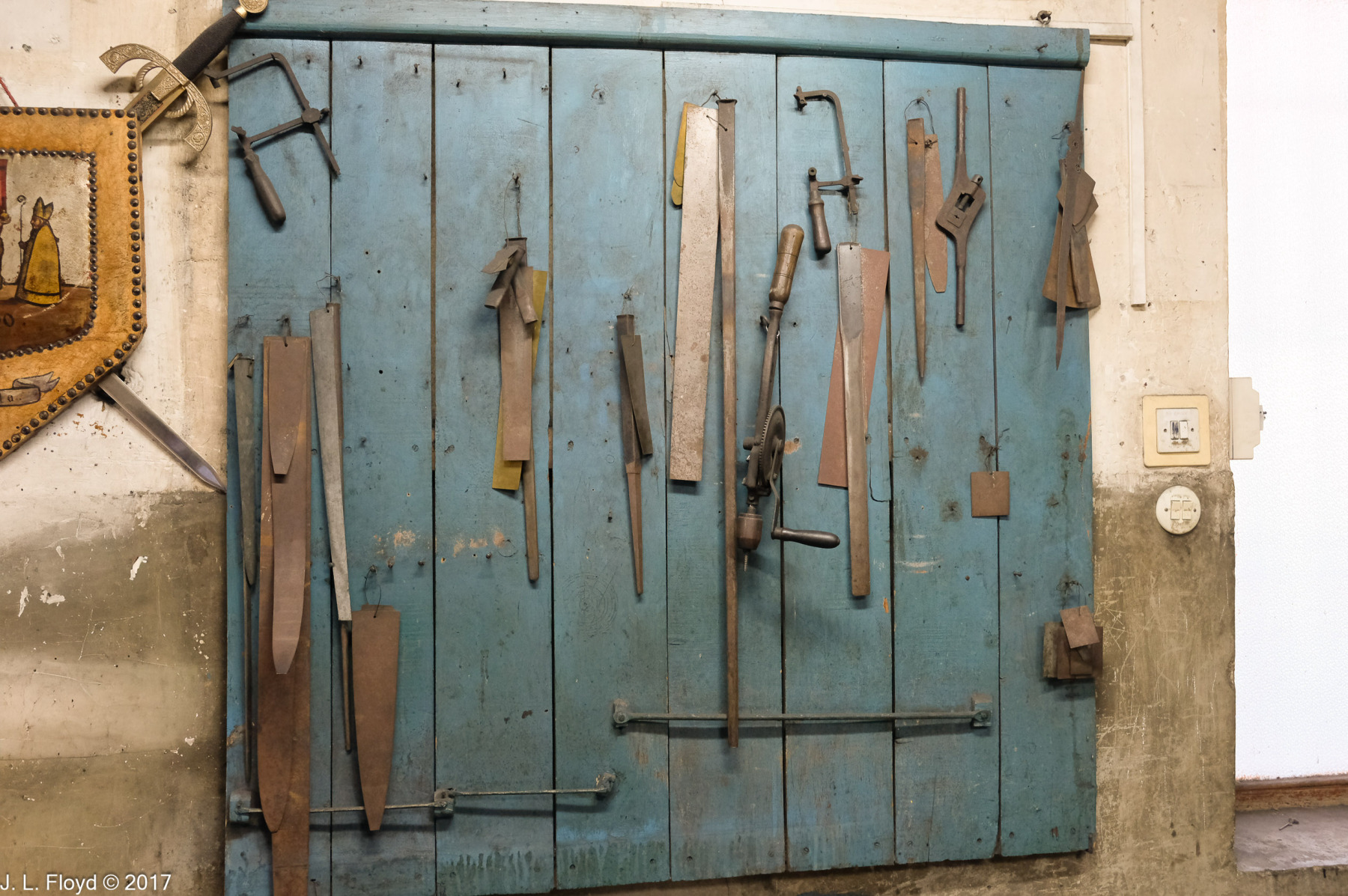
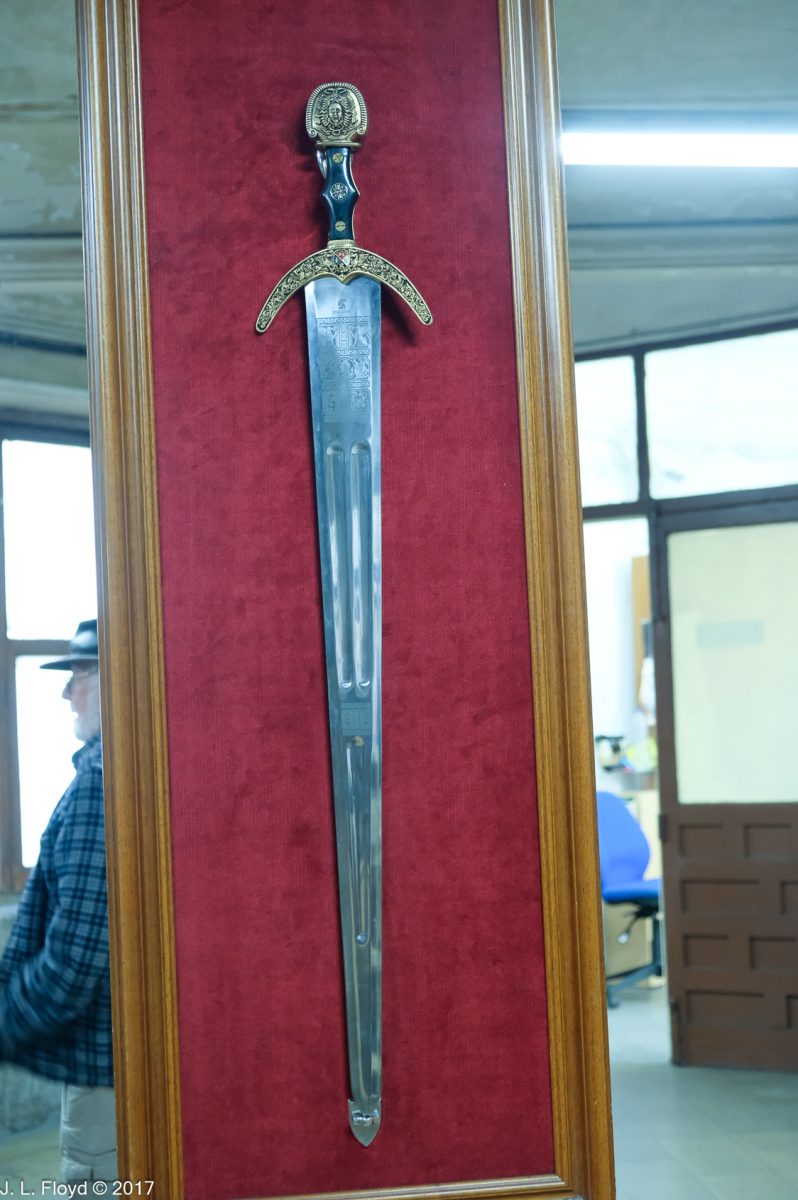
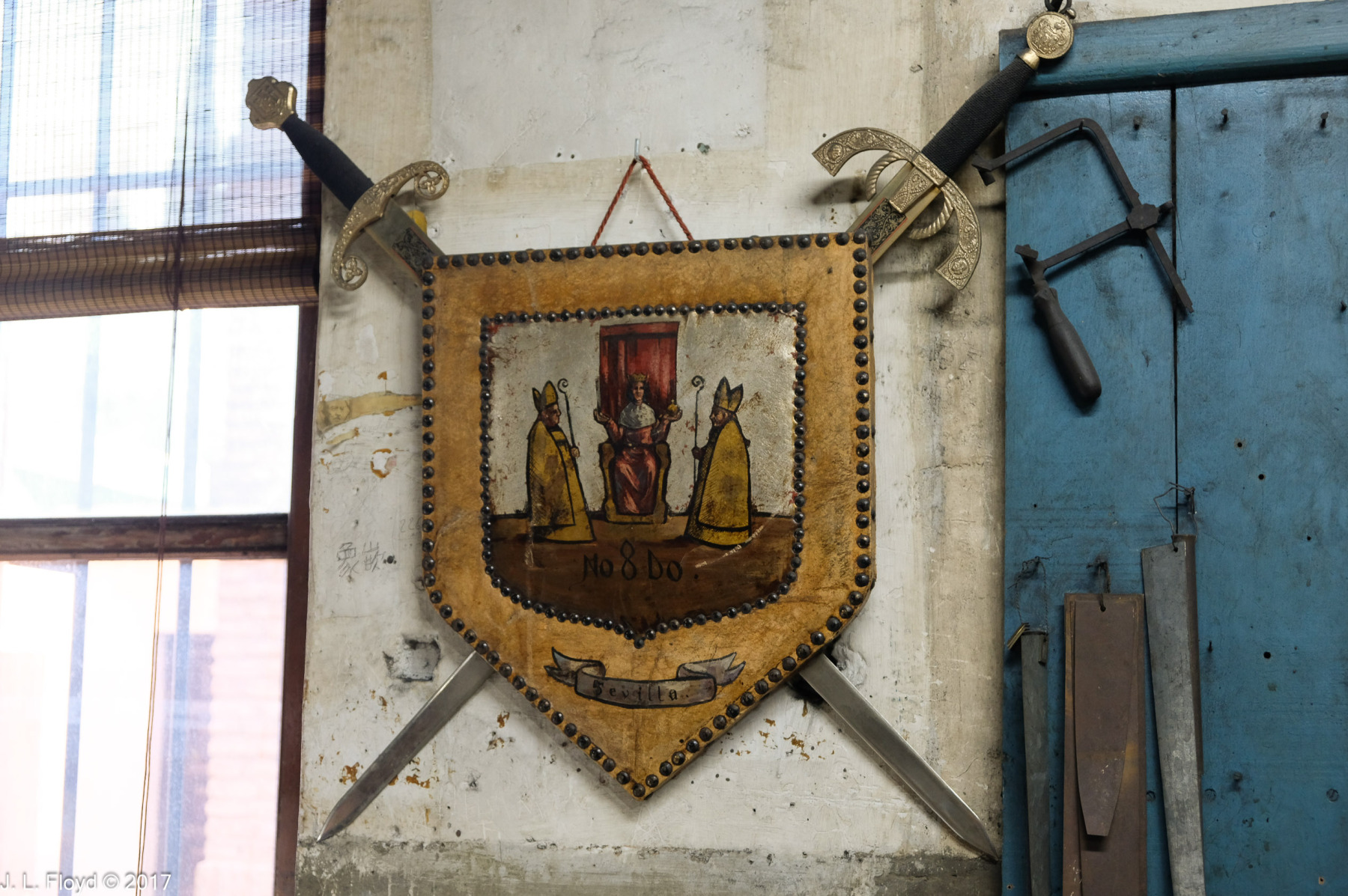
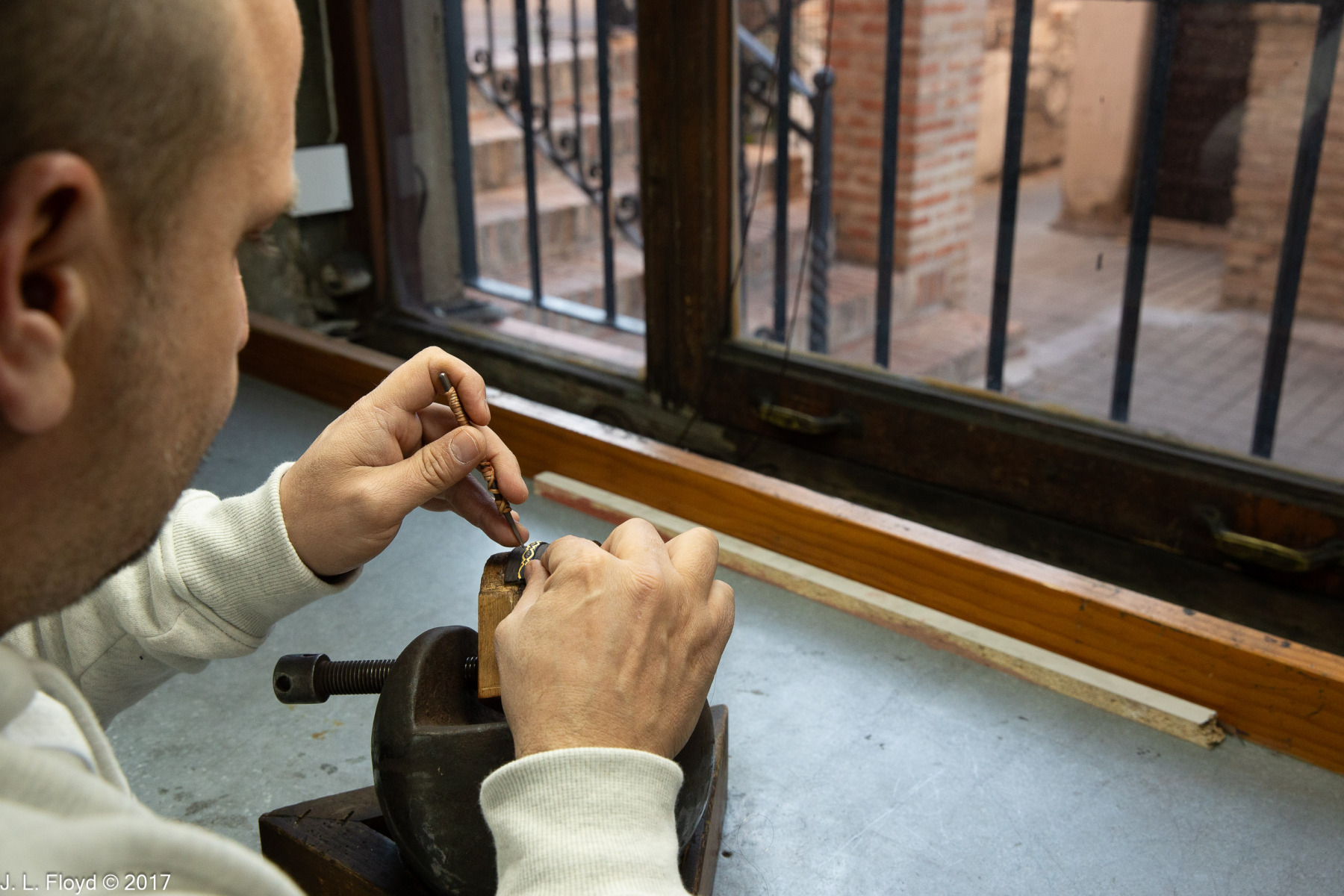
I would have been tempted to purchase a sword had it not been for the fact that I already have one, a legacy of my days as a naval officer (we were required to purchase ceremonial swords for full-dress inspections, which if I remember correctly happened once in my entire naval career). Instead I bought a kitchen knife.
From Damasquinados Suárez it was but a short hop to the Parque Recaredo, where we entered the Old Town of Toledo via a very long escalator.
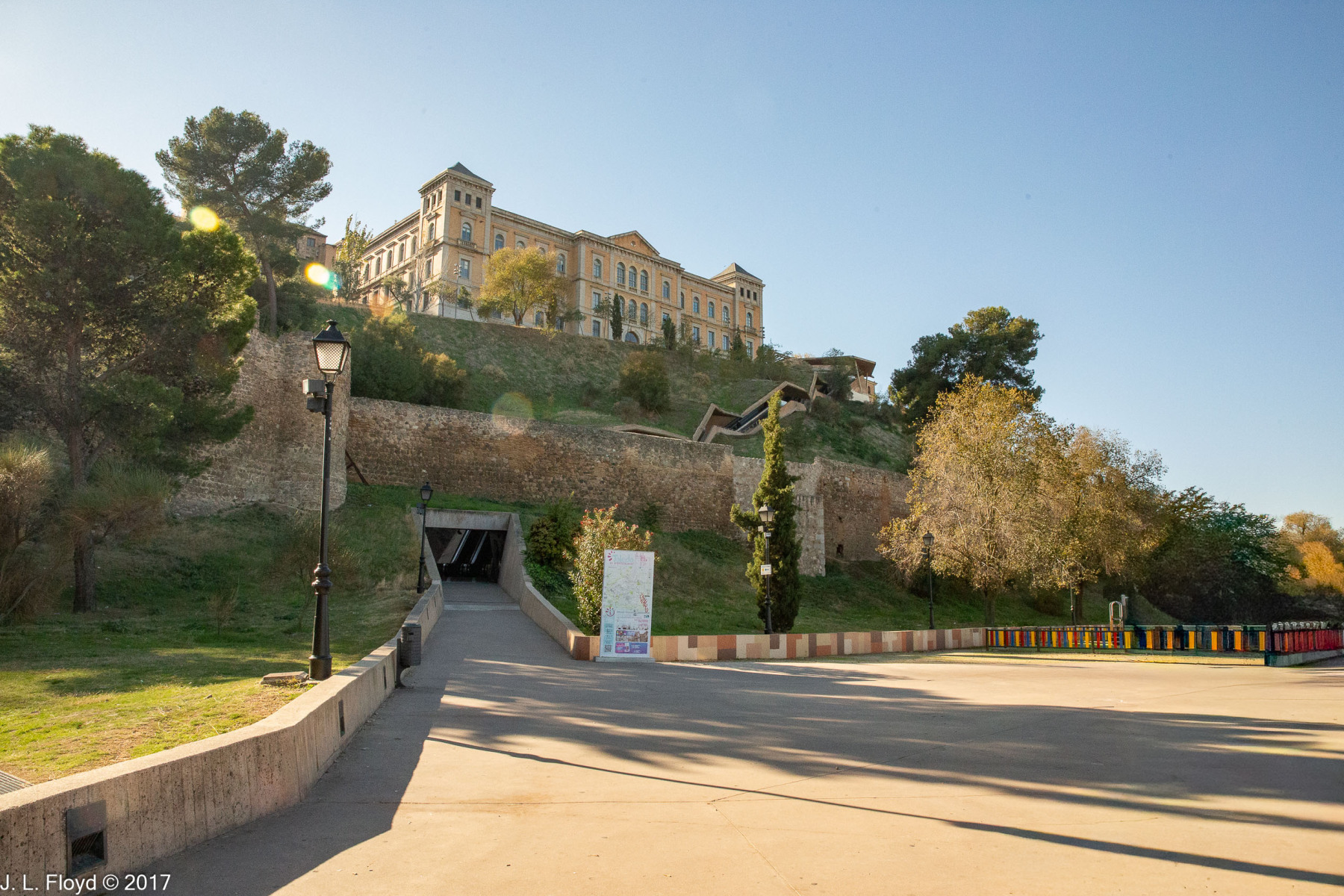
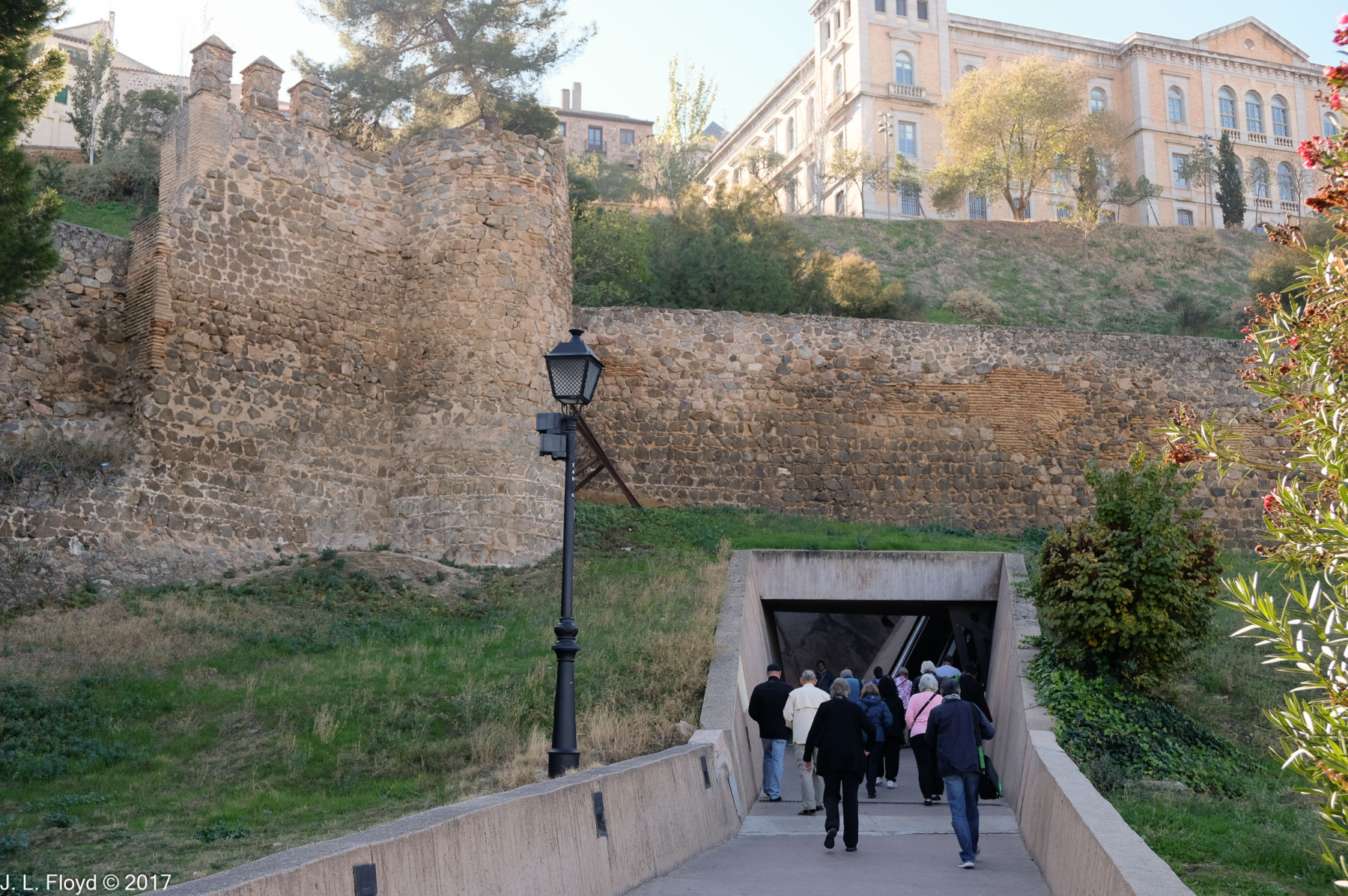
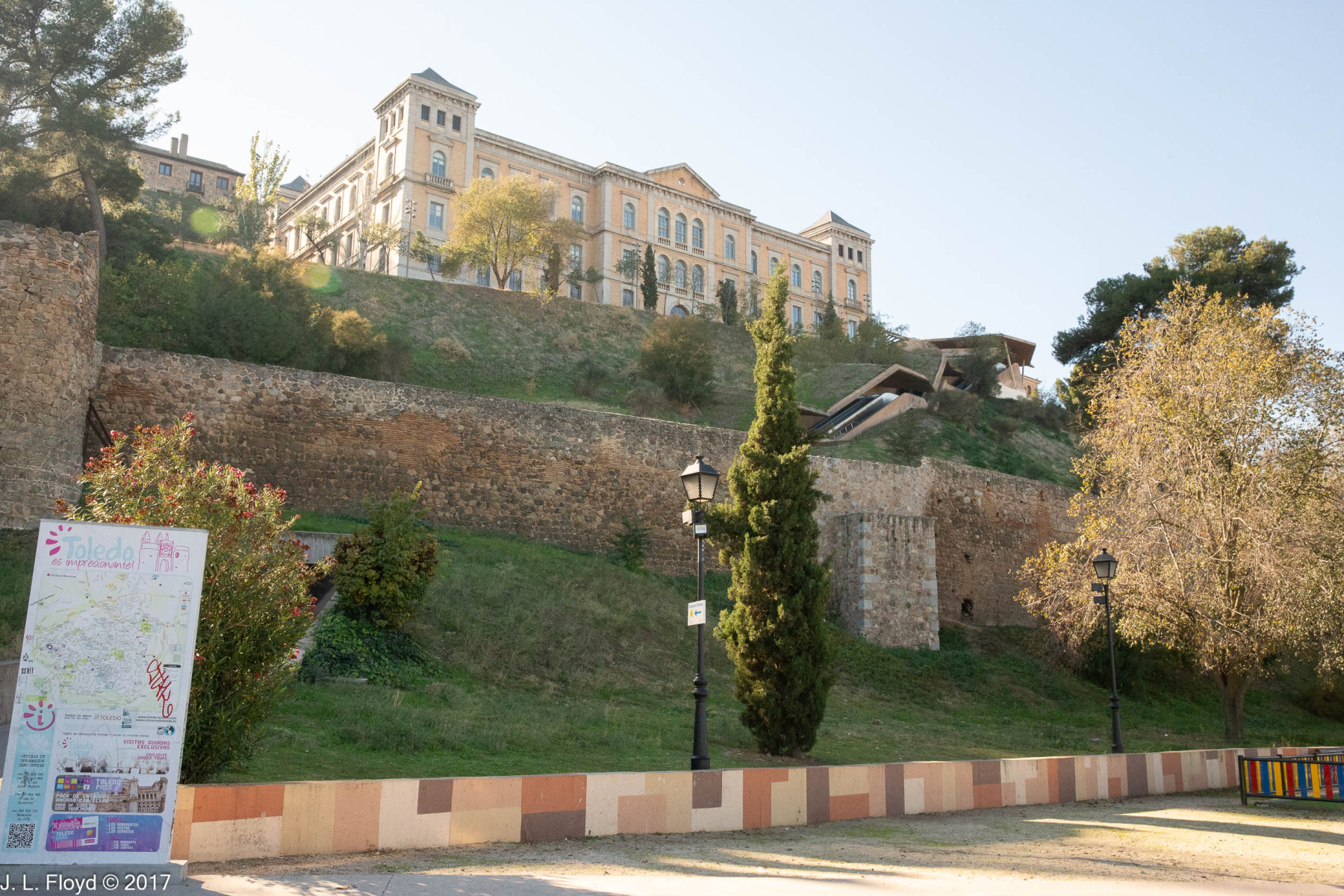

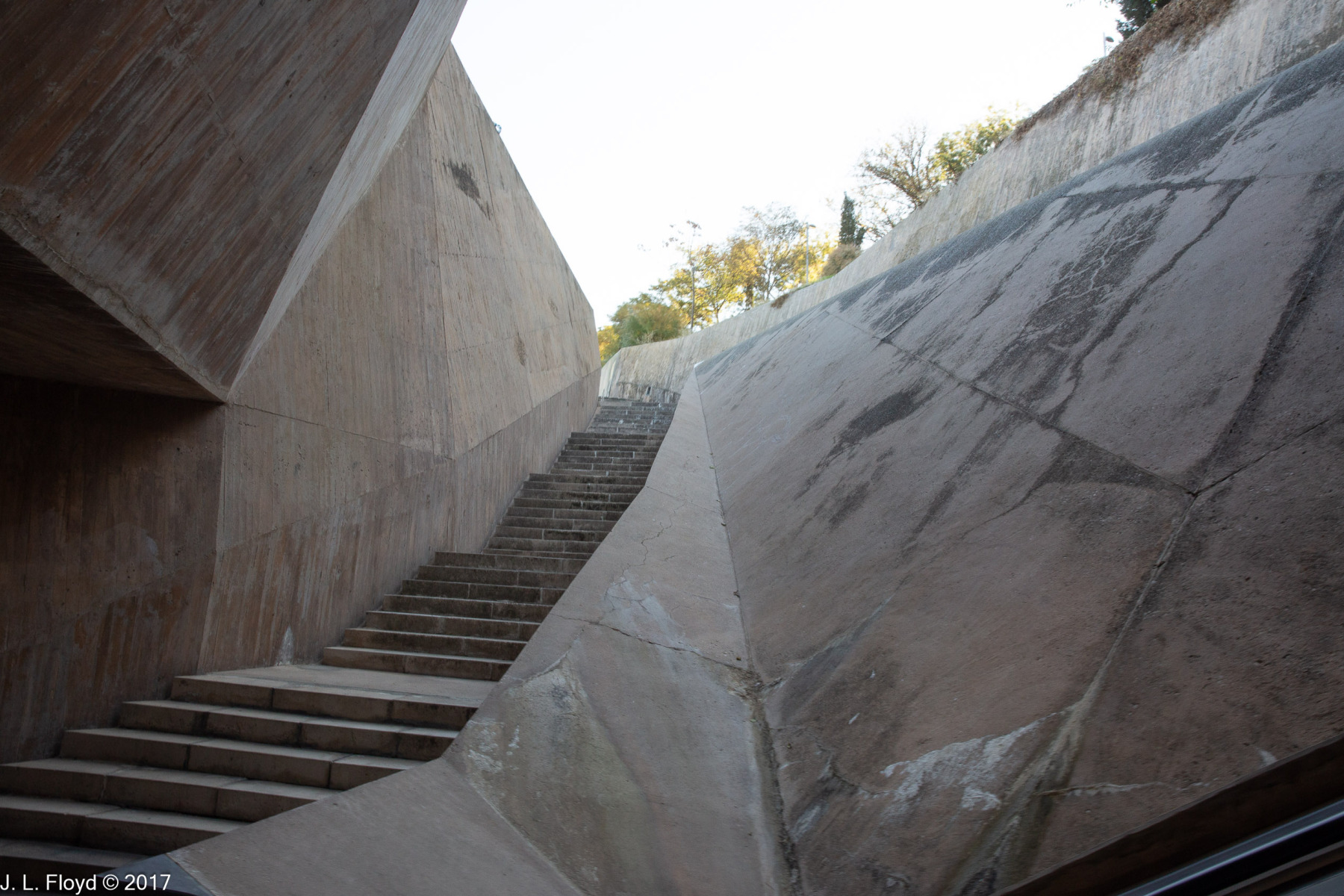
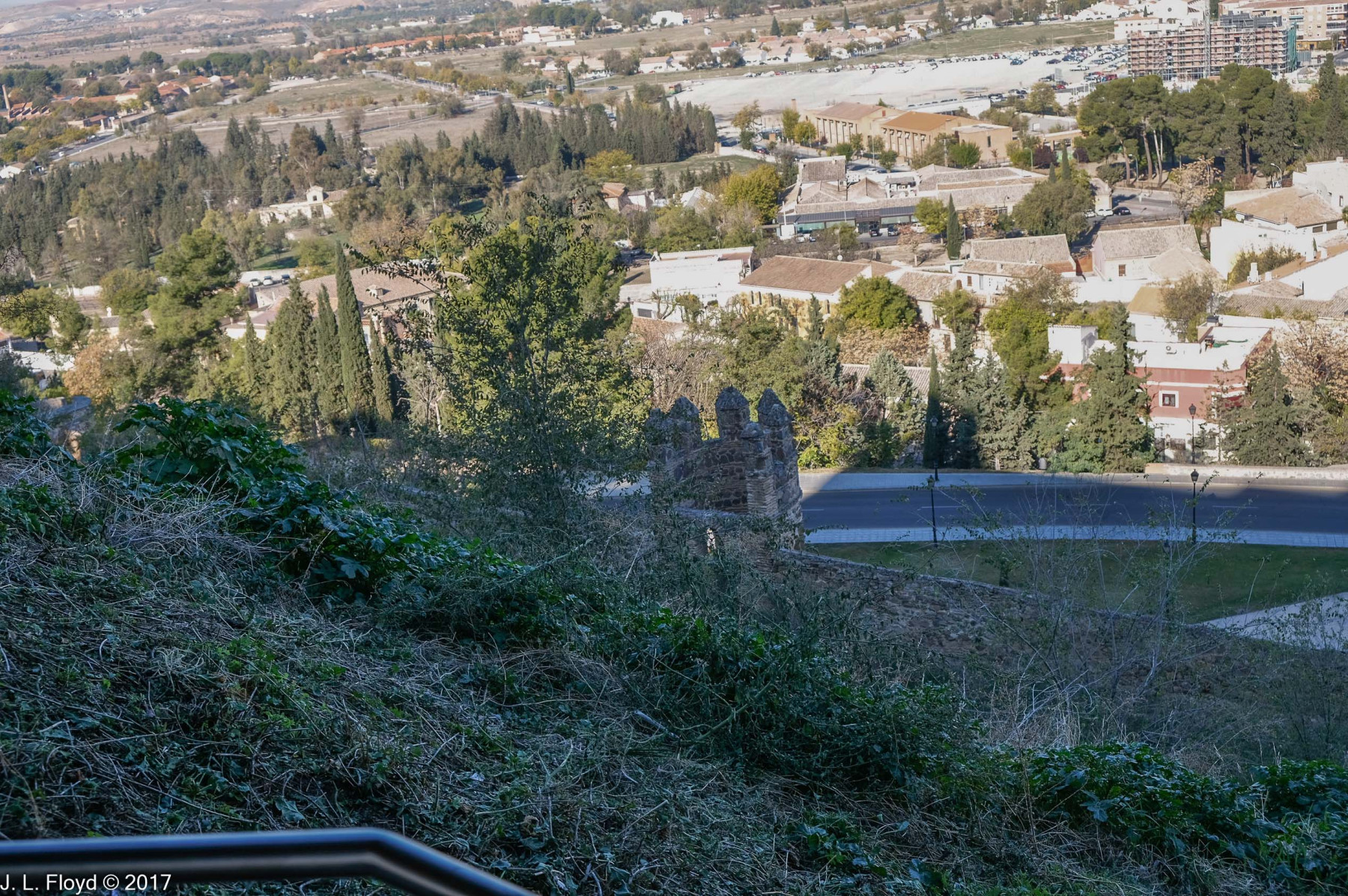
The escalator took us to a viewpoint called the Mirador de la Escaleras, near the Diputación Provincial de Toledo (Provincial Legislature building). From there we had spectacular views of the city of Toledo, both old and new.
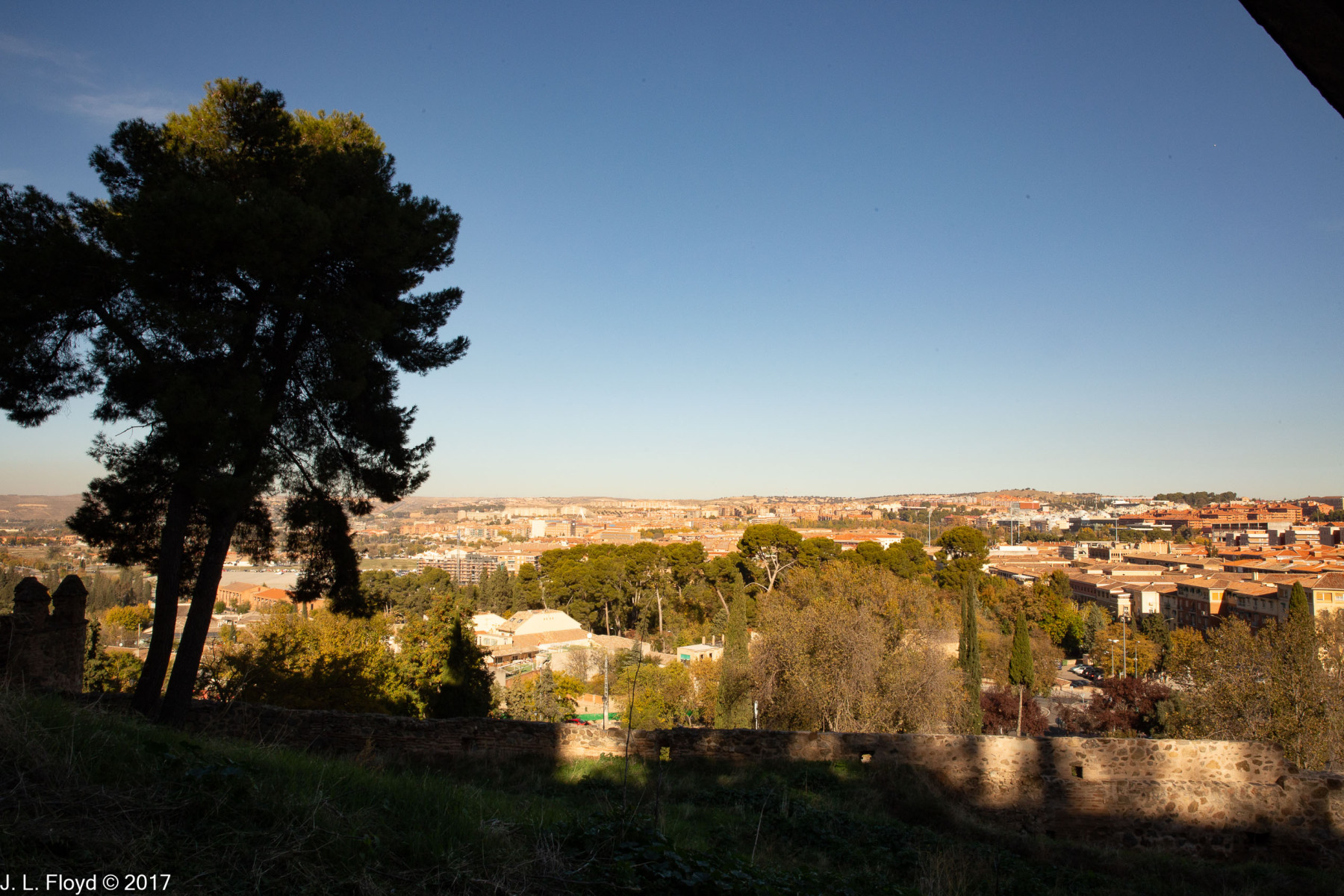
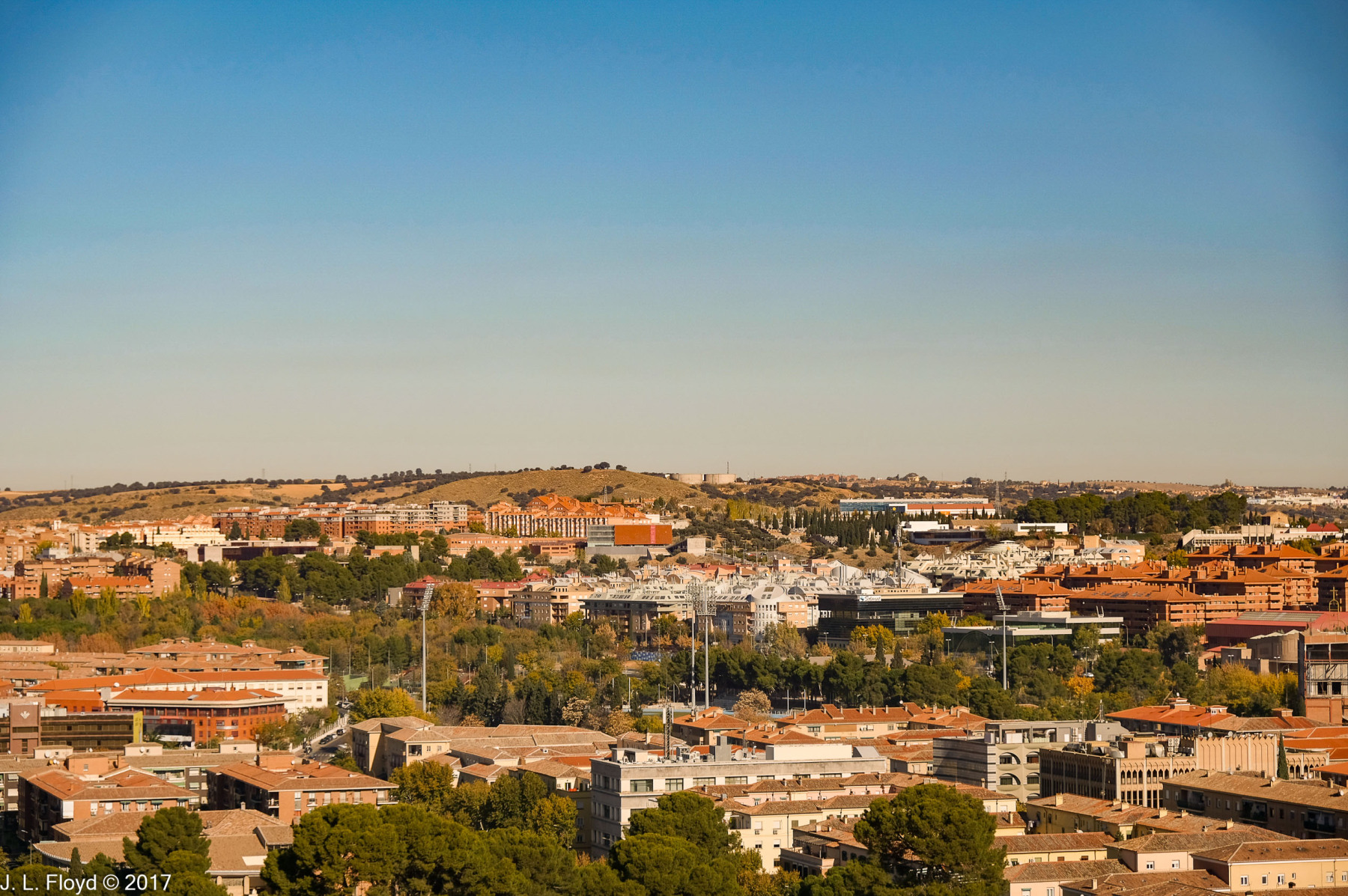
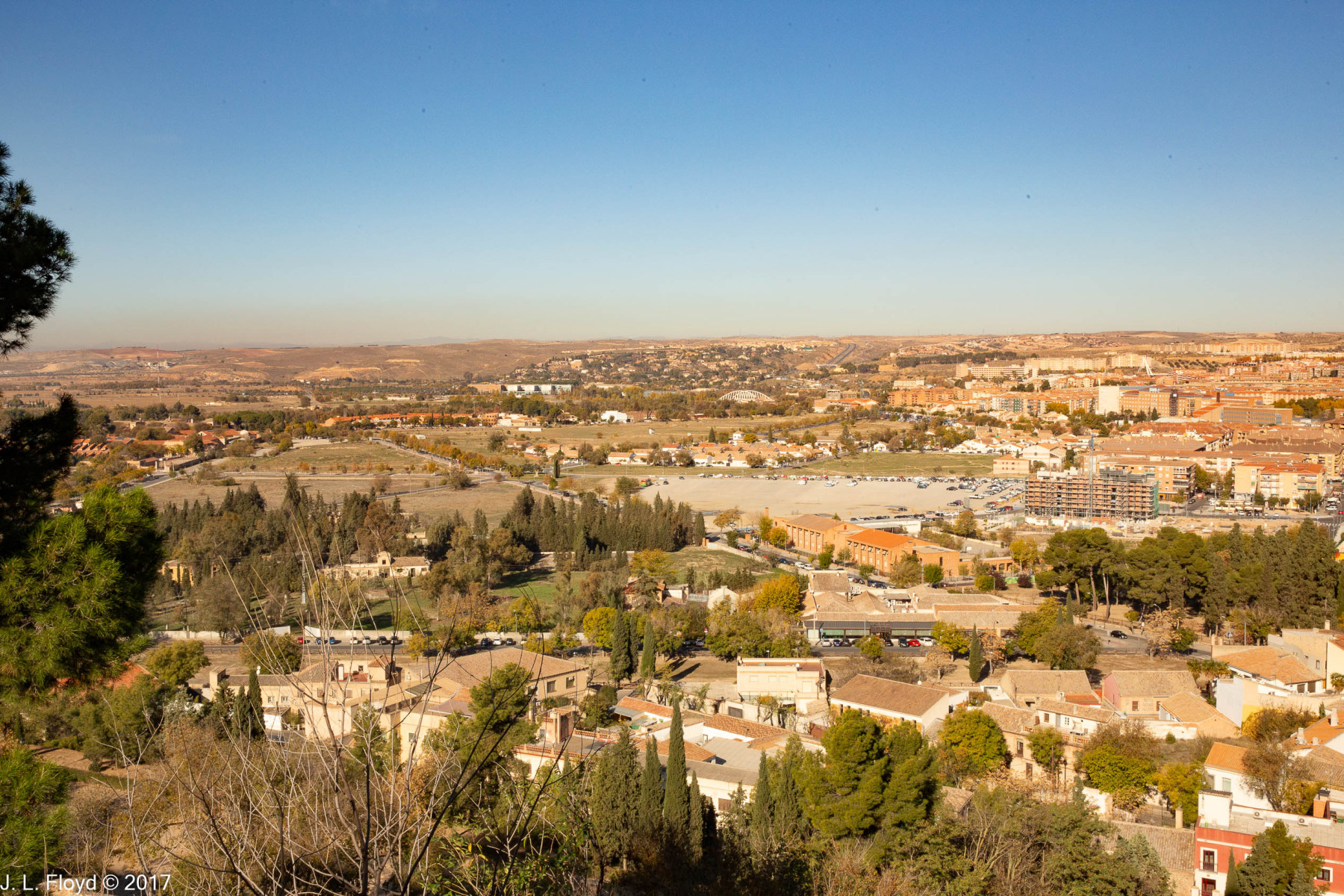
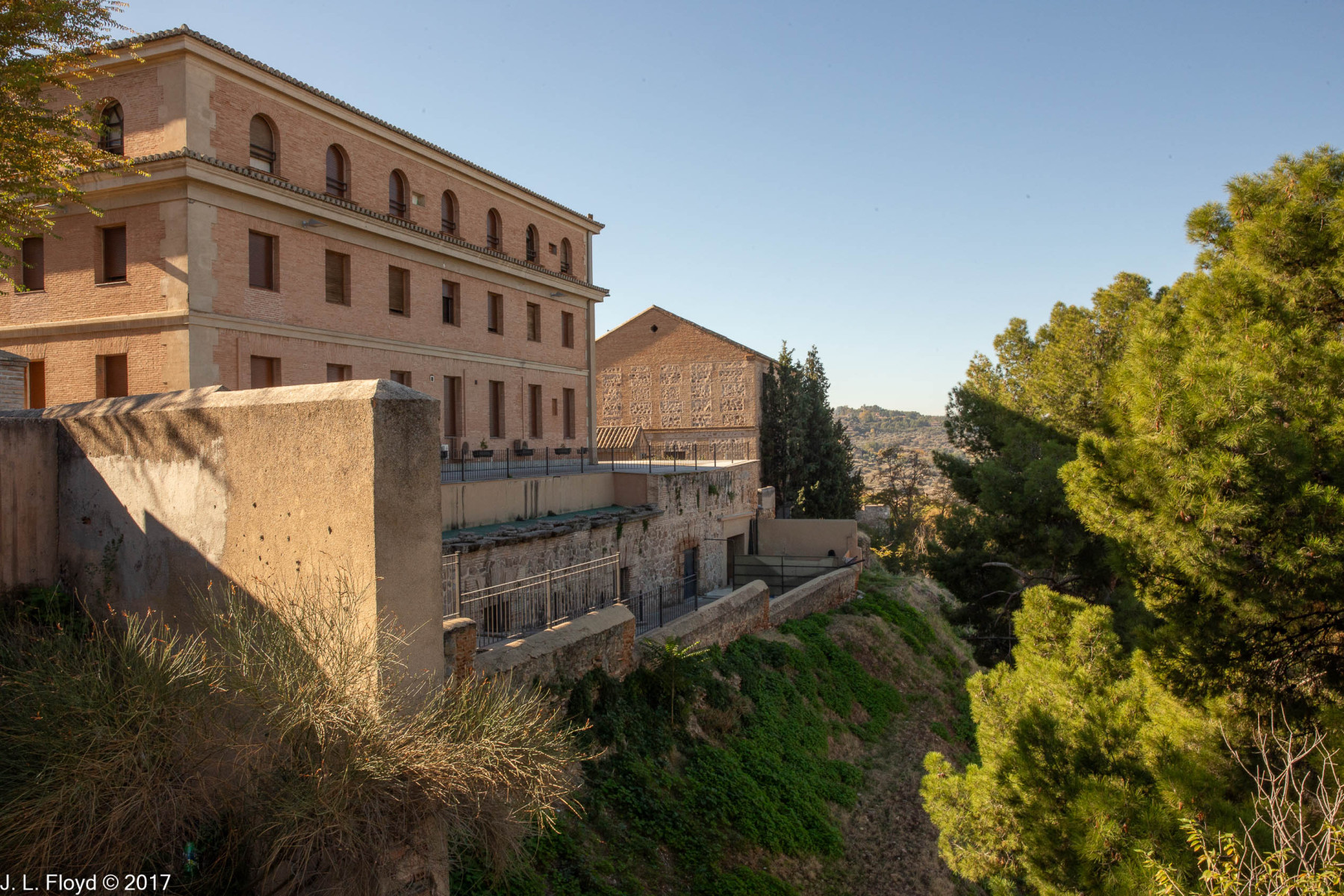
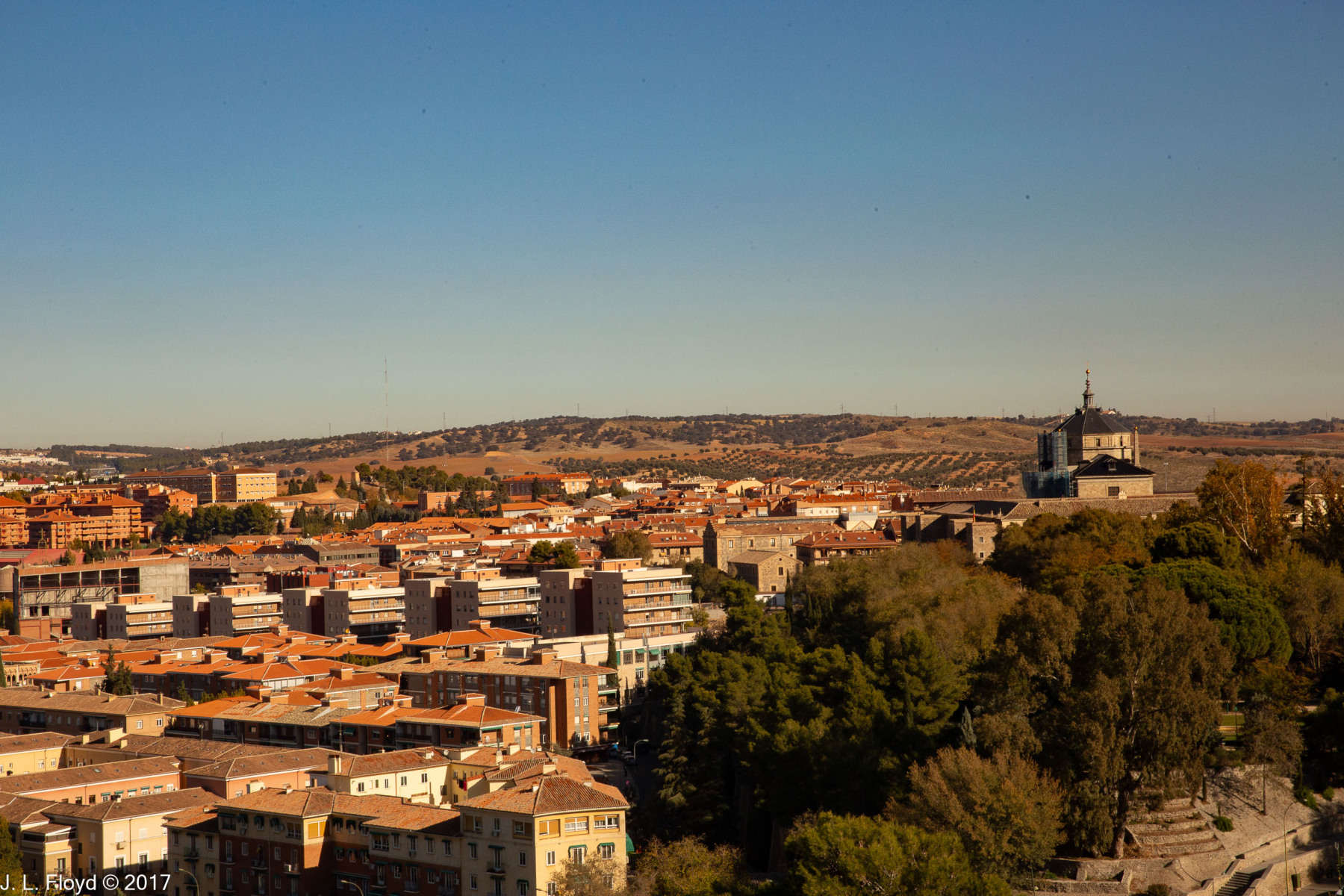
From the Mirador de las Escaleras we set out into the labyrinth streets of the Old City of Toledo. We began by strolling up a street called the Subida Granja, past the provincial legislature buildings (Diputación Provincial de Toledo), to the Plaza de la Merced (Mercy Square), where we had a view of the Iglesia (church – or Parroquia, parish church) de Santa Leocadia. Saint Leocadia of Toledo was a Spanish saint who was martyred during a persecution conducted by the Roman emperor Diocletian in 304 CE. Tradition maintains that the church was built on the site of the house where she was born. This church dates from the 13th century, although there may have been a previous church on the same site.
Behind the Church of Saint Leocadia we could see the tower of a larger structure, the Convent of Santo Domingo el Antiguo. Originally built during Visigothic times (6th-7th century CE), it was reconstructed after the conquest of Toledo in 1785 on the order of King Alfonso VI, and subsequently (12th century) it became a Cistercian nunnery. It is notable for an altarpiece executed by the painter El Greco in the late 16th century.
At Plaza de la Merced we turned right and headed down Calle Real past the Consejería de Hacienda (Ministry of Finance), a handsome neoclassical building which was formerly the Antiguo Hospital del Nuncio Nuevo, the Old Hospital of the New Nuncio. A nuncio is a papal ambassador, and the nuncio in question was one Cardinal Lorenzana, who commissioned the construction of the edifice toward the end of the 18th century to serve as a lunatic asylum. Some say that it continues to fulfill that function along with its modern role.
Calle Real soon morphs into the Calle de Carmelitas Descalzas, the Street of the Barefoot Carmelites, which brought us to the Convento de San José – Carmelitas Descalzas, founded by St. Theresa of Avila in the 16th century. Next to the convent was the Plaza Santa Teresa de Jesús, and there also was a garden where we caught sight of a modernistic sculpture of the saint.
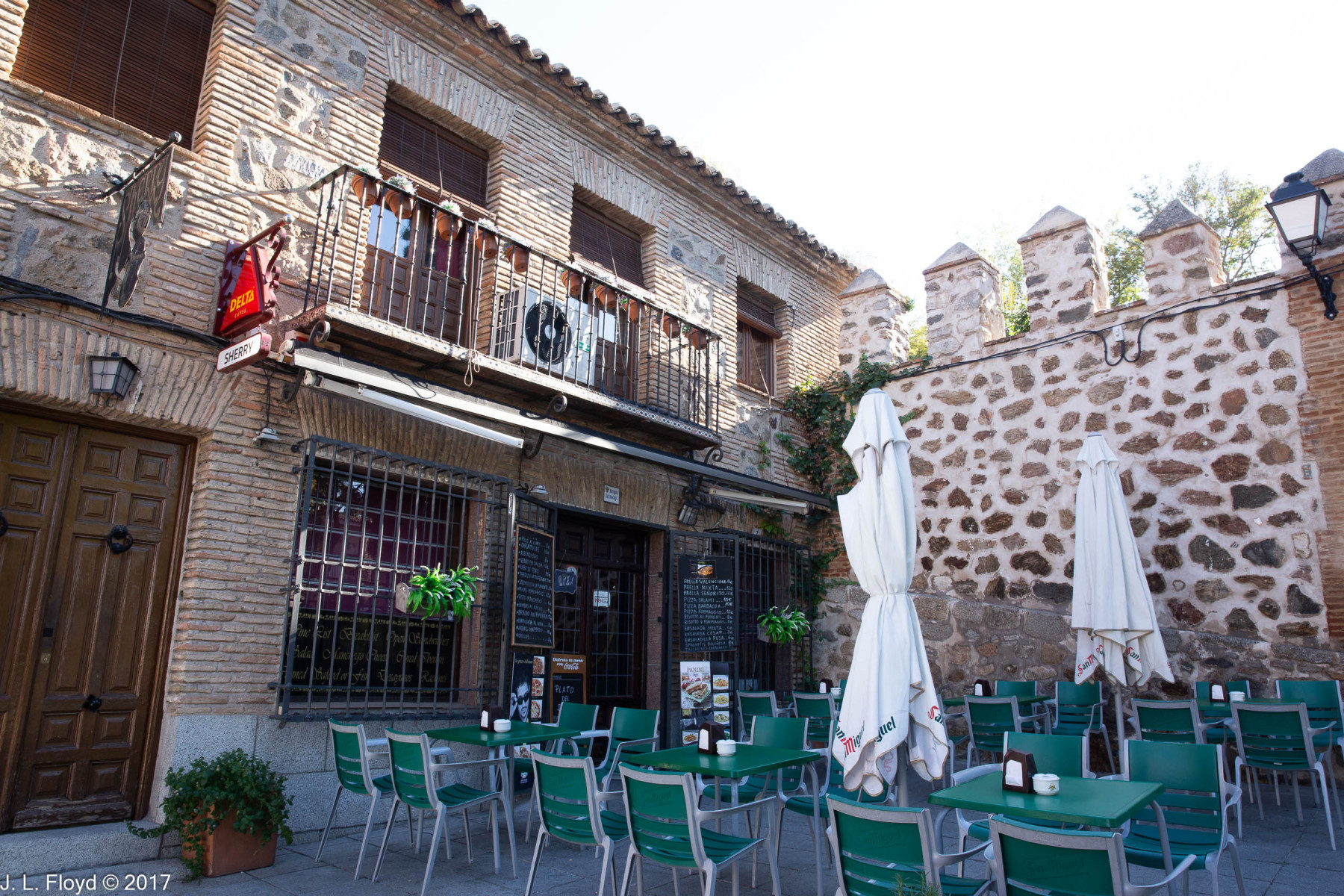
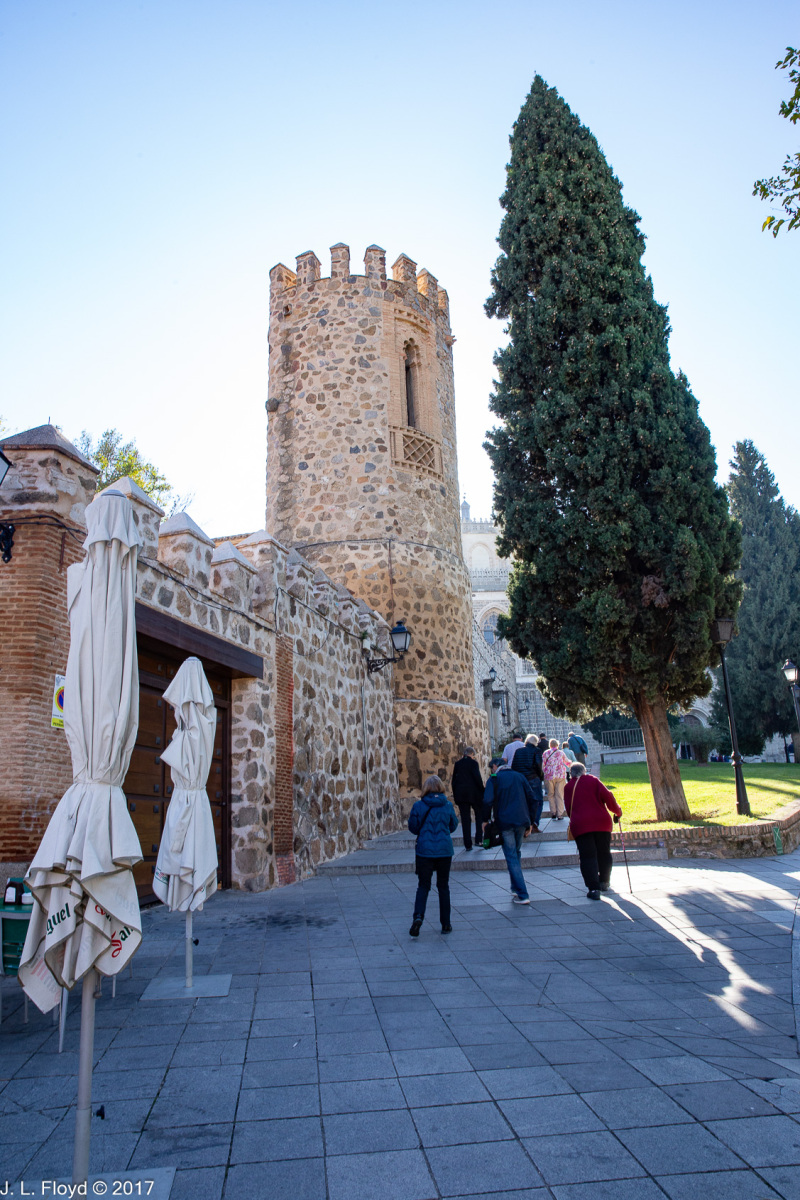
Finally we reached the Puerta del Cambrón, a historic city gate which is said to date from Visigothic times, though its current Renaissance-style edition was built in the 16th century. It owes its name to thorny shrubs called cambroneras that used to grow nearby. It is a stone and brick structure with two towers and two arches, and it is also known as the Gate of the Jews (because it opens to the old Jewish quarter) and the Gate of Santa Leocadia (because the interior façade showcases a statue of that saint).
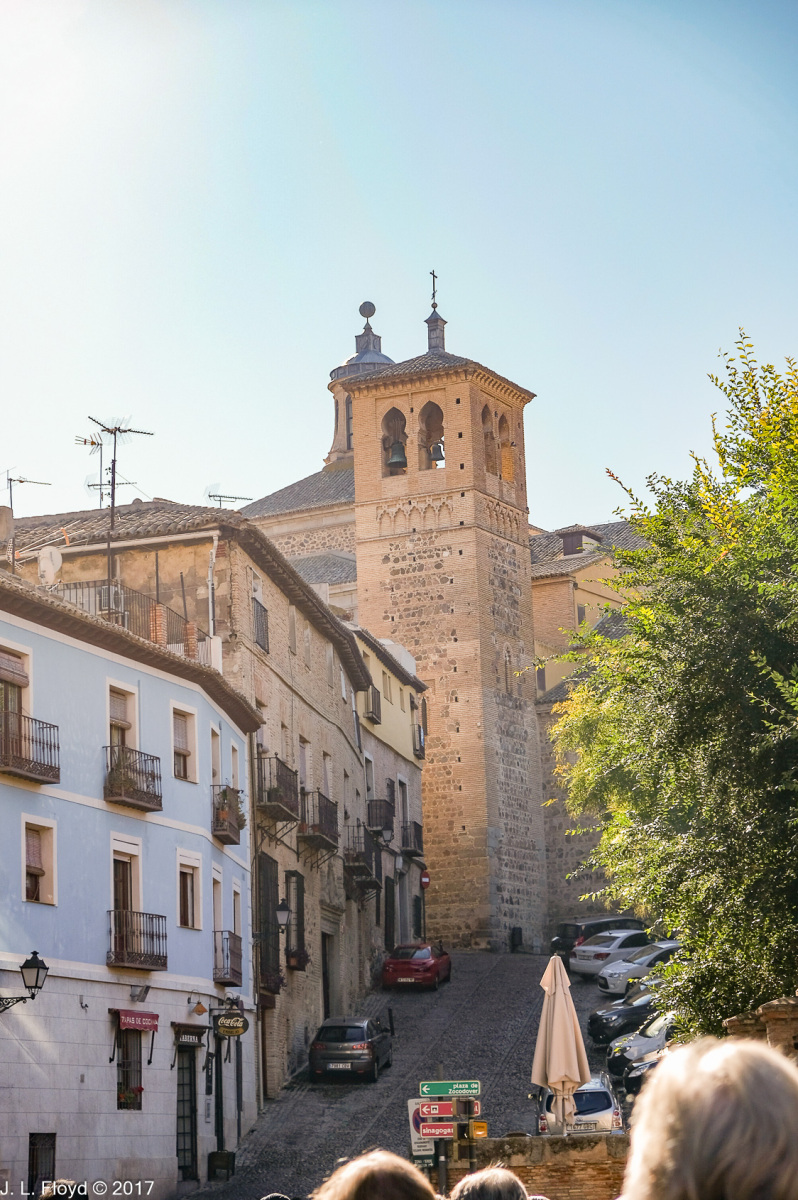
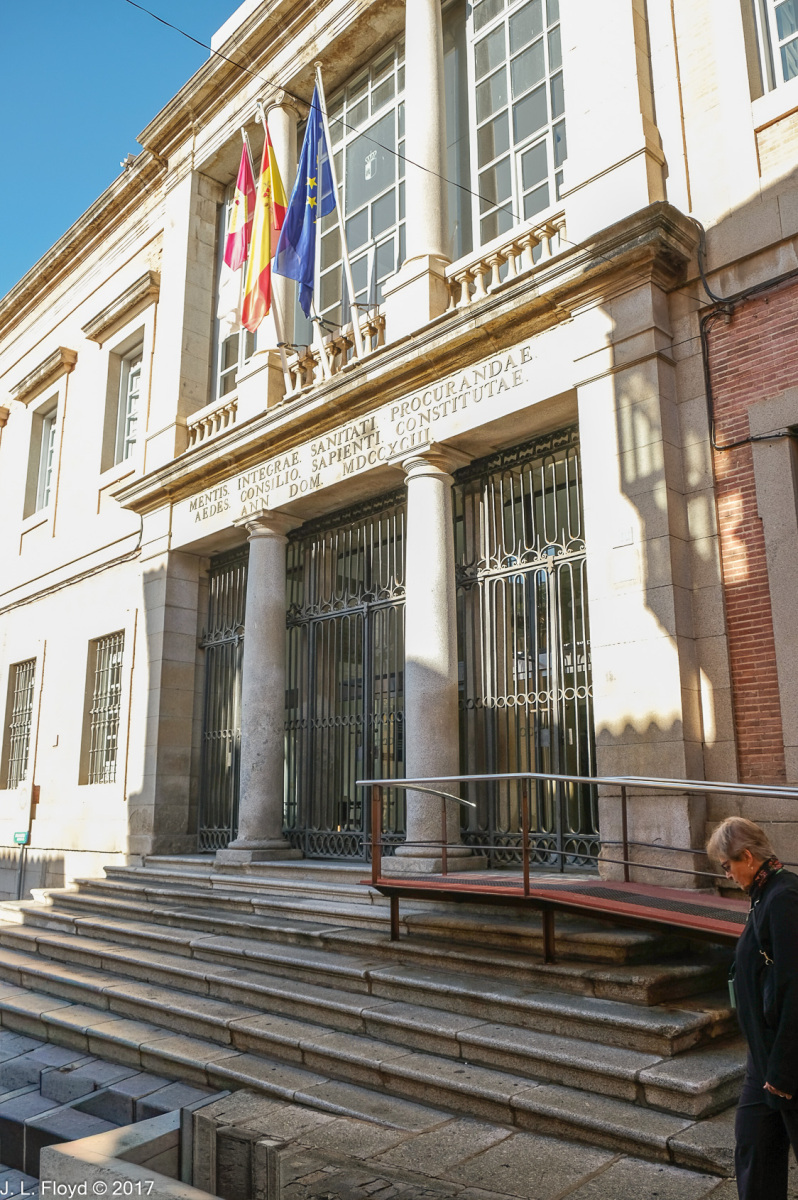

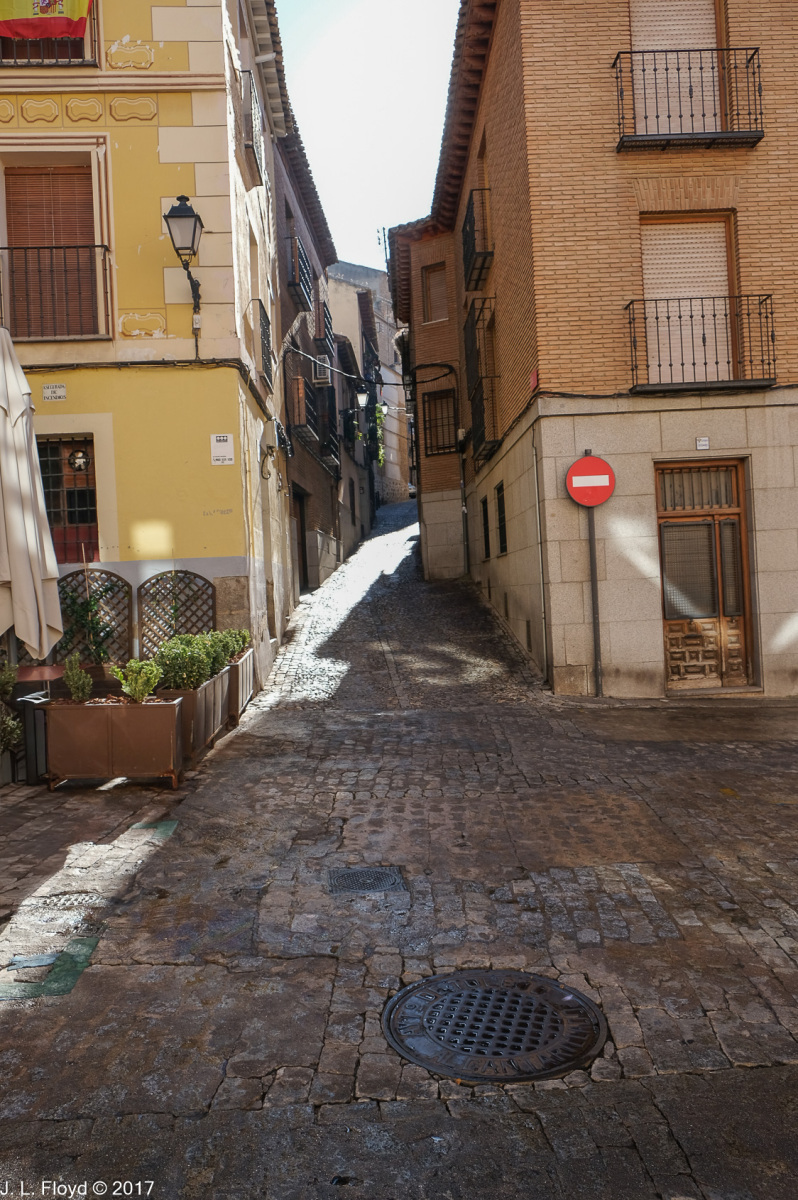
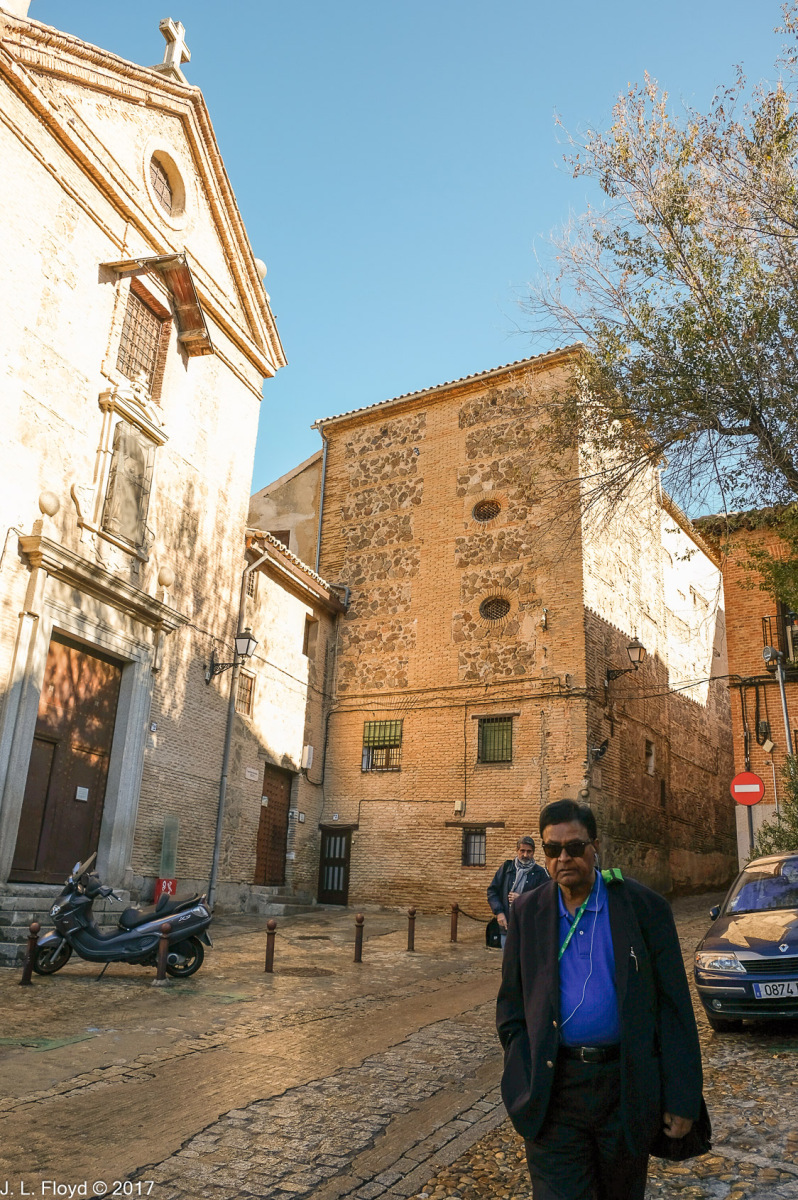


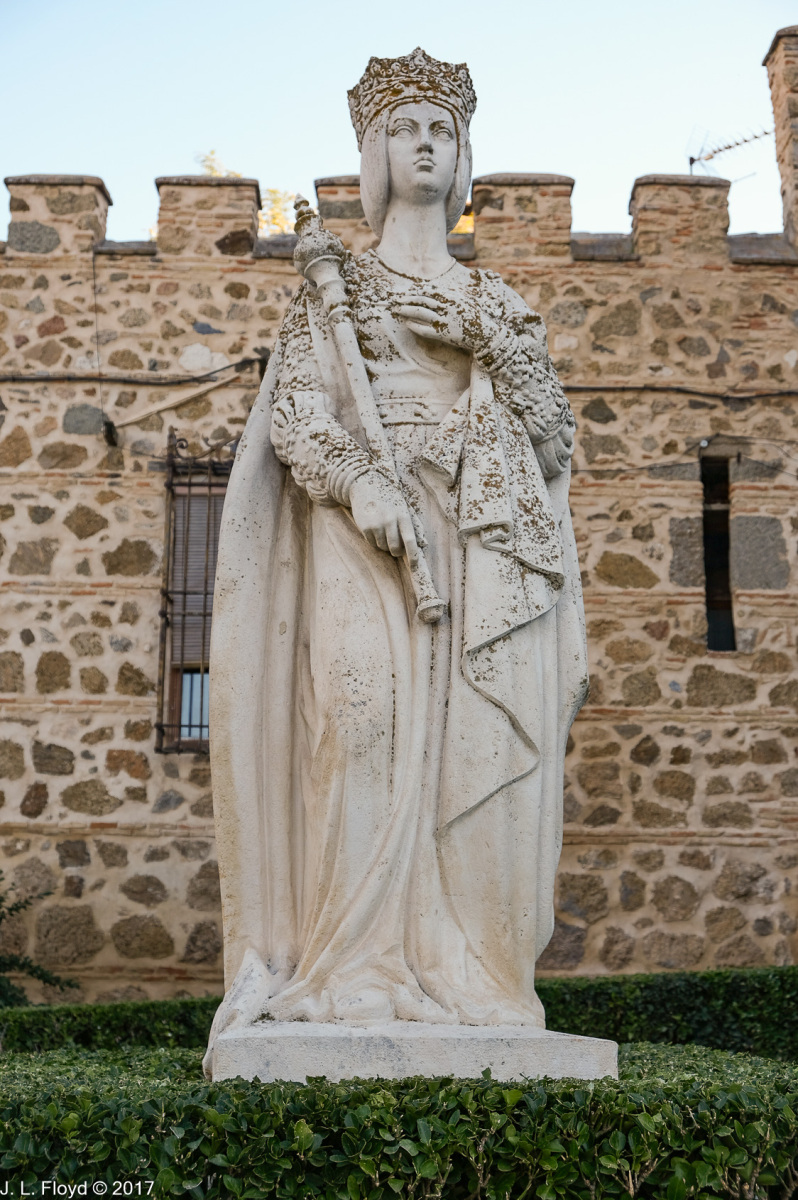
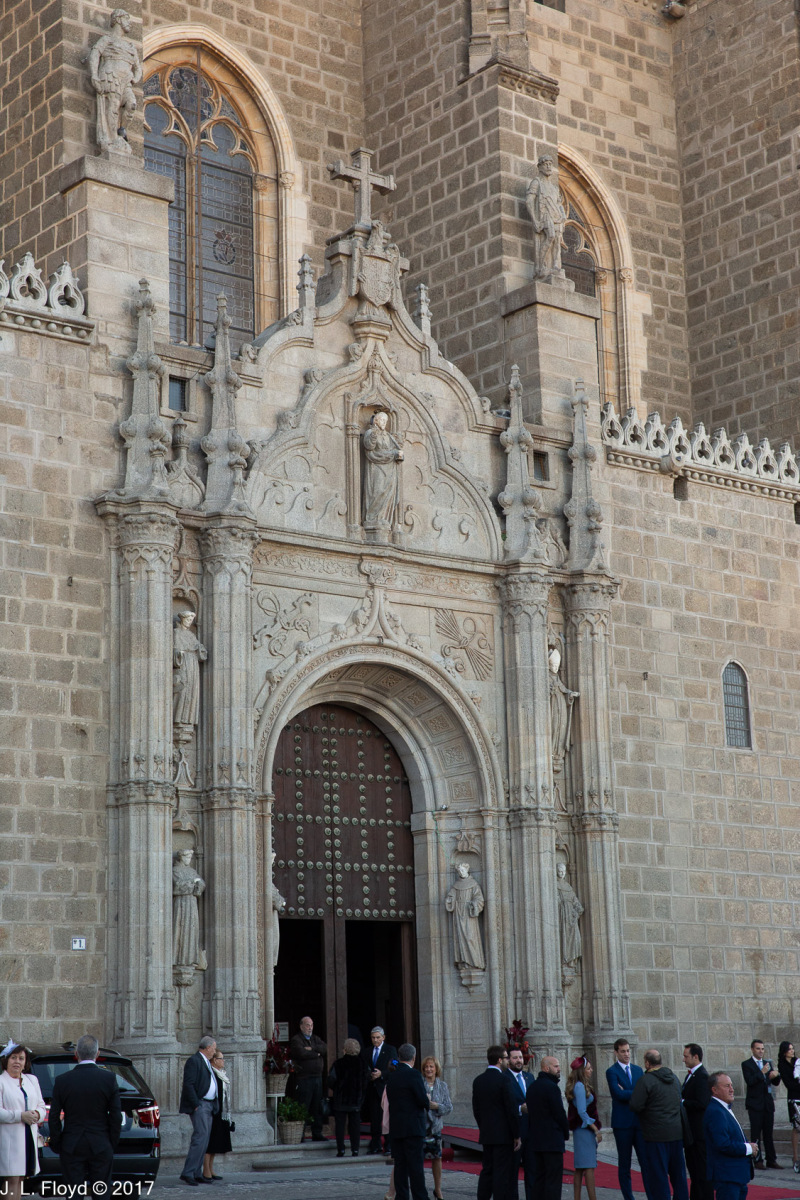
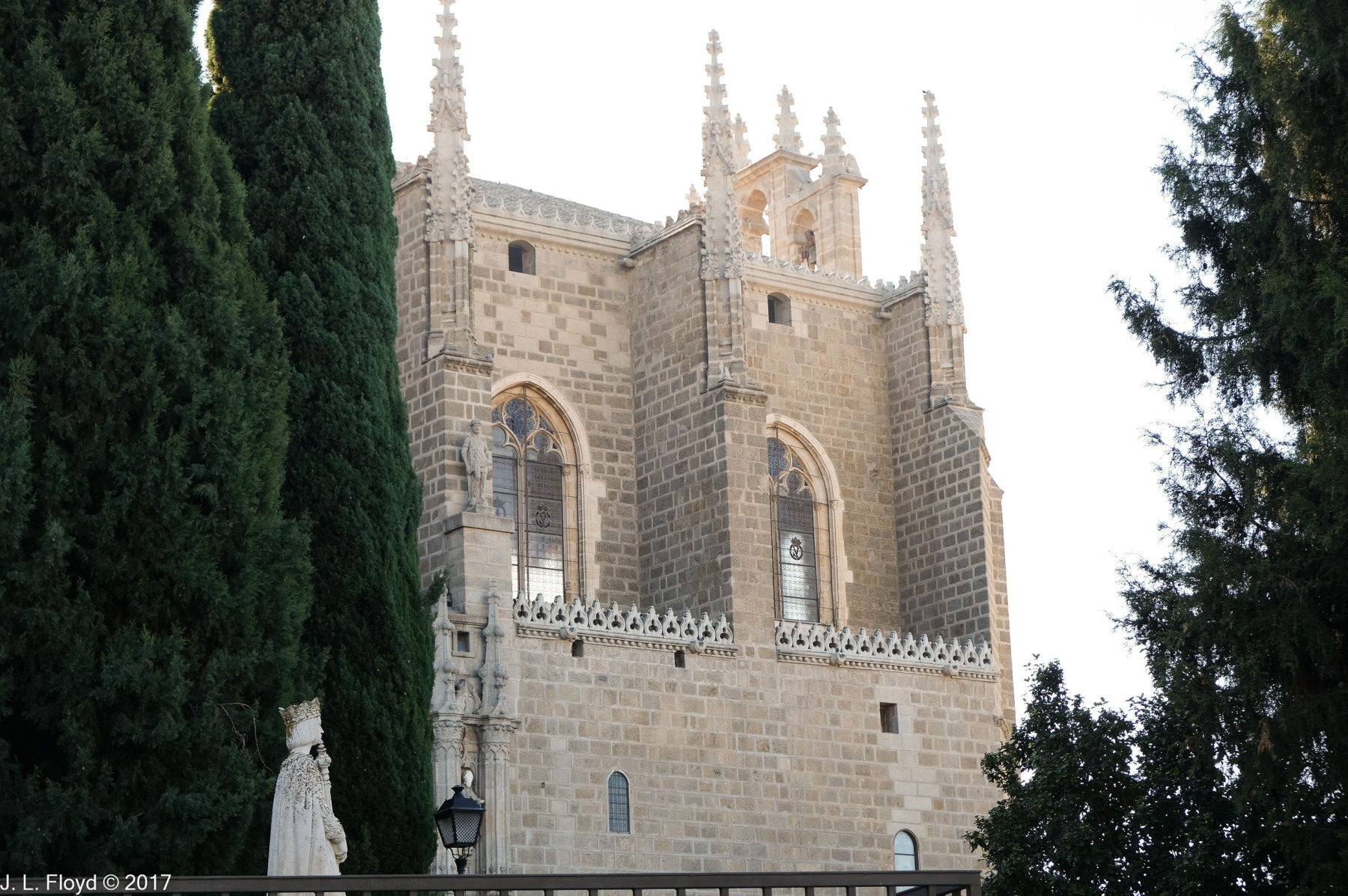
At the Puerta del Cambrón we turned left and headed down the Plaza de San Juan de los Reyes, toward the monastery of the same name. On our left was the Palacio de la Cava, a private residence built between the 16th and 18th centuries by the Cardenas family, who held the title of Dukes of Maqueda. Just before reaching the monastery, we passed a statue of Isabella I, Queen of Castile (1451-1504) standing in the yard of the Palacio. Isabella, along with her husband Ferdinand, King of Aragon, founded the Monastery of San Juan de los Reyes to commemorate the birth of their son Juan as well as their victory over the forces of King Afonso V of Portugal in the Battle of Toro (1476). Ferdinand and Isabella originally planned to make the Monastery of San Juan their burial place, but they changed their minds after conquering Granada in 1492 and are buried in the Royal Chapel there.
Construction of the monastery began in 1577 and was completed in 1504, the year of Isabella’s death. It was built in the dominant architectural style in Castile during her reign, named after her, and also known as Castilian Late Gothic. The Isabelline style is considered to be transitional between late Gothic and Renaissance architecture. It represented a fusion of the Castilian Gothic tradition with Flemish as well as Mudéjar elements.
The monastery was named after St. John the Evangelist (writer of the Gospel of John) and entrusted to the Franciscans. In 1809 it was badly damaged by French troops during their occupation of Toledo, leading to its abandonment in 1835. Restoration work began in 1883 and continued until 1967.

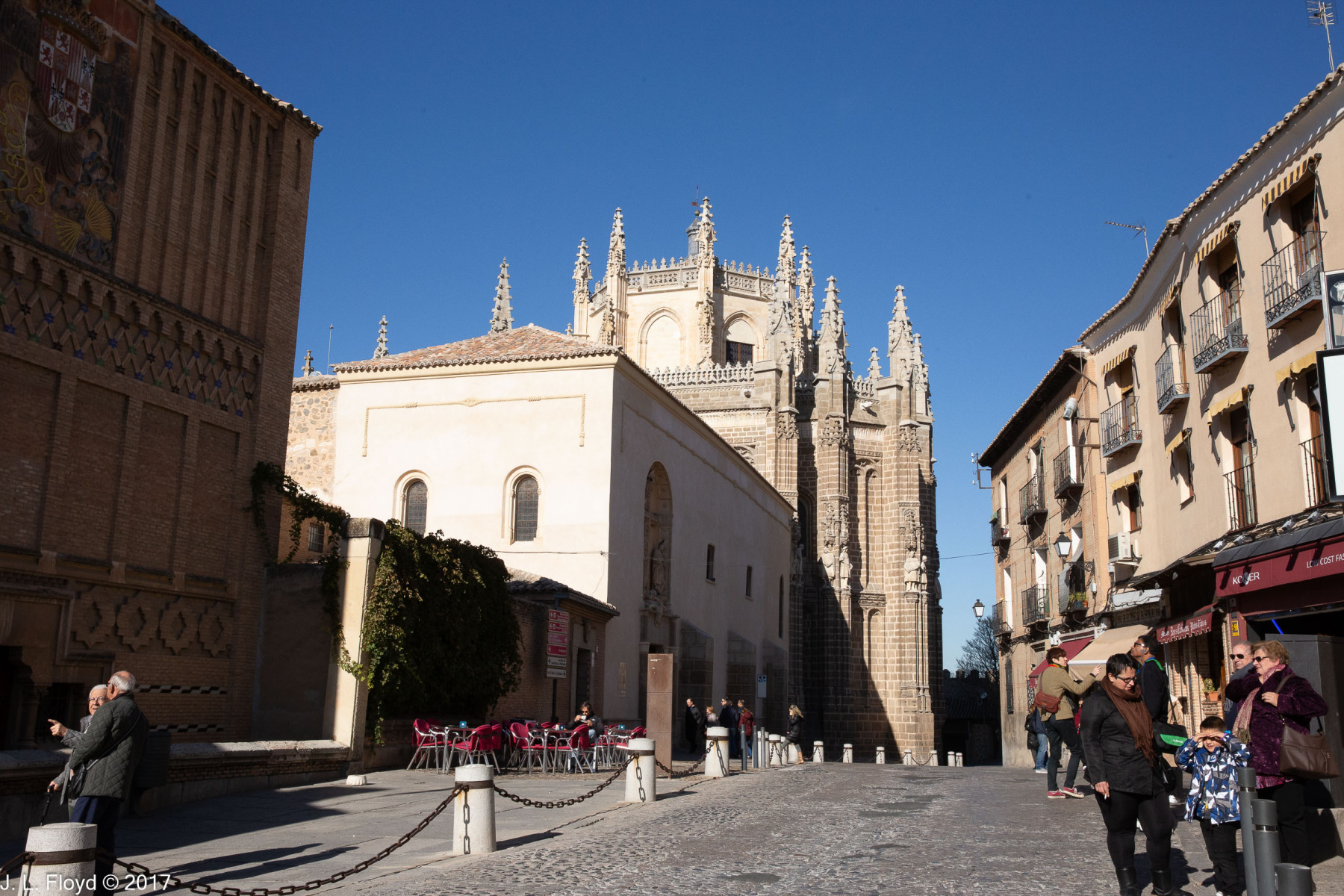
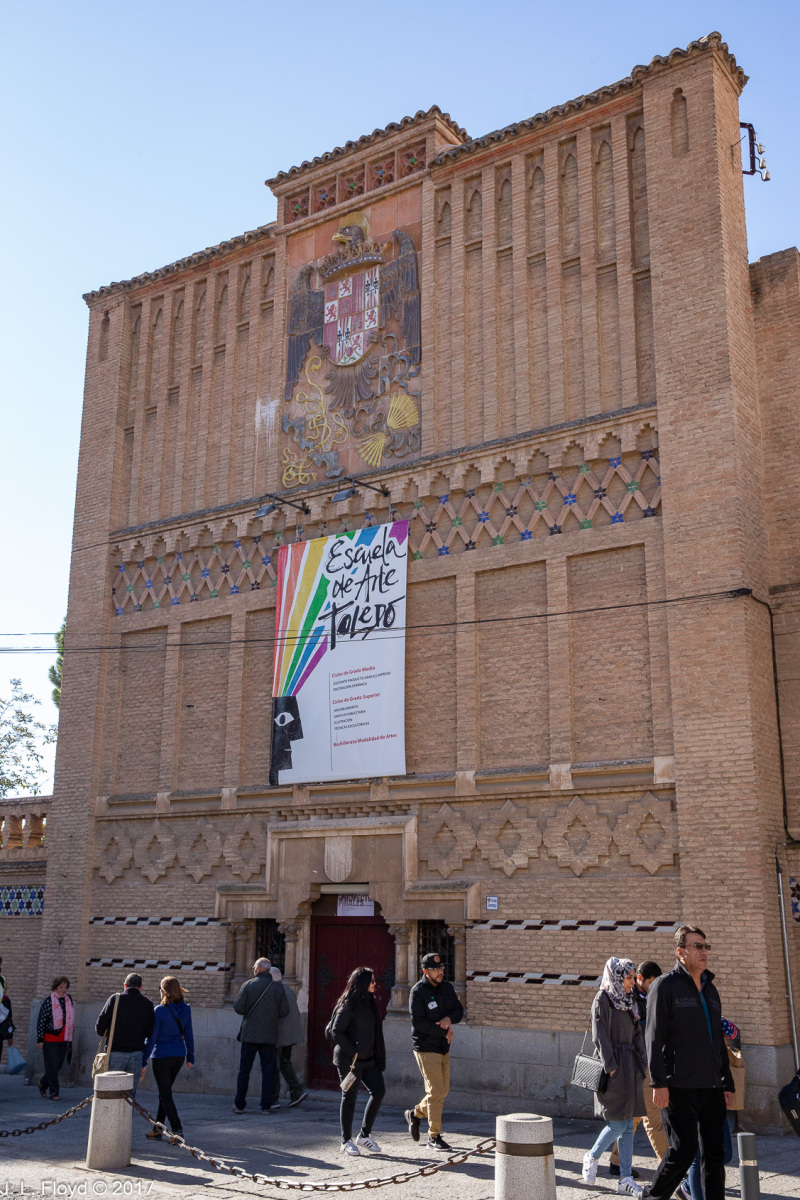
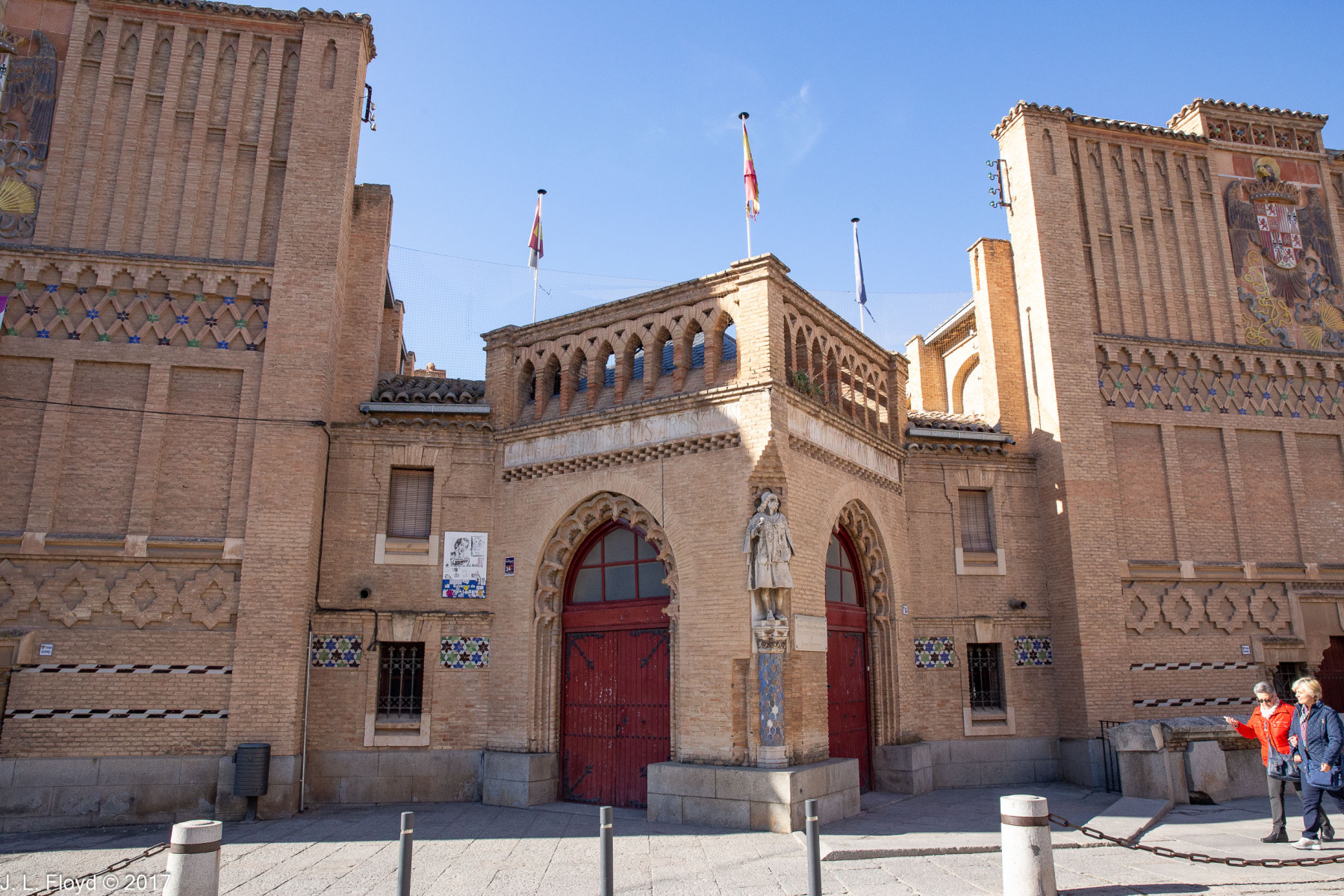
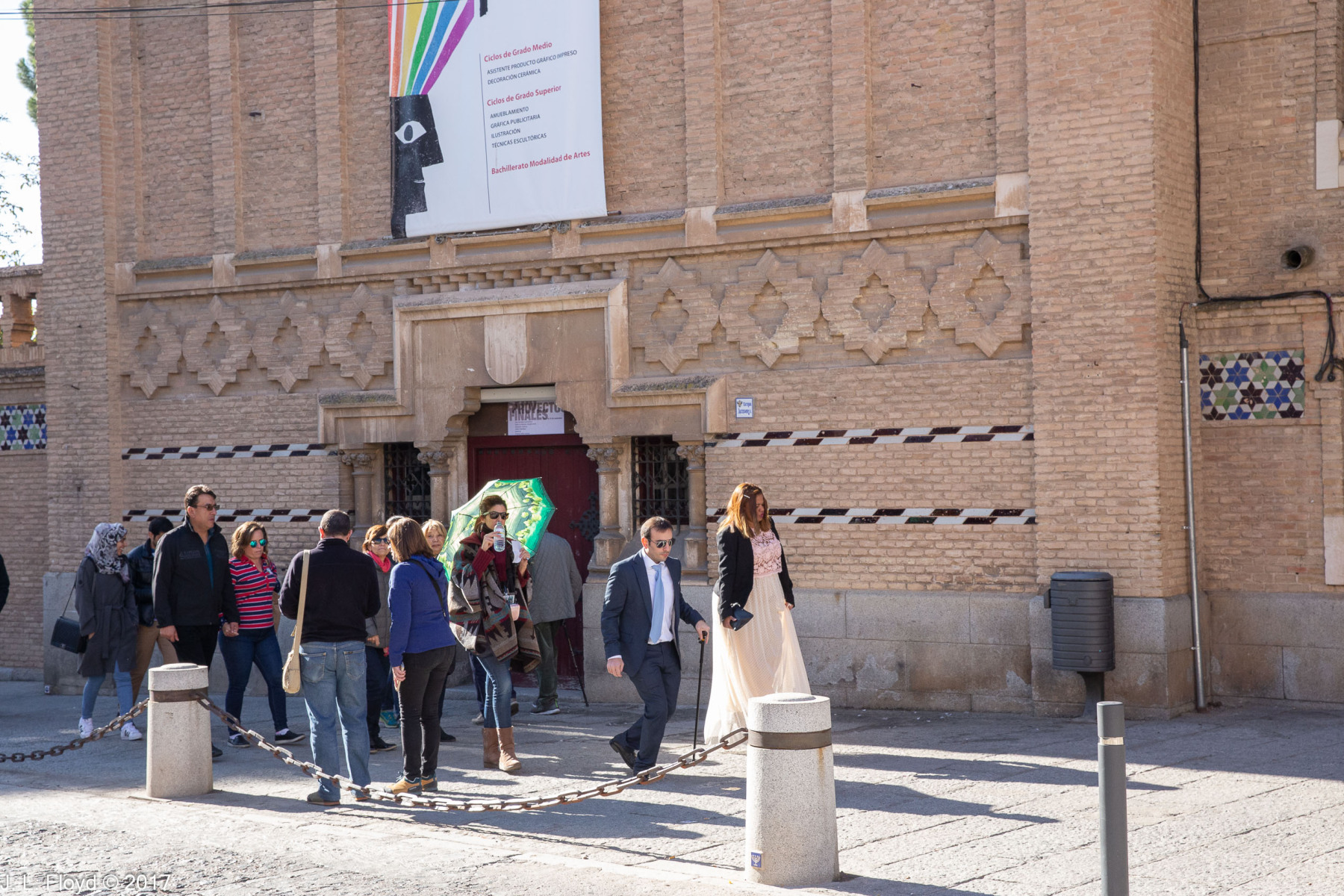
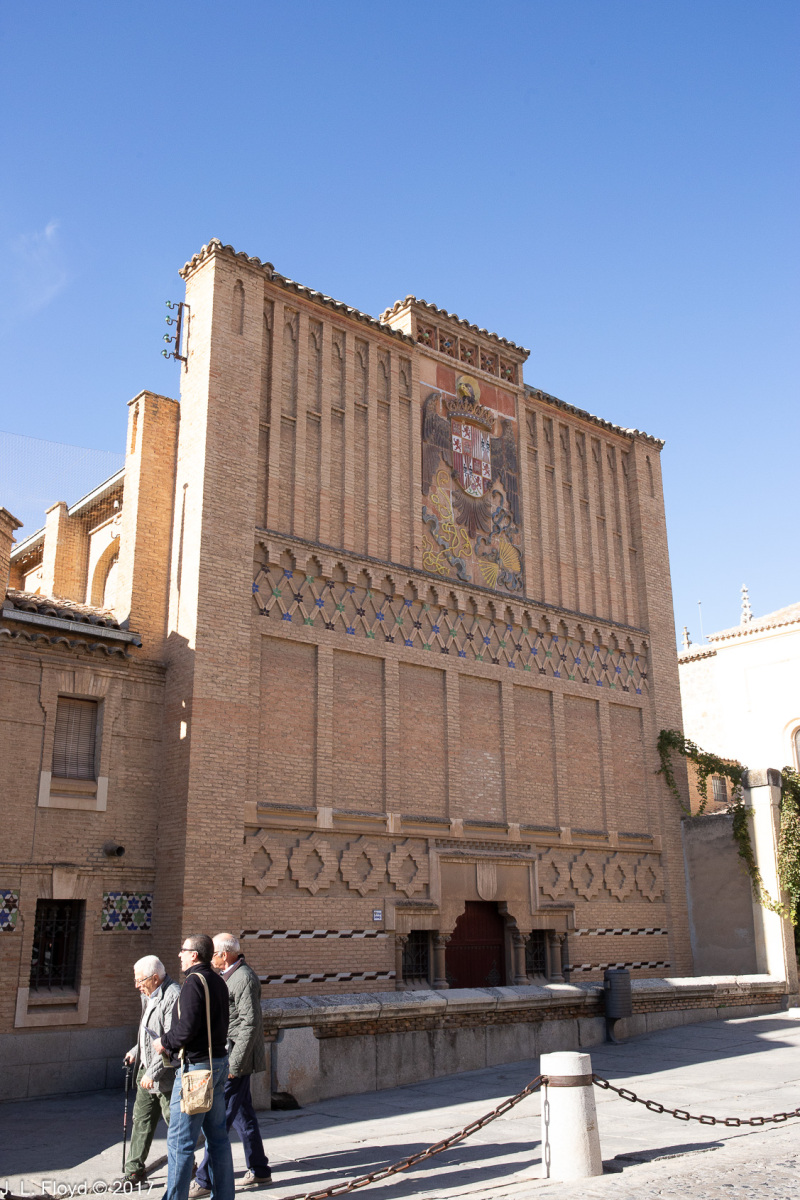
The second cloister of the monastery had been completely destroyed during the French occupation. Rather than rebuilding it, the decision was taken to repurpose the site for a new educational institution for the training of artists and craftsmen in the city of Toledo. Its design was entrusted to the same architect responsible for the restoration work on the monastery, Arturo Mélida y Alinari. Construction of the School of Arts and Crafts of Toledo (Escuela de Arte Toledo) began in 1882, proceeding simultaneously with the restoration work on the monastery. The result is a striking building in the Neo-Mudéjar architectural style (also known as “gothic hispanoflaminco“), featuring a symmetrical façade with two main entrances. Ornate decorations of masonry and tile adorn the façade, including the Catholic Monarchs’ coat of arms with the eagle of Saint John.
Our next stop was the Synagogue of Santa Maria la Blanca, and that calls for a new post.