Categories
Danube River Cruise, June 2023

Budapest, June 17, 2023: Parliament and Kossuth Square

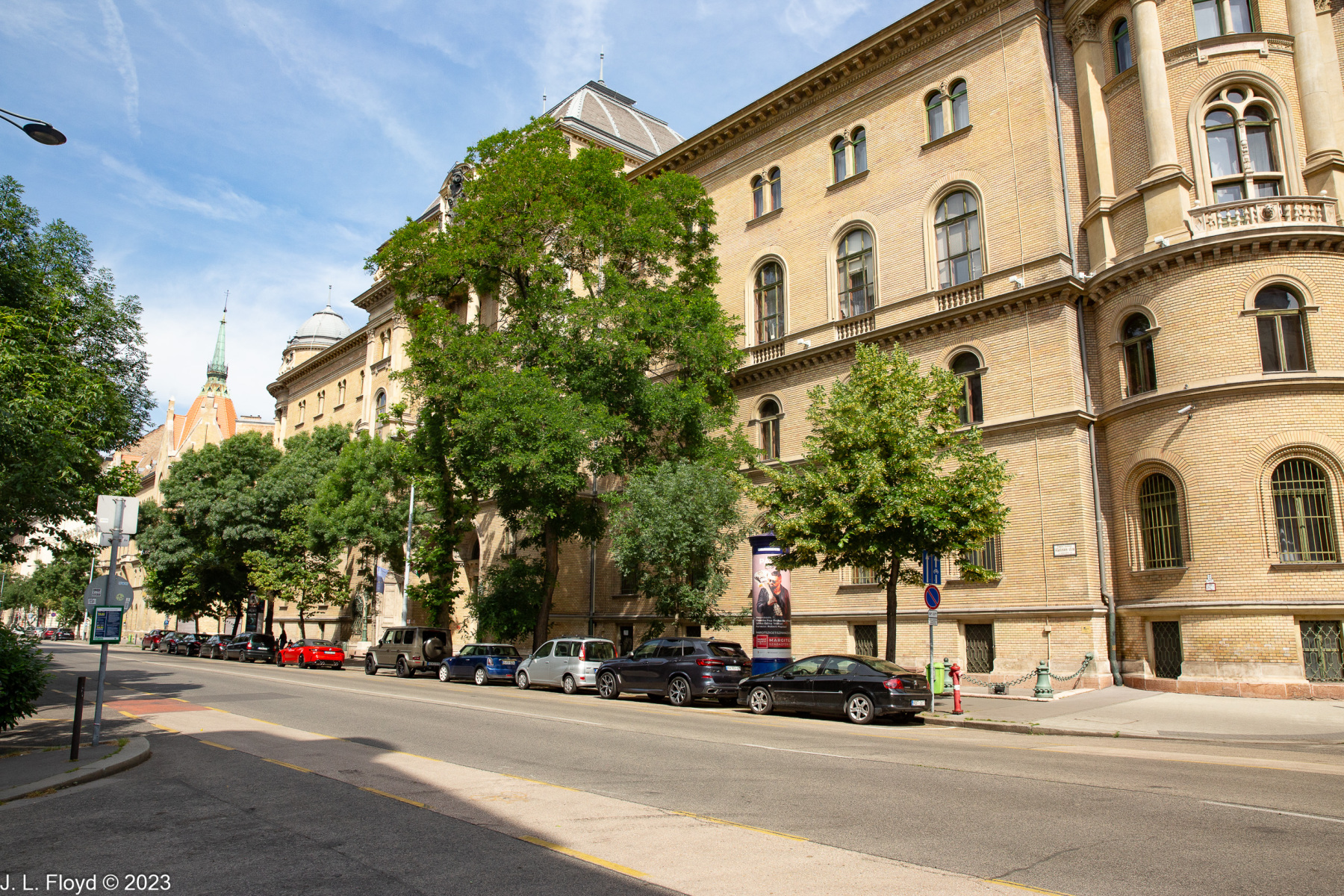
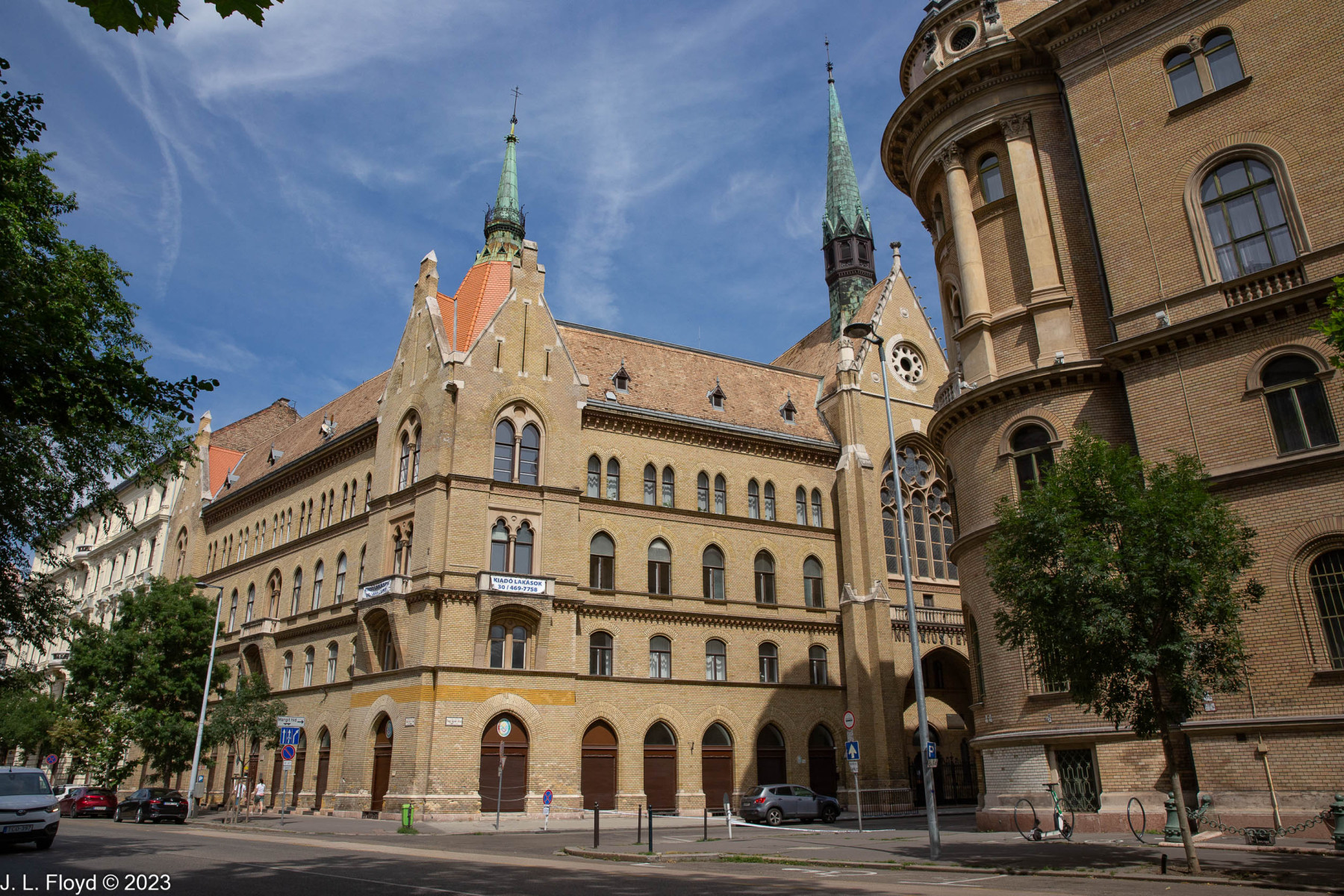
Our bus deposited us at the corner of Bajcsy-Szilinski Boulevard and Alkotmány Street, leaving us to walk about five blocks to Kossuth Square, where the Hungarian House of Parliament, the Országgyűlés, is located. (We did a lot of walking that morning.) On the way to Kossuth Square we passed the Budapest Unitarian Church. I was surprised to find that the Unitarian Church has a long history in Hungary, having been founded in 1568. It is based in Transylvania, which is now part of Romania, but it has a majority Hungarian following.

We also passed the National Togetherness Monument (Nemzeti összetartozás emlékhelye in Hungarian), or National Unity Monument. Unveiled in 2020, it consists of a hundred meter long, four meter wide stone ramp descending underground, with an eternal flame burning at the end of the ramp. It is also known as the Trianon Monument because it laments the Treaty of Trianon, which ended World War I for Austria and Hungary, but also deprived the pre-war Kingdom of Hungary of two-thirds of its territory and imposed heavy reparations. The Treaty was dictated by the victorious Allies, and the Hungarians have resented it ever since. A major issue is that while the treaty rescued several non-Hungarian nationalities – Croats, Rumanians, Slovaks, etc. – from Hungarian domination, it also removed 3.3 million Hungarians, about a third of the Hungarian-speaking population, making them minorities in countries such as Rumania which benefited from the partition. The monument gives expression to irredentist sentiments by listing on its walls over 12,500 names of places in the pre-World-War I Kingdom of Hungary, many of which ended up in the surrounding countries in consequence of the Trianon Treaty.

We did not explore the monument, due to lack of time, but instead pressed on to Kossuth Square.

Kossuth Square is named for Lajos Kossuth, leader of the Hungarian Revolution of 1848, which briefly succeeded but was ultimately suppressed by the Austrians with the crucial aid of an army dispatched by Tsar Nicholas I of Russia. After the suppression of the Revolution of 1848, Kossuth went into exile and died in Italy in 1894.

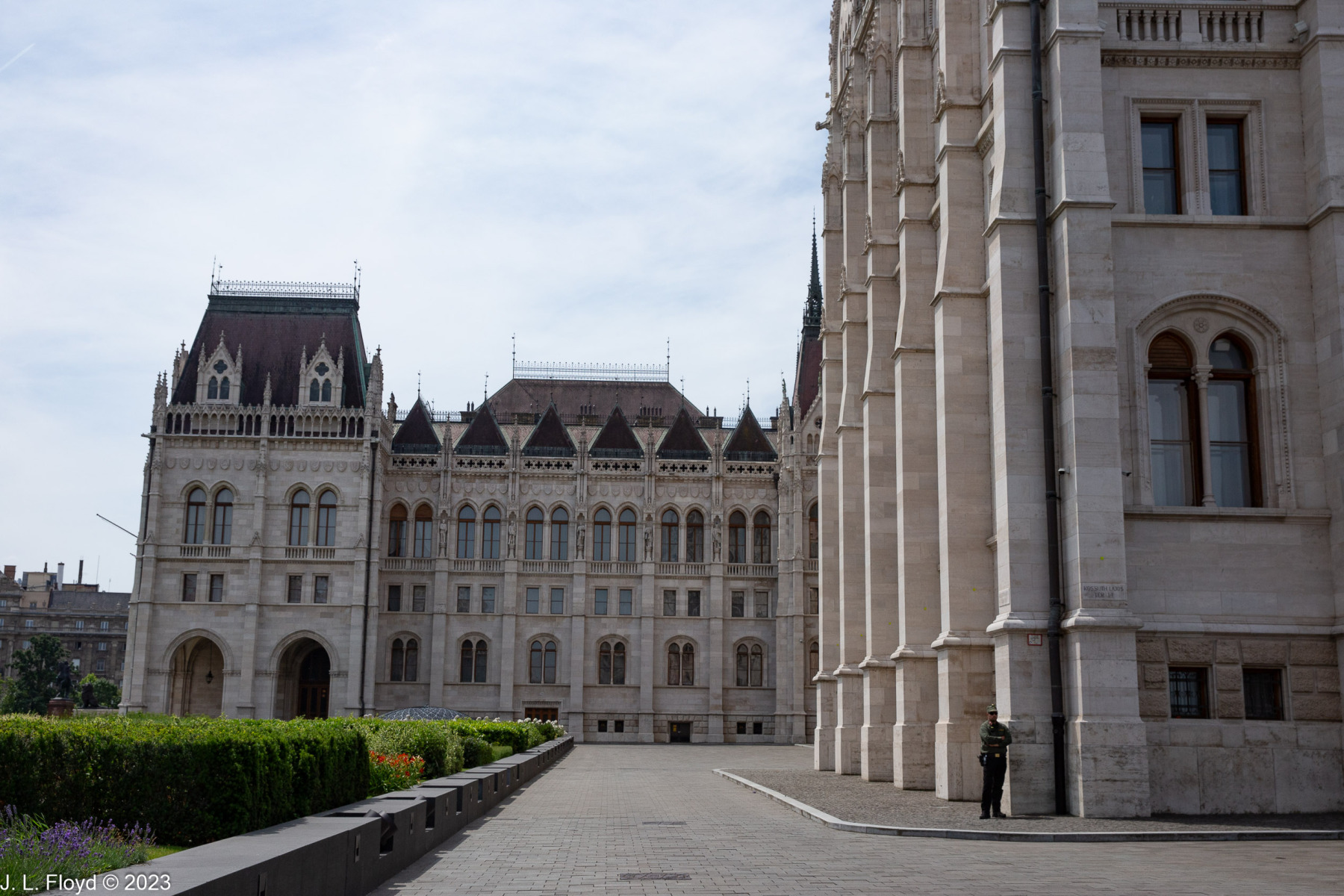
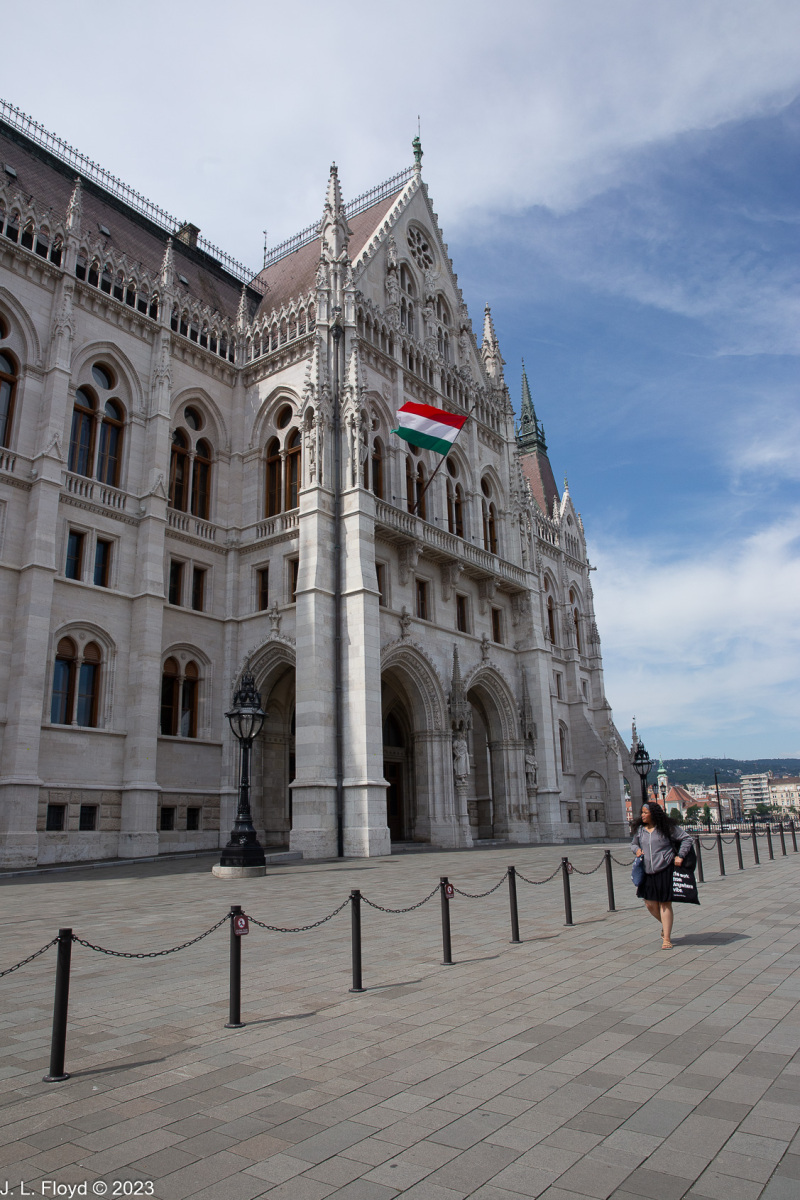
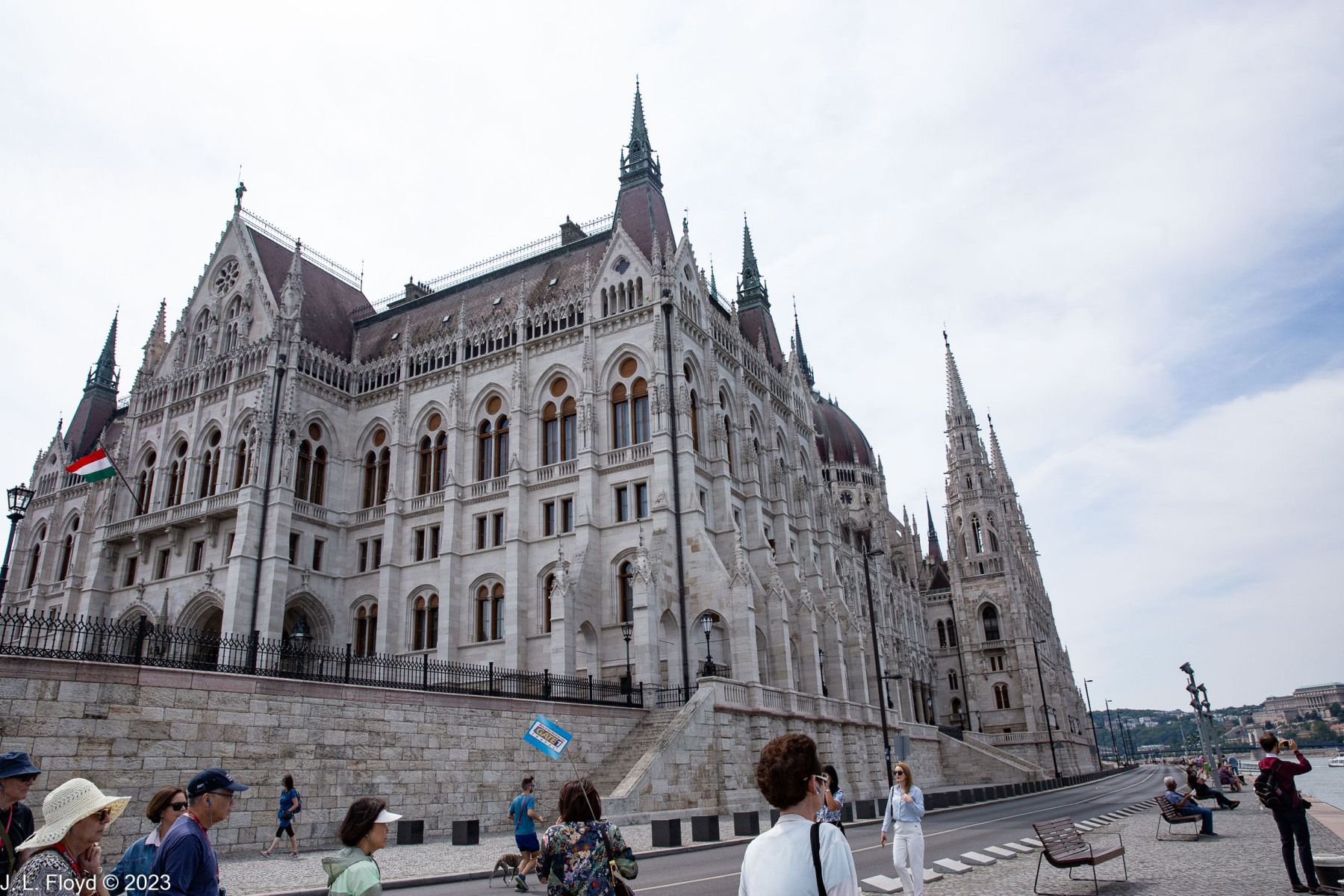
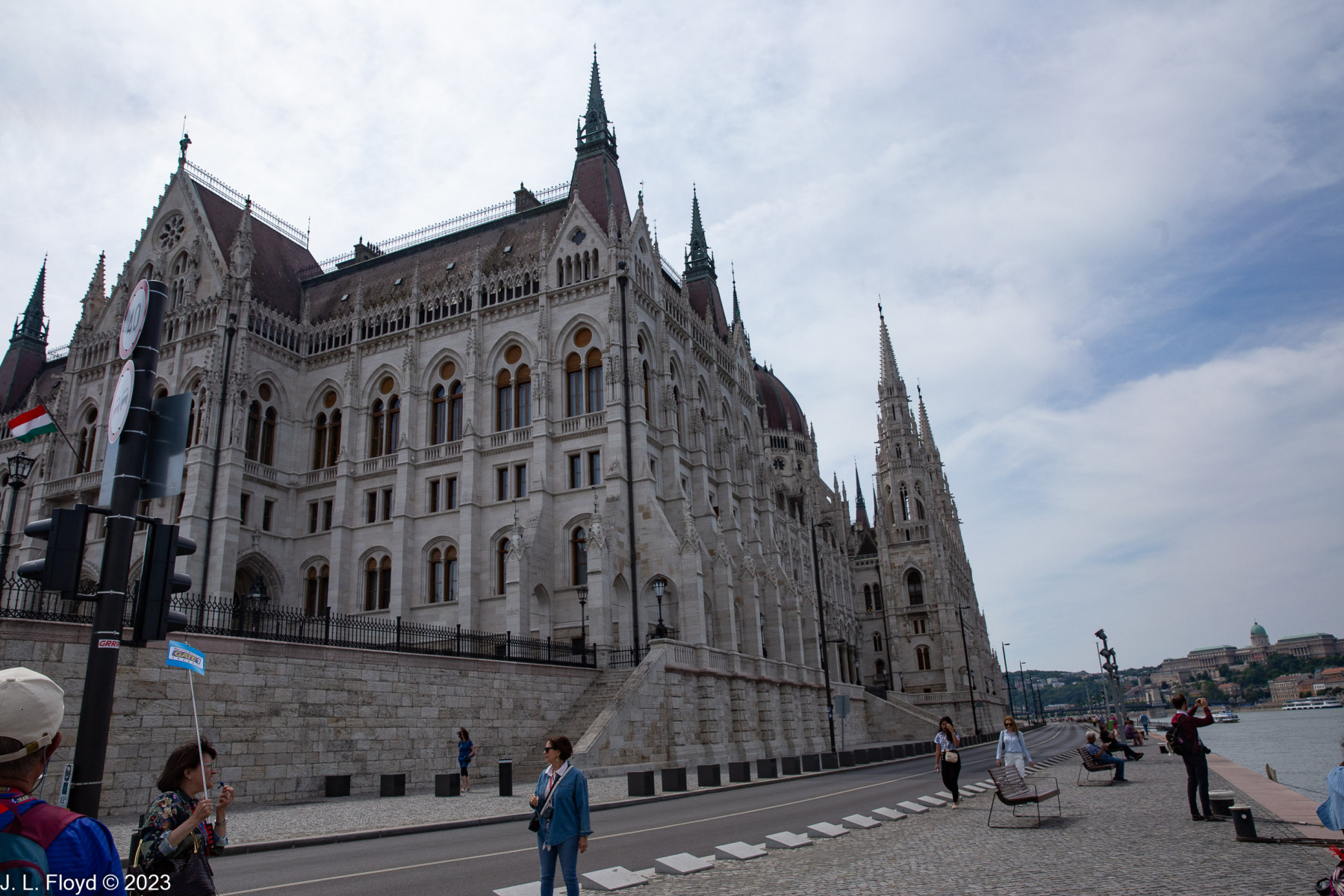
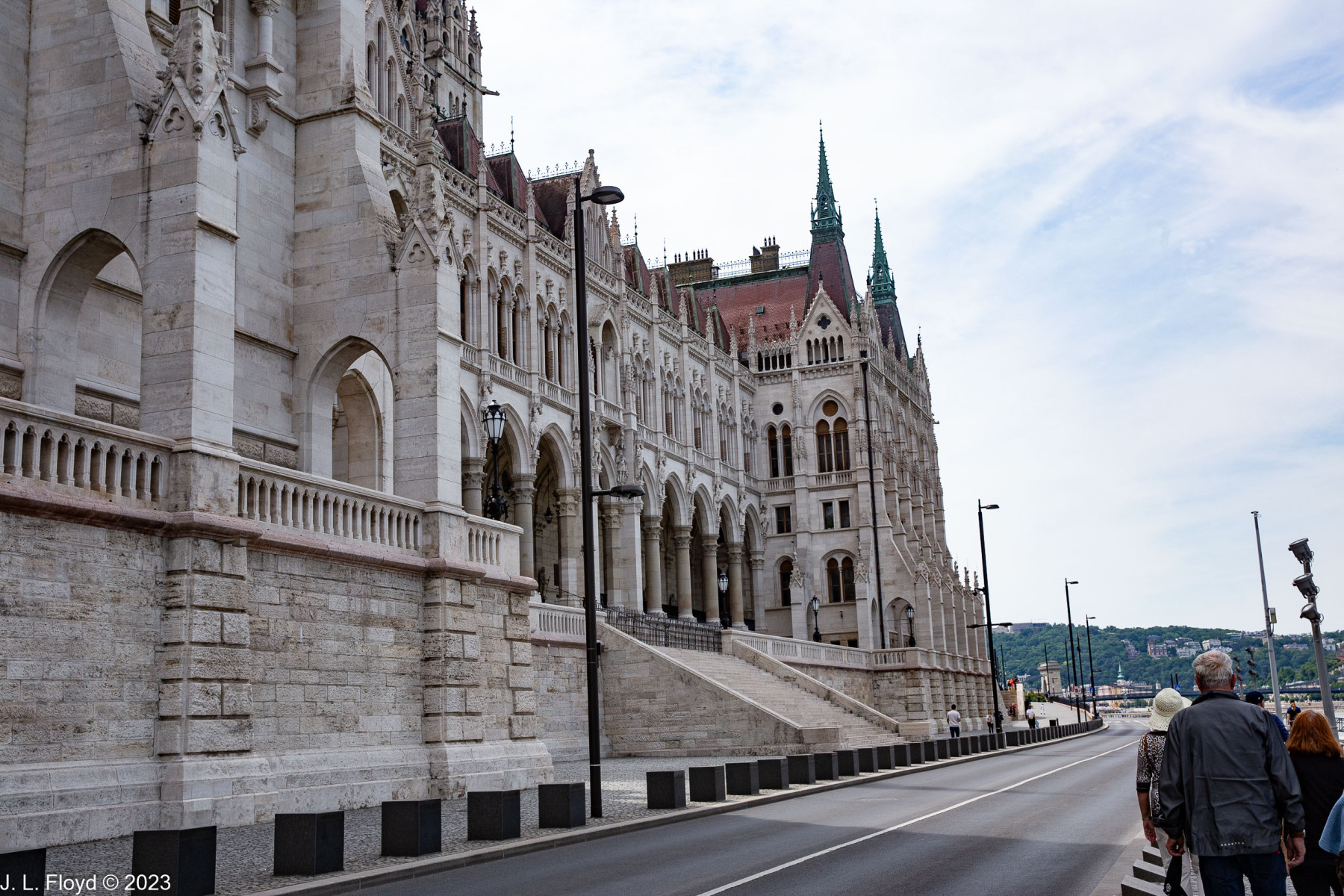
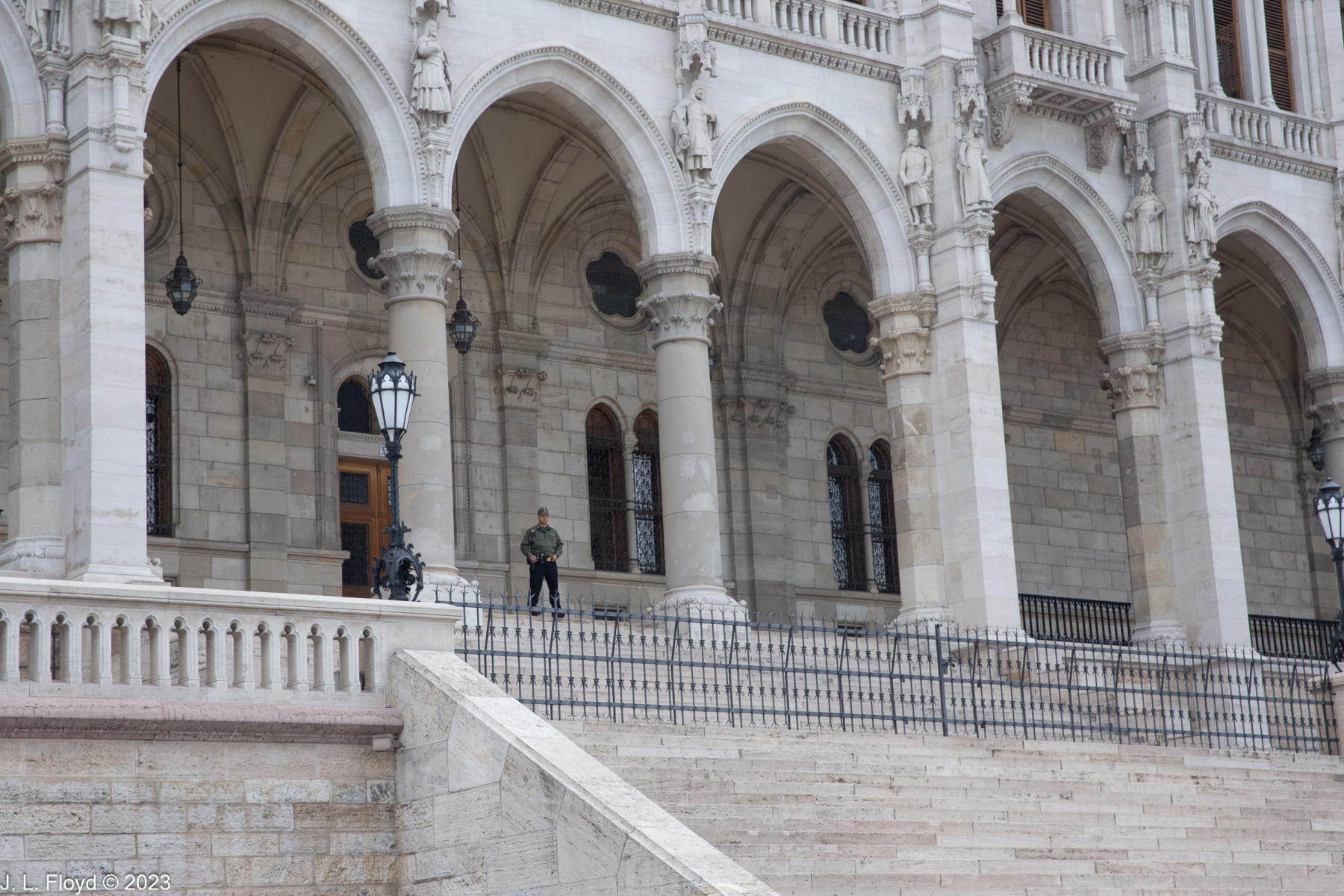
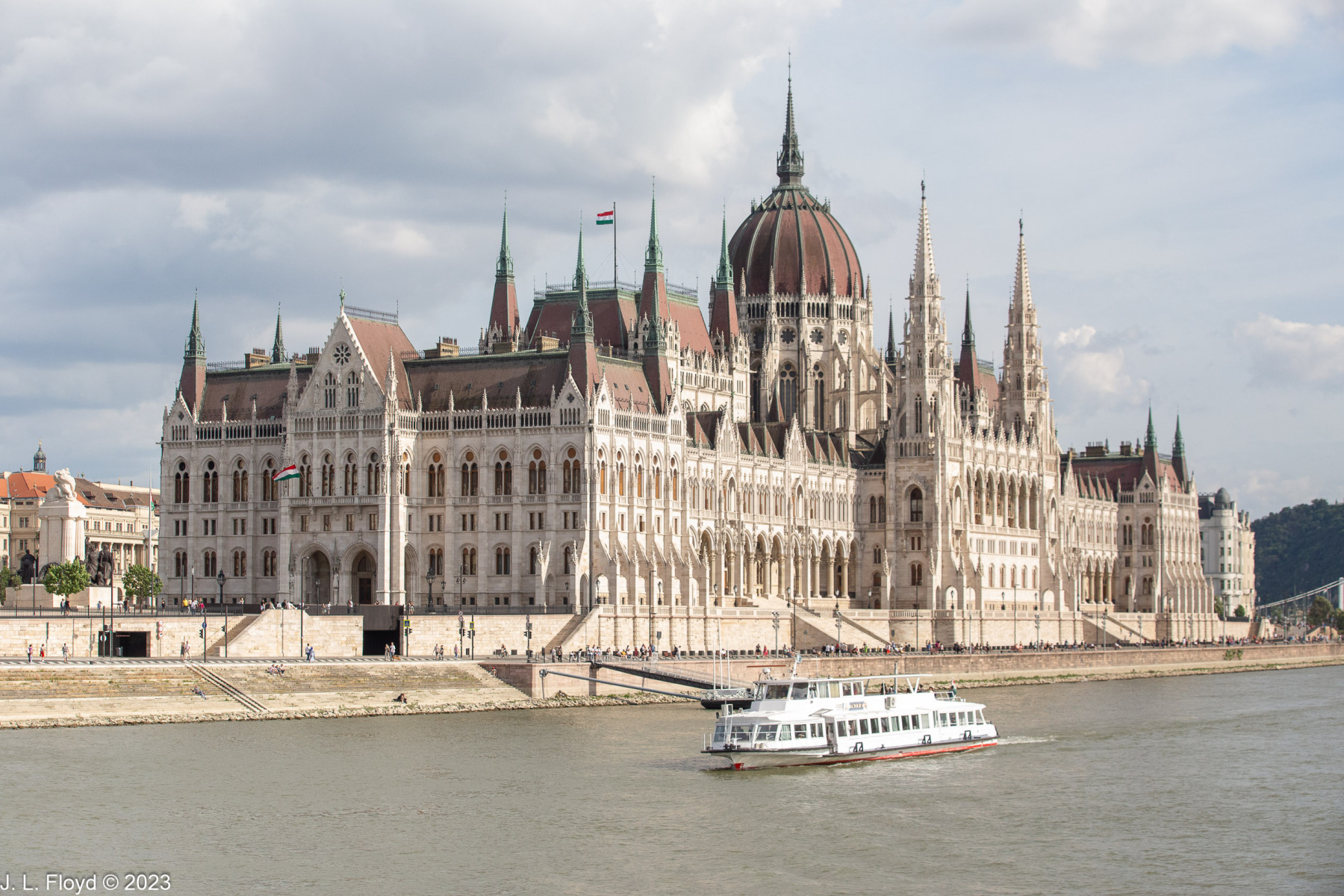
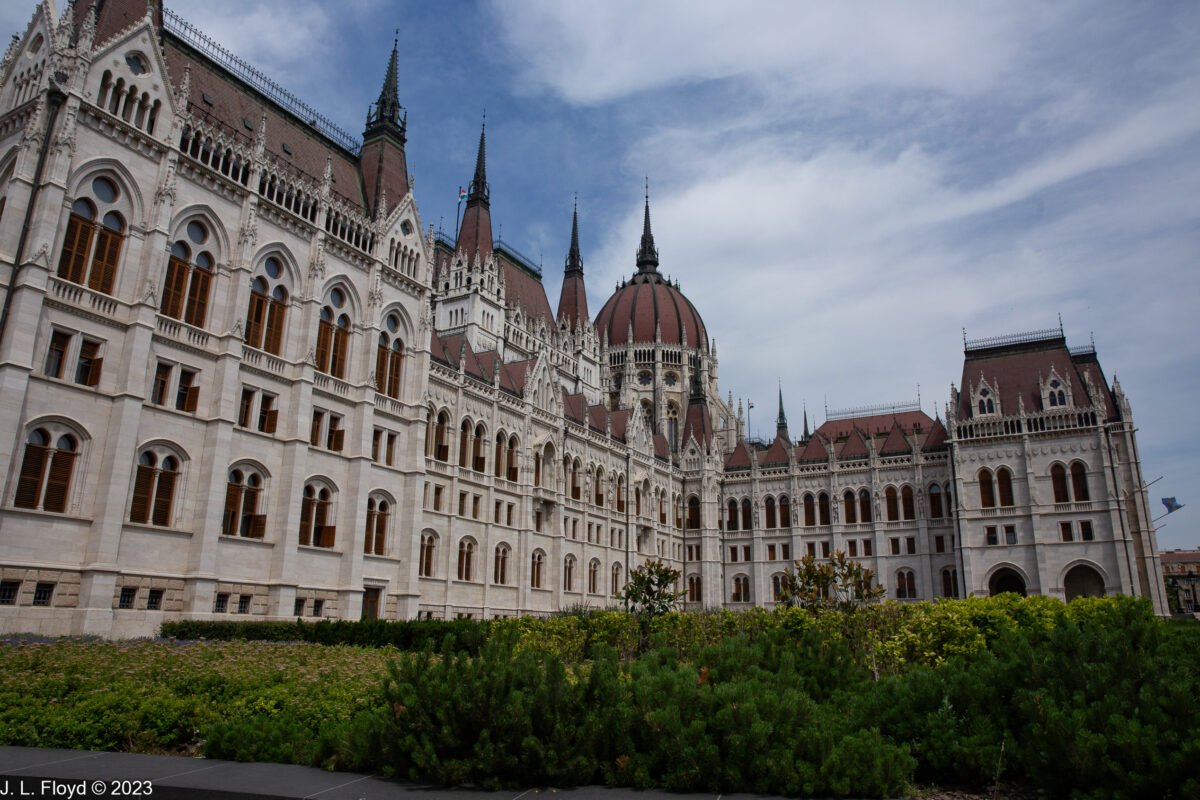
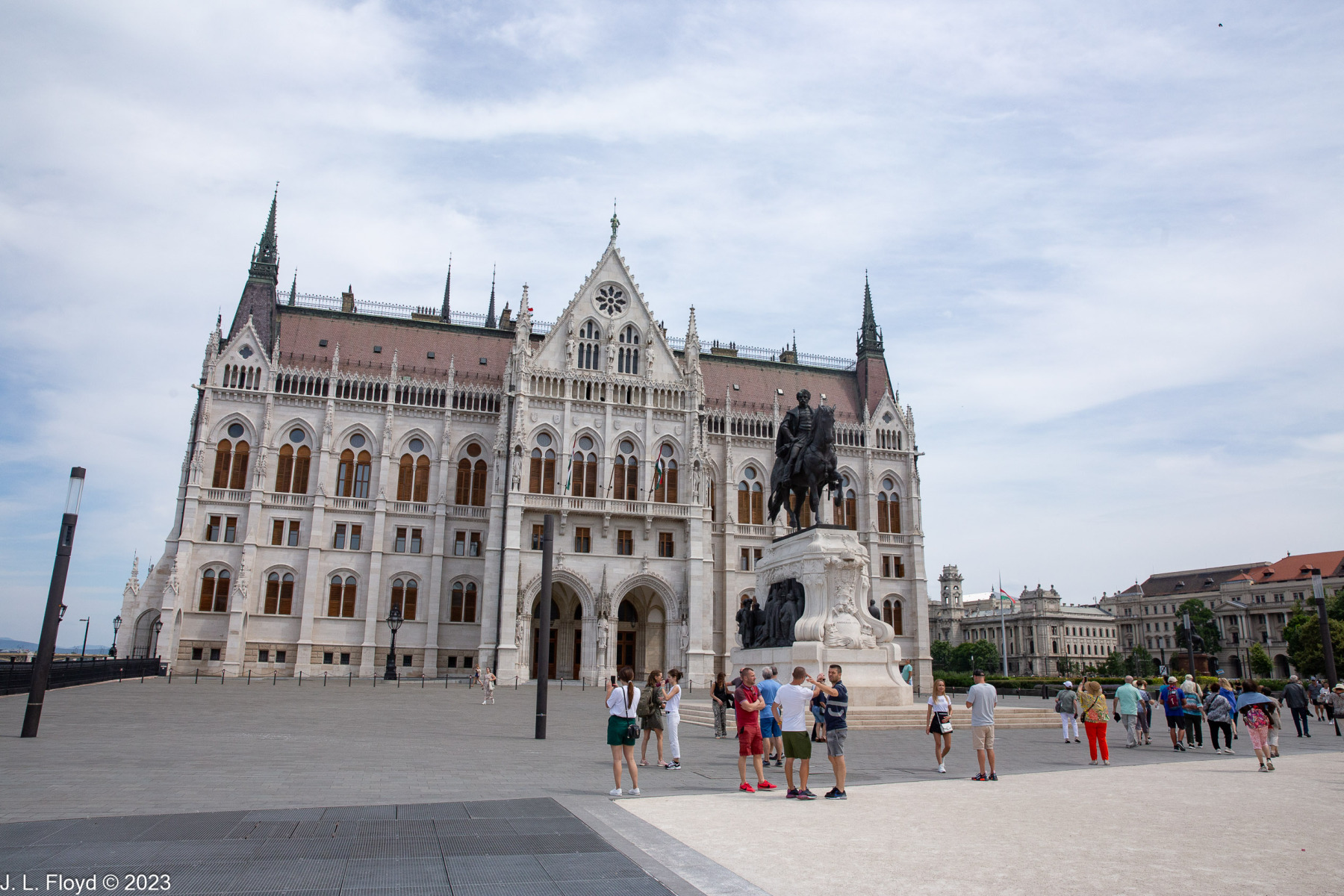
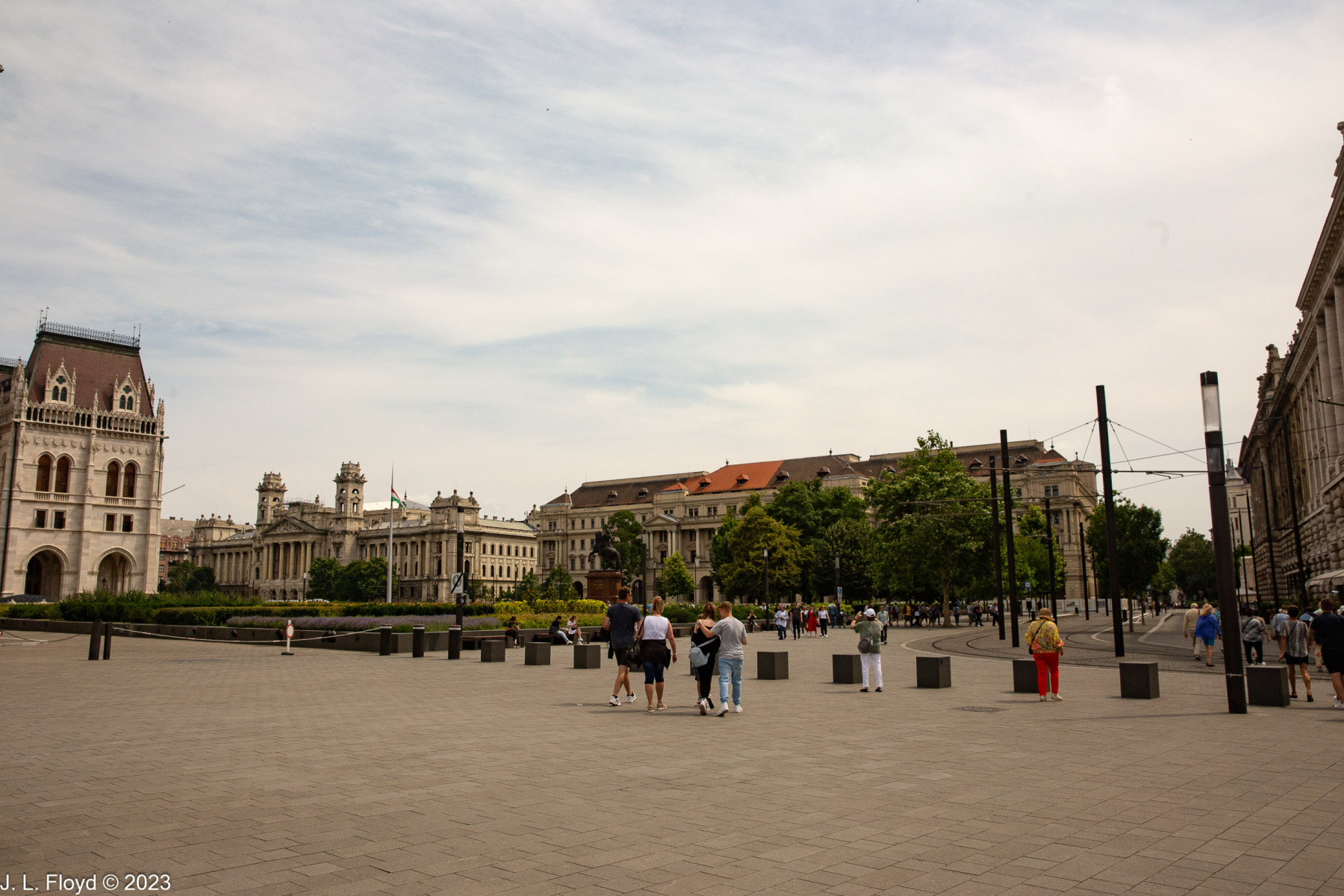
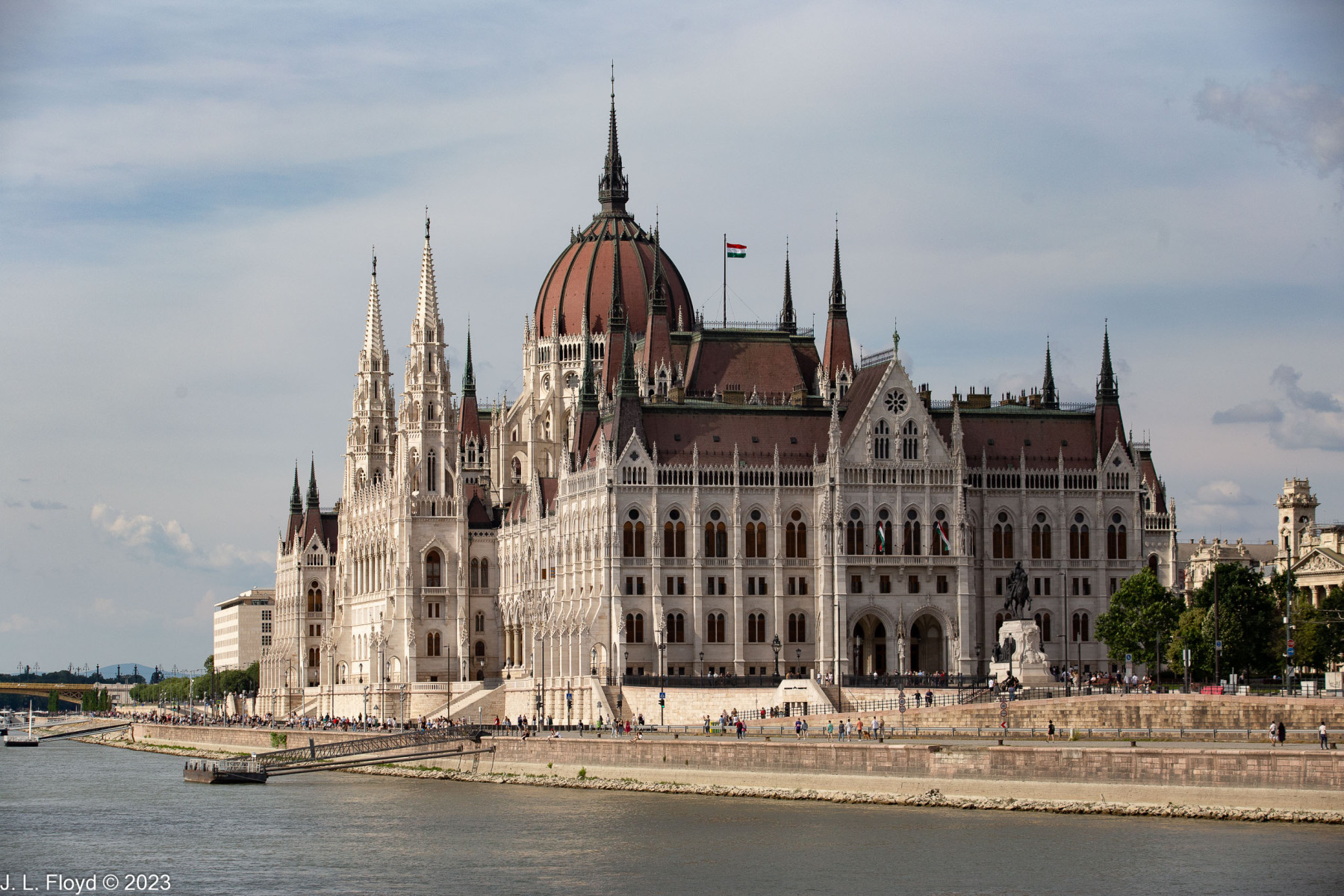
Kossuth Square is dominated by the House of Parliament (Országház), the seat of the National Assembly of Hungary (Országgyűlés), the largest building in Hungary. It is mostly symmetrical, with two main façades – on the west (Danube) side and the other, with the main entrance, on the east side. Completed in 1904, it was built in Gothic Revival style with a Renaissance Revival dome. It is said to be equally impressive inside as outside, but exploring the interior was not on our schedule. Instead we circled around Parliament counterclockwise, starting on the east of Kossuth Square and going north, then west toward the riverbank.

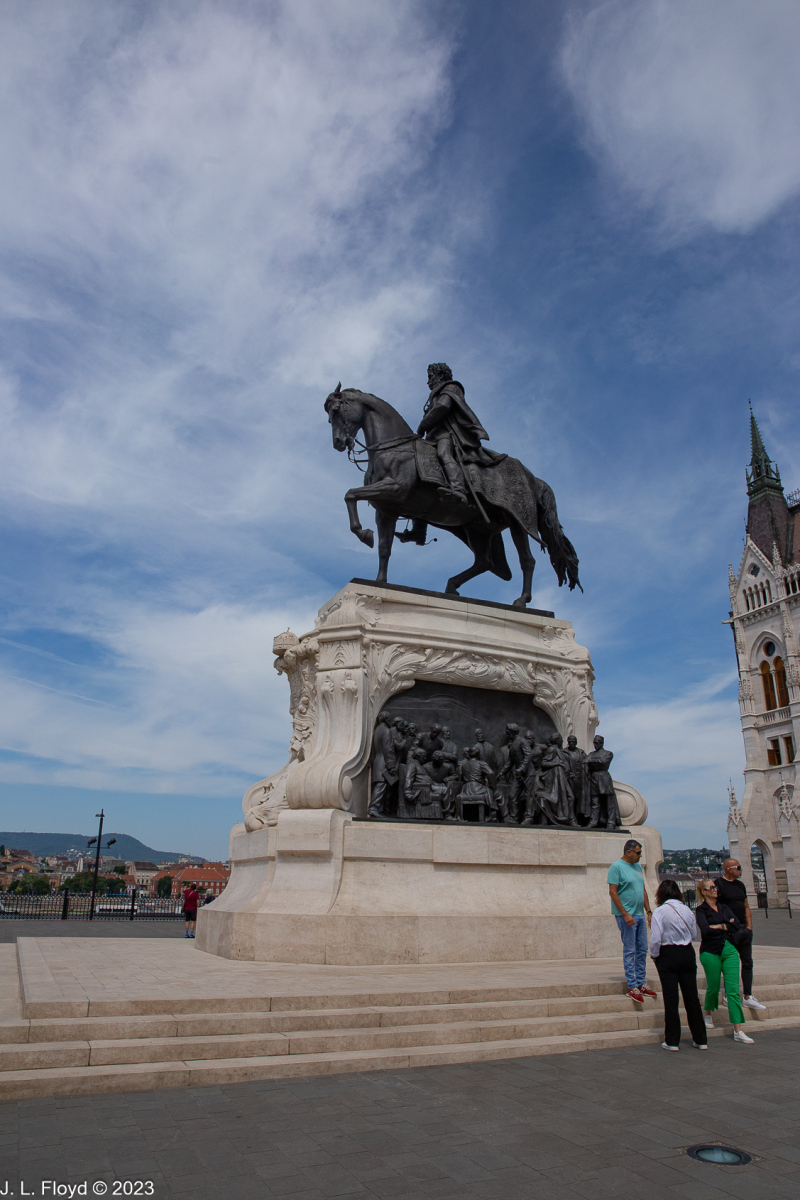
On the north side of Kossuth Square stands the Kossuth Memorial. First inaugurated in 1927, the original memorial was replaced in 1950 by a different one more suited to the taste of the ruling Stalinist regime. Many years later, in 2014, the government of Hungary had the original monument recreated and installed in Kossuth Square. It depicts not only Kossuth himself but all the members of the first Hungarian parliamentary government during the 1848 revolution.

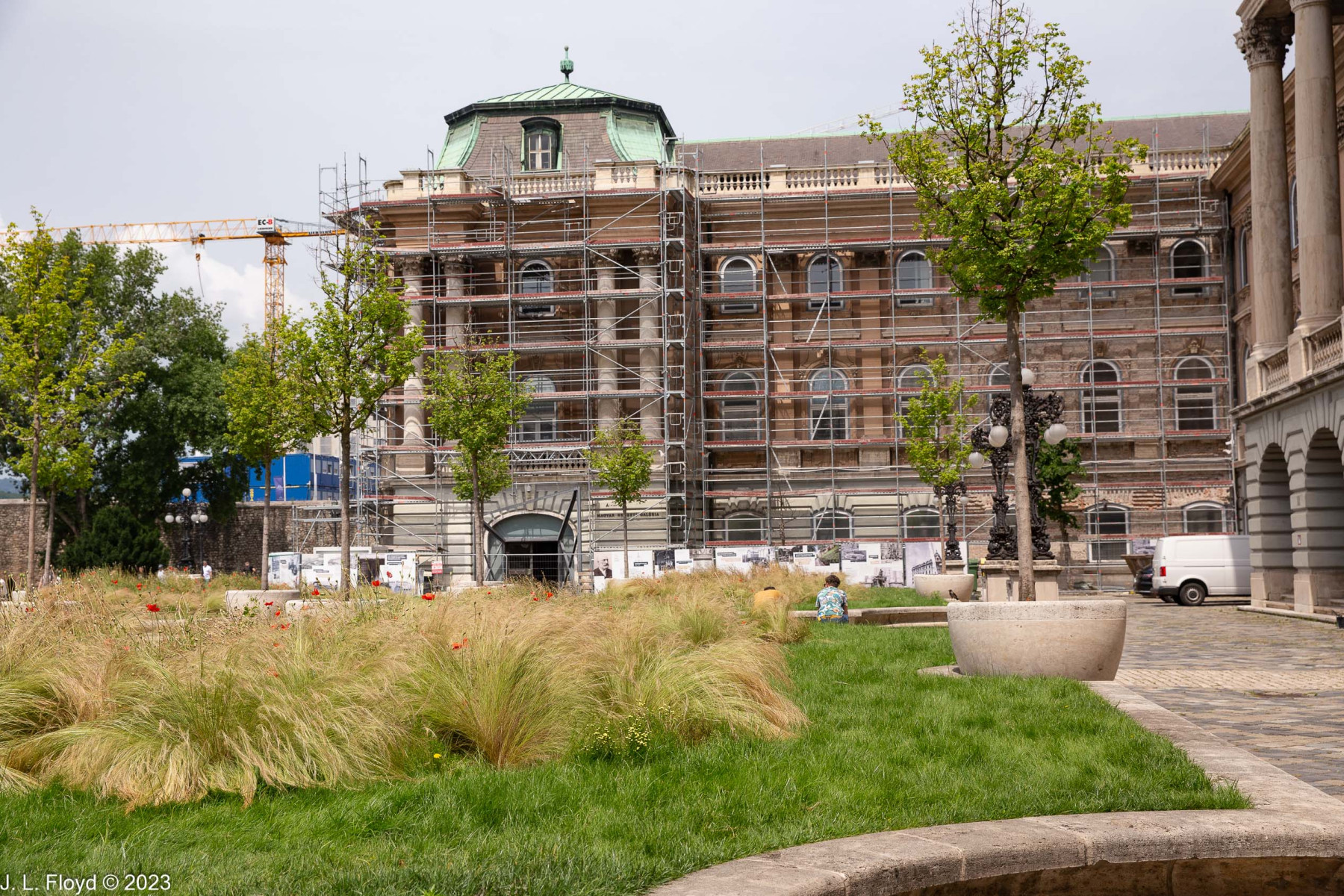
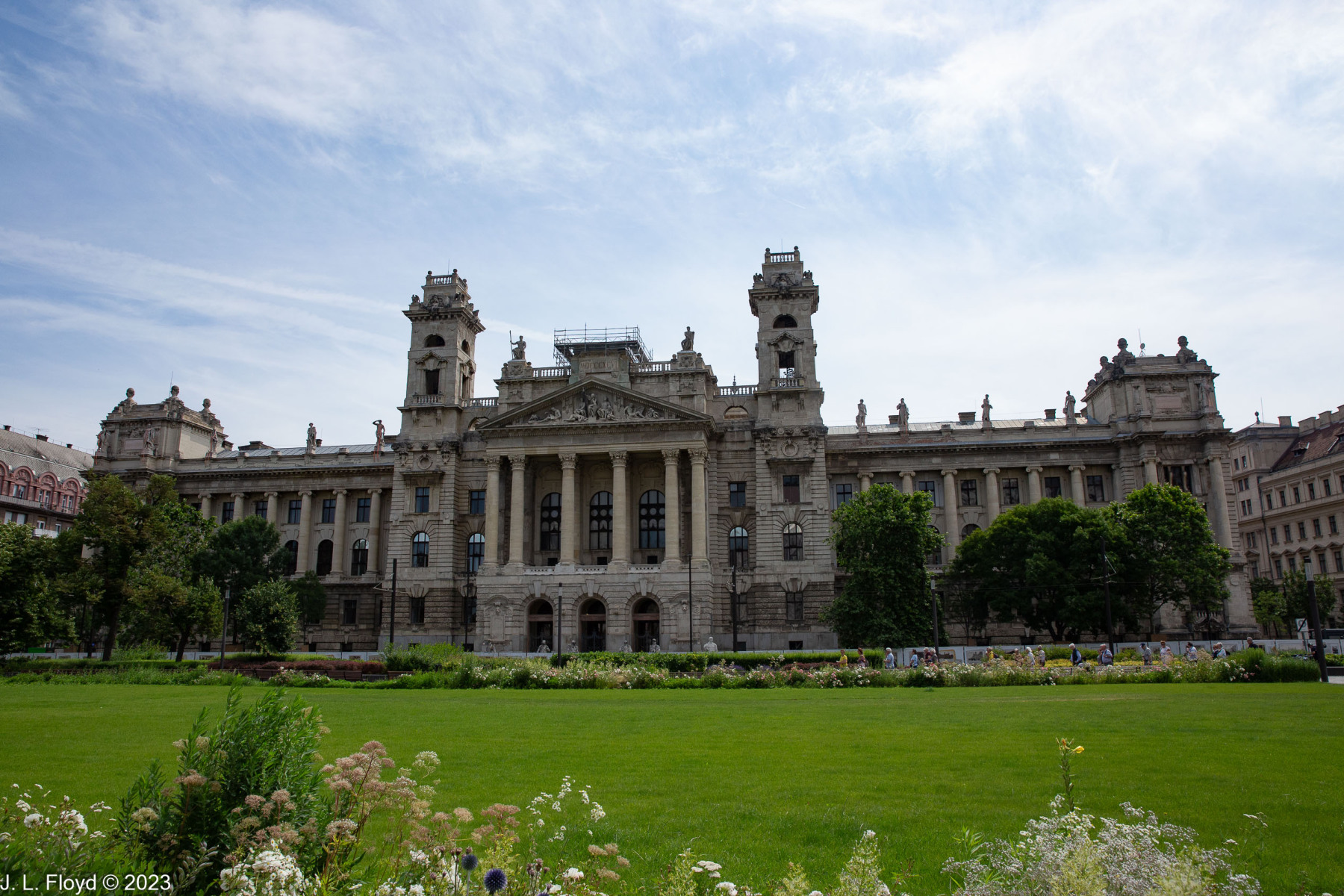
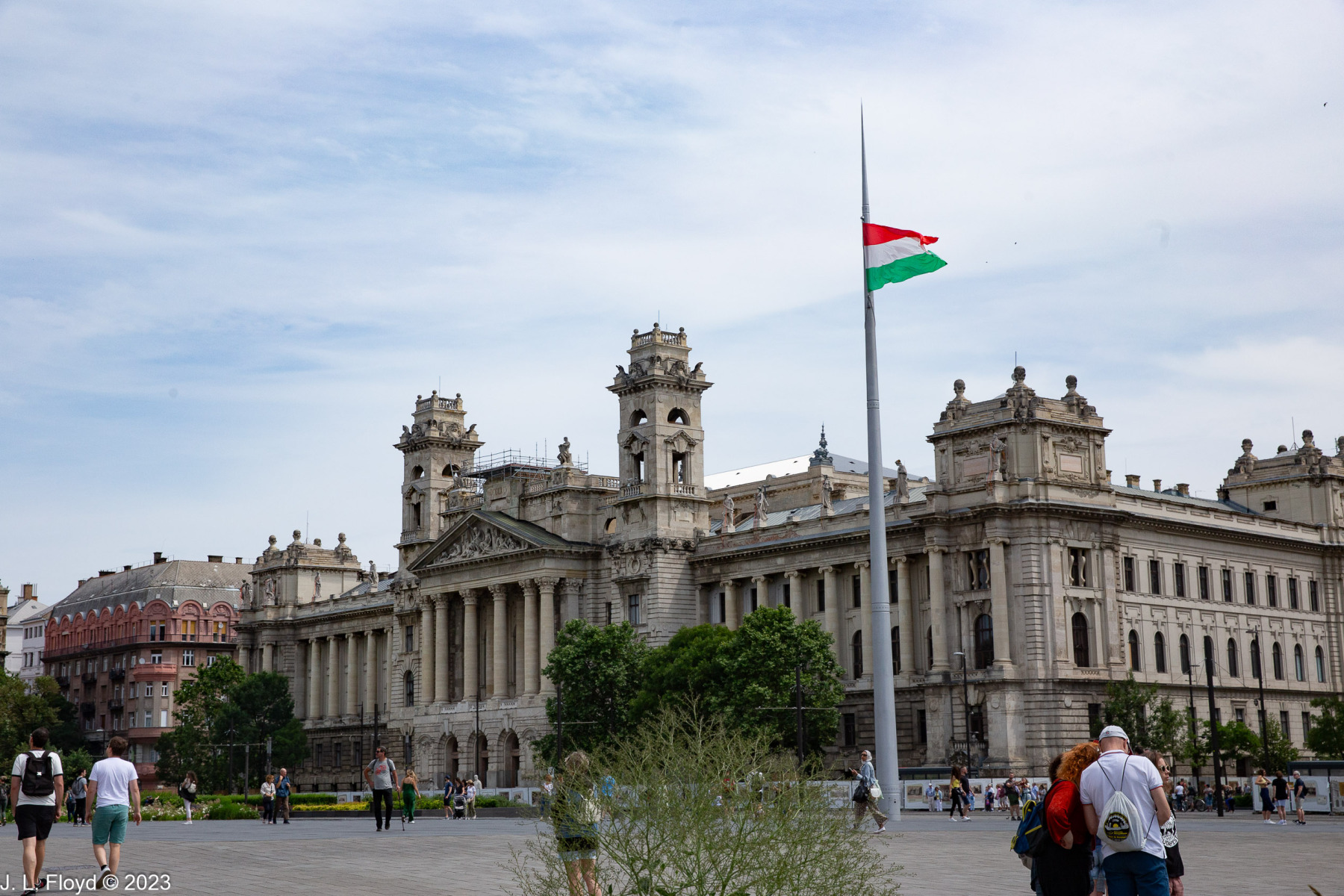
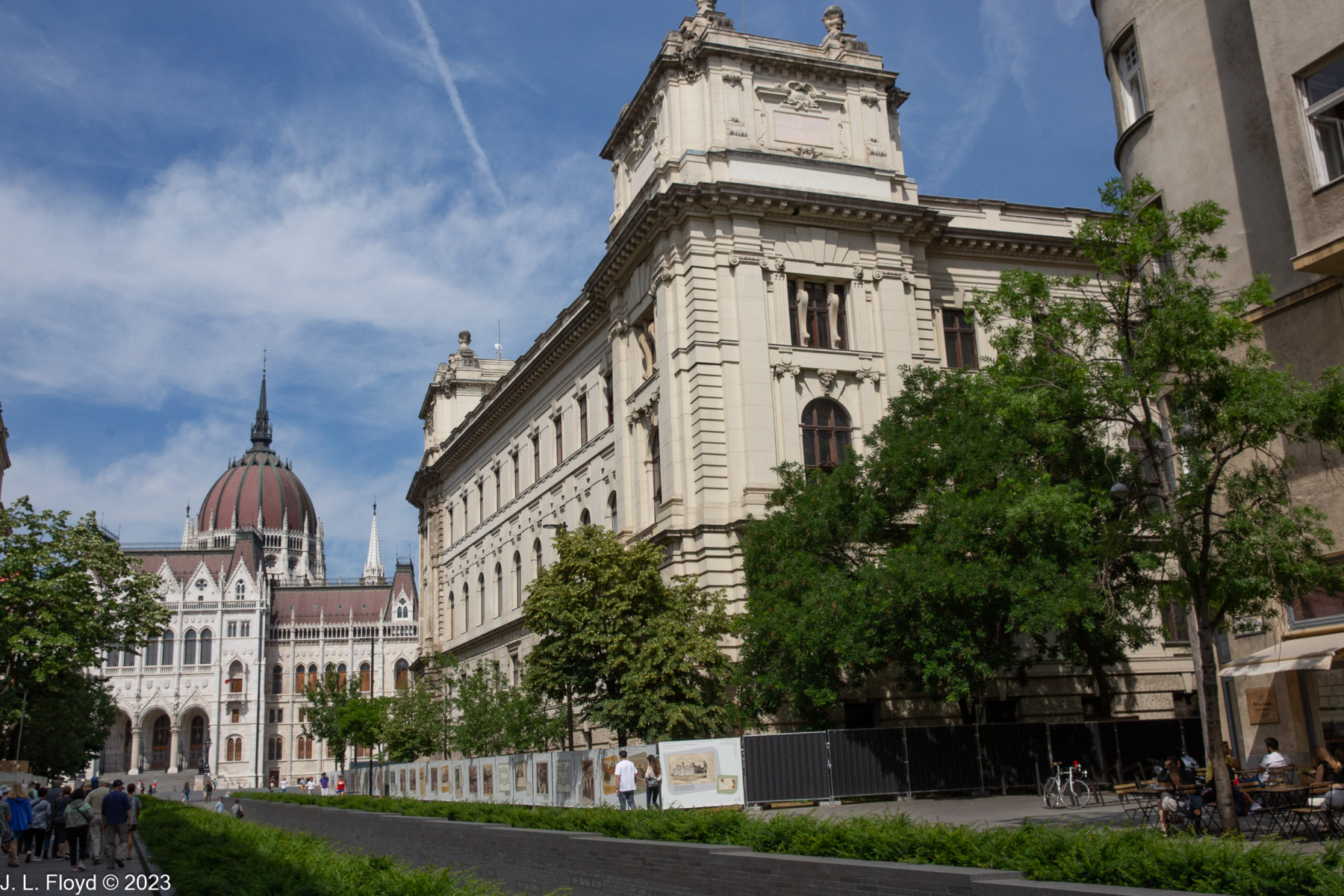
On the northern and eastern sides of Kossuth Square, facing the House of Parliament, stood several structures undergoing renovation. The most prominent of these was the former (and future) Palace of Justice, which was originally built in the 1890s to house the Hungarian Supreme Court (Magyar Királyi Kúria). After World War II, with the advent of the People’s Republic, the Kúria was abolished and its building was handed over first to the Labor Movement Institute of the Hungarian Workers’ Party, then to the Institute of Party History and the Hungarian National Gallery, and still later to the Museum of Ethnography. Now the Museum of Ethnography is in its new home in the Budapest City Park, and the Palace of Justice is being readied for the return of the revived Supreme Court, again named the Kúria.

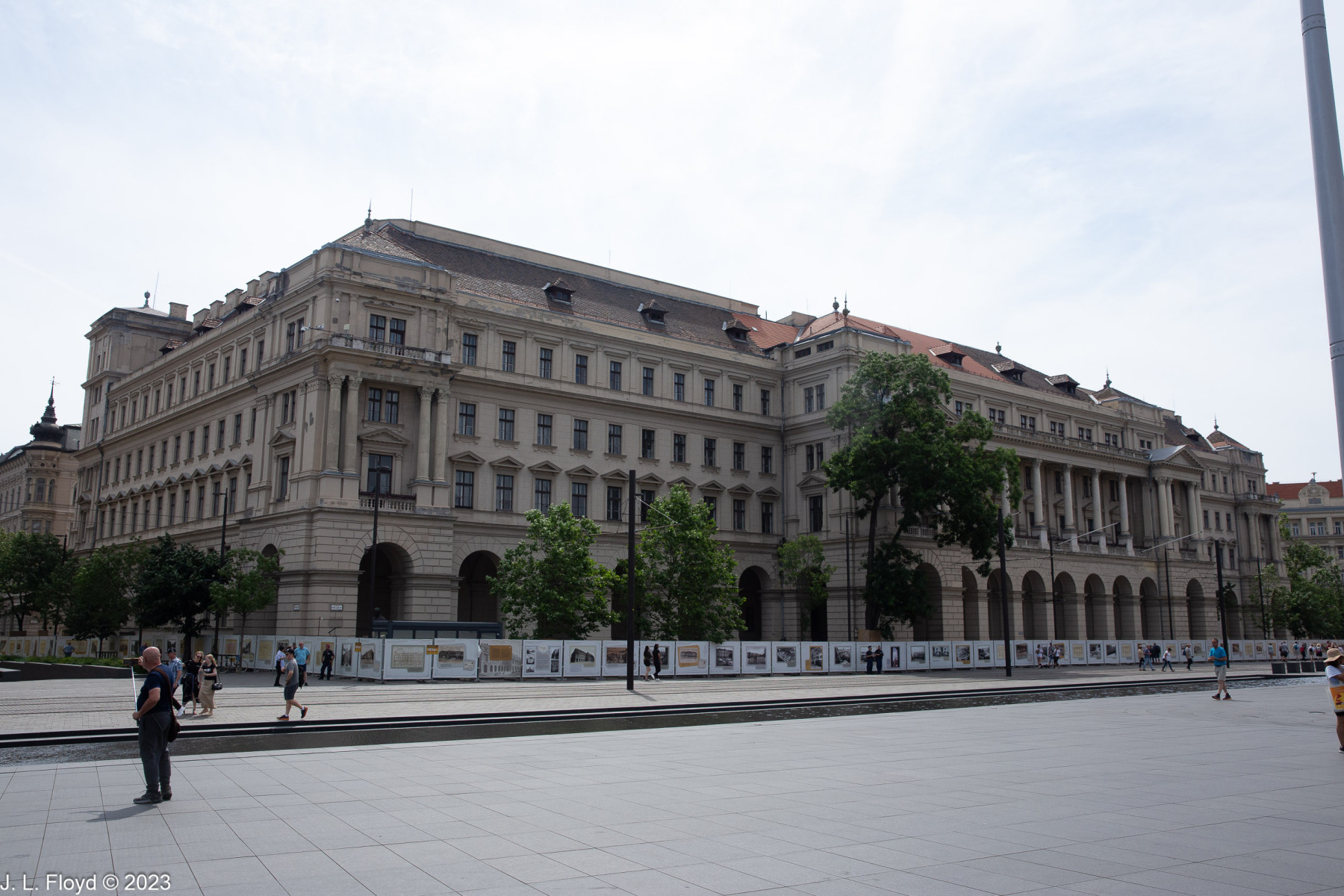
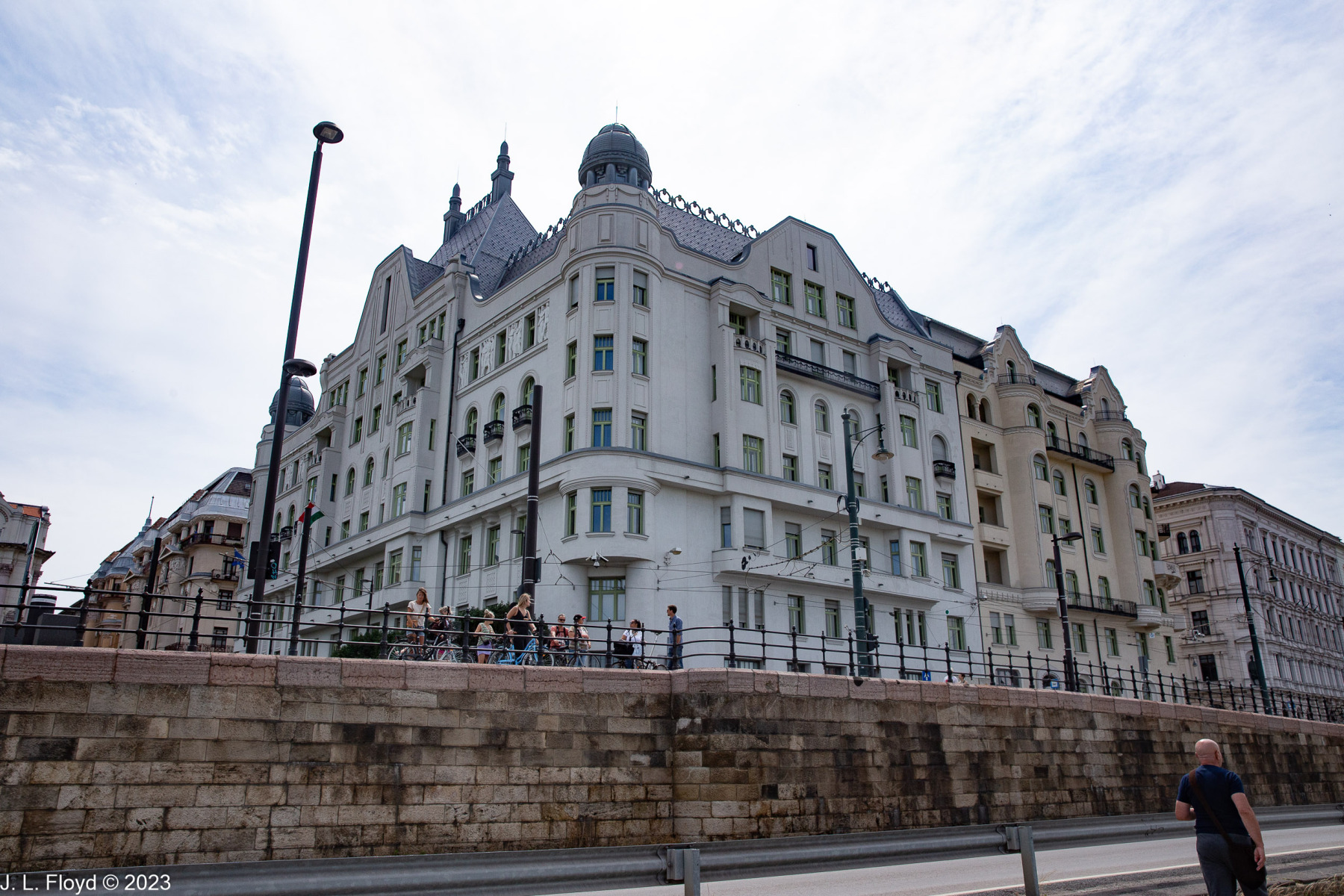
Also under renovation are the Ministry of Agriculture building, to the south of the Palace of Justice, and the dilapidated office building on the north side of the square.

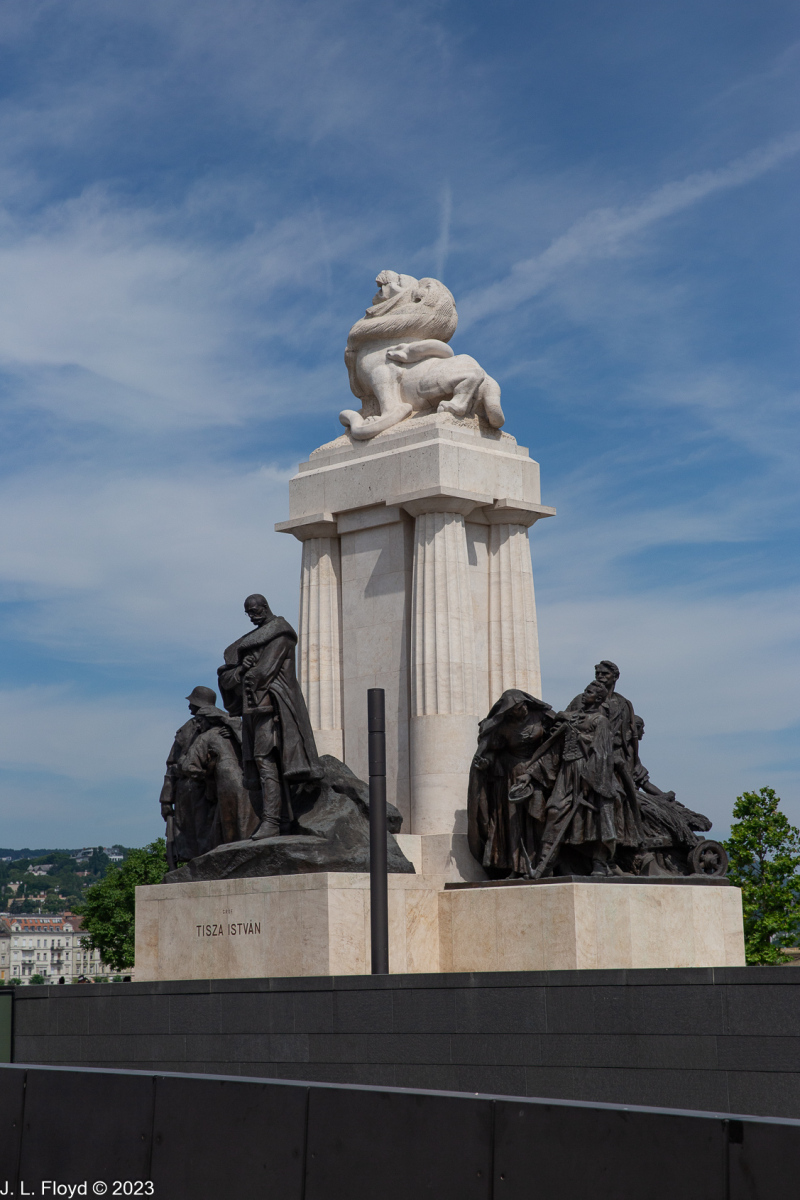
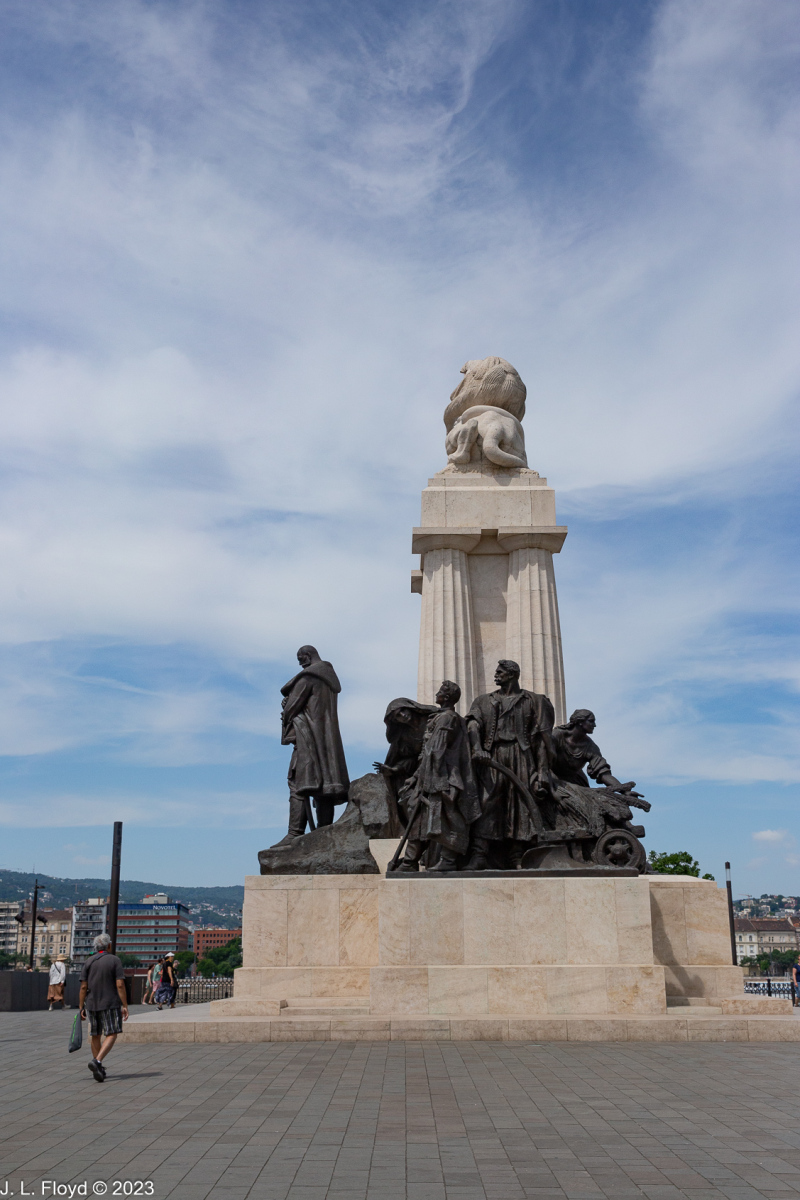
Just to the north of the House of Parliament stands a monument to Count István Tisza, who was the prime minister of Hungary during most of the First World War. Although he was a strong advocate of industrial development and a staunch foe of anti-Semitism, he was also adamantly opposed to democratic reforms. He was a firm adherent of the Dual Monarchy – the partnership with Austria – and a relentless supporter of Hungarian participation in the war effort. He was also a champion duelist, but this did not prevent his assassination by leftist revolutionaries in 1918.

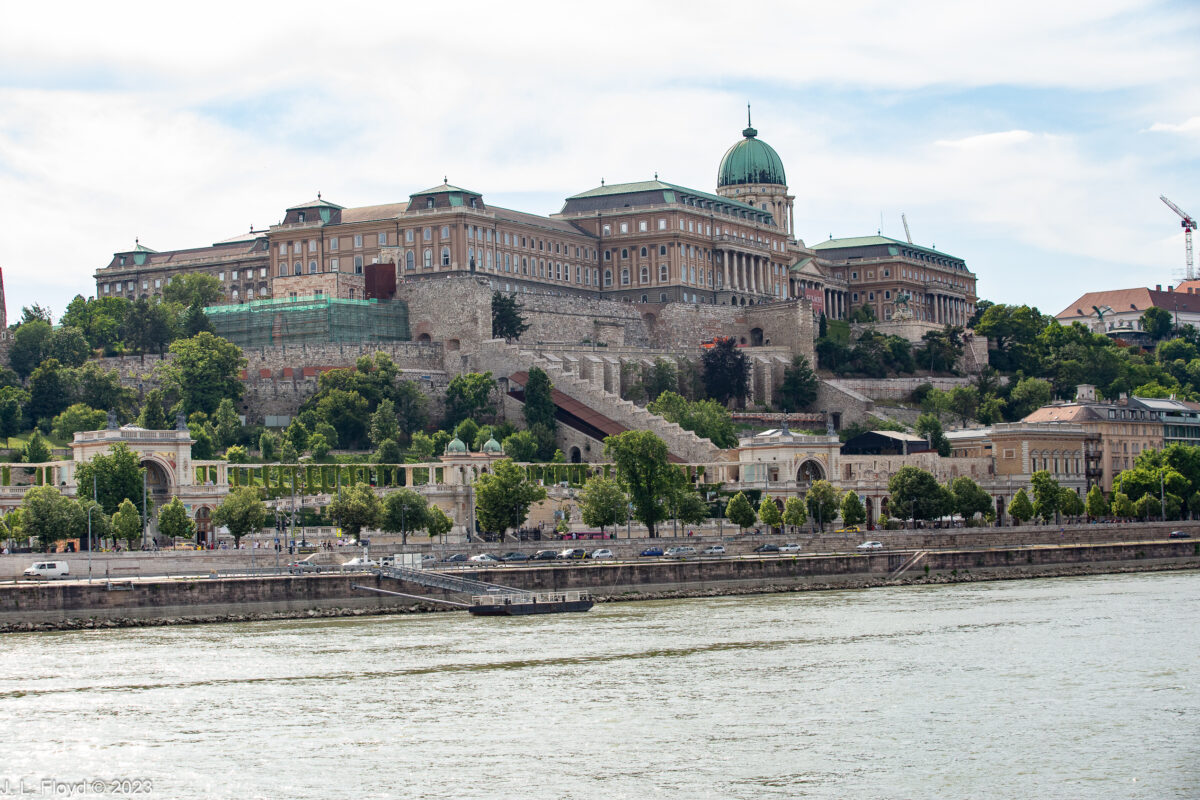
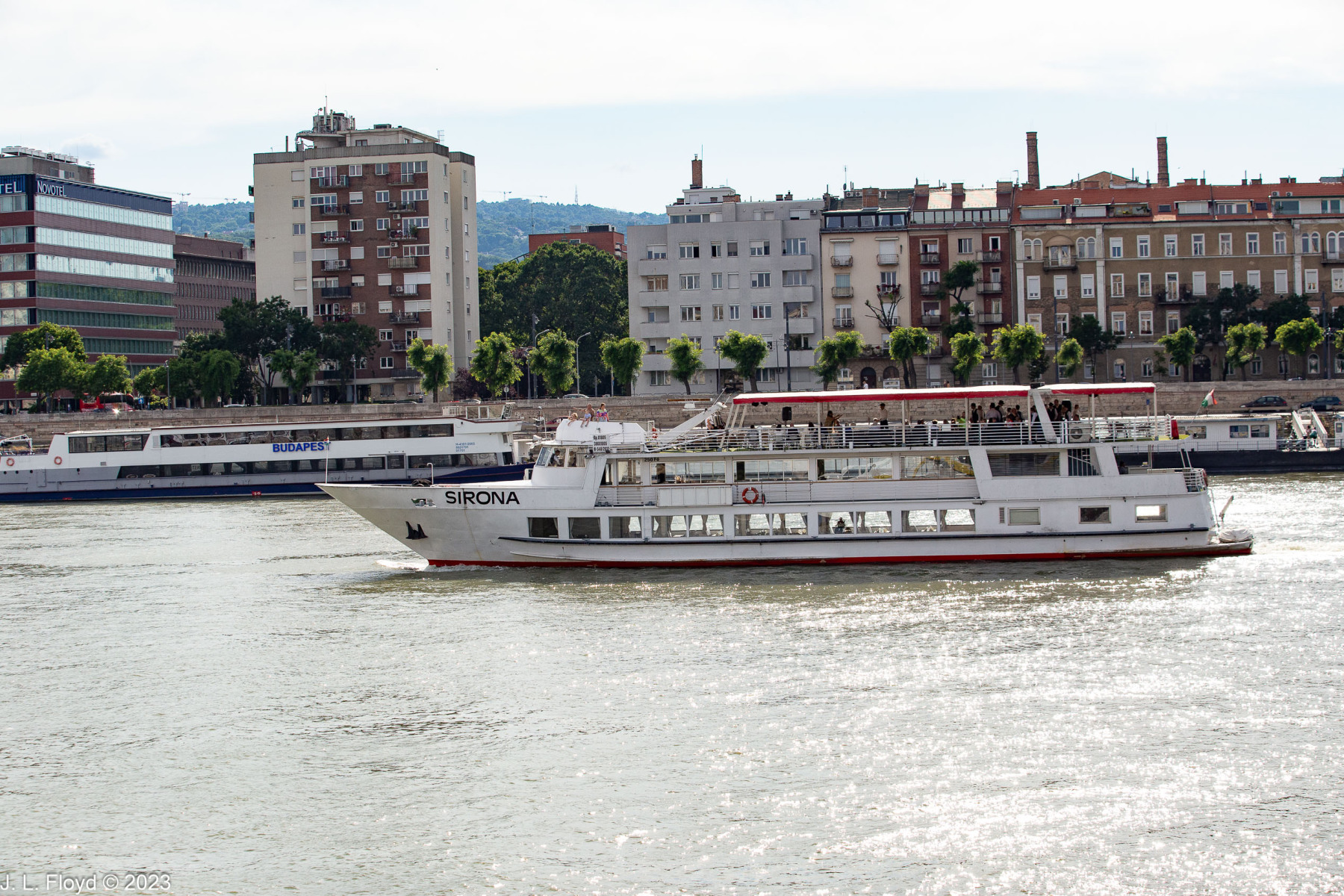
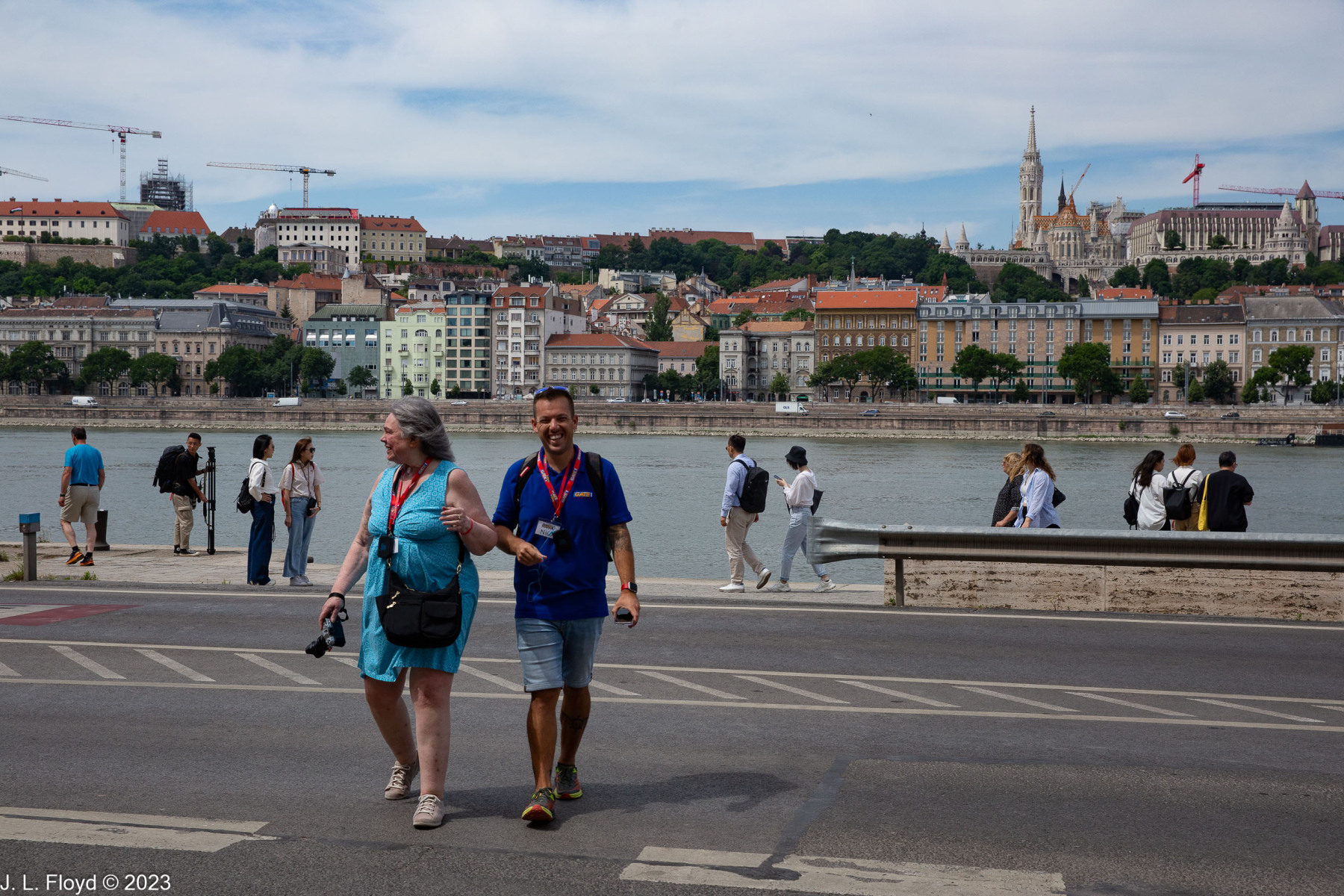
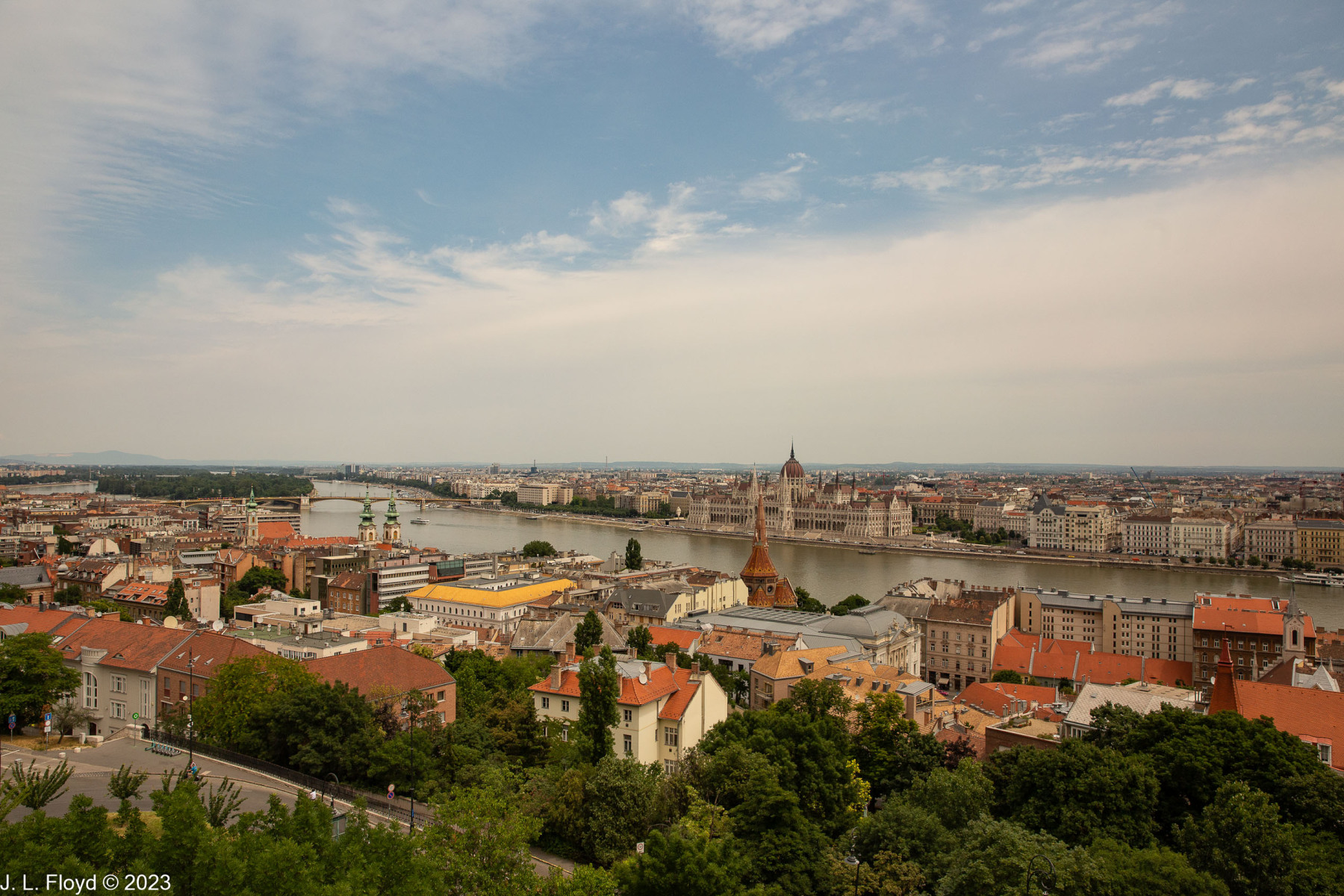
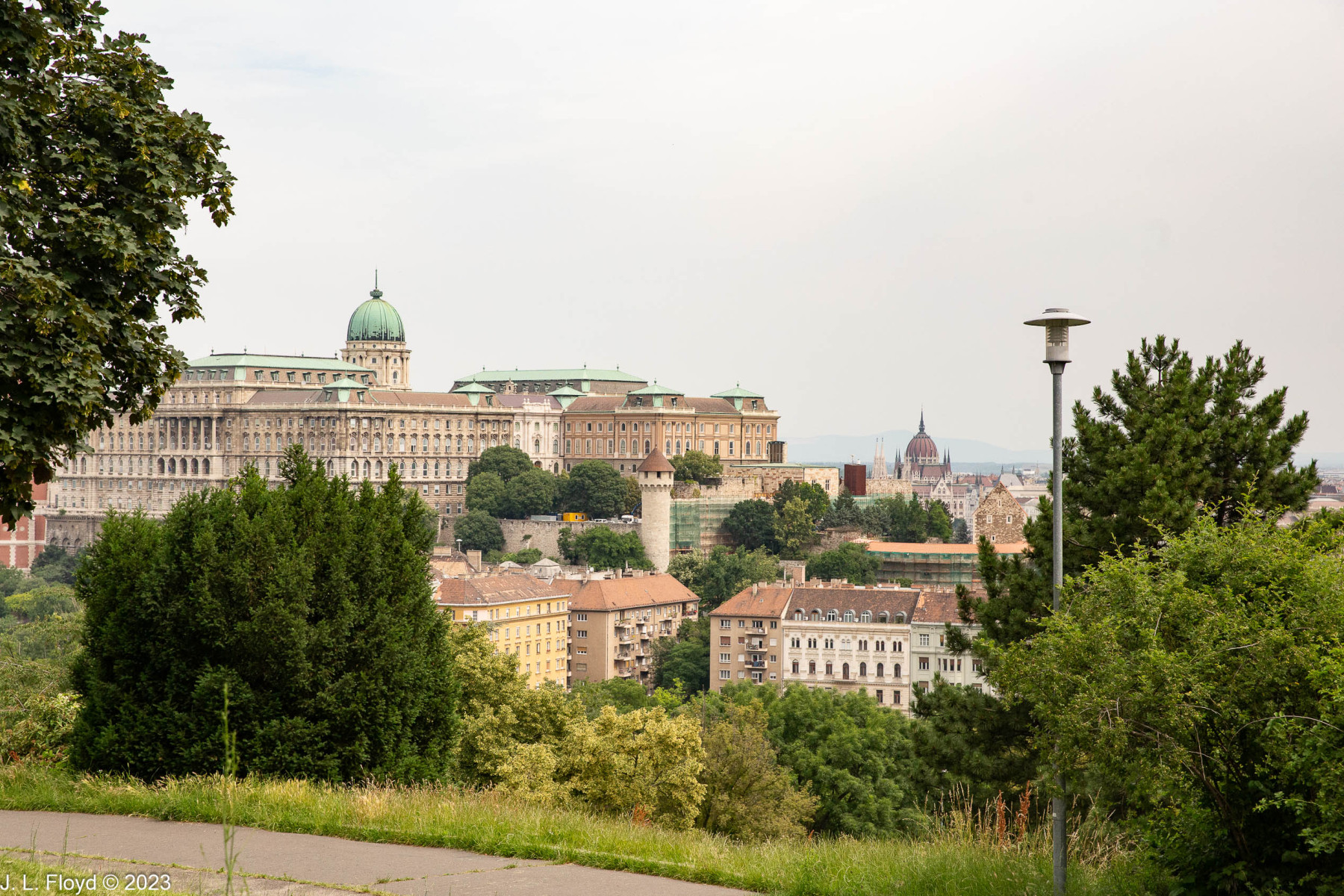
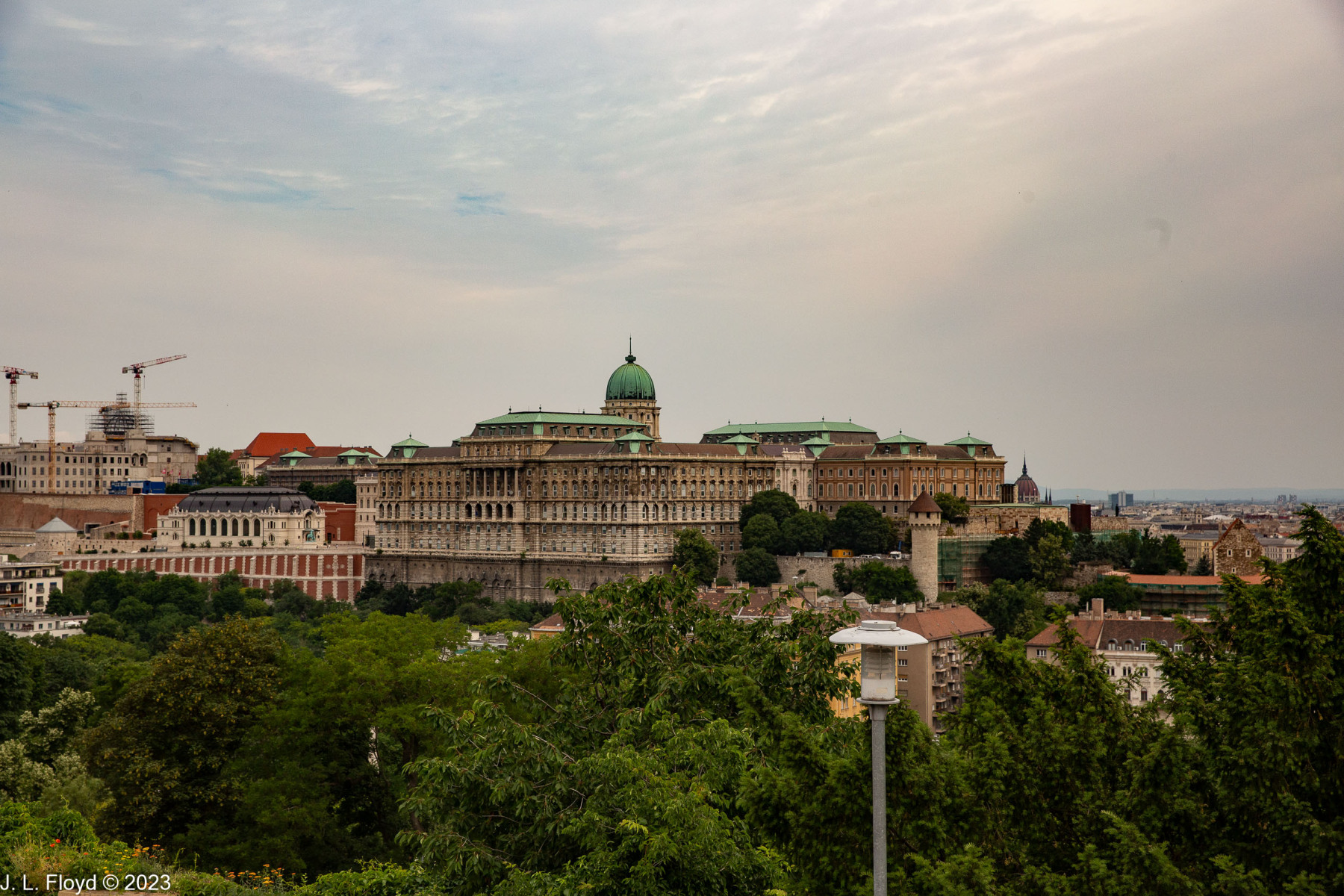
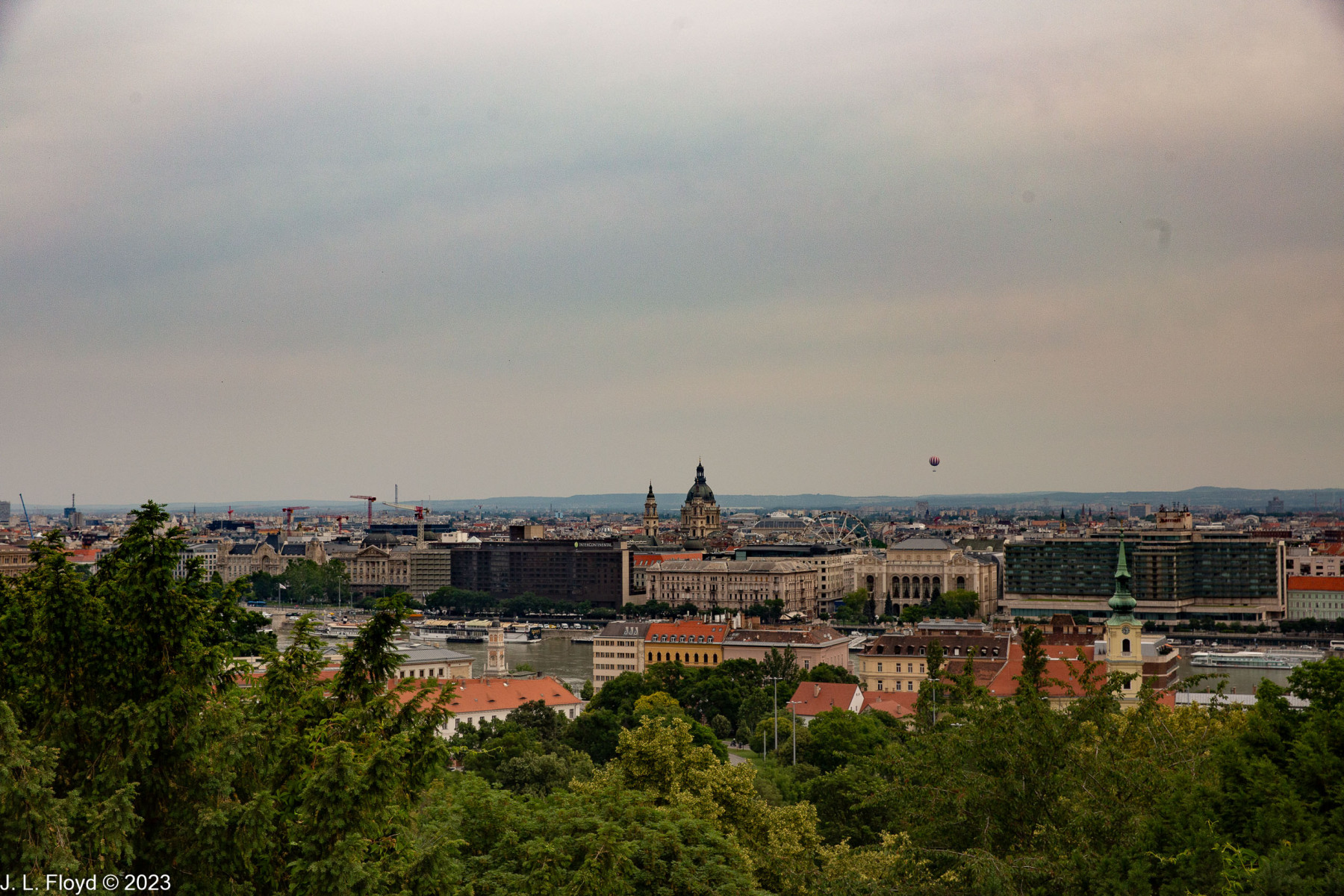
Next to the Tisza Monument is the Visitors’ Center, where we took a short break and then resumed our hike around the square, heading west toward the Danube riverbank. There we enjoyed some great views of Buda, especially Buda Palace and Castle Hill, as well as of the river itself with its myriad watercraft.

I was also able to get some nice shots of the west façade of the Parliament building from the riverbank.

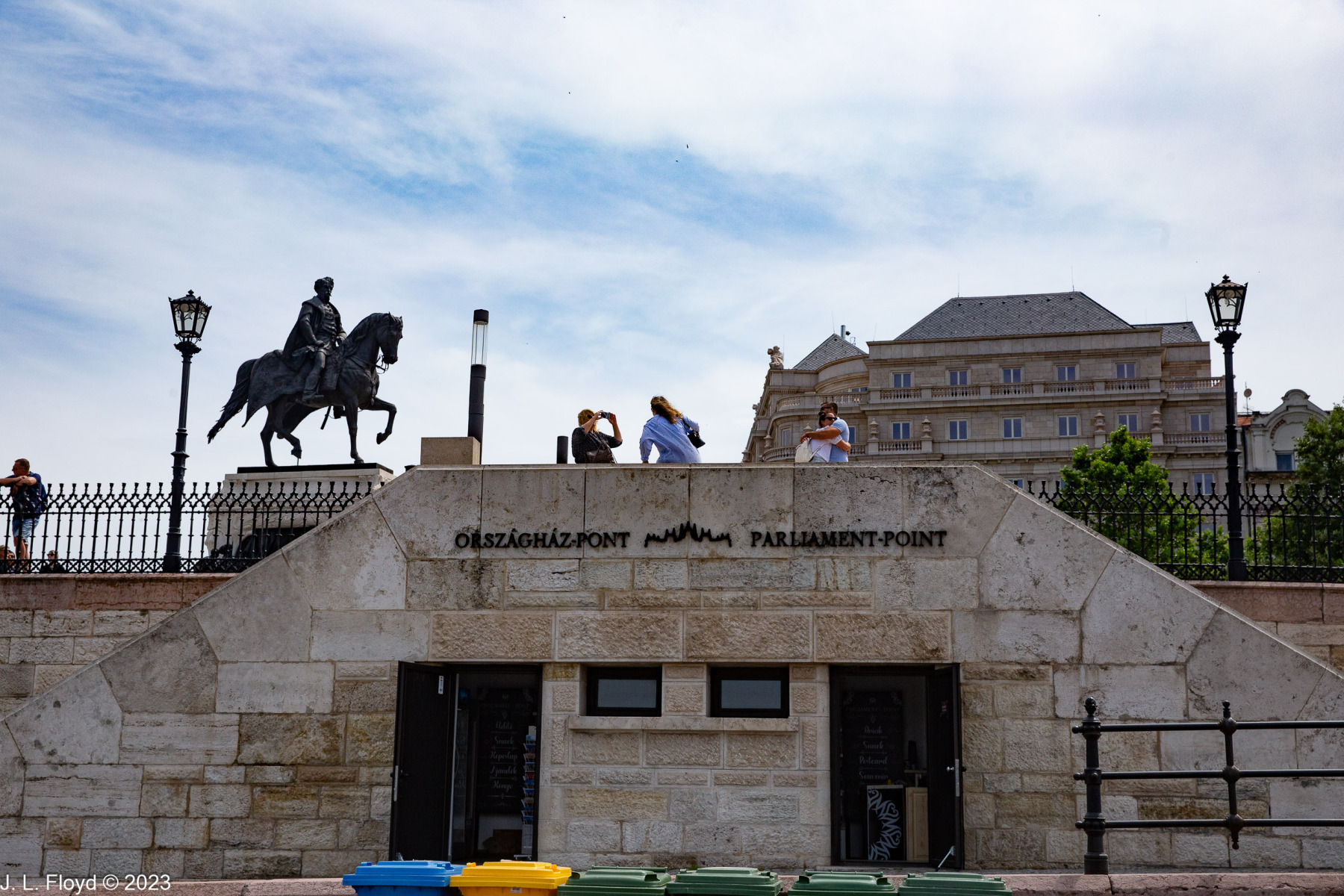
József Antall Boulevard runs along the east bank of the Danube, on the west side of the House of Parliament, and it has sidewalks on both sides of the street. Near the southern corner of Parliament we came to Parliament Point, where the Kossuth Bridge once stood. At the end of World War II, retreating German troops blew up all five bridges across the Danube in an effort to hinder the advance of the Soviet Red Army. This made life inconvenient for the inhabitants of Budapest more than the Soviets, who built a pontoon bridge across the river and continued to pursue the Germans. To remedy the situation, a makeshift bridge was built in January 1946, using metal salvaged from military equipment, cannibalized oil rigs and other expedients. There is disagreement as to who built the bridge. The Soviets claimed that their military engineers built it; the Hungarians dispute this. It any case the bridge was roughhewn and rickety, but for a while it was the only link between Buda and Pest, and it became known as the “Link of Life”. In the following years the prewar bridges across the Danube were rebuilt, and in 1960 the Kossuth bridge, having served its purpose, was demolished; so far it has not been replaced.
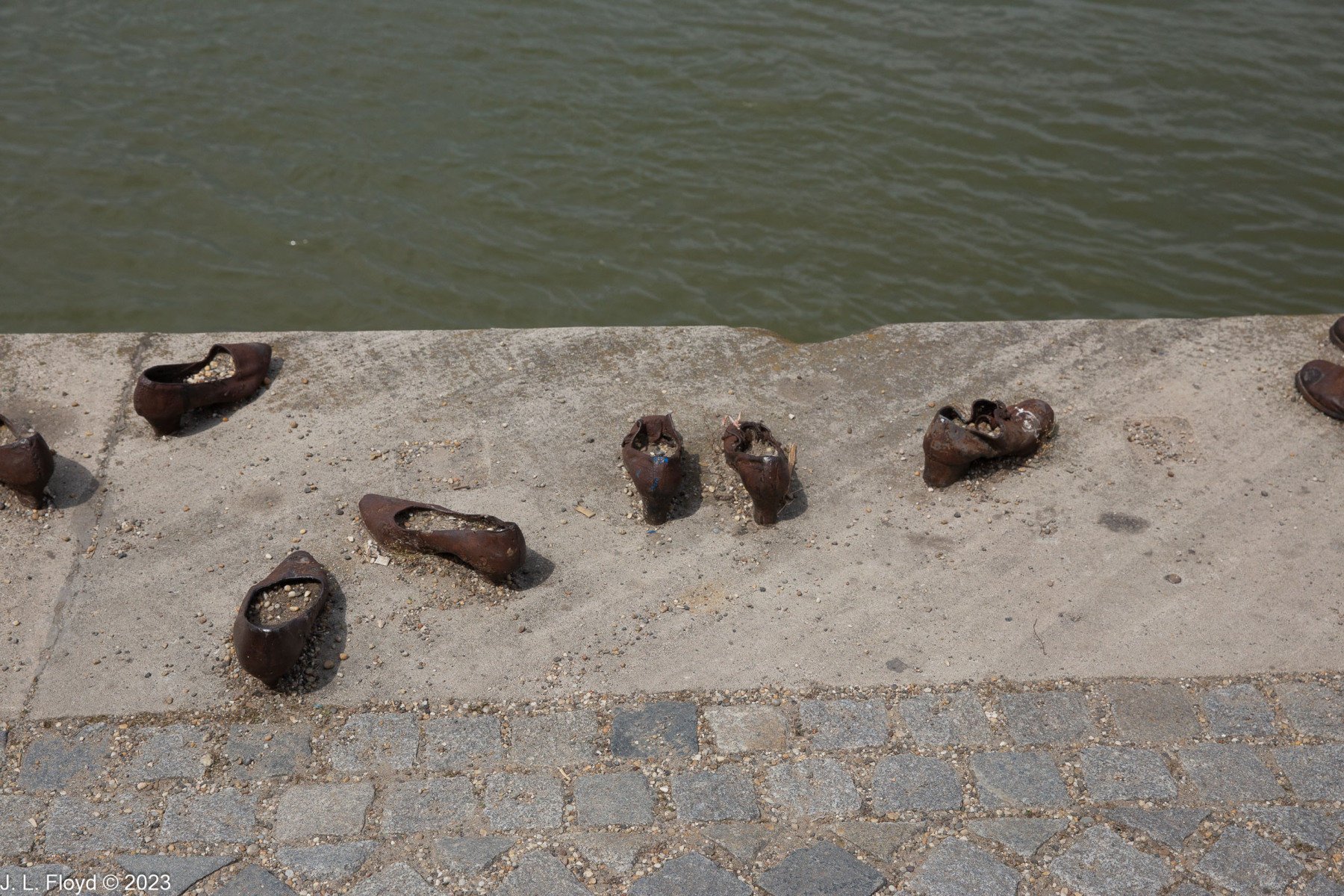
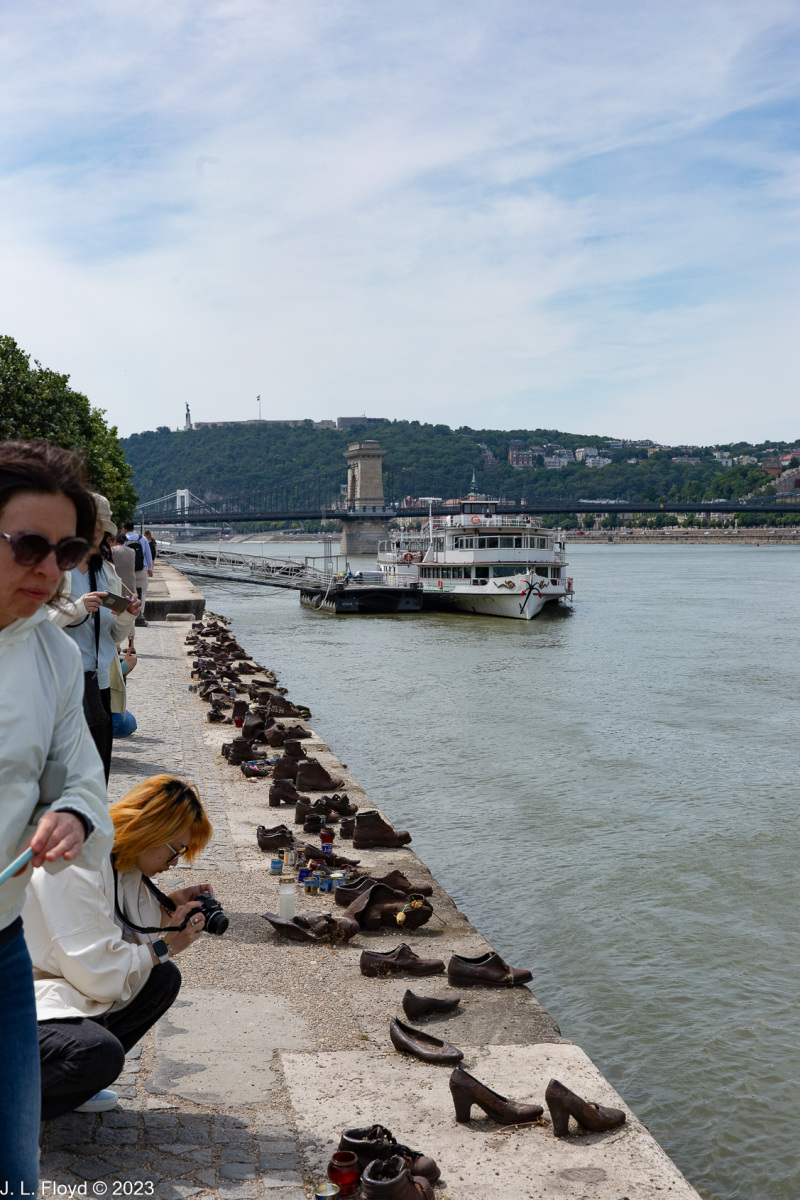
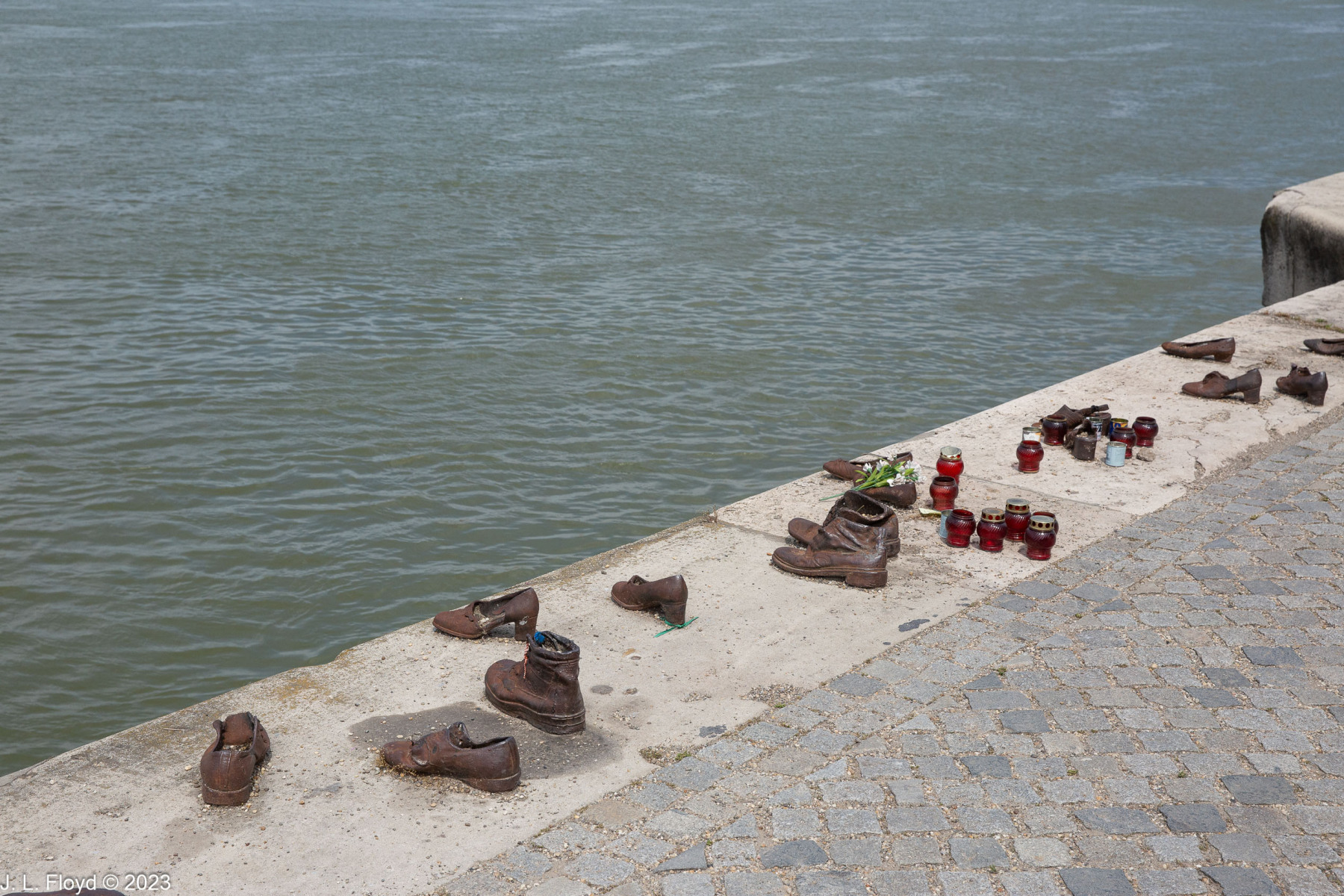
At Parliament Point stairs are provided for climbing back up to Kossuth Square, which at this point is above street level. But before making the climb, we had one more stop to make: the Shoes on the Danube.

By October, 1944, it had become abundantly clear to Miklós Horthy, Regent of Hungary, that the Hungarian alliance with Nazi Germany was no longer a good idea, and he attempted to conclude an armistice with the Soviets, whose armies were crashing into Hungary. To forestall this Adolf Hitler sent his favorite commando, Otto Skorzeny – the man who rescued Mussolini from jail in 1943 – to give Horthy the boot. Skorzeny engineered a coup in which Ferenc Szálasi, head of a fascist, anti-Semitic militia called the Arrow Cross, became head of government. Freed of the restraints which had existed under the Horthy regime, Arrow Cross militiamen began large-scale executions of Jews, as well as other citizens of Hungary they considered undesirable. One of the militia’s preferred methods was to bring their victims to the banks of the Danube and shoot them, so that they would fall into the river and their bodies would be carried away by the current, saving the trouble of burying the corpses. Before shooting them, however, the militiamen would require the victims to remove their shoes, because with the prevailing wartime shortages shoes were valuable and could be sold on the black market at a handsome profit. I have seen different figures as to how many people were executed in this way: anywhere from 3,500 to as many as 20,000. (It should be remembered that the Arrow Cross thugs as well as the Nazis executed the vast majority of their victims in other ways, such as deporting them to Auschwitz.)

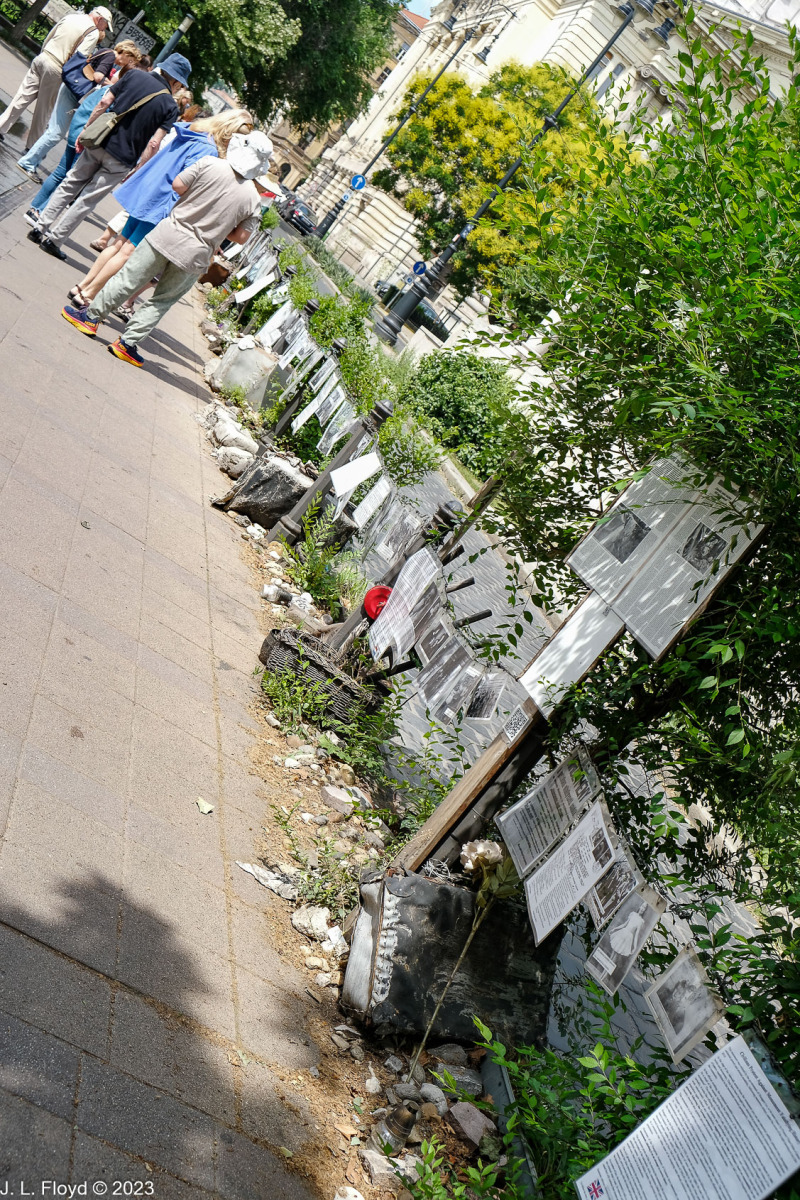
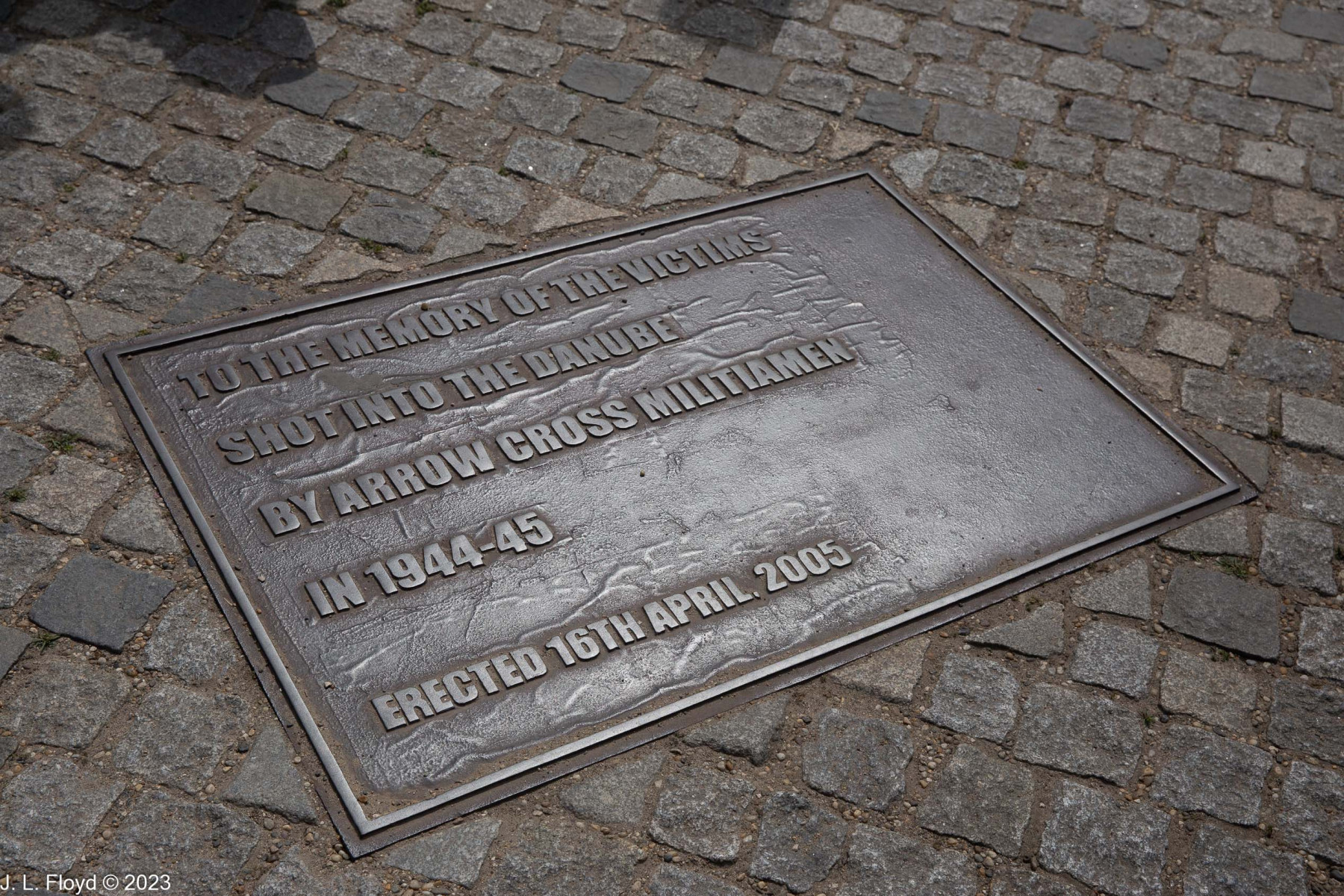
Many years later, a film director named Can Togay conceived the idea of creating a monument to the victims of the riverside massacres. He joined forces with a sculptor named Gyula Pauer, who fashioned 60 pairs of shoes out of iron, replicating types and styles of footwear worn in World War II. The shoes are true to life in size and detail, and a full range of shoes are represented – men’s, women’s and children’s. The shoes were installed on the promenade near Parliament Point on April 16, 2005. Nearby are commemorative plaques in Hungarian, English and Hebrew. The one in English reads “To the memory of the victims shot into the Danube by Arrow Cross militiamen in 1944–45. Erected 16 April 2005.” The Shoes monument is one of the most heavily visited sites in Budapest, attracting hundreds of thousands of visitors per year.

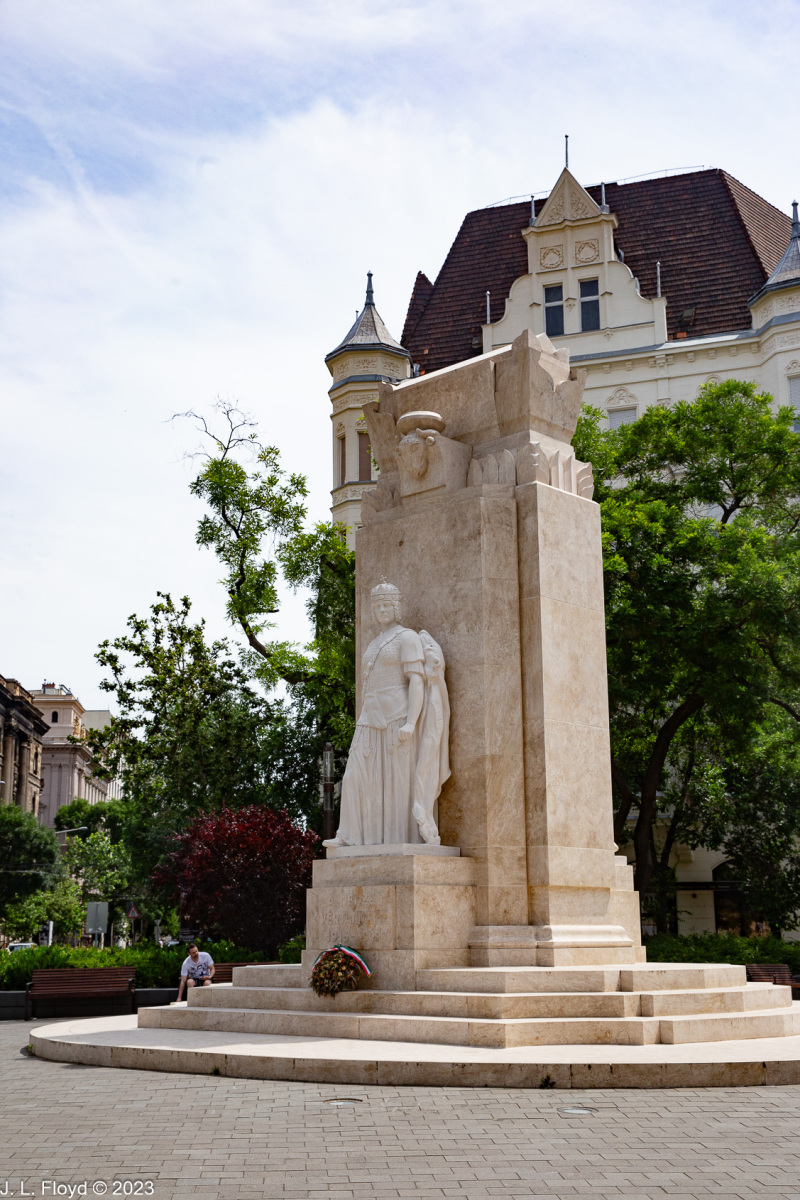
Leaving the Shoes monument, we climbed the steps at Parliament Point to complete our tour of Kossuth Square. On the south side of the square we found several more monuments commemorating important events and personages in Hungarian history.

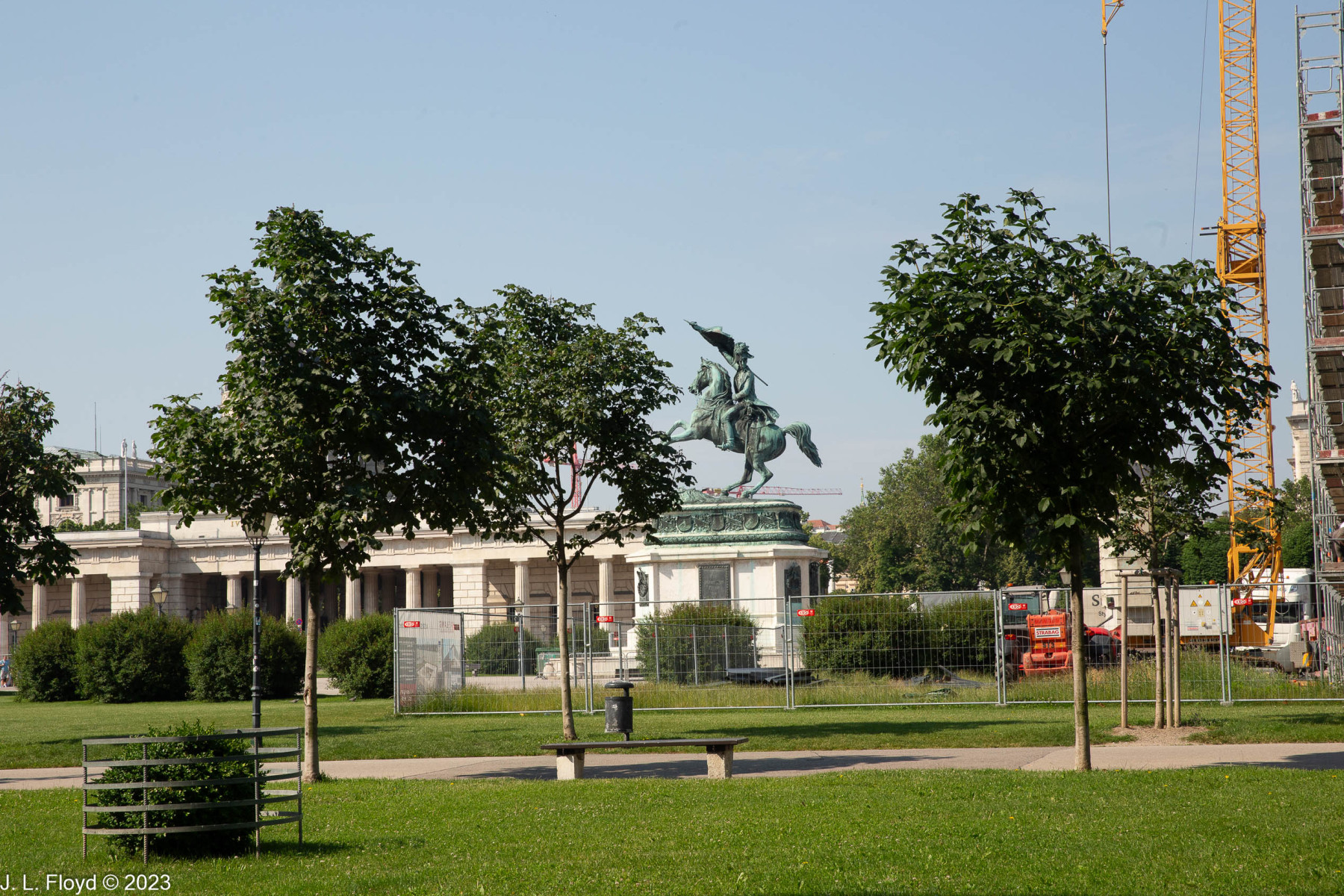
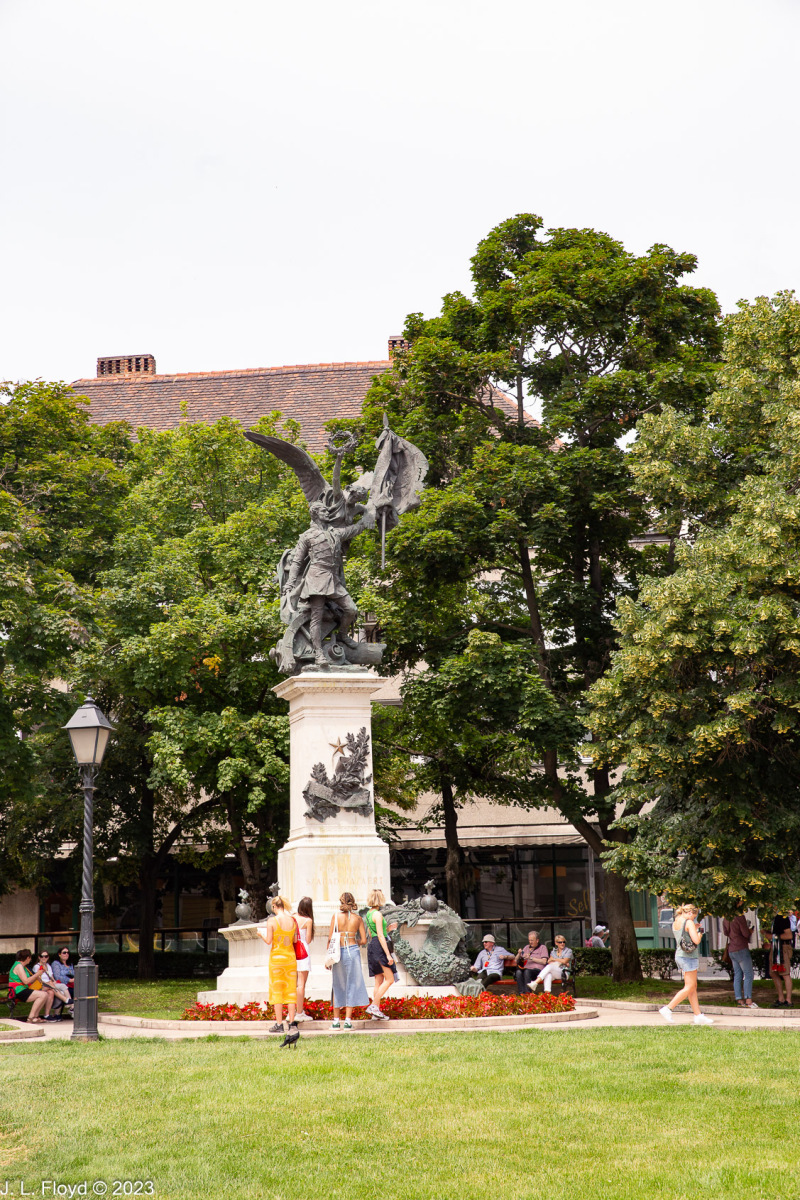
Just south of the House of Parliament there is an equestrian monument of Count Gyula Andrassy. Andrássy was a prominent figure in the revolutionary movement of 1848 and had been sentenced to death by the Hapsburg government, which he avoided by emigrating. But in 1858 he returned to Hungary, somehow managed to reinstate himself in the good graces of the Imperial authorities, and became active again in politics as a reformer. Following the Compromise of 1867, which marked the formation of the Dual Monarchy of Austria-Hungary, he was appointed the first prime minister of Hungary. Later he served as Foreign Minister of the Austro-Hungarian Empire.

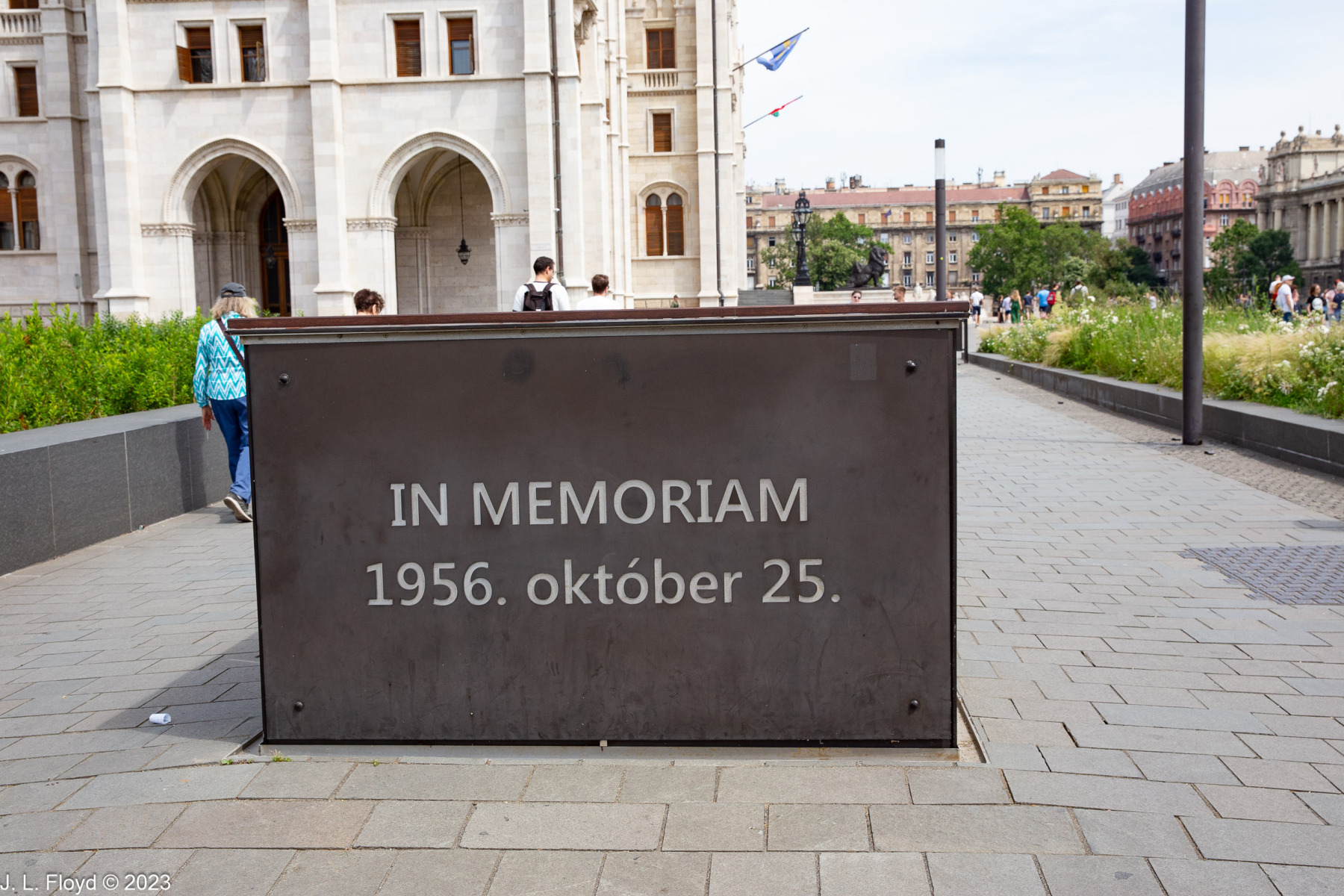
Not far away, in front of the south wing of Parliament, stands a monument of a very different sort. It is a gray stone block with a flat top, completely bare except for the inscription on its face: “IN MEMORIAM 1956. octóber 25.” On that day a crowd of civilian demonstrators gathered on Kossuth Square to protest Soviet domination of Hungary and demand reforms. The area had been occupied the night before by Soviet troops, who opened fire on the demonstrators. The number killed has never been firmly established, but it is estimated at anything from 75 to 1,000. Along with other incidents, the massacre sparked a full-scale popular uprising that, as everyone knows, evoked brutal repression by the Soviets.

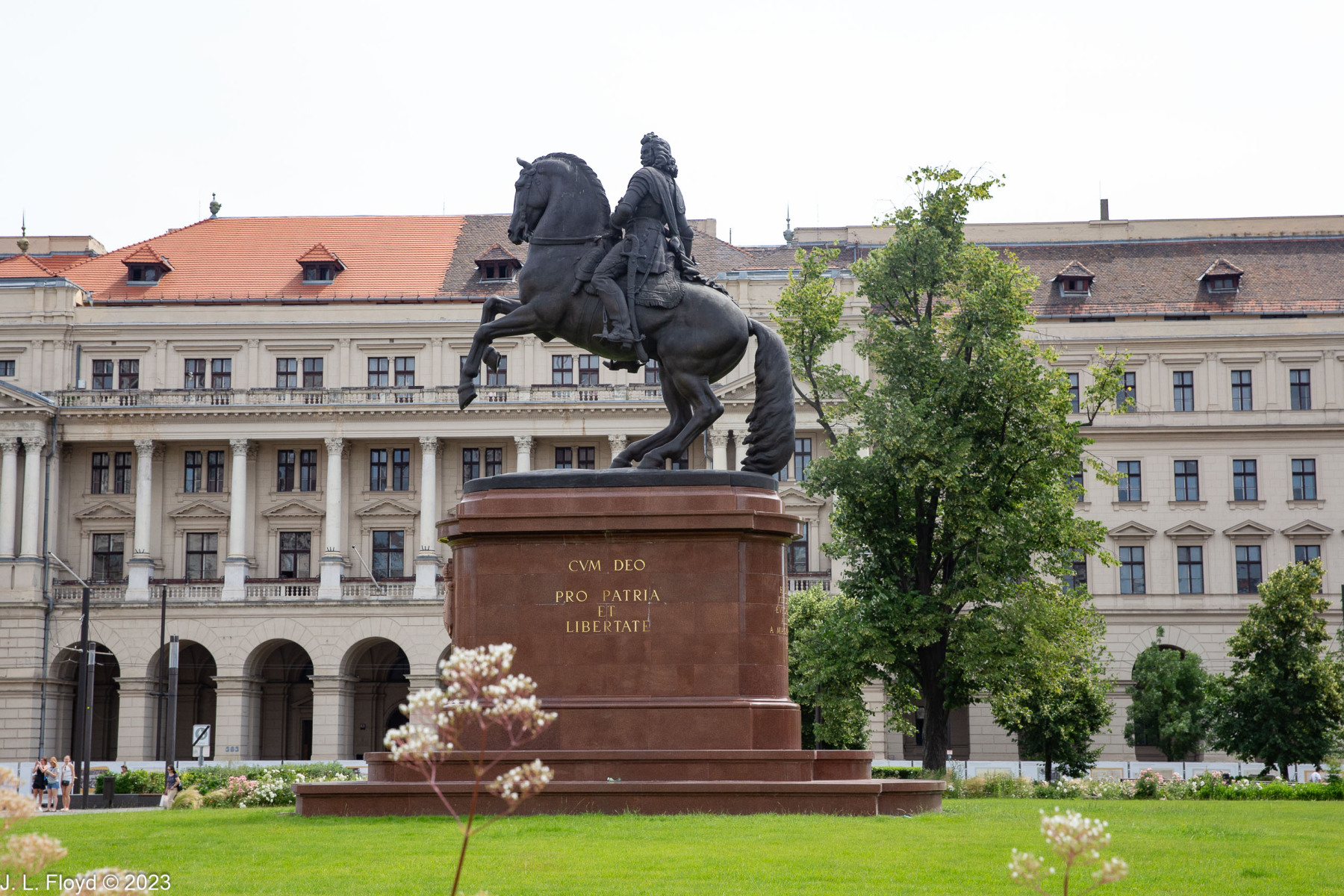
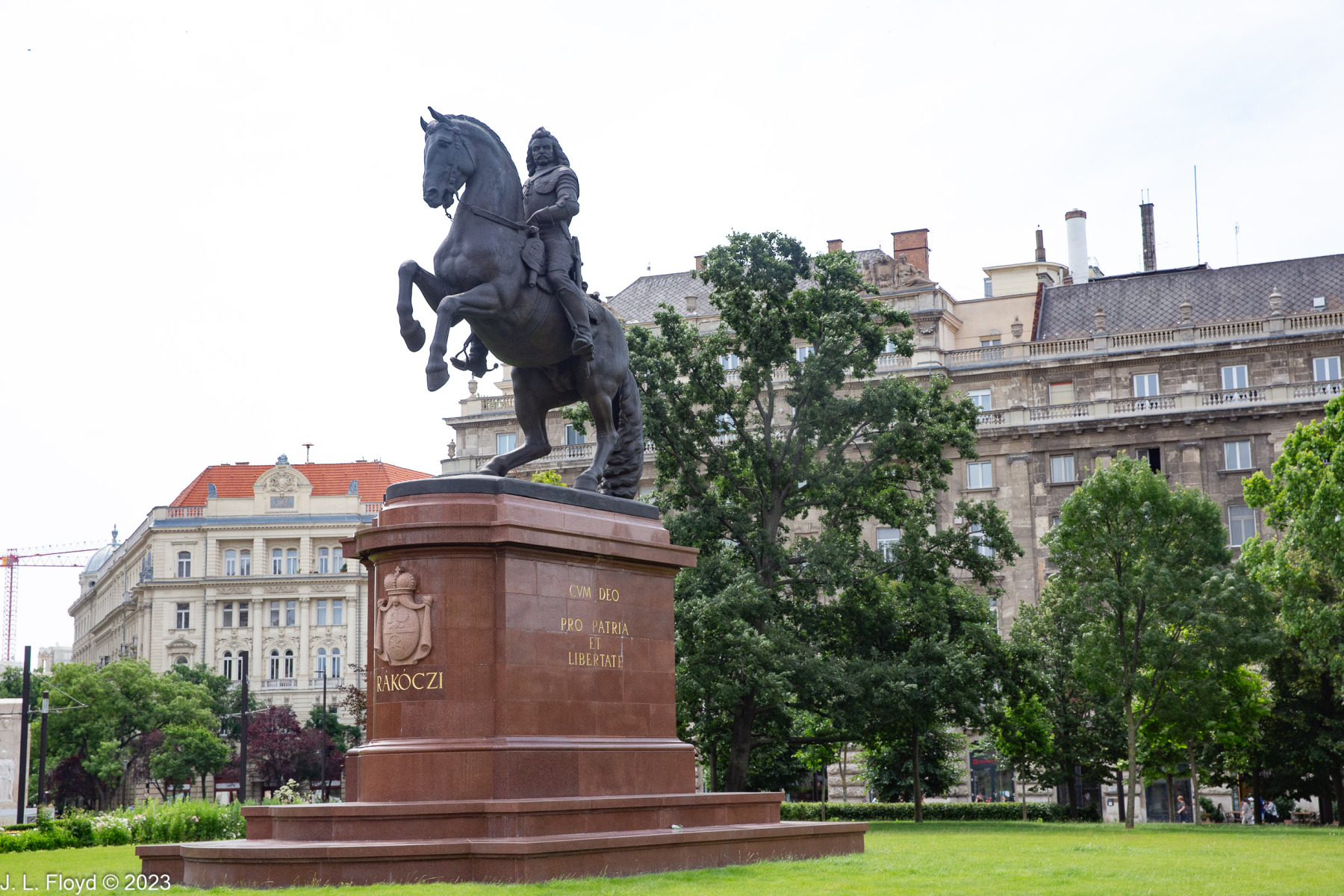
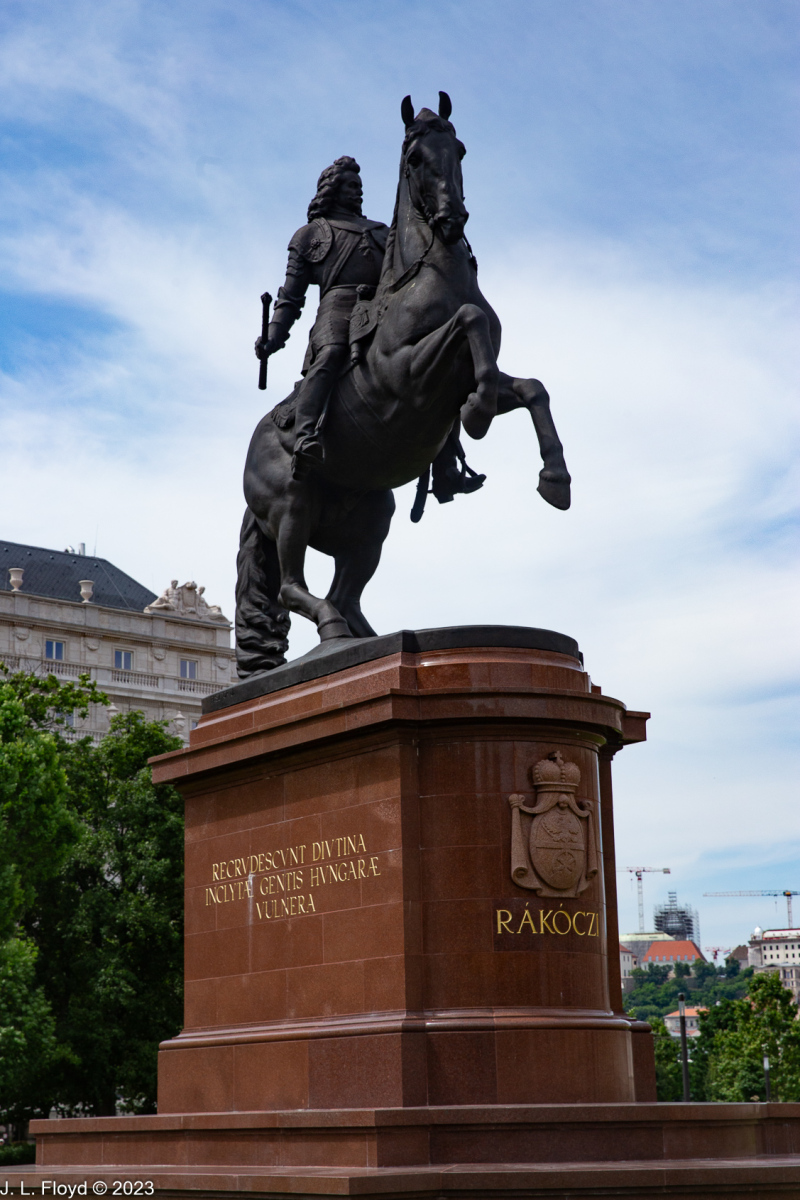
In a large green space in the southeast corner of Kossuth Square I spotted another equestrian statue with the name Rákóczi on the plinth. I had heard the name before but knew little about the person to whom it belonged, and I wanted to get some good shots of the monument so I could look him up and find out more. It turns out that Ferenc Rákóczi was a Hungarian nobleman, indeed a scion of the the richest family in the kingdom, who led an unsuccessful revolt against the Habsburgs in the early 18th century.

After retaking Hungary from the Turks at the end of the 17th century, the Austrians treated it as a conquered province with which they could do as they pleased. What pleased them most was to confiscate the estates of Hungarian nobles, especially Protestants, of whom there was a sizeable number in Hungary and whose loyalty was suspect, and award the land to outsiders, especially Catholic Austrian Germans. In 1703, with the Habsburgs fully engaged in the great War of the Spanish Succession, a desperate struggle with King Louis XIV of France, the disgruntled Hungarians thought they had their chance and rose in revolt. Rákóczi assumed leadership of the rebellion and for a time it appeared that the anti-Hapsburg forces would succeed, since they held most of Hungary east of the Danube; but eventually the French war wound down, and the Habsburgs were free to turn their full force against the rebels. Rákóczi fled to Poland and attempted to obtain help there, but in his absence the commander of the rebel army signed a peace treaty with the Habsburgs, who agreed to rule according to the constitution and laws of Hungary and to grant an amnesty to the rebels in return for their submission to the Crown. Rákóczi himself did not accept this settlement, and went into exile, ultimately defecting to the Ottoman Turks; but today he is regarded as a national hero in Hungary.
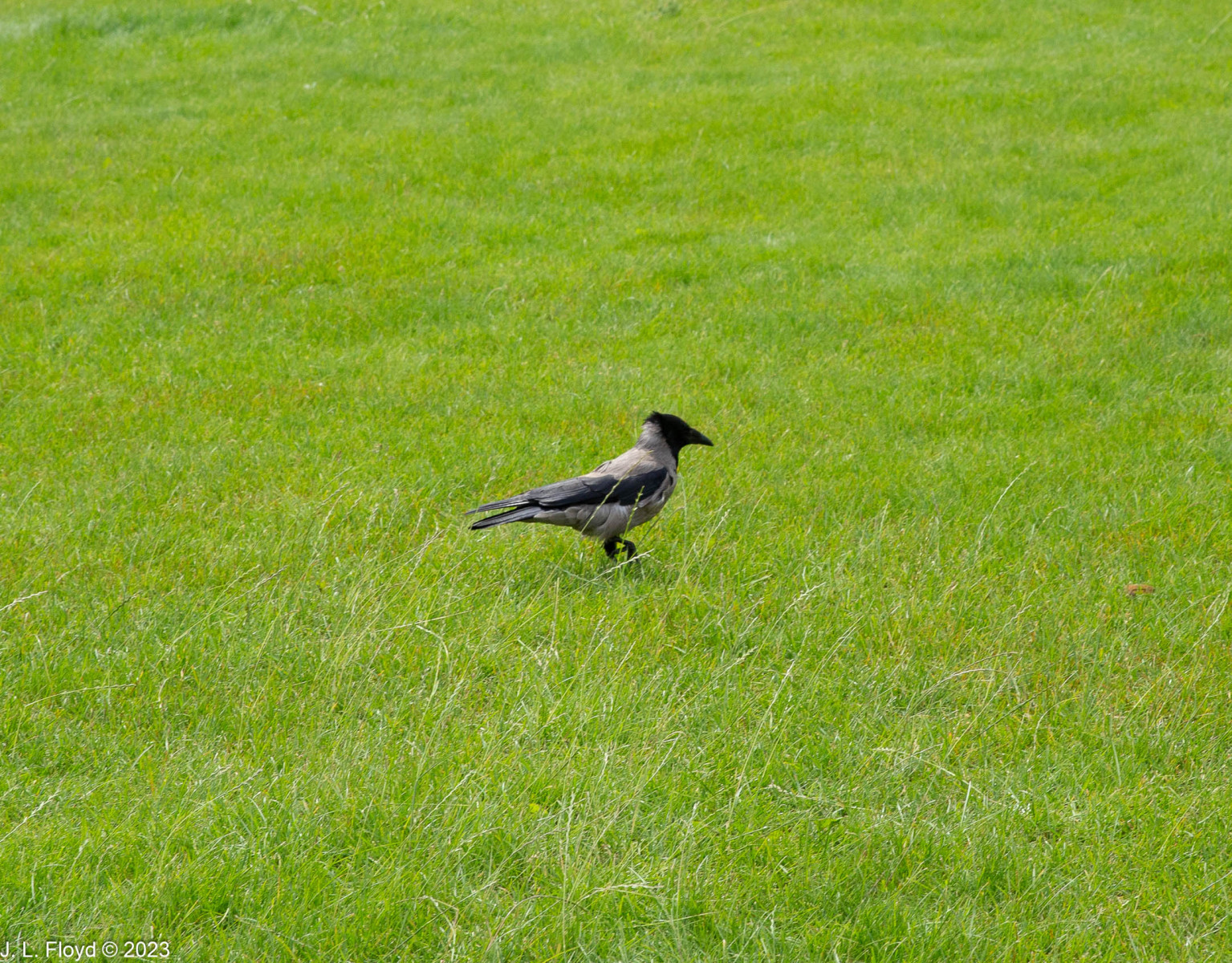
If it seems that I’ve included an excessive number of photos of the Rákóczi Monument, it’s because of all the trouble taking those photos caused me, which was almost as much as Rákóczi had caused for the Habsburgs. I was so anxious to obtain a good photo of his monument that I failed to keep track of the tour group. When I finished taking my pictures, I looked around and saw nobody I knew. I could hear Erika, the tour guide, on my Vox-box but I couldn’t see her, even with the flag she held to ensure she was visible from a distance, and I had no idea which direction she had taken. Soon I couldn’t hear her either. I looked for Sandie, who had been at the tail end of the group in the company of Nico, the Gate1 director who was making sure she didn’t get left behind, but they had vanished too.

For some reason I had the notion that the guide intended to completely circle the Parliament building and return to the Visitors’ Center before heading back to the bus. So I headed back to the Visitors’ Center, which turned out to be exactly the wrong direction. I soon realized that I was lost in Budapest, hot, tired and hungry, with no idea how to reconnect with the tour guide, and no idea how to get back to the Monarch Queen.

For the exciting conclusion to this cliffhanger, you’ll have to read the next post.

Categories
Danube River Cruise, June 2023

Budapest, June 16, 2023: Castle Hill

After leaving Buda Palace, we headed north to see the rest of Castle Hill: Holy Trinity Square, St. Matthew’s Church and Fishermen’s Bastion.

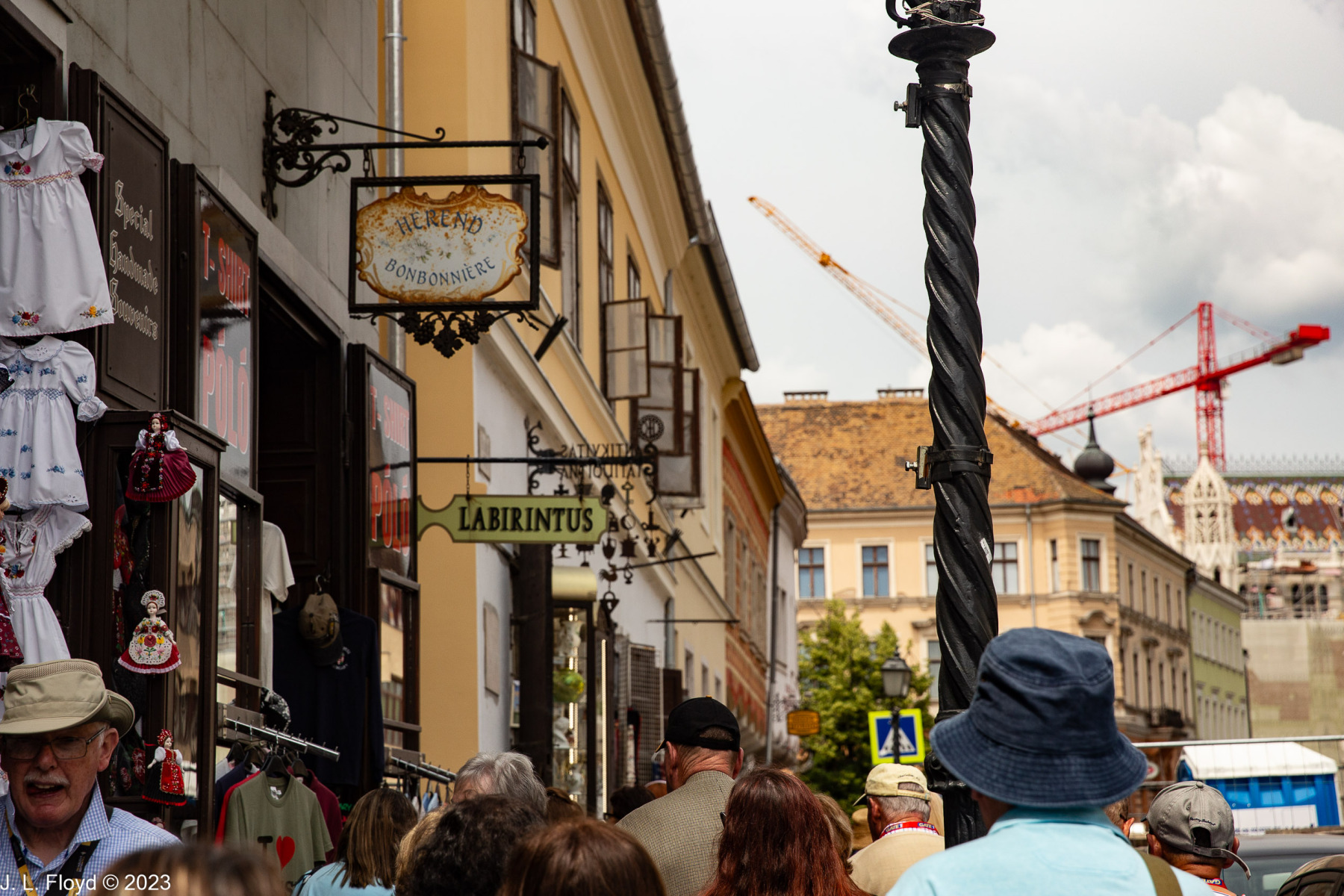
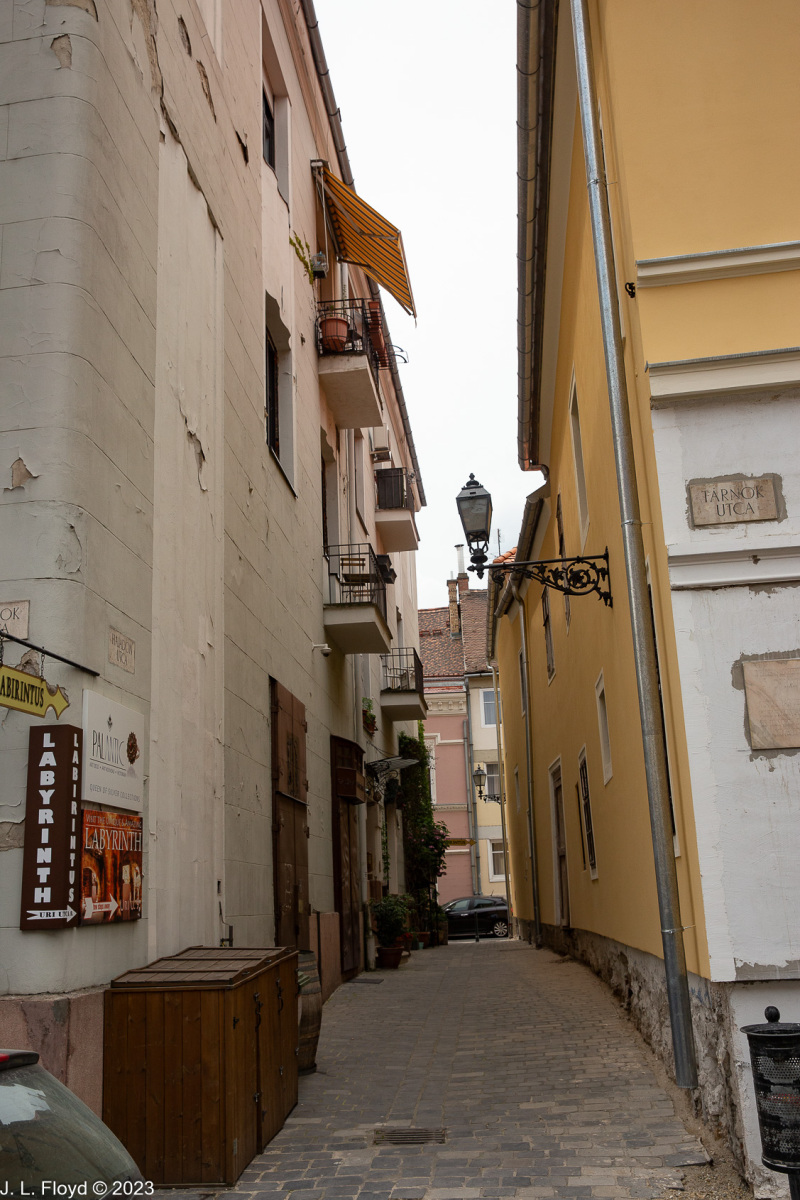
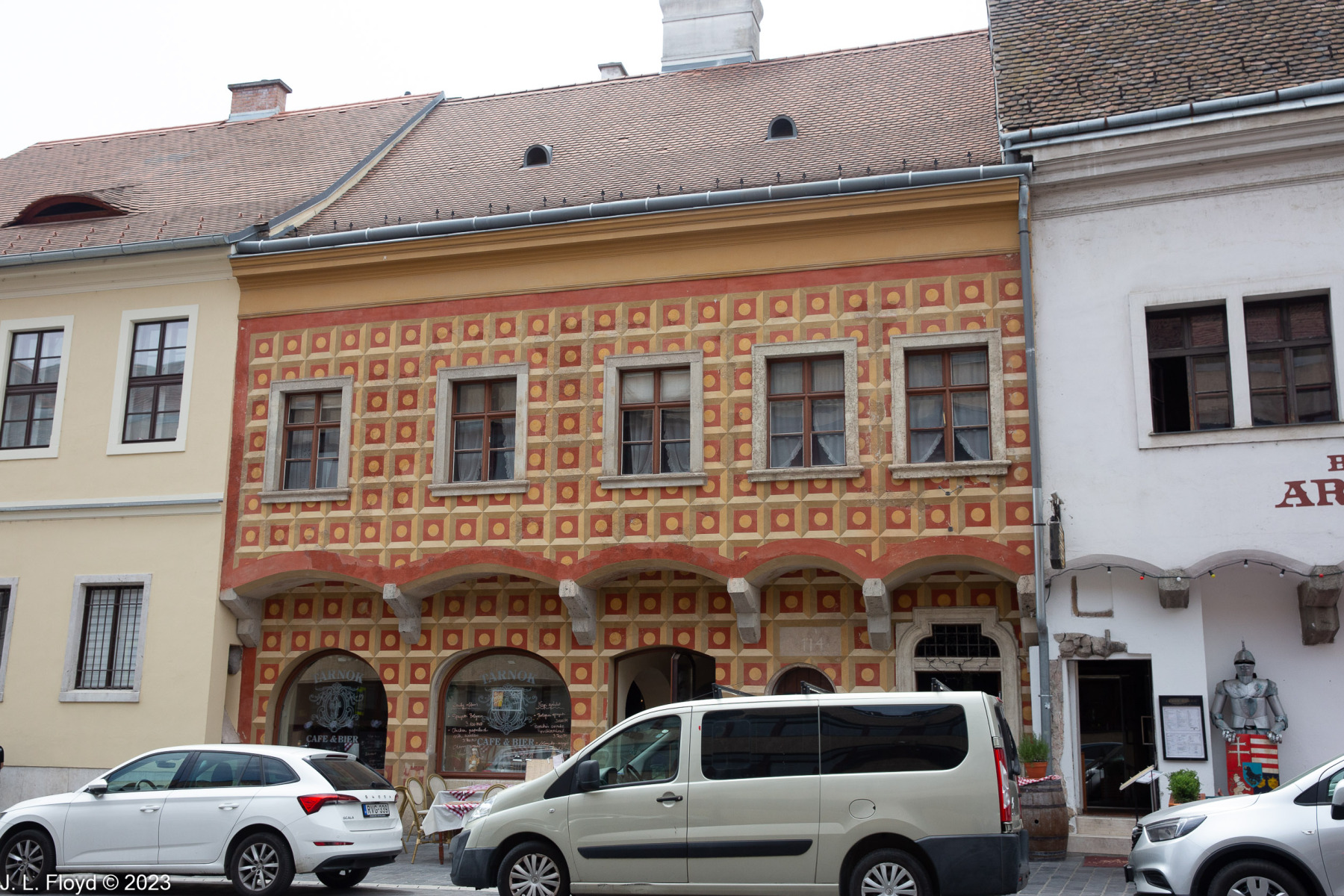
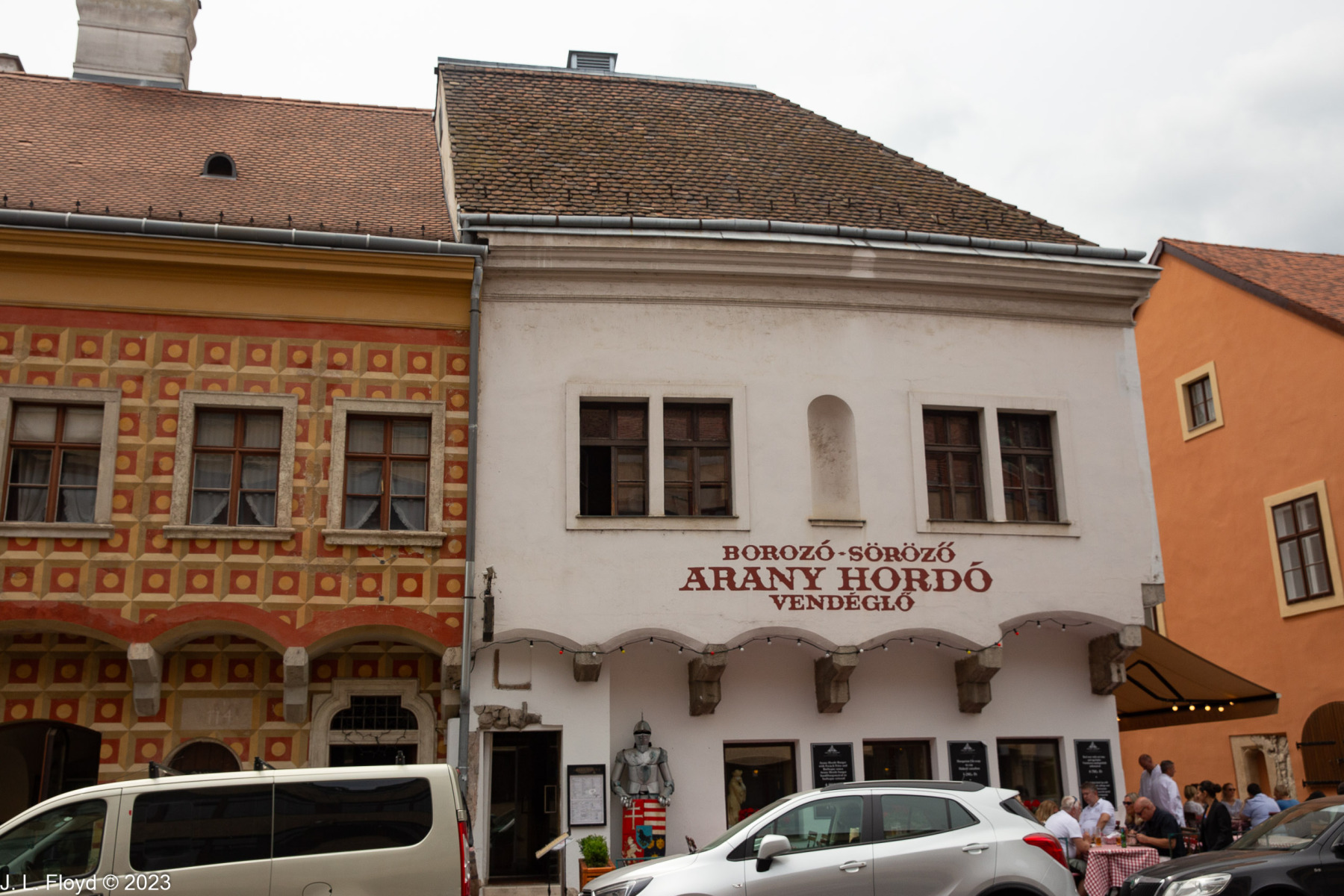
To get to Holy Trinity Square, we traipsed back past the Old Hussar and Disz Square, then down picturesque Tarnok Street, where we passed a number of majestic monuments, seductive shops and enticing restaurants. An inconspicuous sign next to a souvenir shop indicated the way to the Labyrinth (Labirintus). This is a network of caves and tunnels under Castle Hill which has been variously used over the centuries as a refuge, dungeon, prison and bomb shelter. Supposedly Vlad the Impaler was imprisoned there for 14 years. These days it is a museum, said to be quite interesting. We didn’t have time to venture into it, but I’ll make sure to do so next time I’m in Budapest.

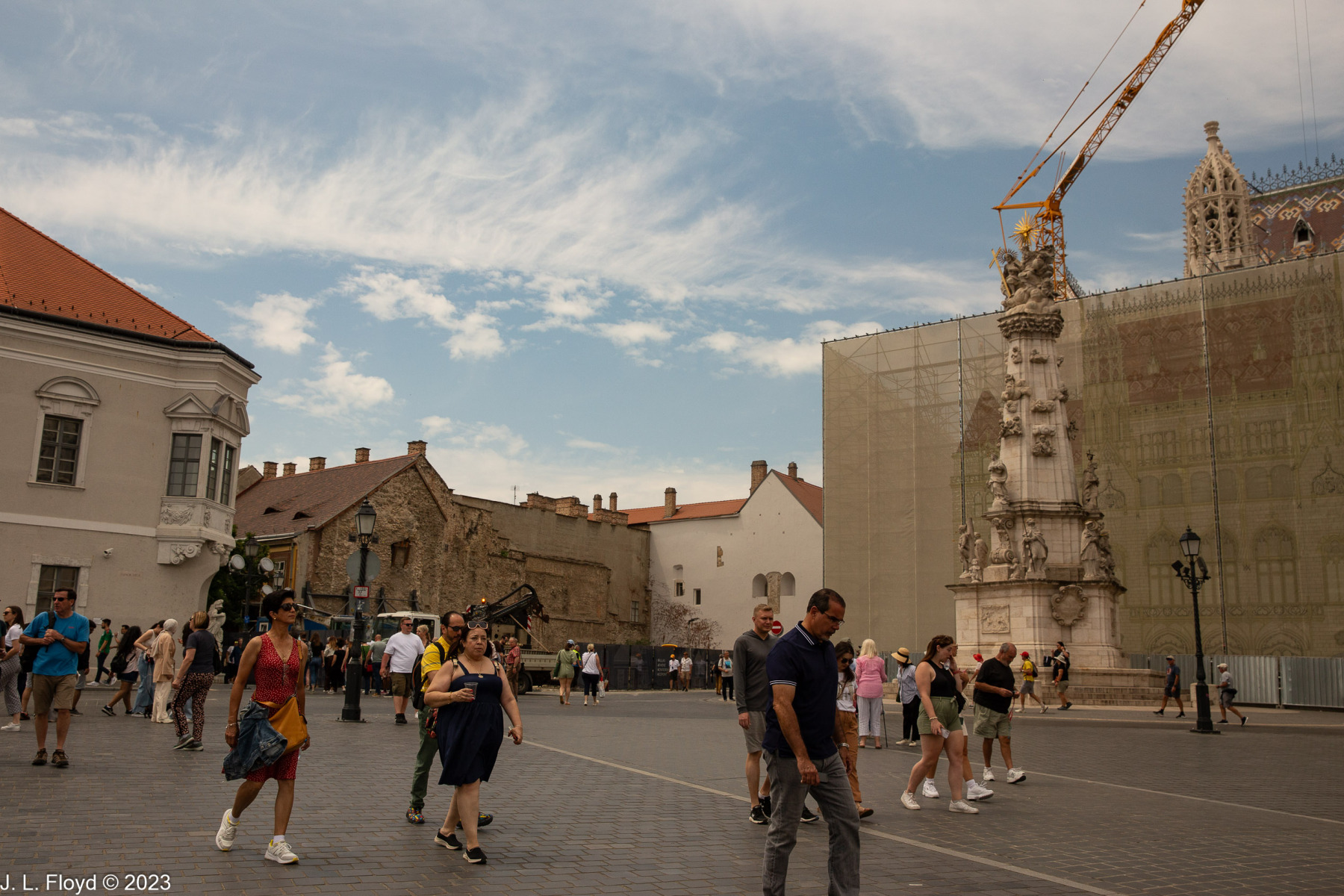
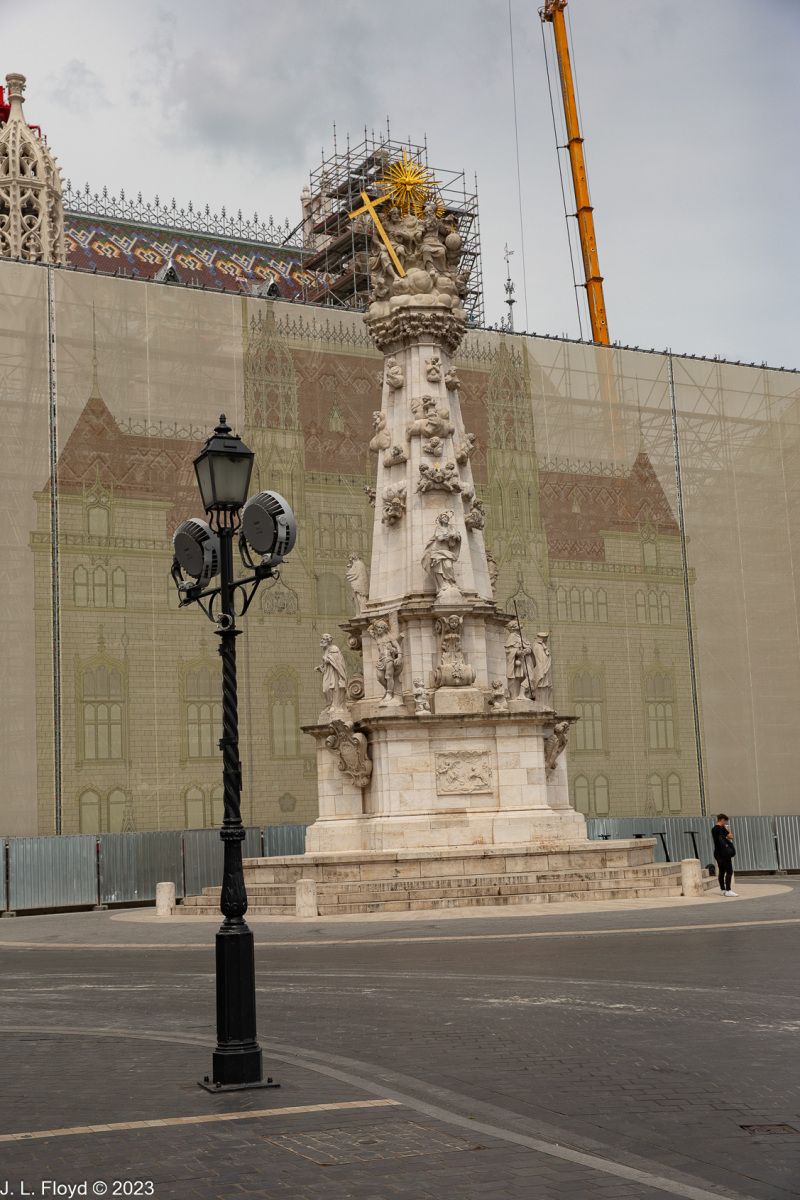
Arriving at Holy Trinity Square, we first encountered the Holy Trinity Monument (Szentháromság-szobor), a 15-meter (50 feet) tall column with sculptures representing the Christian Trinity on top. Lower down on the column are figures of saints, angels, cherubs and the Virgin Mary. On the base are three bas-reliefs; the central one depicts King David praying for the end of the plague which God had inflicted on the people of Israel in punishment for David’s adulterous affair with Bathsheba. That scene is the key to understanding the monument. In 1691 an outbreak of the Black Plague visited Buda and Pest, and the City Council decided to erect a Holy Trinity Column in hopes of warding off further outbreaks. The column was finished in 1706, but it didn’t work; in 1709 the Plague struck again, and the City Council decided that a bigger column was needed. This time it worked; after the unveiling of the second column, in 1713, no further plague outbreaks are recorded. Indeed, the column appears to have survived the devastation of World War II intact, though everything around it on the square lay in ruins.

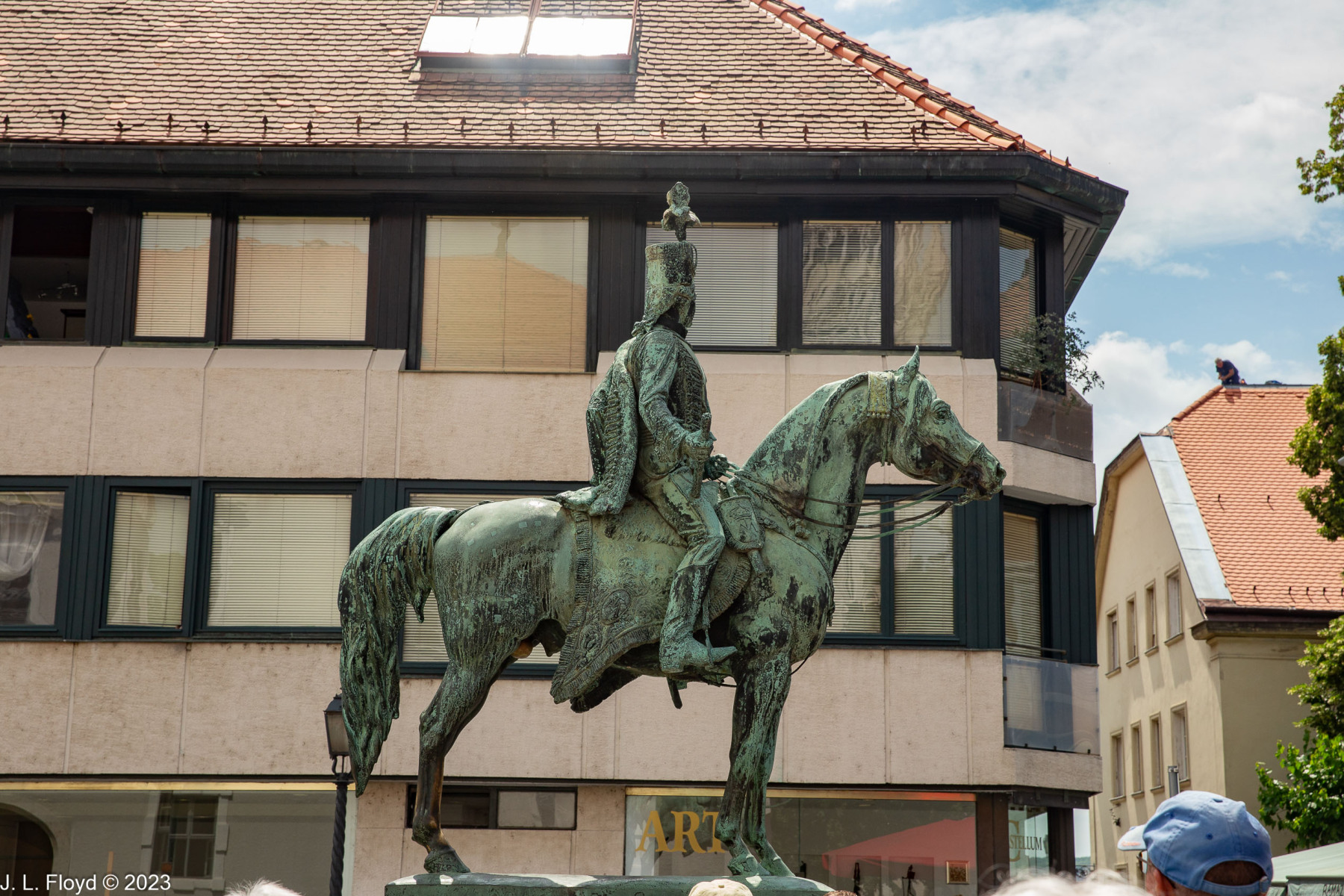
Not actually on Holy Trinity Square, but I’ll mention here since it is only a block away down Holy Trinity Street, is an equestrian statue of a hussar named András Hadik, whom I had never heard of before. It turns out that he became famous for an incident that occurred during the Seven Years’ War (1756-1763). Frederick II, King of Prussia, had incurred the implacable hatred of Maria Theresa, Empress of Austria, by rudely seizing her rich province of Silesia, and she formed an alliance with France and Russia to take him down. In 1756 he invaded Saxony in an attempt to head off the Russians, who were getting ready to send troops to aid Maria Theresa. This was where András Hadik stepped in, or rather rode in. Evading Frederick’s army – Frederick II wasn’t much of a cavalry guy, his forte was infantry – Hadik wheeled his 5,000 hussars around in back of the Prussians and seized Berlin. This didn’t stop the war, but Frederick had to pay 300,000 thalers to ransom his capital. Hadik distributed the sum among his men, and Maria Theresa made him a Field Marshal.

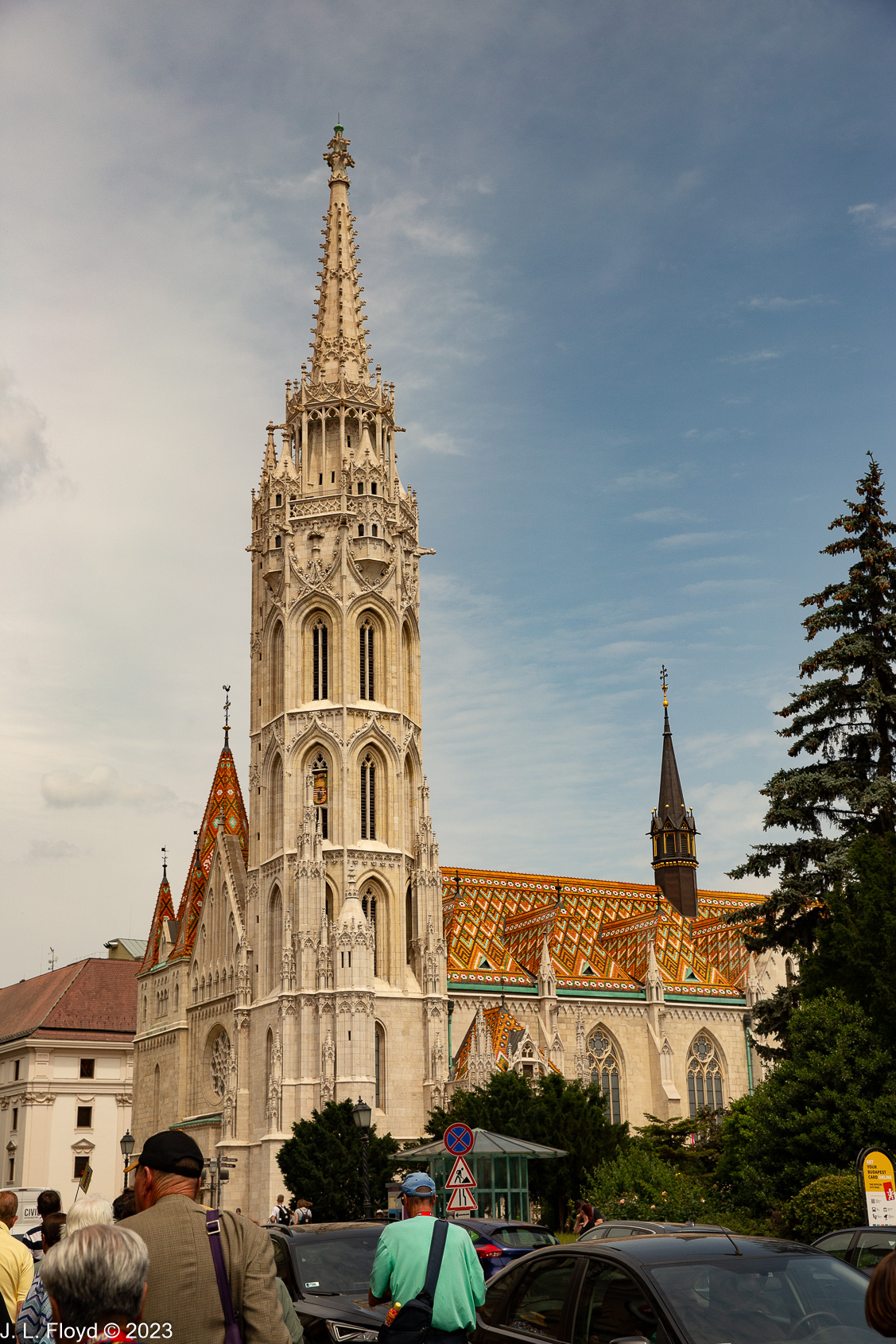
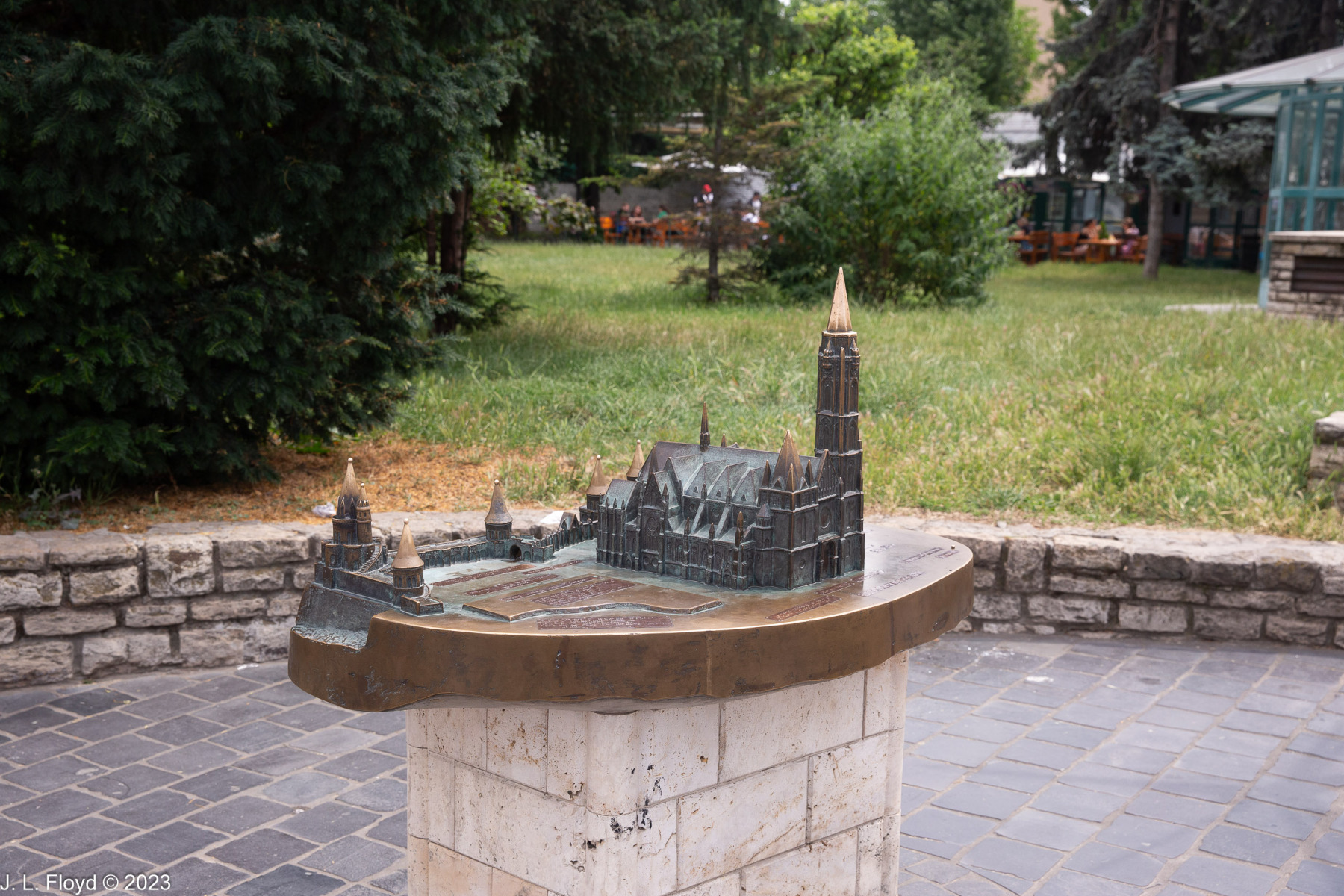
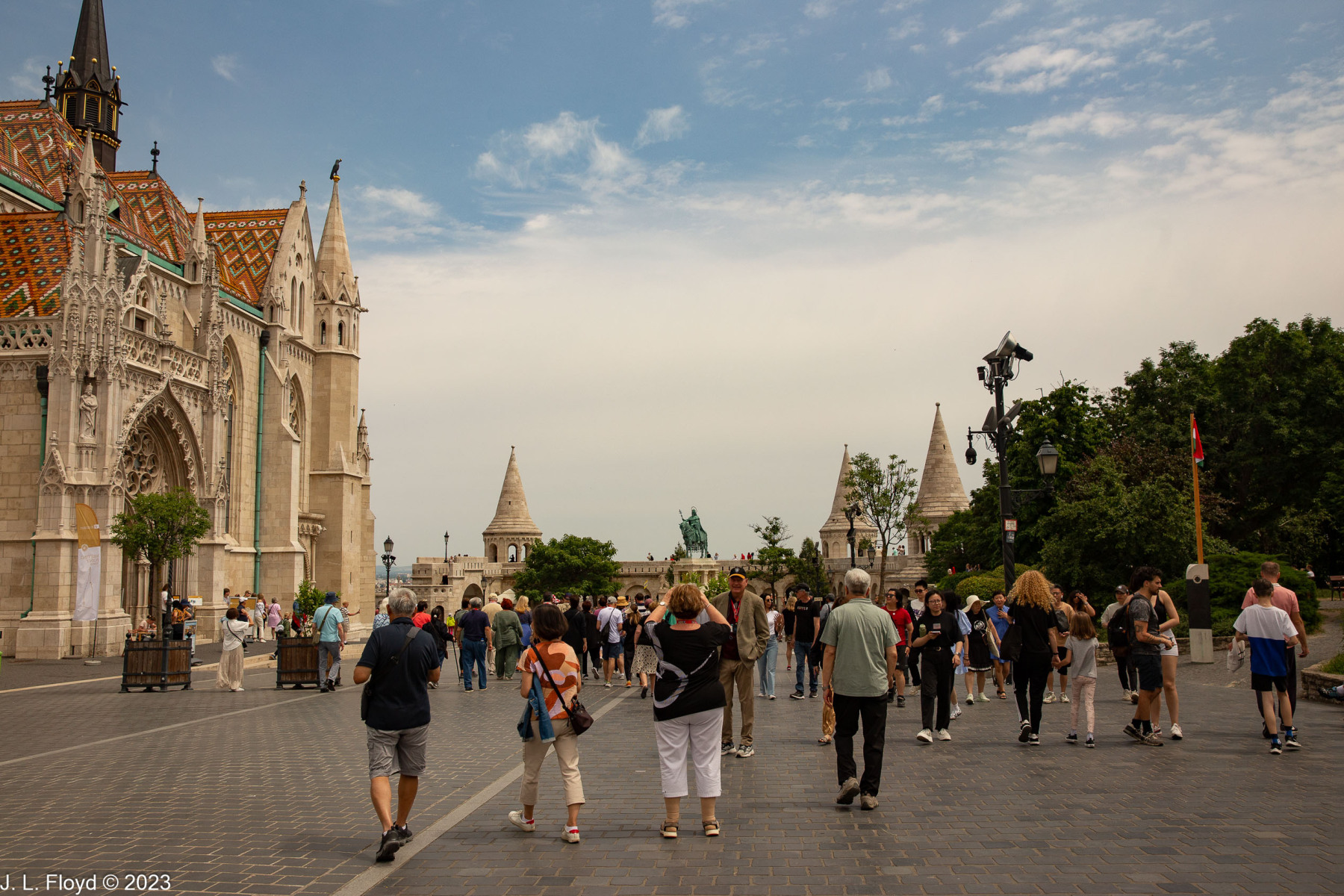
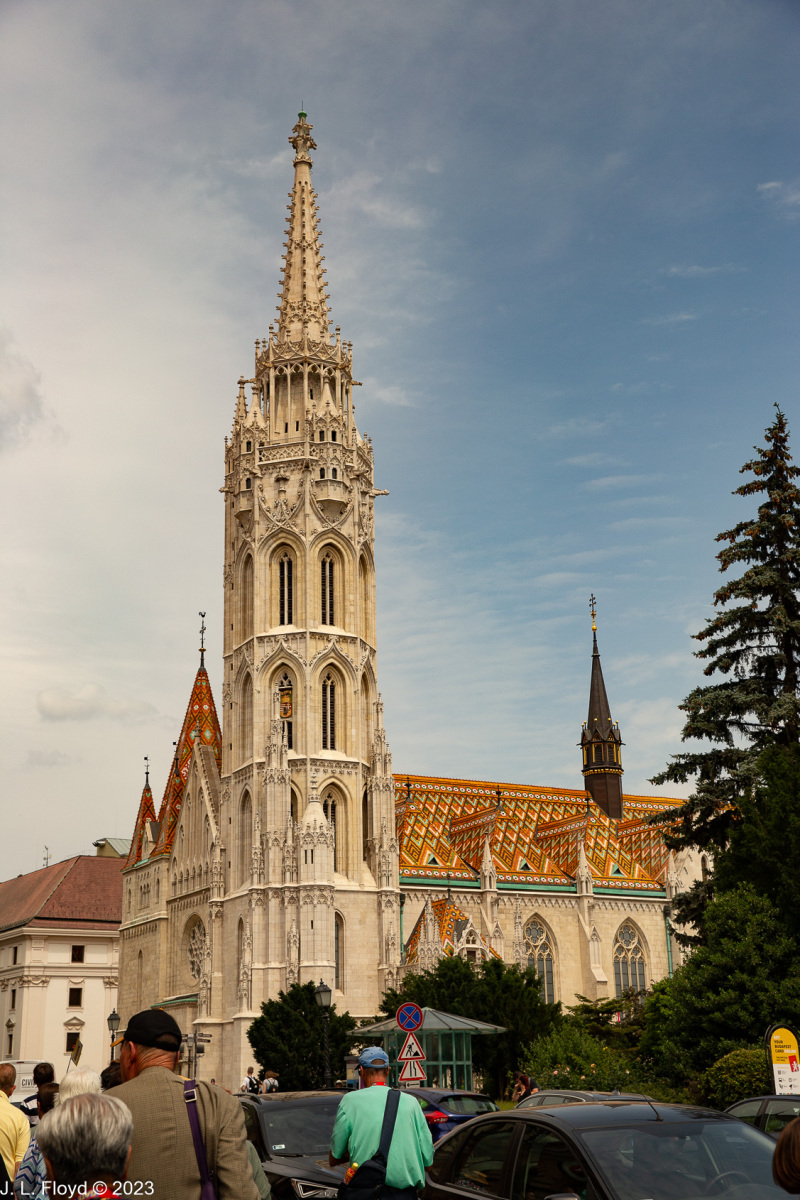
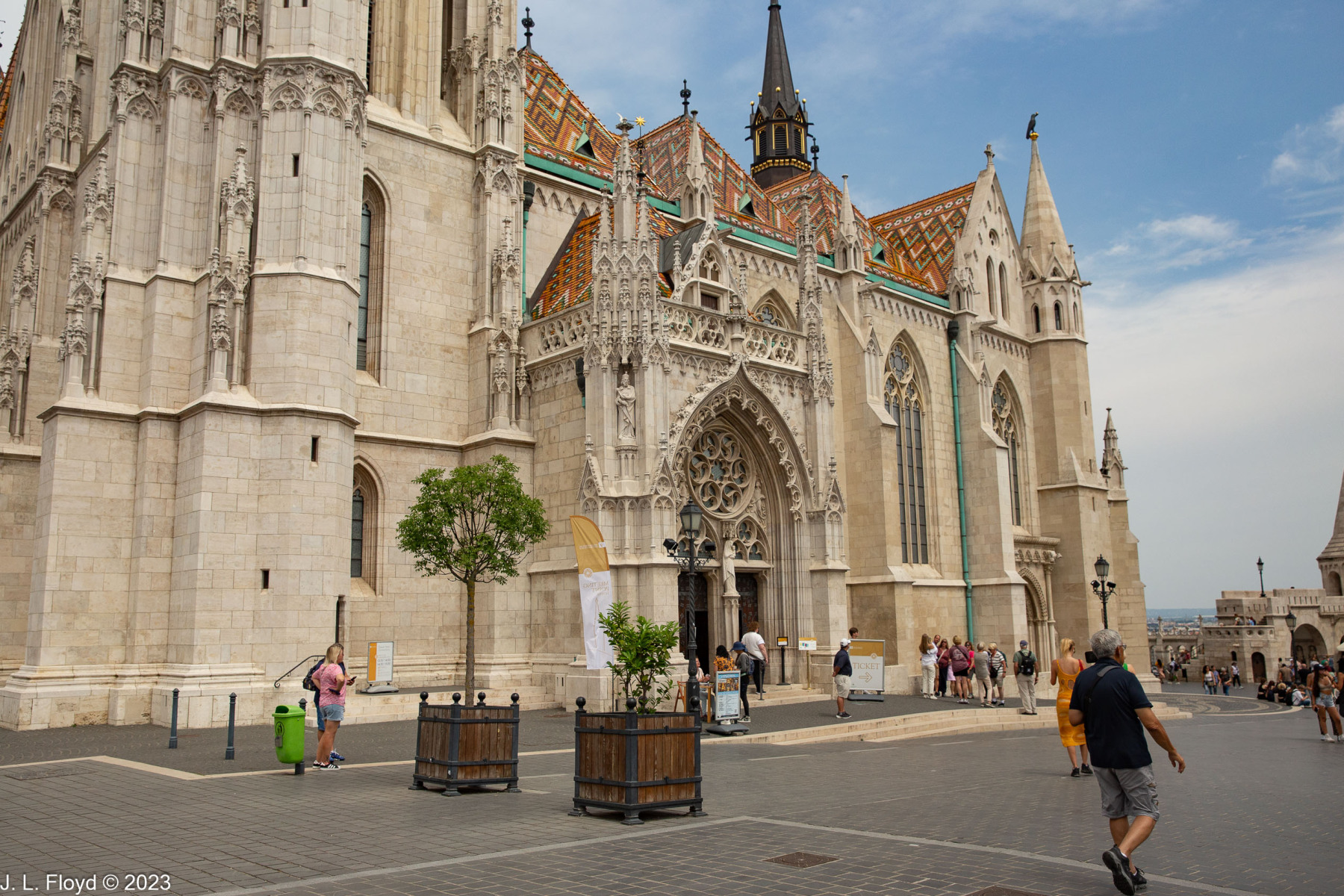
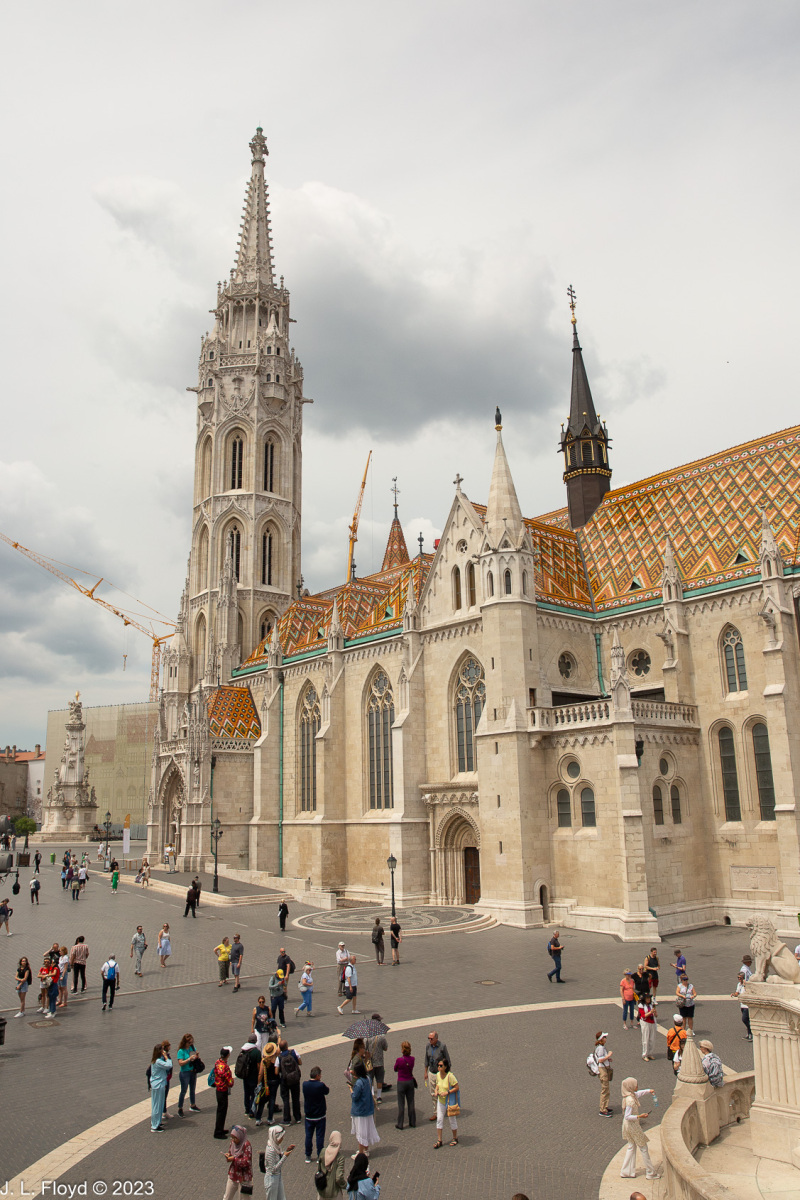
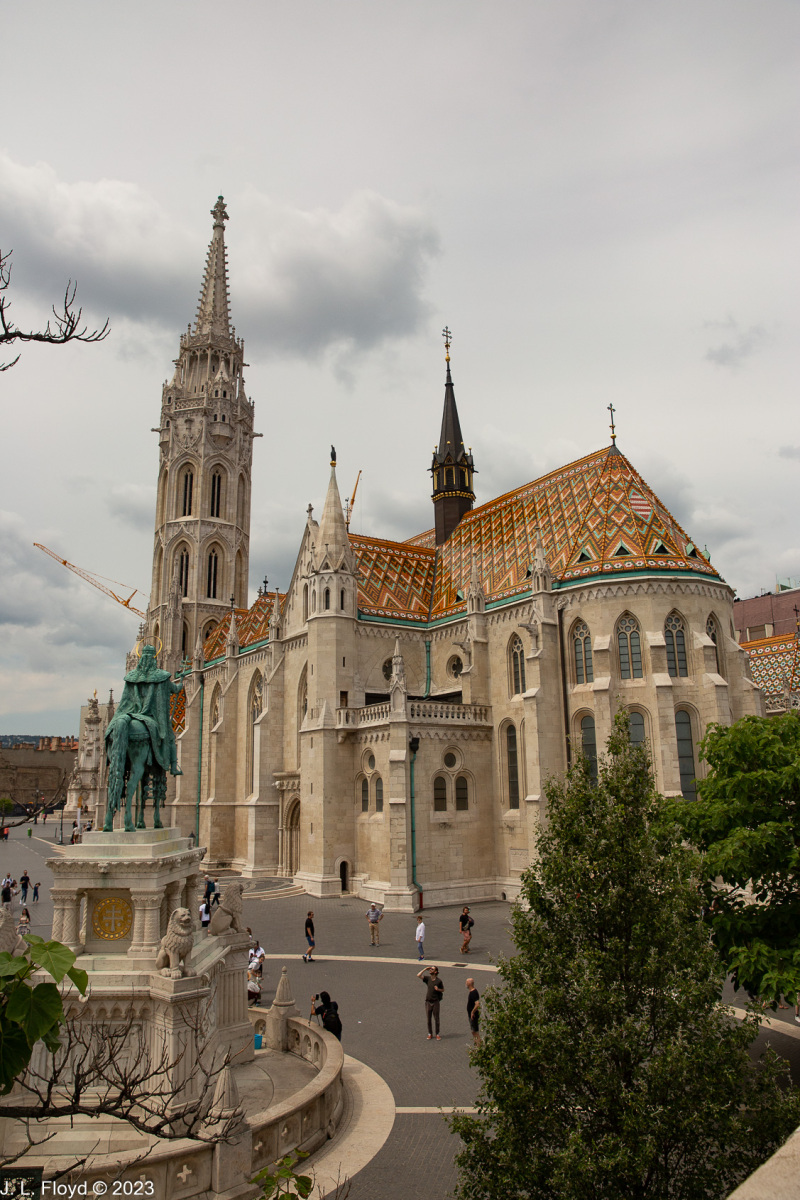
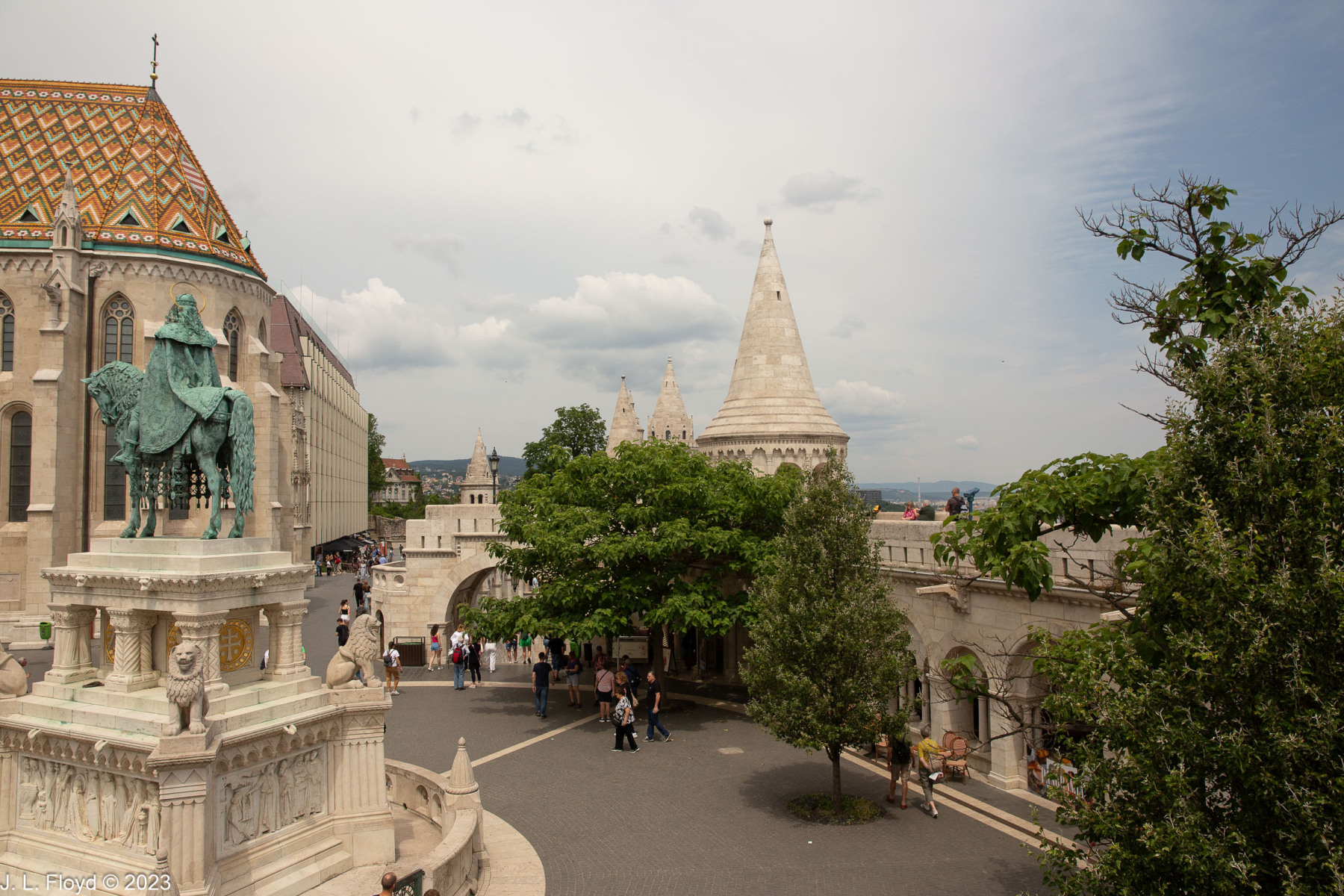
The premier attractions of Trinity Square are Fishermen’s Bastion and the Matthias Church (Mátyás-templom in Hungarian). The church spire is visible from afar and there is no mistaking it. It is not Saint Matthias’s church because the man whose name it bears, King Matthias, unlike some other Hungarian kings, didn’t become a saint. Anyway, the official name is Church of the Assumption of the Buda Castle; Mátyás-templom is the popular name. It is not the largest church in Budapest, but it is the most historic. In one incarnation or another, it has been the scene of numerous major events, including several coronations of Hungarian kings and both marriages of King Matthias.

And indeed the church has been through several major incarnations as well as a number of minor renovations. The first church was built on the site around 1015 CE, but it was destroyed by the Mongols (1241). It was replaced by a Gothic version, begun in 1255; construction and remodeling continued over the following two centuries, with the most memorable addition, the bell tower, erected in 1470, during the reign of King Matthias Corvinus – hence its common name.

When the Ottoman Turks occupied Buda in 1541, they turned the Matthias Church into a mosque, discarded the Christian accoutrements, and plastered over the Christian paintings on the walls.

In 1686 the Christian Holy League came to take it all back. Struck by cannonballs, one wall of the Matthias Mosque collapsed, revealing a statue of the Virgin Mary hidden until then behind it, causing costernation among the Muslim defenders, who thereupon surrendered. This became famous as the “Marian Miracle.”

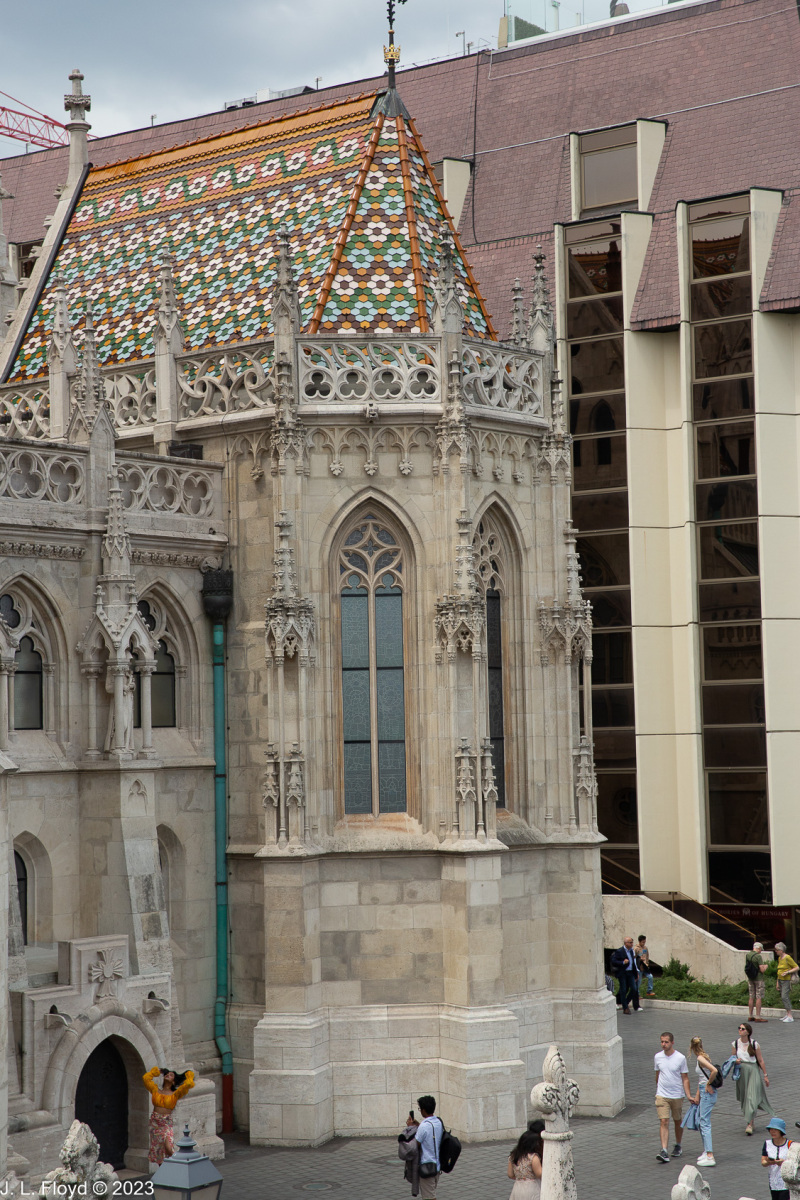
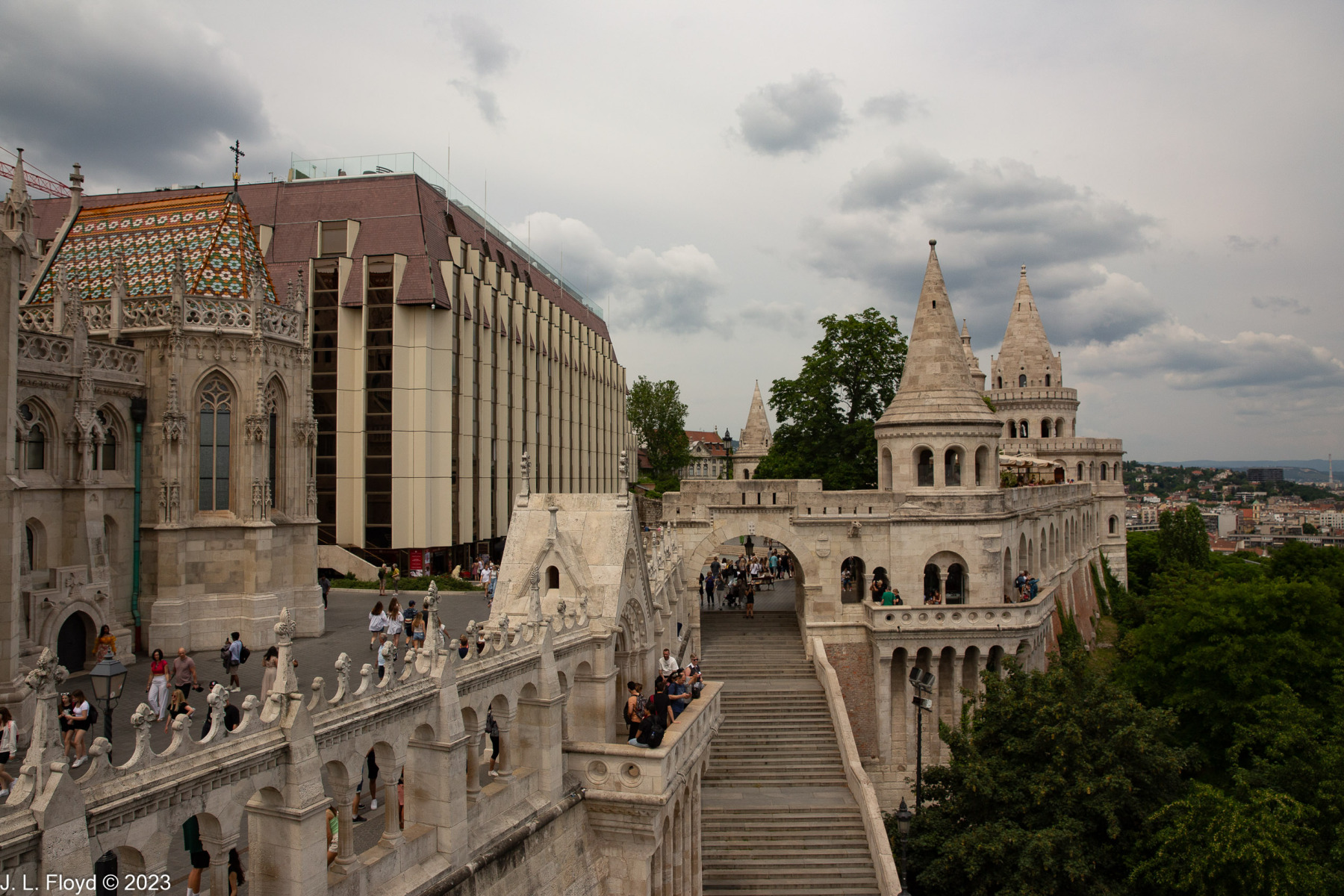
Of course the Matthias Church had to be rebuilt, and this time most of the accretions were Baroque in style, especially in the interior. Fast forward to the 19th century: another major rebuilding of the Matthias Church takes place, under the direction of the Hungarian architect Frigyes Schulek, and by order of King Franz Joseph. The aim was to restore the Gothic church in its pristine glory; this could not be completely realized because too much had been lost, and Schulek introduced a number of elements of his own creation when he could not replicate the originals, or where he saw room for improvement. For instance, the colorful diamond pattern roof tiles were his doing. Although his work was somewhat controversial in its day, it is now considered a masterpiece of Hungarian neo-Gothic architecture.

Of course the church was mostly destroyed again in World War II, except for the bell tower, but it was subsequently restored and was in splendid condition when we visited.
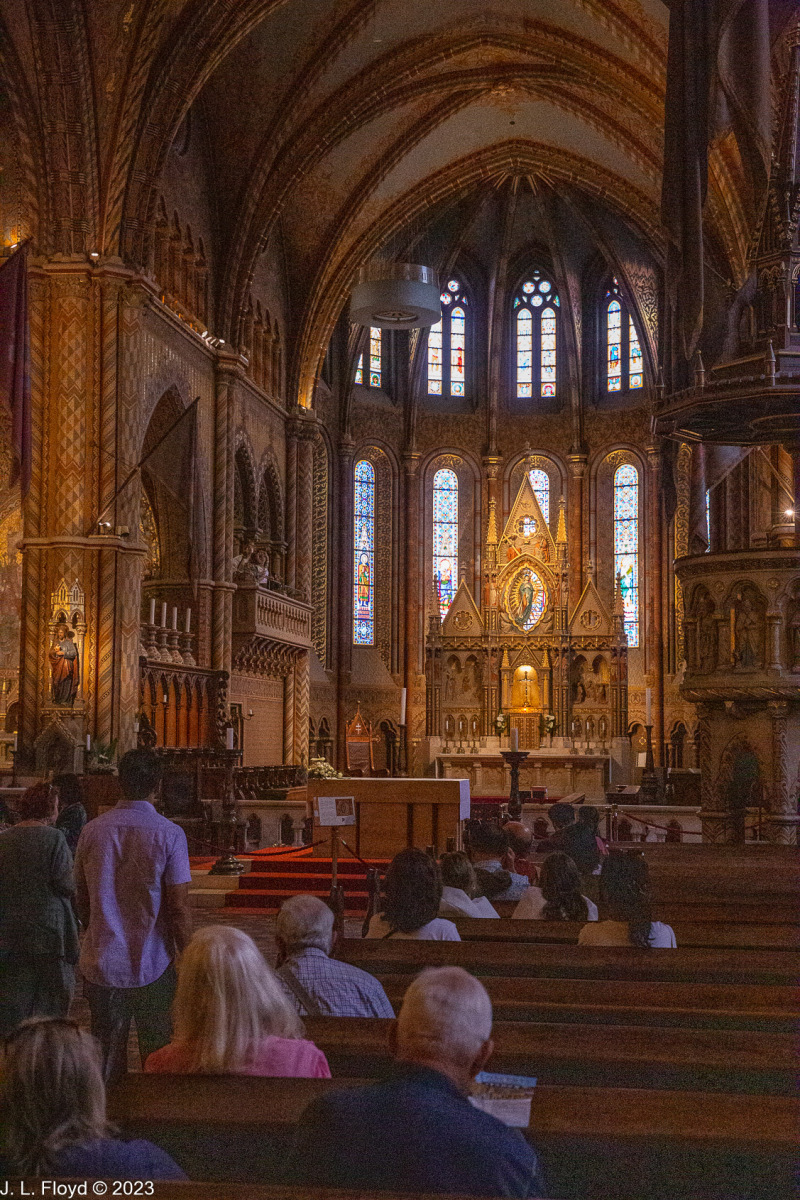
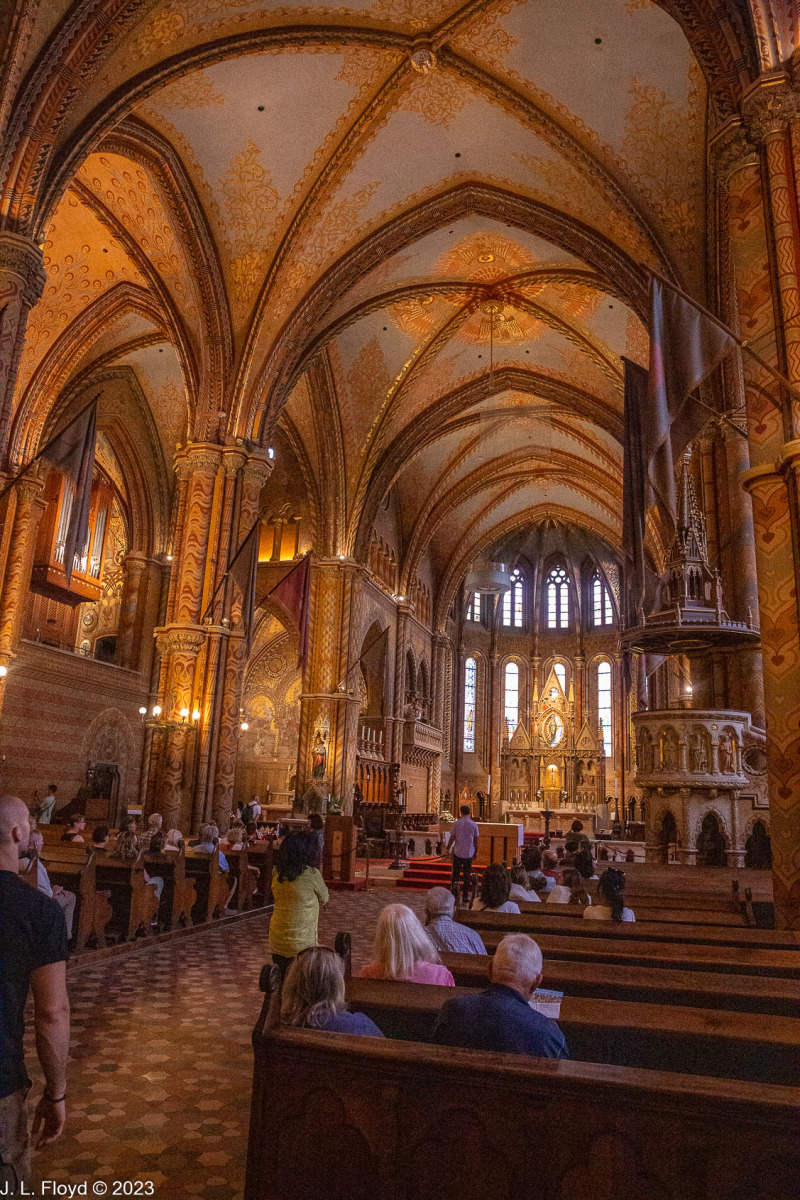
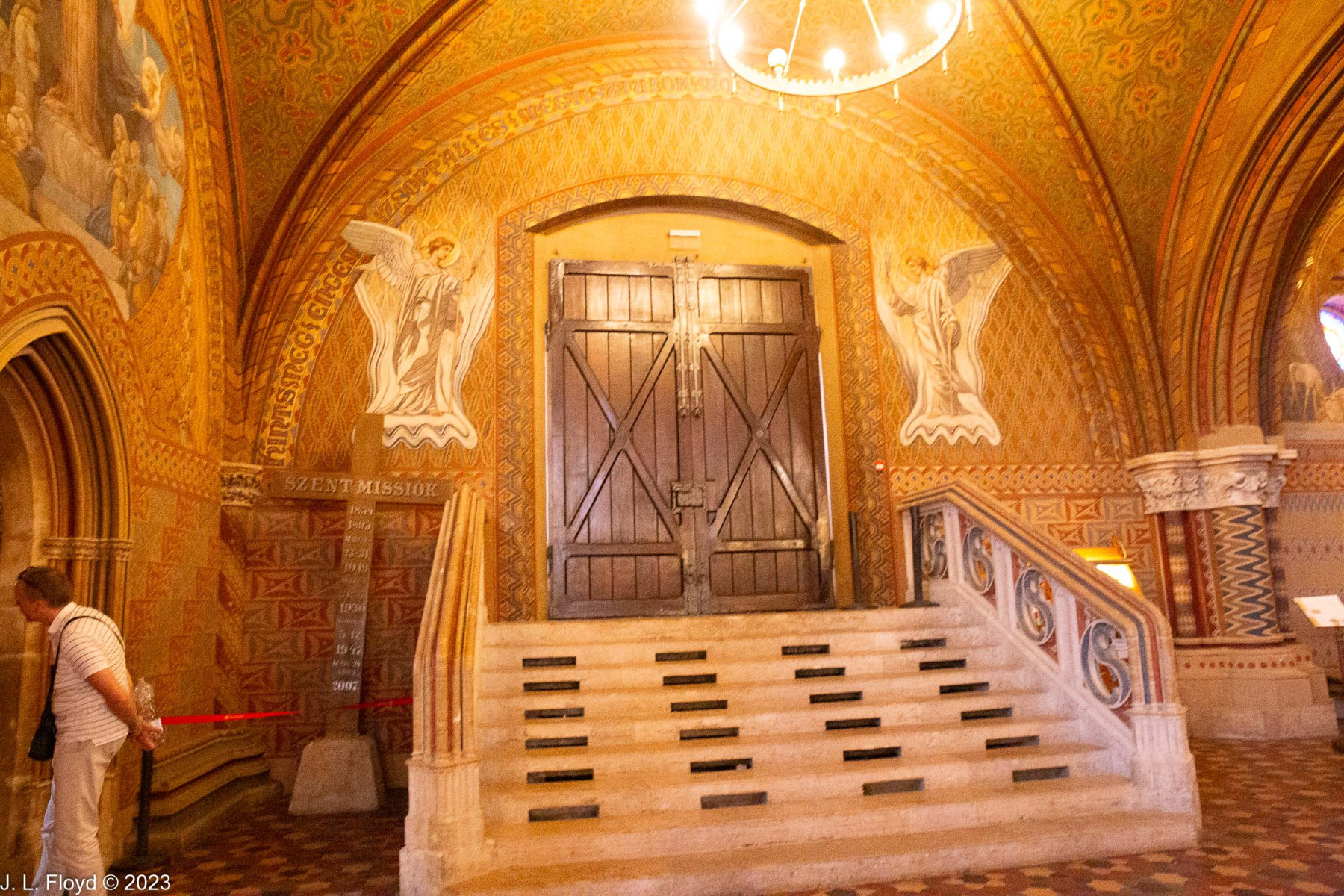
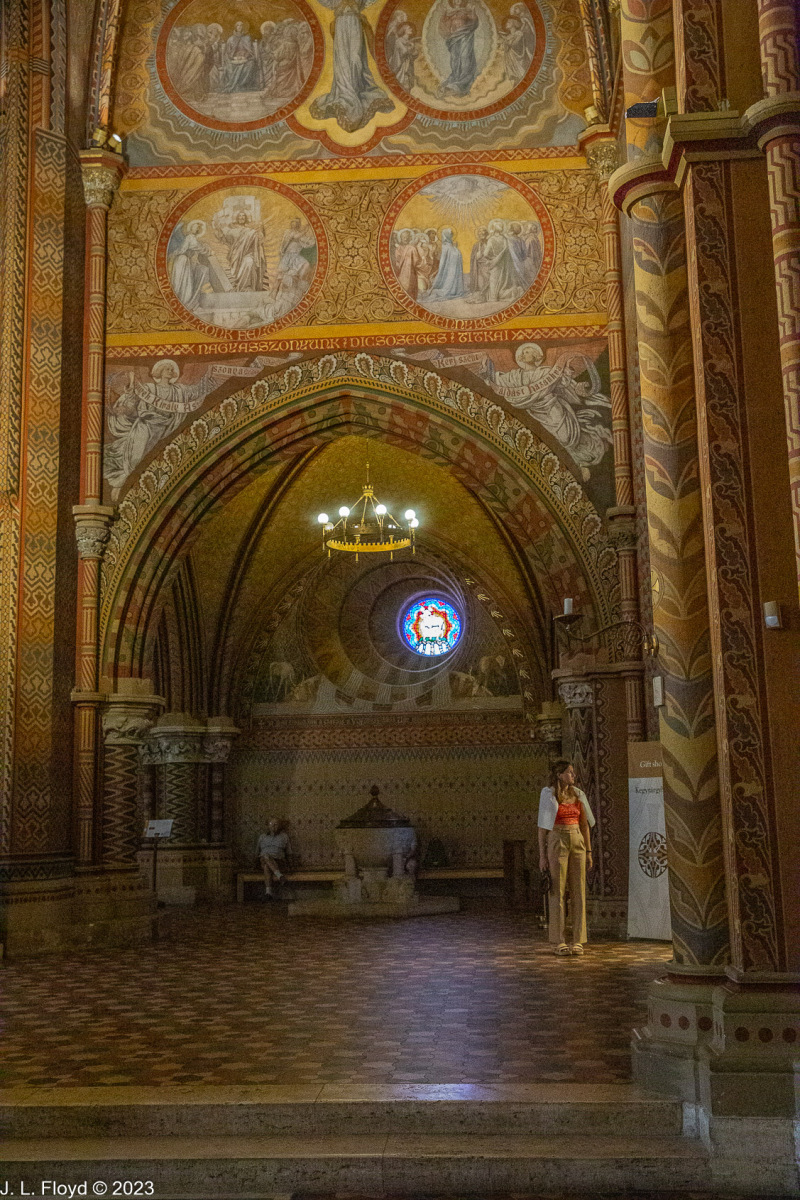
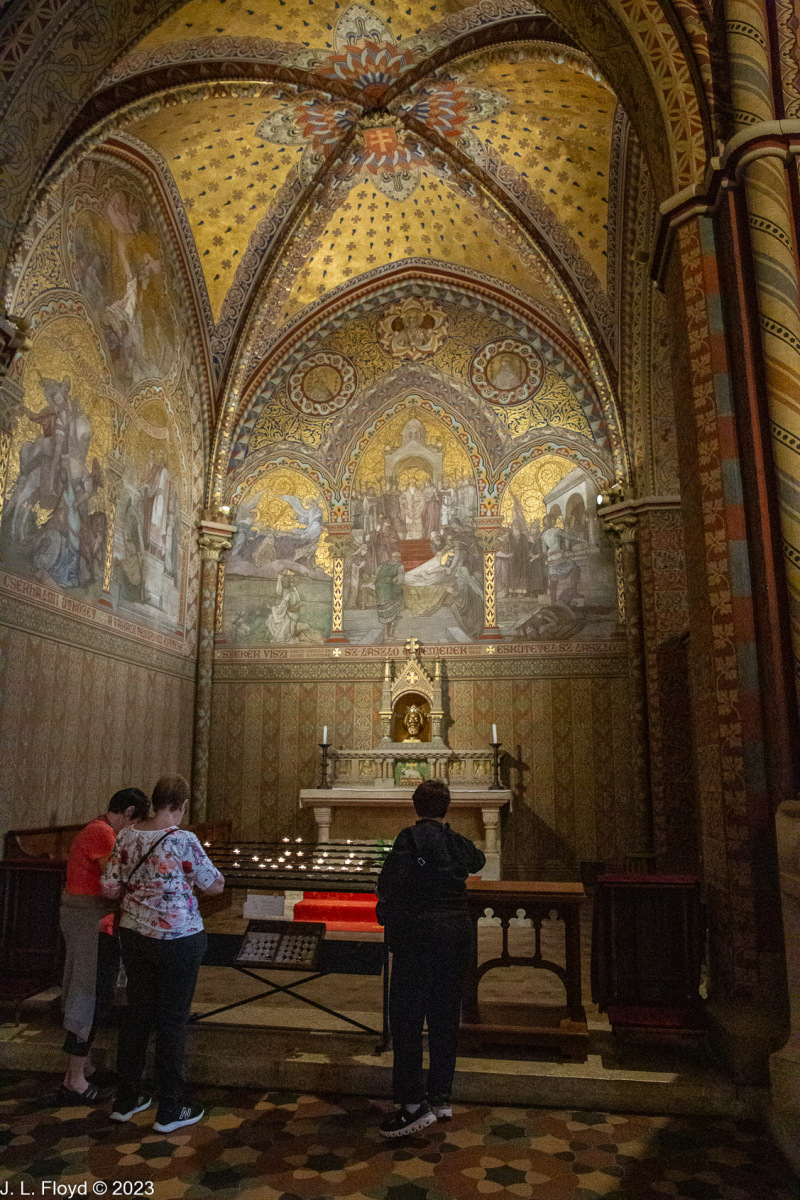
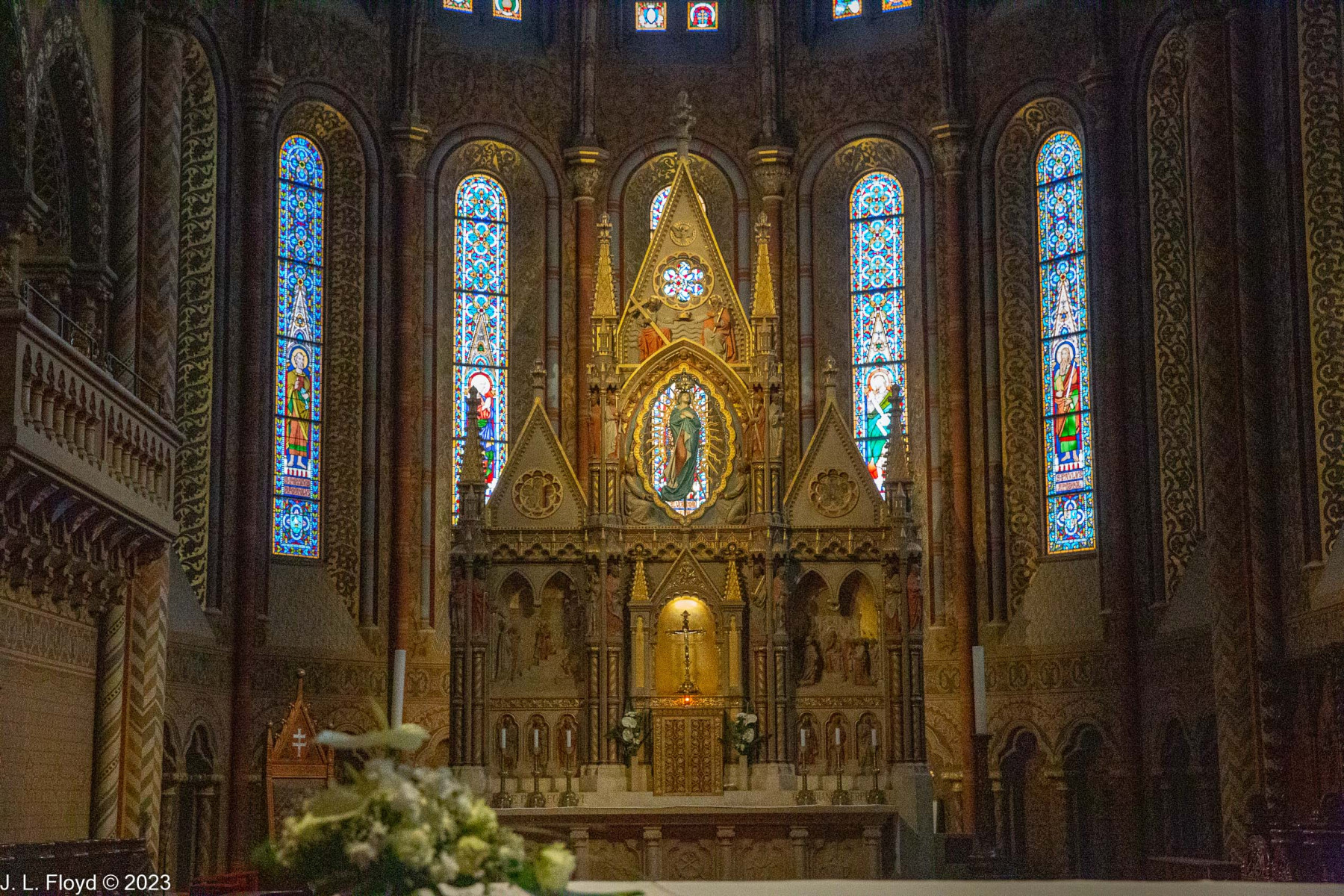
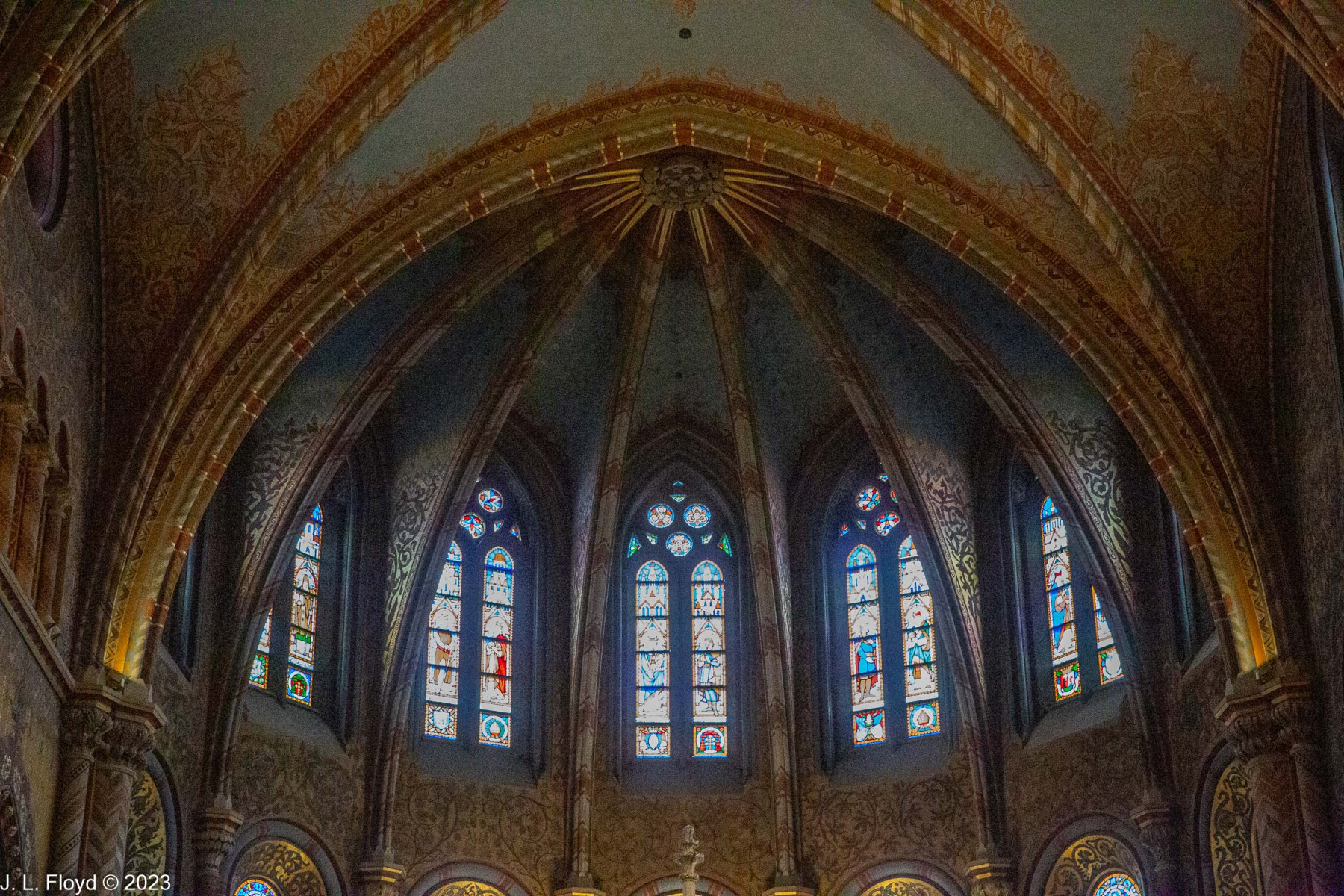
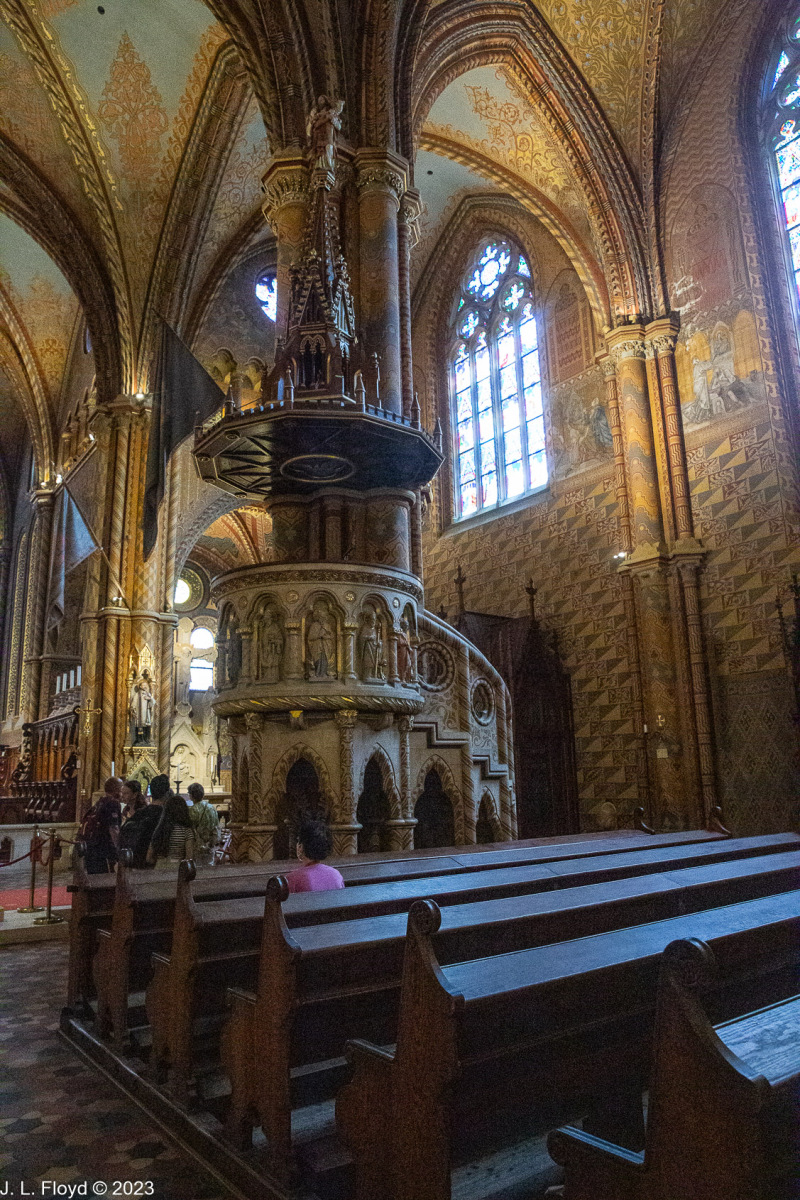
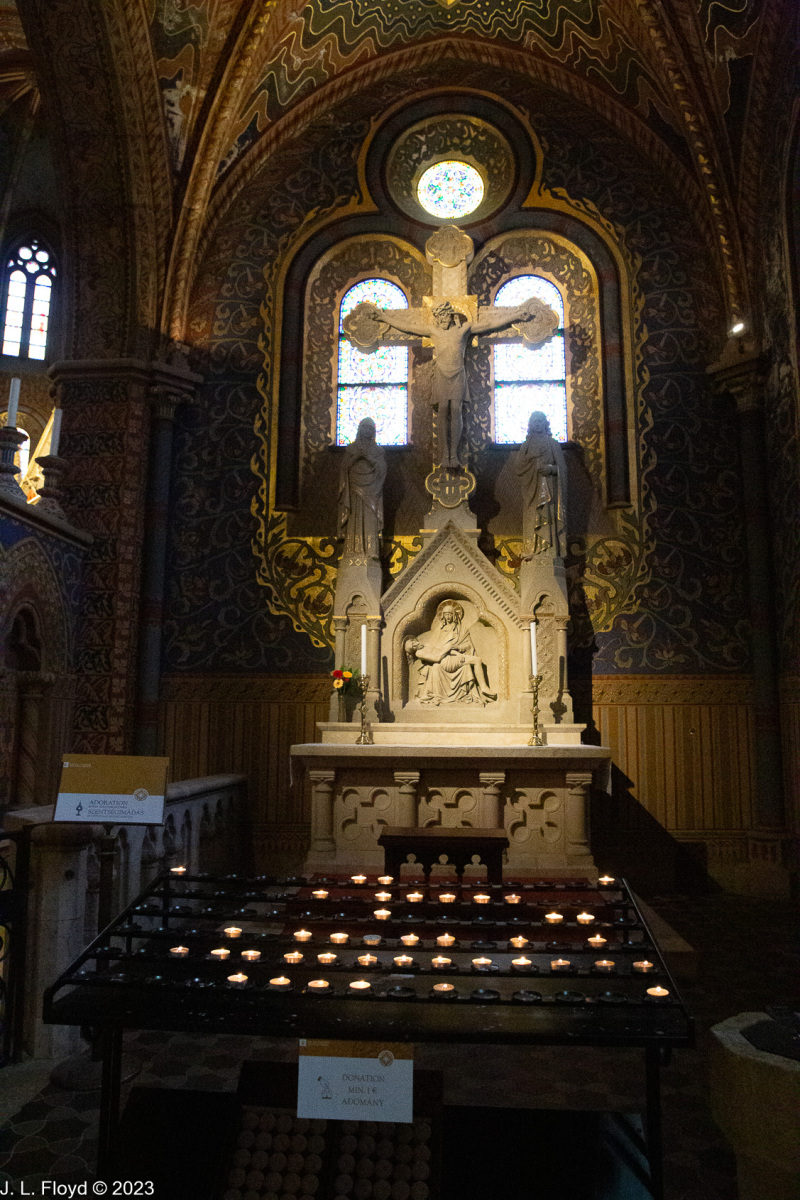
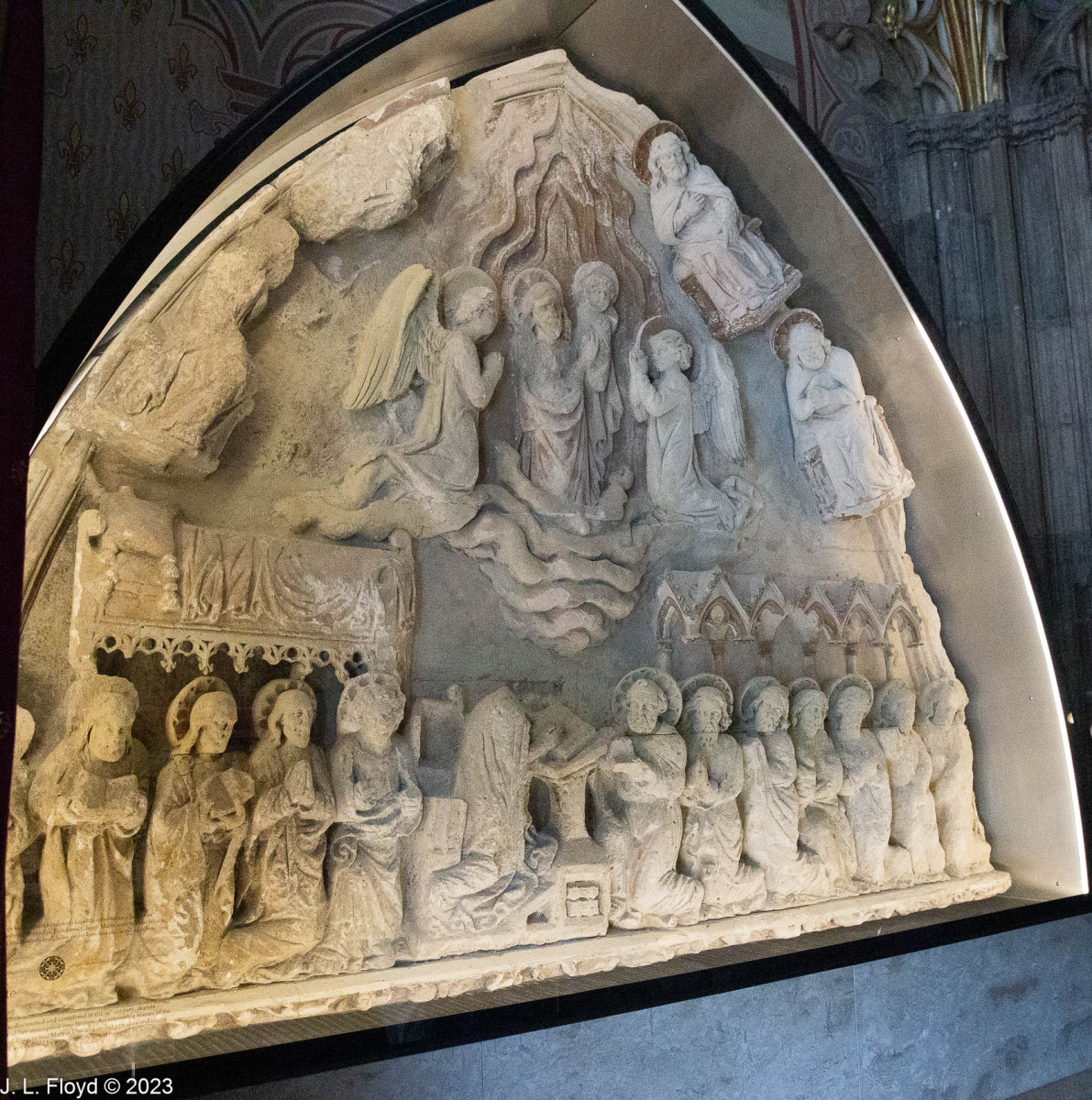
The interior of the Matthias Church is also largely the work of Frigyes Schulek and his associates, though there are some significant survivals from earlier periods, and they took pains to restore the original appearance wherever possible. The stained glass windows, the murals in the side chapels, the reconstructed 1690 altarpiece, and several chapels are among the fruit of their efforts. One outstanding new addition, at least to my unsophisticated eye, is the pulpit, which was created from an original design by Schulek himself, and executed by a number of different artists.

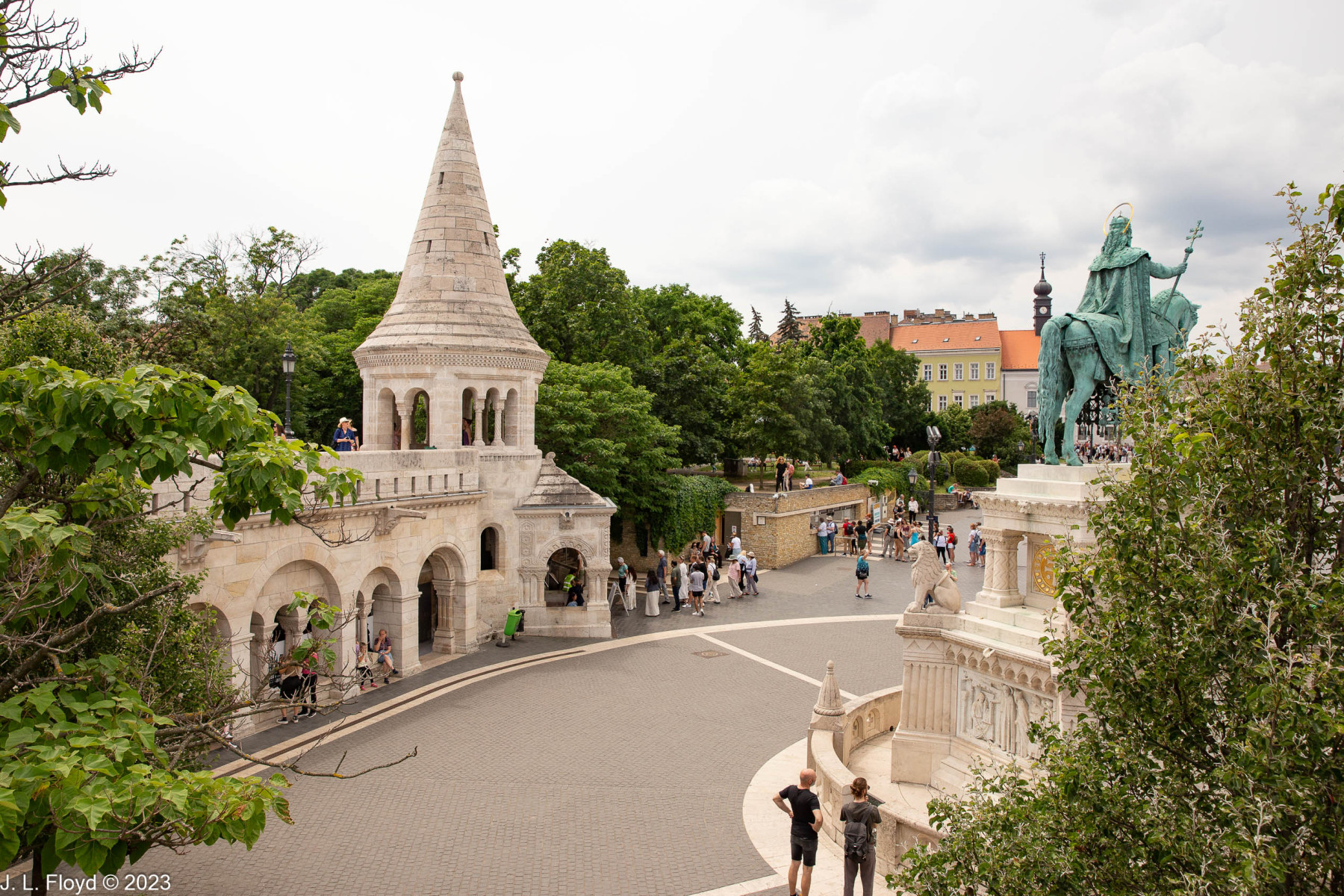
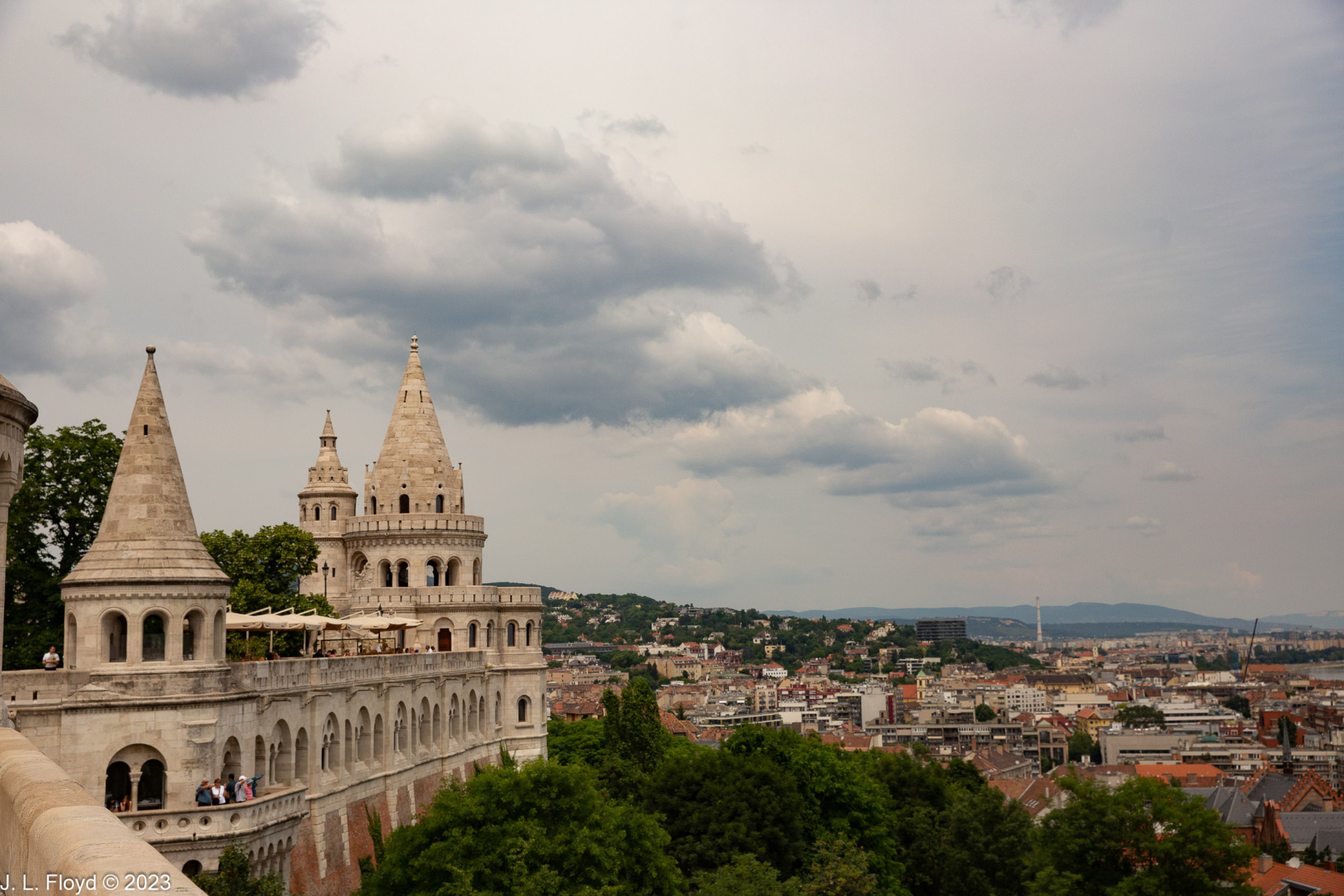
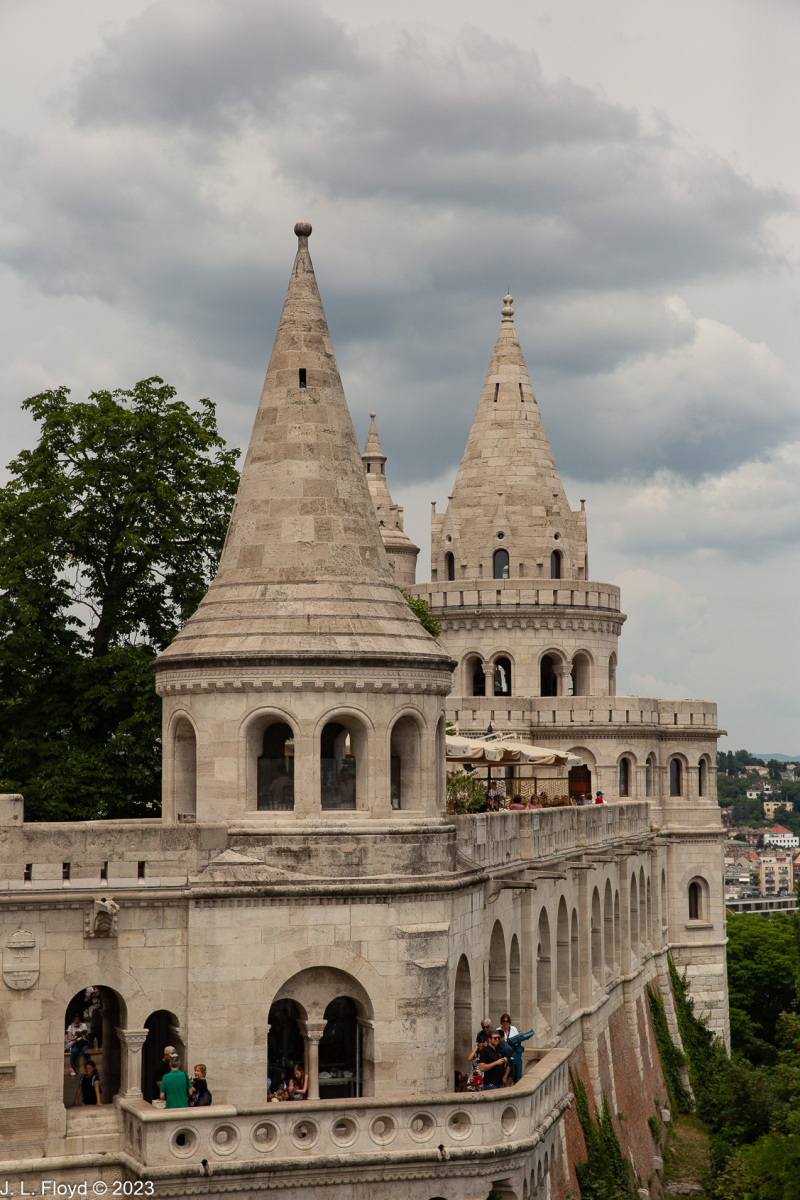
The Fishermen’s Bastion or Halászbástya, as it is known in Hungarian, runs behind the Matthias Church and encloses part of Trinity Square. Its name originated with the historical circumstance that the guild of fishermen was supposedly responsible for defending this area of the city in earlier times.

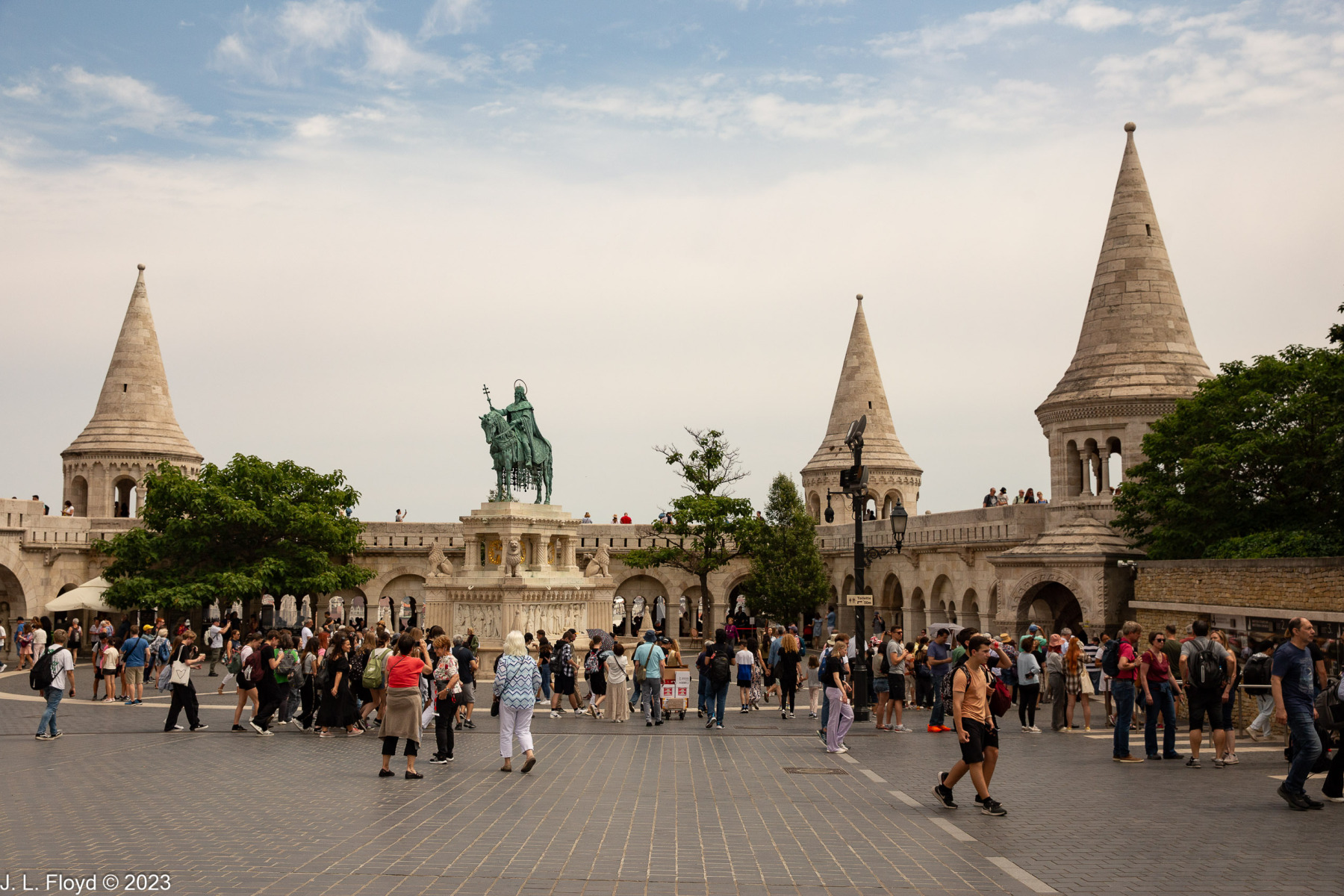
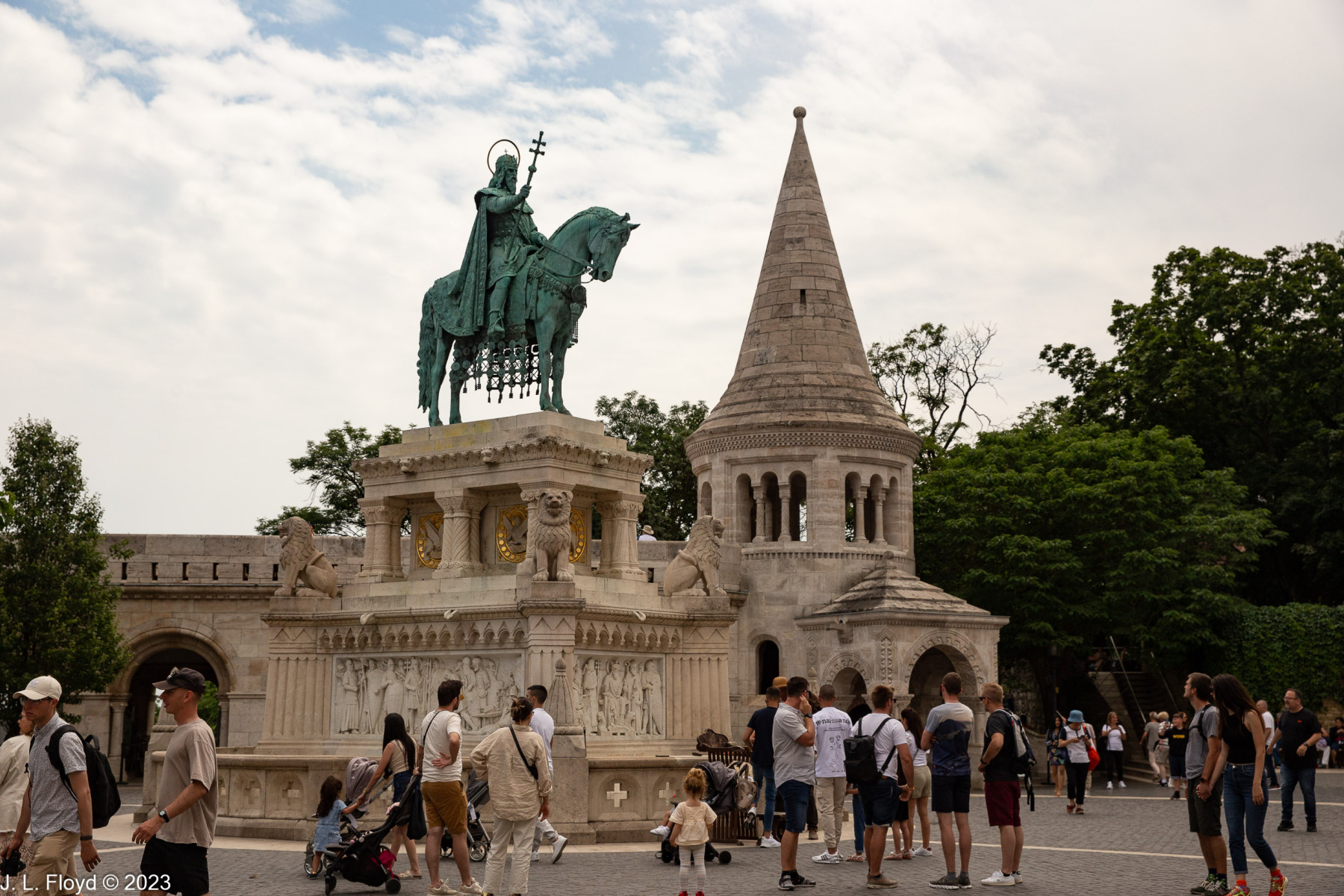
In the space enclosed in the walls of the Bastion stands a large equestrian statue of St. Stephen (István in Hungarian), the first king of Hungary, who lived from reigned from 1000 until his death in 1038. and is credited with permanently establishing Christianity in Hungary.

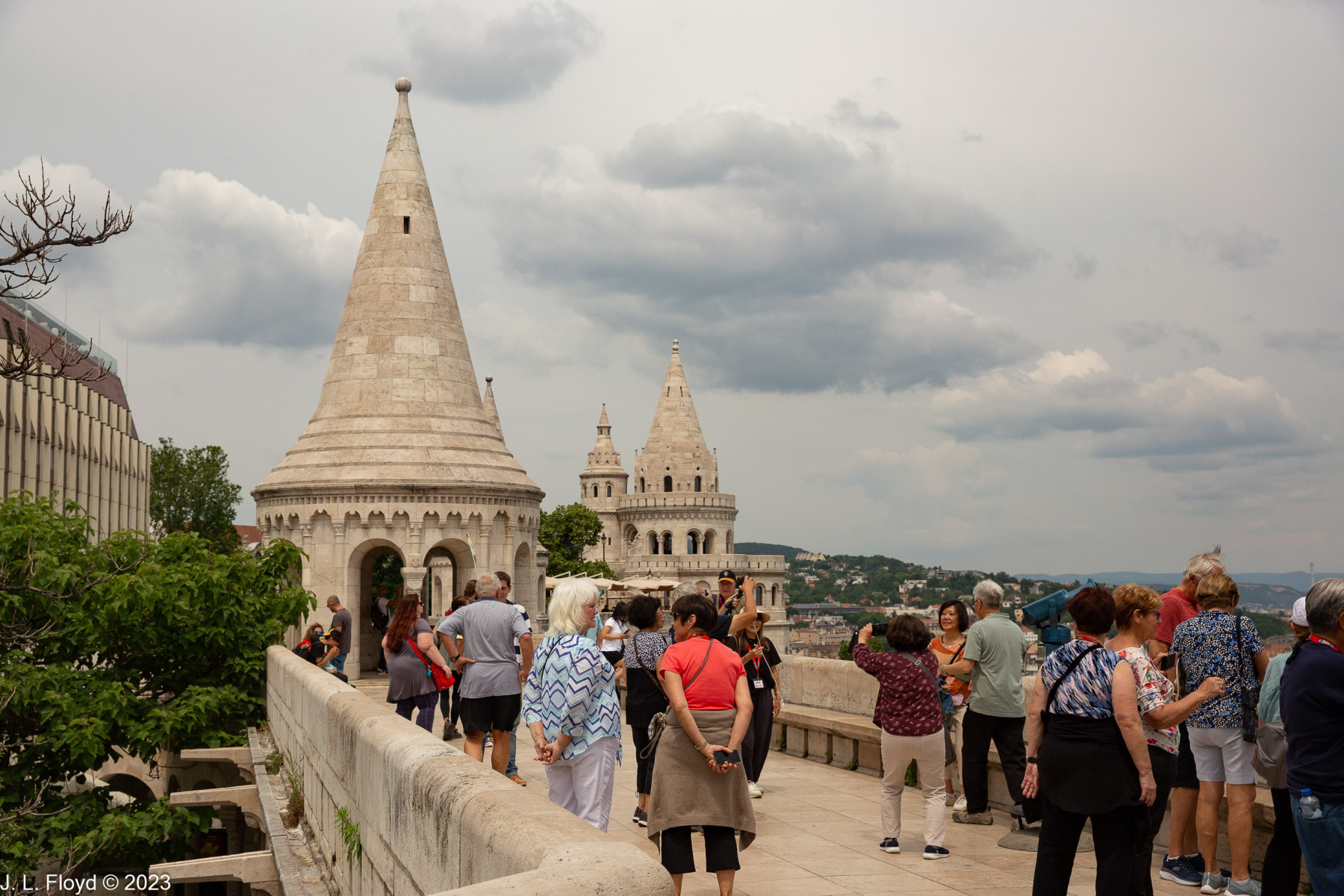
Fishermen’s Bastion is a monument in the form of a castle wall, overlooking the Danube, with seven stone towers along its length. The towers represent the seven Magyar chieftains who became the founders of Hungary. They are described as Neo-Romanesque, but the conical shape of the towers gives them what seems to me a Turkish appearance. Although there were castle walls here from earlier times, the current wall was built at the end of the nineteenth century under direction of Frigyes Schulek, the same architect responsible for the restoration of the Matthias Church. Like almost everything else in Budapest, the Bastion was badly damaged in World War II and restored afterward.

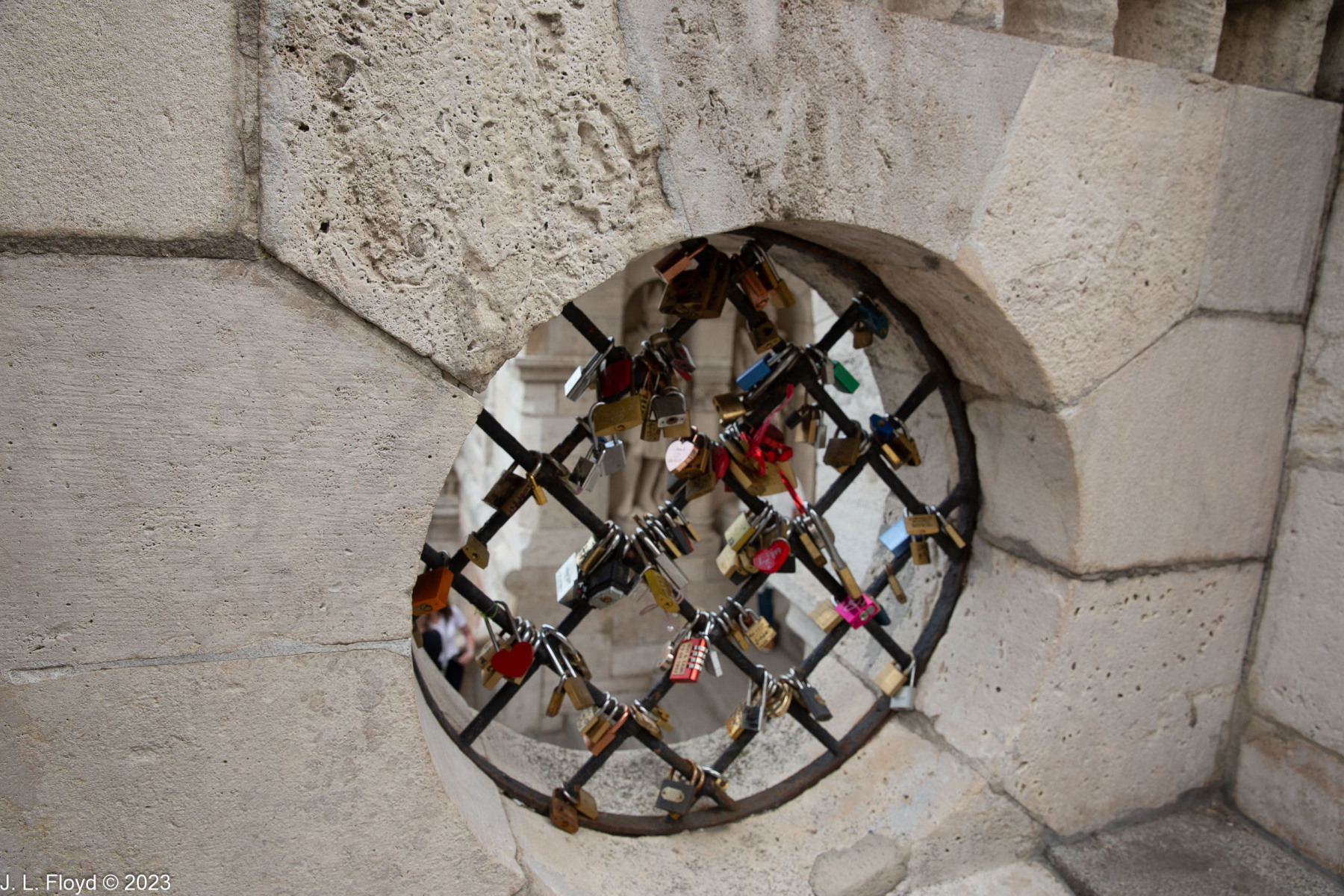
As we climbed the stairs up to the walkway along the top of Fishermen’s Bastion, and at intervals along the wall, we saw steel gratings with padlocks hanging from the bars. These turned out to be the work of amorous couples who put the locks on the gratings with nametags to swear to their undying love for one another. I couldn’t help speculating on how many couples had come to place a new lock on the wall and been broken up by the discovery of another lock linking one of them to an erstwhile prior relationship. I also wondered what would happen if, after a relationship cemented with one of these locks fell apart, one of the pair showed up with boltcutters to cut off the lock.

Along the north section of the Bastion, just to the north of the Matthias Church, stands the huge block of the Hilton Hotel, opened in 1977. The northern wing was built on top of the remains of the 13th-century Dominican monastery of St. Nicholas, while the southern wing is decorated by the façade of a Jesuit’s College built at the end of the 1770s. The former tower and ruins of the monastery church lie in a courtyard between the two wings.

From the walkway on top of the Fishermen’s Bastion wall we obtained our best views of Budapest, even better than the ones from the Danubian terraces of Buda Palace.

Before we had to leave Trinity Square to catch our bus, I went back to the shops on Tarnok Street and fulfilled a small quest by buying some postcards to send to friends, and also a couple souvenir T-shirts. Unfortunately I missed the post office in the Old Town Hall nearby and failed to mail the postcards until near the end of the cruise. They didn’t arrive until more than a month afterward.

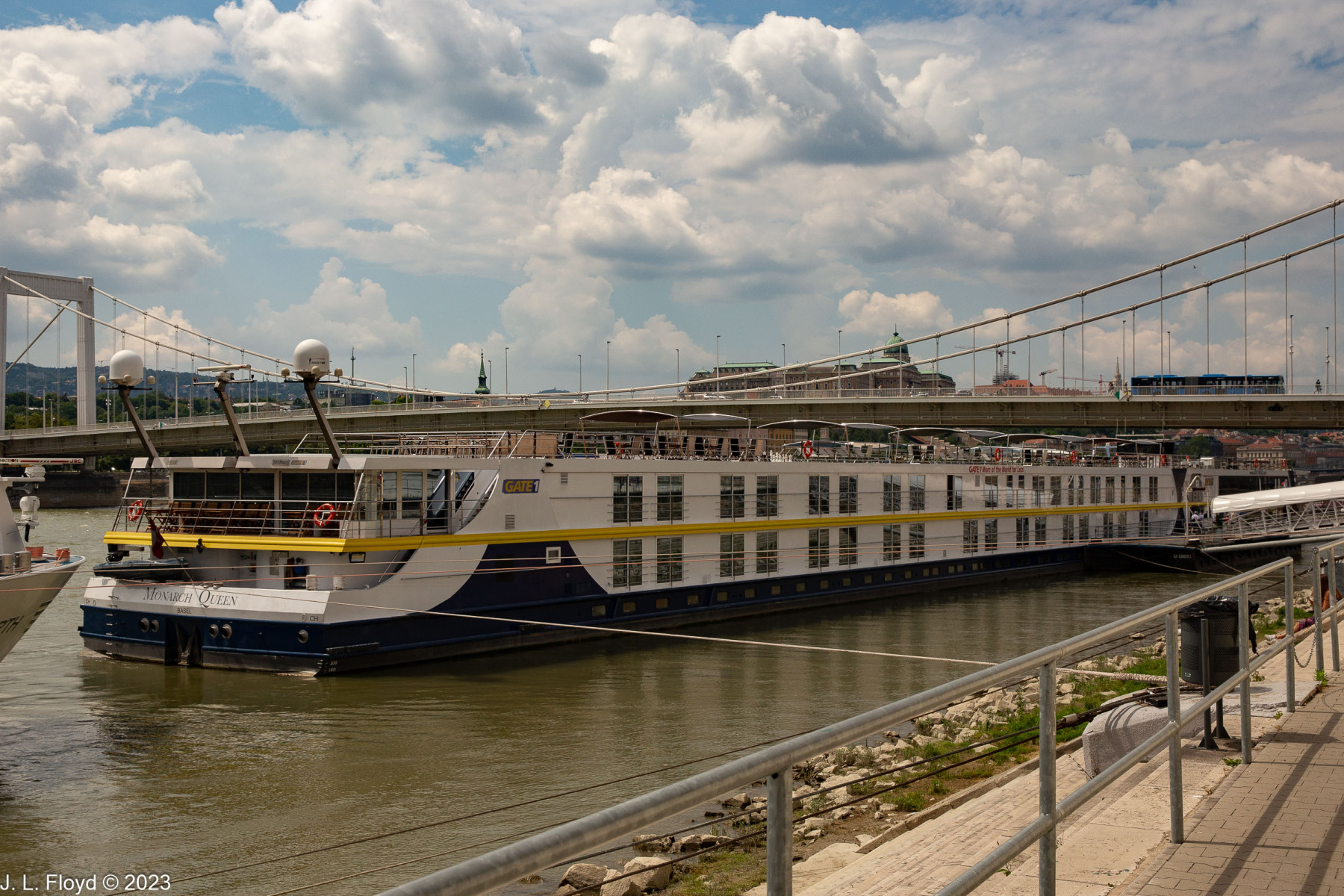
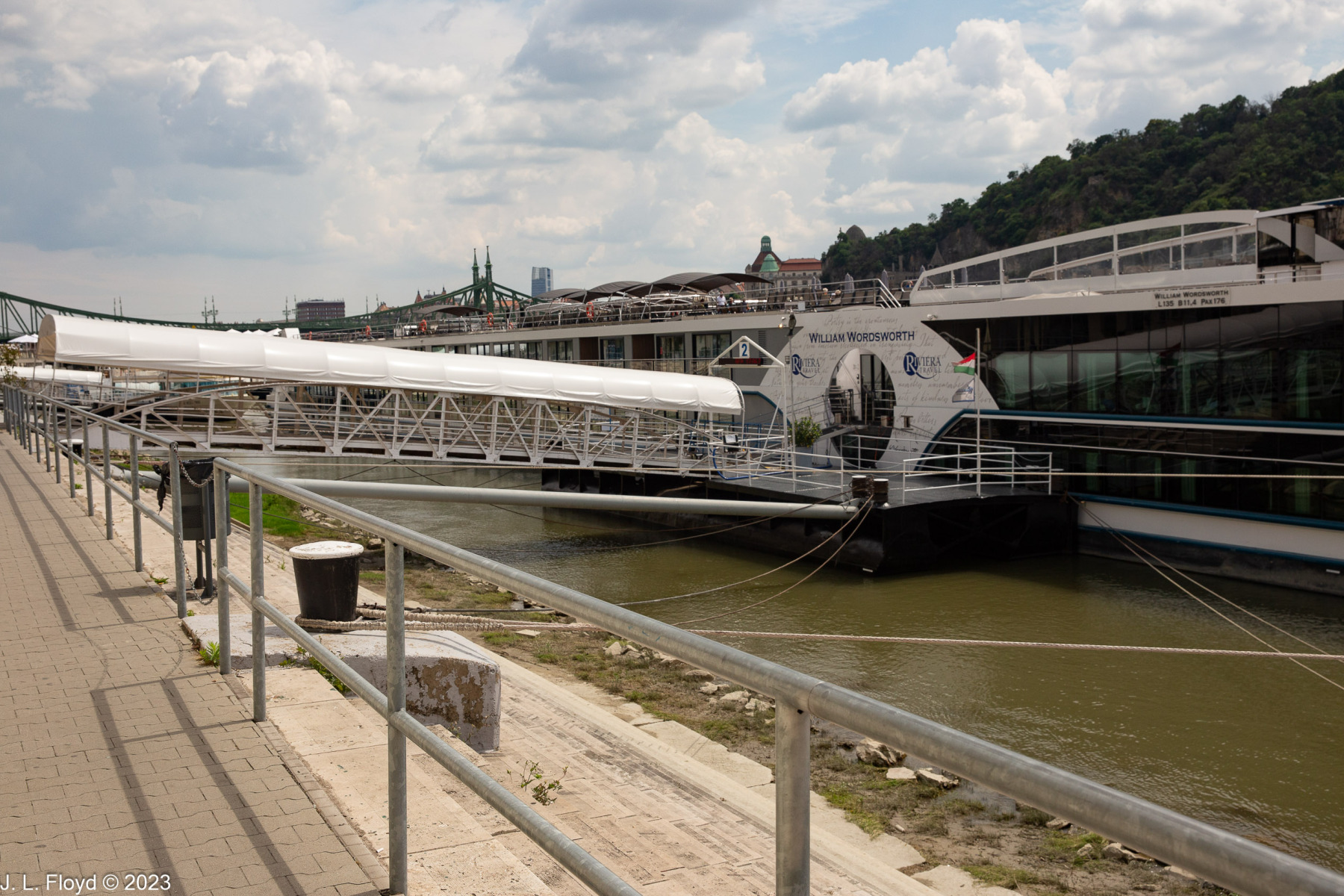
From Castle Hill our bus took us to board the Monarch Queen, which would be our home on the Danube for the following week. But since we weren’t scheduled to set sail until late the following afternoon, we still had most of a day to continue seeing Budapest, which will be the subject of the next post, and I’ll wait until I get to the tale of our departure from Budapest to relate our first experiences on board the ship.

Categories
Danube River Cruise, June 2023

Budapest, June 16, 2023: Buda Palace

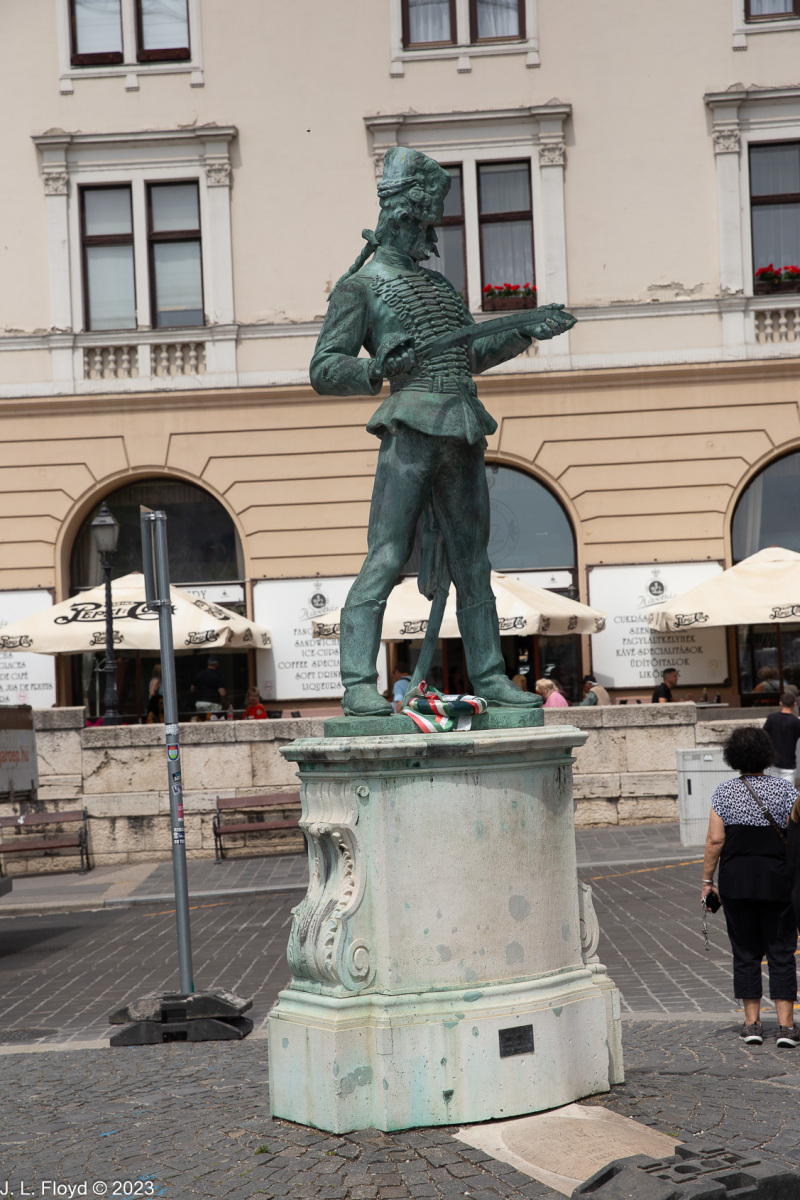
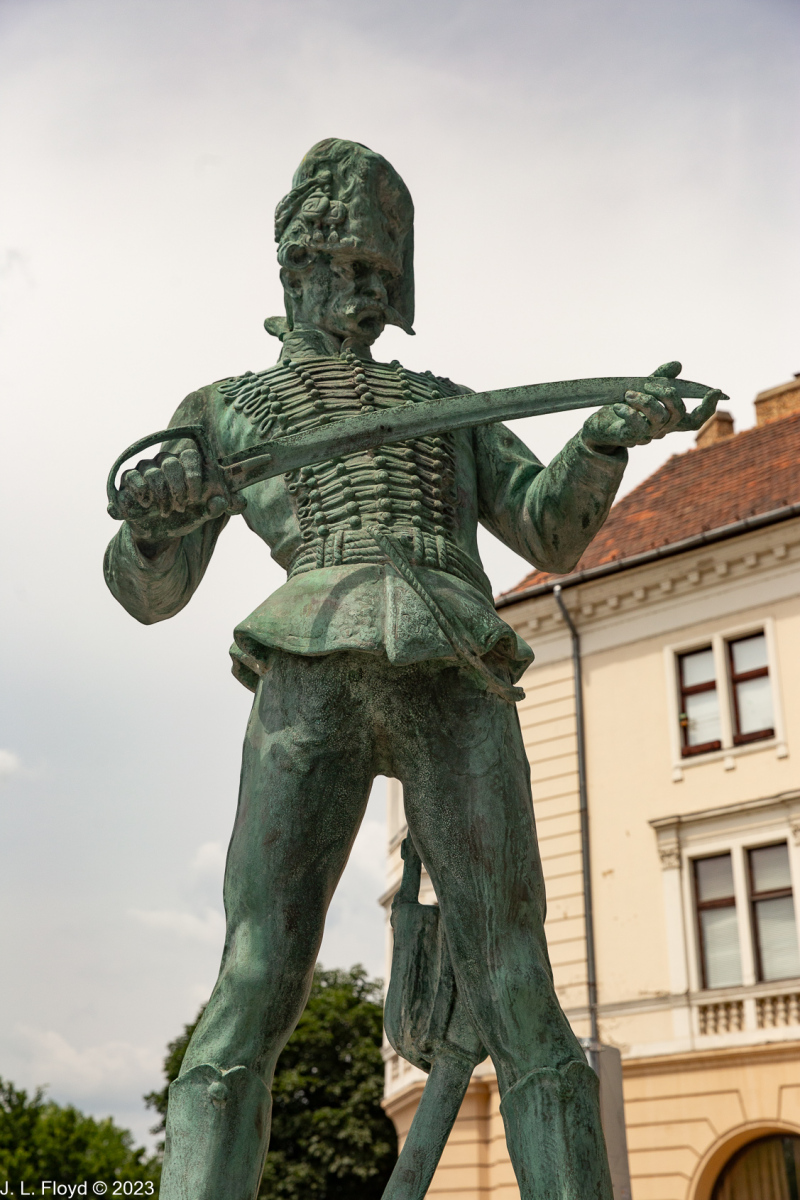
Our bus deposited us on Castle Hill near the Statue of the Old Hussar. Hussars originated in Hungary in the fifteenth century; they were a type of light cavalry particularly useful in scouting and raiding, in contrast with dragoons, who were heavy cavalry fighting both mounted and unmounted. This hussar seemed to be contemplating his sword, which he held in his hands, and I wondered whether he was trying to decide which victim to behead next or merely considering whether it was sharp enough to do so.
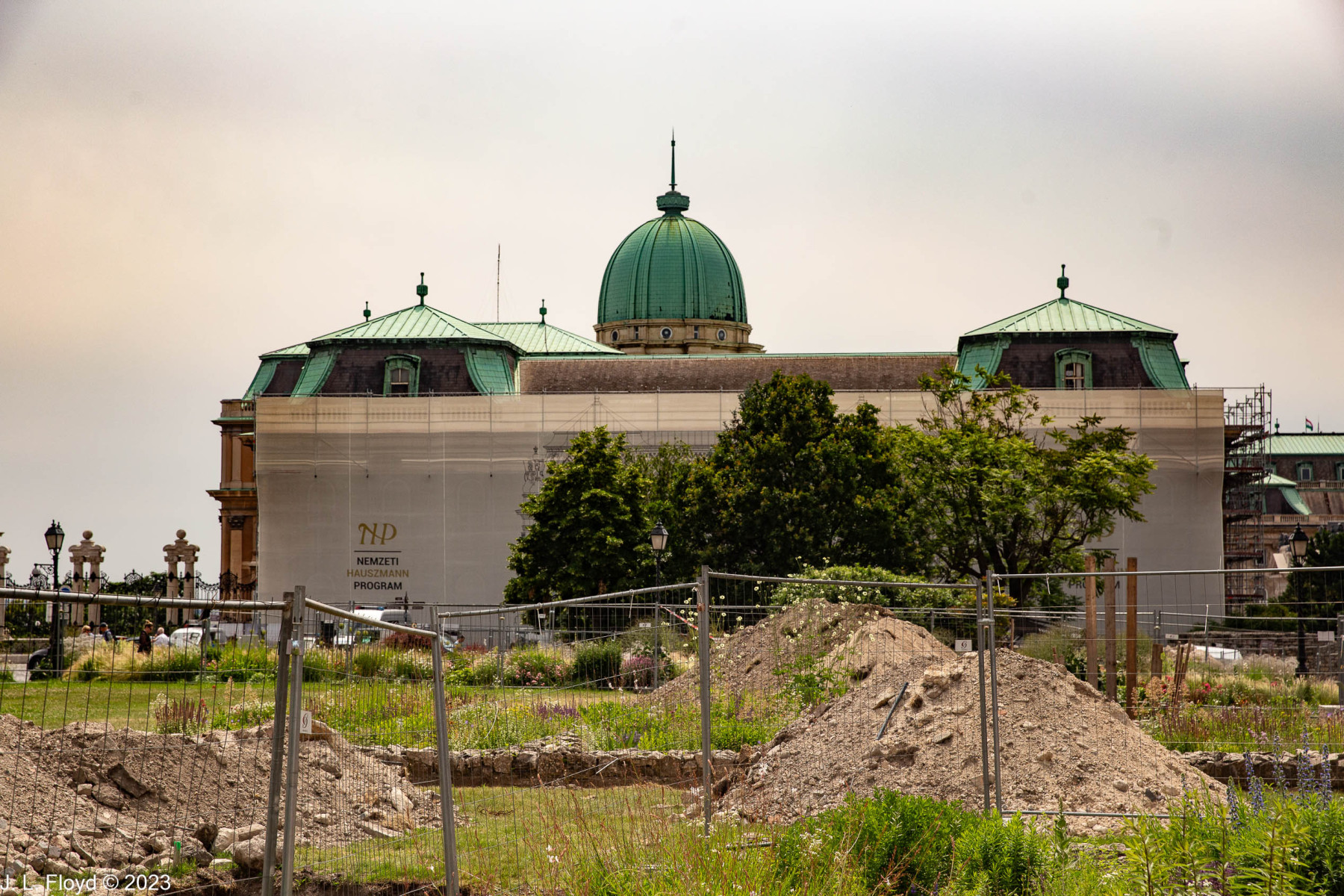
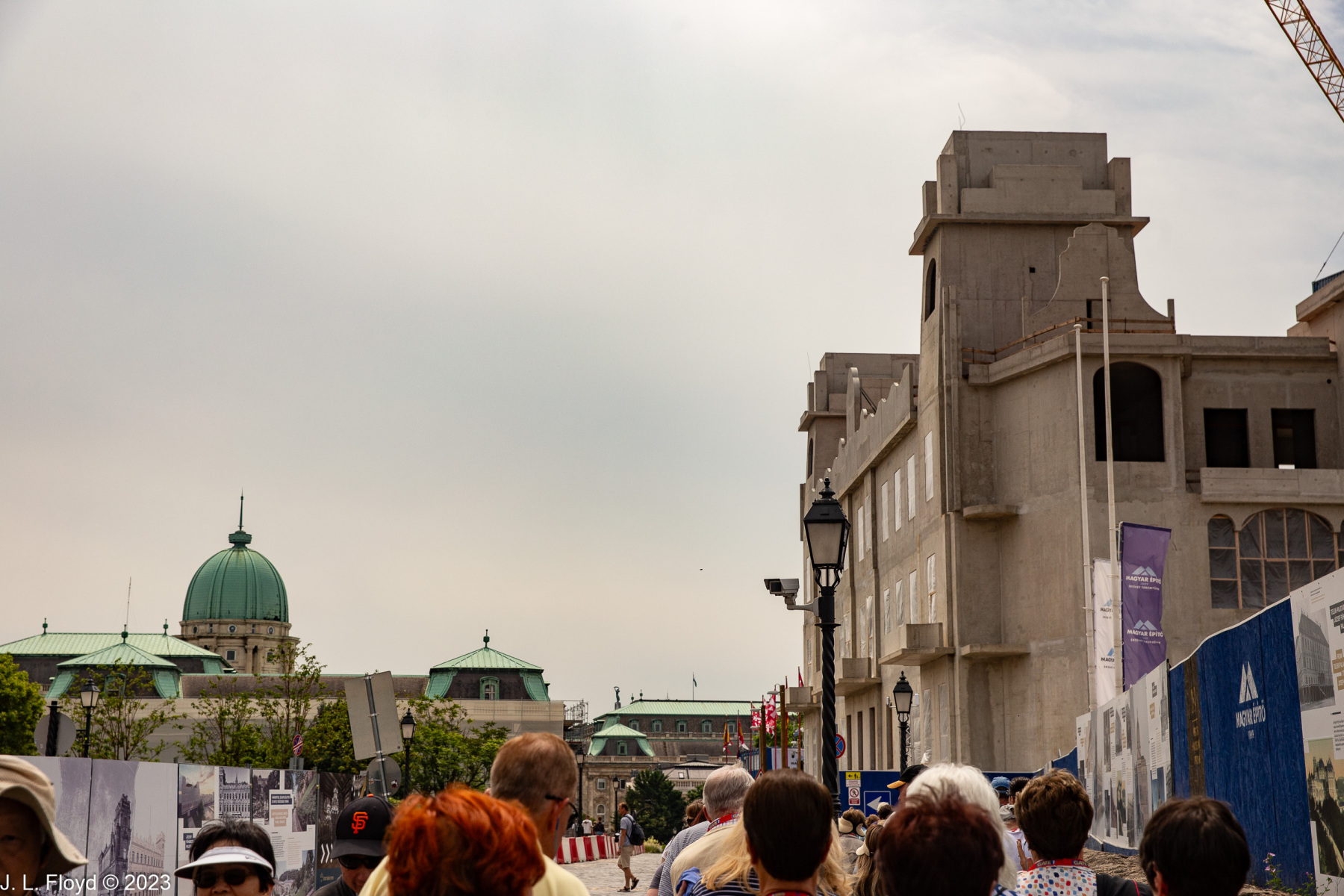
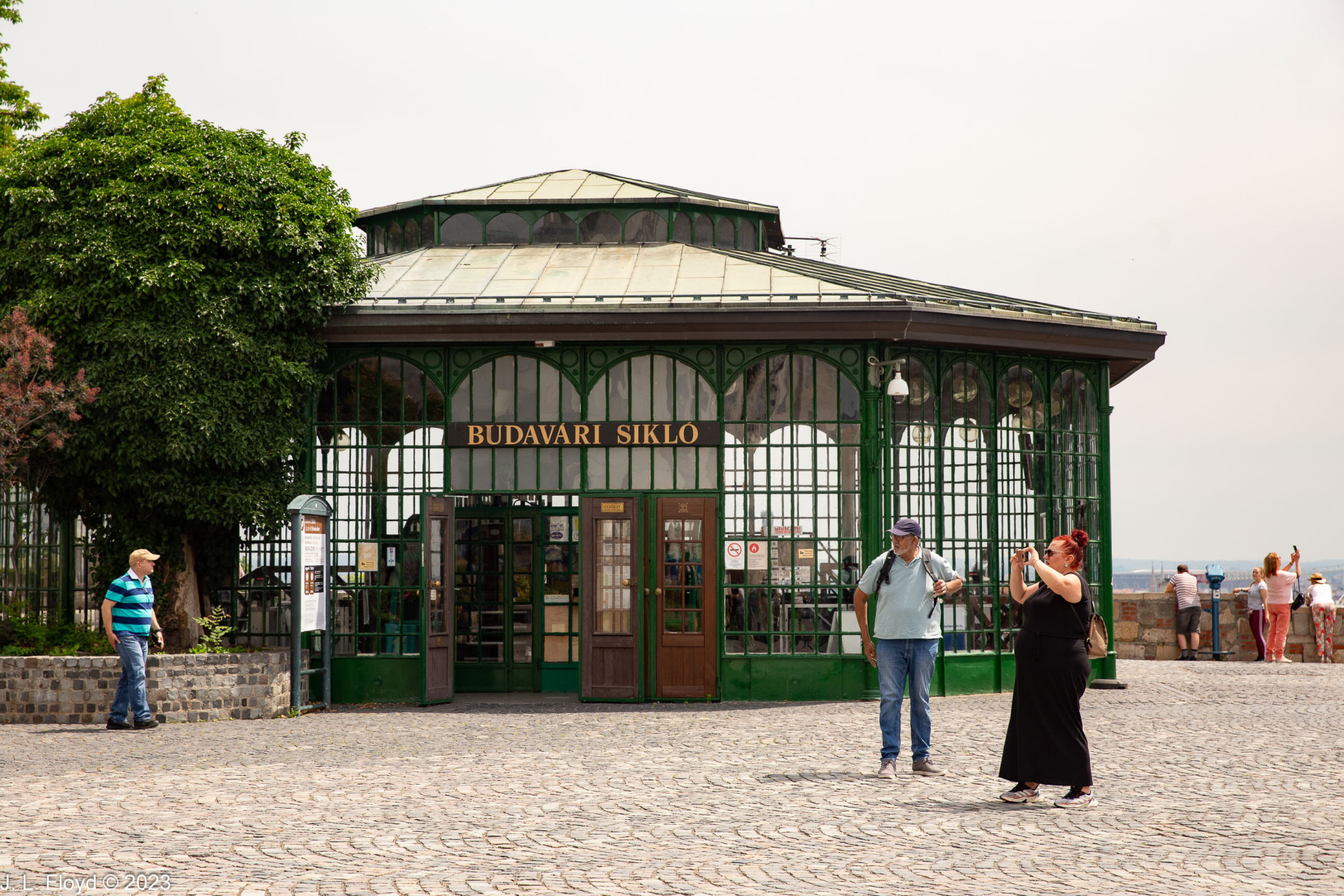
In contrast to the peaceful and sedate Philosophers’ Garden, Castle Hill was bustling with activity, both of tourism and construction. In 2013 the Hungarian government initiated the “National Hauszmann Program” to restore and revitalize the historic structures of the Castle district, such as the Archduke Joseph’s palace, which was the first structure we encountered. It and several other structures were cordoned off and encased in scaffolding, and several giant cranes presided over them.
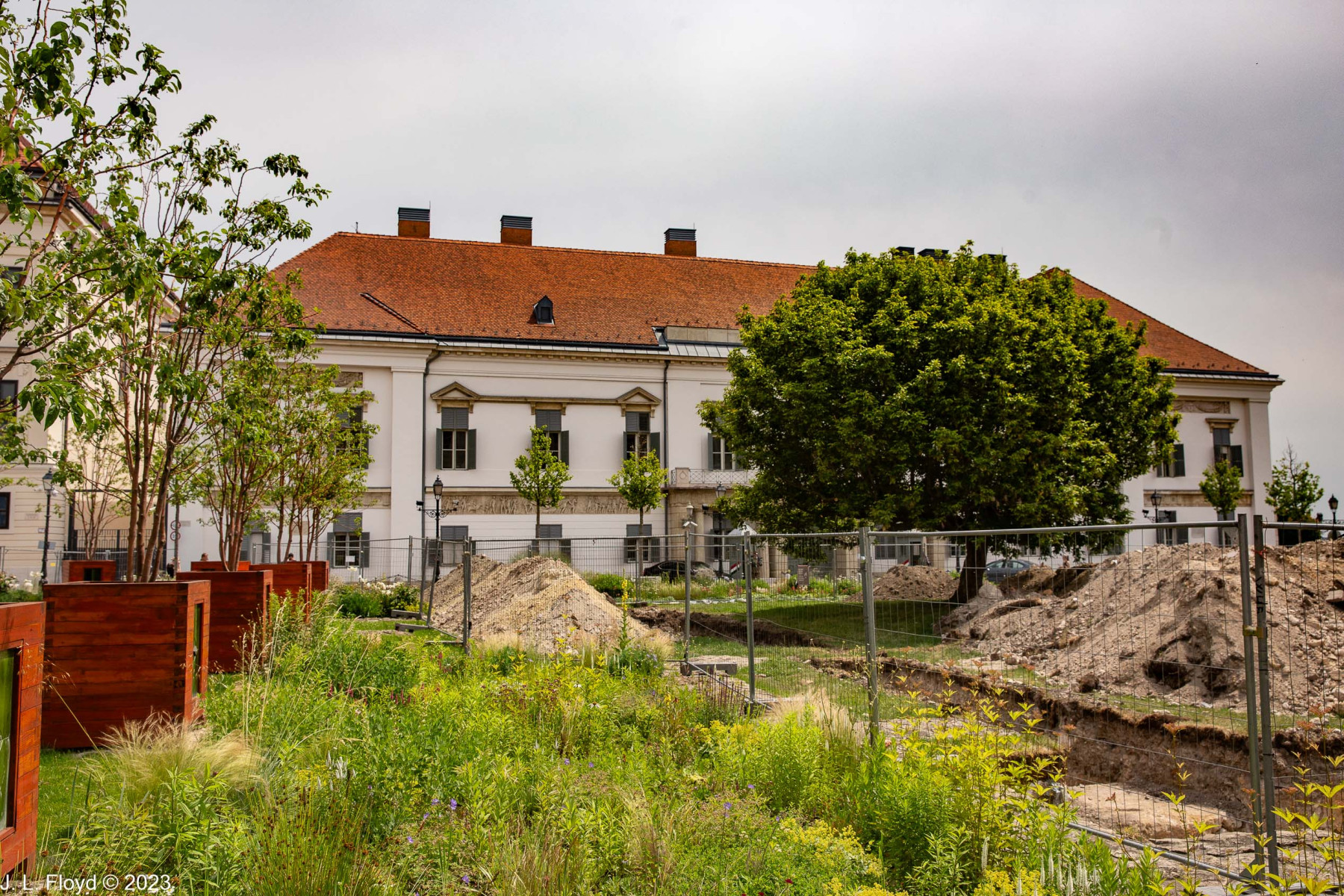
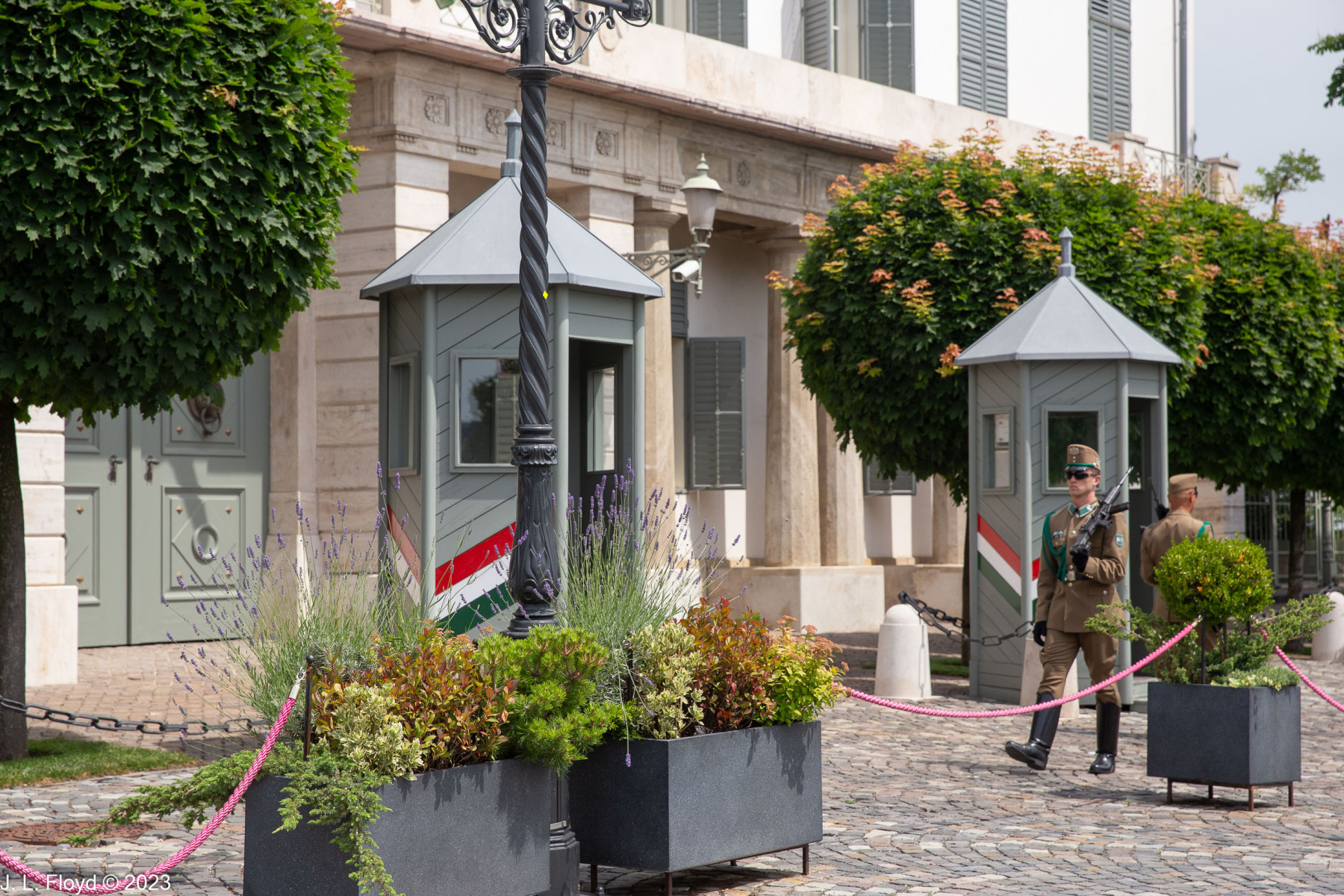
Continuing on down St. George Street, we came upon a neo-classical palace built in 1806 by Count Victor Sándor, a Hungarian aristocrat. Since 2003 it has been the residence and office of the President of Hungary (currently Katalin Novák; Victor Orbán is Prime Minister). We were able to witness the changing of the guard there.

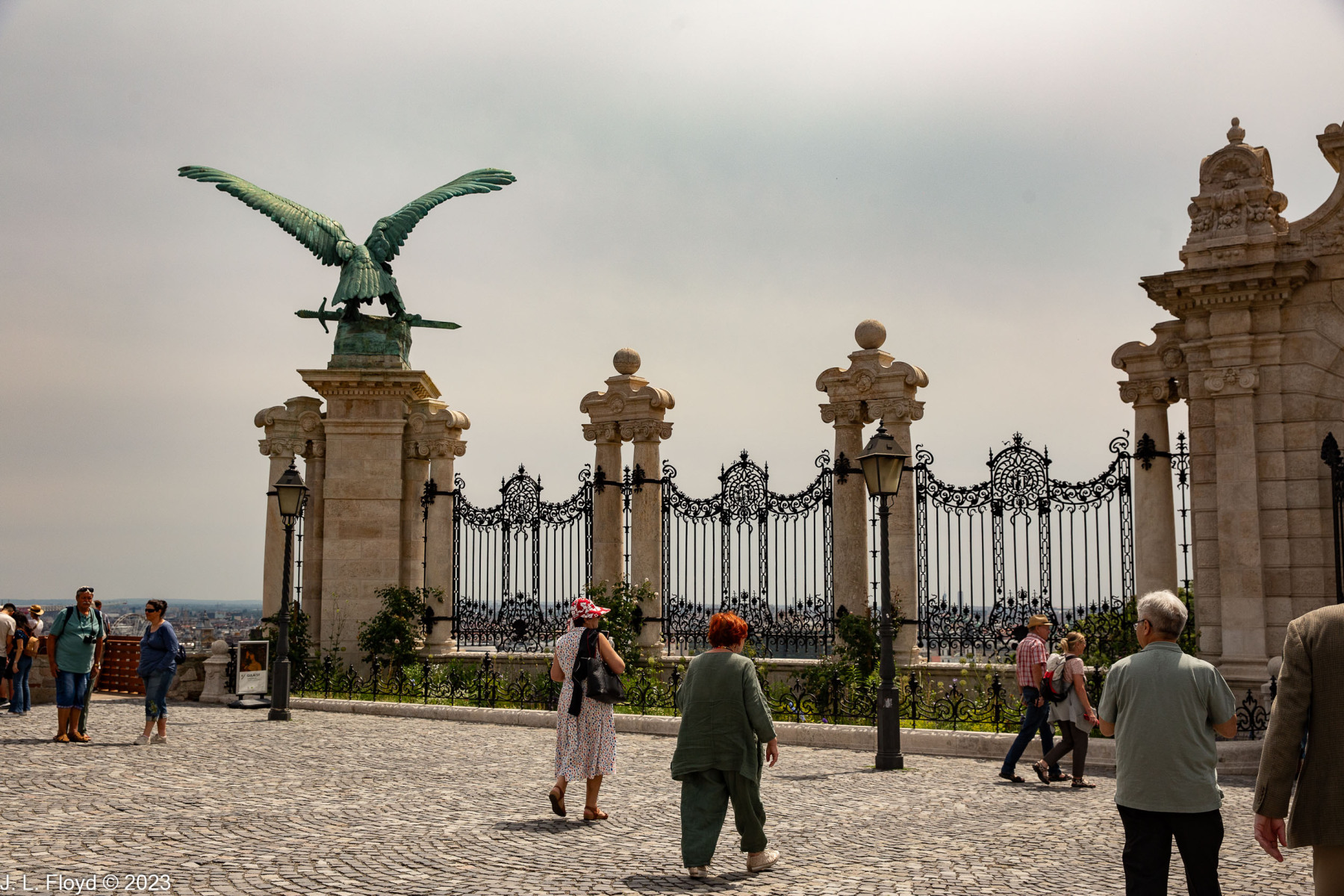
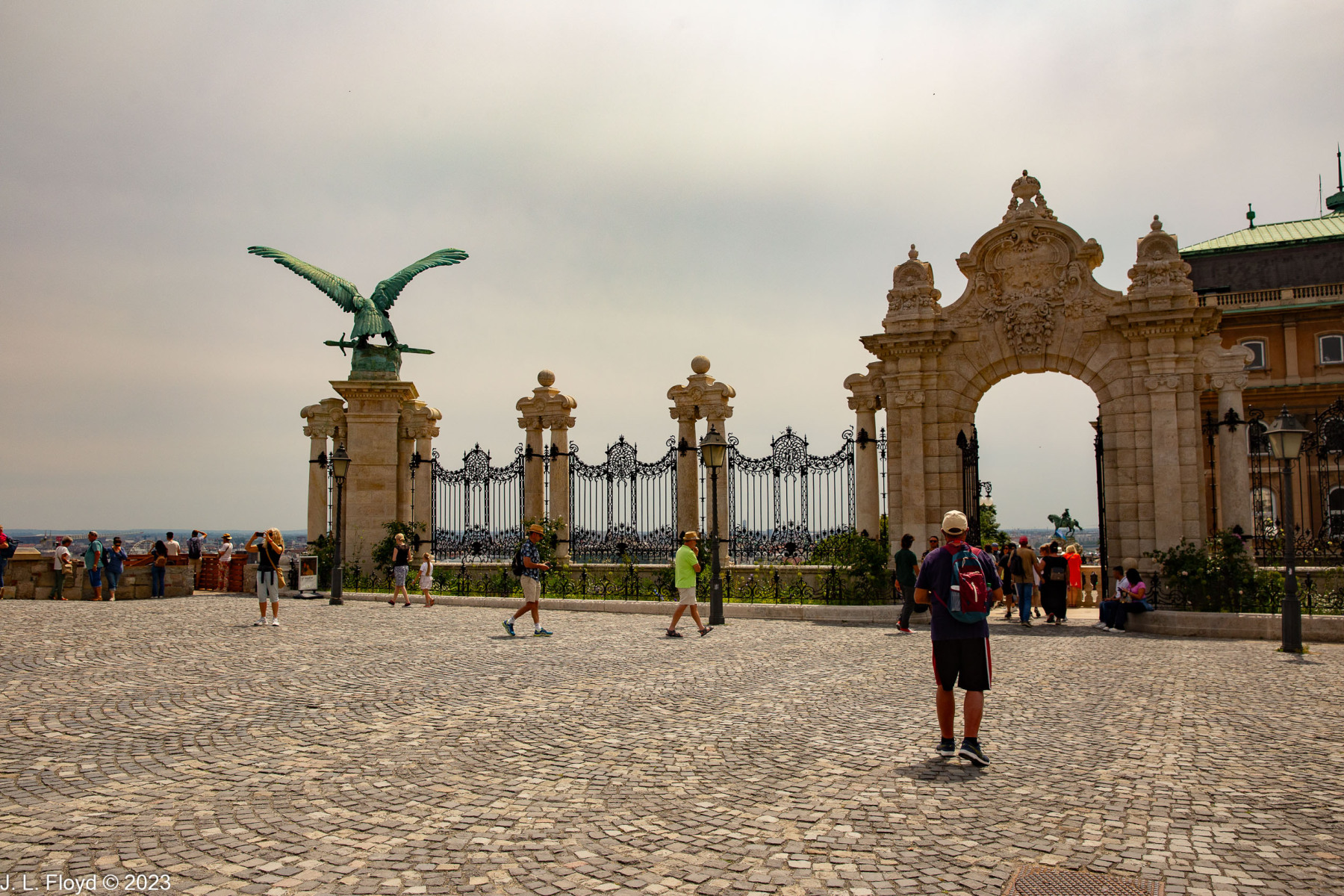
At Sándor Palace we made a left turn and came to a large open plaza, elegantly fenced off with iron grillwork on the south side. On a column at the southeast corner of the plaza is perched the statue of a large bird, which looked to me like a vulture, but which is intended to represent the Turul, a mythical falcon-like bird and a national symbol of Hungary. Not far from the Turul is the Habsburg Gate, which opens to the Habsburg Steps, a stone stairway descending to a courtyard below called Fisherman’s Terrace.

Before going any further I should note that although the vast complex I am describing is usually listed in guidebooks as Buda Castle, I prefer to call it Buda Palace because the word “castle” implies a fortification, which it is clearly not. It is a Baroque palace first built in the reign of Empress Maria Theresa during the years 1749 to 1770 to replace the great Hungarian medieval palace, which did deserve to be called a castle but was destroyed in the Turkish wars of the 17th century. The Hungarians call it Budavári Palota, which translates as Buda Palace, and I shall follow suit.

After its initial completion, the Baroque palace underwent many modifications and additions. It was wrecked in the Revolution of 1848 and rebuilt during the rest of the 19th century, under direction of the celebrated Hungarian architects Miklós Ybl (1814-1891) and Alajos Hauszmann (1847-1926). They were responsible for several new additions, and the palace complex reached its “final” form under Hauszmann in 1912.

Finality is rarely final. During the siege of Budapest in World War II, Buda Palace became the last stronghold of the German occupiers against the advance of the Soviet Red Army, and the fighting reduced it to a nearly complete ruin.

Reconstruction efforts began shortly after the war’s end. But the Communist government installed by the Soviets considered Buda Palace to be a symbol of the ancien régime, and their architects regarded the Hauszmann style as too ornate. They undertook the rebuilding in a modernist style, simplifying everything and sweeping away many of the historic details of the prewar palace in the process. When, after the collapse of communism, the republican government undertook to restore the palace complex to its prewar state, it found that many of the changes were irreversible, and had to seek acceptable (and affordable) compromises.

The postwar reconstruction also included efforts to excavate and restore some of the medieval Gothic and Renaissance elements of the complex, but I am unable to distinguish those from the later construction, and to me it’s all Baroque. Art historians, not to mention locals, will undoubtedly find much to criticize in my descriptions, for which I abjectly beg and beseech forgiveness.

The current restoration and reconstruction project, the National Hauszmann Program, aims not only to further restore the Buda Palace complex as far as possible to its pre-World War II state, but also to revive its role as a seat of government. The first part of the program is already partially complete with the rebuilding of the Royal Riding hall, Stöckl Staircase and the Royal Guard headquarters (2019); reconstruction of the Archduke Joseph’s Palace is underway. The transfer of government functions to Castle Hill has also begun with the relocation of the Prime Minister’s offices from the Parliament building to Buda Palace in 2019. The next moves on the agenda are the relocation of the Ministries of Defense and Foreign Affairs to newly rebuilt quarters on the Hill.

The Hauszmann project has evoked a great deal of controversy. Proponents assert that Castle Hill is historically the proper place for government agencies and having them there improves the appearance of the district as well as the country’s image. Critics argue that the ministries are doing fine in their current locations, moving them is extremely costly, and having them on Castle Hill will increase traffic, inconvenience local residents and interfere with the tourist trade.

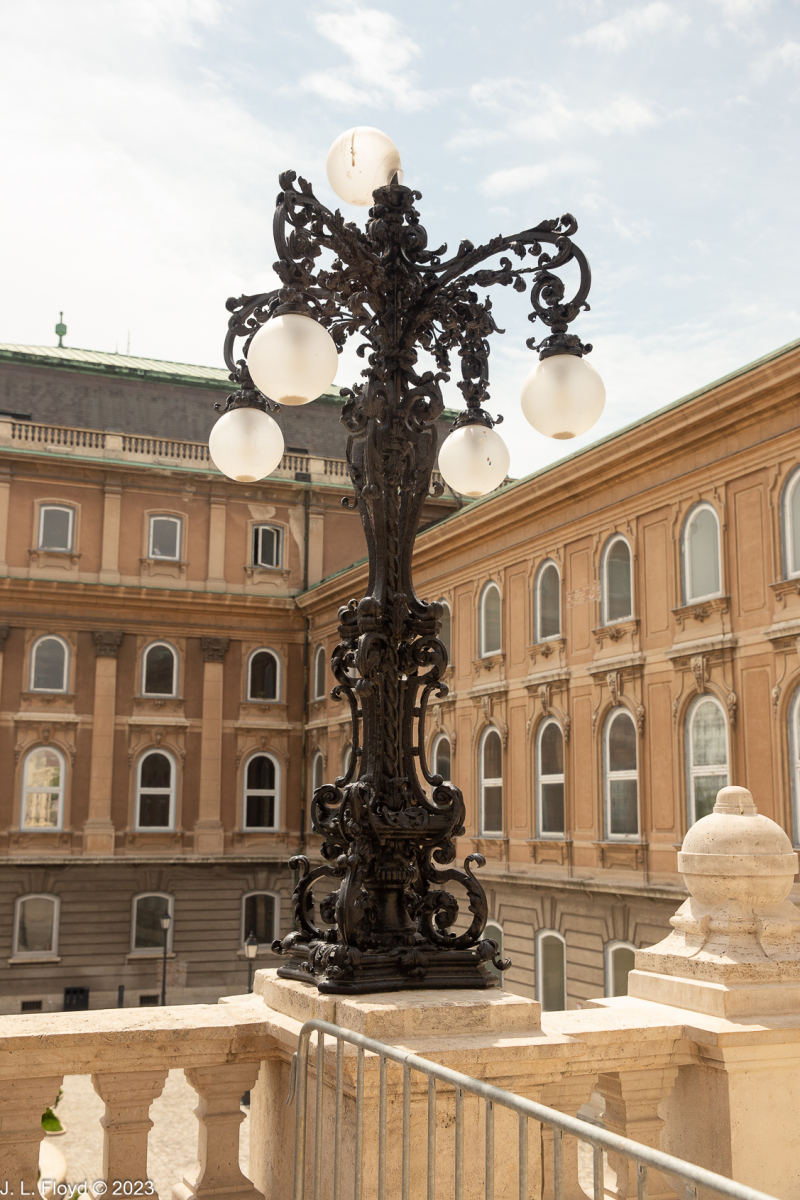
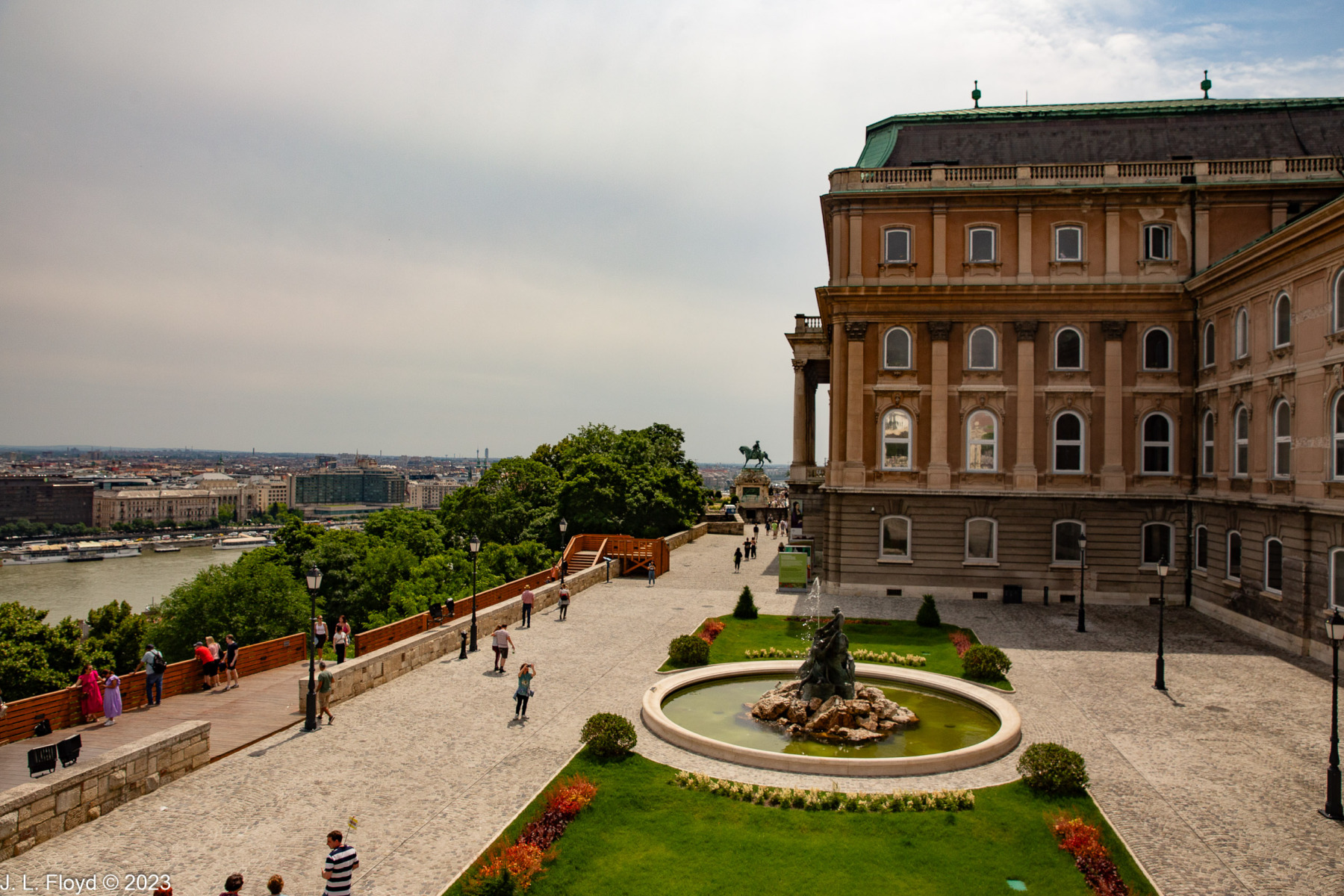
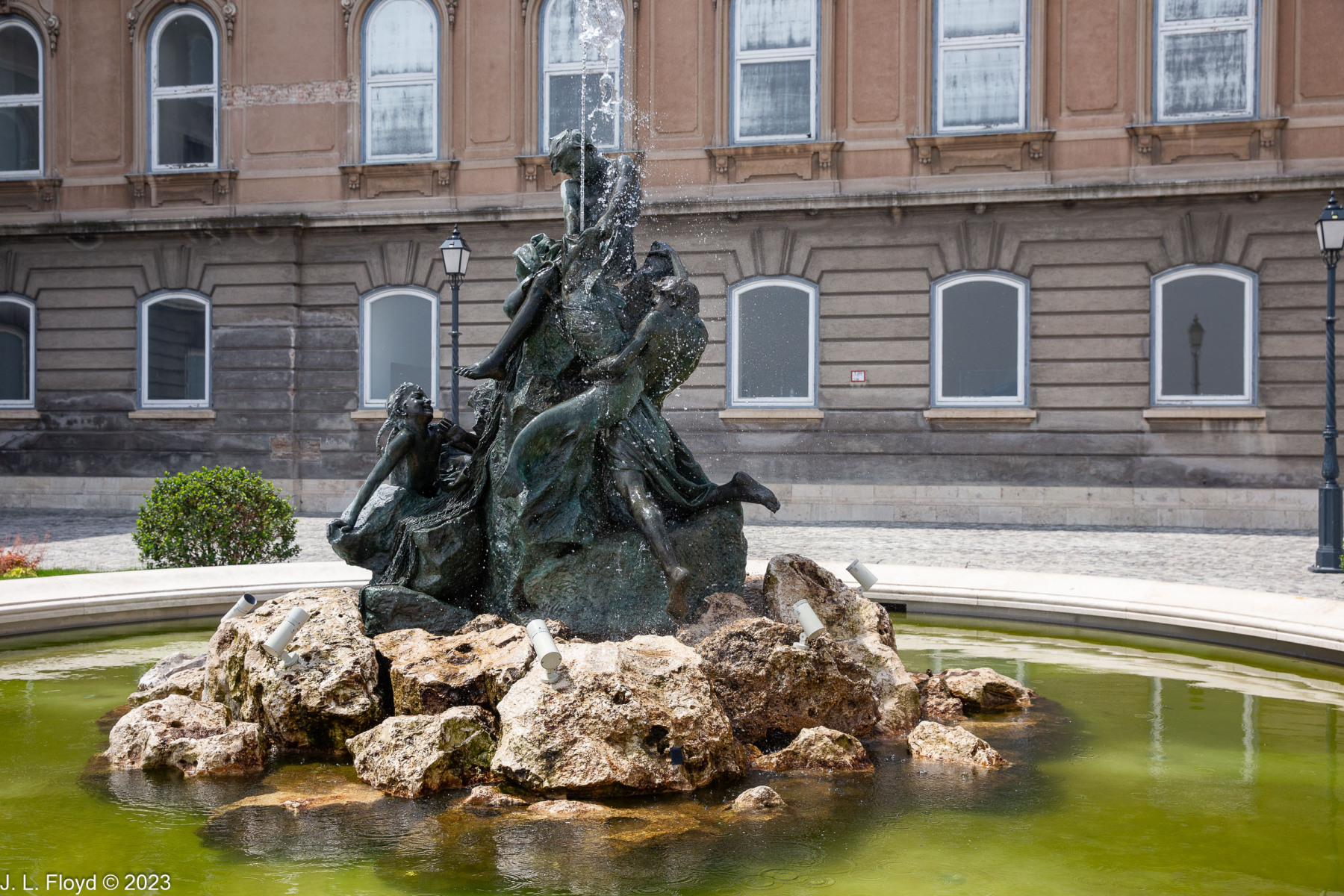
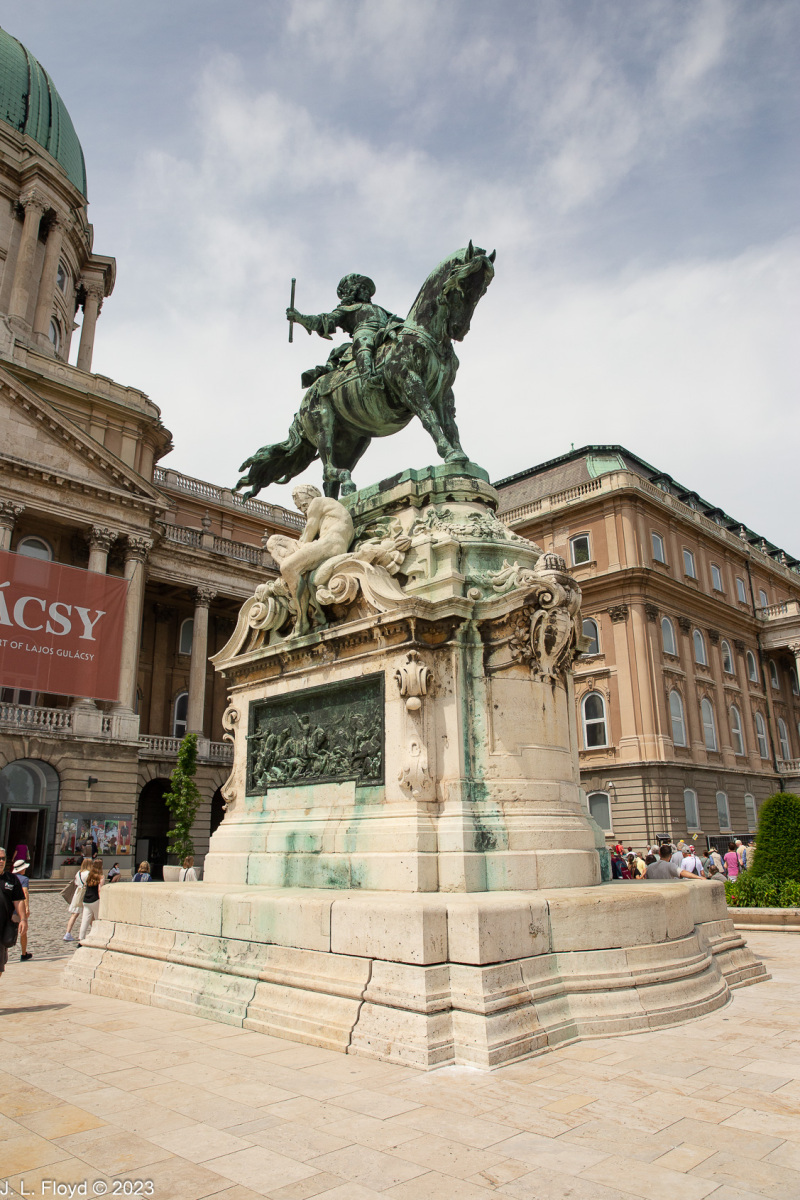
Descending the Habsburg Steps to the Fisherman’s Terrace, we came to the famous Fountain of the Fishing Children. The Fountain holds a 1912 creation by sculptor Károly Senyei depicting two children trying to catch a fish. Their net is especially notable for its fine workmanship. From the Fisherman’s Terrace, which fronts a side wing of the palace, one continues on to the Savoy Terrace, in front of the main entrance. These terraces provide wonderful views of the city of Budapest. The Savoy Terrace is the location of an equestrian statue of Prince Eugene of Savoy, the great general who decisively defeated the Ottoman Turks in the late 17th century and later partnered with the British Duke of Marlborough in saving the Austrian Empire from French conquest.

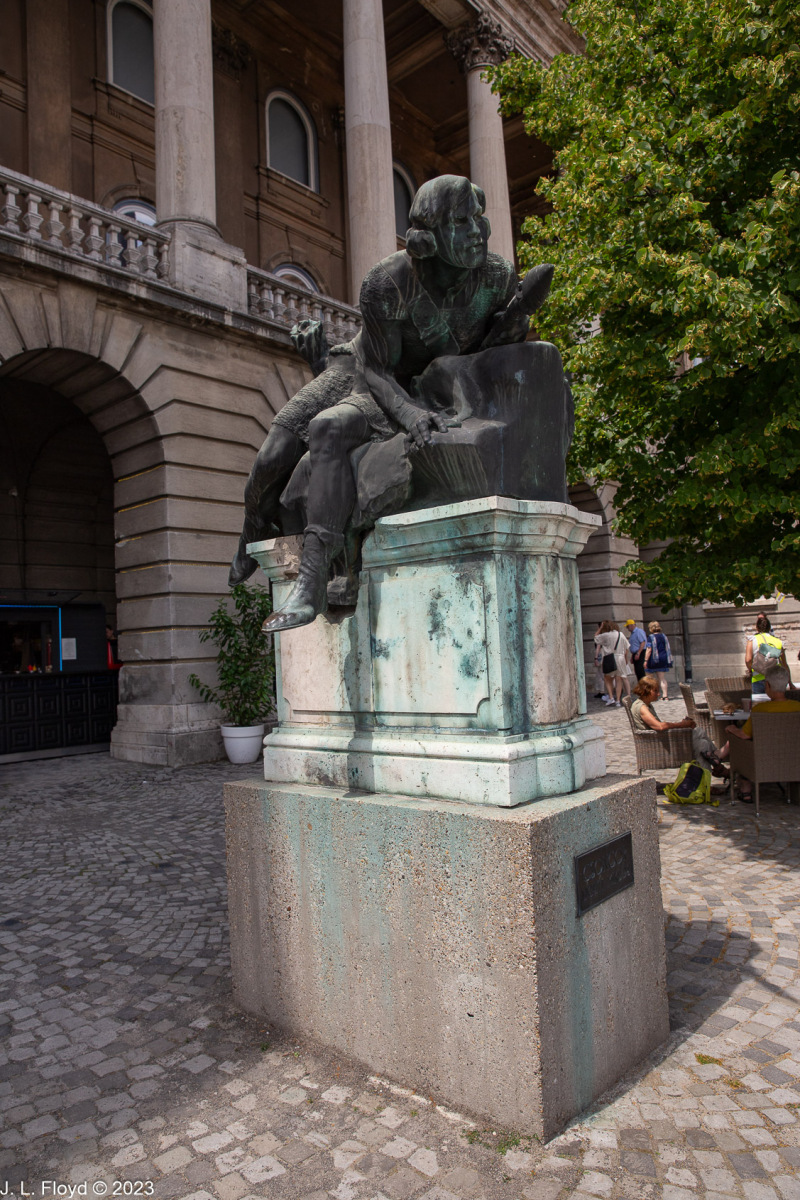
Also on Savoy Terrace, on either side of the palace entrance, are statues of Csongor and Tünde, the title characters of a major Hungarian literary work, the fairy-tale poetic play Csongor és Tünde, by Mihály Vörösmarty. I only photographed the statue of Csongor.

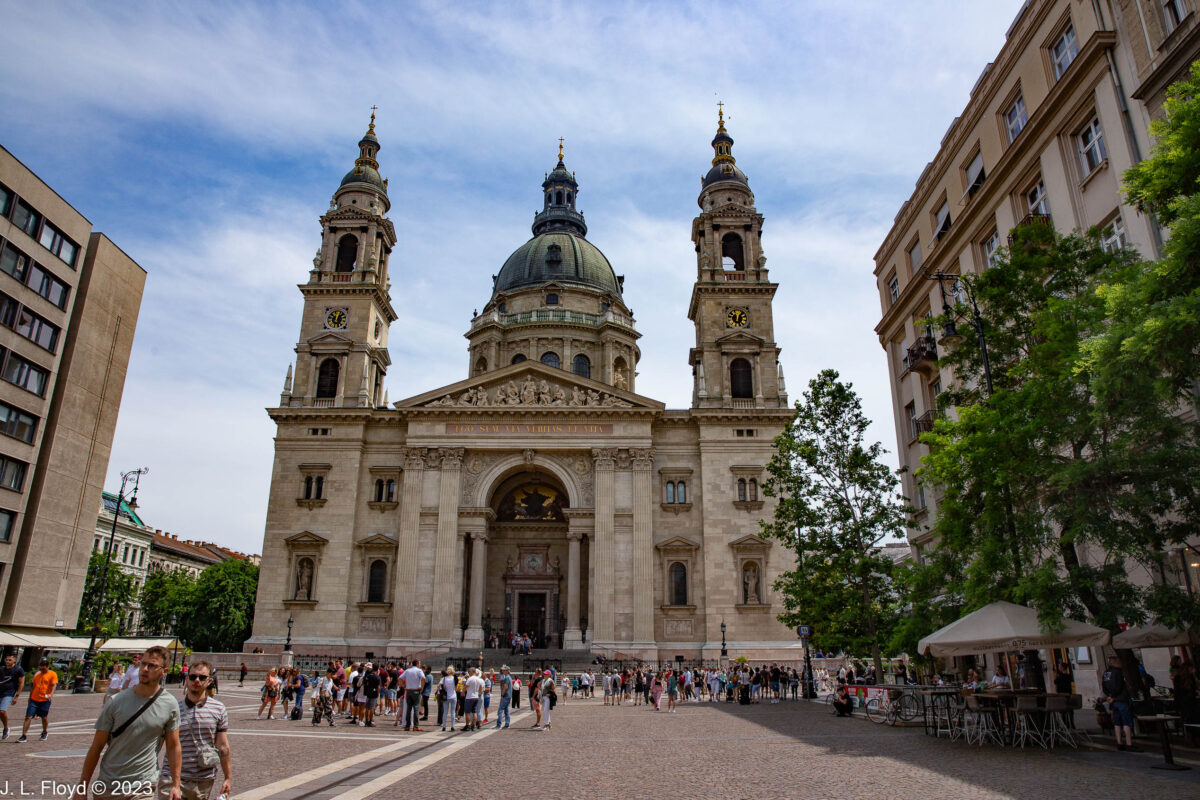
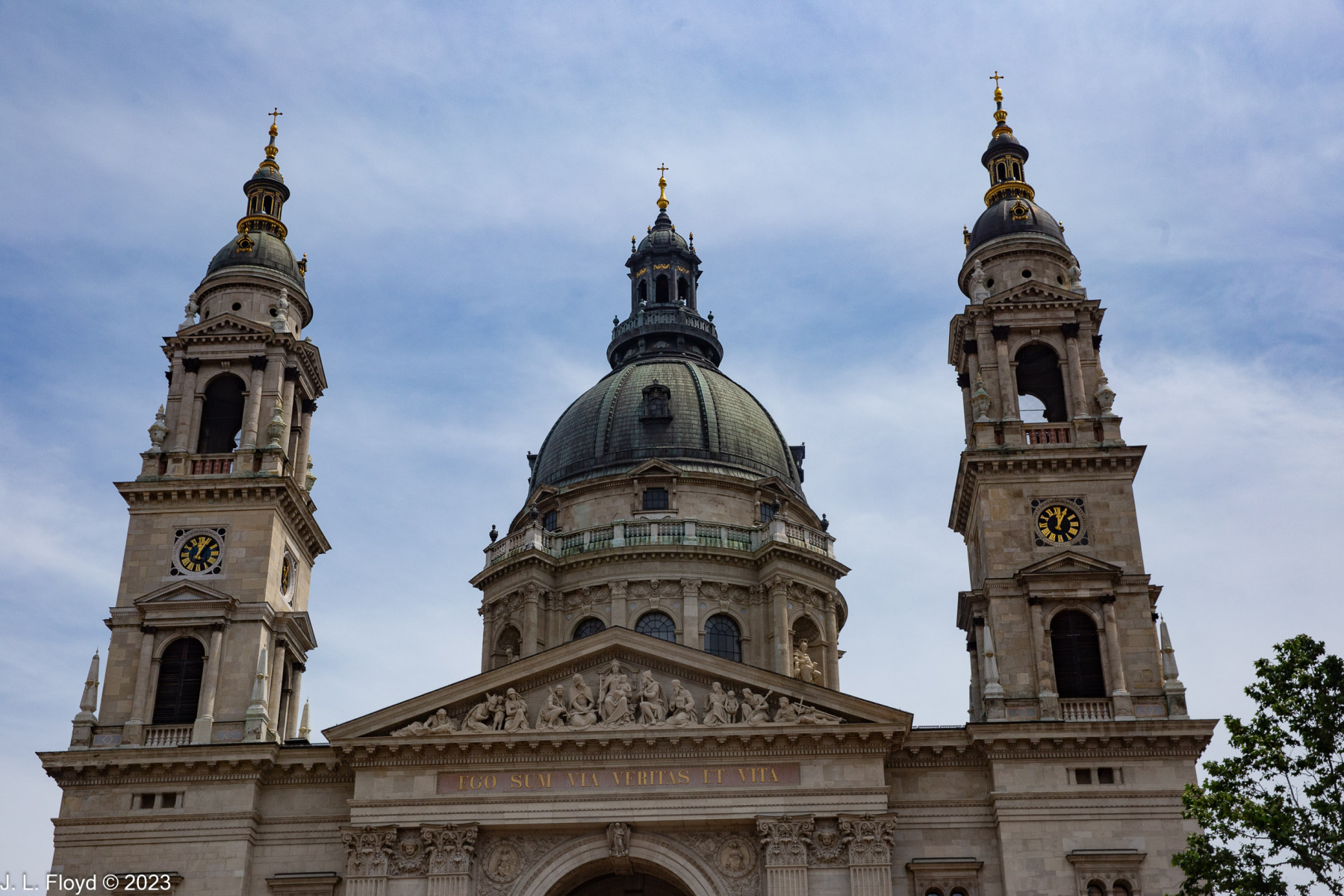
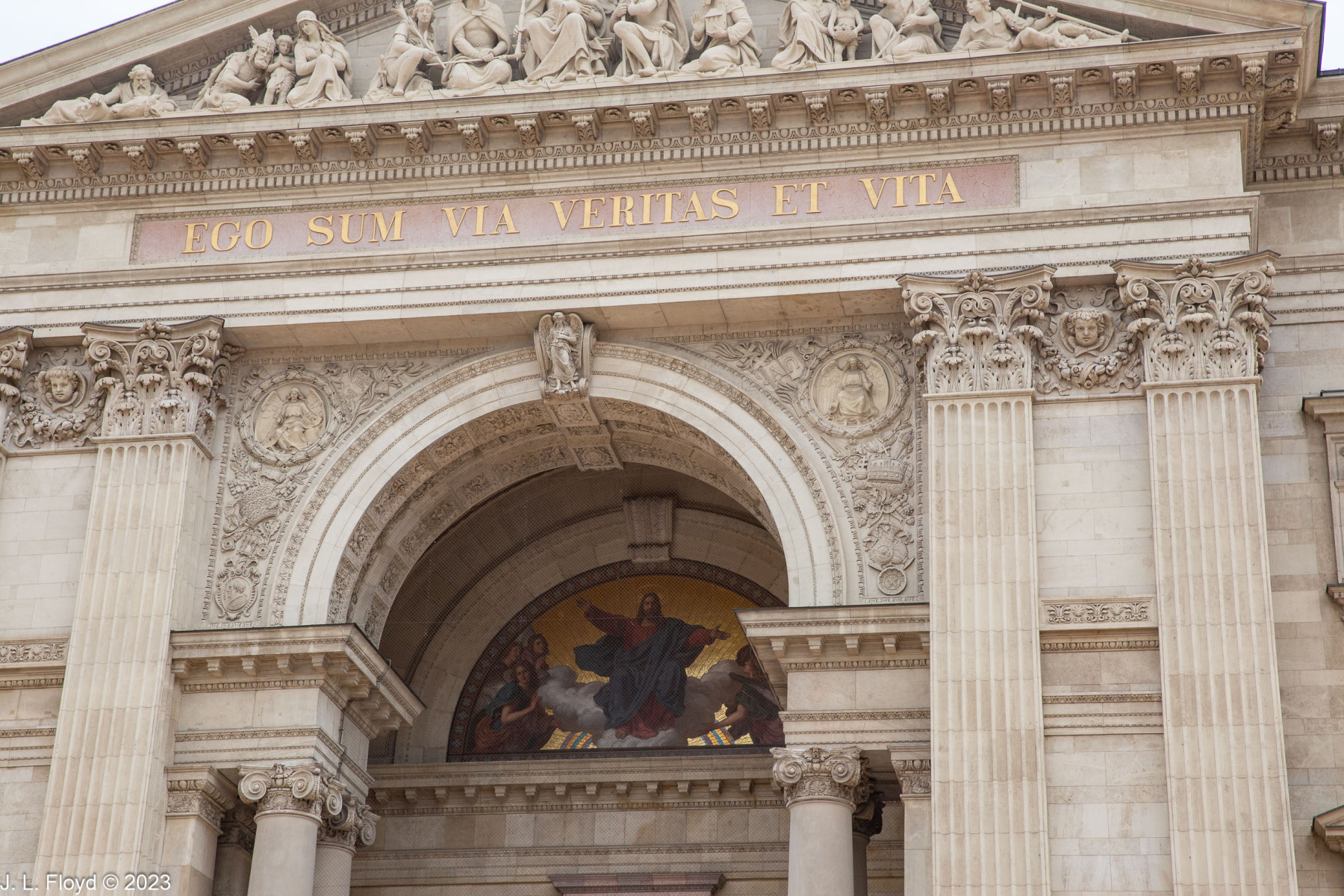
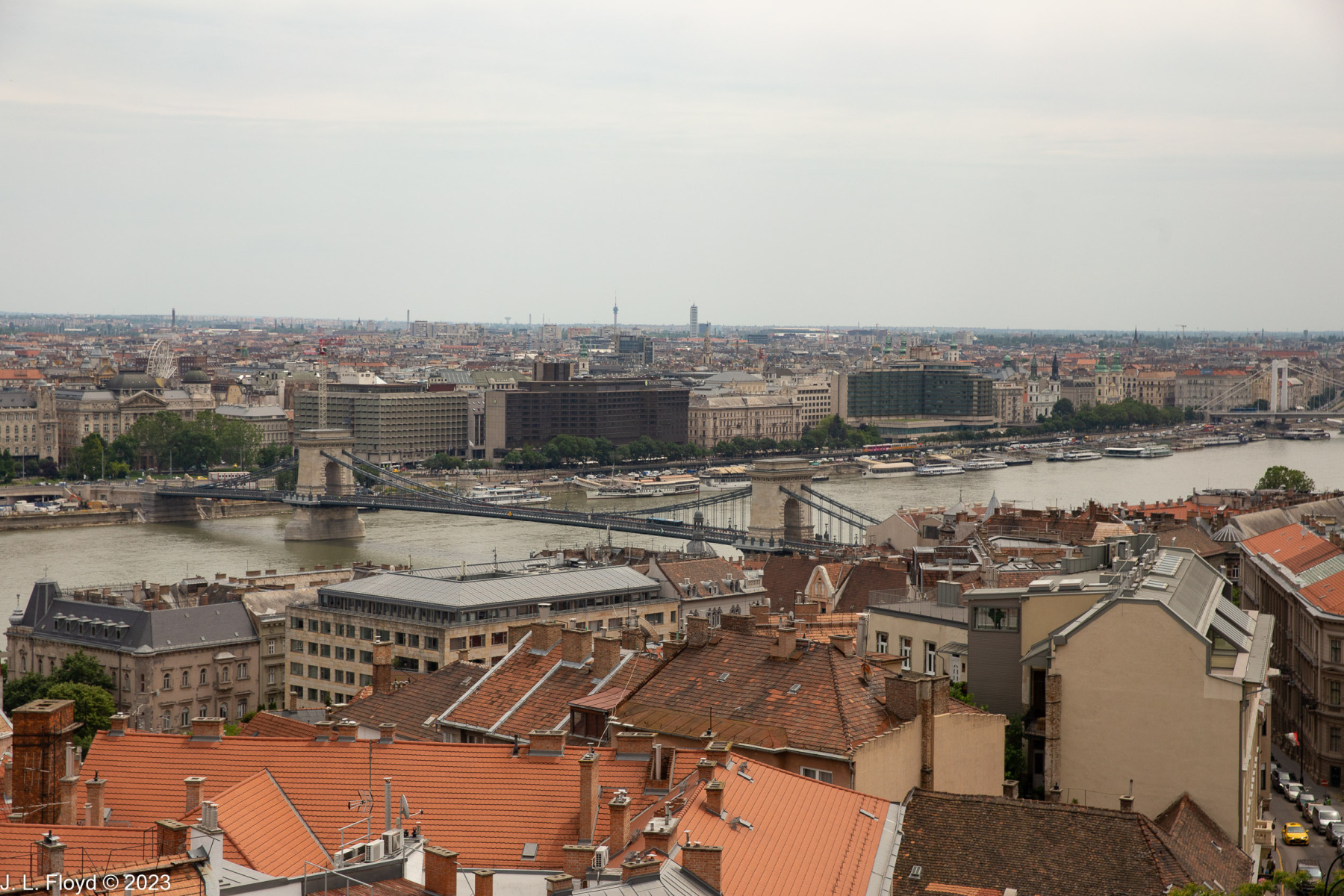
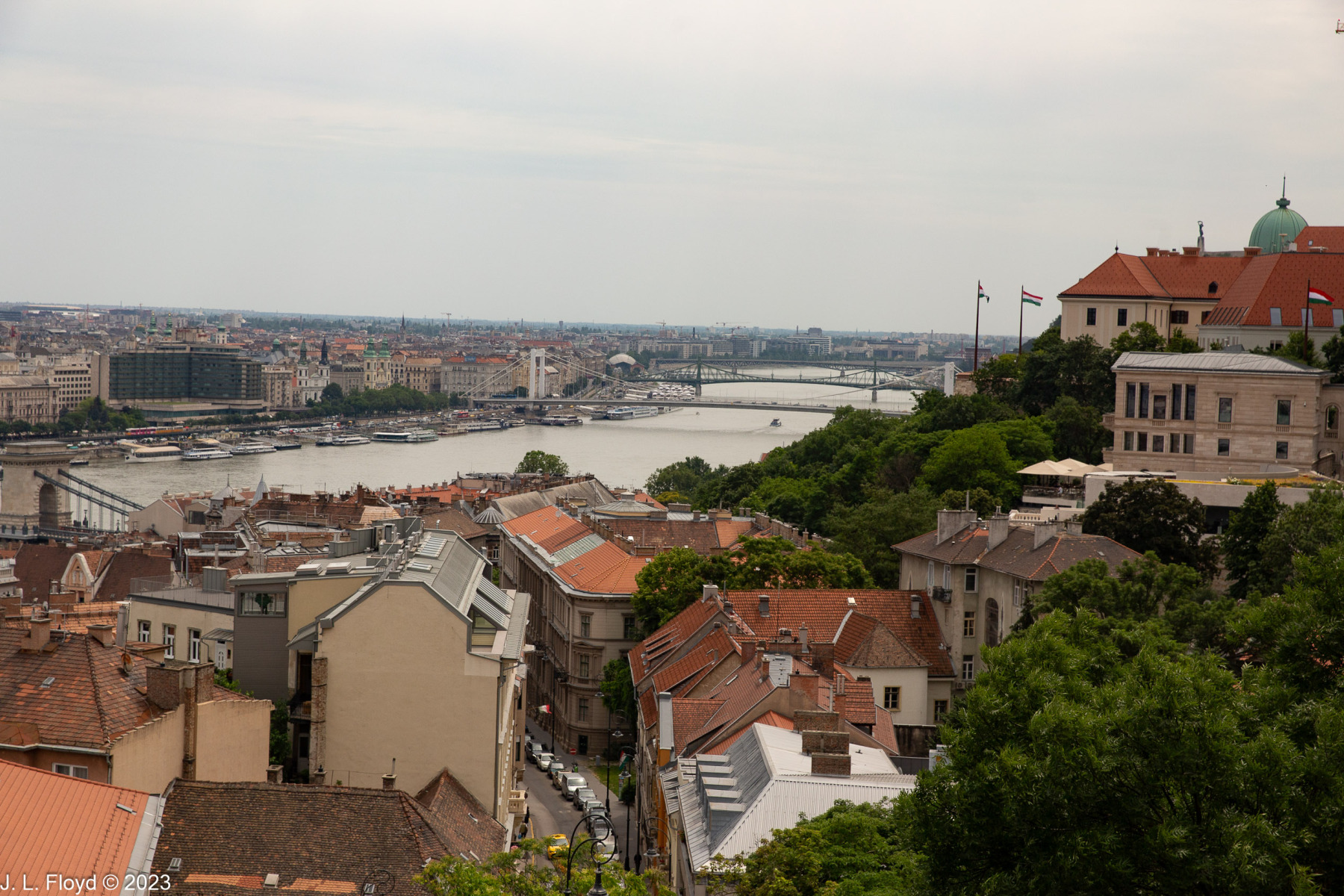
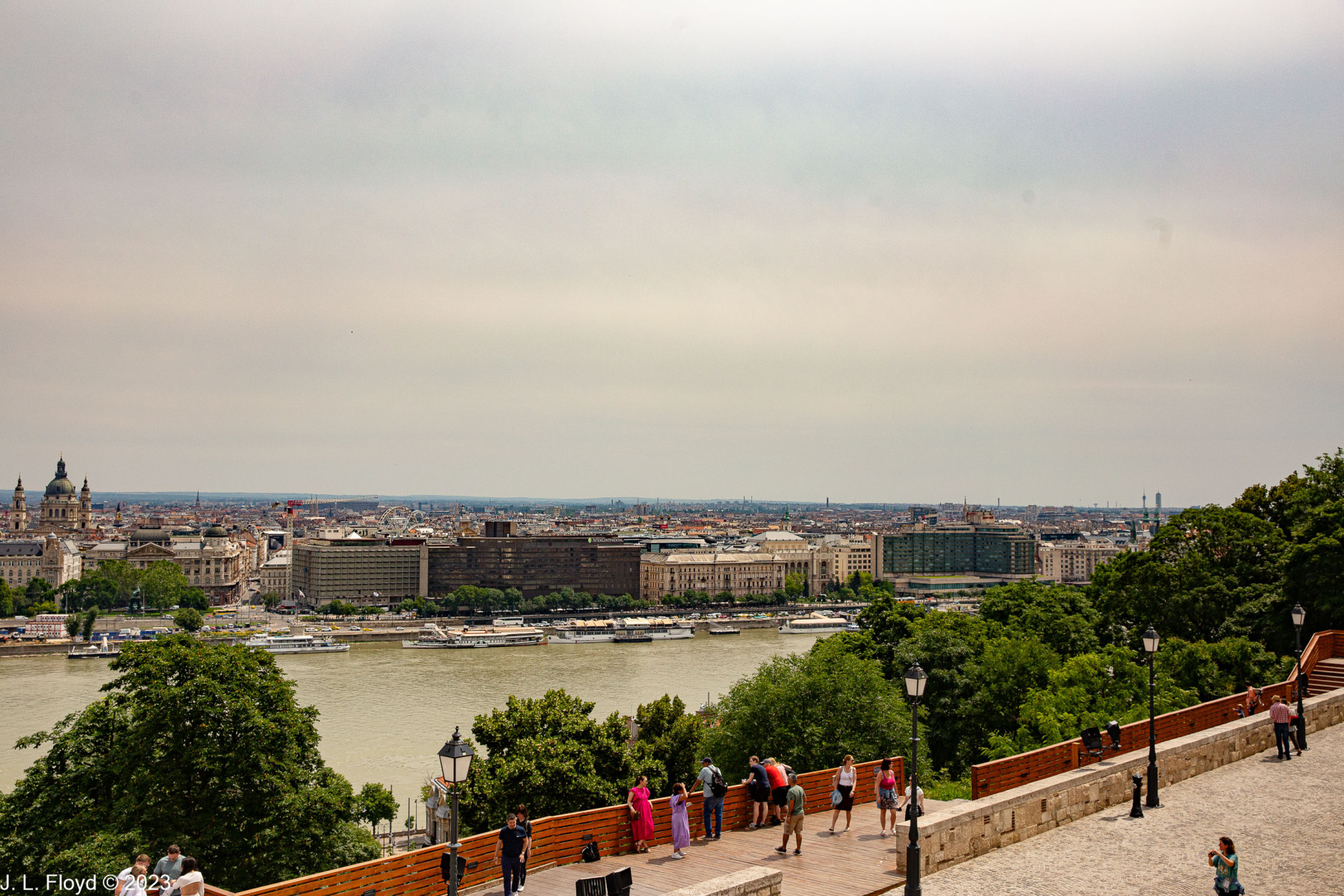
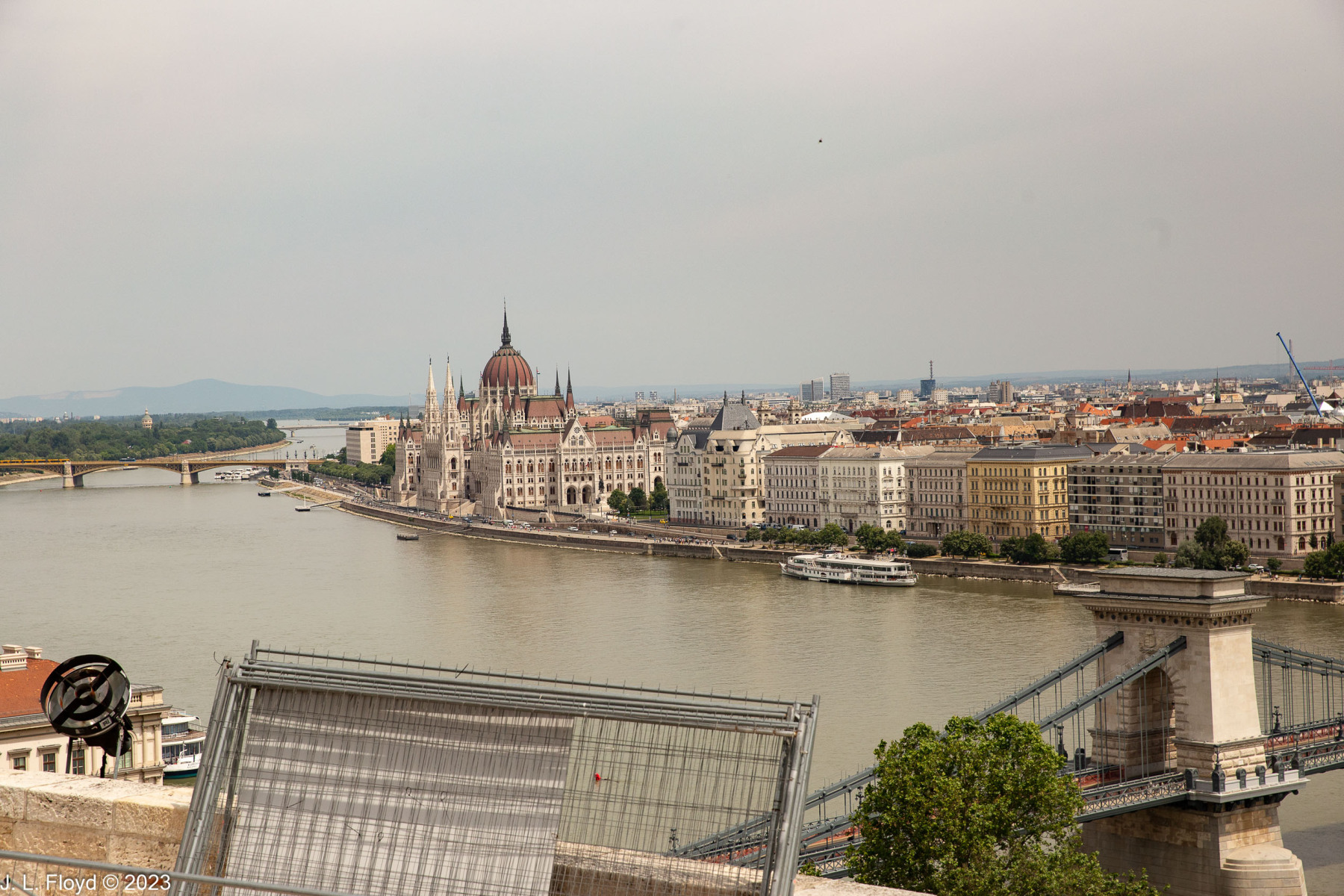
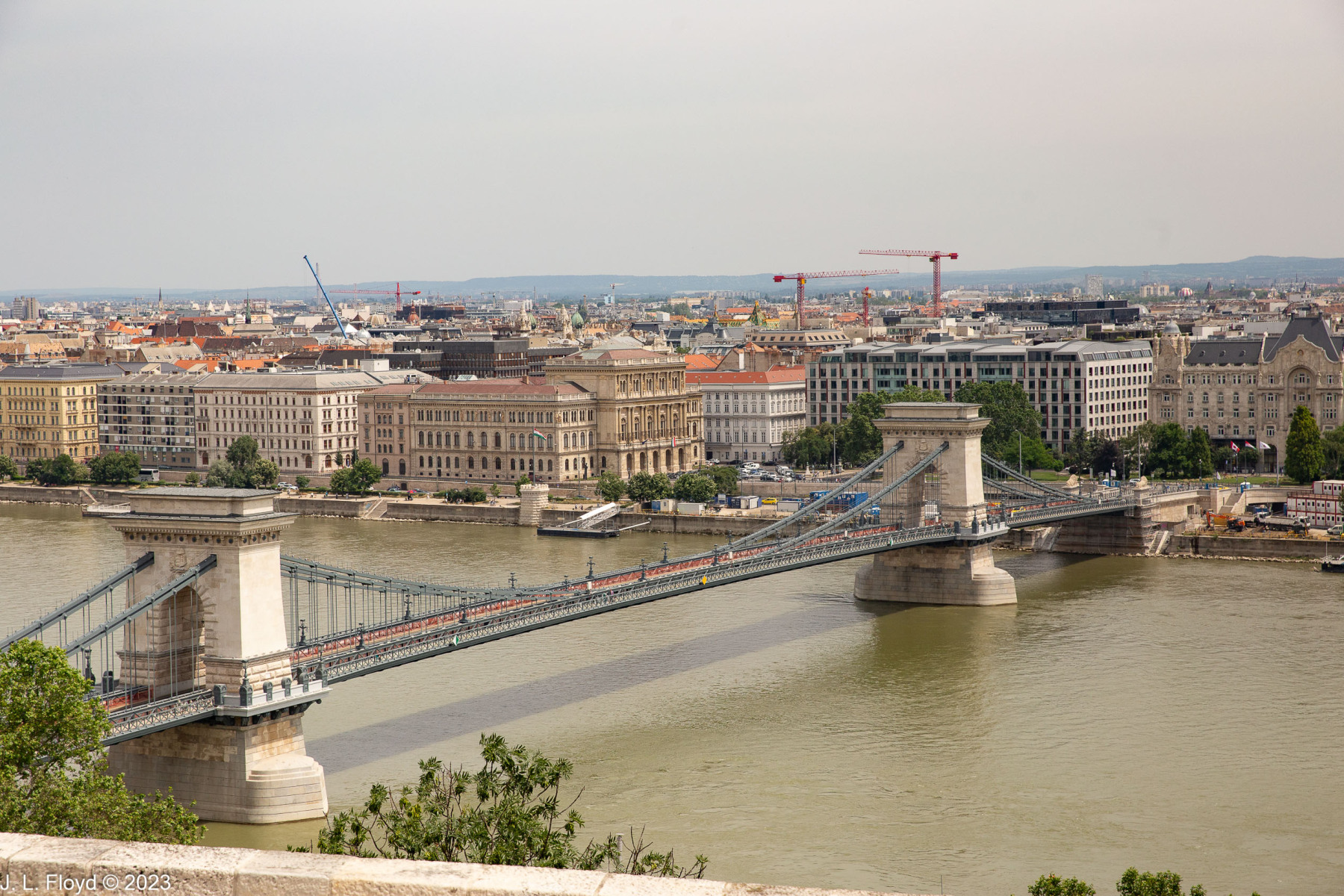
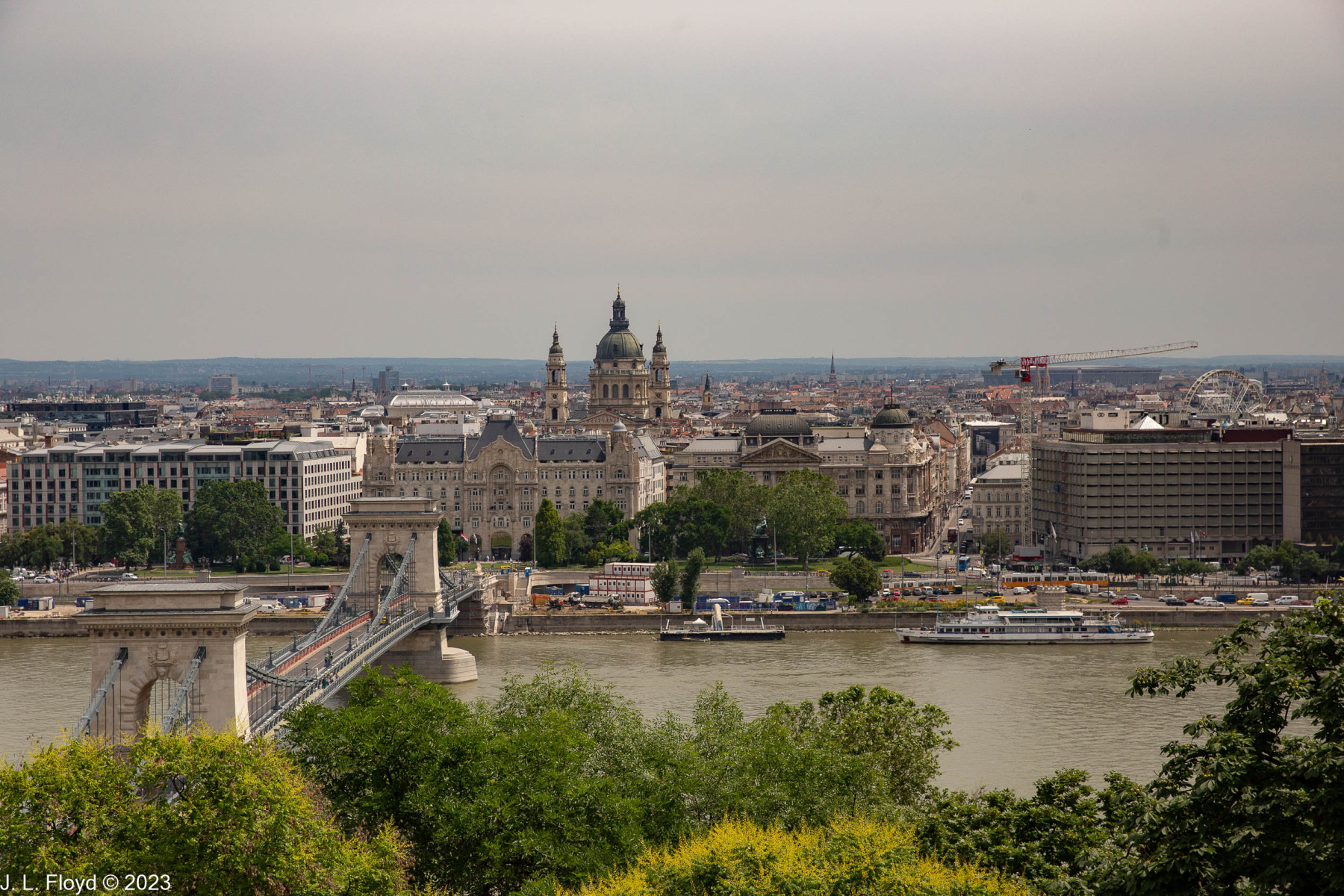
From the Savoy Terrace I was able to see and photograph the Hungarian Parliament building on the Pest bank of the Danube to the north; and directly across the river from Castle Hill, the Chain Bridge over the Danube, the Four Seasons Hotel/Gresham Palace, the Ministry of Interior to its right, and St. Stephen’s Basilica.

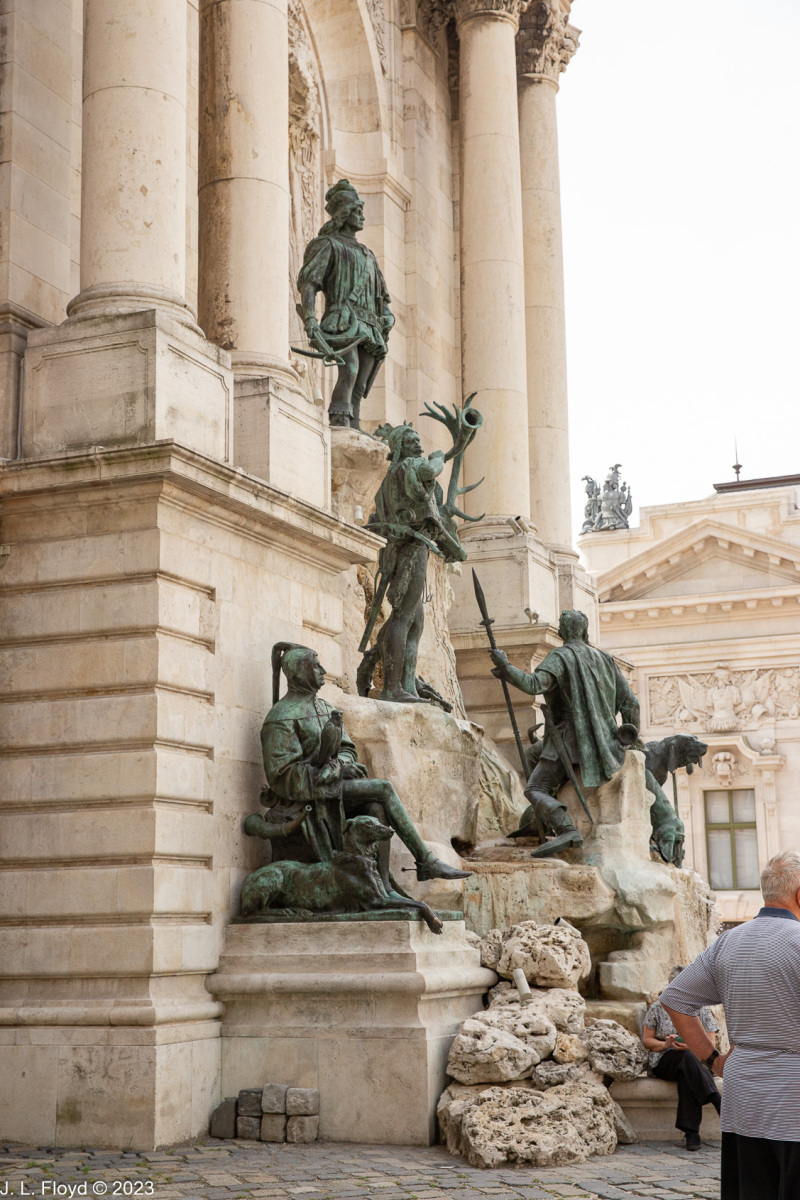
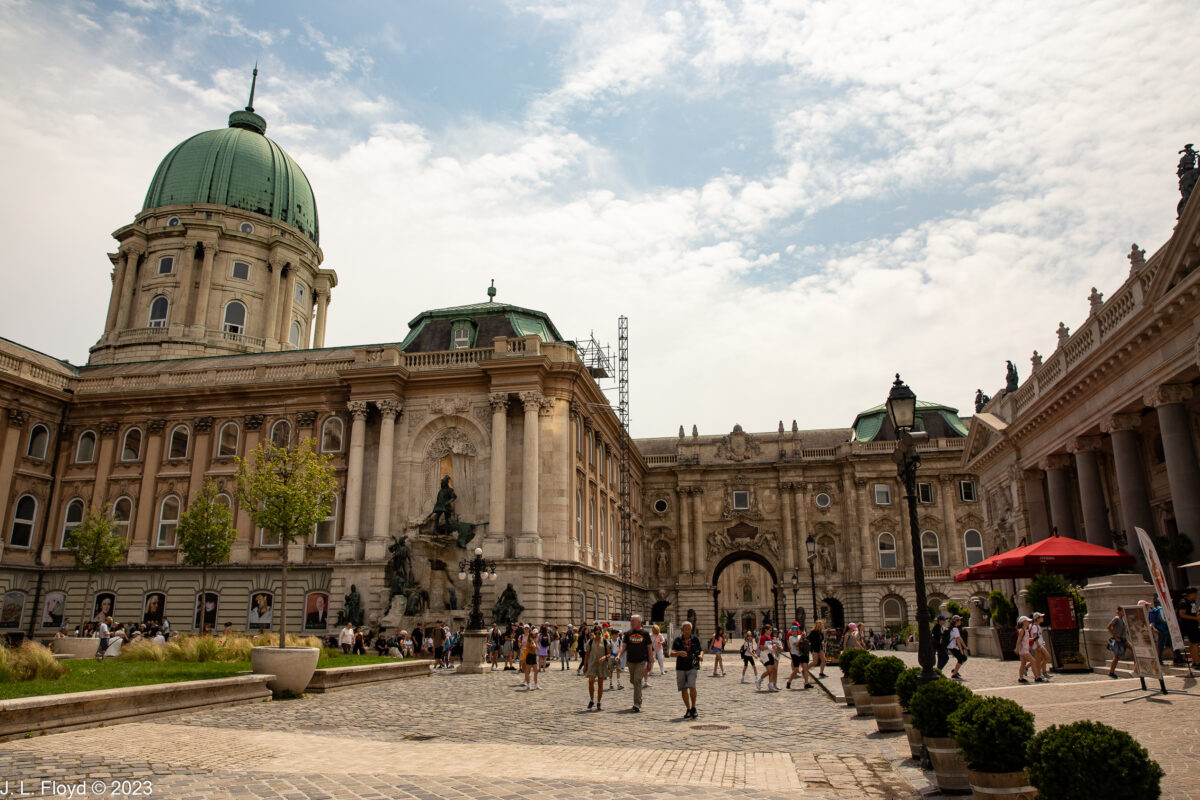
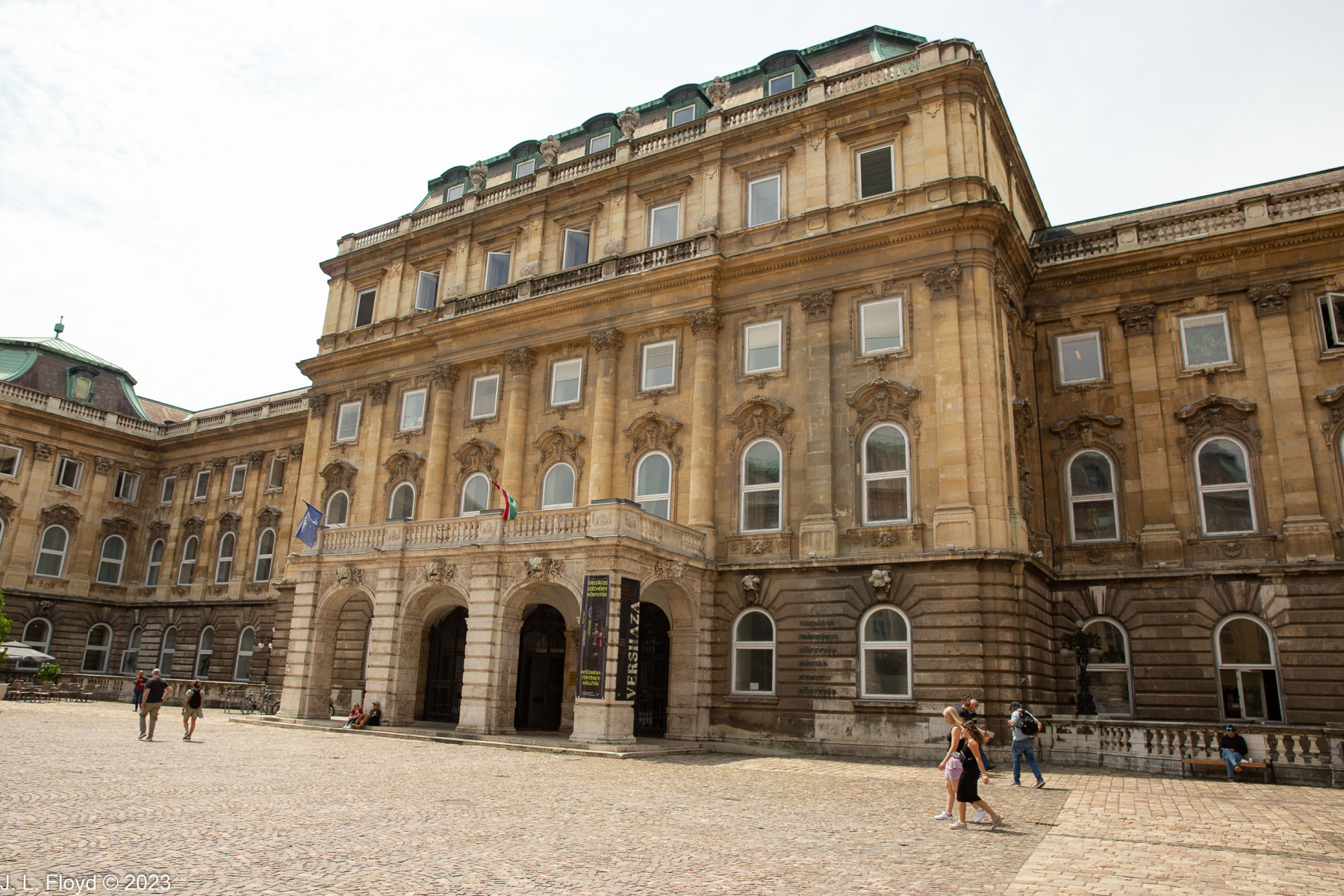
After soaking up the spectacular views from Savoy Terrace, we went around a corner of the palace to the Hunyadi Court on the west side. There we encountered a magnificent fountain sculpture created in 1900 by Alajos Stróbl. It depicts a hunting party led by King Matthias Corvinus (1443-1490) and is said to be the most photographed item in the castle complex.

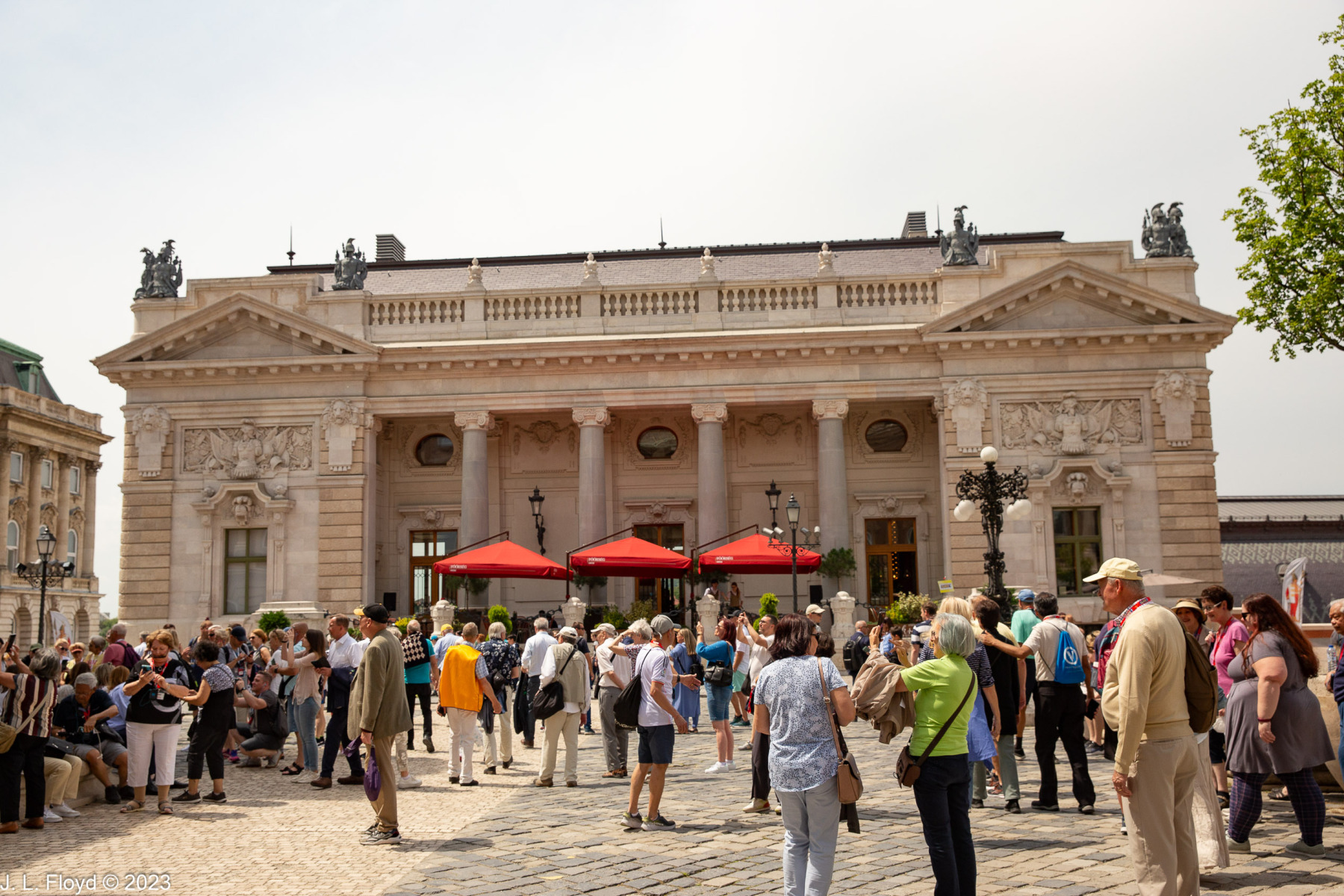
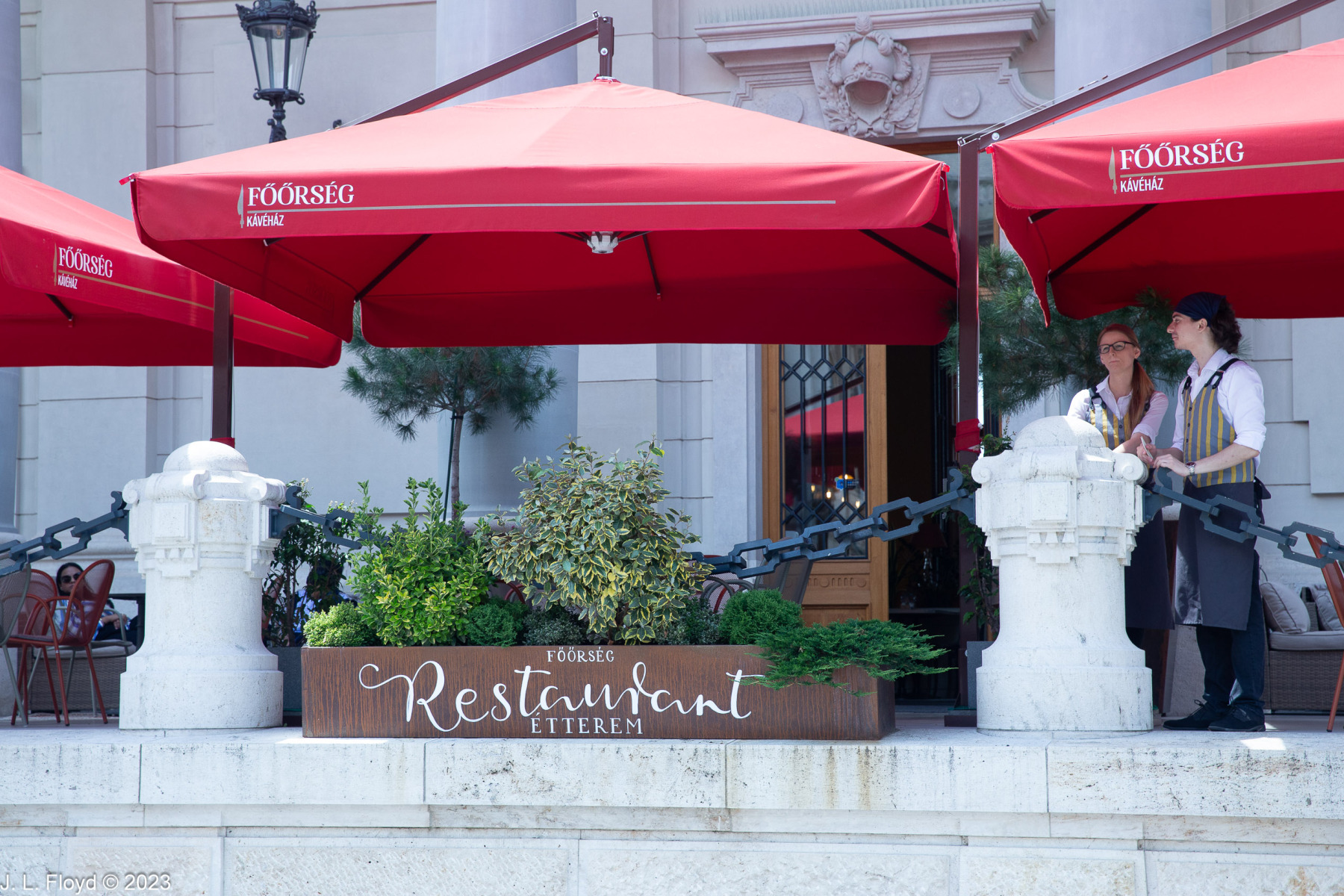
On the west side of Hunyadi Court is the Main Guard Building, the former headquarters of the Hungarian Royal Noble Guard, founded in 1760. It now houses the Főőrség (Guard House) Restaurant and Coffeehouse, which is reputed to be mediocre at best.

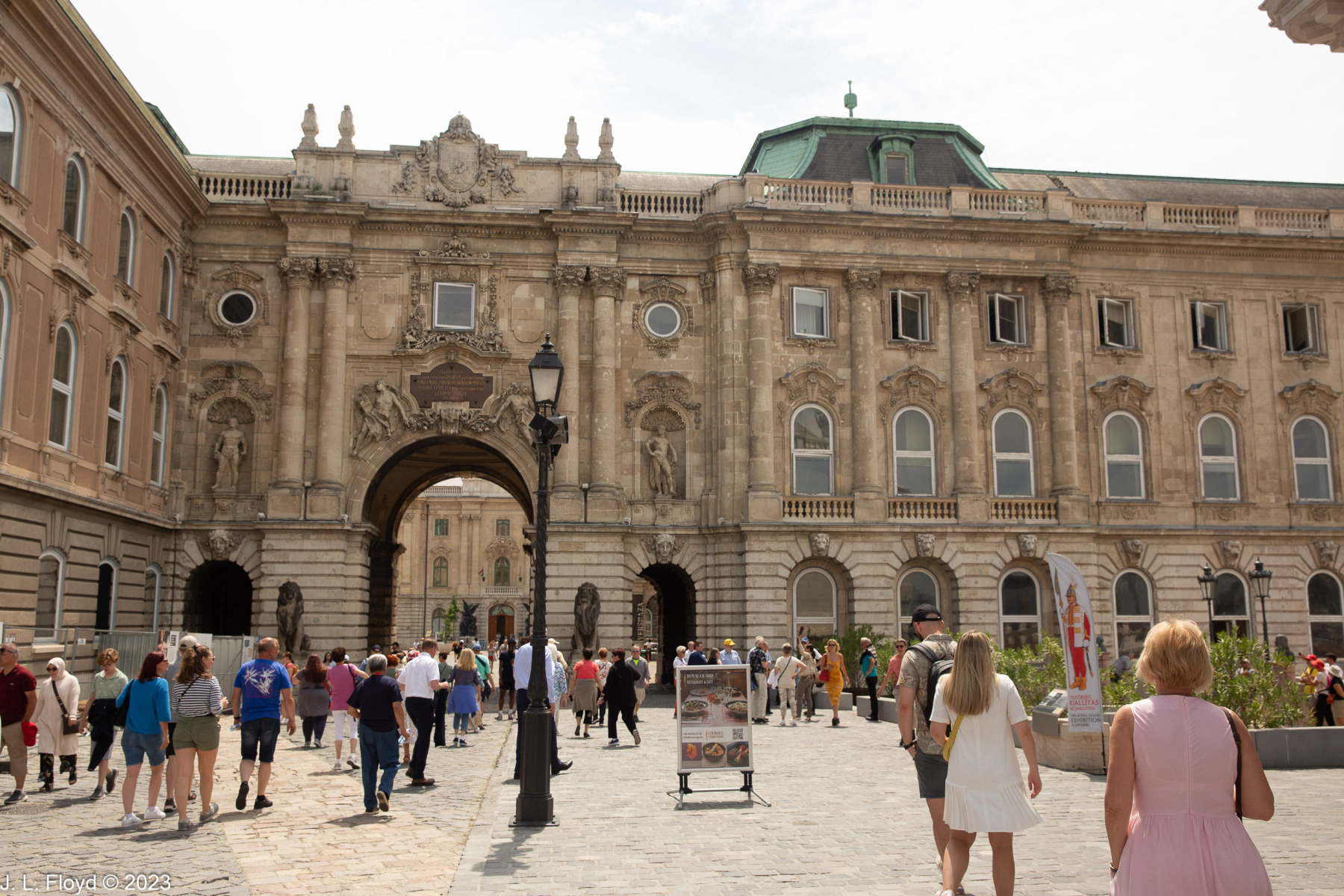
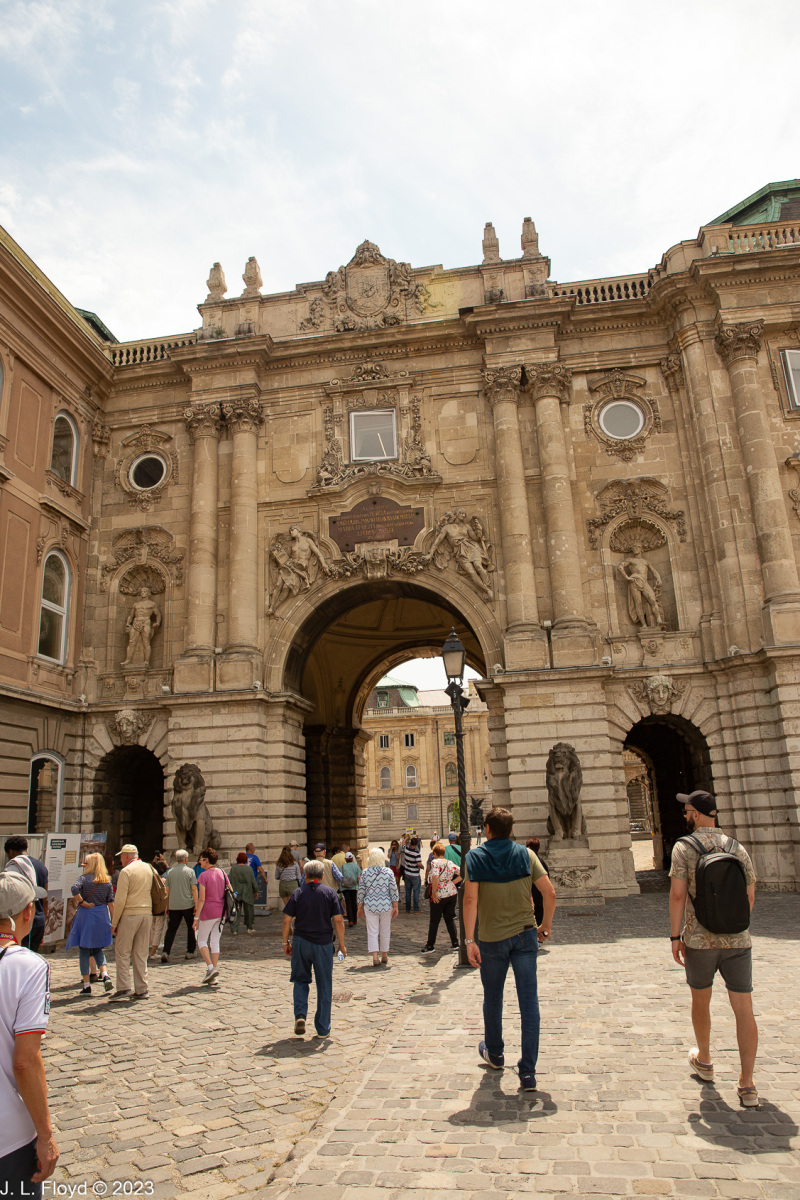
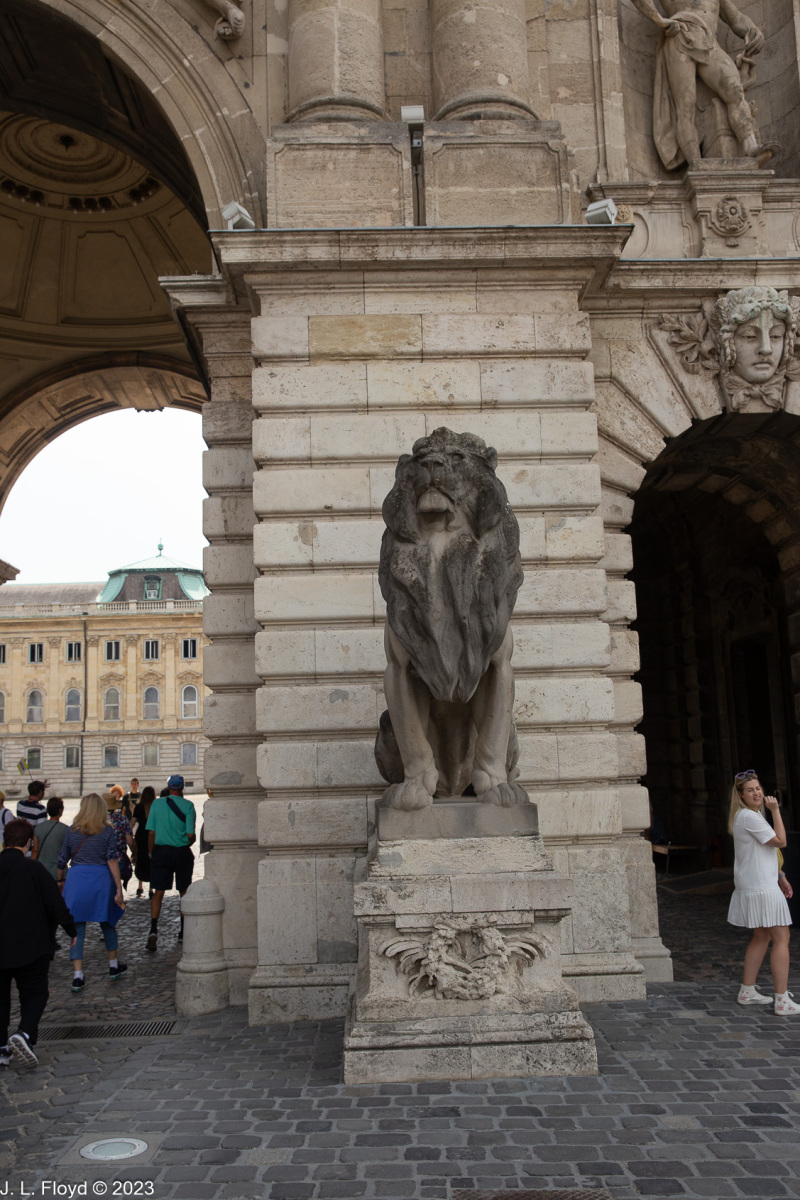
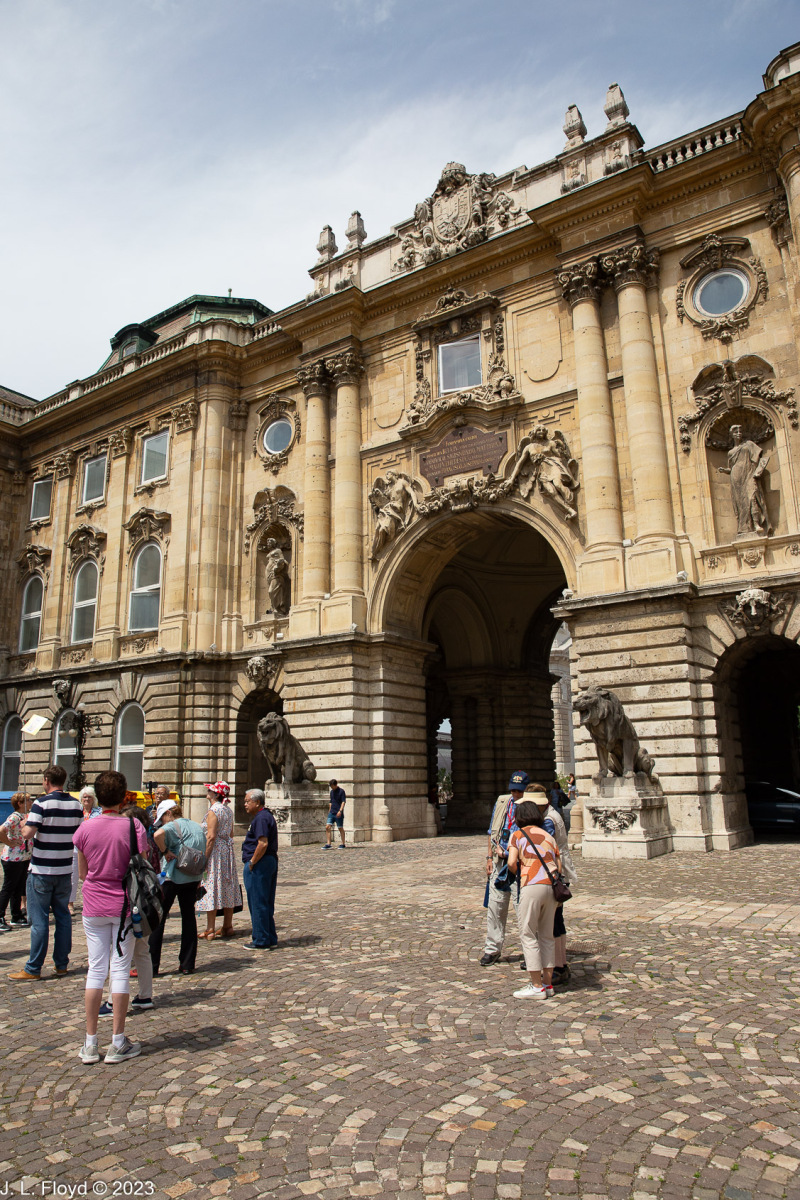
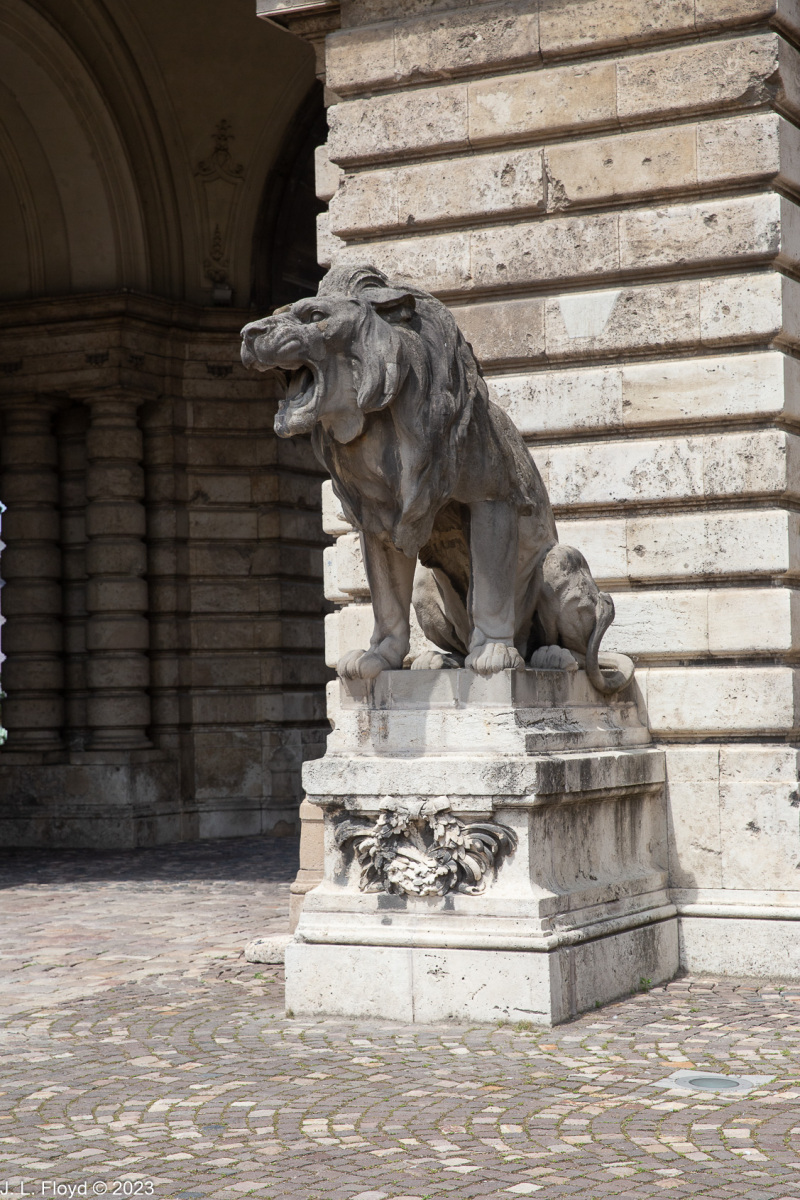
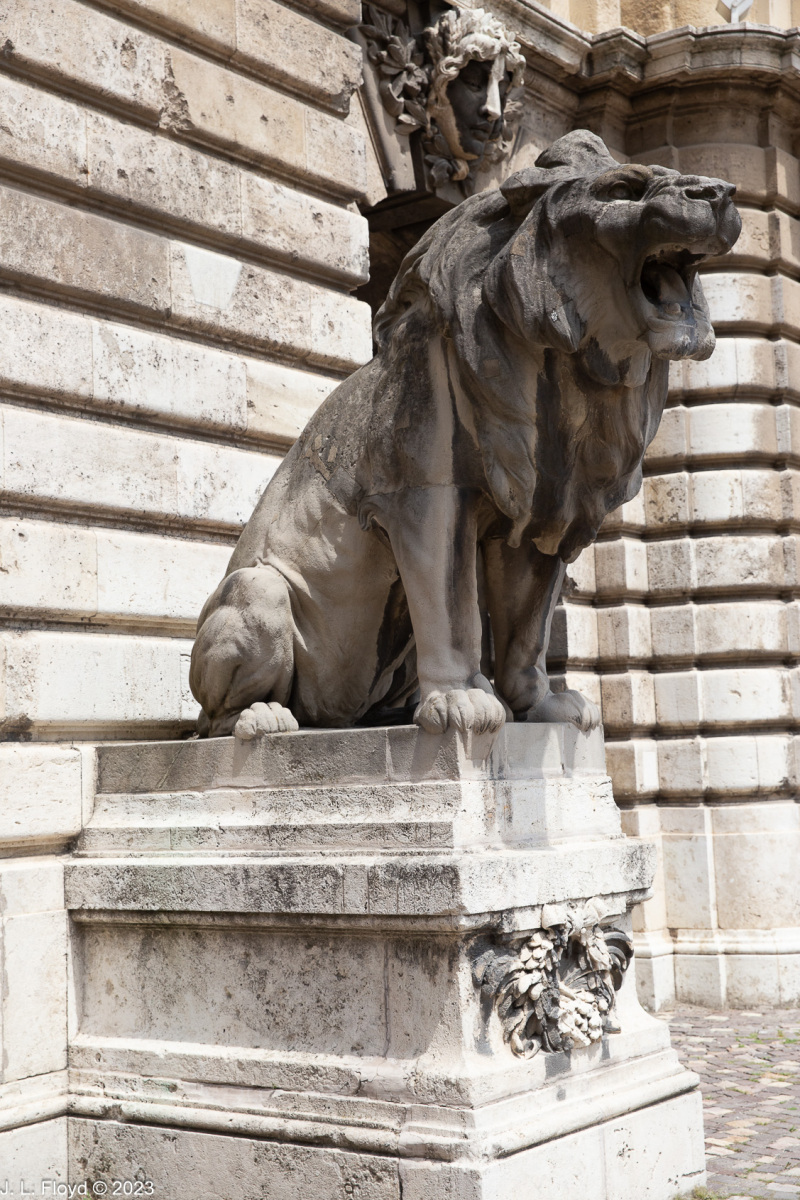
On the south side of the courtyard there is an archway flanked by two stately and dignified stone lions. This leads to the Lions’ Court, which was an open court until 1896, when it was closed by adding the Krisztinaváros wing of the palace, named after the daughter of Maria Theresa. It now houses the Hungarian National Library.

The inner side of the archway is guarded by two more stone lions, who in contrast to the dignified lions on the other side are menacing, so much that you can almost hear them roaring. This was puzzling to me because I would have expected that the the hostile lions would be positioned on the outside to discourage undesirables, such as Donald Trump, from entering the courtyard, rather on the inside to discourage them from leaving.

On the east side of the Lion’s Court, opposite the Library, is the facade of the Grand Ballroom in the main wing of the palace. The interior of the Ballroom did not survive the destruction of World War II and the post-war remodeling.

The Lions’ Court also contains the Palatinal Crypt, which we did not see because it is underground. The entrance is presumably in the National Library. The Crypt is the burial place of the palatinal branch of the Habsburg family, i.e. the Hapsburgs who actually resided in Budapest. The Austrian emperors normally lived in Vienna and made only occasional visits to Budapest, but they sent their junior members – usually brothers of the monarch – to govern the unruly Hungarians. From 1796 to 1847 that was Archduke Joseph Anton, younger brother of Austrian Emperor Francis I. It was he who established the crypt as the family mausoleum for the Hungarian palatinal branch of the Habsburgs. Ironically, this place of death was the only part of the Buda Palace to survive intact the ravages of World War II.

Exiting the Lions’ Court, we backtracked through Hunyadi Court and left the palace grounds by way of Beggars’ Gate, as it had been known in medieval times. We encountered no beggars, but we did pass an iron spiderweb gate grille presided over by the figure of a raven with a ring in its beak. This is a symbol of the Hunyadi family, and is especially associated with King Matthias, on whose family crest and coat of arms it appears.

Categories
Danube River Cruise, June 2023

Budapest, June 16, 2023: Philosophers’ Garden

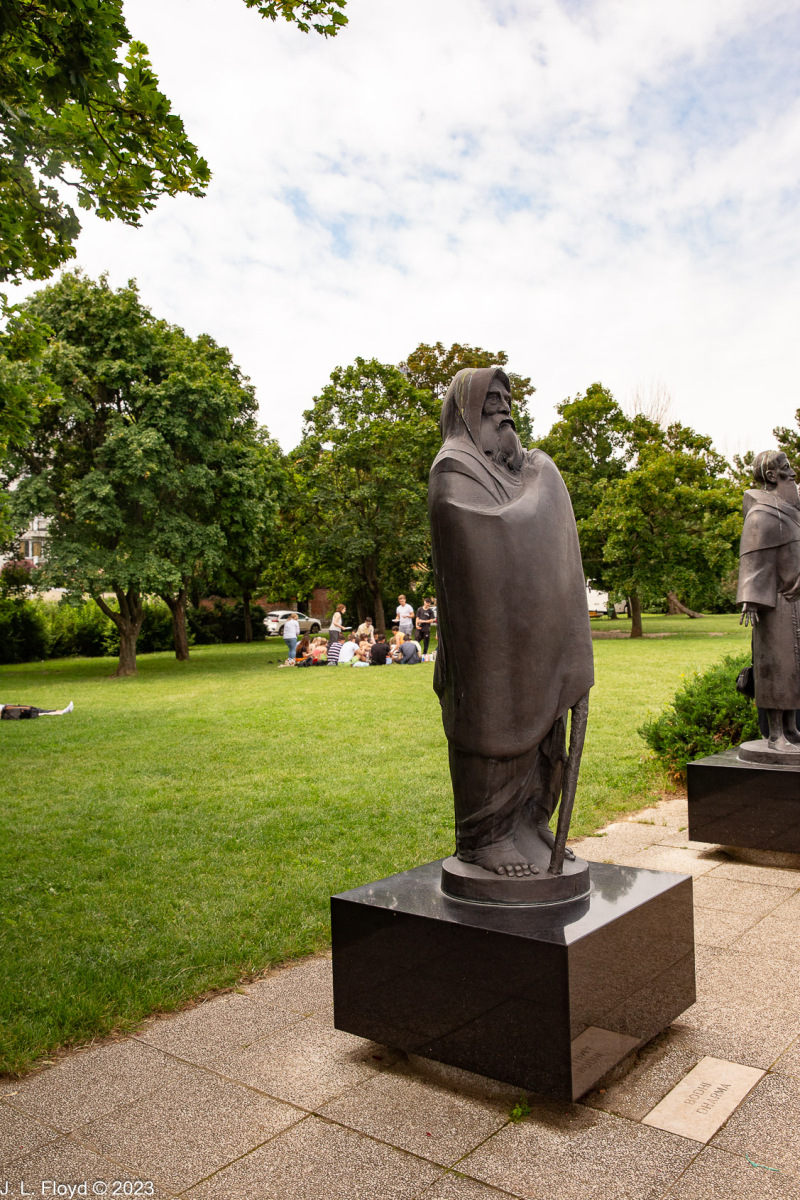
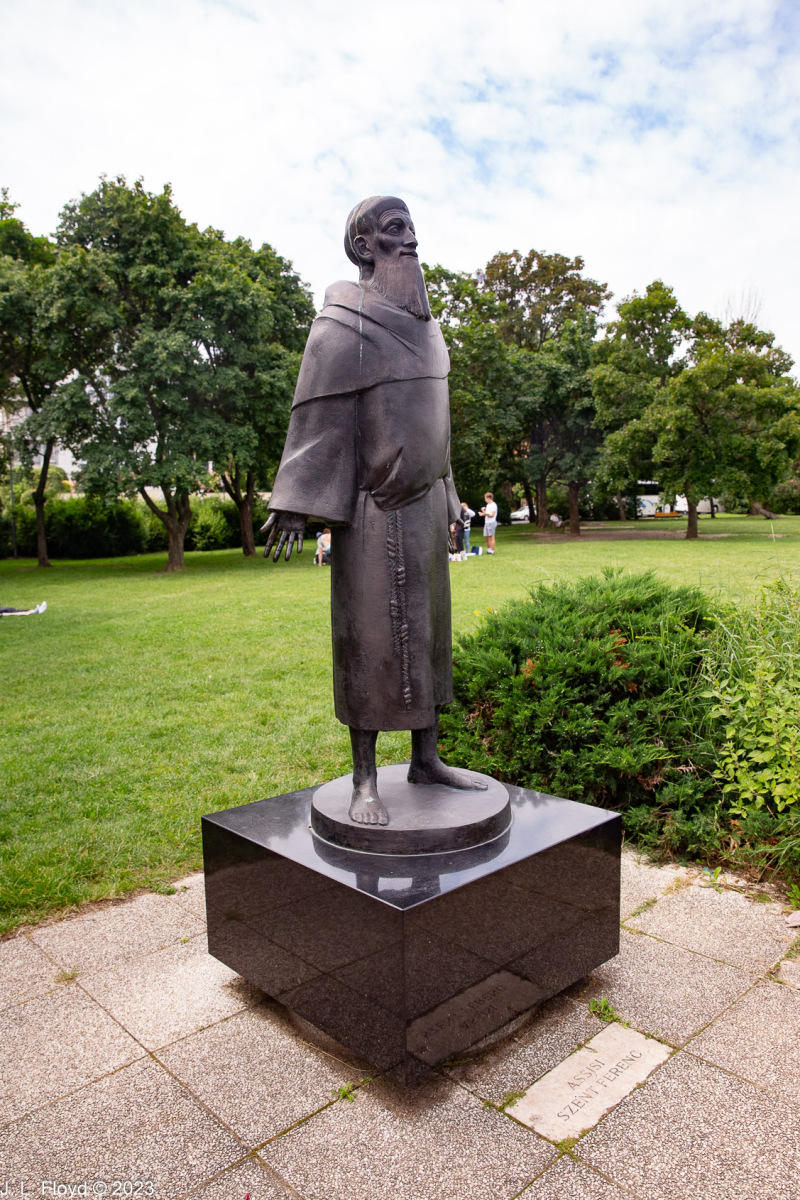
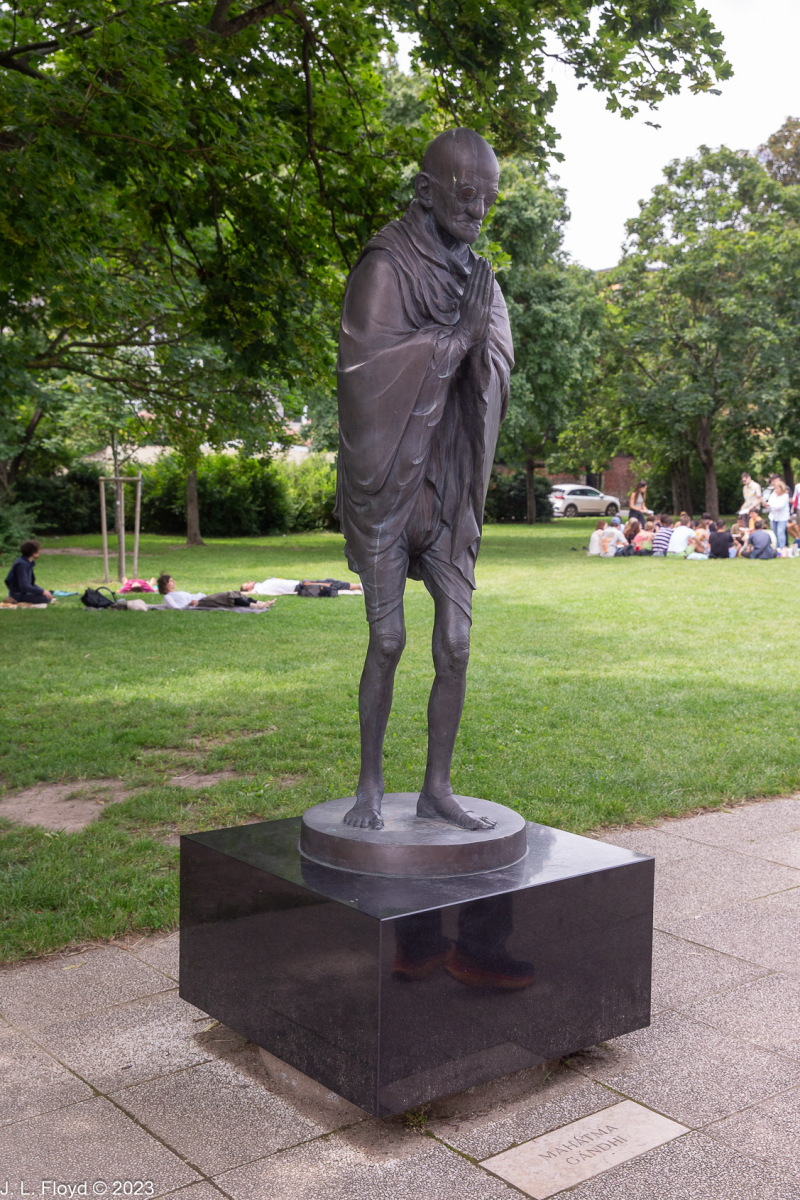
The place is inarguably misnamed. When George Bush was asked during the presidential campaign of 2000, “Who is your favorite political philosopher?” he answered, “Jesus Christ.” The answer was clever but inappropriate. Jesus Christ was not a political philosopher; he was a religious leader. He is also one of the figures memorialized in the Budapest Garden of Philosophers (Filozófusok kertje in Hungarian), along with Abraham, Buddha, Laozi, and Akhenaten, Mohandas Gandhi, Daruma Daishi (aka Bodhidharma), and Saint Francis of Assisi, all of whom, with the possible exception of Gandhi, are considered religious leaders rather than philosophers.

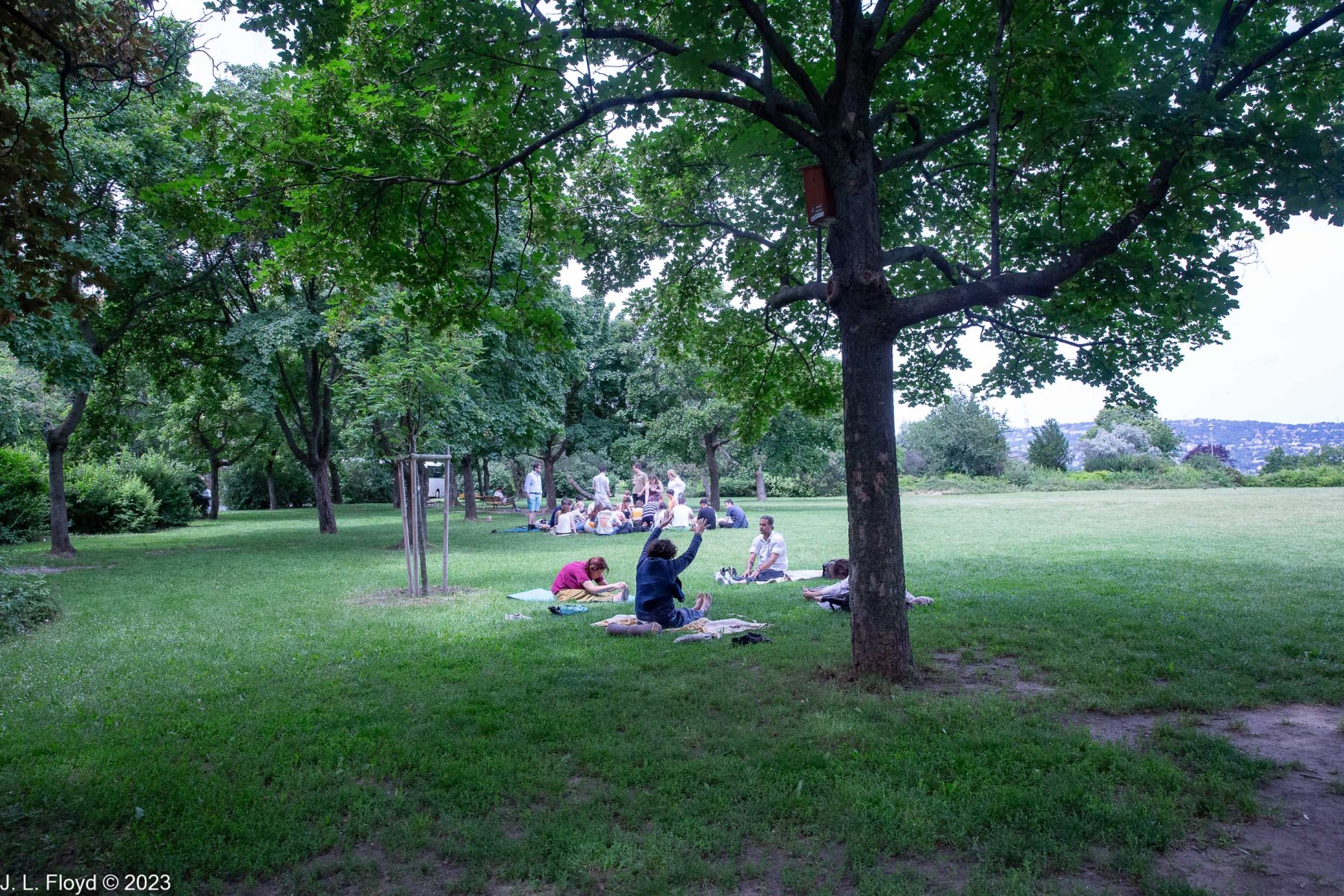
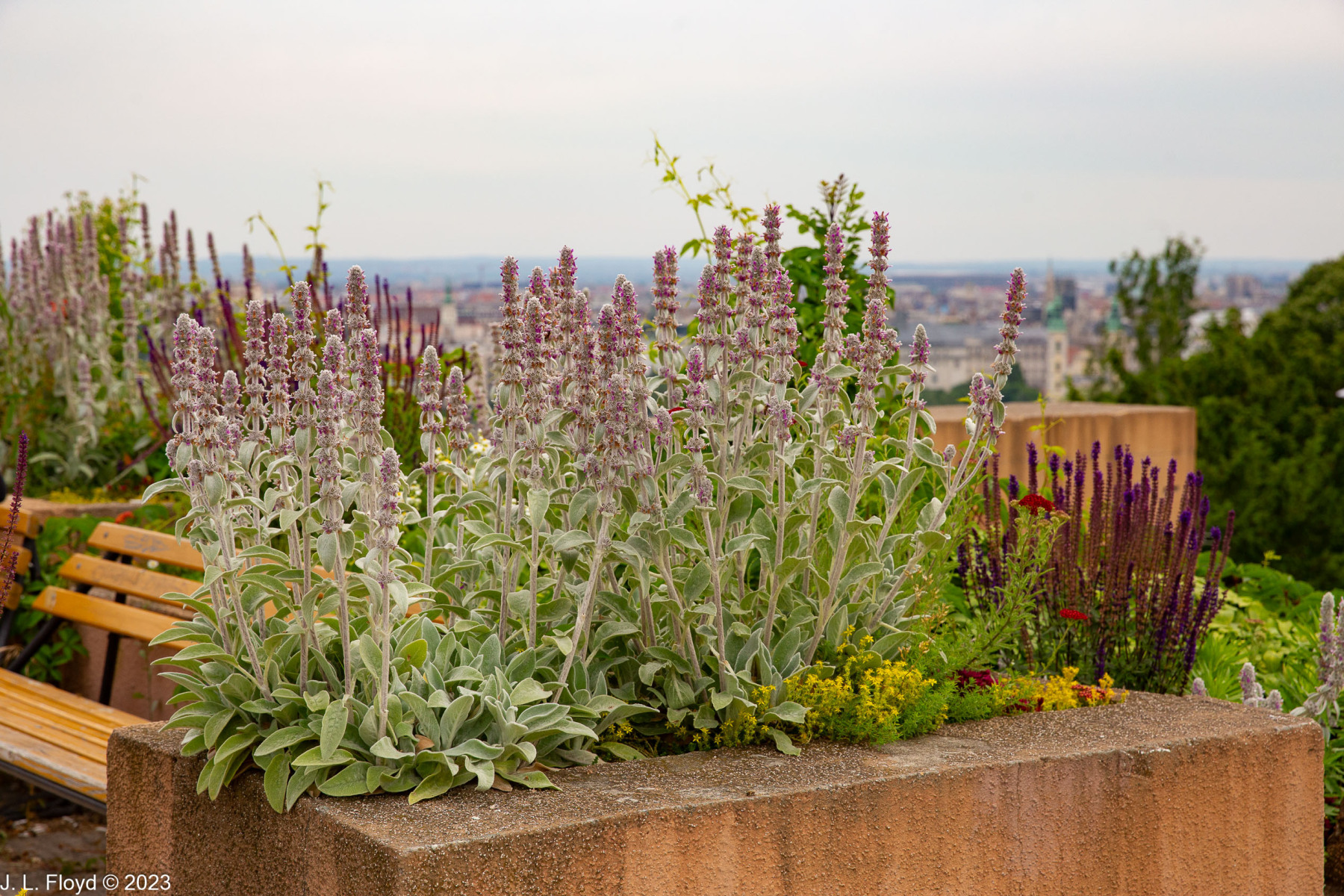
But other than the name, the Philosophers’ Garden is a pleasant and edifying place, well worth a visit. It is located on Gellért Hill in Buda, and provides wonderful views of the city, not the least of the reasons for visiting. It’s also a great spot for picnickers, hikers and people who just want to amble around and meditate. Parking is very limited, and I have to commend our bus driver for his amazing parking job in fitting the bus into a space which seemed impossibly small for the vehicle.

The Garden was the brainchild of Hungarian sculptor Nándor Wagner (1922-1997), who emigrated from Hungary following the 1956 revolution and spent the rest of his life in Sweden and Japan. His intent in creating the Garden was to promote mutual understanding among the adherents of the world’s great religions.

The centerpiece of the garden is the ring of five statues surrounding a pool with a silver ball in the center, symbolizing the divine essence. The statues represent what Wagner saw as the founders of the world’s major religions. Why he would include the Egyptian Pharaoh Akhenaten, whose monotheism did not survive, and not Zoroaster and Mohammed, I have no idea. A second group of statues, representing three figures whom Wagner considered to be leaders in fostering spiritual enlightenment, stands in a row outside the first circle. Again, the choice of Gandhi, St. Francis and Daruma Daishi (founder of Zen, one of many schools or sects of Buddhism) seems entirely subjective and whimsical. Wagner planned a third group, consisting of great lawgivers (Hammurabi, Moses, Justinian, and Prince Shotoku of Japan), but he died of cancer before he could complete this project.

The statues have a certain Asian mien to them, perhaps a reflection of the fact that Wagner spent the last 25 years of his life living and working in Japan. Indeed, another version of the statue group was cast and installed in Nakano, Japan.

In April, 2007 thieves made off with the statues of Gandhi, Bodhi Dharma and Saint Francis, probably to sell them for their metal value. The three missing statues were replaced in 2010 by new copies cast in Japan.

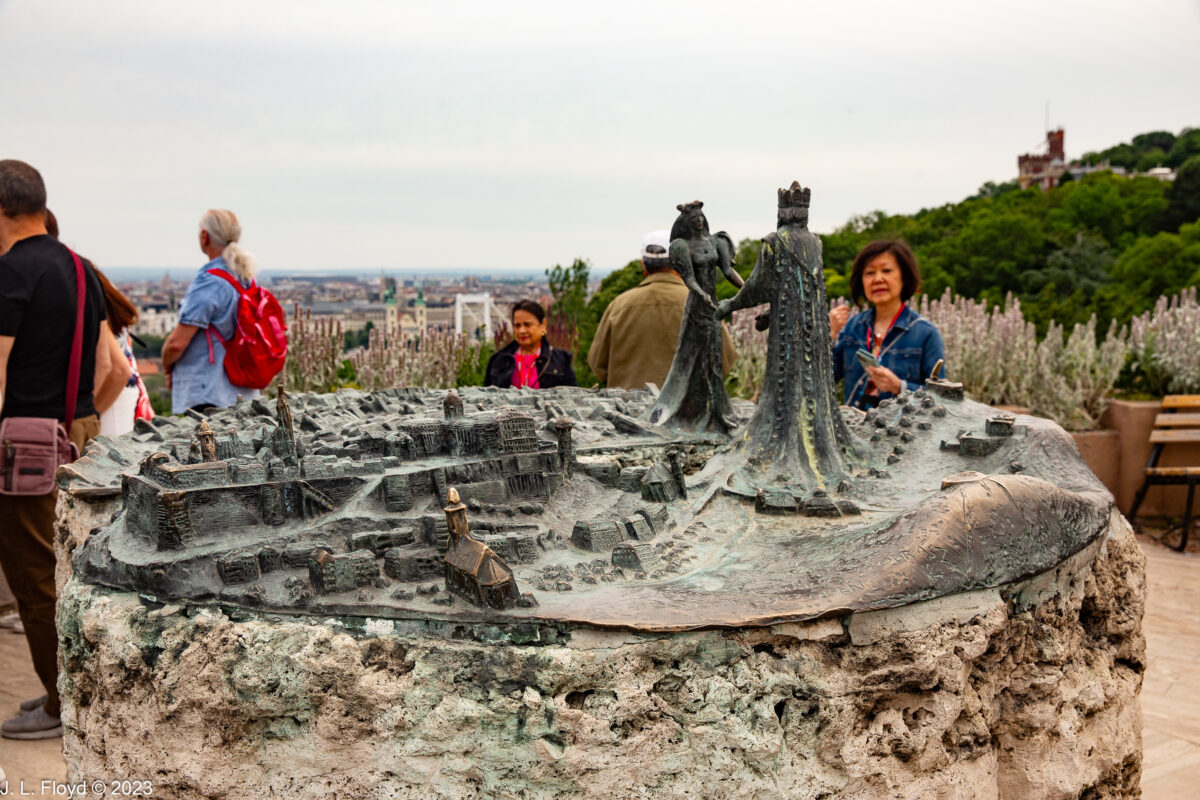
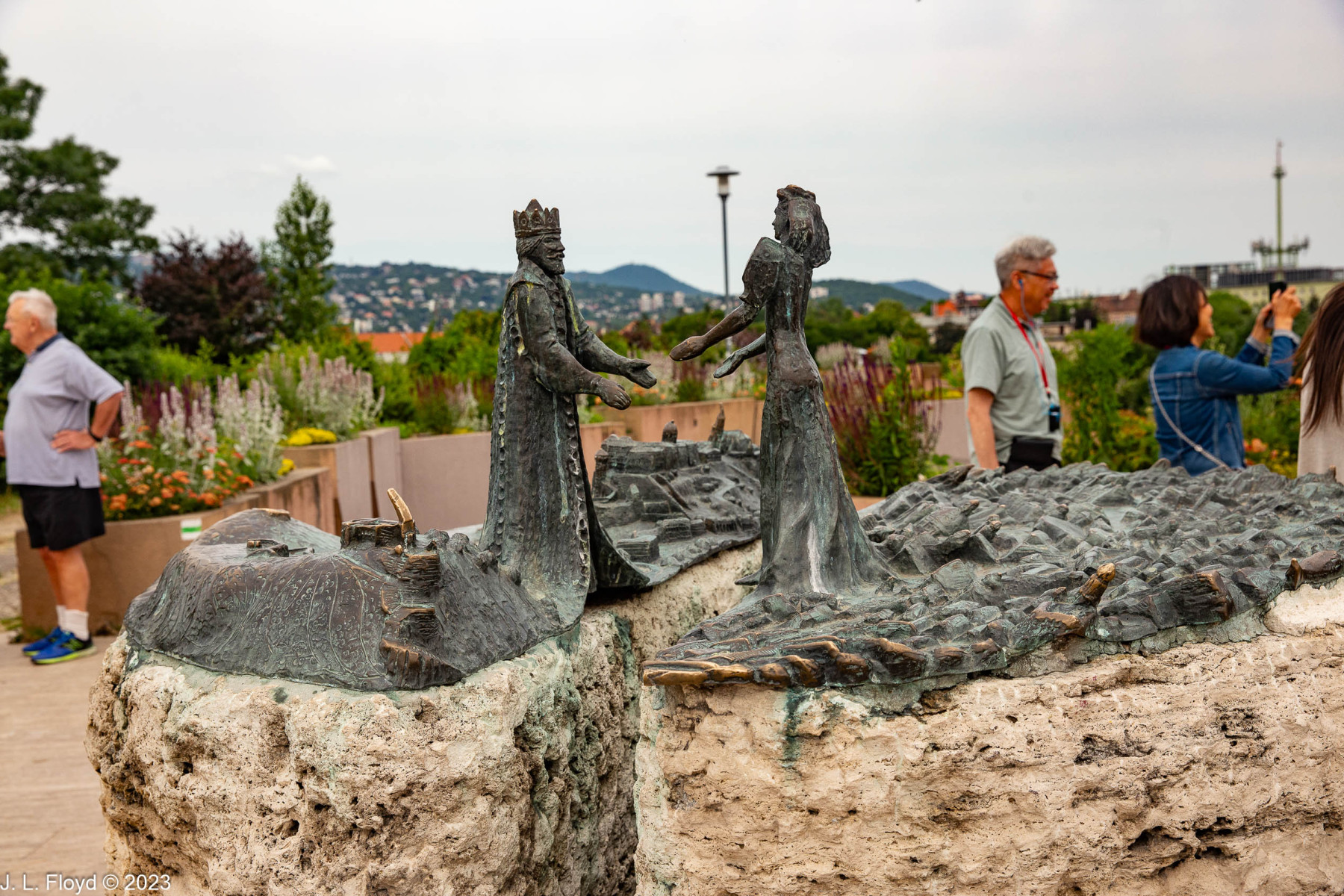
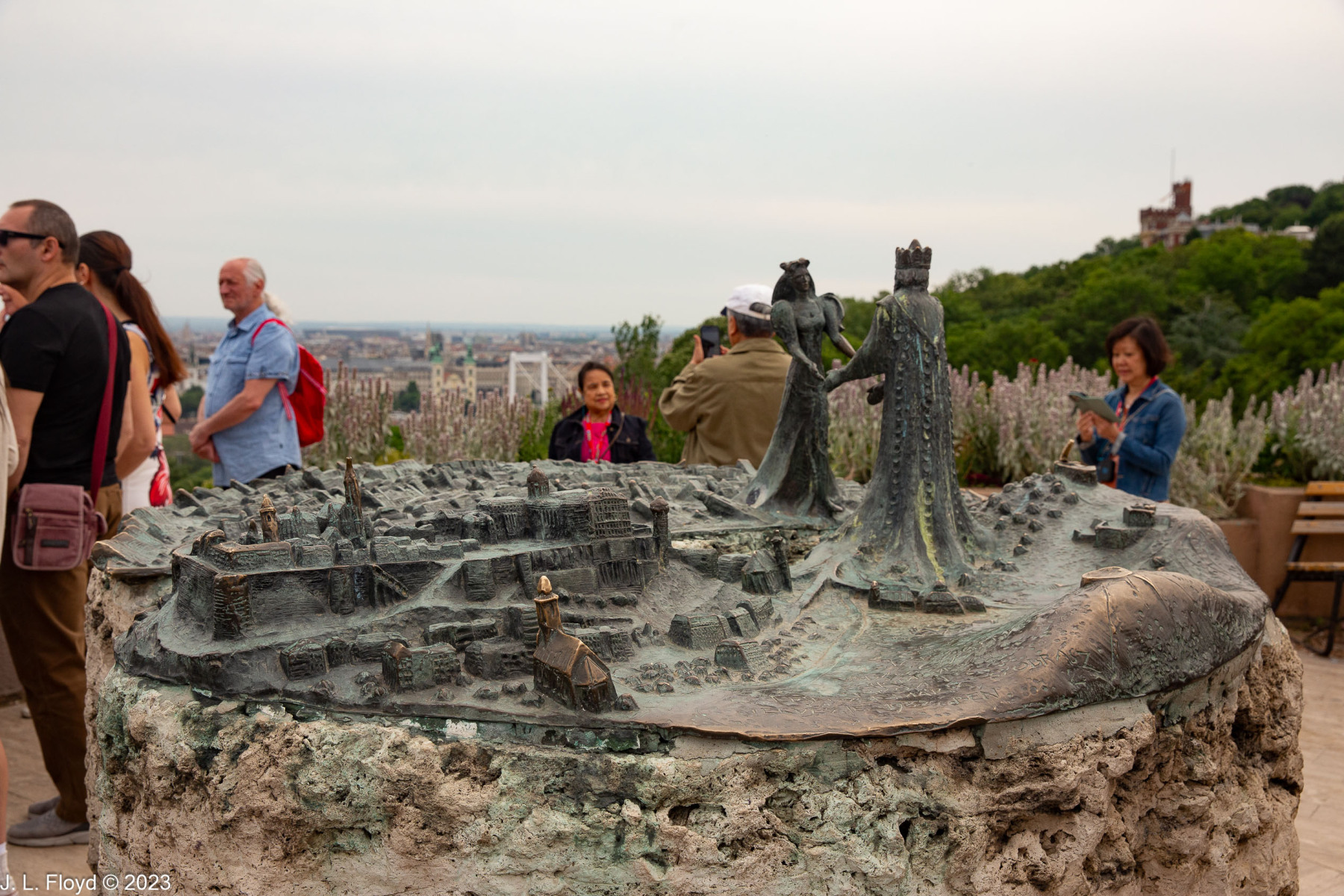
Our guide next led us to the top of the hill, where we found another sculptural monument, symbolizing the unification of Buda and Pest into one city in 1873. A prince, personifying Buda, and a princess, personifying Pest, stretch their hands out to one another over the river Danube. The bronze sculpture is the creation of a Hungarian artist named Márta Lesenyei and was installed in 1982. 

Categories
Danube River Cruise, June 2023

Feast in Budapest, Evening of June 15, 2023

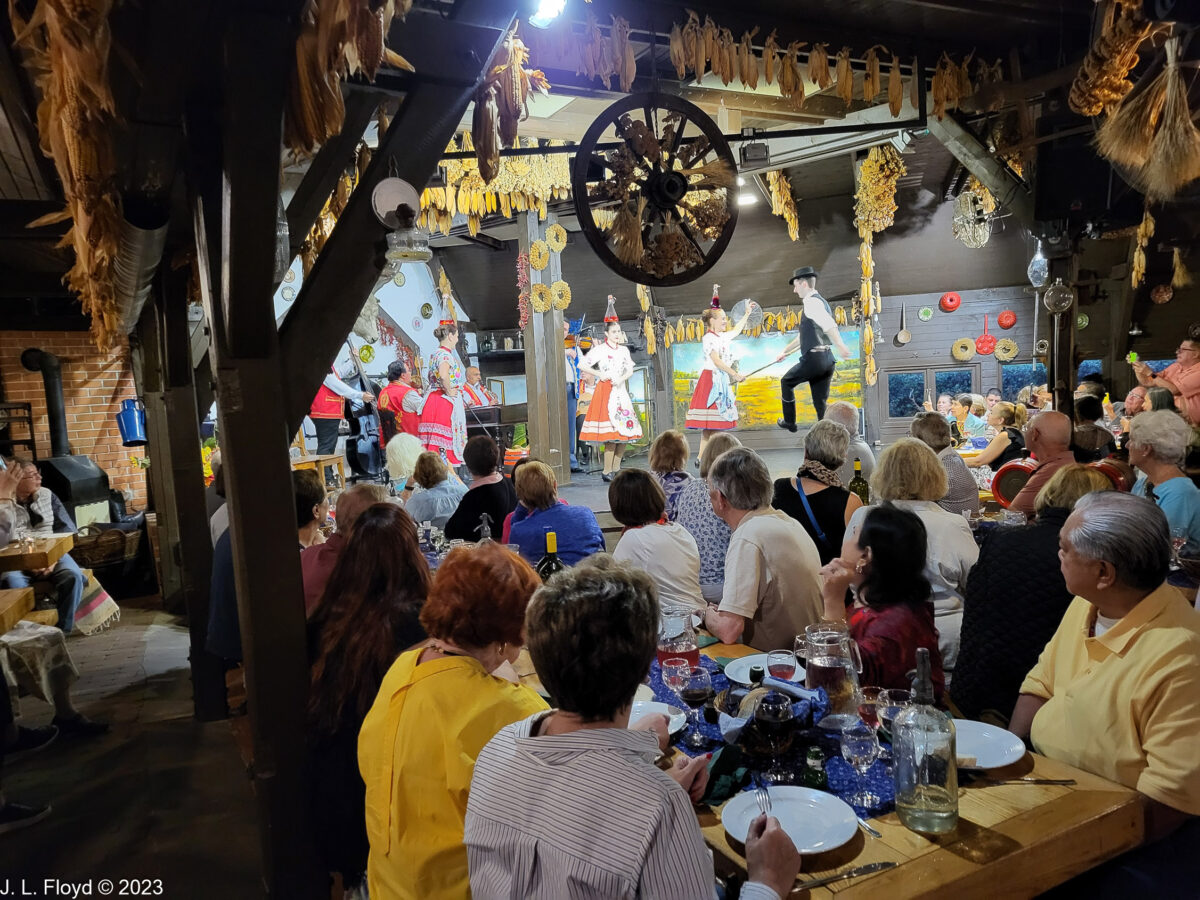
Our first full day in Budapest concluded with a “Welcome to Hungary” feast at the Vadaspark Étterem (Étterem means “restaurant” in Hungarian – not exactly a cognate, think “eatery”!). The place is hidden in a woodland high in the hills of west Buda hills woodland next to the Budakeszi Wildlife Park. In appearance it is a traditional Hungarian hunting lodge, and it serves traditional Hungarian cuisine. Guests are seating on wooden benches at long wooden tables and the ambience is pleasantly rustic.

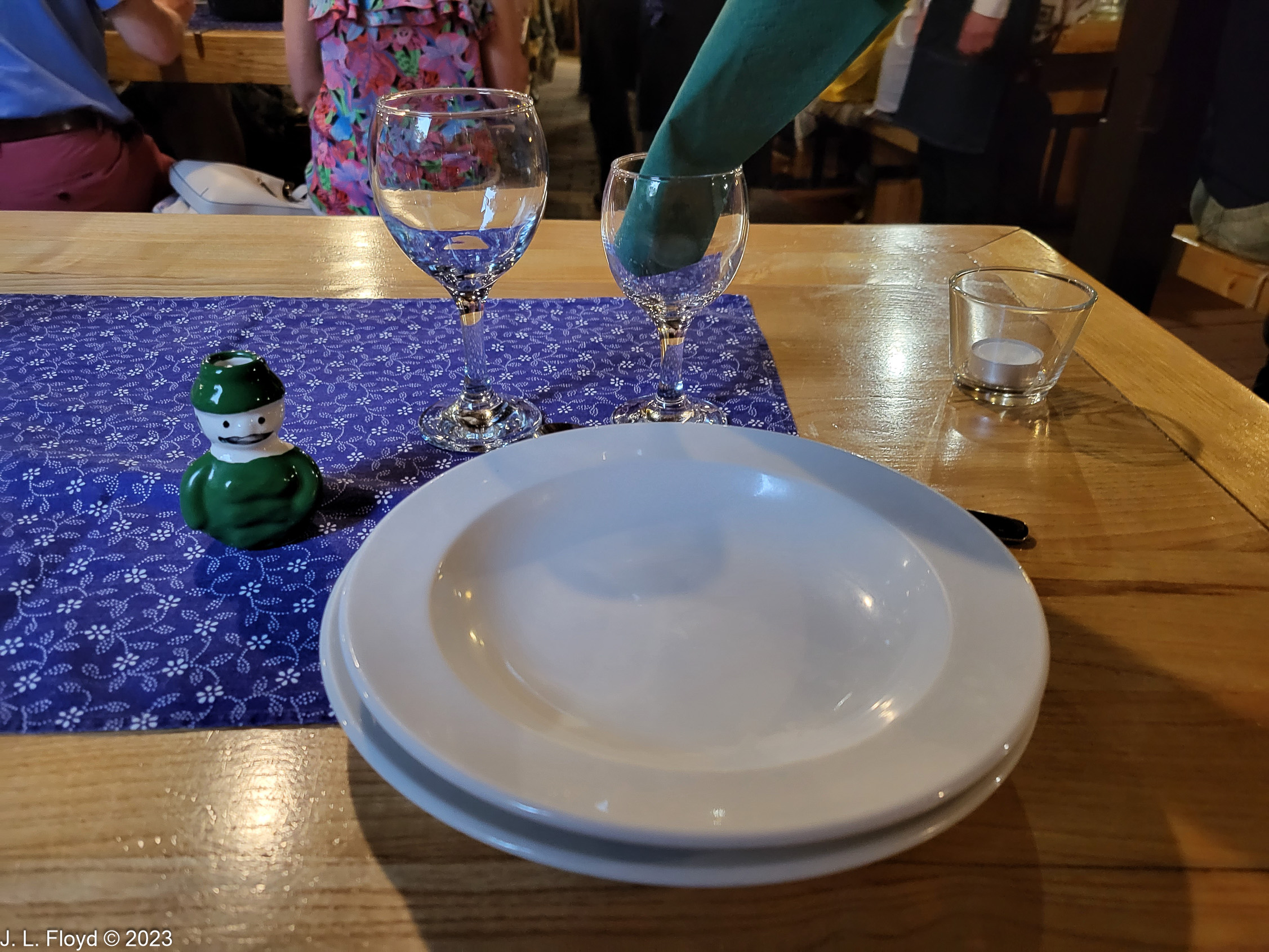
Dinner began with an aperitif, attractively served in a little ceramic cup in the form of a mustachioed Hungarian farmer in traditional costume. The little cup was filled with pálinka, a fruit brandy with a rather high alcohol content, between 37% and 86%, typically around 40%, but I think ours was more than 50%. Pálinka can made from plums, apricots, apples, pears, cherries and many other kinds of fruit, but not grapes. Brandy made from grapes is called törkölypálinka. When made entirely from apricots, it is called barackpálinka. One wonders how former President Obama feels about this. (Actually “barack” in Hungarian is pronounced “baratsk”.)
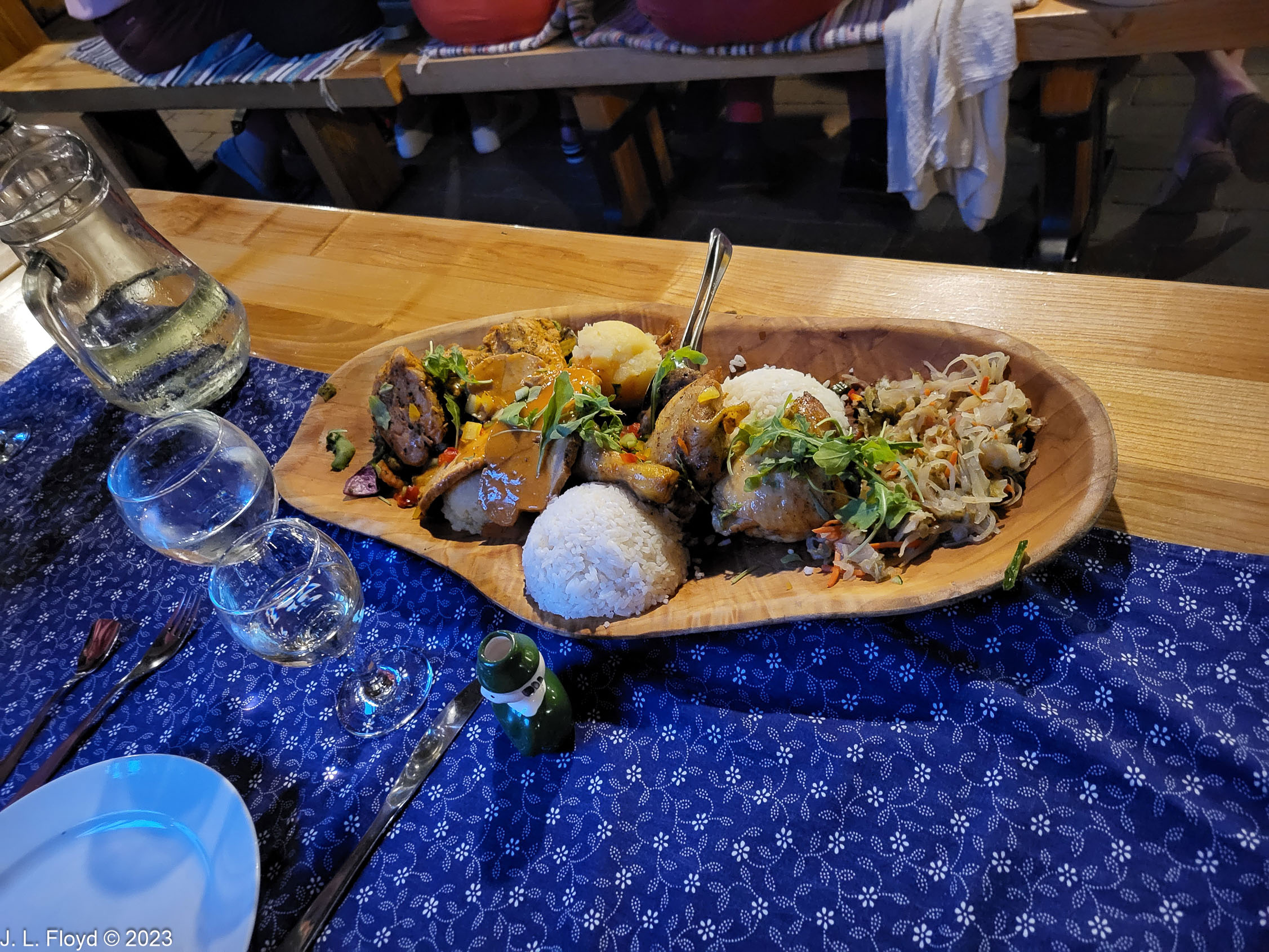
The food was delicious and attractively presented, and the wine flowed freely. But after pálinka and a few glasses of wine (both white and red), my memory ceased to operate effectively and I can’t say for sure which traditional Hungarian dishes we were served. I can say that it was all superb.

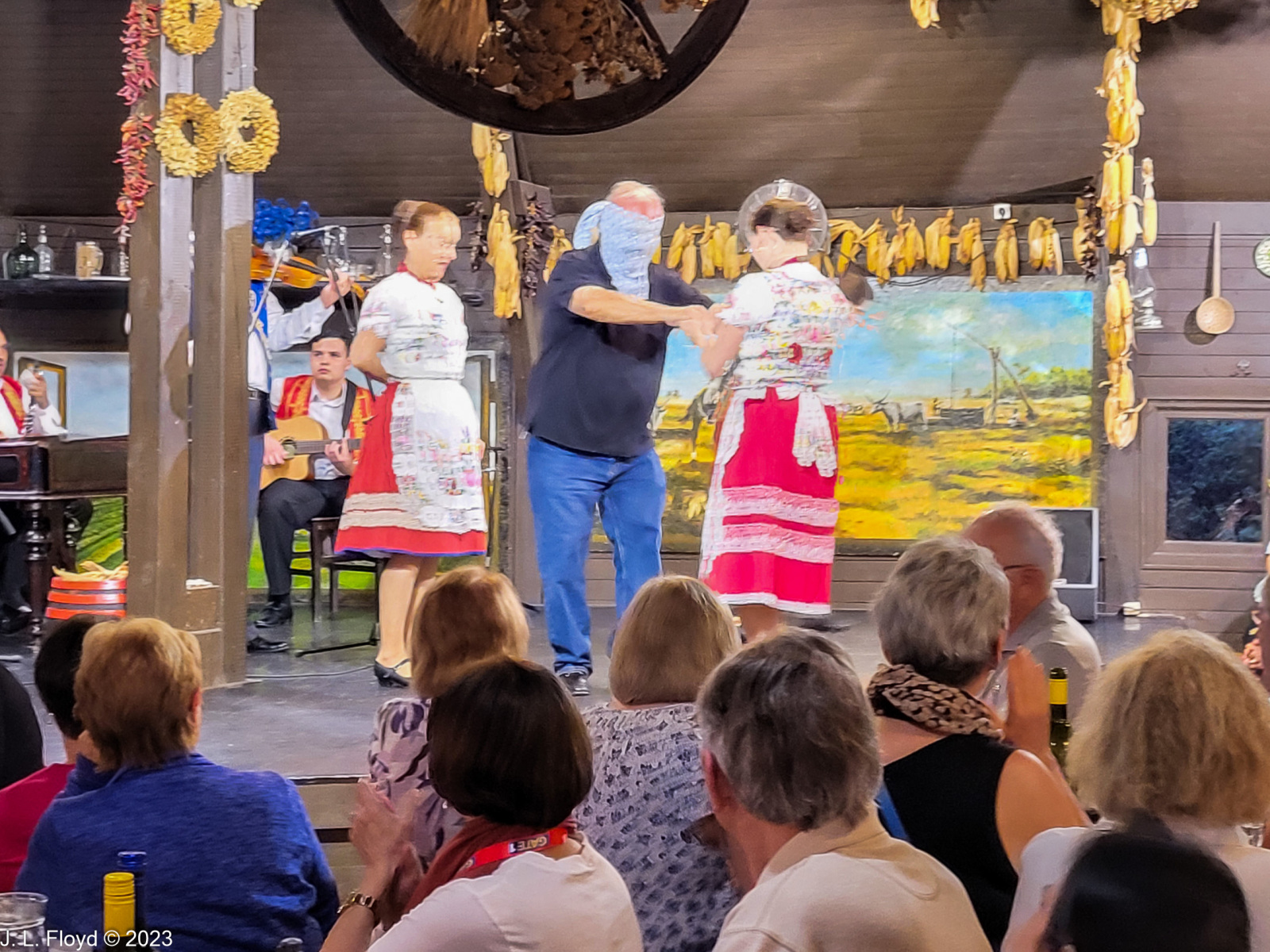
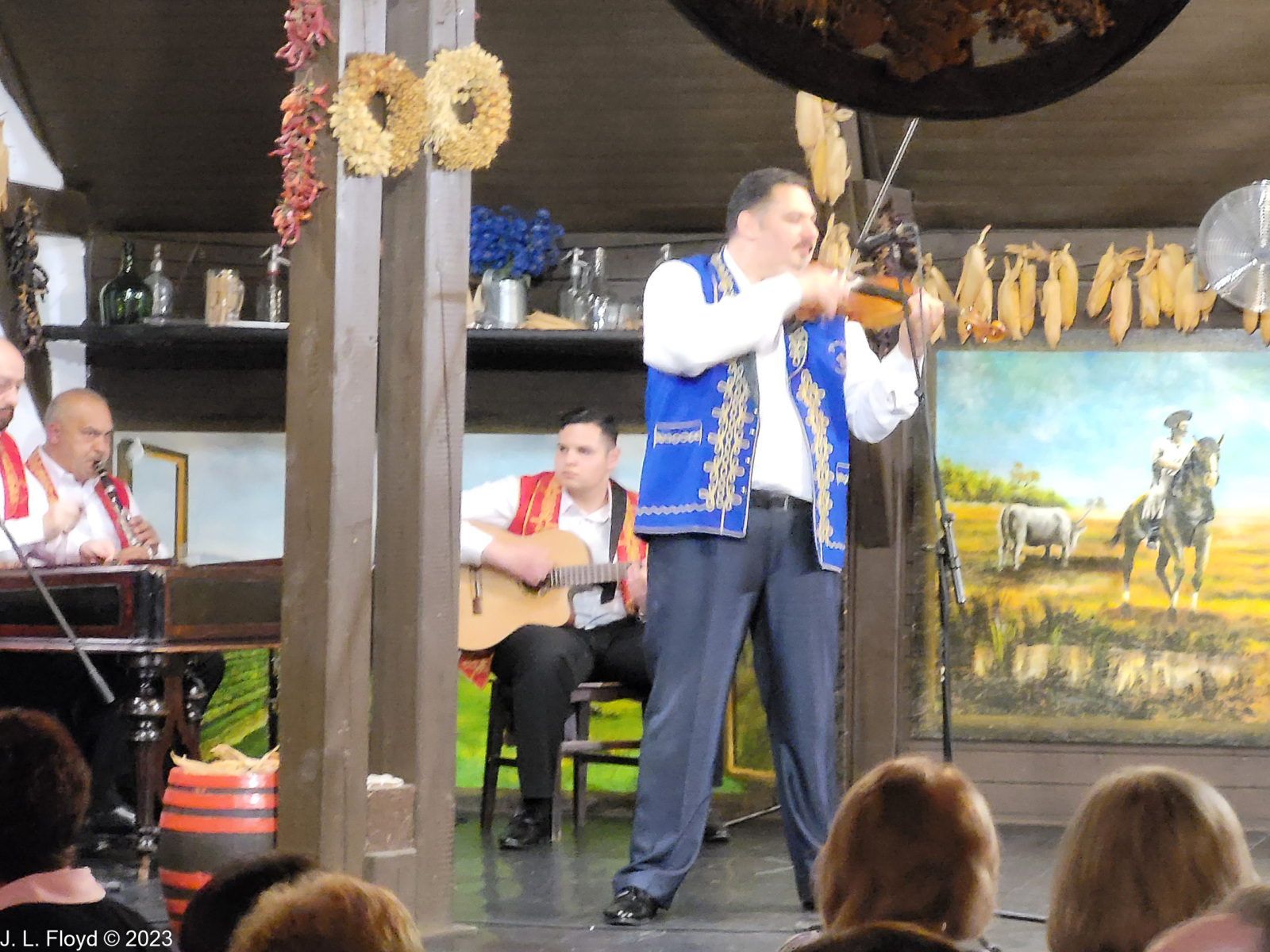
After-dinner entertainment consisted of folk dancing and music played by a live mini-orchestra with a superb violinist. But for the fact that the dancers were in traditional Hungarian dress, I would have thought it was a hoedown in the western USA, an impression that the pictures of cowboys and cattle on the walls reinforced.

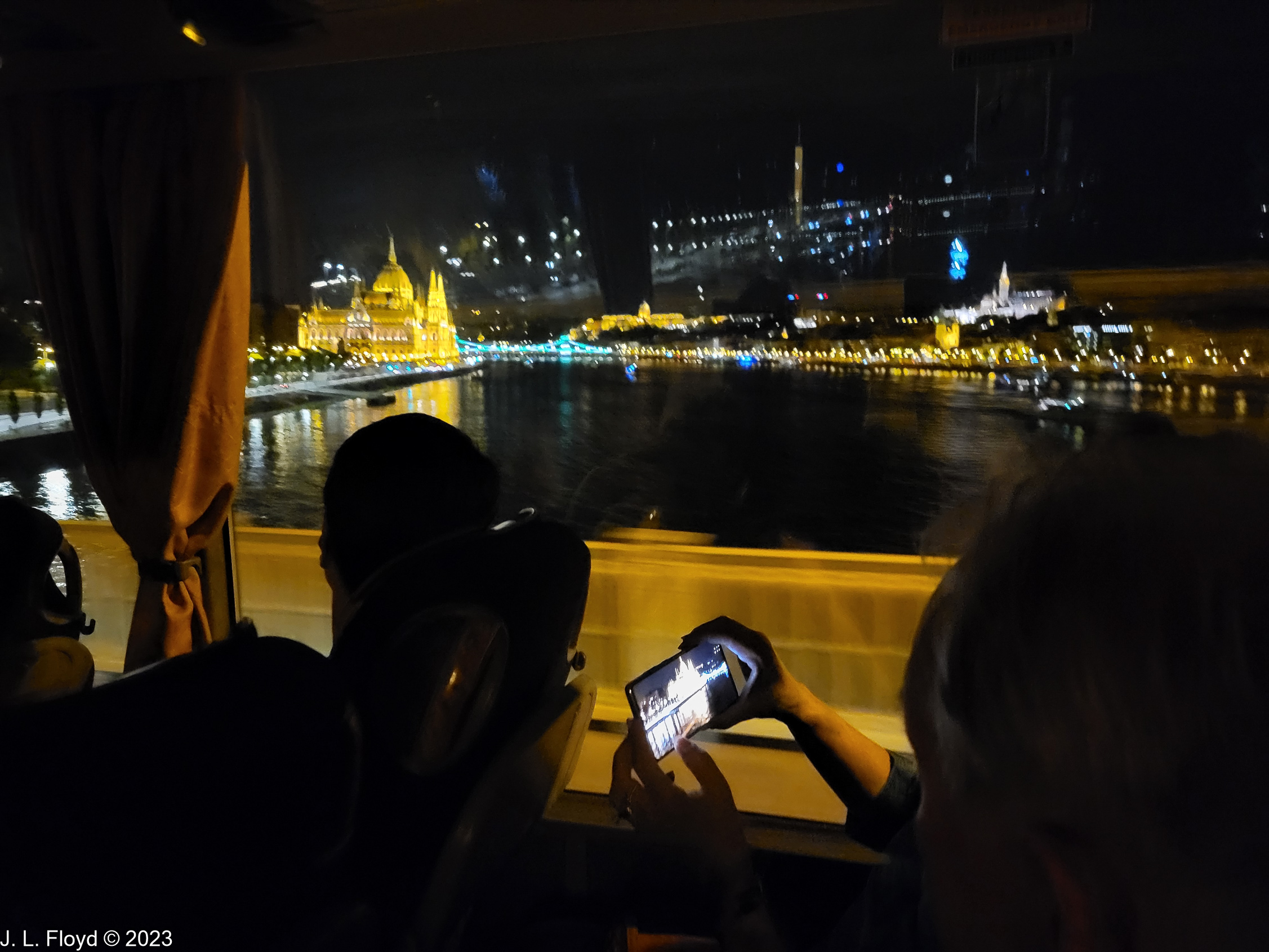
After dinner, on the way back from the restaurant to the Hotel Corinthia, I shot my only photo of Budapest at night, with my Samsung phone camera – not a very good one, to be sure, but at least I managed to include both banks of the Danube in the frame, with the Parliament building (left, on the Pest side), Buda Castle (center) and Castle Hill with St. Matthew’s Church and Fishermen’s Bastion on the right. Try to ignore the reflections in the windows.
Categories
Danube River Cruise, June 2023

Budapest, June 15, 2023: The Jewish Quarter

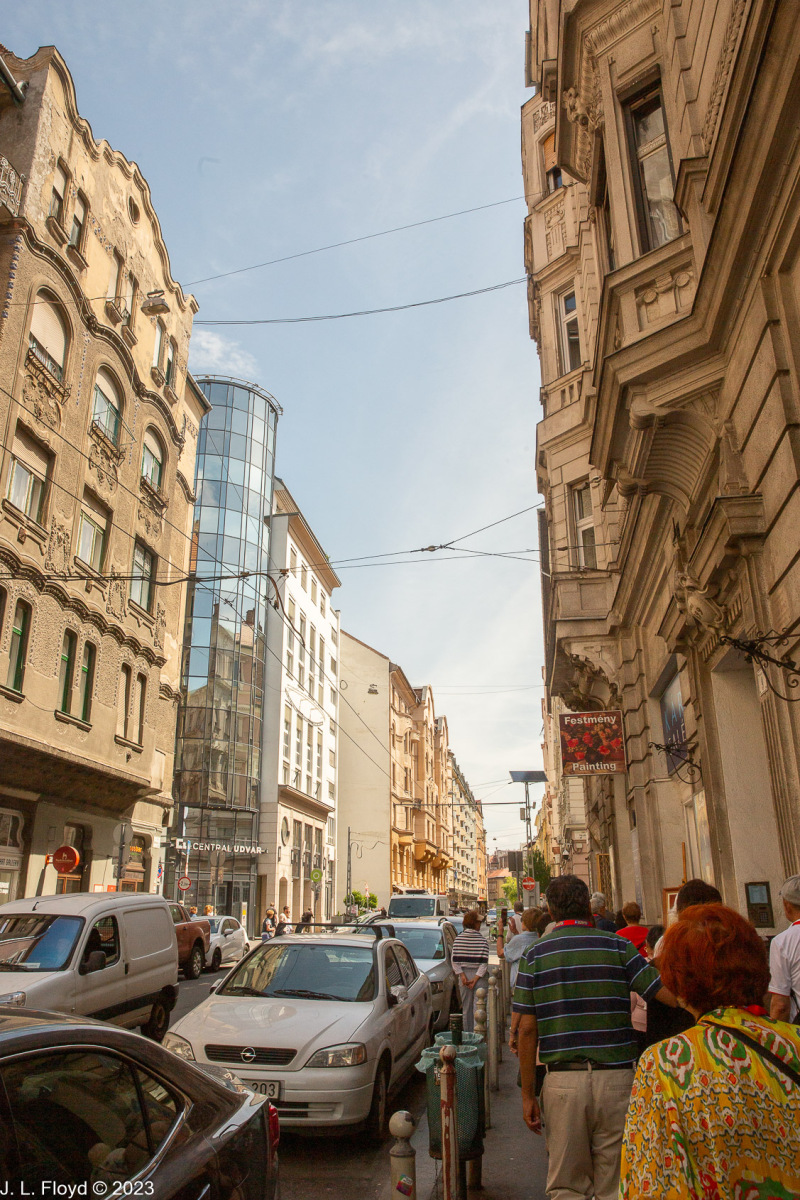
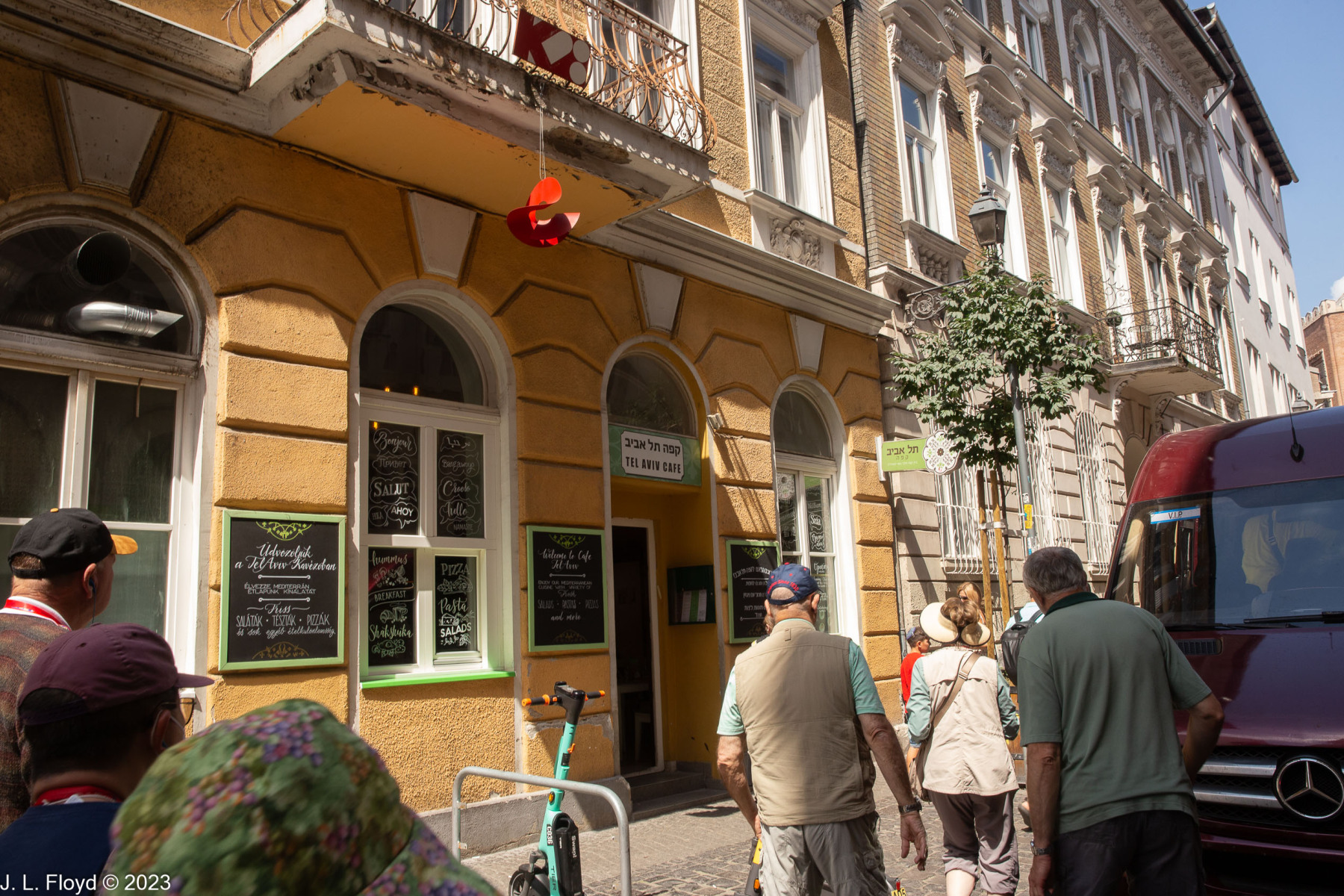
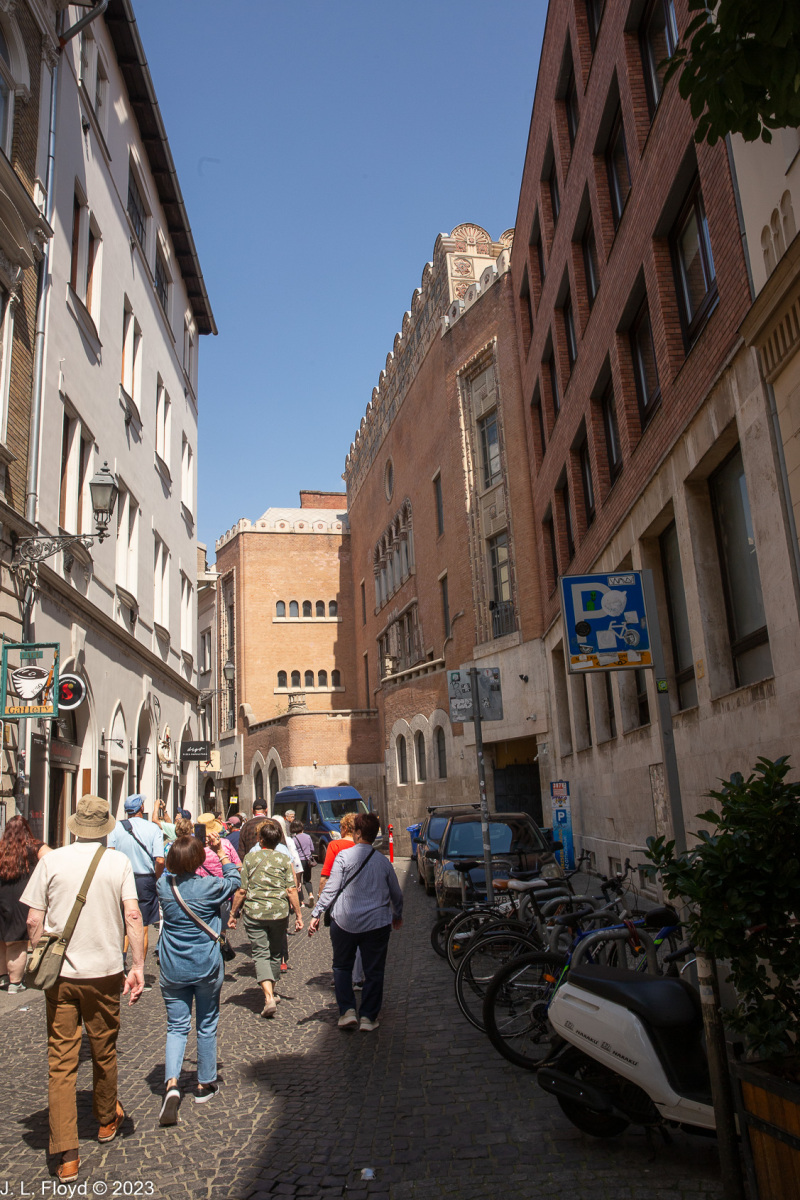
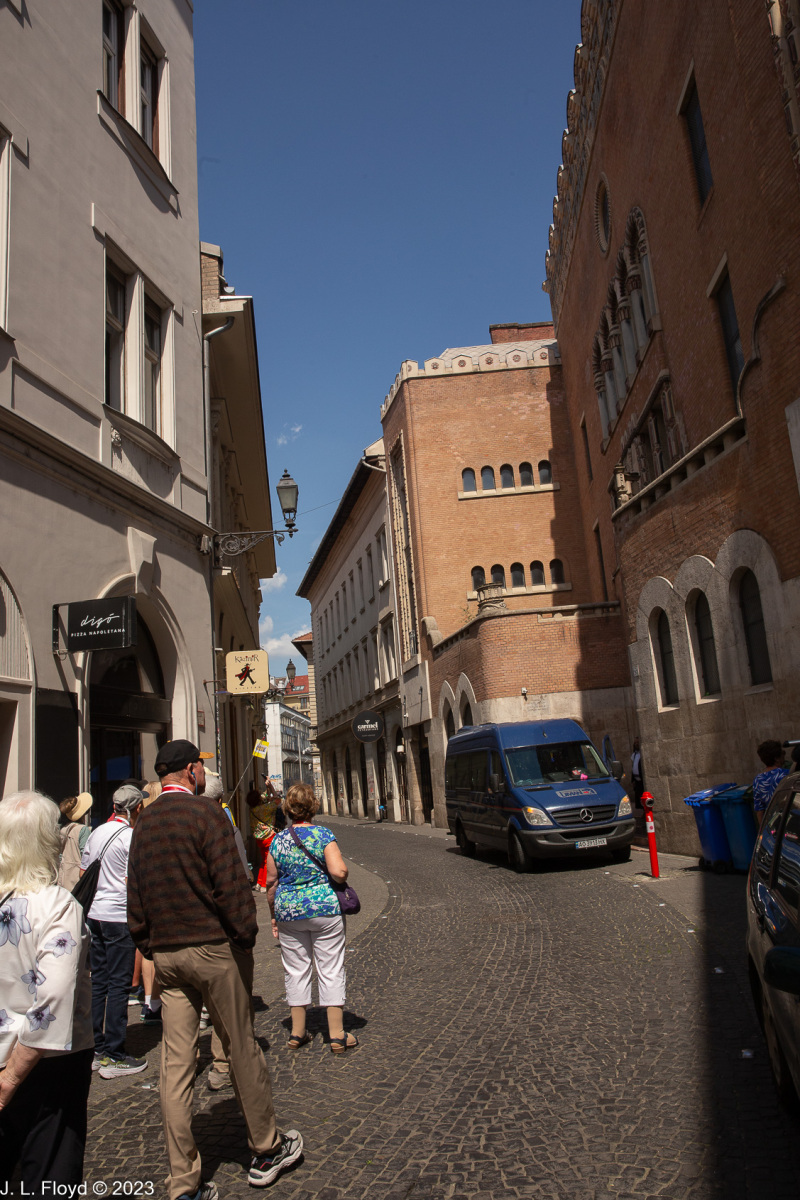
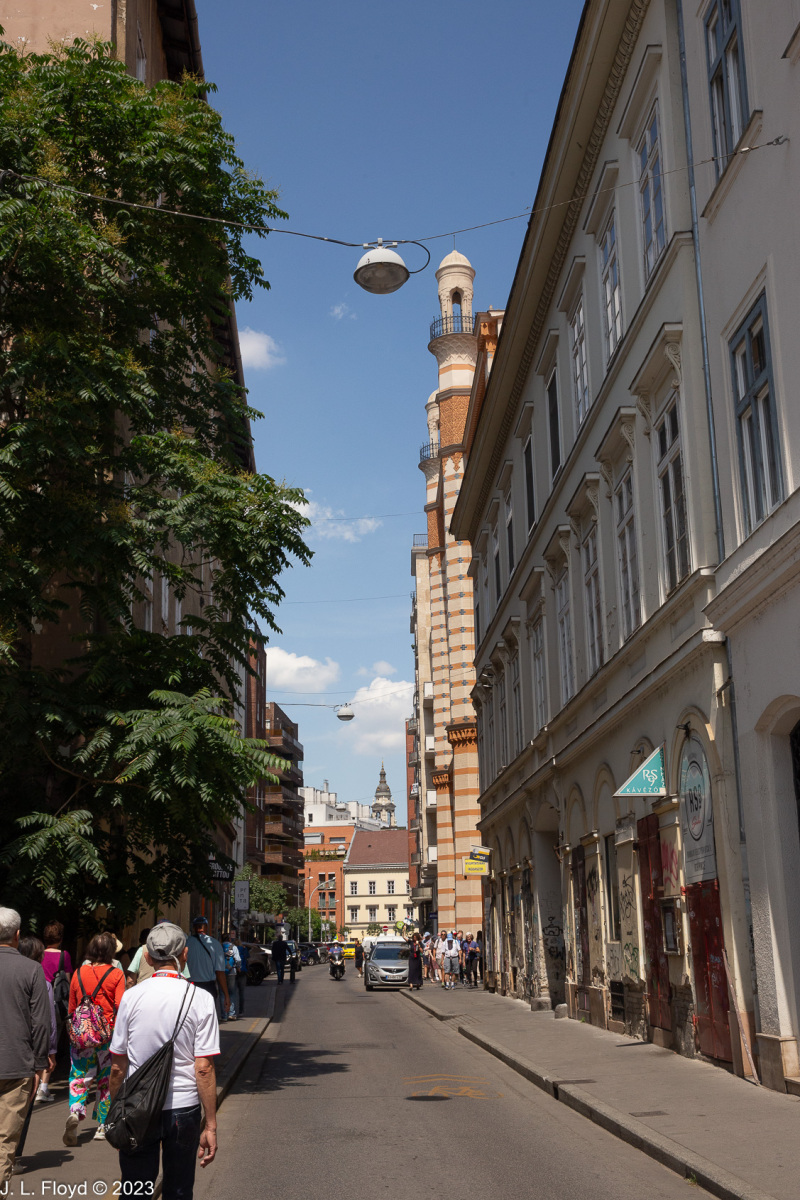
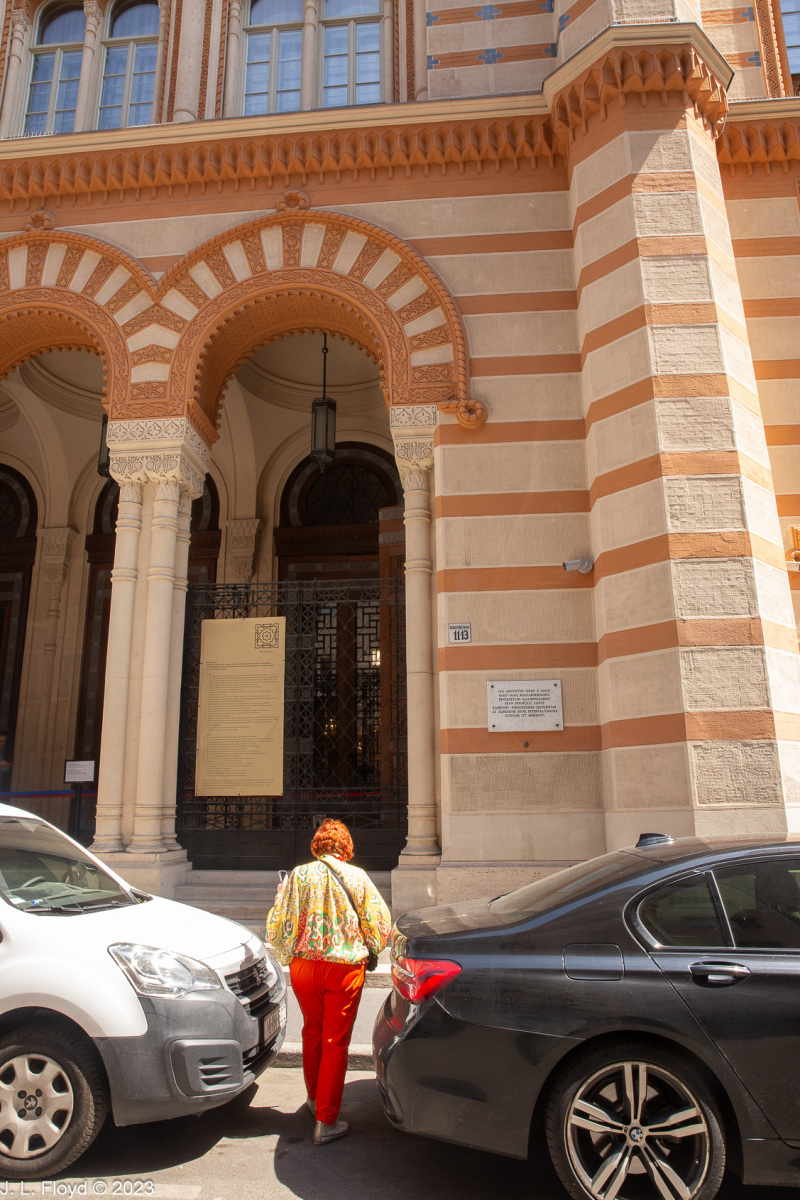
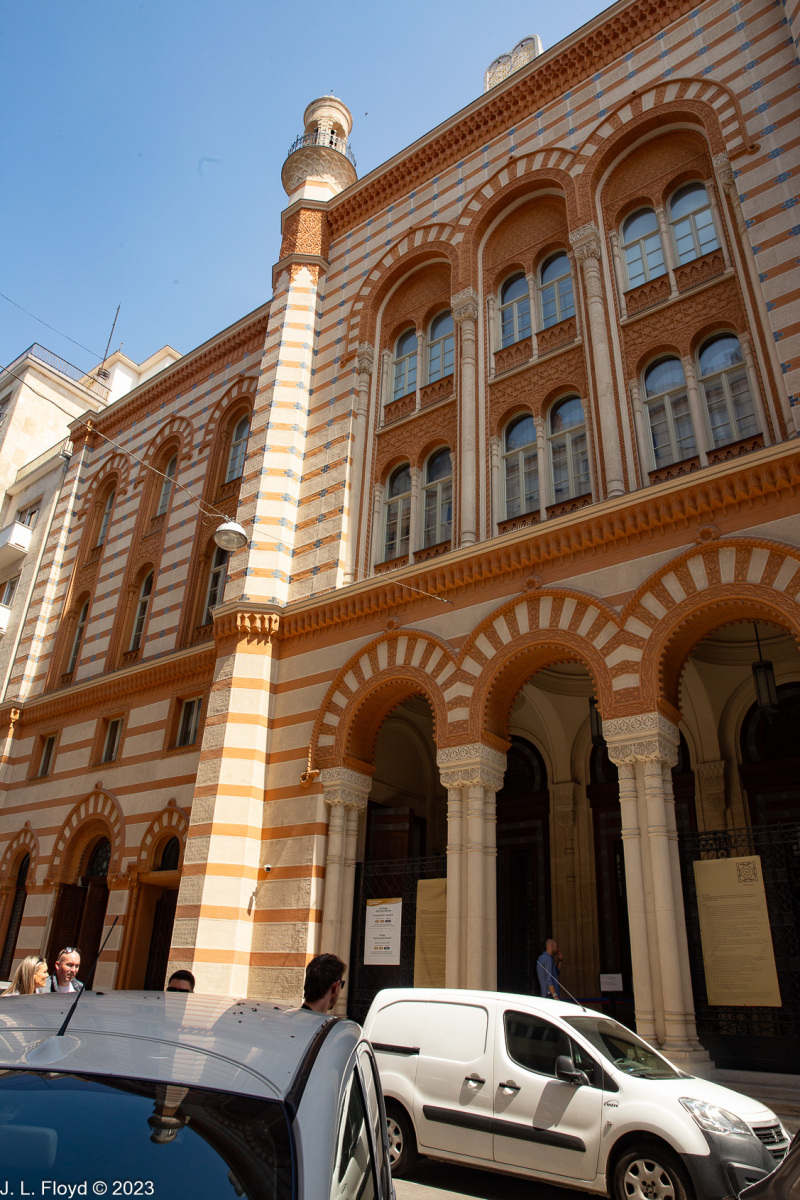
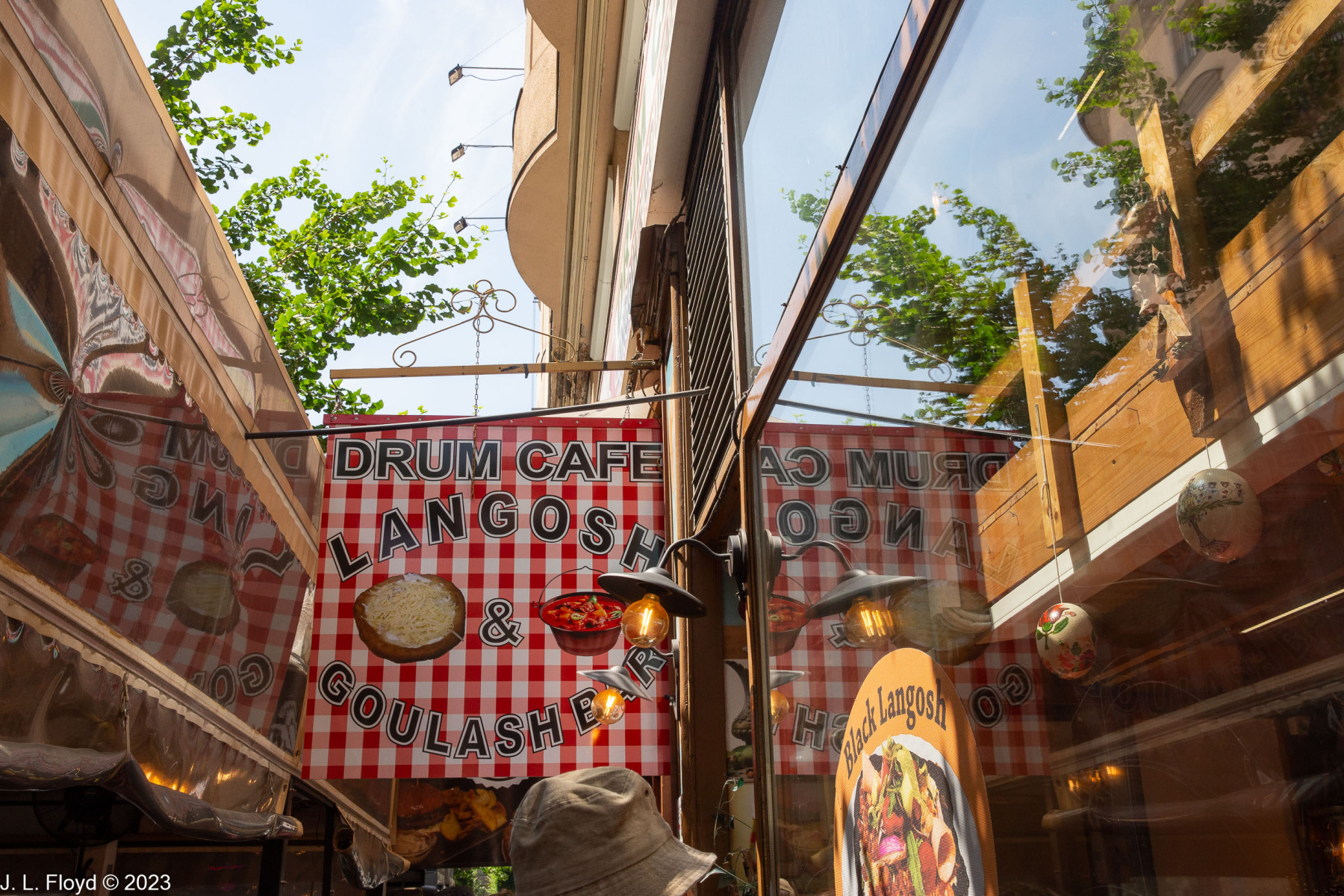
The Dohány Street Synagogue is affiliated with the Neolog or Congressional wing of Hungarian Jewry, a liberal and modernist denomination largely associated with middle and upper-class assimilated Jews, in sharp contrast to the conservative and traditionalist Orthodox Jewish community. The latter have their own places of worship, one of which is the Kazinczy Street Synagogue, which was our second stop in the Jewish Quarter. To get there we threaded our way through narrow, crowded streets, passing a number of interesting shops and tempting restaurants which I would have loved to patronize if there had been an opportunity.

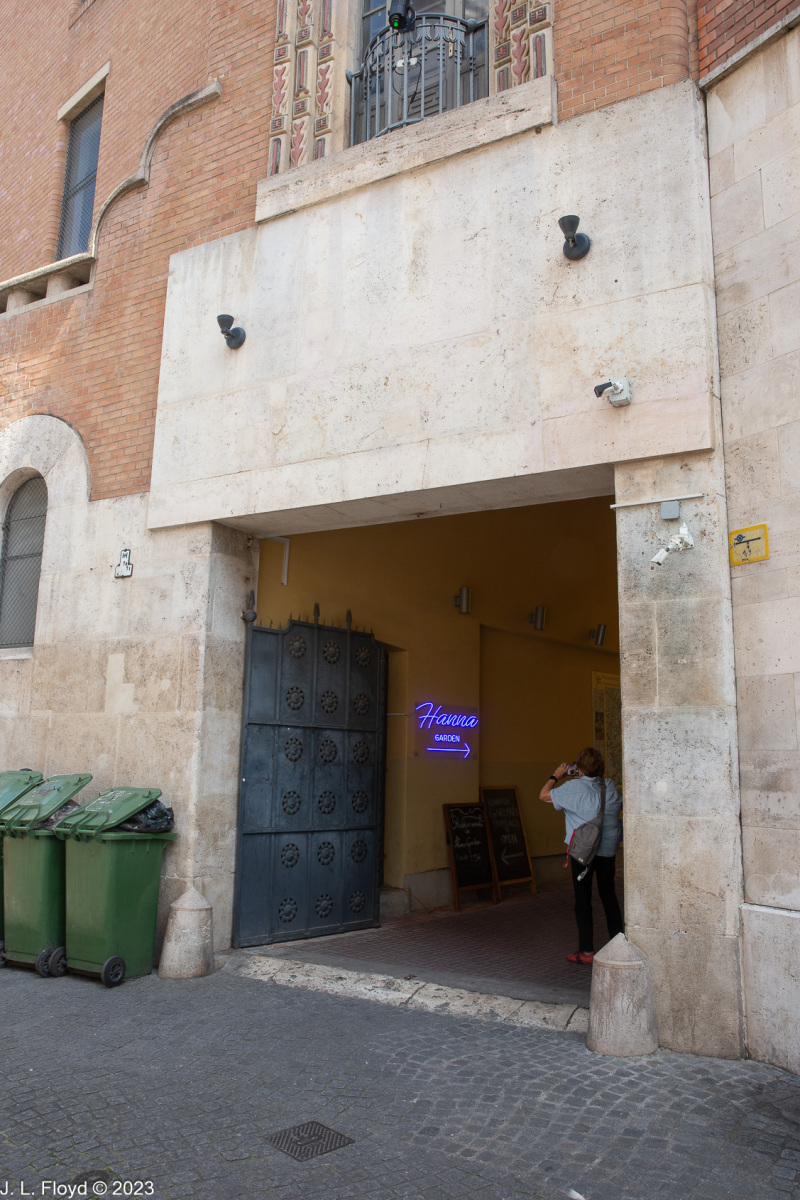
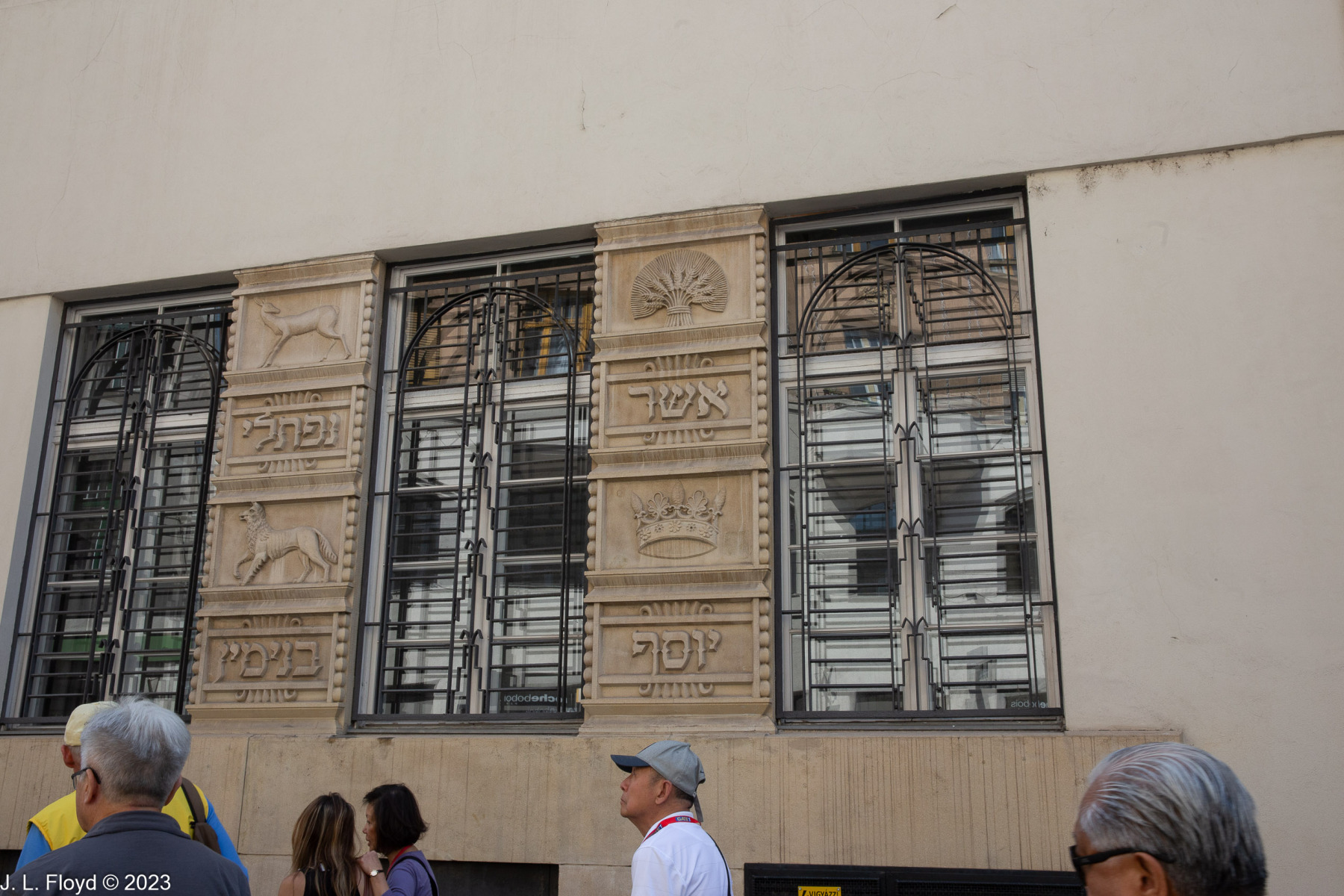
The Kazinczy Street Orthodox Grand Synagogue was built in 1913, just before the First World War, in a style which is the last thing I would have expected from a conservative and traditionalist denomination: Art Nouveau. In fact it is considered a masterpiece of Art Nouveau architecture. The narrow street and the limitations of my equipment (not to mention the skills of the photographer) prevented me from doing visual justice to the synagogue, but one can see more adequate photos online, for example here. In the post-World War II period, under the kindly auspices of the Communist regime, the Orthodox Grand Synagogue deteriorated to the point of unusability, and a smaller house of worship, the Sasz-Chevra Orthodox Synagogue, was built next to it (after the collapse of Communism the main synagogue was restored and can be visited today). I initially mistook the unpretentious doorway providing entry to the smaller synagogue, which also leads to the Hanna glatt kosher restaurant, for the main entrance to the Grand Synagogue.

From Kazinczy Street we ambled on to the Carl Lutz Memorial, at the corner of Dob and Rumbach Streets. Carl Lutz was a Swiss diplomat who is credited with saving 62,000 Hungarian Jews from the Nazis during World War II.

Interestingly, Carl Lutz as a young man had emigrated to the United States. He lived there for two decades and worked his way through college, graduating from George Washington University in Washington, D.C., in 1924. By that time he had started working in the Swiss Legation there, and continued to pursue his diplomatic career in other American cities, remaining in the USA until 1934. In 1935 the Swiss diplomatic service sent him as a vice-consul to Jaffa in Palestine, where he apparently developed strong Jewish sympathies after watching a Jewish worker being lynched by an Arab mob. In 1942 he was appointed Swiss vice-consul in Budapest, and soon began helping Hungarian Jews emigrate to Palestine. He did so by issuing safe-conduct documents to Jewish families and by establishing safe houses, such as the famous “Glass House”, where Jews could live under official Swiss protection. His activities became so provocative that the German plenipotentiary in Hungary actually contemplated having him assassinated, but failed to obtain permission from his superiors. The Swiss government’s reward for his efforts was to reprimand him for exceeding his authority, though this was later reversed. He died in Switzerland in 1975.

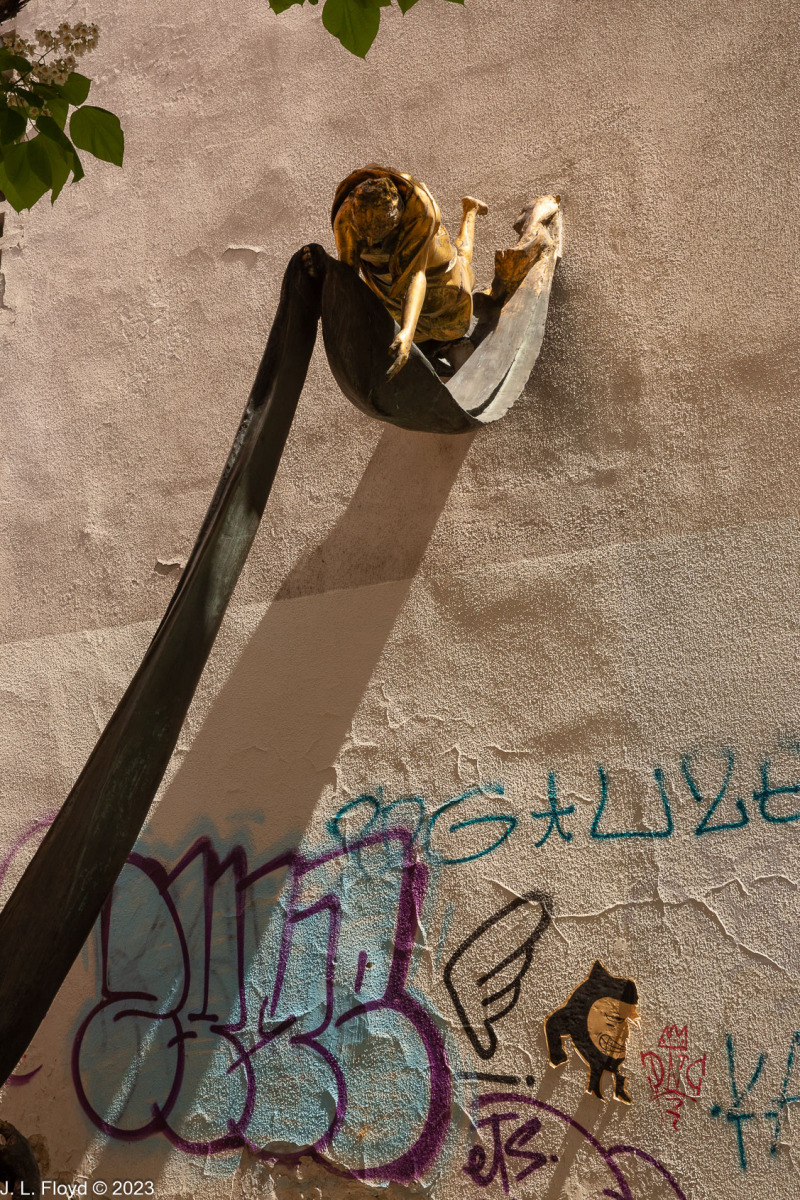
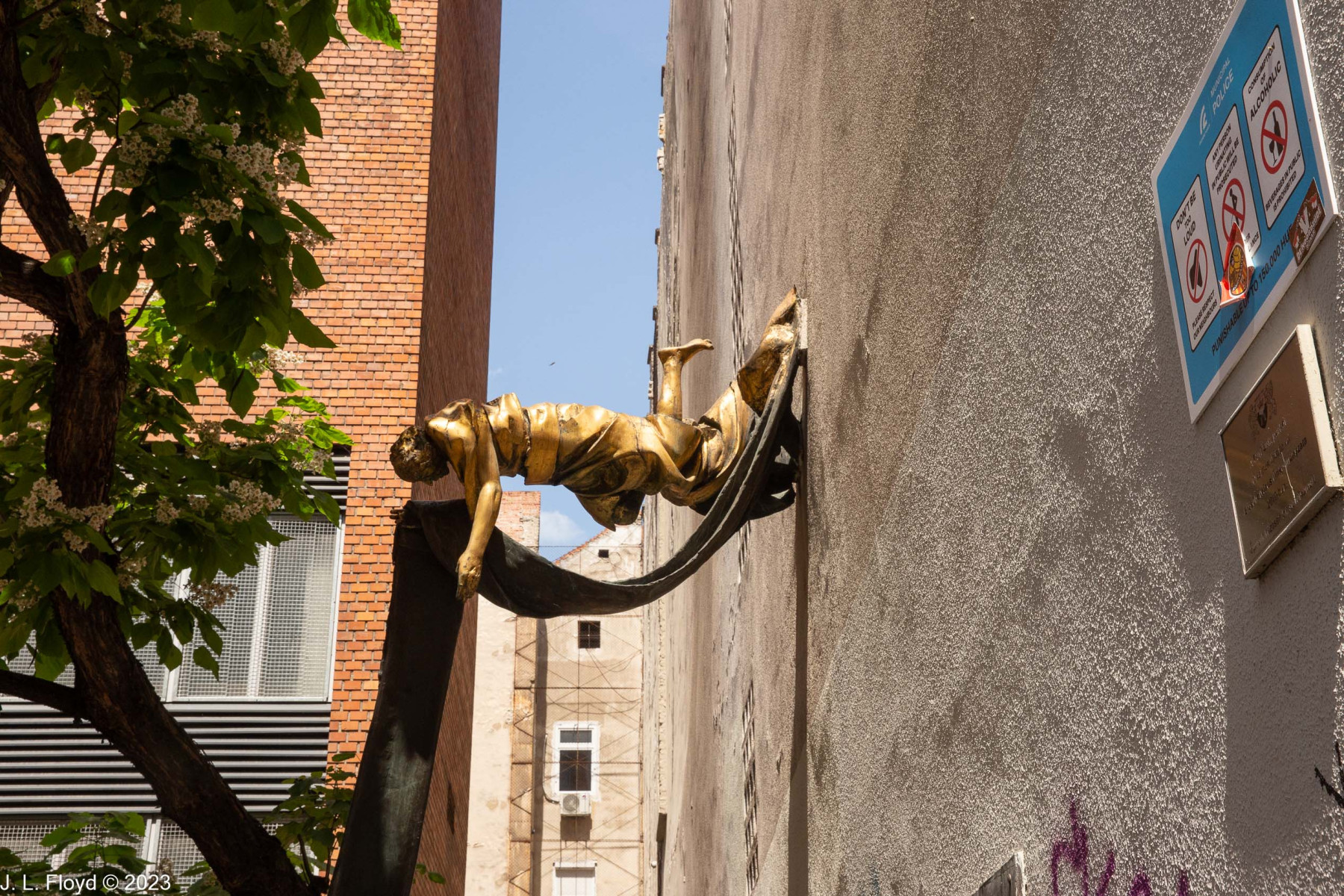
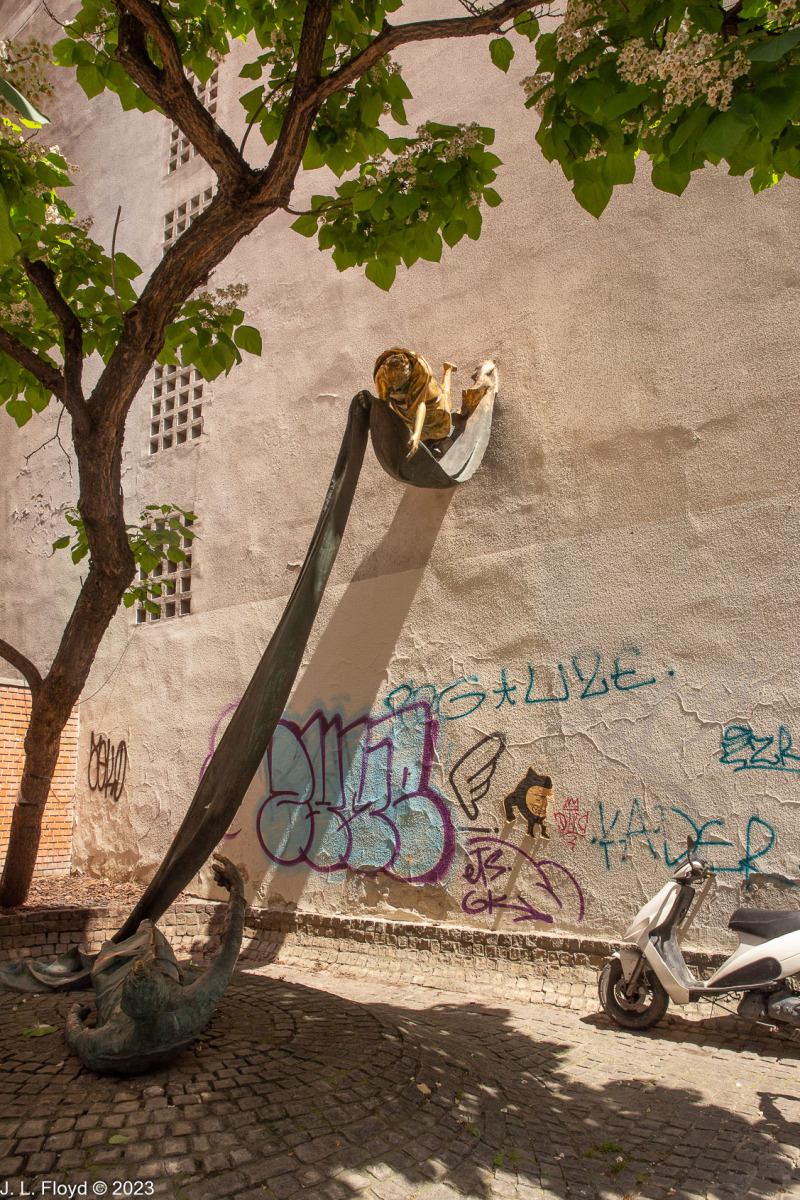
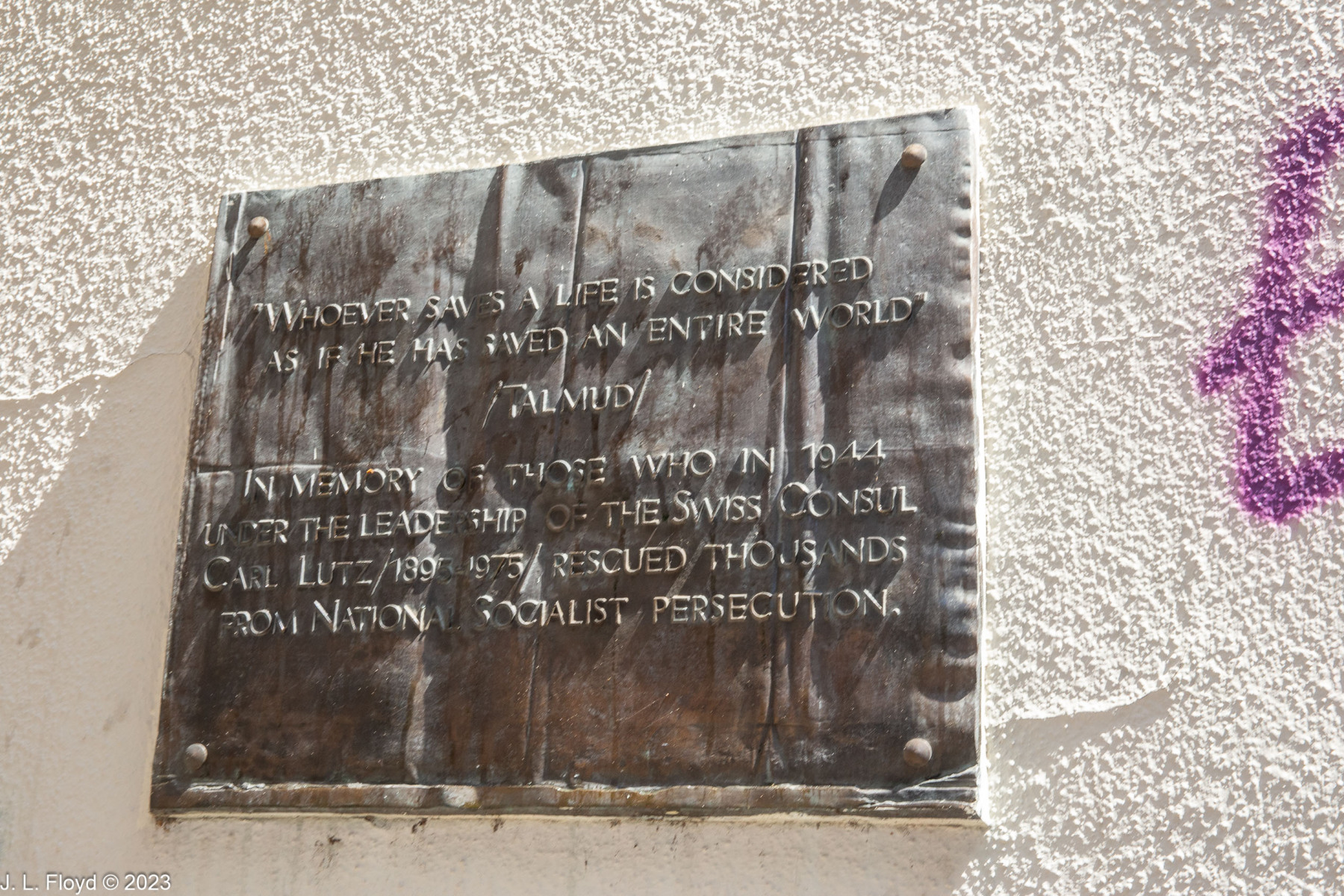
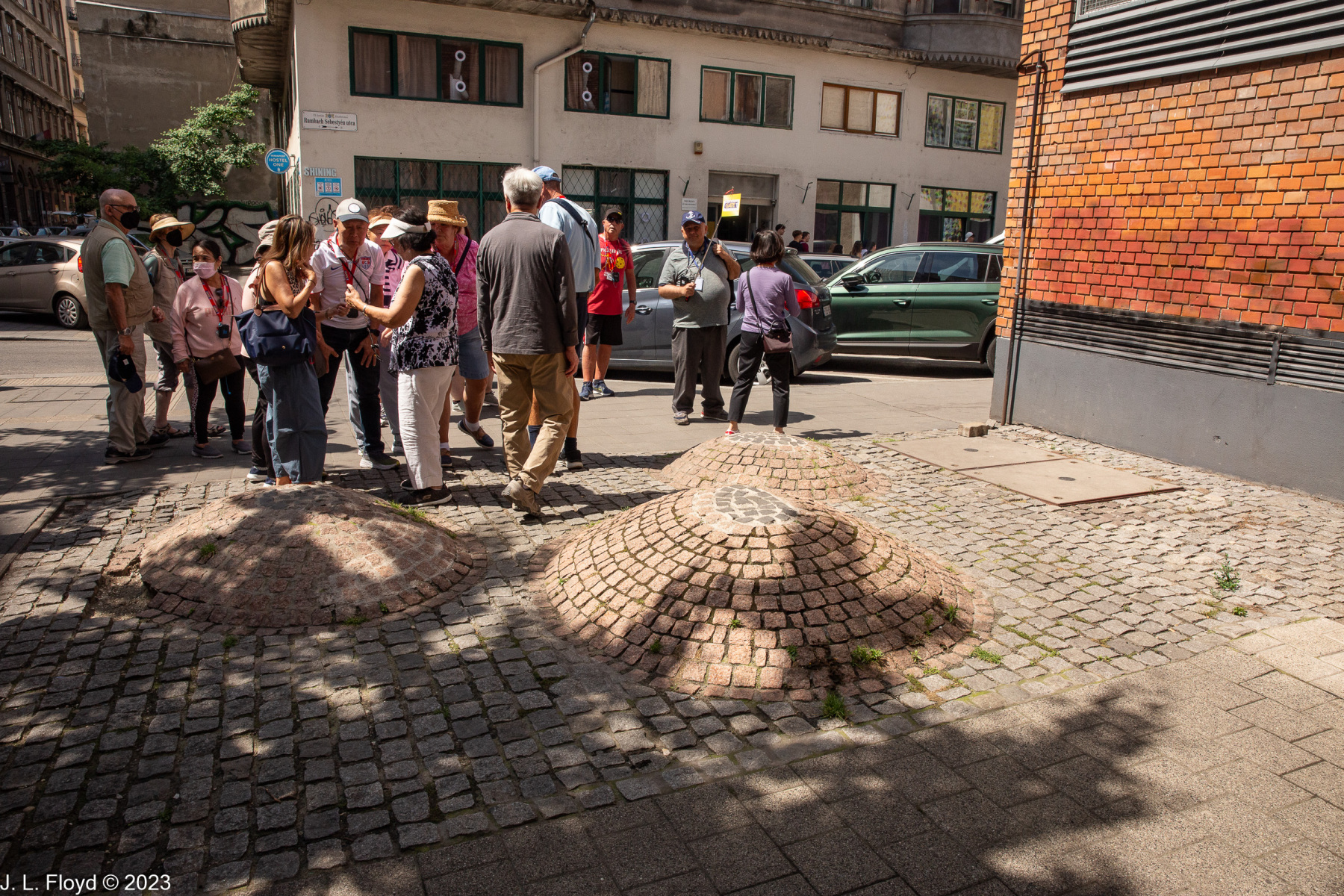
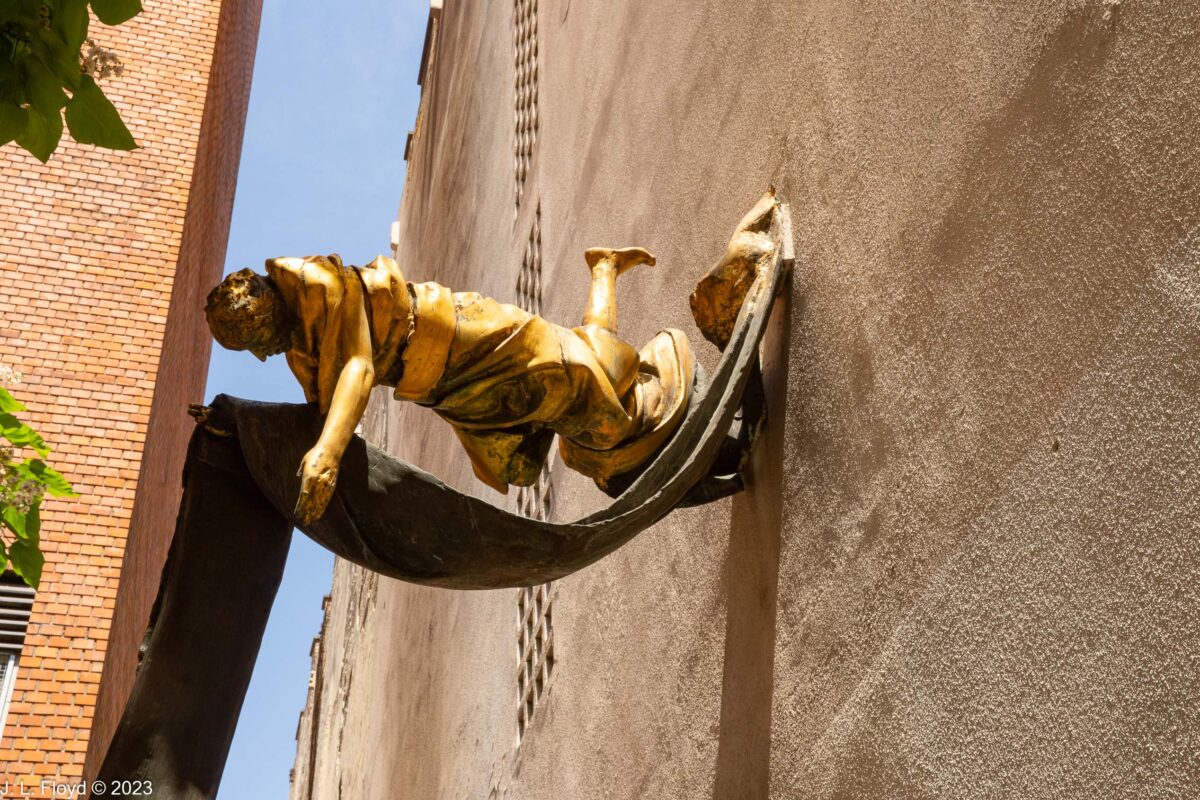
The Carl Lutz Memorial on Dob Street is a most unusual construction. Its most striking component is a statue of Lutz in the form of a golden angel standing sideways on the side of a building. From his height, Lutz throws a very long cape to serve as a ramp for an wounded Holocaust victim lying on the ground. extending an arm up to plead for help. Also on the wall is a plaque featuring a quotation from the Talmud, “Whoever saves a life is considered to have saved an entire world.” Beneath the golden statue on the wall have been scrawled a plethora of graffiti, which some people feel has ruined the atmosphere, but it didn’t bother me. The graffiti were unintelligible to me, and I could not tell whether they consisted of the ravings of anti-Jewish hatemongers displaying their idiocy for all the world to see, or else they have nothing to do with the memorial at all, in which case they are merely artwork. In any case, the memorial is set in a shady garden which provides a semblance of peace. On the street corner, at the opposite end of the garden from the memorial itself, we noticed three mounds which consisted of the same kind of brickwork as that supporting the victim statue, but which had nothing near them to indicate what they represented. I don’t recall whether the guide said anything about them and I haven’t been able to find out anything more, so if anyone reading this can help I would be much obliged.

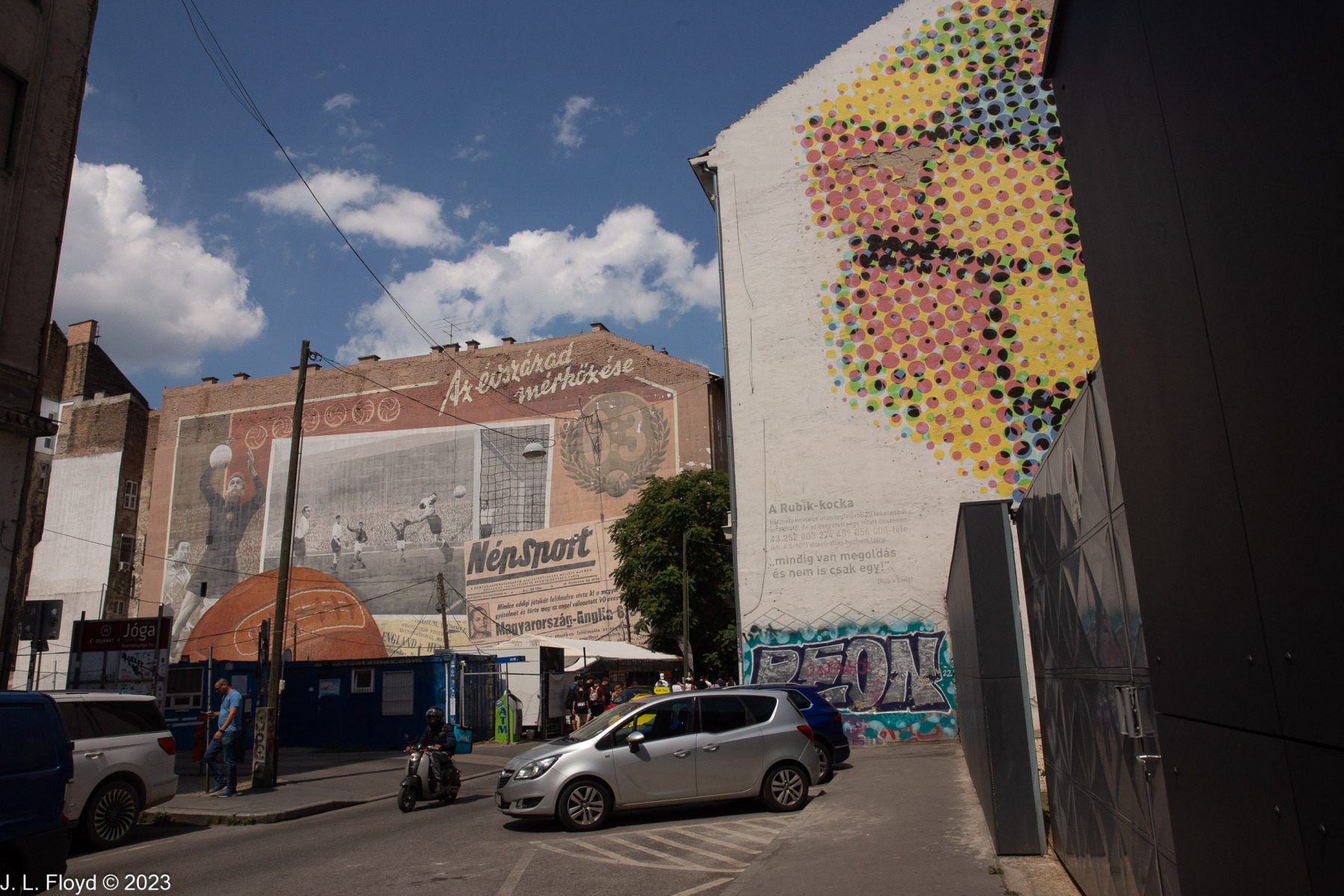
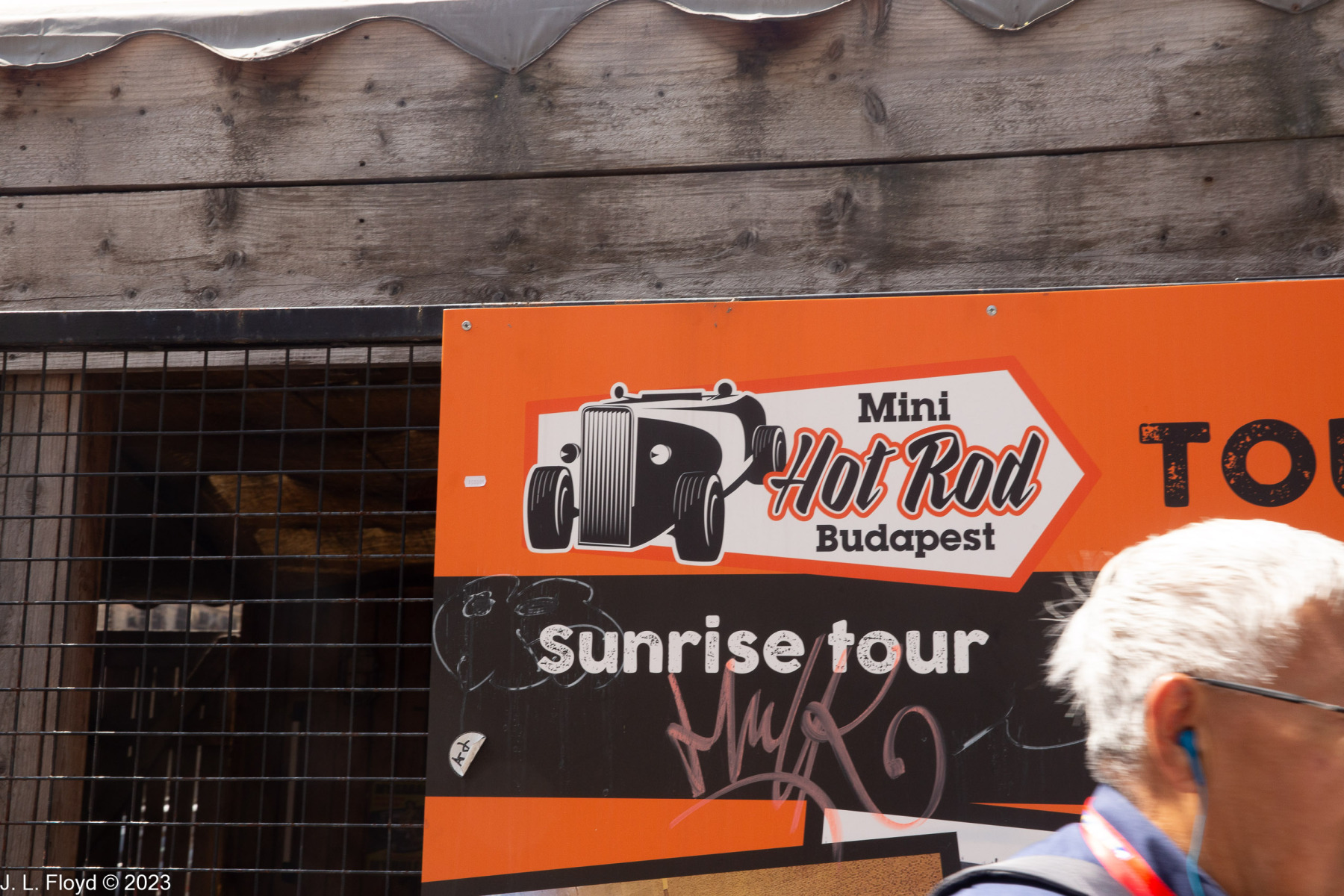
Turning the corner of Dob and Rumbach Streets, I found a graffiti-bedecked parking lot which turned out to be the base of an outfit calling itself Hot Rod Budapest, which offers tours of the city in fake “Deuces” – cut-down, souped-up 1932 American Ford open roadsters. Although these are obviously cheap imitations of the real thing, we would have tried them if we had a chance; we did something similar a few days later, in Prague, and enjoyed it greatly.

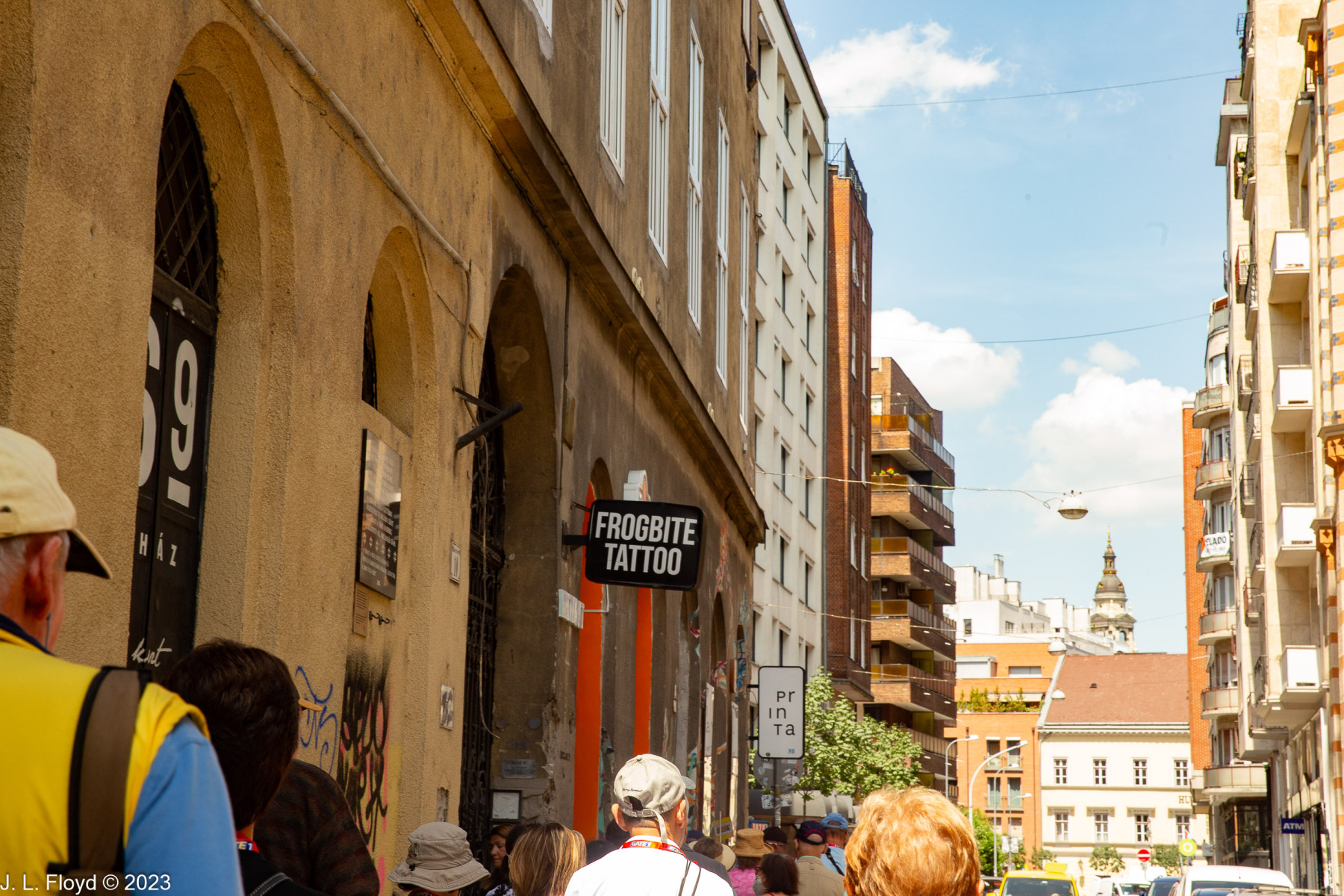
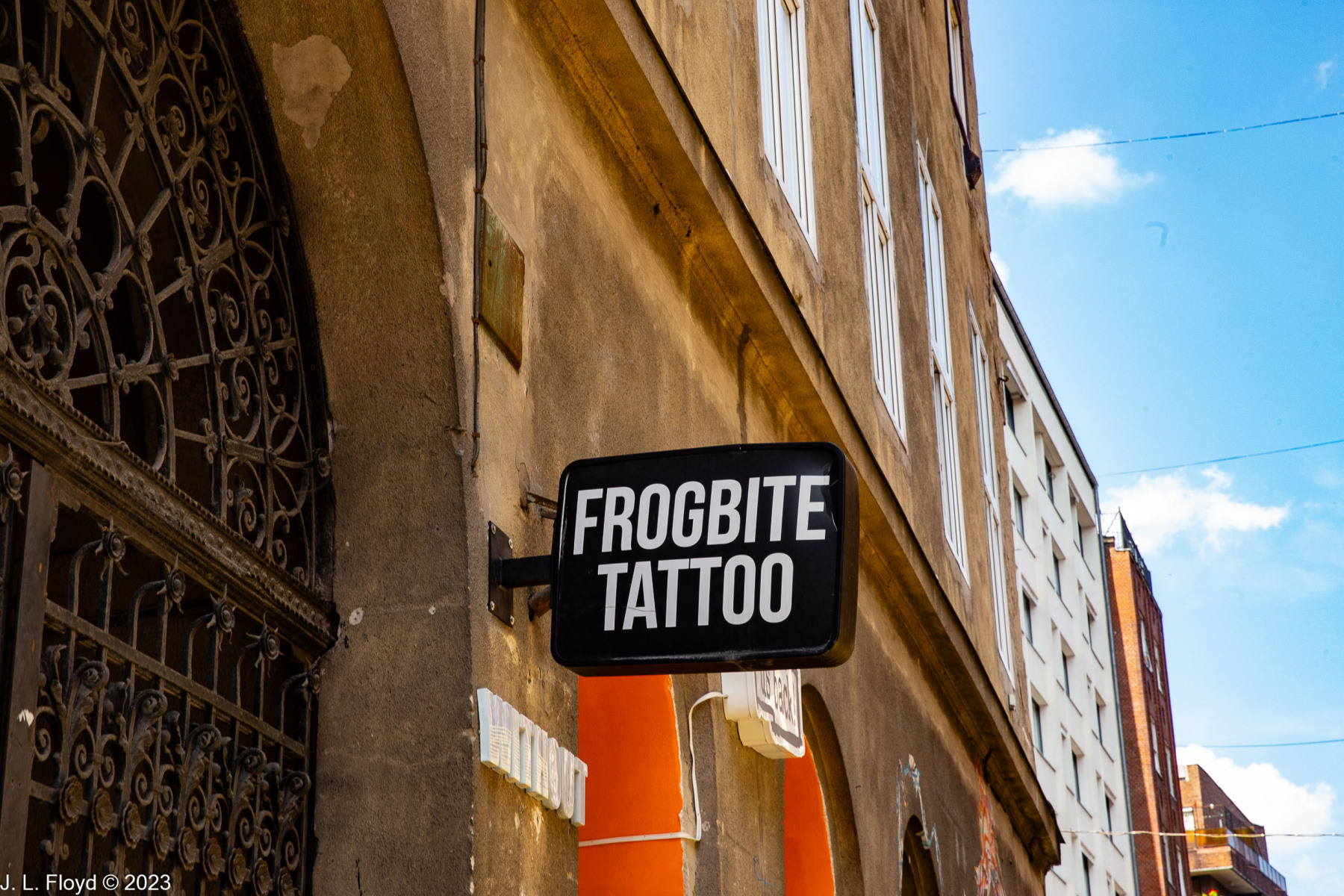
Continuing down Rumbach Street, we came across the Frogbite Tattoo Parlor. I don’t favor tattoos myself but I loved the name of the place. I had an old friend from FileNet days (mid-80s), Dennis Griesser, who was a ranarophile, otherwise known as a frog freak. I would have sent him a picture of the logo, but he passed away earlier this year. This page is dedicated to him in memoriam.

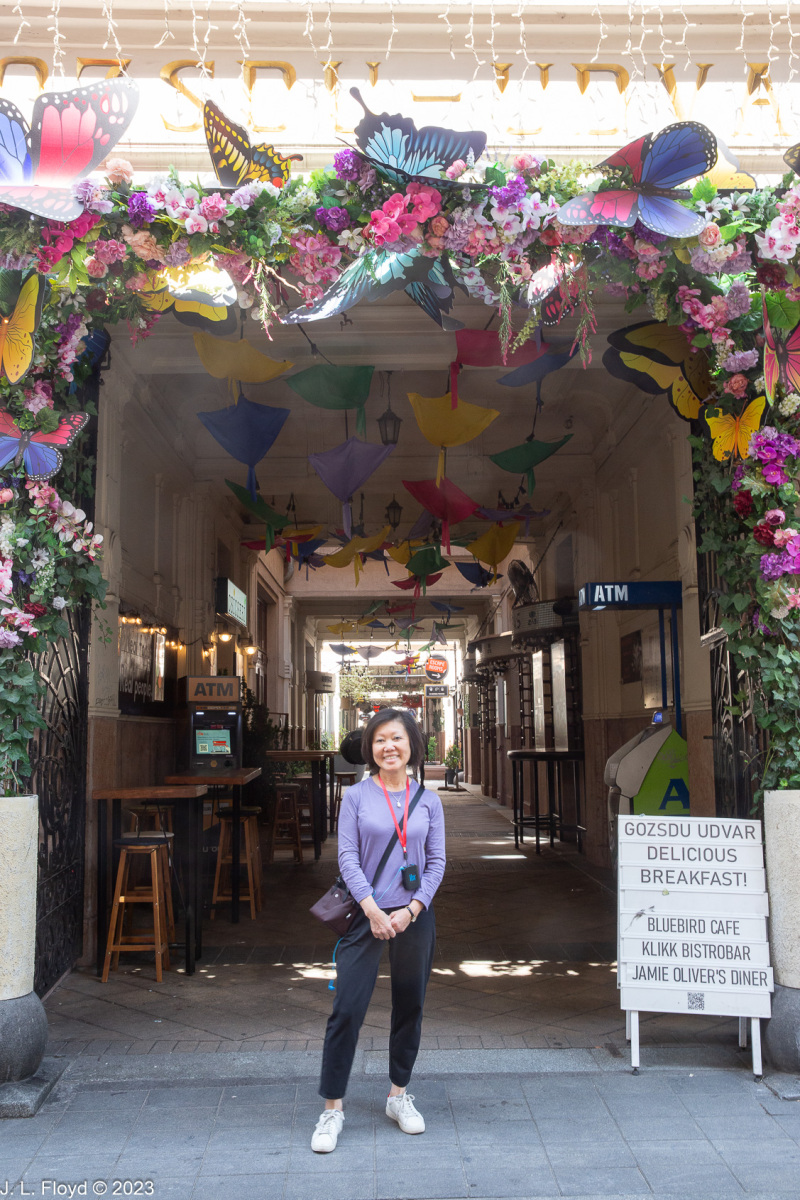
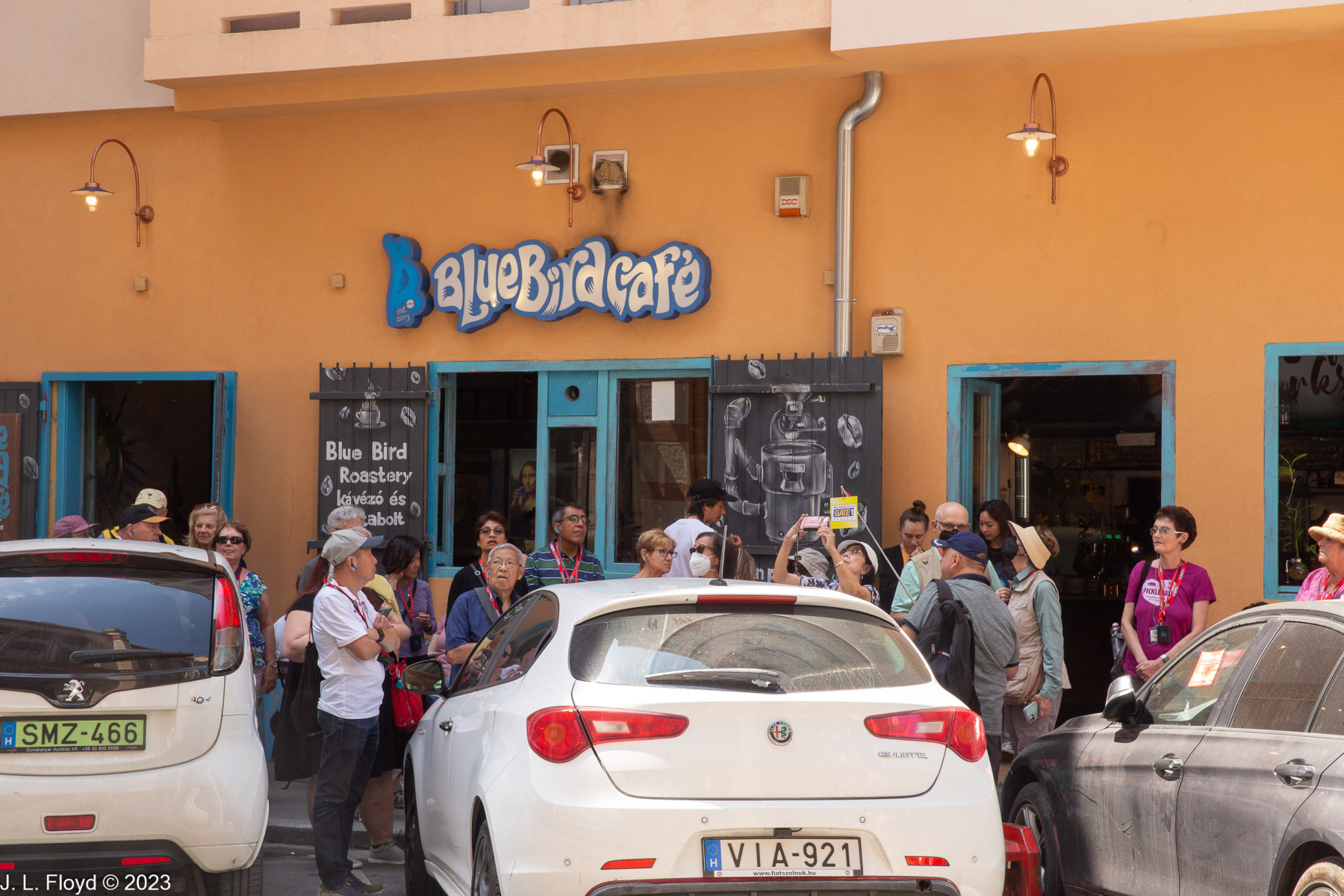
Also on Rumbach Street we encountered a number of other enticing establishments, such as the gaily decorated Bluebird Cafe, where I shot a picture of the entrance with an attractive young member of our tour group in front.

The Rumbach Street Synagogue is an octagonal structure built in 1872 in Moorish Revival style, like the Dohany Street Synagogue. In fact it was intended for the Neolog branch of Hungarian Jewry, but in the 1870s the schism between the Orthodox traditionalists and the Neolog modernizers evolved into a three-way split, with another conservative branch following its own path, to become known as the “Status Quo” faction; and the Rumbach Street Synagogue came under their aegis. Like the other two synagogues we viewed, the Rumbach deteriorated badly in the late 20th century, and was eventually restored to its pristine grandeur; today all three rank among the top architectural wonders of Budapest.

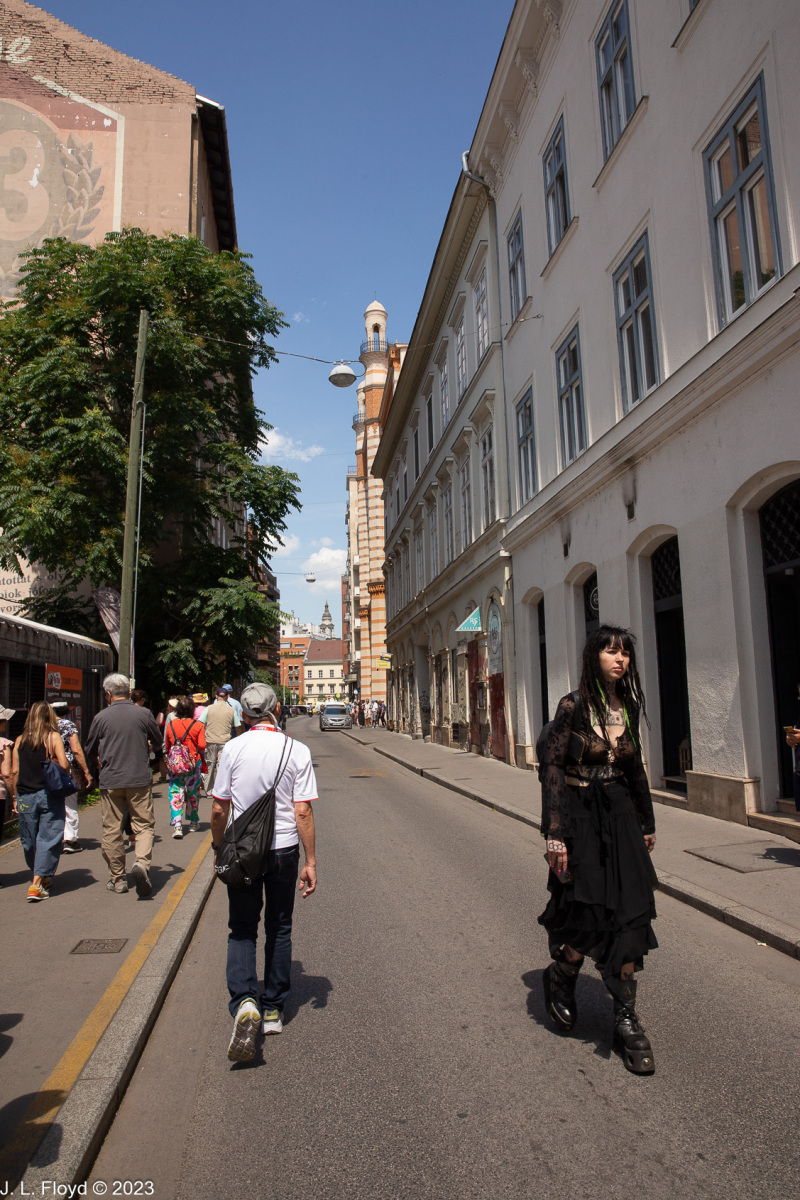
From Rumbach Street we headed back down Dob Street toward Károly Boulevard, a wide main thoroughfare which converges with Dohány Street near the Great Synagogue, where our bus awaited. On the way I was able to capture a few more subjects of interest with my camera, including a couple that probably won’t show up in any guidebooks.

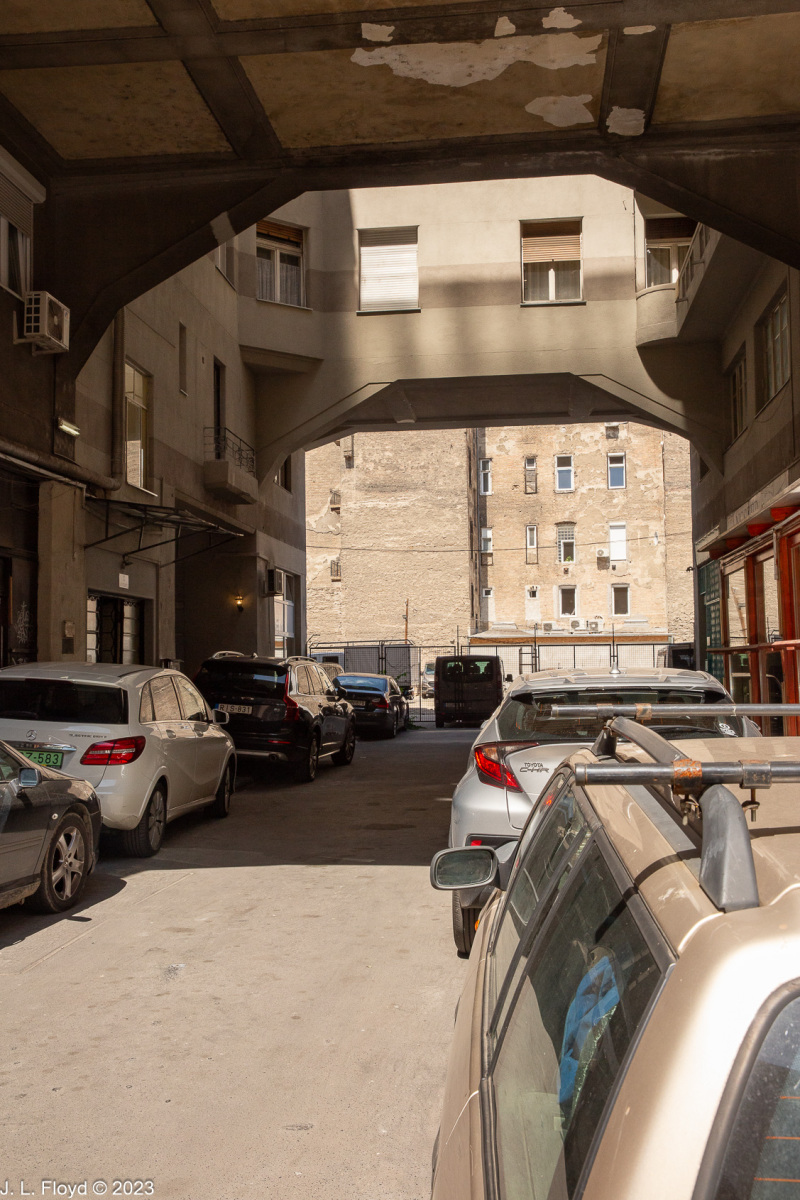
For example, I noticed that in the crowded Jewish Quarter some attempts had been made to maximize the use of real estate by building archways spanning the space between buildings over an intervening street. An example is shown below.

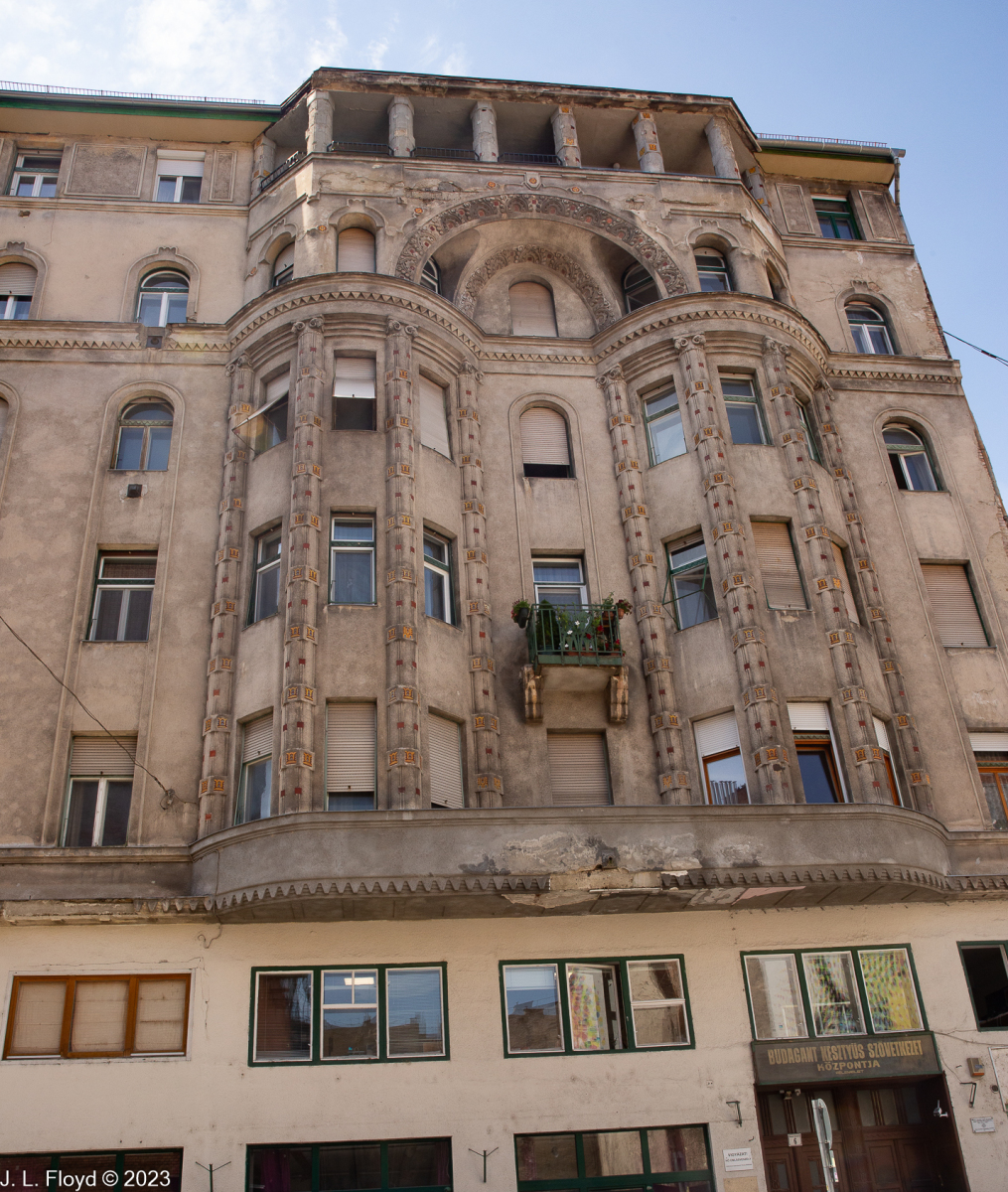
Károly Boulevard and Dohány Street mark the border of the Jewish ghetto of World War II, and the “Gentile” side of the street is lined with upscale apartment buildings, pricey boutiques and posh hotels. Nevertheless, I found a specimen of the ubiquitous Budapest graffiti even here, and in a rather inaccessible yet highly visible place.

Categories
Danube River Cruise, June 2023

Budapest, June 15, 2023: The Dohány Street Synagogue

Budapest’s historic Jewish quarter might well be called the Playground District these days because it appears to be the center of the city’s night life. But that would obscure the fact that the quarter has seen a great deal of history, much of it tragic, which should not be forgotten.

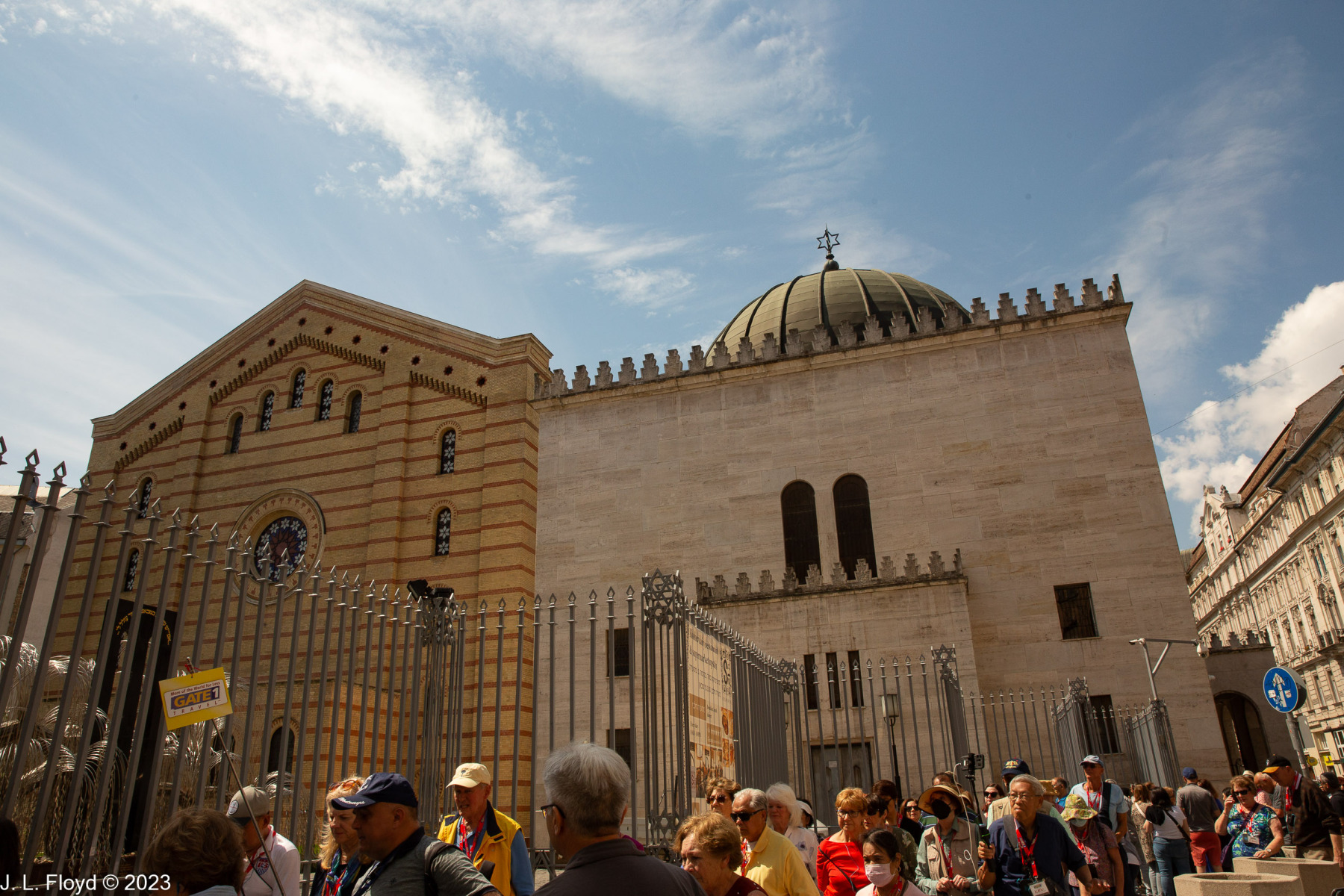
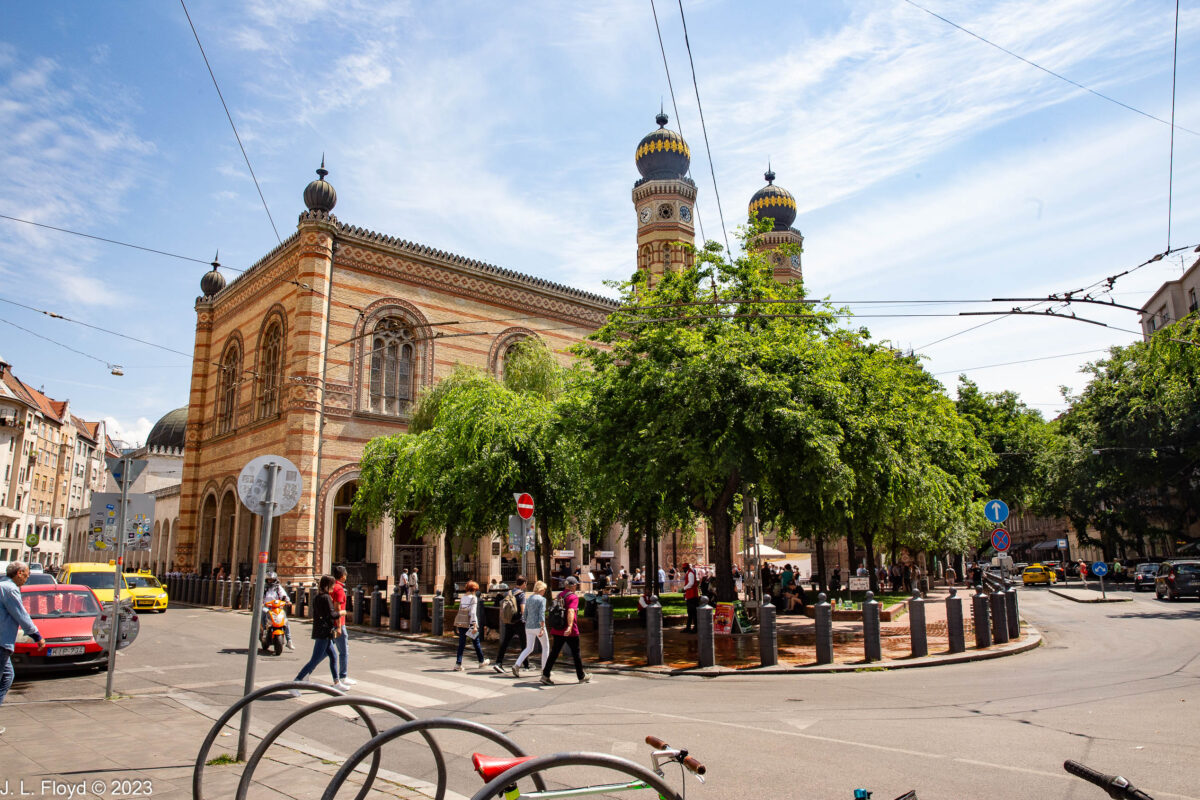
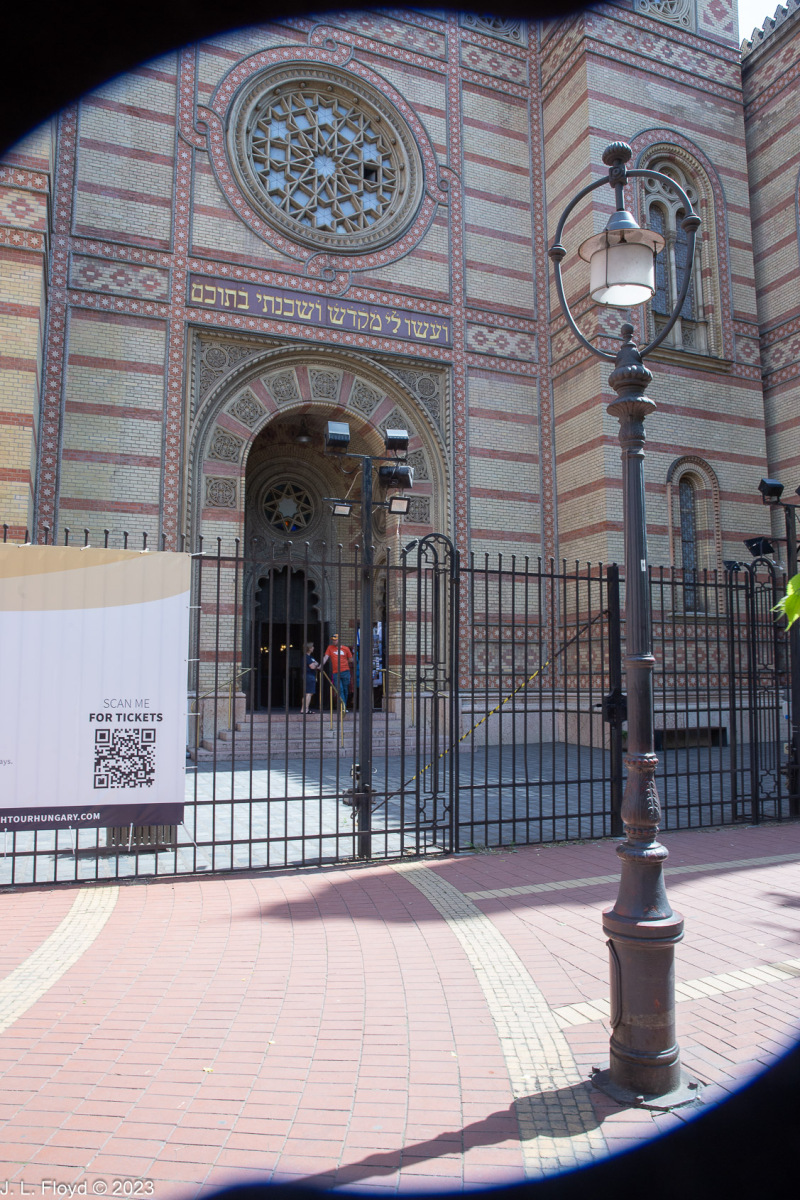
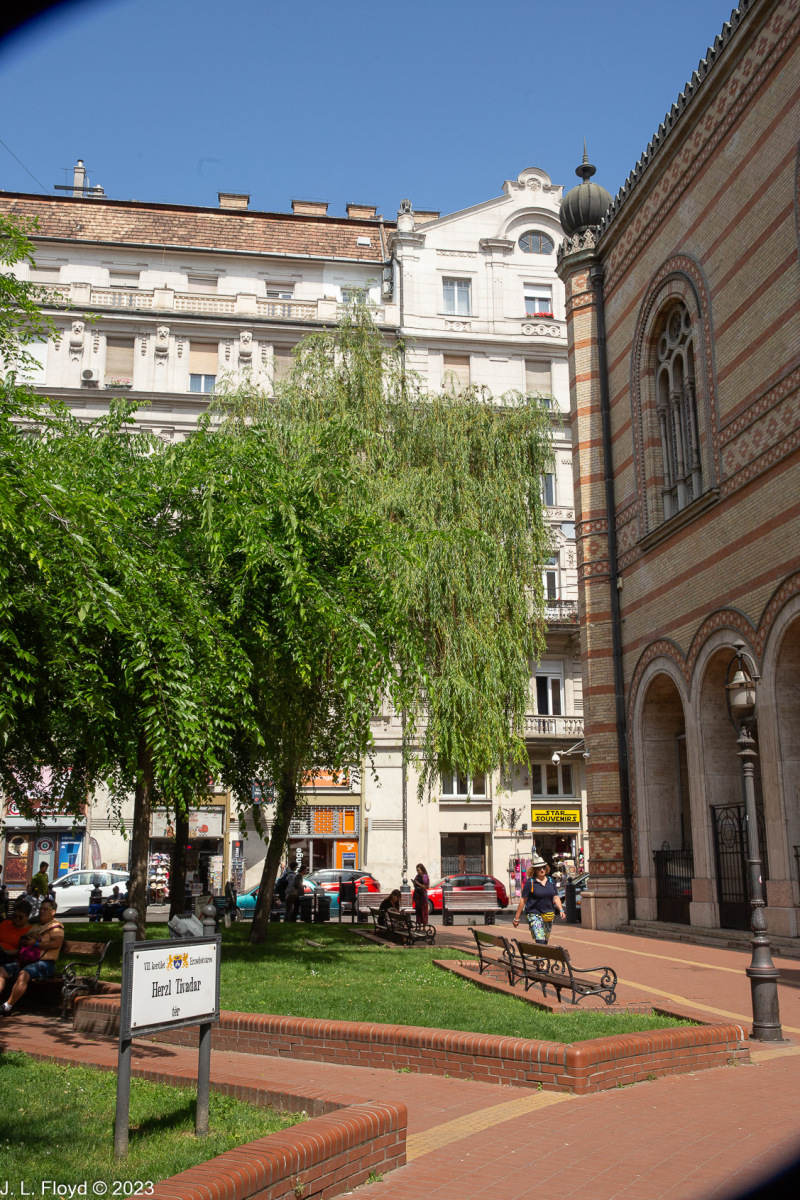
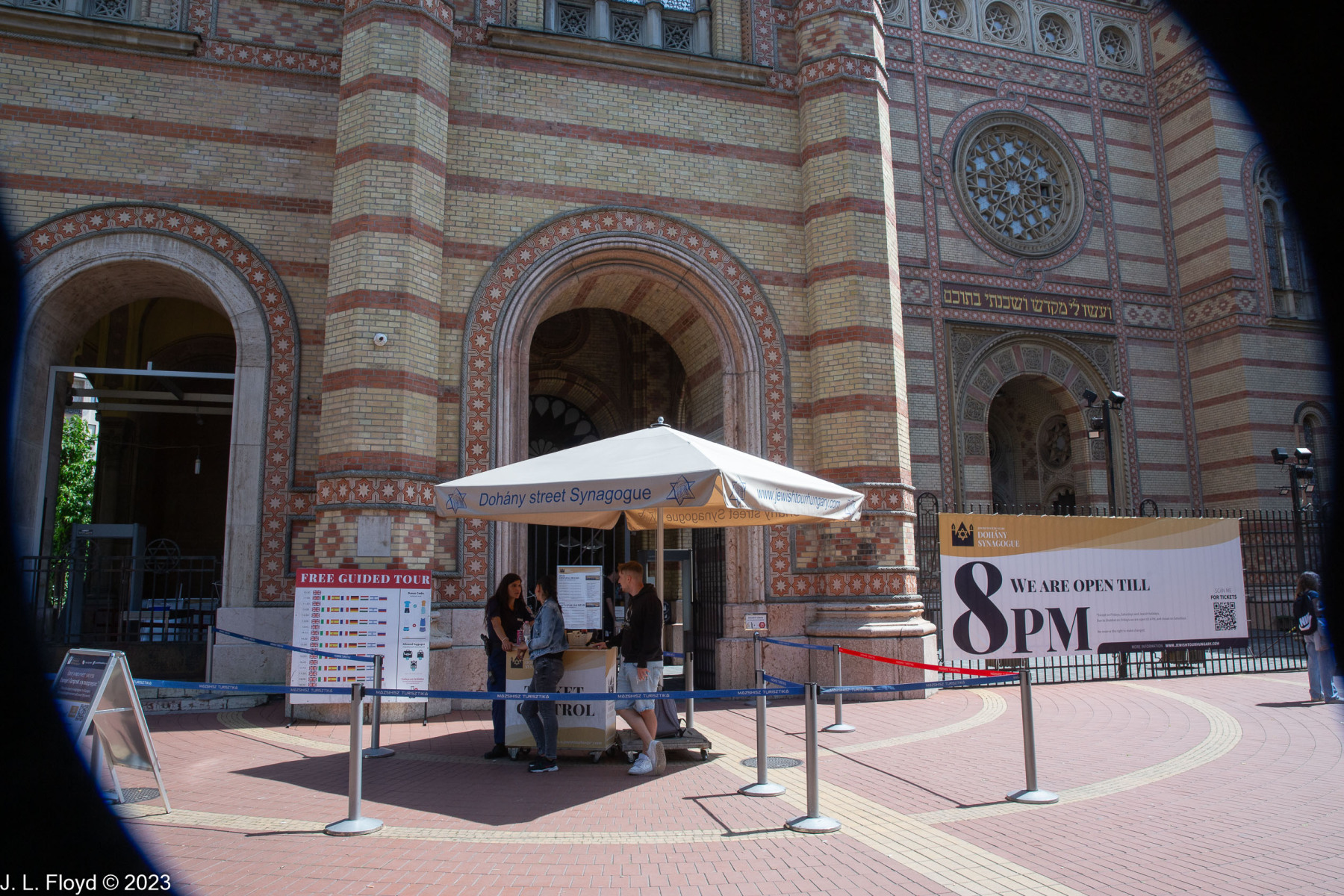
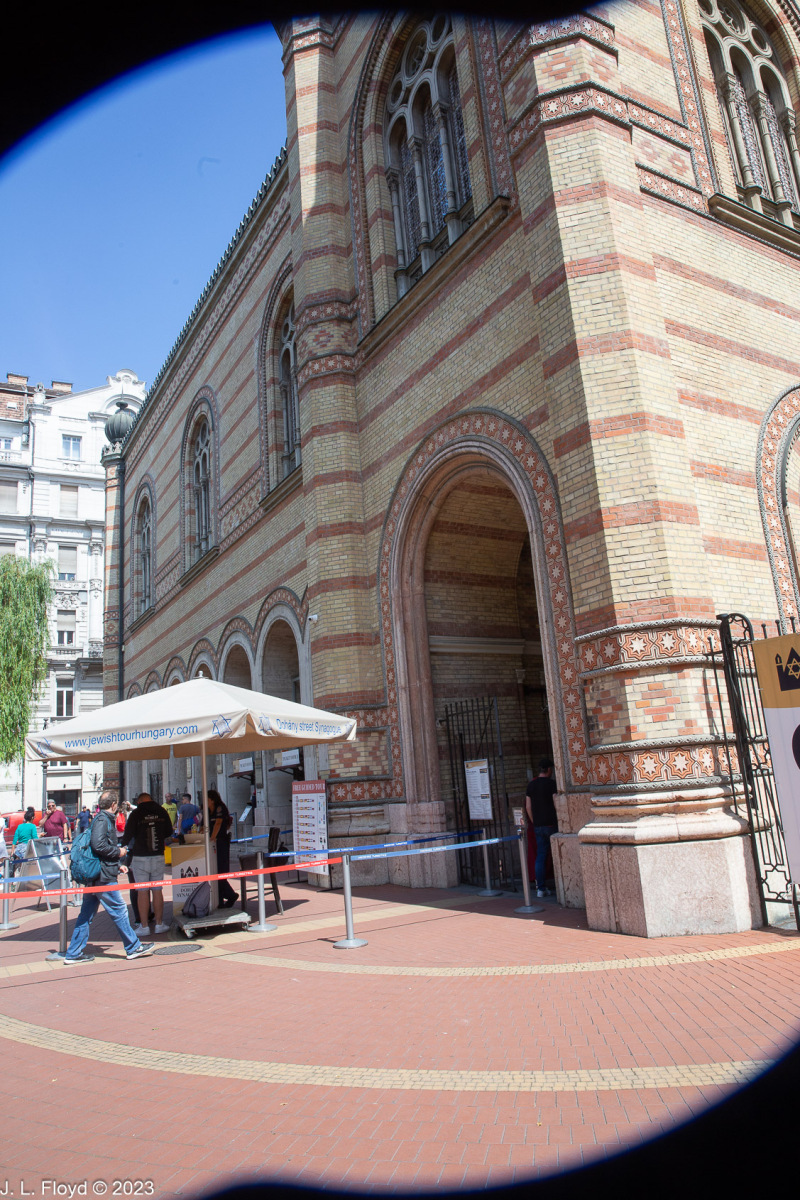
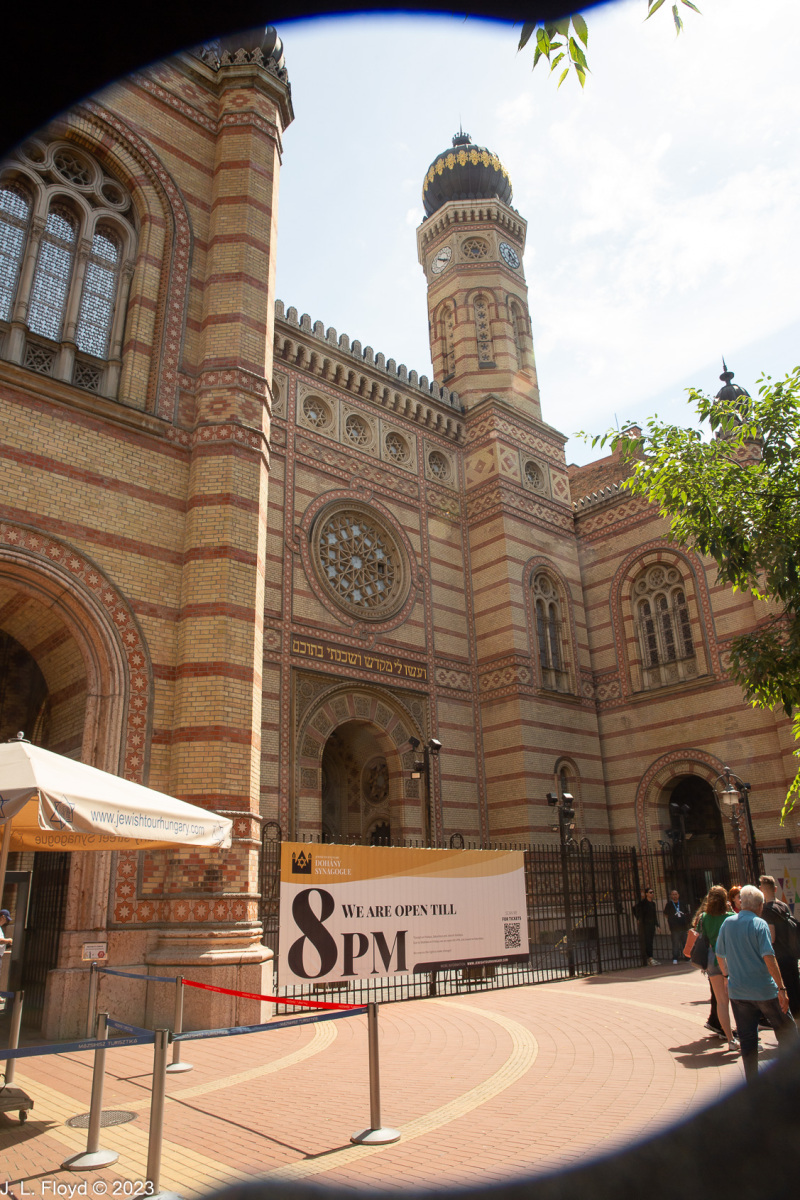
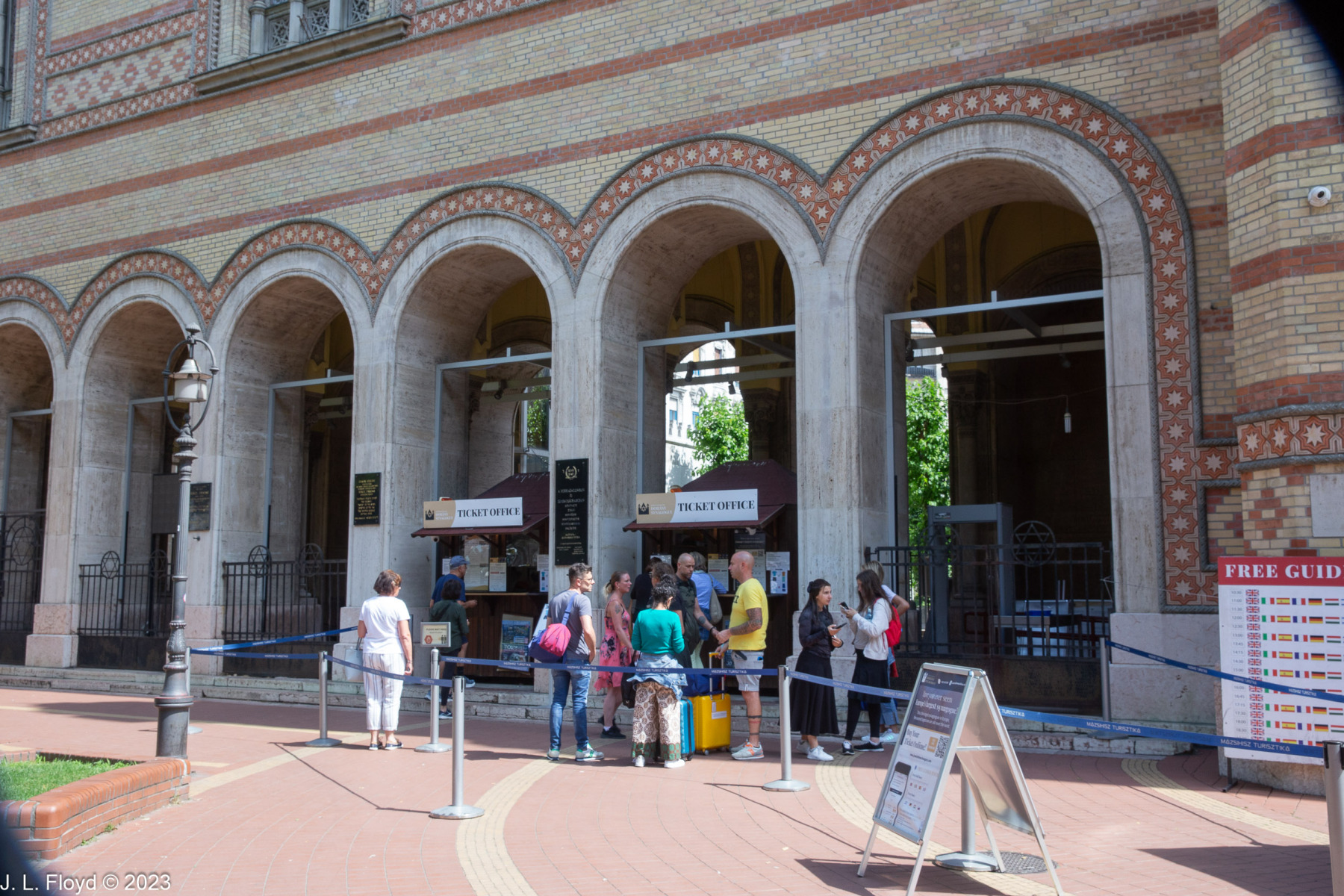
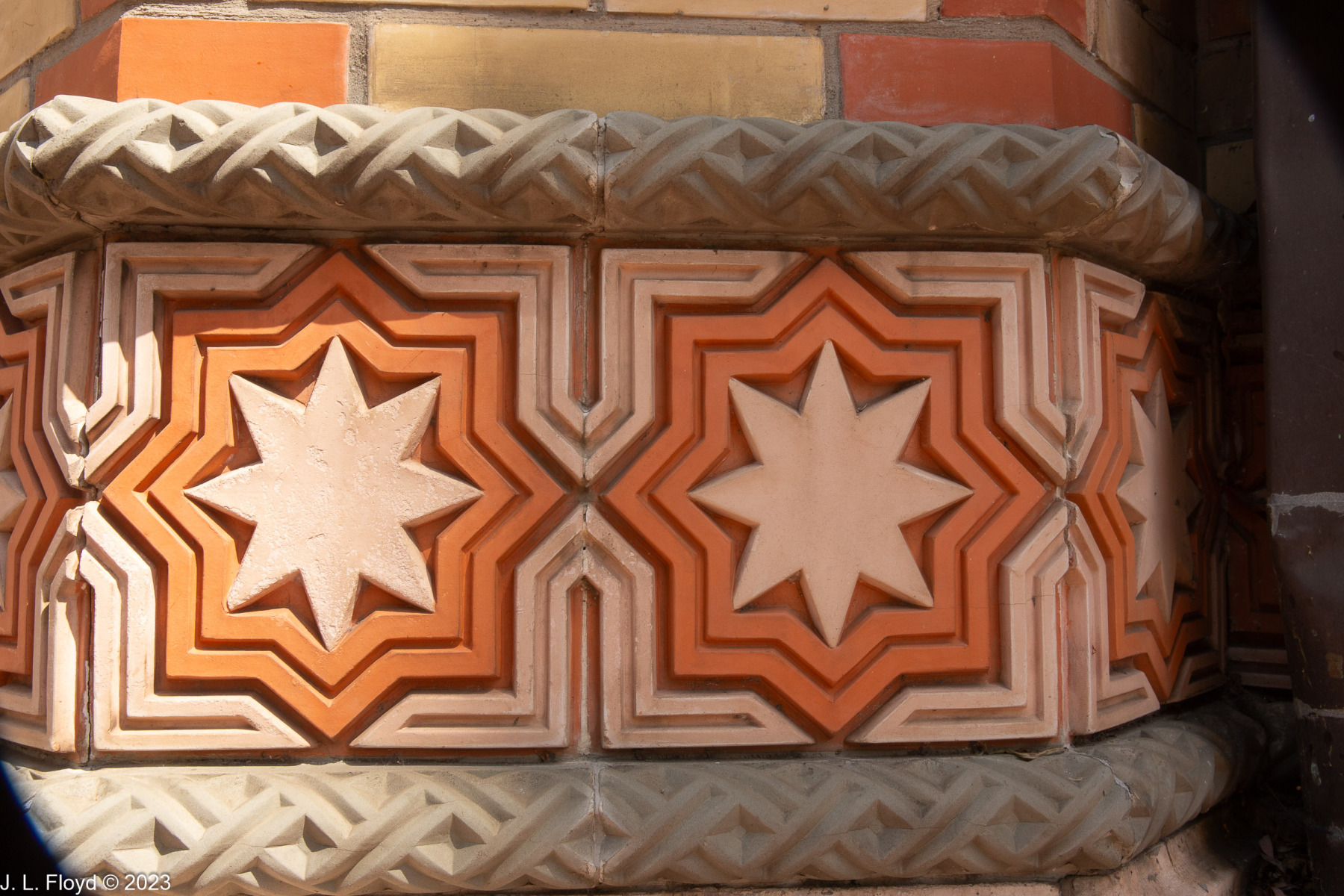
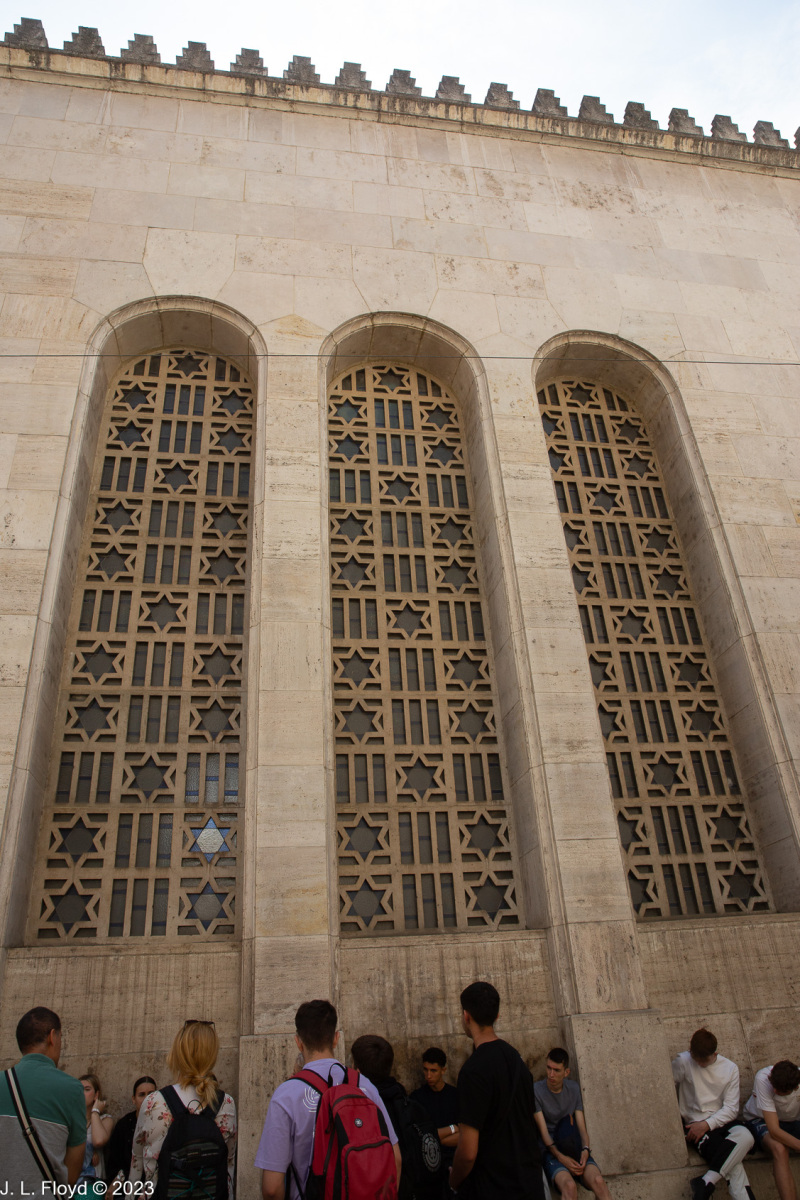
So it was appropriate that we began our tour of the Jewish Quarter at the Dohány Street Synagogue. (Dohány means “tobacco” in Hungarian.) This is the largest synagogue in Europe, seating almost 3,000 people, and the only synagogues in the world that are larger are in Israel and New York. It was built in the 1850s in a Moorish Revival style with an admixture of Byzantine, Romantic and Gothic elements. I’m a big fan of Moorish architecture and I regard the Dohány Street Synagogue as a masterpiece.
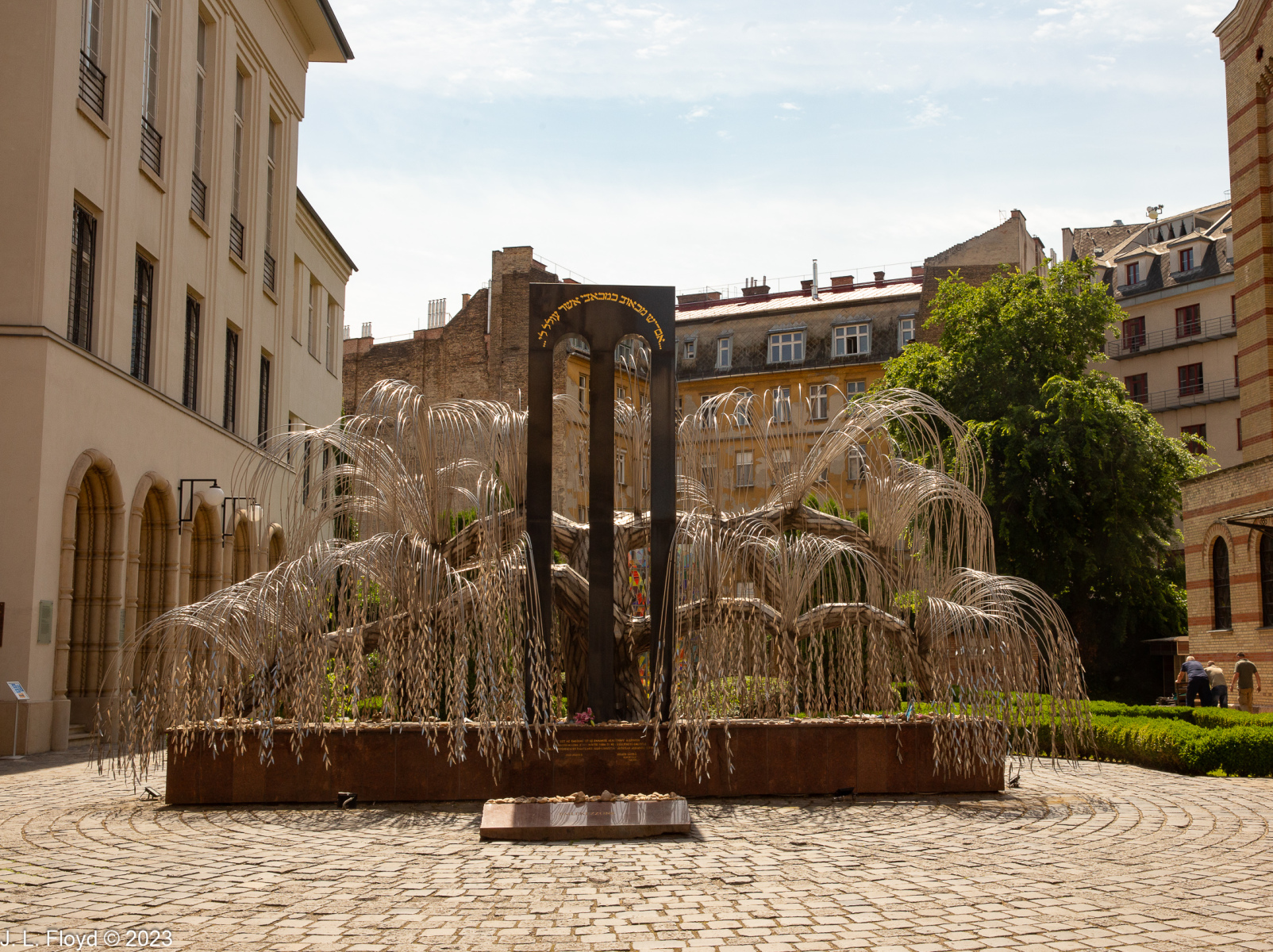
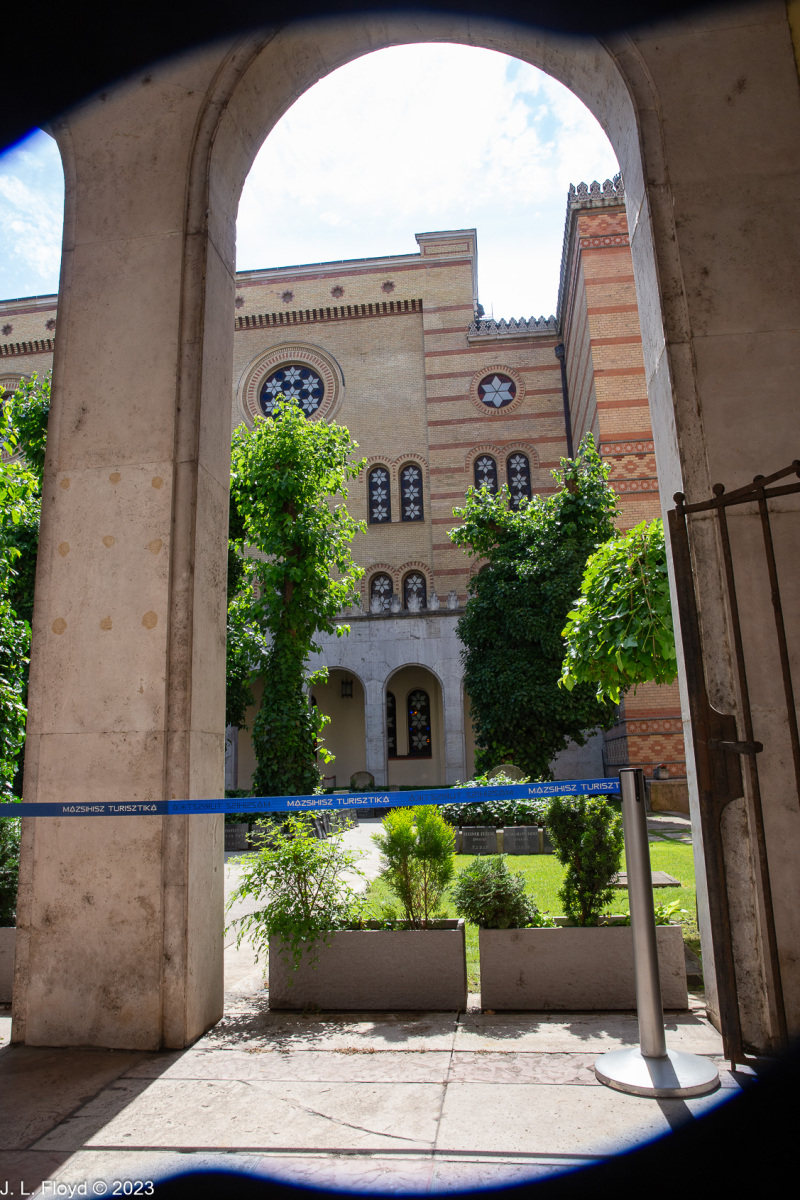
The synagogue played a key role in World War II. Hungary, under the right-wing government of Admiral Horthy, a former Austro-Hungarian admiral, was an ally of Germany in World War II and sent troops to participate in Hitler’s invasion of Russia. In 1944, after the tide turned decisively against the Axis powers, the Nazis perceived that Hungary was wavering in its commitment to the alliance; they sent in the troops and installed a puppet government. Up to that time, the anti-Semitic Horthy regime had conducted sporadic deportations of Jews and allowed occasional atrocities against them, but now Adolf Eichmann took charge and the Holocaust in Hungary began in earnest. In 1944 over 400,000 Jews were deported to Auschwitz. Those who were not deported were mostly relocated to the Jewish ghetto in Budapest. About 119,000 remained in the ghetto by the time the Russians liberated the city in January 1945. The Dohány Street Synagogue served as a refuge for many Jews who were unable to find quarters elsewhere in the crowded ghetto. Nevertheless, the winter of 1944-45 was a cruel one, and many ghetto residents died of cold and hunger. About 2,000 of them are buried in a makeshift cemetery behind the synagogue. The cemetery courtyard is a place of verdant beauty and tranquility, with walls, arches, windows surrounding a garden, all reminiscent of Moorish palaces in Spain.

The cemetery courtyard is walled on one side by the Heroes’ Temple, an adjunct to the synagogue built in 1931 to commemorate the Jewish soldiers who lost their lives fighting with the Austro-Hungarian army during World War I. On the other side of the Heroes’ Temple is the Raoul Wallenberg Holocaust Memorial Park. As most people know these days, Raoul Wallenberg was a Swedish diplomat who managed by various subterfuges to save thousands of Jews from Nazis and Hungarian fascists during the terrible days of 1944. In January 1945 he was arrested on suspicion of espionage by the infamous Soviet counterintelligence organization SMERSH (abbreviation for the Russian words smert’ shpionam, “death to spies”), depicted somewhat cartoonishly in Ian Fleming’s James Bond novel From Russia with Love. Twelve years later, in 1957, the Soviets reported that he had died of a heart attack in 1947, while imprisoned in the notorious Lubyanka prison in Moscow. There is no need to dwell on the suspiciousness of the Soviet account.

The Raoul Wallenberg Holocaust Memorial Park contains two memorials: one to Wallenberg and other persons, mostly diplomats, who saved thousands of Jews from the gas chambers by various subterfuges; and the second to the over 400,000 Hungarian Jews who died in the Holocaust. The latter, known as the Emanuel Tree, is in the form of a weeping willow tree, made of metal, each leaf of which is inscribed with the name and tattoo number of a victim.

Categories
Danube River Cruise, June 2023

Budapest, June 15, 2023: Heroes’ Square and City Park

Our first full day in Budapest began with a visit to Hősök tere, Heroes’ Square, where some of the major milestones of Hungarian history are memorialized.

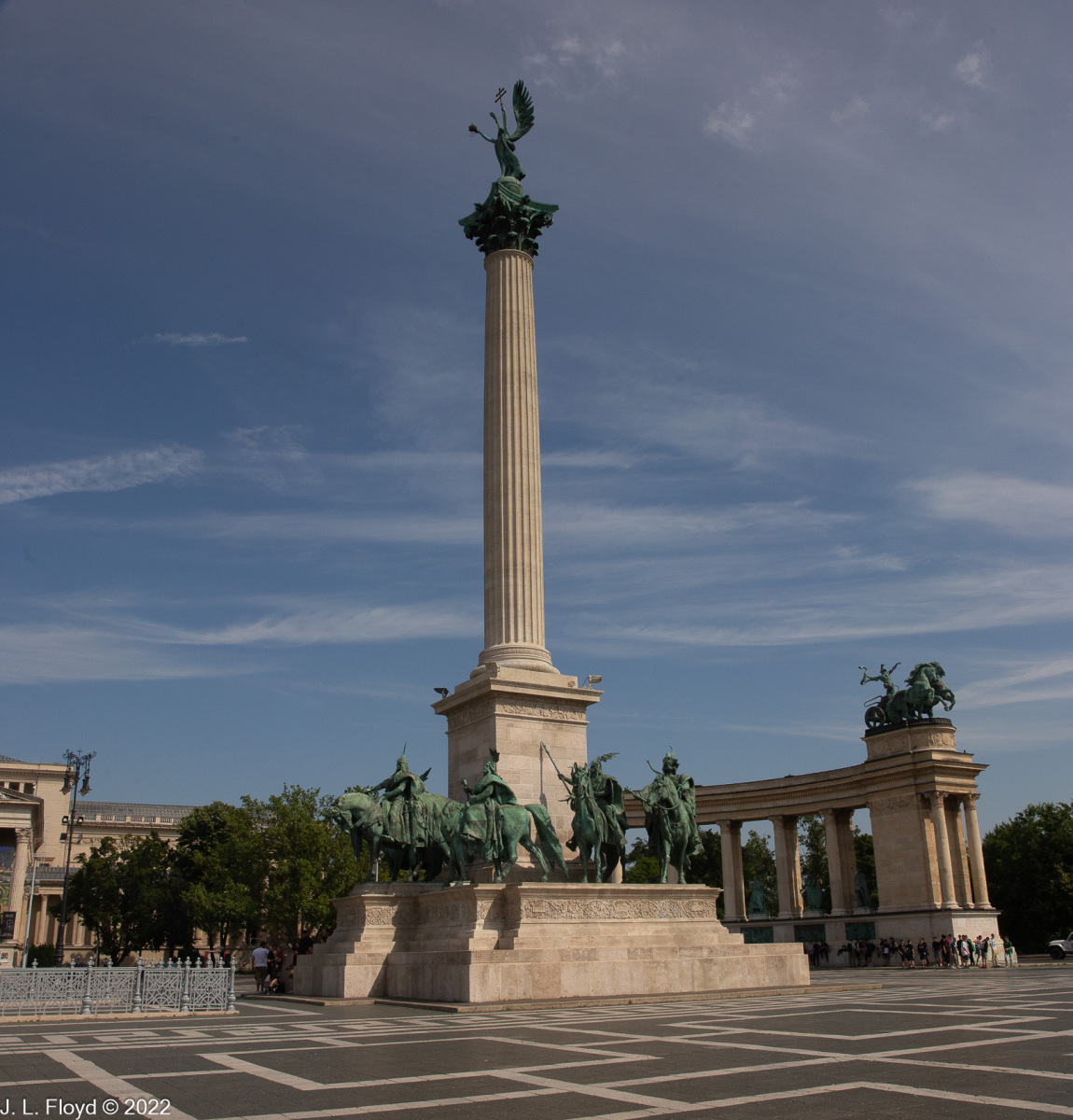
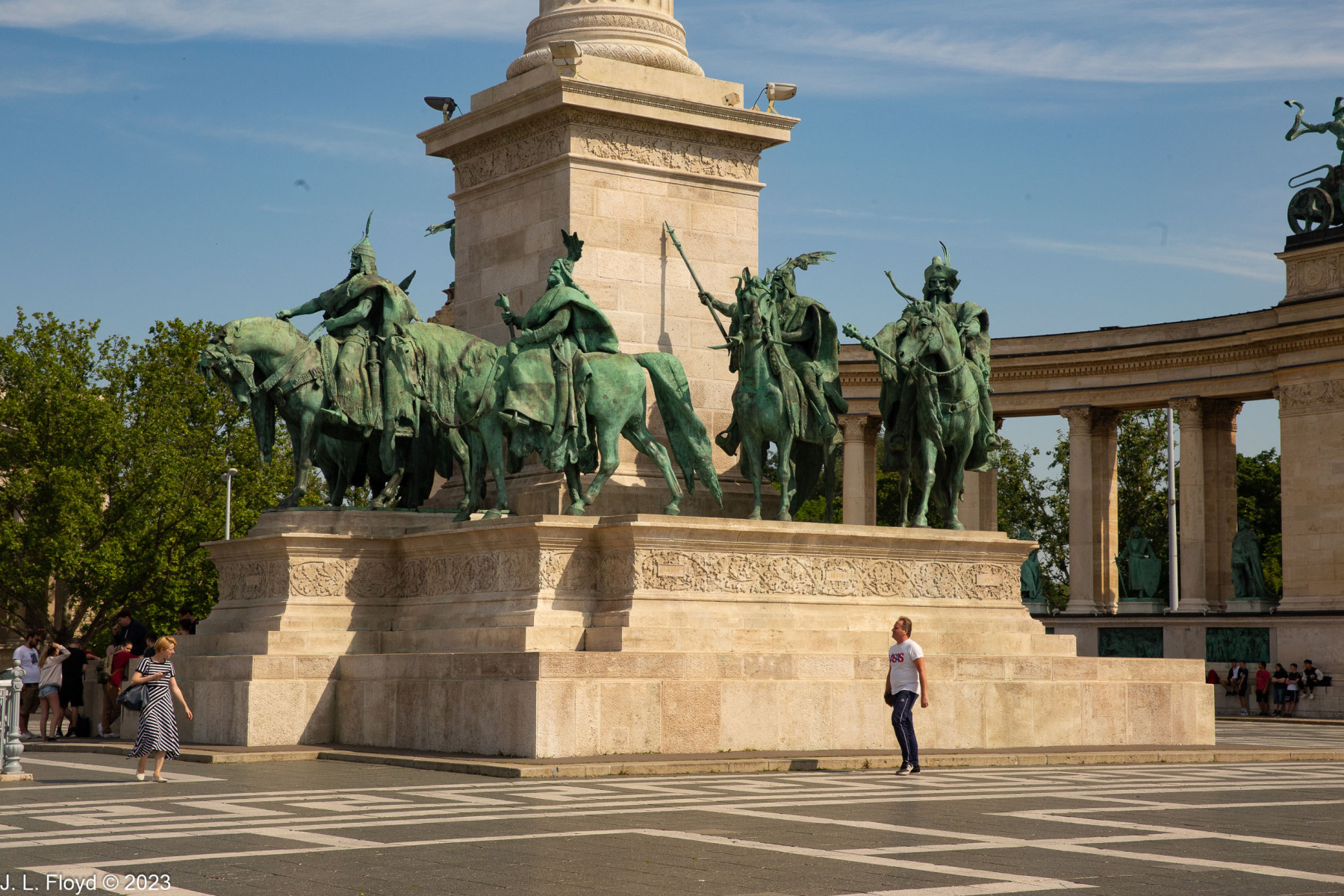
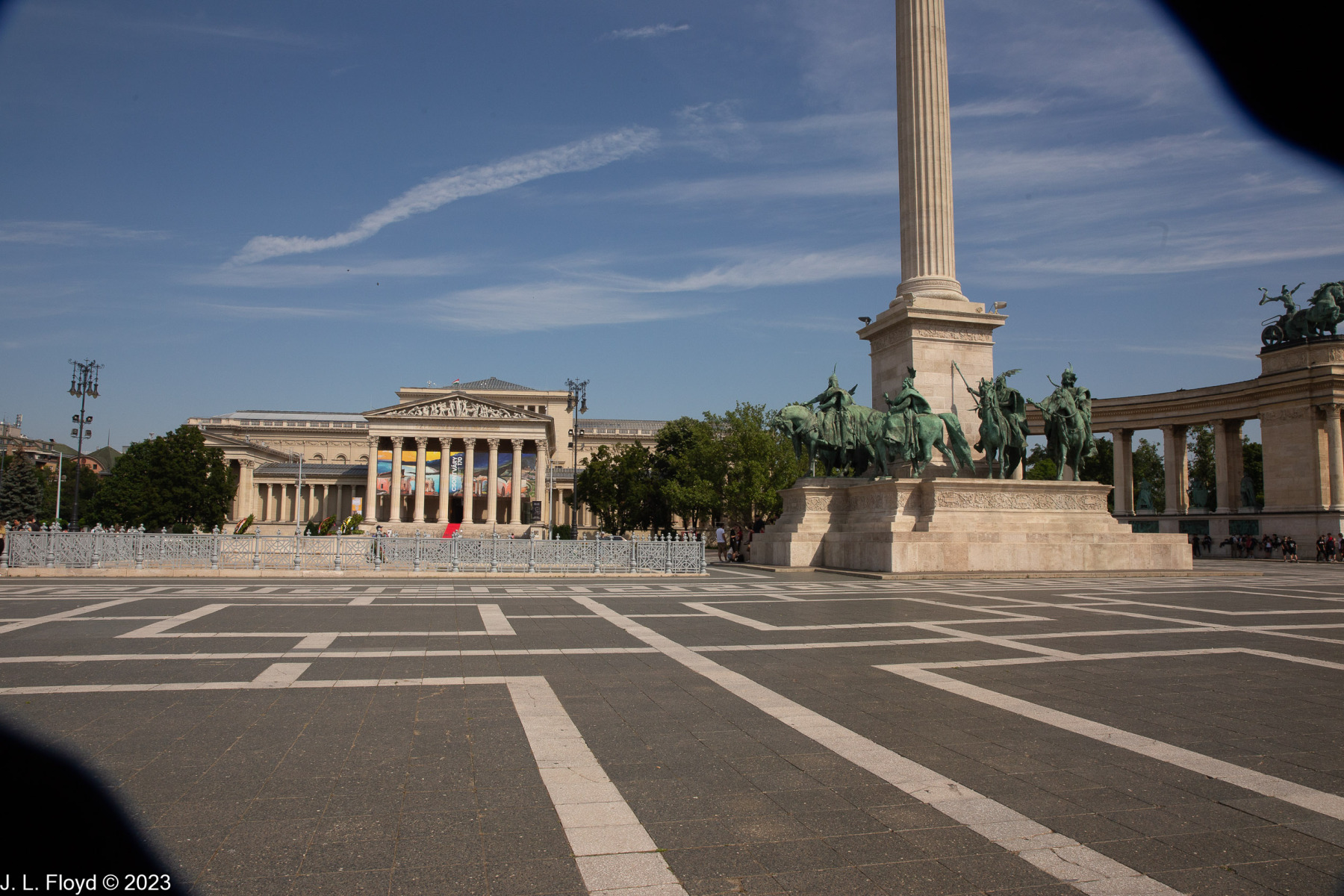
The centerpiece of Heroes’ Square is the Millenium Column, 36 meters (118 feet) high, with a statue of the Archangel Gabriel on top, holding a crown in one hand and a two-barred apostolic cross in the other. At the base of the column are mounted figures representing the Seven Magyar Chieftains, a group of semi-legendary figures who are supposed to have led the ancestors of the Hungarians into the land they have occupied ever since. Other than Árpád, considered to be the founder of the Hungarian nation, little is known about these men, and there are many uncertainties about Árpád’s life as well. In any case the equestrian statues are not intended to be realistic depictions.
What is well known is that in the late ninth century CE, a group of nomadic tribes known as the Magyars established themselves in the Carpathian basin, in the territory known to the Romans as Pannonia. They had previously lived in the Pontic steppes, north of the Black Sea, where they had been a thorn in the side of the Slavic people who later became the Russians, and had been in their turn harassed by Turkic nomadic peoples such as the Khazars, Bulgars and Pechenegs. The Magyars themselves were not Turkic but spoke – and still speak – a Uralic language, akin to Finnish. They originated in Central Asia and Siberia, where some Uralic languages are still spoken today. However, as nomadic horsemen they necessarily led an existence similar to the neighboring Turkic tribes and consequently developed a similar social structure, and eventually some of those tribes joined them in their migrations.

In any case, partly under pressure from their enemies, the Magyars moved west of the Carpathians and settled in the plains of the trans-Danubian basin, where they then became a thorn in the side of the neighboring German, Slavic and Vlach (Romanian) peoples. They had a reputation as particularly savage fighters, raiding the villages, slaughtering all the men and carrying off the women and children. However, this could not last, and in 955 the German king Otto I, later Holy Roman Emperor, inflicted a shattering defeat on the Magyars in the Battle of Lechfeld, ending their forays into Germany. In the following half-century the Magyars began to settle down, adopt a more sedentary lifestyle and convert to Christianity.

In front of the Millenium Column in Heroes’ Square is a large stone cenotaph – a symbolic tomb not containing any actual remains – that serves as a memorial to all those who died in defense of Hungarian liberty and independence.

Behind the column is a pair of semicircular colonnades, each containing statues of major figures of Hungarian history, and topped with symbolic theme sculptures: outer edge of the left colonnade, a statue of a man with a scythe and a woman sowing seed, representing Labor and Wealth; on the inner edge, a male figure, representing War, driving a chariot using a snake as a whip. Opposite War on the right colonnade is a woman in a chariot holding a palm frond, personifying Peace, and on the outer edge of the right colonnade, statues of a man and a woman, representing Knowledge and Glory.

From Heroes’ Square we walked across a bridge over a mostly dry lake to Budapest City Park. The bridge, furnished with an elegant bronze railing, was designed by and named for Szilárd Zielinski, a Hungarian engineer who was a pioneer of reinforced concrete construction. Looming ahead of us in the park was a structure which for all the world looked like a castle out of a Dracula movie. This was the Vajdahunyadi Castle, which as far as I can tell means “Copy of Hunyadi Castle.” It was originally built in 1896 as part of an exhibition celebrating the millenial of the Magyar occupation of the Carpathian basin, and it was designed to incorporate features of various landmark buildings of Hungary – but above all the Hunyadi Castle (also known as Corvin Castle) in Transylvania, which was then part of the Kingdom of Hungary. Originally built of wood, it was later rebuilt in brick and stone, which was fortunate, since Hungary lost Transylvania to Romania, and with it Hunyadi Castle, in the aftermath of World War I. The Hungarians of course have never been happy about this, and they would prefer to have Transylvania back. John Hunyadi was a great military leader in 15th-century Hungary and is credited with successfully defending Transylvania against the seemingly unstoppable Ottoman Turks, who had conquered most of the Balkans as well as Constantinople by 1453. The castle which he built is one of the most magnificent in Europe and is now a major Romanian tourist attraction.

The copy in Budapest, though perhaps not as grand as the original, is no cheap imitation. It looks like someplace where Count Dracula might have felt at home. It now houses the Hungarian Museum of Agriculture. We did not go into the museum; our guide led us through the park on a different and longer path from the one on which we had come in, which brought us back to Heroes’ Square and our waiting bus.

Our stroll back to the bus took us past a number of interesting landmarks. Most unexpected was a statue of George Washington, which was erected in 1904, while Hungary was still part of the Habsburg Empire, as a symbol of Hungarian-American friendship.

It was a bit difficult to believe, in the heat of the summer, that Budapest is a major world center for ice skating, with the largest ice skating rink in Europe. The dry basin over which we had crossed to get to Vajdahunyadi Castle is actually that rink; it is supposed to be filled with water during the summer to serve as a boating lake, but apparently the hot dry weather experienced by Central Europe this summer put the kibosh on that. Nevertheless the neo-Baroque pavilion built in 1893 to preside over the rink and provide a place for skaters to change into their skating shoes is still quite imposing.

On the edge of the park, down the street from Heroes’ Square, we encountered a very unusual structure which turned out to be the brand-new home of the Hungarian Museum of Ethnography. This museum was founded in 1872 and has had many different homes; from 1975 to 2022 it was housed in the Palace of Justice (Hungarian Supreme Court) building on Kossuth Square, which we would visit two days later. The museum reputedly contains extraordinarily diverse and colorful collections of artifacts from all over the world, though its primary emphasis is on the folk culture of Hungary and other nationalities of the former Austro-Hungarian empire. But since we did not have time to go inside, it was the exterior that captured all our attention. It appears to be a huge curved ramp that slopes up from the ground, with a roof garden and walkway on top. The sloping sides are decorated with various folk motifs. I’ve never seen anything quite like it.

Categories
Danube River Cruise, June 2023

Arrival in Budapest, June 14, 2023

It was a great relief finally to arrive at Ferenc Liszt Airport in Budapest. Ferenc, by the way, is the Hungarian form of the German name Franz, by which the composer is usually known, and as far as I can tell it is pronounced the same way. Since we were late, there was no one to meet us at the airport, but we called the Gate1 Tour Director, Krisztina, who arranged transport to our lodgings.

In Budapest we spent our first two nights, the 14th and 15th of June, in the Hotel Corinthia, one of the best hotels I’ve ever stayed in. Opened in 1896 as the Grand Hotel Royal, it has been through many ups and downs. In the early years, prior to World War I, it was the favorite haunt of the Hungarian literati and beau-monde. The great Hungarian composer Béla Bartók conducted concerts in the ballroom, and later a cinema was established there, which continued to operate until 1997. However, the hotel itself fell upon evil days after the Second World War. It was completely rebuilt in the 1950s and reopened in 1961. In 1991 it closed again, and was eventually revived with a 100-million-euro investment by the Corinthia Group, a Malta-based investment subsidiary of International Hotels, Inc. Although nothing of the original interior remains, the current furnishings still convey an atmosphere of fin-de-siecle luxury and opulence. And it couldn’t be faulted for comfort, either.

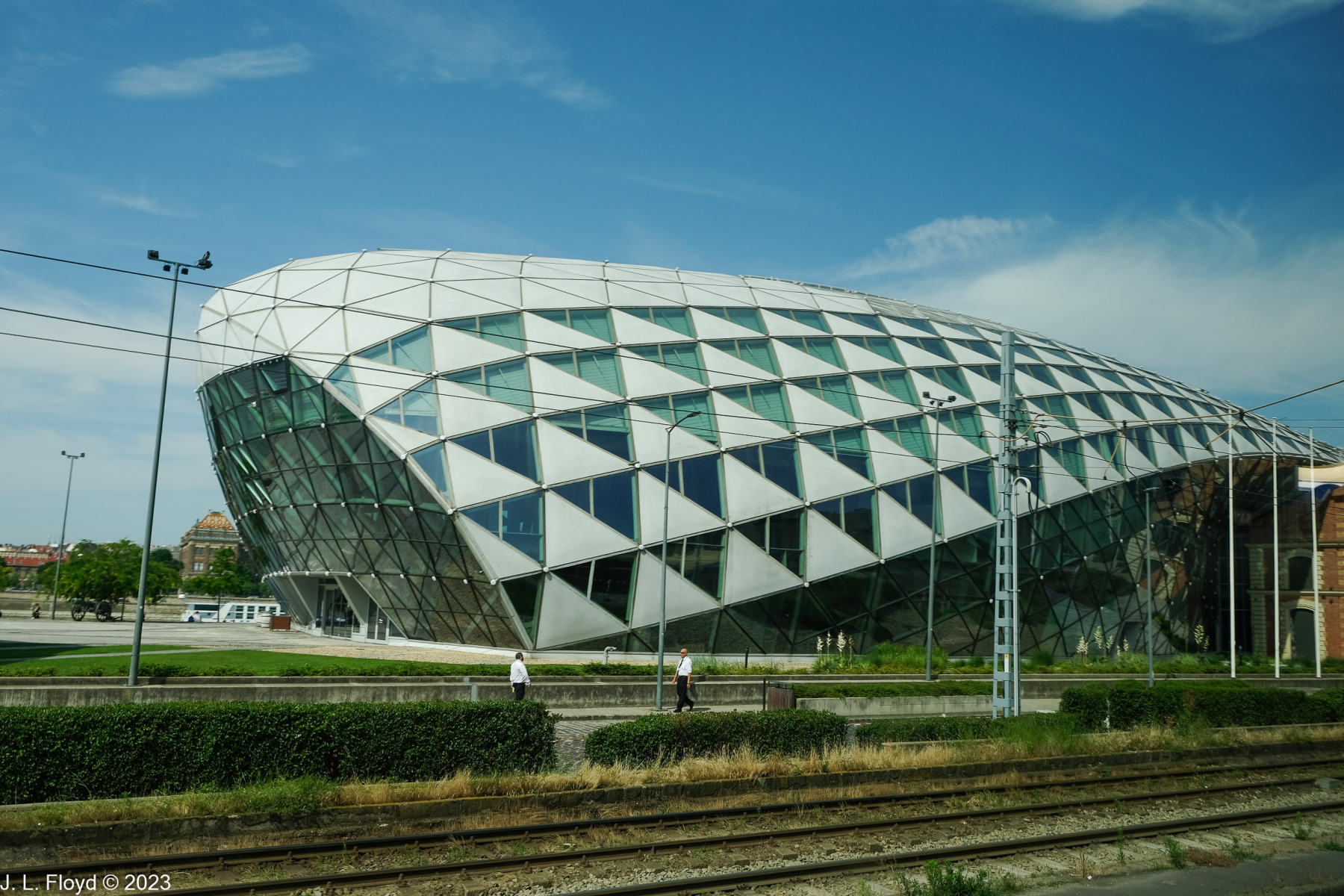
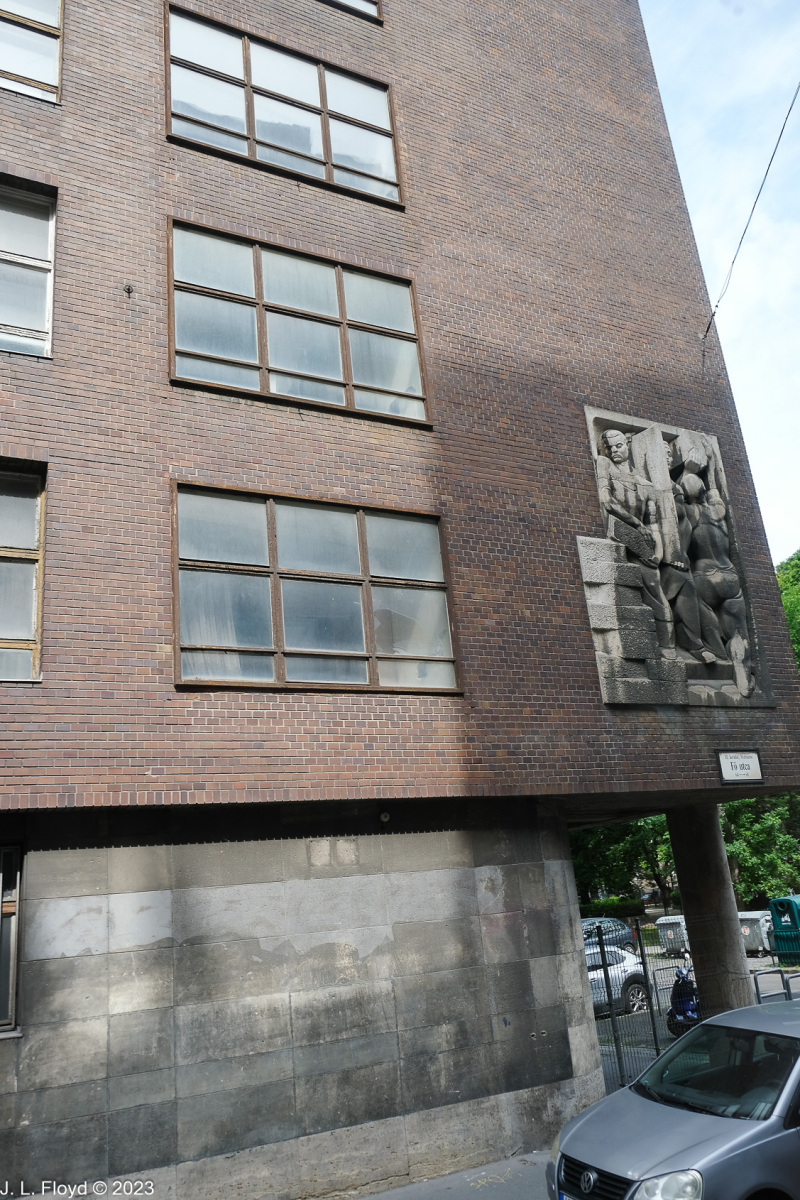
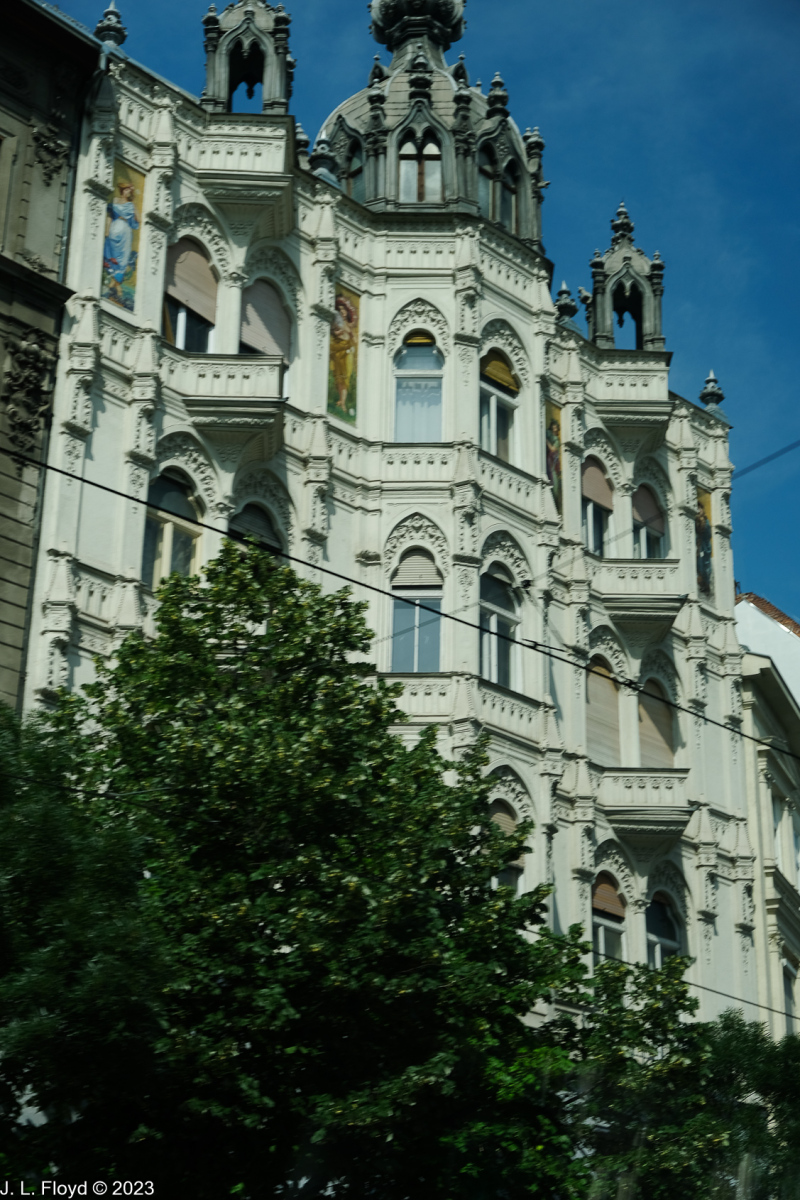
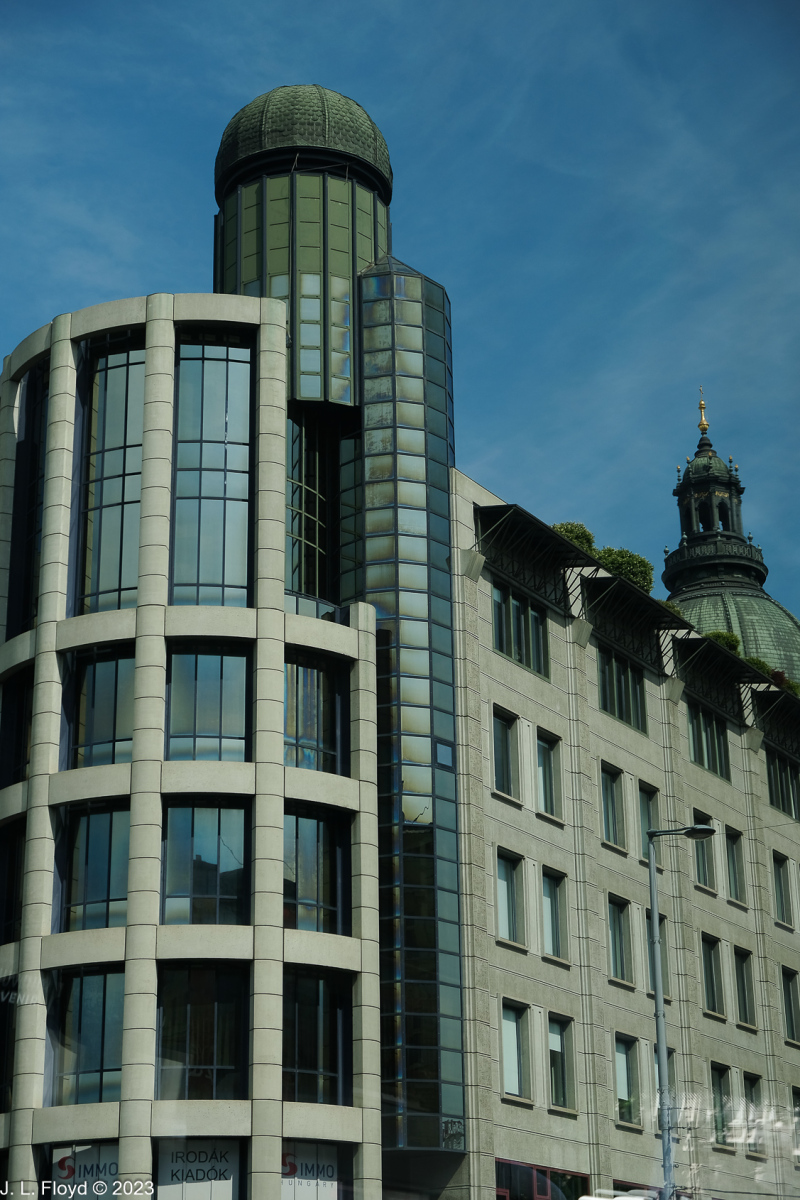
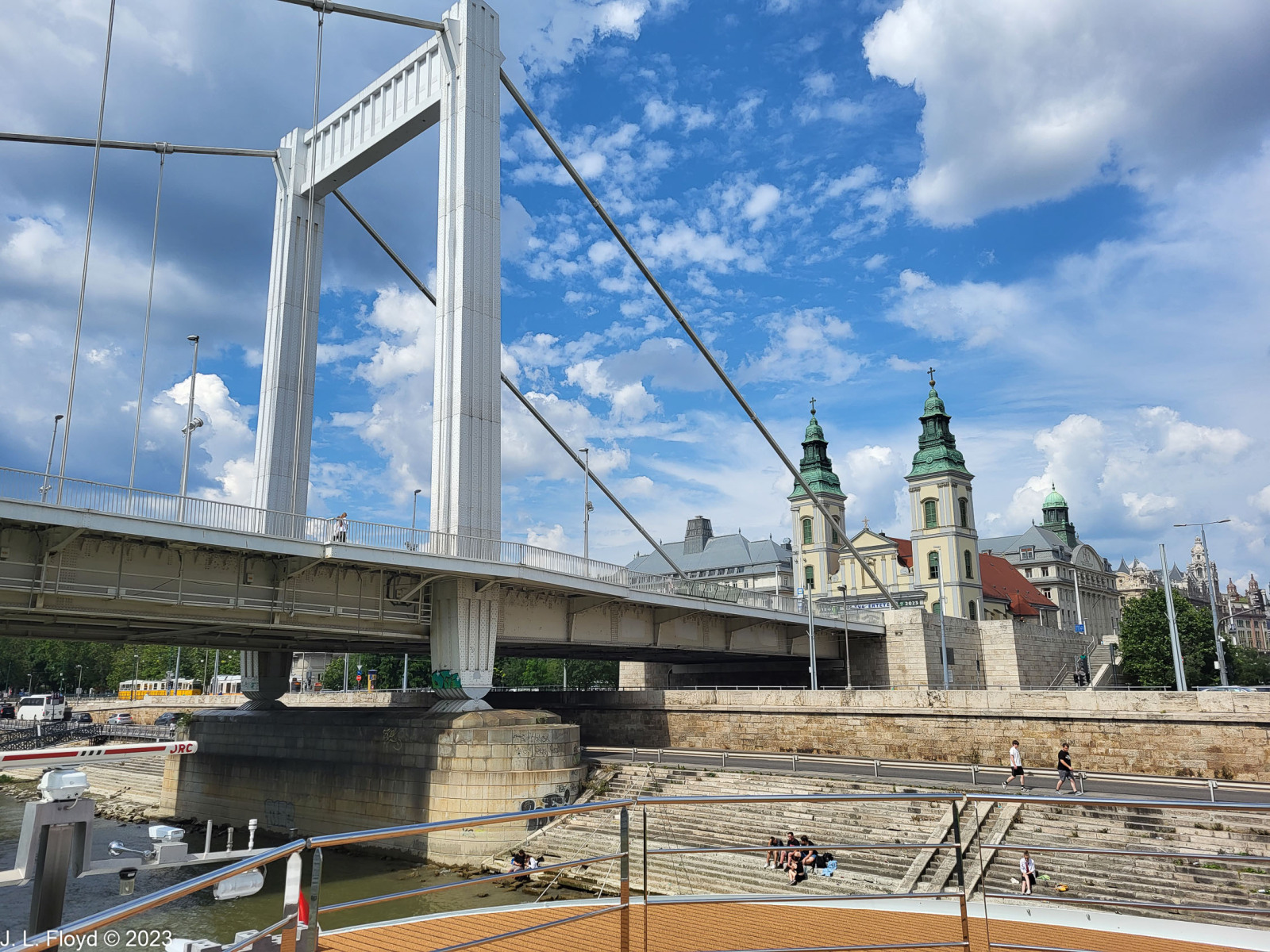
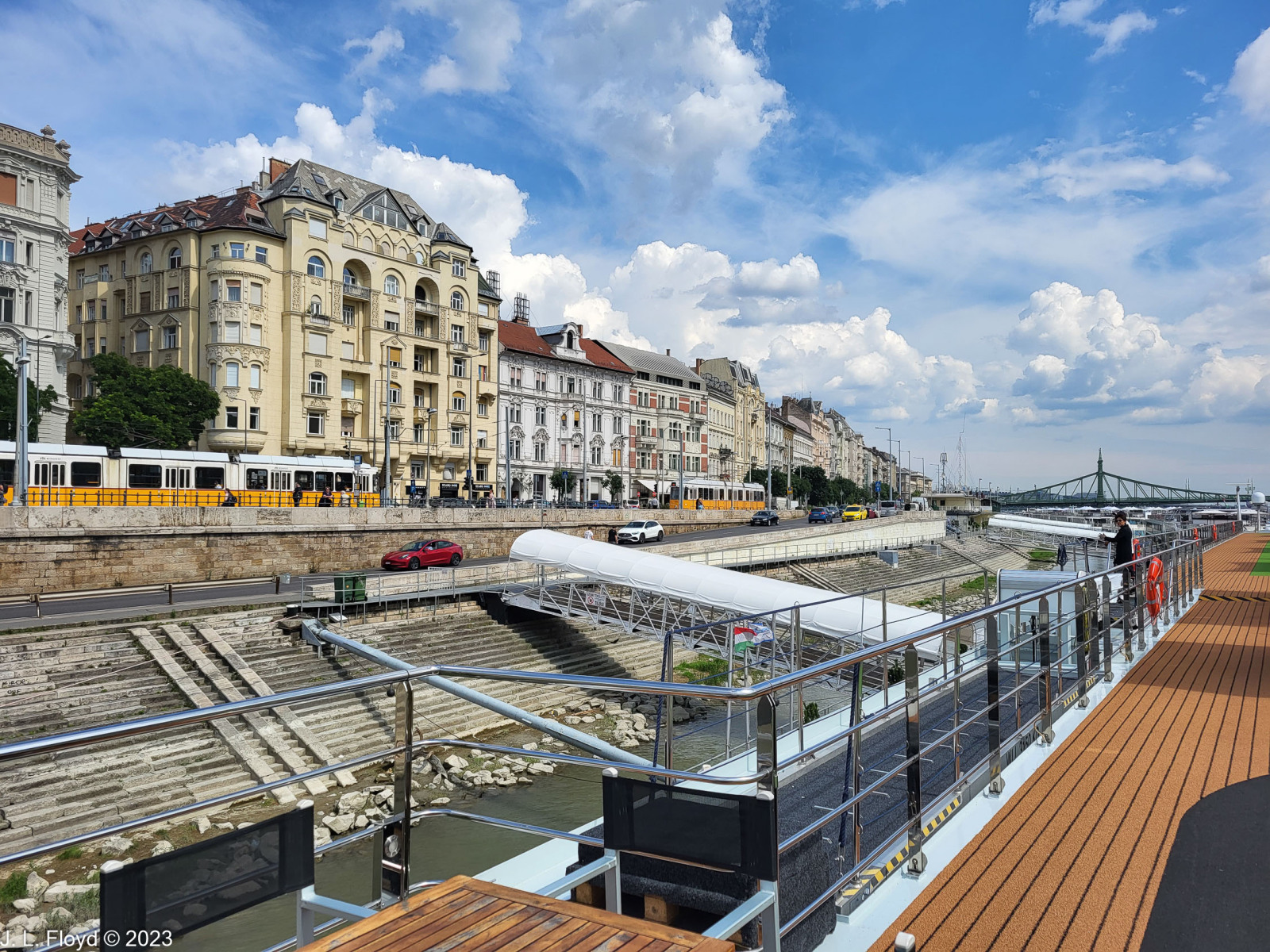
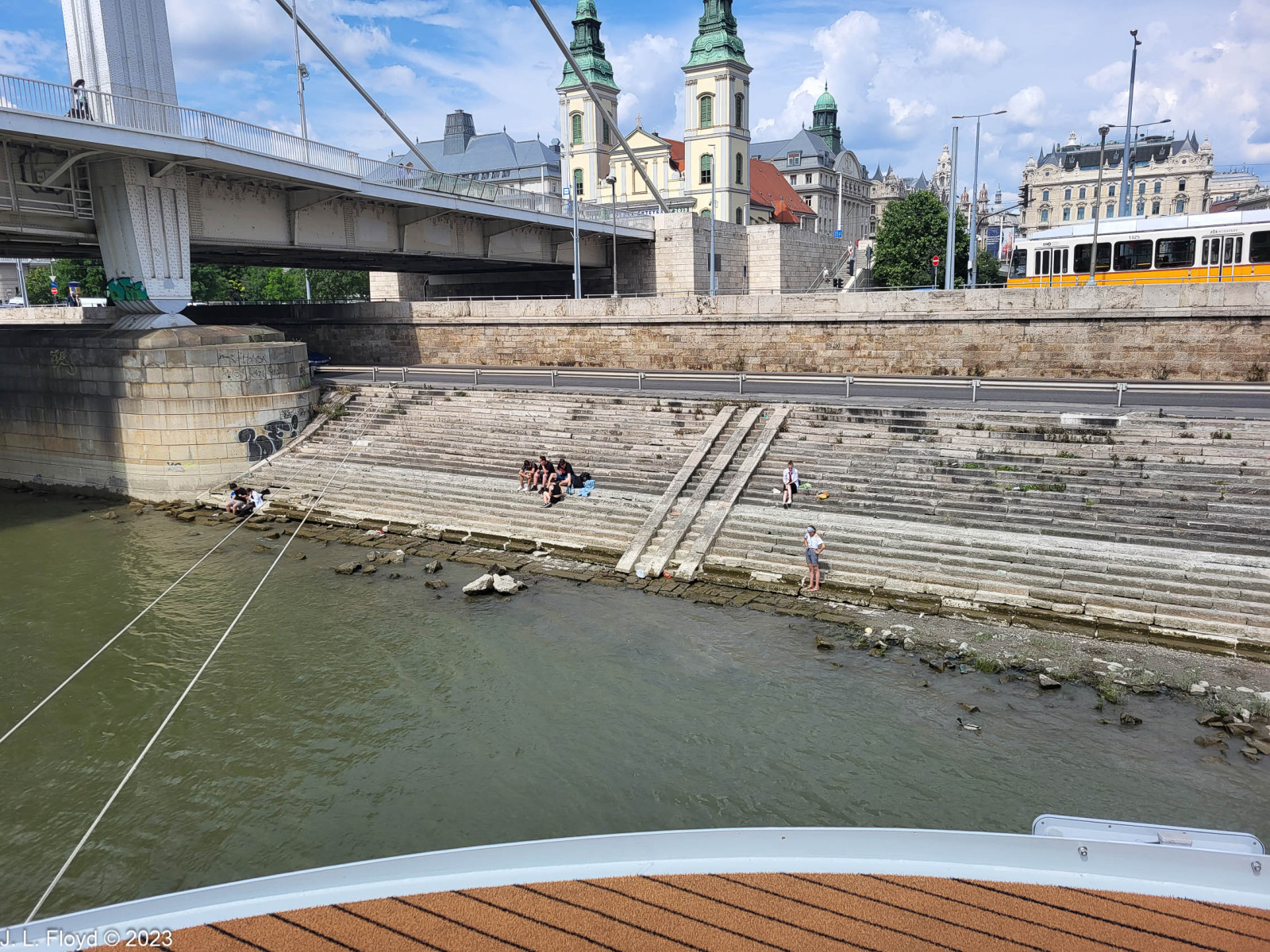
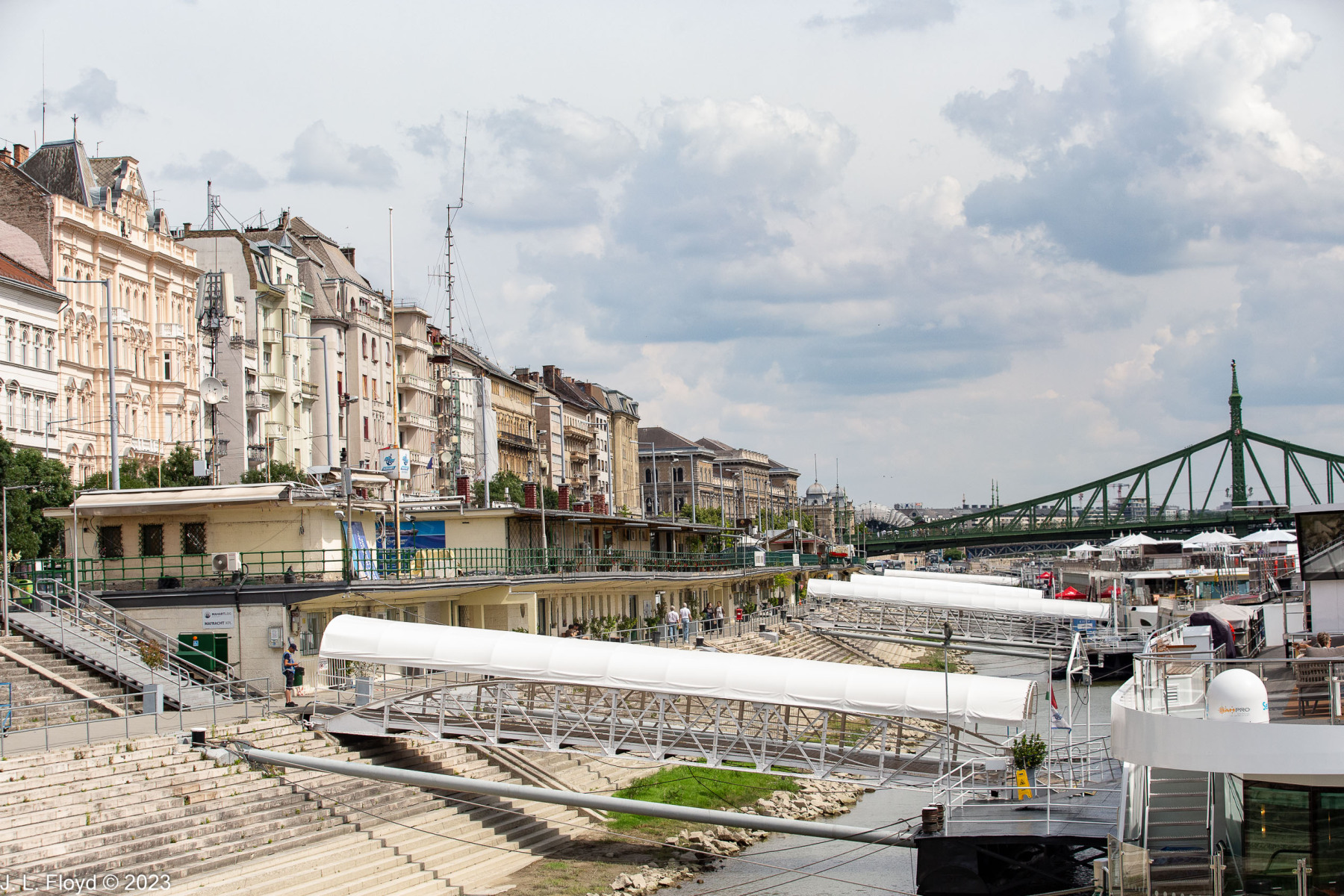
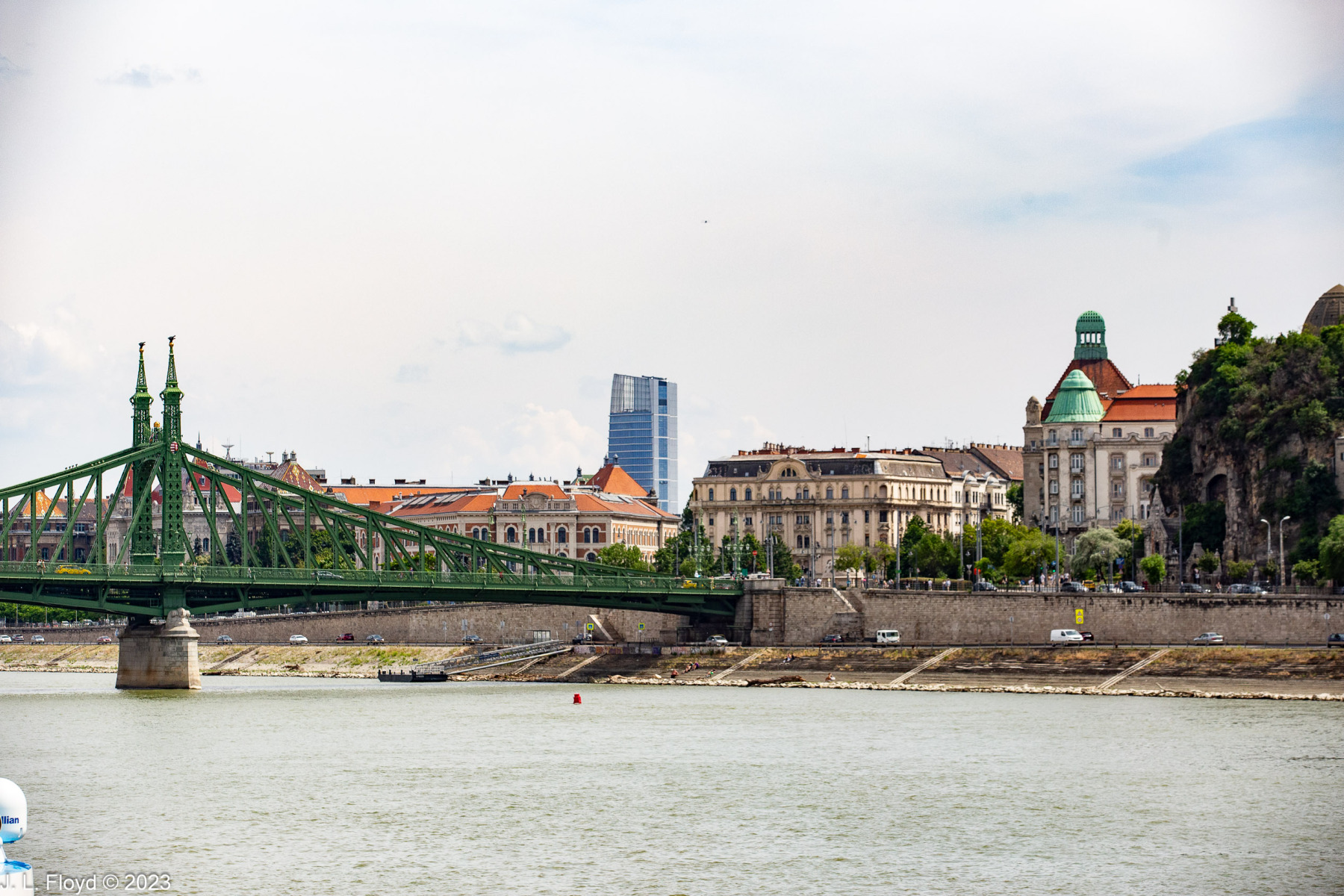
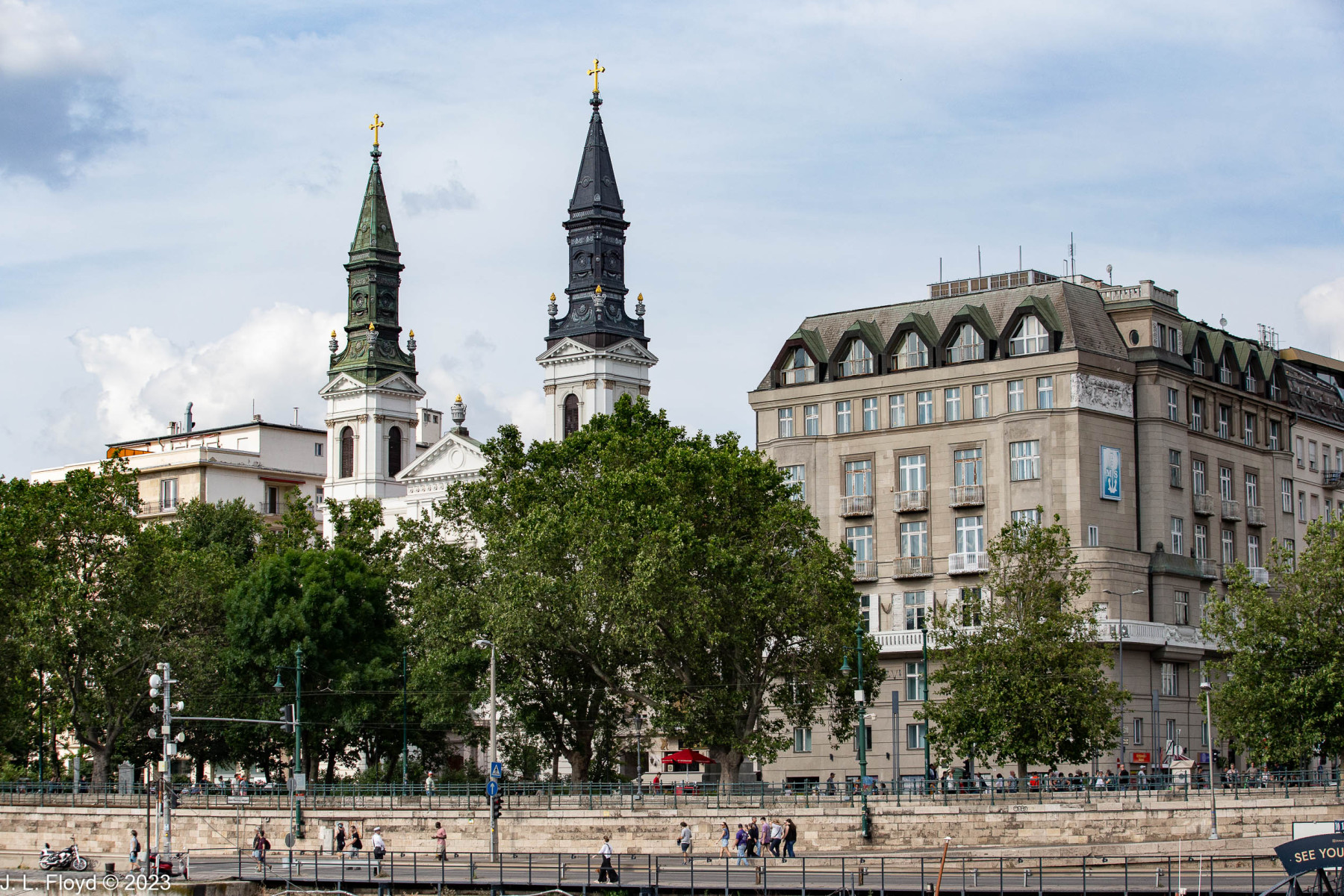
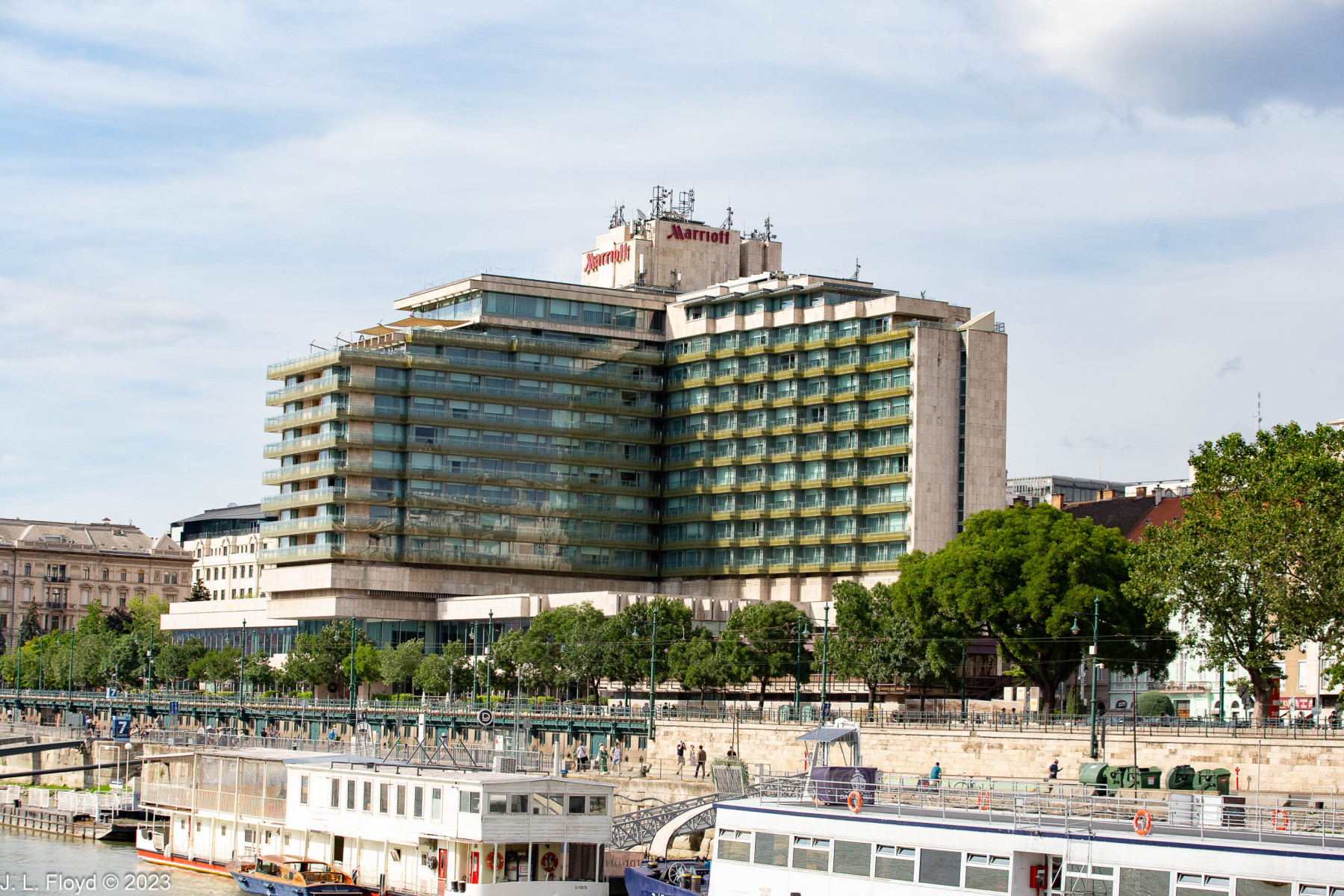
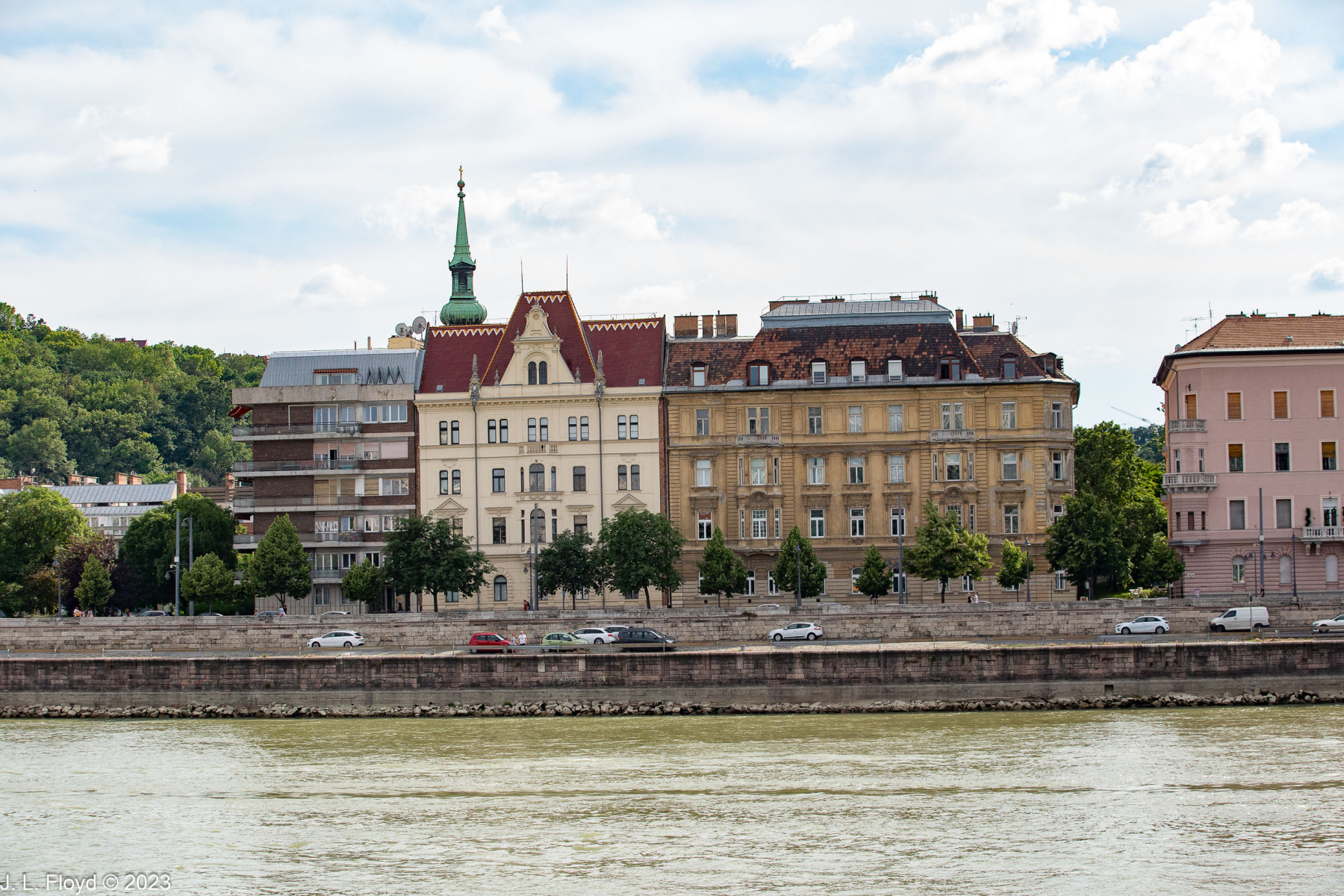
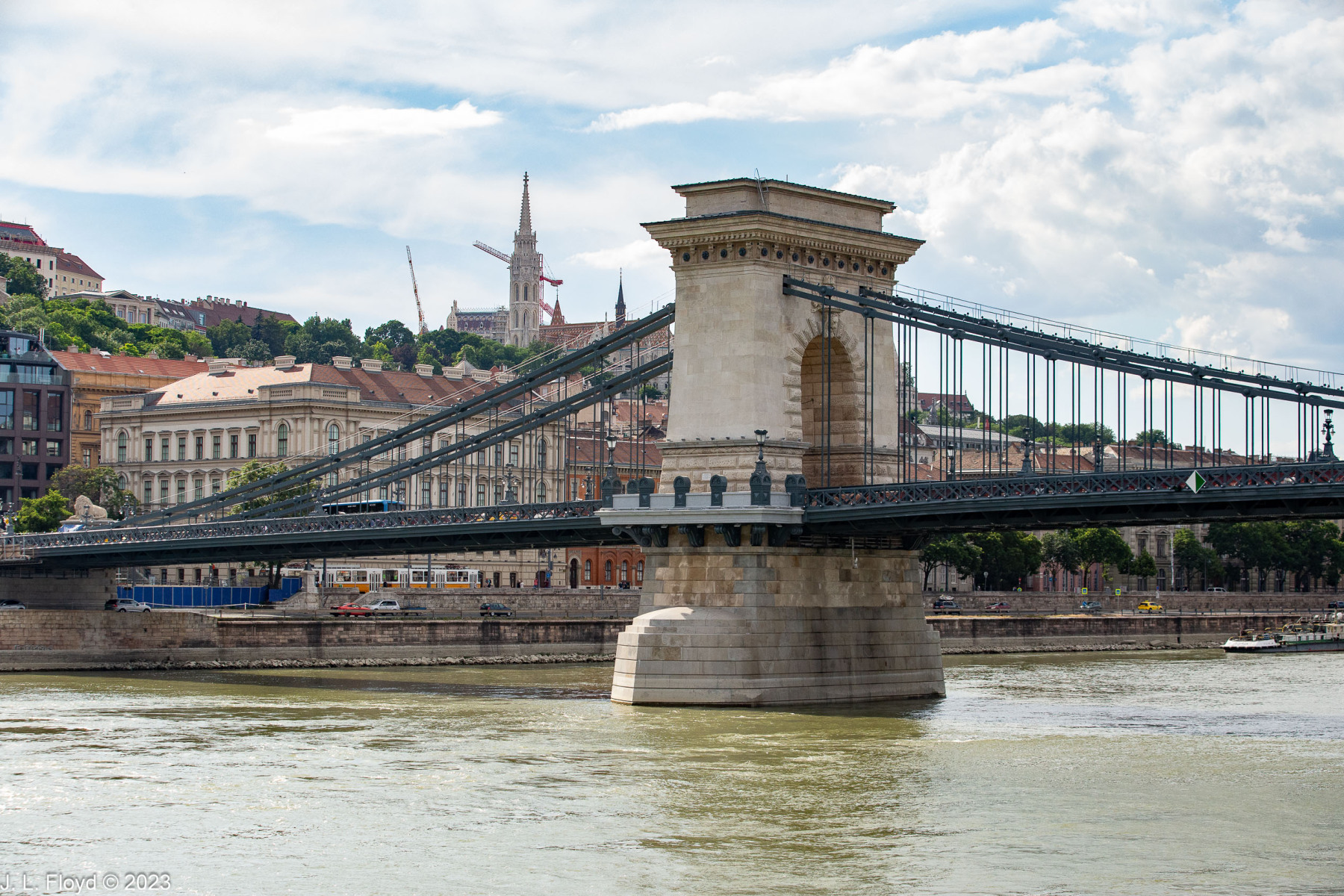
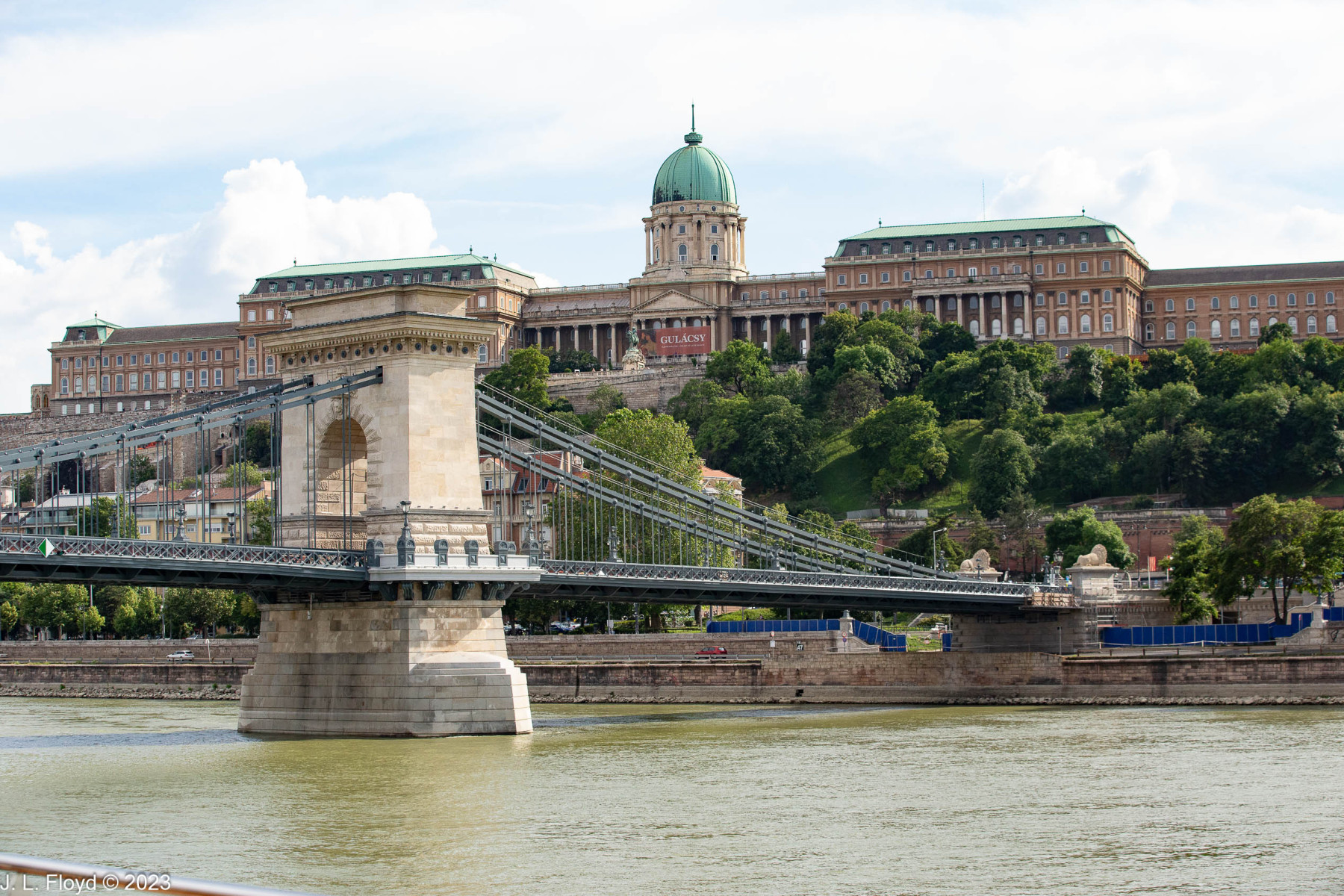
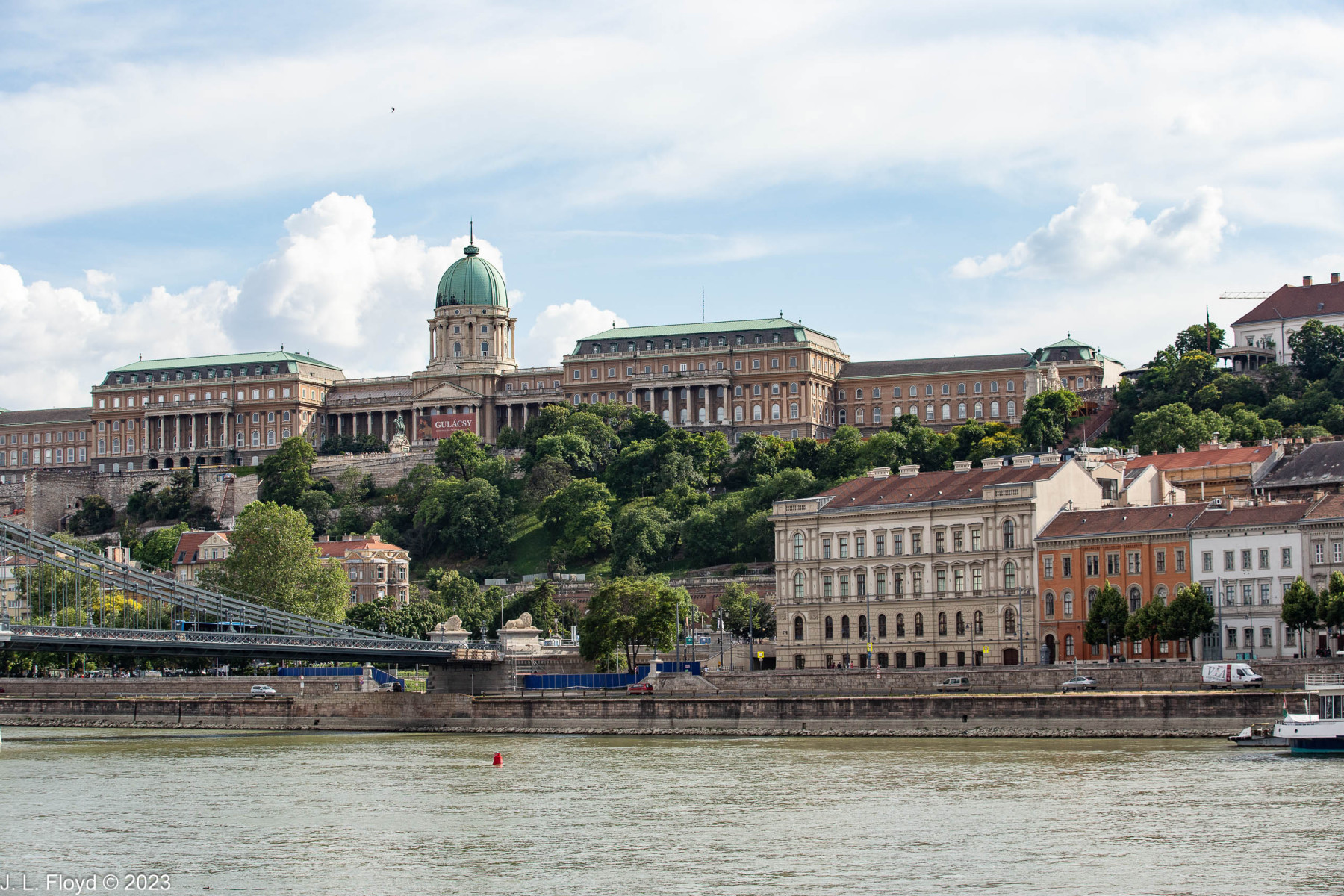
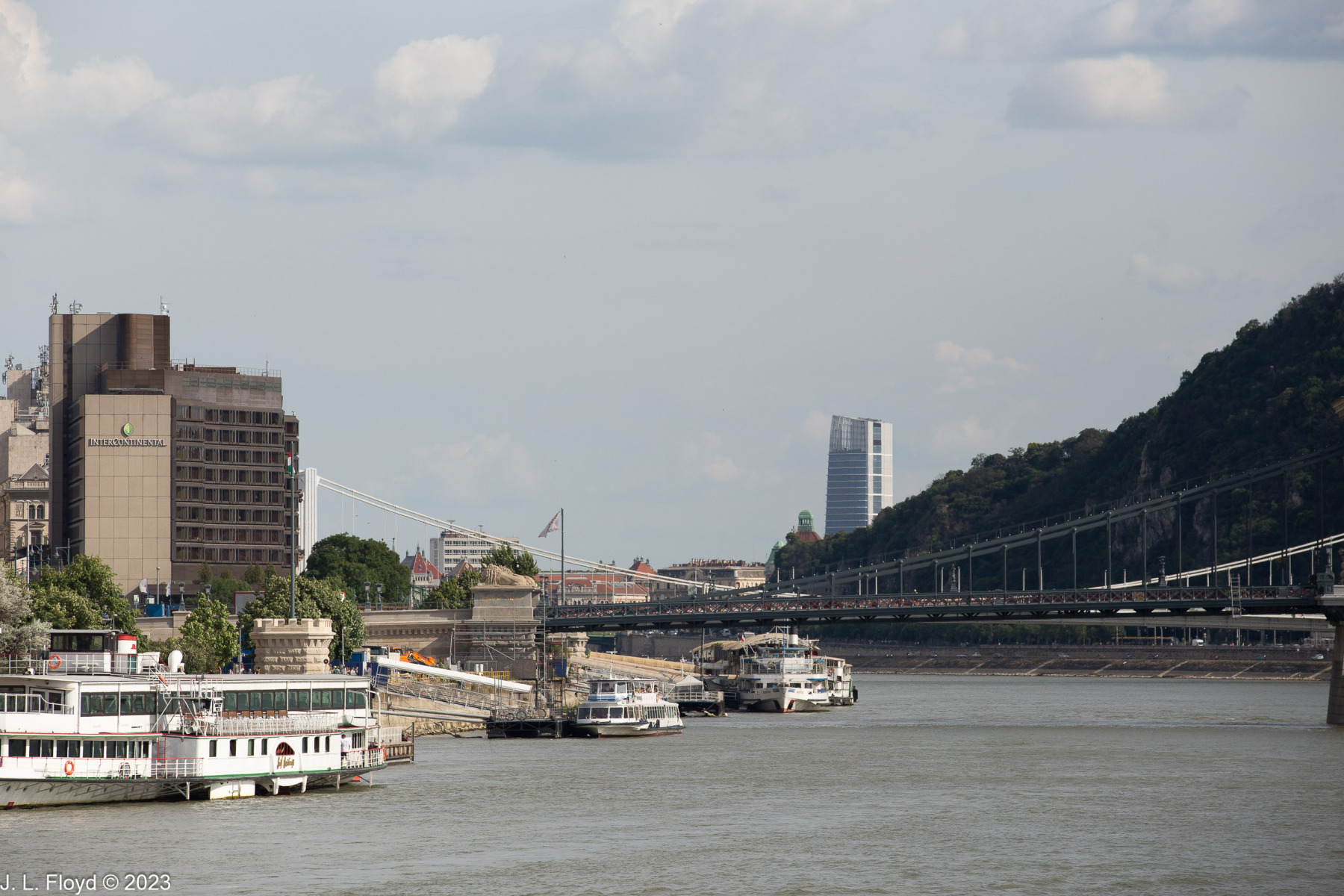
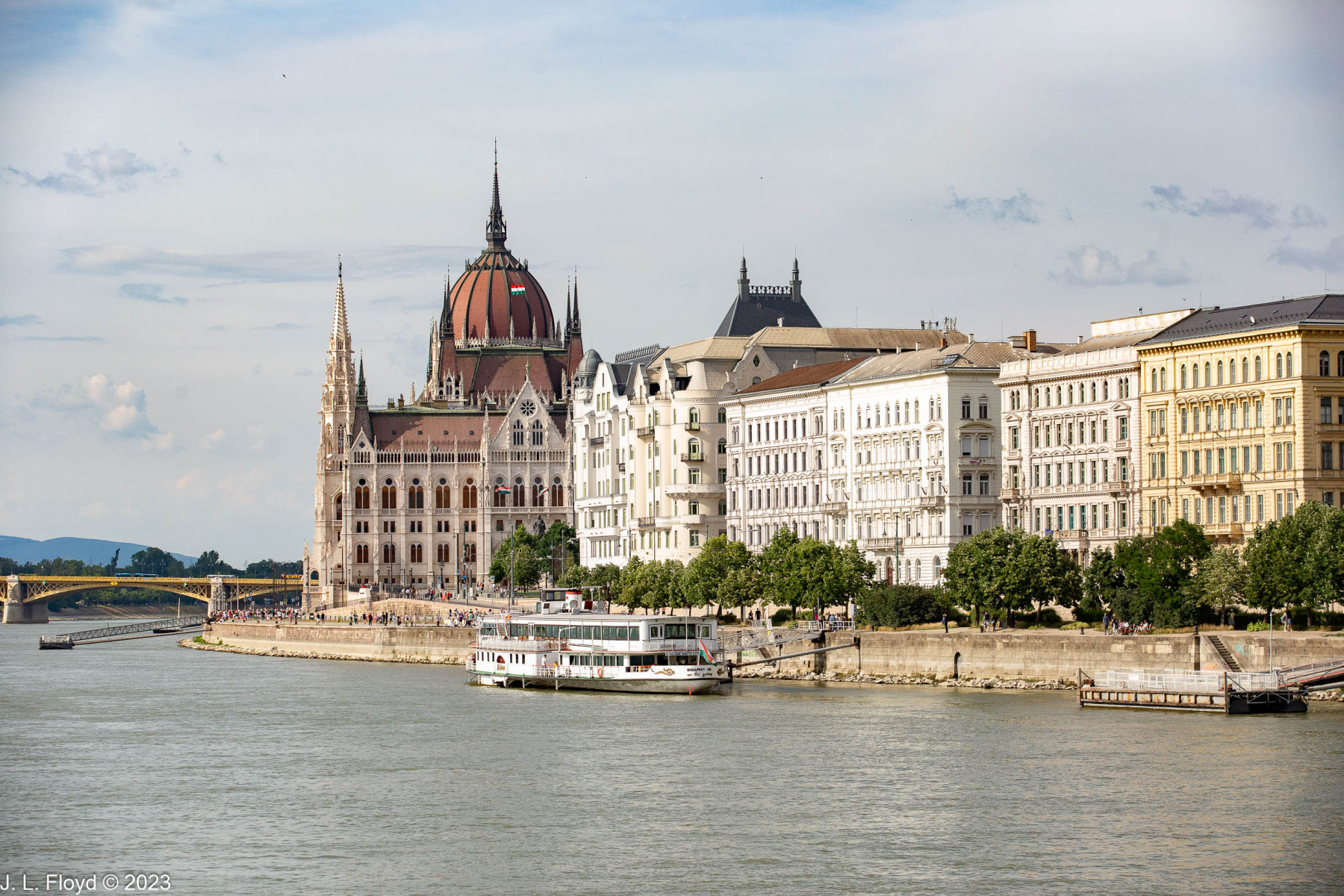
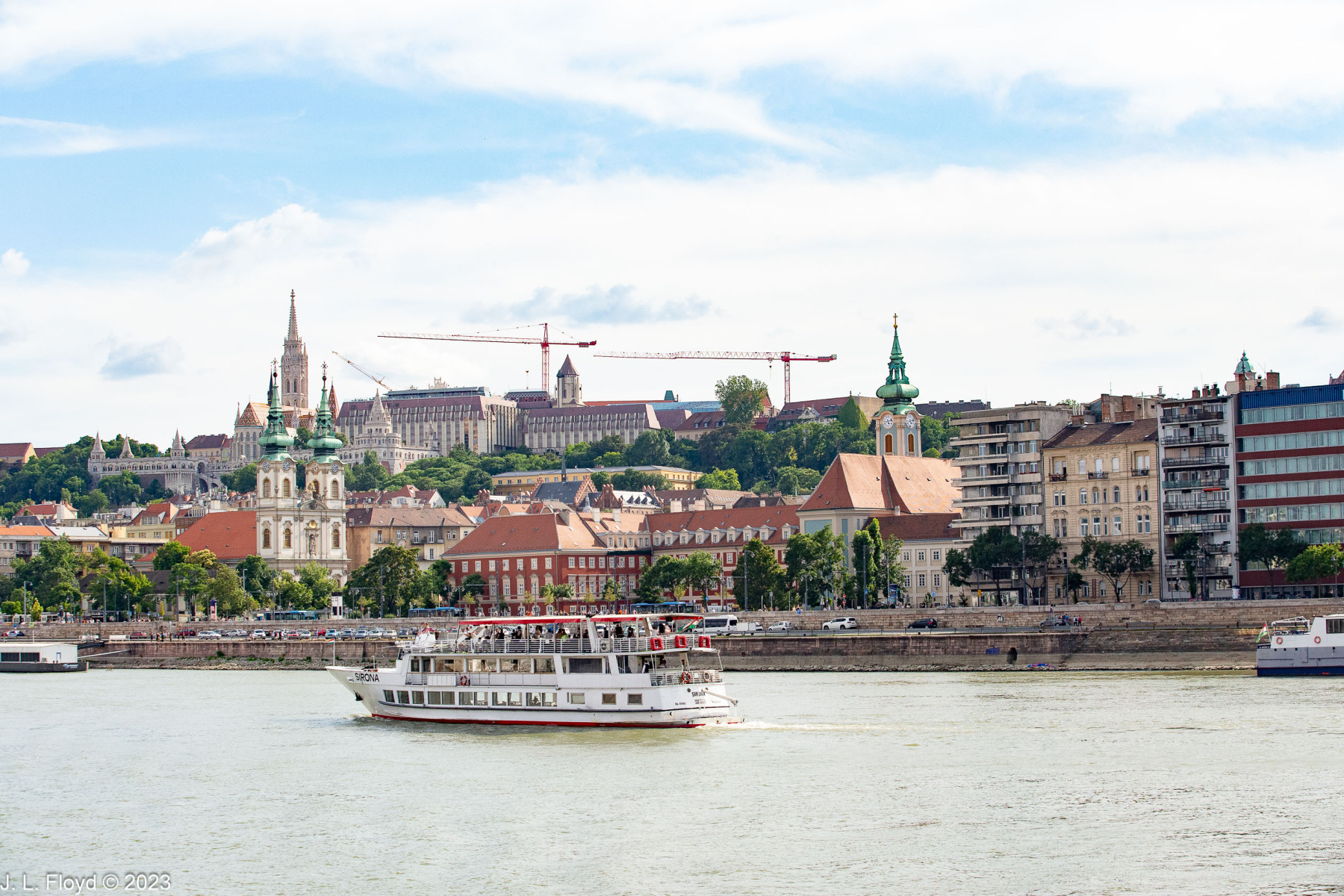
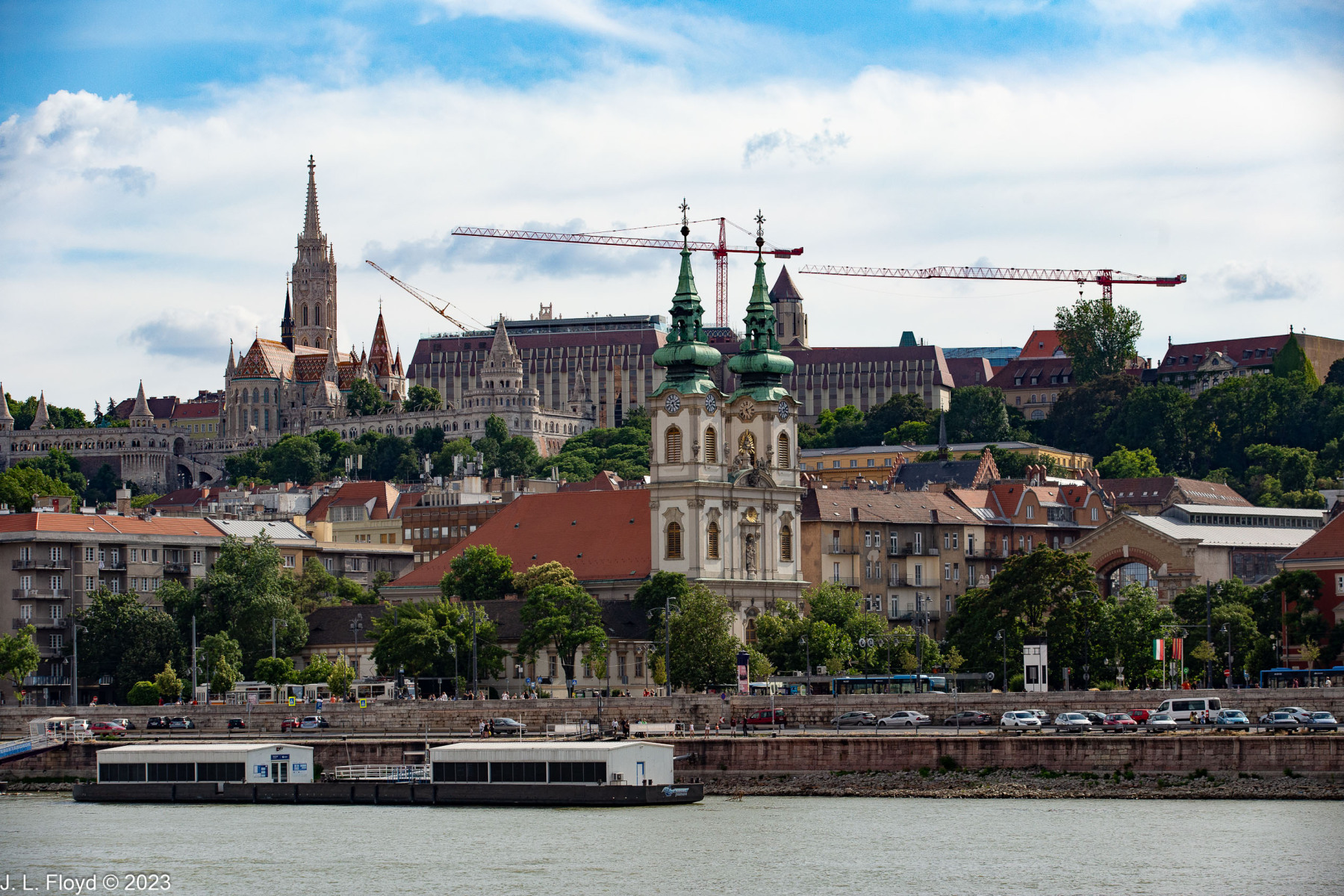
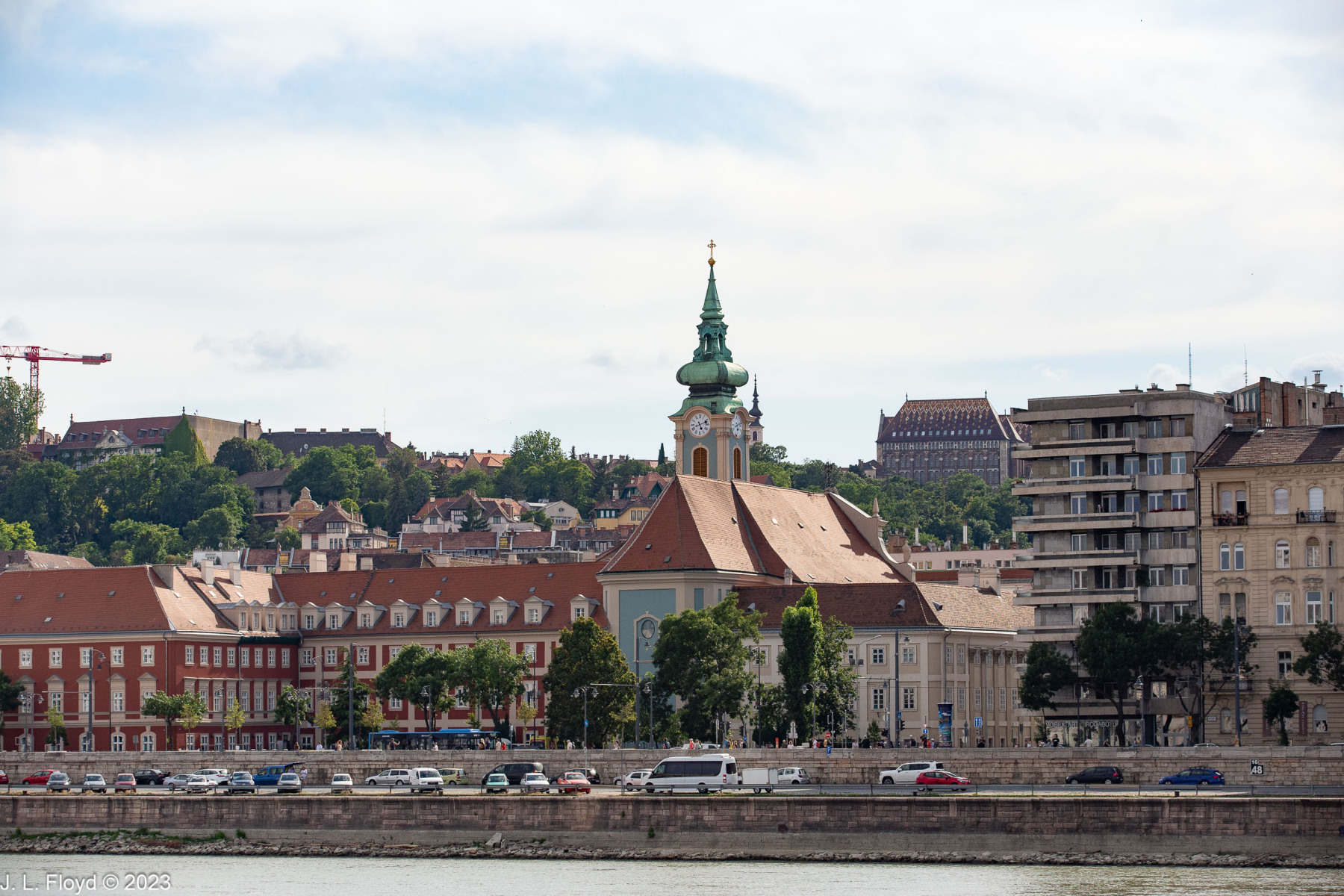
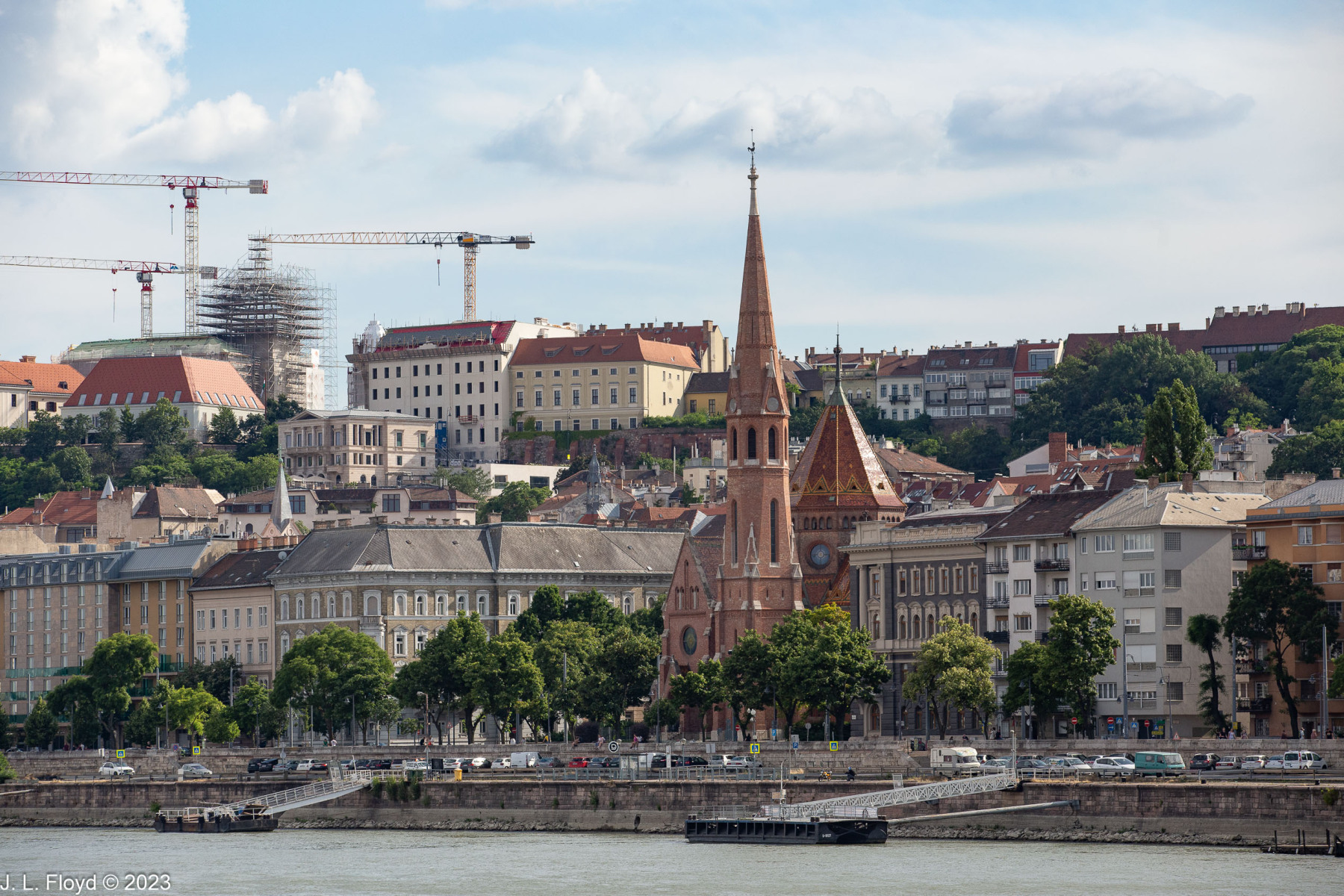
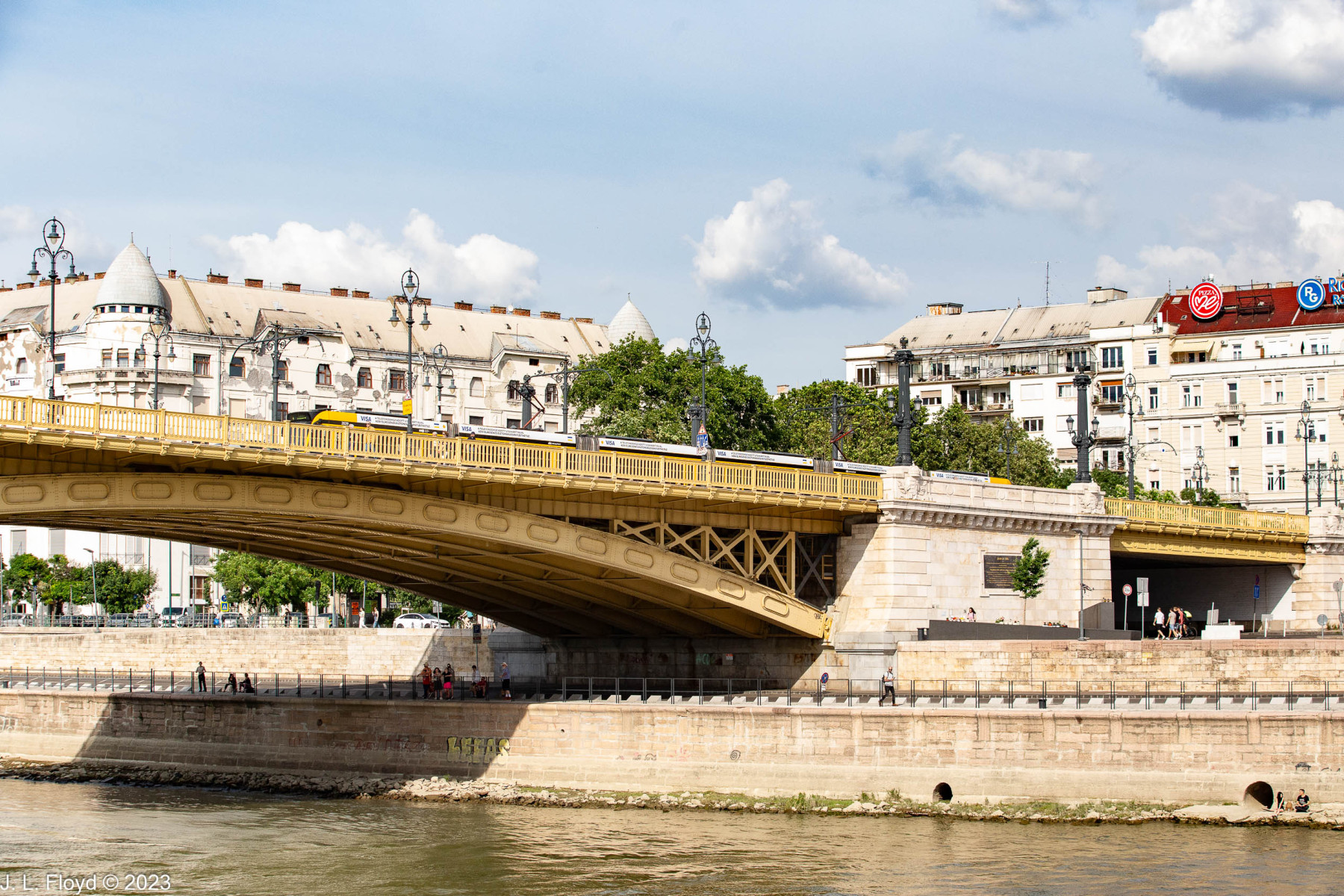
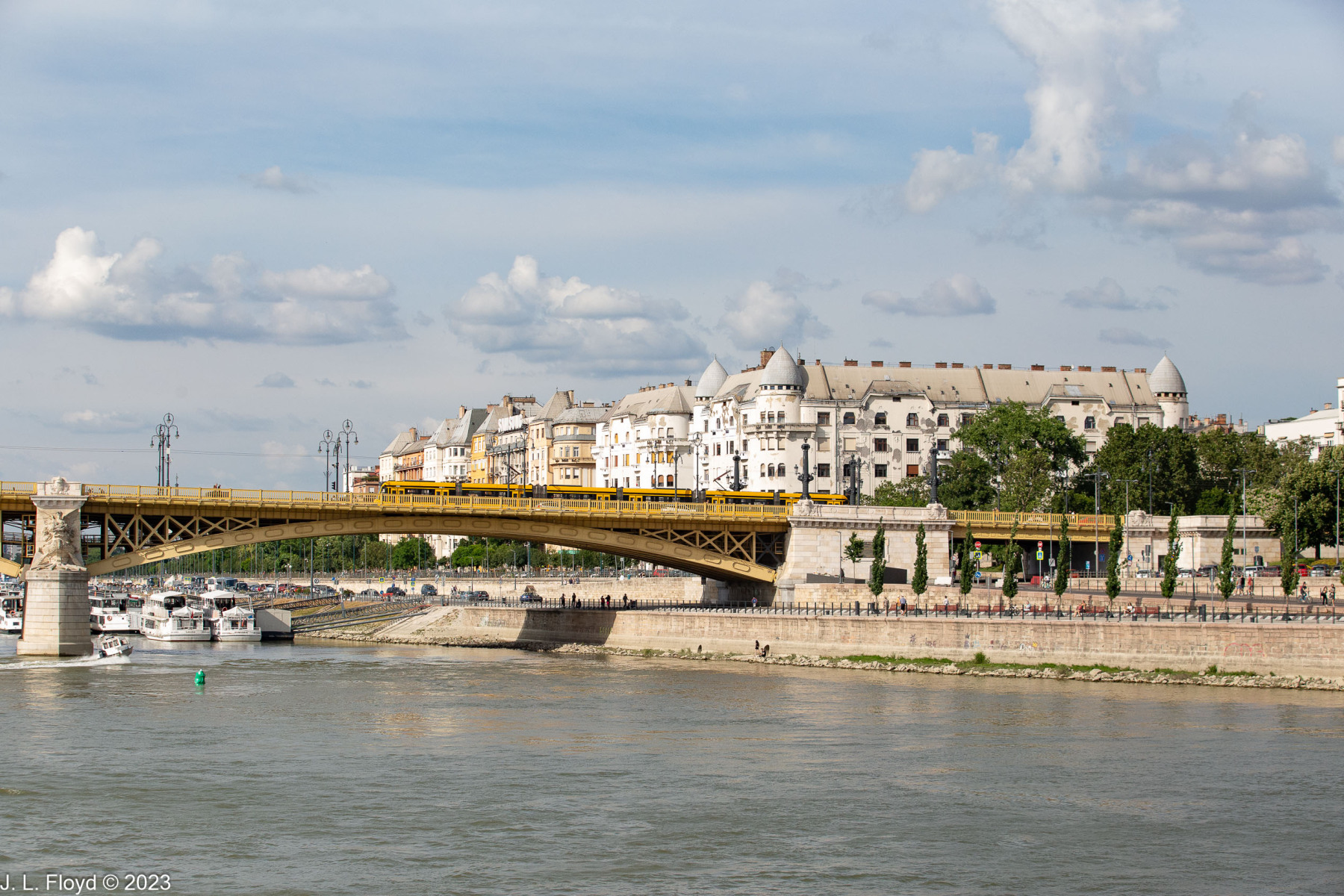
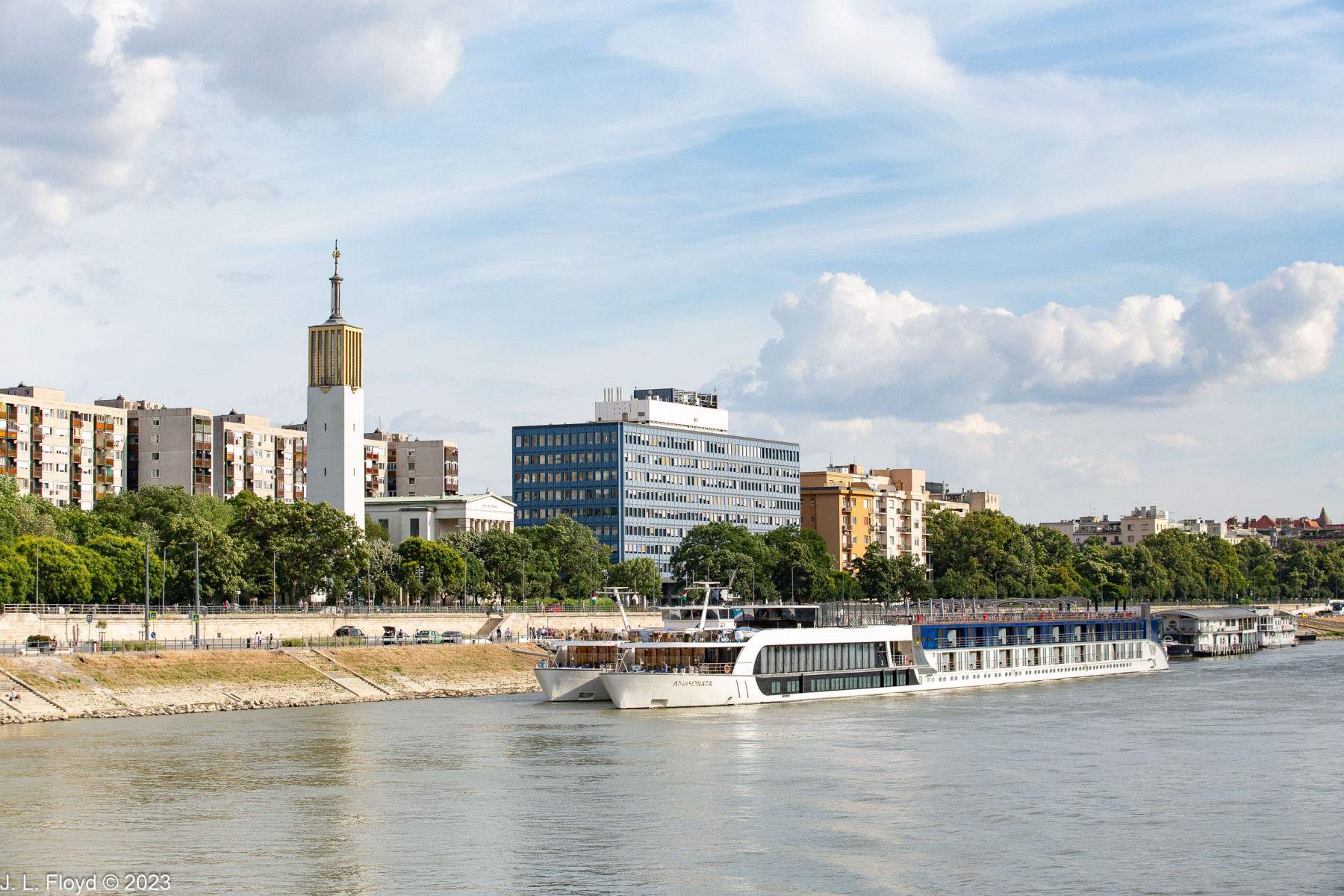
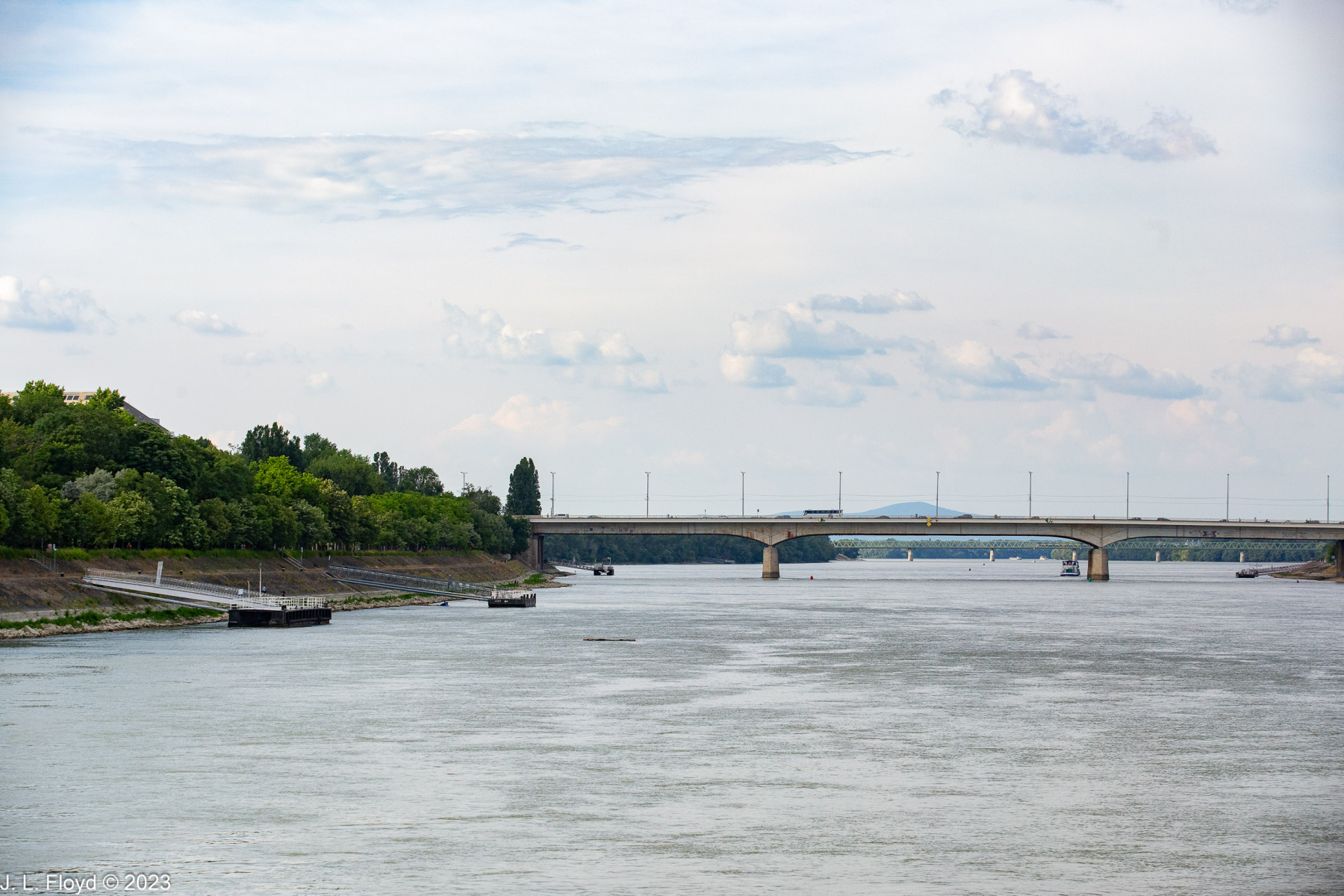
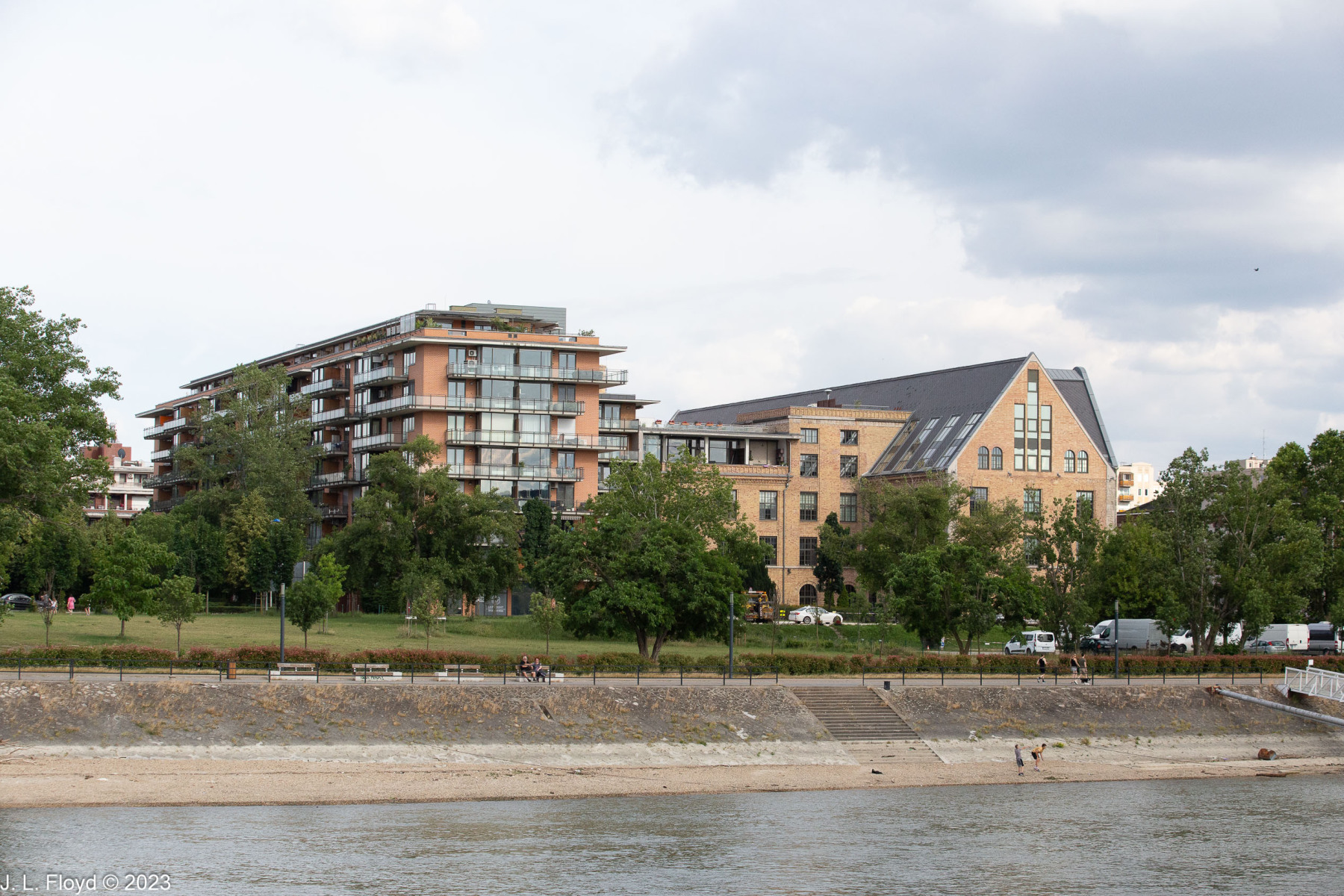
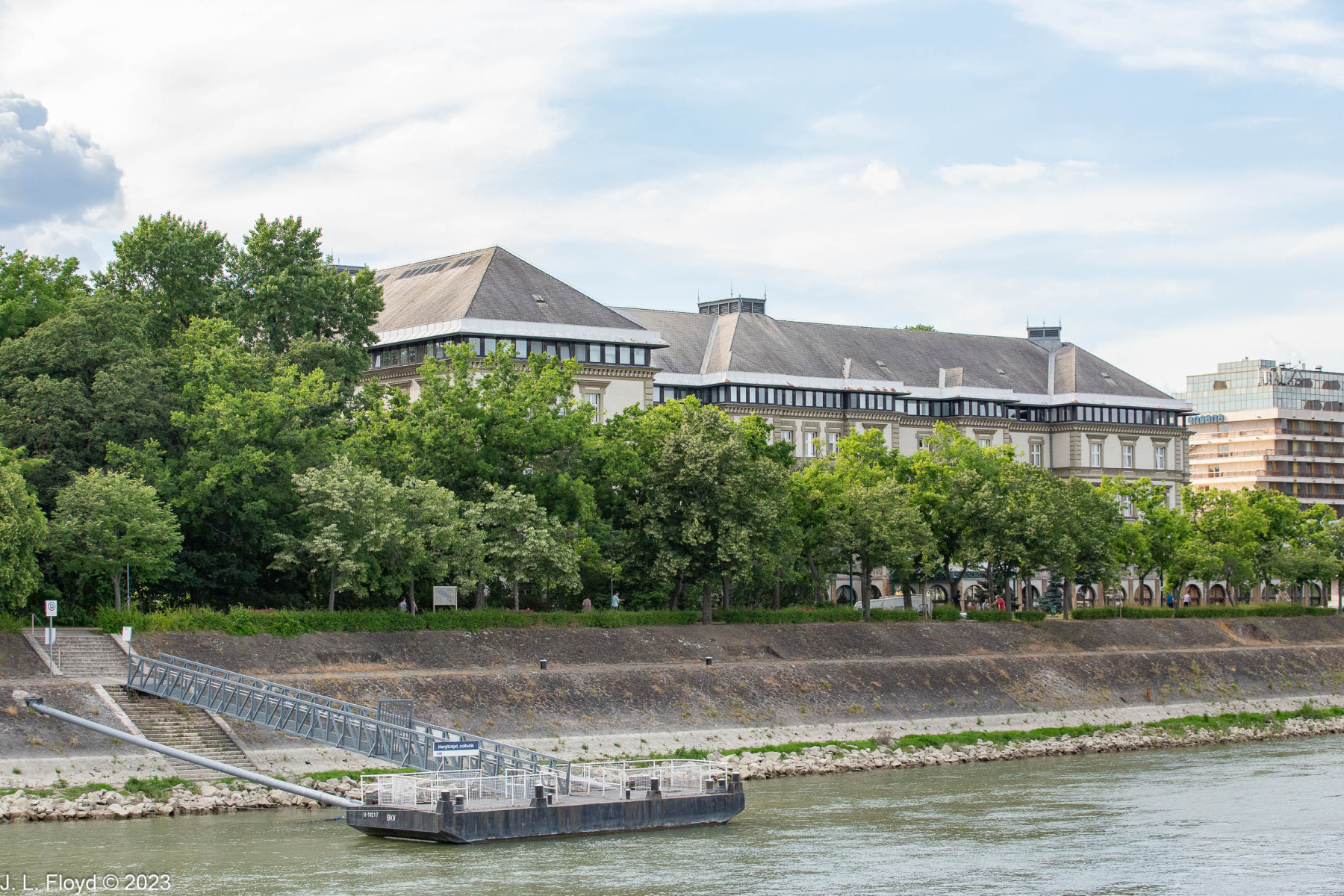
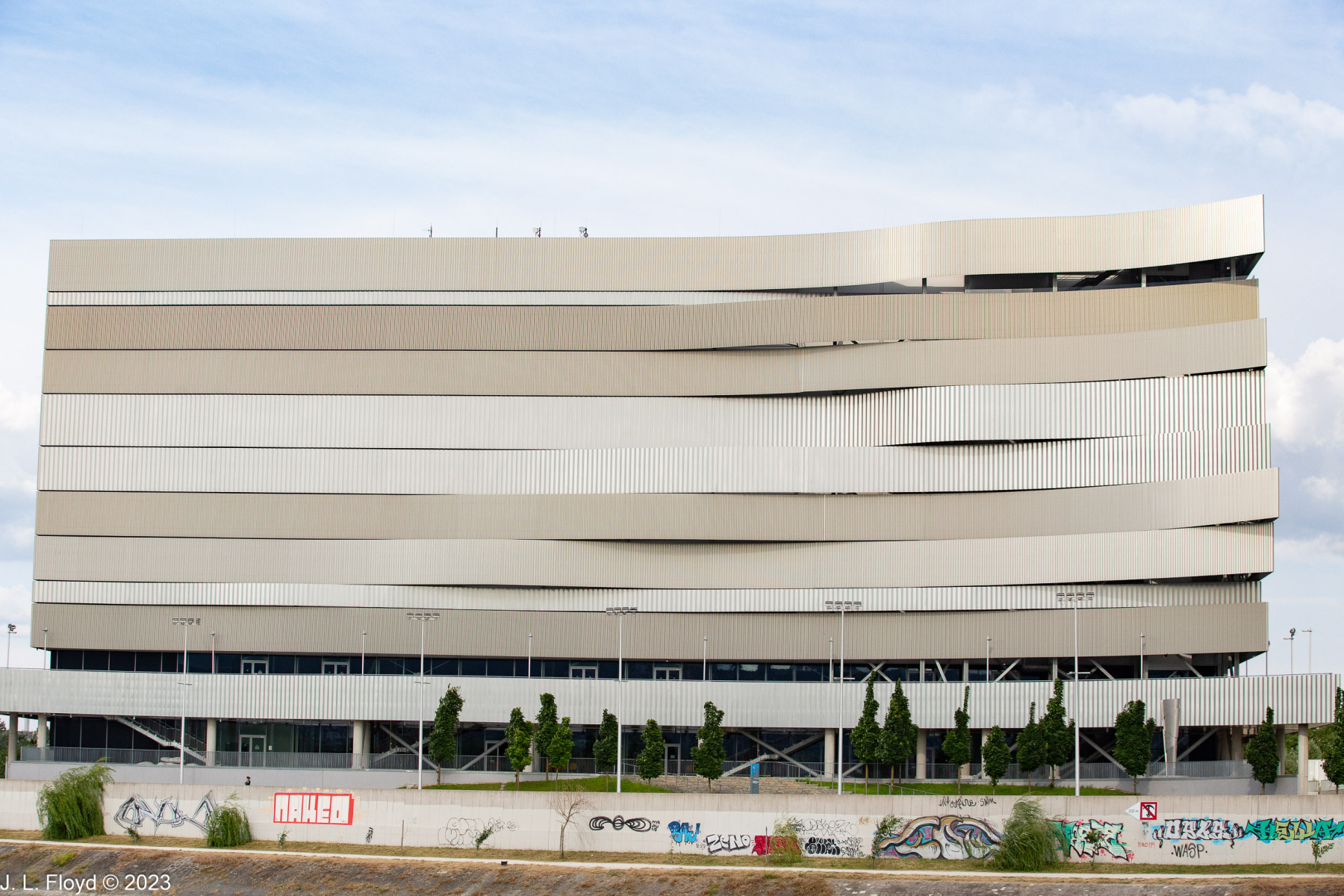
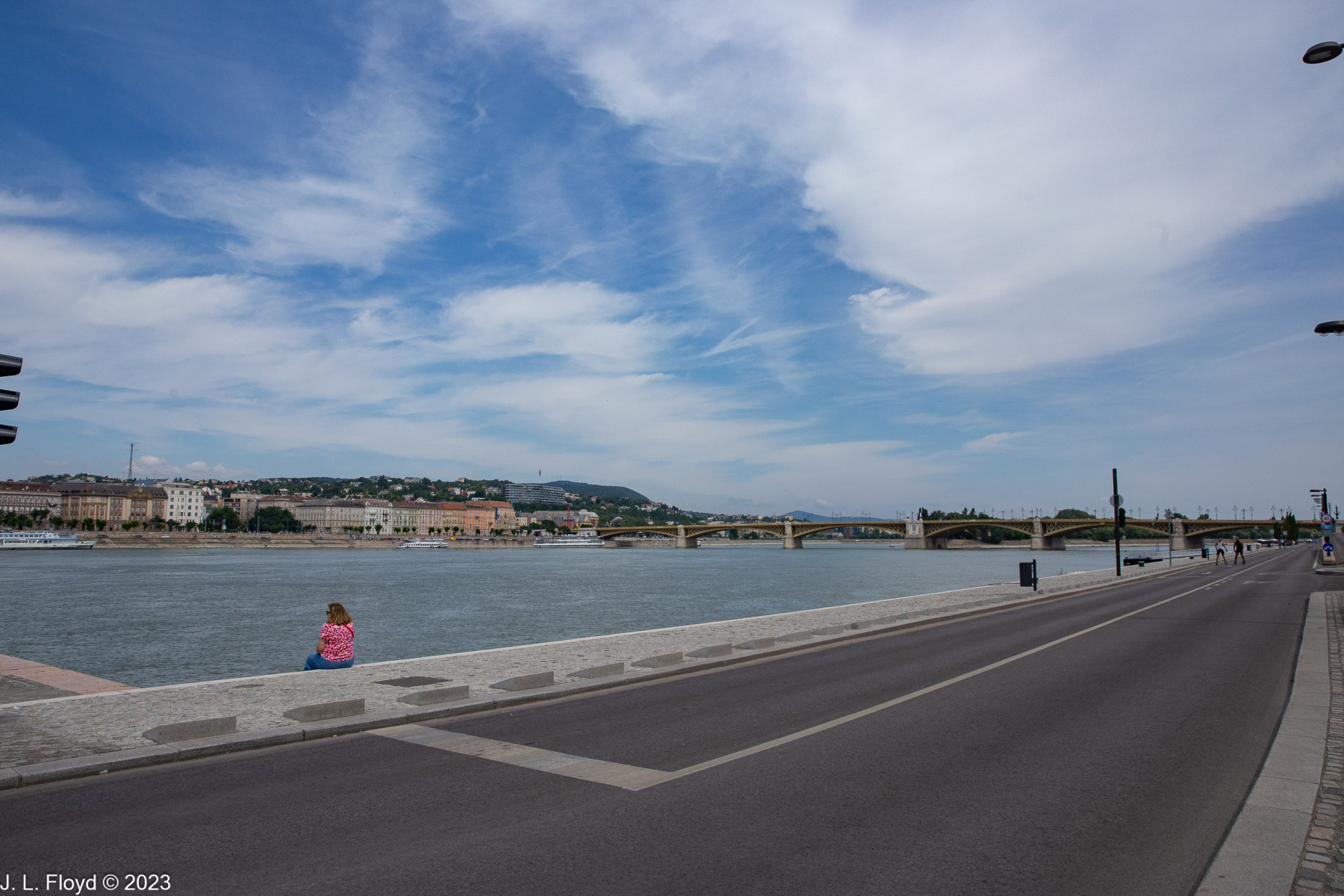
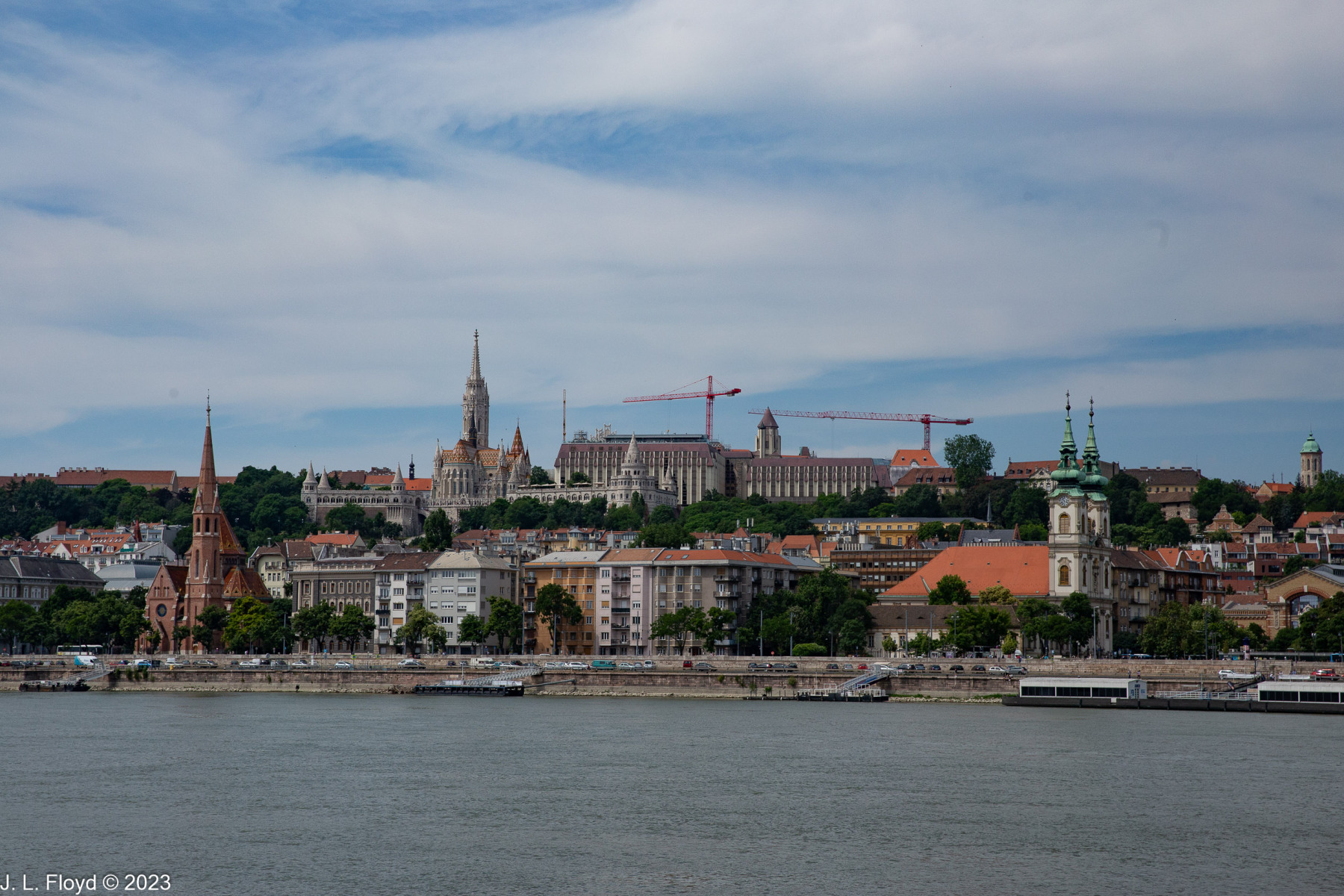
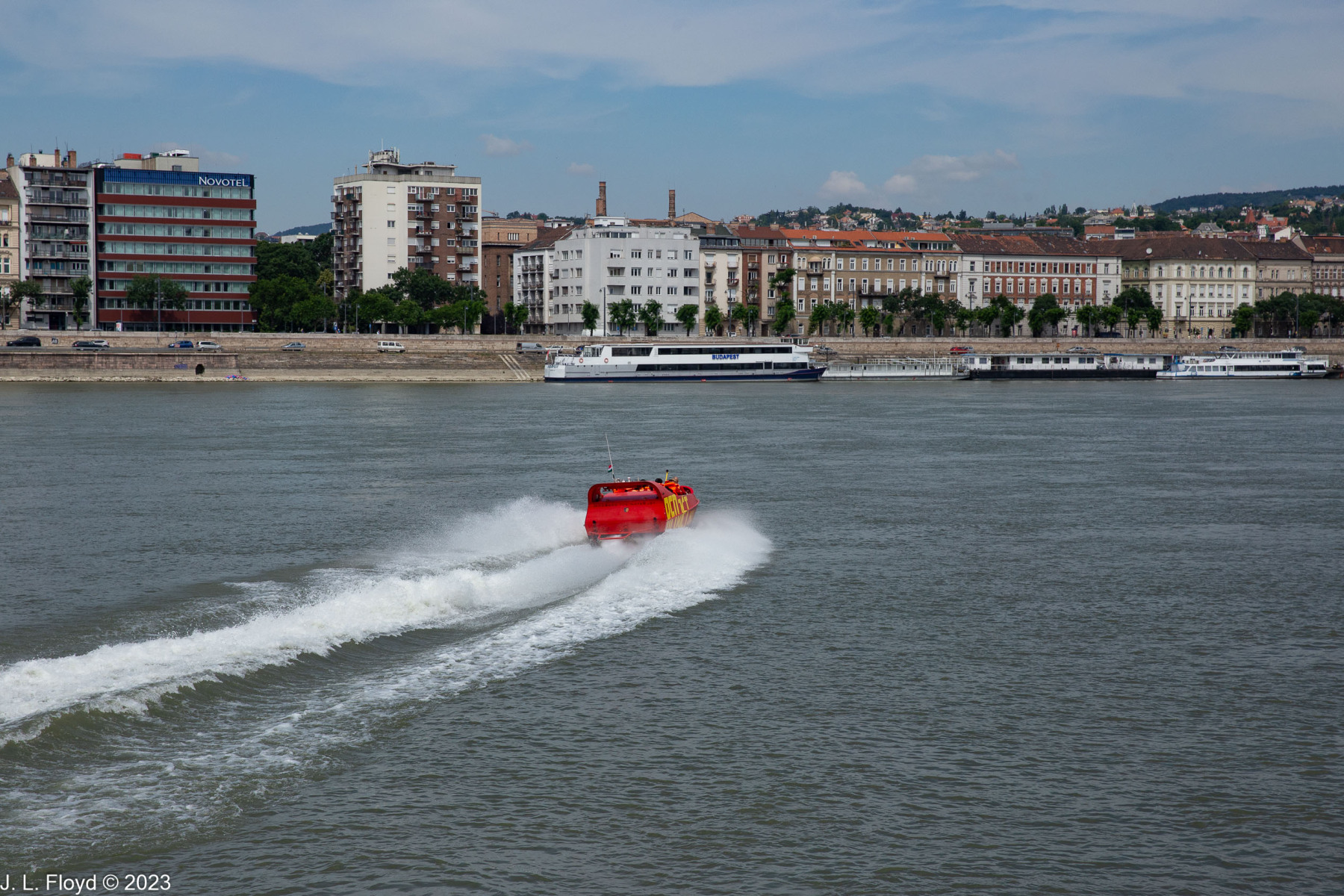
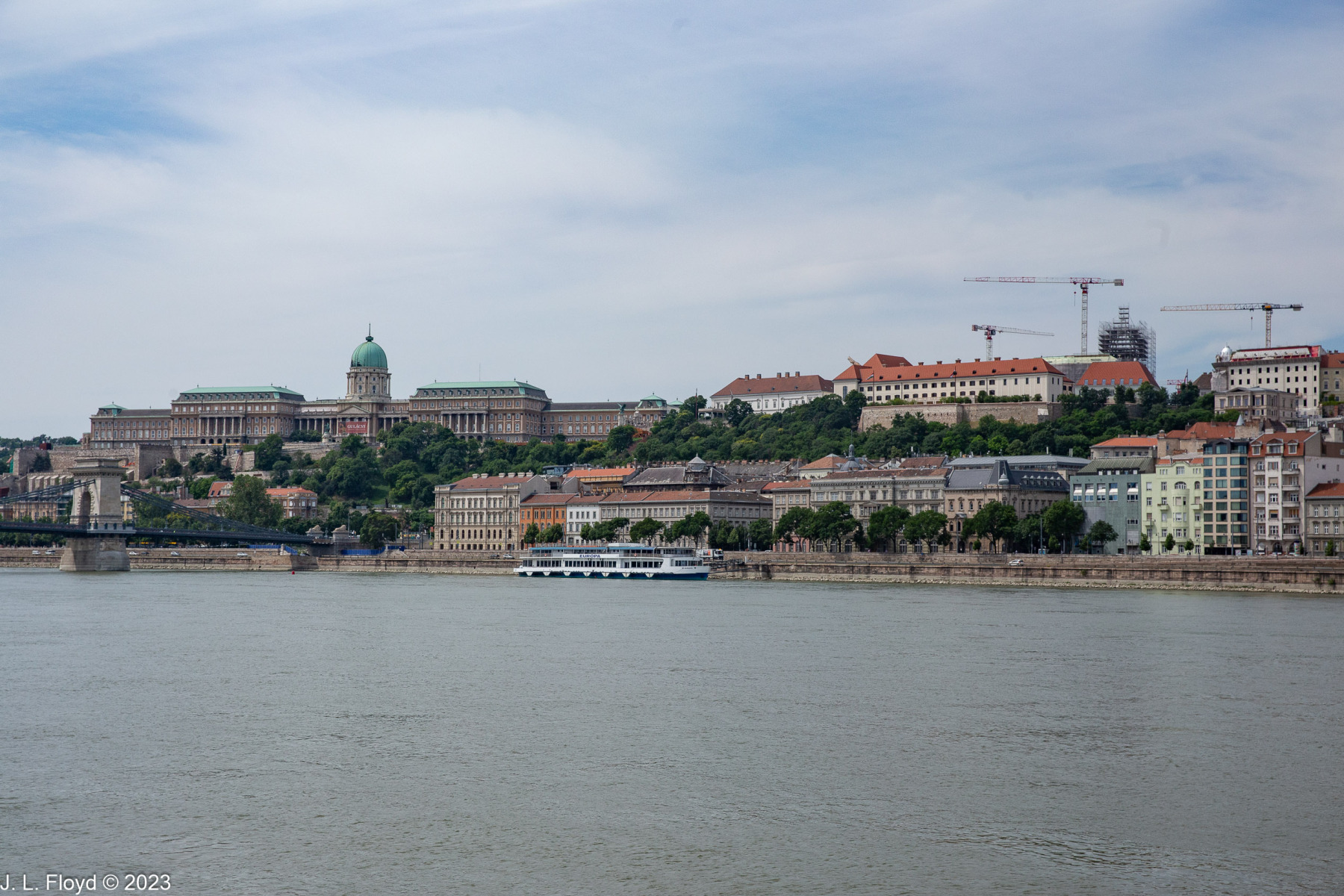
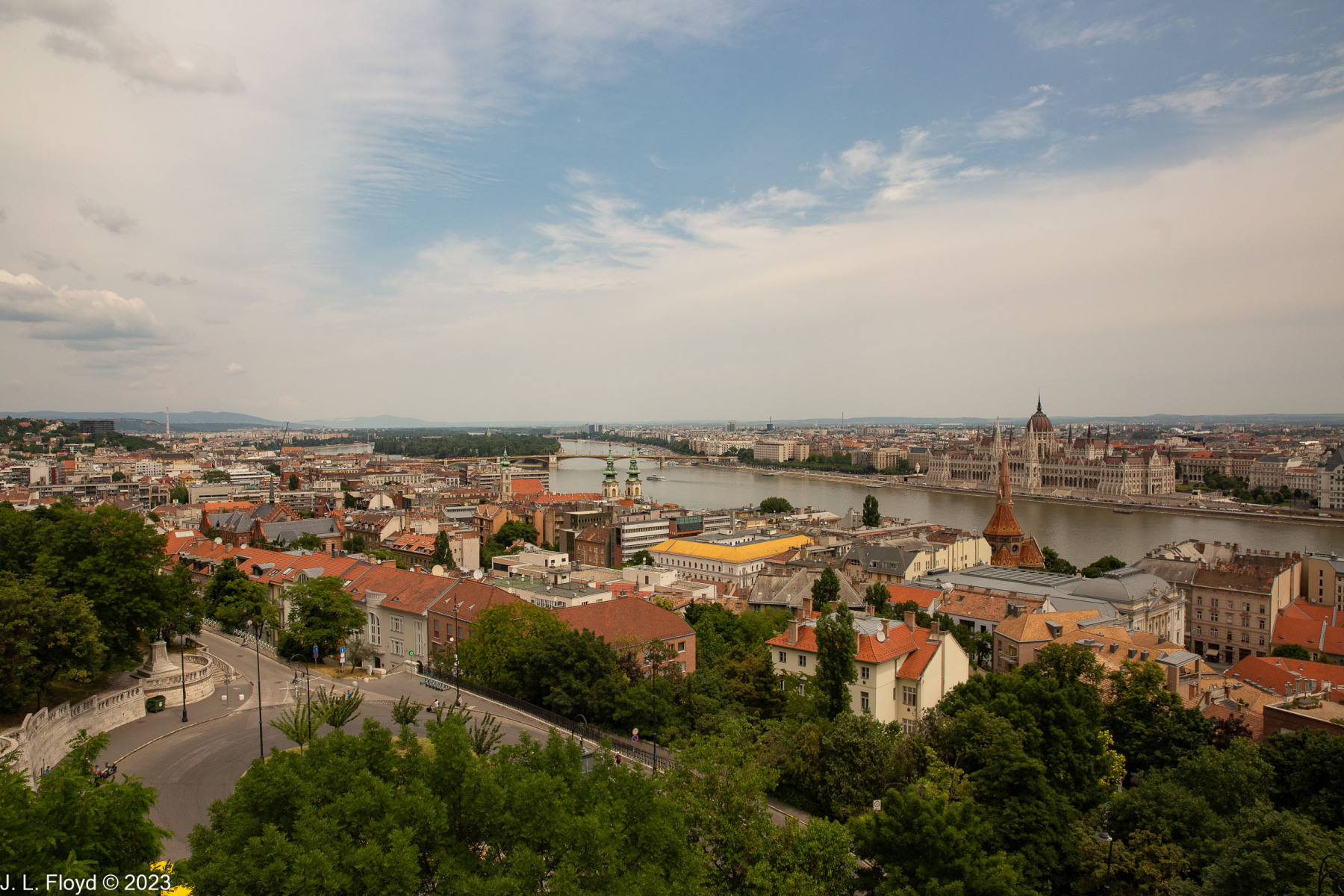
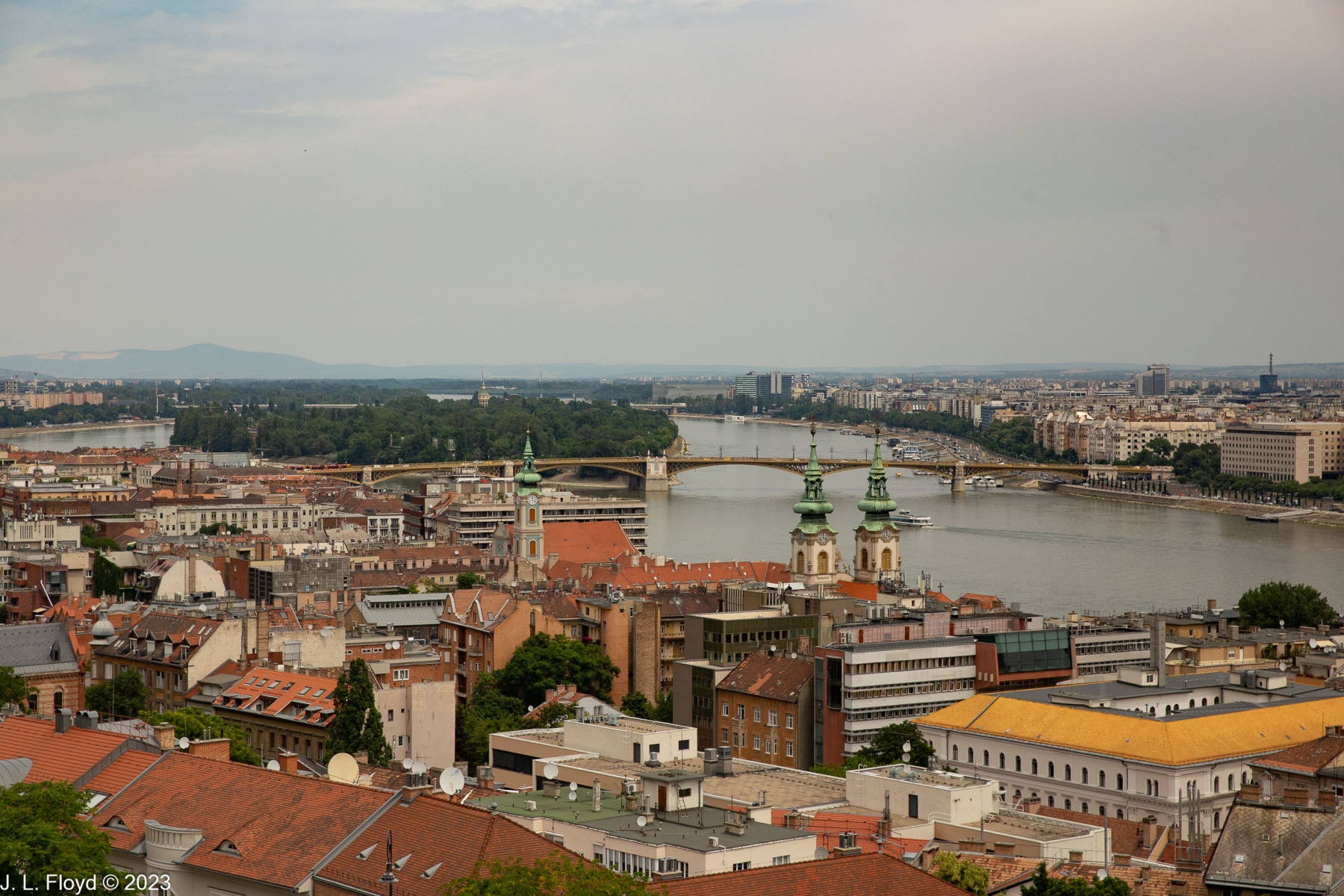
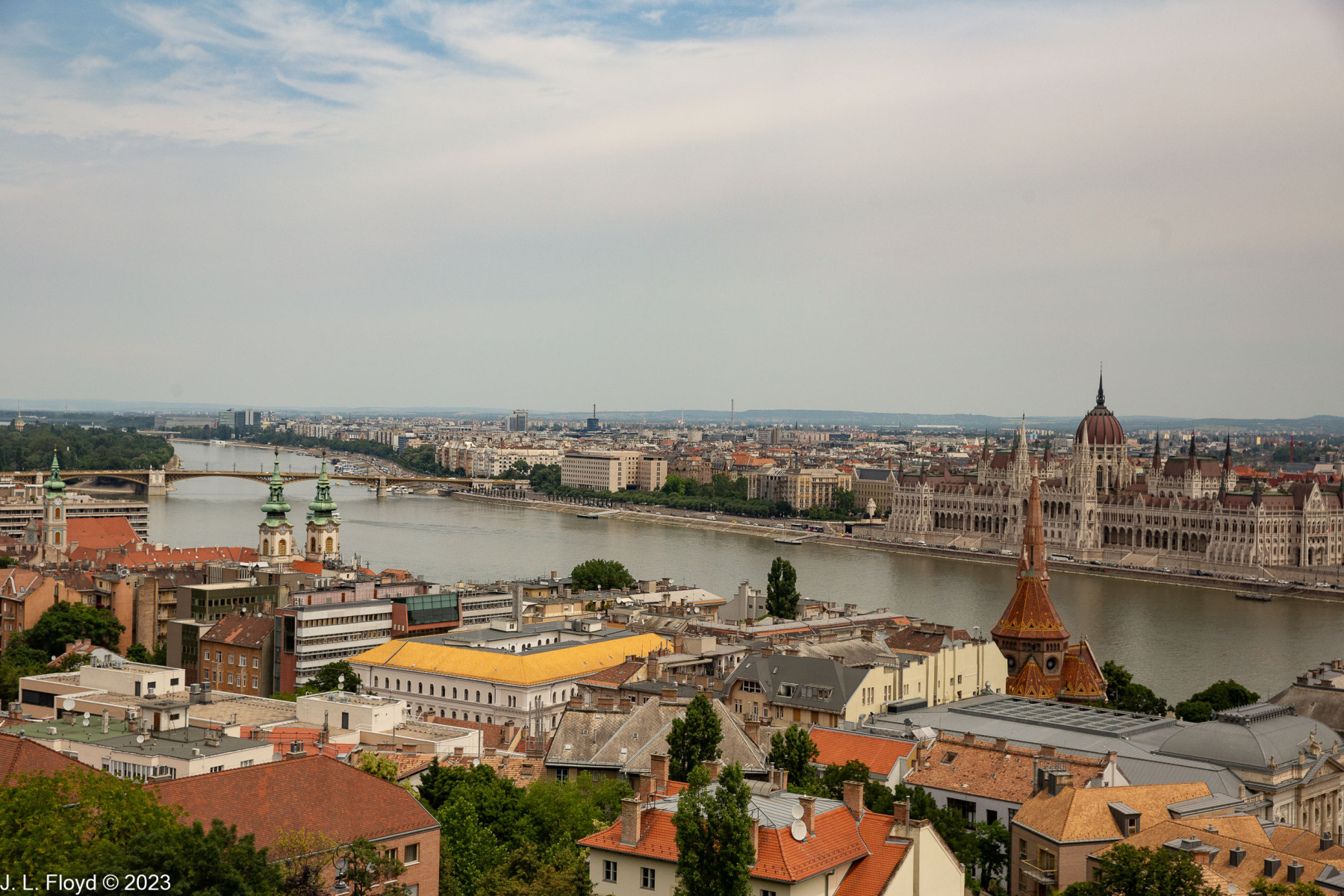
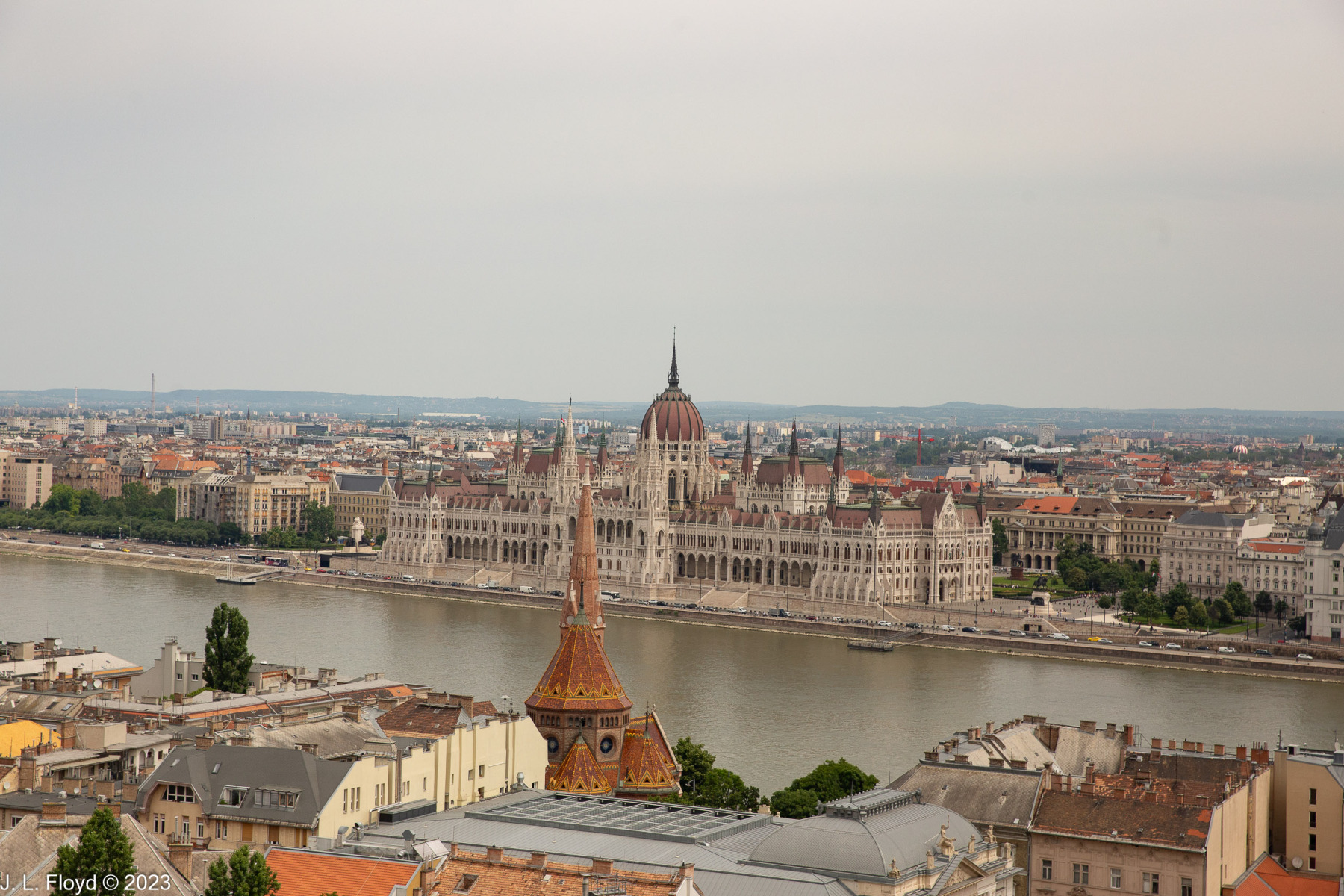
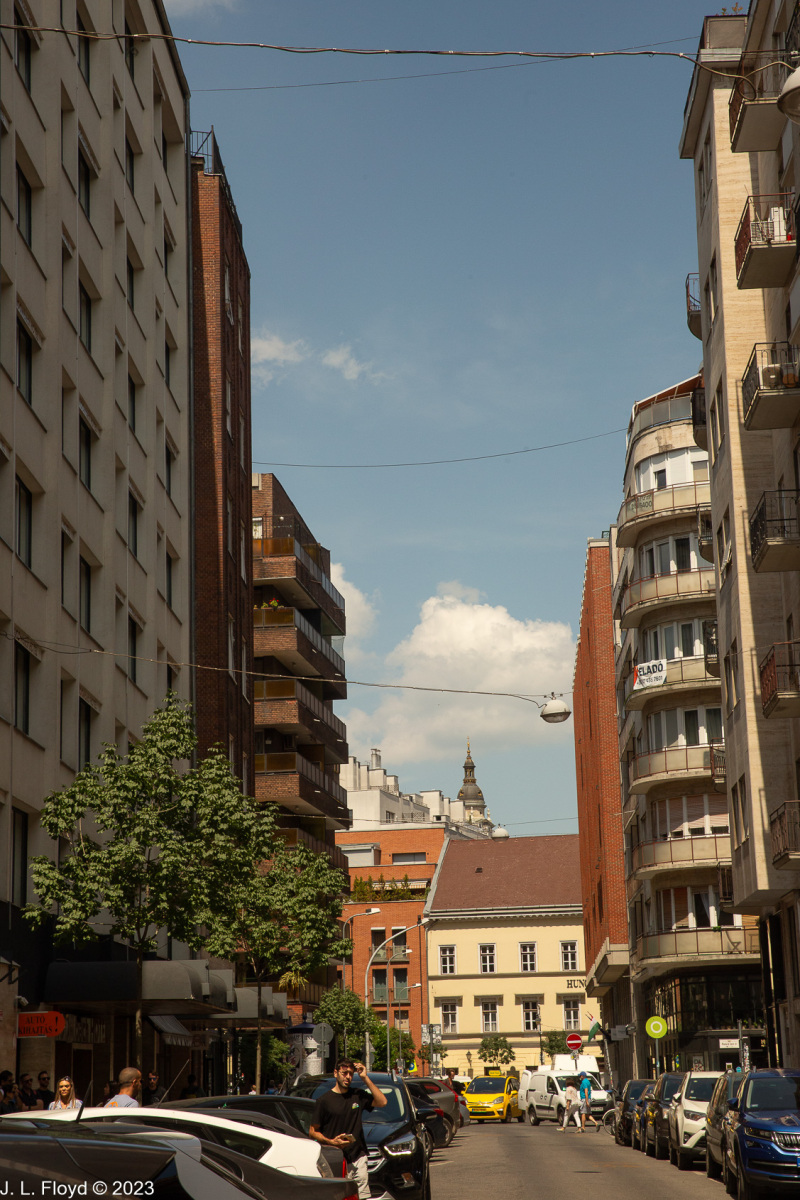
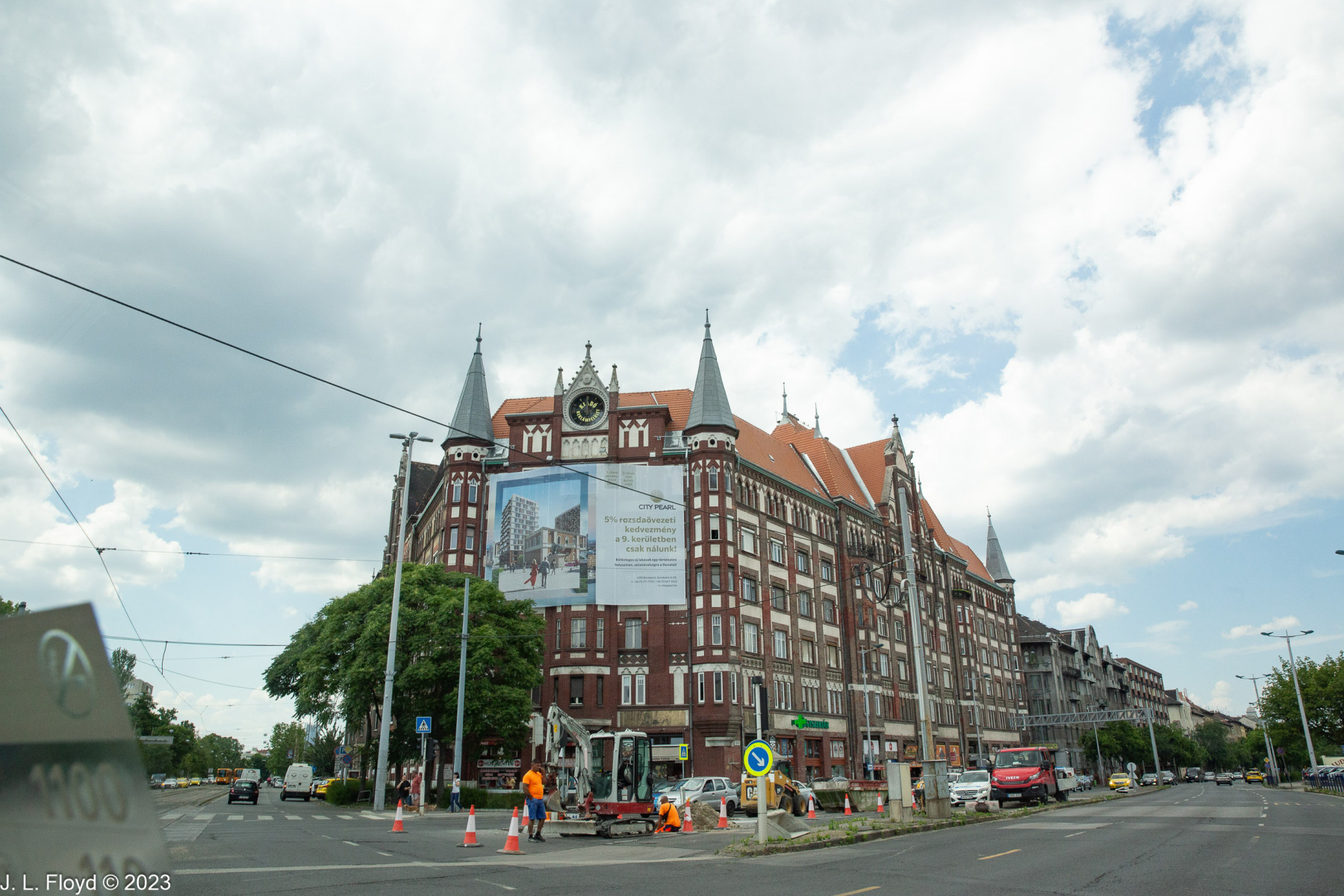
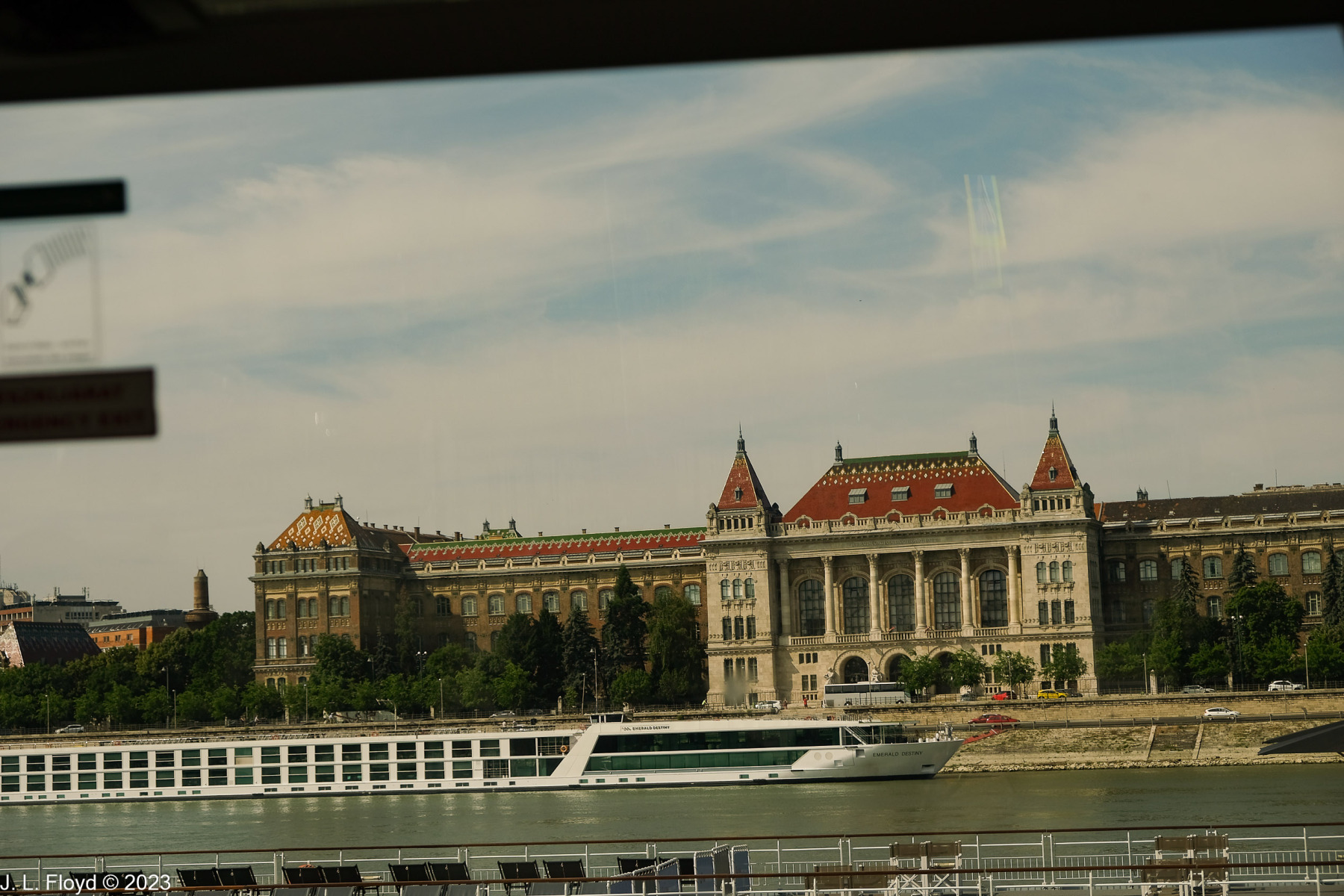
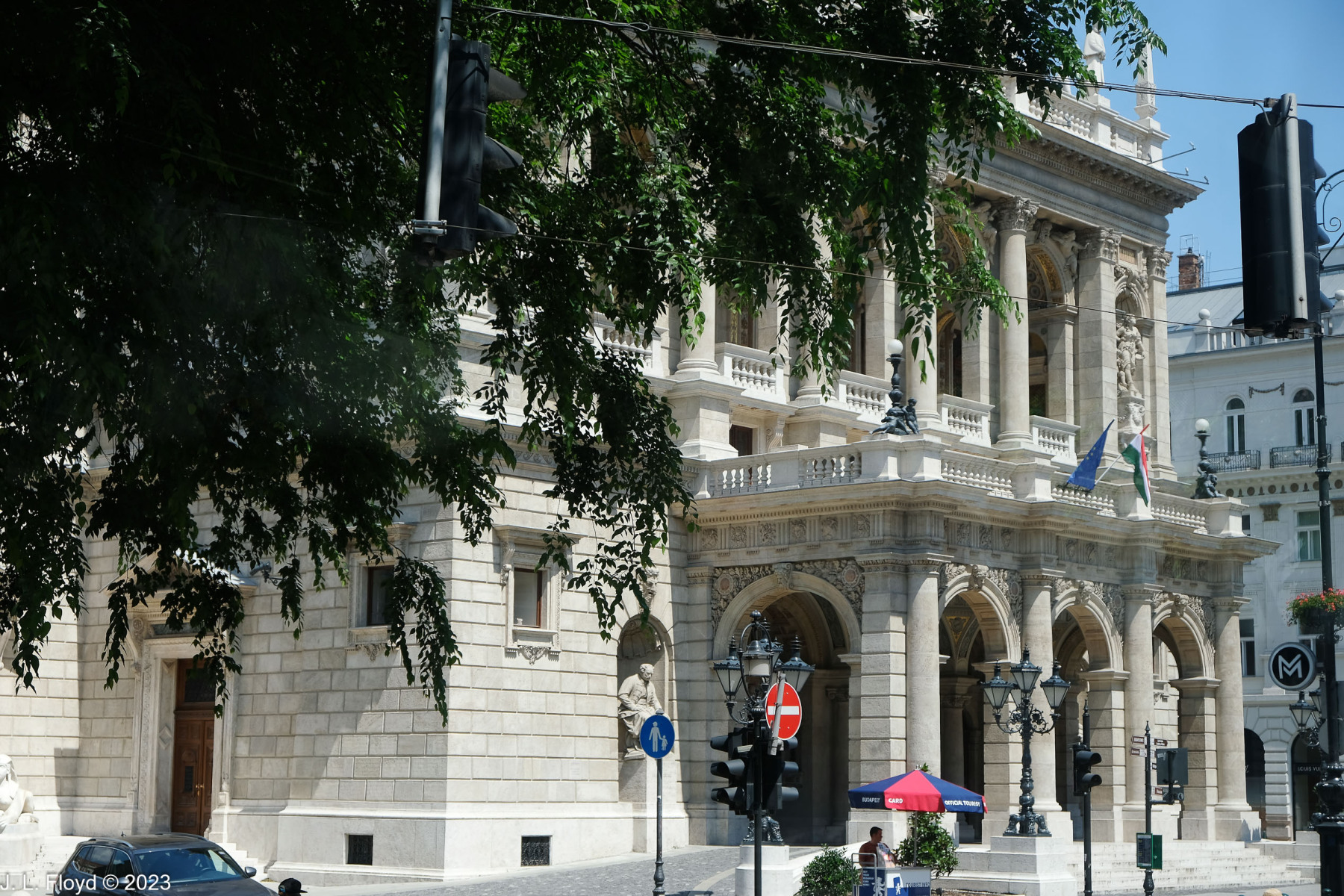
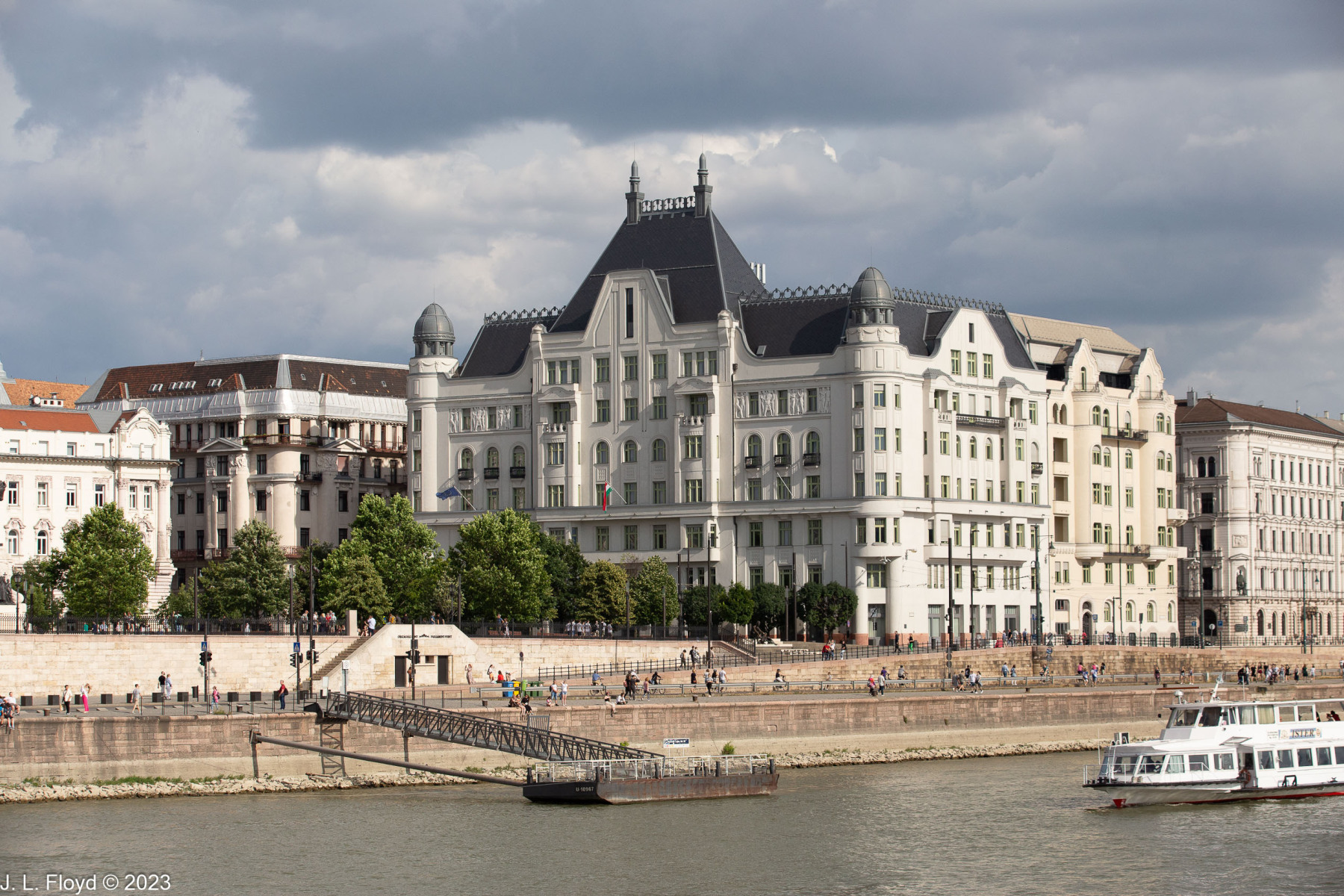
Our first impressions of Budapest were of a city of great beauty and great contrast. The contrast, of course, is between the old, represented mostly by the 18th and 19th-century inheritance, and the new, mostly dating from the post-1989 period, because most of the Communist-era appurtenances have been redone or removed. I’ve culled a few photos from some of our excursions over the succeeding days to provide abundant illustration of both the beauty and the diversity.

It’s important to keep in mind that Budapest began as two cities, one on either side of the Danube. (Actually there was a third, Obuda or Old Buda, just north of Buda, but let’s not complicate matters unnecessarily.) The Danube flows south at this point, and Buda is on the west bank, Pest on the east. Buda is hilly, Pest is flat. The two existed as separate cities for hundreds of years before being joined as one in 1867.

The next post will delve deeper into the sights we saw on our first full day in Budapest, Thursday the 15th of June 2023.

Categories
Spain, Portugal and Morocco, November 2017

Spain, November 8, 2017: The Road to Granada

The trip from Córdoba to Granada was generally uneventful, but had its noteworthy moments nonetheless. En route to Granada we passed through a district of the province of Andalusia known as la Subbética, which as far as I know includes no major cities or major tourist attractions other than the Sierras Subbéticas Natural Park, which we were not fortunate enough to visit, but which is home to a wide diversity of plants and animals, and a stronghold of the peregrine falcon. Our encounter with la Subbética was limited mainly to a rest stop on the N-432 highway at Nicol’s Restaurant, near the town of Luque. However, this proved to be of great interest to me as a showcase, as it were, of small-town Spanish life. The closest analogy I can think of is a roadside cafe in Midwestern America. But this was an area primarily devoted to the cultivation of olive trees and the production of olive oil, and Nicol’s was a market for that commodity as much or more than a roadside diner.

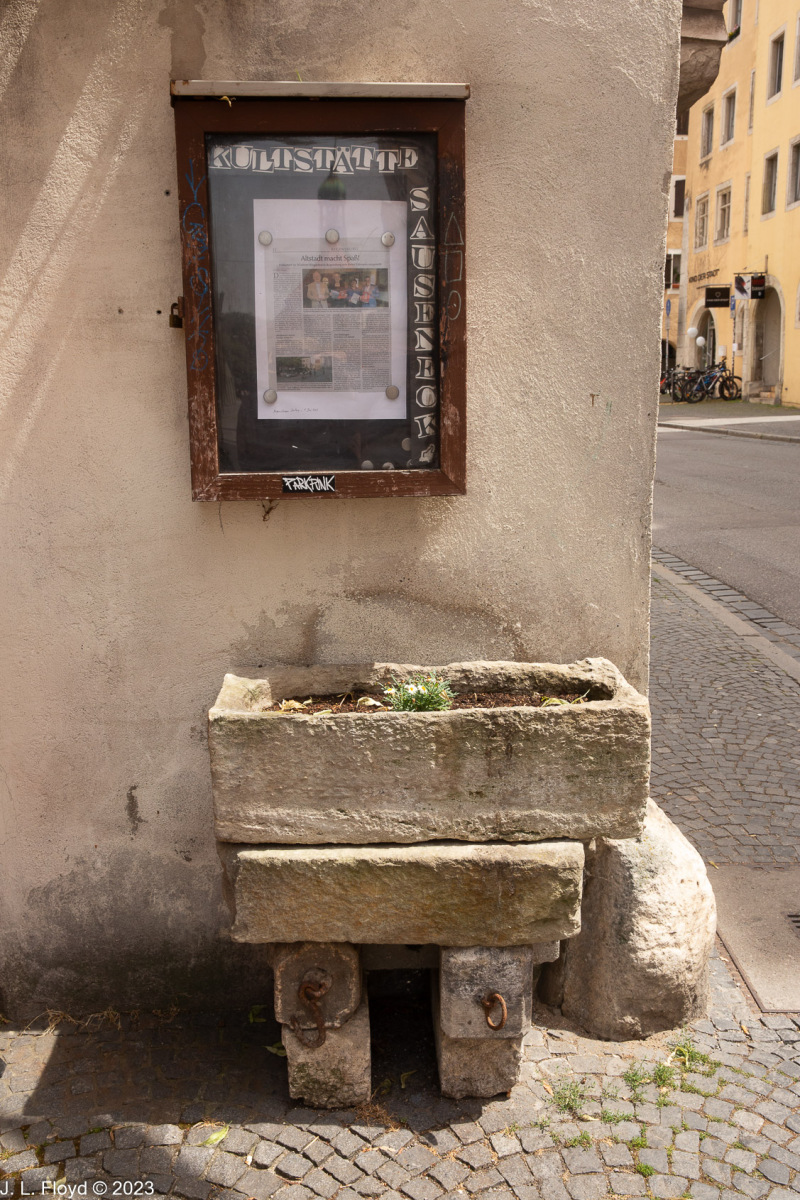
The olive groves and factory where the oil was produced were close behind the restaurant. Between the roadhouse and the olive groves there was a parklike area suitable for strolling, relaxing and picnicking according the needs of the moment. Although there was no railroad line, there were two railroad cars in back of the establishment, which puzzled me until I figured out that they provided the refrigerator for the business. Judging from the remains of an old horse trough, stone benches and other antique artifacts adorning the site. this place must have functioned as a travelers’ stop from time immemorial.

Resuming our journey, we continued across the rolling Andalusia countryside with its endless olive groves. Racing the oncoming twilight, we were able to catch late-afternoon views of picturesque towns and castles such as Castro del Rio and its hilltop fortress, until the curtain of darkness ended the show.