Categories
Turkey, March-April 2006

Istanbul, March 30, 2006: The Basilica Cistern

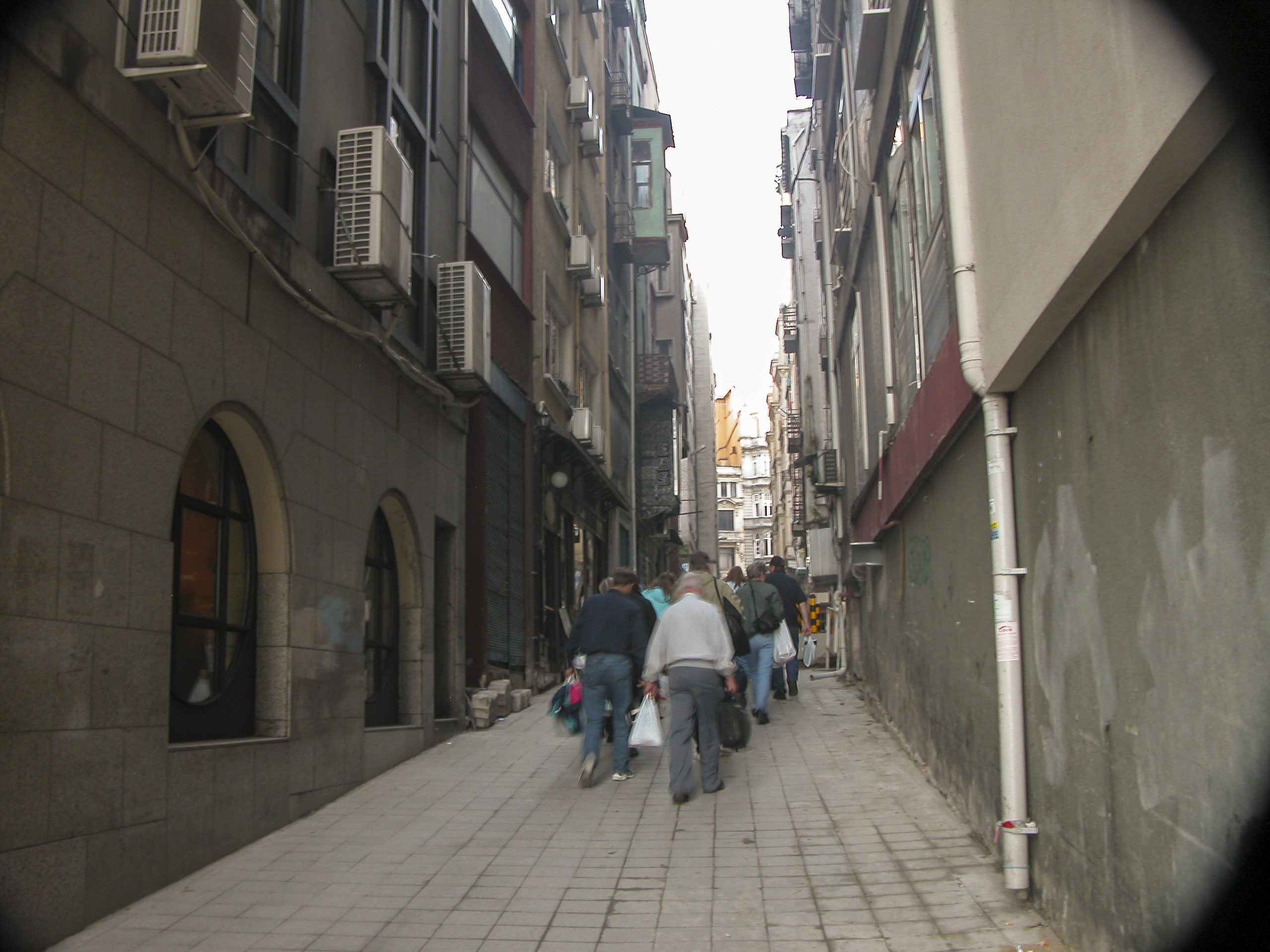
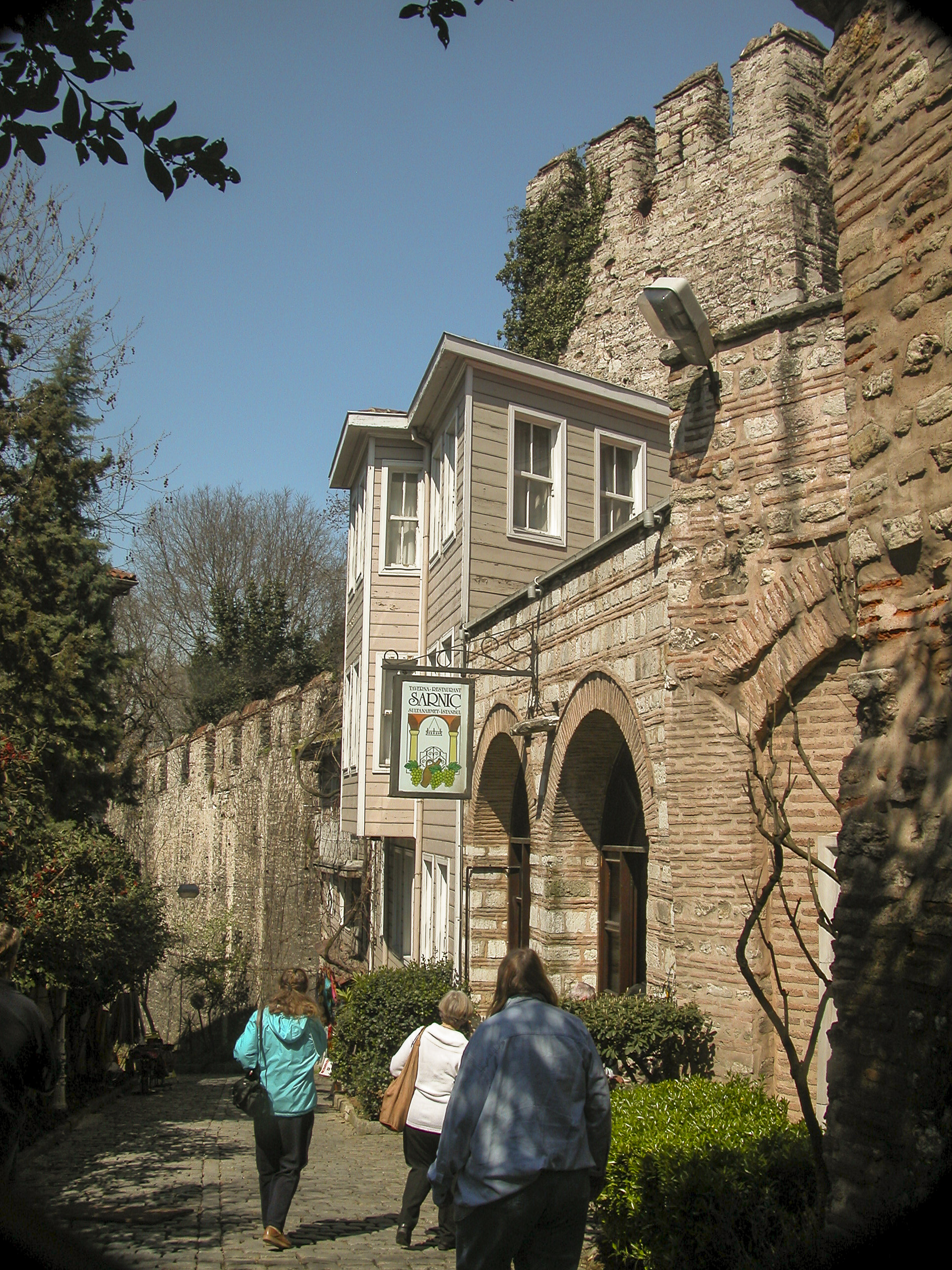
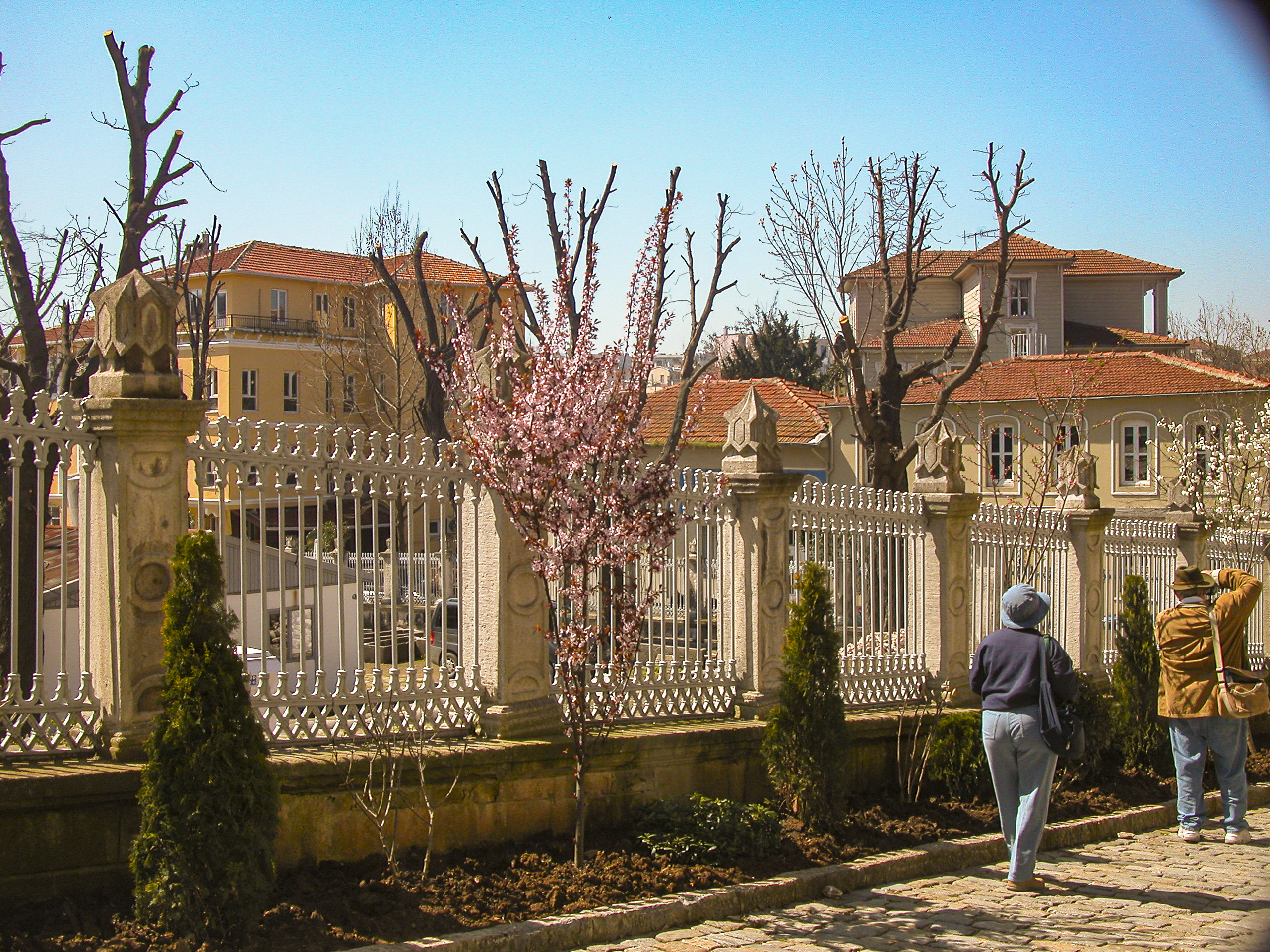
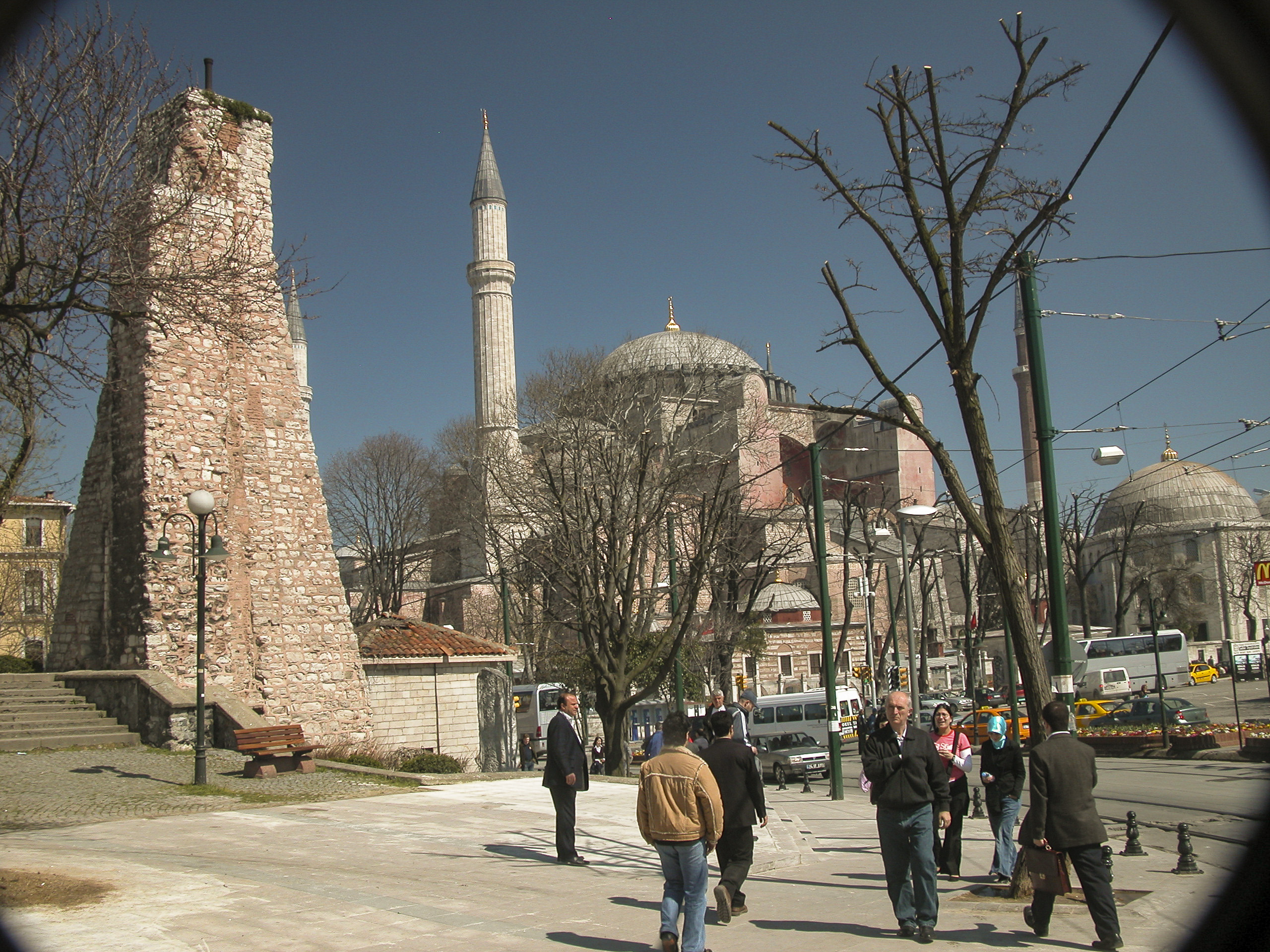
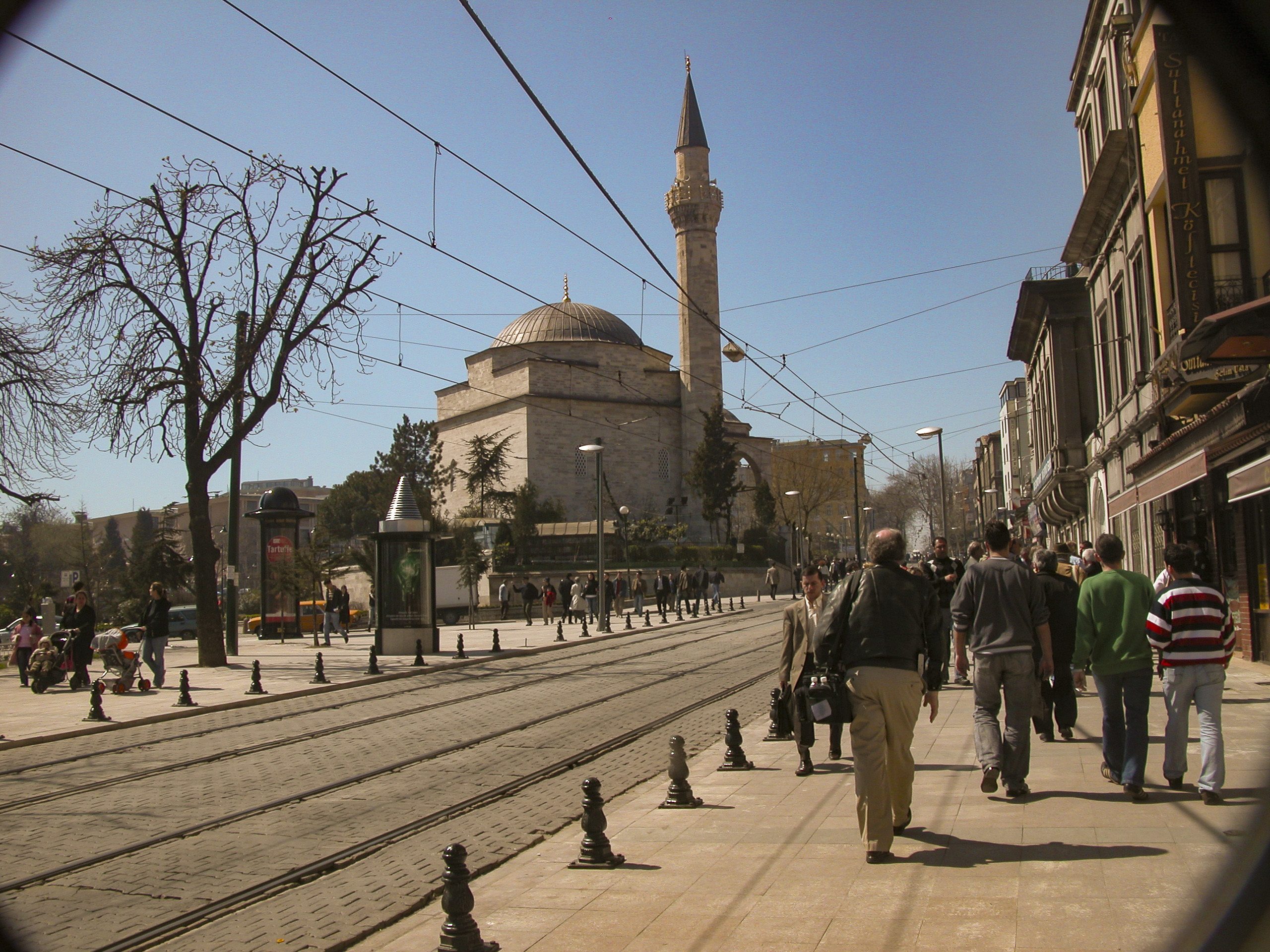
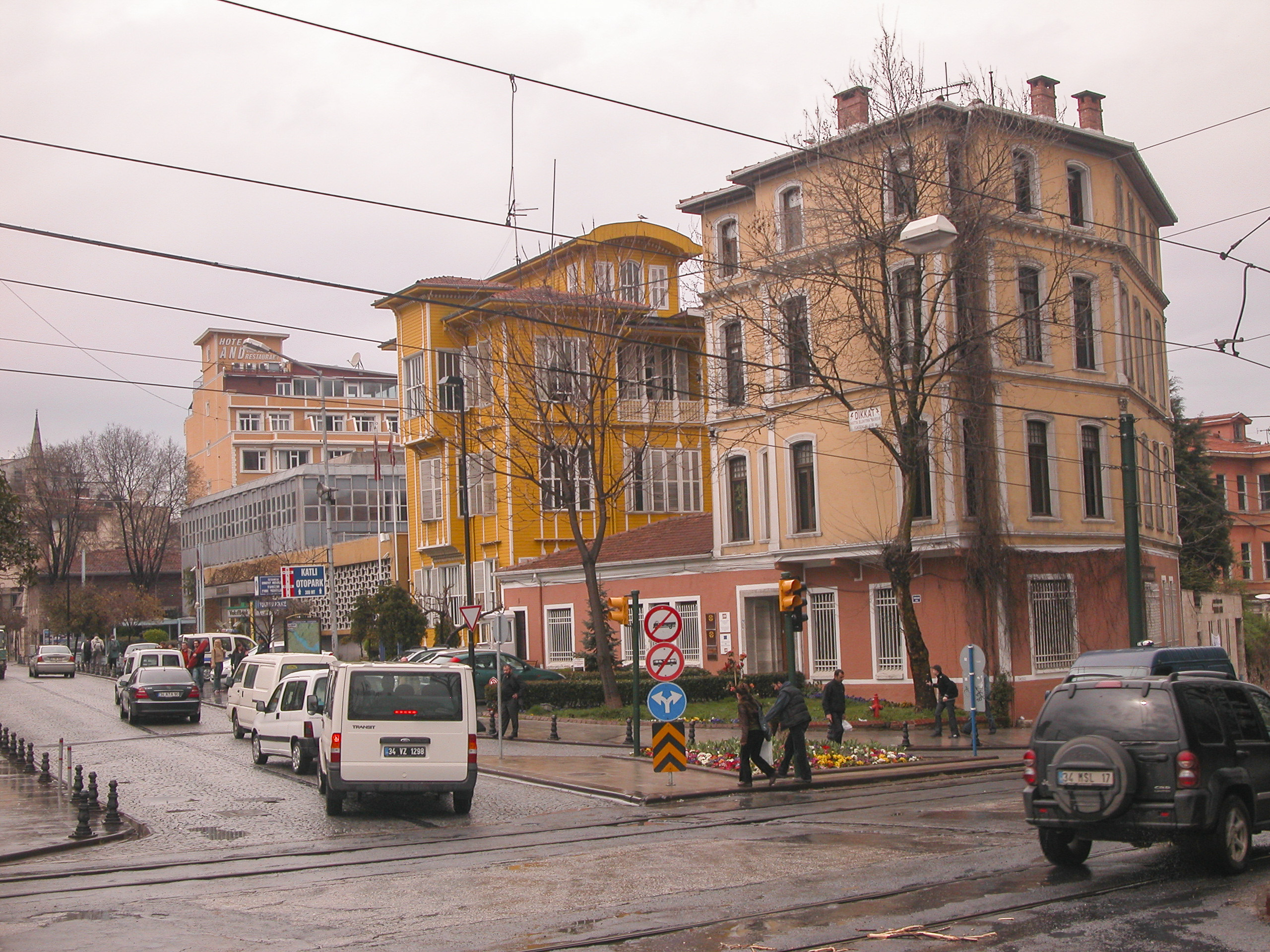
A short walk from the Blue Mosque brought us to the entrance to the Basilica Cistern, or Yerebatan Sarnıcı in Turkish, perhaps the most offbeat of all the attractions we enjoyed in Istanbul. On the way, I was able to snap a couple of photos of the more representative sights of the city, such as the apartment buildings below.

Apartment houses in the Sultanahmet district, en route to the Basilica Cistern.

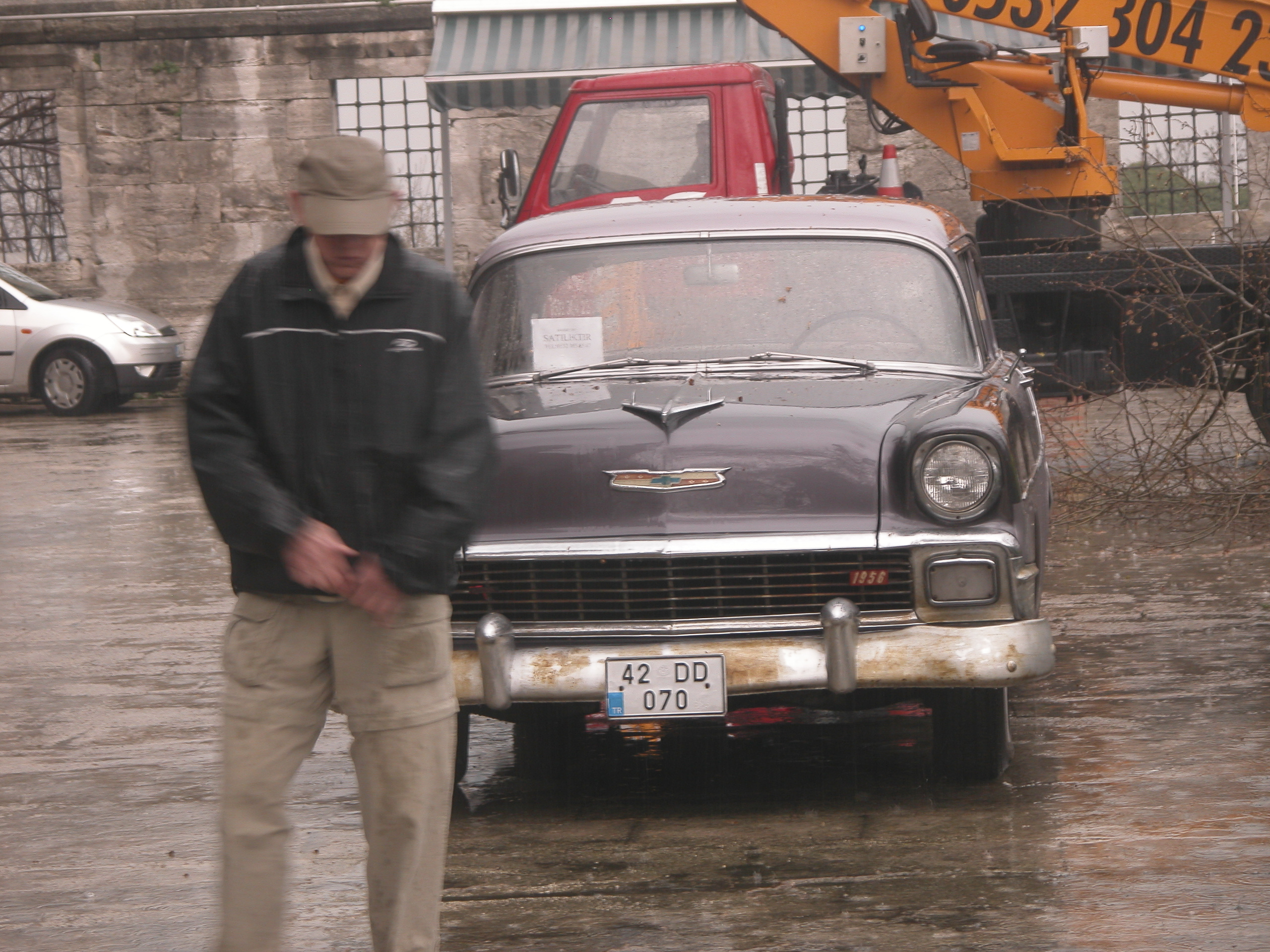
Along the way we discovered that Istanbul was a good place to find all kinds of old American cars, such as this 1956 Chevy sedan, shown in the next picture. Unfortunately, as I shot the picture a scruffy character, who was not the owner, but rather one of the homeless vagabonds populating the district, happened to slip into the field of view.

Istanbul was a good place to find all kinds of old American cars, such as this 1956 Chevy sedan. The disreputable character standing in front of it is not the owner.

We descended a 52-step staircase into the underground world of the Basilica Cistern, so called because it was built on the site of the Basilica of Ilius, a great public building dating from the third or fourth centuries which was destroyed during the Nika riots of 532. Emperor Justinian then had the cistern built to ensure a reliable supply of fresh water to his Great Palace, as well as Hagia Sophia and other sites. There are a number of ancient cisterns in Istanbul, but the Basilica Cistern is the largest; it is immense, occupying an area of 105,000 square feet, or 9,800 square meters, and capable of holding 2,800,000 cu ft (80,000 cubic meters) of water. It does not actually hold that much water now; it is left mostly empty so that visitors can walk around it on the platforms and walkways built for the tourist trade.

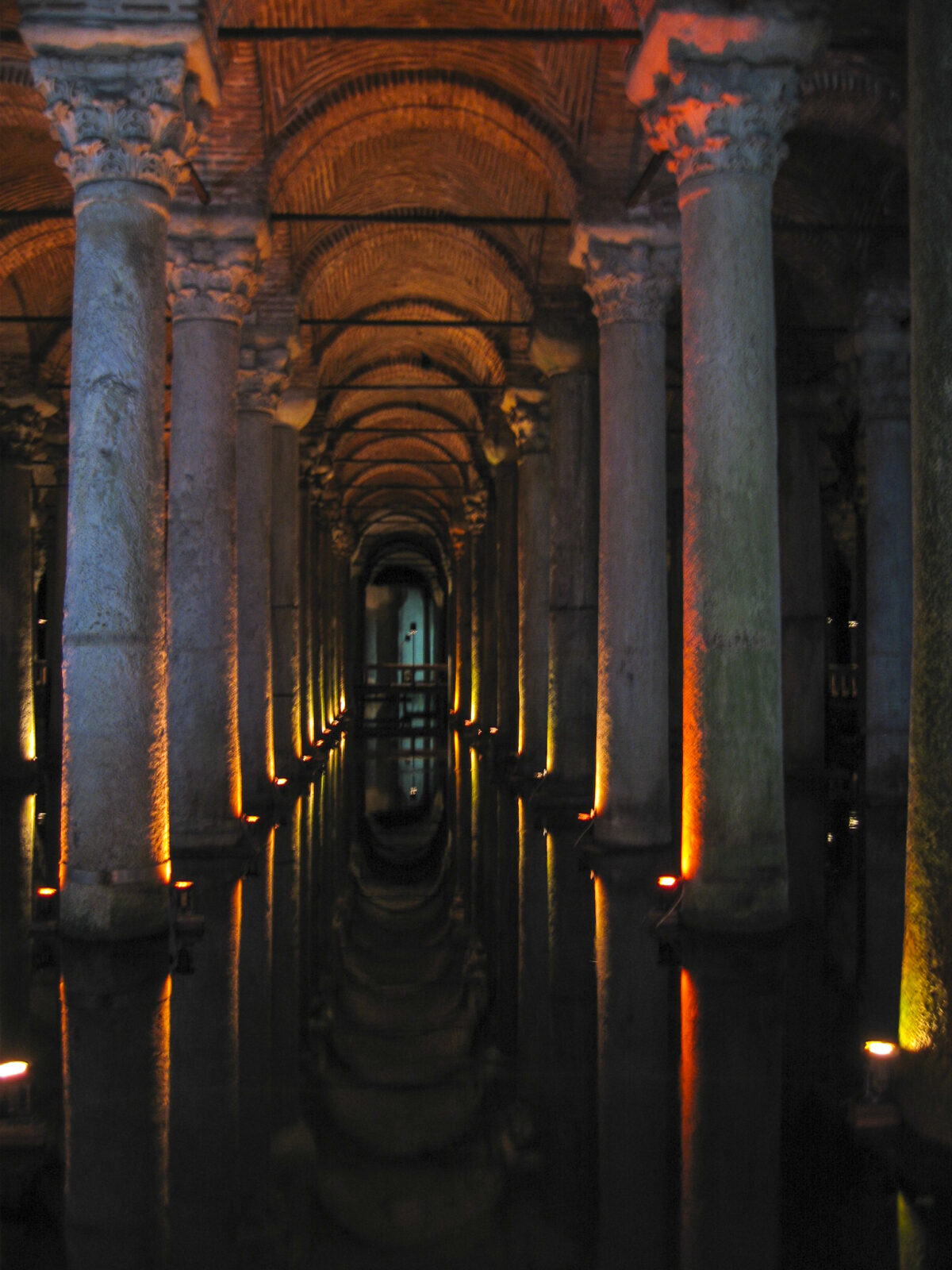
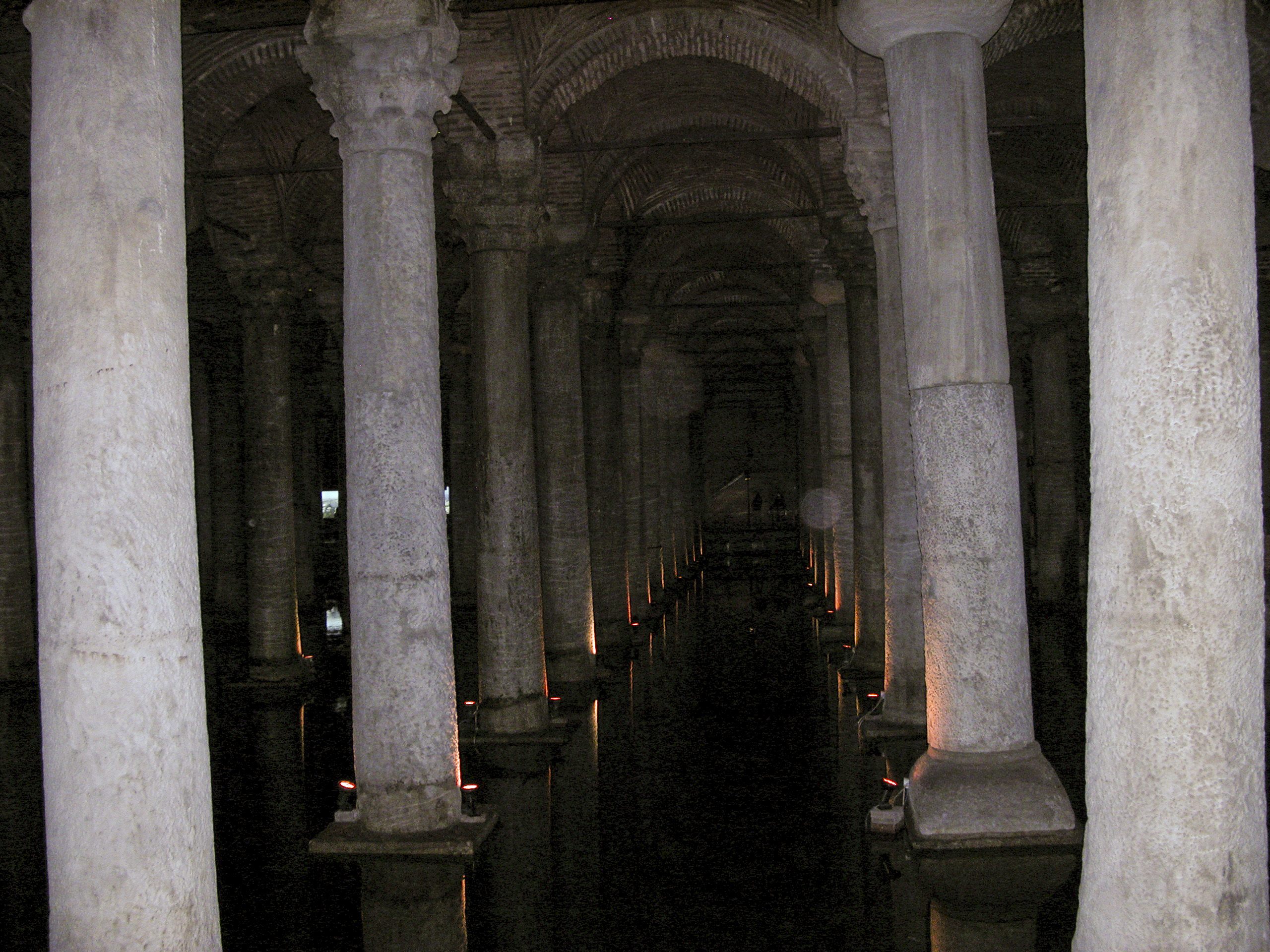
336 marble columns support the ceiling of the Cistern.

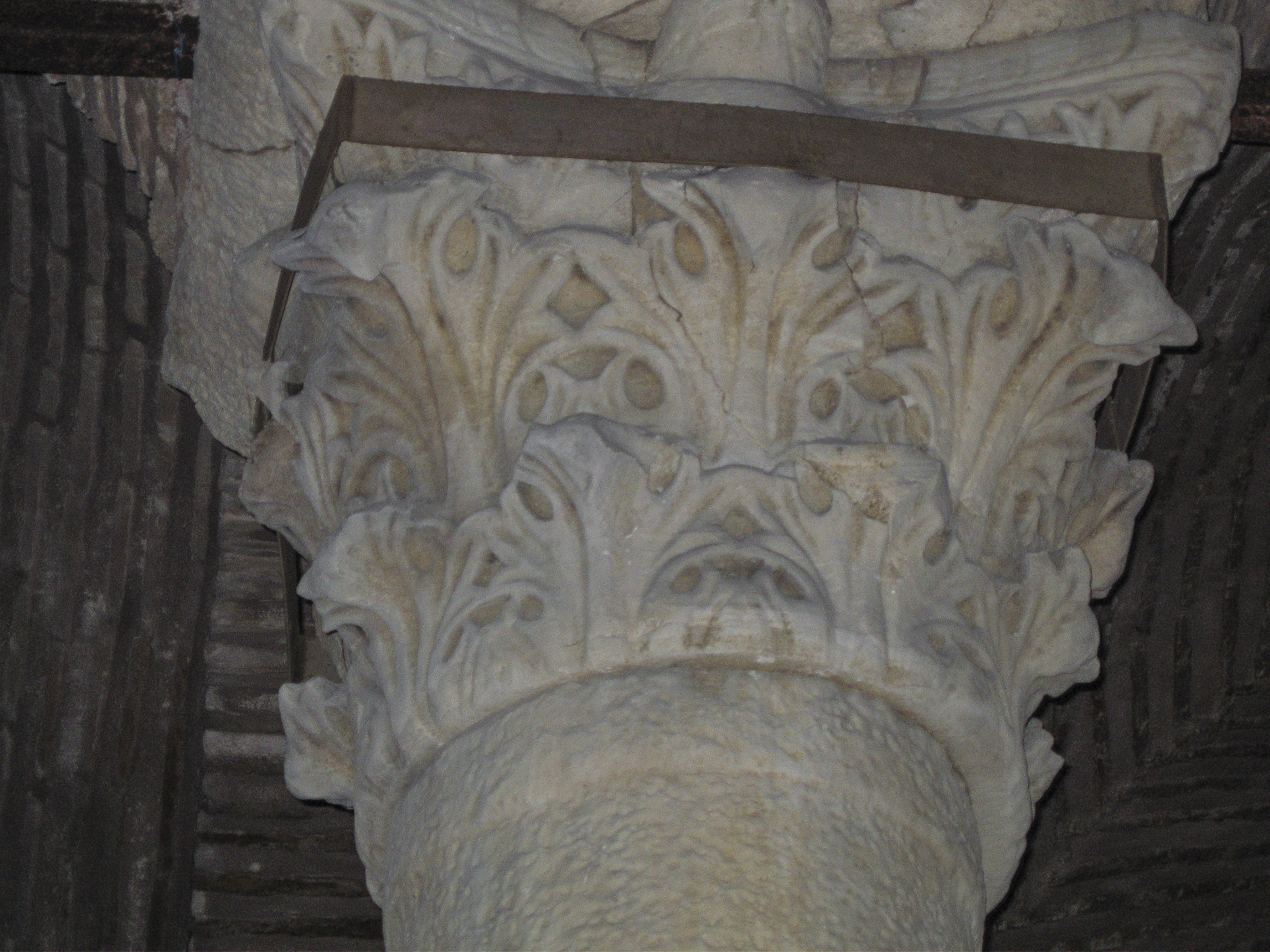
336 marble columns support the ceiling of the Cistern. Each column is 9 metres (30 ft) high. They are arranged in 12 rows of 28 columns spaced 5 metres (16 ft) apart. The columns are of disparate styles and origins; a few are Doric, the rest Ionic or Corinthian in style. They were not originally built for the cistern but rather plundered from other structures and brought to Constantinople from places all over the empire.

The Basilica Cistern was constructed with columns salvaged from ruins of older buildings, brought to Constantinople from all parts of the Roman Empire.

The Basilica Cistern has been featured in a number of movies, including the James Bond thriller From Russia With Love, in which Bond took advantage of its location under the Soviet Consulate to get access to a cryptographic machine. In reality, the Consulate is in the district of Beyoğlu, near our hotel but far away from the Cistern.

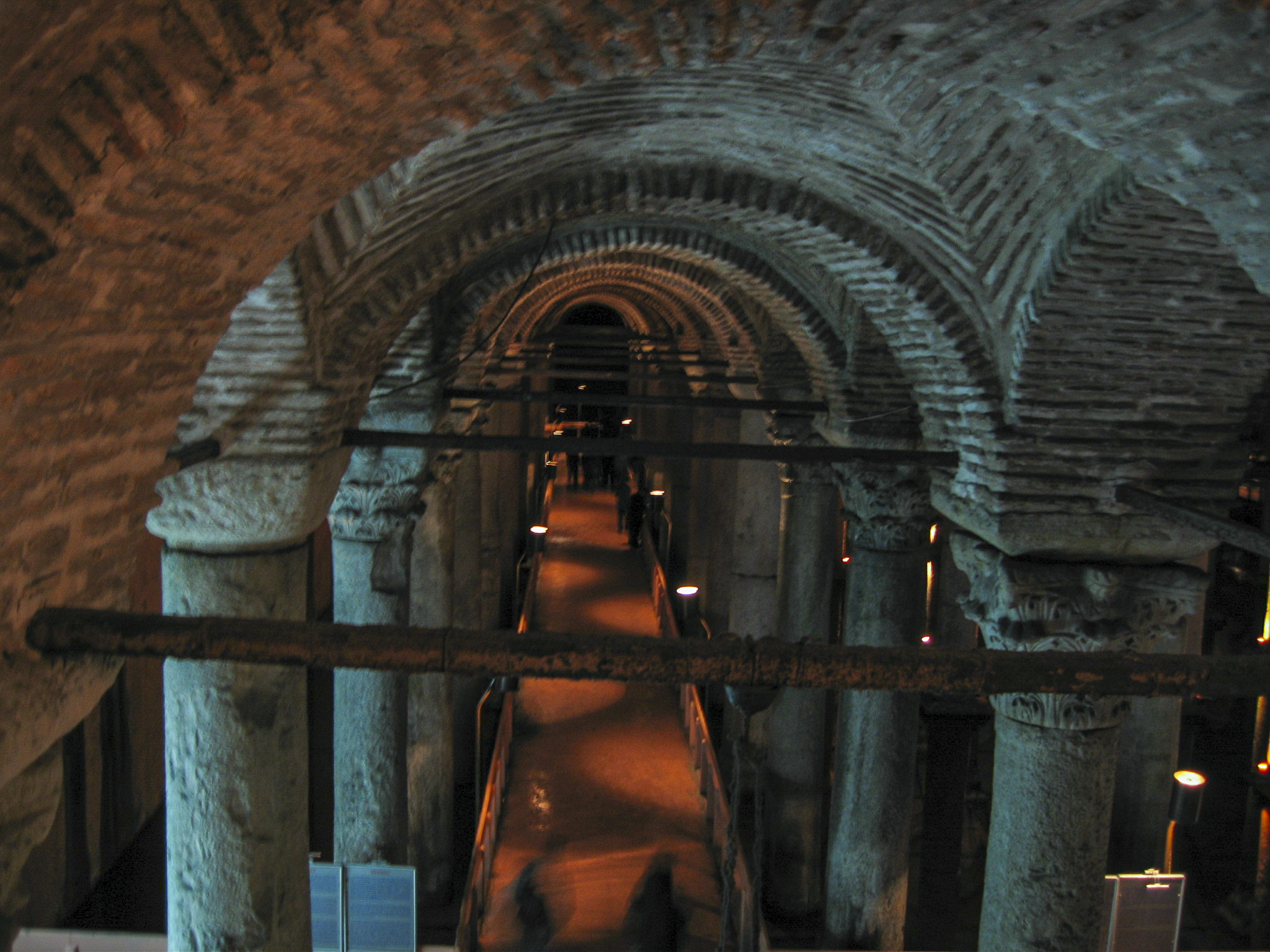
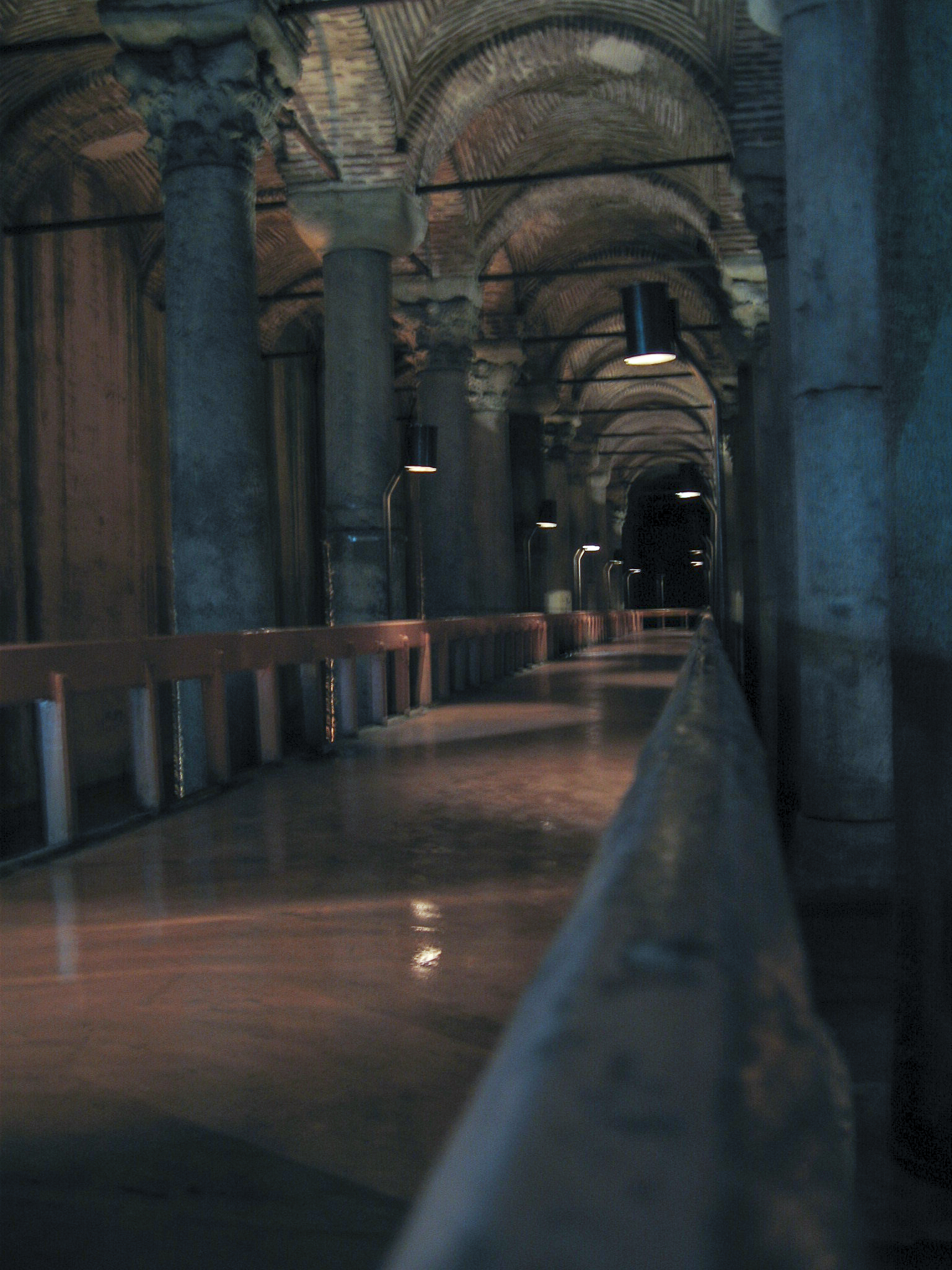
Originally the only way to navigate around the Basilica Cistern was by boat. The platforms and walkways were built for the tourist trade, and the Cistern is left mostly empty for the same reason.

The walls of the Cistern are 13 feet (4 meters) thick, built of brick coated with waterproof cement. Water was brought to the Cistern from the Belgrade Forest, 19 kilometers from Constantinople, through Roman aqueducts. (Note: the Belgrade Forest is nowhere near the capital of Serbia, which is 952 km from Istanbul,)

This view provides a perspective on the immense size of the Basilica Cistern, which occupies a rectangle 450 feet (140 meters) long by 210 feet (70 meters) wide.

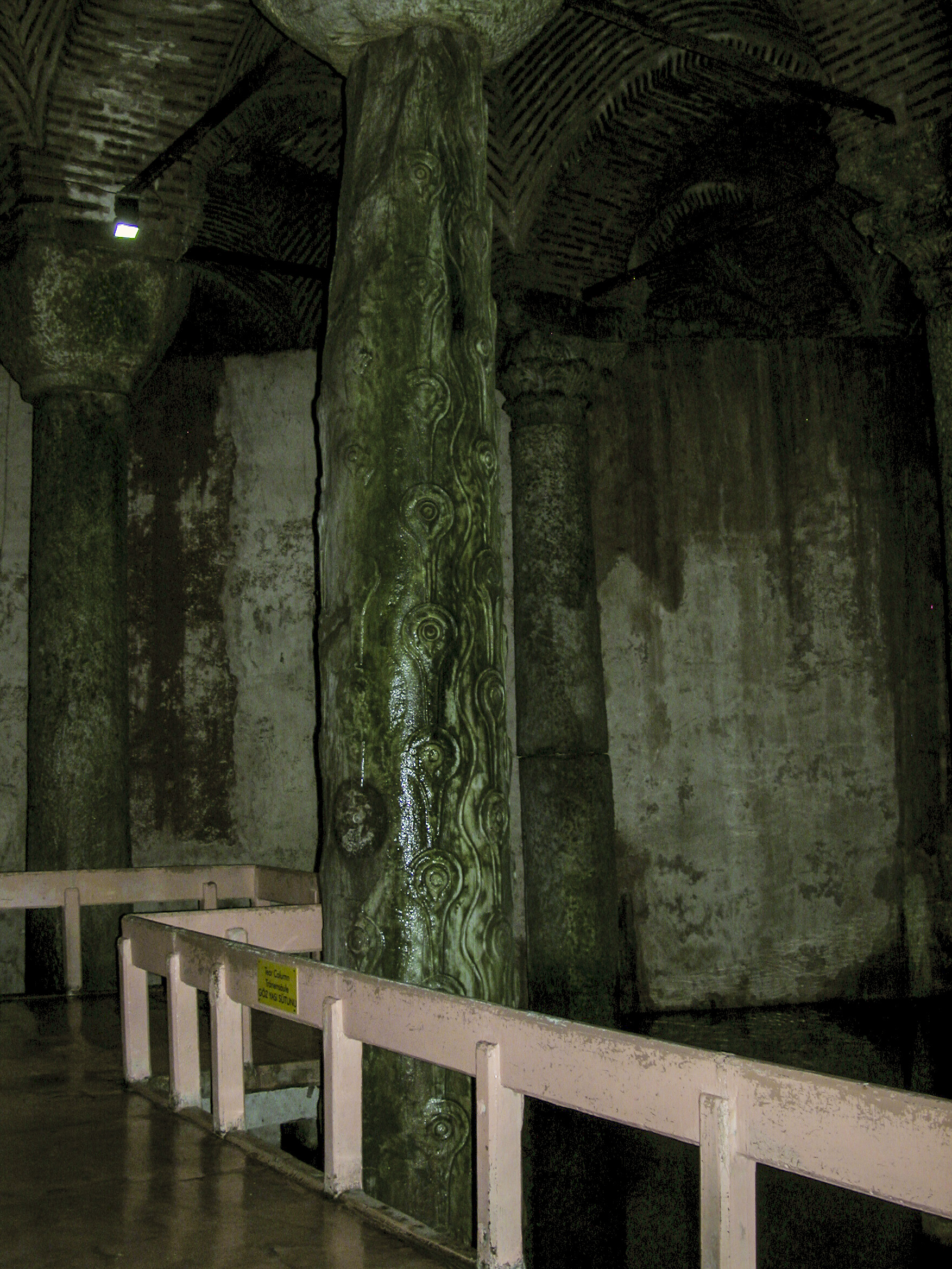
One of the columns is engraved with pictures of a hen’s (or peacock’s) eye, slanted branches, and tears. Supposedly the tears on the column commemorate the hundreds of slaves who died during the construction of the Basilica Cistern (over 7,000 slaves in all were said to have worked on the construction of the cistern, though presumably not all of them died).

A column engraved with raised pictures of a hen’s eye, slanted branches, and tears. Legend says that the tears pay tribute to the many slaves who died during the construction of the Cistern.

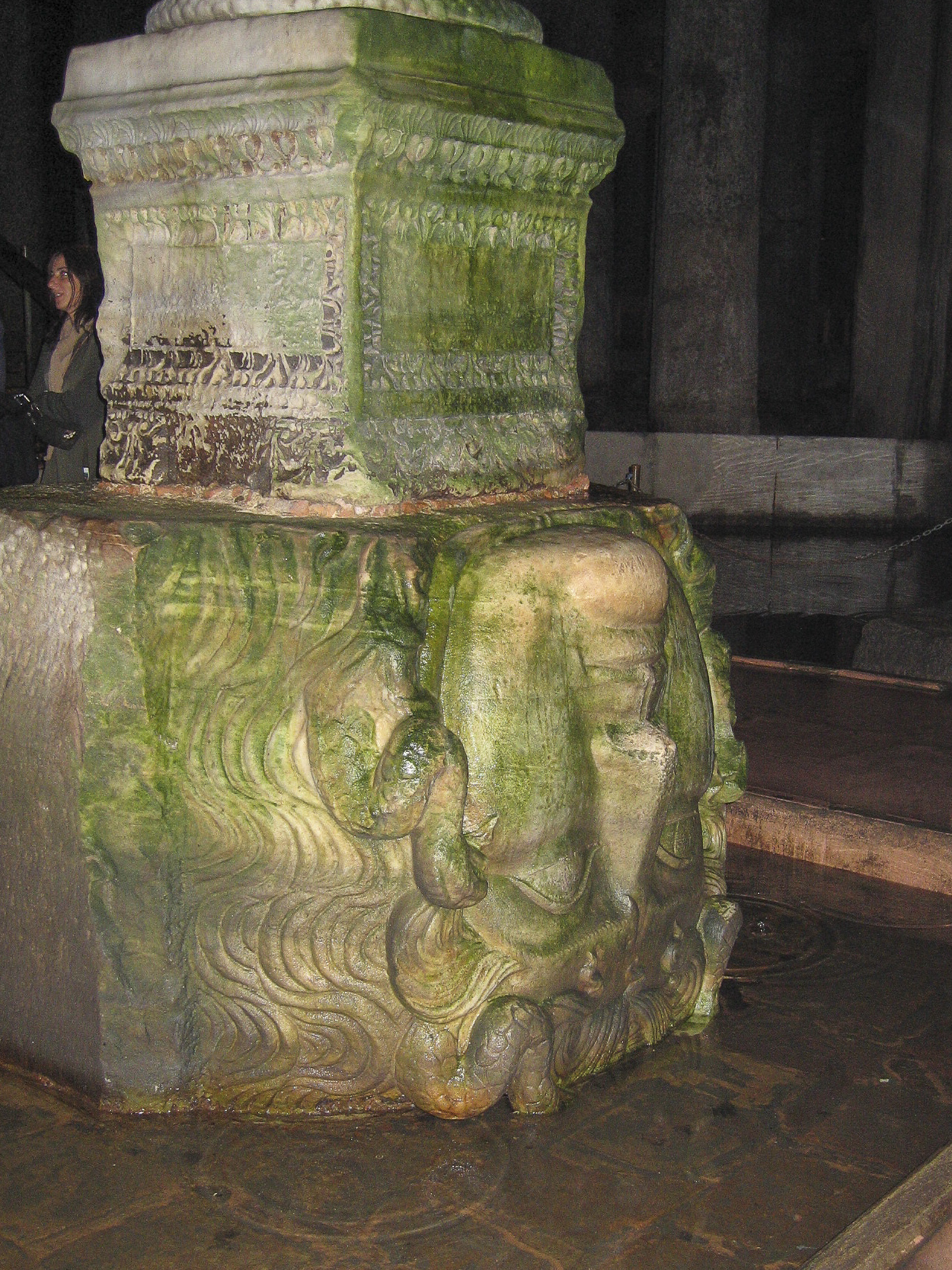
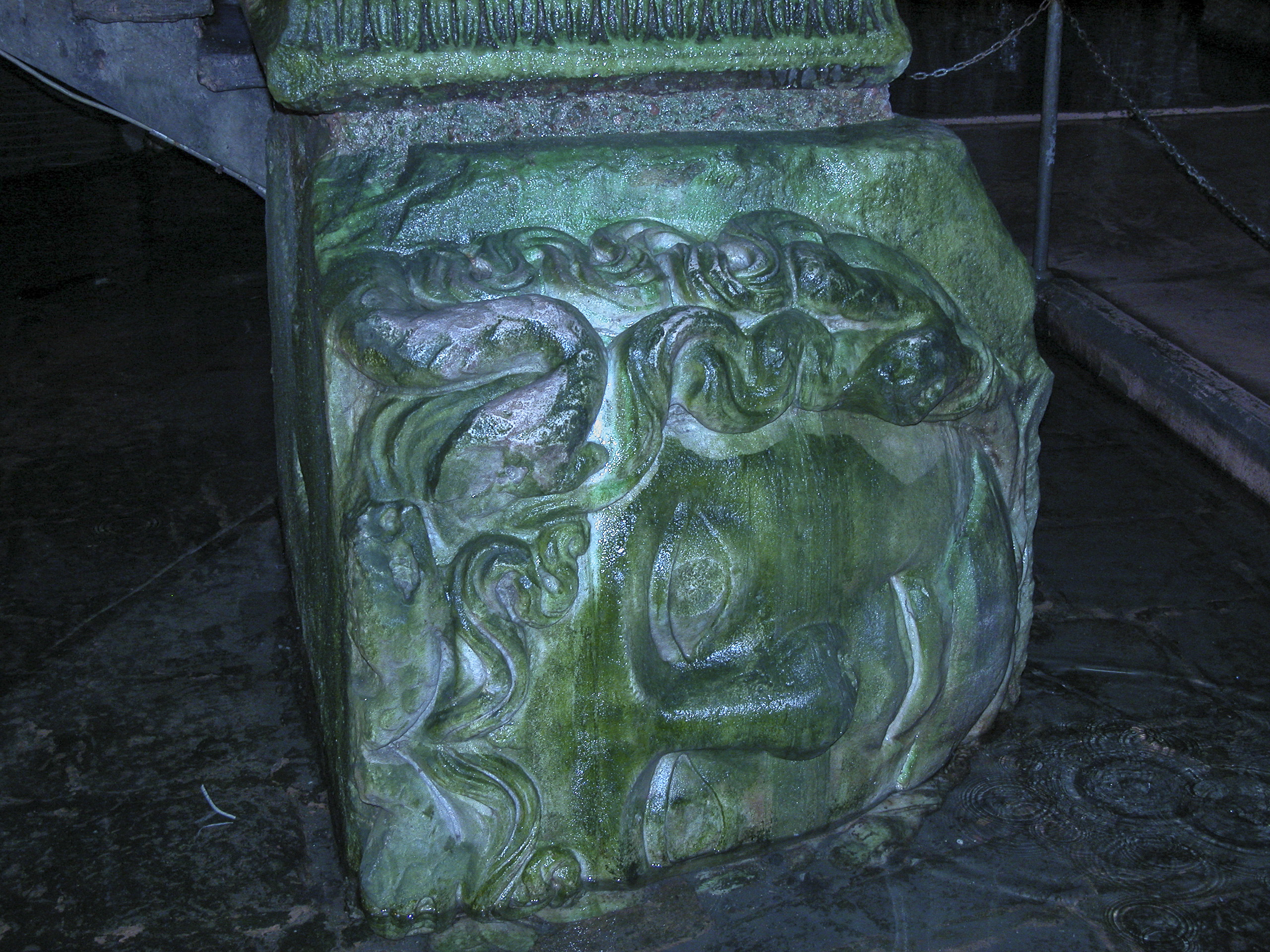
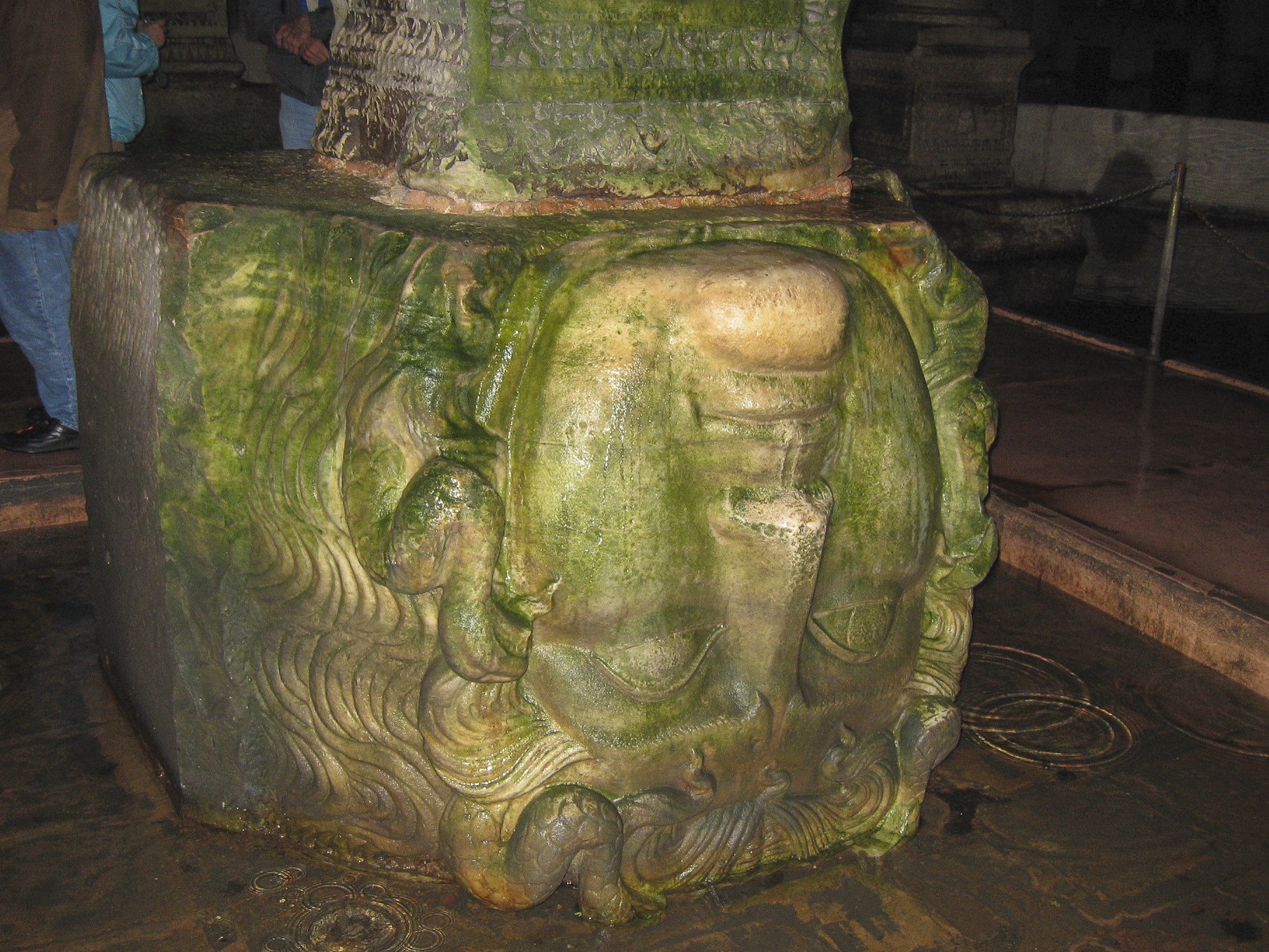
At the base of two of the Cistern columns are pedestals carved in the shape of Medusa’s heads. You will recall that in Greek mythology the Medusa was a woman who evoked the jealousy of the goddess Athena when she copulated with Poseidon, god of the sea, in Athena’s temple; in retribution Athena turned her into a Gorgon, a creature with the body and head of a woman, but with living venomous snakes for hair, whose gaze turned living creatures to stone. Eventually she was beheaded by the hero Perseus, who used mirrors to accomplish the deed without looking directly into her eyes. Perseus then took her head, which retained its power to calcify, put it in a bag, and pulled it out whenever he wanted to turn somebody into a statue. He used it to save the beautiful princess Andromeda, who was to be sacrificed to the sea monster Cetus. All three of them were later transformed into constellations in the sky, along with Andromeda’s parents, Cepheus the King and Cassiopeia the Queen. Medusa did not become a constellation but had a nebula named after her; you can see a picture of it in my astrophoto gallery, but remember to use a mirror if you look at it.

There are two marble Medusa heads in the Basilica Cistern, both used as column pedestals. Their origin is unknown. This one is upside-down.

One of the Medusa heads is turned sideways because – so the story goes – only in that position was it the right size to support the column at the correct height to line it up with all the others.

It is thought that this Medusa head was placed sideways because only that orientation made it the right height to support the column on top of it.

But that explanation doesn’t work for the other Medusa carving, which is upside-down, because it would be the same height if it were right-side up.

Why is this head placed upside-down? Legend says that it was to ward off the evil power of the Medusa’s gaze, which turned people to stone. Did people really think that a marble carving could have such powers? Or was there a more practical reason?
Categories
Turkey, March-April 2006

Istanbul, March 30, 2006 – The Blue Mosque

When we arrived in Istanbul on the morning of March 30, 2006, we found that the mostly sunny and balmy weather we had enjoyed on our travels from Izmir to Side had given way to clouds and rain.

Following the mostly clear skies we had for the eclipse, it was a shock to find that it was pouring rain on our arrival in Istanbul.
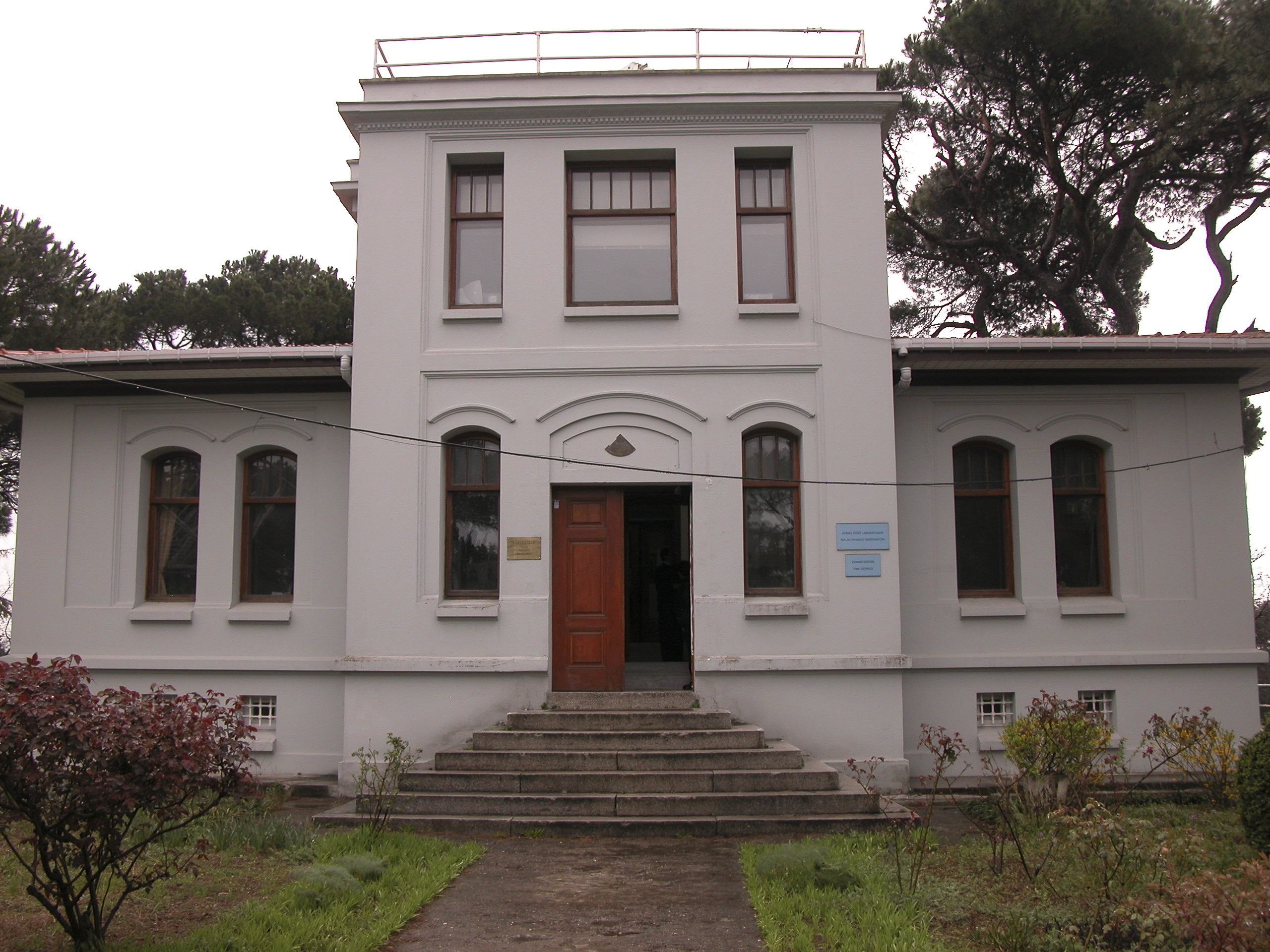
Our first stop after landing in Istanbul was the Kandilli Observatory, or more formally known as the Kandilli Observatory and Earthquake Research Institute, affiliated with Boĝaziçi University of Istanbul.

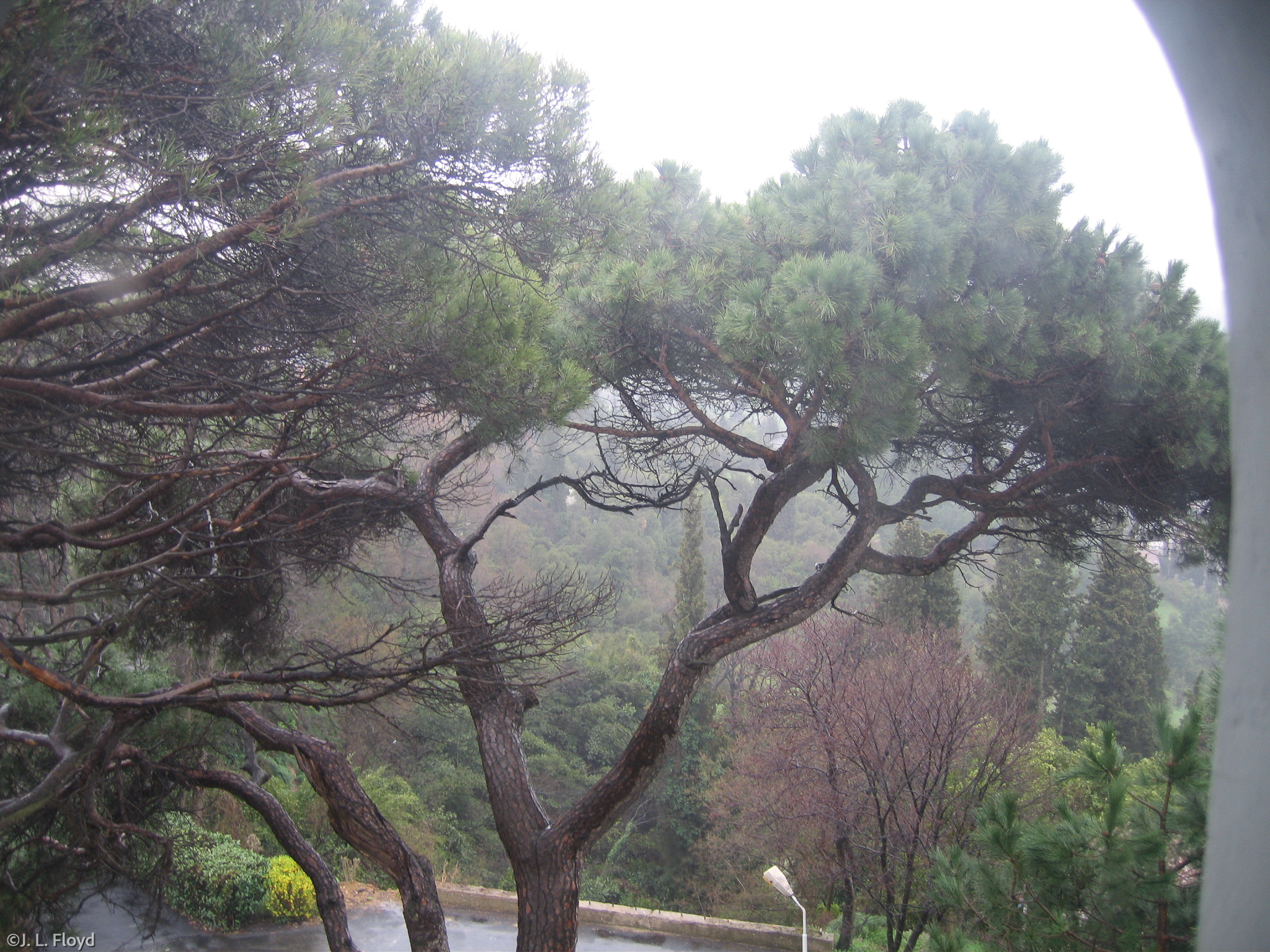
Our first stop in Istanbul, even before checking into our hotel, was Kandilli Observatory, or more precisely Kandilli Observatory and Earthquake Research Institute, which is located in the Kandilli neighborhood of the Üsküdar district on the Anatolian (Asian) side of Istanbul, atop a hill overlooking the Bosporus.. We stopped there first because the airport is also on the Asian side and the observatory was more or less on the way to the hotel. The observatory belongs to Boğaziçi University, a major research university in Istanbul.

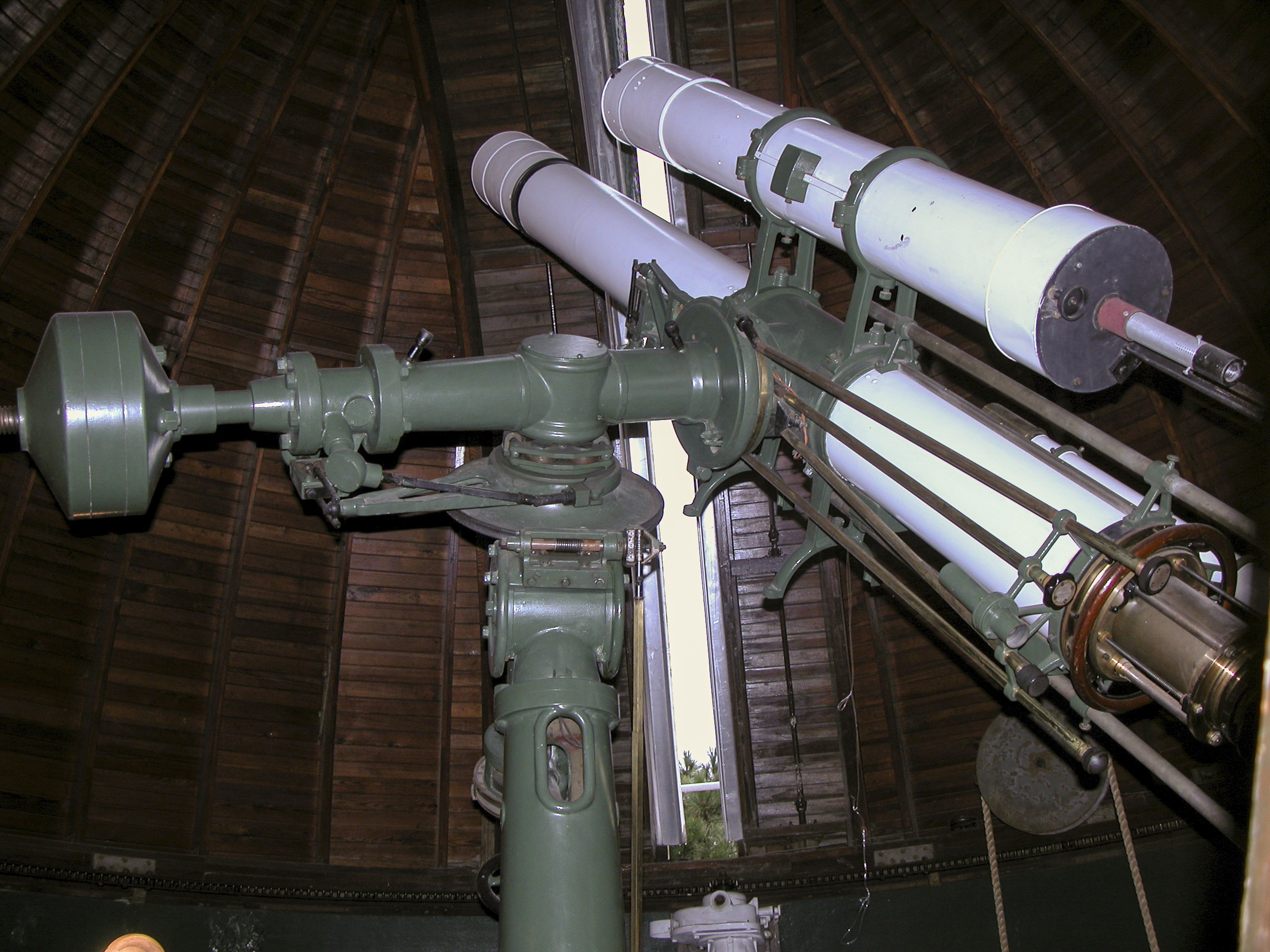
Kandilli has a 200 mm (7.87 inch) aperture Zeiss refractor mounted on an equatorial drive installed in a dome at the observatory building. It was purchased in 1918, but delivery was held up until 1924 because of the calamitous circumstances following the end of World War I. The observatory was not completed until 1935, and only then did the telescope go into operation. Initially it appears to have been devoted to solar observation and research. It was only the third research telescope delivered to Turkey; the first was destroyed in a fire during the Crimean War, and the second was a small (80mm) scope housed in an observatory which was destroyed in a riot in 1909, though the scope itself appears to have survived and ended up in a high school.

This venerable 200 mm Zeiss refractor was located in the dome atop the Observatory. It was purchased in 1918, delivered in 1924, and became operational in 1935 with the completion of the observatory building.

Turkey has come a long way since then. The country has a number of high-profile research observatories, such as TÜBİTAK National Observatory near Antalya, with a 1.5 meter reflector, and the new Eastern Anatolia Observatory (DAG) in Erzerum Province, with a 4-meter infrared telescope made in Italy, scheduled for “first light” at the end of 2022.

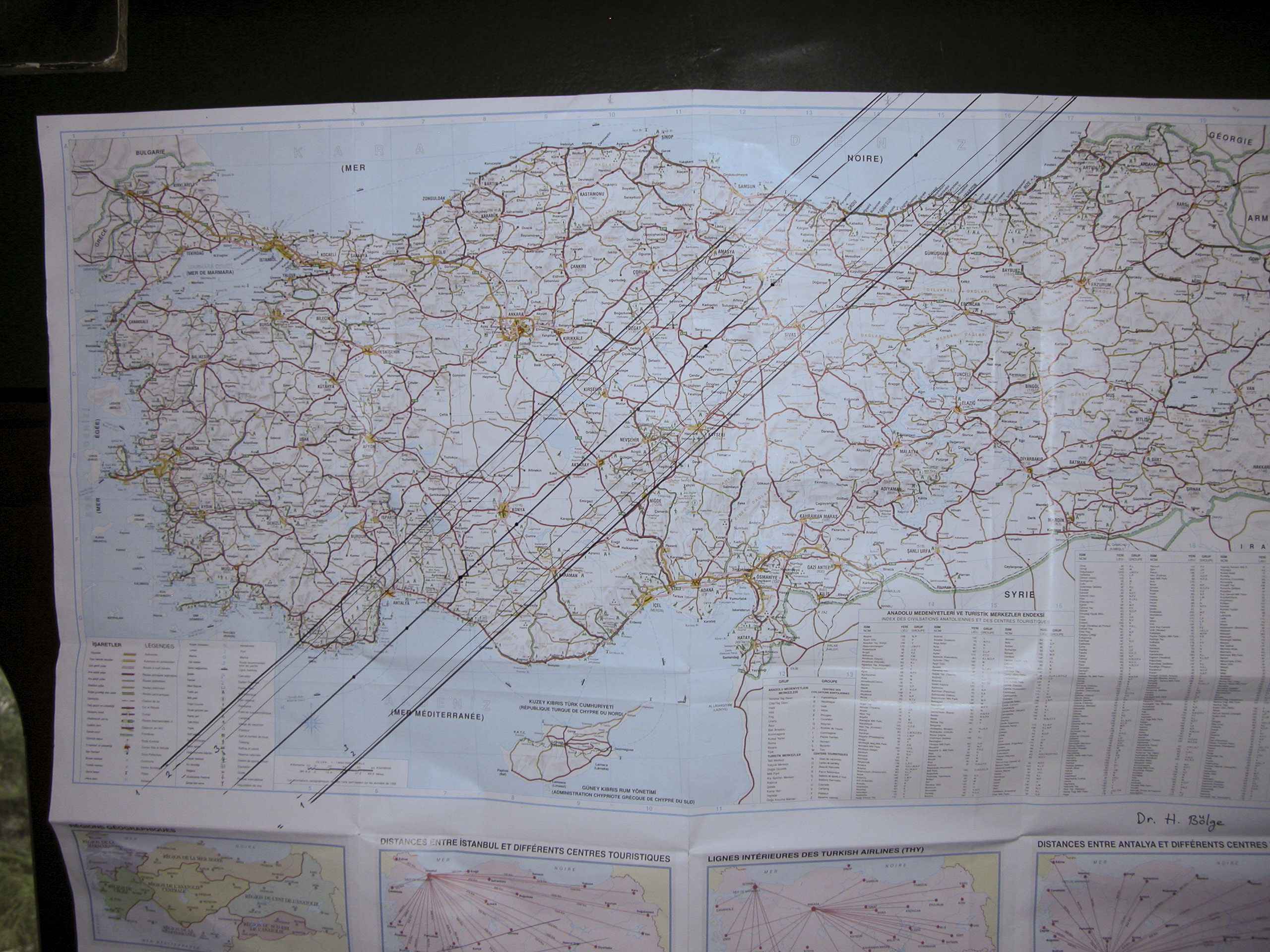
This large map shows the path of totality of the 2006 eclipse across Turkey. Istanbul was not in the path, so the observatory saw only a partial eclipse.

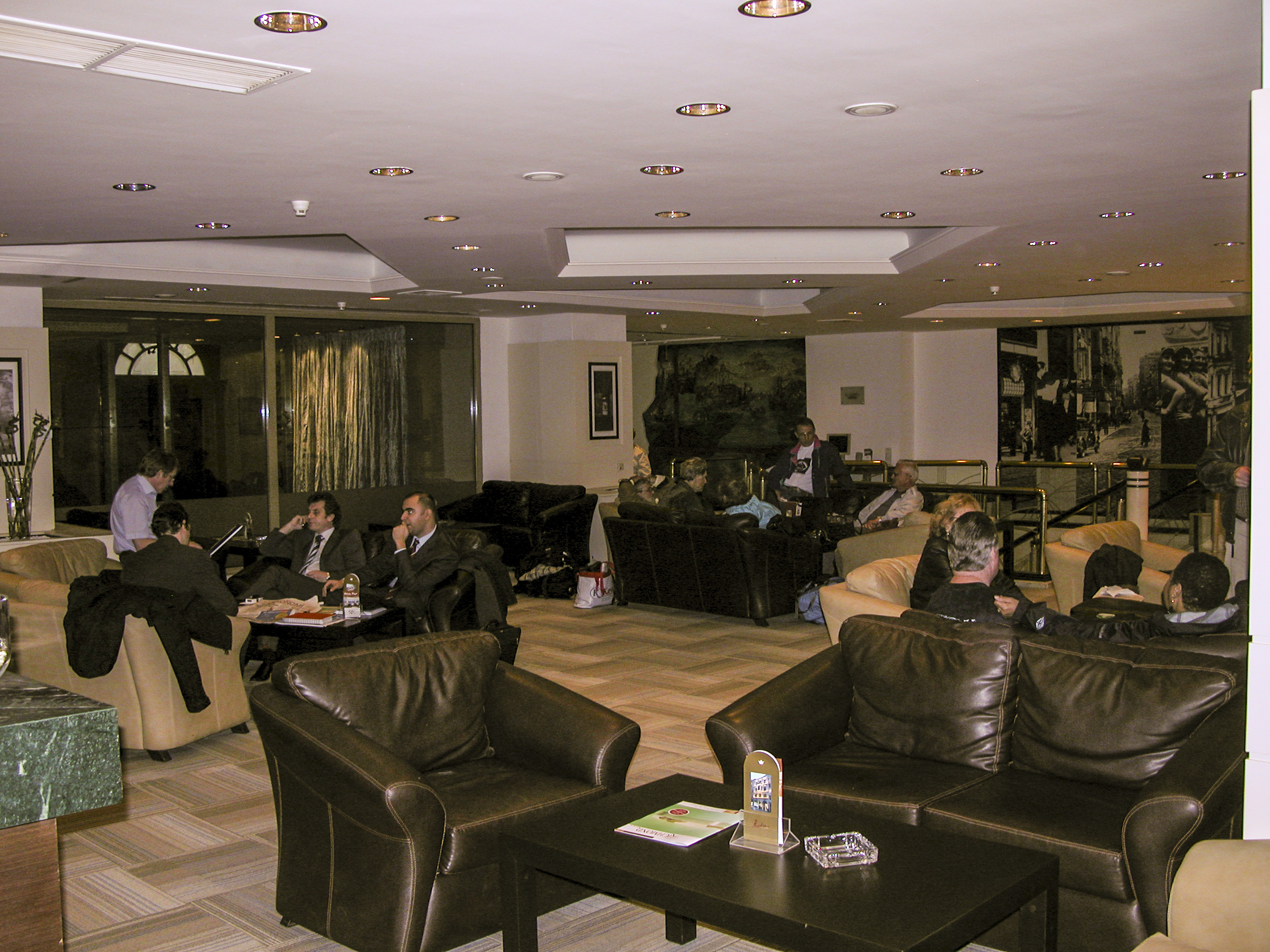
From the observatory, we crossed over to the European side of the city and checked in to our hotel, the Richmond. Located on Istiklal Street in the Beyoĝlu district of Istanbul, the Richmond was well-placed to optimize our navigation of the city.

Lobby of the Richmond Hotel on Istiklal Street in Istanbul.

We didn’t linger at the hotel for long; the sights of Istanbul beckoned, rain or no rain. Soon we were back on the bus, headed for Sultanahmet Square, in the heart of old Constantinople.

In old Byzantium it was the Hippodrome, the horse track, the center of the city’s social life. Chariot-racing was not just a spectator sport; it was a serious business, with major political ramifications. Each team was supported by a faction in the Senate, and competitions between teams became entangled with political and religious rivalries. In 532 CE the famous Nika riot between the supporters of the leading teams, the Blues and the Greens, escalated into a virtual civil war that resulted in the deaths of 30,000 people and the destruction of much of the city, including the Hagia Sophia cathedral. Emperor Justinian had the cathedral rebuilt, and his version is the one still standing today.

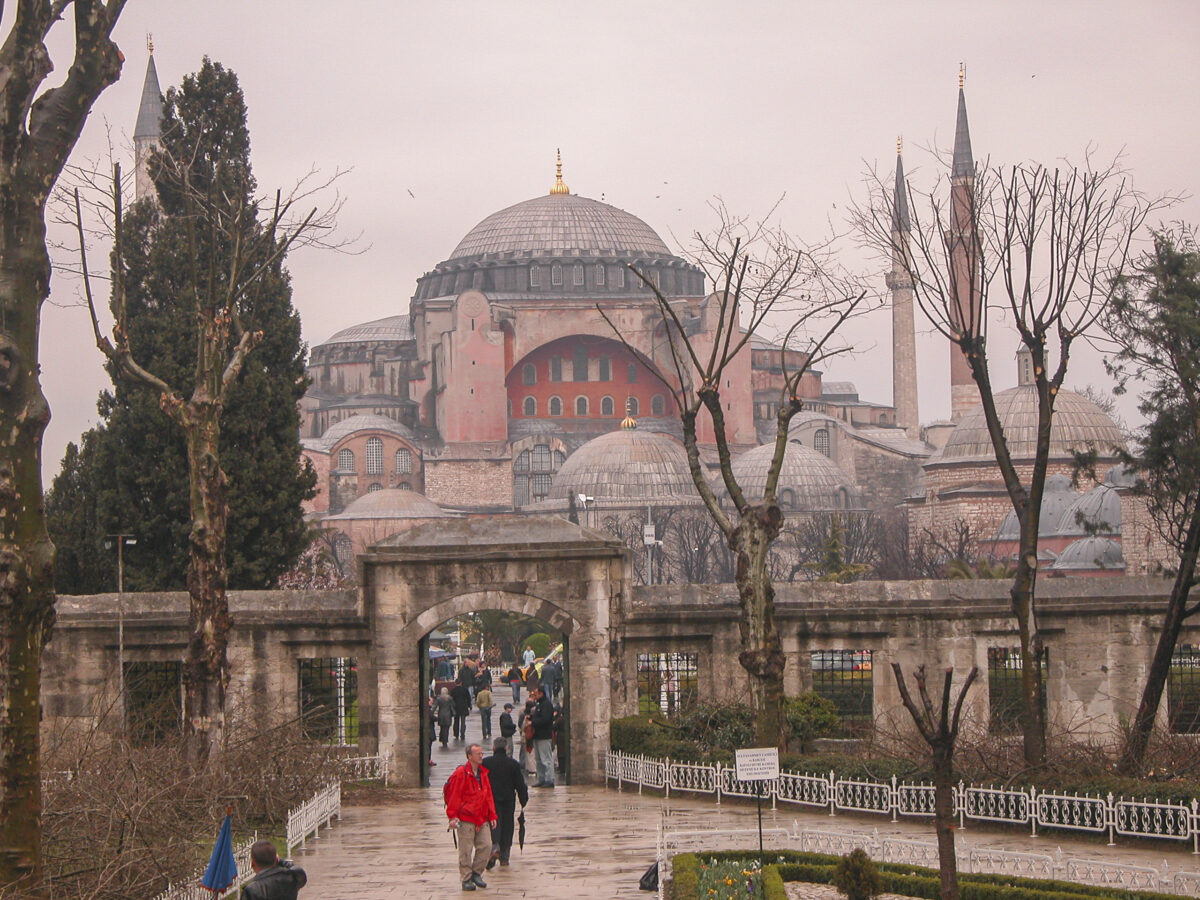
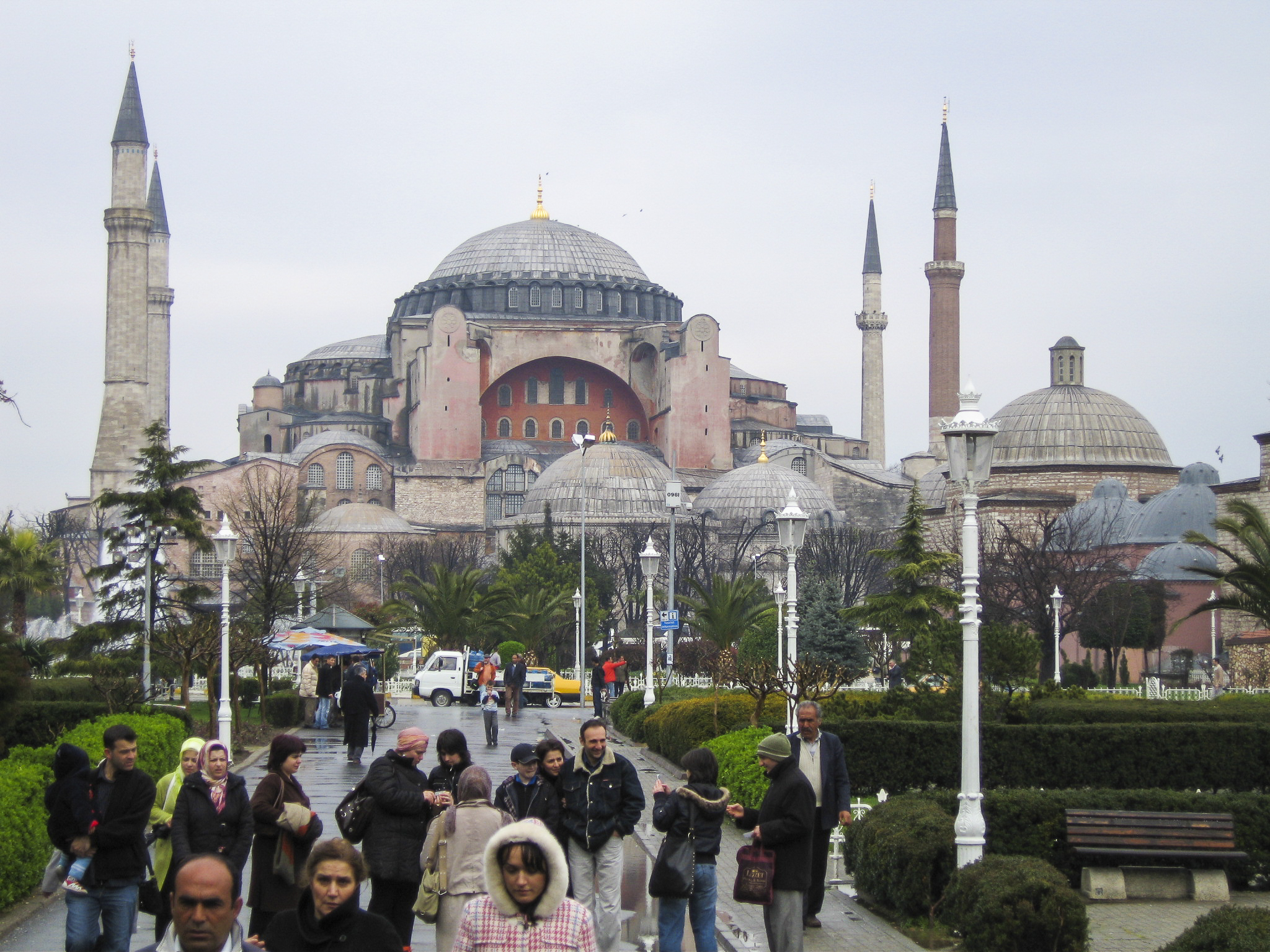
We got our first glimpse of Hagia Sophia from Sultanahmet Square on this rainy March morning; but our schedule for that day directed us elsewhere, so our visit to the cathedral had to wait.

Completed in 537 AD, Hagia Sophia was then the world’s largest cathedral and remained so until the completion of Seville Cathedral in Spain in 1520.

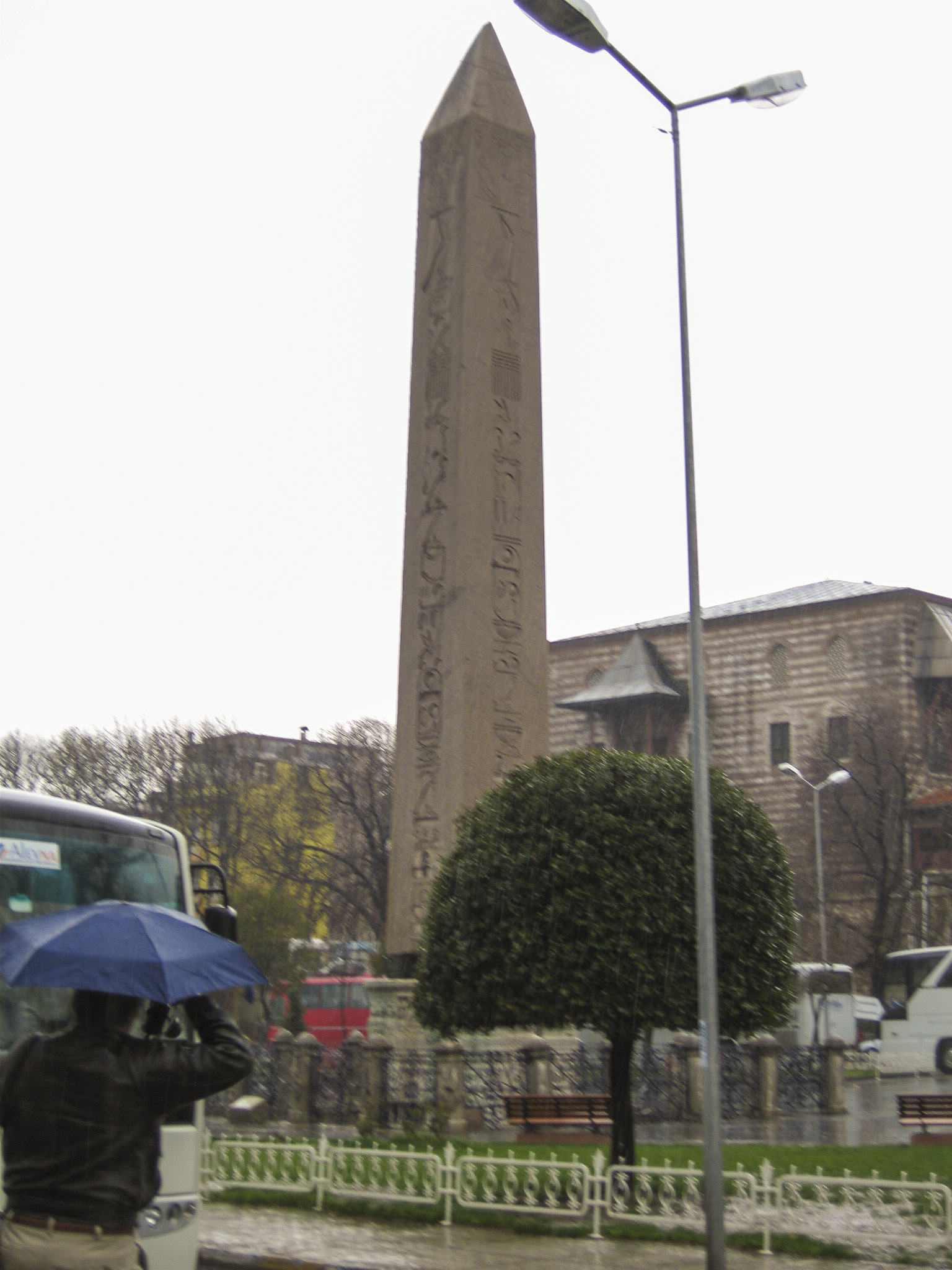
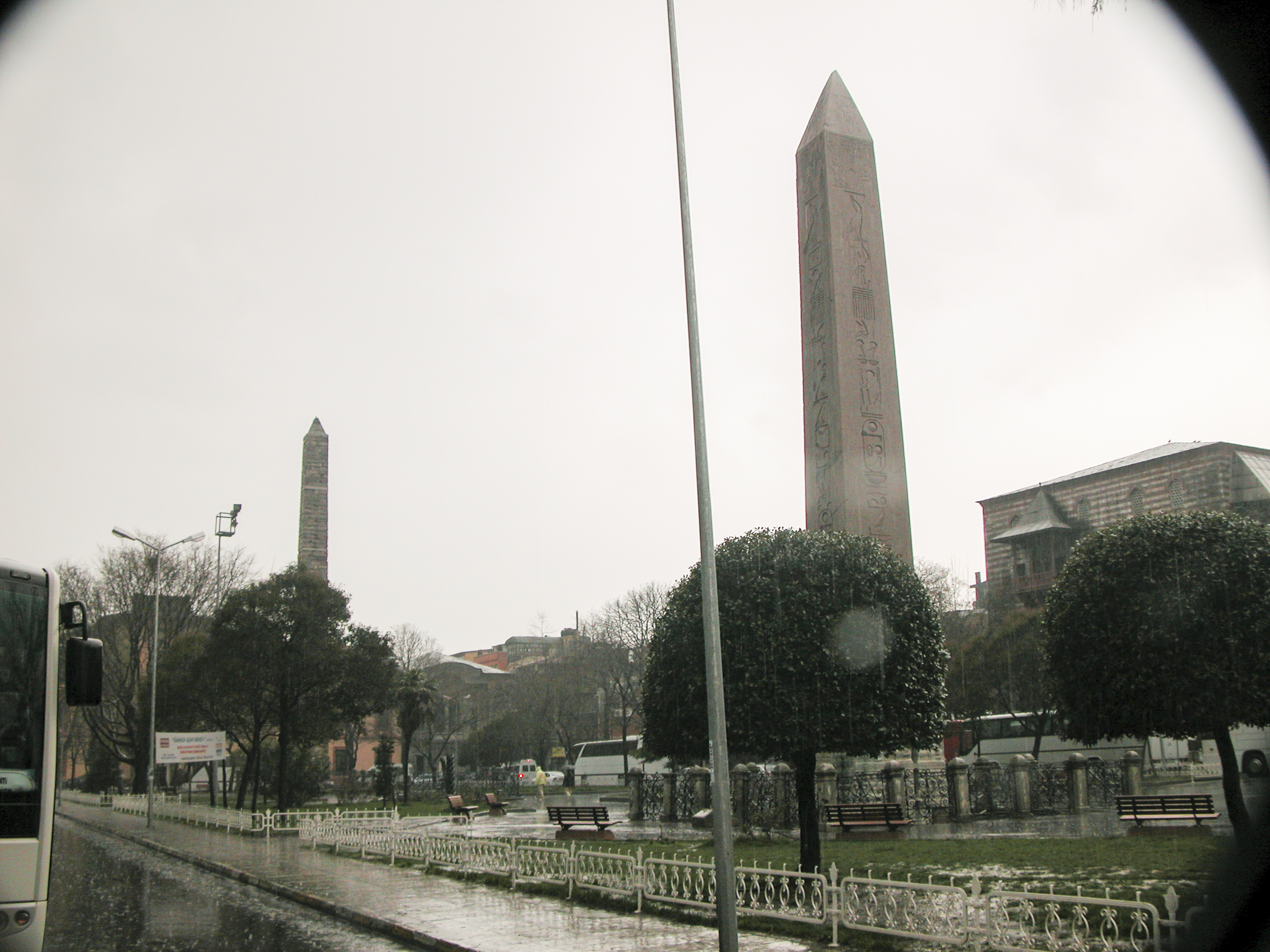
Two Egyptian obelisks stand in Sultanahmet Square. One was originally erected at Karnak in Egypt by Pharaoh Thutmose III in the 15th century BCE, and moved to Constantinople by Roman Emperor Theodosius I in 390 CE.

Obelisk of Theodosius I.

At the end of the square opposite the Obelisk of Theodosius I stands the Walled Obelisk. The date of its original construction is unknown; it may have also built in the time of Theodosius I. It is also known as the Constantine Obelisk, after the 10th century Byzantine Emperor Constantine Porphyrogenitus, who had it restored and coated with bronze plates. These were plundered by the Latin occupiers during the Fourth Crusade, and now only the stone core remains.

The two obelisks in Sultanahmet Square. The near one is the Obelisk of Theodosius I, and the far one is the Walled or Constantine Obelisk.

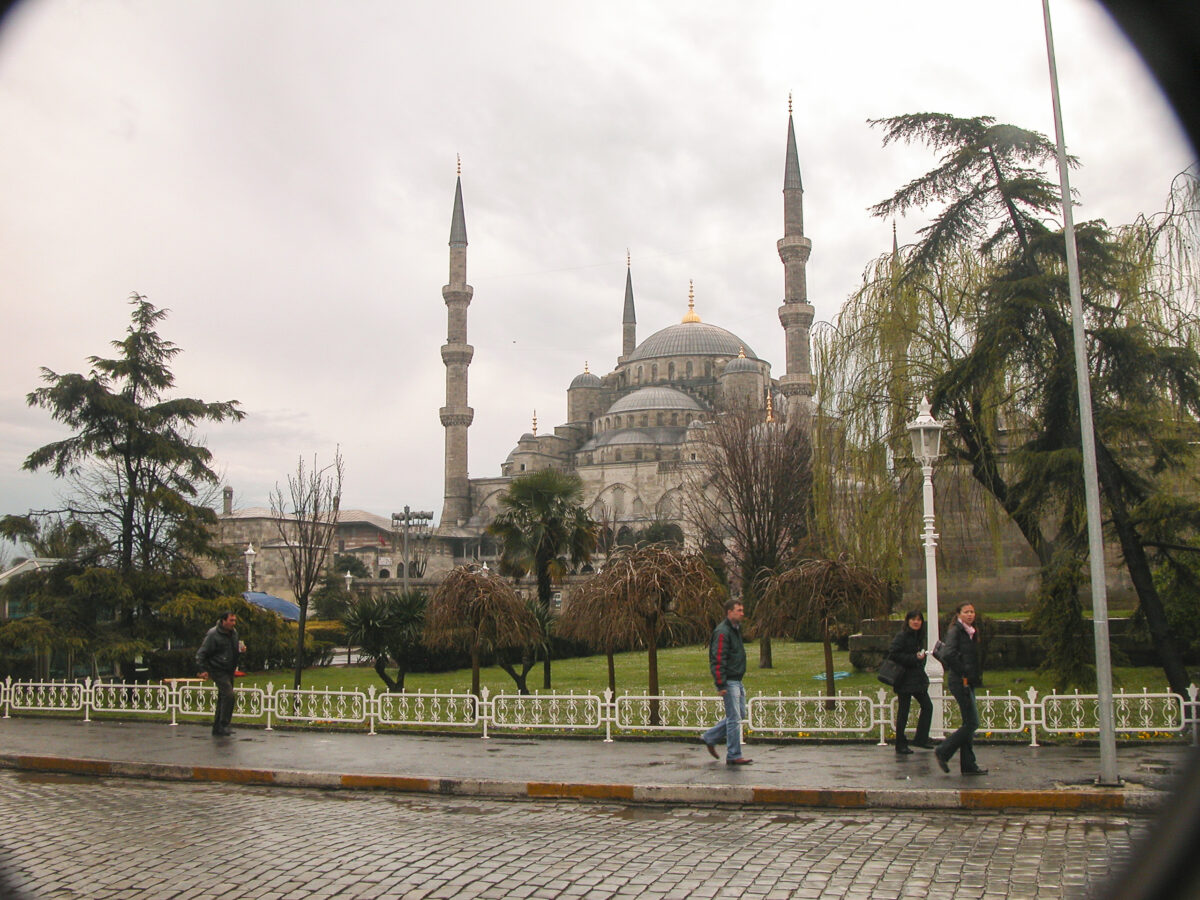
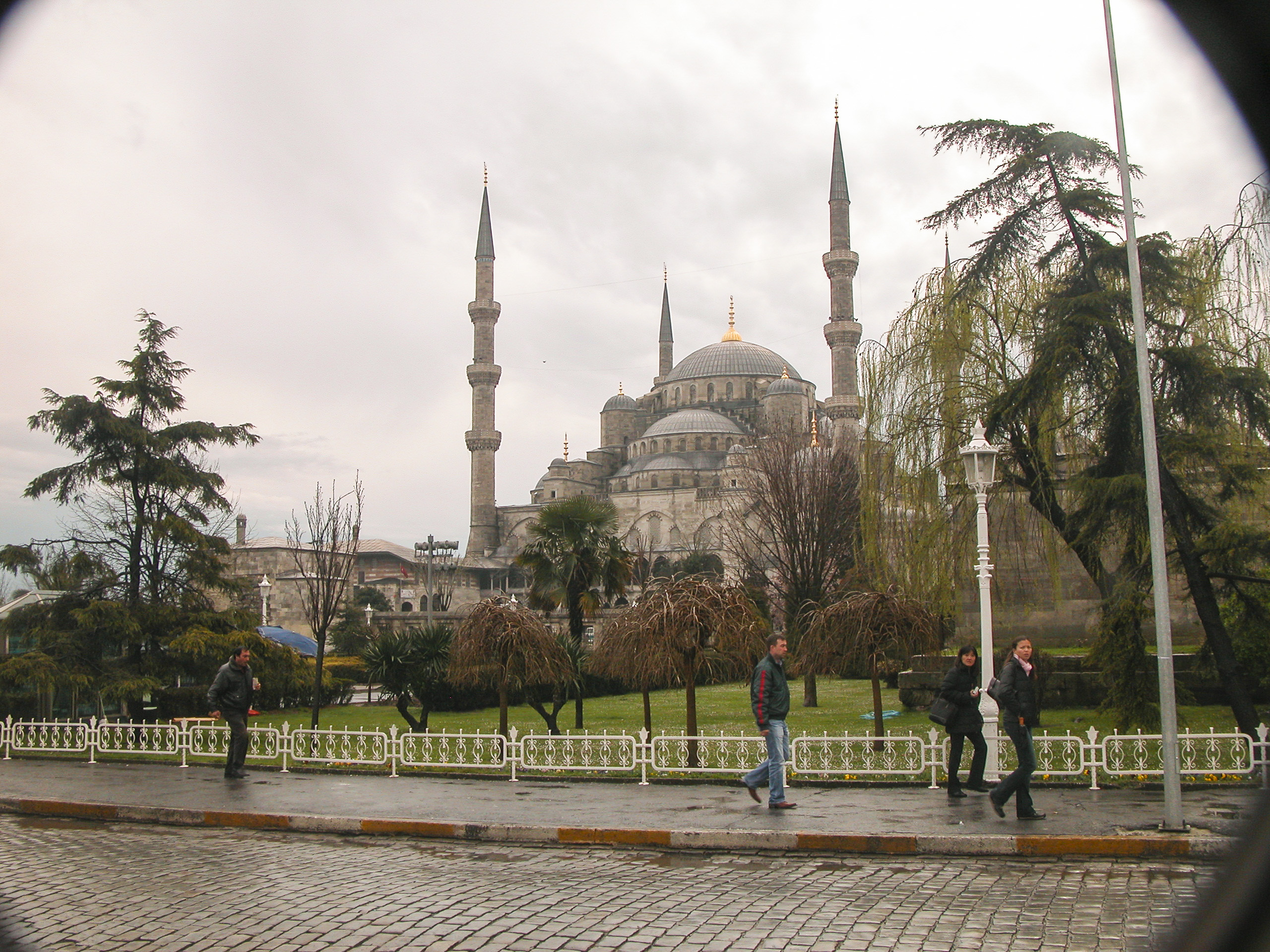
Next to the Hippodrome stands a structure no less imposing than Hagia Sofia: the Blue Mosque, officially known as the Sultan Ahmed mosque. In the early 17th century the Ottoman Empire suffered a series of military reverses at the hands of the Habsburg Holy Roman Empire and the Safavid Persion Empire, and Sultan Ahmed I, the namesake of Sultanahmet Square, saw these setbacks as an omen that he was losing the favor of Allah. In order to win it back, and to reassert the glory and majesty of the Ottoman empire, he decided to build a new mosque that would rival Hagia Sophia as a work of art and engineering. The Blue Mosque, begun in 1609 and completed in 1617, was the result.

The Blue Mosque was built on the site of the Grand Palace of the Byzantine Emperors.

The architect of the Blue Mosque, Sedefkâr Mehmed Ağa, was the last student of the master architect of Suleiman the Magnificent, Mimar Sinan, considered the greatest exponent of the Ottoman classical style. This style combines elements of Byzantine and Islamic architecture, and you can clearly see the resemblance to Hagia Sophia.

The Blue Mosque incorporates elements of both Byzantine and Islamic architecture, resembling in some respects its neighbor, Hagia Sophia.

Sultan Ahmed I’s predecessors had traditionally paid for their building programs with the spoils of their conquests, but he had no loot to show for his mostly unsuccessful wars, so he had to raid the public purse to pay for the Blue Mosque. This caused an uproar among the Islamic ulama (Muslim religious authorities), who were also scandalized that it had as many minarets as the Grand Mosque in Mecca. Sultan Ahmed partially assuaged their ire by causing a seventh minaret to be built for the Grand Mosque in Mecca.

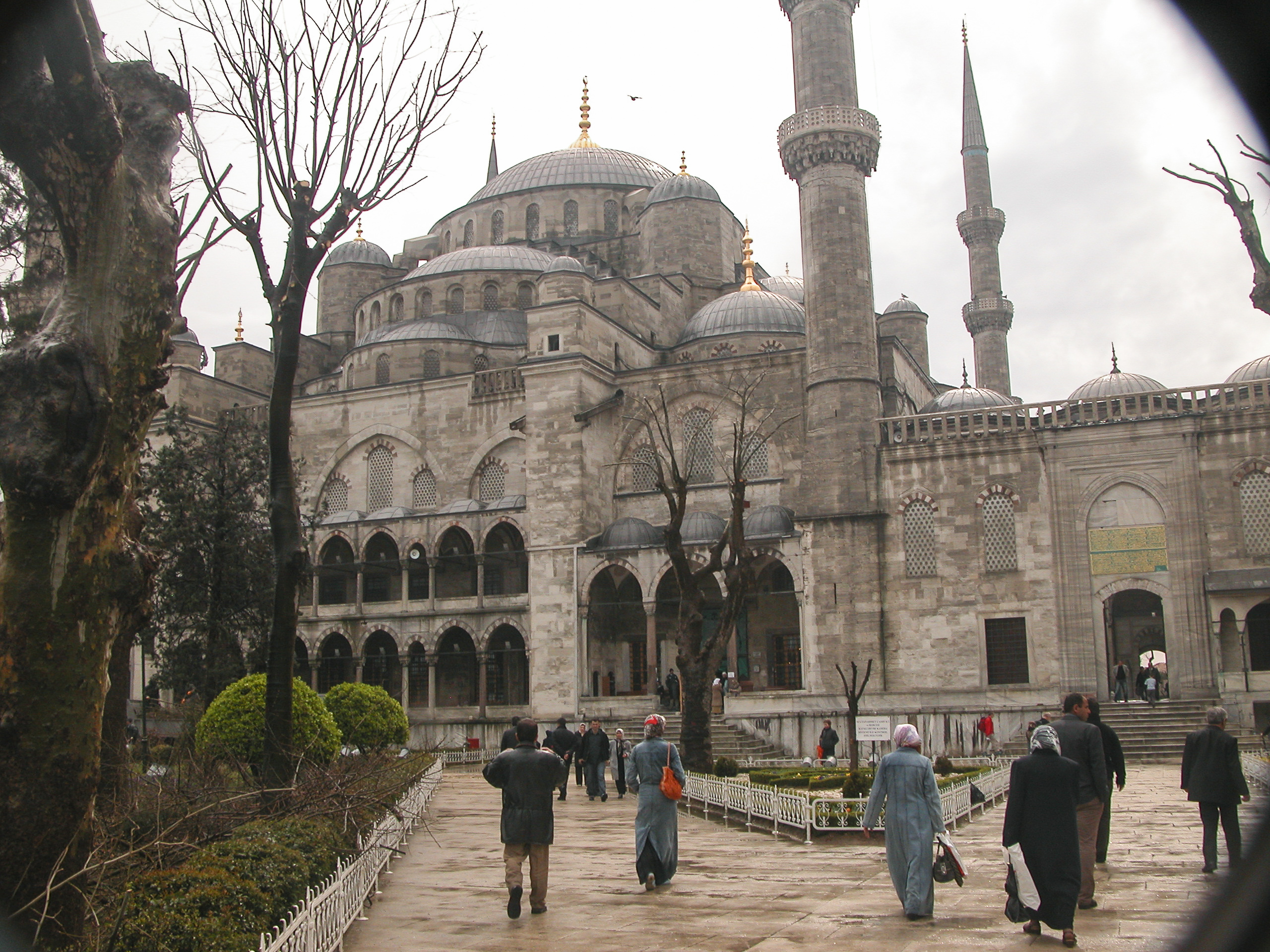
The Blue Mosque has six minarets, not all of which are seen in this picture.

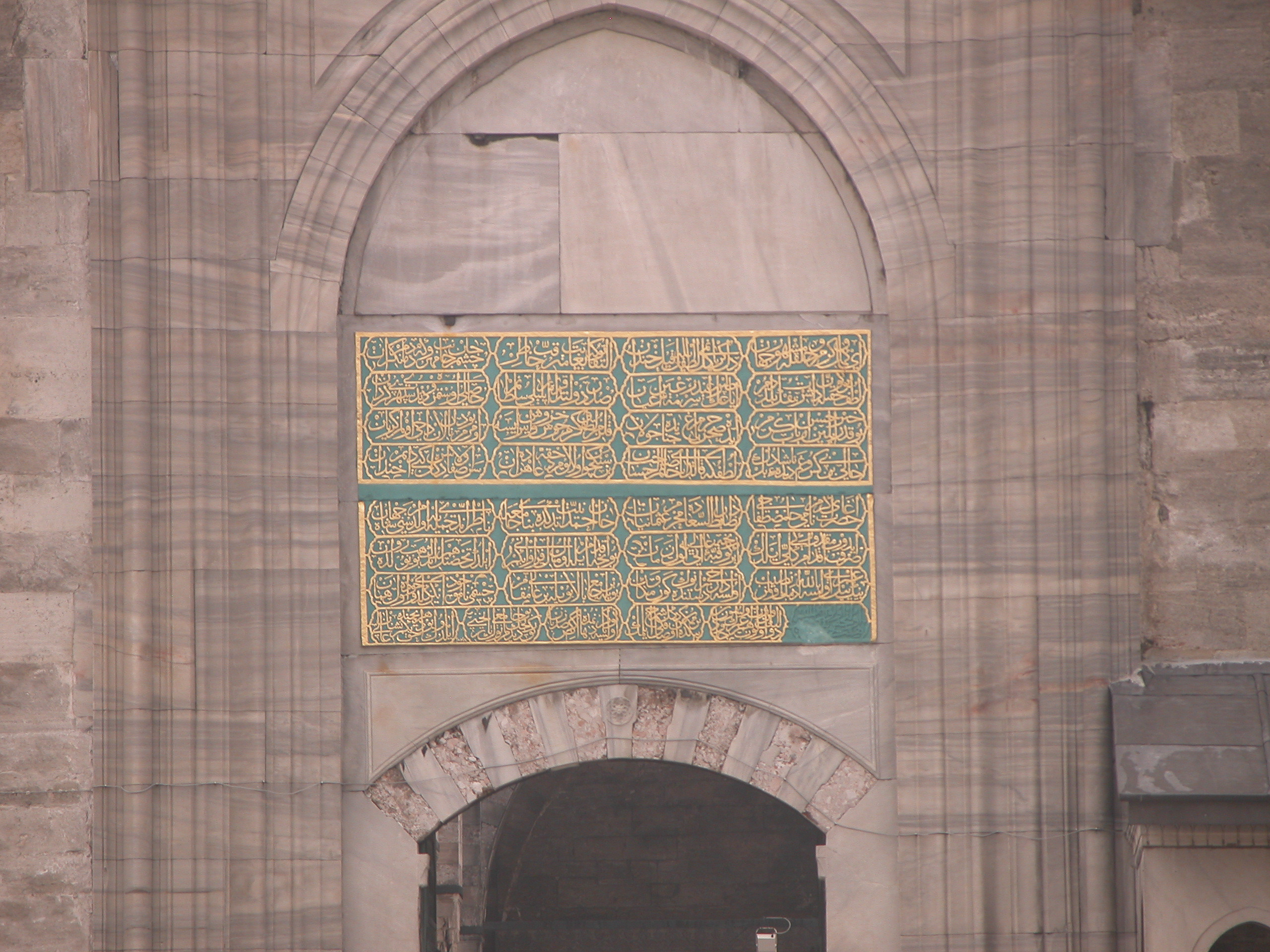
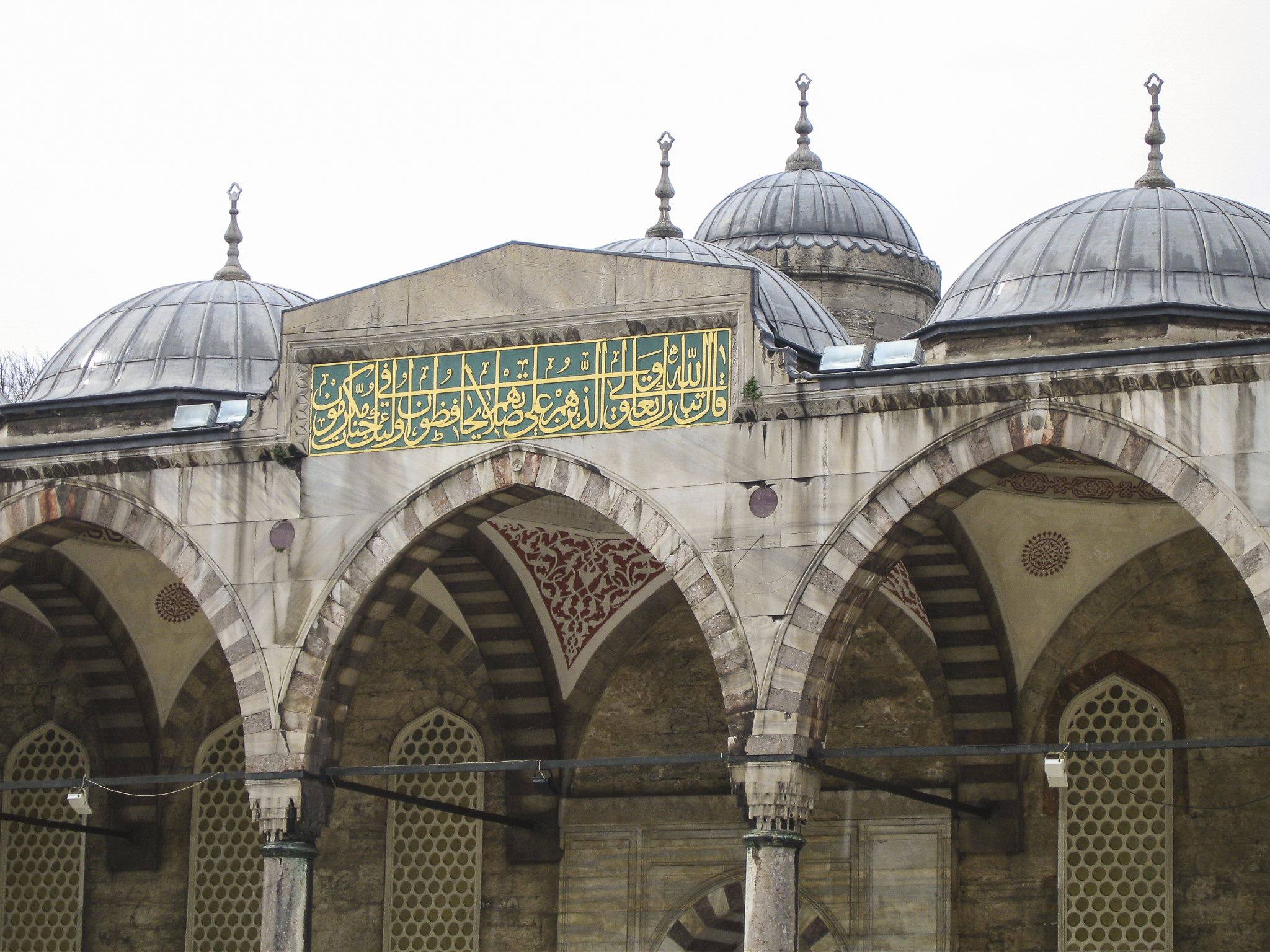
The front portals as well as the interior are decorated with verses from the Koran, many of them the work of Seyyid Kasim Gubari, considered the greatest Ottoman calligrapher of his time.

Decorated with the names of the Caliphs and verses from the Koran by the great 17th-century calligrapher Seyyid Kasim Gubari.

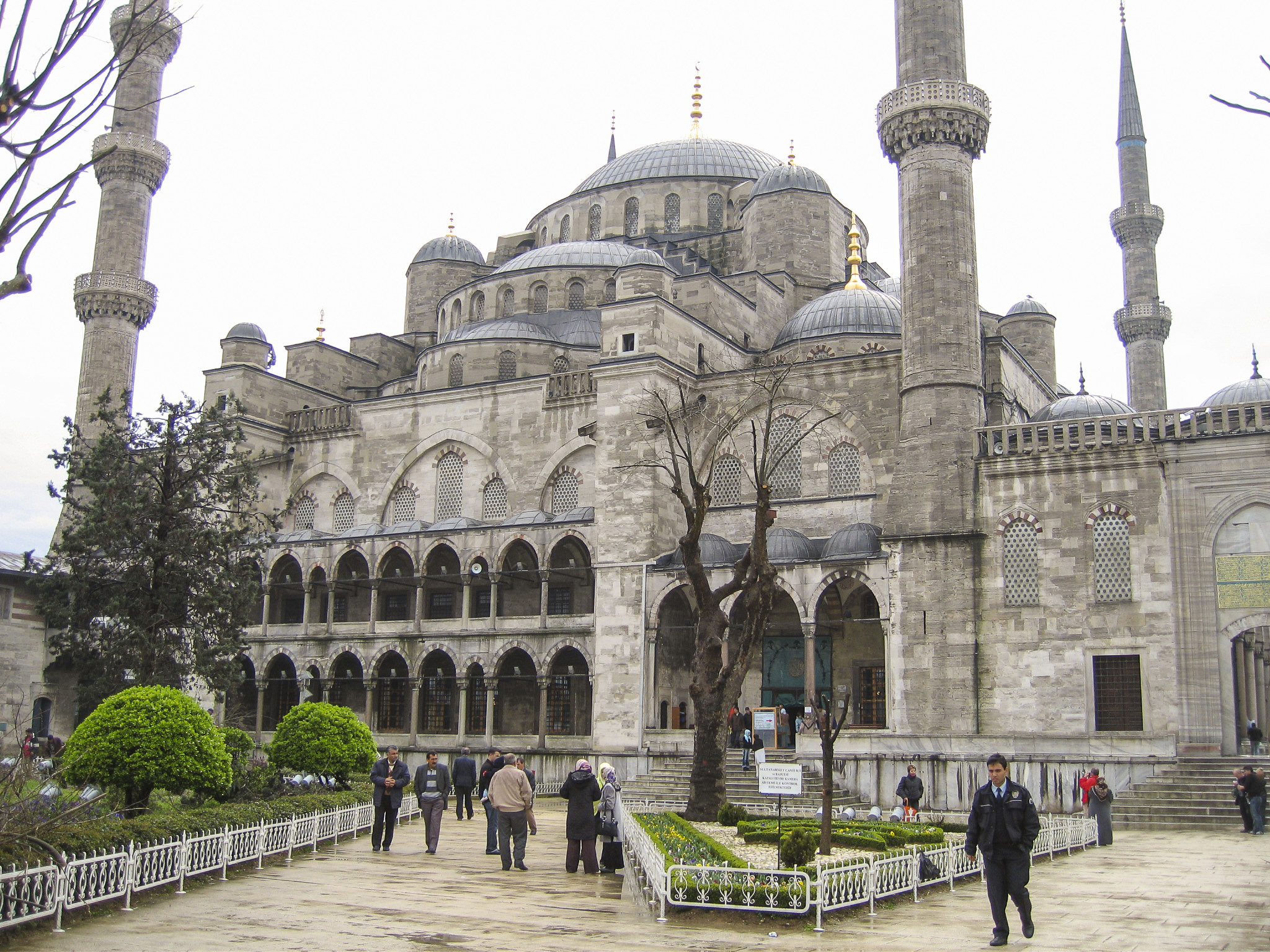
In addition to the six minarets, the Blue Mosque has five main domes and eight secondary domes. It was built on the site of the Grand Palace of the Byzantine Emperors.

The Blue Mosque was intended to demonstrate that Islamic architects could build structures to rival Hagia Sophia in size and majesty.

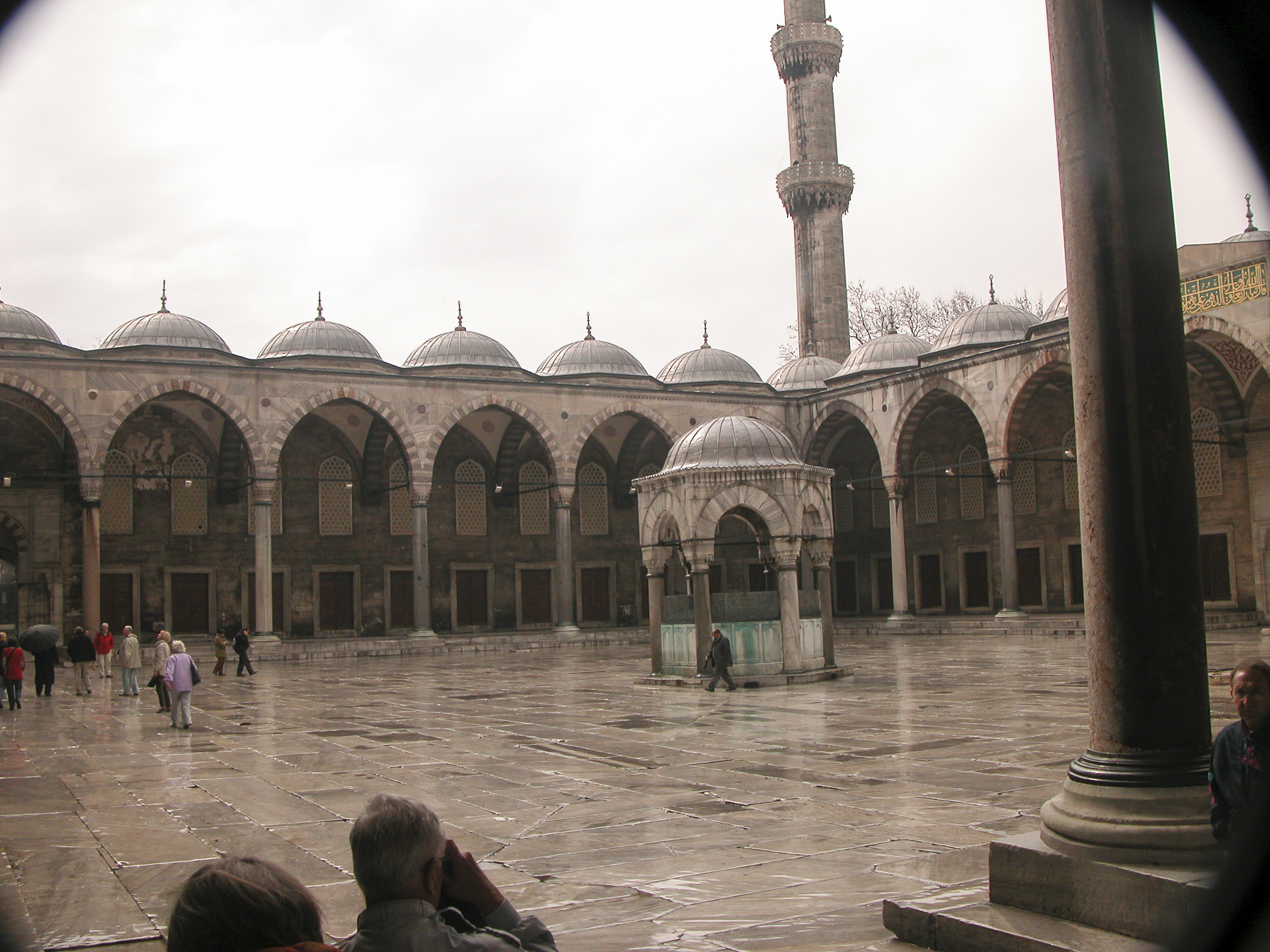
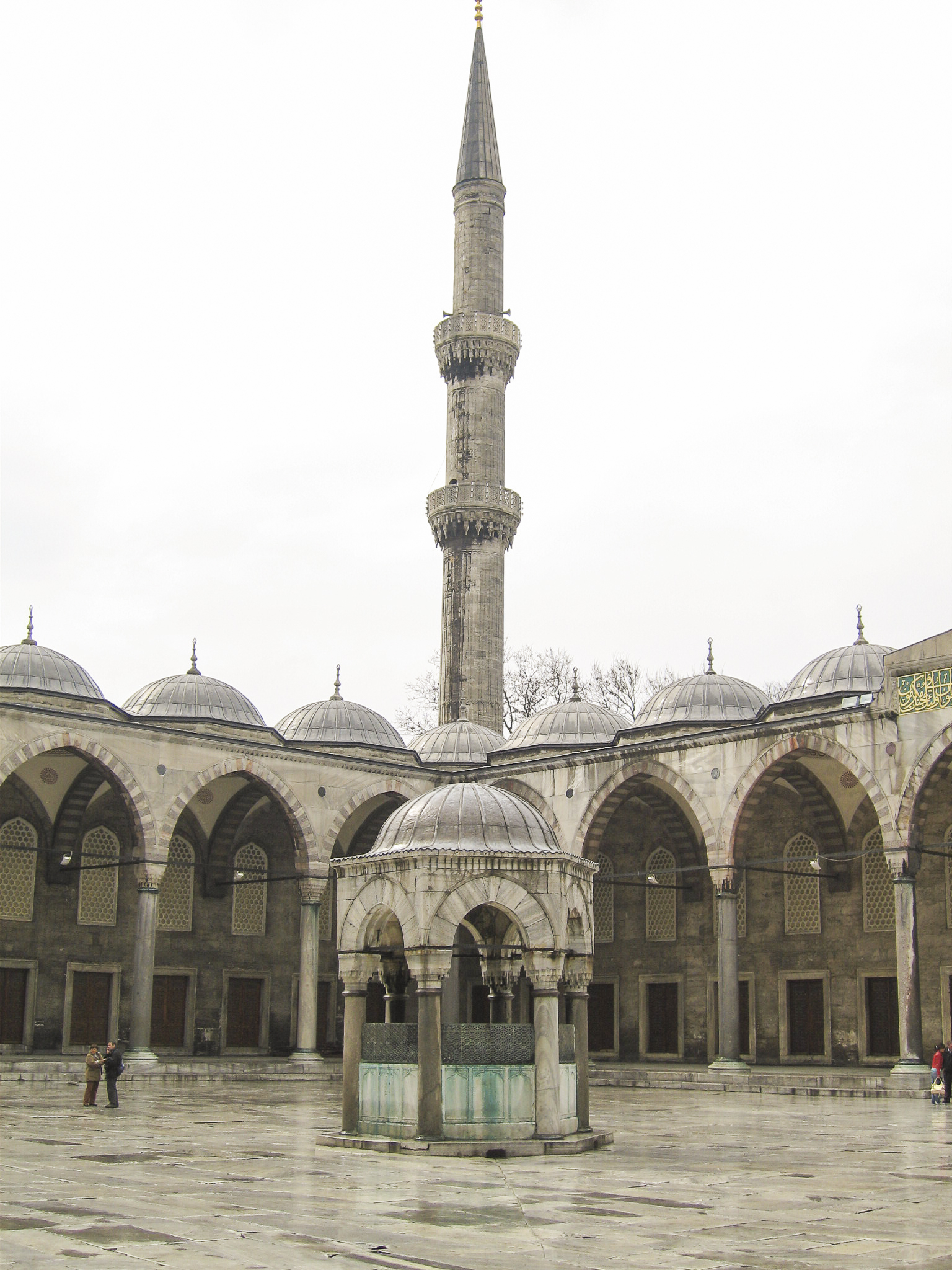
The forecourt is as large as the mosque itself and is surrounded by a continuous vaulted arcade.

The court is as large as the mosque itself and is surrounded by a continuous vaulted arcade. The hexagonal structure in the center is a fountain.

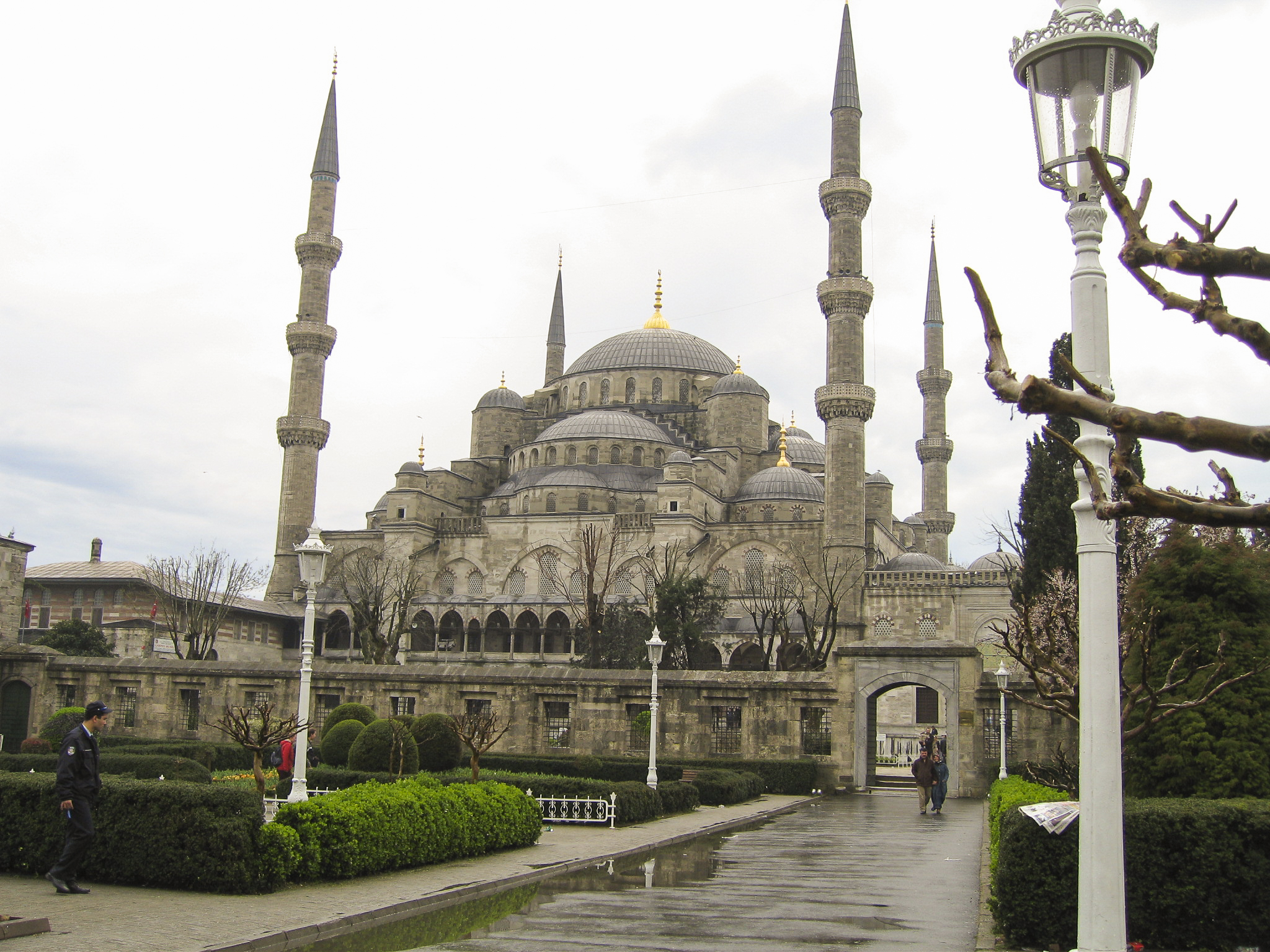
Only the Sultan was permitted to enter the gate to the forecourt on horseback; others had to walk. But even the Sultan had his constraints; a large chain was stretched across the gate at such a height that when he rode through, he would have to duck his head by way of showing his humility before Allah. I doubt that this act of abasement had the effect of curbing any sultan’s ego with respect to his fellow mortals, however.

The main gate to the courtyard of the Blue Mosque is described as “monumental but narrow.”

The four minarets at the corners of the mosque itself have three balconies each, whereas the two at the end of the forecourt only have two balconies. It must have been an onerous chore for the muezzins to climb the spiral stairs five times a day to make the call for prayer from these balconies; on the other hand, it was a good way for them to keep in shape.

One of the six minarets of the Blue Mosque towers over the fountain in the forecourt of the Mosque.

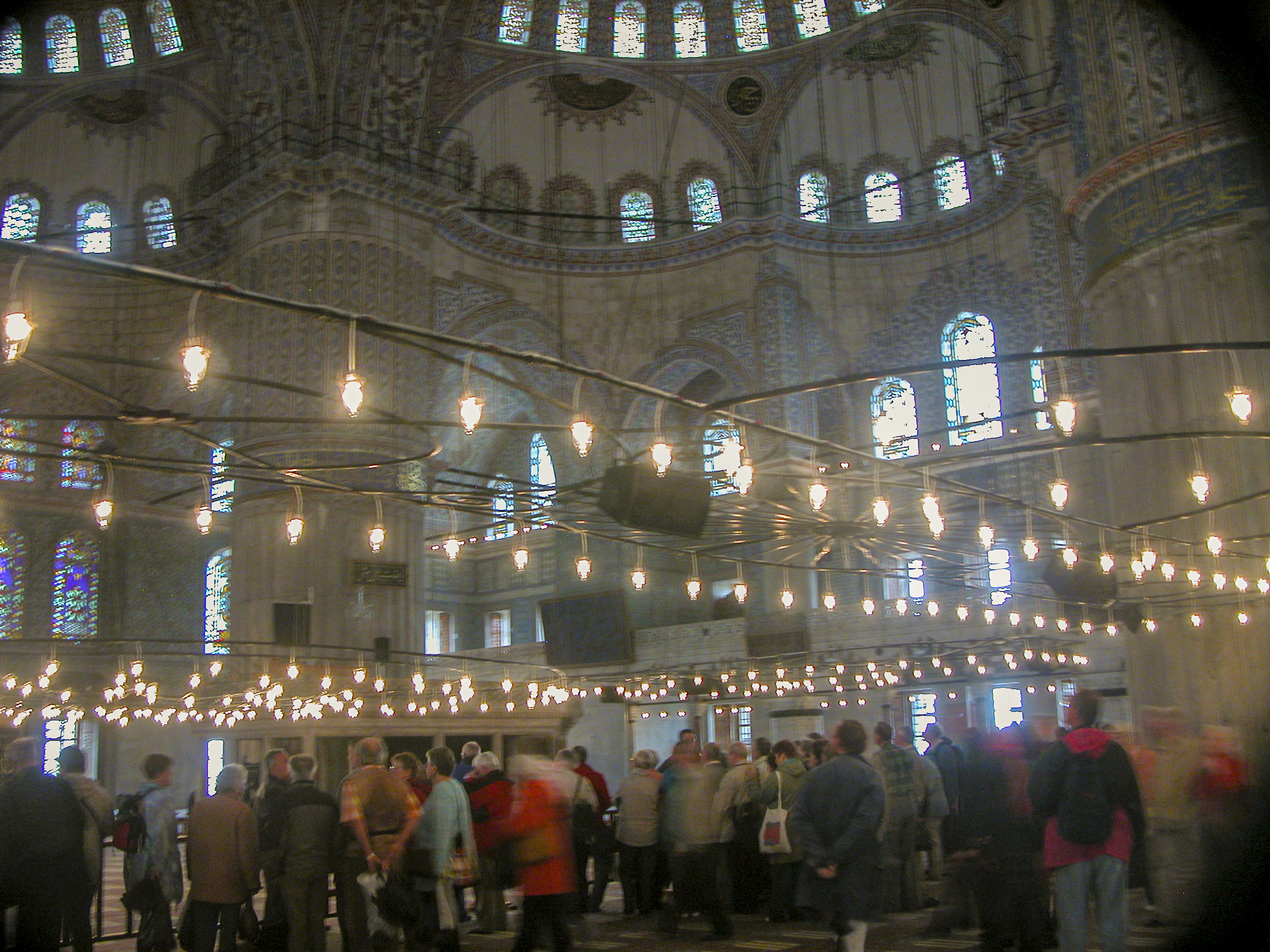
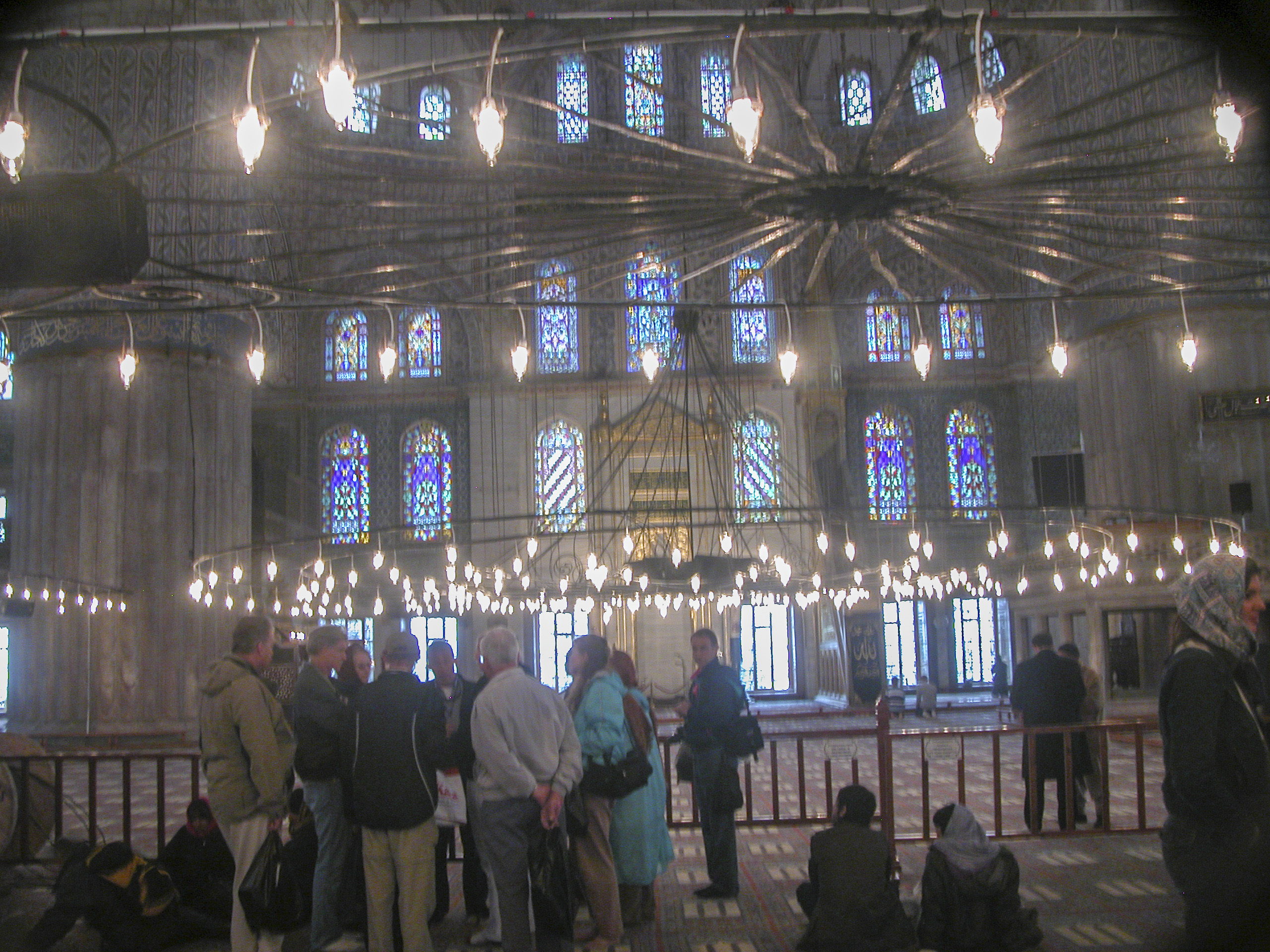
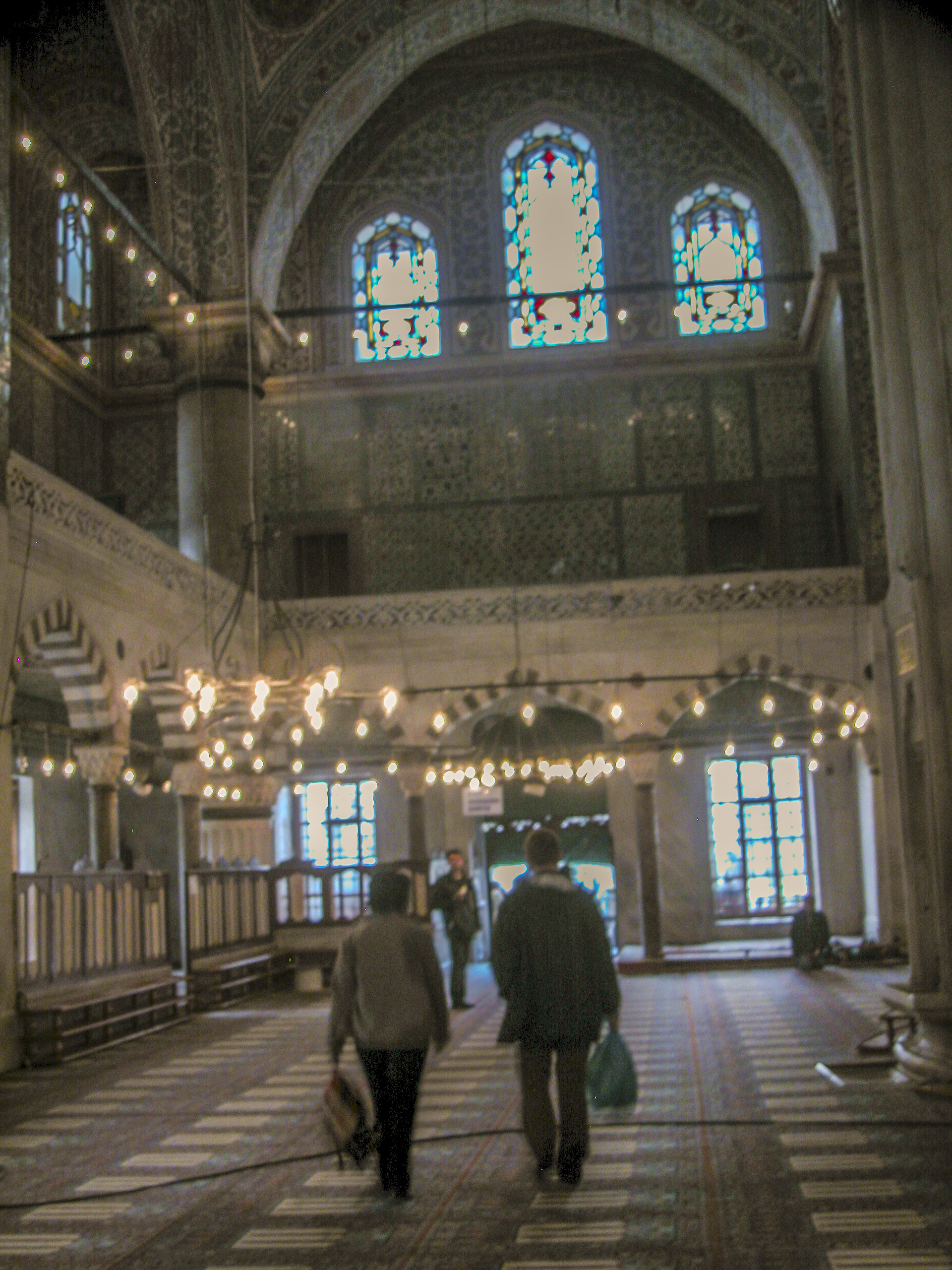
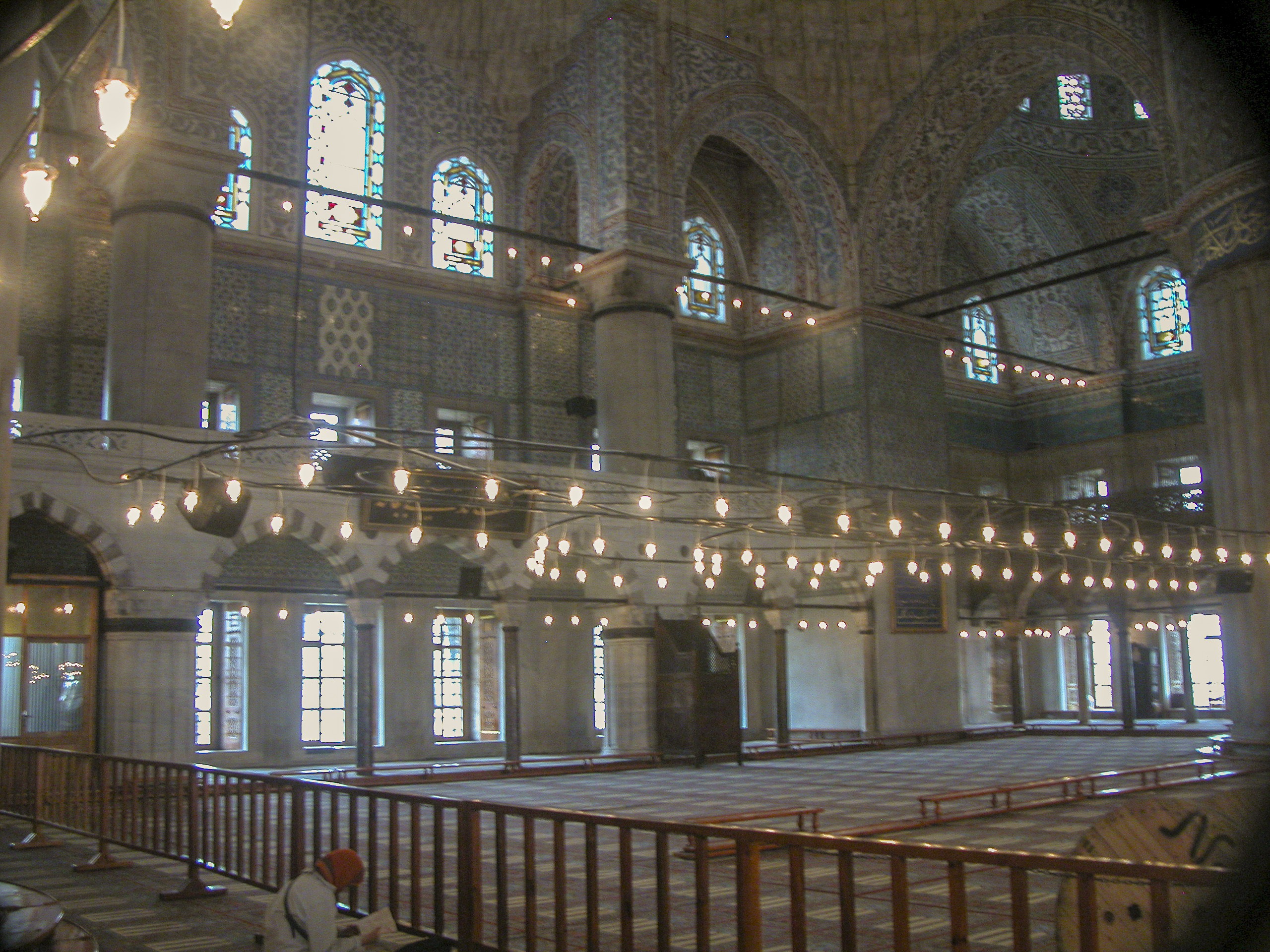
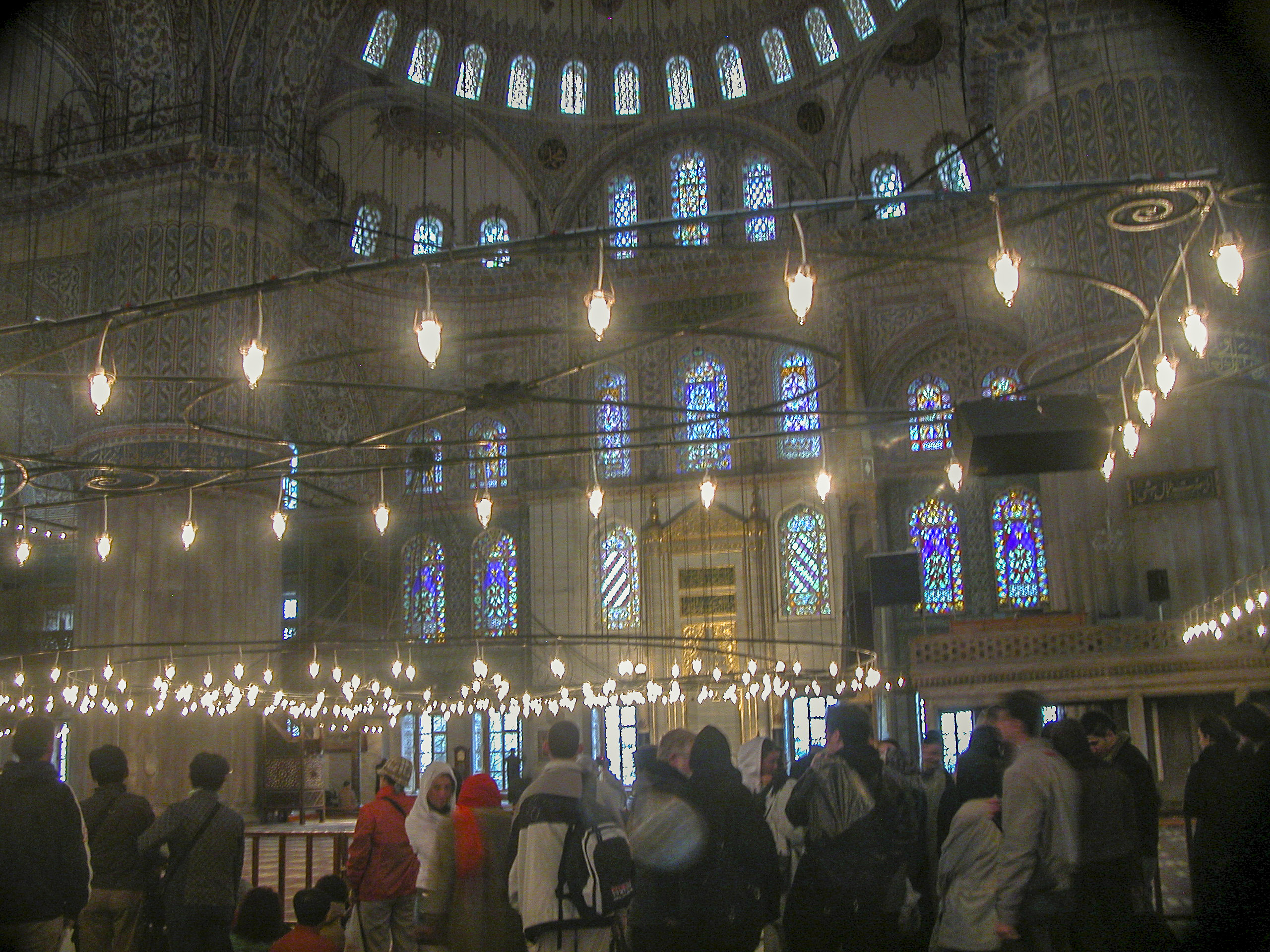
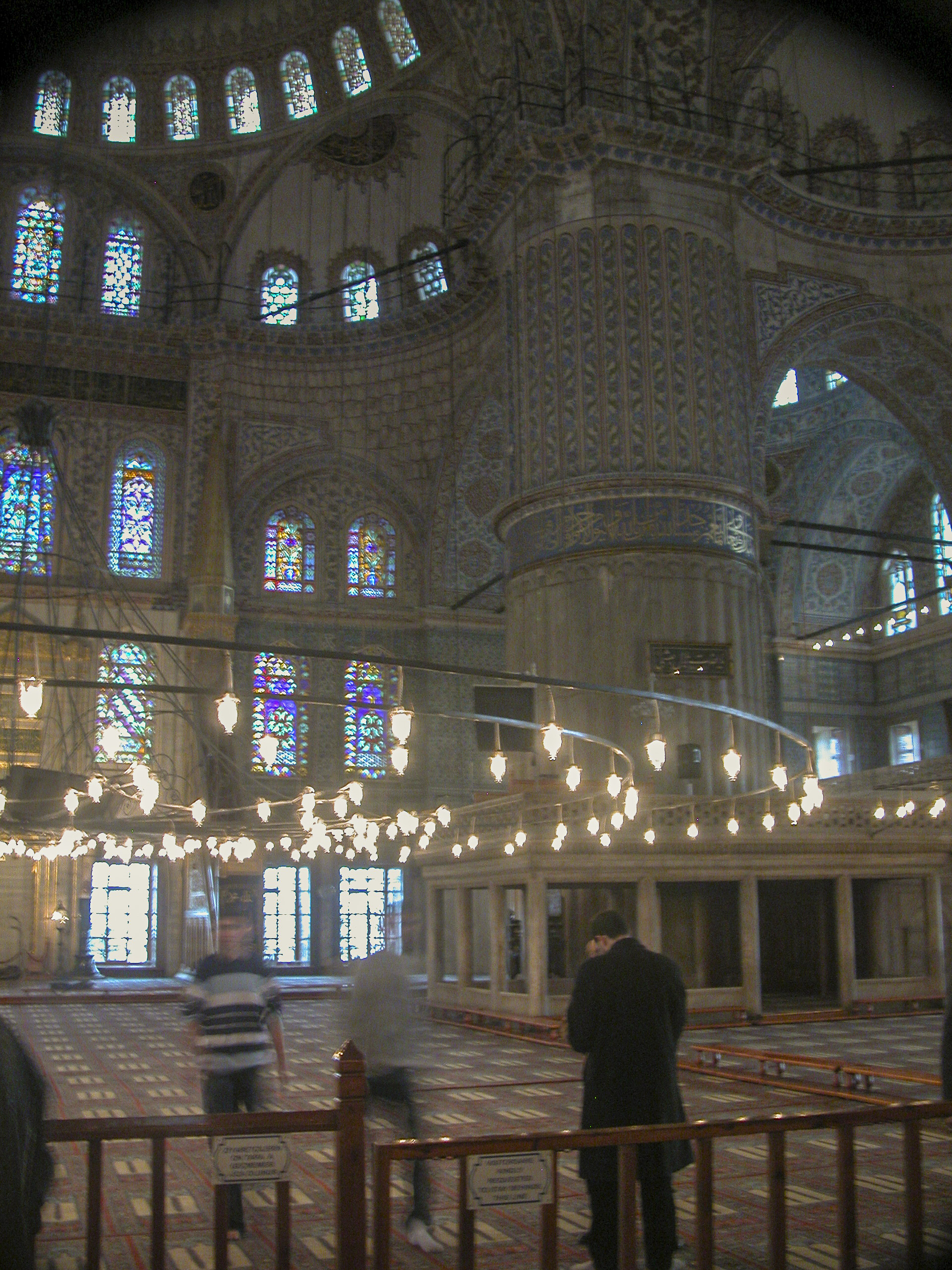
Flash photography is not permitted in the Blue Mosque. Even though artificial lighting supplements the natural light admitted through the stained-glass windows, it was still too dim for our cameras inside the mosque, so many of our pictures came out blurry.

Stained-glass windows and chandeliers provide lighting inside the Blue Mosque.

Since the Blue Mosque is a working mosque as well as one of the main tourist attractions of Istanbul, just as in Christian churches there are rules of etiquette, some of which have the additional purpose of facilitating the preservation of the site. Our guide Attila made sure we were properly instructed in the rules and gave us a brief rundown on the history and architecture of the mosque.

Here our tour group gathers for instruction by Attila in its history and architecture, as well as the rules of etiquette for visitors.

Visitors are required to remove their shoes and carry them in a bag, which is provided free of charge. (This practice is followed in many historic sites, e.g. the Imperial Russian palaces of Pavlovsk, Tsarskoe Selo, etc.) Both men and women are expected to dress modestly (no short pants or miniskirts), and head coverings for women are mandatory. Flash photography is disallowed and taking pictures of worshipers praying is discouraged. Quiet and respectful deportment is expected.

Visitors are required to remove their shoes and carry them in a bag provided free of charge. Both men and women are expected to dress modestly (no short pants or skirts), and head coverings for women are mandatory.

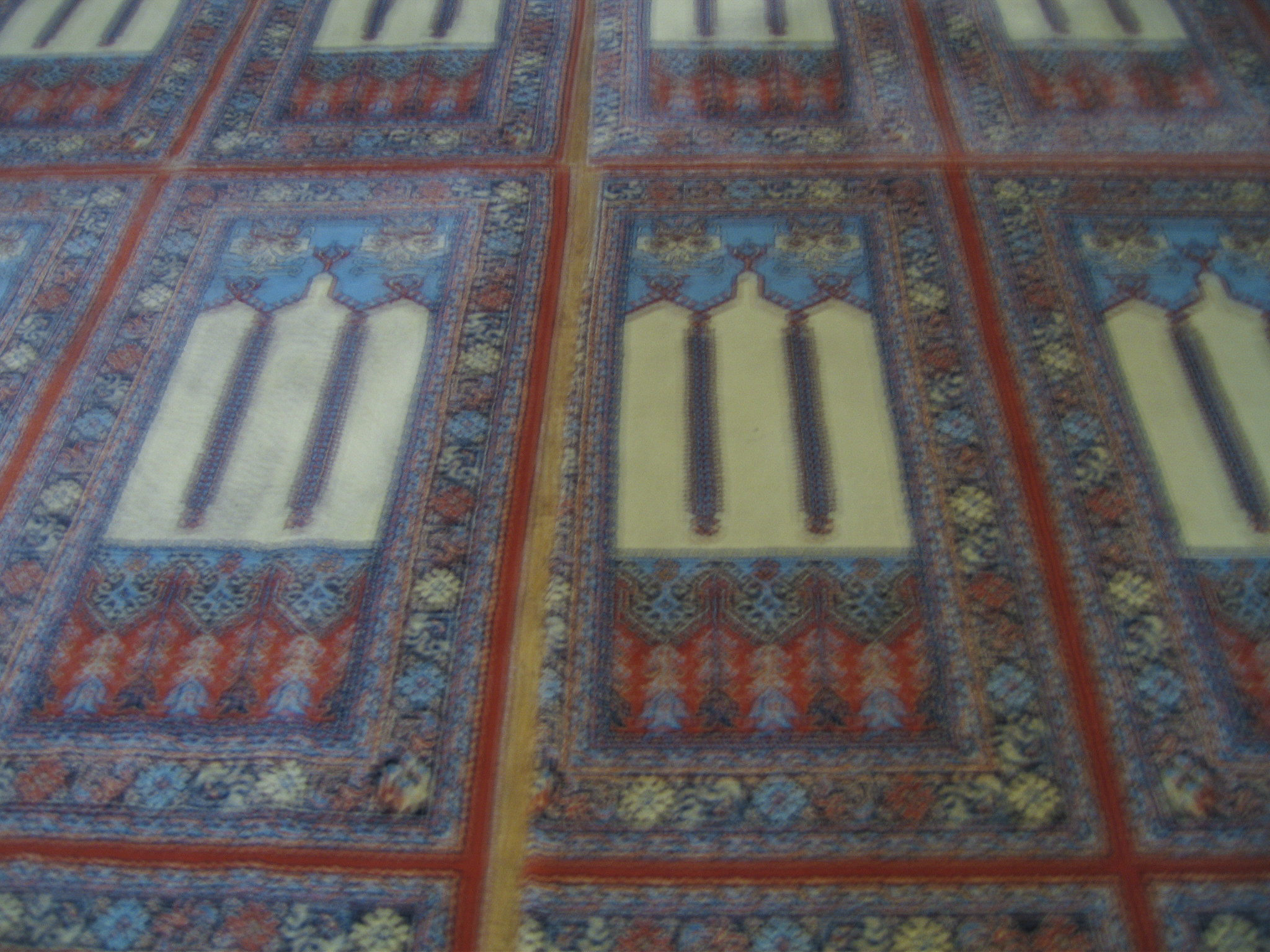
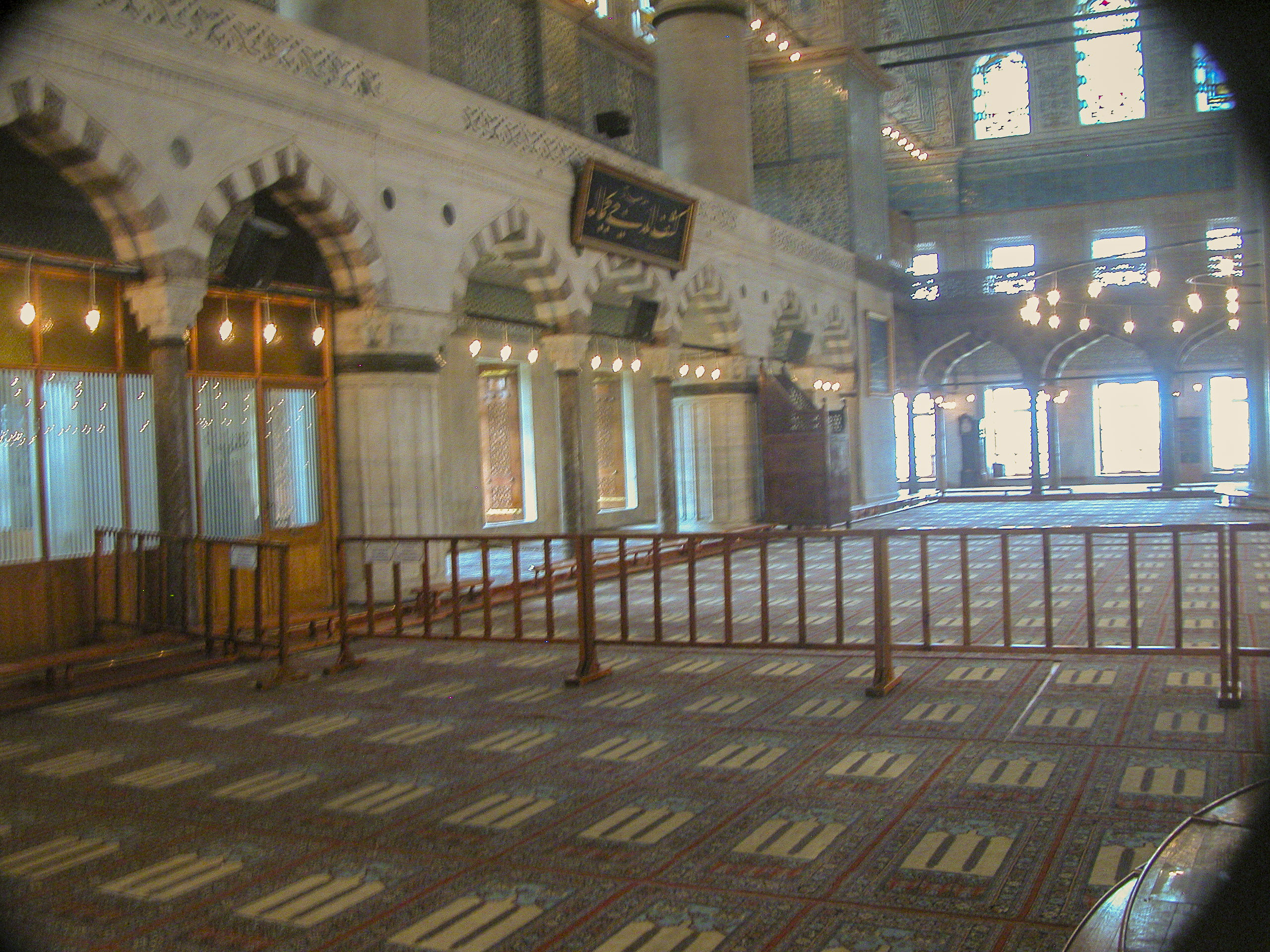
Carpeting in the Blue Mosque was equal to the most beautiful and lavish we had seen in Denizli. Of course, with many visitors passing through constantly, the carpets wear out quickly and have to be replaced often. Donations from worshipers, and I would hope also the donations (encouraged though not required) made by infidel visitors like us, pay for the new carpets.

Carpets in the Blue Mosque are purchased with donations from worshipers and are continually replaced as they wear out.

The interior of the Blue Mosque is lined with 20,000 ceramic tiles, made in Iznik, a city 90 kilometers (56) miles southeast of Istanbul. In ancient times the city was known by its Greek name of Nicaea, where in 325 CE the Nicene Creed, one of the defining documents of Christianity, was adopted. During Ottoman times it was famous for the production of elegant ceramic tiles. Sultan Ahmed fixed the price of ceramic tiles by decree and made no provision to compensate for inflation over the eight years of construction, with the result that the quality of the tiles in the Blue Mosque is said to be somewhat uneven. However, I didn’t notice this myself.

The interior of the Blue Mosque is lined with over ceramic 20,000 tiles. These were made in Iznik, the former Nicaea, which was a major center for the production of fine tiles.

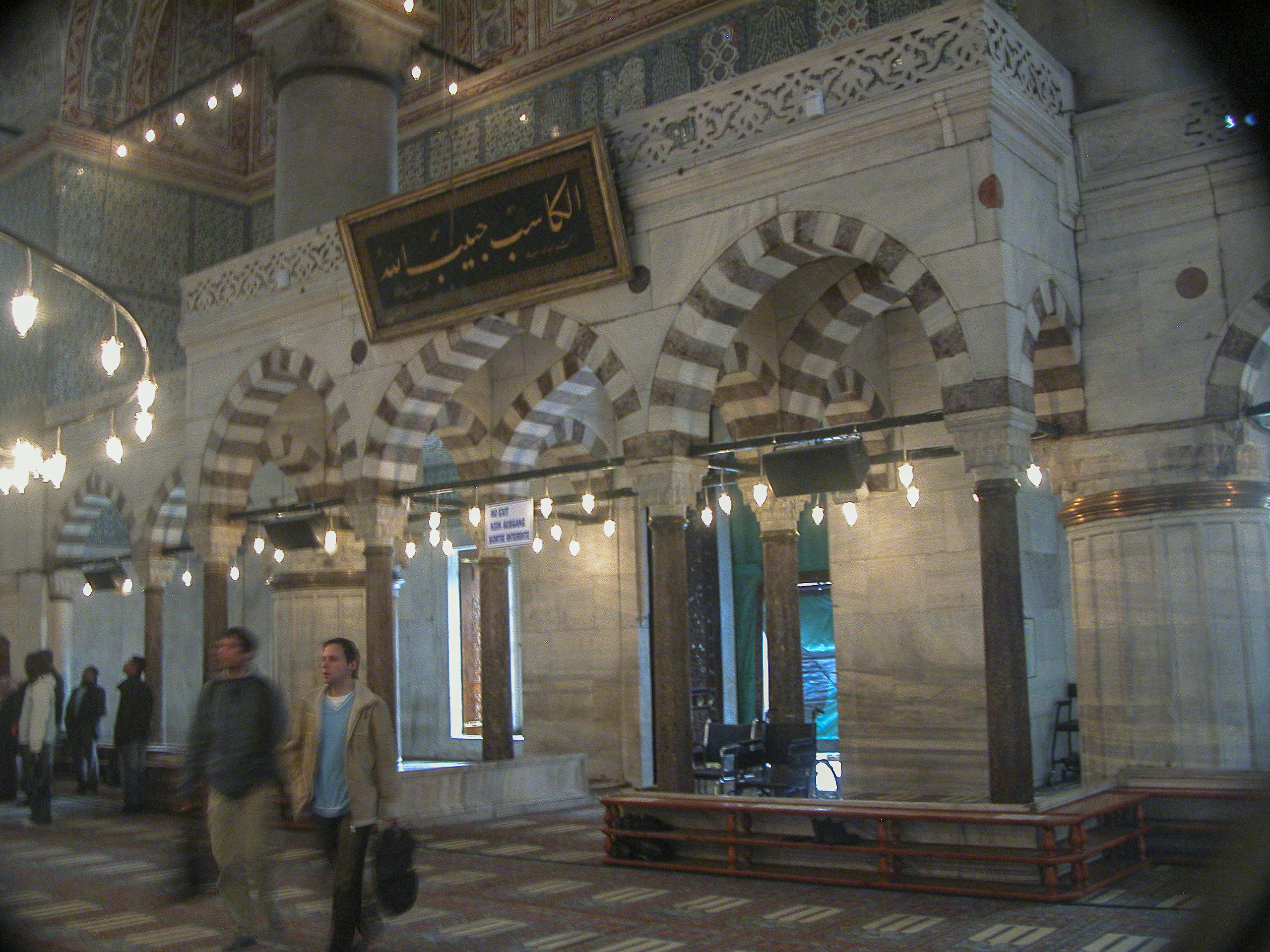
The arches over the doorways and alcoves are a feature of Islamic architecture that I find particularly attractive. I was later to find very similar constructions in Moorish buildings in Spain, most notably the Great Mosque of Cordoba.

This type of arch is typically Islamic; very similar arches are found in the Great Mosque of Cordoba in Spain, among other places.

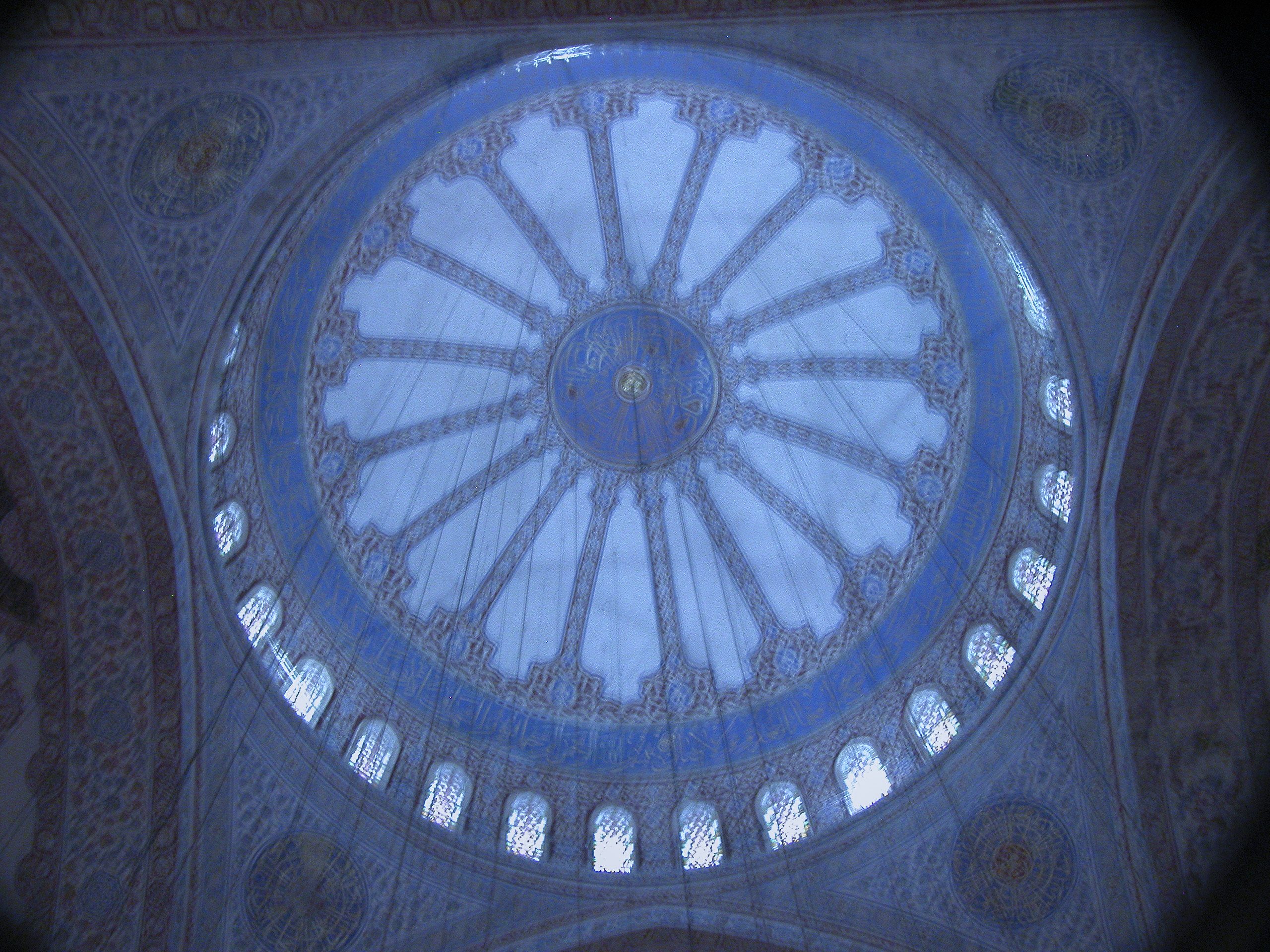
The main dome of the Blue Mosque is quite striking, but it is sometimes compared unfavorably to the central dome of Hagia Sophia because it is supported by four stout pillars, whereas Hagia Sophia’s central dome is anchored by “pendentives” which distribute its weight on the walls of the cathedral. The next picture doesn’t show the pillars, but you can see them in the two following.

The Main Dome has 28 stained-glass windows. The dominant color of the stained glass and tiling is blue, hence the Blue Mosque.

The mosque has over 200 stained-glass windows. The glass for the windows was a gift from Venice to the Sultan. Venetian glass, made on the island of Murano in Venice’s lagoon since the 13th century, was the finest available. There is some irony here: after plundering the treasures of Christian Constantinople during the Fourth Crusade, the Christian Venetians later bestowed their largesse on the city’s Muslim conquerors.

The mosque has over 200 stained-glass windows. The glass for the windows was a gift from Venice to the Sultan.

Supposedly ostrich eggs were put on the chandeliers to repel spiders and thereby keep them free of cobwebs. I don’t know why ostrich eggs would repel spiders, but I’m not able to put that notion to the test because ostrich eggs are hard to come by in Southern California. In any case, I saw neither ostrich eggs nor cobwebs. I suspect that nowadays the cobwebs are taken care of by the cleaning crew.

No ostrich eggs could be seen on the chandeliers.

In the southeastern corner of the Blue Mosque there was an area reserved for the Sultan and his retinue. It contained a loge, where the royals could be seen by the public, and several secluded rooms, to which they could retire when they wanted privacy.

The Janissaries were the elite infantry of the Ottoman Empire, the household troops of the sultan. They were recruited via a levy known as the devşirme, which was in effect a tax on the empire’s Christian subjects whereby their male children of ages from 6 to 14 were taken from them, converted to Islam, given rigorous military training and subject to strict disciplinary rules. They were forbidden to engage in trade or to marry before age 40. They were a formidable and feared military force, but as time went on, their discipline was relaxed, they acquired excessive power and privileges, and ultimately became a kind of praetorian guard, making and breaking sultans, and acting as a reactionary barrier to progress. Eventually, in 1826, Sultan Mahmud II issued a decree disbanding the corps. This provoked the last of their many mutinies, in which the Sultan used artillery to kill 4,000 of them and then beheaded the rest. During the revolt, the Grand Vizier made the retiring rooms in the Blue Mosque his headquarters for directing the suppression of the rebels.

The retiring rooms of the Royal Kiosk were the headquarters of the Grand Vizier during the suppression of the Janissary Corps in 1826.

I found the Blue Mosque a magnificent and overwhelming architectural masterpiece, but I have heard that it is only one of several equally stunning mosques in Istanbul. I wish I had been able to tour some of the others, but there are just too many amazing sights to see in Istanbul and even in three days we didn’t have time to tour more than a small fraction of them.

Categories
Turkey, March-April 2006

Eclipse Night, March 29, 2006: The Feast

As the sun set on Eclipse Day, a feast awaited us in the Kaya Side dining room that I’m confident eclipsed any meal ever served to a Sultan. I must admit I’m quite fond of Mediterranean and Middle Eastern cuisine in general, but the chefs at the Kaya Side went above and beyond anything I would have dreamed of, bringing Europe and Asia together in a gastronomic apotheosis. It was so sinfully decadent that I expected Daniel the Prophet to show up at any minute and fiery fingers to start writing “Mene, Mene, Tekel, Upharsin” on the walls, as at Belshazzar’s Feast.

In the Middle East the hors d’oeuvres are called mezze. These mezze were presented in pastry shells that reminded me of the way tostadas and taco salads are served in Mexican restaurants. But the flowers, carved out of orange peels or vegetables, were an unexpected addition.

Turkish hors-d’oeuvres.

Cabbage rolls, stuffed with meat or vegetables, are a favorite of mine. They are ubiquitious throughout Eastern Europe, the Balkans and the Middle East. In Turkish cabbage rolls are called Lahana Sarmasi; in Romanian they are Sarmasi, in Greek they are Lahanodolmades, in Polish Golabki, in Russian Golubtsy. Regardless of what you call them, they are delicious. I’m also fond of stuffed bell peppers, also present on this platter.

Cabbage rolls and stuffed peppers.

Every dish was a work of art. Each serving platter was decorated with at least one flower, as well as various fruits and vegetables, and bouquets were also separately placed as decorations among the serving platters. The “flowers”, however, were themselves made of cunningly carved vegetables and fruits, as in this photo.

Flowers, apparently made of carrot slices with scallions serving as the stems, “growing” out of a cabbage.

Sigara Böreği are the Turkish equivalent of egg rolls. (Sigara is simply the Turkish word for cigarette, so these are “cigarette rolls.”) They can be stuffed with potato, cheese, spinach or meat, but most typically the filling is Turkish white cheese, similar to feta. The pastry shells are made of a dough called yufka, which is similar to Greek phyllo. They are made by placing a small amount of filling on a yufka triangle, rolling it up and frying it in olive oil. You can find a recipe here.

Egg rolls, or their Turkish equivalent, stuffed with potato, feta or meat, next to cabbage flowers.

There was a great variety of cabbage flowers. These used carved radishes, zucchini squash carved to look like lilies, etc. The artistry was breathtaking, and I like to imagine that the creators of these masterpieces were artists moonlighting as cooks, or students working their way through art school.

More stunning cabbage flowers.

I only took a few pictures of the mezze and entrees, because they were too tempting, and Sandie and I were too hungry, after our long day on the eclipse field, to delay our enjoyment of them for long. After snapping final shots of the dining room, we joined Chuck and Elouise at a table next to Attila, Jim Windlinger, Michelle and Cherie.

Chuck and Elouise feast on the Kaya Side delicacies, while Jim Windlinger, Attila, Michelle and Cherie do the same at the next table. The empty seats opposite Chuck and Elouise are ours; Sandie and I were still scampering about taking a last few pictures.

After placating my appetite somewhat by gorging myself on the mezze and entrees, I took a break to check out the desserts. The staff rolled out several carts packed with every kind of dessert imaginable, and some that could not have been imagined.

A stunning array of desserts was awaiting us after the main course.

If there was ever a time and place fitting the phrase “An embarrassment of riches,” this was it. The goodies just went on and on. There was no ending to them. There was no way any one person could even sample them all, though of course I tried my best.

A small fraction of the desserts served at the Eclipse Feast.

The creative decadence of the Kaya Side desserts surpassed our wildest imaginings. One of the most spectacular was this cake in the shape of a piano. (But don’t ignore the cheesecake next to it, either.)

Some of the star players in a concerto of desserts.

I had to get a close-up shot of this cake to do it justice. With a nod to Peter Tchaikovsky, one might say that this was a real Swan Lake of culinary composition.

You could say that this one really took the cake.

Whenever I look at the ice cream bombe in the next picture I am reminded of the 1978 movie “Who Is Killing the Great Chefs of Europe,” starring George Segal, Jacqueline Bisset and Robert Morley, in which each of the chefs is murdered in a manner befitting his or her culinary specialty. For example, the seafood maestro is drowned in a lobster tank. The chef whose specialty is baked pigeon en croute is baked in a 450 degree oven. Another, famous for his pressed duck, is pushed headfirst into a duck press. The killings follow the order of servings in a meal, with the dessert chef intended as the final victim.

Bombe.

Naturally, the dessert chef and heroine, played by Jacqueline Bisset, is to be killed by – what else? – a bomb within a bombe. The killer swaps the ice-cream bombe made by Bisset for an exact duplicate with a bomb hidden inside. I won’t spoil the movie for those who haven’t seen it by telling how it ends.

Bombe II.

Something similar, I suspected, would be in store for us that evening. And sure enough, for the Grand Finale the kitchen staff came trotting out bearing not one, but several, bombes.

The Kaya Side Kitchen Team makes a grand entry with their masterpiece, the Nuclear Bombe. Several of them.

To further heighten the party atmosphere, the cooks lit off fireworks – just sparklers, but I suspect they would have brought the wrath of the fire marshals if this had been done in the USA. As for me, I thought maybe these guys were real terrorists after all, and they were going to light the fuses, disguised as candles, on the bombes and blow us all away.

Maybe these are real bombs after all, and the cooks are really terrorists in disguise.

We selected some sacrificial lambs, and deputized them to be first to approach the table where the bombes were being served.

Michelle and Chuck warily approach the table aux bombes.

And it turned out we were not completely wrong. The bombes did explode – they burst with flavor in our mouths.

Chuck gets a generous helping of shrapnel from the bombe.

At the end of this fabulous evening out of the Arabian – er, I mean, Turkish – Nights, we retired to our rooms tired, sated, and inebriated. We also wondered how in the world we would ever be able to get up in time to catch an early morning flight to Istanbul.

Categories
Turkey, March-April 2006

Eclipse Day, March 29, 2006

We viewed the Total Solar Eclipse of 2006 from the grounds of the Kaya Side Hotel. Before launching into our experiences on that day, I have to say a few words about the hotel, and for that I have to begin with the evening before.

The Kaya Side Hotel is the most luxurious place I have ever stayed in, bar none. Of course I’m not the kind of person who gets to stay in posh hotels very often, but I’ve been in a few. What set it apart, however, was not the appointments, furnishings, or decor, which were all great, but the service. I have graphic evidence to show for this, as you’ll soon see.

When we first learned that we would be staying at the Kaya Side, I thought that it must be named after Kaya Tuncer, and that would be because he owed the hotel. Naturally, since he was underwriting the expedition, we would be staying in his hotel. I was soon disabused of this notion: the name was merely a coincidence, Kaya is a common name in Turkey, and Kaya means “rock” in Turkish. Mr. Tuncer’s wealth came from his involvement in the Aegean Free Zone in Izmir, and not from investment in hotels, nor did he own any. (Kaya is also the name of one of Sandie’s nephews, who lives in the Michigan Upper Peninsula, but that’s just another coincidence; his parents are not Turks and don’t know any Turkish.)

I also learned that the Kaya Side, like all the other hotels in Side, was normally closed at this time of year; they had only opened for the eclipse and would shut down until summer after we left.

The night before the eclipse, we returned dead tired from our day in the antique ruins of Pamphylia, to find that our room had been specially fitted out in honor of our wedding anniversary:

Upon returning from our explorations of ancient Pamphylia, we found this wedding anniversary greeting from the staff of the Kaya Side Hotel. Unbelievable!

Among the amenities provided as a matter of course were bathrobes, slippers, and a nice travel bag, which I still have.

The complimentary amenities included slippers, seen at the foot of the ultra-luxurious bed.

The towel folded in the shape of a swan, with rose petals sprinkled over it, was unlike anything I’ve seen before or since, and it was just one of the many features that put the Kaya Side in a class by itself.

The only time I’ve ever been greeted by an origami swan.

I wasn’t surprised by the amazingly soft and absorbent towels – after all, Turkish towels were invented in Bursa, Turkey, in the 17th century. That’s why they’re called Turkish towels.

The Kaya Side was easily the most luxurious hotel I’ve ever stayed in, not excepting Las Vegas. The roses and rose petals scattered around the bathroom added an extra touch of opulence to an already outstanding ambience.

The roses in the vase in the bathroom were real, of course. And so was the complimentary bottle of champagne that awaited us – which, unfortunately, we forgot to photograph before we drank it up.

Another take on the tastefully decorated and sparkling-clean bathroom facilities.

Eclipse Day, March 29, dawned bright and clear, and we started schlepping our gear out toward the beach behind the hotel to set up for the big event.

The beachfront park behind the Kaya Side Hotel was the perfect site for watching an eclipse, and the weather gods were smiling on us.

In the summer the beach would have been filled with vacationers under umbrellas (you can see the naked umbrella frames in this picture). But today there were no beachgoers, just eclipse-chasers, who, fortunately, did not have to set up their scopes on the sandy beach itself, but rather on the paved area in back of the hotel.

The beach behind the hotel was festooned with umbrella frames, but without the coverings that made them umbrellas.

On a normal summer day there would have been dozens of paddleboats and jet skis, but this was early spring, and the water was cold, and anyway people were only here for the eclipse.

The paddleboats and jet skis were idle on Eclipse Day, and the gaily decorated cabanas were mostly deserted. Everyone was watching the eclipse.

I began to set up the equipment I had brought to shoot the eclipse, while Sandie shot me. My equipment was fairly simple: a TeleVue Pronto 70mm refractor with a Baader mylar white-light solar filter on a non-motorized, unguided TelePod mount, and an Olympus OM-1 film camera. Astrophotography-wise, I had not yet updated to the digital age in 2006.

I set up my equipment while in the background, just behind my back, Marvin Blaski is relaxing and enjoying watching me blunder about.
Some people came prepared for extreme winter weather, up to and including Arctic blasts, while Chuck Mattox (right) was all set for a balmy day at the beach.

Jim Windlinger brought a superb array of equipment to the 2006 eclipse – a Borg telescope, all-automated mount and guiding apparatus, digital camera. But it was the Nazar Boncuk hanging from the counterweight shaft that was the real secret of his success.

Jim Windlinger’s setup, center-right. I think the scope on the left belonged to Rick Gering.

A group of people from a neighboring hotel which did not offer facilities as nice as the Kaya Side gathered on a hill to watch the eclipse. I guess they thought they would get a better view if they climbed closer to the Sun.

I guess these people figured they could get a better view of the eclipse by being a bit closer to the Sun.

Michelle Evans brought the largest scope in our tour group, an 8″ Meade LX-200 Schmidt-Cassegrain, which she had borrowed from Space Camp Turkey. It was equipped for viewing only since no camera adapters for it were available. Some photographers were content with cameras on tripods (right of center). Others didn’t even have tripods, and did the best they could with hand-held cameras.

Michelle Evans borrowed an 8″ Meade LX-200 Schmidt-Cassegrain (large scope in center) from Space Camp Turkey for the eclipse, but it was for visual use only, no photography.

Michelle Evans had a hand-held camera to shoot the eclipse; in the photo below it appears that she has attached a periscope to it. But this is an optical illusion; if you look closely, you can see that the “periscope” is actually a pole stuck in the concrete behind her. Meanwhile, Chuck Mattox, just to the left of Michelle, appears to be stomping on an insect about to spring on the girl in front.

Michelle gets ready to shoot the eclipse with a periscope.

First contact! The Moon begins to nibble at the edge of the sun.

At 12:39:58.1, local time, the Moon starts to encroach on the disk of the Sun.

Someone brought a bed sheet, which they spread out on the ground with the intent of using optical devices to project onto it sharp and well-defined images of the Sun being eclipsed by the Moon.

Someone laid out a sheet on the pavement, with the aim of projecting onto images of the solar eclipse.
The Moon takes a bigger bite out of the Sun.

Sandie used a pair of small binoculars to project the image of the Sun being eclipsed by the Moon onto the bedsheet, and I photographed it.

The image of the partially-eclipsed sun is projected through Sandie’s binoculars onto the sheet spread on the ground.

I alternated between watching the eclipse, hobnobbing with other watchers, and adjusting my equipment. Since my mount was not motorized or guided, and thus could not track the Sun on its own, I had to continually adjust it to keep the Sun in view.

Since my setup was all-manual, with no motor drive or Go-To electronics, I had to continually adjust the mount to keep the Sun’s image in the camera viewfinder.

Keeping the Sun’s image centered was a bit of a challenge. The sun was high in the sky, so the scope had to be pointed upward at a steep angle; consequently the camera was low down, and I had to get on my knees and contort myself to see through the viewfinder. The mount could be adjusted only in altitude and azimuth, i.e. straight up/down and right/left horizontally, and making those adjustments while bent like a pretzel was tricky. But I managed to do that and even shoot some pictures now and then.

The Moon has now eaten about 25% of the Sun.

Rick Gering and Jim Windlinger with their guided mounts could be a little more relaxed, but they still had to keep tabs on the tracking; none of these devices are perfect.

Rick Gering and Jim Windlinger monitor their equipment, while Mike Treder and Pat Bush check out the projections on the sheet.

While I was fussing with my gear and shooting pictures through my scope, Sandie and others continued to shoot the eclipse image cast onto the bedsheet with binoculars with their hand-held digital cameras.

The Moon is making progress in its task of covering up the Sun, which is now about 35% obscured.
The Moon continues inexorably swallowing the Sun.
The Moon has now covered up about half the Sun’s disk.
And now at Kermanshah the gate Dark empty and the withered grass And through the twilight now the late Few travelers in the westward pass

Experienced eclipse-watchers know that when the Sun’s light is filtered through foliage during the partial phases of an eclipse, it projects little crescents on the ground. Someone put a white cloth or handkerchief on the ground under a bush, and Sandie caught a shot of the little crescents with her Canon.

Someone cleverly hid a napkin or cloth square in the bushes to capture the little crescents produced by the moon-shaped sunlight being filtered through the leaves.

And the invisible Moon moves on.

Here the Moon is about 2/3 covered.
The binocular projections show us that the Sun is now about 70% covered by the Moon.
Here the solar disk is up to 75 or 80% covered.

As totality drew nearer, Chuck and Elouise Mattox concocted some cockamamie apparatus to capture its onset, while I looked on with bemused scepticism. I don’t remember whether their contraption worked or not, but I applauded them for trying.

Chuck and Elouise fuss with their Rube Goldberg apparatus while yours truly looks on and Sandie snaps the picture.

And back I went to my scope to get a few more shots on the way to totality.

The Sun is now about 80% covered.

And Sandie got another shot of the little crescents in the bushes before all went dark.

And strange at Ecbatan the trees Take leaf by leaf the evening strange…
90% gone.

Just before totality, Sandie turned back toward the hotel and shot this slightly blurry picture of it. The light at this moment was so dim that she had to shoot with the camera lens wide open and use a shutter speed too slow to deal with camera shake.

Hard to tell how dark it was when Sandie shot this picture, but without a tripod there was no way to hold still enough to prevent it from blurring with the shutter speed she had to use to get anything to show up.

Until the Sun is about 80% covered in a solar eclipse, it’s hard to visually discern that anything is going on. But by this time, with only the thinnest crescent left unobscured, the darkening was obvious to all.

Now only a teeny sliver is left.

The most difficult time for a solar eclipse photographer is at third contact, the onset of totality. The trick is to judge precisely when to remove the filter, which prevents the scope and camera from being destroyed by the Sun’s brilliance, and adjust the camera to shoot without the filter. With the arrival of totality, the cutoff of direct sunlight makes it too dark to shoot at the same ISO setting used with the filter. It is every eclipse photographer’s goal to capture the so-called “diamond ring”, the bright flash at the edge that occurs right at third contact, but this requires exact timing and quick wits. Too soon and you risk blinding yourself and wreck your equipment. But if you’re too slow, you miss the diamond ring. It was particularly difficult with my film camera because I also had to advance the film after each shot. Also I wasn’t sure what ISO I had to reset to, and there was some trial and error involved. Consequently, I was too slow and miss the diamond ring at third contact.

Totality.

I tried several different combinations of shutter speed and and ISO during totality. None of the results were ideal, but at least I did get some not totally abhorrent shots.

And here face downward in the sun To feel how swift how secretly The shadow of the night comes on …

Since I was shooting with a film camera, I don’t have a metadata record of the ISO settings and shutter speeds I used. I did take notes, but I’ve lost track of them.

And here face downward in the sun To feel how swift how secretly The shadow of the night comes on …

I also managed to get a ground shot with my Nikon digital camera during totality. I’ve left it as originally shot, without any manipulation on it with photo editors such as Photoshop or Lightroom, so it reproduces fairly faithfully the deep twilight we experienced during totality.

An unedited photo of the eclipse site at totality.

Sandie also shot a picture of the beach at totality.

Looking out over the Mediterranean at totality.

During totality I had time to hone in the camera settings, and I wasn’t in a rush to put the solar filter back on, so I was able to catch the diamond ring at third contact, as the Moon began to move off the Sun. Timing is still a bit tricky with a manual setup, and it’s not the best-ever diamond ring photo, but it was a big thrill for me to get one at all.

The Diamond Ring heralds the end of totality at 13:58:47 local time.

And now a sliver of light peeks out from behind the Moon as that celestial body moves heedlessly on its way. By now, of course, the solar filter is back on the front of the scope.

Shortly thereafter, it was day again, and we took its return as an opportunity to have a passerby do a shot of us on Sandie’s camera.

Jerry & Sandie take a break for a celebratory snapshot after third contact.

The gap betwixt the edges of the two heavenly bodies continued to widen as we began to relax after the tension and excitement of waiting for, and experiencing, totality.

People tend to regard the eclipse as over and done with as soon as third contact passes. The field rapidly became deserted as the eclipse-watchers went off to cavort on the beach or get drunk, with only diehards like Jim Windlinger and myself remaining to record the post-totality phase.

Jim Windlinger watches the crowd stream away from the observation area, even though it’s still not full daylight.

I continued shooting the waxing Sun as long as I could, but I hadn’t brought enough film to last until fourth contact, the moment when the Moon departs entirely from the face of the Sun.

At this point I ran out of film, so I didn’t make it to Fourth Contact with the post-totality images.

The weather gods had been kind to us that day. They had considerately waited until after fourth contact to send the clouds in, so the eclipse was not interrupted by any unwelcome meteorological events. As sunset approached, however, the clouds closed in, and the next day they covered the country all the way to Istanbul, as we would find out.

Towards sunset, the clouds, which had mercifully given us a clear sky for the entire eclipse, began to move in on our observation site.

But even though the eclipse was over, the Eclipse Day festivities were not. The Kaya Side staff had prepared for us a truly cosmic blowout, on such a scale that I have to give it a whole page of its own!

The central section of the Kaya Side, showing the dining area where we were about to enjoy an incredible post-eclipse blowout, as seen from our room in one of the wings of this enormous hotel.
Categories
Turkey, March-April 2006

Perge, March 28, 2006

Perge first came into history in Hittite times (before 1200 BCE) as Parha. Hundreds of years later, as a Pamphylian Greek city, it came under Persian rule until the conquests of Alexander the Great, and then fell under Seleucid domination. It most celebrated inhabitant was the mathematician Apollonius, a student of Archimedes, who lived there during the late third and early second centuries BCE.

Perge came under Roman rule in 188 BCE, and prospered thereafter. Proximity to the Kestros (now the Aksu) River gave it access to seaborne trade, until the silting-up of the river in late antiquity. Most of the surviving structures date from the Roman period. Perge also became an early center of Christianity; Paul the Apostle preached there, and by the 5th century CE the city had become the seat of a bishop. But it did not fare well during the Turkish invasions of the 11th century, and by 1000 CE it was abandoned.

A visit to Perge begins by entering through the Roman Gate, built in the reign of Septimius Severus (193-211 CE).

The Roman Gate

While passing through the Roman Gate, you get a view of the next portal, the much older Hellenistic Gate, which dates back to the 3rd century BC.

View of the Hellenistic Gate as seen through the opening of the Roman Gate.

I don’t know why the Romans thought the city needed another gate; the Hellenistic Gate is arguably the most imposing structure in the city and would have been a formidable bulwark, far better suited to protect the city with its twin towers and its horseshoe-shaped courtyard at the back. The towers had three floors and were crowned by a conical roof.

The Hellenistic Gate, with the Acropolis in view beyond it.

In back of the Hellenistic Gate we encountered a horseshoe-shaped courtyard, not part of the original gate, but an expanse redesigned in 121 AD by Plancia Magna, daughter of the governor and priestess of Artemis, who decorated it with inscriptions and statues to honor the emperors and their relatives.

Plancia Magna’s courtyard at the back of the Hellenistic Gate.
Another view of the imposing Hellenistic Gate.

Near the Hellenistic Gate we encountered Roman baths, a Christian Basilica, the Agora, and a great deal of scattered rubble awaiting reassembly by archaeologists.

An overview of the Hellenistic Gate, Roman Baths, Christian Basilica and Agora.

There were two sets of baths in Perge, a northern and a southern. Google Maps misidentifies a large structure northwest of the Hellenistic Gate as a 6th-century Byzantine basilica, but this was actually the Southern Baths, seen in the picture below. According to the text on a sign posted nearby, “These were Pamphylia’s largest and most magnificent baths. The people of Perge, after performing their physical exercises in the large palaestra, which was surrounded by porticos, rid themselves of their sweat in a cold pool and then entered the Frigidarium. From the architectural embellishments and statues revealed by excavations, this was obviously an outstanding structure. Subsequently the public went on to the Tepidarium and Caldarium, which were interconnected. The brick props used in the hypocaust system through which hot water was transmitted to these sections can be seen.” From what I know about ancient Roman baths, this has it partially backwards. The standard routine was to begin with the Tepidarium, which contained no water, but was merely a heated room where the warm air prepared one for the hot baths to come, and, upon returning, for the transition back to the cold air outside. (It was not a sauna, the ancient Roman counterpart of which was in a separate room called a laconicum.) The Tepidarium might also double as a place for undressing, or this might be relegated to another room called an apodyterium. From the Tepidarium, one proceeded to the Caldarium, the actual hot bath, then finally to the Frigidarium, which was a cold bath intended to close one’s pores in preparation for the return to the frigid air outside. Of course, practices varied among different provinces within the Roman Empire, and even among different establishments in the same area, but it seems more logical to take the cold bath last.

The Southern Baths.

The on-site description continues, “It is said that in antiquity the public used the baths for both enjoyment and holding discussions. A fee was paid upon entry and the baths were used by women in the morning and men in the afternoon.” Some Roman baths, such as those in Pompeii, had separate facilities for men and women; but it has been noted that in Rome itself mixed bathing was common by the first century CE. One may doubt whether this was the case in the provinces, though.

Pictured below is a section of the southern baths. A “hypocaust” is a hollow space under the floor of an ancient Roman building, into which hot air was sent for heating a room or bath.

A section of the Southern Baths near the Hellenistic Gate.

To the east of the Hellenistic Gate lies the Perge Agora. This a square area, dating from the 4th century CE, 65 meters on a side, surrounded by a stoa, a colonnaded portico with a covered walkway. It was in fact an ancient shopping mall, where the inhabitants could purchase all kinds of goods.

A covered walkway called a stoa surrounded the central courtyard and shops of the Agora.

Looking north down the east side of the Agora afforded a view of the Acropolis, which dominates the northern part of the city. Traces of human habitation dating back to the Bronze Age (3300-1200 BCE) have been found there, but the structures visible today all are relics of late Roman or Byzantine times.

Looking down the stoa on the east side of the Agora toward the Acropolis, with Byzantine-era ruins on top of it.

Systematic excavations of Perge began in 1946, led by Professor Arif Müfid Mansel, under the auspices of the Turkish Historical Society, and have been continued by his successors down to the present.

Corinthian columns supporting a corner of the stoa.

In the middle of the Perge Agora stands a large stone ring. I called it the “Perge Henge” because it reminded me of Stonehenge in England (which I’ve never visited). There were no signs or inscriptions to indicate its purpose, and for years I wasn’t able to find out anything more about it online. I speculated that it might be a pool into which virgins were thrown as a sacrifice to the gods, as in the ancient Mayan cities. However, recently I came across an article on the internet according to which the ring structure is now believed (presumably by archaeologists) to have contained a fountain.

Ringlike structure of unknown purpose in the middle of the Agora.

Greco-Roman cities of this period were adorned with fine tile and splendid mosaics. I thought this elegant tile might have fallen from a ceiling that collapsed.

I don’t know what this tile was originally part of – perhaps it’s a fallen ceiling tile.

This marble tile at ground level on the side of a building fascinated me. If you look closely you can see a serpentlike figure and a knife carved in relief in the center. It shows up better in the next picture.

This marble tile with its carving of a knife and snake or eel likely identified a restaurant.

I don’t know whether the people of ancient Pamphylia ate snakes (people in southern China today consider them a great delicacy, and the more poisonous the tastier), but this could also be an eel, which they would certainly have eaten. So this is clearly a sign identifying a restaurant.

The ancient equivalent of “Eat at Joe’s.”

Perge occupies a very large area. It has a well-preserved theater and stadium, but these are somewhat removed from the main part of the city, and we skipped them since we had already seen the best-preserved theater at Aspendos and the most imposing stadium at Aphrodisia. At Perge the Agora, the Nymphaeum, the Baths and the main boulevard with its waterway were the focus of attention.

The Agora hosted many shops and offices, of which only the doorways now remain.

In one of the stoa shop doorways we encountered a couple of pirates who wanted to kidnap Sandie and sell her into a harem, but we managed to escape their clutches.

Cherie and Michelle, framed by a doorway at the Agora.

The main north-south street of Perge, called the Sütunlu Cadde in Turkish, extends 300 meters from the city gates to the foot of the Acropolis. In the middle ran a channel which supplied water to the fountains and baths. The city also had an underground sewer system, and many private houses also had indoor plumbing.

The main street of Perge is actually a divided highway, with a 2-meter-wide water channel running down the middle.

The water distribution system was quite sophisticated for its time. In the channels weirs (dams) had been built to regulate the flow of water and keep the level even.

Weirs were built into the channel to regulate the flow of water and keep the level even.

While strolling up the main drag I encountered a column decorated with two human figures in relief, a male near the base (shown in the next picture) and a female higher up. There was no sign or inscription to identify the figures. I speculated that the lower one might be a city official offering a sacrifice to Artemis, patron goddess of Perge. But the same source that purported to identify the ringed structure in the Agora as a fountain also asserted that it might be Calchas, one of the mythical founders of Perge.

It took three shots to capture this column in adequate detail. This is the section nearest the base.

There was never any question about the identity of the female figure – it was clearly the goddess Artemis: she holds a bow, one of her identifying symbols; Perge was devoted to her worship and was famous as one of her chief shrines; and her image was stamped on coins minted in Perge.

It was obvious, on the basis of the bow in her hand, that the figure depicted here is the Greek goddess Artemis the Huntress.

I could not capture Calchas and Artemis in sufficient detail in one frame, so I had to shoot the column in segments.

This view of the column somewhat overlaps with the previous shot; I wanted to capture the capital and the figure of Artemis in one picture.

Proceeding up the main drag, we headed for the Nymphaeum, the northern terminus of our exploration of the city, nestled at the foot of the Acropolis. The structure on the left in the photo below is probably the Palaestra, associated with the Northern Baths.

The Acropolis looms above the ruins of the old city, as our tour group proceeds past a lone vendor toward the Nymphaeum (out of sight in this picture).

A palaestra could be a wrestling school, gymnasium or simply an exercise area, depending on local practice. It could be either a building or simply an open courtyard. In this case, it seems to have been a building constructed from travertine, but I’m not entirely sure, because the source I’m relying on also says that it was an open courtyard surrounded by changing rooms. The same source (Turkish Archaeological News) says that the palaestra was dedicated to Emperor Claudius by Gaius Julius Cornutus Tertullus, the husband of Magna Plancia. It’s hard to imagine a less athletic person than Claudius, and it’s unlikely that Plancia’s husband would have dedicated anything to Claudius, who reigned from 41 to 54 CE, whereas Plancia Magna and her husband were active much later, in the early second century. (They would not even have been born when Claudius was alive.) Plancia Magna made her important contributions to Perge mainly during the reign of the Emperor Hadrian, who reigned from 117 to 138, and her husband would likely have dedicated the palaestra to him – it was the custom to dedicate newly-constructed landmarks to the reigning emperor. Anyway, other sources say that the palaestra dated from 50 BC and was built by Gaius Julius Cornutus Bryonianus, who was probably the father of Plancia’s husband, and dedicated to Emperor Claudius by him. Bryonianus was a Roman senator and native of Perge.

The Palaestra, seen here next to the Northern Baths. The trash can was not part of the original decor but was a 6th-century addition. (I hope you didn’t believe that.)

The Acropolis loomed above as we neared the northern end of the main drag.

Pam Bloxham and Cherie Rabideaux inspect the remains of storefronts en route to the Nymphaeum, close to the Acropolis.

Near the Nymphaeum we encountered a drawing of how it was supossed to look, and did look, when it was built. Water was piped into it from hillside springs and flowed from underneath the reclining statue of Kestros in the center into the canal that ran downhill to the city gates.

The Nymphaeum as originally constructed.

Perge is located near the Aksu River, which in ancient times was known as the Kestros, which was also the name of its god. The Nymphaeum building is known as Hadrian’s Nymphaeium, but it was dedicated to Artemis of Perge, the Emperor Septimius Severus, his wife and his sons.

The statue in the arched window, however, represents not Hadrian or Septimius Severus or Artemis of Perge, but Kestros the River God – or so I’m told, since I wouldn’t be able to tell Kestros from Bacchus, especially without a head. So whose shrine is it?

The Nymphaeum was a monumental fountain, built in the second century AD, at the end of the colonnaded main street by the Acropolis.

As can be seen from the photos, since it was built the Nymphaeum has lost its second story, arches of the first-floor windows, the perpendicular side wings, the columns, and most of the statuary. Not only that, but the Nymphaeum should have nymphs. Where were they? It turned out that they were on their way.

A nymph on her way to the Nymphaeum.

When they arrived at the Nymphaeum, however, Sandie, Pam and Cherie found that a horde of savage barbarians had burst onto the site and were intent on pillaging the treasures it contained.

Savage heathens from the north approach the sacred shrine of the river god Kestros, with sinister intentions of plundering the gold and jewels which obviously must be hidden therein.

It turned out that the infidels were too late; other barbarians had been there first, and had spirited away the best of the treasures, including the two statues of Hadrian which had stood in the alcoves between the statue of Kestros, to the Archaeological Museum in Antalya.

A close-up of some of the stonework in front of the fountain.

Other barbarians had removed the head of Kestros the River God, as well as anything else worth taking.

An uncouth barbarian celebrates his triumphant and sacrilegious intrusion into the hallowed precincts of the Nymphaeum, as one of his fellow-malefactors looks on approvingly. (At least he didn’t damage any of the artifacts; previous barbarians had done that.)

Meanwhile, Sandie climbed halfway up the Acropolis above the Nymphaeum to get a fabulous panorama shot of the entire city of Perge.

Sandie climbed up the hill above the Nymphaeum to get this stunning overview of the ancient city of Perge.

From the Nymphaeum window above the statue of Kestros I took a picture of the main street and its waterway.

A view of the water viaduct from the central window of the Nymphaeum. Water flowed into it from beneath the statue of Kestros.

Somewhere along the way we stumbled across this placard imploring visitors in Turkish and English not to behave like barbarians.

Another fun example of what happens when you fail to get a native speaker to proofread your signs.

As I wended my way back from the Nymphaeum, I snapped this view of the avenue by which we had come up.

A view from up by the Nymphaeum, down the main street back toward the Hellenistic Gate.

Heading back to the gate, I passed a trio of fellow infidels, who, having pillaged the ancienty city, lounged nonchalantly among the ruins.

A trio of barbarians catch a break from plundering to take their ease in the ruins of ancient Perge.

Categories
Turkey, March-April 2006

Kurşunlu Park, March 28, 2006

From Aspendos our tour group went almost all the way back to Antalya. Our destination was Perge, another ancient city of Pamphylia, but first we stopped for a picnic lunch and rest break at nearby Kurşunlu Waterfall Nature Park. This was a beautiful, peaceful place in the middle of a pine forest with a small tributary of the Aksu River running through it.

At the entrance to the park there was a mill with a waterwheel. The mill didn’t say when it was built; I would guess not more than a couple of centuries ago, but water wheels have been in use for grinding grain since Roman times.

The old mill with its waterwheel.

Attila had thoughtfully brought along picnic lunches, and we settled down at a picnic table to enjoy the meal, while Chuck and Elouise Mattox snapped pictures of the group.

We took a break in a busy day of sightseeing to enjoy a relaxing lunch in Kursunlu Waterfall Nature Park.

But we soon found that the park was beset with predators. A pack of hungry cats prepared to launch a raid on our picnic table.

A group of hungry cats prepares to launch a raid on our picnic table.

Chuck and Elouise headed off the attack and saved our lunch by selflessly sacrificing their own.

Chuck and Elouise save the group from the feline onslaught by generously and selflessly sacrificing their own sustenance.

Meanwhile, Sandie sacked out under a nearby tree and ignored the battle with the cats entirely.

Sandie found a spot where she could cat-nap while finishing her lunch.

After lunch we strolled to the falls. Along the way we encountered the sign pictured below. I didn’t know what a geziyolu was at the time (I later found out it means “roadway”), but I assumed that steig was the German word meaning climb, so that the geziyolu, whatever it was, was a climb of 5 km away. In any case, we never made it that far. The sign below it was also a puzzle. I didn’t know what border we might be approaching, let alone what “strinking” meant, so I didn’t know what to avoid.

Despite not knowing what “strinking” meant, or what border might prove dangerous, we escaped without any dire consequences. But we never made it to the geziyolu.

We did shortly arrive at the falls, where another sign announced that picnicking was forbidden there. But since we had already had our lunch, that didn’t bother us.

Having a picnic here by the waterside was a no-no.

The waterfall emptied into a beautiful blue-green pool with lush vegetation growing all round – an idyllic scene.

The waterfall emptied into a beautiful blue-green pool with lush vegetation growing all round – an idyllic scene.

The waterfall was a photographer’s dream, and it was nearly impossible to take a bad picture here.

It was hard to take a bad picture here.

The boughs of an old tree framed a perfect shot of Sandie with the waterfall as a backdrop.
The bizarrely twisted and gnarled trees made a perfect frame for this scene.

Spring had barely arrived in Anatolia, and we were fortunate to encounter some of the early flowers blooming in Kurşunlu Park.

Flowers blooming on trees near the waterfall.

I have no idea what species these flowers belong to – I’d welcome help in identifying them.

Anyone know what kind of flowers we have here?

This day, the 28th of March, was Sandie’s and my fourth wedding anniversary, and Kurşunlu Park made an ideal setting for an anniversary snapshot of us.

Next stop: Perge.

At the exit from Kurşunlu Park, a camel ride was offered. It turned out that the “ride” consisted of sitting on the camel, which remained motionless on the ground, and having your picture taken, for a fee of 3 euros. We declined the offer; we would have to wait until 2017, when we went to Morocco, to take a real camel ride.

Motionless camel rides.
Categories
Turkey, March-April 2006

Aspendos, March 28, 2006

Following our exploration of Side, we took a bus ride to Aspendos, which lies about halfway between Side and Antalya.

Aspendos is situated on the banks of the Eurymedon River, which in antiquity was navigable up as far as Aspendos itself; hence the city grew up as an important trading port even though it was located 16 kilometers from the Mediterranean seacoast, and it grew wealthy from trade in salt, olive oil and wool. Its political clout did not match its economic weight, and it tended to come under the domination of other Pamphylian powers, such as Perge, and later the Persians, Greeks, and eventually Romans. For centuries control of the city seesawed between Greeks, Persians, etc., yet Aspendos generally enjoyed considerable autonomy, even minting its own coins. On the one occasion when Aspendos did try to assert its independence, it unwisely chose Alexander the Great against whom to do so. At first the Aspendians submitted to Alexander, who agreed not to station a garrison there as long as the city paid him the same taxes as it had to the Persians. As soon as Alexander left for Side, however, they reneged on the agreement and prepared to rebel. Alexander immediately swooped back down on Aspendos and exacted swift retribution, imposing much harsher terms and exactions than before.

Eventually, in 190 BCE, hegemony passed to the Romans. Later, in the first century BCE, it came under the authority of the notorious Roman official Gaius Verres, who plundered its art treasures. Verres was eventually prosecuted by the great Roman orator and statesman Marcus Tullius Cicero, who obtained his conviction. Verres was punished by exile, but Aspendos didn’t get its artwork back.

As time went on the Eurymedon River silted up and became unnavigable, undermining the prosperity of Aspendos and relegating it to languish in medieval times as a small provincial town.

Aspendos is noted above all for its imposing theater, which claims to be the best-preserved ancient theater in the world.

Aspendos has other attractions too, though. One of them is the bridge over the Eurymedon River, originally built in Roman times and rebuilt by the Seljuk Turks in the 13th century CE.

The Eurymedon River bridge. You have to look closely to note the zigzag feature at the island in the middle of the river.

The most striking feature of the Aspendos bridge is its zigzag course. It was apparently rebuilt this way because the original piers, which the Seljuks used in the reconstruction of the bridge, had become displaced from their original locations by ground movements, especially earthquakes.

The zigzag is more easily seen in this photo, on the right.

The remains of the Roman aqueduct are also quite impressive. It is believed to have been built in the 3rd century CE, and it brought water from springs in the hills to the north, 19 kilometers away.

A segment of the old Roman aqueduct, 15 kilometers of which remain standing.

We strolled along the banks of a modern-day irrigation canal to shoot pictures of the aqueduct and the other ruins.

Sandie strolls along the road by the aqueduct looking for likely photo vistas.

The aqueduct seems to have had a working life of only about 150 years, and its demise, probably caused by earthquakes, seems to have coincided with the general downturn in the city’s fortunes toward the end of the Roman period. I would guess that the loss of its commerce-derived wealth, owing to the silting up of the Eurymedon, also deprived it of the income needed to repair and maintain the aqueduct. However, aqueduct dysfunction was not a problem unique to Aspendos; it was a general trend throughout the Roman world in the fifth century CE, under the pressure of Persian invasions from the east and onslaughts of various barbarians from the north, with consequent fiscal crises that strained government resources and required diversion of public funds to defense expenditures. Aqueducts and baths were expensive and required frequent repair. Christian ascetics and other religious authorities tended to frown on frequent bathing as an unnecessary luxury and a license for sexual promiscuity. People did not stop bathing in the Middle Ages – far from it, contrary to the conventional view – but it became a less frequent activity.

The Romans built their aqueducts to last, but they weren’t earthquake-proof.

After being piped down from the hills to the north of the city, the water had to cross a low, flat, depressed valley and then flow uphill to the Aspendos Acropolis, 60 meters above sea level. This was accomplished with the aid of a structure called an inverted siphon, which stretched for 1670 meters between two towers, one of which appears in the photo below. The two towers are 30 meters high; they were originally higher.

The northern tower, anchoring the final section of the Aspendos Aqueduct.

The siphon channel brought the water up to the south tower, where it took a 55-degree turn and then climbed to a header tank at the top of the Acropolis, from which the water was distributed to the fountains and baths of the city.

The south end of the aqueduct was anchored by another tower, whence it continued to a header tank at the top of the Aspendos Acropolis.

On the Acropolis stand the remains of a basilica, bouleterion (town hall), nymphaeum (fountain shrine) and agora.

Segments of the aqueduct frame the ruins of the city of Aspendos atop the Acropolis.

Archaeologists have determined that the zigzag bridge over the Eurymedon River is partly built of perforated limestone blocks pillaged from the inverted siphon of the Aspendos aqueduct; thus the blocks were used either to build the original bridge or by the Seljuks to repair it, or both.

The remains of the ancient basilica crown the Acropolis.
Sandie adjusts her trusty Canon Powershot SD500 as we prepare to enter the dark tunnel into the theater.

The crown jewel of Aspendos is, of course, the Theater, which in traditional Greek fashion is partially built into the Acropolis, a design providing support for the seating area as well as savings on materials and labor.

A view of the Aspendos Theater across the parking lot.

The Theater was built around 155 CE; the architect was Zenon, a Greek and a native of Aspendos. For a town of 20,000 people, the Theater was a colossal structure, measuring 96 meters (315 feet) in diameter, and it probably seated most of the city’s population.

Pat Bush photographs the exterior of the city’s prime attraction, the best-preserved of all the ancient Greco-Roman theaters.

Entry to the Theater was provided by low, narrow, dark tunnels like this one.

One of a number of passages leading to the seating area.

The entry passageway opened into the stage area, which was brightly lit by the sun. A sloping wooden ceiling originally covered the area, but it has not survived the ravages of time.

Emerging from the tunnel into the brightly sunlit stage area.

There was an entry passage on either side of the stage, with another in the center of the stage. I’m not sure what the narrow rectangular opening above the vaulted entrance led to; I’m thinking maybe rest rooms, but I haven’t been able to find out anything about it.

One of the side entrances, our access to the theater.

As she emerged from the entrance portal, Sandie got a lucky shot of an illustrious scholar and explorer, whom she had previously encountered in Side, and who now happened to be visiting Aspendos.

Another sighting of the intrepid explorer.

The theater was famous for its exquisite architectural ornamentation as well as its splendid acoustics. 

Intricate stone carvings grace the walls of the theater.

The towering walls had withstood the ravages of time and earthquakes amazingly well. Some of the credit is due to the Seljuk Turks, who in medieval times used the Theater as a caravanserai, and made extensive repairs for this purpose in the thirteenth century. A later Seljuk ruler converted it into a palace.

A corner of the stage building, anchoring both the stage and the seating area.

The seating area consists of two tiers separated by a horizontal walkway called a diazoma. The lower tier contains 20 rows, the upper 21.

Seating was organized into two tiers, with twenty rows each in the bottom and top tiers.

A barrel-vaulted colonnade crowns the upper seating area. In it have been found post holes for masts to support a velarium, or awning, providing shade for the audience.

A barrel-vaulted colonnade runs around the top of the theater.

The vaults at the top, built out from the hill, are immense, dwarfing the people standing in them. I speculate that they may have been used as opera boxes for VIPs.

A closer look at the barrel-vaulted colonnade atop the seating area.

Sources disagree on the seating capacity of the theater; estimates range from 7,500 to 12,000 and even 15-20,000, with a figure of 8,500 seeming to me the most likely number.

I guess that the auditorium could comfortably seat around 8,500 people, perhaps more if they squeezed in tightly and sat on the top of the colonnade.

The stage itself, which was made of wood, has not survived, but the stone supports on which it rested are still in place, and the backdrop, known as the scaenae frons, is still intact. The two-story stage wall was articulated by double columns with Ionic capitals on the lower order and Corinthian capitals on the upper one.

The scena wall, decorated with two orders of columns one above the other, with rich entablatures.

The acoustics of the Aspendos Theater are considered to be among the best in the world – which is one reason why it is still a working theater, hosting for example the Aspendos Opera and Ballet Festival in the summer, among other productions.

This is still a working theater; in the spring and summer the Aspendos International Festival of Opera and Ballet offers a series of music and drama productions.
Categories
Turkey, March-April 2006

Side, March 28, 2006

Side is a small city on the Mediterranean coast of Turkey, with a population of 11,000. It is quite ancient, having been founded by Greek colonists in the 7th century BCE or maybe even earlier. Oddly, the Greek settlers adopted the tongue of the indigenous inhabitants, and several inscriptions have been found in this language, dating from the third and second centuries BCE; it was a now-extinct Indo-European language of the Luwian group, i.e. probably related to other ancient Anatolian languages such as Lydian, Carian, etc.

In the mid-first millenium BCE, Side came under the control of the Lydian kingdom and then the Achaemenid Persian Empire until Alexander the Great took it over in 333 BCE. After Alexander’s death, control of Side passed first to the Ptolemies of Egypt and then the Seleucids of Syria, until the expulsion of the Seleucids in 190 BCE, following which Side asserted a de facto independence. By the first century BCE Side had become a major pirate haven and center of the slave trade, finally attracting the unfavorable attention of Rome. In 67 BCE Pompey the Great undertook a campaign that swept the pirates from the sea and brought Side under Roman rule; but it continued to be the great emporium of the Mediterranean slave trade, as well as a major commercial port exporting olive oil, into the third century CE. After that it went into decline, eclipsed by Antalya to the west.

Side has one of the most irritating names of any town I have ever visited. It is the source of much confusion, not least because it is spelled like a common English word, with which it has nothing in common. It is pronounced something like See-day, but this only deepens the confusion, because that is easily mistaken for the English word “city.” I have been told that the word means “pomegranate” in Greek.

Aside from all that, though, Side was a great place to be for the total solar eclipse of 2006. It is a resort town, with a small but very nice harbor, beautiful beaches, and a number of posh hotels. It also has some wonderful Greco-Roman ruins.

We arrived at Side late in the evening of March 27, and, exhausted by the long and eventful trip from Denizli, went right to bed. I’ll leave a description of our hotel, the Kaya Side, which was our base for viewing the eclipse, for the eclipse day post. On the morning of the 28th, we arose early and after a quick breakfast sped off to the central area of Side, where both its ancient ruins and modern shopping area were located.

The eclipse was a big deal in Side. Upon our arrival in the central square, where our bus let us off, we were greeted by a large purple banner with words in Turkish that said I have no idea what, but clearly had something to do with the eclipse.

Side was ideally located for the eclipse of 2006, and the locals rose to the occasion.

Despite all the excitement generated by the hordes of crazed barbarians come for the eclipse, Side appeared to be a laid-back town with an easygoing, good-natured ambience.

Central marketplace at Side.

We immediately made for the harbor, which was located some distance away at the end of a street lined with shops and restaurants catering to the tourist trade.

The main drag, well-placed to ensnare tourists on their way to the beach.

Tattoo parlors were well represented in the tourist district. By 2006 the fashion for adorning one’s body with bizarre designs had caught on in Turkey just as everywhere else.

Emporium of Body Art.

I had been under the impression that Side catered mostly to northern European, especially German, vacationers seeking sunny beaches, but was surprised to note that Americans were expected also. One establishment, the Uncle Sam Restaurant, was apparently set up to cater expressly to visitors from the U.S.A.

One might get the impression that this establishment was catering to American tourists. We weren’t much tempted to sample their cuisine, however; the chow at our hotel was beyond comparison.

I was astounded to find this relic of the Southern California car culture, in which I was immersed while growing up, in a shop in a Turkish provincial town. No more convincing evidence of globalization can be imagined.

It was a big surprise to come across this memento of Southern California hot-rod culture in such a remote corner of the world so far from its origin.

Upon arriving at the harbor we encountered the obligatory memorial to Kemal Ataturk. There is now also a full-length statue of him in the central square, although I don’t remember seeing it when we were there.

The father of modern Turkey. Doubtless rolling over in his grave at what his successors have done to his legacy.

There were several temples in the ancient city. The patron deities of Side were Athena and Apollo, and their almost identical twin temples commanded the harbor entrance. A news crew was filming the tourists infesting the Temple of Apollo as part of its coverage of preparations for the eclipse.

Tourists explore the Temple of Apollo while a news camera crew covers preparations for the eclipse.

It was appropriate that Elouise Mattox, a person of considerable intellect herself, would choose to check out the Temple of Athena, the goddess of wisdom.

Athena was the Greek goddess of wisdom. Here a modern-day Athena surveys the ruins of her predecessor’s Temple.

The Temple of Apollo was built around 150 CE, during the reign of Roman Emperor Antonius Pius. The capitals of the columns mark its style as Corinthian.

The Temple was built in the Corinthian style, as can be seen from these columns.

Sandie shot this picture showing the detail of the one remaining corner of the Apollo temple, with its complex partially restored cornice, on which the decorative Medusa heads can be seen. I don’t know why the Greeks were so obsessed with using Medusa heads for decoration. Did they want to turn everyone to stone?

The Temple of Apollo featured a frieze with Medusa heads.

It is believed that the Temple of Apollo at Side was the place where Mark Antony first met up with Cleopatra, and he may have even given her the Temple of Apollo as a present.

A modern-day Cleopatra lounges in the Mediterranean sunshine, awaiting the arrival of her Mark Antony.

But instead of Mark Antony, Sandie got stuck with this scruffy refugee from a pirate galley, who saved her in the nick of time from being spirited away by his fellow-pirates and sold into a pasha’s harem.

Having successfully evaded capture by janissaries or pirates, with the fabled Mediterranean Sea at our backs.

The modern-day descendants of the pirates of Side now operate excursion boats. The trend was begun by Sinbad the Sailor, who (as is recounted in the Arabian Nights) after his seventh and last voyage, took up residence at Side and started a business taking tourists on excursions along the shores of the Mediterranean.

One the excursion boats of Sinbad the Sailor’s fleet.

In the 5th century CE, the Christians took over in Side and built a basilica there, shown below.

A notorious heathen shamelessly strolls by the remains of the 5th-century Christian basilica of Side.

I tracked a present-day adventurer, Chuck Mattox, as he explored the ruins of Side.

Following in the footsteps of Alexander the Great, Mark Antony, Suleiman the Magnificent, Mustafa the Mad, et al.

Among other places, Chuck discovered the Club Apollo, the dive where Mark Antony and Cleopatra used to hang out when they came to town.

Where Mark and Cleo used to hang out when they came to town.

Leave it to Chuck to ferret out the night spots. He next turned up another ancient watering hole, the Marina Bar, where even now you can wine and dine amidst the ruins.

Wine and dine amidst the ruins at the Marina Bar.

We didn’t get a chance to carouse and roister in the local dives because we had to move on to the next attraction, which was the Side amphitheater. It was already a beehive of activity, as the TV crews and other folks were setting up to cover the eclipse the following day.

The Side Amphitheater, where the professional photographers and TV crews were setting up their gear in preparation for covering the eclipse on the following day.

The Side Amphitheater was not as large or well-preserved as the Aspendos theater, which we were to visit next, but it was much better placed to view the eclipse, since it was inside the zone of totality and the Aspendos theater was not.

Not as large or well preserved as the Aspendos Theater, but far better placed to view the eclipse!

The Side Amphitheater was ground zero for viewing the spectacle on eclipse day. I shudder to think of how packed the place must have been, and I think our location on the beach at the Kaya Side Hotel must have been much less crowded and more relaxed.

Amateur and professional photographers were getting an early start on setting up their equipment in the amphitheater.

The Side theater was built in the Roman style, which, like the Colosseum in Rome, relies on arched pillars to support the seating area, because there was no hillside to build into as with the theaters in Ephesus and Aphrodisias. But it was a magnificent theater, seating 15-20,000 people.

Members of our tour group relax on the steps of the Theater and listen to Attila hold forth about the sights and history of Side.

Anatolia, the heartland of the Byzantine and Ottoman Empires and of modern Turkey, is an unstable area geologically, much prone to earthquakes, as the tour groups who came for the 1999 solar eclipse found to their dismay. The 1999 eclipse took place on August 11; on August 17 a magnitude 7.6 earthquake struck at Izmit (NOT to be confused with Izmir), a city of 367,000 on the Gulf of Izmit, an arm of the Sea of Marmora about 100 kilometers or 67 miles east of Istanbul. The earthquake caused extensive damage throughout the area, including in Istanbul. Many of the eclipse viewers were still touring Turkey at the time and were stuck in the country, unable to leave, during the chaos following the tremor, since many commercial flights were canceled owing to the diversion of planes, airports and other transport in support of the international emergency aid effort.

Side, of course, although not much affected by the quake of 1999, has had its share of tremors over the centuries, and they took their toll on the ancient structures, such as the theater and its once-magnificent proscenium (stage), the ruins of which are still quite impressive.

Though ruined, the proscenium was still imposing with its grandiose stonework and fine sculptures.
Categories
Turkey, March-April 2006

Antalya, March 27, 2006

Antalya began as Attaleia, named for its founder, King Attalus II of Pergamon, around 150 BCE. He found that its excellent harbor made it a good location for a naval base, which it continued to be under the Romans and Byzantines, while also becoming a major commercial port. In antiquity the area of present-day Antalya province was known as Pamphylia, and its chief city was nearby Perga, the ruins of which we were to see the following day.

The Seljuk Turks conquered the city in the early 13th century, and the Ottomans took it over in the 15th. The Turks converted the Byzantine churches to mosques. Most of the surviving architectural monuments date from medieval Turkish times.

In the modern era Antalya remained a small pastoral town until the 1970s, when it began to expand into one of Turkey’s largest metropolitan areas, largely owing to the growth of tourism in the region. Antalya is now Turkey’s largest summer resort city, and over 13 million tourists visited in 2019. There is much to see in and around Antalya. It has magnificent beaches, many historical sites, parks, nature sanctuaries and picnic areas, as we would shortly discover.

As we emerged from the fastnesses of the Taurus Mountains, we made a brief rest stop at a spot perched on the dizzying heights above the Mediterranean waterfront near Antalya.

Steep cliffs overlook the Mediterranean waterfront at Antalya.

We caught our first glimpse of the Mediterranean Sea from this promontory.

The Mediterranean is visible through the haze as a blue line between the land and the sky.

Our first impression of Antalya was that it appeared to be a very modern city, with lots of construction going on.

There seemed to be a lot of construction going on.

I took a photo of a rather banal monument to Kemal Mustafa Ataturk, improbably shown on horseback, against a backdrop of two minarets. The closer of the two, the Yivli (Fluted) Minaret, is the signature landmark of the city. It belongs to the Ulu Cami, or Grand Mosque, also known as the Alaadin Mosque, which was first built in 1230 under the Seljuk Sultan of Rum Alaadin Keykubad I. It was destroyed in the 14th century (a rough time for nearly everyone) and rebuilt in 1373. It now houses an ethnographic museum.

Equestrian statue of Ataturk, with two minarets in the background. The closest, the Yivli (Fluted) Minaret, is Antalya’s signature landmark.

It was time for dinner on our arrival in Antalya, and our bus took us directly to the Old Harbor Marina, located at the foot of a high cliff. We parked on the heights and walked down the steep descent to the Marina, where our restaurant awaited.

Antalya is the gateway to Turkey’s Azure Coast, also known as the Turquoise Coast or the Turkish Riviera.

Before wending our way down to the marina, we made sure to get plenty of shots featuring the spectacular views from the heights above. Just north of the Old Harbor, and adjoining it, is the city’s oldest quarter, known as Kuleici, to which we would make a brief visit after dinner.

Adjoining the harbor is Antalya’s Old Quarter, known as Kuleici.

The Old Harbor of Antalya, with its fortified walls and sparkling blue-green water, was an ideal location for dinner.

Once a major commercial port, the Old Harbor now hosts a yacht marina and is the city’s primary center for leisure activities.

From our position on the west side of the harbor, we looked across to the east side, where a number of palatial residences were situated, with great views of the Mediterranean.

Palatial residences perch atop the heights on the east side of the Old Harbor, overlooking the Mediterrranean Sea.

I saw little indication that the Old Harbor had once hosted a naval base or a large-scale commercial port. It wouldn’t be large enough for such facilities in modern times. But now it makes a great location for a private boating marina, and it was thronged with excursion boats and private yachts of all kinds.

Excursion boats and private yachts throng the Old Harbor.

There was no end of sumptuous pleasure yachts, both sail- and motor-powered; my favorite was the striking two-masted schooner seen below.

A beautiful two-masted wooden schooner dominates the Marina at Antalya.

On the walk down to the harbor, I shot a picture which I thought perfectly elucidated the contrast between the ancient and the modern: the Ottoman-era fortifications guarding the harbor, sandwiched between the modern structures on top of them and the late-model yachts in the water below.

The fortifications guarding the Old Harbor provide a perfect backdrop for the crowded marina below.

I zoomed in the camera to get a closer shot showing the bastion walls in greater detail, along with the structures on top of them.

The walls of the Old City bastion tower above the marina and frame the modern structures on top.
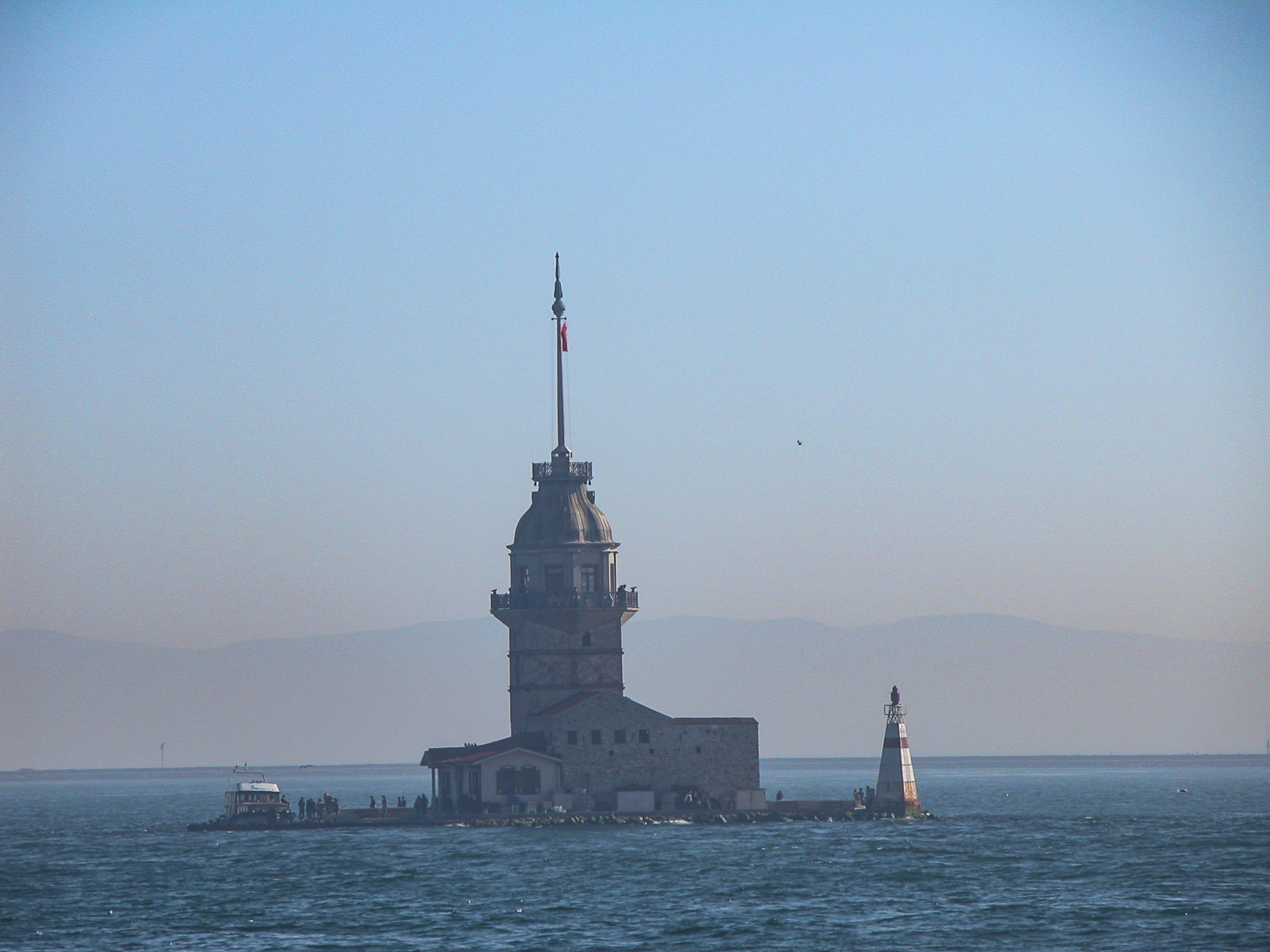
After dinner at the Ekici restaurant, we had a chance to stroll around the marina and check out the assortment of watercraft.

Our tour group enjoys the splendid ambience of the Old Harbor at Antalya.

Wandering around the docks, I came across the palatial motor yacht shown below, flying the Turkish flag but bearing the name of a Greek god, “Poseidon-2”. That seemed a little bit odd to me, but maybe not to its owner.

A Turkish yacht named after a Greek god.

Superstructures of finely crafted, highly-polished wood were typical of both motor and sail yachts in this marina.

This motor yacht bore a more typically Turkish name.

The Mediterranean coast of Turkey was a haven for pirates in ancient times, and I imagine that their descendants are represented among the owners of the boats moored here, such as this magnificent sailing yacht.

The coasts of Turkey were a haven for pirates in ancient times.

Sandie took a closer picture of a section of the harbor wall, with a restaurant at the top. It’s hard to see, but near the upper right-hand corner, just to the left of a palm tree and partly obscured by another palm below it, there is another of those ubiquitous Miller Time beer billboards.
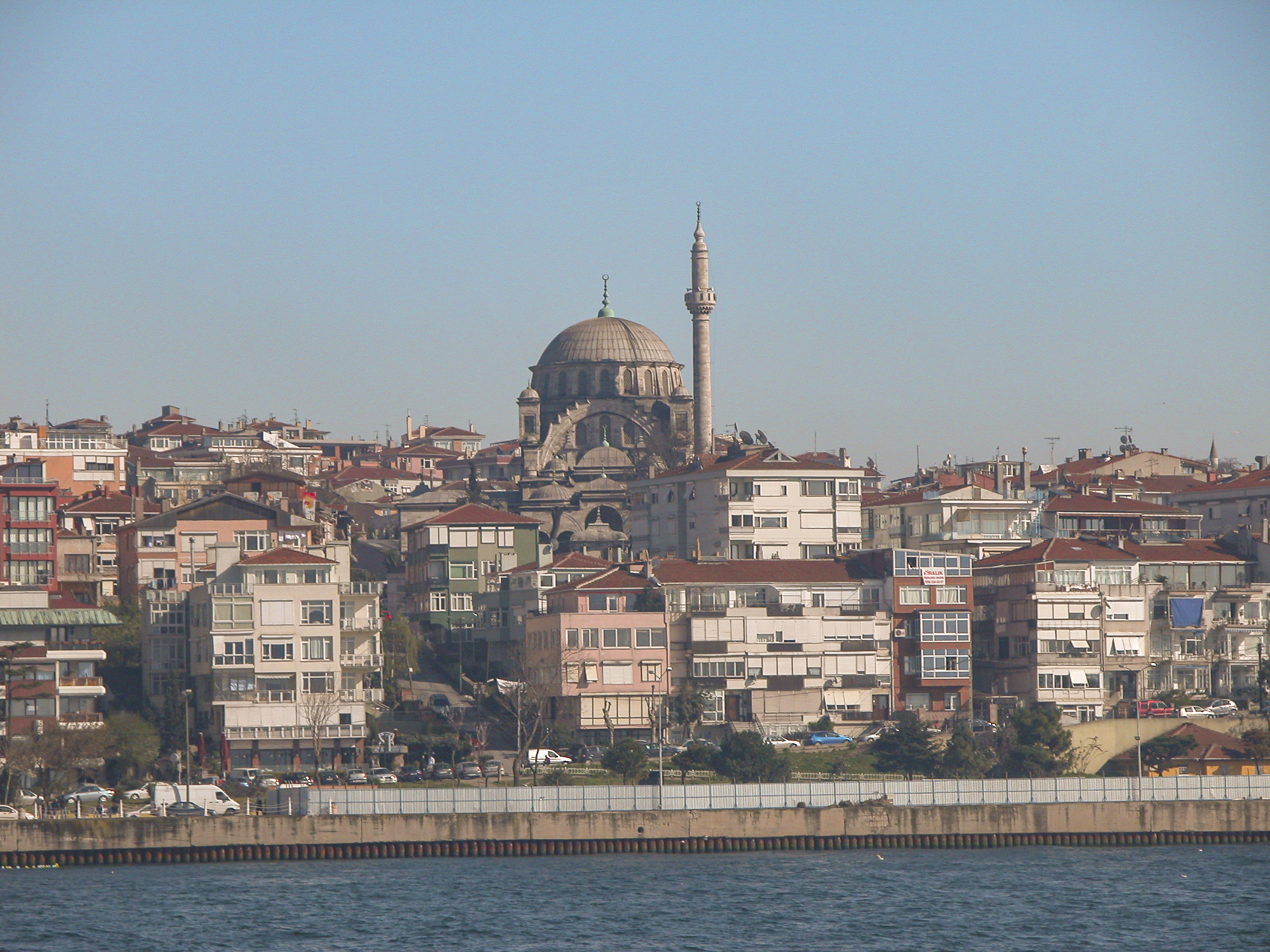
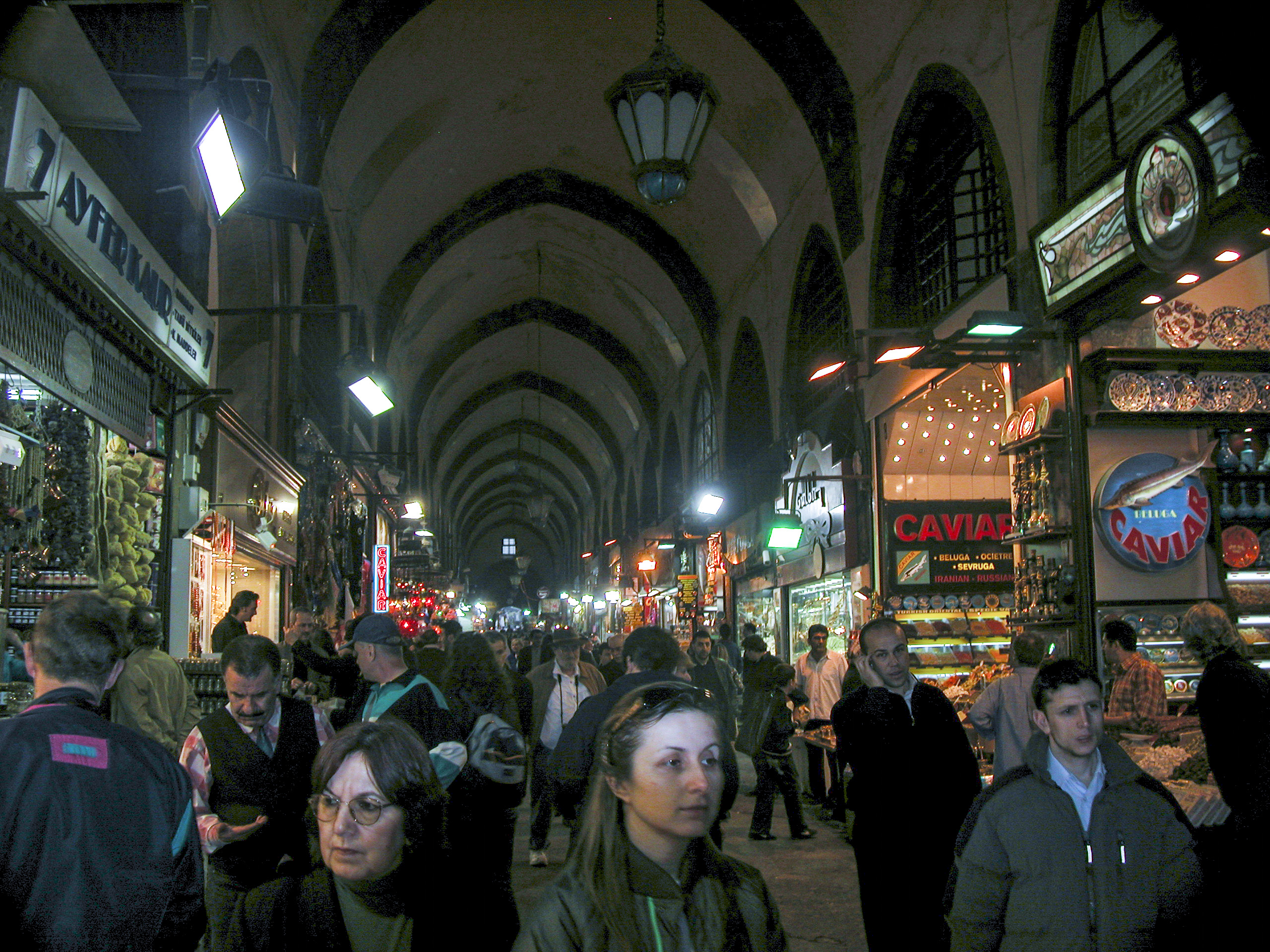
Cafes and shops line the heights above the Old Harbor. The inevitable beer billboard appears in the upper right corner of the picture.

Climbing back up the cliff road, I paused to snap a picture of a model of BMW motorcycle I had never seen before, a 1-cylinder street bike. Motorcycles are a major mode of transportation in Turkey, and the newest and most advanced models often show up there before one sees them in the U.S.

Antalya was buzzing with late-model two-wheelers. This was the first time I ever saw this flavor of BMW.

By this time we finished dinner and came back to the bus, it was getting late, and we had time only for a quick look at some of the other attractions of Antalya before dark. One of them was the Tekeli Mehmet Pasha Mosque, seen here. It was named for Lala Mehmet Pasha, a Grand Vizier in the reign of Sultan Mehmet III (reigned 1595-1603).

The Tekeli Mehmet Pasha mosque. We only got a glimpse of it on our whirlwind tour of Antalya.

Not far from the Tekeli Mehmet Pasha Mosque, Hadrian’s Gate is the oldest surviving structure of Roman vintage. It was built around 130 CE in anticipation of a visit by the Roman emperor Hadrian. I gather that it was covered up and obscured by medieval construction, because the sources say that it was rediscovered in 1817 by a British admiral, Francis Beaufort, but not excavated and restored until the 1950s, after the walls collapsed during an earthquake. According to Beaufort’s description, the gate had a second story, but that was evidently destroyed by earthquakes during the 19th century, because subsequent visitors were unaware of it.

Erected in honor of an AD 130 visit by the Roman Emperor Hadrian, this is the best-preserved section of the old Roman wall.

Two days before the eclipse, excitement was building up, and ads for eclipse viewing glasses were posted in every store window.

Eclipse viewing glasses for sale. Two days before the eclipse, sales are ramping up.
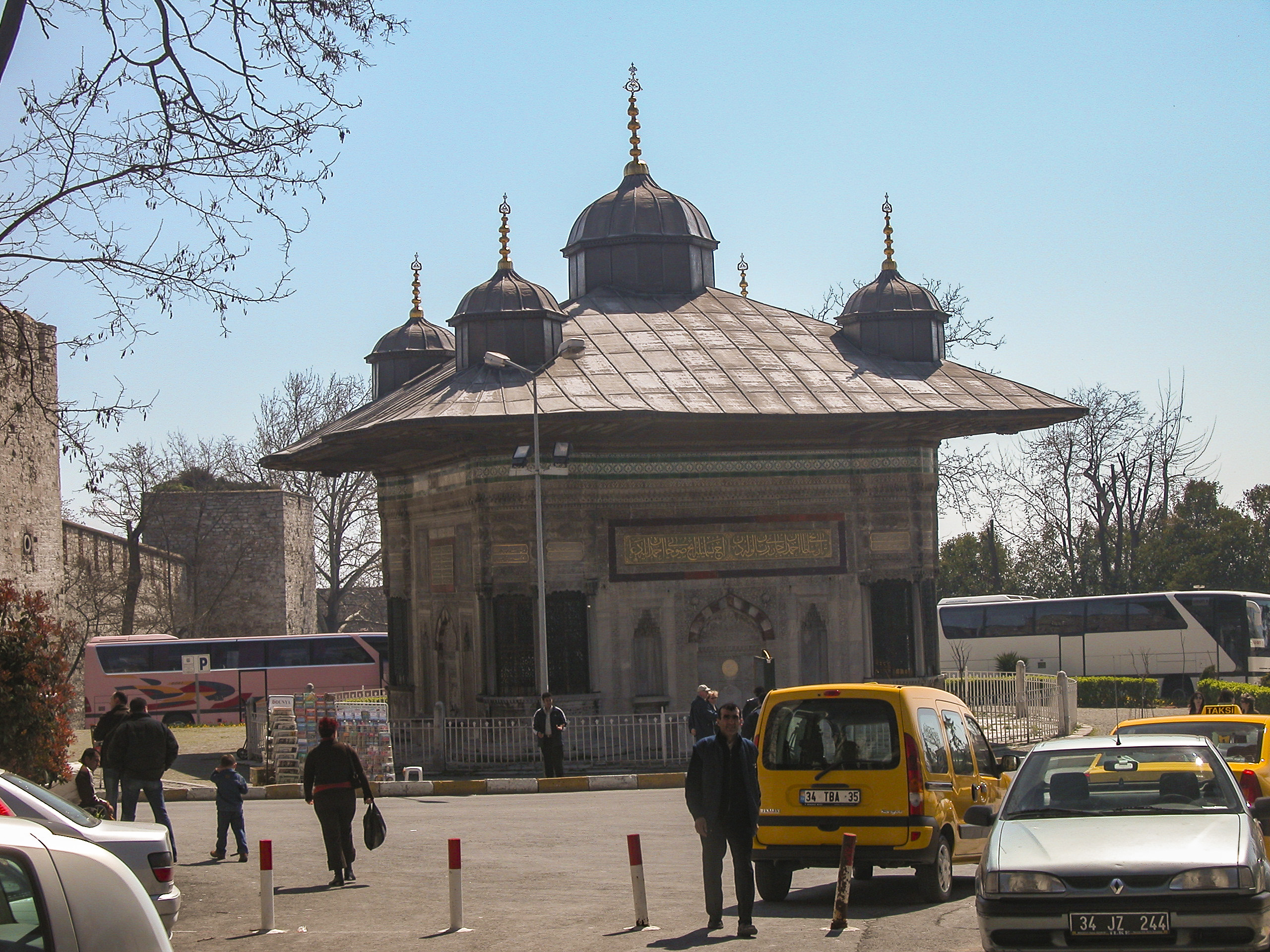
Categories
Turkey, March-April 2006

Taurus Mountains, March 27, 2006

The bus ride from Denizli to Antalya was the longest highway leg of our trip, but it wasn’t boring. For one thing, the scenery was spectacular.
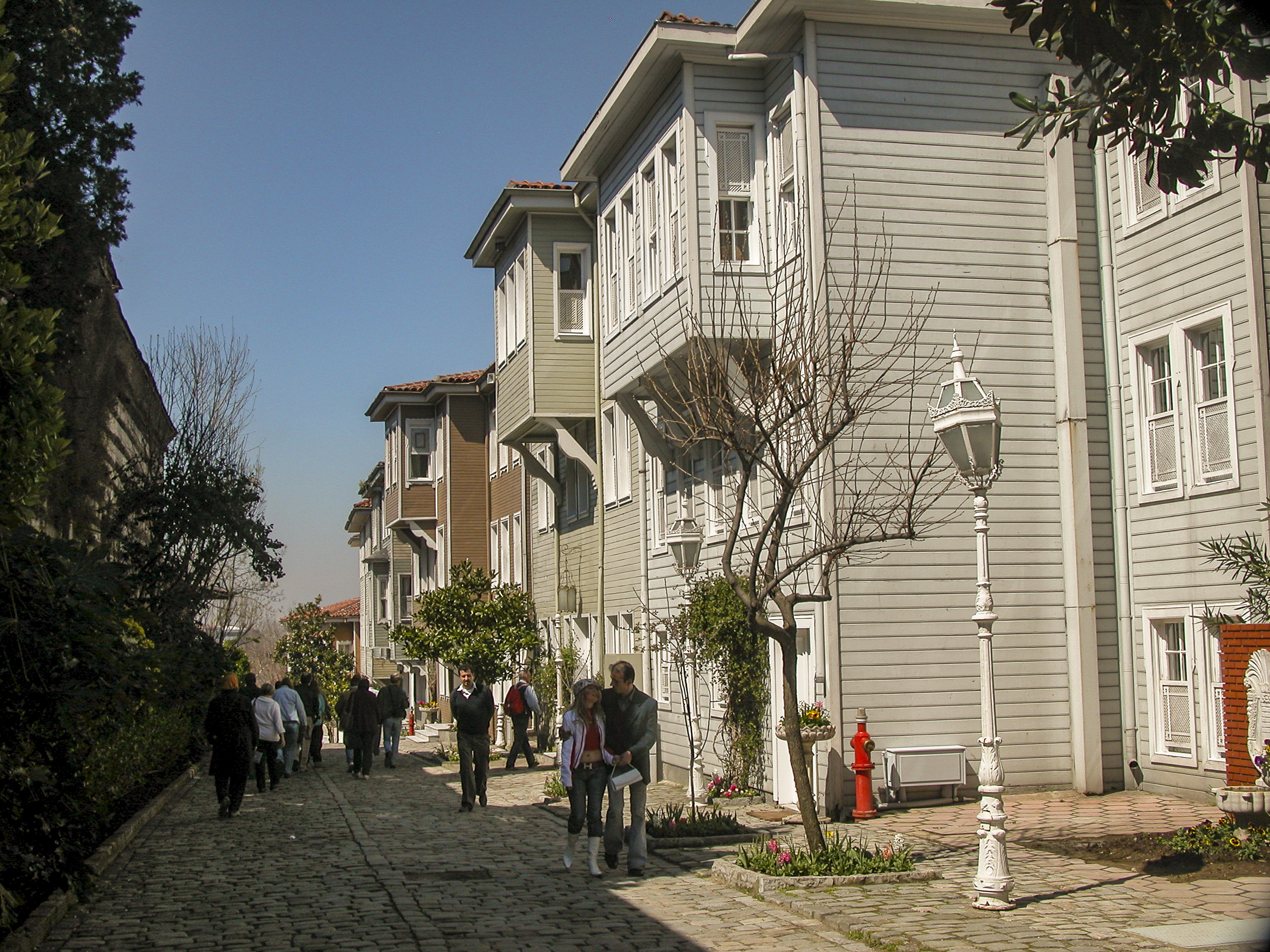
The road to Antalya took us through these scenic mountains.

Our route took us through a number of small provincial towns – there was no burg of any size on the E87 between Denizli and Antalya – and they were mostly unremarkable, but in one of them we passed this striking silver mosque, and I was able to snap a photo of it as we went by. The tinting of the bus’s windshield is responsible for the blue coloring of the upper quarter of the picture.

In an otherwise unremarkable town on our route from Denizli to Antalya.

In general these towns appeared to be farming communities, not much different from any others you would find in the Balkans or the rest of southeastern Europe.

Our route from Denizli to Antalya was dotted with little towns like this one.

Most of the pictures in this leg of the trip I shot from the bus, since we made few stops. Aside from the silver mosque, there were few items worth a snapshot, although I did take a fancy to the bright yellow structure in the picture below, since it seemed a bit atypical for the area. The facade had the appearance of a small business establishment rather than a residence, but there were no signs to identify it as such. Perhaps it was just being completed and hadn’t opened for business yet.

This brightly painted structure caught my attention – not sure whether it was a residence or a business establishment under construction, or both. (Taken from the bus.)

When we did stop, it was for gas and food. We obtained both at this gas station and restaurant in one of the small towns on the road.

A gas station cum cafe where we stopped for lunch.

The nazar boncuğu is an amulet believed to protect against the “evil eye.” Nazar boncuğu is the Turkish spelling; the ğ is silent, and the c is pronounced like a “j” in English, so pronounce it as if it were spelled “nazar bonju”. (Or just Anglicize it completely to “nazar bonchuk.”) The nazar boncuğu can take a number of forms; beads are one of the most common, but the one we encountered most often was a glass disk with a blue edge and a blue or black dot superimposed on a white or yellow center. In the truck stop restaurant on the way to Antalya, Jim Windlinger demonstrated one possible application for it.

Jim Windlinger demonstrates one possible way to use the nazar boncuk. See no evil?

Nazar-type amulets are found all over the Middle East and South Asia, but they are especially popular in Turkey, and we found them everywhere we went. I bought up a large batch of them – they are quite inexpensive – and distributed them to various friends and my co-workers in the LA County Internal Services Department upon my return.

After lunch we made one other stop on the way to Antalya. Attila announced that he knew a nomad who had a camp by the side of the highway in a remote area, and we would take a break there. The ostensible “nomad camp” turned out to be a kind of concession where the lady sold shawls, amulets and various other trinkets, and I’m sure she made a decent living off the tourist trade. She appeared to be living alone there, which seemed unlikely given the isolation of the place, and the tent, despite its rustic appearance, was too elaborate and well-furnished to be the dwelling of a real nomad.

The lady sold shawls and amulets, and probably made a good haul off us.

I wondered what kind of arrangement the owner – whoever the real owner was – had made with the government to obtain the cachet to set up beside the highway to sell souvenirs to tourists with no competitors.

Note the cat asleep on the sofa.

Nevertheless, it was a pleasant diversion on what was an otherwise uneventful part of the trip, and we enjoyed the break.

A plethora of rugs helps keep the place warm in winter.

The tractor in the picture below was a dead giveaway that the “nomad” camp was probably a side business run by a local landowner; why on earth would a real nomad need a tractor?

Why would a nomad need a tractor?

Across the highway from the “nomad” camp was a mysterious structure, shaped somewhat like a yurt but made of masonry, standing by itself in the middle of a field. We never found out its purpose.

Unknown building off the highway.

Finally, just before sunset, we came down from the mountains and caught our first glimpse of the Antalya, metropolis of Turkey’s Mediterranean coast, gleaming in the late afternoon sun.

Our first view of Antalya.