Categories
Turkey, March-April 2006

Side, March 28, 2006

Side is a small city on the Mediterranean coast of Turkey, with a population of 11,000. It is quite ancient, having been founded by Greek colonists in the 7th century BCE or maybe even earlier. Oddly, the Greek settlers adopted the tongue of the indigenous inhabitants, and several inscriptions have been found in this language, dating from the third and second centuries BCE; it was a now-extinct Indo-European language of the Luwian group, i.e. probably related to other ancient Anatolian languages such as Lydian, Carian, etc.

In the mid-first millenium BCE, Side came under the control of the Lydian kingdom and then the Achaemenid Persian Empire until Alexander the Great took it over in 333 BCE. After Alexander’s death, control of Side passed first to the Ptolemies of Egypt and then the Seleucids of Syria, until the expulsion of the Seleucids in 190 BCE, following which Side asserted a de facto independence. By the first century BCE Side had become a major pirate haven and center of the slave trade, finally attracting the unfavorable attention of Rome. In 67 BCE Pompey the Great undertook a campaign that swept the pirates from the sea and brought Side under Roman rule; but it continued to be the great emporium of the Mediterranean slave trade, as well as a major commercial port exporting olive oil, into the third century CE. After that it went into decline, eclipsed by Antalya to the west.

Side has one of the most irritating names of any town I have ever visited. It is the source of much confusion, not least because it is spelled like a common English word, with which it has nothing in common. It is pronounced something like See-day, but this only deepens the confusion, because that is easily mistaken for the English word “city.” I have been told that the word means “pomegranate” in Greek.

Aside from all that, though, Side was a great place to be for the total solar eclipse of 2006. It is a resort town, with a small but very nice harbor, beautiful beaches, and a number of posh hotels. It also has some wonderful Greco-Roman ruins.

We arrived at Side late in the evening of March 27, and, exhausted by the long and eventful trip from Denizli, went right to bed. I’ll leave a description of our hotel, the Kaya Side, which was our base for viewing the eclipse, for the eclipse day post. On the morning of the 28th, we arose early and after a quick breakfast sped off to the central area of Side, where both its ancient ruins and modern shopping area were located.

The eclipse was a big deal in Side. Upon our arrival in the central square, where our bus let us off, we were greeted by a large purple banner with words in Turkish that said I have no idea what, but clearly had something to do with the eclipse.
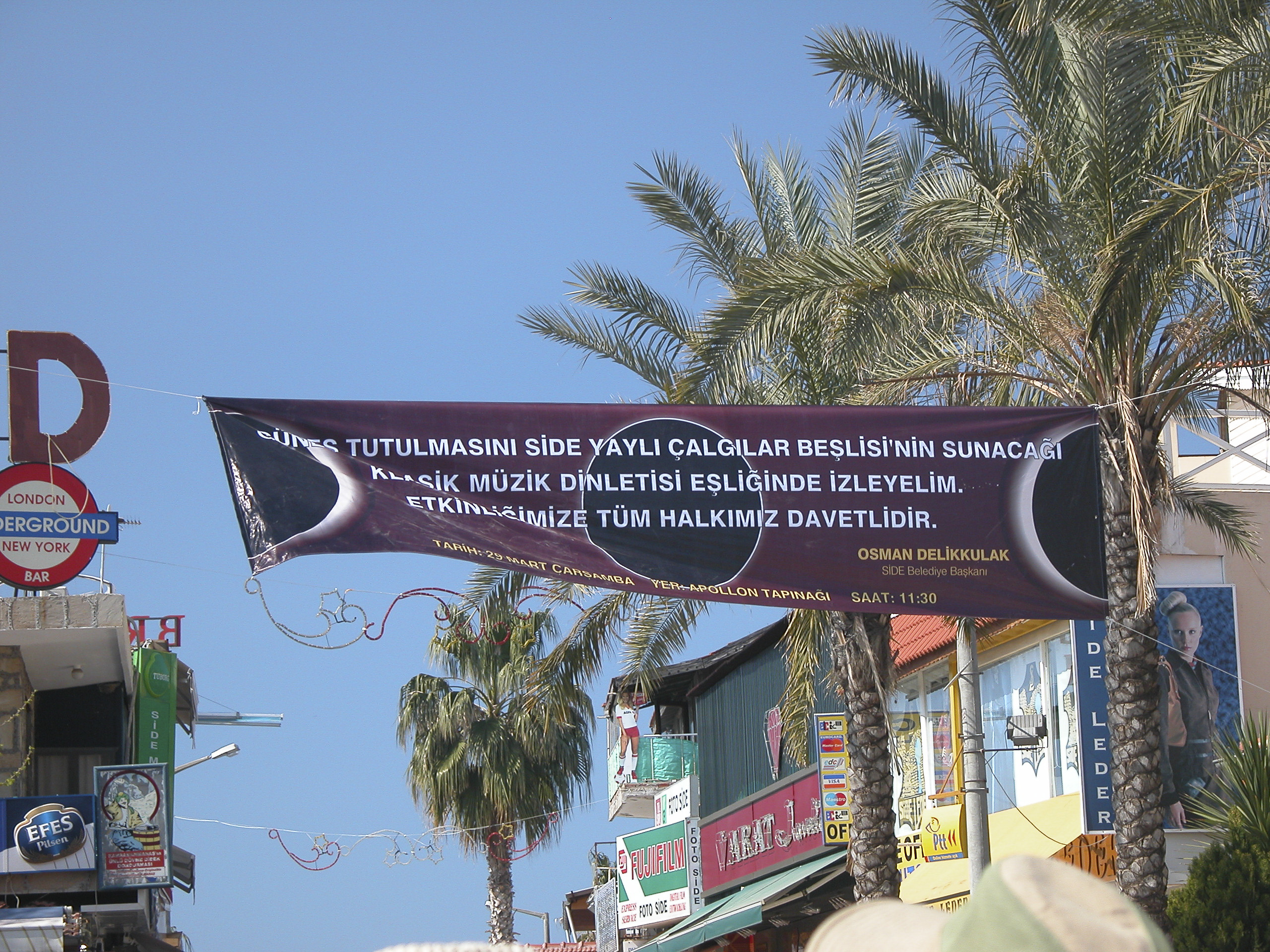
Side was ideally located for the eclipse of 2006, and the locals rose to the occasion.

Despite all the excitement generated by the hordes of crazed barbarians come for the eclipse, Side appeared to be a laid-back town with an easygoing, good-natured ambience.
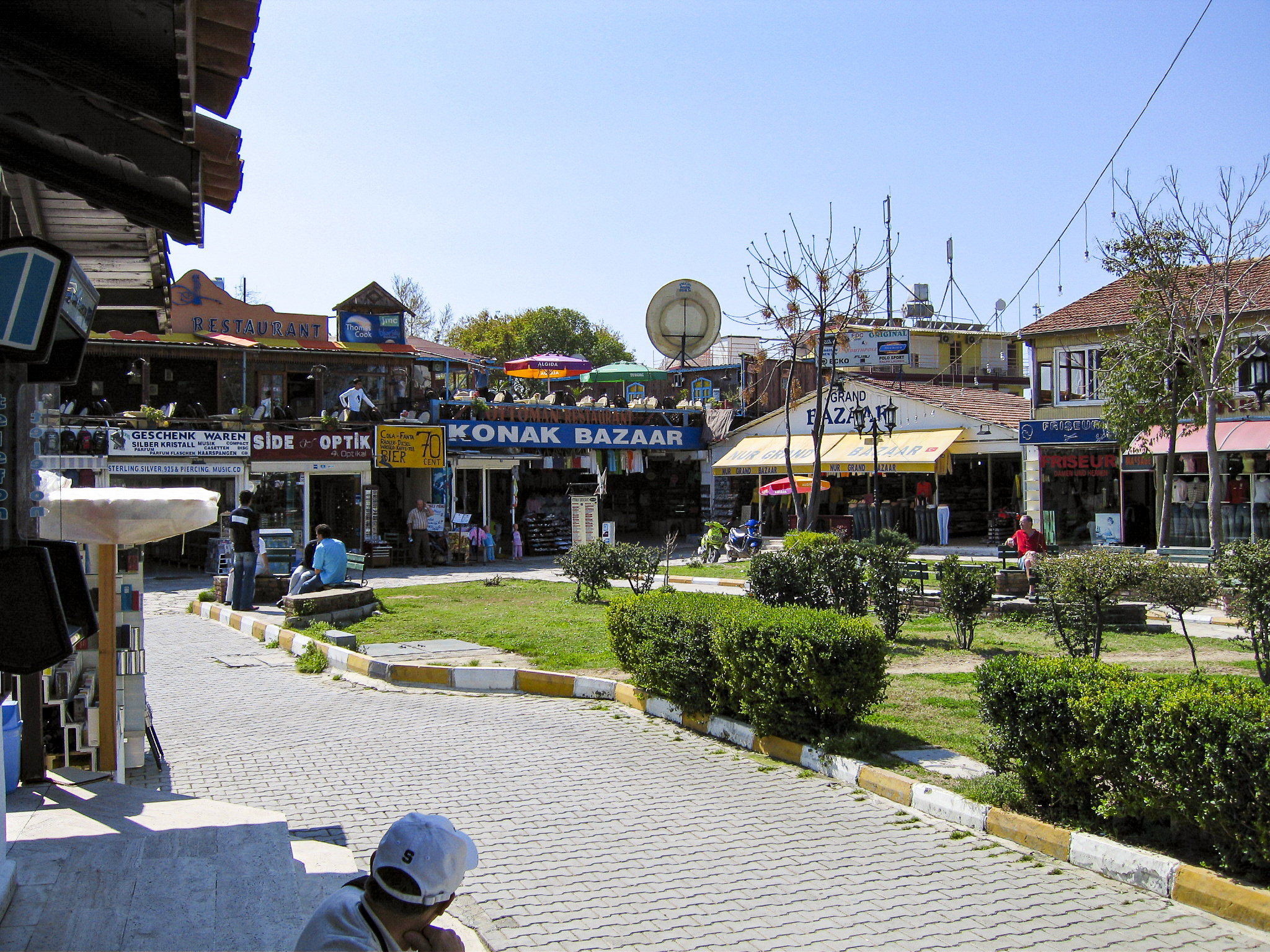
Central marketplace at Side.

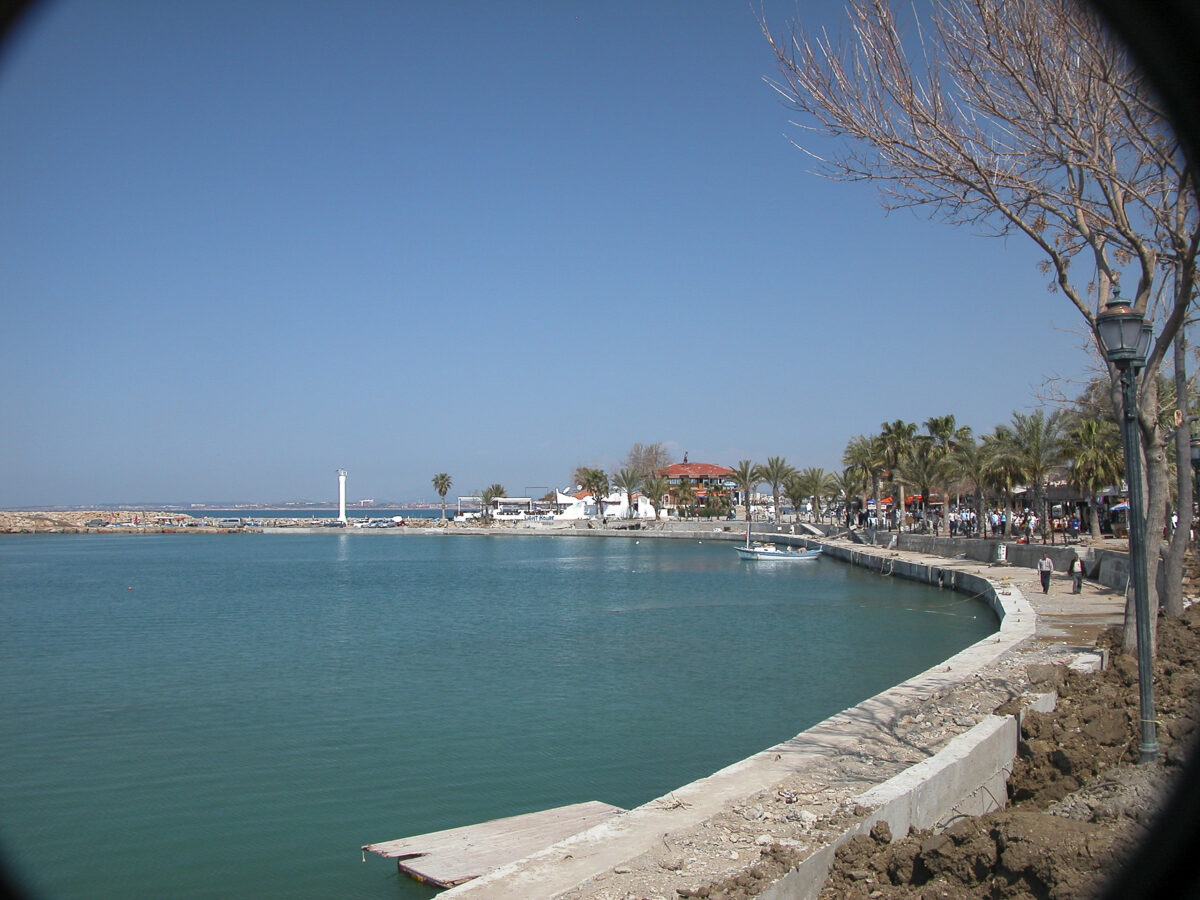
We immediately made for the harbor, which was located some distance away at the end of a street lined with shops and restaurants catering to the tourist trade.
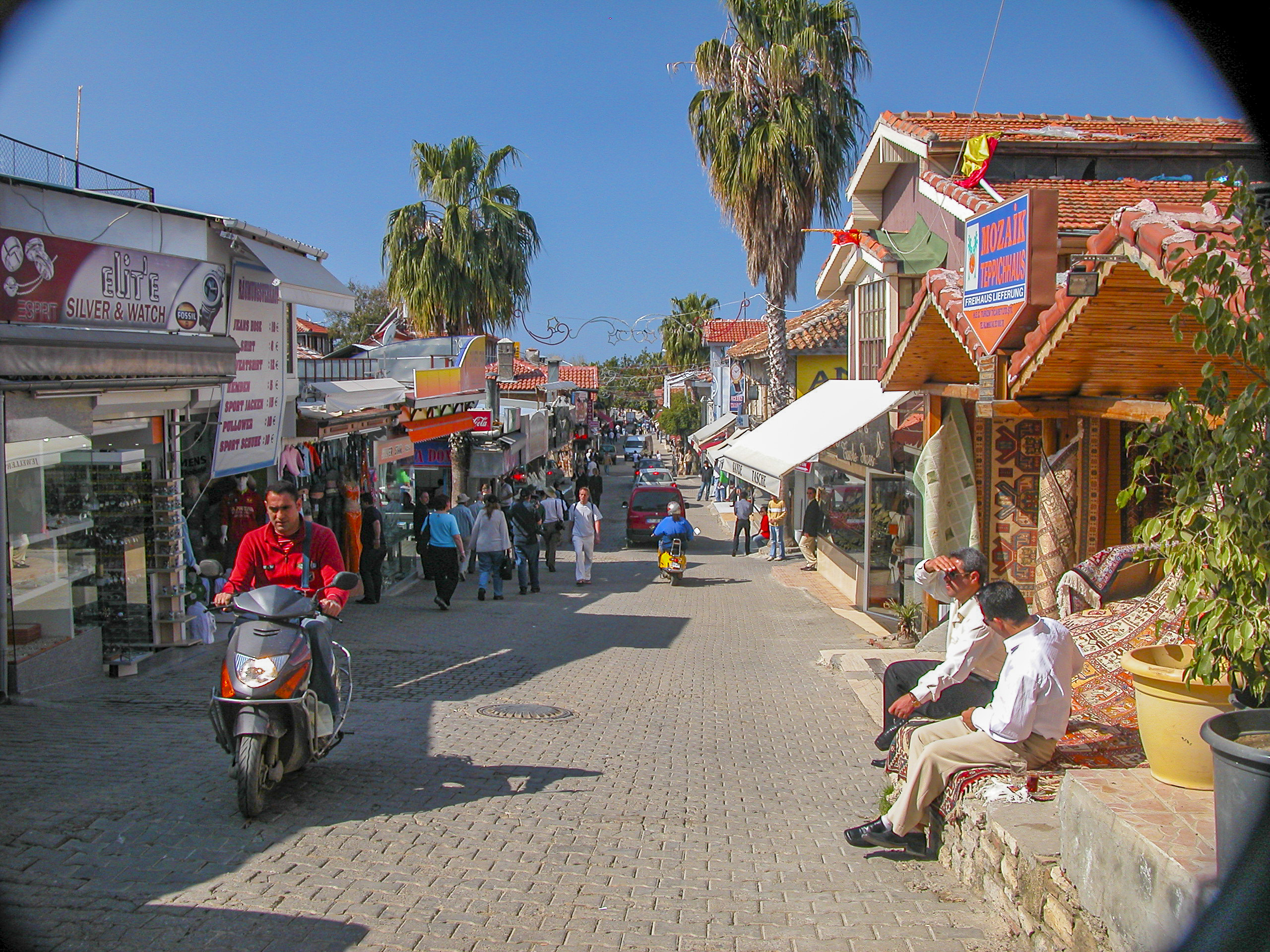
The main drag, well-placed to ensnare tourists on their way to the beach.

Tattoo parlors were well represented in the tourist district. By 2006 the fashion for adorning one’s body with bizarre designs had caught on in Turkey just as everywhere else.
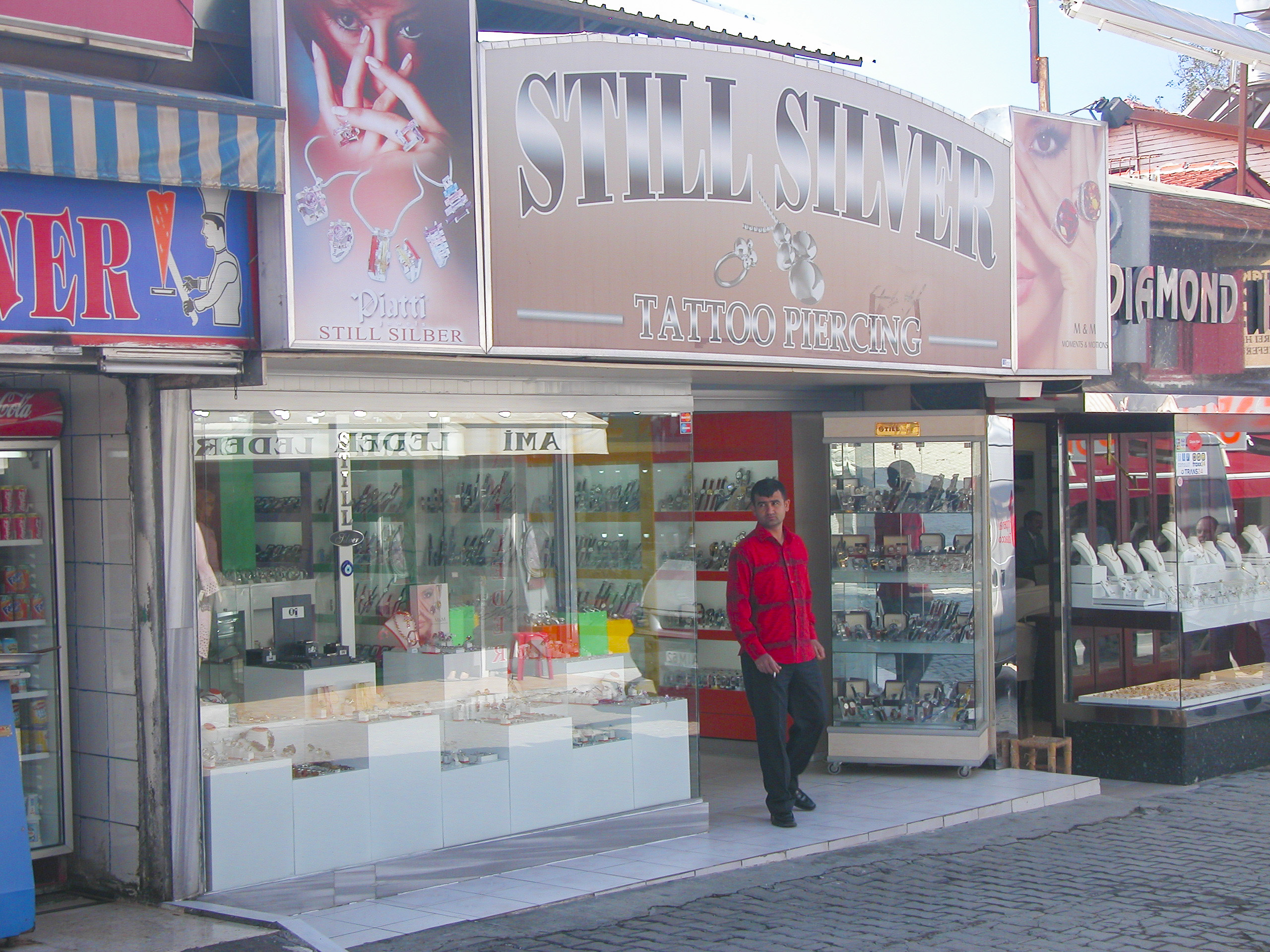
Emporium of Body Art.

I had been under the impression that Side catered mostly to northern European, especially German, vacationers seeking sunny beaches, but was surprised to note that Americans were expected also. One establishment, the Uncle Sam Restaurant, was apparently set up to cater expressly to visitors from the U.S.A.
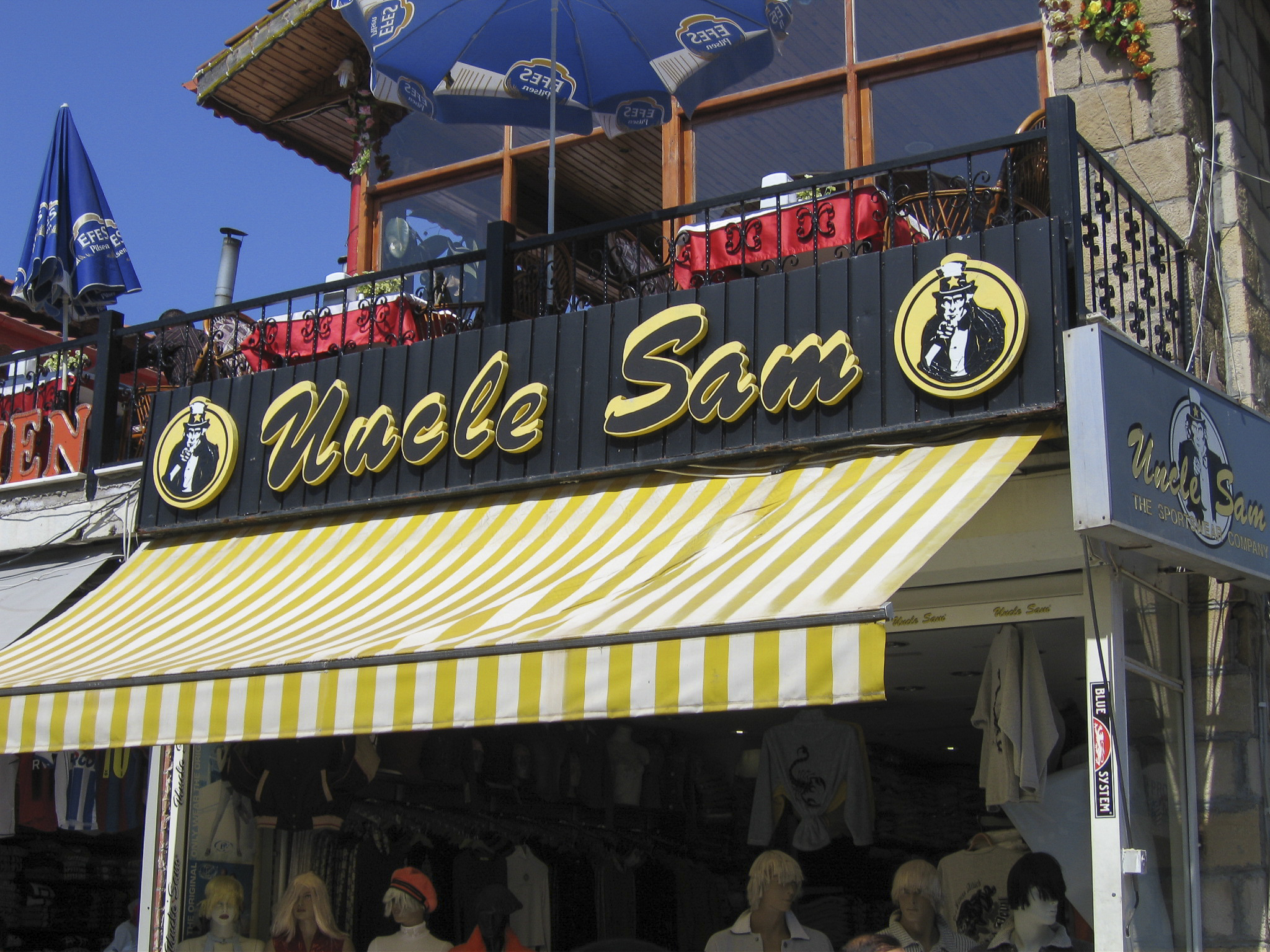
One might get the impression that this establishment was catering to American tourists. We weren’t much tempted to sample their cuisine, however; the chow at our hotel was beyond comparison.

I was astounded to find this relic of the Southern California car culture, in which I was immersed while growing up, in a shop in a Turkish provincial town. No more convincing evidence of globalization can be imagined.
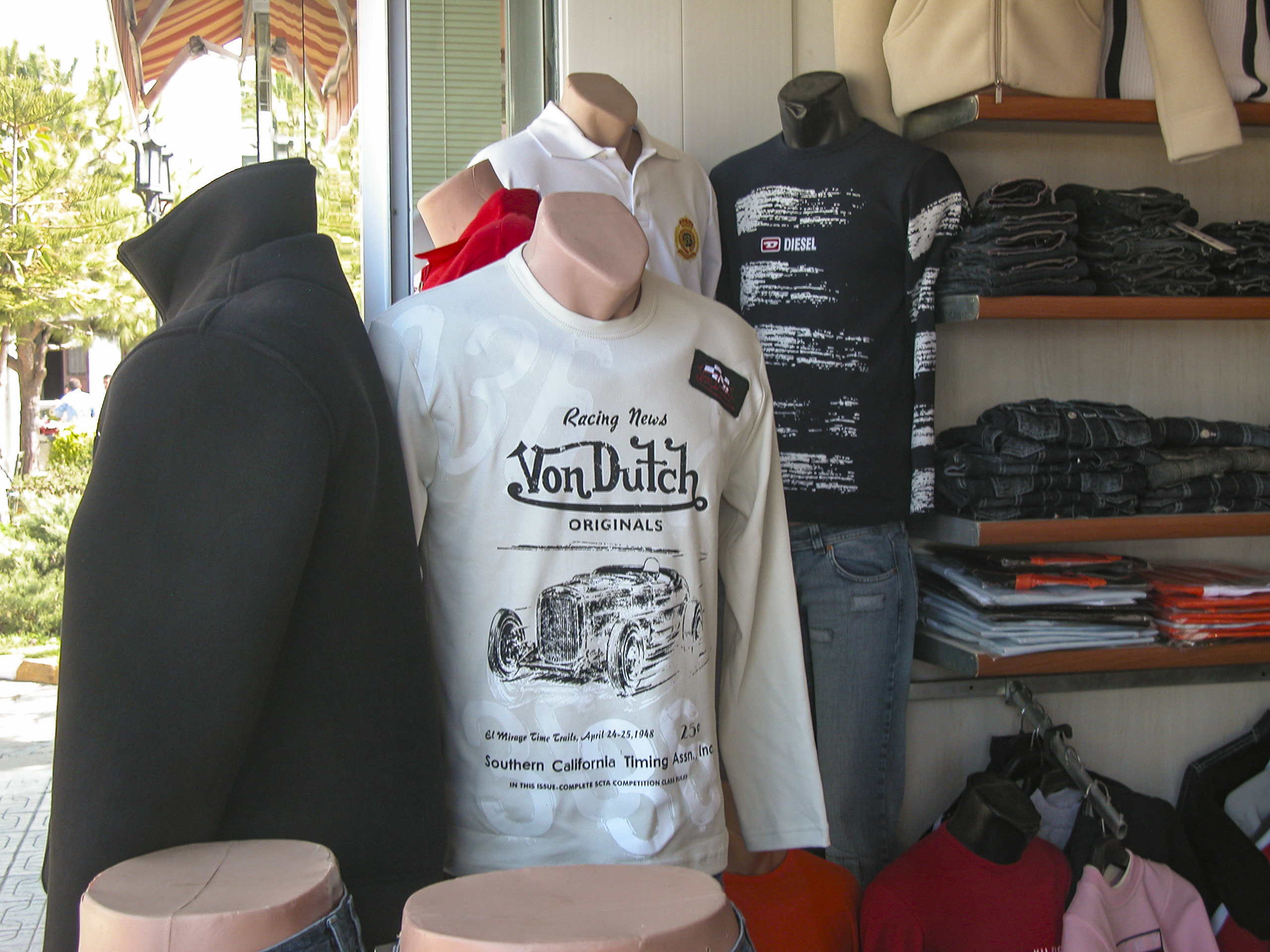
It was a big surprise to come across this memento of Southern California hot-rod culture in such a remote corner of the world so far from its origin.

Upon arriving at the harbor we encountered the obligatory memorial to Kemal Ataturk. There is now also a full-length statue of him in the central square, although I don’t remember seeing it when we were there.
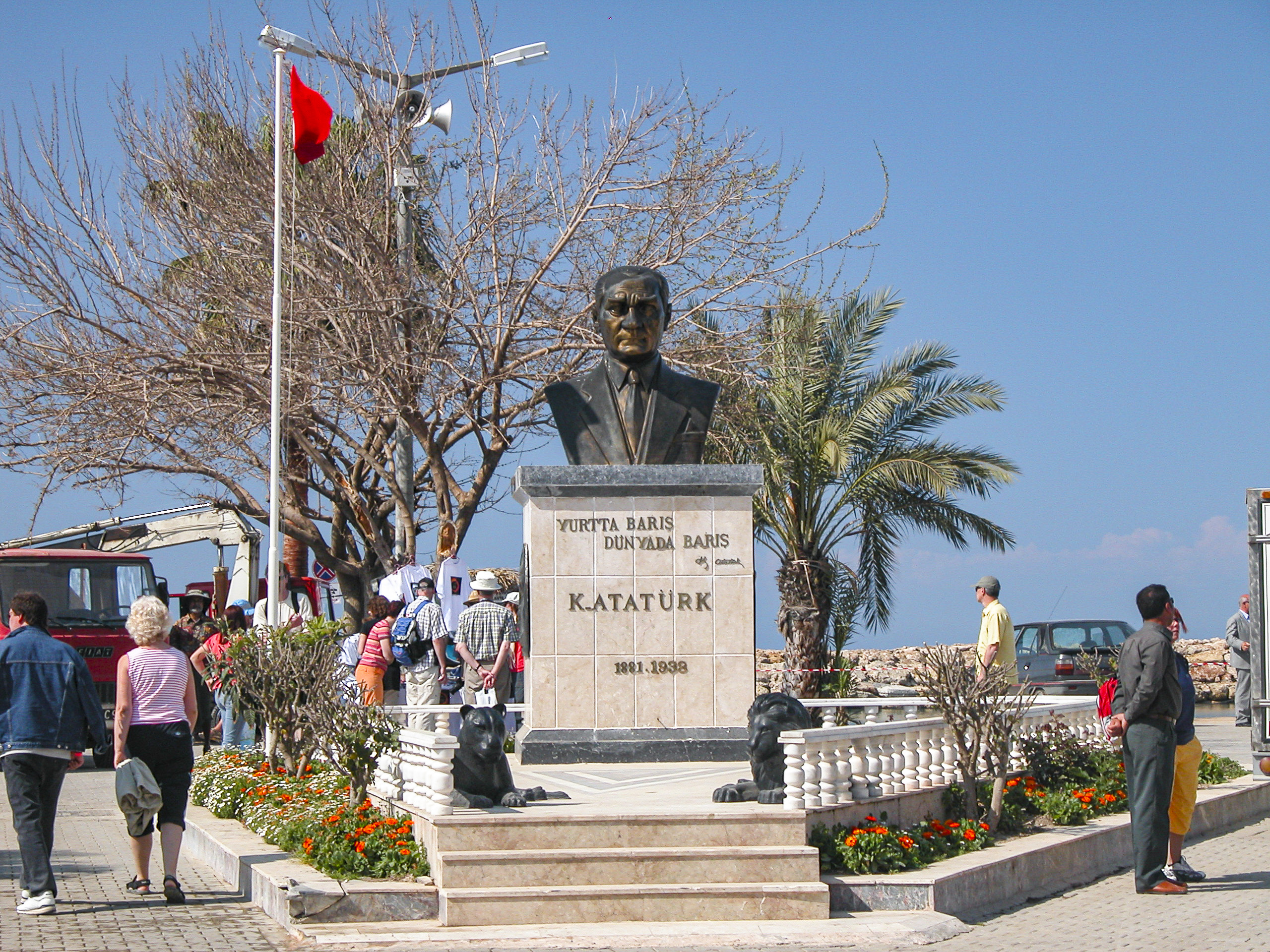
The father of modern Turkey. Doubtless rolling over in his grave at what his successors have done to his legacy.

There were several temples in the ancient city. The patron deities of Side were Athena and Apollo, and their almost identical twin temples commanded the harbor entrance. A news crew was filming the tourists infesting the Temple of Apollo as part of its coverage of preparations for the eclipse.
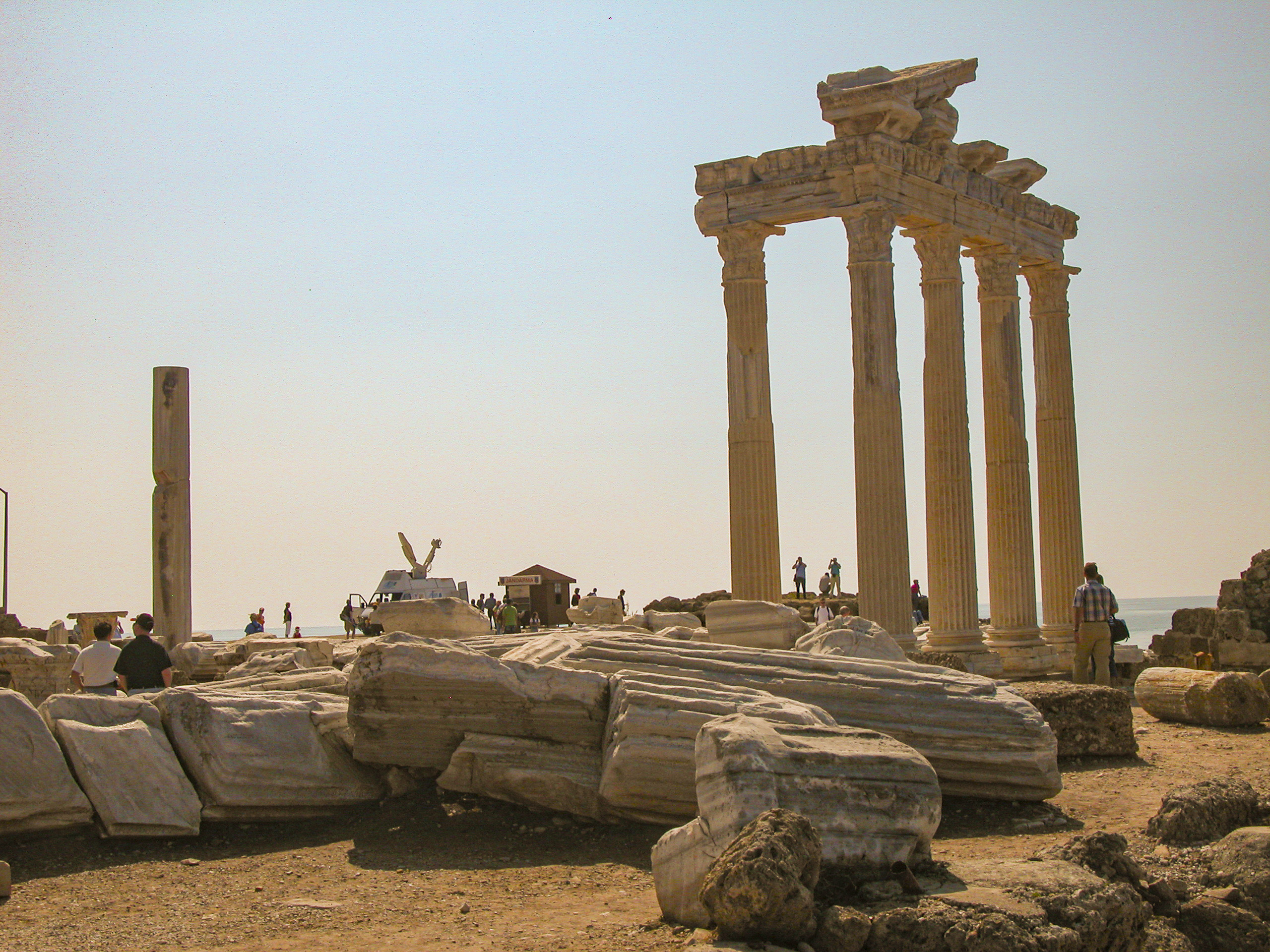
Tourists explore the Temple of Apollo while a news camera crew covers preparations for the eclipse.

It was appropriate that Elouise Mattox, a person of considerable intellect herself, would choose to check out the Temple of Athena, the goddess of wisdom.
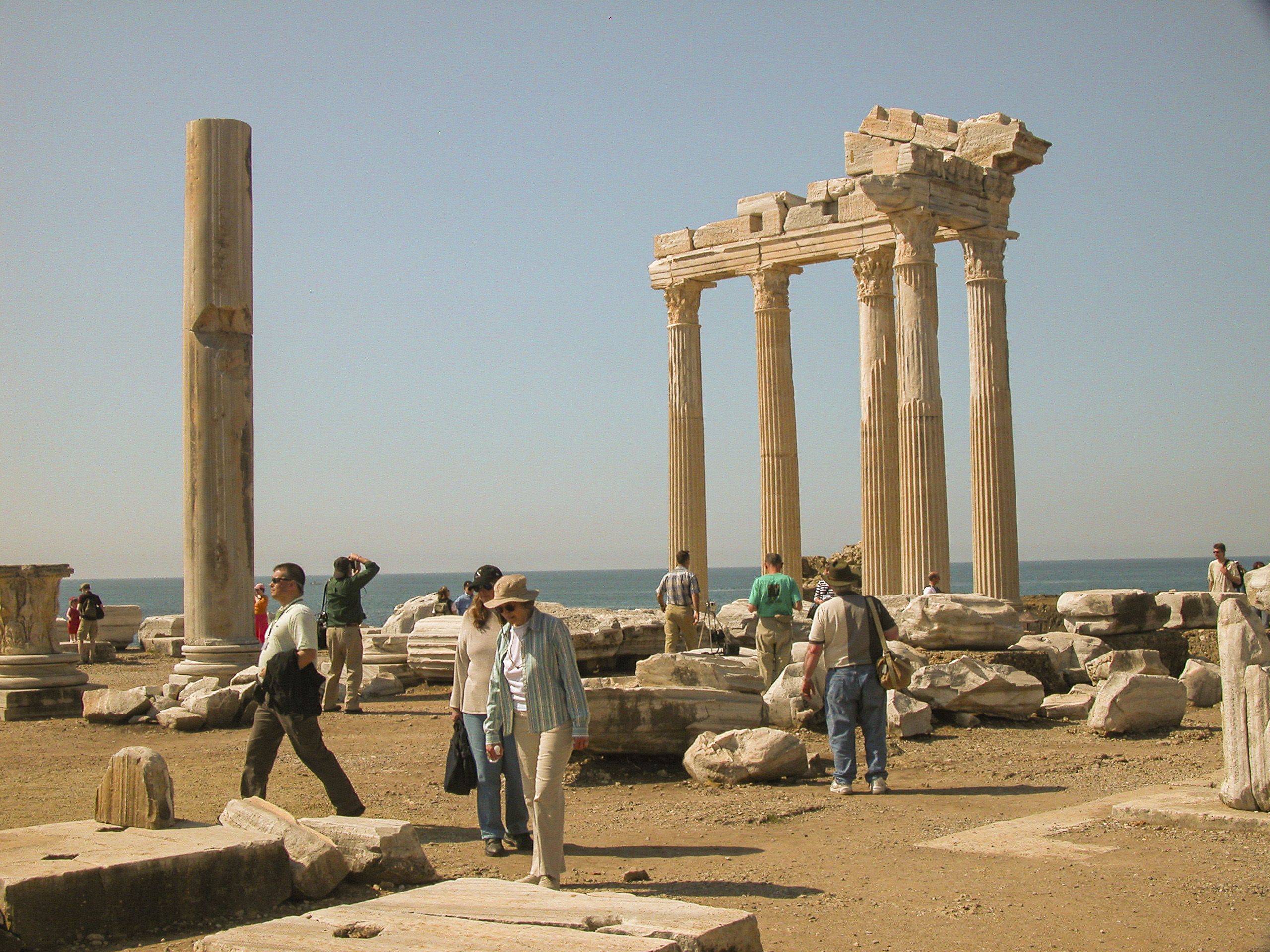
Athena was the Greek goddess of wisdom. Here a modern-day Athena surveys the ruins of her predecessor’s Temple.

The Temple of Apollo was built around 150 CE, during the reign of Roman Emperor Antonius Pius. The capitals of the columns mark its style as Corinthian.
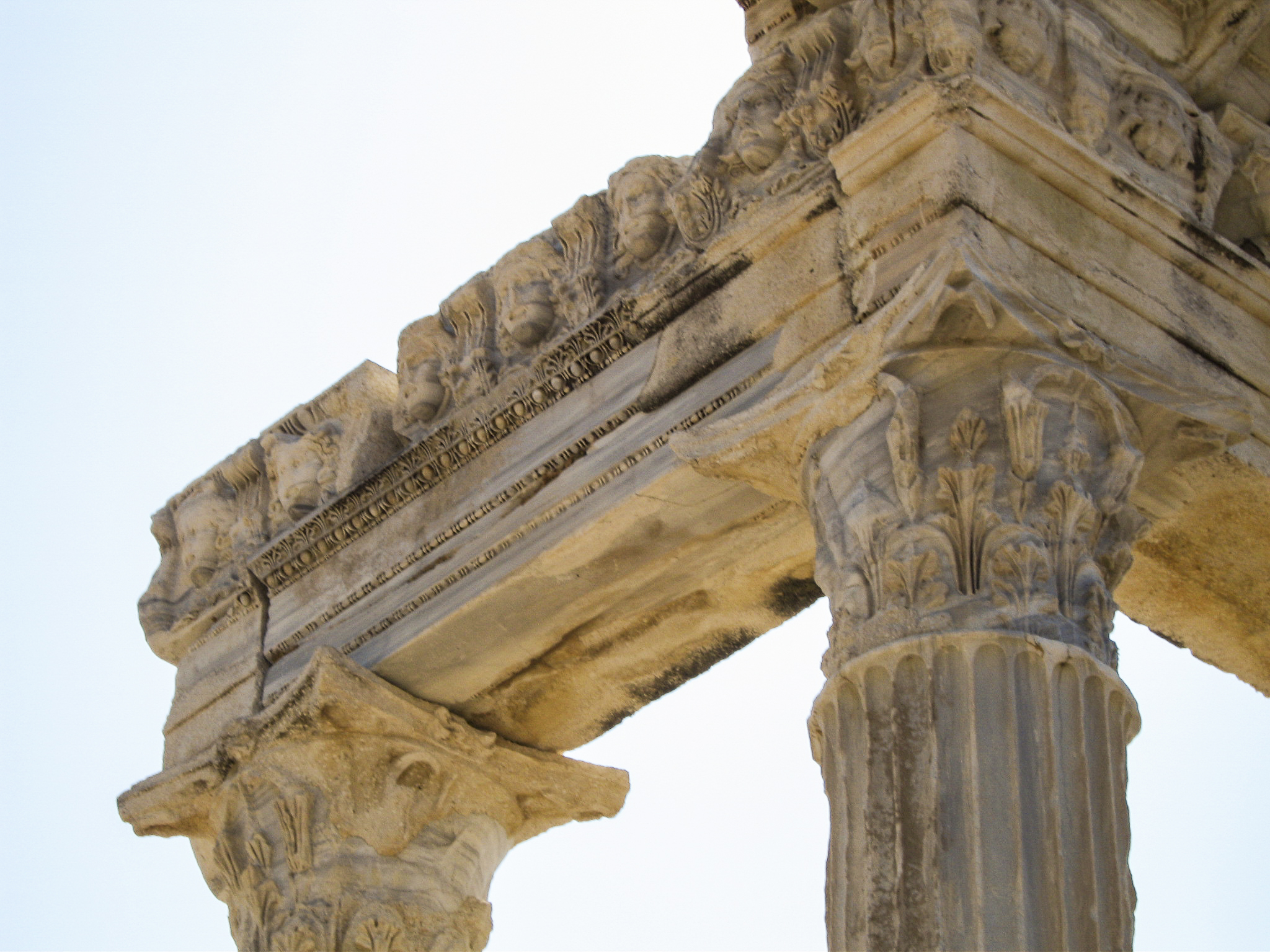
The Temple was built in the Corinthian style, as can be seen from these columns.

Sandie shot this picture showing the detail of the one remaining corner of the Apollo temple, with its complex partially restored cornice, on which the decorative Medusa heads can be seen. I don’t know why the Greeks were so obsessed with using Medusa heads for decoration. Did they want to turn everyone to stone?
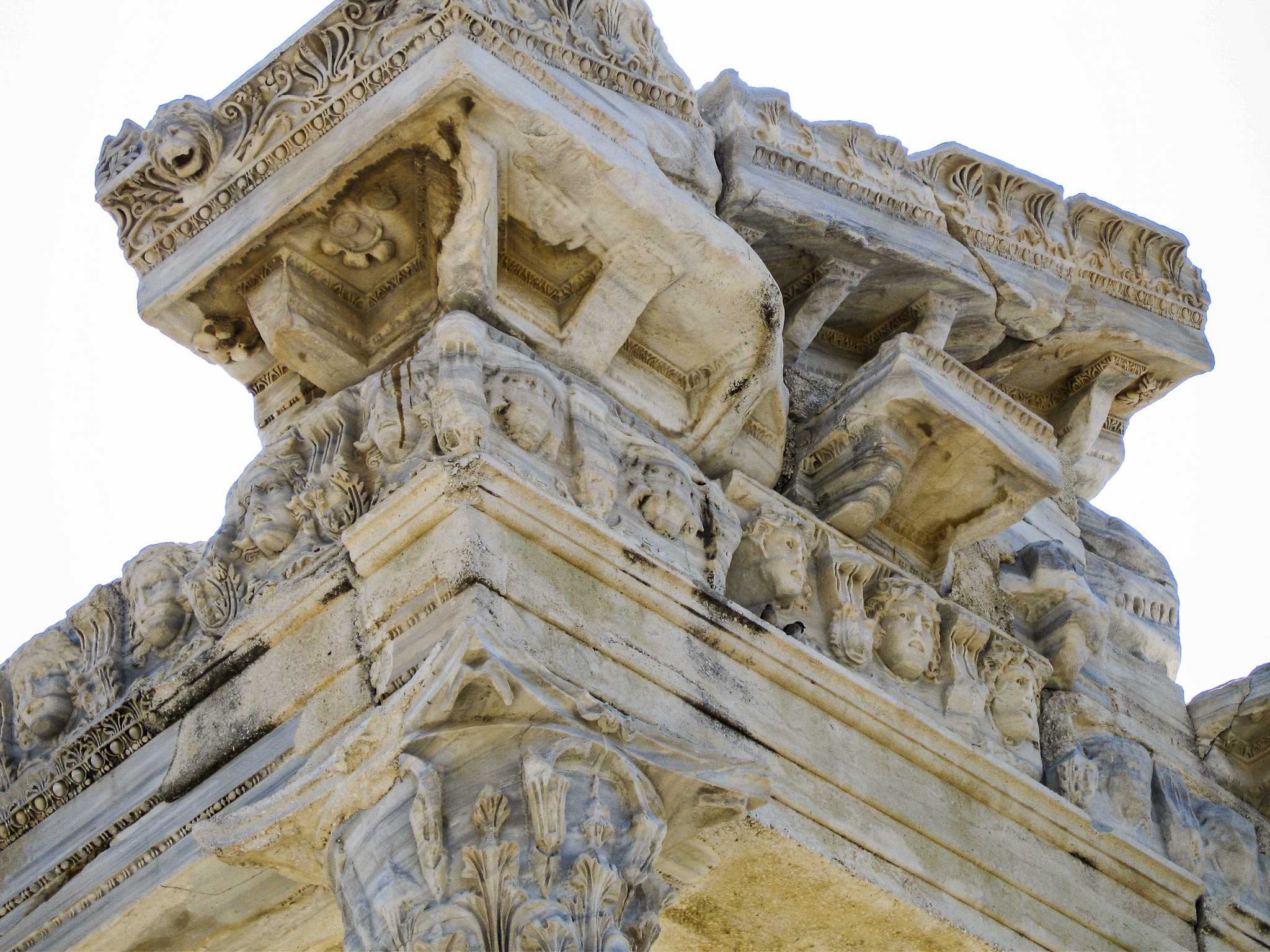
The Temple of Apollo featured a frieze with Medusa heads.

It is believed that the Temple of Apollo at Side was the place where Mark Antony first met up with Cleopatra, and he may have even given her the Temple of Apollo as a present.
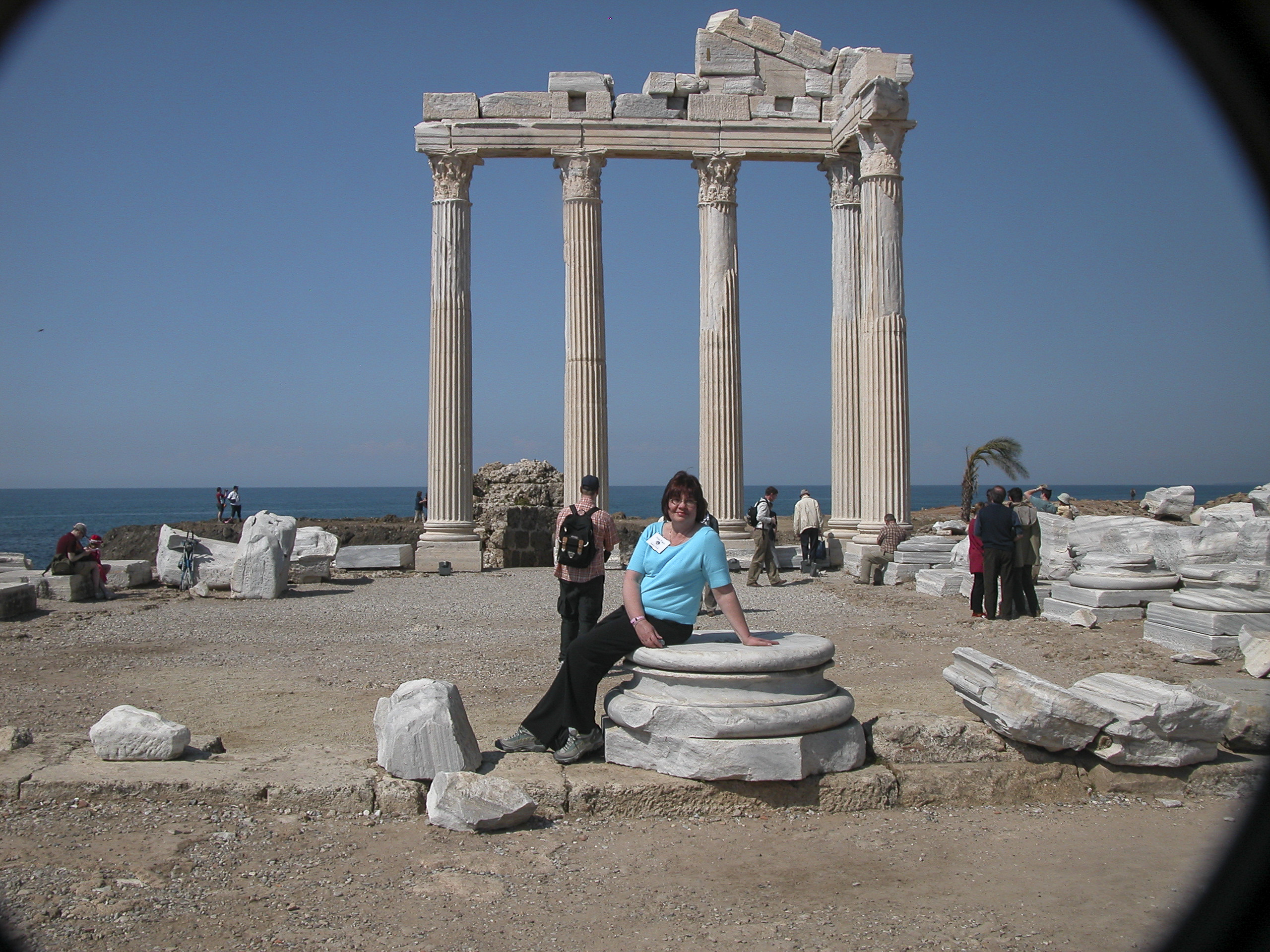
A modern-day Cleopatra lounges in the Mediterranean sunshine, awaiting the arrival of her Mark Antony.

But instead of Mark Antony, Sandie got stuck with this scruffy refugee from a pirate galley, who saved her in the nick of time from being spirited away by his fellow-pirates and sold into a pasha’s harem.
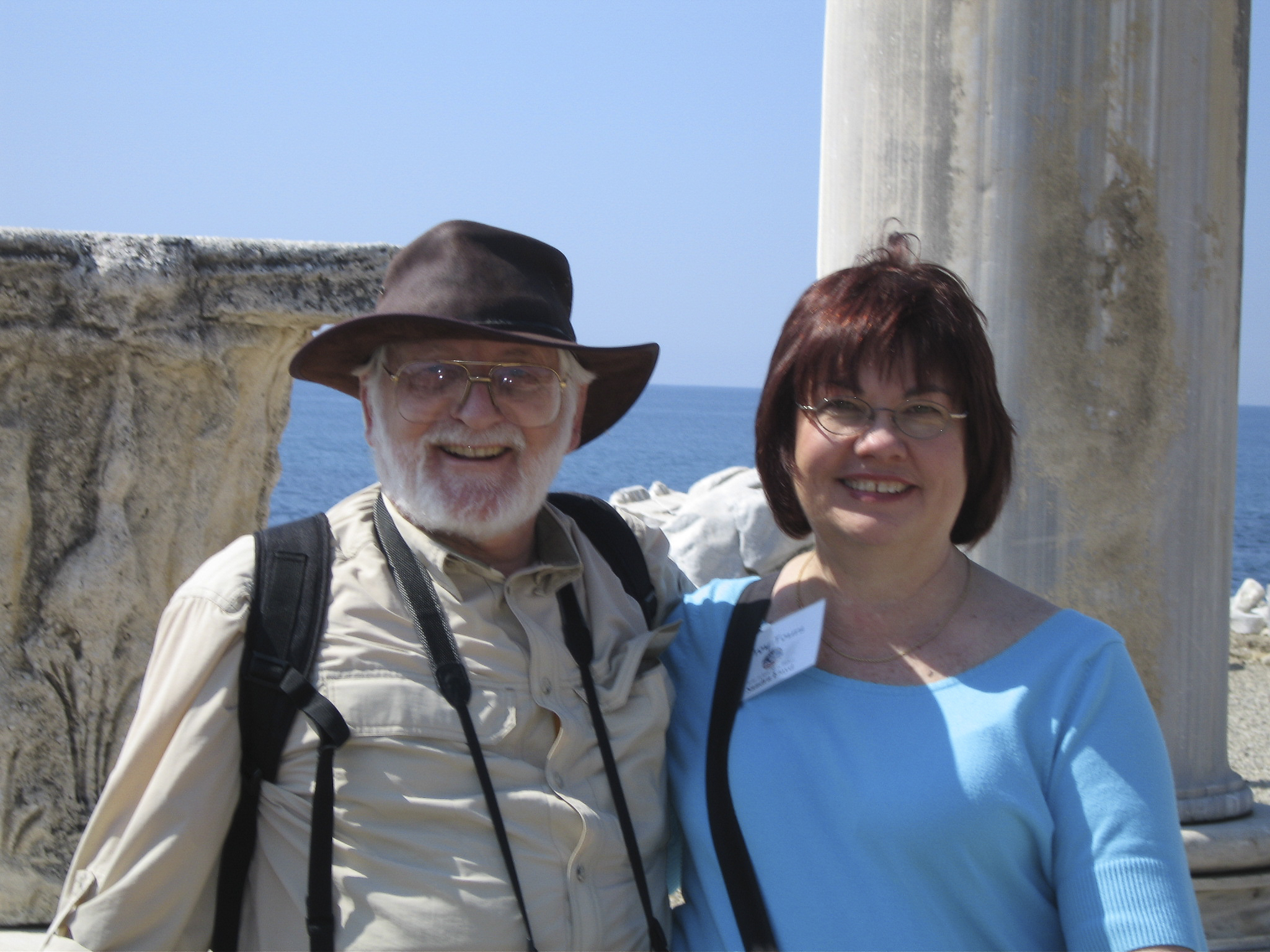
Having successfully evaded capture by janissaries or pirates, with the fabled Mediterranean Sea at our backs.

The modern-day descendants of the pirates of Side now operate excursion boats. The trend was begun by Sinbad the Sailor, who (as is recounted in the Arabian Nights) after his seventh and last voyage, took up residence at Side and started a business taking tourists on excursions along the shores of the Mediterranean.
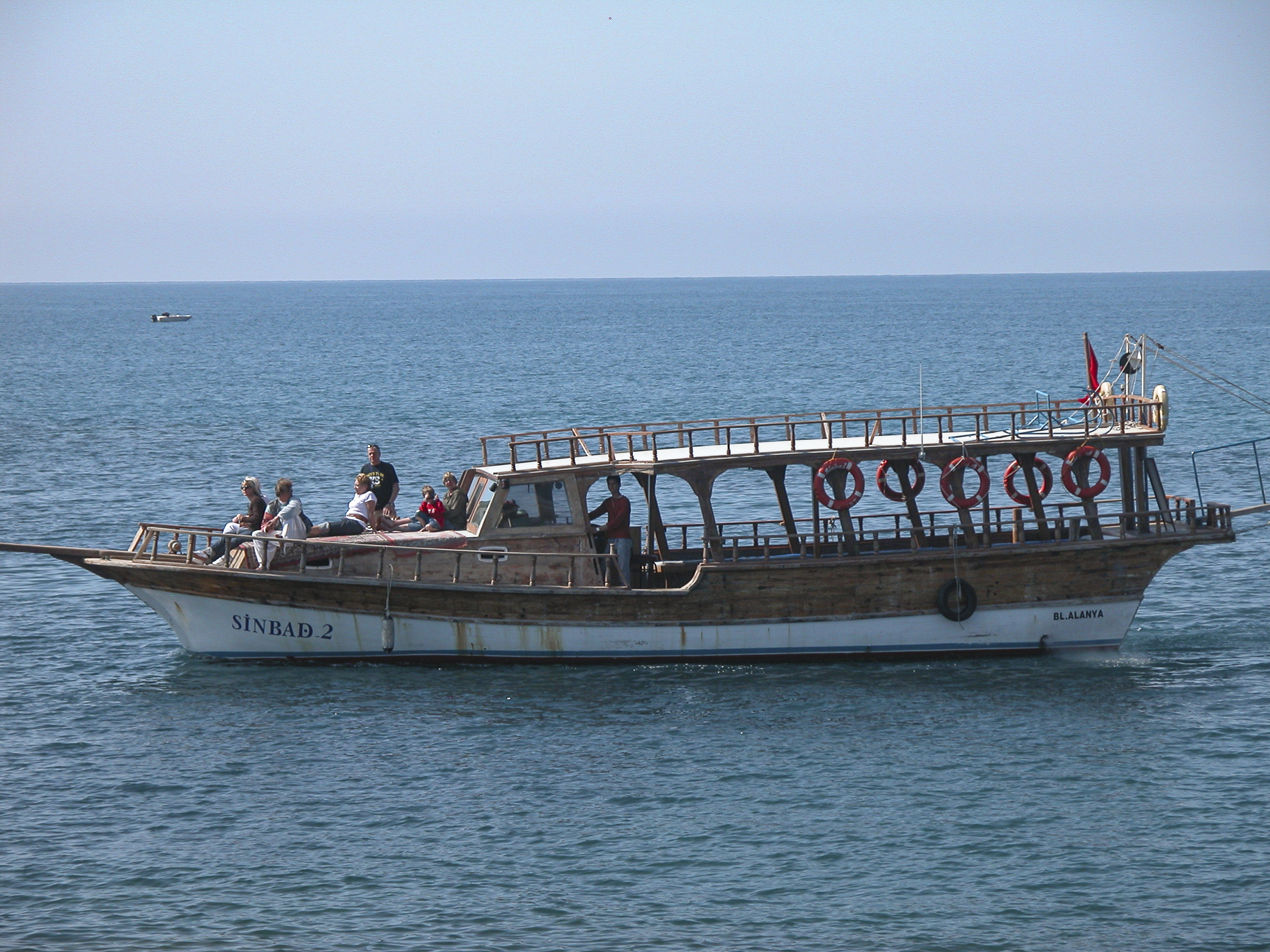
One the excursion boats of Sinbad the Sailor’s fleet.

In the 5th century CE, the Christians took over in Side and built a basilica there, shown below.
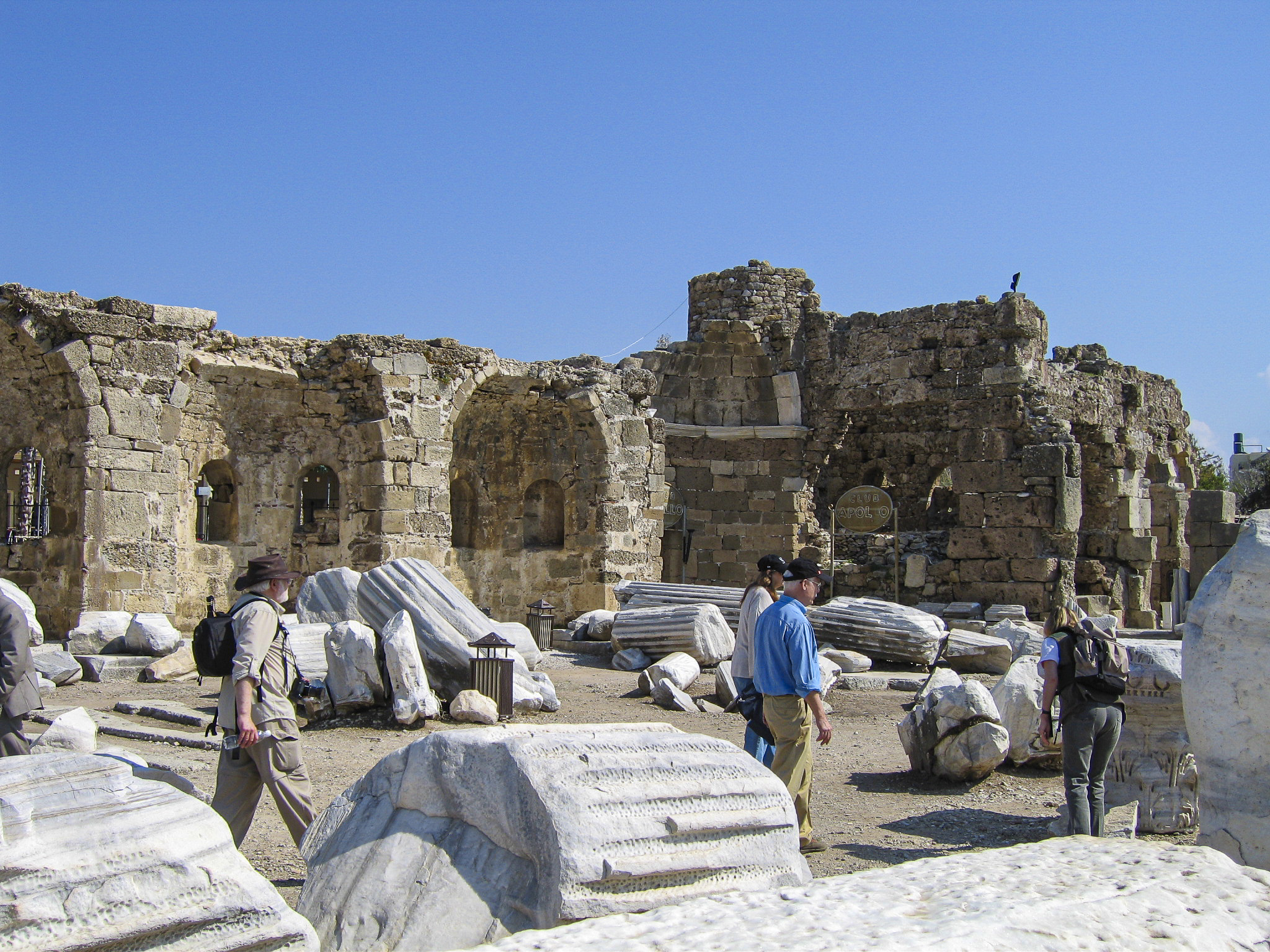
A notorious heathen shamelessly strolls by the remains of the 5th-century Christian basilica of Side.

I tracked a present-day adventurer, Chuck Mattox, as he explored the ruins of Side.
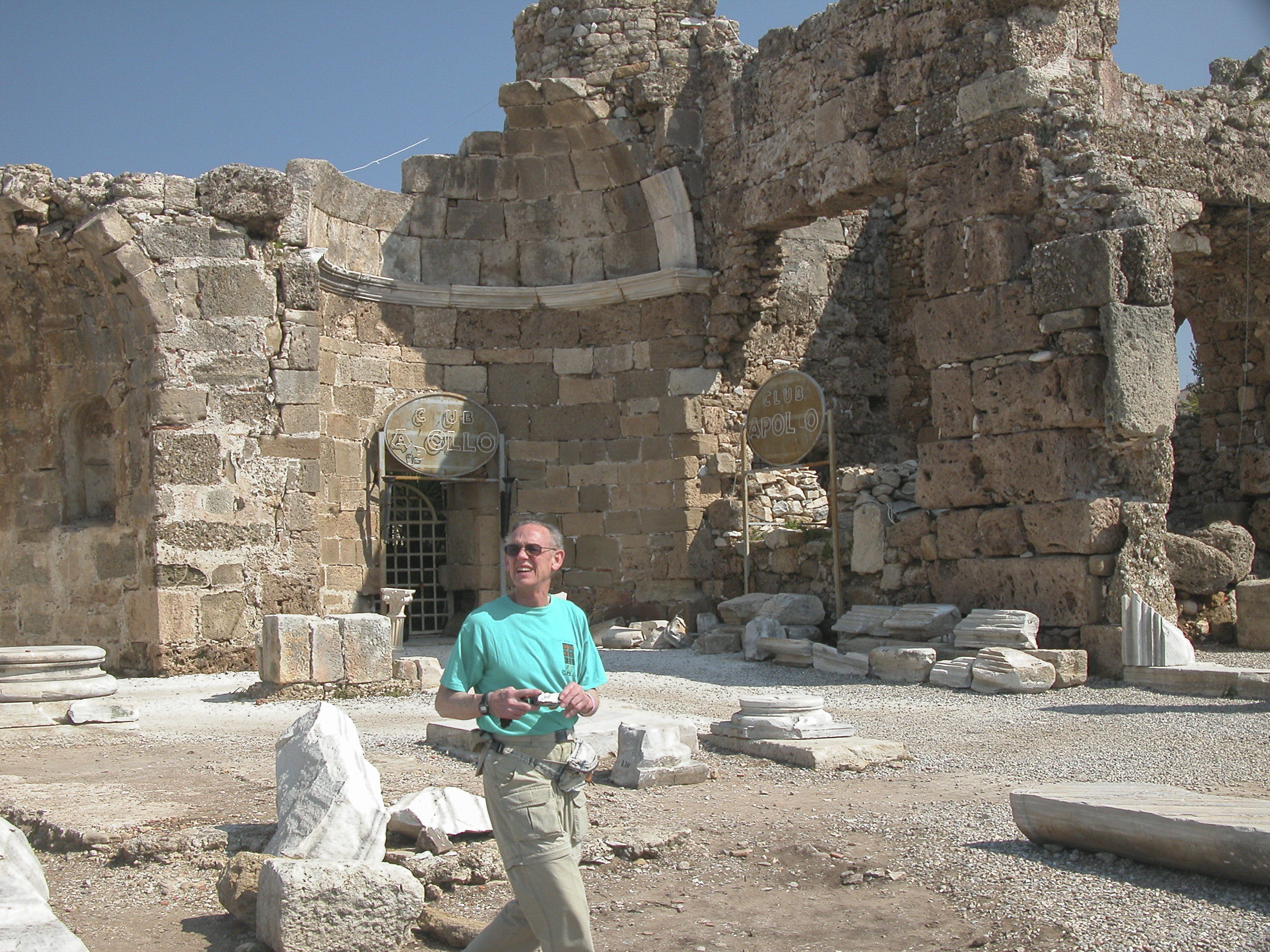
Following in the footsteps of Alexander the Great, Mark Antony, Suleiman the Magnificent, Mustafa the Mad, et al.

Among other places, Chuck discovered the Club Apollo, the dive where Mark Antony and Cleopatra used to hang out when they came to town.
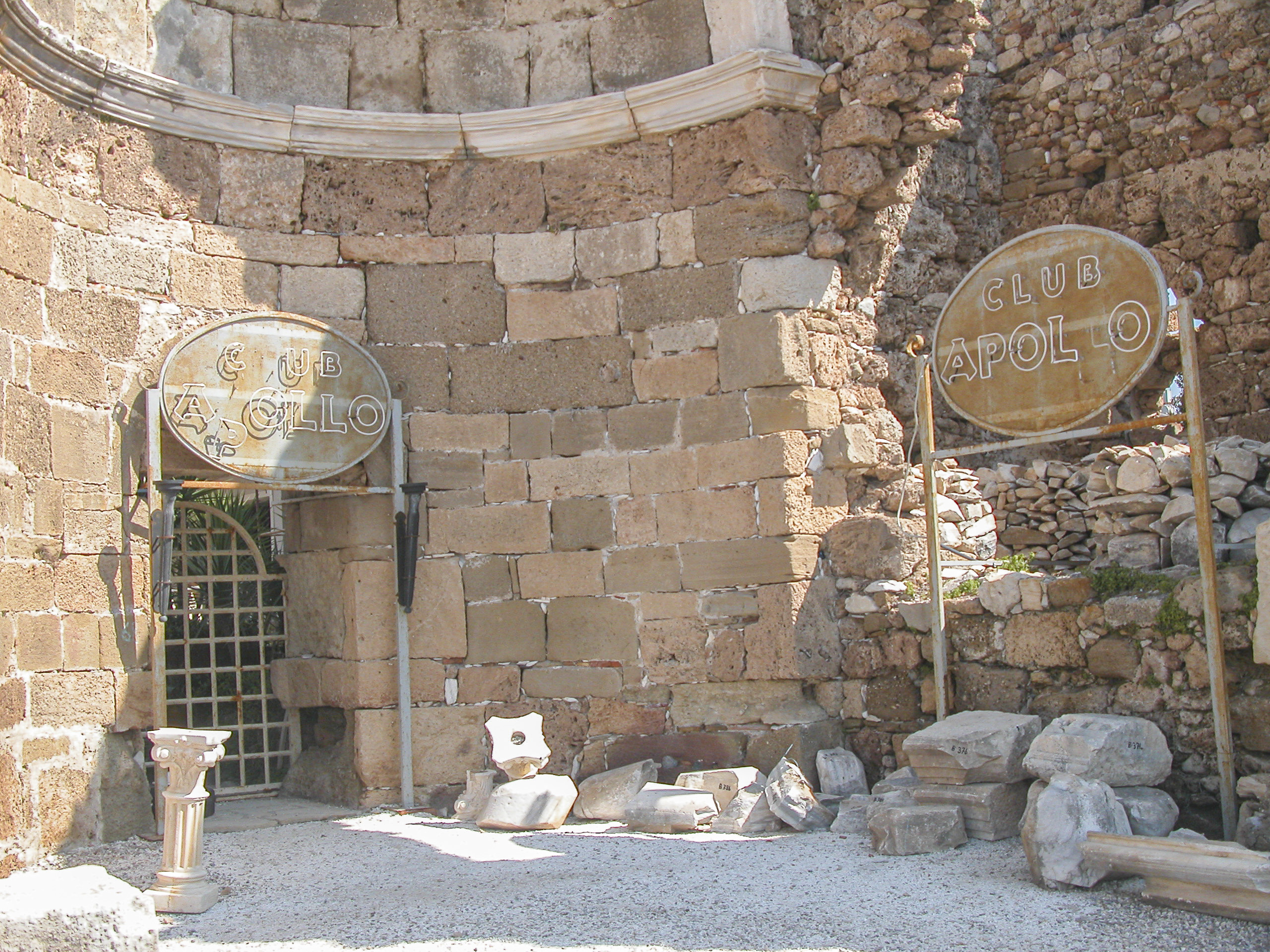
Where Mark and Cleo used to hang out when they came to town.

Leave it to Chuck to ferret out the night spots. He next turned up another ancient watering hole, the Marina Bar, where even now you can wine and dine amidst the ruins.
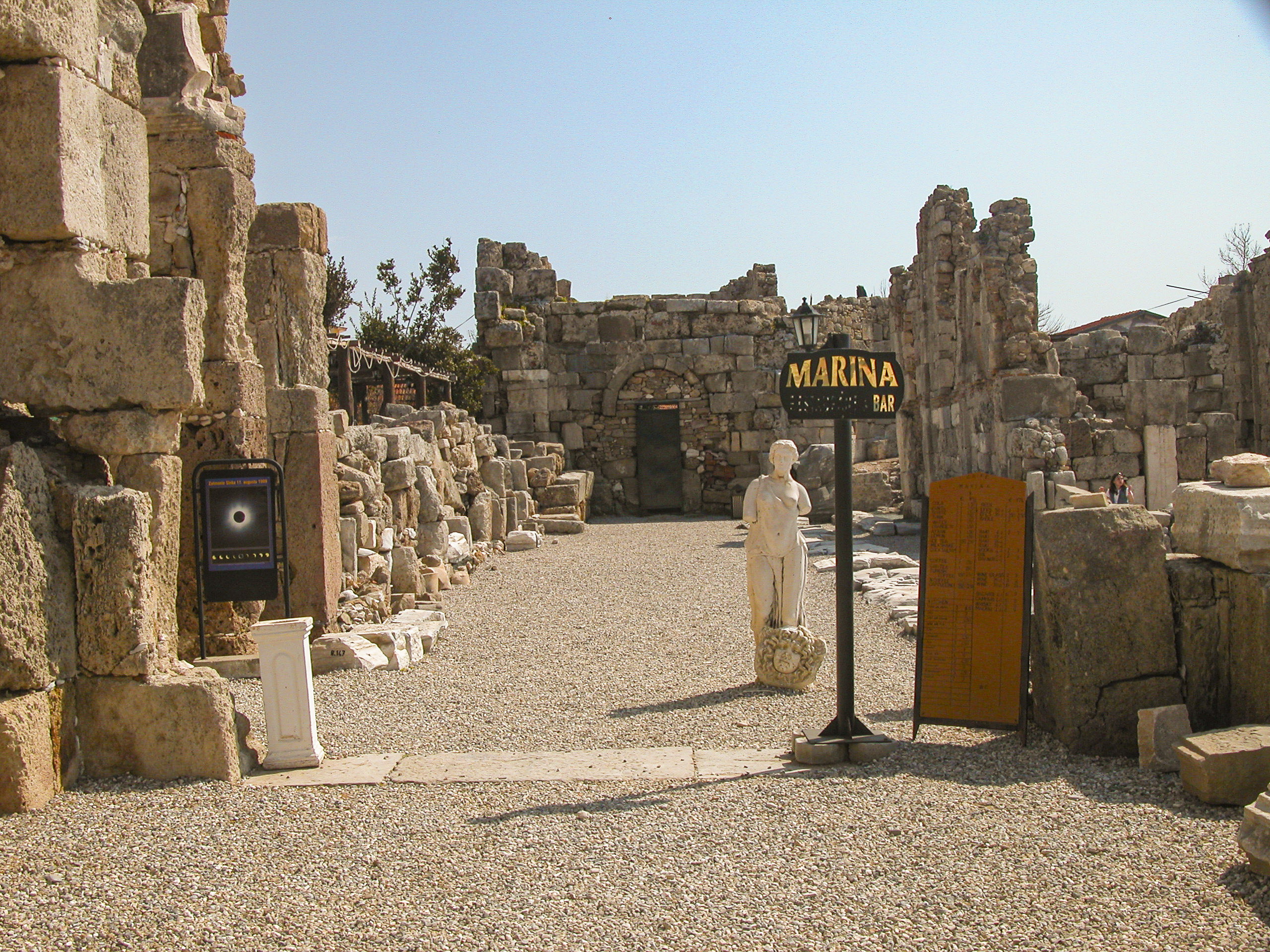
Wine and dine amidst the ruins at the Marina Bar.

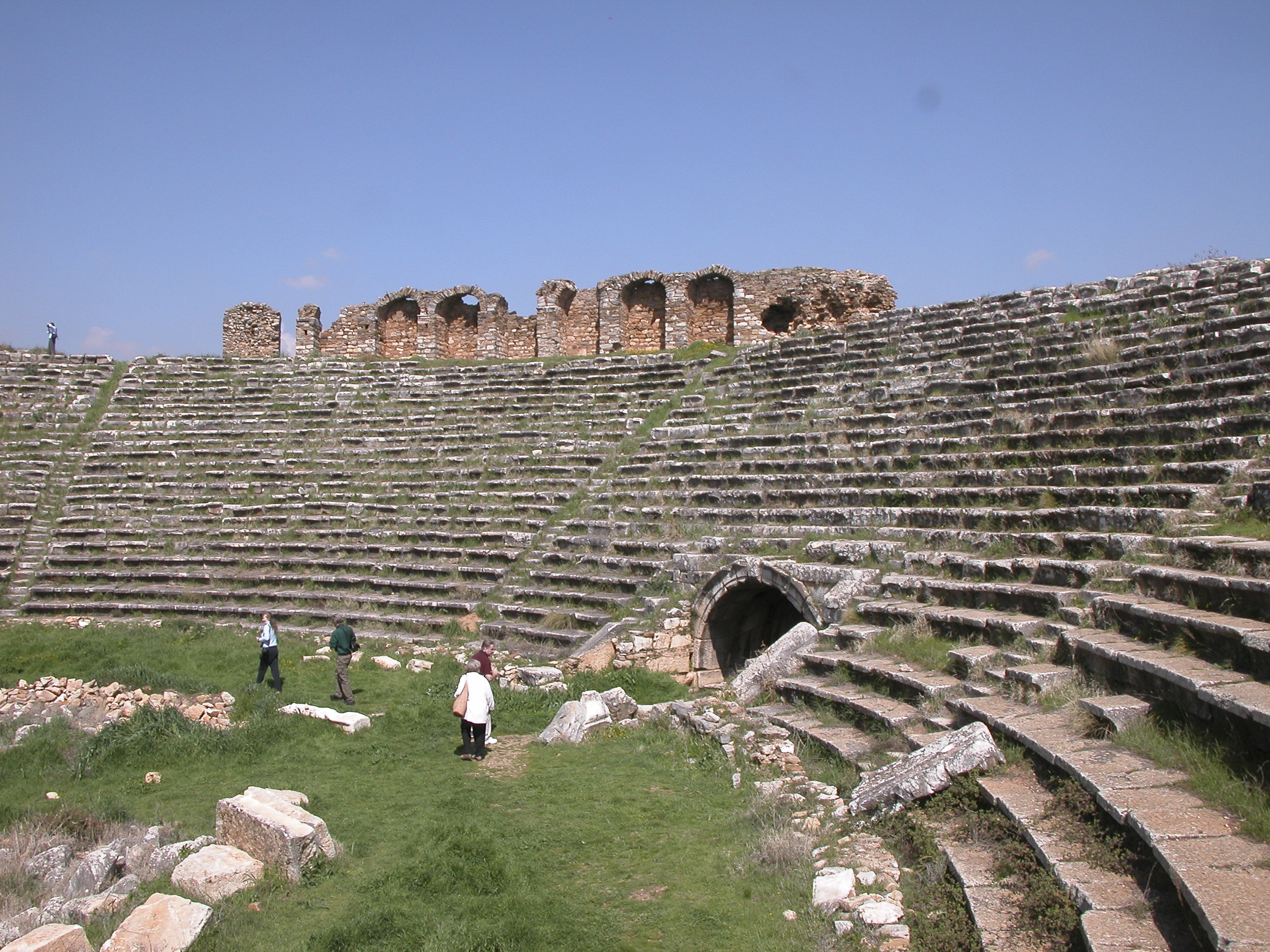
We didn’t get a chance to carouse and roister in the local dives because we had to move on to the next attraction, which was the Side amphitheater. It was already a beehive of activity, as the TV crews and other folks were setting up to cover the eclipse the following day.
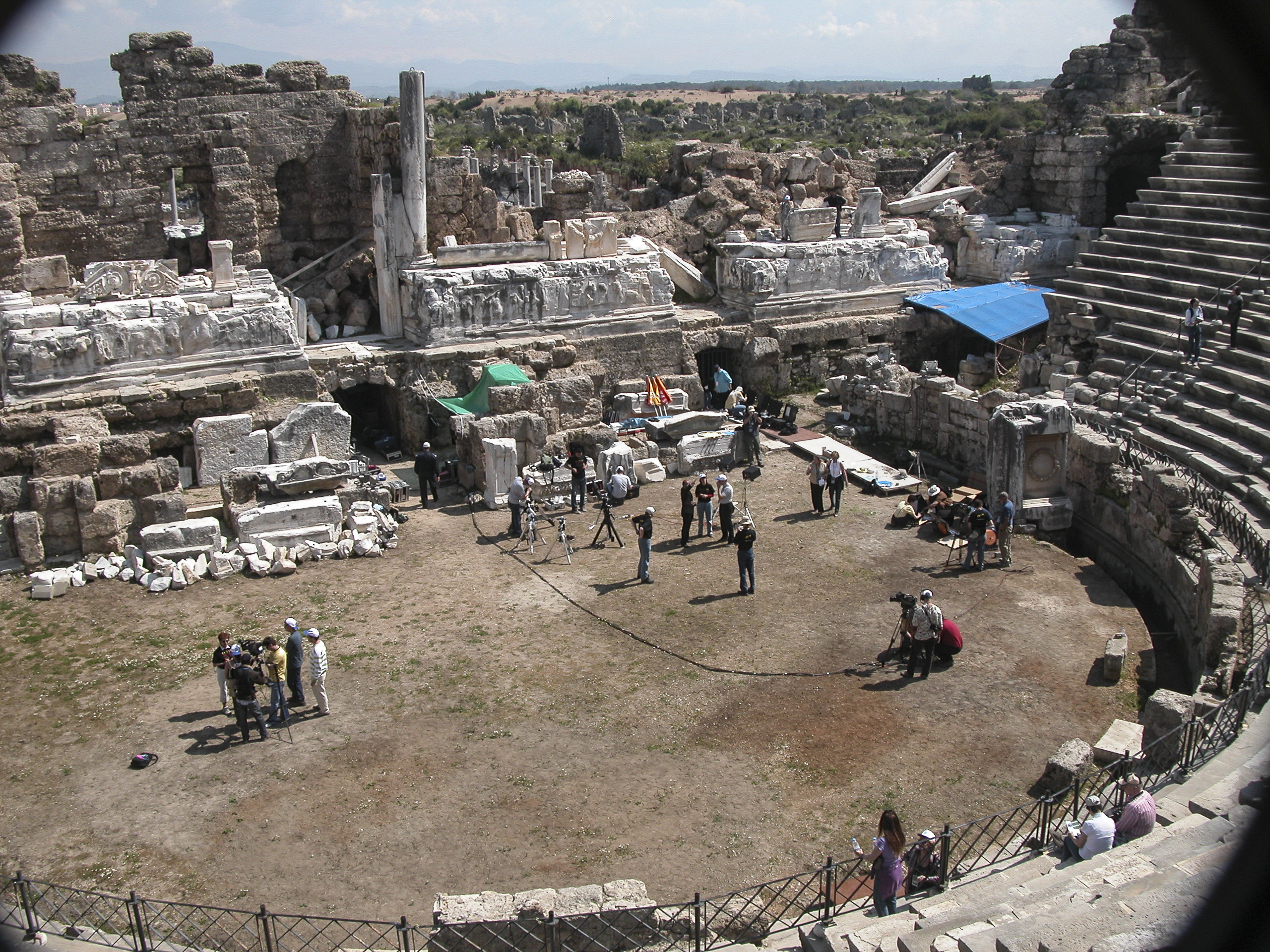
The Side Amphitheater, where the professional photographers and TV crews were setting up their gear in preparation for covering the eclipse on the following day.

The Side Amphitheater was not as large or well-preserved as the Aspendos theater, which we were to visit next, but it was much better placed to view the eclipse, since it was inside the zone of totality and the Aspendos theater was not.
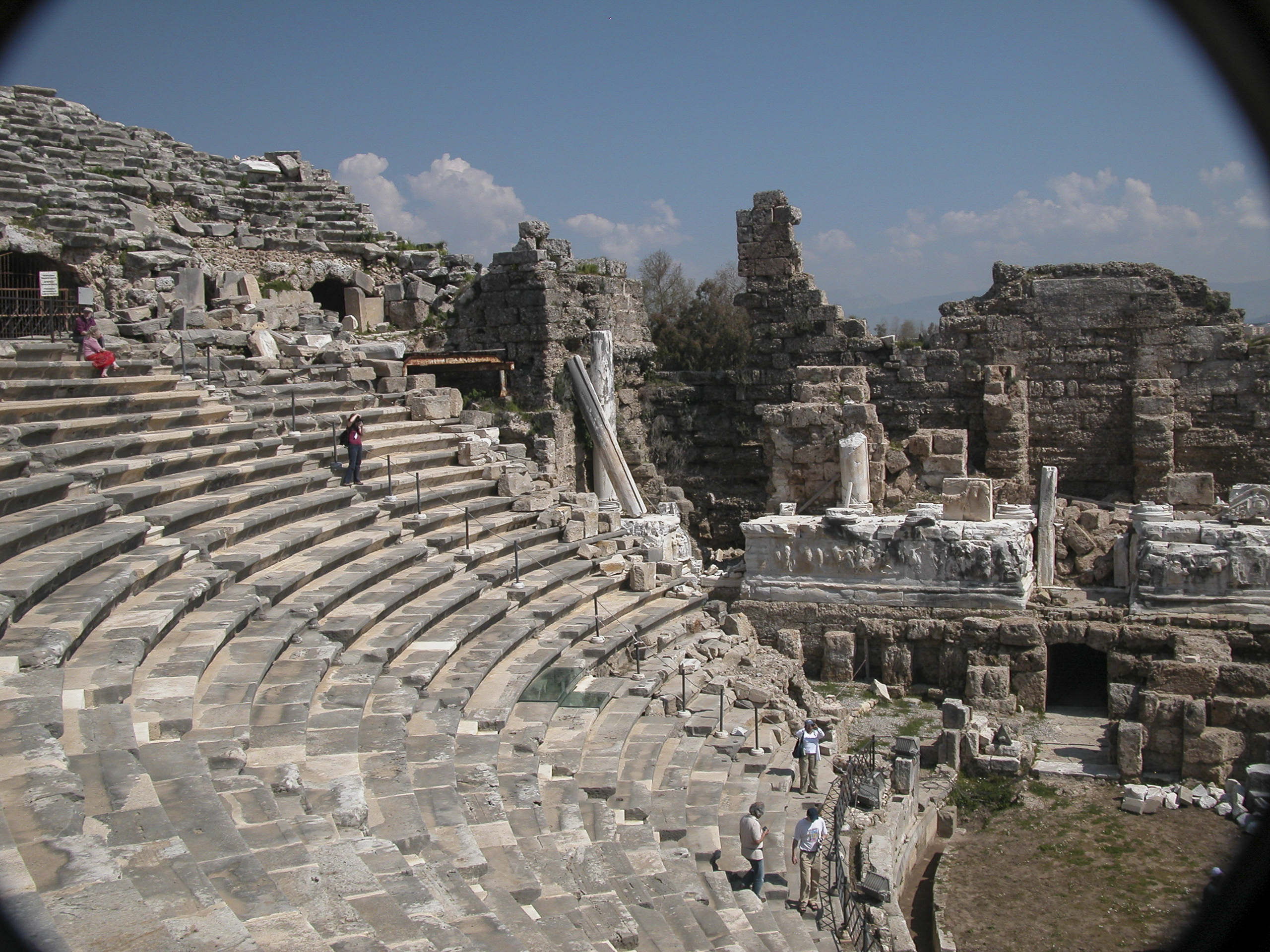
Not as large or well preserved as the Aspendos Theater, but far better placed to view the eclipse!

The Side Amphitheater was ground zero for viewing the spectacle on eclipse day. I shudder to think of how packed the place must have been, and I think our location on the beach at the Kaya Side Hotel must have been much less crowded and more relaxed.
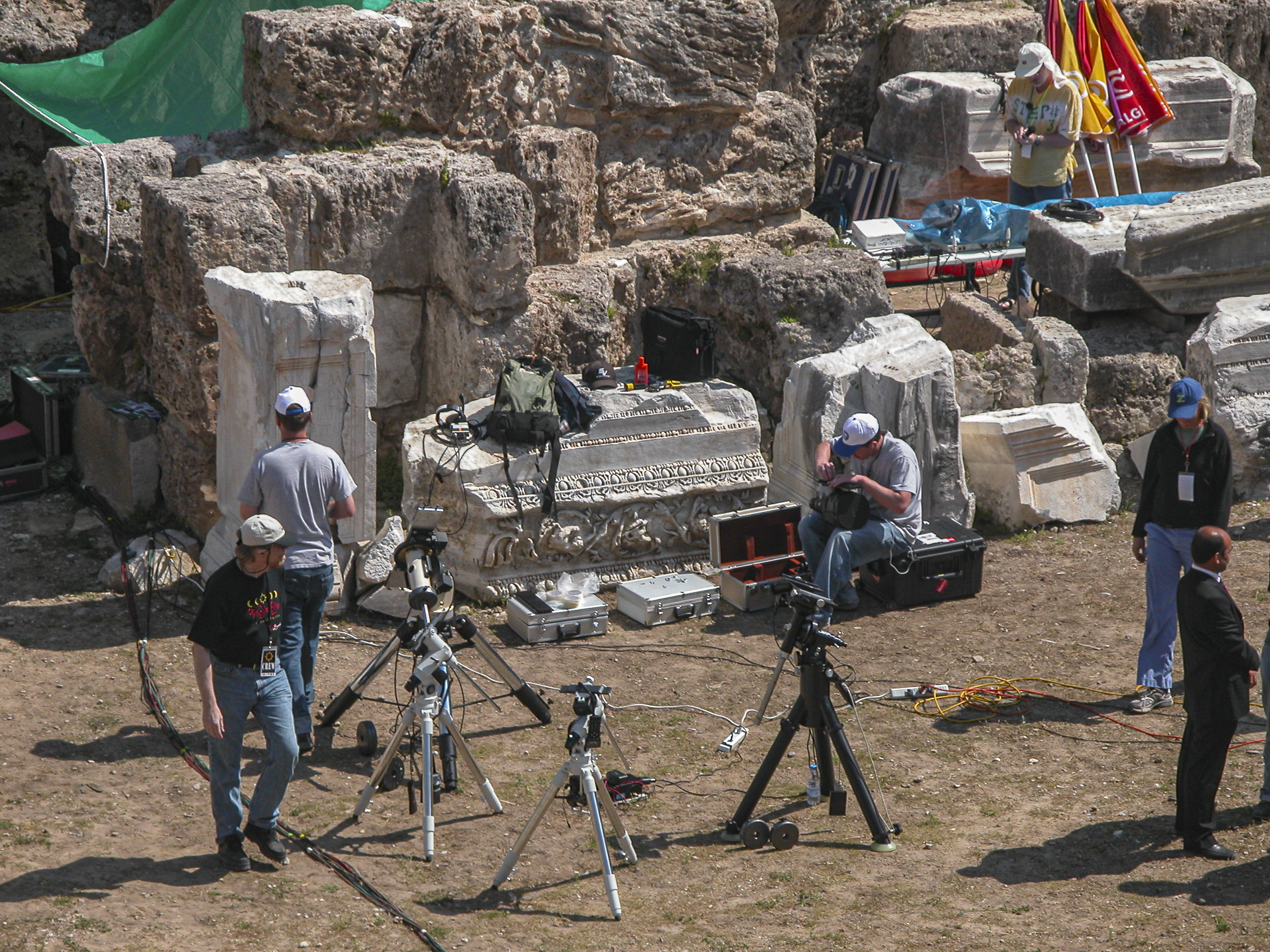
Amateur and professional photographers were getting an early start on setting up their equipment in the amphitheater.

The Side theater was built in the Roman style, which, like the Colosseum in Rome, relies on arched pillars to support the seating area, because there was no hillside to build into as with the theaters in Ephesus and Aphrodisias. But it was a magnificent theater, seating 15-20,000 people.
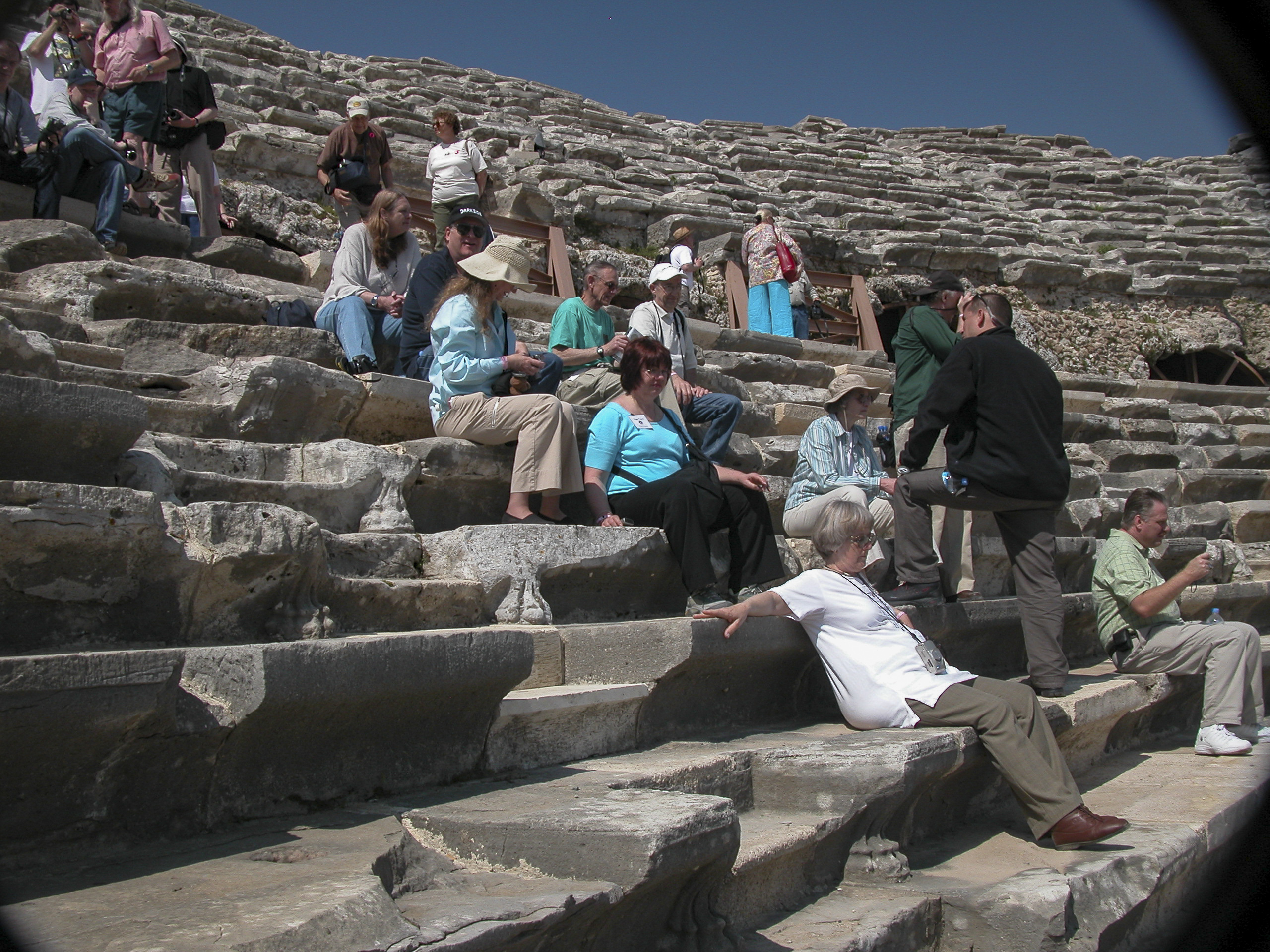
Members of our tour group relax on the steps of the Theater and listen to Attila hold forth about the sights and history of Side.

Anatolia, the heartland of the Byzantine and Ottoman Empires and of modern Turkey, is an unstable area geologically, much prone to earthquakes, as the tour groups who came for the 1999 solar eclipse found to their dismay. The 1999 eclipse took place on August 11; on August 17 a magnitude 7.6 earthquake struck at Izmit (NOT to be confused with Izmir), a city of 367,000 on the Gulf of Izmit, an arm of the Sea of Marmora about 100 kilometers or 67 miles east of Istanbul. The earthquake caused extensive damage throughout the area, including in Istanbul. Many of the eclipse viewers were still touring Turkey at the time and were stuck in the country, unable to leave, during the chaos following the tremor, since many commercial flights were canceled owing to the diversion of planes, airports and other transport in support of the international emergency aid effort.

Side, of course, although not much affected by the quake of 1999, has had its share of tremors over the centuries, and they took their toll on the ancient structures, such as the theater and its once-magnificent proscenium (stage), the ruins of which are still quite impressive.
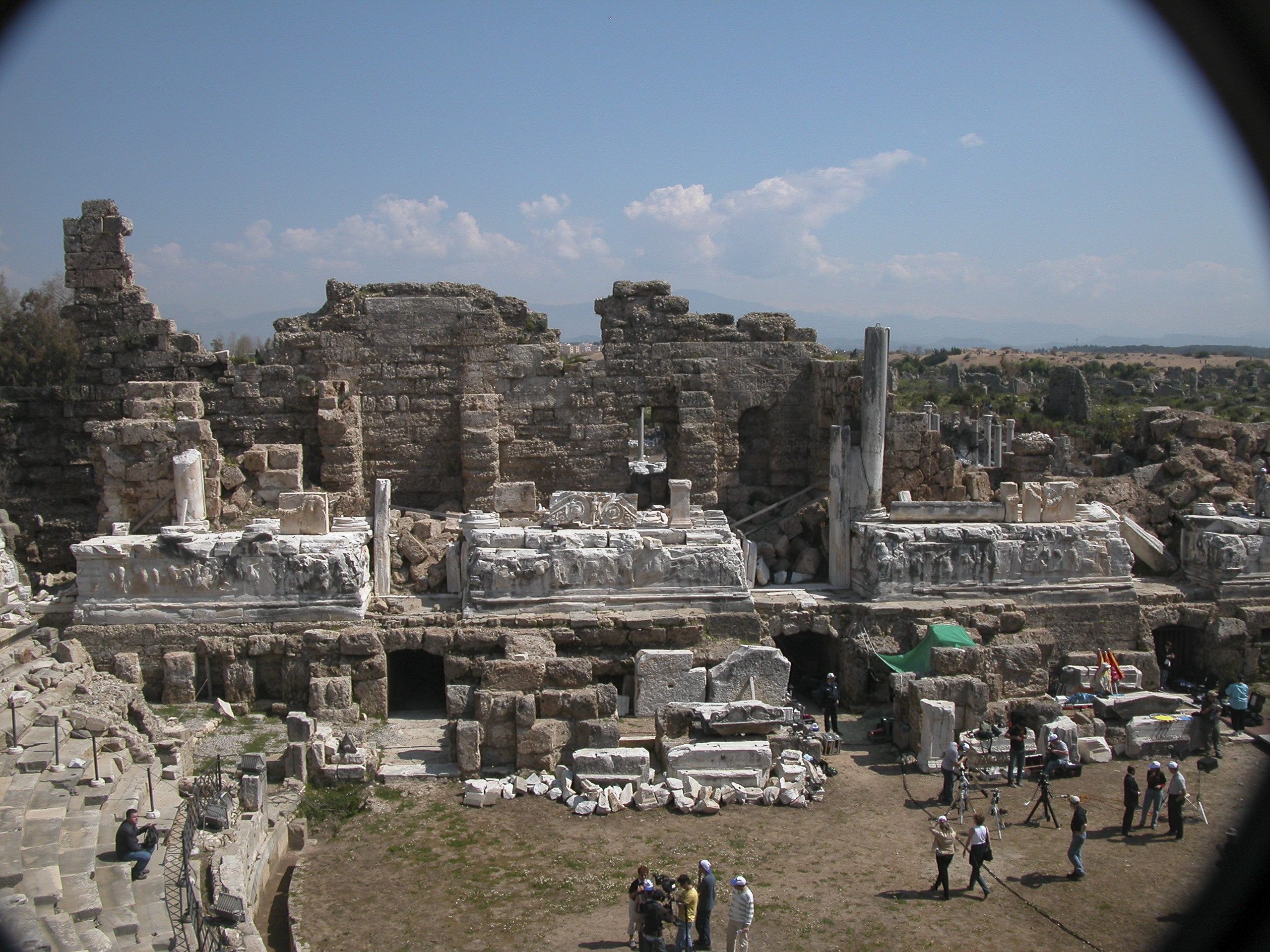
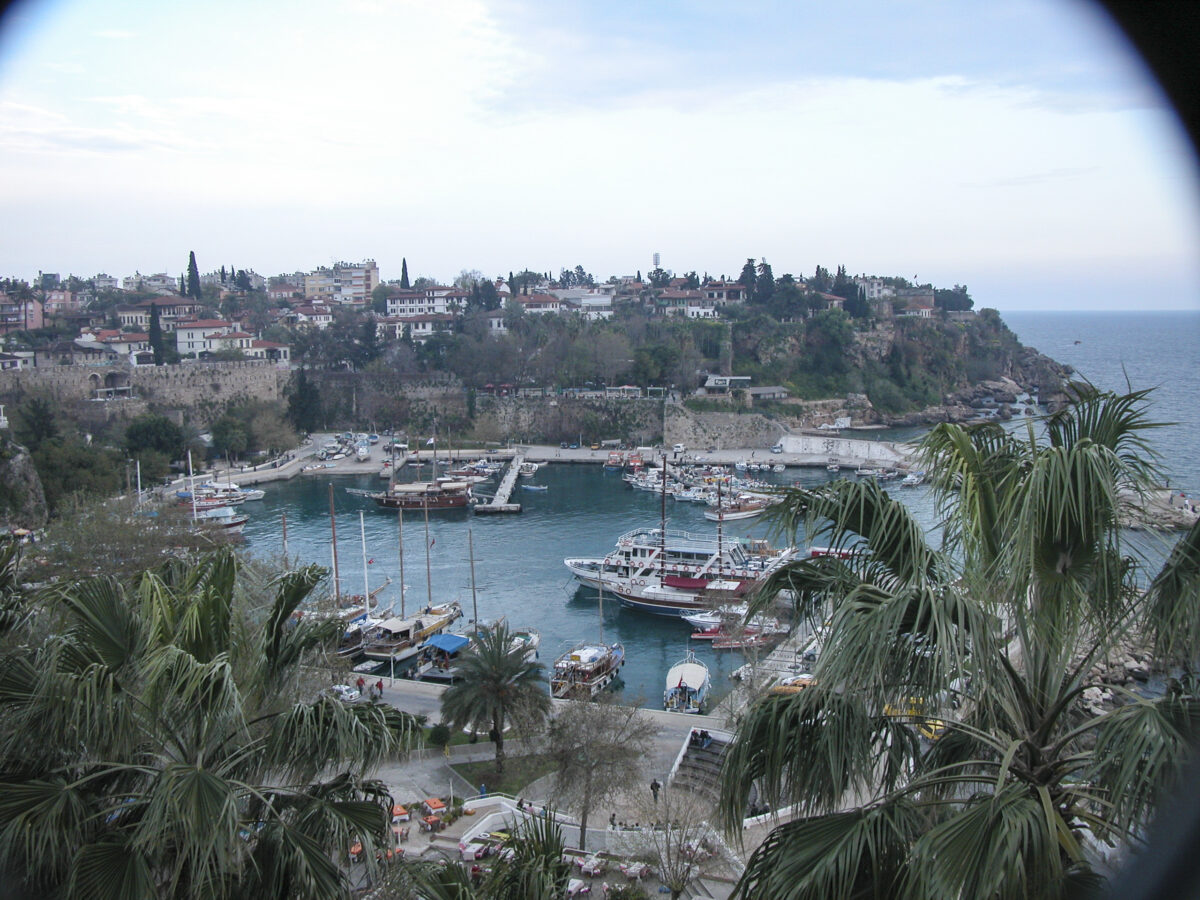
Though ruined, the proscenium was still imposing with its grandiose stonework and fine sculptures.
Categories
Turkey, March-April 2006

Antalya, March 27, 2006

Antalya began as Attaleia, named for its founder, King Attalus II of Pergamon, around 150 BCE. He found that its excellent harbor made it a good location for a naval base, which it continued to be under the Romans and Byzantines, while also becoming a major commercial port. In antiquity the area of present-day Antalya province was known as Pamphylia, and its chief city was nearby Perga, the ruins of which we were to see the following day.

The Seljuk Turks conquered the city in the early 13th century, and the Ottomans took it over in the 15th. The Turks converted the Byzantine churches to mosques. Most of the surviving architectural monuments date from medieval Turkish times.

In the modern era Antalya remained a small pastoral town until the 1970s, when it began to expand into one of Turkey’s largest metropolitan areas, largely owing to the growth of tourism in the region. Antalya is now Turkey’s largest summer resort city, and over 13 million tourists visited in 2019. There is much to see in and around Antalya. It has magnificent beaches, many historical sites, parks, nature sanctuaries and picnic areas, as we would shortly discover.

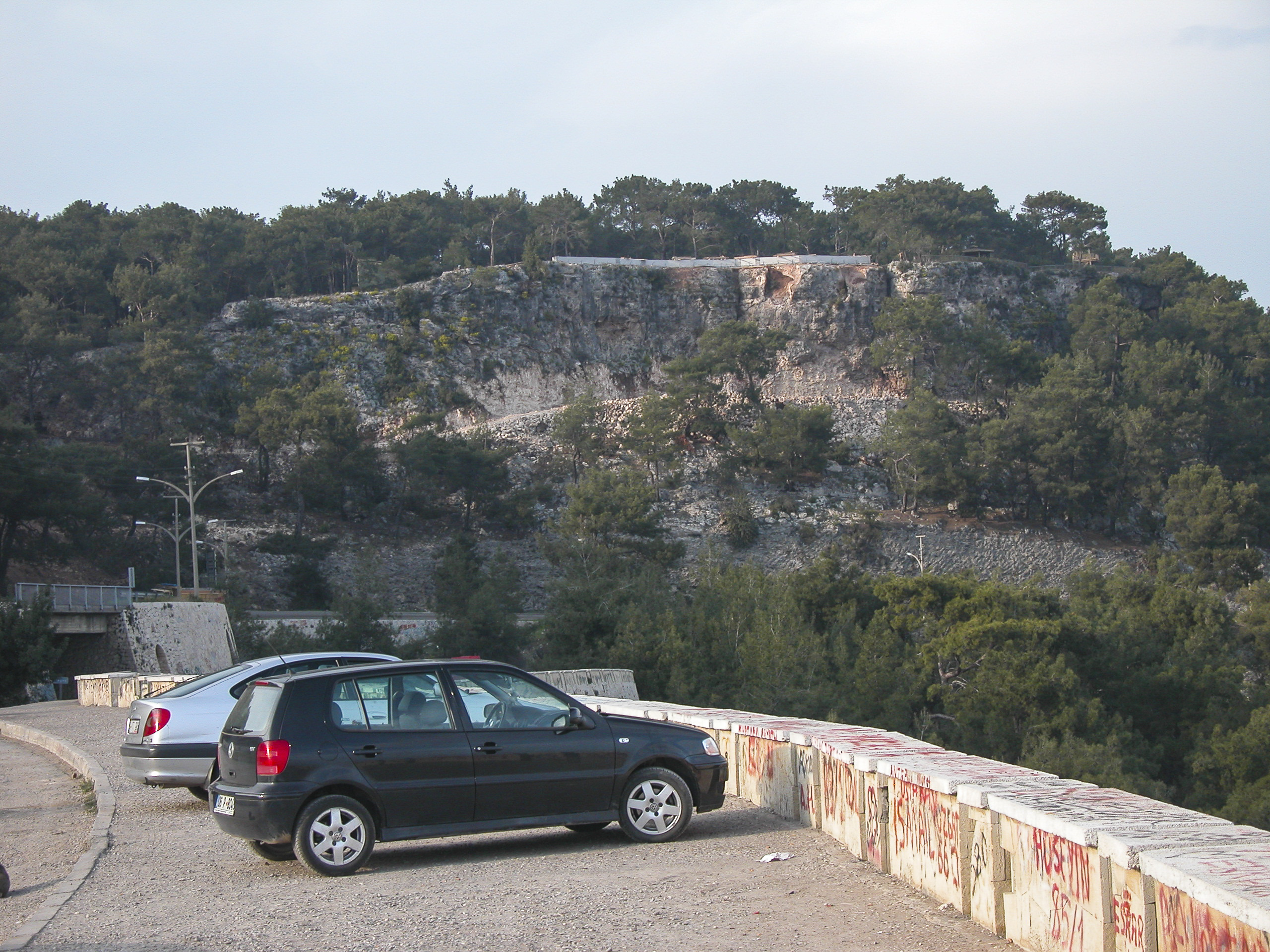
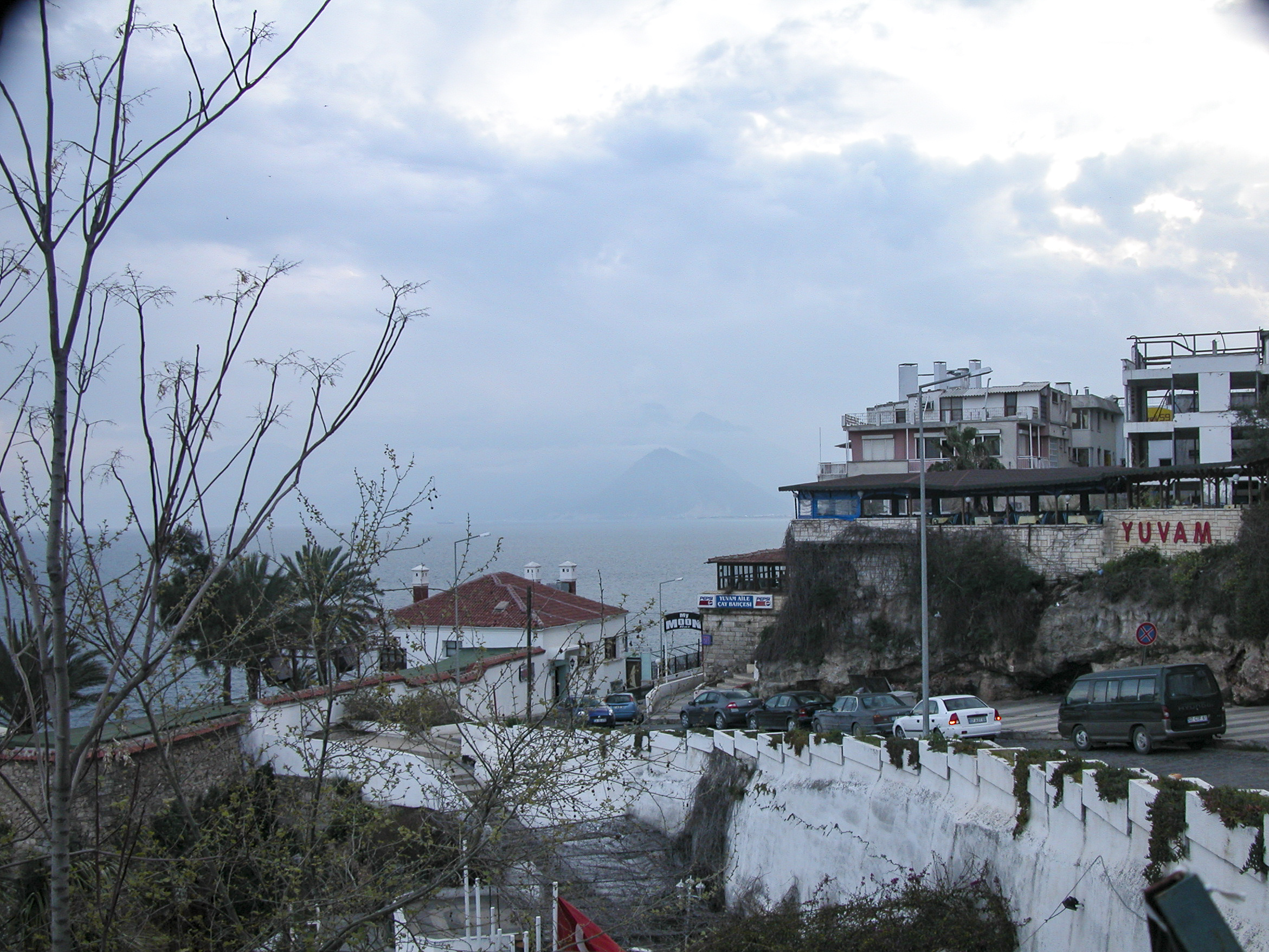
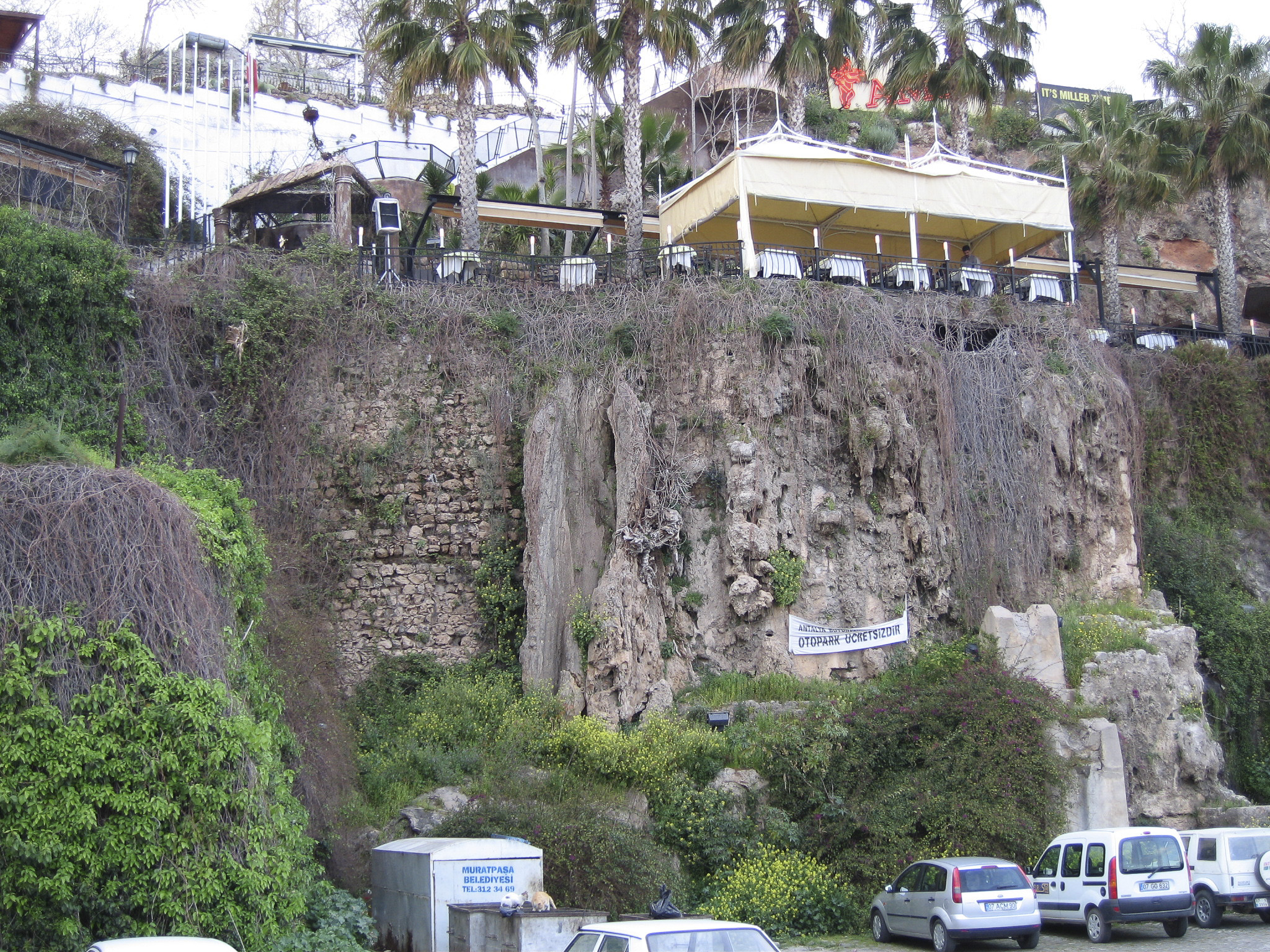
As we emerged from the fastnesses of the Taurus Mountains, we made a brief rest stop at a spot perched on the dizzying heights above the Mediterranean waterfront near Antalya.

Steep cliffs overlook the Mediterranean waterfront at Antalya.

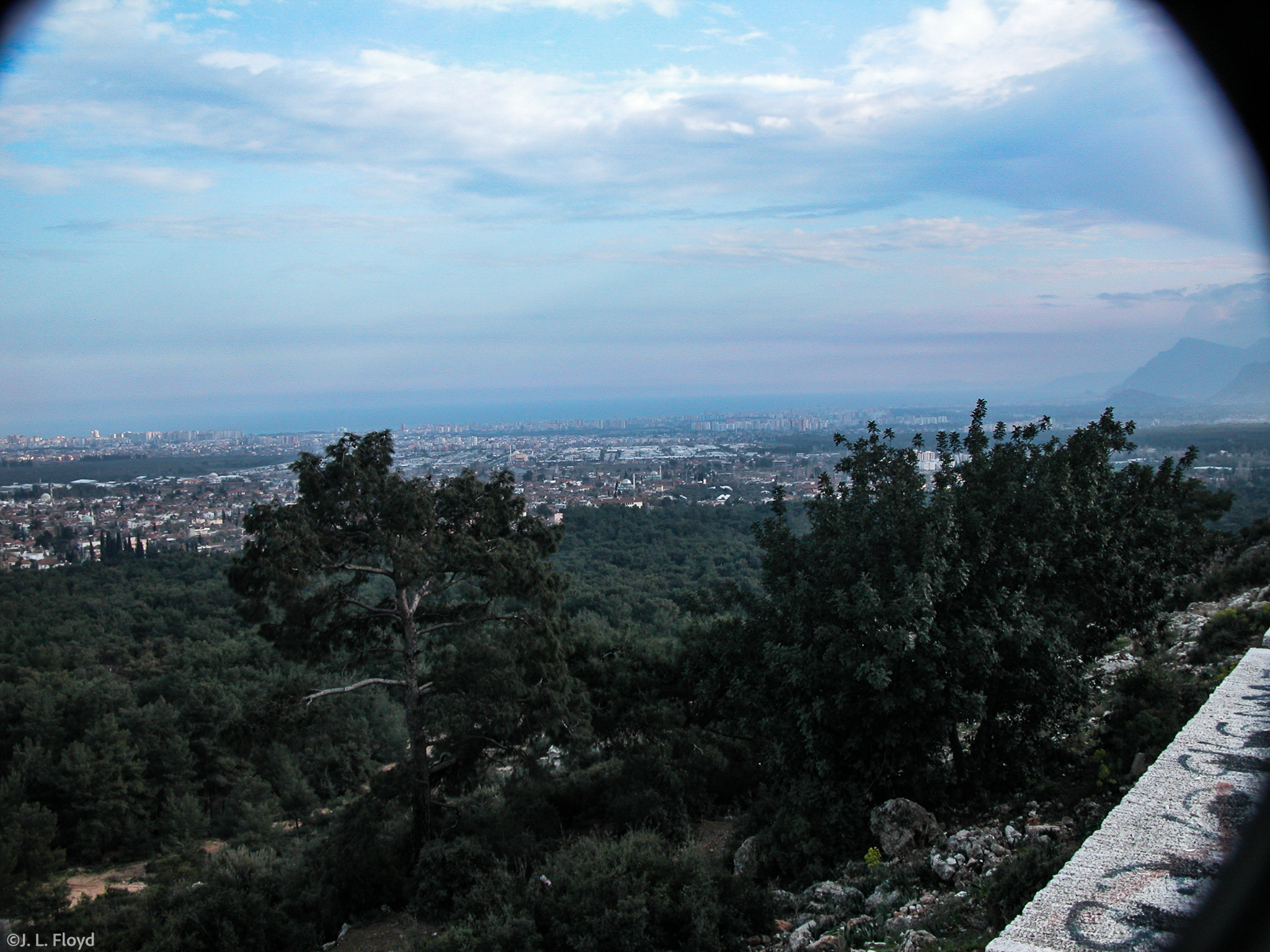
We caught our first glimpse of the Mediterranean Sea from this promontory.

The Mediterranean is visible through the haze as a blue line between the land and the sky.

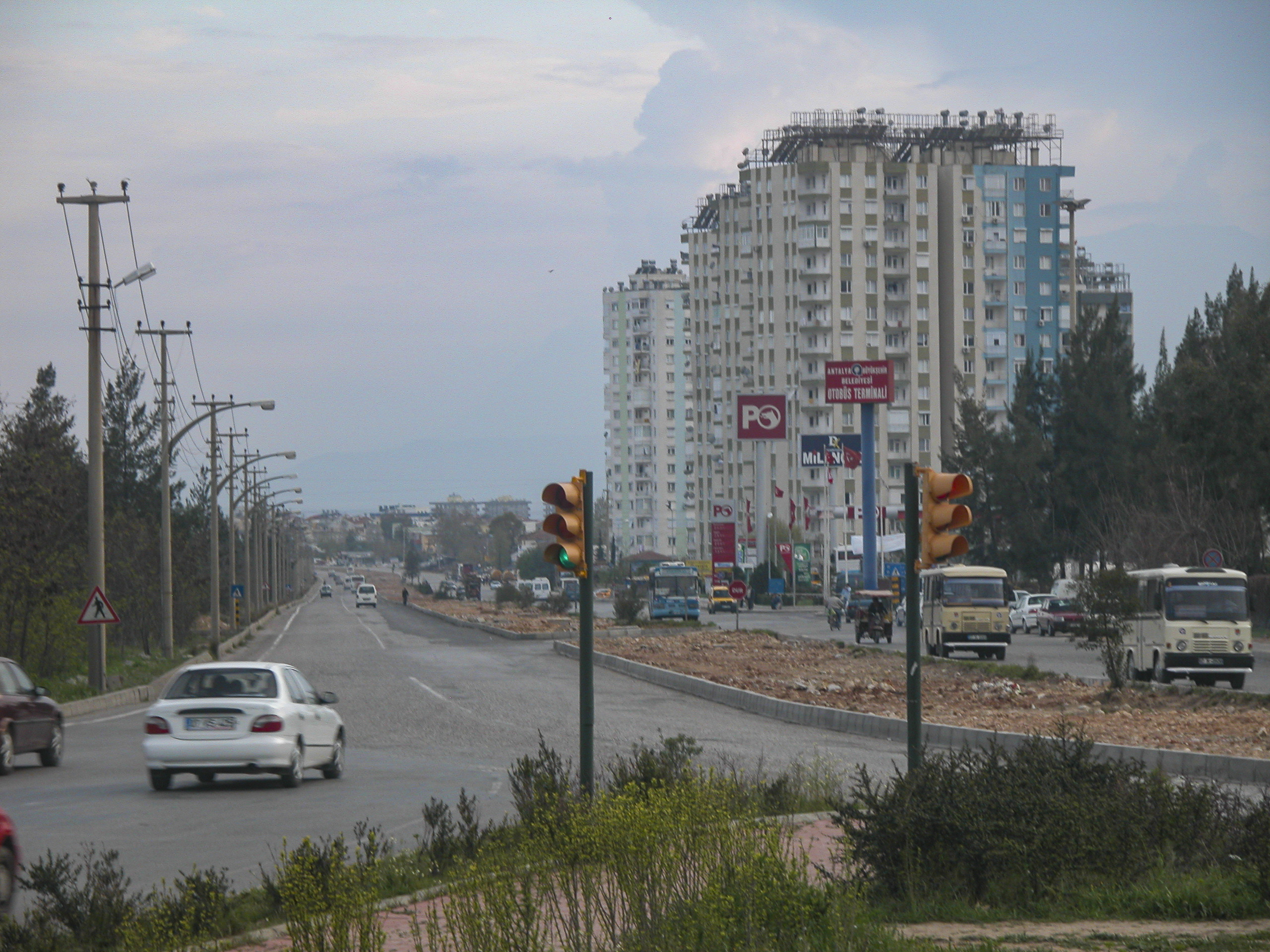
Our first impression of Antalya was that it appeared to be a very modern city, with lots of construction going on.

There seemed to be a lot of construction going on.

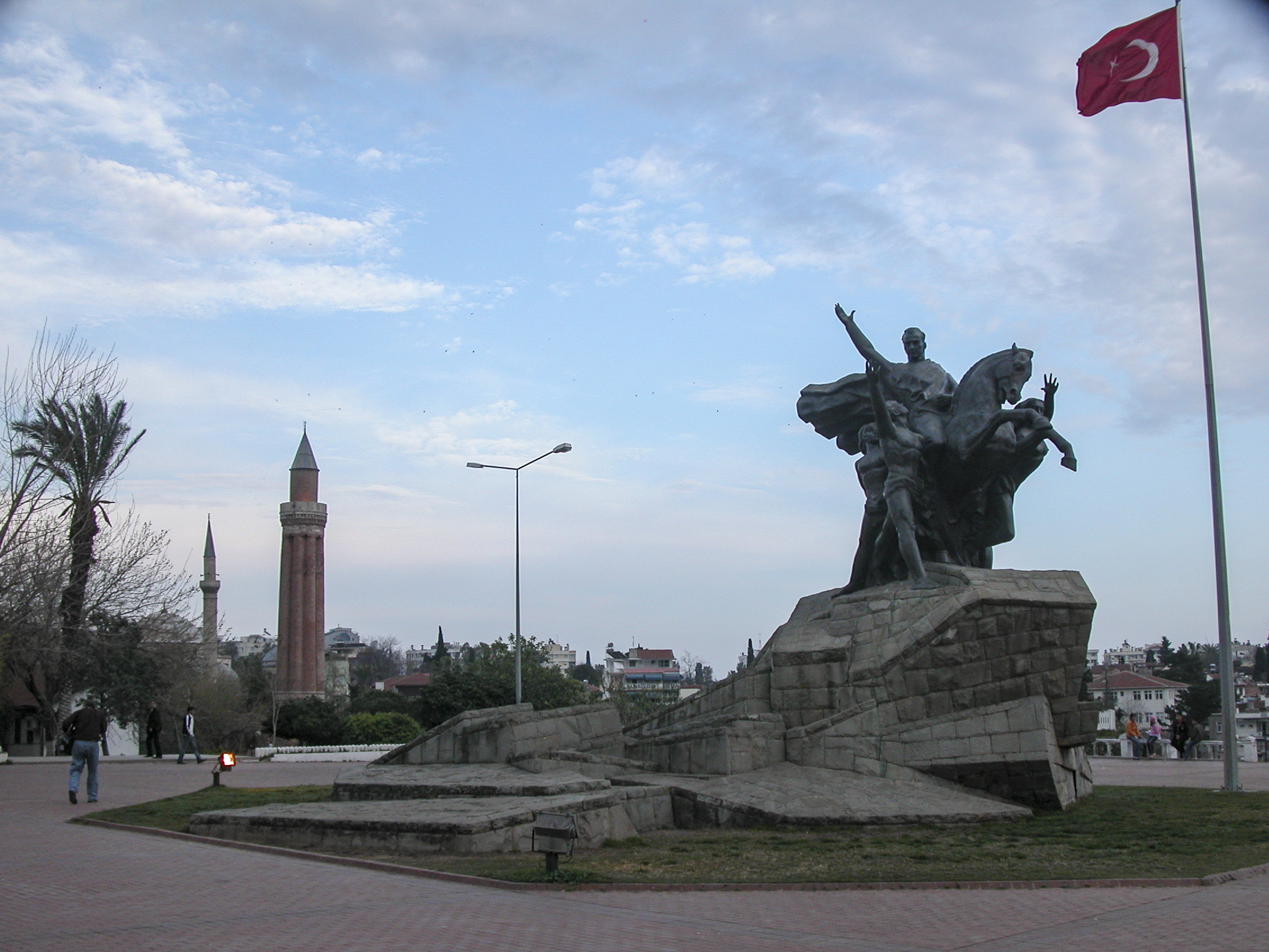
I took a photo of a rather banal monument to Kemal Mustafa Ataturk, improbably shown on horseback, against a backdrop of two minarets. The closer of the two, the Yivli (Fluted) Minaret, is the signature landmark of the city. It belongs to the Ulu Cami, or Grand Mosque, also known as the Alaadin Mosque, which was first built in 1230 under the Seljuk Sultan of Rum Alaadin Keykubad I. It was destroyed in the 14th century (a rough time for nearly everyone) and rebuilt in 1373. It now houses an ethnographic museum.

Equestrian statue of Ataturk, with two minarets in the background. The closest, the Yivli (Fluted) Minaret, is Antalya’s signature landmark.

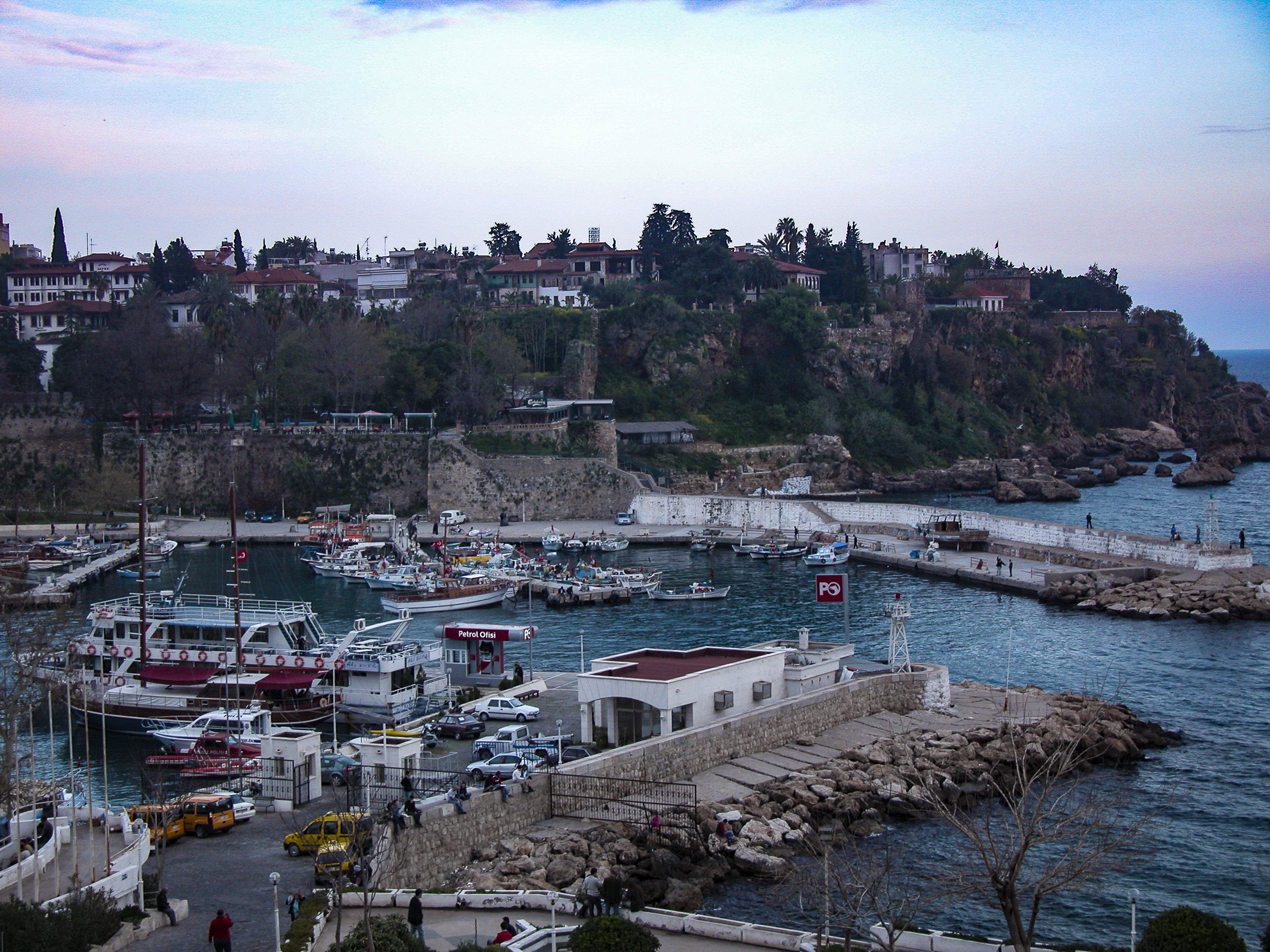
It was time for dinner on our arrival in Antalya, and our bus took us directly to the Old Harbor Marina, located at the foot of a high cliff. We parked on the heights and walked down the steep descent to the Marina, where our restaurant awaited.

Antalya is the gateway to Turkey’s Azure Coast, also known as the Turquoise Coast or the Turkish Riviera.

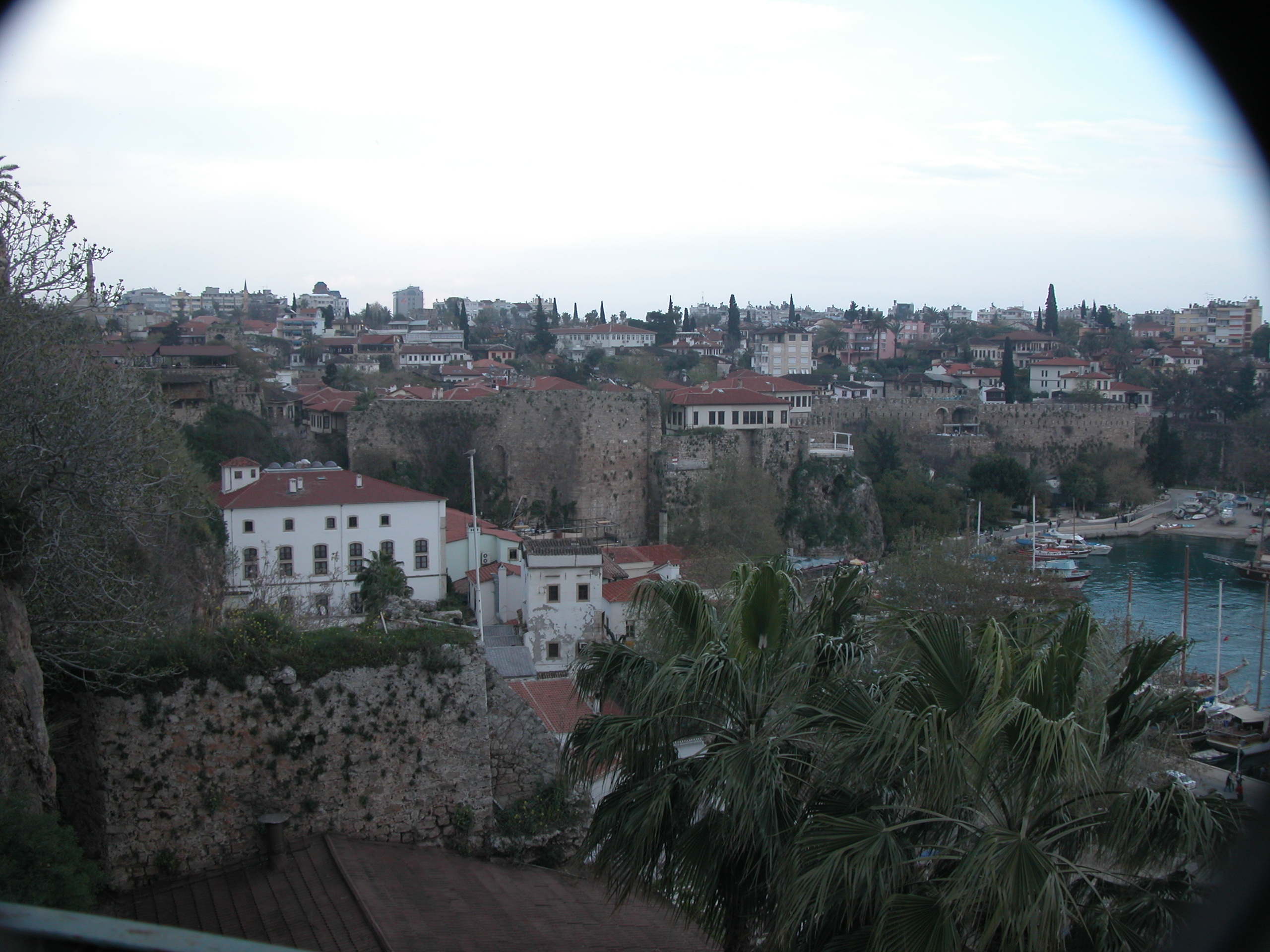
Before wending our way down to the marina, we made sure to get plenty of shots featuring the spectacular views from the heights above. Just north of the Old Harbor, and adjoining it, is the city’s oldest quarter, known as Kuleici, to which we would make a brief visit after dinner.

Adjoining the harbor is Antalya’s Old Quarter, known as Kuleici.

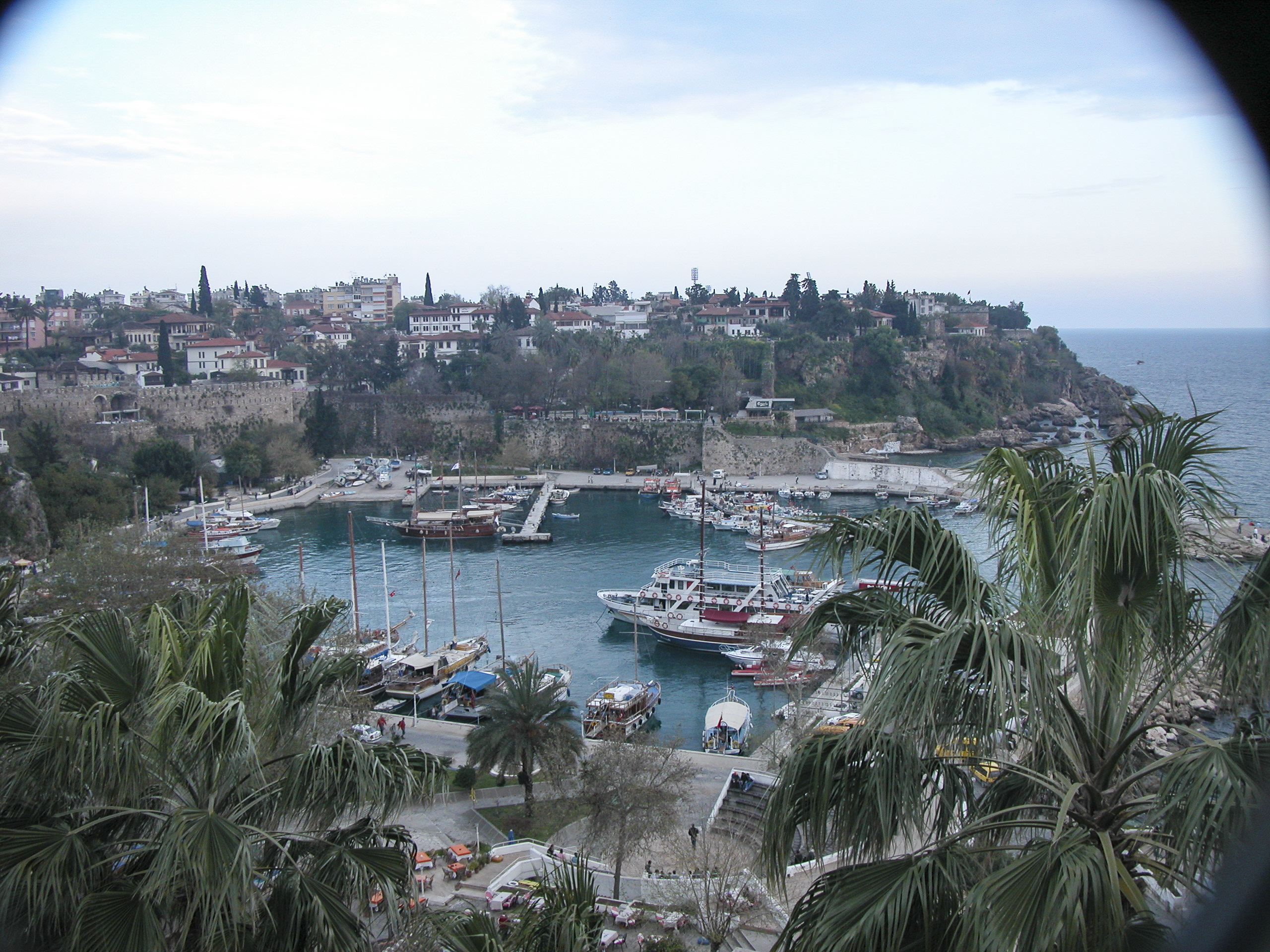
The Old Harbor of Antalya, with its fortified walls and sparkling blue-green water, was an ideal location for dinner.

Once a major commercial port, the Old Harbor now hosts a yacht marina and is the city’s primary center for leisure activities.

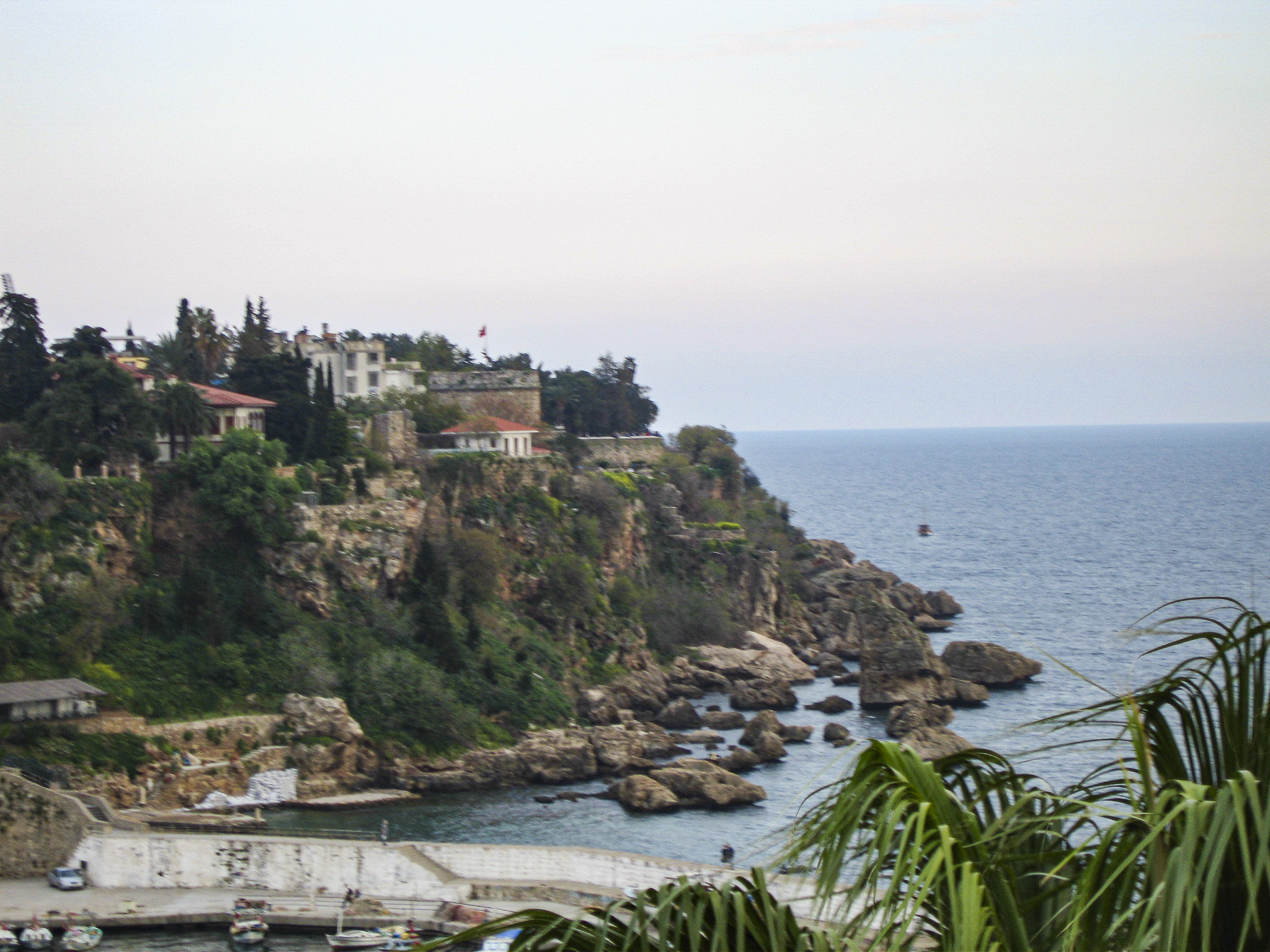
From our position on the west side of the harbor, we looked across to the east side, where a number of palatial residences were situated, with great views of the Mediterranean.

Palatial residences perch atop the heights on the east side of the Old Harbor, overlooking the Mediterrranean Sea.

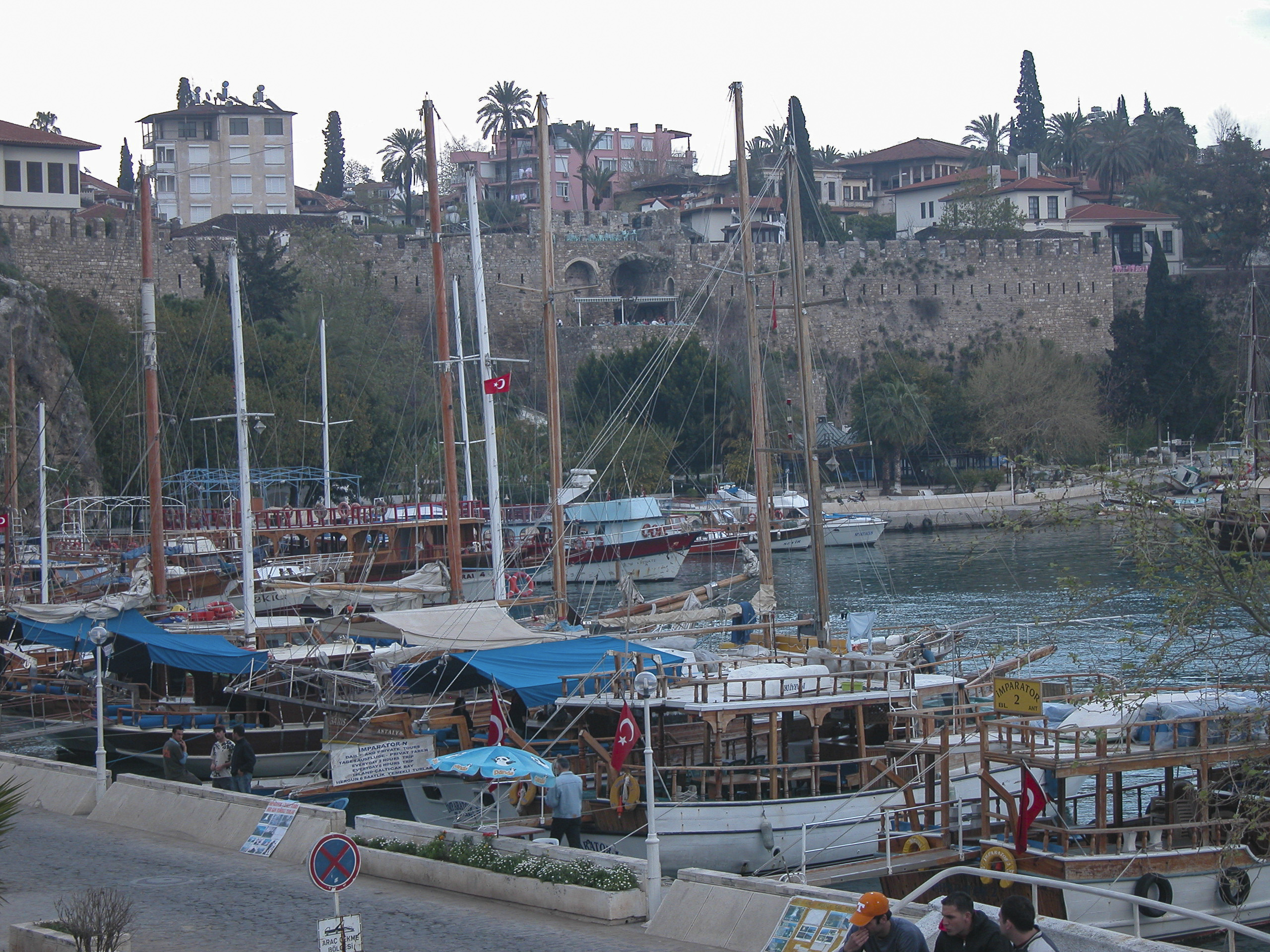
I saw little indication that the Old Harbor had once hosted a naval base or a large-scale commercial port. It wouldn’t be large enough for such facilities in modern times. But now it makes a great location for a private boating marina, and it was thronged with excursion boats and private yachts of all kinds.

Excursion boats and private yachts throng the Old Harbor.

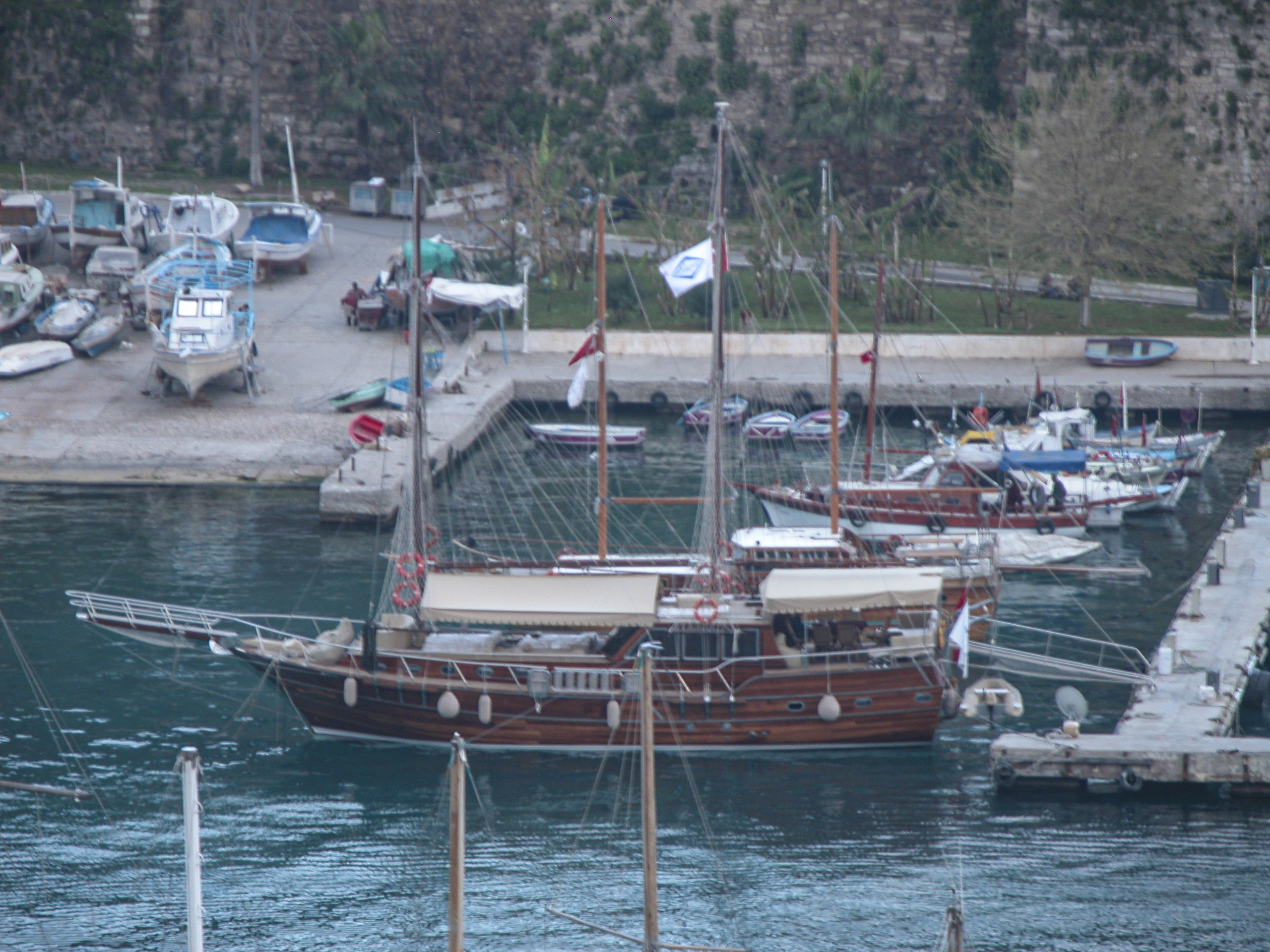
There was no end of sumptuous pleasure yachts, both sail- and motor-powered; my favorite was the striking two-masted schooner seen below.

A beautiful two-masted wooden schooner dominates the Marina at Antalya.

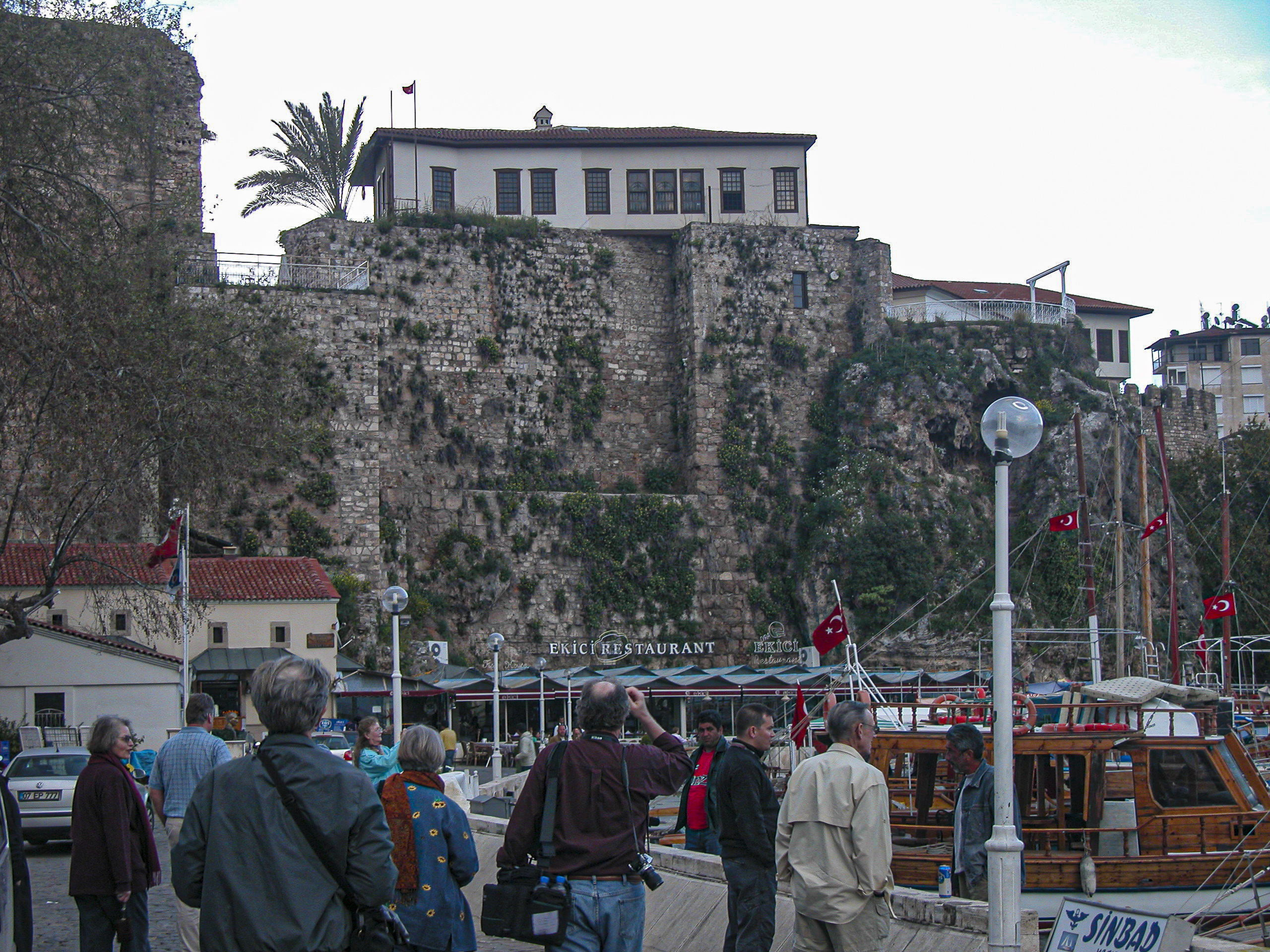
On the walk down to the harbor, I shot a picture which I thought perfectly elucidated the contrast between the ancient and the modern: the Ottoman-era fortifications guarding the harbor, sandwiched between the modern structures on top of them and the late-model yachts in the water below.

The fortifications guarding the Old Harbor provide a perfect backdrop for the crowded marina below.

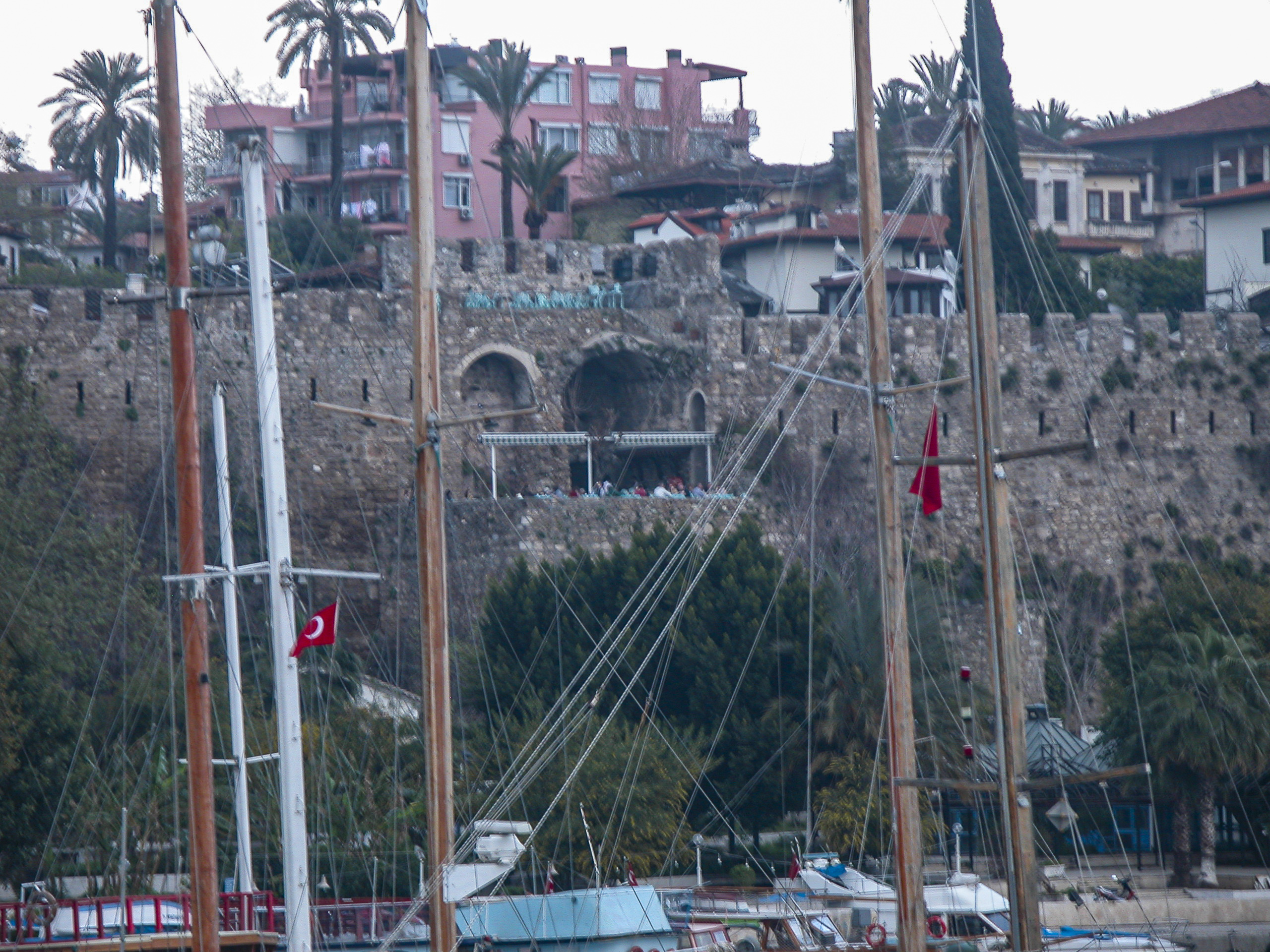
I zoomed in the camera to get a closer shot showing the bastion walls in greater detail, along with the structures on top of them.

The walls of the Old City bastion tower above the marina and frame the modern structures on top.

After dinner at the Ekici restaurant, we had a chance to stroll around the marina and check out the assortment of watercraft.

Our tour group enjoys the splendid ambience of the Old Harbor at Antalya.

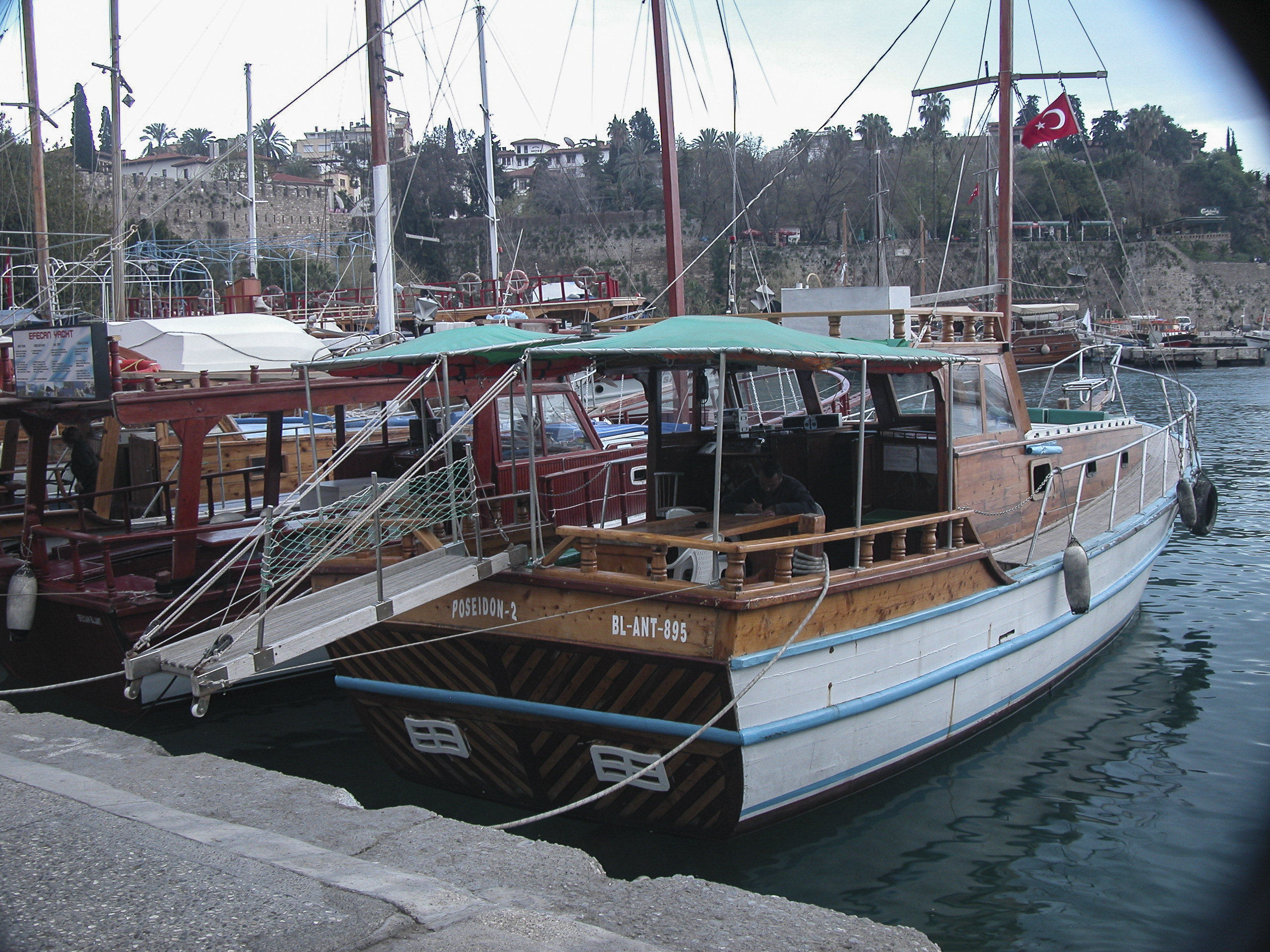
Wandering around the docks, I came across the palatial motor yacht shown below, flying the Turkish flag but bearing the name of a Greek god, “Poseidon-2”. That seemed a little bit odd to me, but maybe not to its owner.

A Turkish yacht named after a Greek god.

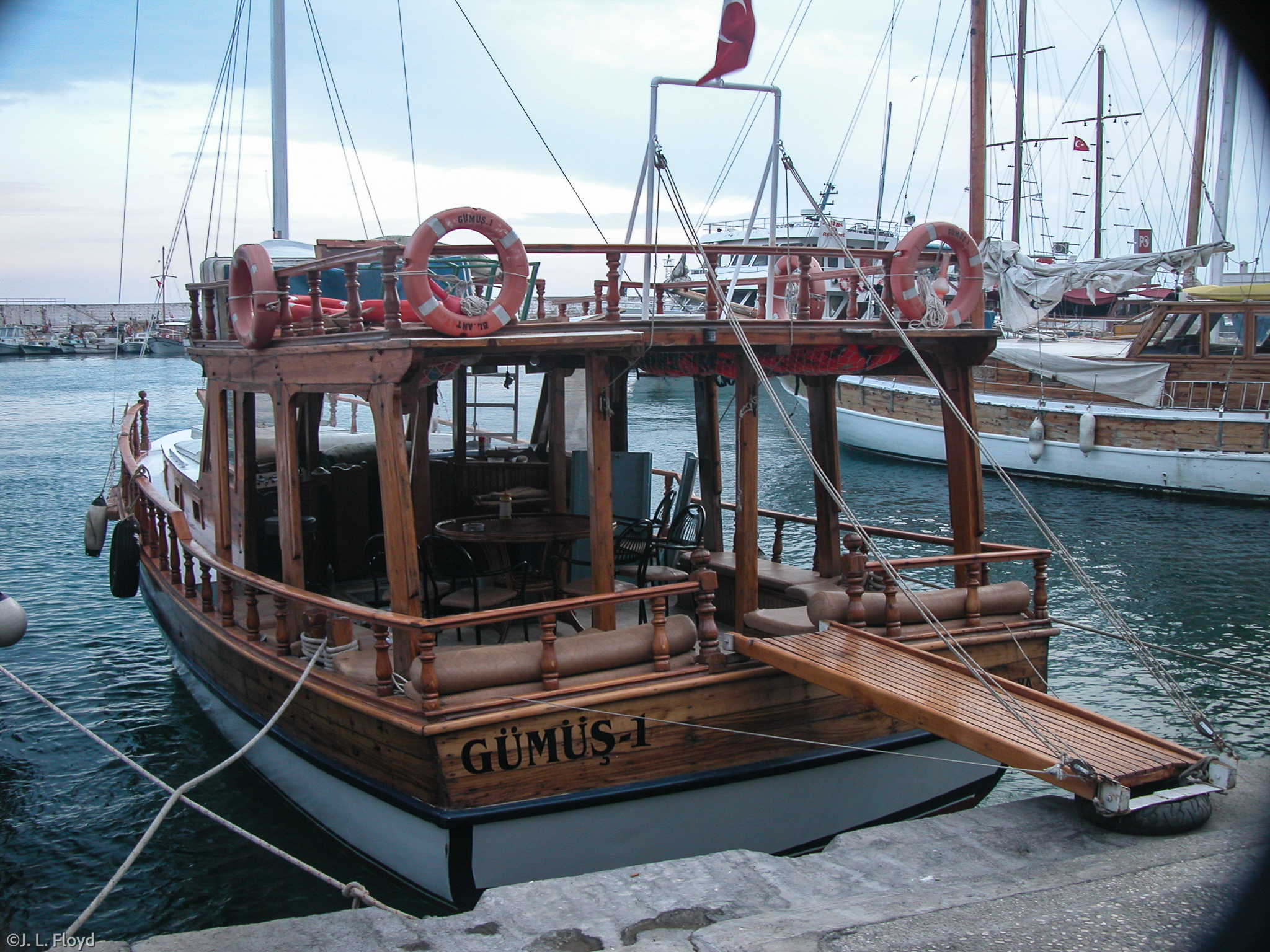
Superstructures of finely crafted, highly-polished wood were typical of both motor and sail yachts in this marina.

This motor yacht bore a more typically Turkish name.

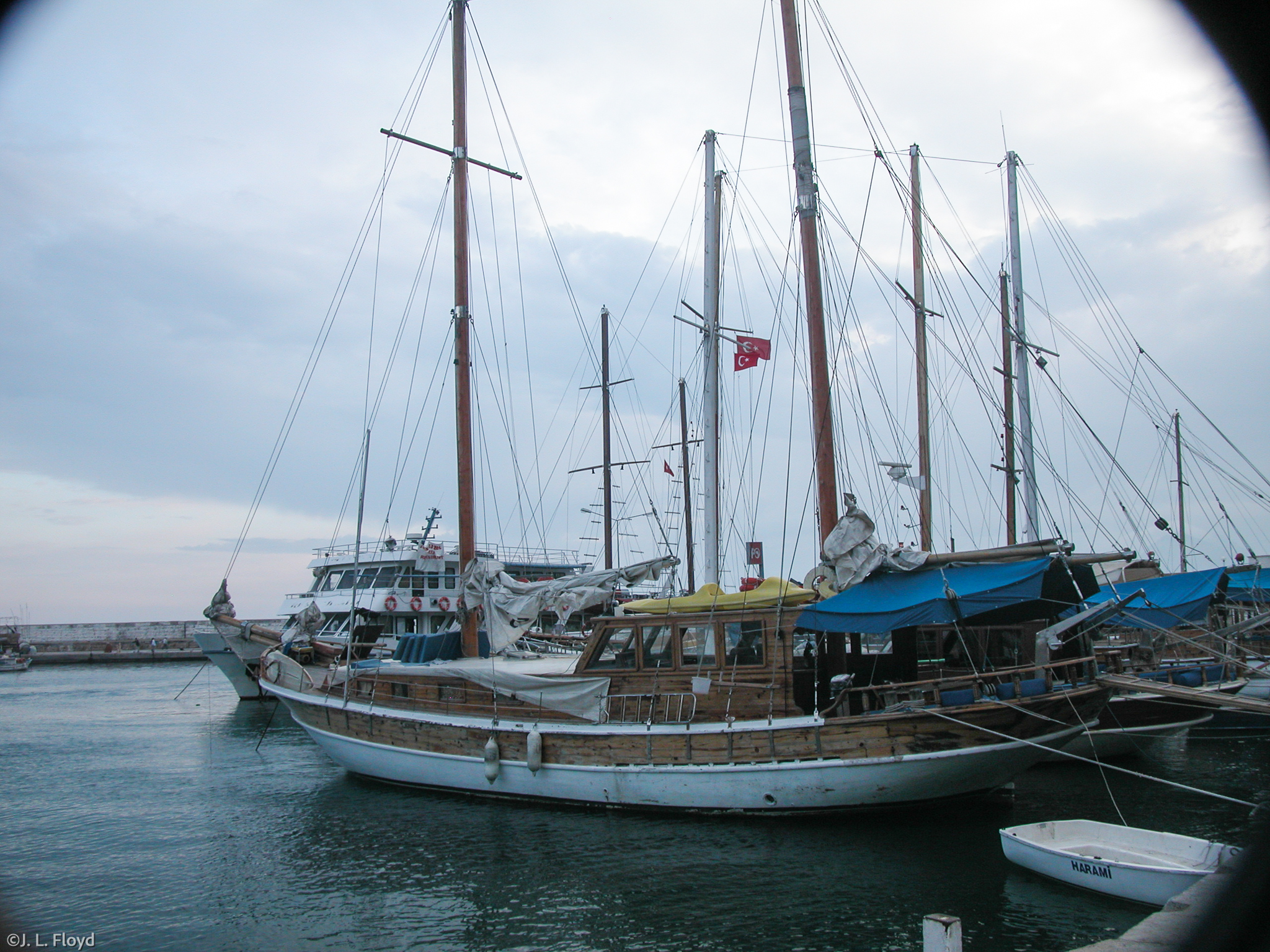
The Mediterranean coast of Turkey was a haven for pirates in ancient times, and I imagine that their descendants are represented among the owners of the boats moored here, such as this magnificent sailing yacht.

The coasts of Turkey were a haven for pirates in ancient times.

Sandie took a closer picture of a section of the harbor wall, with a restaurant at the top. It’s hard to see, but near the upper right-hand corner, just to the left of a palm tree and partly obscured by another palm below it, there is another of those ubiquitous Miller Time beer billboards.

Cafes and shops line the heights above the Old Harbor. The inevitable beer billboard appears in the upper right corner of the picture.

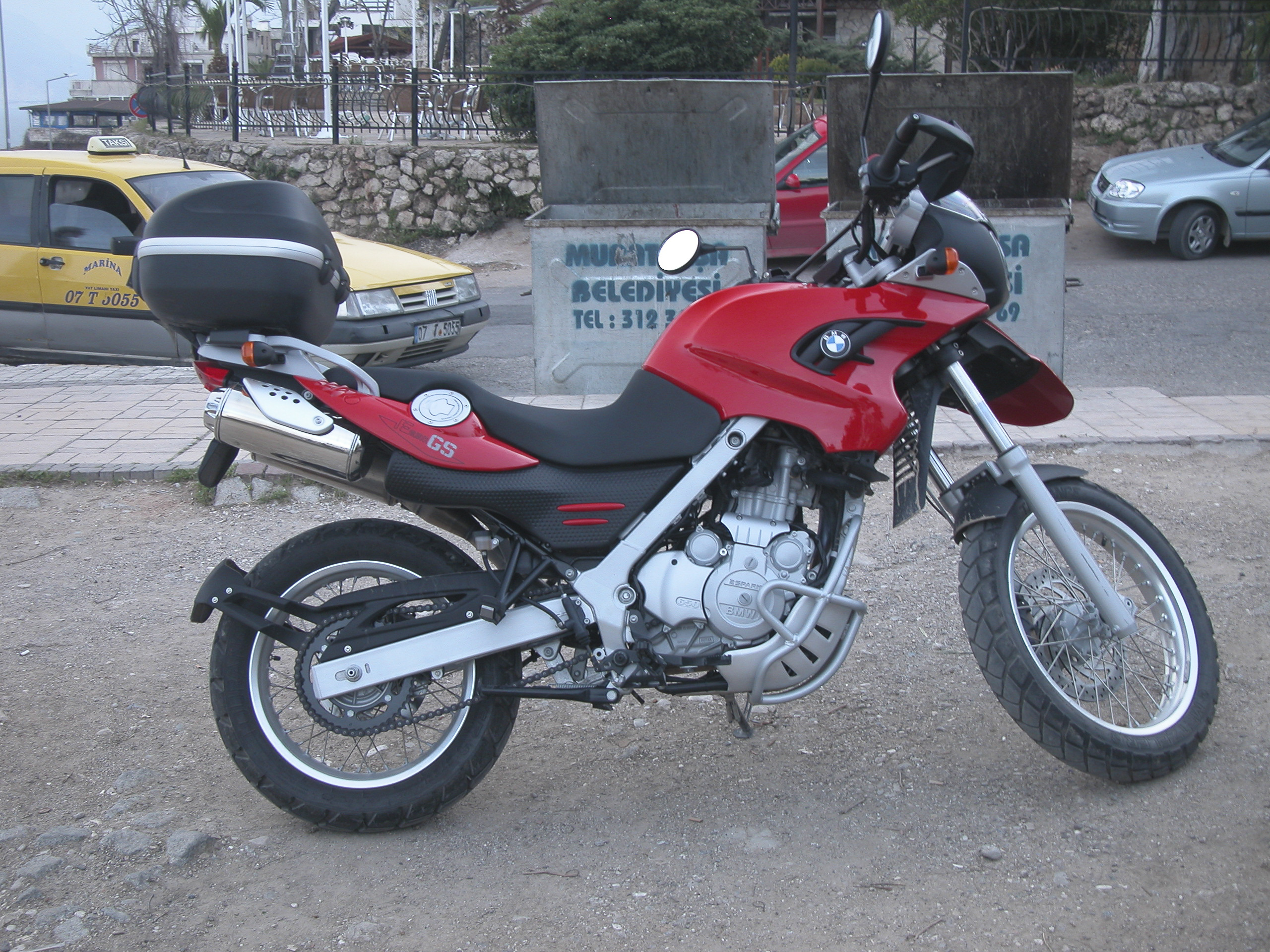
Climbing back up the cliff road, I paused to snap a picture of a model of BMW motorcycle I had never seen before, a 1-cylinder street bike. Motorcycles are a major mode of transportation in Turkey, and the newest and most advanced models often show up there before one sees them in the U.S.

Antalya was buzzing with late-model two-wheelers. This was the first time I ever saw this flavor of BMW.

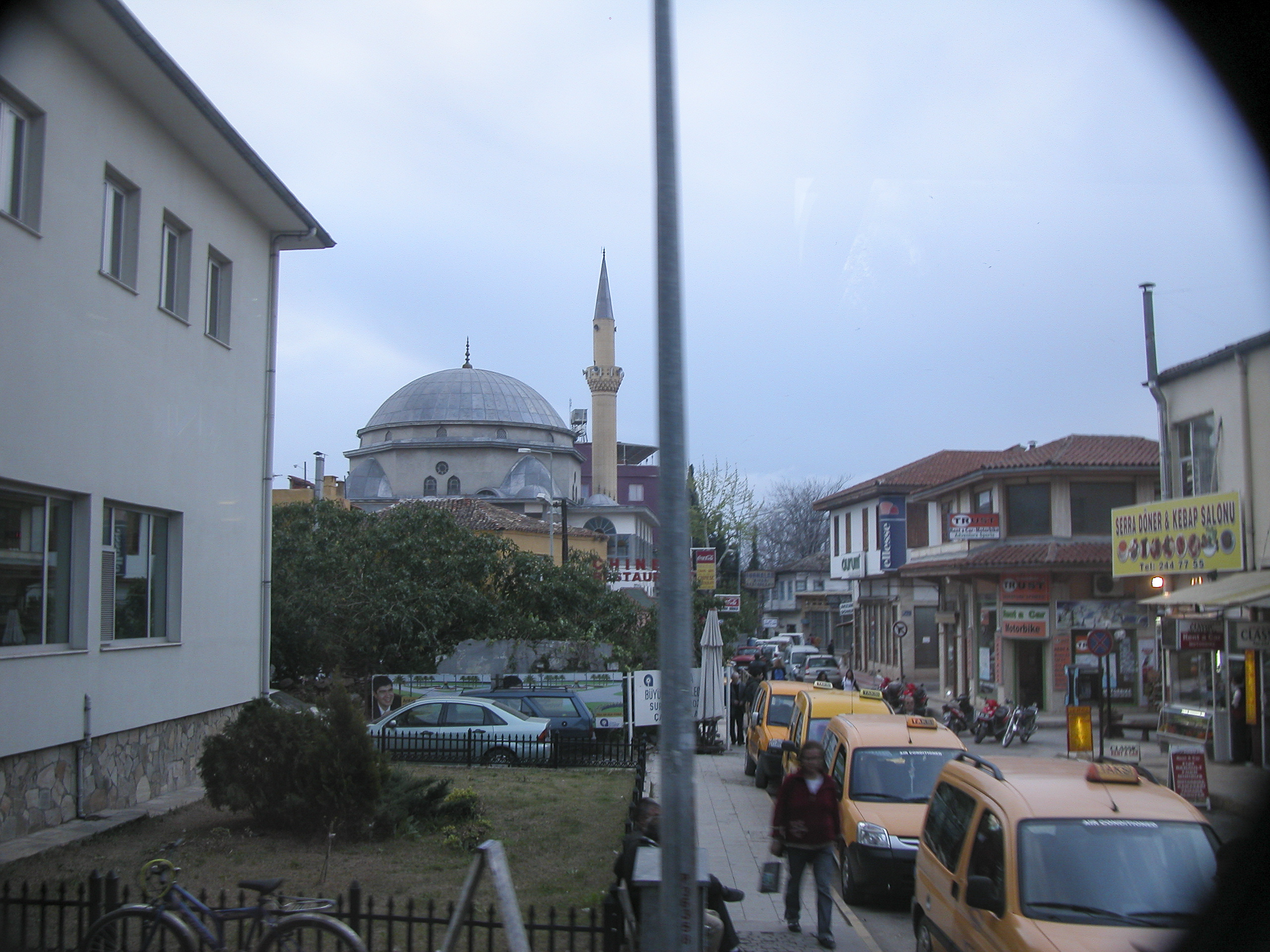
By this time we finished dinner and came back to the bus, it was getting late, and we had time only for a quick look at some of the other attractions of Antalya before dark. One of them was the Tekeli Mehmet Pasha Mosque, seen here. It was named for Lala Mehmet Pasha, a Grand Vizier in the reign of Sultan Mehmet III (reigned 1595-1603).

The Tekeli Mehmet Pasha mosque. We only got a glimpse of it on our whirlwind tour of Antalya.

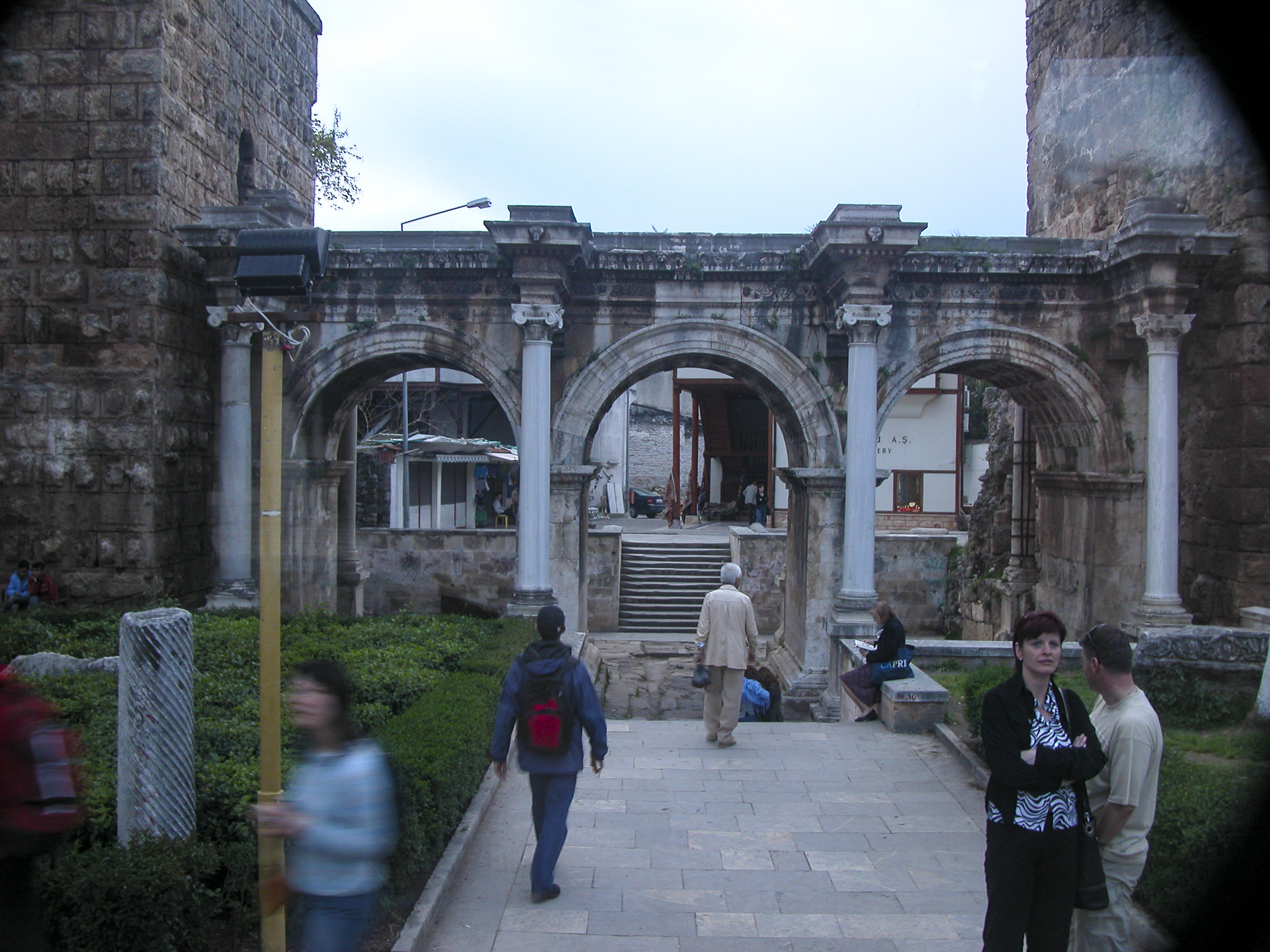
Not far from the Tekeli Mehmet Pasha Mosque, Hadrian’s Gate is the oldest surviving structure of Roman vintage. It was built around 130 CE in anticipation of a visit by the Roman emperor Hadrian. I gather that it was covered up and obscured by medieval construction, because the sources say that it was rediscovered in 1817 by a British admiral, Francis Beaufort, but not excavated and restored until the 1950s, after the walls collapsed during an earthquake. According to Beaufort’s description, the gate had a second story, but that was evidently destroyed by earthquakes during the 19th century, because subsequent visitors were unaware of it.

Erected in honor of an AD 130 visit by the Roman Emperor Hadrian, this is the best-preserved section of the old Roman wall.

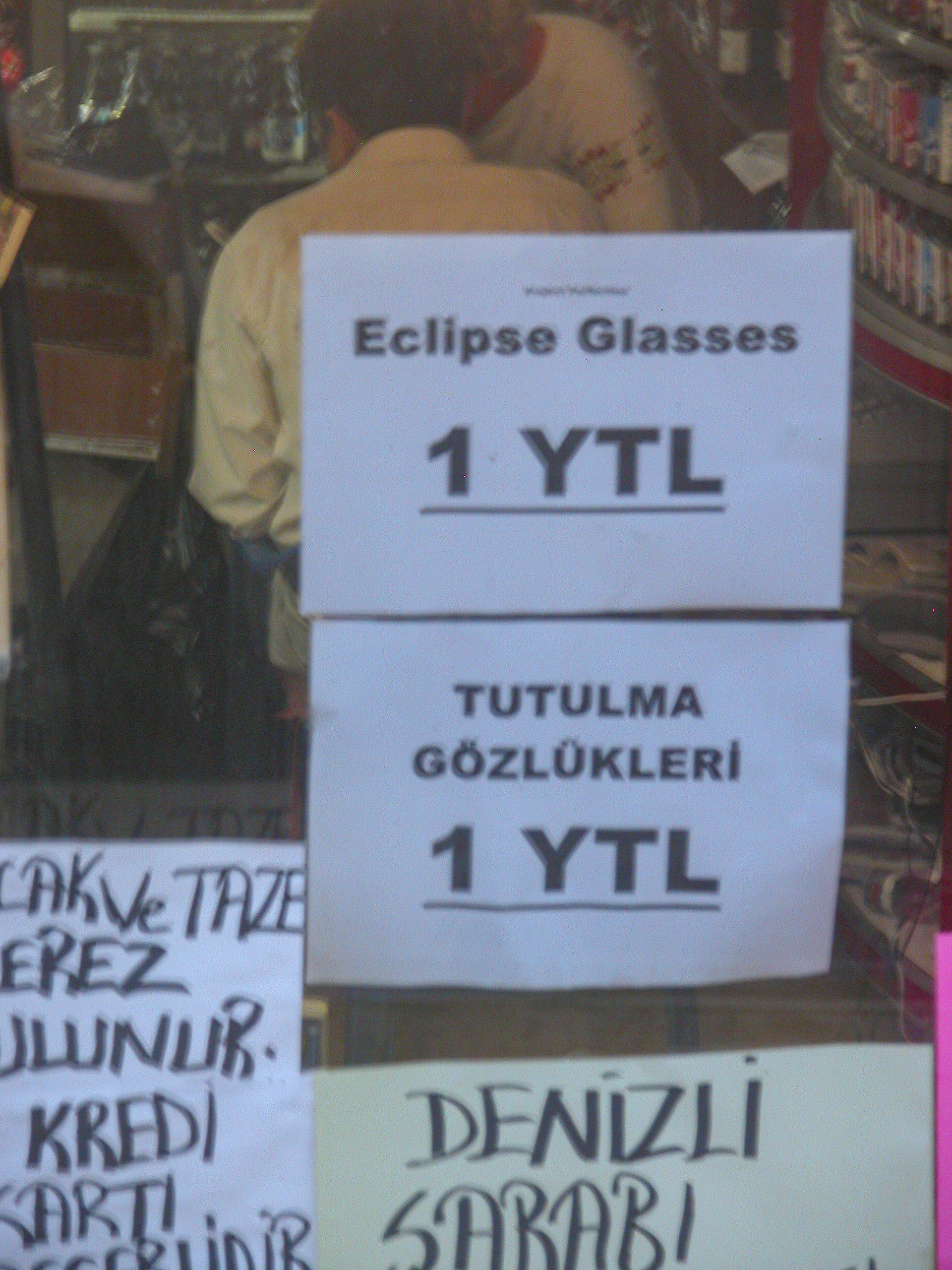
Two days before the eclipse, excitement was building up, and ads for eclipse viewing glasses were posted in every store window.

Eclipse viewing glasses for sale. Two days before the eclipse, sales are ramping up.
Categories
Turkey, March-April 2006

Taurus Mountains, March 27, 2006

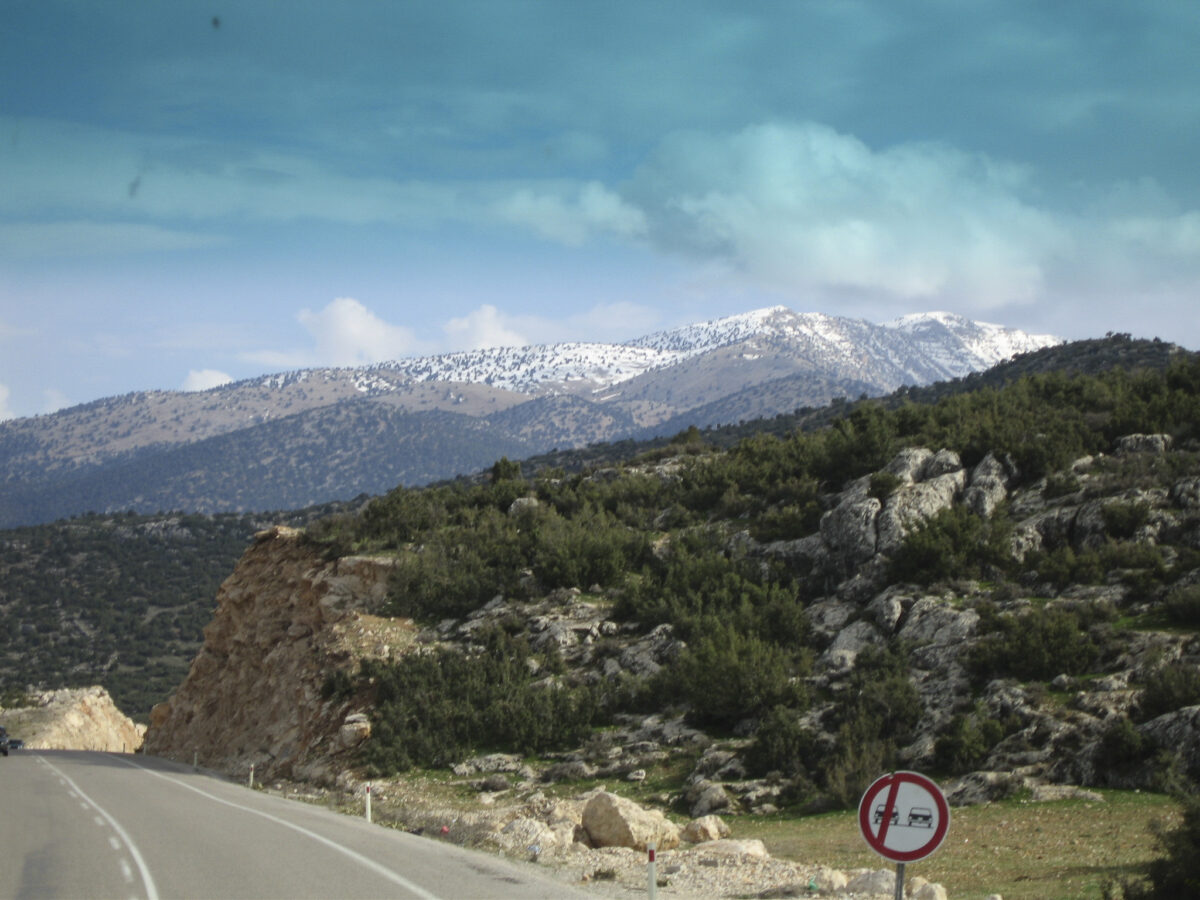
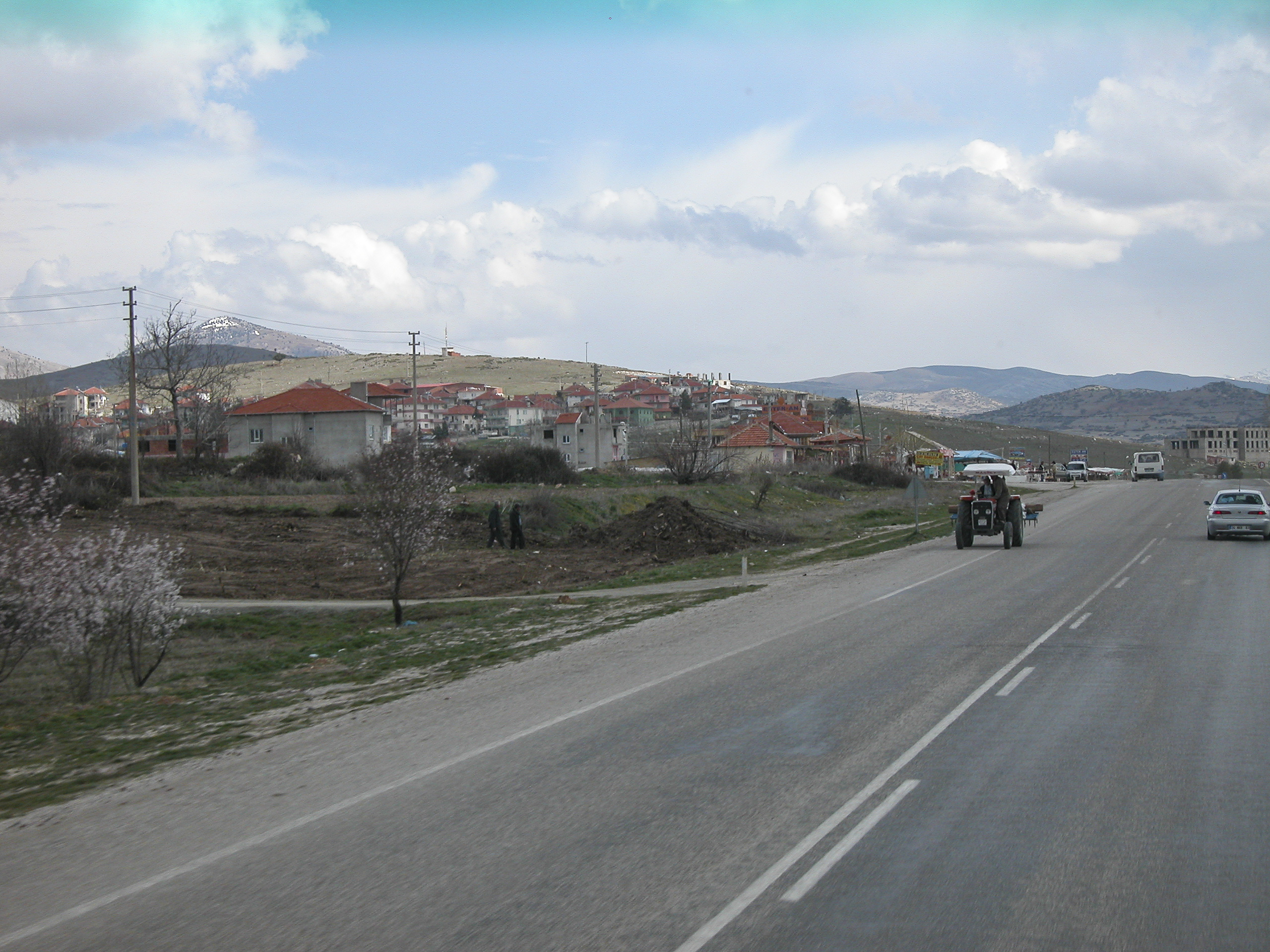
The bus ride from Denizli to Antalya was the longest highway leg of our trip, but it wasn’t boring. For one thing, the scenery was spectacular.

The road to Antalya took us through these scenic mountains.

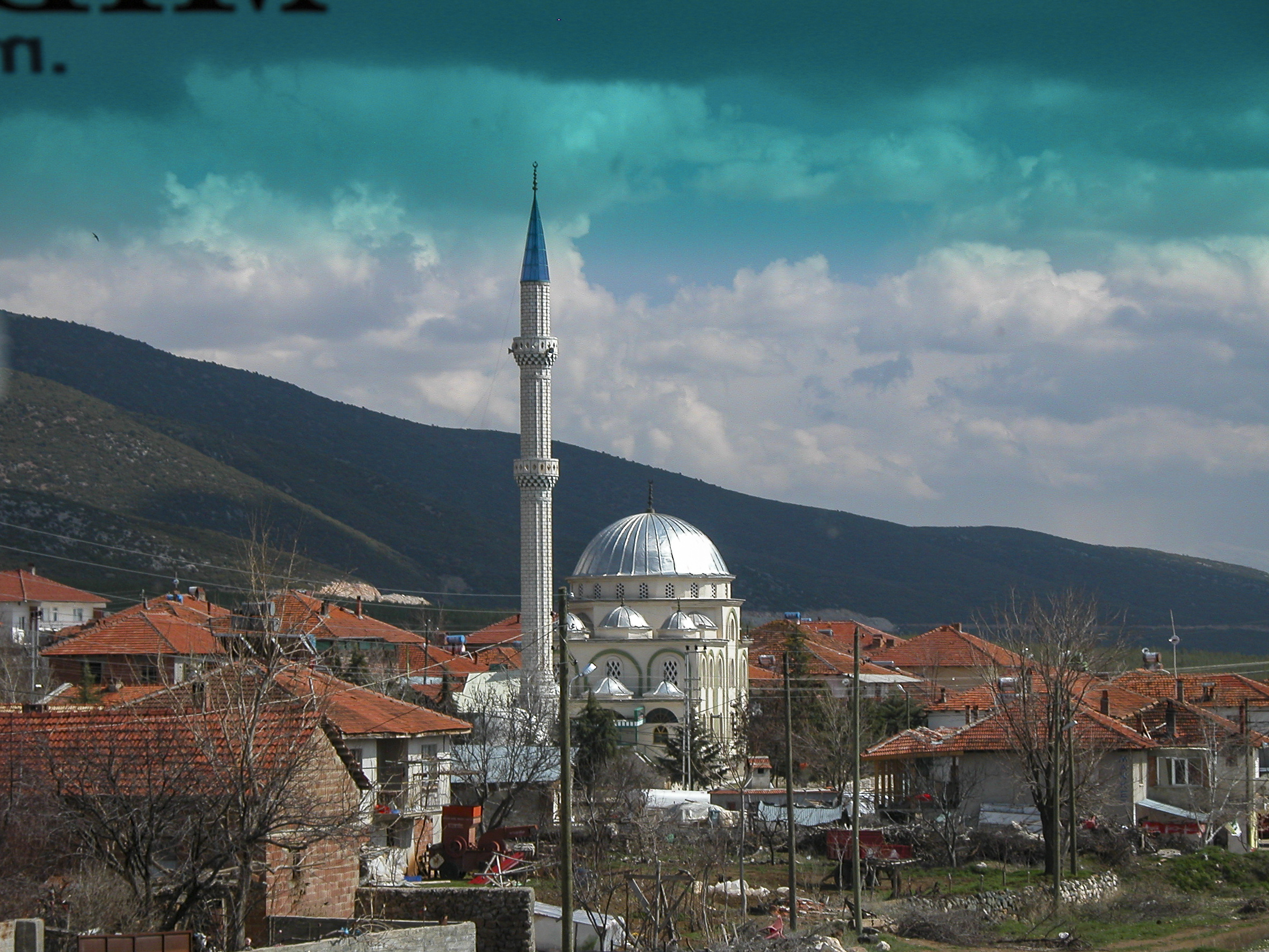
Our route took us through a number of small provincial towns – there was no burg of any size on the E87 between Denizli and Antalya – and they were mostly unremarkable, but in one of them we passed this striking silver mosque, and I was able to snap a photo of it as we went by. The tinting of the bus’s windshield is responsible for the blue coloring of the upper quarter of the picture.

In an otherwise unremarkable town on our route from Denizli to Antalya.

In general these towns appeared to be farming communities, not much different from any others you would find in the Balkans or the rest of southeastern Europe.

Our route from Denizli to Antalya was dotted with little towns like this one.

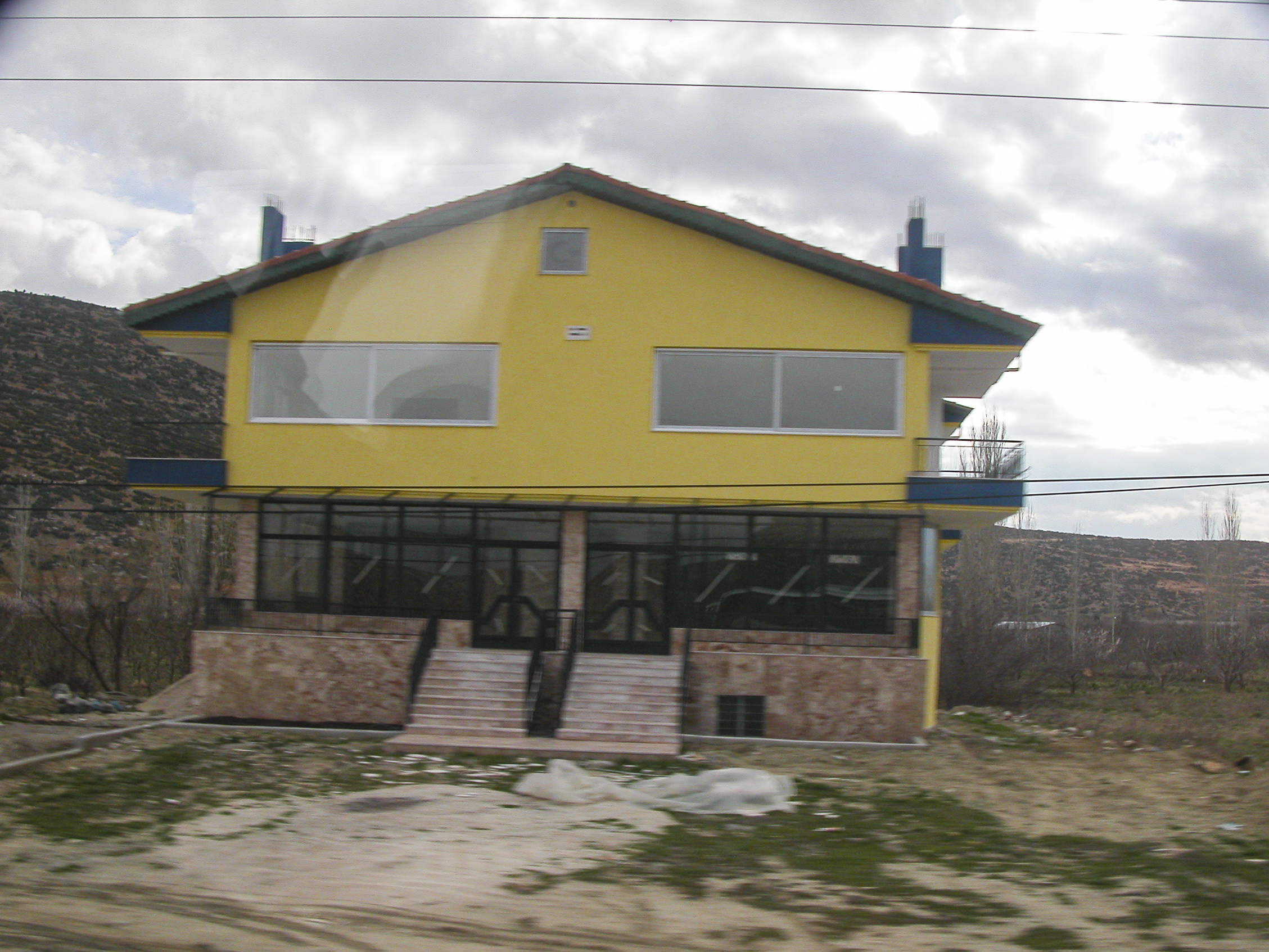
Most of the pictures in this leg of the trip I shot from the bus, since we made few stops. Aside from the silver mosque, there were few items worth a snapshot, although I did take a fancy to the bright yellow structure in the picture below, since it seemed a bit atypical for the area. The facade had the appearance of a small business establishment rather than a residence, but there were no signs to identify it as such. Perhaps it was just being completed and hadn’t opened for business yet.

This brightly painted structure caught my attention – not sure whether it was a residence or a business establishment under construction, or both. (Taken from the bus.)

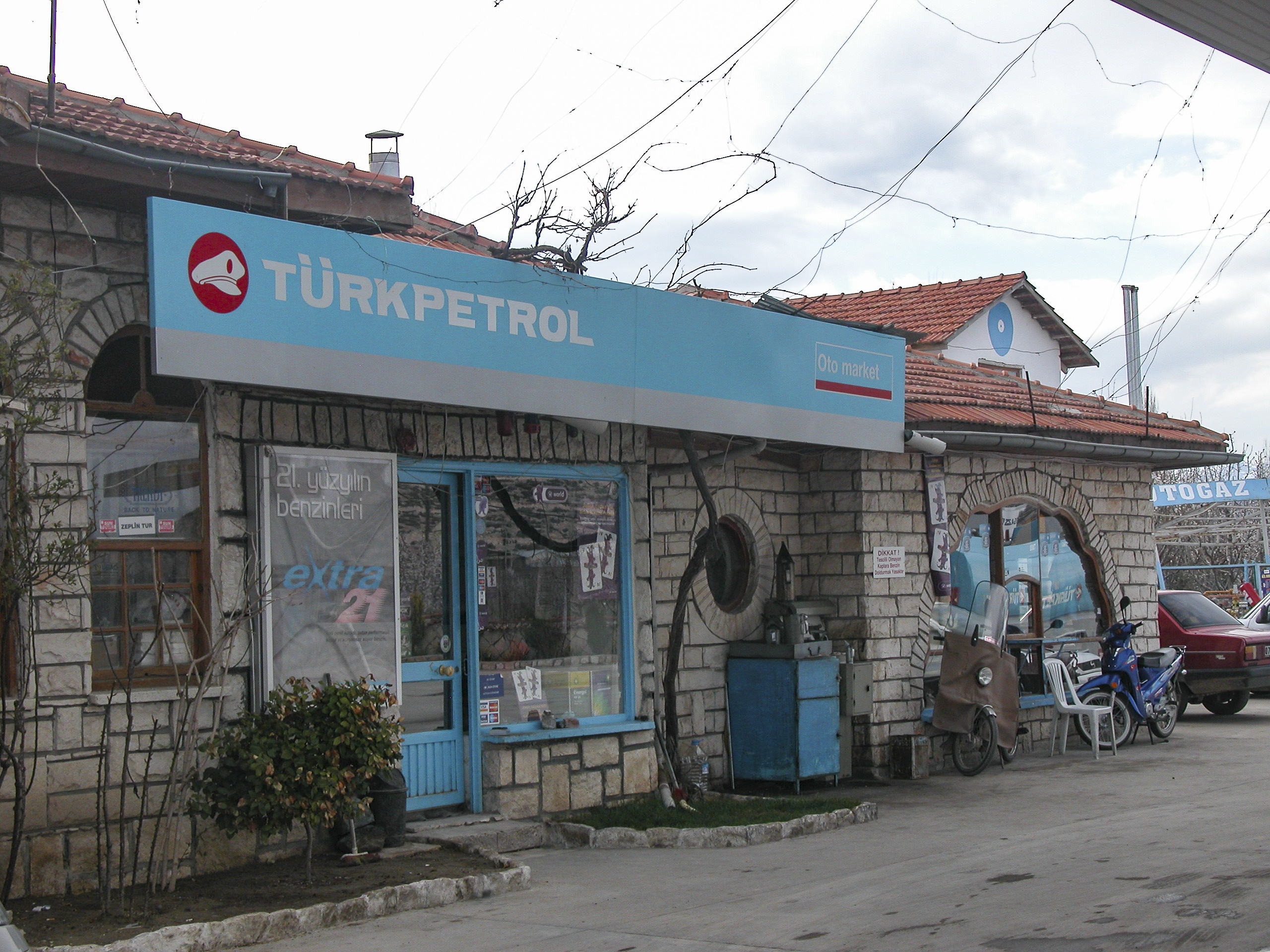
When we did stop, it was for gas and food. We obtained both at this gas station and restaurant in one of the small towns on the road.

A gas station cum cafe where we stopped for lunch.

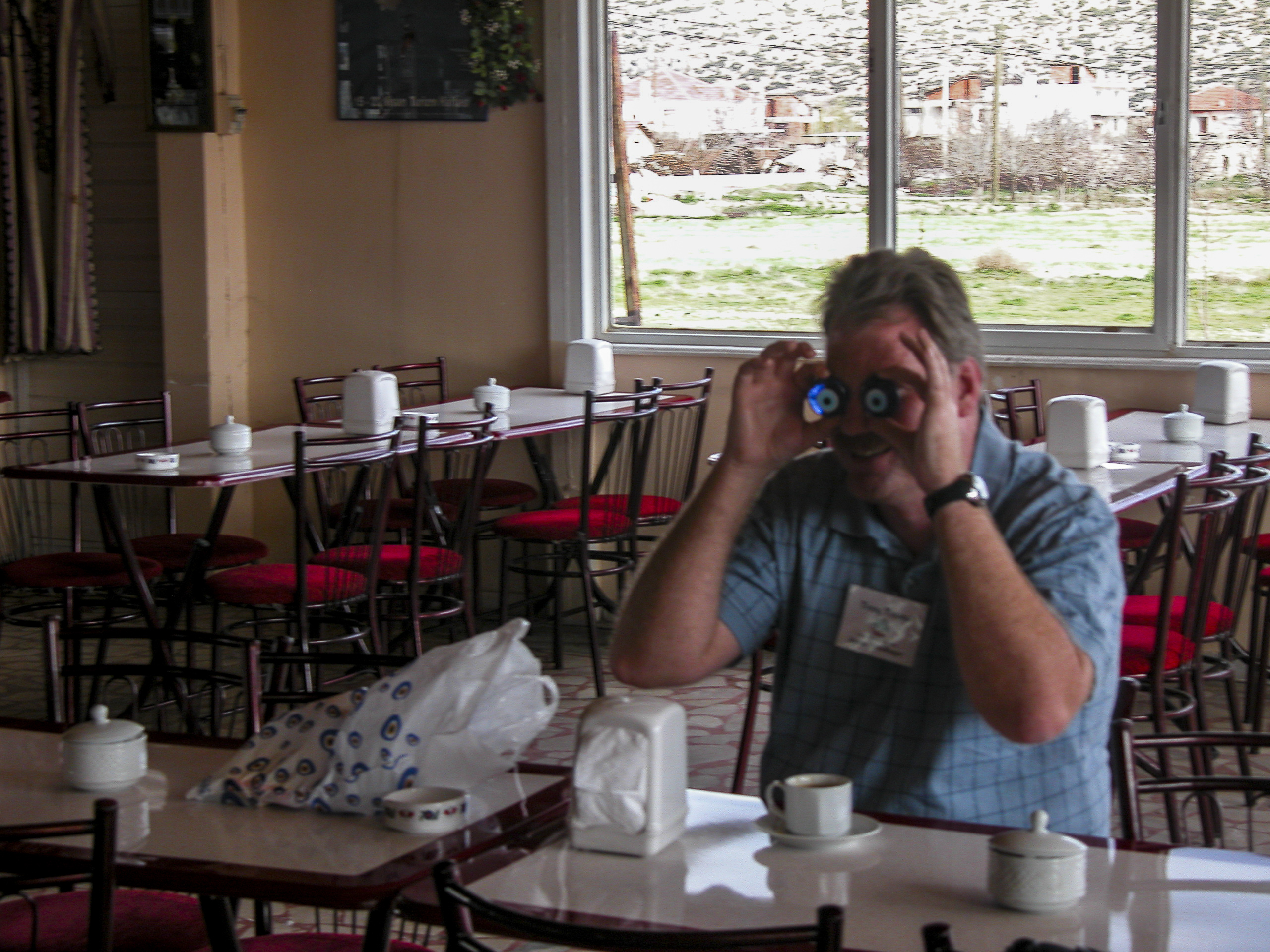
The nazar boncuğu is an amulet believed to protect against the “evil eye.” Nazar boncuğu is the Turkish spelling; the ğ is silent, and the c is pronounced like a “j” in English, so pronounce it as if it were spelled “nazar bonju”. (Or just Anglicize it completely to “nazar bonchuk.”) The nazar boncuğu can take a number of forms; beads are one of the most common, but the one we encountered most often was a glass disk with a blue edge and a blue or black dot superimposed on a white or yellow center. In the truck stop restaurant on the way to Antalya, Jim Windlinger demonstrated one possible application for it.

Jim Windlinger demonstrates one possible way to use the nazar boncuk. See no evil?

Nazar-type amulets are found all over the Middle East and South Asia, but they are especially popular in Turkey, and we found them everywhere we went. I bought up a large batch of them – they are quite inexpensive – and distributed them to various friends and my co-workers in the LA County Internal Services Department upon my return.

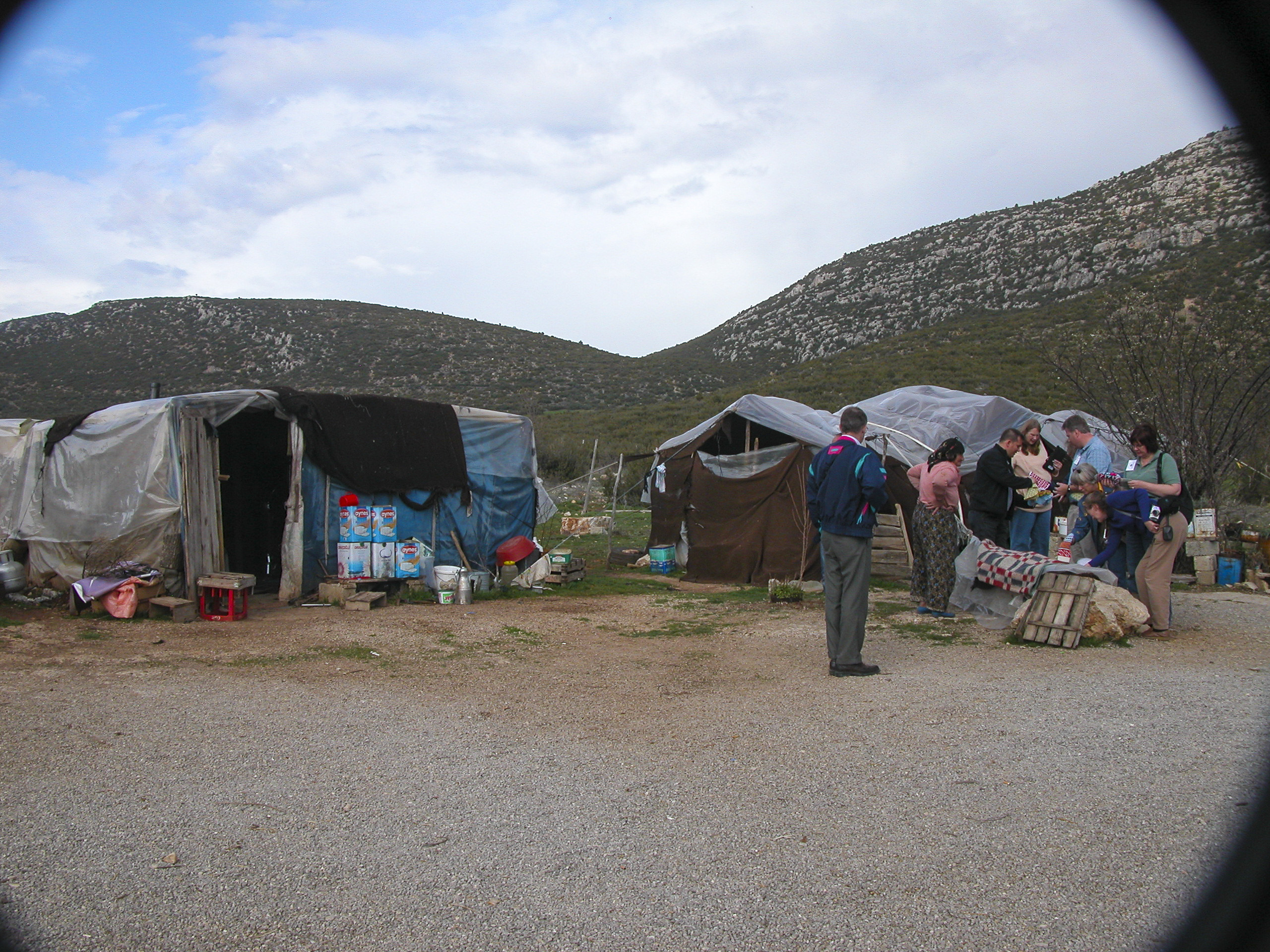
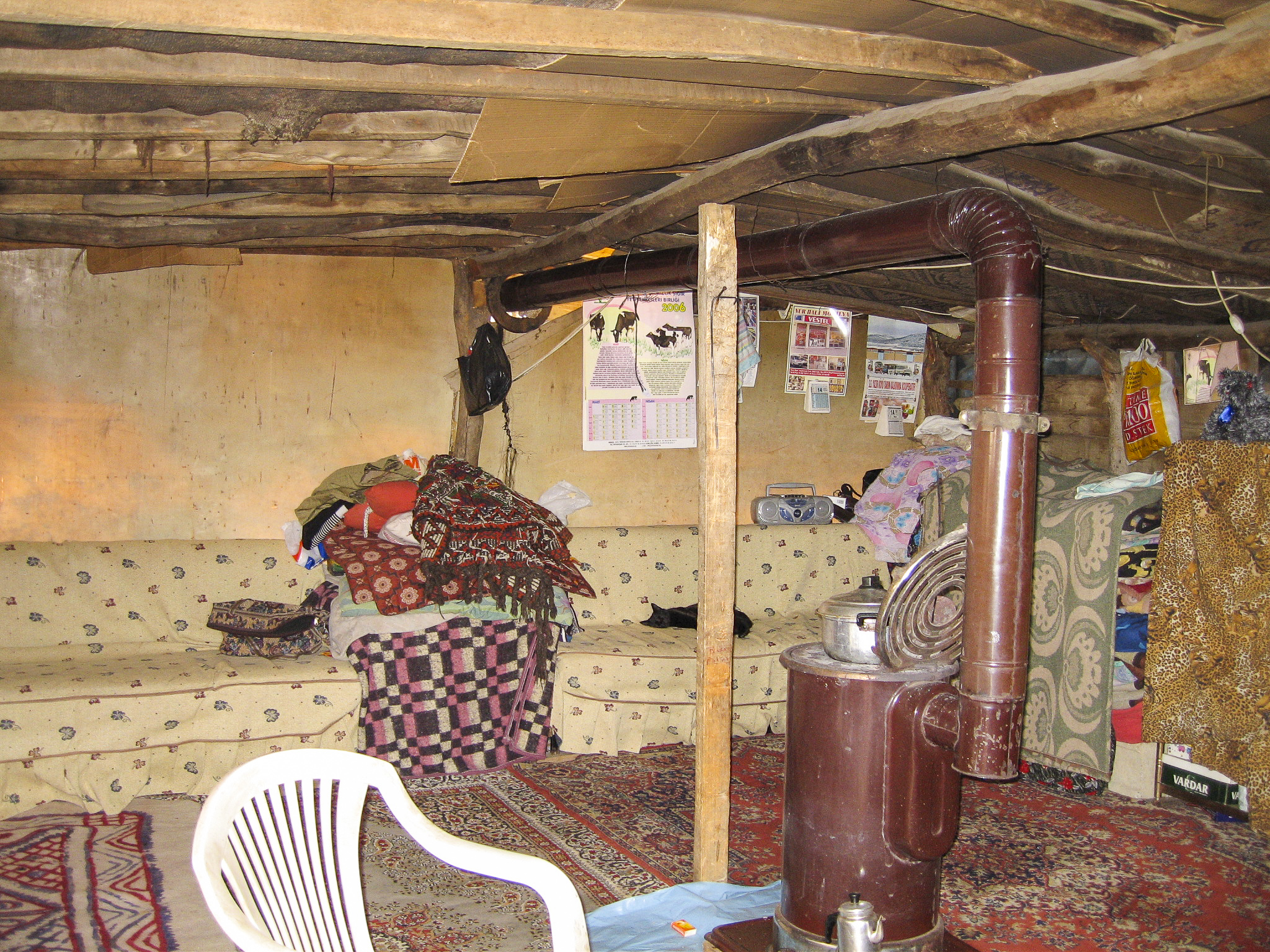
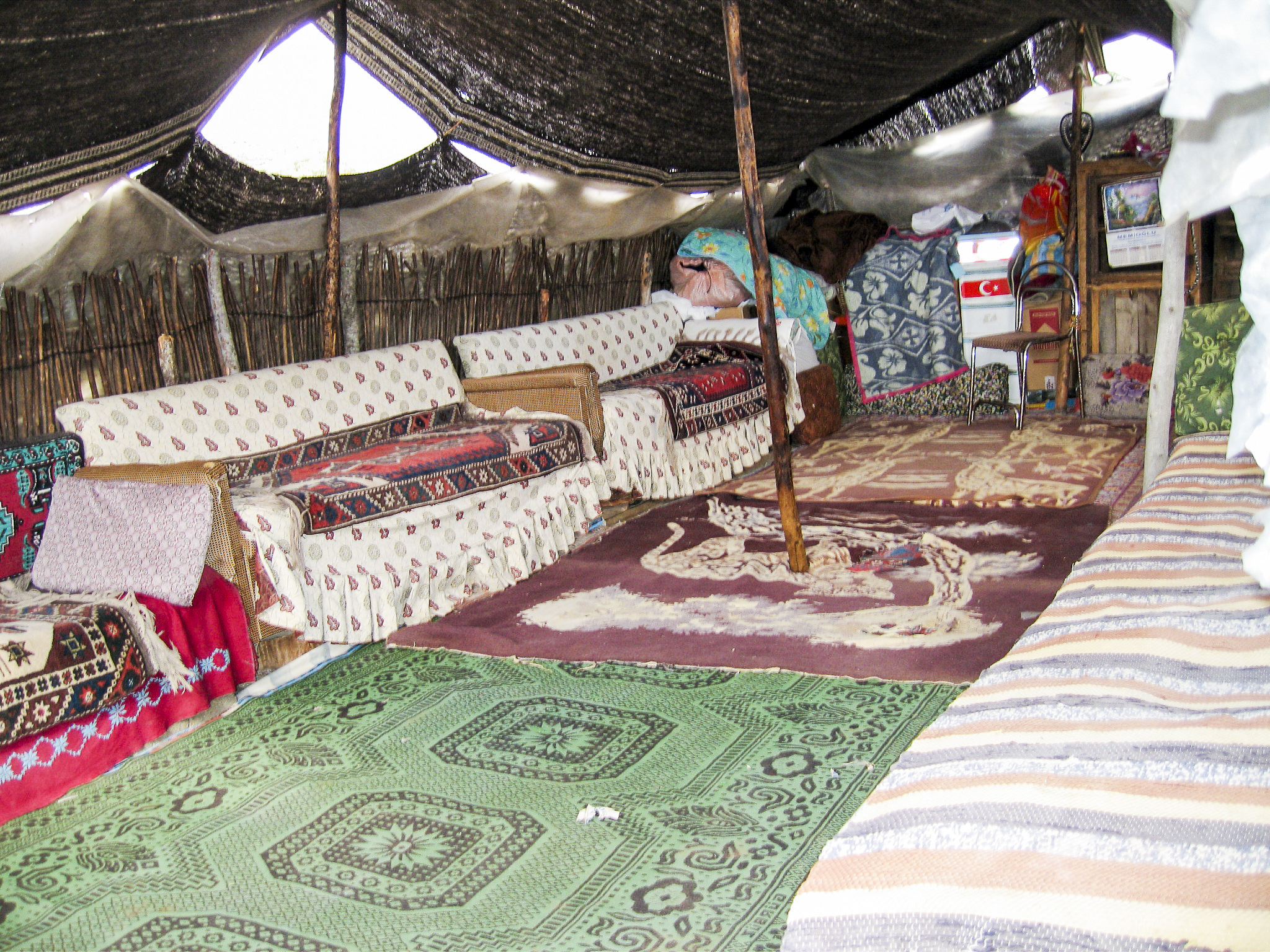
After lunch we made one other stop on the way to Antalya. Attila announced that he knew a nomad who had a camp by the side of the highway in a remote area, and we would take a break there. The ostensible “nomad camp” turned out to be a kind of concession where the lady sold shawls, amulets and various other trinkets, and I’m sure she made a decent living off the tourist trade. She appeared to be living alone there, which seemed unlikely given the isolation of the place, and the tent, despite its rustic appearance, was too elaborate and well-furnished to be the dwelling of a real nomad.

The lady sold shawls and amulets, and probably made a good haul off us.

I wondered what kind of arrangement the owner – whoever the real owner was – had made with the government to obtain the cachet to set up beside the highway to sell souvenirs to tourists with no competitors.

Note the cat asleep on the sofa.

Nevertheless, it was a pleasant diversion on what was an otherwise uneventful part of the trip, and we enjoyed the break.

A plethora of rugs helps keep the place warm in winter.

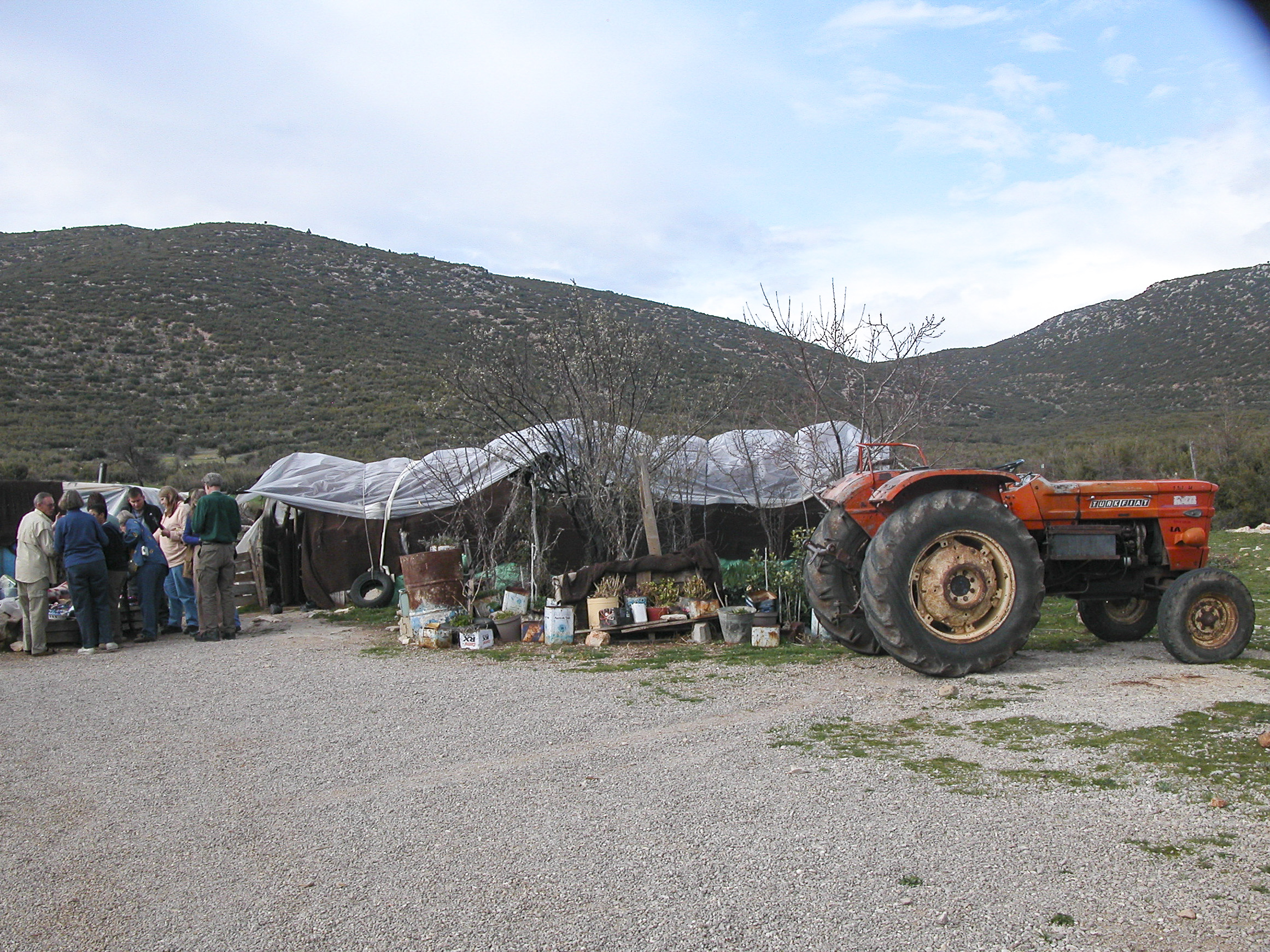
The tractor in the picture below was a dead giveaway that the “nomad” camp was probably a side business run by a local landowner; why on earth would a real nomad need a tractor?

Why would a nomad need a tractor?

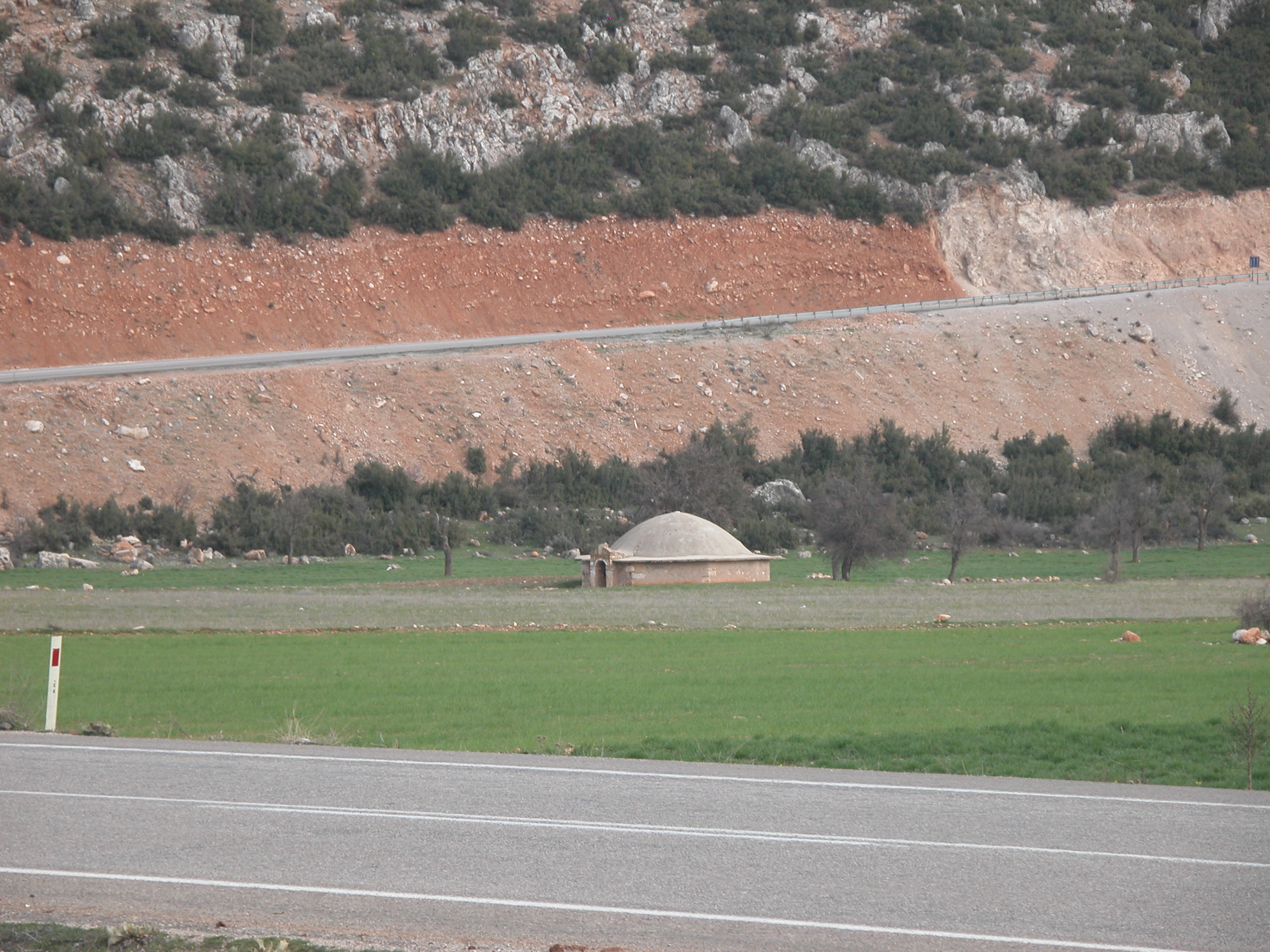
Across the highway from the “nomad” camp was a mysterious structure, shaped somewhat like a yurt but made of masonry, standing by itself in the middle of a field. We never found out its purpose.

Unknown building off the highway.

Finally, just before sunset, we came down from the mountains and caught our first glimpse of the Antalya, metropolis of Turkey’s Mediterranean coast, gleaming in the late afternoon sun.

Our first view of Antalya.
Categories
Turkey, March-April 2006

Denizli, March 27, 2006

From the resort town of Pamukkale it’s just a hop, skip and jump to Denizli, the metropolis of the Meander Valley, with a population of around a half million. Aside from being a major tourist center because of the proximity to Hierapolis and Pamukkale, among others, Denizli is the home of a substantial textile industry, as we were about to discover.

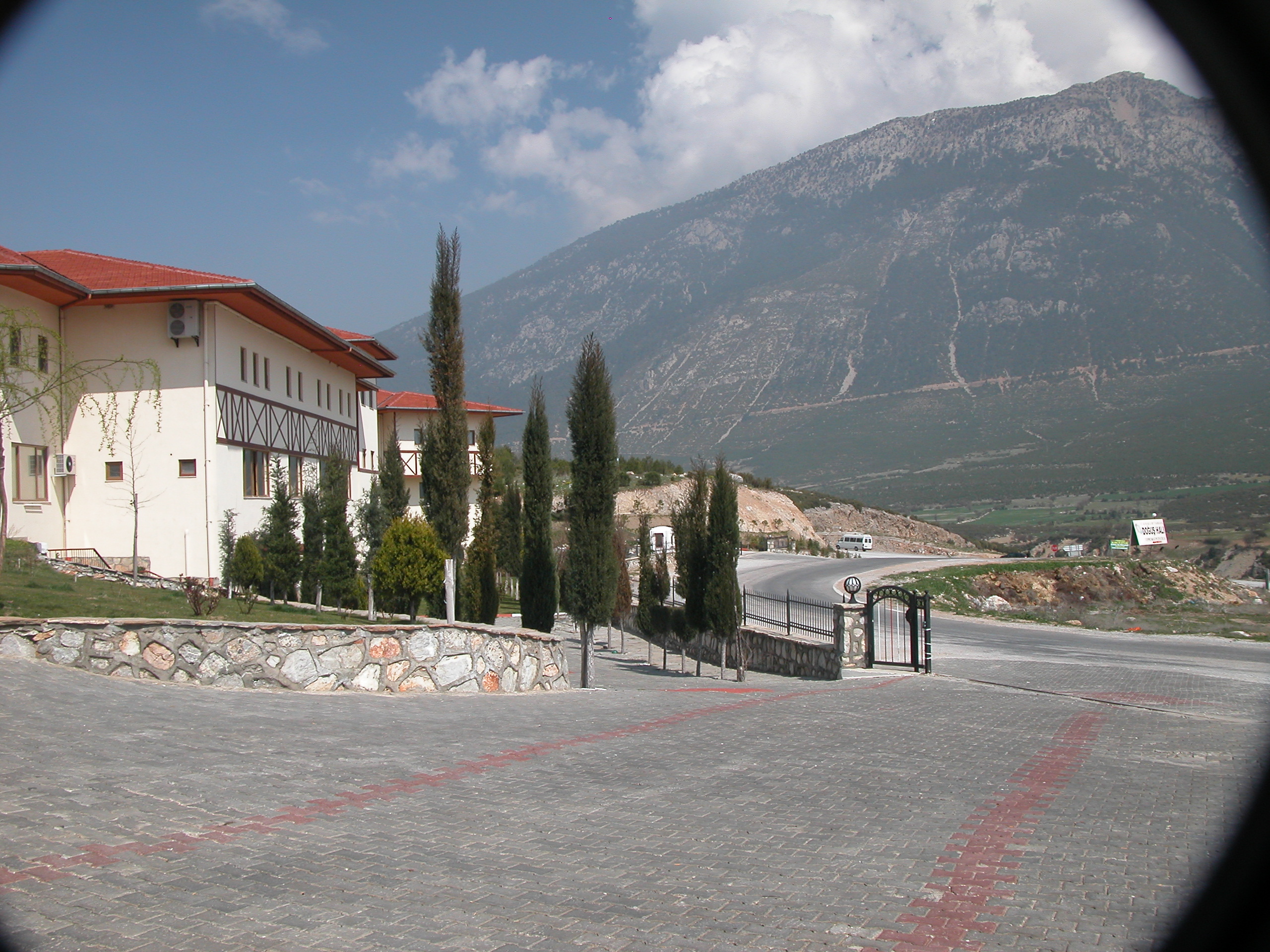
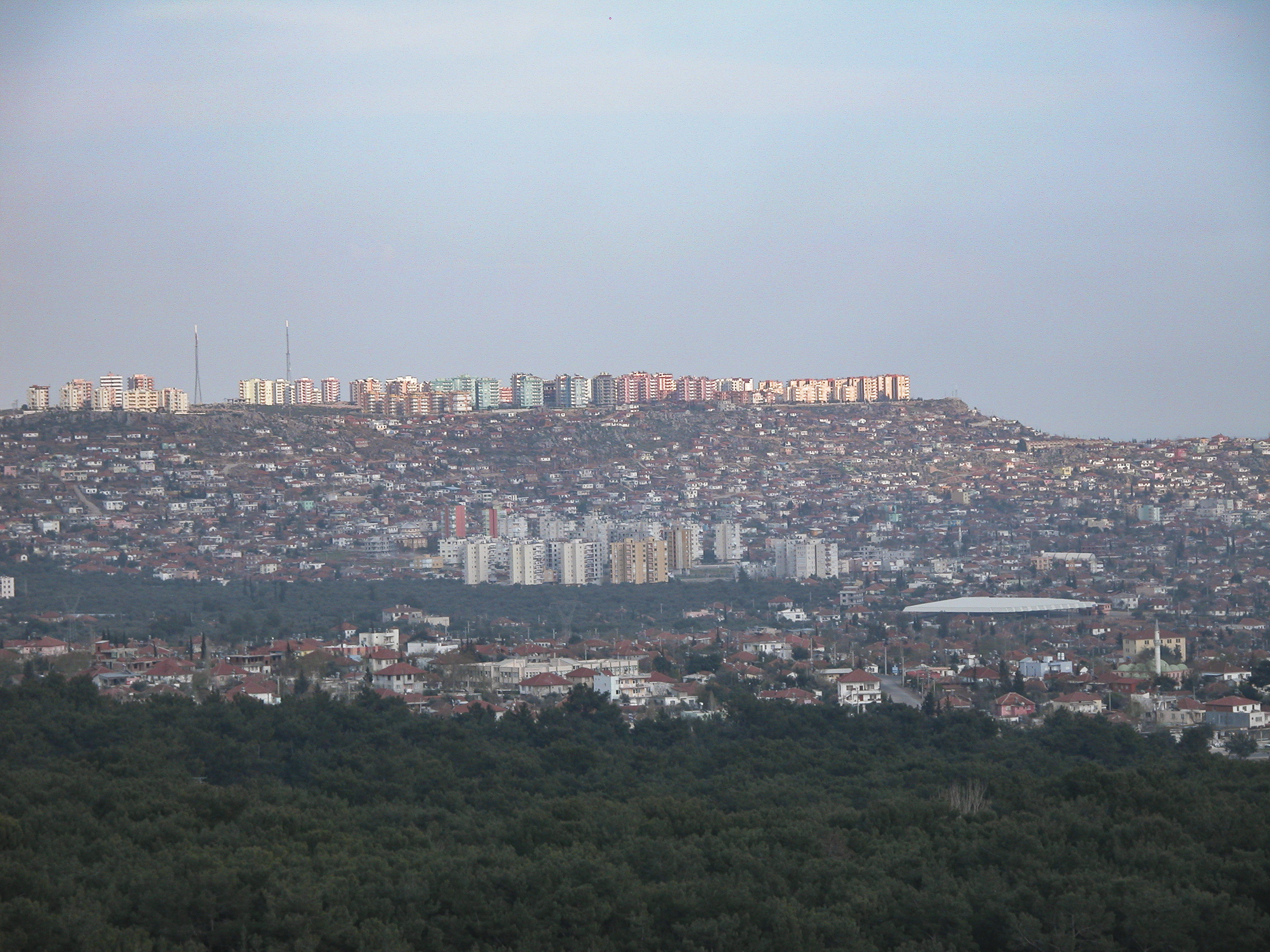
Apartment houses in Denizli, as seen from our tour bus on the way to the Dogus Hali Carpet Factory.

In Denizli we visited the Dogus Hali Carpet Factory. There we were taken through each step of the making of Turkish carpets, all the way from the spinning of the thread, through the dyeing, weaving, and finishing of the carpets; and, of course, the marketing and sale of the finished product was not neglected either.

Entrance to the Dogus Hali Carpet Factory.

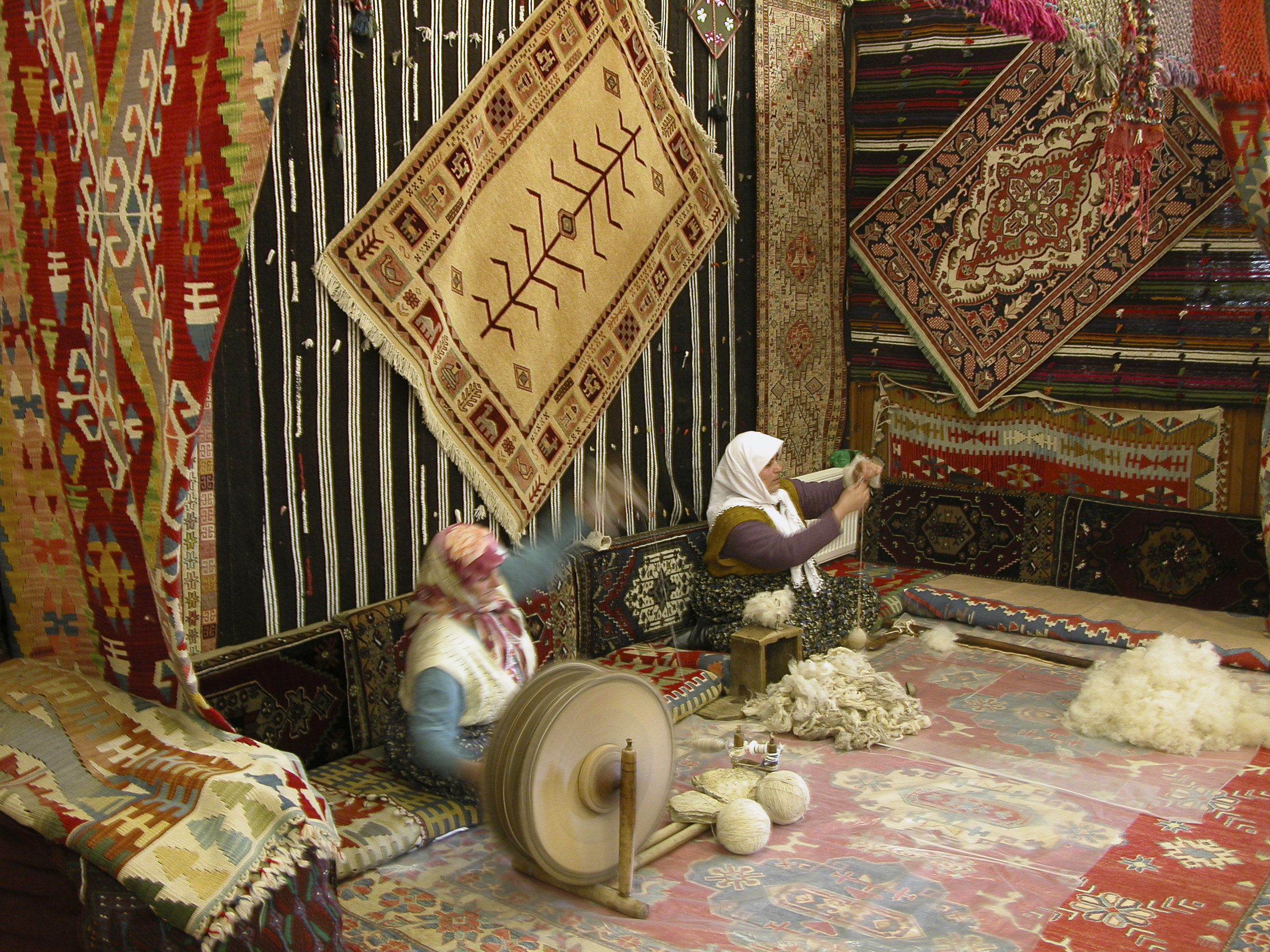
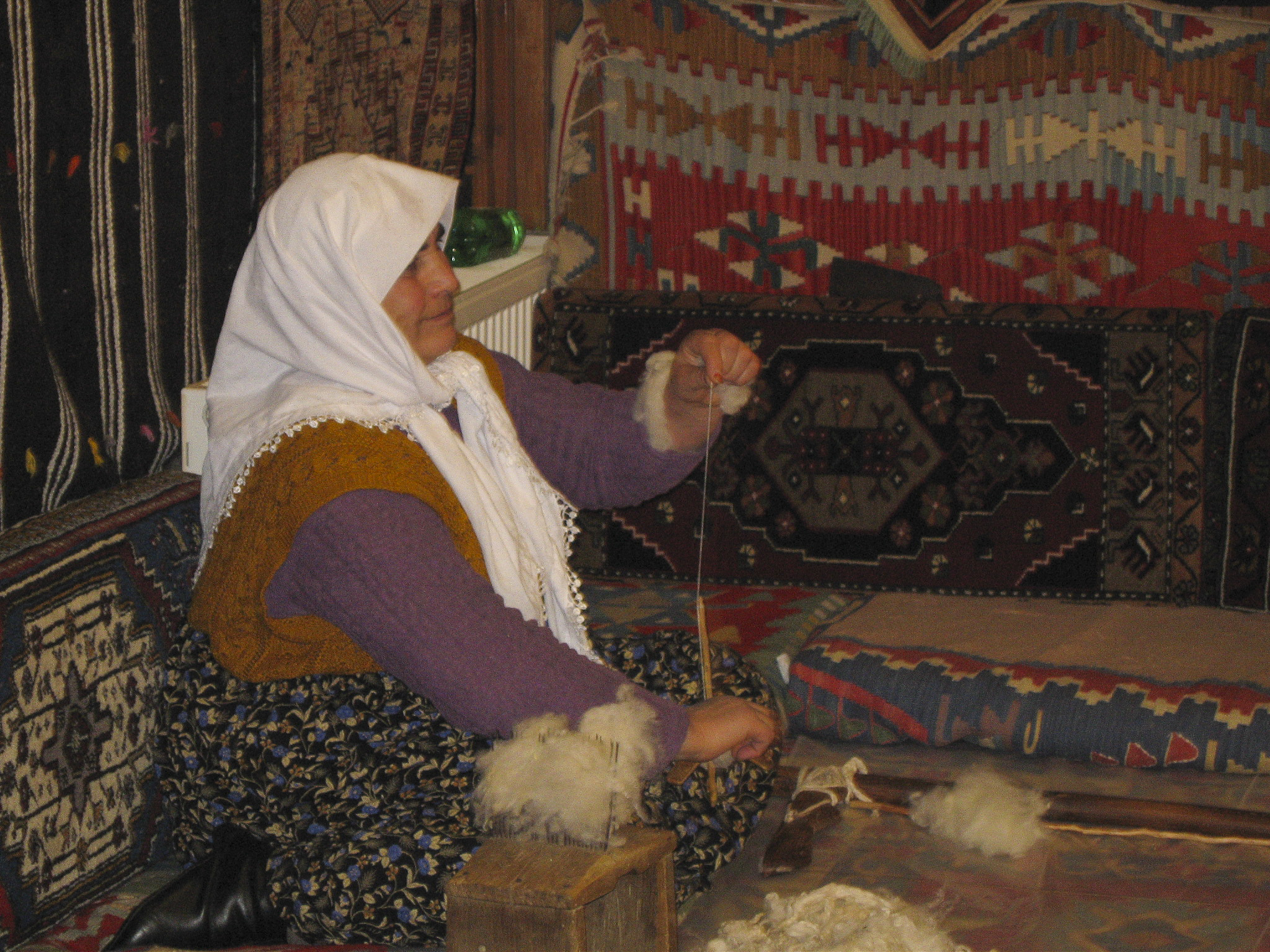
The first step in the making of a carpet is, of course, the spinning of the thread from the wool shorn from the sheep we had seen at Hierapolis earlier in the day.

Creating the thread.

The thread was spun by local women, a highly skilled cadre who are the conservators of a vanishing art in this machine-dominated industry. We felt privileged to watch them at work.

I stand in awe of the skills of these ladies.

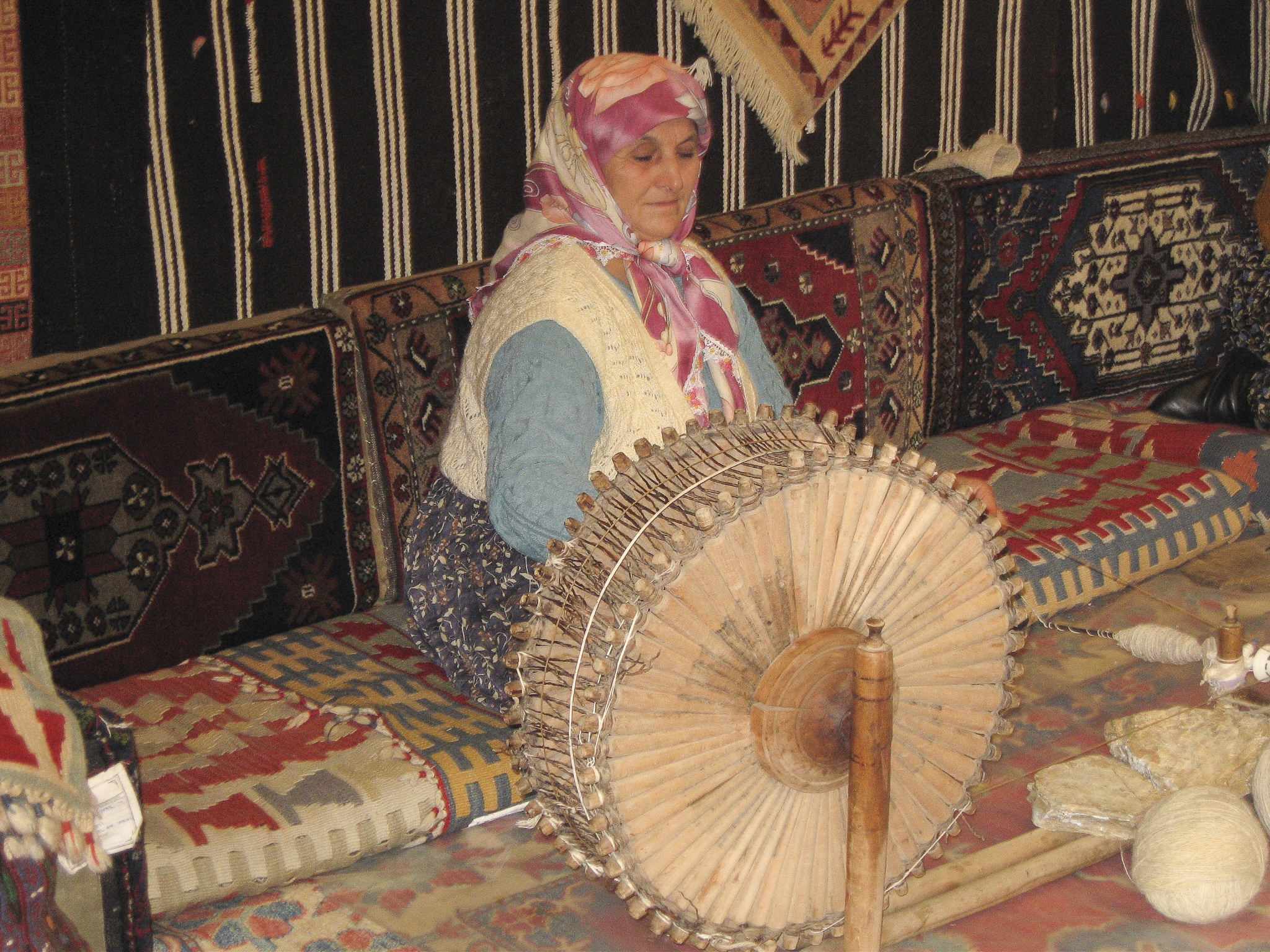
The spinners used some machines themselves, but of a more homespun (if I may use that term) genre. I’m not sure of the name or purpose of the contraption shown below, but the ultimate product, as seen behind the operator, was amazing.

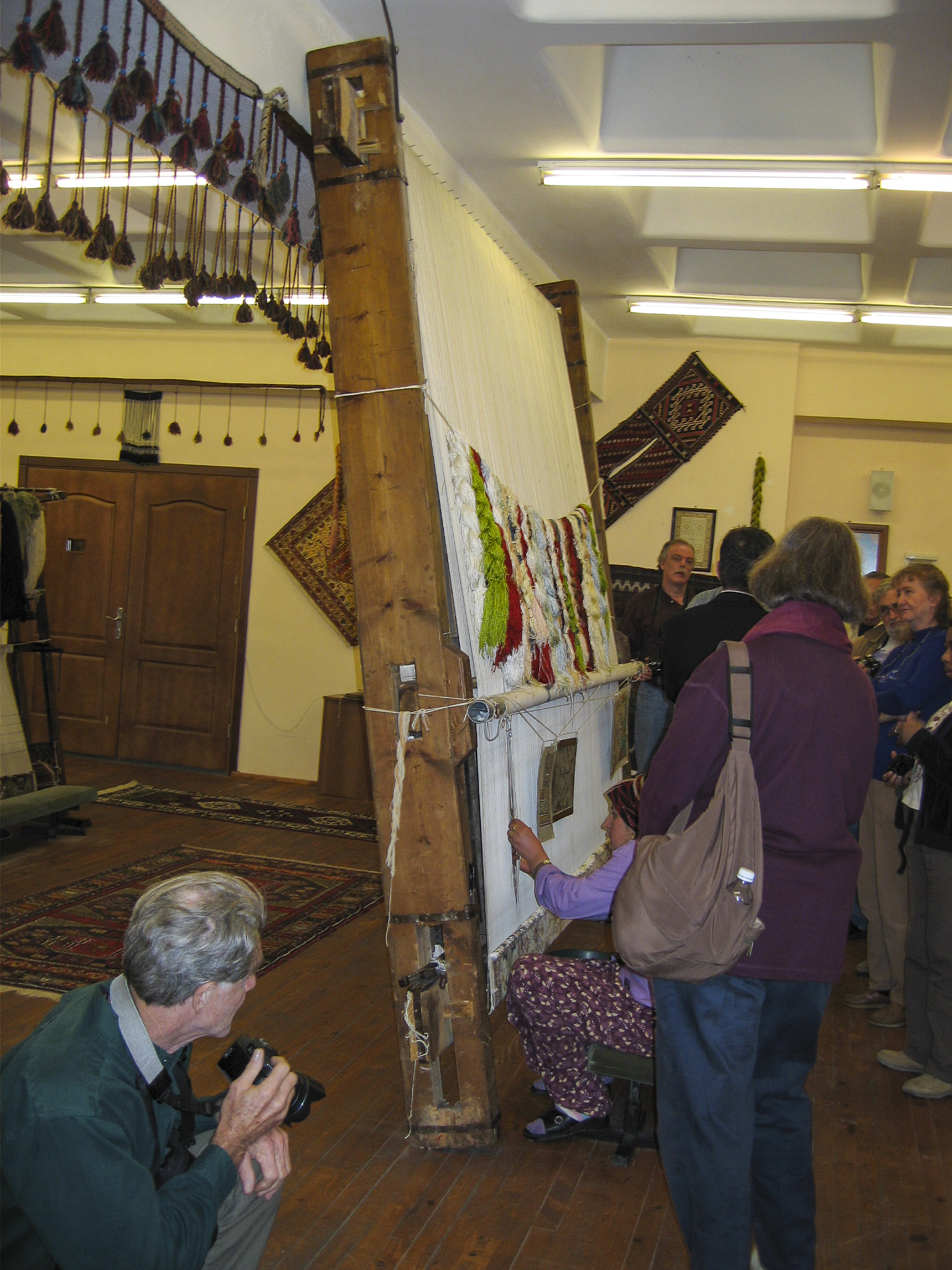
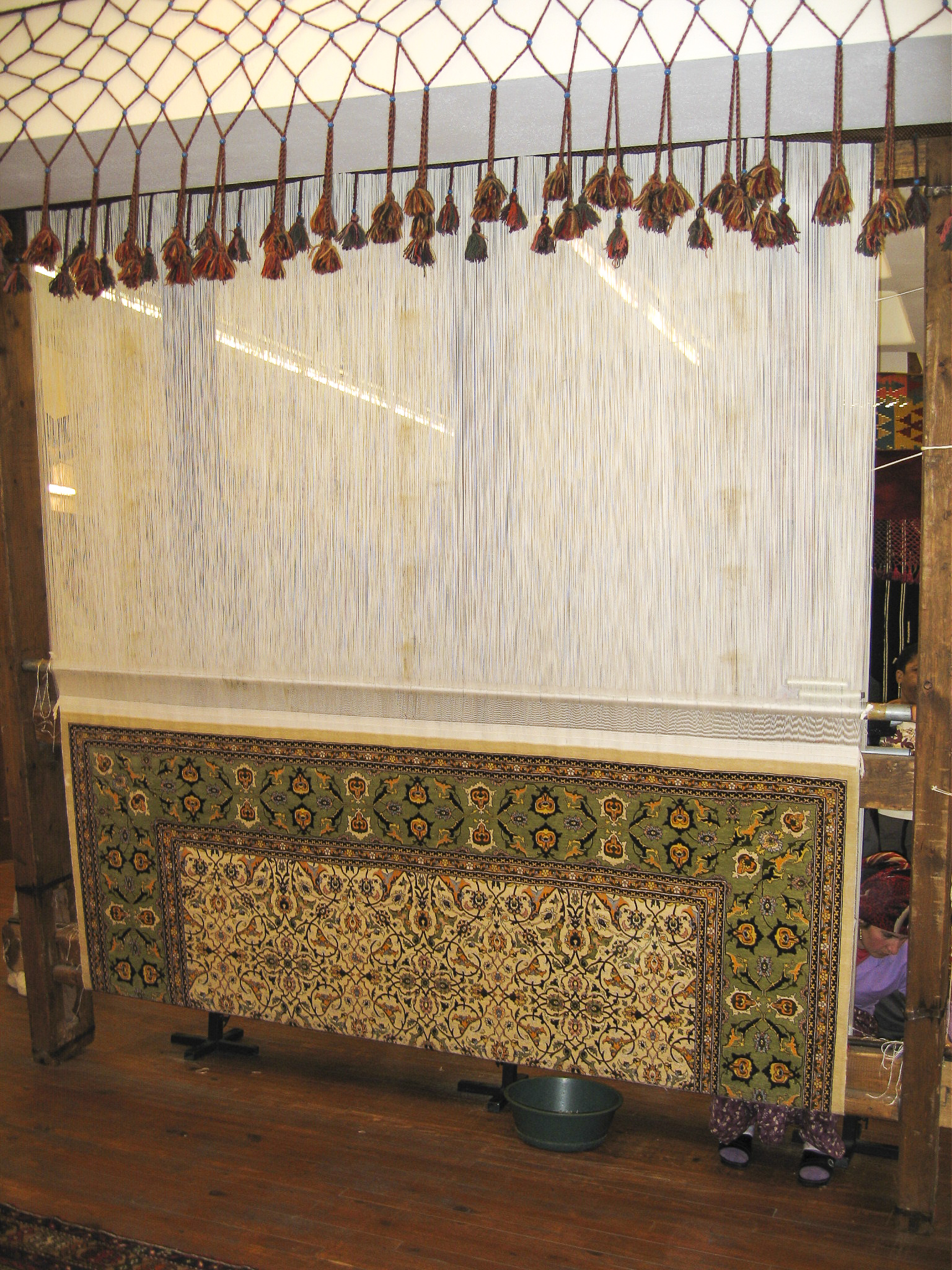
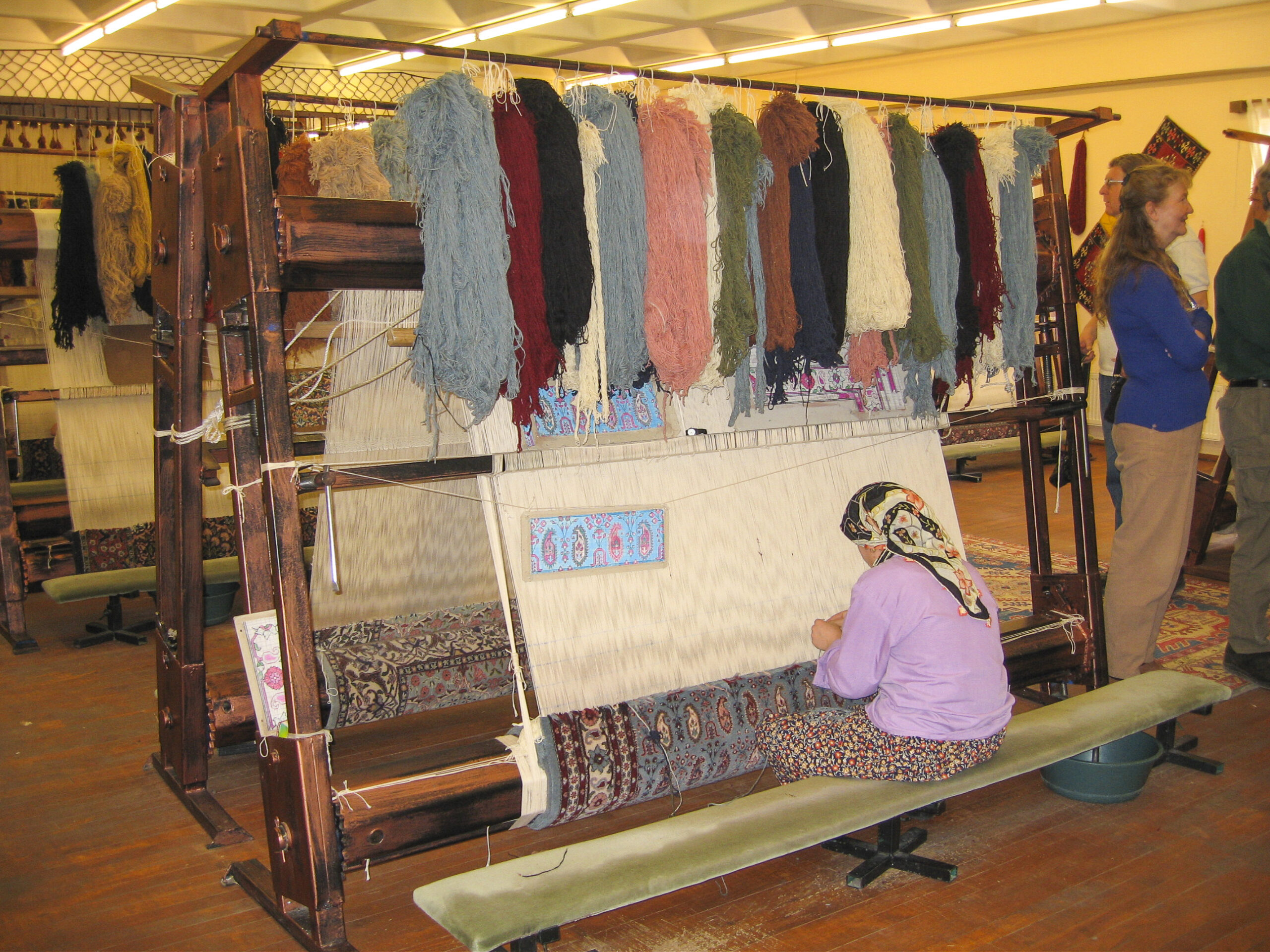
Next we visited the looms, where the women weave the carpets by hand.

Elouise Mattox watches the weaver demonstrating her skill at the loom while David Lindquist looks on.

The art of weaving has always been a total mystery to me, and after watching it being done – admittedly rather briefly – at the Dogus Hali Carpet Factory, I can’t say that I have any better idea than before as to how it is done.

Carpet weaving in progress on a loom.

I am still utterly mystified as to how such intricately patterned creations emerge from a mere collection of assorted threads.

A weaver at work on one of the larger looms. Kathy Lindquist at right.

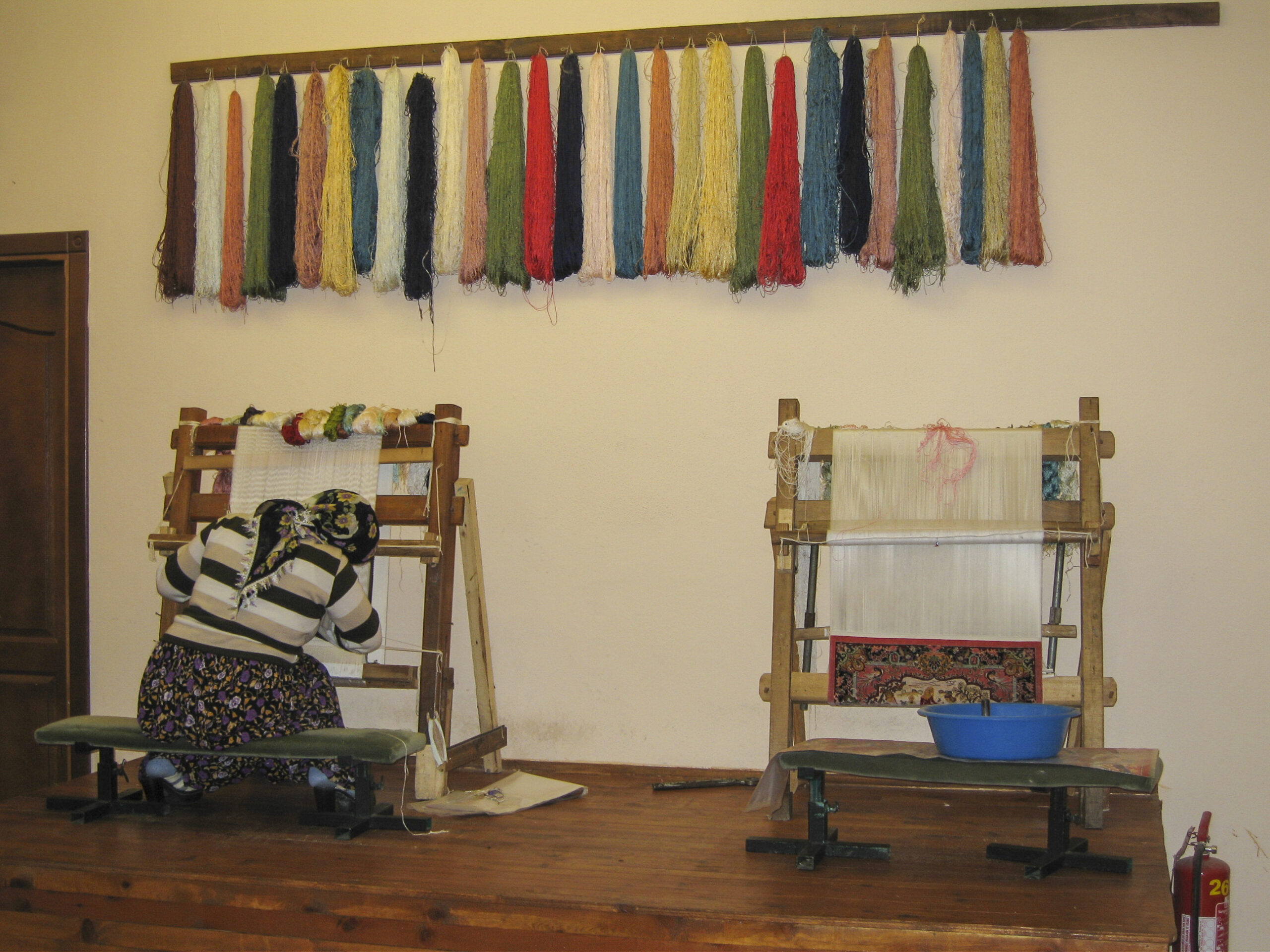
As one might expect, larger looms were used to make the larger rugs, and smaller looms to make the smaller rugs.

Smaller looms for smaller rugs.

The Dogus Hali Carpet Factory produces rugs made from silk as well as wool. The process of making silk thread is, as is well-known, arcane, complex and labor-intensive. Silk originated in China, where the secrets of its manufacture were carefully guarded for many years and export of silkworms was punishable by death. Silk was introduced to the Roman Empire around the first century BCE, where it quickly became a prized luxury under heavy demand; this gave rise to the famous Silk Road of central Asia, over which silk was traded and transported for over a thousand years. Even after silkworms were smuggled out of China, enabling the Byzantines to begin sericulture by the sixth century CE, Chinese silk remained dominant in the luxury market until the era of the Crusades.
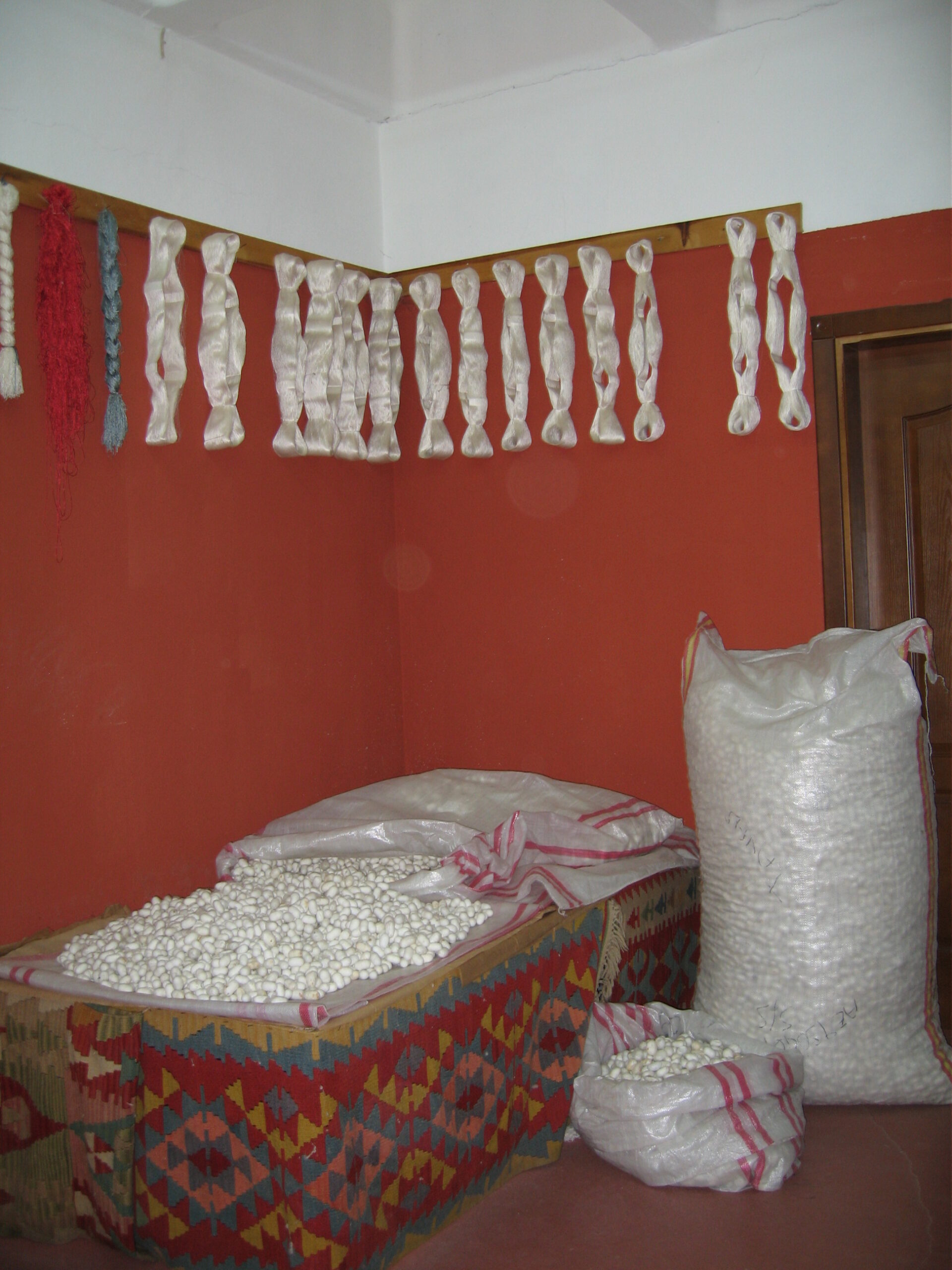
The Ottomans eventually conquered the Byzantine Empire and took over the silk industry in Anatolia. The production of silk begins, of course, with the cultivation of silkworms, who are fed on leaves from the mulberry tree. Silkworms are the larval stage of a moth, so like all insects the larvae become pupae, and it is their cocoons from which silk thread is extracted. The cocoons are shipped to the Dogus Hali carpet factory from the farm for storage while awaiting the next step of production.

These, the cocoons spun by the Bombyx mori silkworm, are the raw materials from which the silk is made.

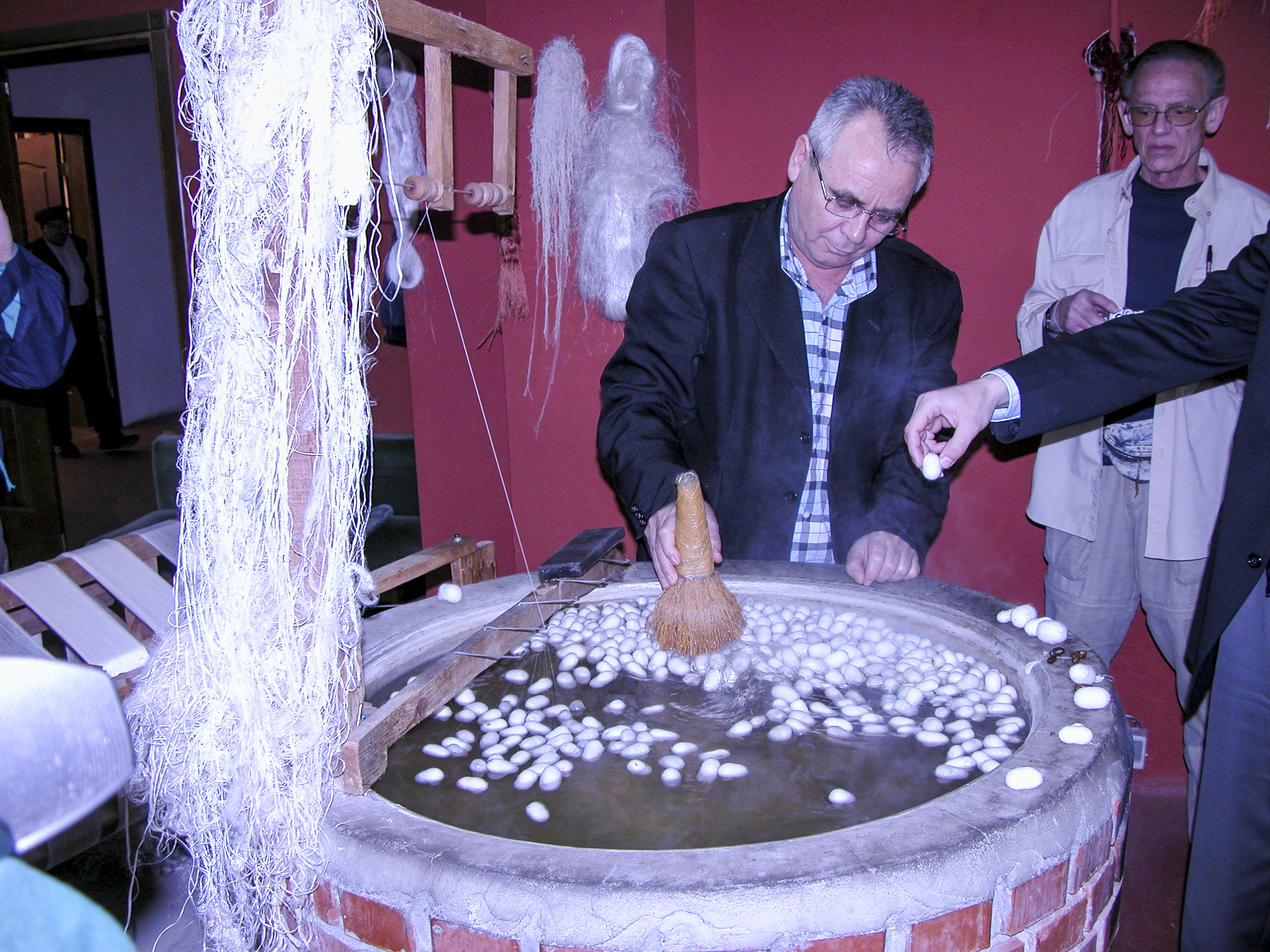
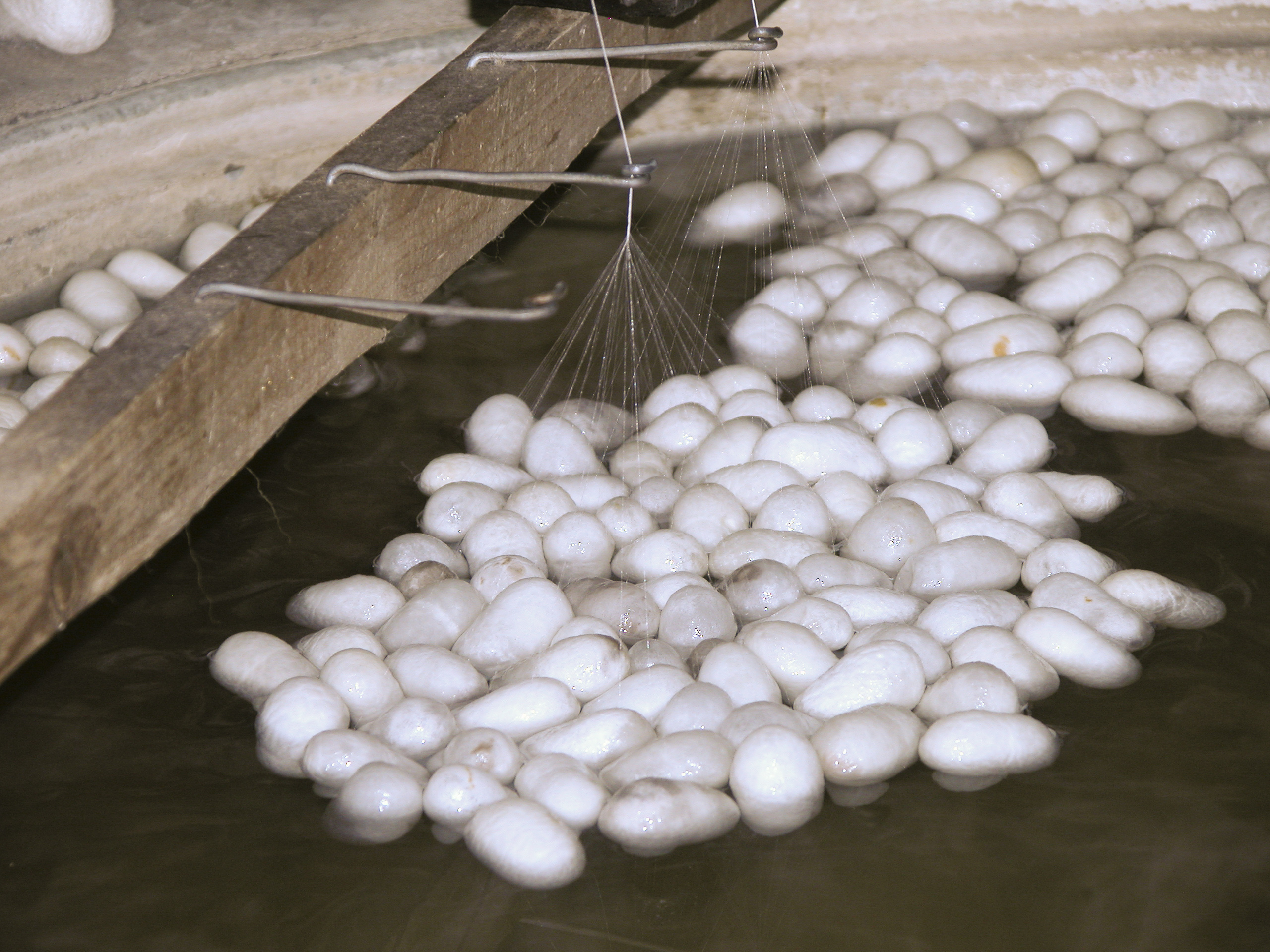
The next step is to soak the cocoons in boiling water, which causes them to dissolve.

The silkworm cocoons have to be dissolved in boiling water before the silk threads can be extracted.

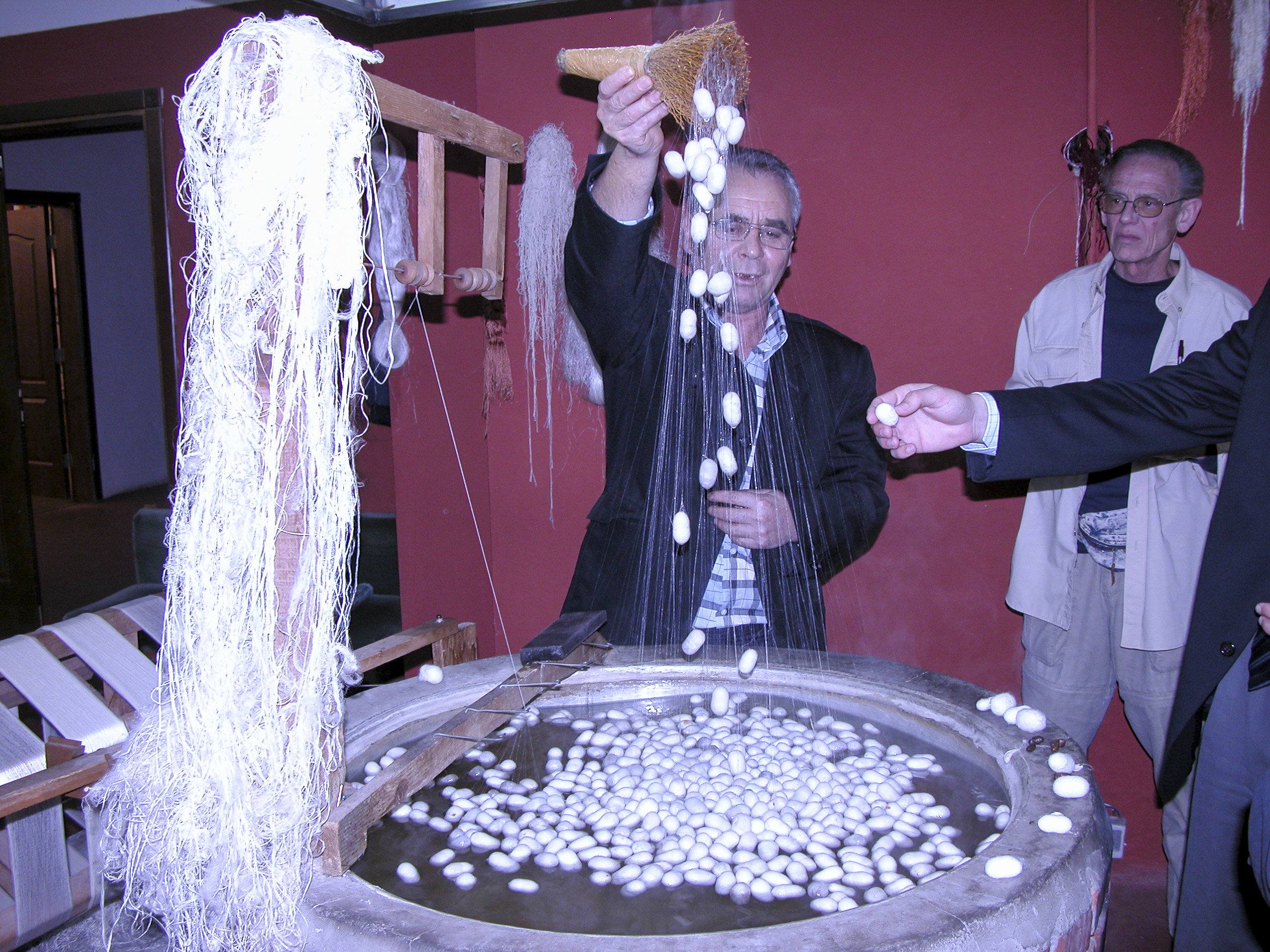
The Dogus Hali silk maestro demonstrated the skill of extracting the silk from the dissolving cocoons.

The silk maestro demonstrates how the dissolving cocoons yield their threads.

The tiny strands from the dissolving cocoons are then gathered up and spun into threads suitable for weaving.

Here we see the how the “threadlets” from the cocoons are gathered and spun into threads which may then be used in weaving a rug.

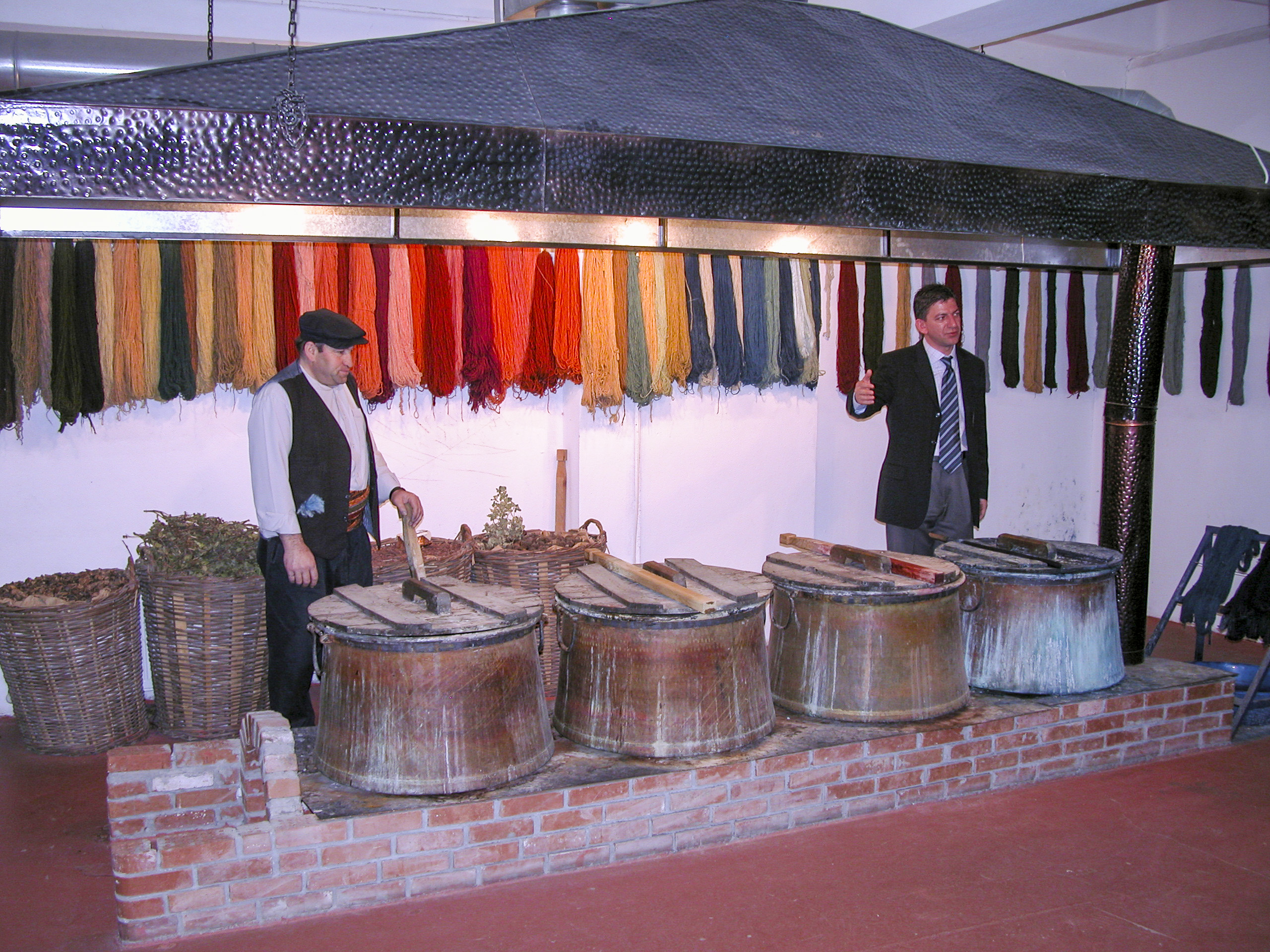
Regardless of the type of thread used, the next step in the carpet-making process is to dye the thread, so were taken to the room where the dyes are made in large vats.

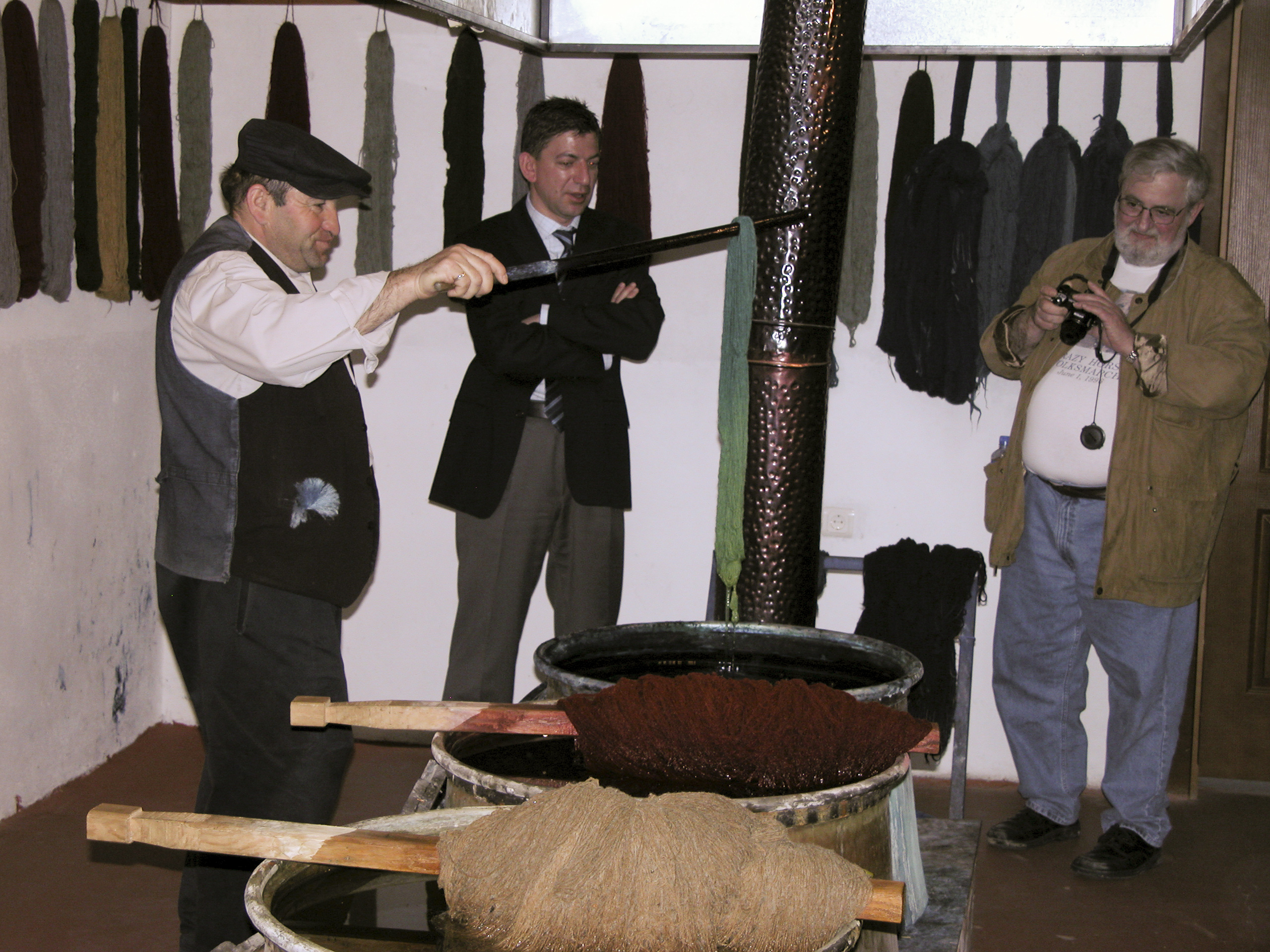
The vats are filled with dyes of various colors, to be applied to the thread before it is sent to the looms.

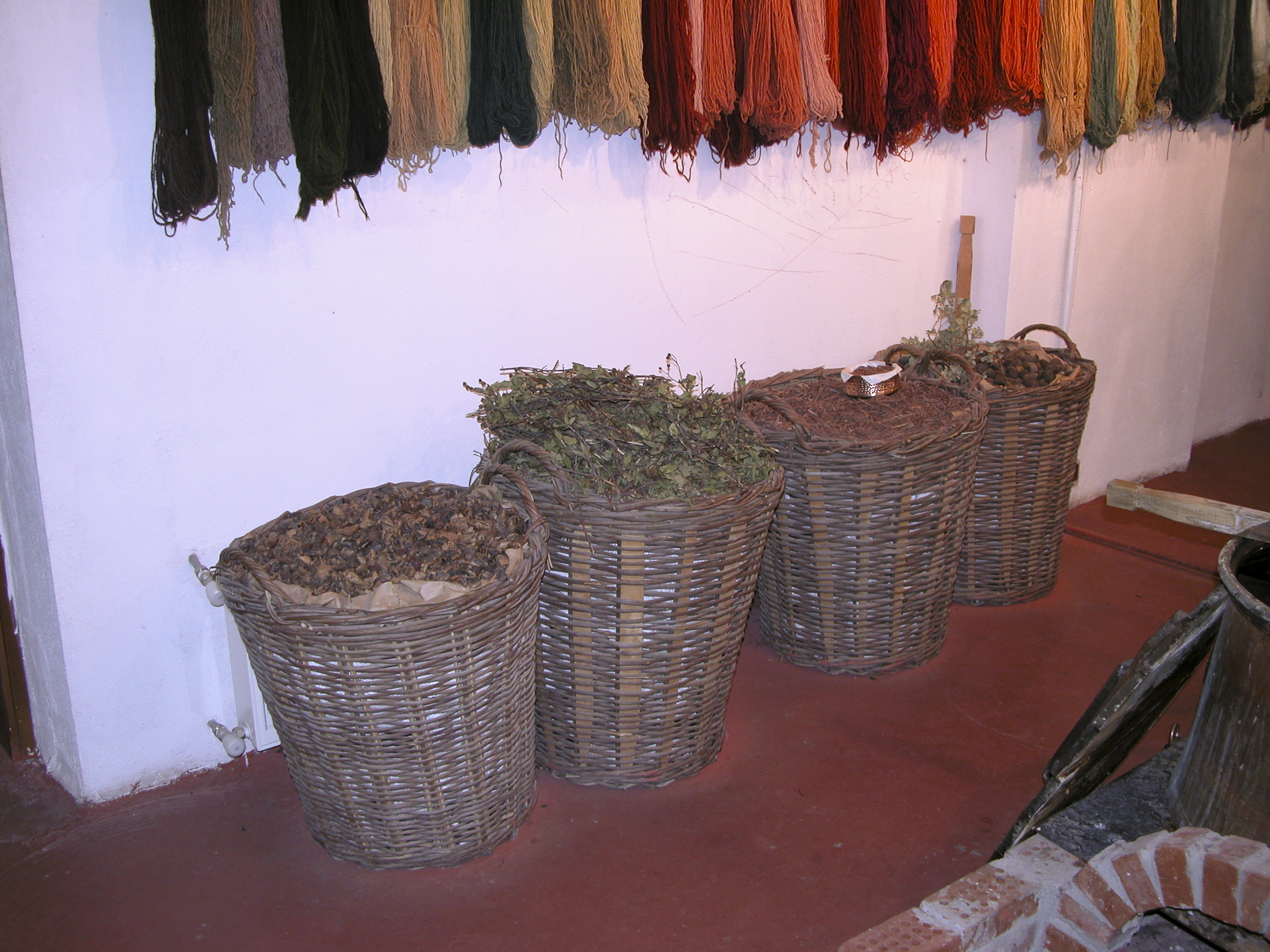
The dyes are produced by boiling parts of various plants, which were stored in baskets next to the vats.

A display of the various plants used to produce the color essences for the dyes.

The threads are dipped in the vats, soaked and then hung out to dry.

Al Treder watches and shoots as the dyemaster pulls a skein of thread out of the green vat.

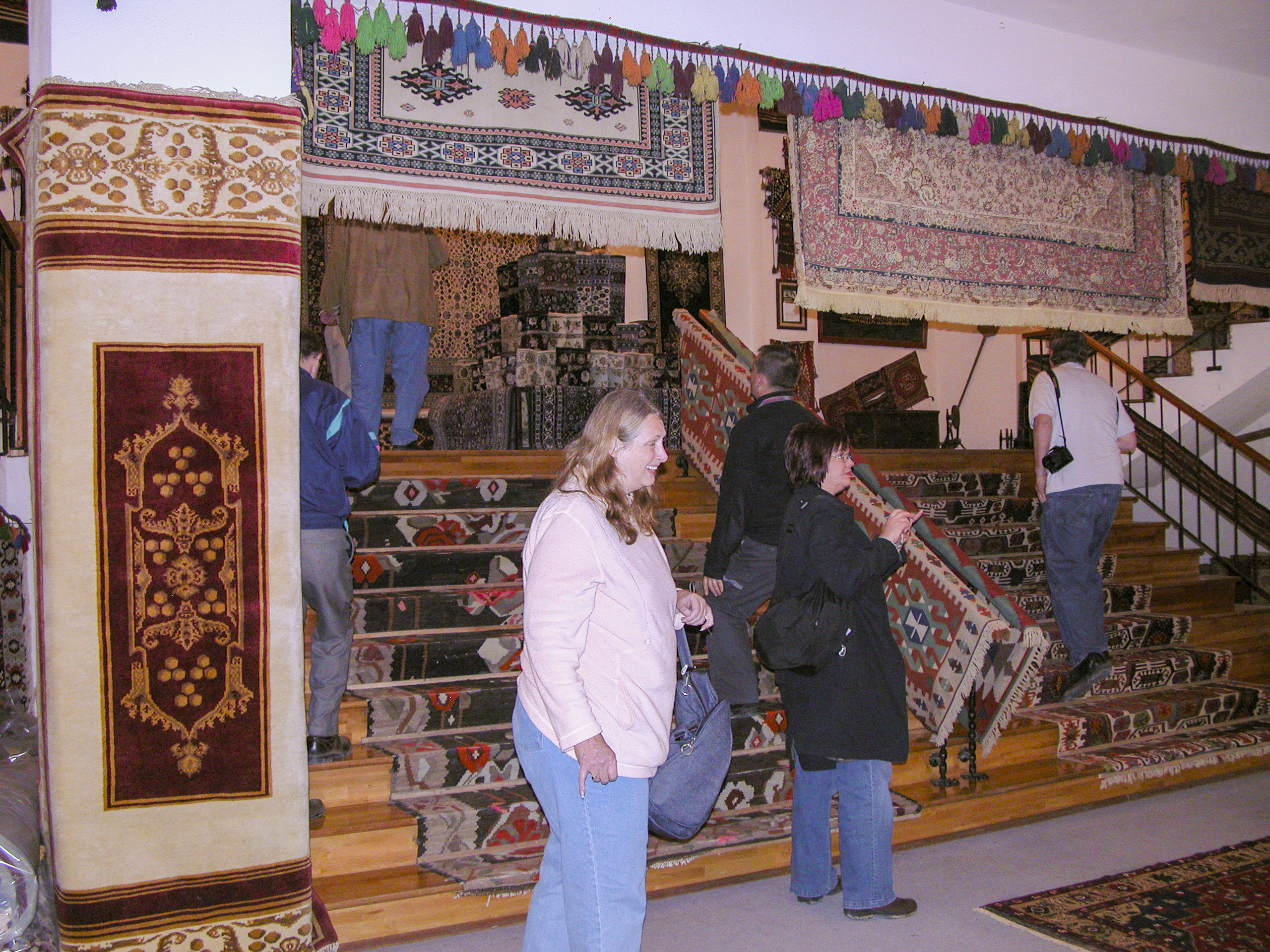
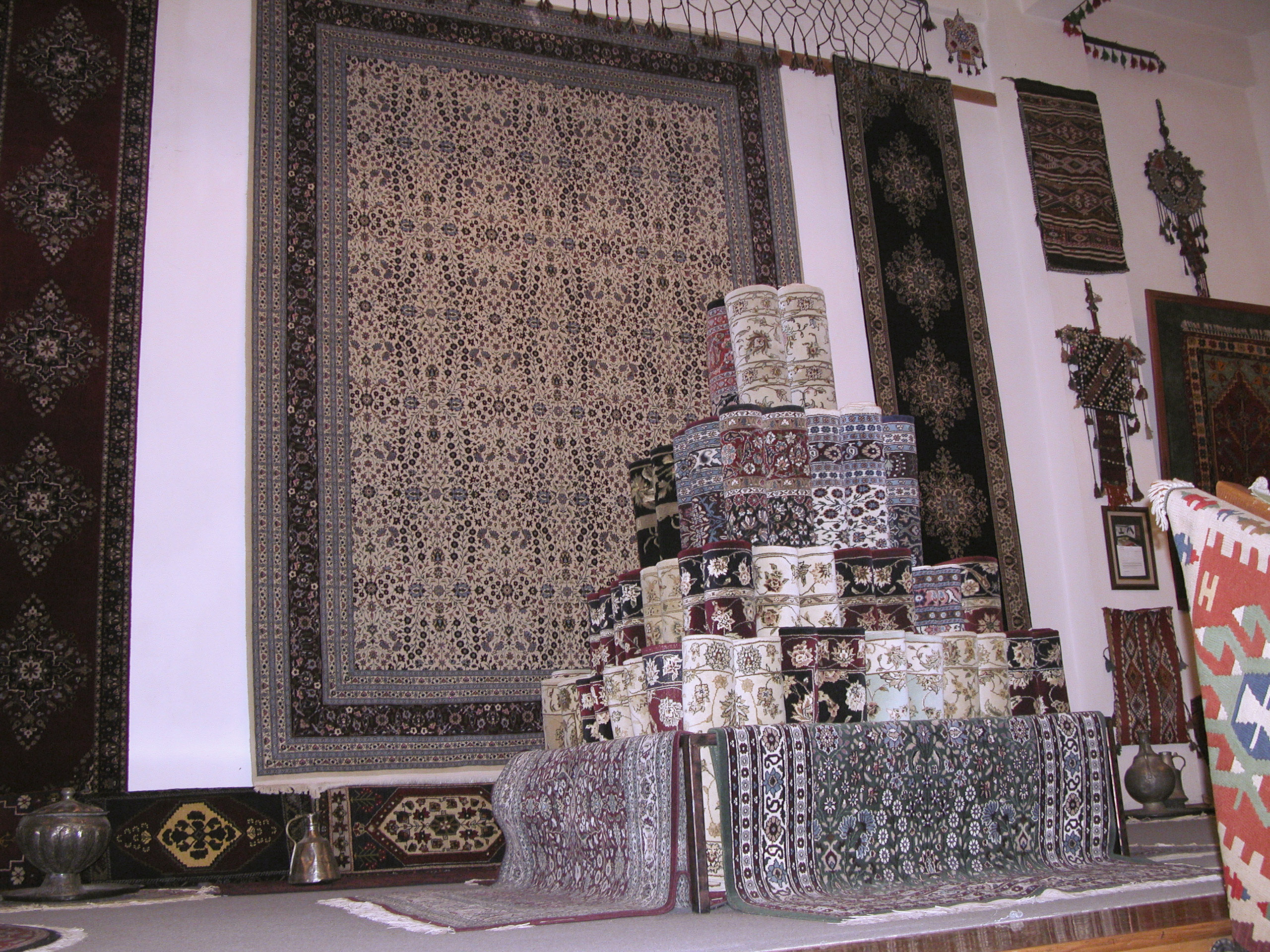
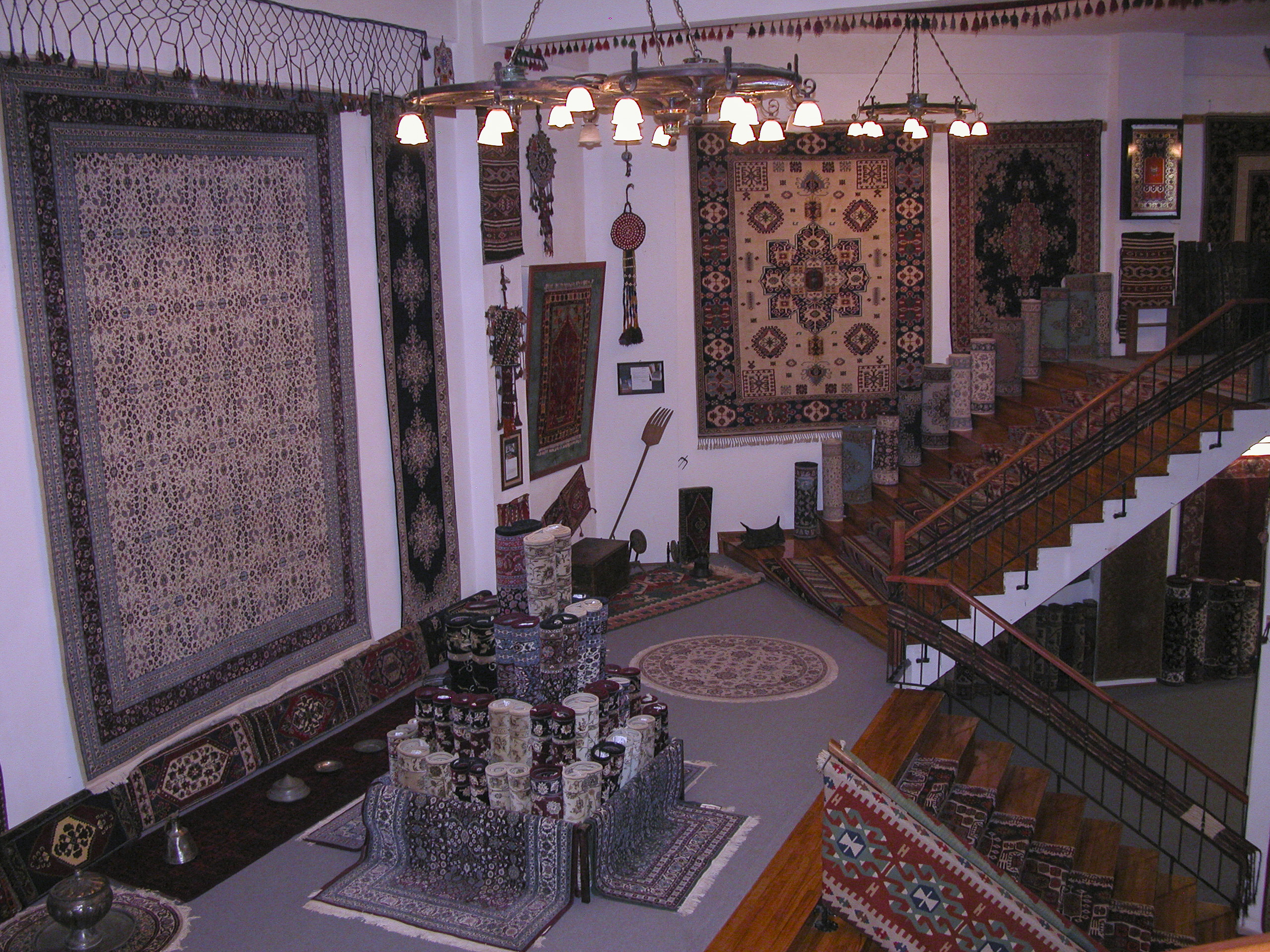
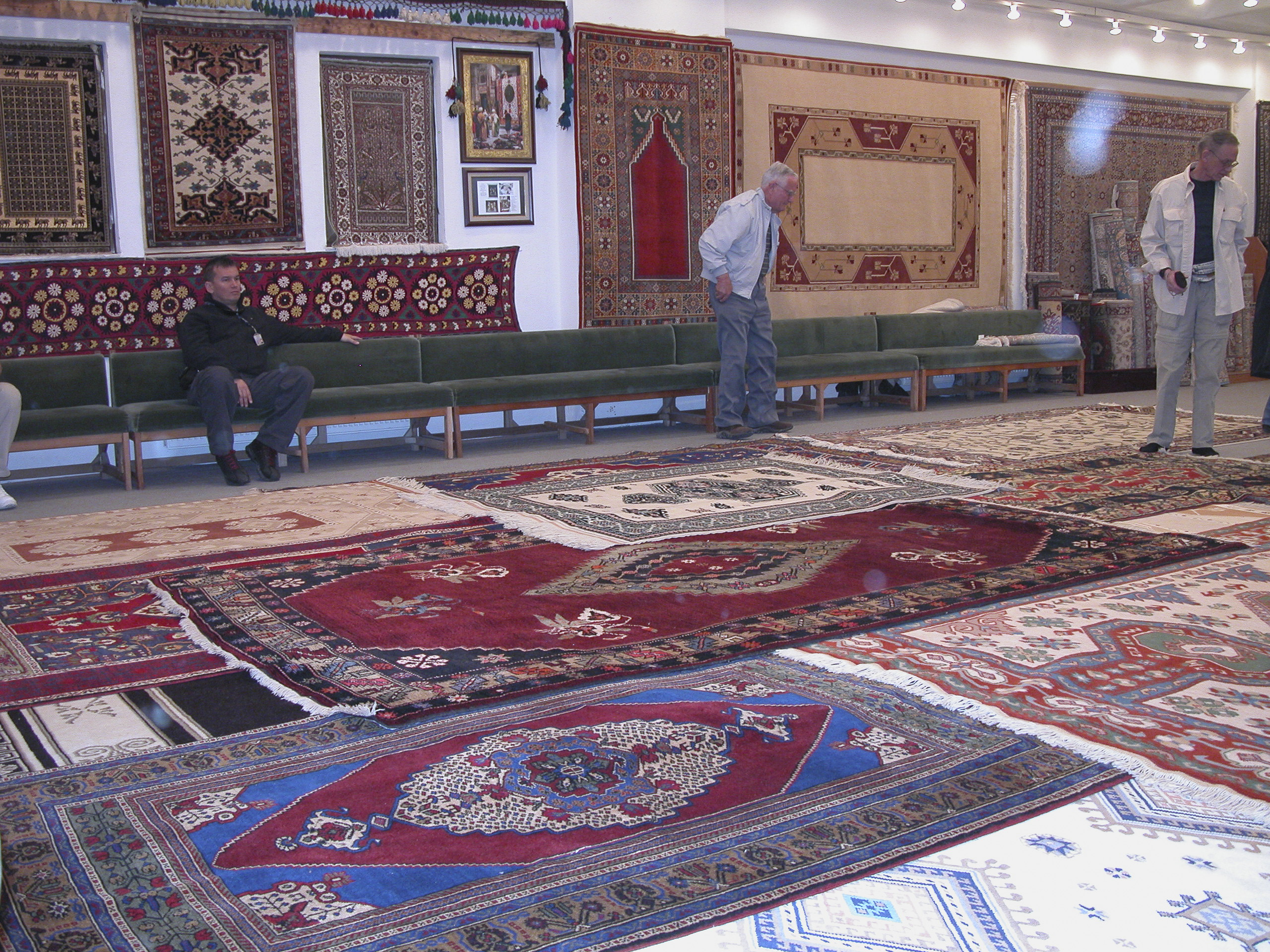
Having completed our introduction to the carpet-making process, we were led through halls and lobbies lined with the fruits of the establishment’s looms.

Cherie and Sandie marvel at the profusion of rugs in the lobby.

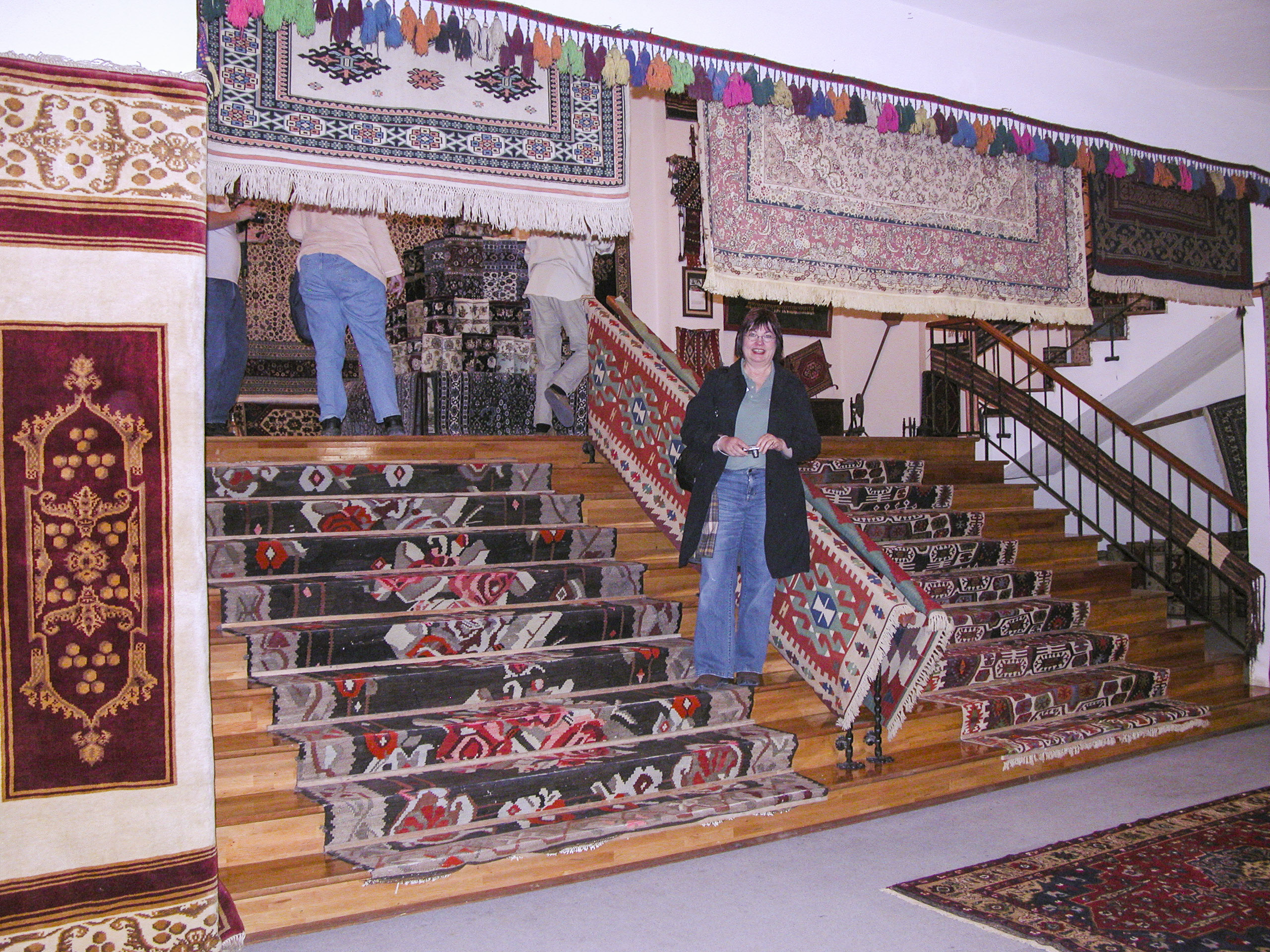
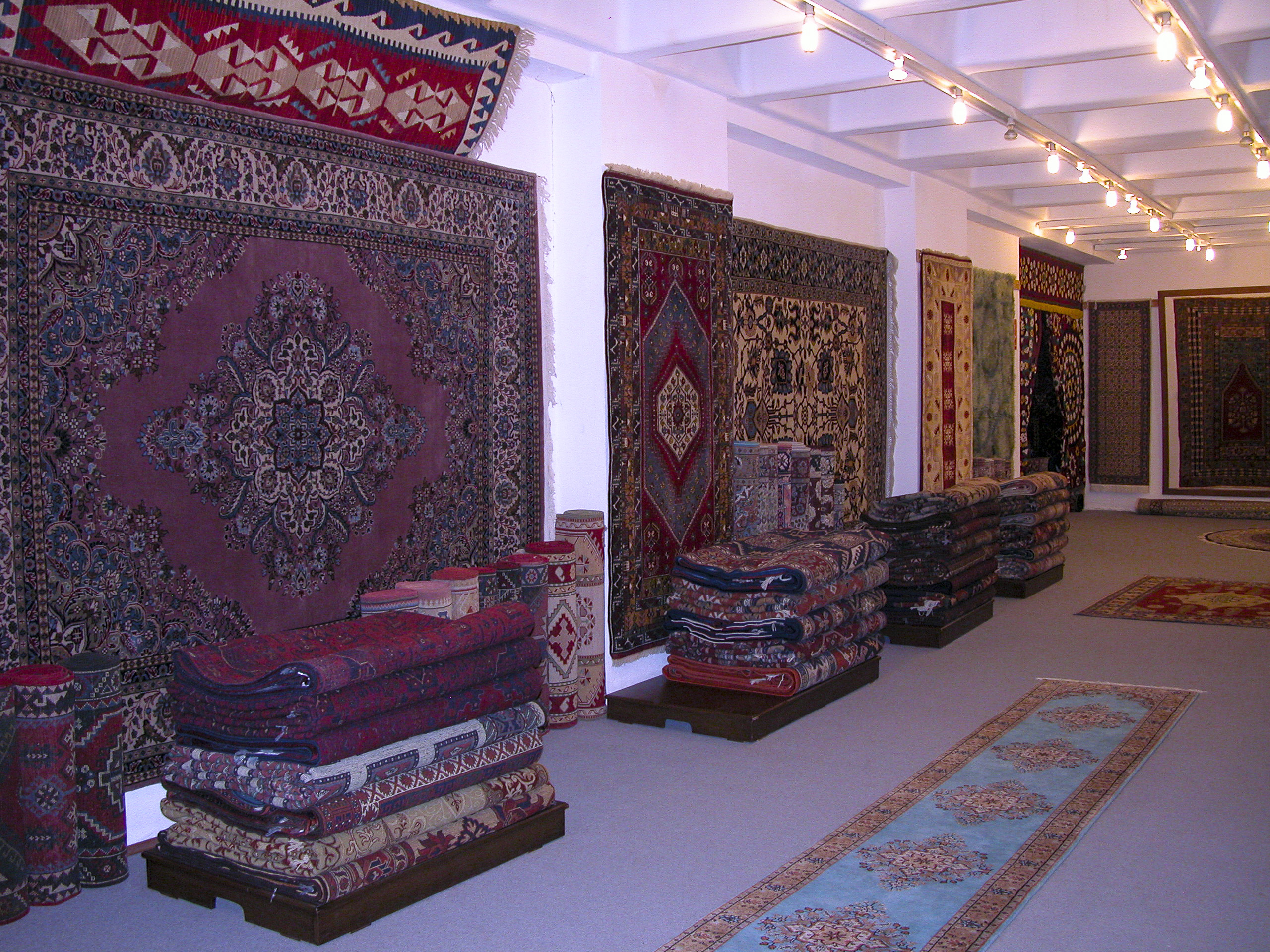
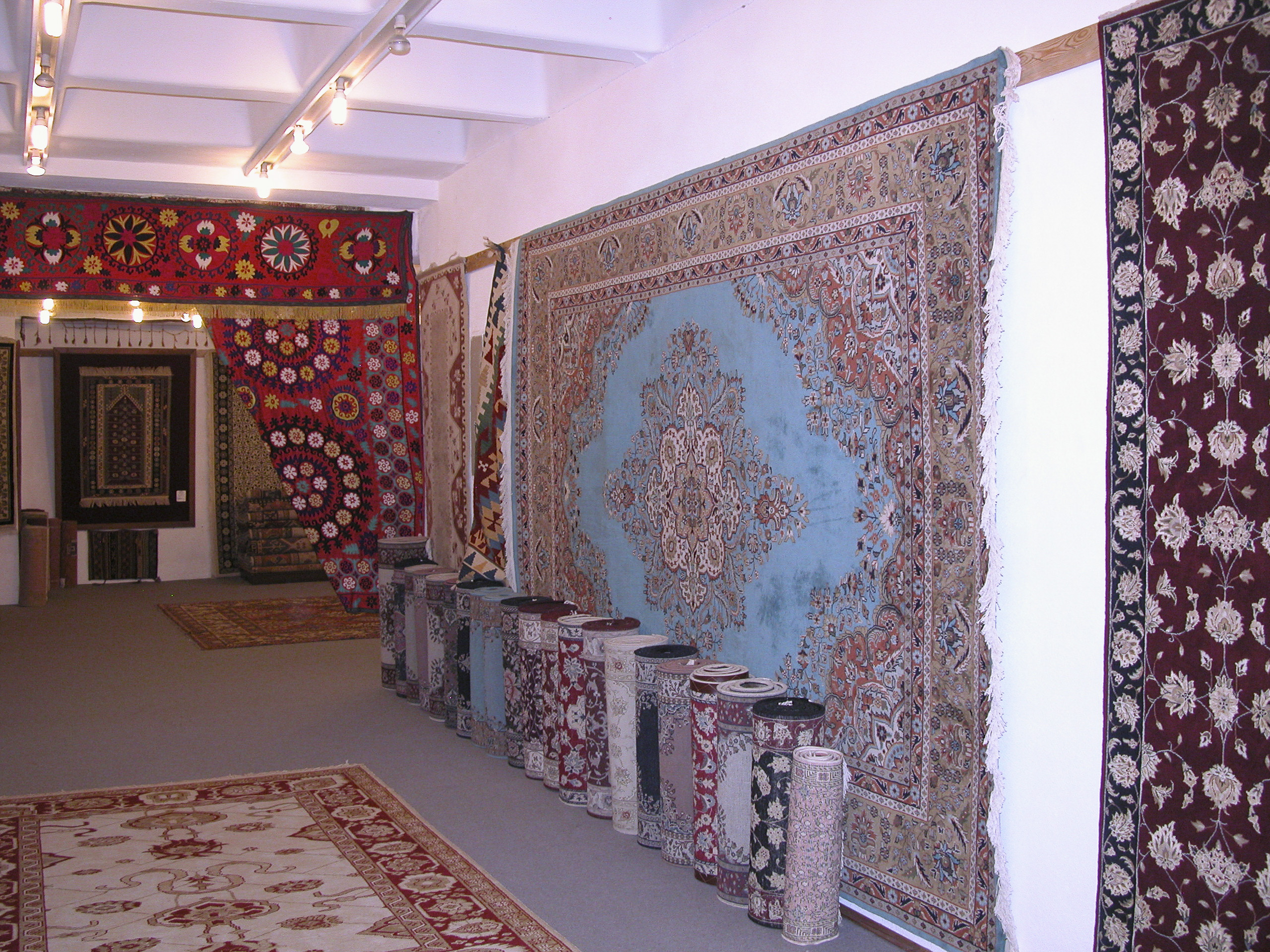
Every stairway was covered with carpets, all the floors were overlain with rugs, every wall was covered with sumptuous hanging rugs, and carpets were even hung from the ceilings.

What’s not to like here?

Carpets and rugs were piled on top of one another and shaped into elaborate structures.

In all colors and sizes.

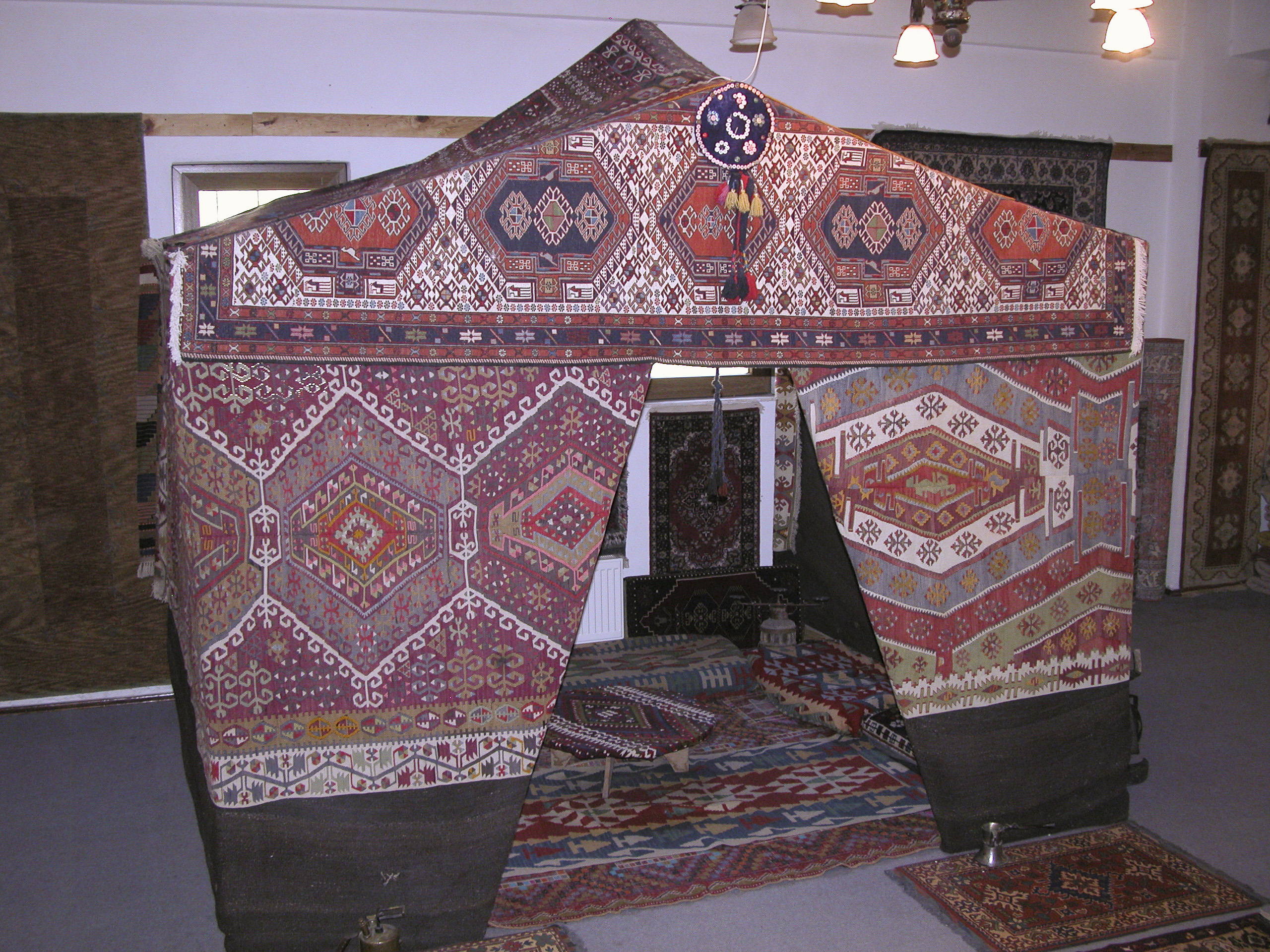
There was even a yurt crafted out of rugs, and one could imagine that someone like Genghis Khan or Tamerlane might have camped in something like this while out on the Central Asian steppe while making their conquests.

This is how they lived out on the steppe in the days of Genghis Khan and Tamerlane. Yeah, right.

There was no question but that the purpose of all this opulent and well-planned display was to sell rugs, and that the tour would culminate in a high-pressure sales pitch, but I didn’t mind because it was tastefully done and not overly crass.

The object of this carefully-conceived layout is to sell rugs, and as far as I’m concerned it was quite effective.
The entire Dogus Hali establishment was reminiscent of a palace out of the Arabian Nights, er, well, Turkish Nights. One could imagine that Sultan Suleiman the Magnificent would have lived in such a place. (Eventually we got to Istanbul and saw the Topkapi Palace, where he did live.)

Piles of rugs lined the hallways, waiting for shipment to purchasers.
The carpet hanging on the right wall was one of my favorites. I loved the iridescent shade of blue.

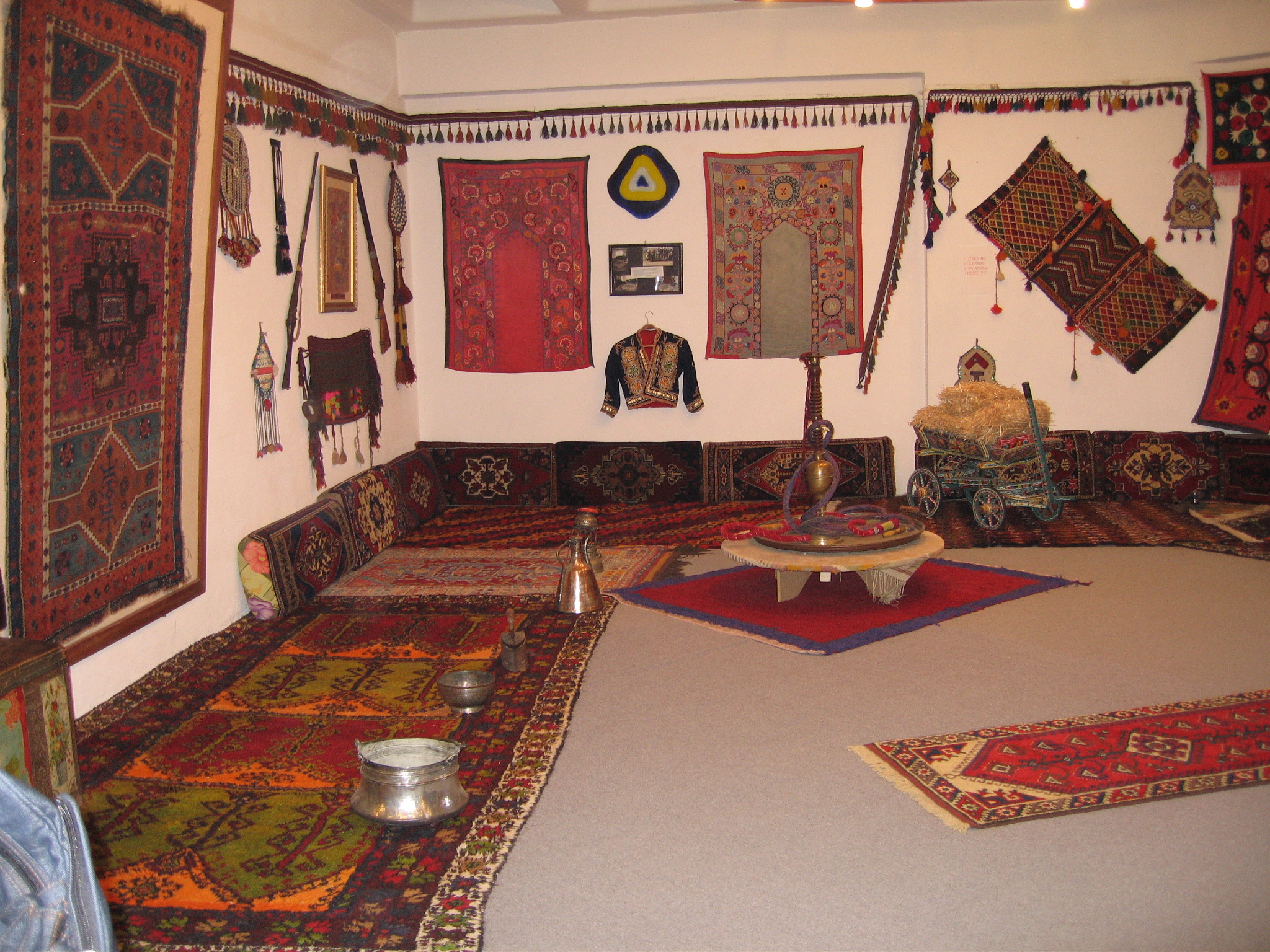
After wending our way through what seemed like miles of hallways filled with merchandise, we finally arrived at the showroom. We were seated in a cozy little corner and served tea, and then the hustle began.

A cute and comfy little corner in the atelier.

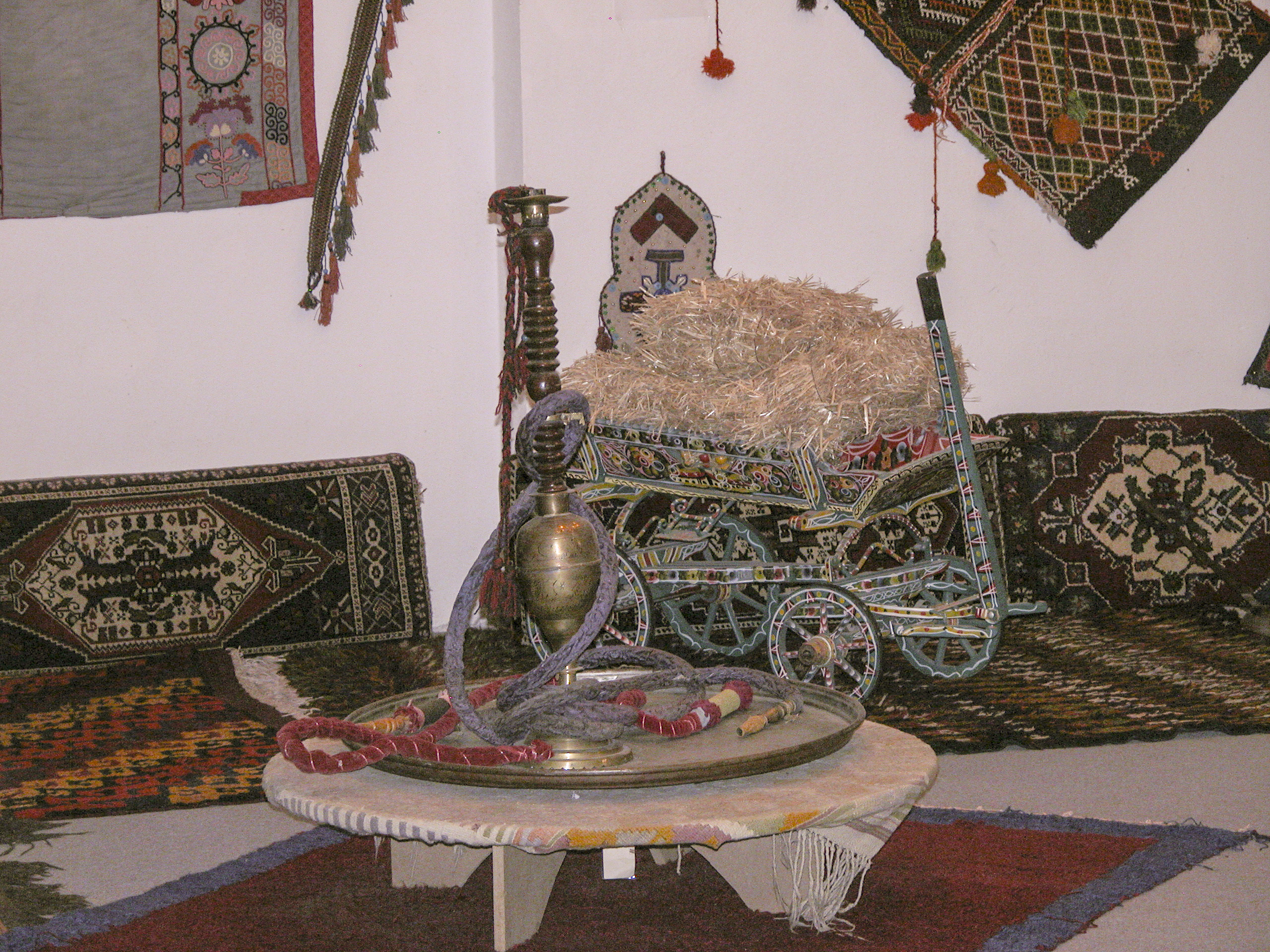
The table where we were seated had a large hookah. I looked for a caterpillar to be smoking it, but apparently our hosts hadn’t read Alice in Wonderland.

Where’s the Caterpillar?

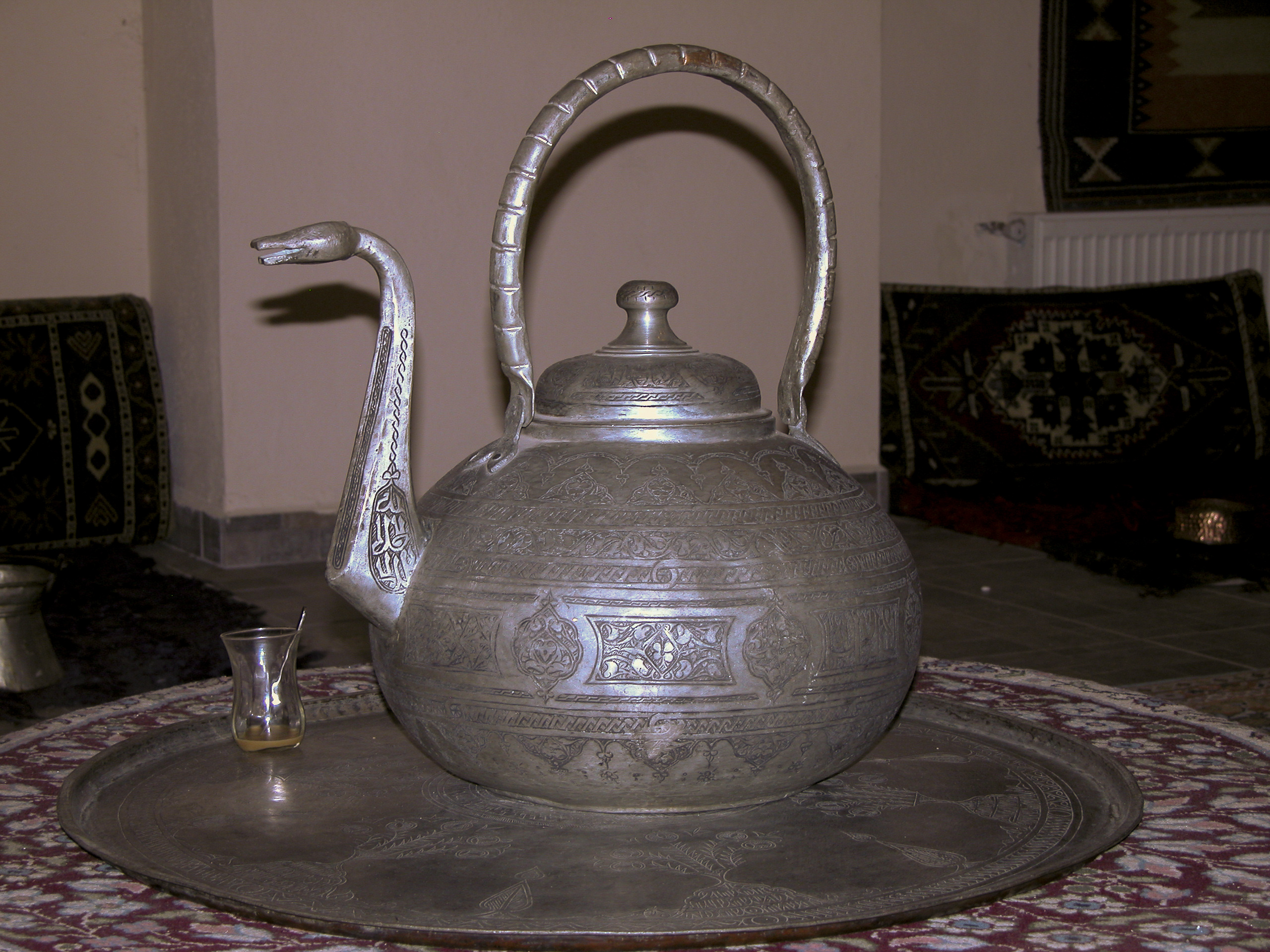
Our hosts served tea from an incredibly looking antique pot, which must have cost a fortune, but it wasn’t among the merchandise offered for sale – not that any of us could have afforded it in the first place.

We partook of tea from this elegant piece, which was not among the merchandise offered for sale.

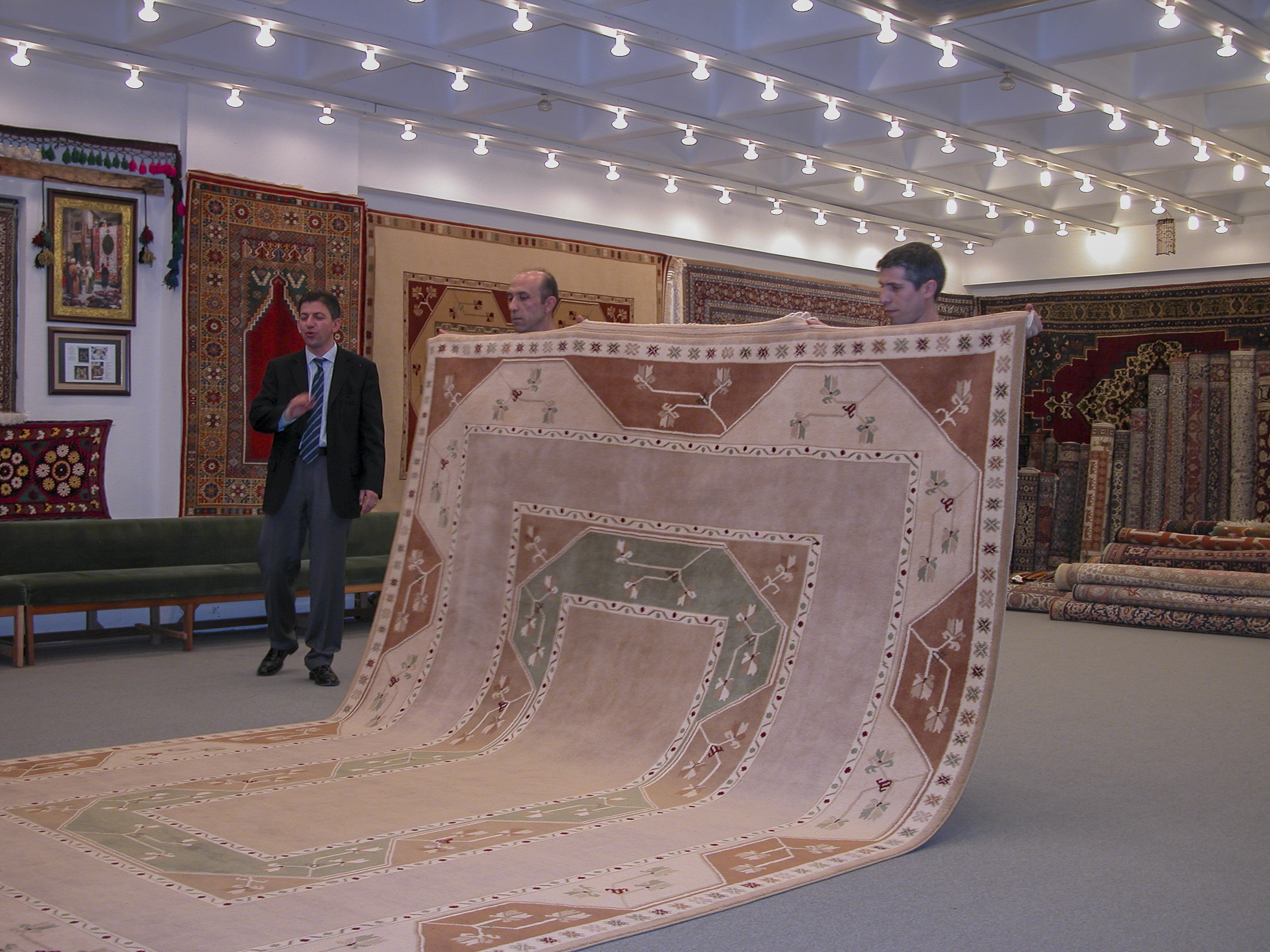
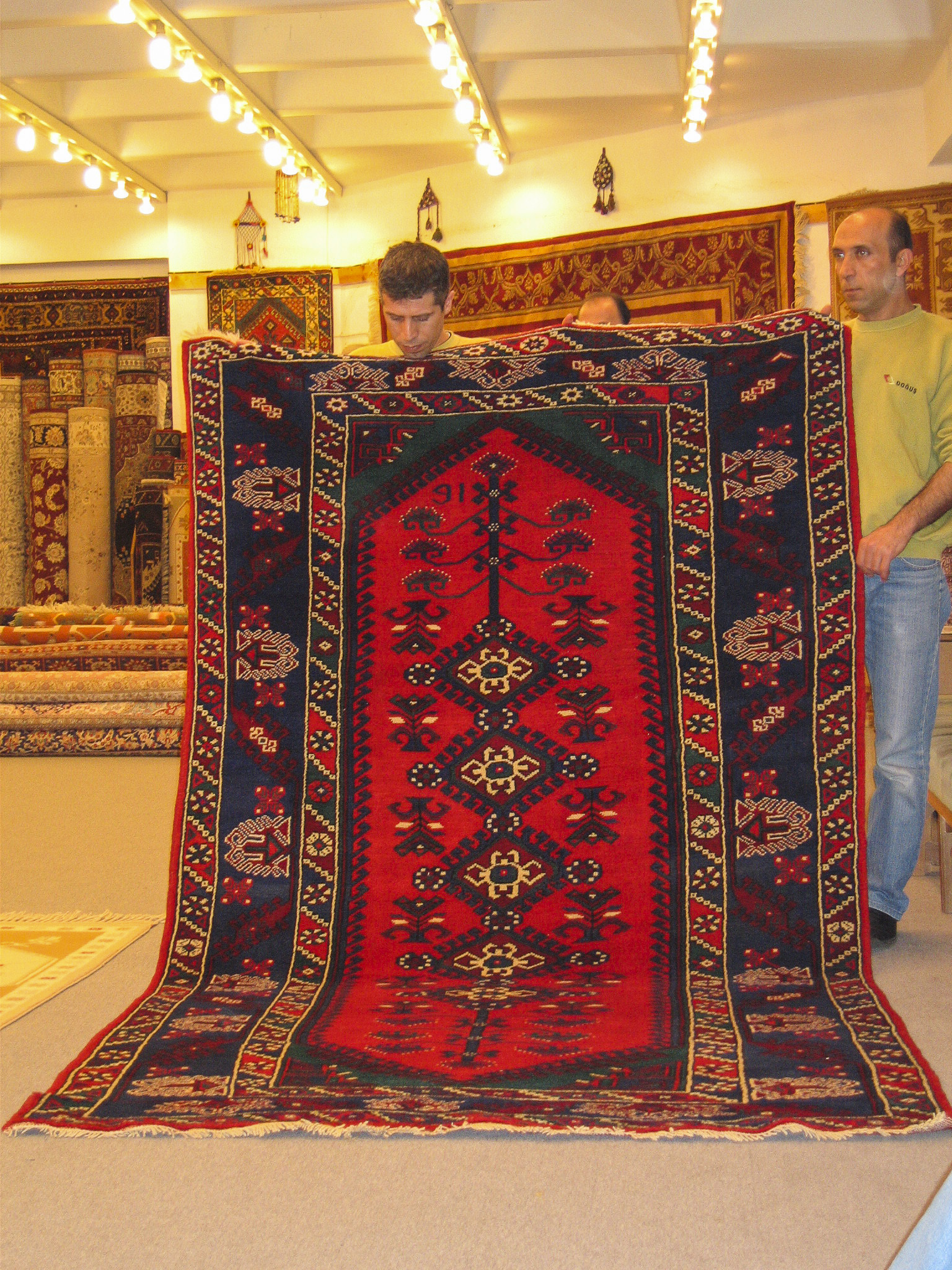
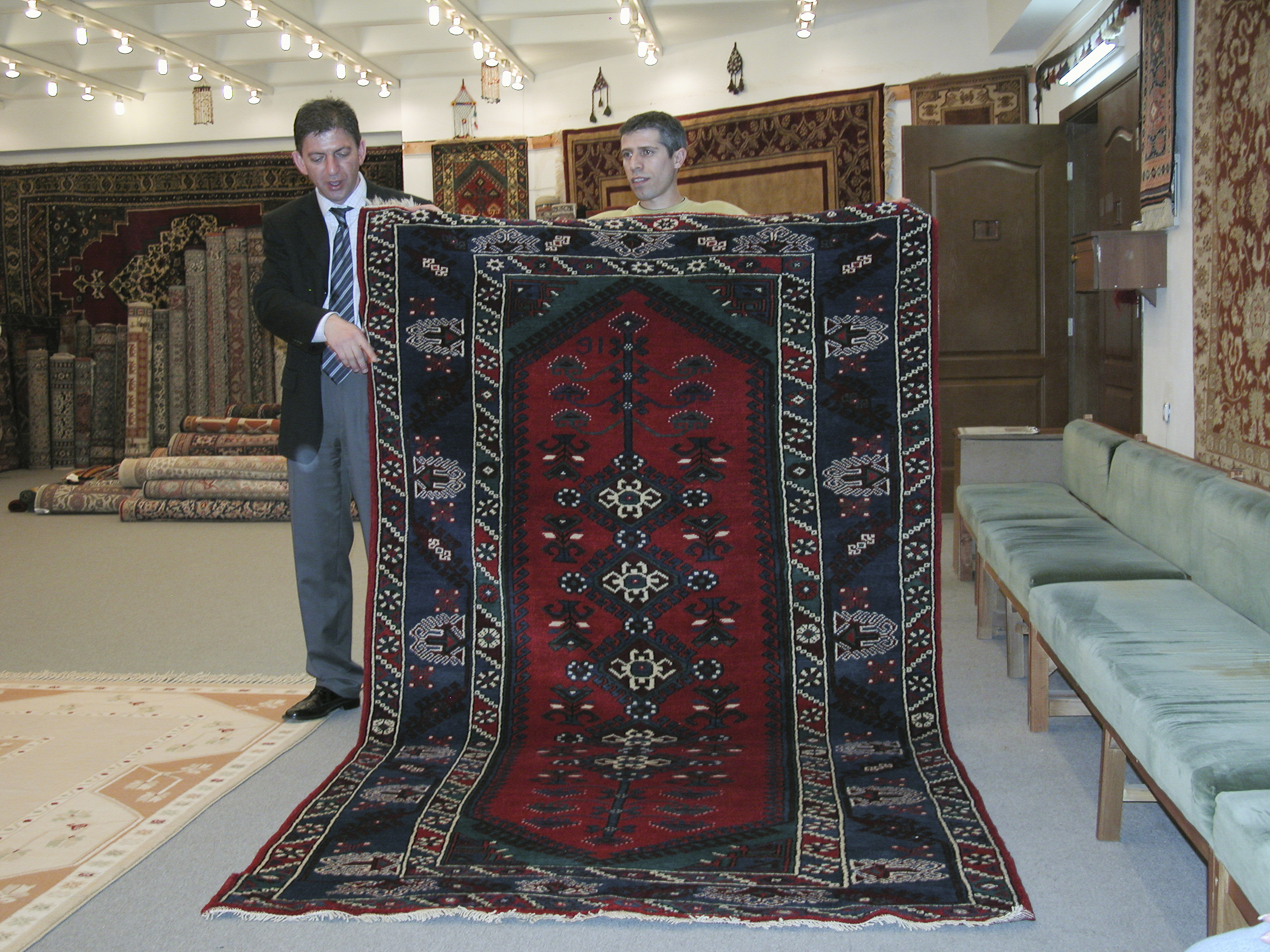
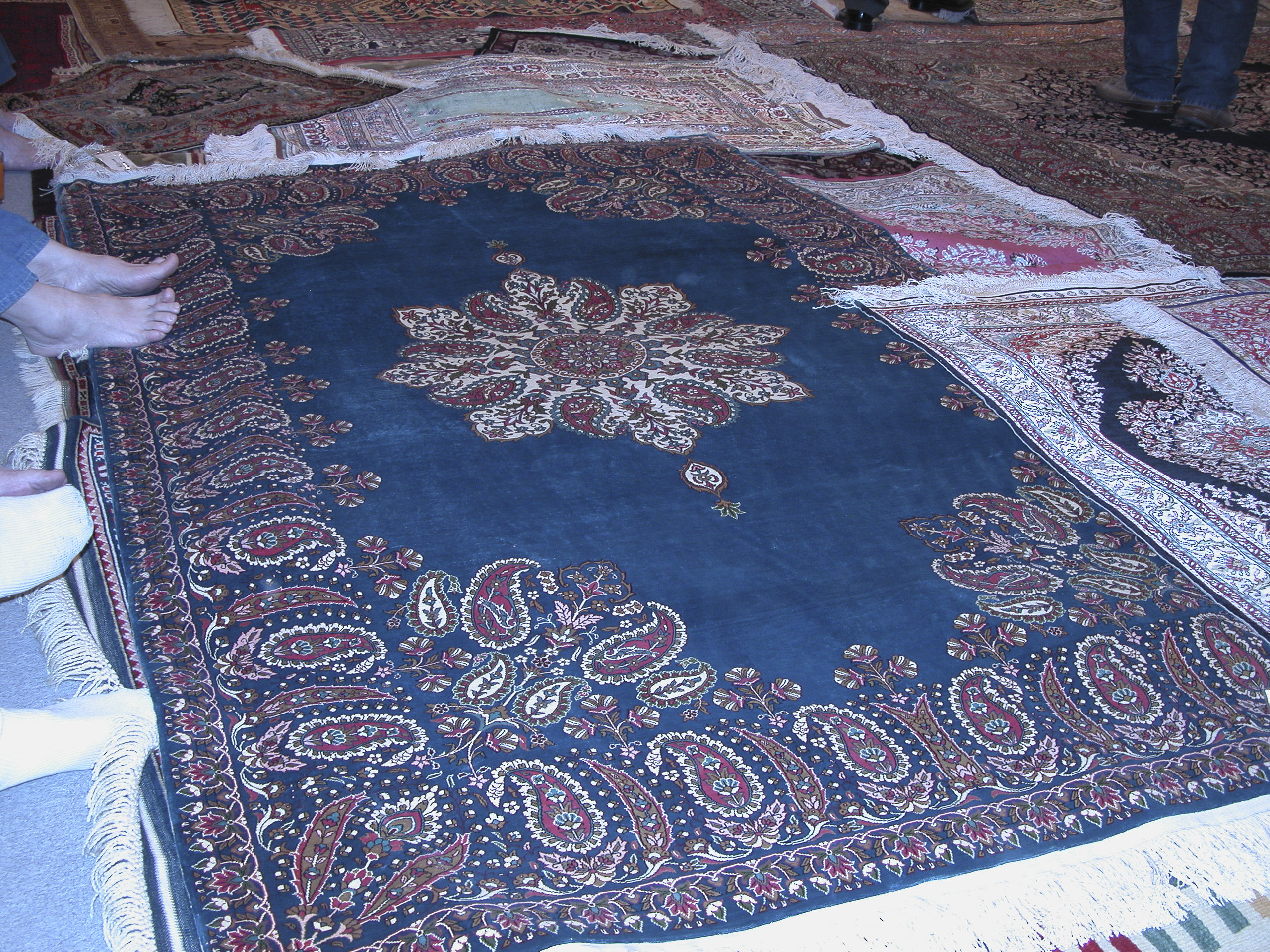
The sales manager took the floor and began serving up a series of astoundingly elegant rugs, each of them more beautiful than the last, and most of them far beyond our means.

Wonderful wares for tourists richer than me.

They were all gorgeous, but some seemed to leap up and grab one’s attention more than the others.

They were all beautiful, and it was hard to choose which ones we liked best.

I never cease to be amazed at how such intricate designs can be incorporated in a rug that consists of thousands of threads strung on a loom.

They just kept on coming.

Most of the room-sized carpets cost thousands of dollars. As for the silk rugs, even a small one cost $5K, and I think only one person (Pat Bush) bought one of those.

Chuck Mattox and Marvin Blaski inspect the merchandise while Attila looks on.

The big worry for us was that even if we could find one that we could afford, we didn’t dare put it on the floor of our house, because our pets (at that time we had a dog and a cat) would inevitably destroy it. We solved that problem by limiting our scope to the small rugs, which were all we could afford anyway, and picking one that we thought would fit on our wall.

This was perhaps my favorite of all the carpets I saw that day.

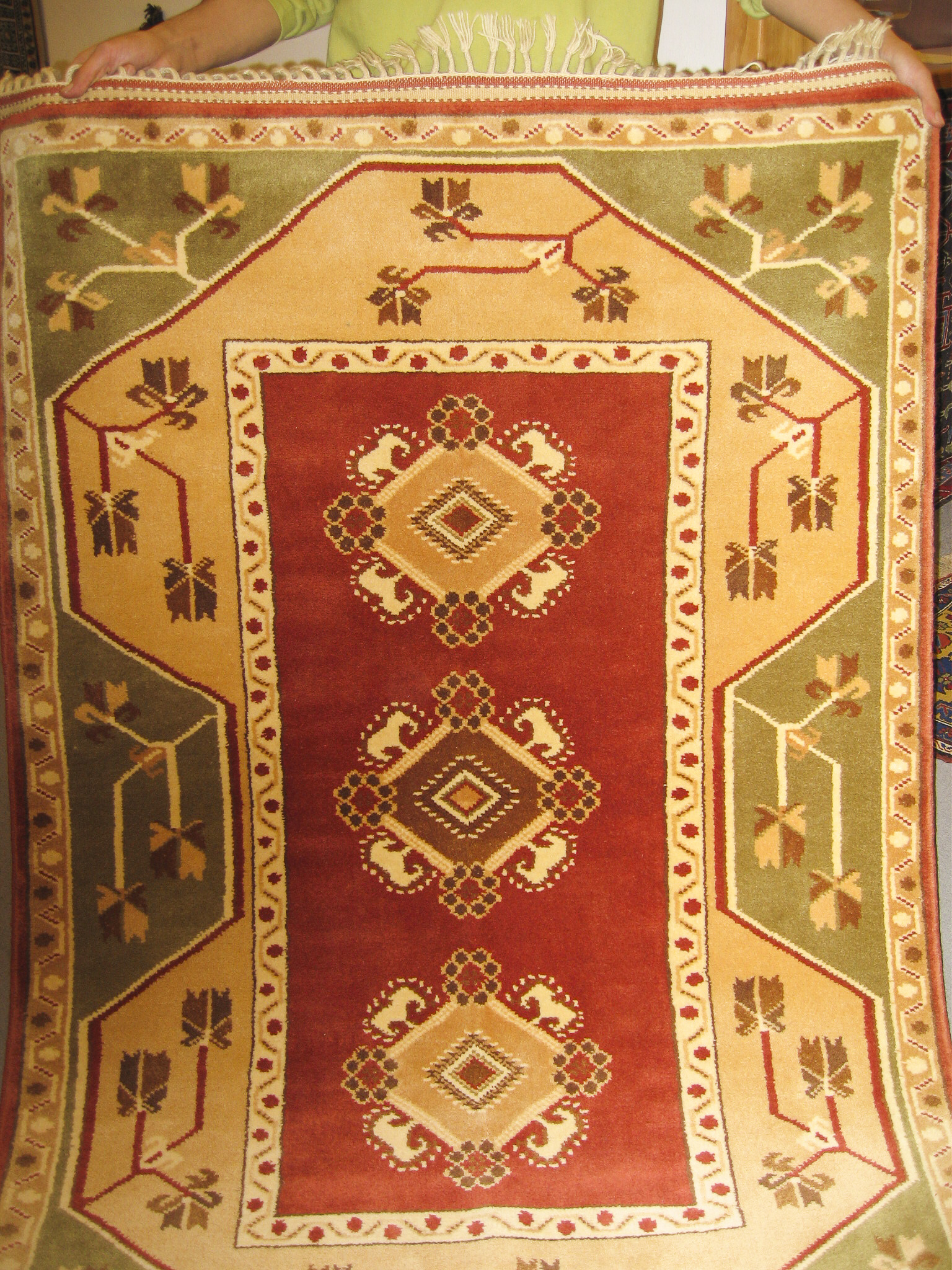
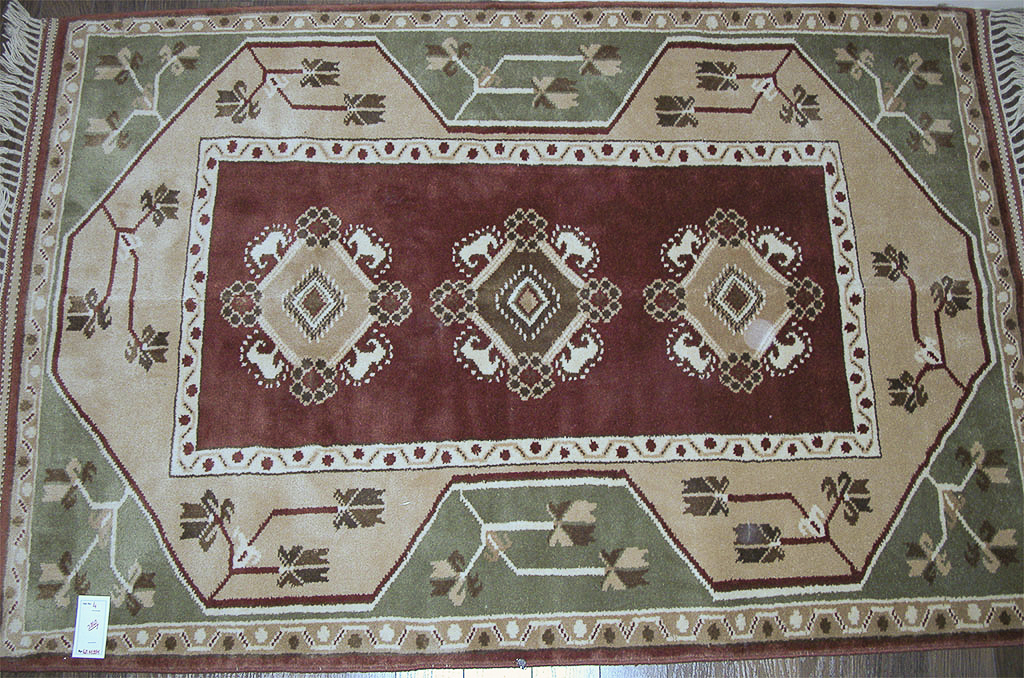
Eventually Sandie and I settled on one that was small enough to be affordable (for us) and to fit in with our decor.

This one was only $1K in US dollars.

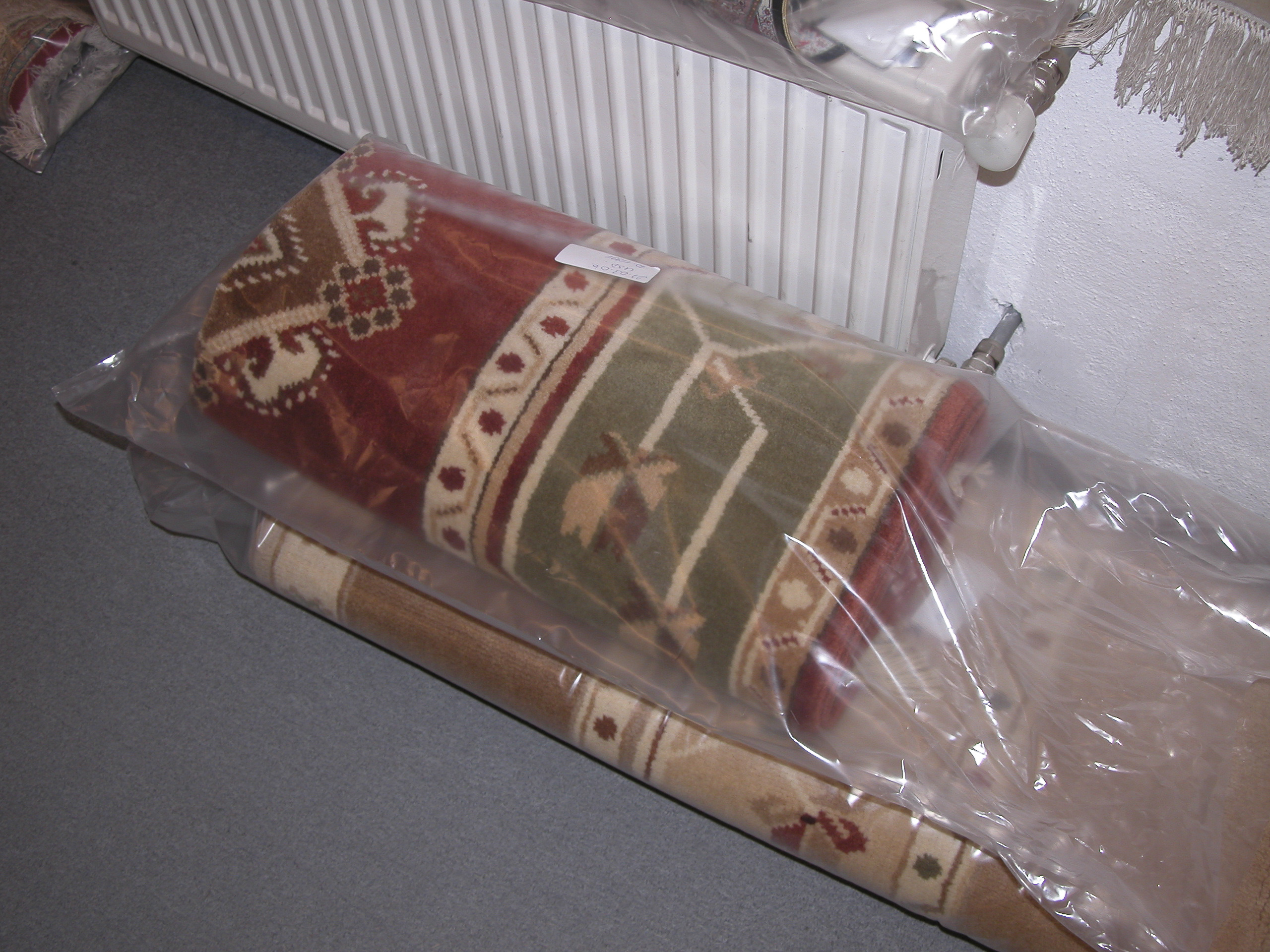
Our new rug was packaged up and shipped off to our home, where it eventually arrived after our return. Unfortunately, it turned out that we had miscalculated, and it didn’t fit on our wall.

Our rug was immediately packaged for shipment.

Years later we moved to Hemet; by that time we had only one dog, Jock the Miniature Schnauzer, who was very well-behaved and could be trusted not to pee on the rug. So now it’s on the floor of the living room.

Eventually the rug we purchased ended up in our living room, where it remains.

Having seen our purchases wrapped for shipping, we said farewell to the Dogus Hali Carpet Factory and set forth on the next leg of the trip, from Denizli down the E87 highway to Antalya.

We bid a fond good-bye to the Dogus Hali Carpet Factory.

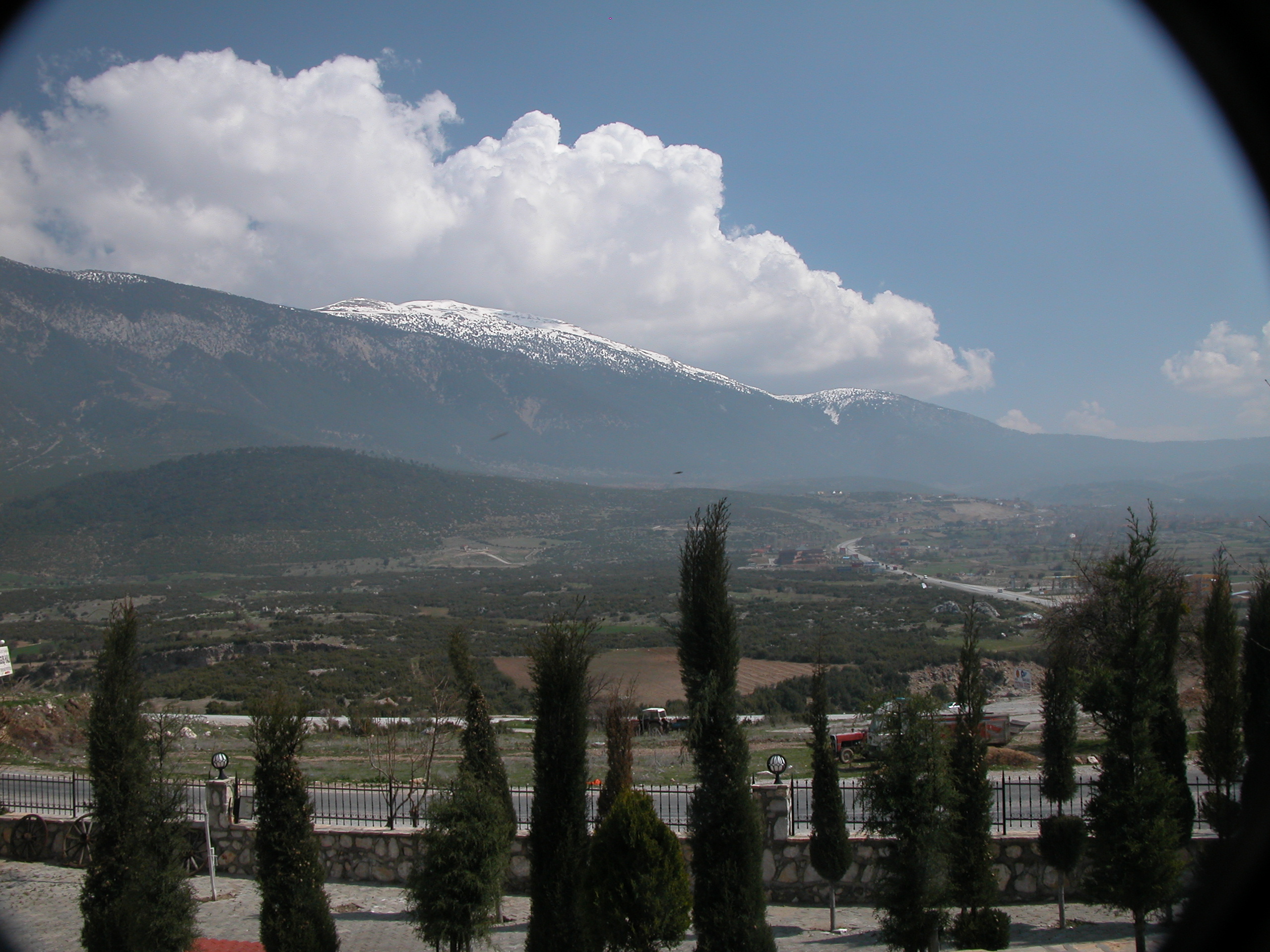
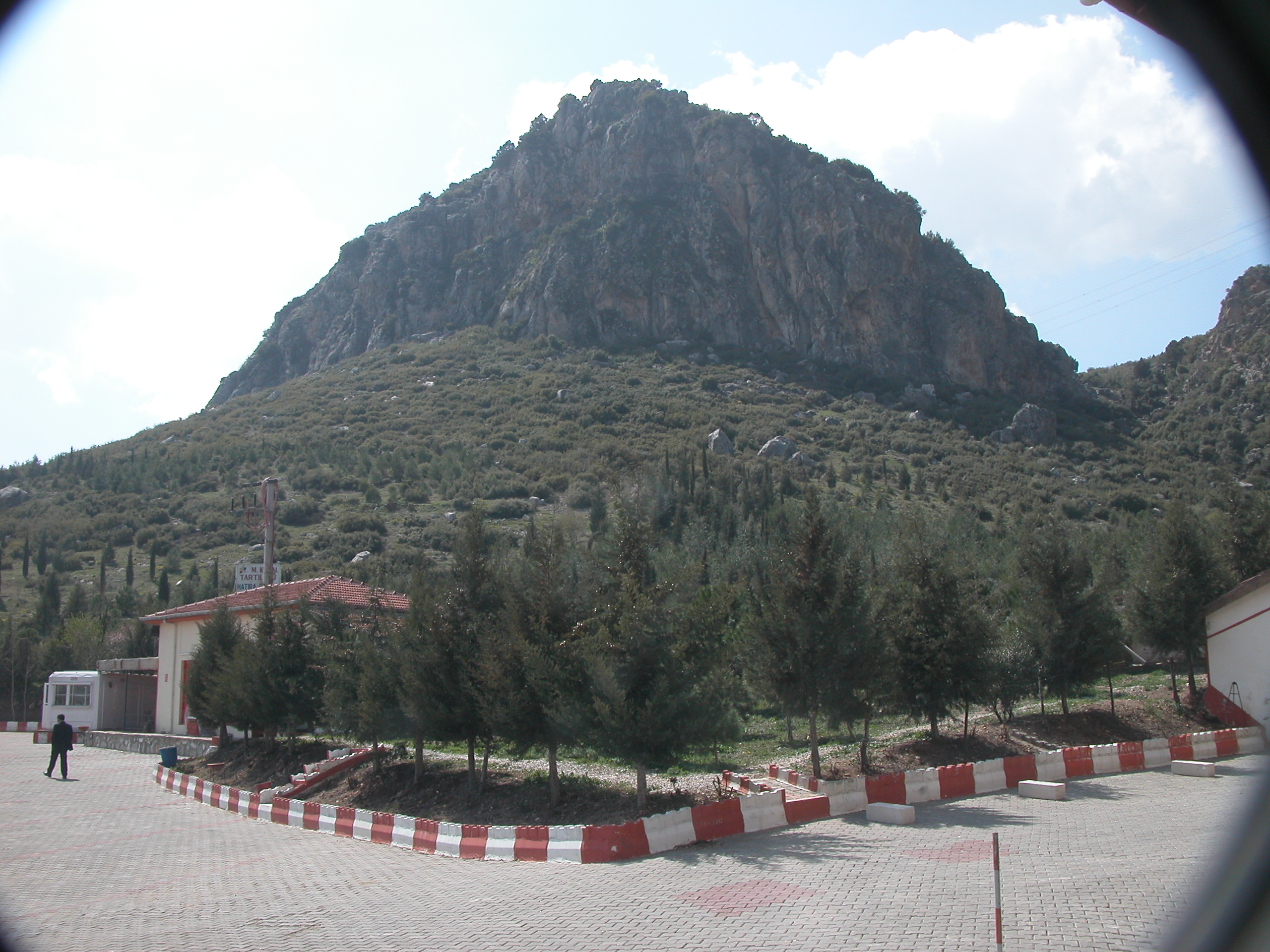
The road to Antalya lay through the Taurus Mountains, and we didn’t have to go far to find ourselves in them. They were right outside the factory’s doors.

A mountain peak above the carpet factory.
Categories
Turkey, March-April 2006

Hierapolis and Pamukkale, March 27, 2006

On a foggy March morning we explored the mist-enshrouded ruins of the ancient city of Hierapolis. Hierapolis means “Holy City” in Greek; it was supposedly called thus because of the large number of temples found there. It is located in what was in ancient times the kingdom of Phrygia, famous for such legendary characters as Midas, whose touch turned everything to gold, and Gordias, who tied the Gordian knot.

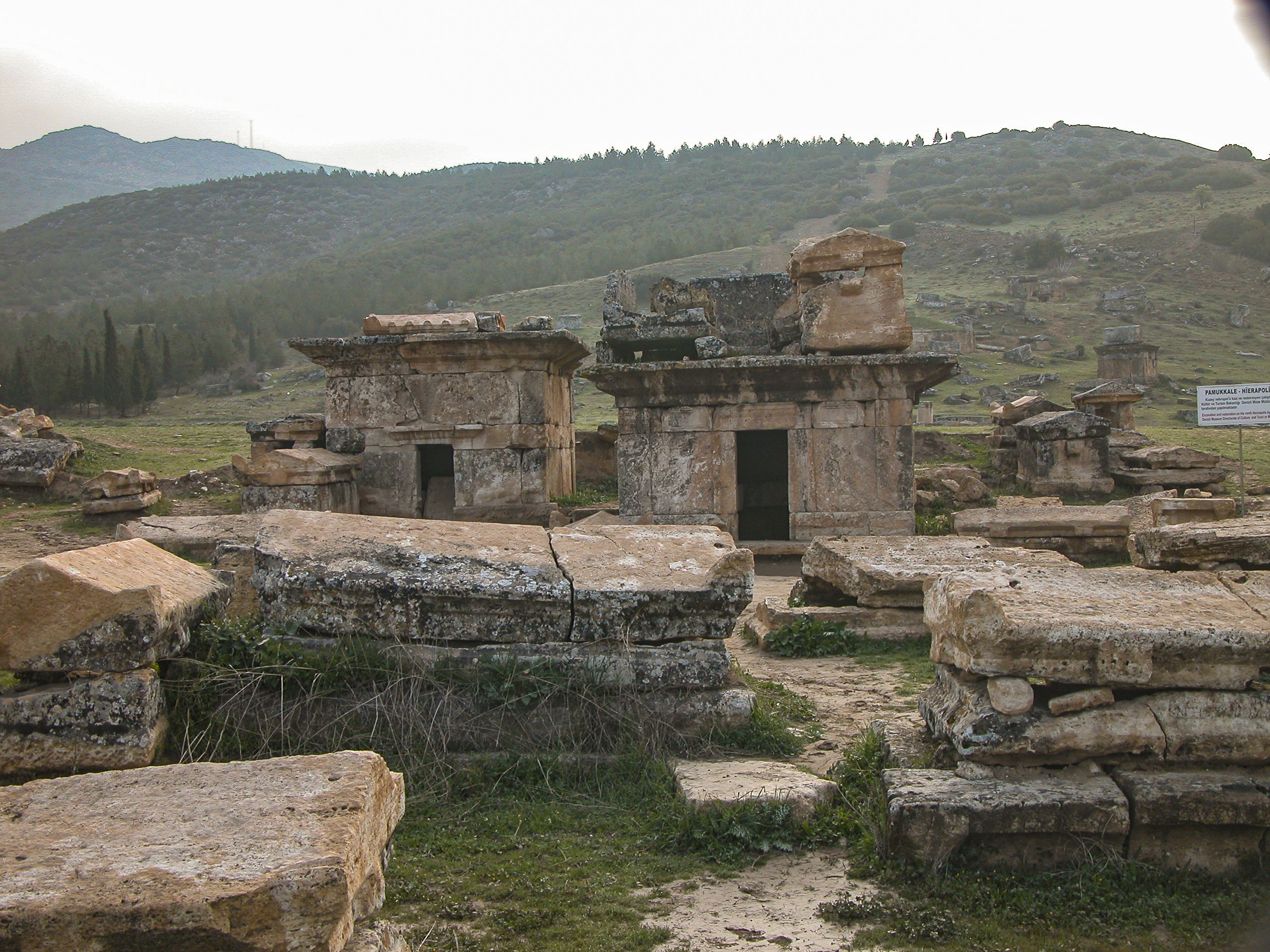
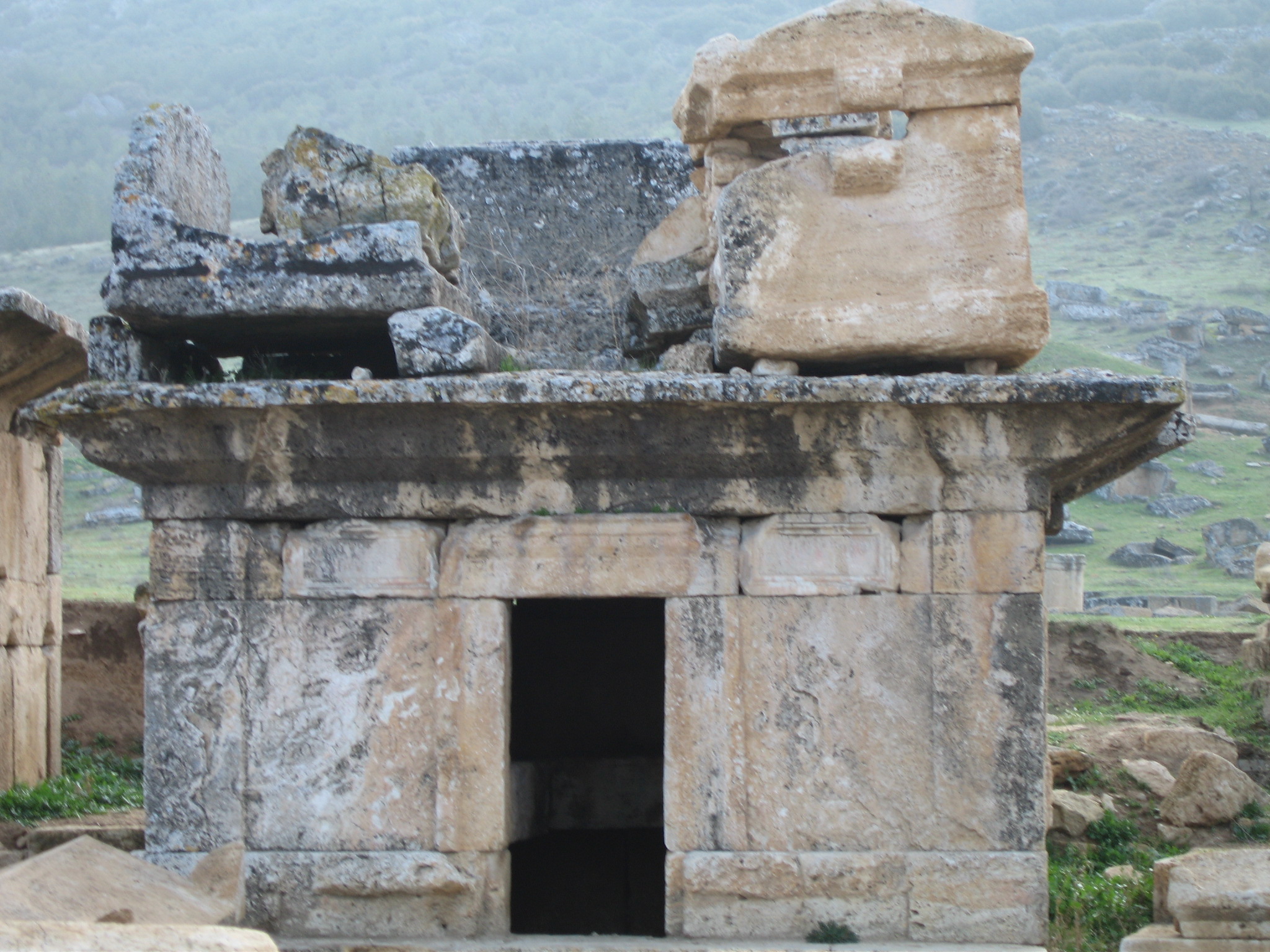
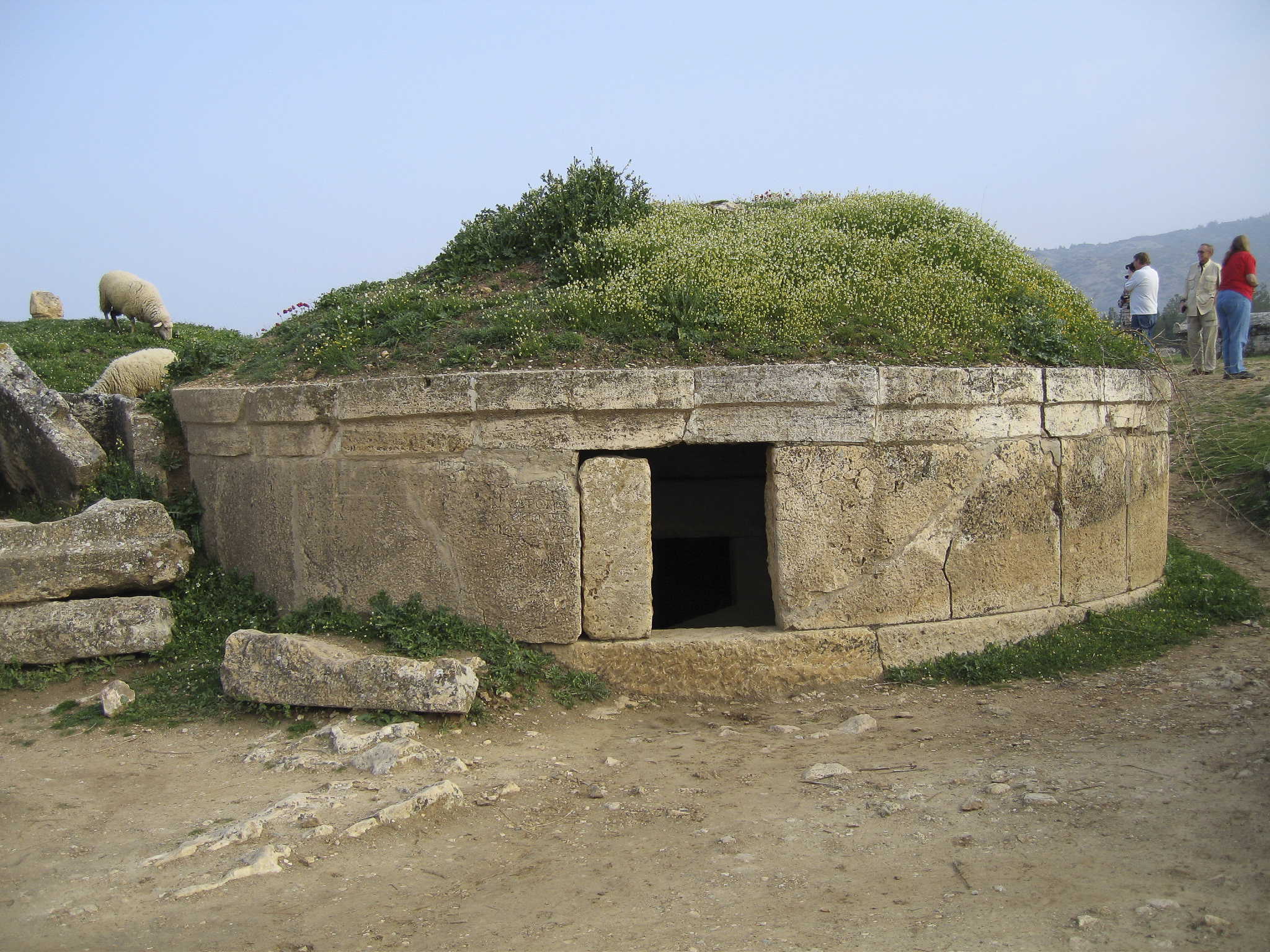
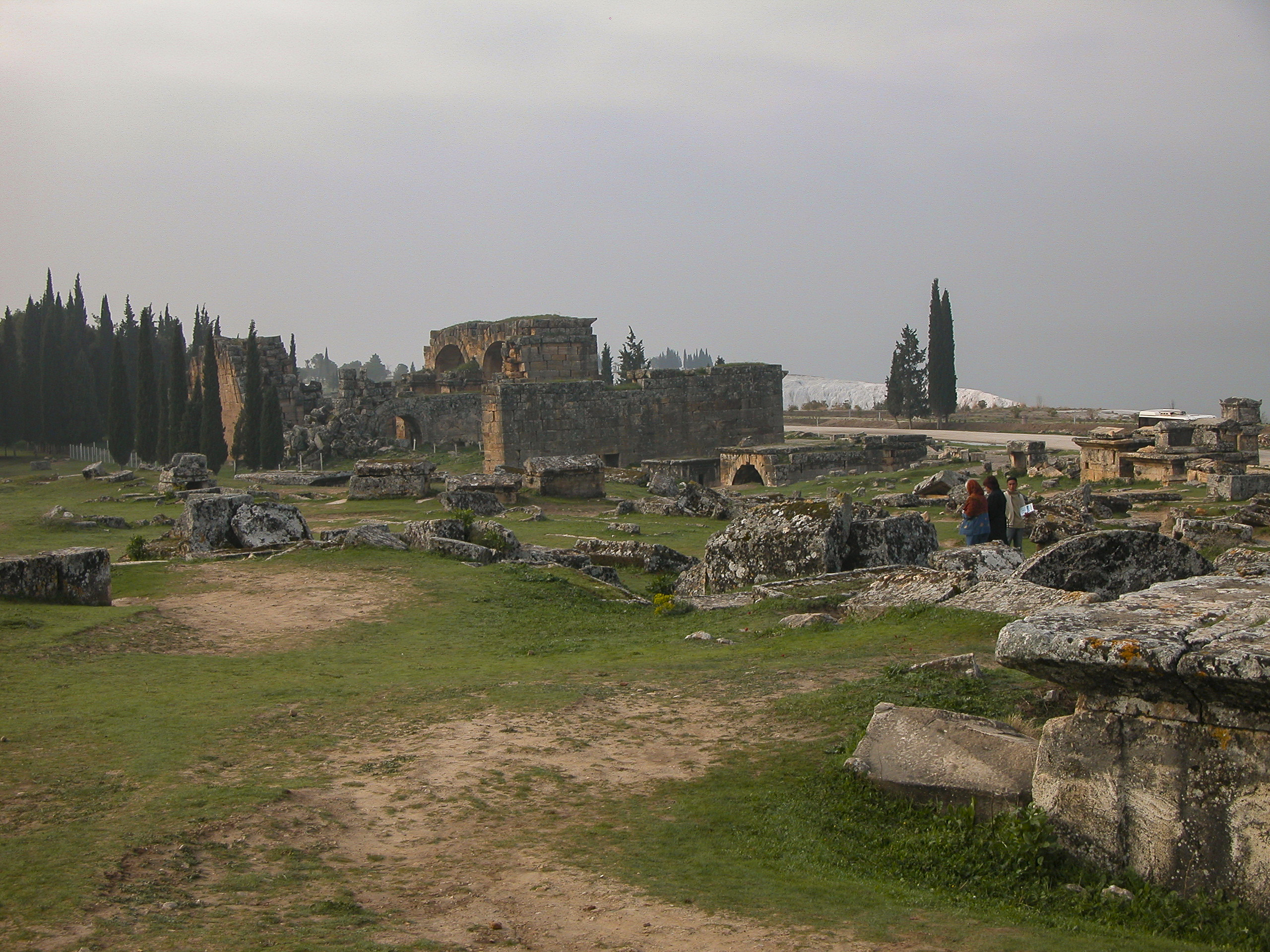
Hierapolis came to prominence as a health resort during the second century BCE. People came to retire or seek healing there because of the supposed medicinal properties of its thermal baths. Many of them, being ill, died there also; Hierapolis consequently became the site of a large necropolis, situated at the north end of the city, and that was where we began our visit.

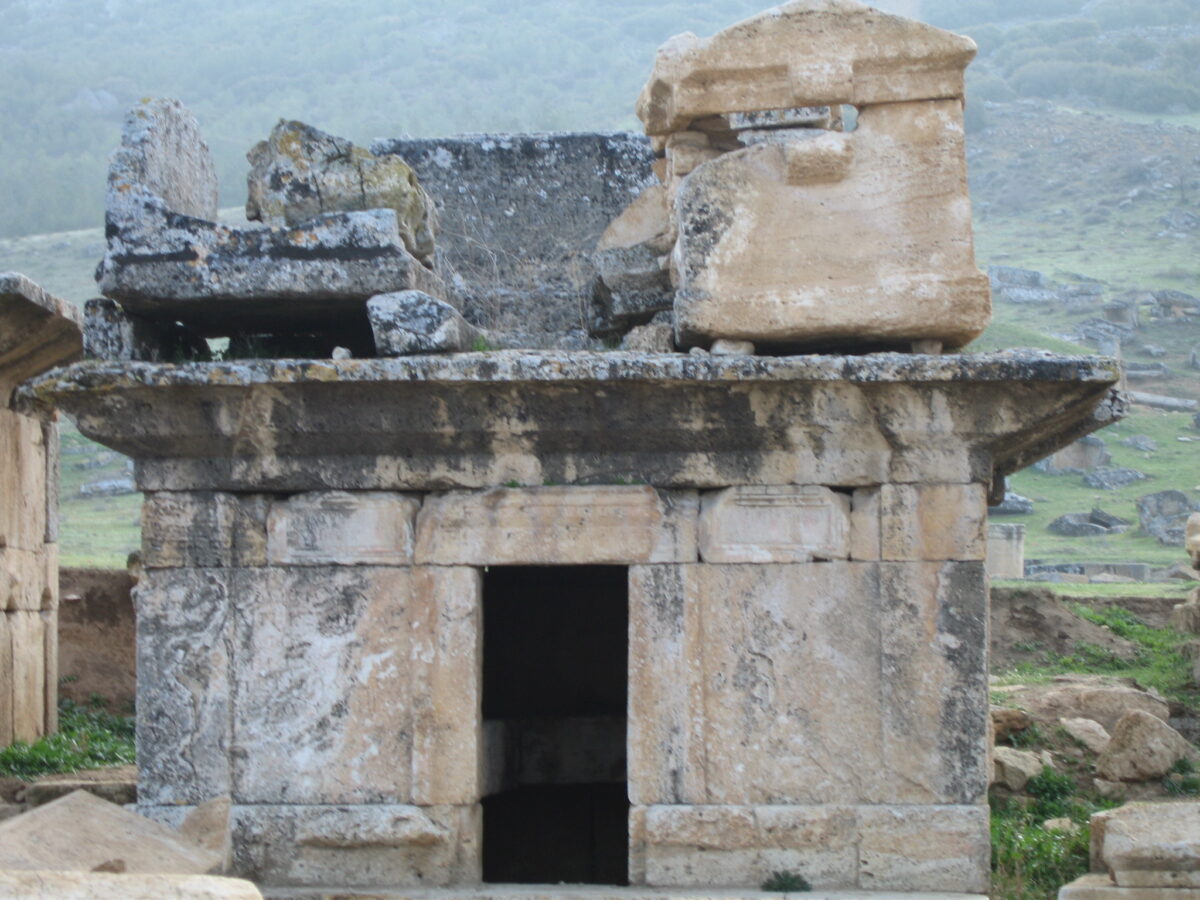
Tombs of rich people. Potter’s field this ain’t.

It turned out that Lara Croft, Tomb Raider, had beaten us here, so the tombs were empty and there was nothing left to plunder.

Empty tomb.

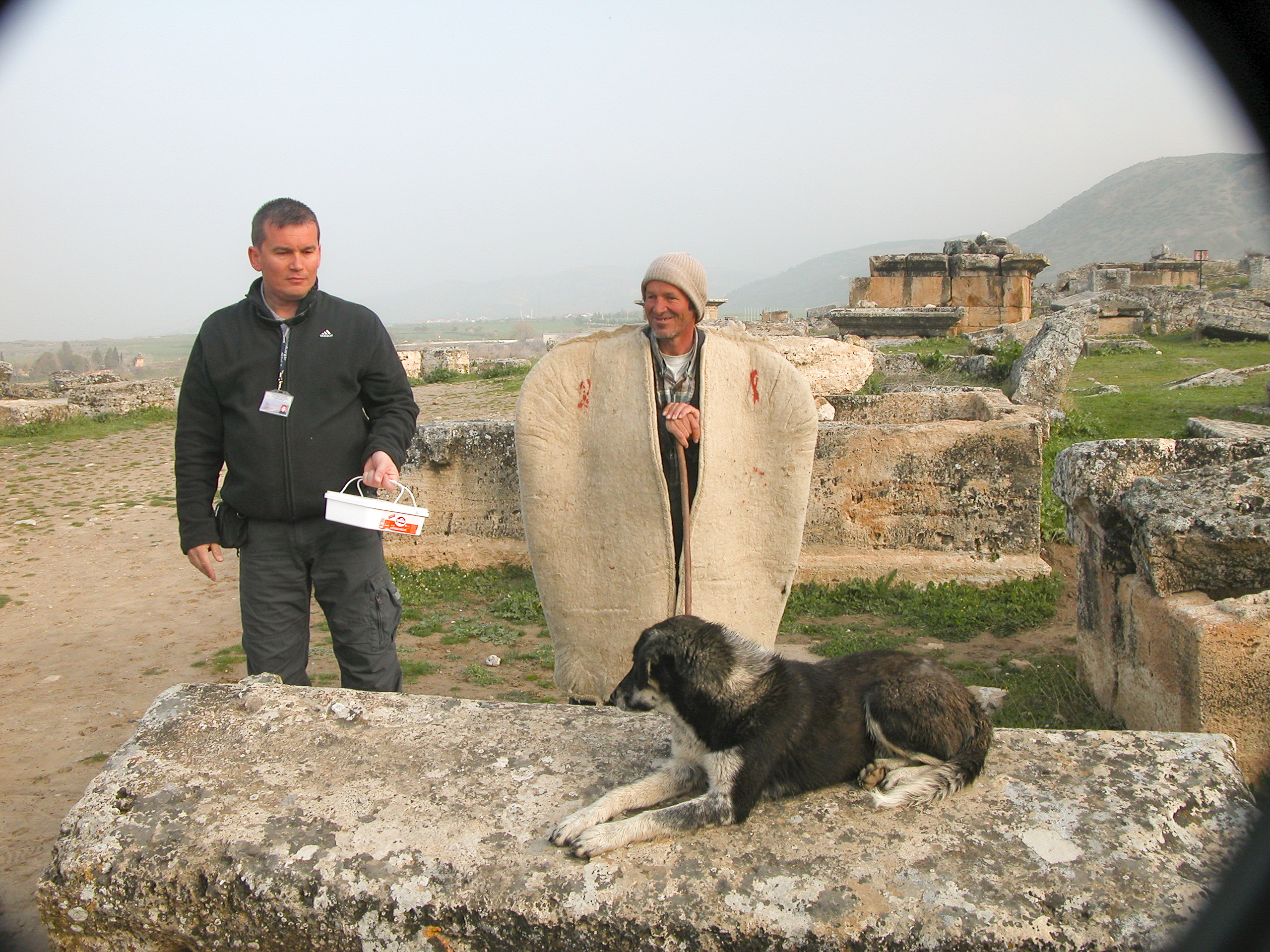
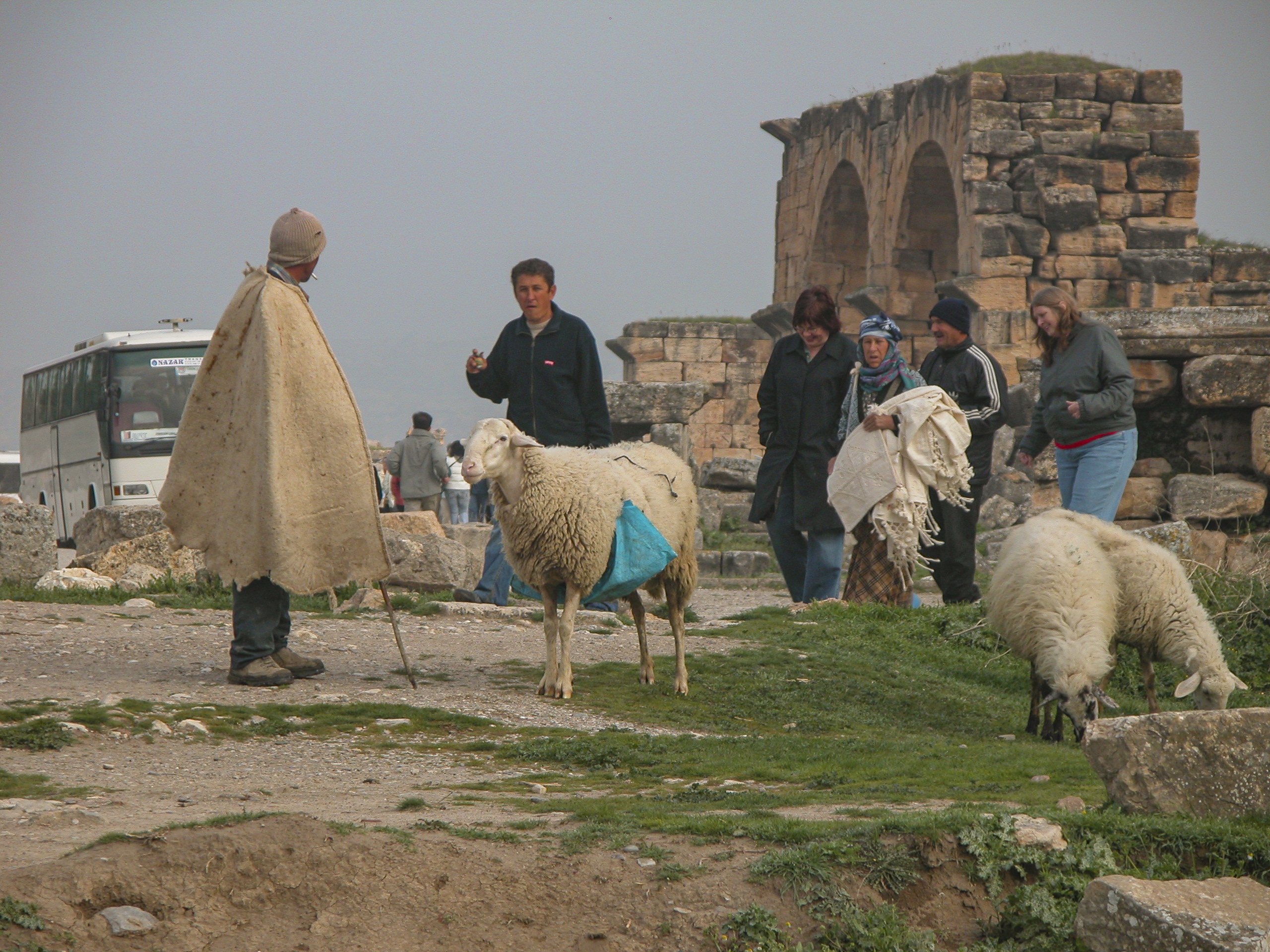
Grass grows on some of the tombs, and sheep graze there. I thought it was decent of the authorities to let the shepherds pasture their sheep in the ruins.

Sheep grazing on the tombs plundered by Lara Croft.

Of course, sheep need a shepherd, and a shepherd needs a dog. We enjoyed hobnobbing with both of them, and Attila translated for us.

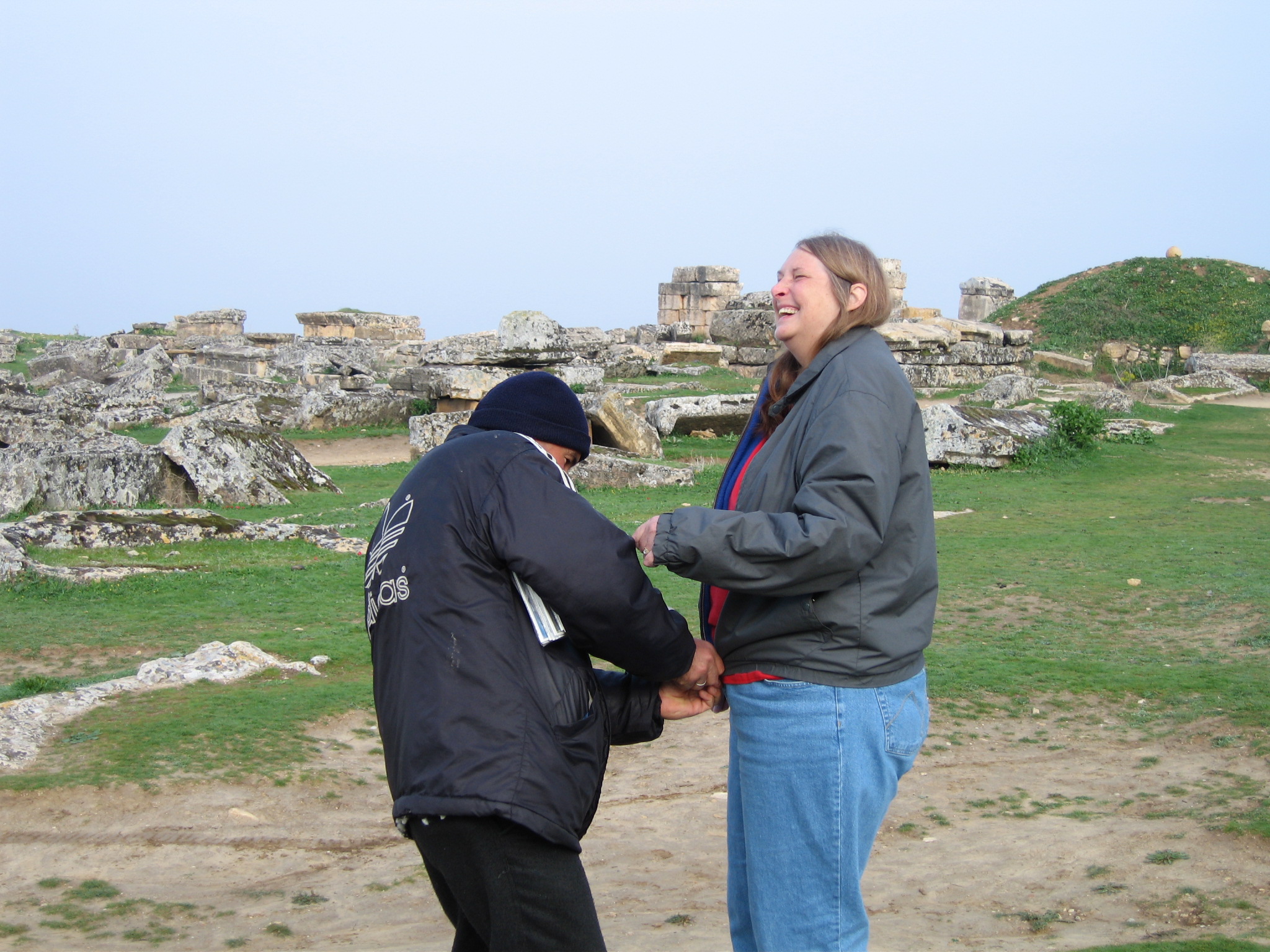
Some of the other local residents showed up too, and kept Sandie and Cherie company for a while, along with their plump and fuzzy sheep.

Cherie and Sandie hang out with the locals and their ewes near the Basilica Bath.

One of the shepherds helped Cherie zip up her jacket to keep warm. It was chilly, even after the fog lifted.

The Basilica Bath is at the north of Hierapolis, between the necropolis and the Gate of Domitian. It was built during the 2nd century CE and was converted into a basilica church during the reign of Justinian, in the 6th century CE. There was another, better preserved bath complex at the south end of the city; it houses the Museum of Hierapolis.

The Basilica Baths.

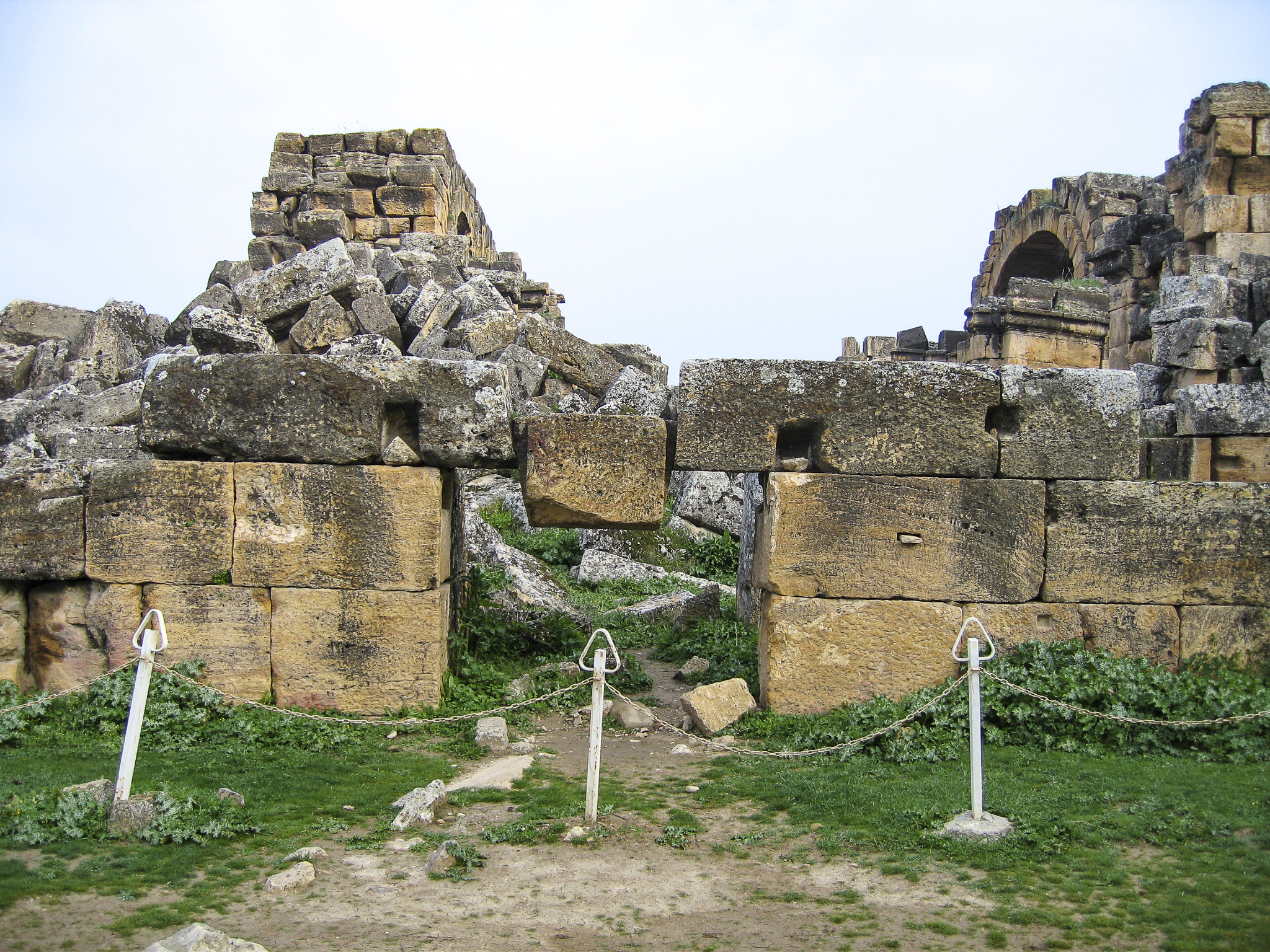
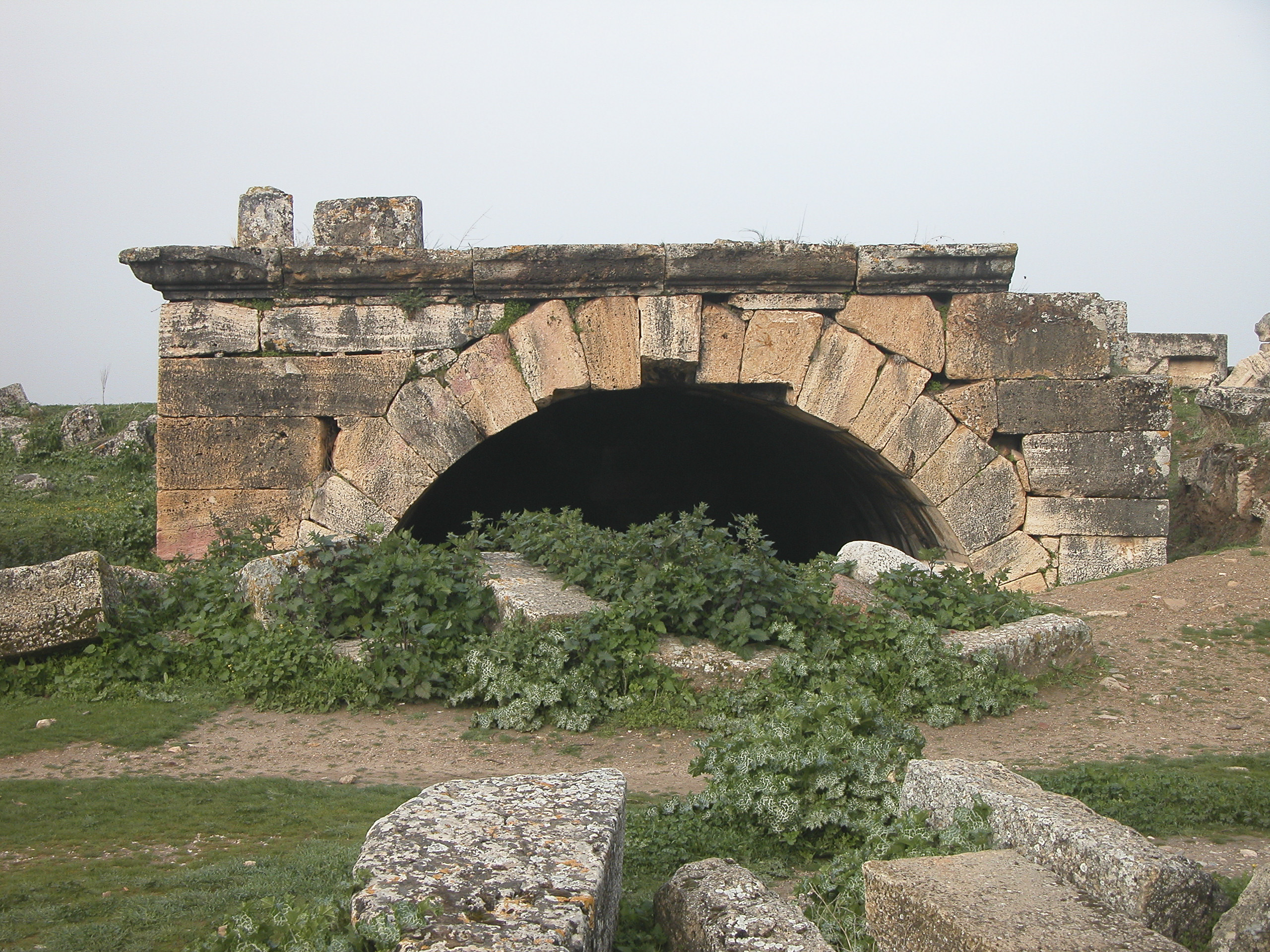
Somewhere along the main drag, we came across this edifice, with a large stone block precariously suspended between two others. I wondered whether this was by chance or design.

If that stone ever fell on anyone, it would hurt.

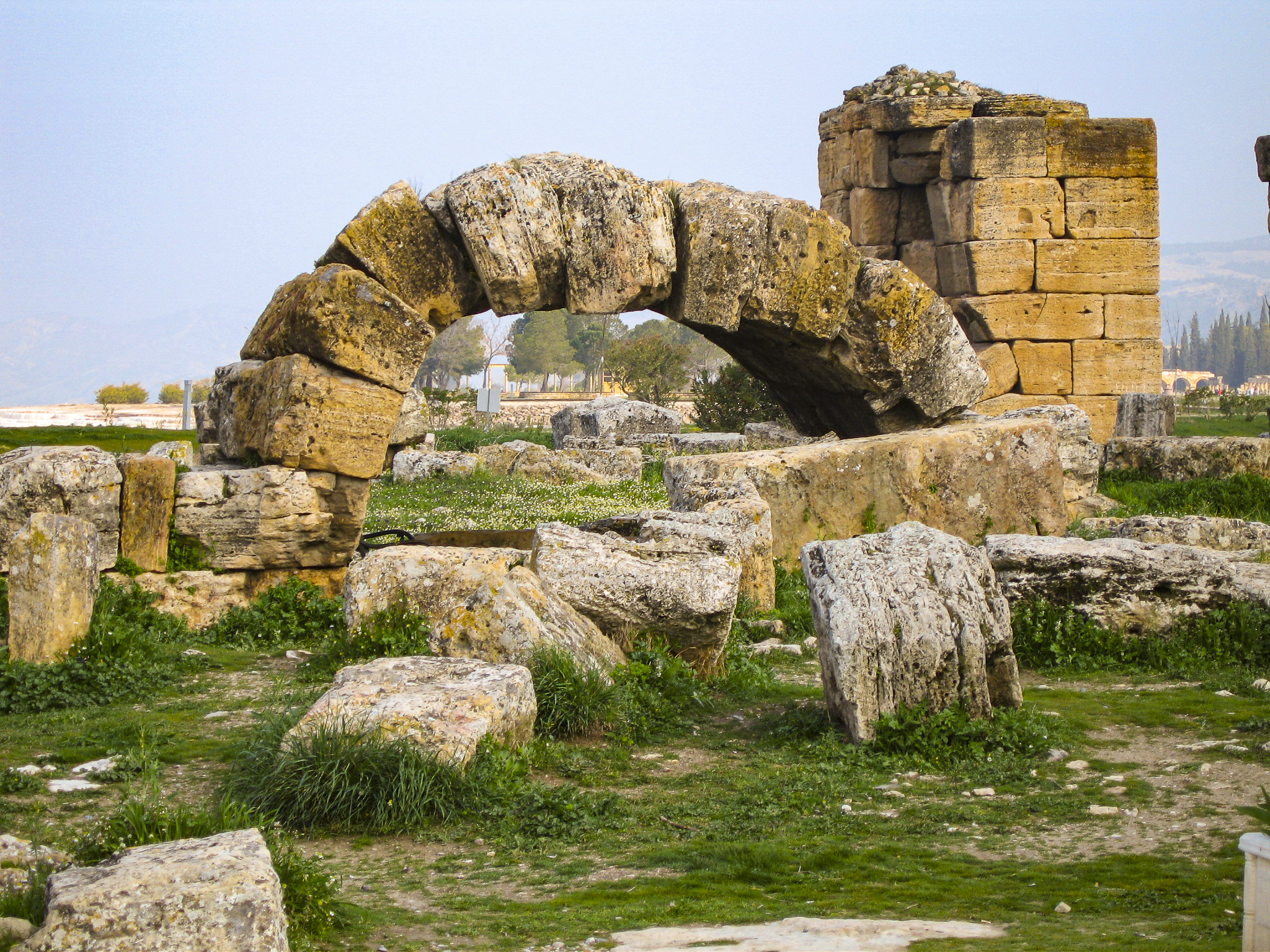
I also wondered whether the stone arch in the next picture was the legacy of an existing structure that had collapsed, the result of a partial restoration, or the product of an archaeological prank. We found no answer to this question then or later. I opted for the third choice. What do you think?

There was no sign or other indication of who erected this bizarre structure or why, but Sandie thought it was worth a picture, and so do I.

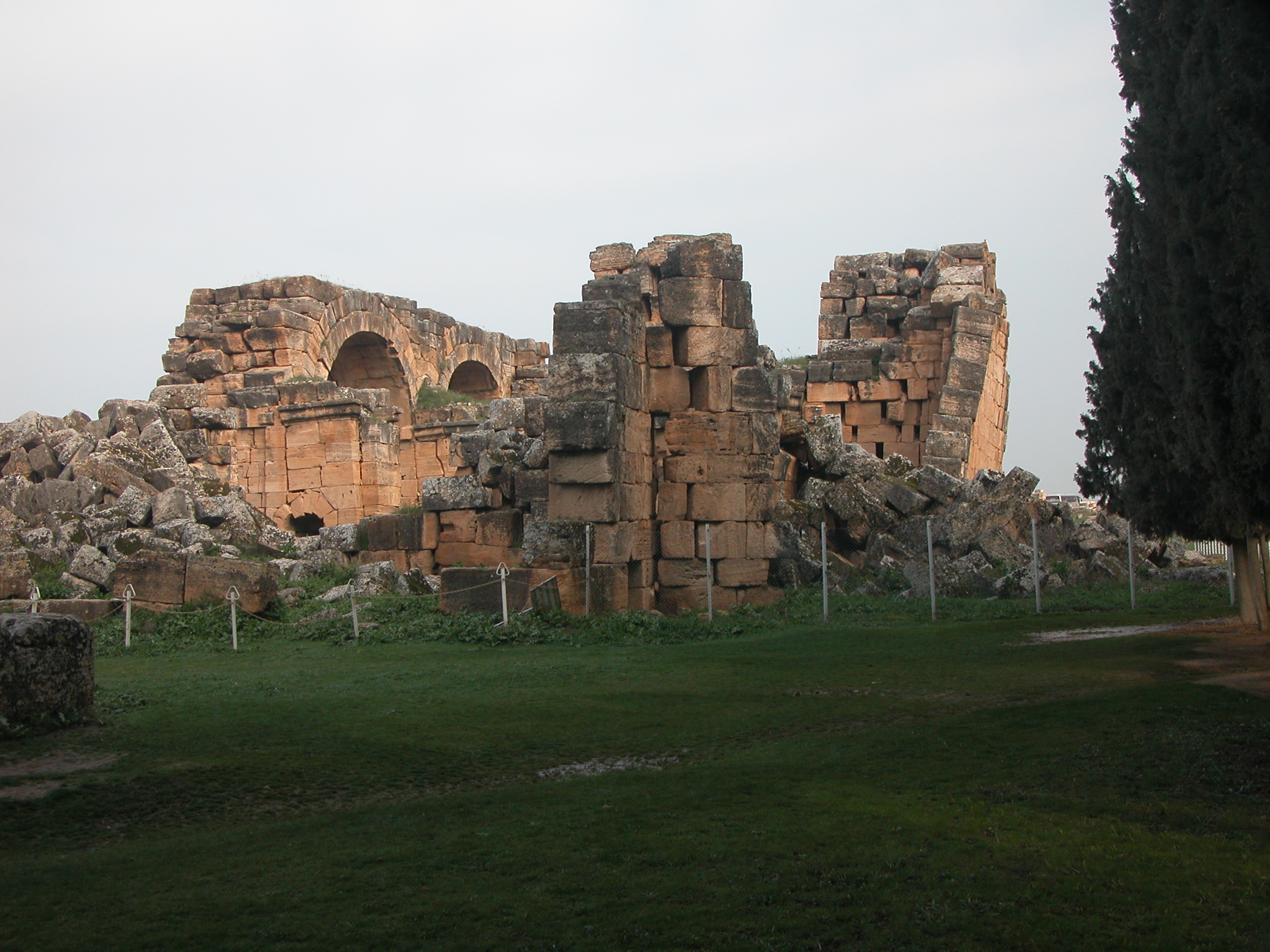
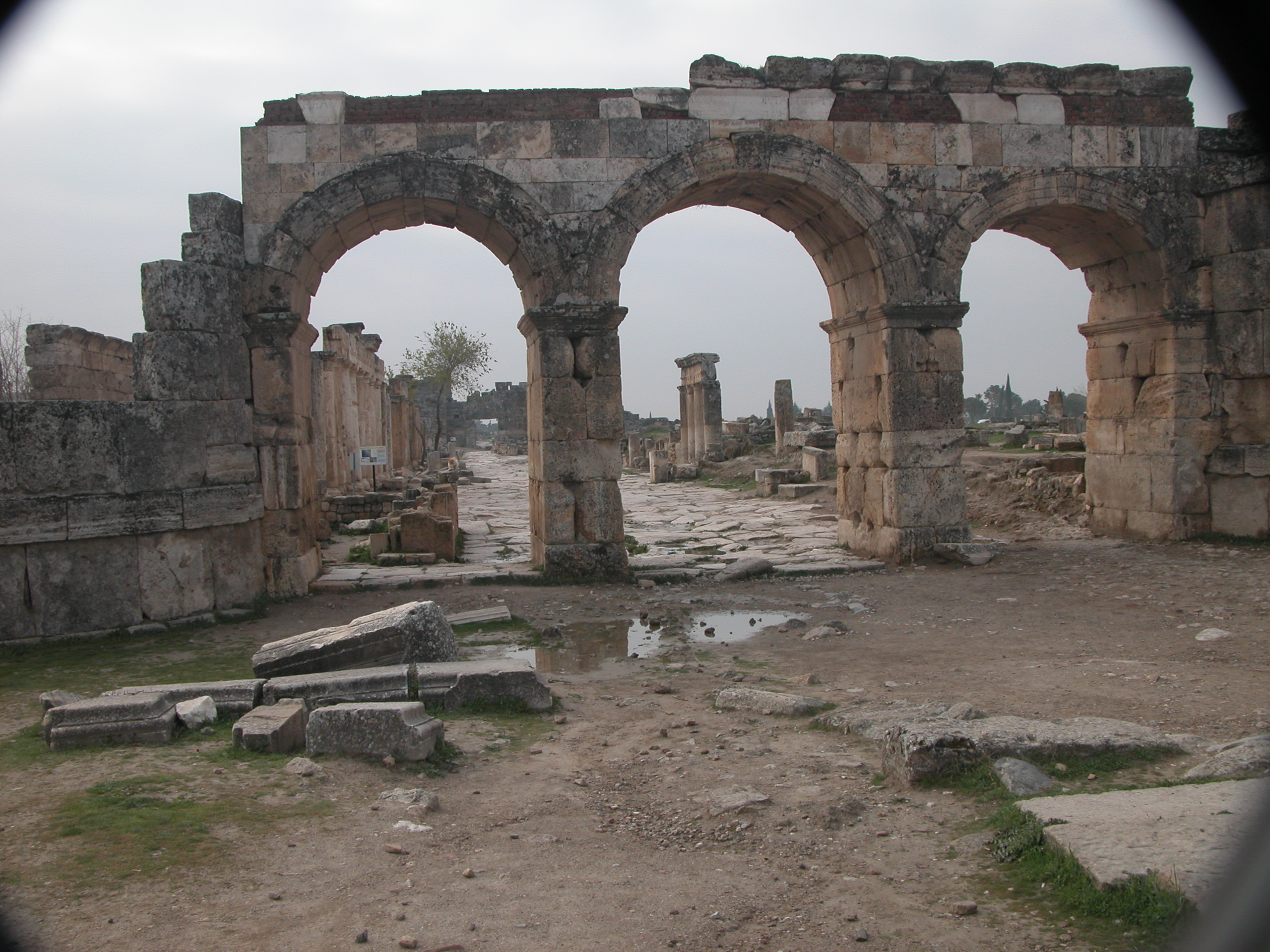
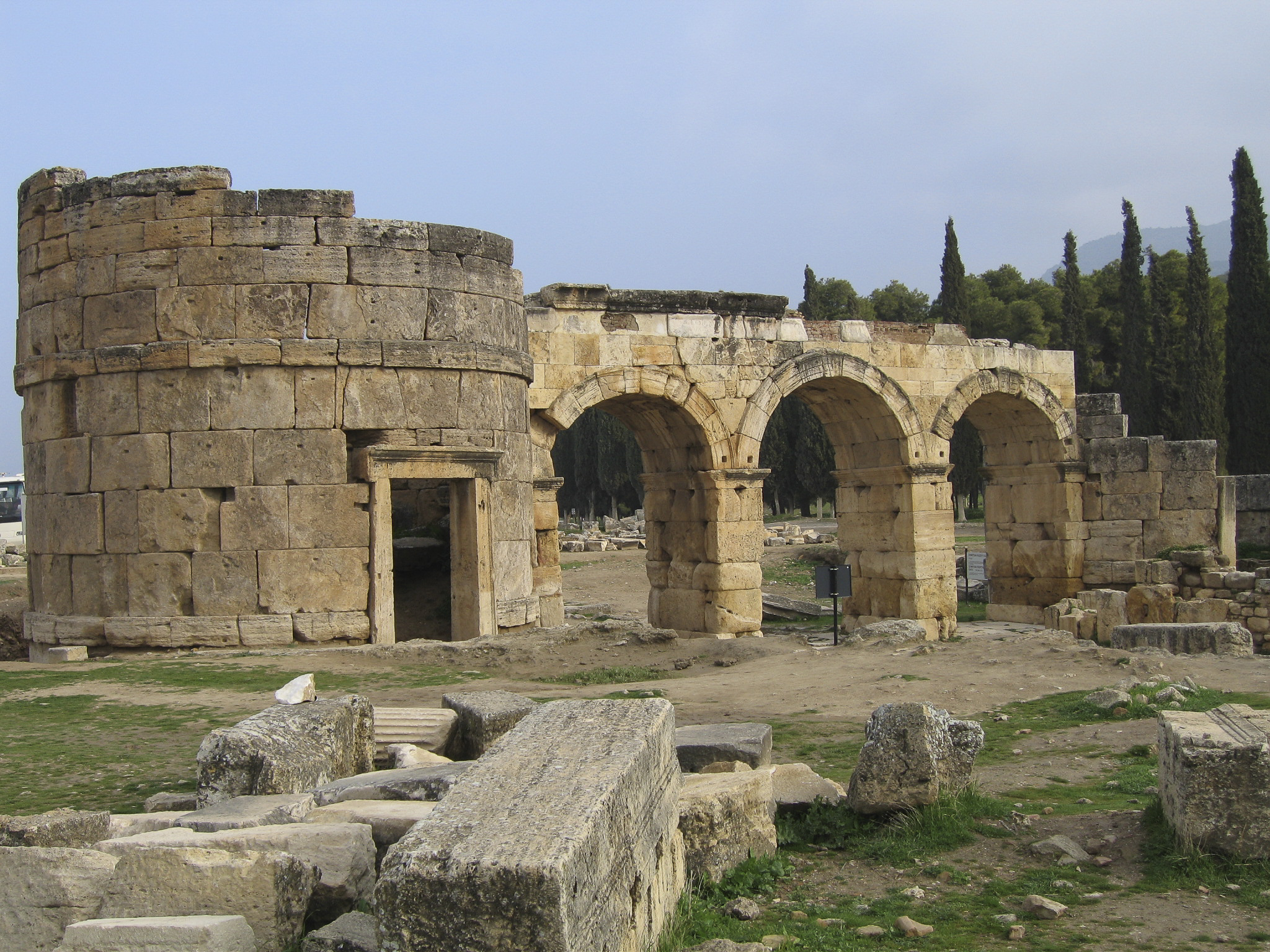
The next identifiable landmark was a monumental gate built by the Roman proconsul Julius Frontinus in 84-86 CE. It consisted of three triumphal arches flanked by two circular towers (see next photo).

The Gate built by Frontinus is also known as the Gate of Domitian, since it was built during his reign, which lasted from 81 to 96 CE. Domitian was the third and final emperor of the Flavian dynasty, the son of Vespasian, a general who led the Roman suppression of the revolt of Judea (66-70 CE) before seizing the throne, and the younger brother of Titus, who completed the destruction of Jerusalem in 70 CE. Domitian himself played little part in those events, and had no significant accomplishments before coming to the throne on the untimely death of his older brother; he was apparently not a charismatic leader or a very attractive person, and hasn’t fared well at the hands of ancient historians such as Tacitus and Suetonius, who considered him a cruel and paranoid tyrant. He was assassinated in a court conspiracy in 96. Modern revisionists have tended to treat him more favorably, some crediting him as a “ruthless but efficient” autocrat who sponsored reforms which laid the foundation of the peace and prosperity enjoyed by the Roman Empire during the second century CE.

A 3-arch triumphal gate flanked by circular towers.

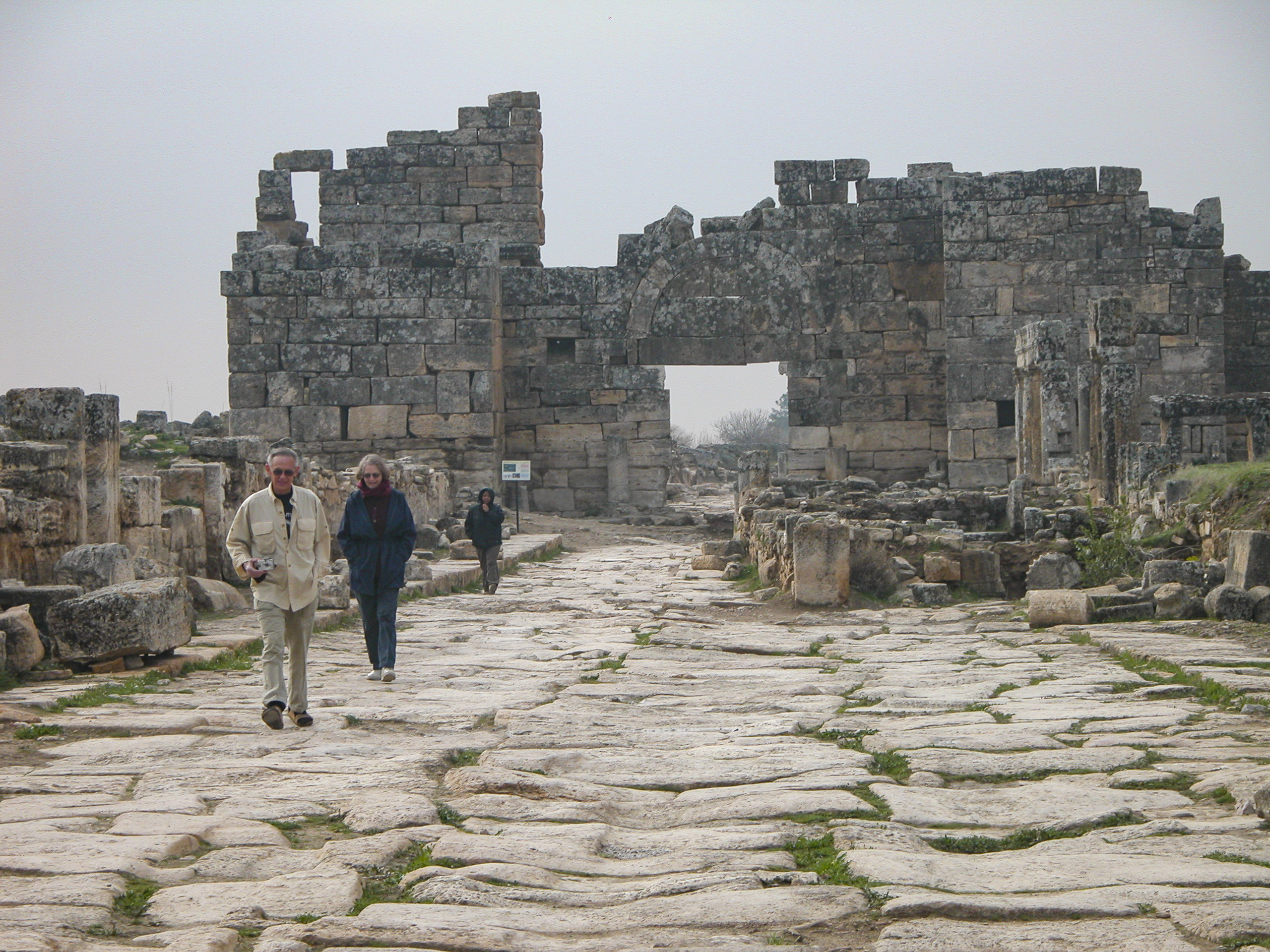
South of the Domitian Gate lay the confusingly named Northern or Byzantine gate, which was built not during the Byzantine period but during the reign of Theodosius (late 4th century CE) as part of a system of fortifications. Like the Domitian Gate, the Byzantine gate was also a monumental entrance, with two large square guard towers at either side. The 4th century was a more troubled time than the 2nd, and one may guess that the city was undergoing contraction and retrenchment from the fact that the Byzantine gate was constructed using stone plundered from the agora, which lay just to the east.

Charles and Elouise Mattox stroll down the main street near the Byzantine Gate.

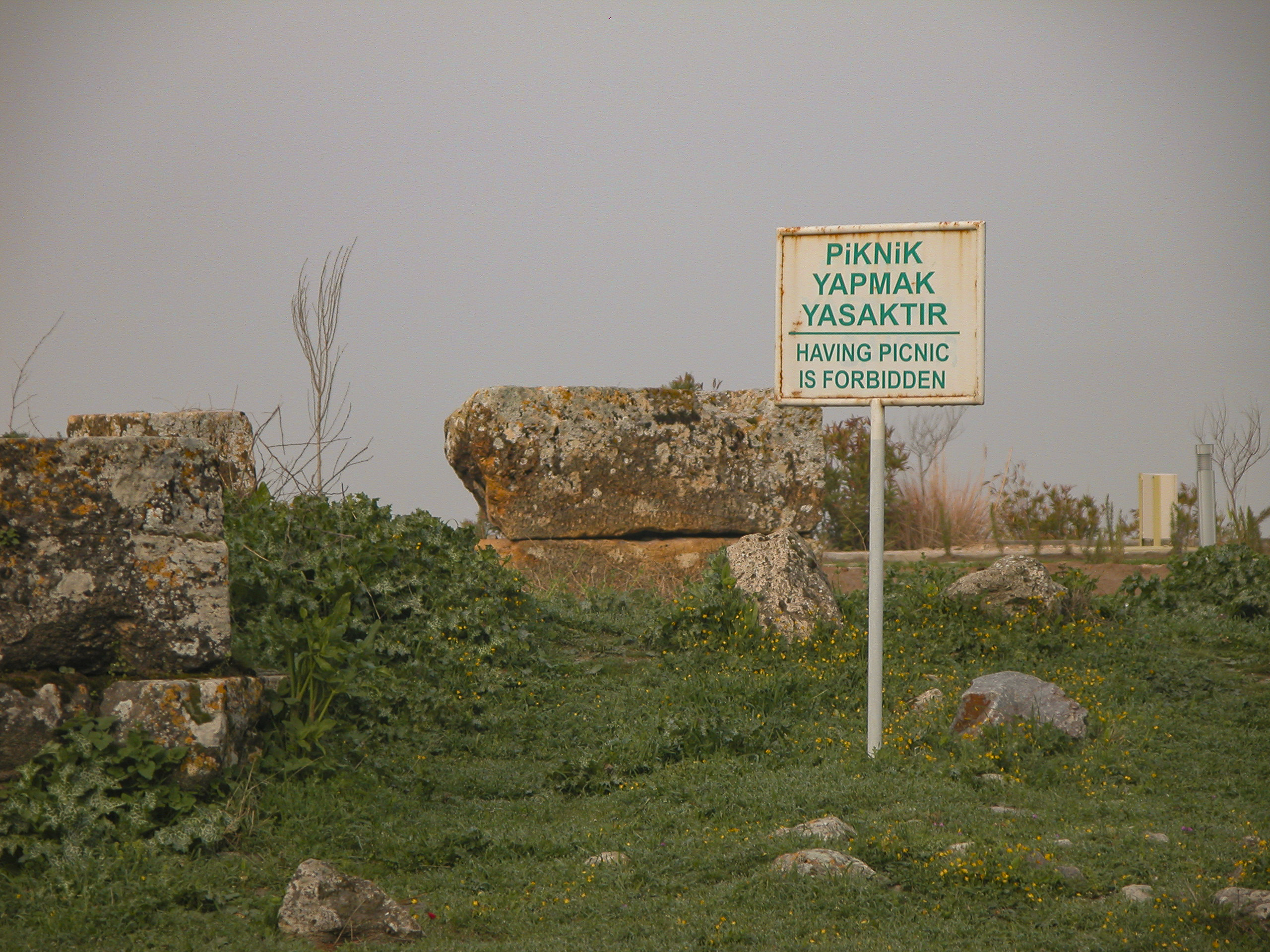
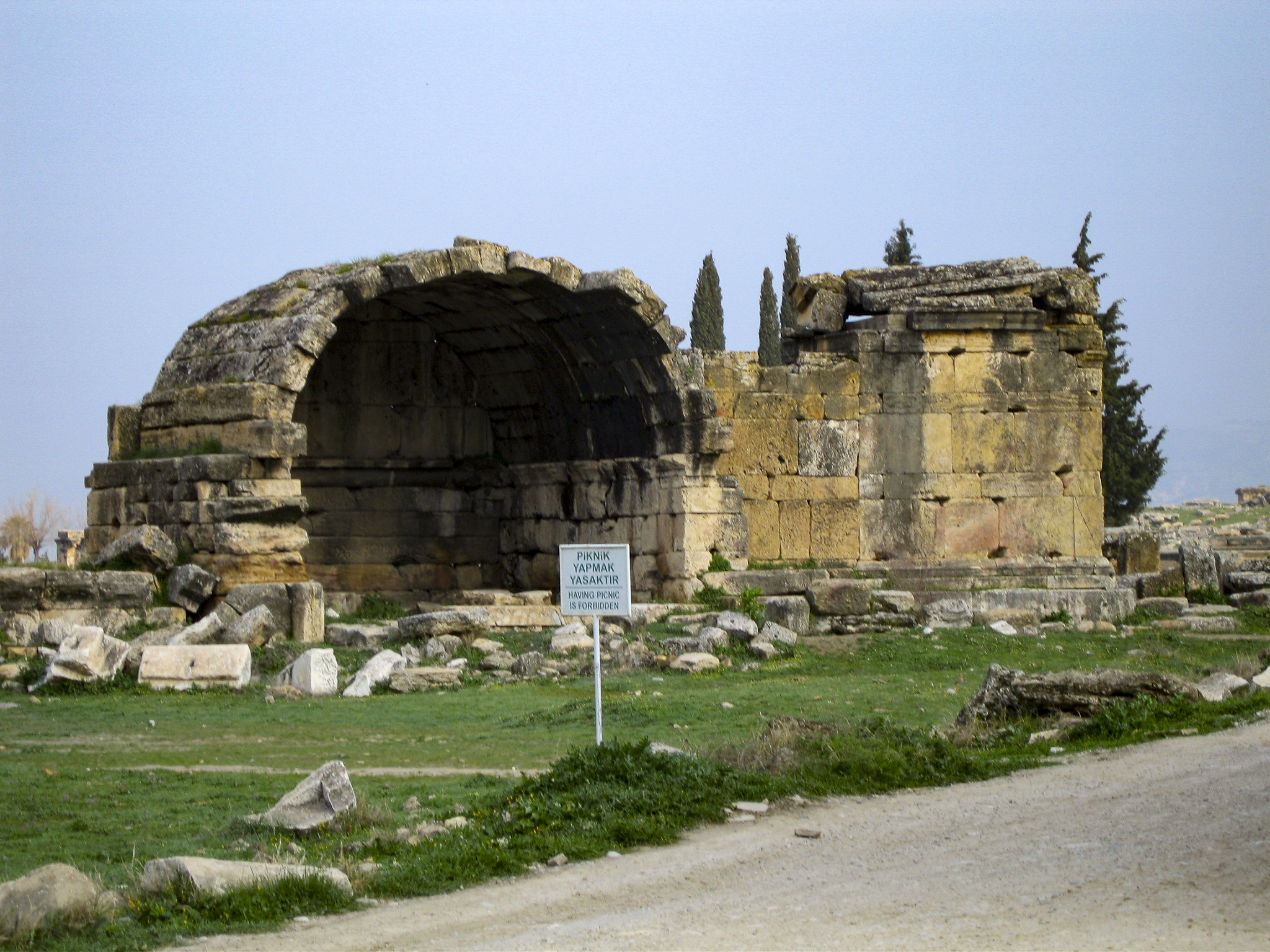
Now and then we encountered signs warning that picnicking in Hierapolis was disallowed. It was fortunate that the Turkish words were accompanied by an English translation; otherwise we might have thought that they said something like “Official Picnic Area.” Turkish, being a non-Indo-European language, is rather opaque to me.

Picnics were frowned on in Hierapolis.

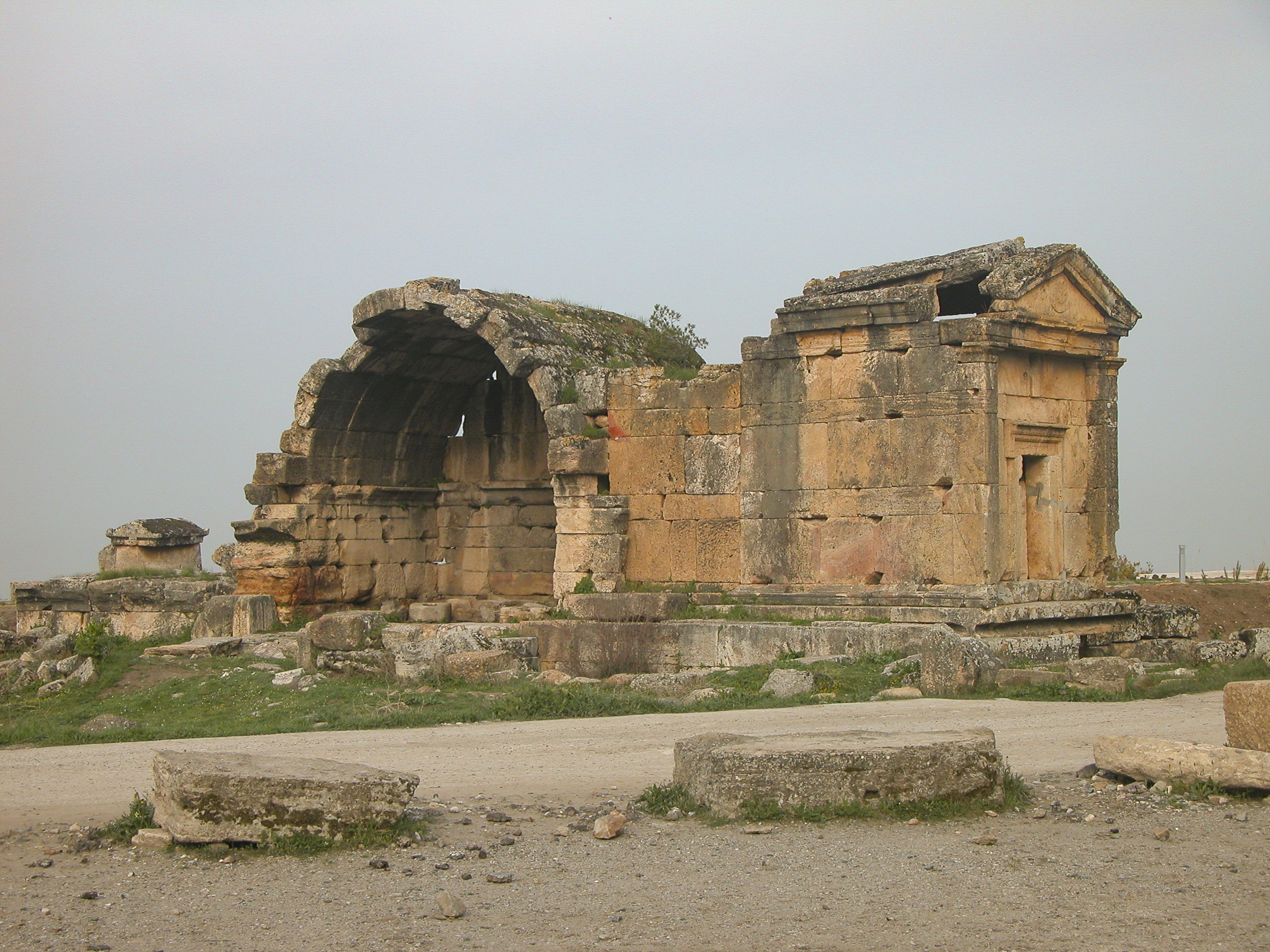
South of the Byzantine gate we encountered the Temple of Apollo, originally built during the Hellenistic period (late first millenium BCE) but reconstructed during the 3rd century CE. Inside the sacred court (peribolos) surrounding the temple, a shrine called the Nymphaeum was built in the 2nd century CE. This was a monumental fountain which distributed water to the houses of the city via a network of pipes.

The Nymphaeum.

To be quite honest, I wasn’t able to distinguish between the ruins of the Temple of Apollo and the Nymphaeum – the signs didn’t quite make it clear precisely where one ended and the other began, or which stones belonged to which structure. I’m guessing that the Nymphaeum included both the rectangular structure facing the main street and the adjoining arched building behind it, and that the latter held the fountains. The signage was more concerned with preventing picnics than providing information about the ruins.

Apollo, the chief god of Hierapolis, was linked to an ancient Anatolian sun-god, Lairbenos. He didn’t enjoy picnics.

In any case, the Temple of Apollo was deliberately built on an active earthquake fault, as was the temple of the same god at Delphi. In both locations, noxious gases emanated from the chasm. In Delphi, the vapors were inhaled by the Pythia, the priestess of Apollo, who went into a trance under their influence and uttered prophesies. In Hierapolis, however, Apollo had to share the site with Pluto, the god of the underworld, as well as the mother-goddess Cybele, who was the national deity of Phrygia. She was known as Magna Mater in Rome. The priests of Cybele, the Galli, were required to be eunuchs, so they had to castrate themselves to enter the priesthood; this was thought to confer on them powers of prophecy.

The Ploutonion is next to the Temple on the right of center.

Next to the temple of Apollo was located the Ploutonion, the shrine to Pluto, a sinister-looking structure leading to a small cave which in ancient times emitted gas from the earthquake fault. According to Wikipedia, the gas involved was carbon dioxide, but I suspect that something more lethal was involved, most likely sulfur dioxide, because it was said to cover a 2,000 square meter area in front of the entrance and kill any living creature that entered the area. The priests of Cybele, who managed the site, sold birds and small animals to pilgrims so that they could thrown them into the fog to demonstrate how deadly it was. Then they would go into the shrine, and, holding their breath, seek out the pockets of oxygen which they knew the poisonous gas would leave because it was heavier than air, subsequently emerging unharmed as “proof” that they were under divine protection. Convinced of the priests’ divinely bestowed powers, the pilgrims would then pay exorbitant fees for Pluto’s prophesies, providing a lucrative source of income for the temple.

The Ploutonian, or Gate to the Underworld, next to the Temple of Apollo, leads to a small cave filled with suffocating carbon dioxide gas. The local priests knew how to find pockets of oxygen, so that they could emerge unscathed, and pretend to be under divine protection.

In the 4th century, as Christianity became dominant throughout the Roman Empire, its adherents, as part of the effort to eliminate the competition, desecrated the Temple of Apollo and walled up the Ploutonium. Later earthquakes completed the destruction.

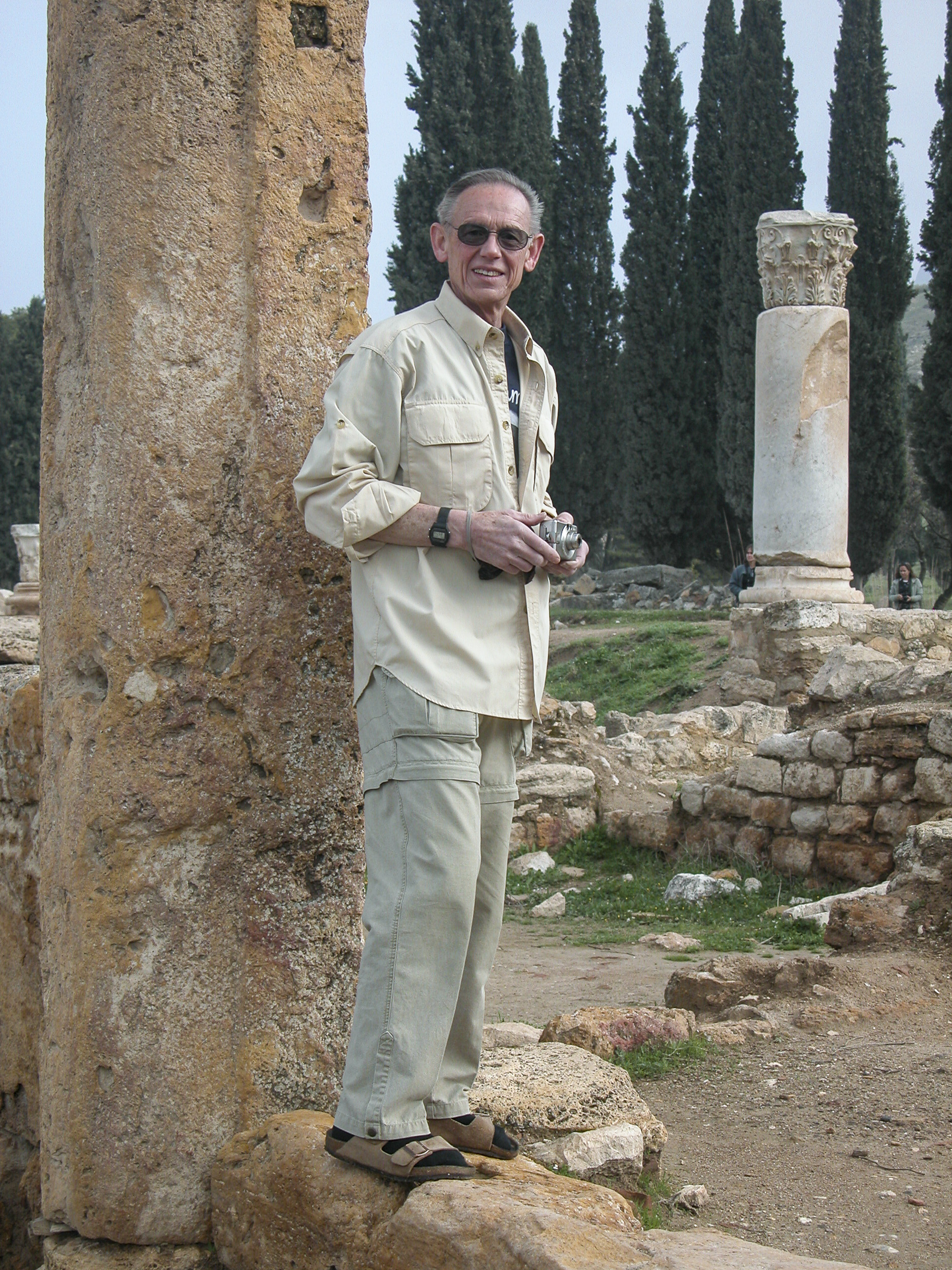
Chuck Mattox poses at the Temple of Apollo, dapper and debonair as always.

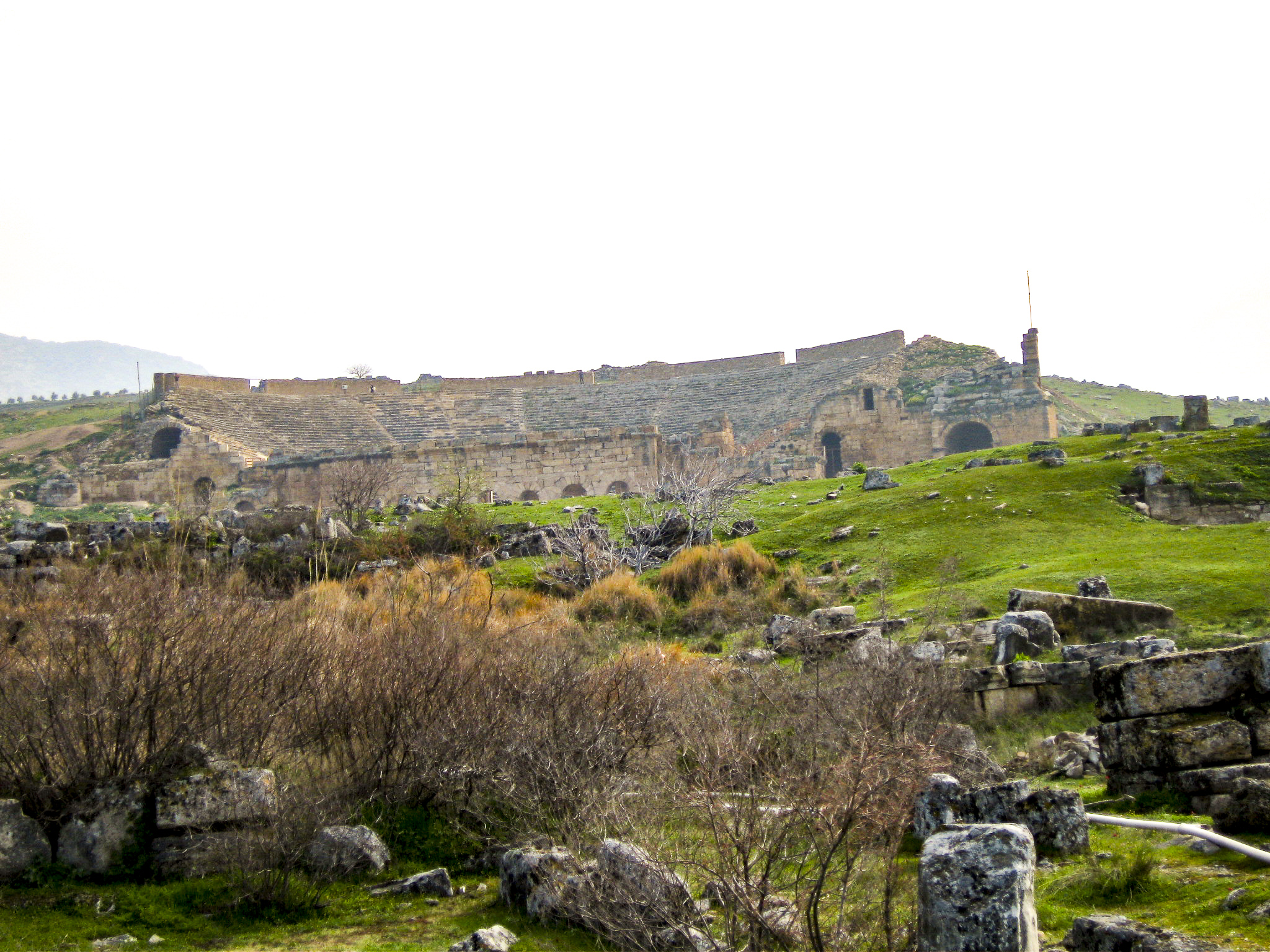
The Amphitheater of Hierapolis was built during the reign of Emperor Hadrian (117-138 CE) and remodeled in the early 3rd century. It was considered one of the largest and finest in the ancient world and seated 15,000 people. It was wrecked by an earthquake in 614 CE.

The Amphitheater of Hierapolis.

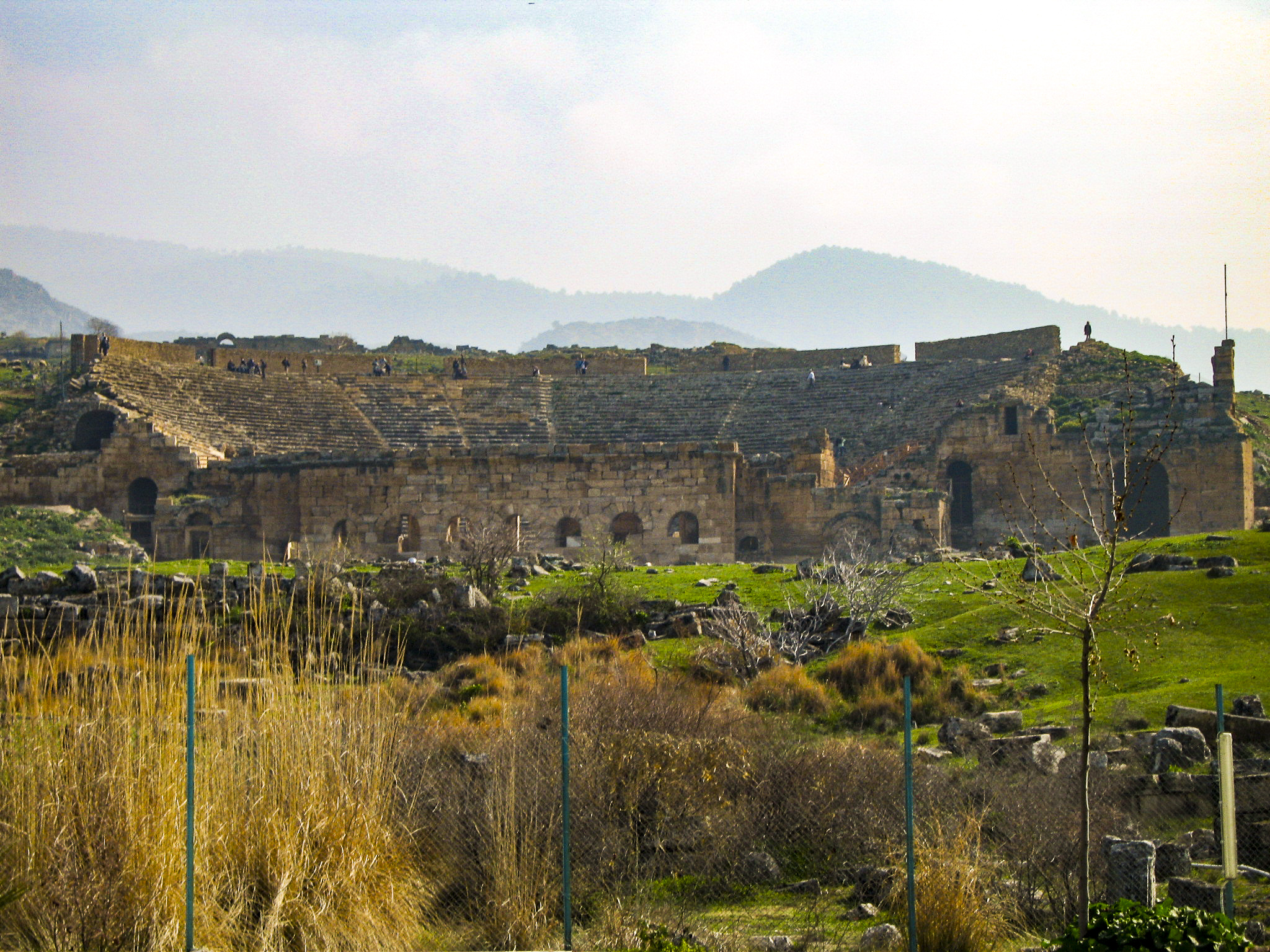
At the time of our visit, the theater was undergoing restoration. You could still walk up the hill to see it; some did, and shot some magnificent pictures, but Sandie and I did not, which I regret.

A closer shot of the Amphitheater.

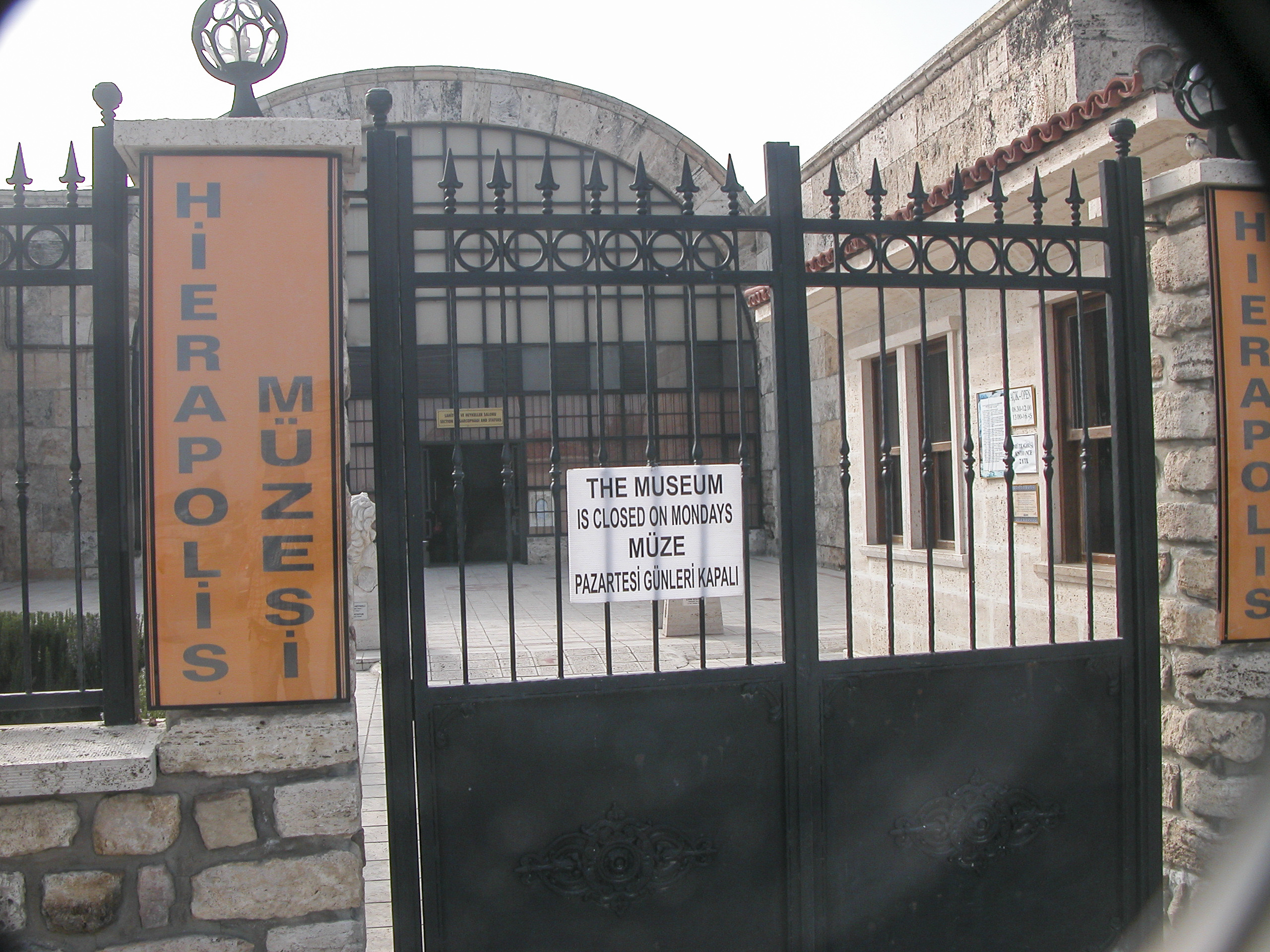
Our visit to Hierapolis fell on a Monday, and the Museum is closed on Mondays, so we didn’t get to see it. This was unfortunate, because the Museum was housed in the old Roman baths, worth seeing in themselves; plus it contained numerous historical artifacts, dating all the way back to the Bronze Age, unearthed by modern excavations.

The Museum of Hierapolis, closed.

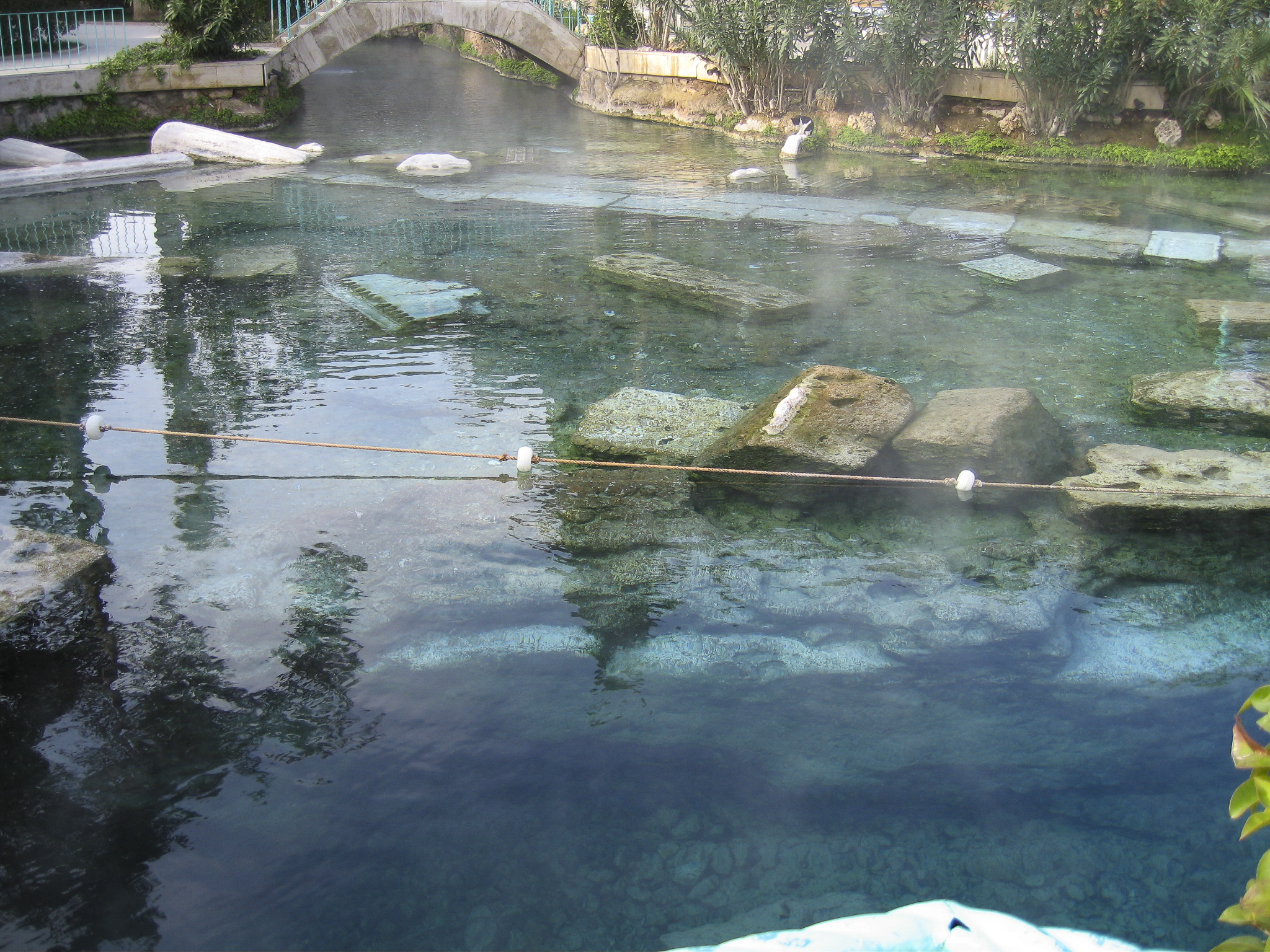
The ultimate source of Hierapolis’ prosperity, of course, was the spa, which consisted of a number of pools. Shown below is the Antique Pool, which is filled with the ruins of a marble portico which was destroyed by the great earthquake of 614 CE.

The Antique Pool, where you can swim among sunken artifacts of the ancient city.

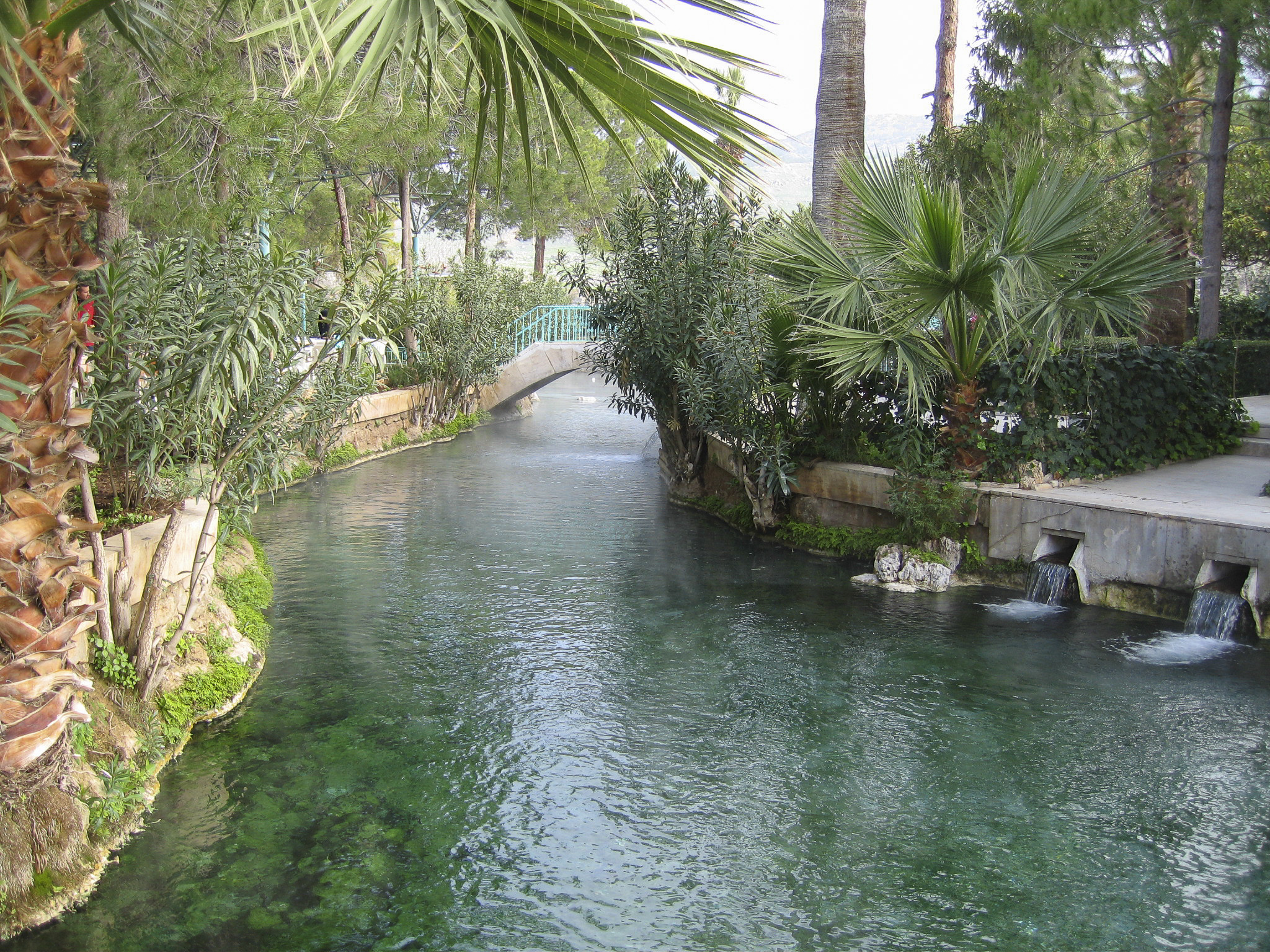
In the mid-20th century, hotels were built over the hot springs, causing considerable damage to the travertine terraces. When Hierapolis was declared a World Heritage Site in 1988, the hotels were torn down and replaced with artificial pools, like the one shown below, which is known as Cleopatra’s Pool. New hotels, such as the one we stayed in, were built in more ecologically favorable locations, and the spa continues to be a tourist attraction.

Cleopatra’s pool. Cleopatra and Mark Antony are supposed to have been among the patrons of the spa in the first century BCE.

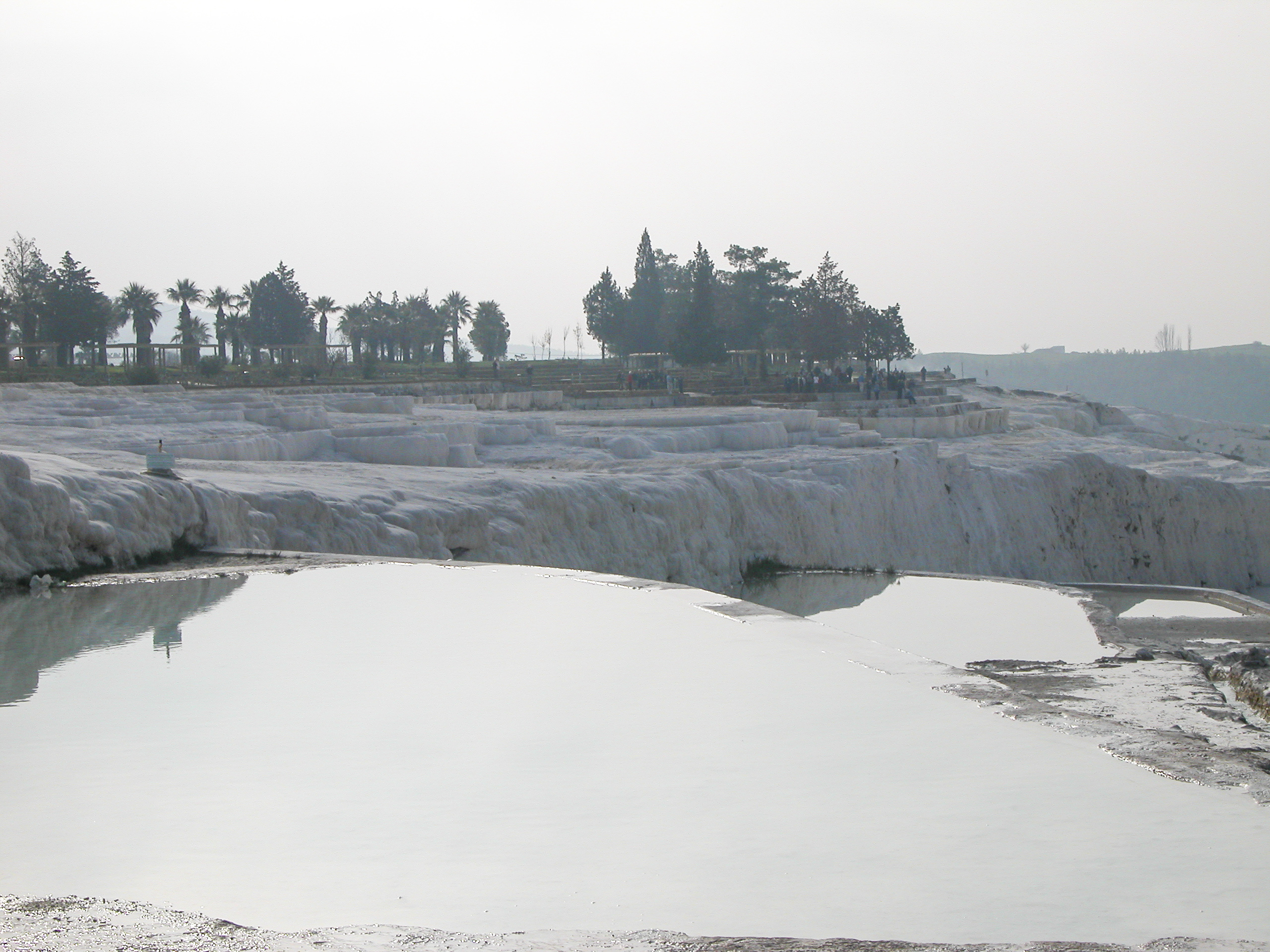
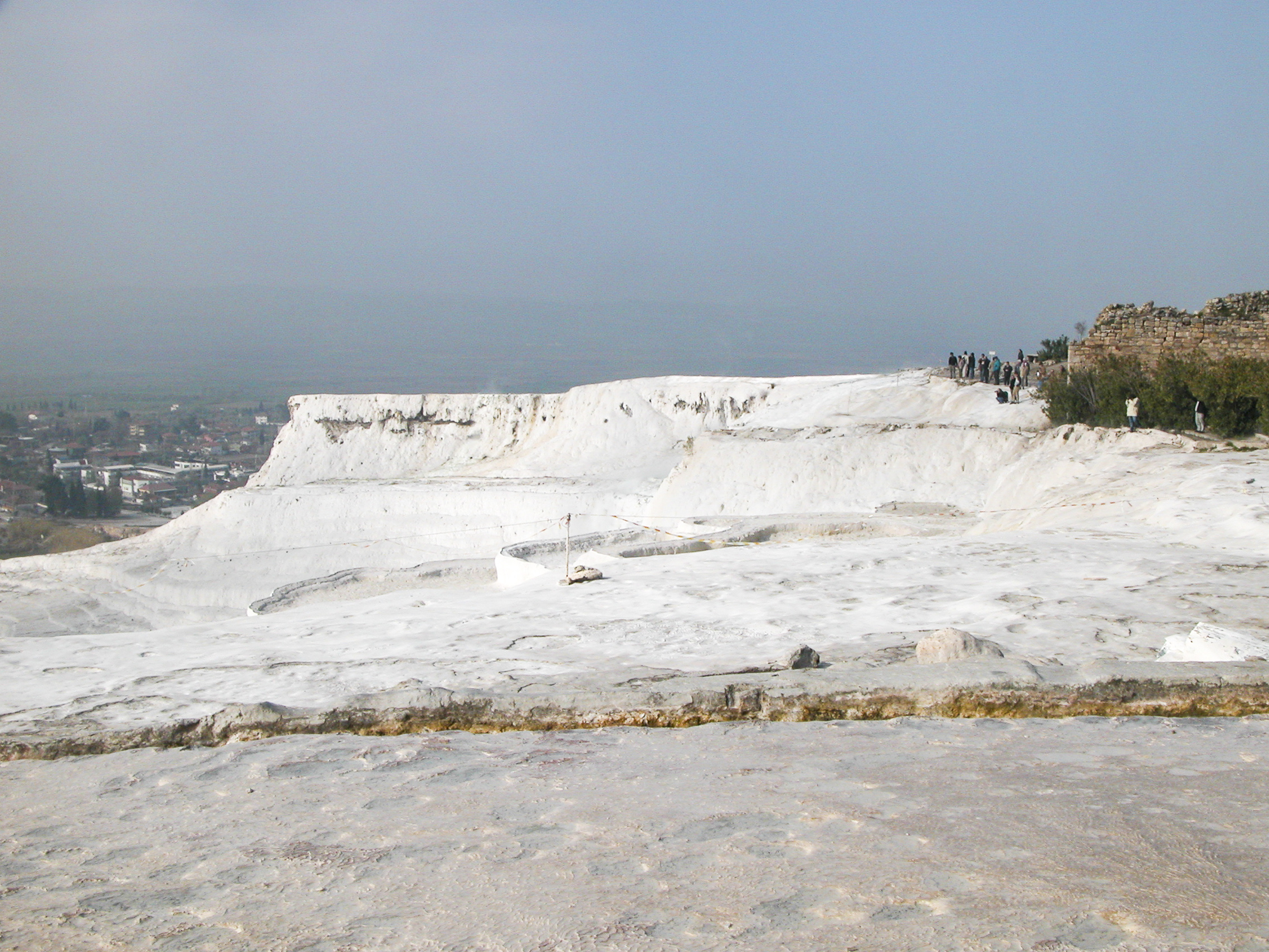
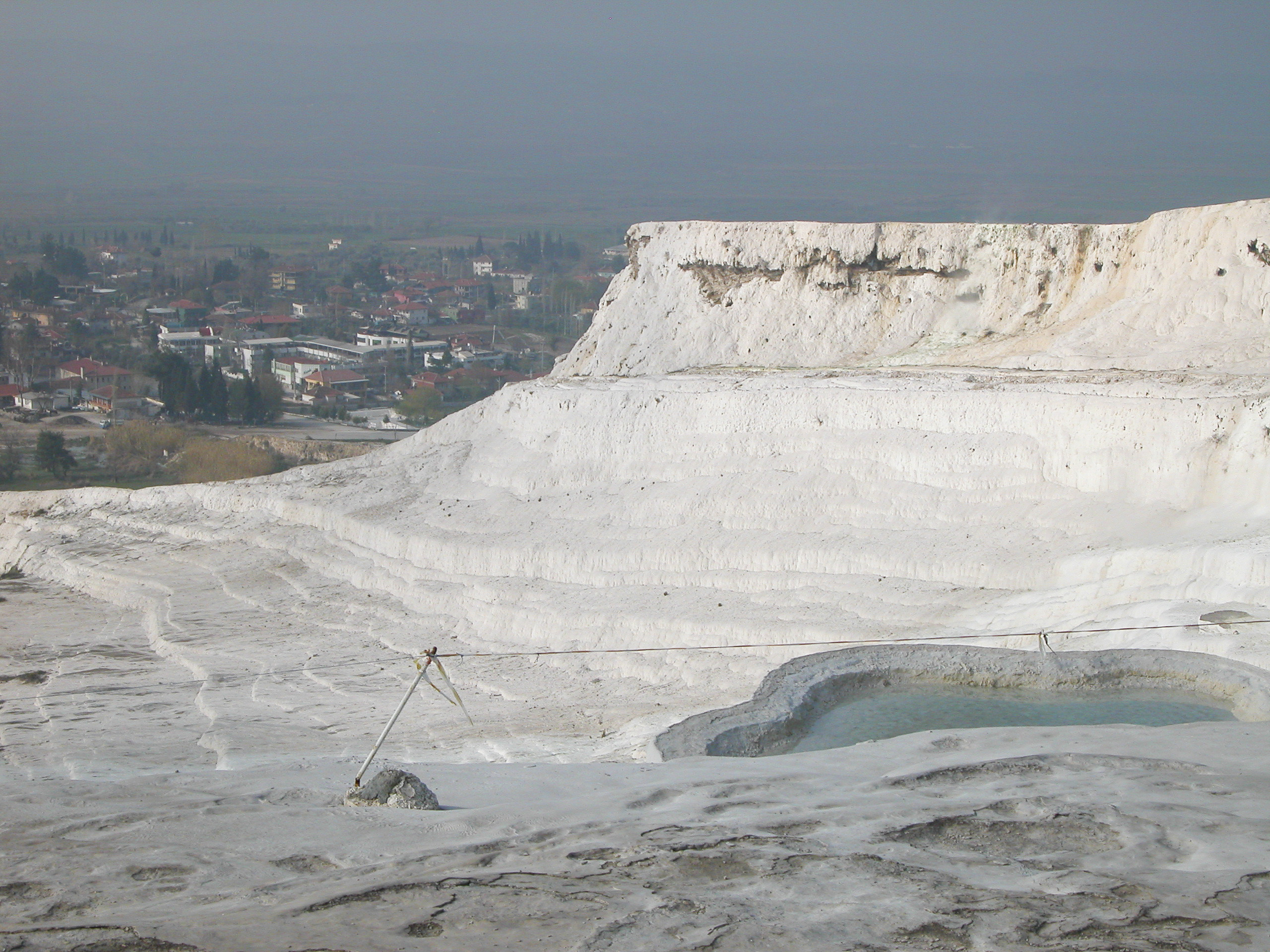
The ancient city of Hierapolis is also the site of the modern town of Pamukkale, which means “cotton castle” in Turkish. The name refers to the fluffy-looking terraces composed of calcium carbonate deposited by the water from the thermal springs.

The hot springs located at Pamukkale are the source of mineral-rich water which flows over the cliffs, depositing calcium carbonate which hardens into travertine.

When water from the hot springs, supersaturated with calcium carbonate, reaches the the surface, carbon dioxide degasses from it, and the mineral precipitates out as a soft gel. Eventually the gel hardens into travertine.

Pamukkale means “cotton castle” in Turkish.

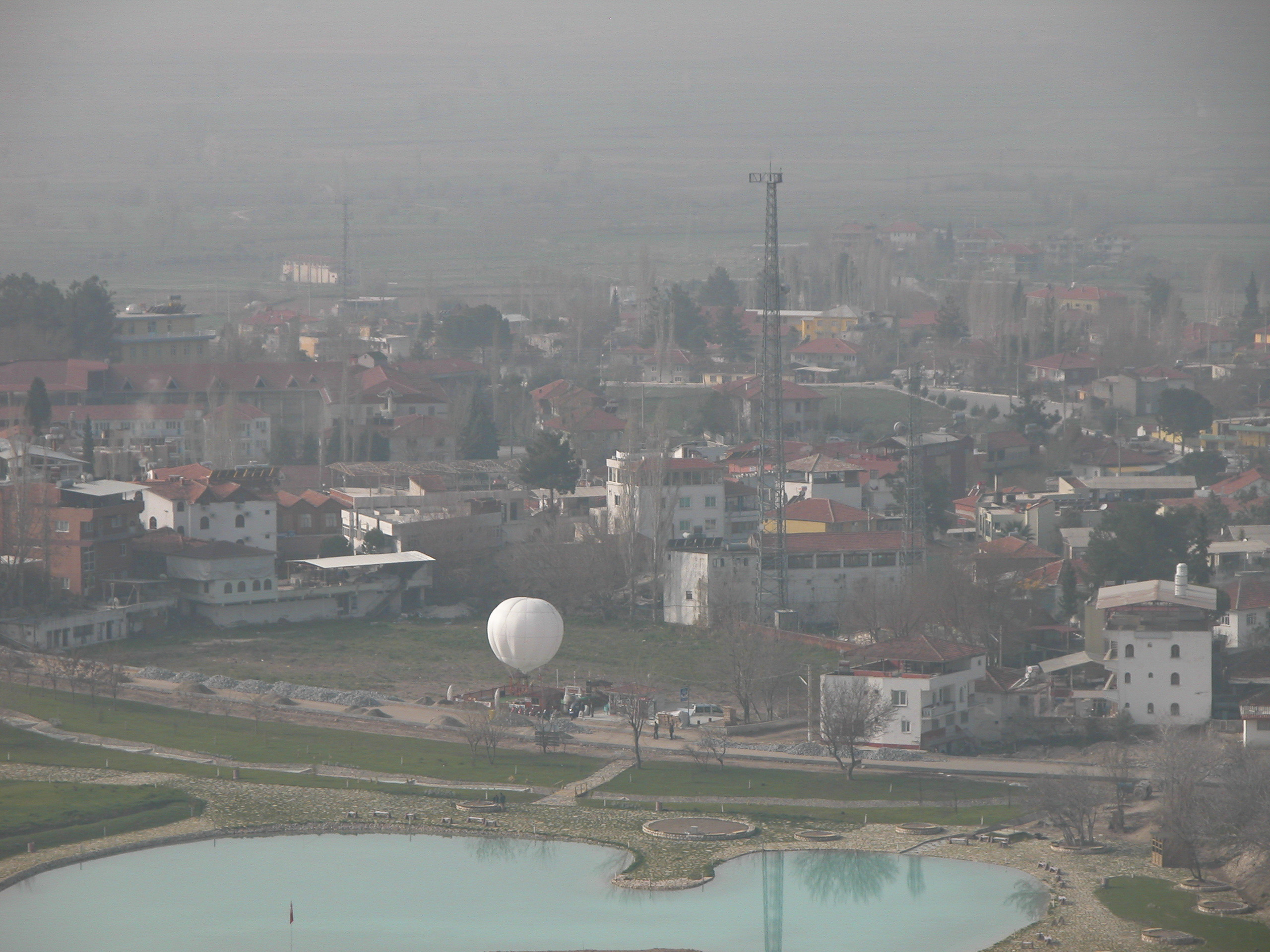
At the foot of the cotton castle lies the modern town of Pamukkale, where the residents spend their free time flying balloons over the cliffs.

The town at the foot of the cliffs is shrouded in mist.

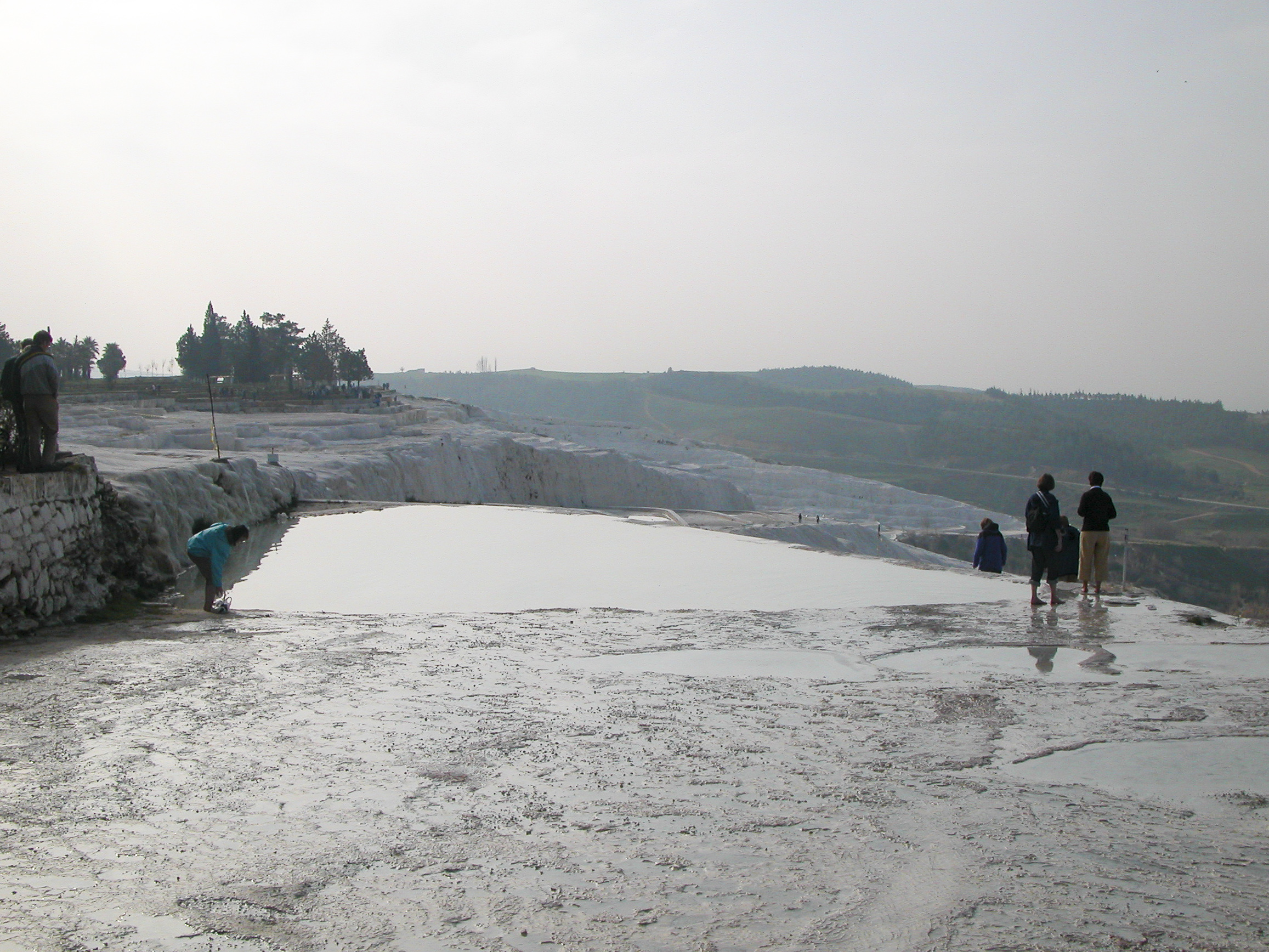
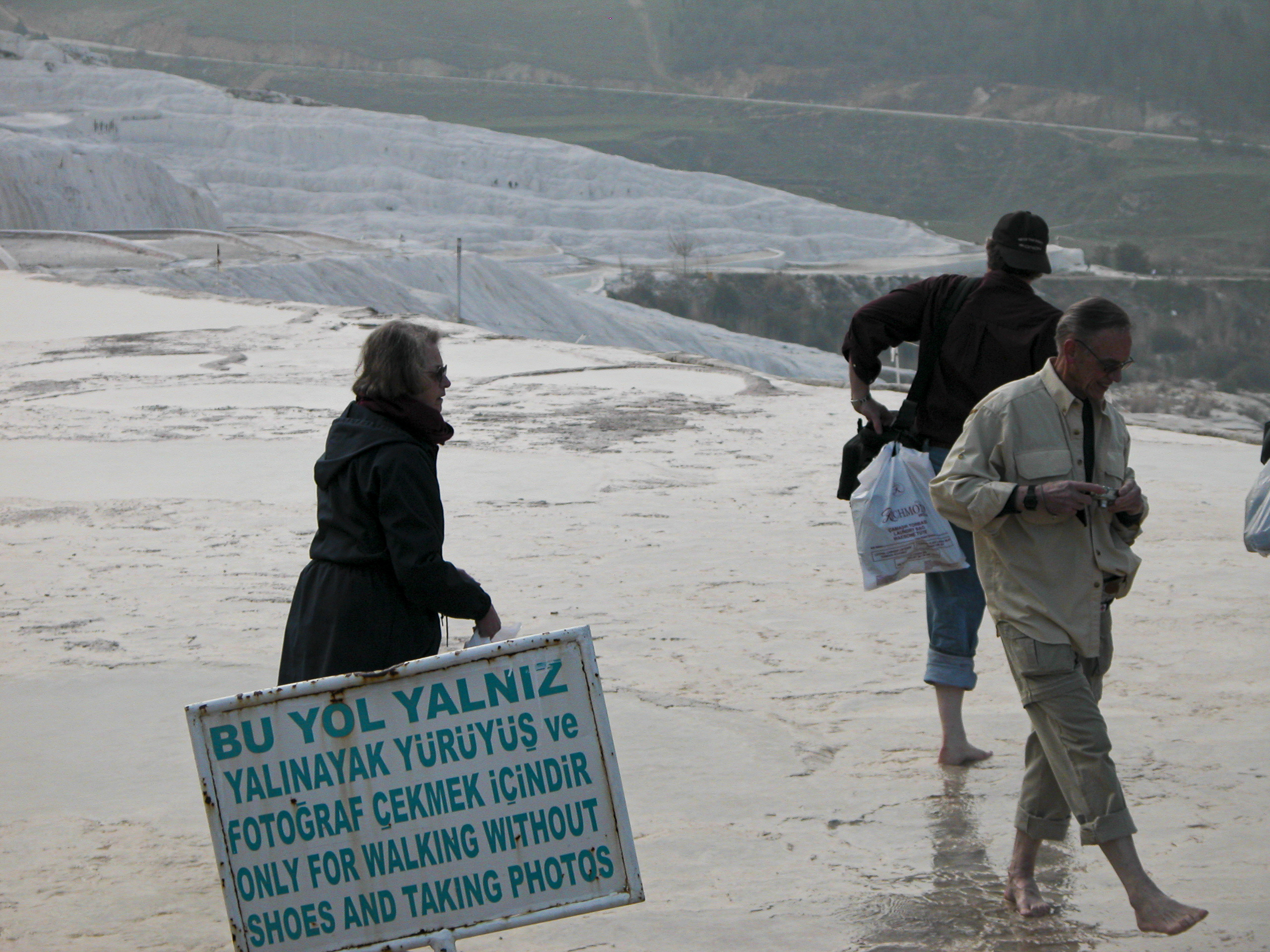
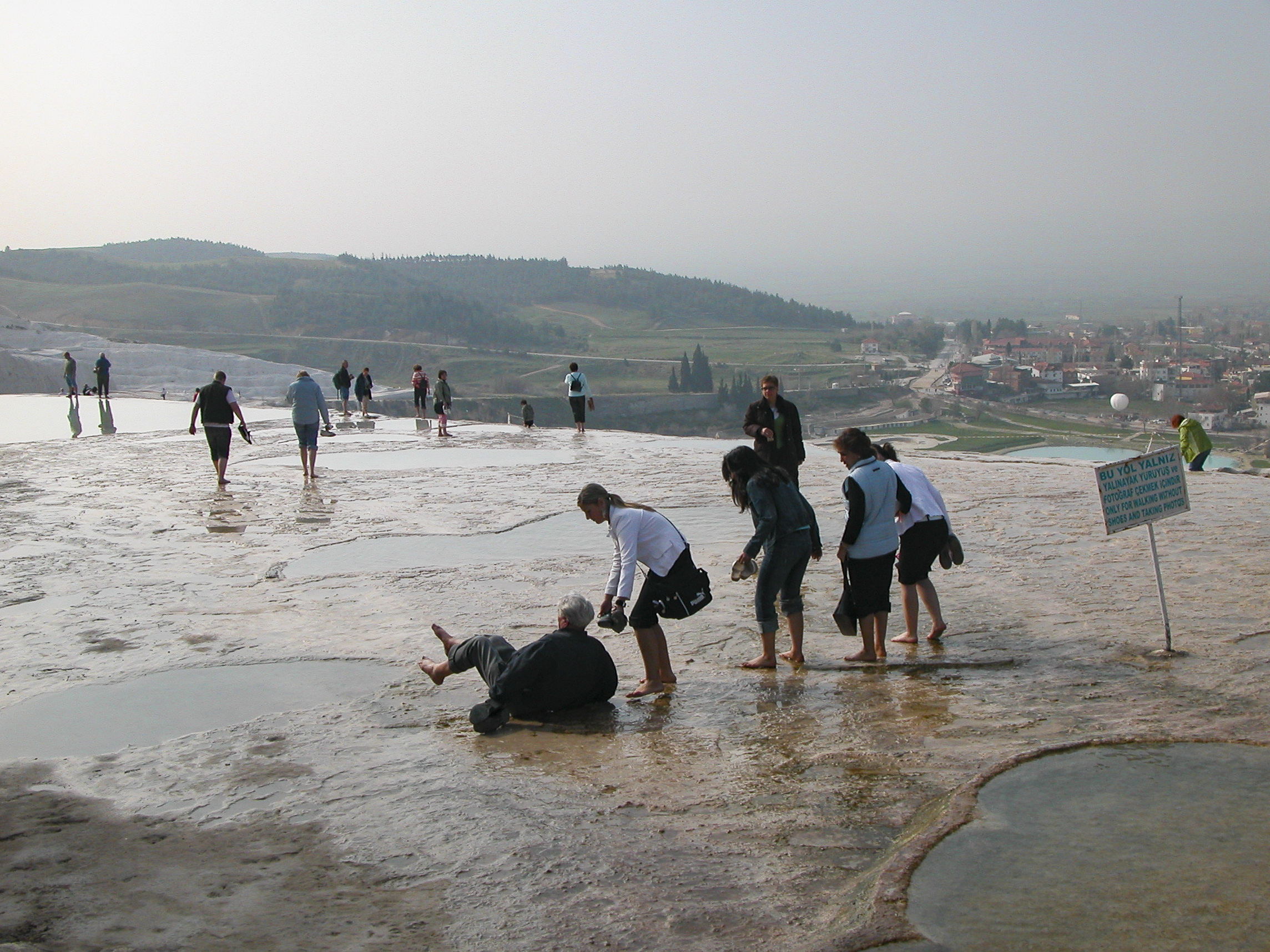
The water from the hot springs forms pools at the top of the cliffs, where you can take off your shoes and go wading. Most of us did just that. The seemingly placid waters posed hazards, however, as we shall see.

The morning air was chilly, but the waters were warm.

There was a path from the town up the hill to the wading pools, and some travelers came up that way.

Some travelers are taking advantage of the pathway which leads up the hill from the town to the wading pools.

Elouise and Chuck Mattox found the water to their liking, as did Rick Gering.

Chuck and Elouise Mattox wade in the pools of Pamukkale, where shoelessness is mandatory.

As noted above, the calcium carbonate suspended in the spring water initially precipitates out as a soft and very slippery gel. Insufficiently careful waders – and you had to be very careful to avoid this – soon discovered the hazard that lay in wait here.

The bottoms of the pools are quite slippery, and it’s easy to take a spill.

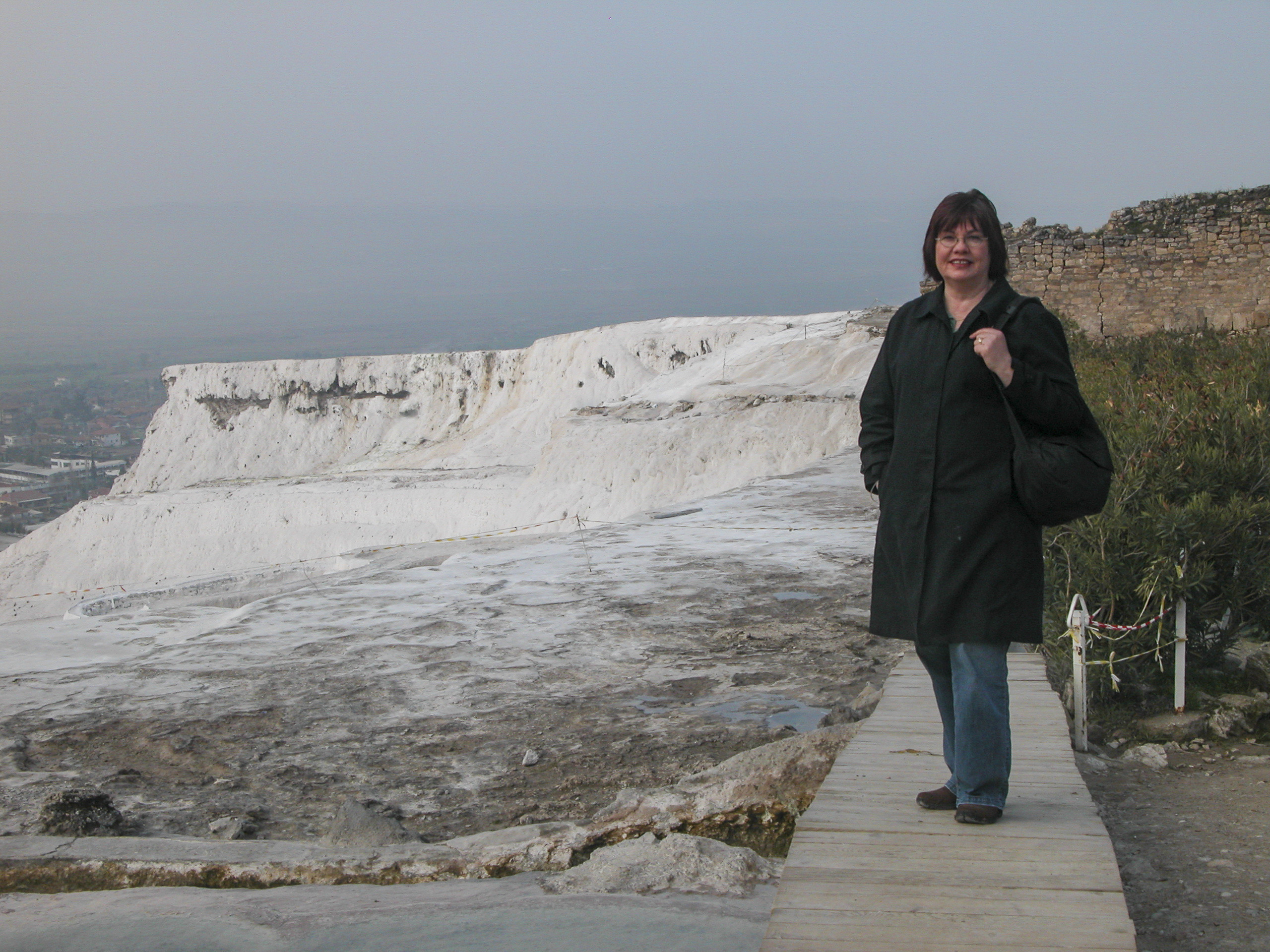
Sandie wisely declined to risk taking a spill and getting soaked in the wading pool, and posed demurely in front of the white cliffs.

Pamukkale means “cotton castle” in Turkish.

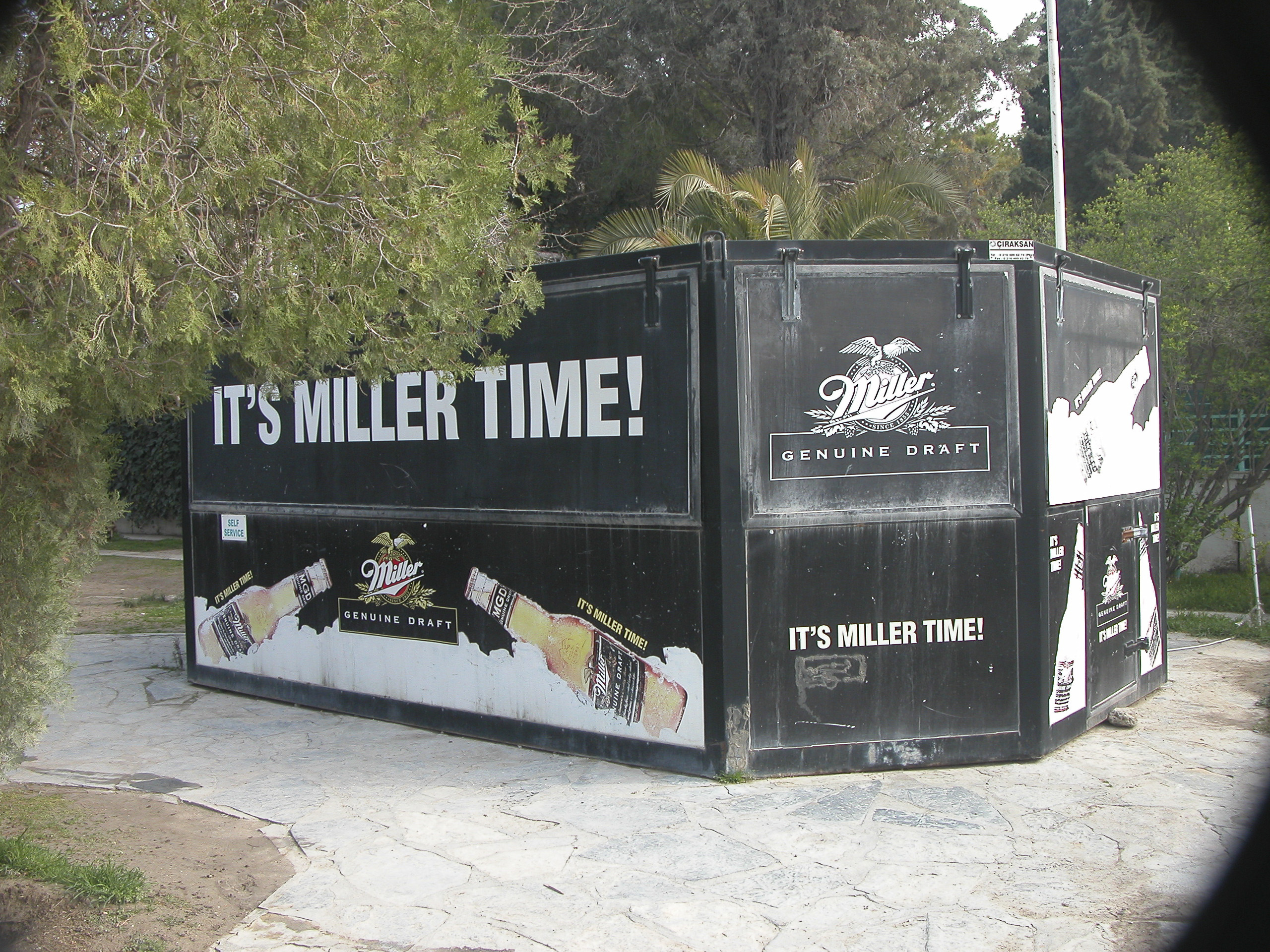
Turkey, of course, is an Islamic country, and Islam forbids the consumption of alcohol, so it was a bit of a surprise to me to encounter a billboard prominently displaying a beer ad next to the spa pools. But, as our guide Attila explained, the Turks believe that such strictures can be relaxed, provided it’s done with an appropriate dose of moderation. I should also note that the Turkish national spirit is raki, which is distilled from grapes, with a touch of anise. It is similar to the Greek beverage ouzo, but is said to be much stronger. Several people in our tourist group developed a taste for raki.

Even in an Islamic country, you can’t get away from beer billboards.
Categories
Turkey, March-April 2006

The Road to Pamukkale, March 26, 2006

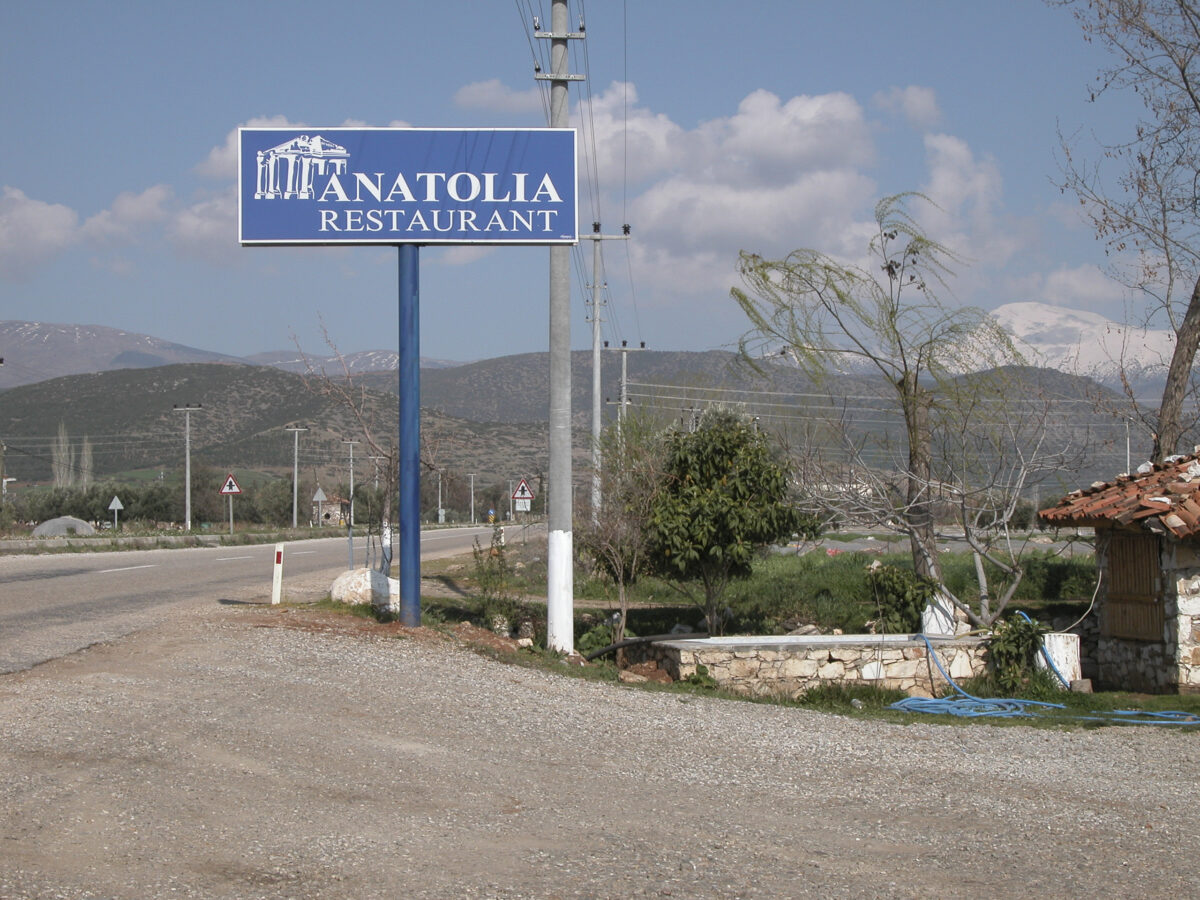
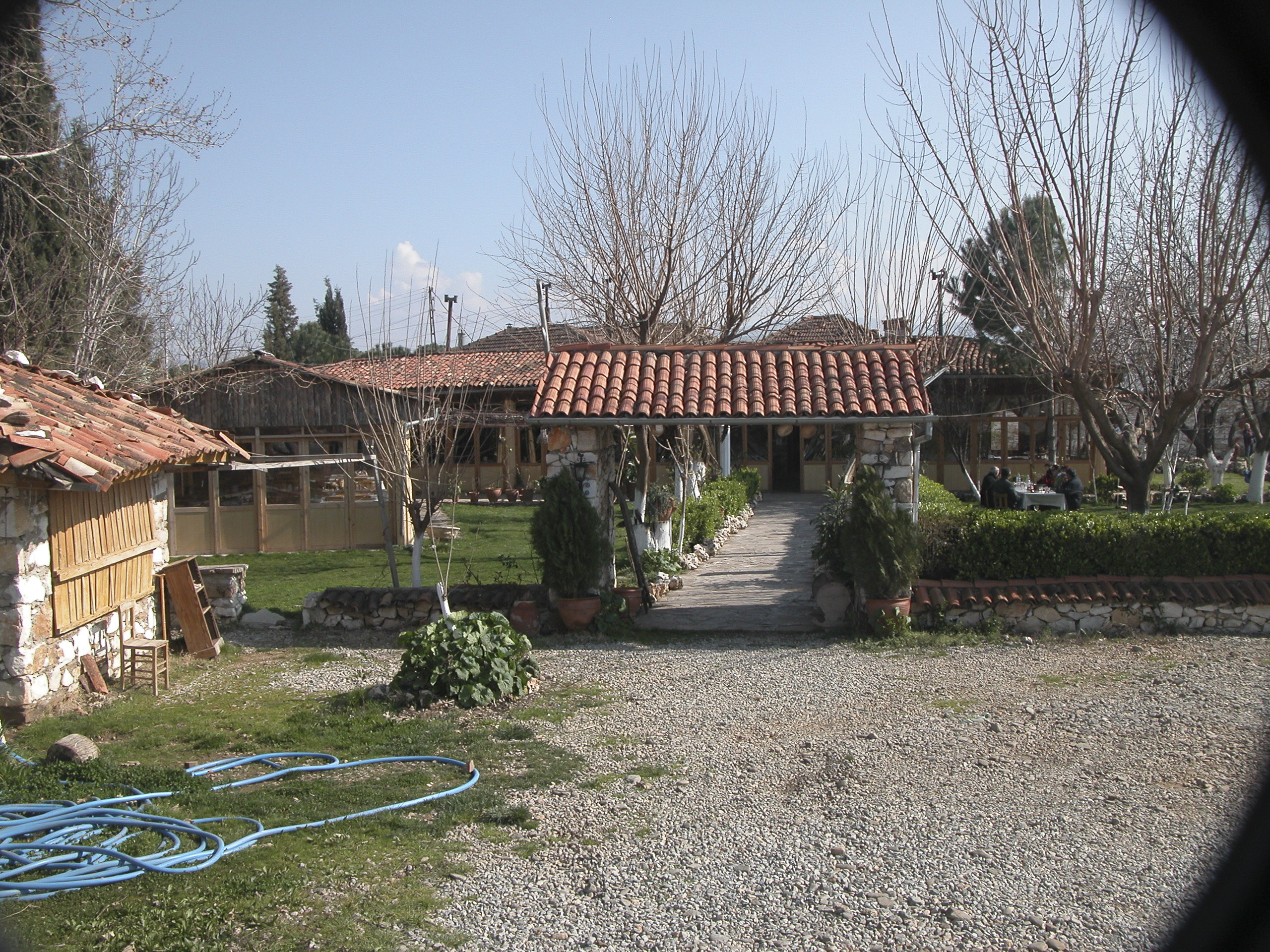
A long bus ride awaited us after our sojourn in Aphrodisias, and for that we needed the fortification of a sumptuous dinner, which was provided by one of the more memorable establishments I’ve visited, the Anatolia Restaurant in Geyre.

Entrance to the Dining Room.

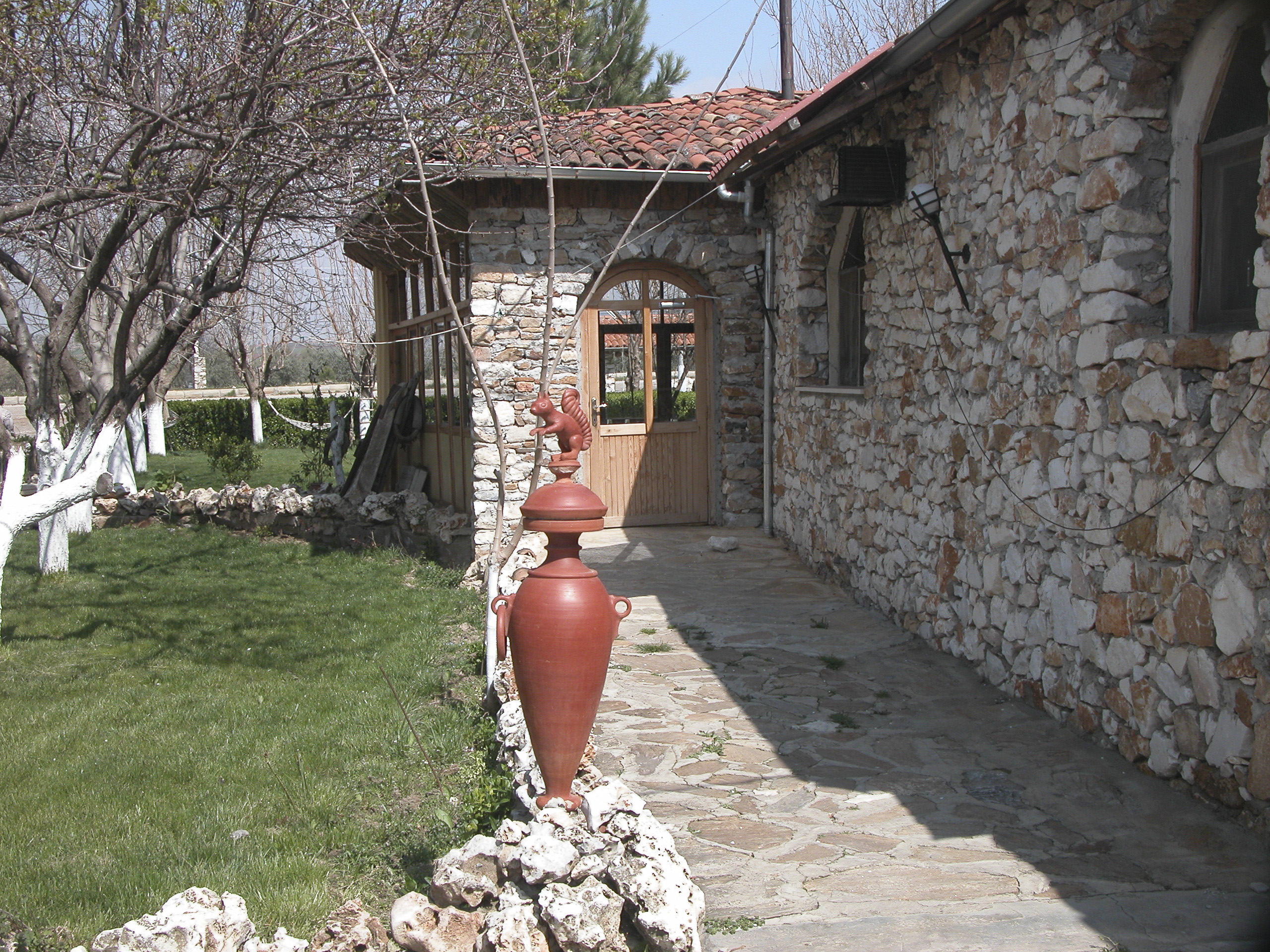
The exterior of the restaurant looked most promising – it appeared to be built of beautiful Carian marble and other rock native to the area, with a red tile roof, and was surrounded by trees, which were still mostly bare of leaves since it was as yet early in the spring – one can only imagine how the place looked in summer or autumn.

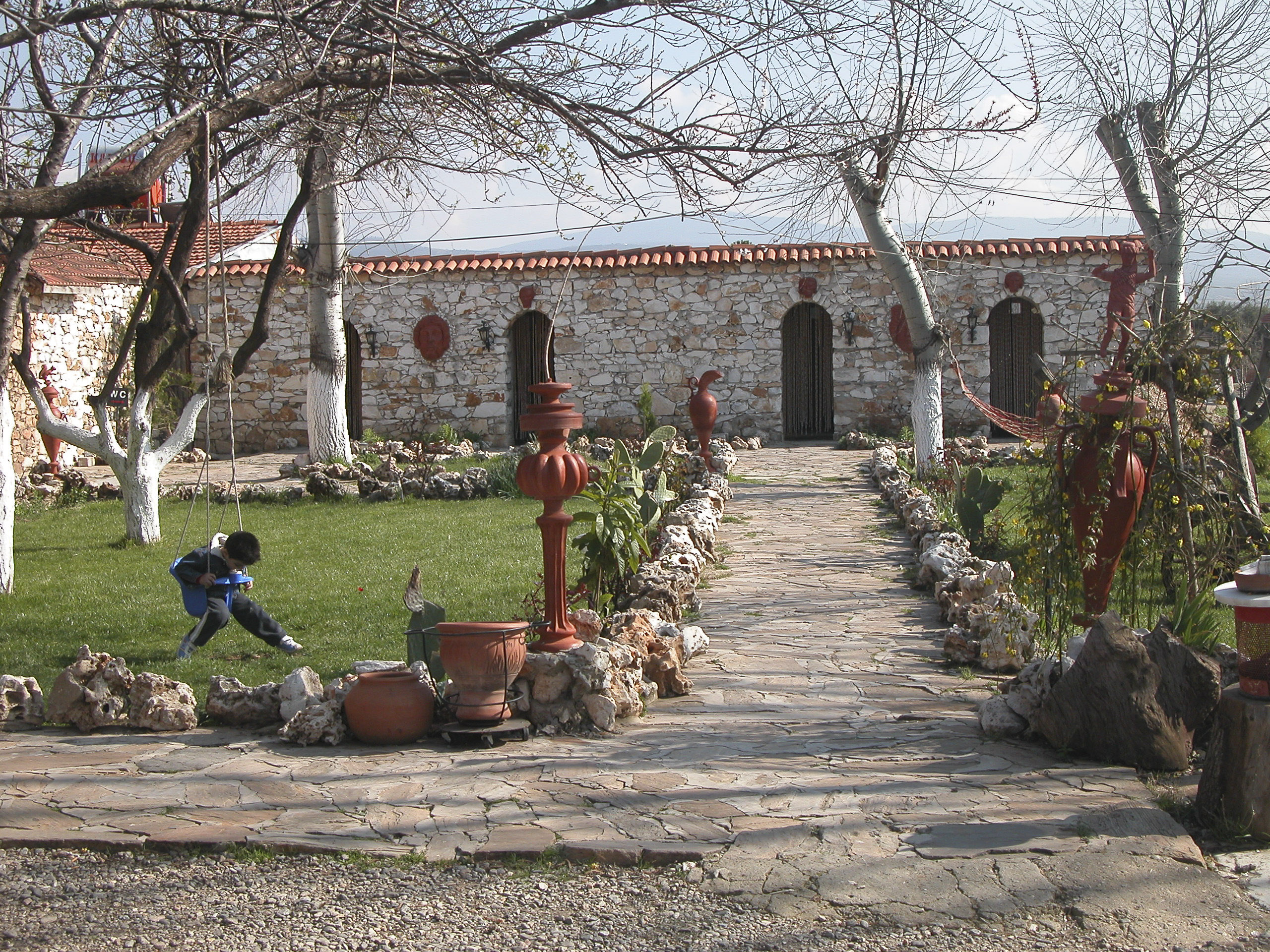
The side court of the restaurant, the entrance to the restrooms.
This lovely rock structure housed the rest rooms at Aphrodisias.

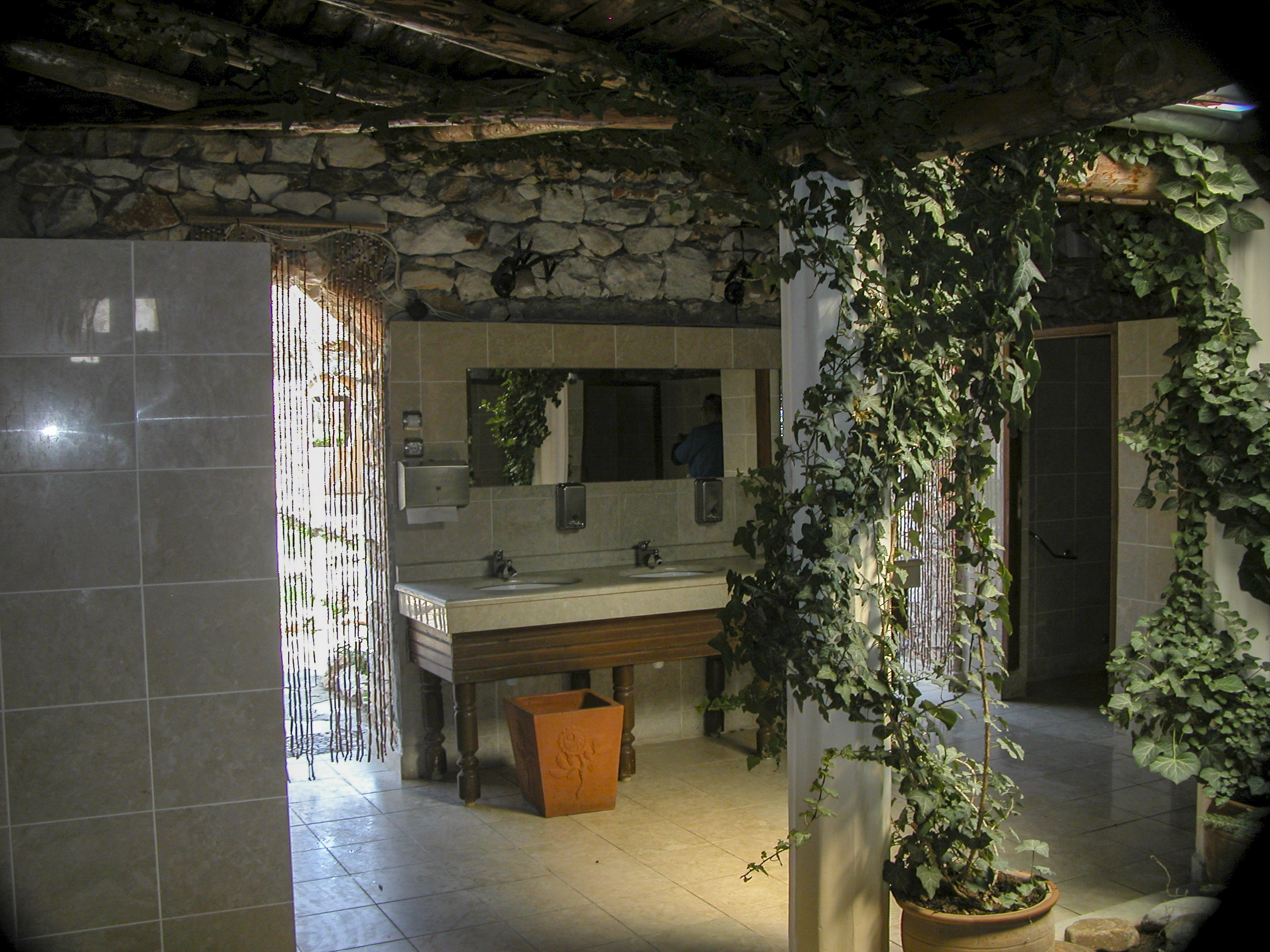
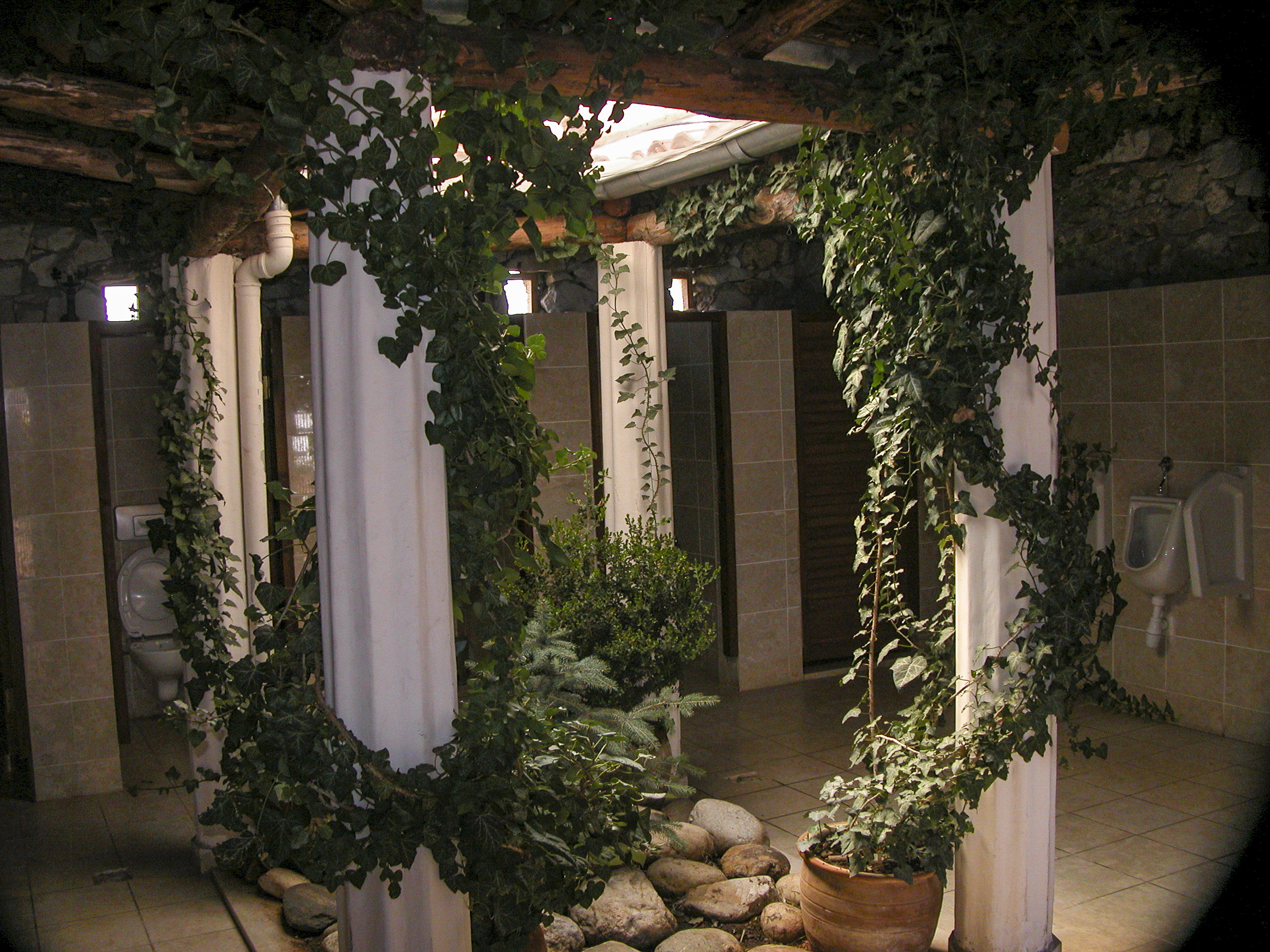
The rest rooms at the Anatolia deserve special mention – they were not only clean but also beautifully decorated.

The Men’s Room at the Anatolia Restaurant.

Liberal use of greenery helped to give the rest rooms a pleasant aspect.

Not only spiffy, but green too.

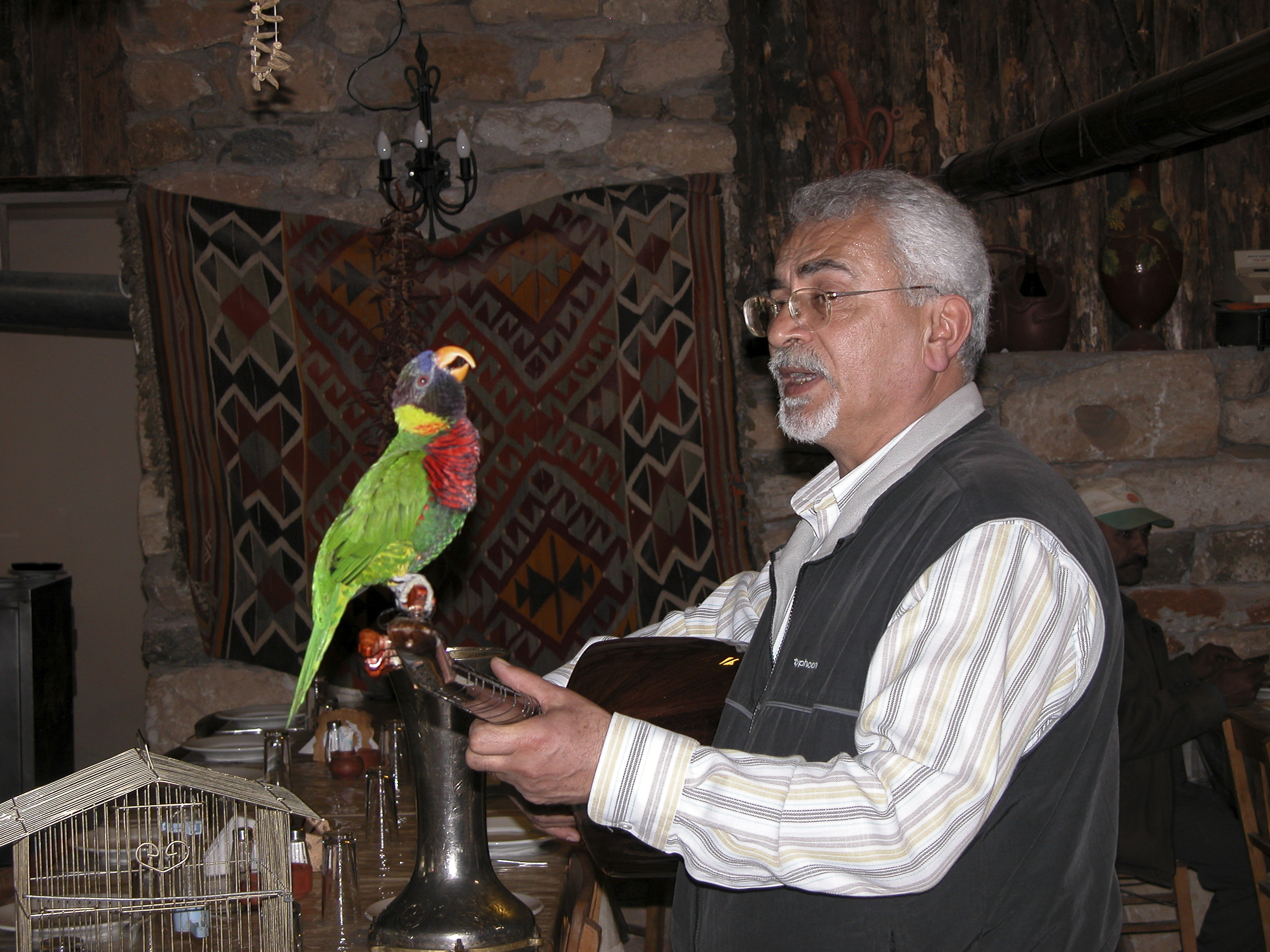
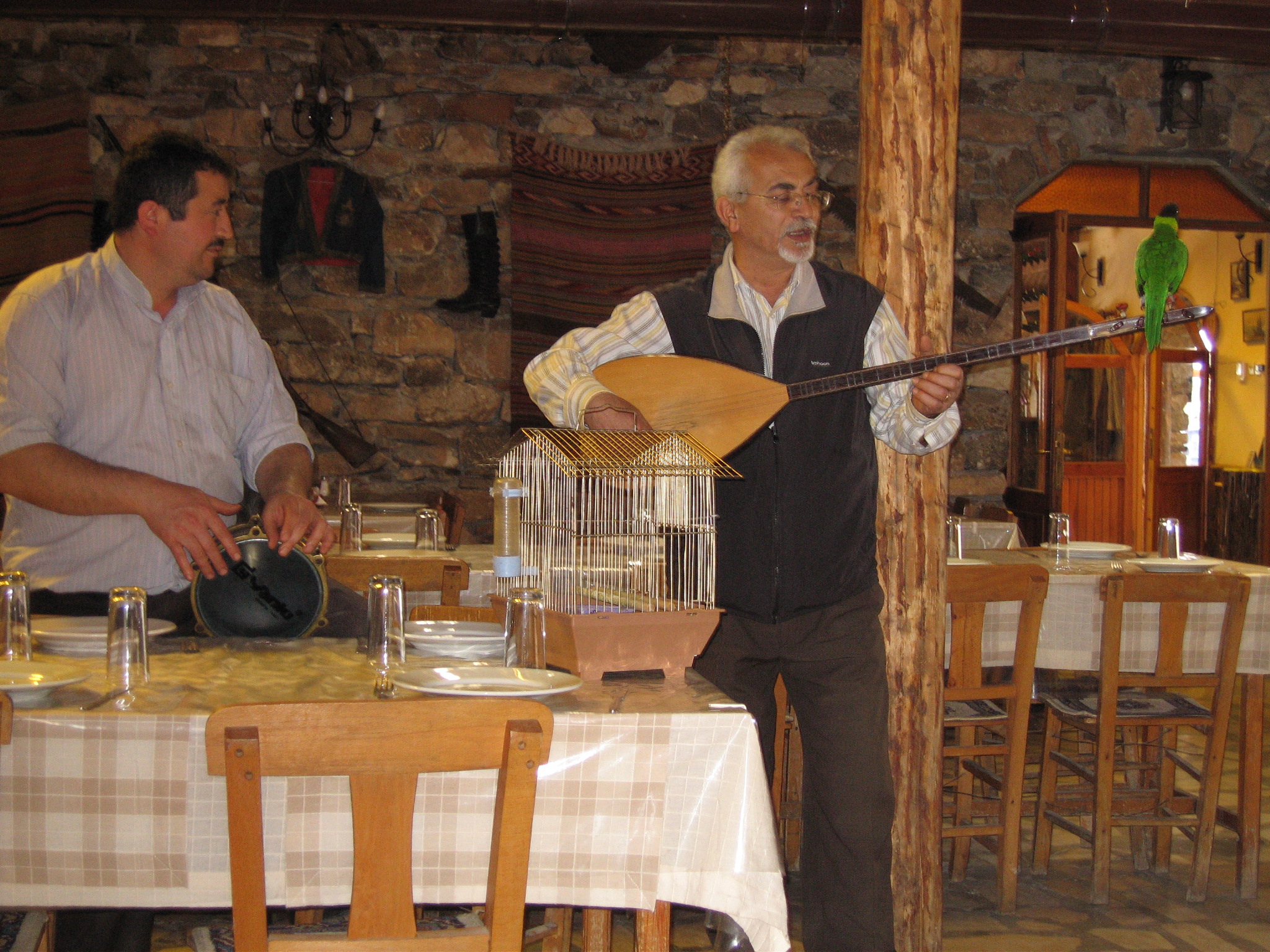
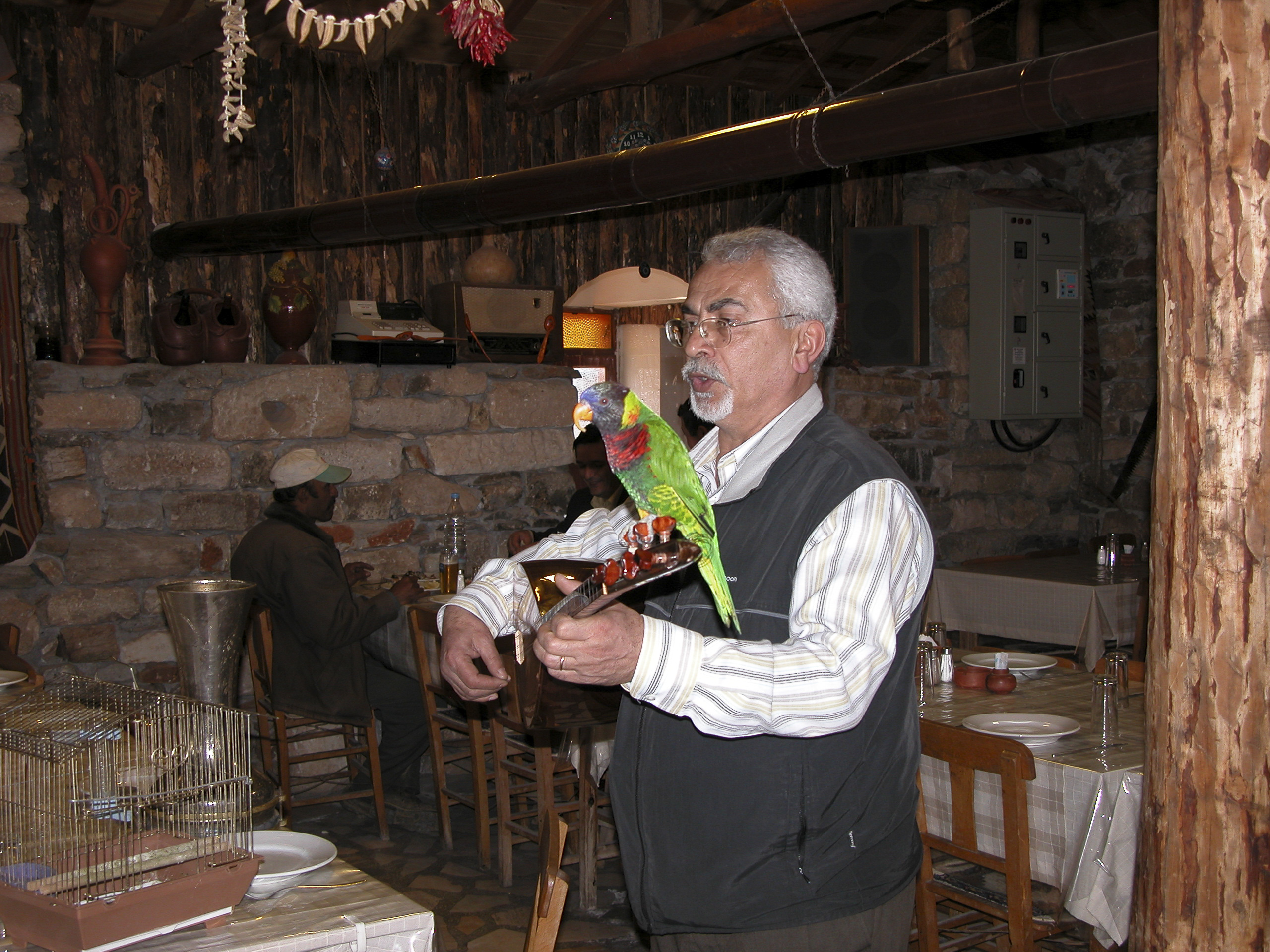
Dinner was a memorable feast, and not just for the food. The proprietor of the establishment – I presume he was the owner – put a lot of effort into making certain we were not only well-fed but also superbly entertained. I doubt whether he would have gone to such trouble if he were a mere employee. He regaled us with guitar playing and song as we dined.

The proprietor regaled us with guitar playing and song. The parrot sang back.

The star of the show, however, was the red-and-green parrot who sat on the guitar, and increasingly monopolized the action. In fact, it soon became clear that the parrot was the real proprietor of the restaurant and the human was just a puppet who danced on the parrot’s strings.

The parrot also played the guitar.

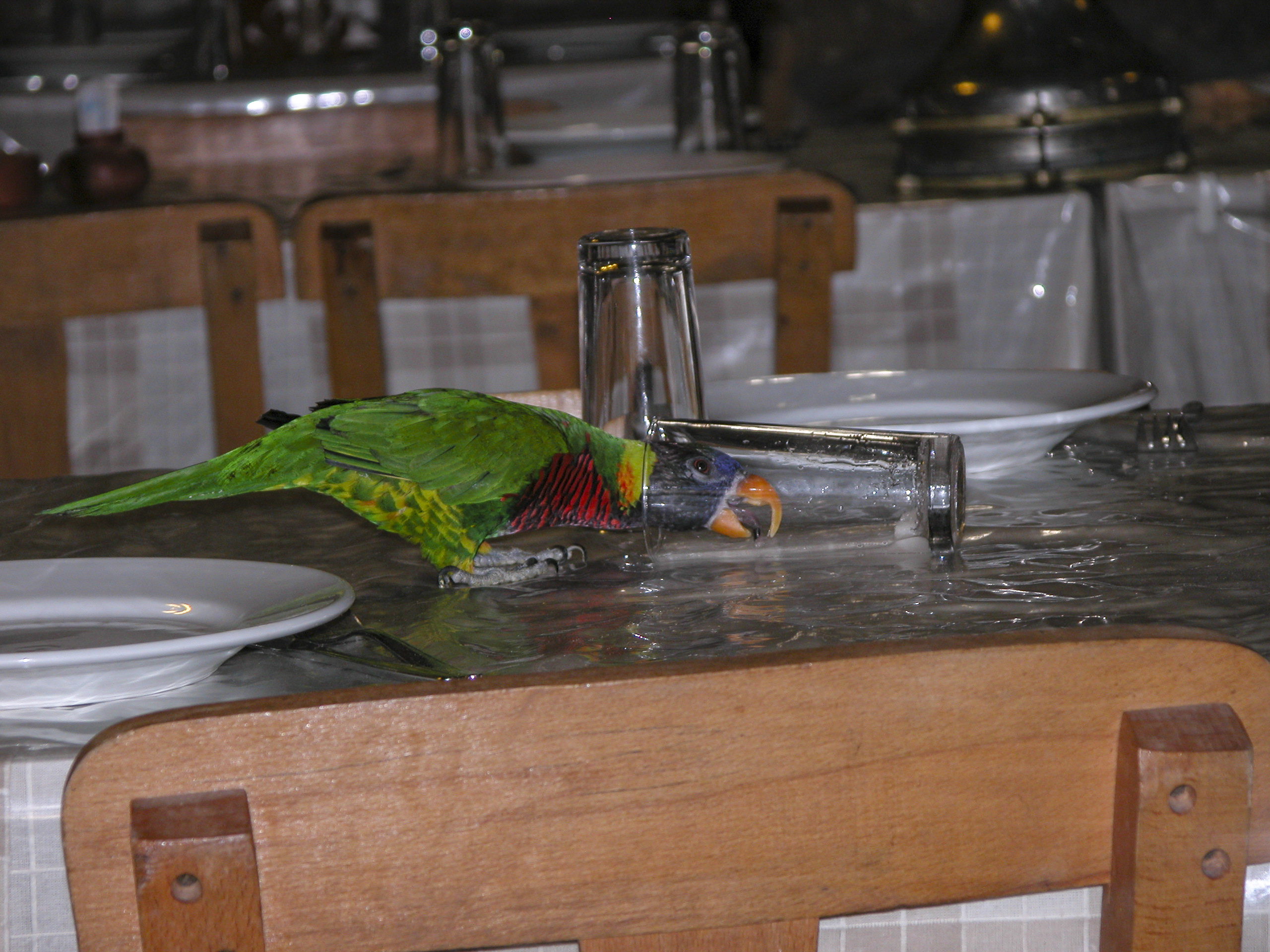
After the performance, the parrot slaked its thirst by upsetting glasses of wine on the table and guzzling their contents.

The parrot was not shy about claiming his share of the booze.

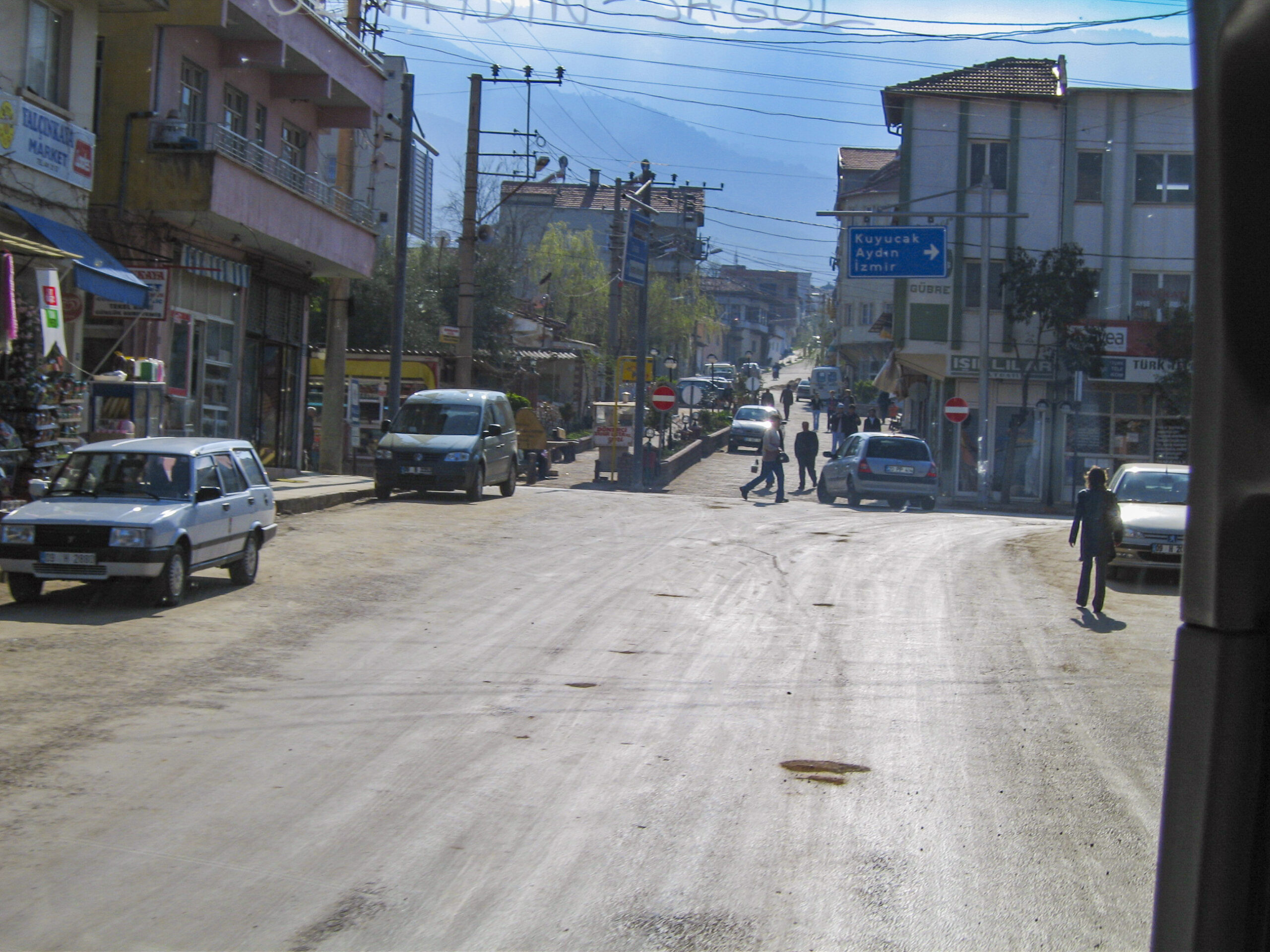
It was still daylight when we boarded the bus and continued on our way to Pamukkale. I think most of us, tired by the hike through Aphrodisias and sated with plenty of chow, slept most of the way; but Sandie did manage to get a couple of snapshots from the bus. This one she took passing through a sizeable town – I’m not sure which one, because I don’t remember exactly what route we took to get to Pamukkale – but I think it might have been Karacasu.

Provincial town on the way from Aphrodisias to Pamukkale.

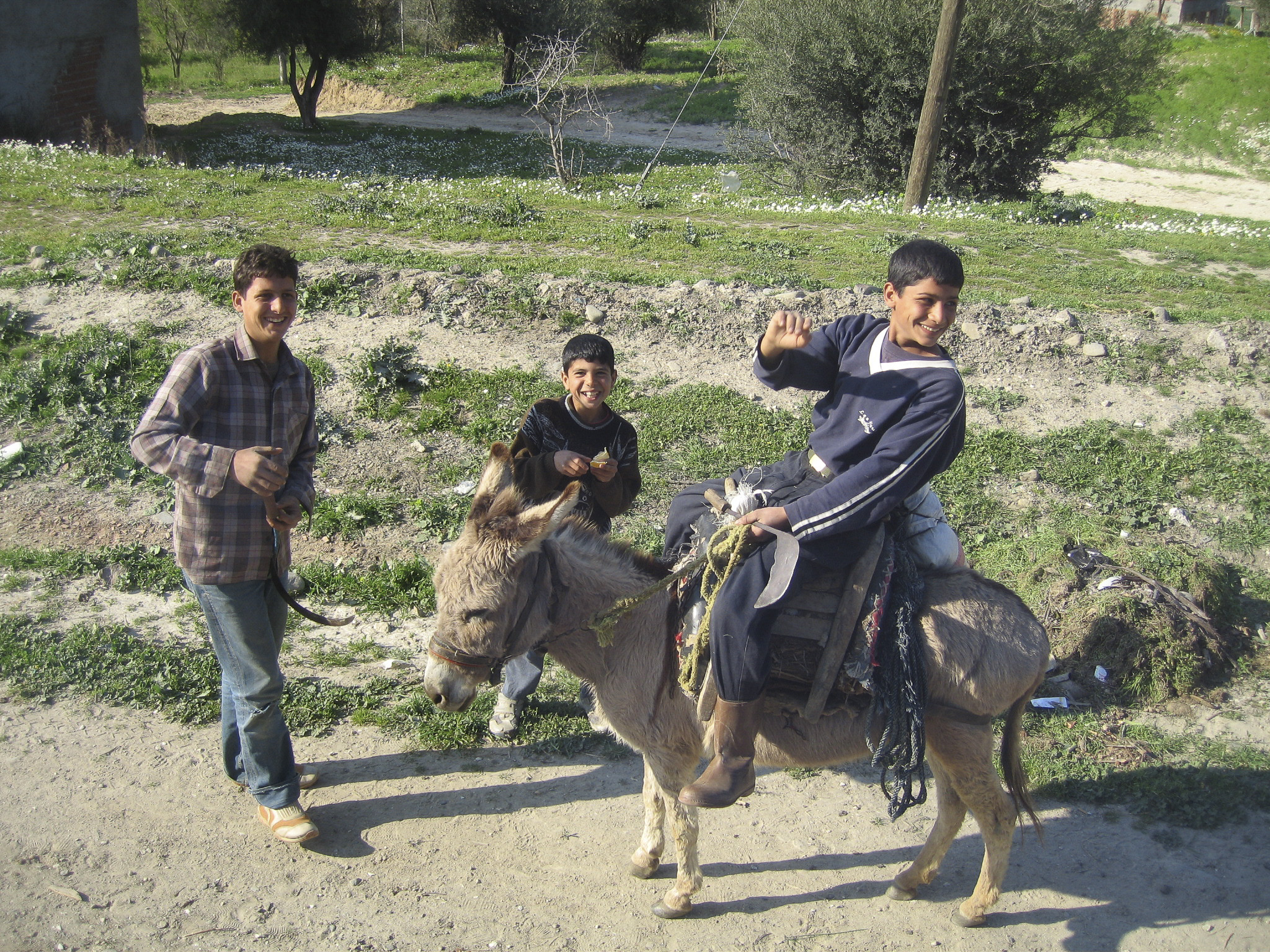
Sandie also took this picture of three smiling Turkish lads at the side of the road, one of them riding a little donkey.

Turkish kids and a donkey, somewhere between Aphrodisias and Pamukkale.

We arrived in Pamukkale late in the evening; it was too dark, and I was too tired, to take any pictures, and we had to get up early in the morning to see Hierapolis. The hot-spring baths of the spa beckoned, and many of our party were able to enjoy them, but I was too benumbed and missed my chance. Our hotel was luxurious, the beds were comfy, and we quickly fell asleep.

Categories
Turkey, March-April 2006

Aphrodisias – March 26, 2006

On March 26 our tour group boarded a bus which took us into the interior of Turkey.  Our ultimate destination that day was the spa of Pamukkale, but along the way we took an excursion to the site of Aphrodisias, the city of Aphrodite, Greek goddess of love.
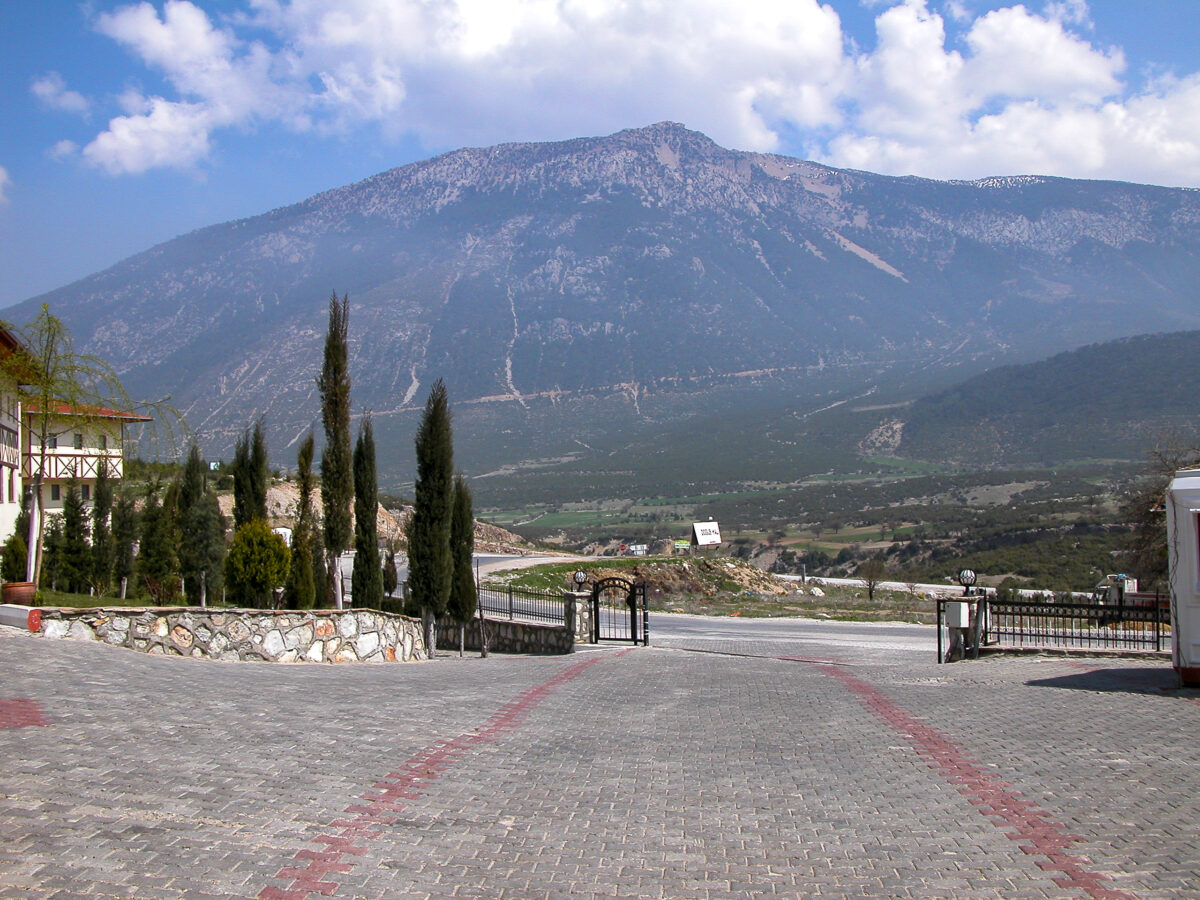
Aphrodisias was the capital of the Roman province of Caria.  Among other things Caria was famous for its quarries of white and blue marble. Not surprisingly, favored with this advantage, Aphrodisias became famous for its school of sculpture; but it was also noted as a center of pagan philosophy into the late 5th century CE.
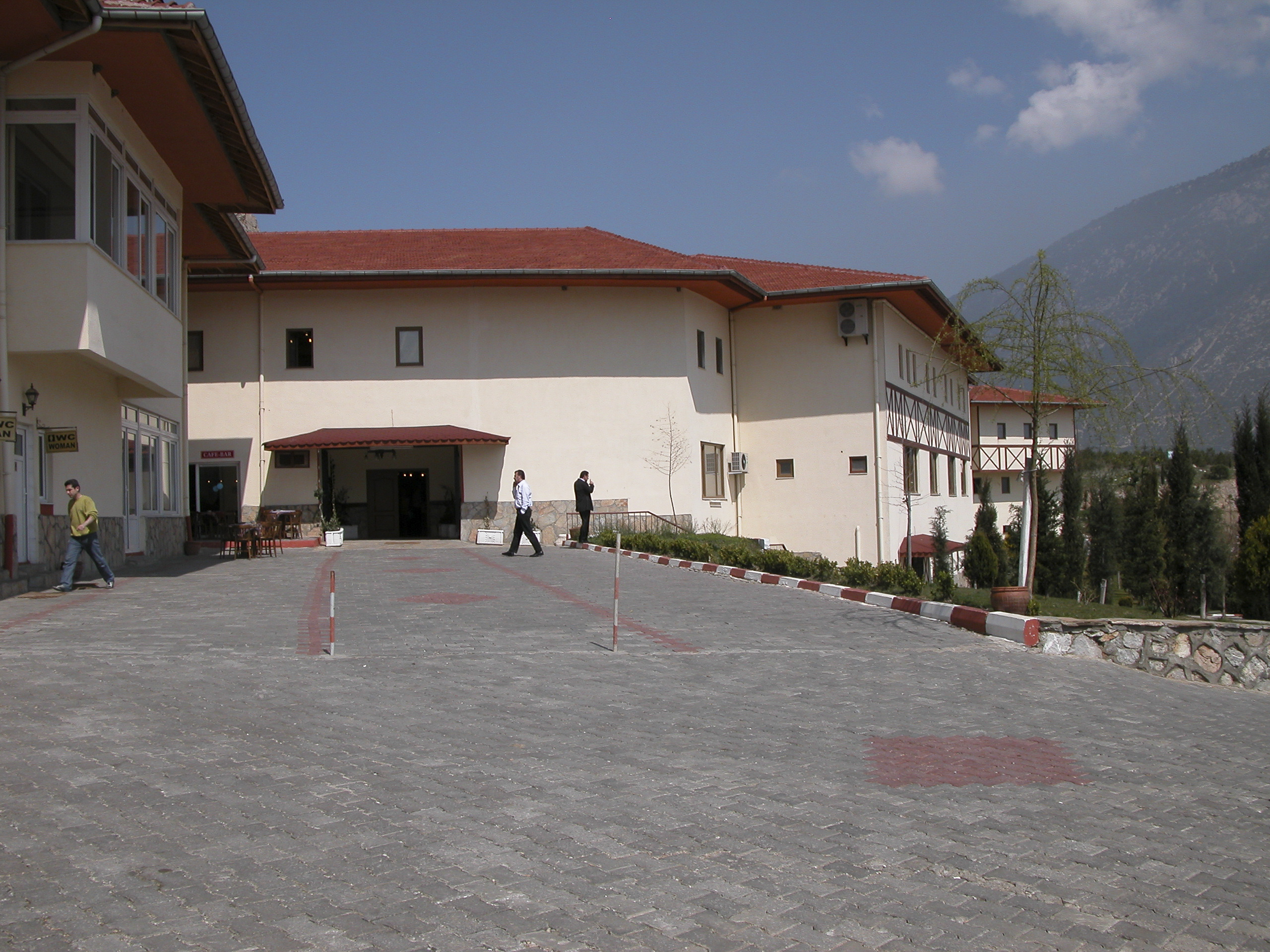
In 614 a mighty earthquake wrecked Aphrodisias, and it never recovered.  Also, by that time the Roman Empire had converted to Christianity, and the city was renamed Stauropolis, City of the Cross, in an attempt to erase the old pagan associations.  Later still, by the 8th century CE, it became known by the name of the province, Caria, and after the region came under Turkish control in the 13th century, this eventually morphed into the Turkish name Geyre. 

Formal excavations at the site of ancient Aphrodisias began in 1904, but really got underway in earnest in the 1960s, led by the Turkish archaeologist Professor Kenan Erim of New York University, who supervised the work there until his death in 1991. 

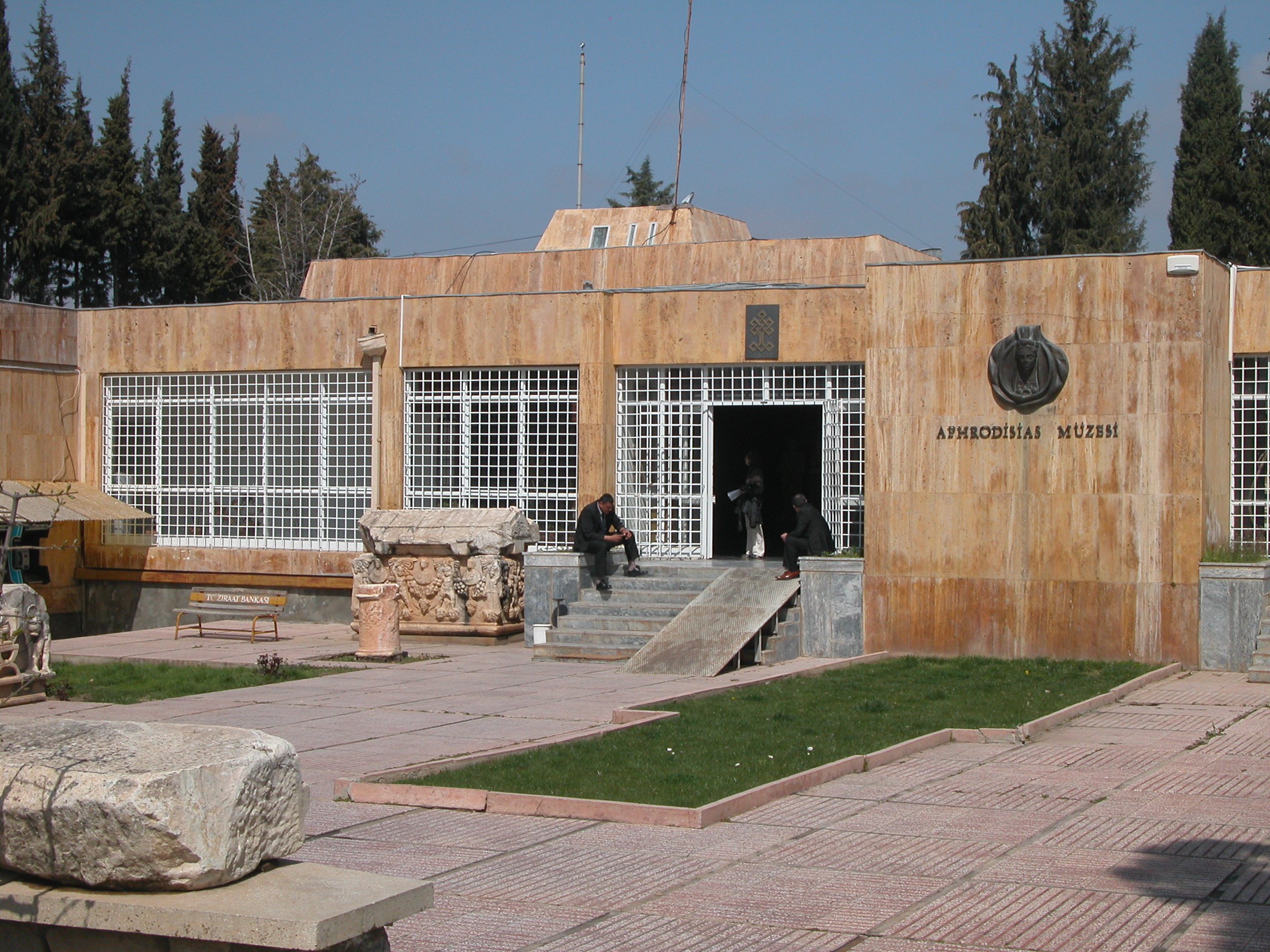
Many of the sculptures and other artifacts recovered by excavations are housed in the on-site museum, shown below.  However, we left the museum for last and headed out to tour the city first.

The Aphrodisias Museum.

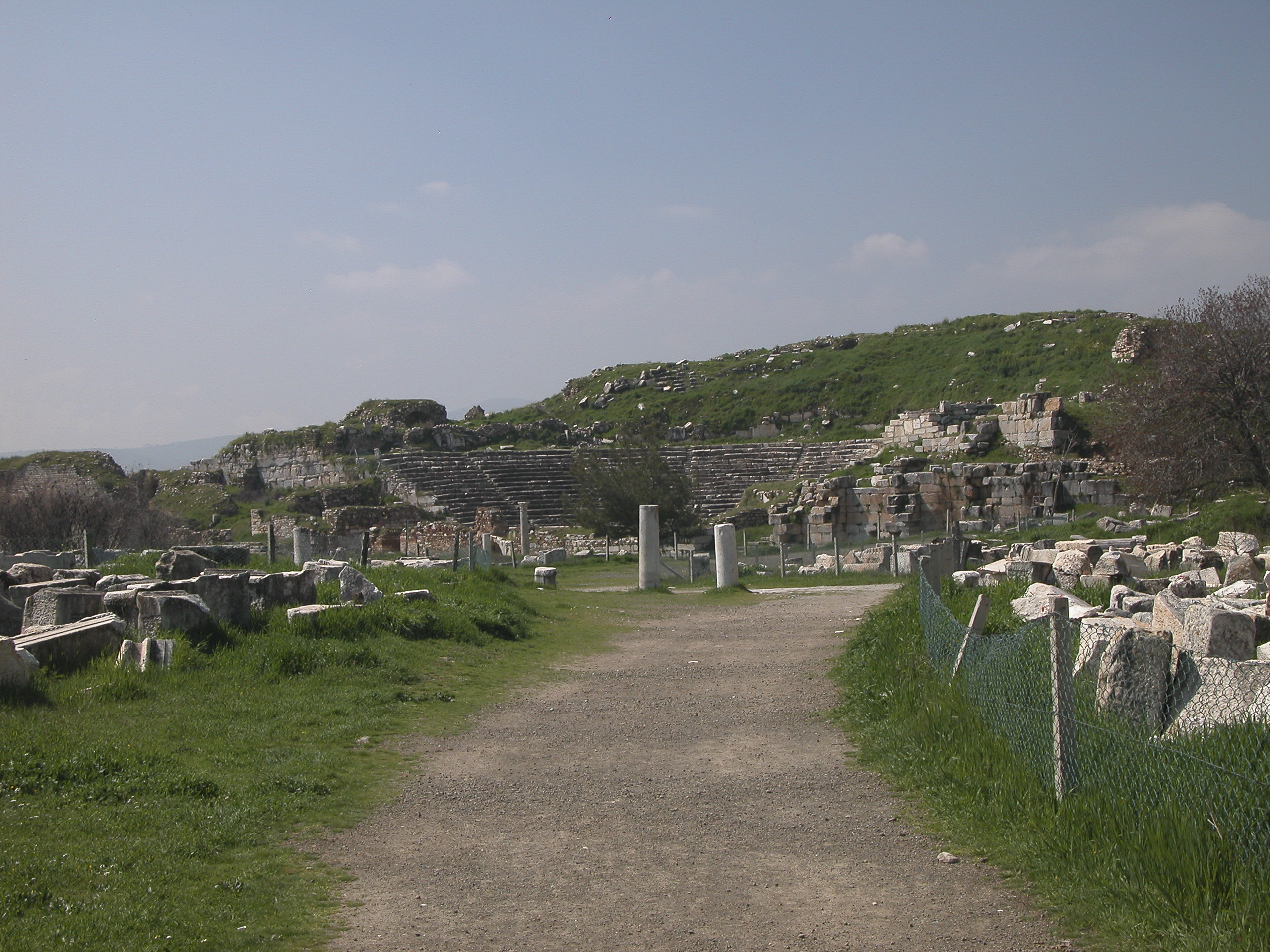
Our path first us first to the Amphitheater, which was built into the side of the Acropolis.

Looking west. The Amphitheater was built into the side of the Acropolis.

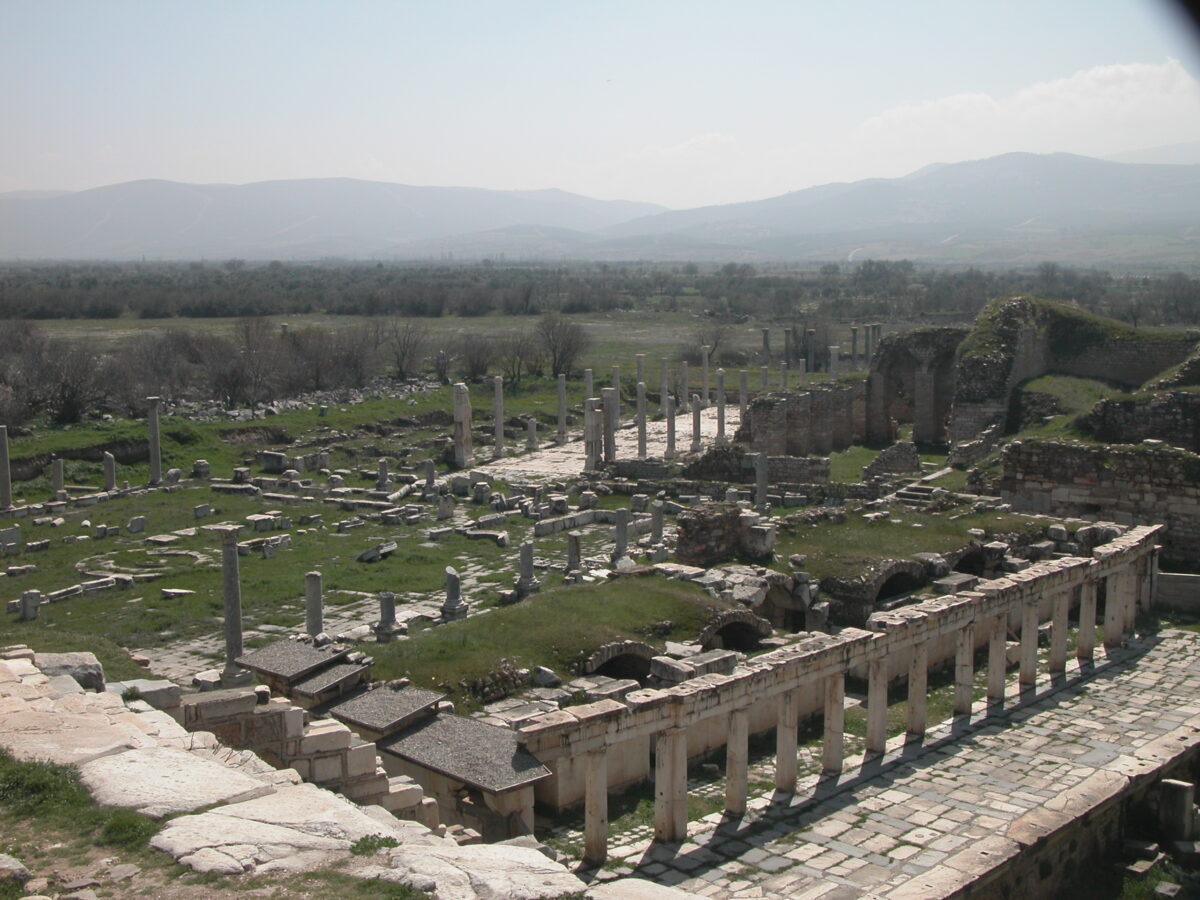
Next to the Amphitheater we encountered the South Agora and the Baths of Hadrian. The Baths of Hadrian, built across the west end of the South Agora, were massively constructed from large tufa-like blocks faced with marble veneer and consist of five great barrel-vaulted chambers, with an imposing colonnaded court in front.

Looking toward the South Agora and the Baths of Hadrian; the Amphitheater is off to the right.

Aphrodisias is pleasantly situated amidst groves of trees and flowering bushes. As it was only the beginning of spring in Anatolia, the trees were mostly still bare, and just a few of them were starting to come into bloom.

A tree on the north side of the Acropolis was just starting to bloom in the early spring.

The Amphitheater was built in the late first century BC under the patronage of Gaius Julius Zoilus, a native of Aphrodisias who had become a slave of Julius Caesar but was freed by his heir Octavian. Returning to his birthplace a wealthy man, Zoilus initiated a vast building program, of which the Amphitheater was one of the first fruits. Zoilus also influenced the city’s leadership to support Octavian in his struggle with Mark Antony for mastery of Rome, thus securing Octavian’s lasting favor in the form of financial privileges that ensured the city’s subsequent prosperity.

A view of the Amphitheater from the top right.

The amphitheater had a large structure behind the stage which originally consisted of 3 stories, only one of which has been restored.

Remains of the amphitheater’s stage building.

The Amphitheater was severely damaged by earthquakes in the 7th century CE. Later, the local inhabitants built cottages on top of the cavea (seating section), which became the village of Geyre, but when excavations began in 1966 the entire village was relocated about a mile away.

The cavea (seating section).

Chuck Mattox took the visit to the Amphitheater as an occasion to ponder the ephemerality of human creations.

Chuck Mattox on the stage of the Aphrodisia Amphitheater.

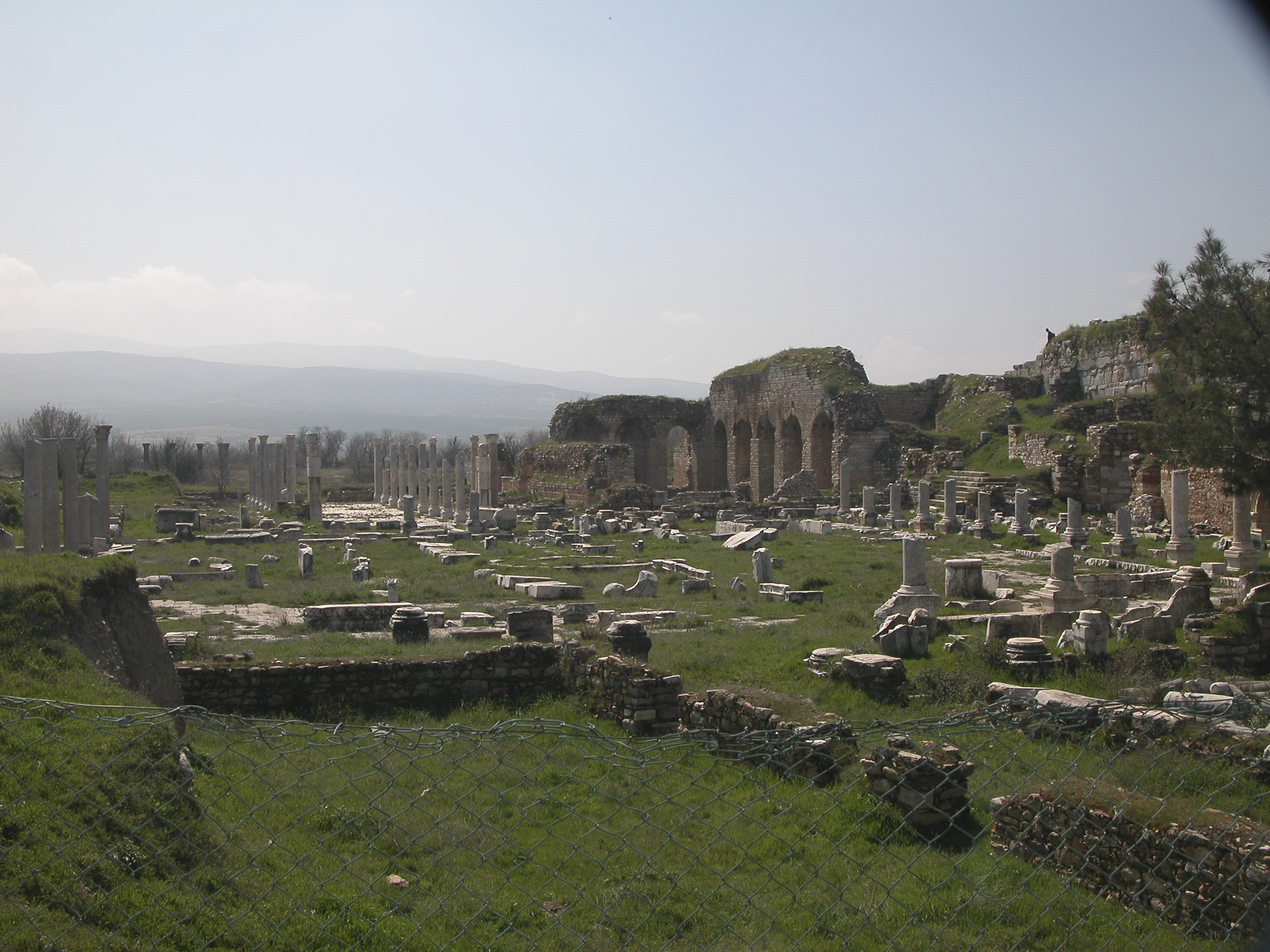
On the north side of the Acropolis, opposite the Amphitheater, lay the North Agora, a large public square of 202 by 72 meters, originally enclosed by stoas (porches) on all sides. Parts of the south and east stoas have remained standing since antiquity, and the north stoa was partially uncovered in excavations in the 1960s. Archaeologists believe the North Agora was the original center of Hellenistic Aphrodisias.

The North Agora.

Begun in the reign of Tiberius (14 to 37 CE), for whom it was named, the Portico includes a large pool, 175 meters long, 25 meters wide and 1 meter deep, where devotees of Aphrodite could frolic in the nude and disport themselves in wild orgies. (I made up that last part, but the measurements of the pool are real.)

The Portico of Tiberius.

Near the Portico of Tiberius stood the Sebasteion, a product of the building program of Zoilus, dedicated to his patron Octavian/Augustus, the first Roman Emperor. Sebasteios is the Greek form of the Latin name Augustus.

Members of our tour group check out the Sebasteion.

Actually, the Sebasteion was jointly dedicated to Augustus and Aphrodite, the patron goddess of Aphrodisias. There was a well-known connection here: the Emperor Augustus, as nephew and adopted son of Julius Caesar, was a member of the Julian family, which claimed descent from the goddess Venus, the Roman name for Aphrodite.

Sandie strolls by the Sebasteion.
Al Treder and Jim Windlinger take a break at the ruins of the Sebasteion.
Corner detail of the Sebasteion, showing some of the intricate stonework.

Remember, I mentioned above that the village of Geyre, which had been built on the Acropolis, was relocated after excavations at Aphrodisias began in 1966? Here you can see the relocated village, over the ruins of the Sebasteion.

The village of Geyre, relocated 2 km to the west after excavations began in 1966, is seen in the background.

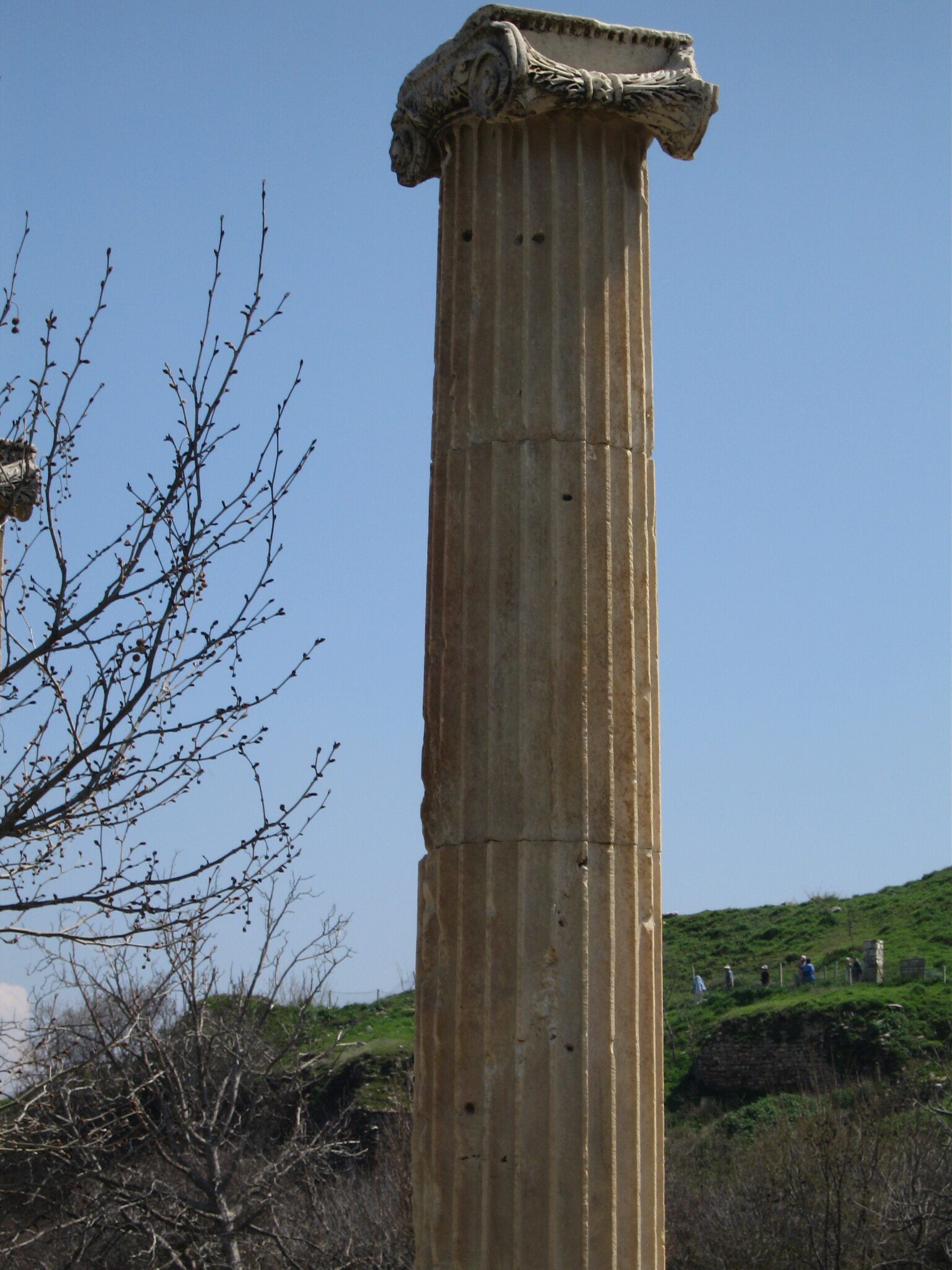
I’m not an architectural expert, but I remember that there are three styles of column capitals inherited from the ancient world – Doric (simple), Ionic (a bit more complicated) and Corinthian (sort of baroque). Aphrodisias had all of them. Here’s one in the Ionic style.

A column in the Ionic style.

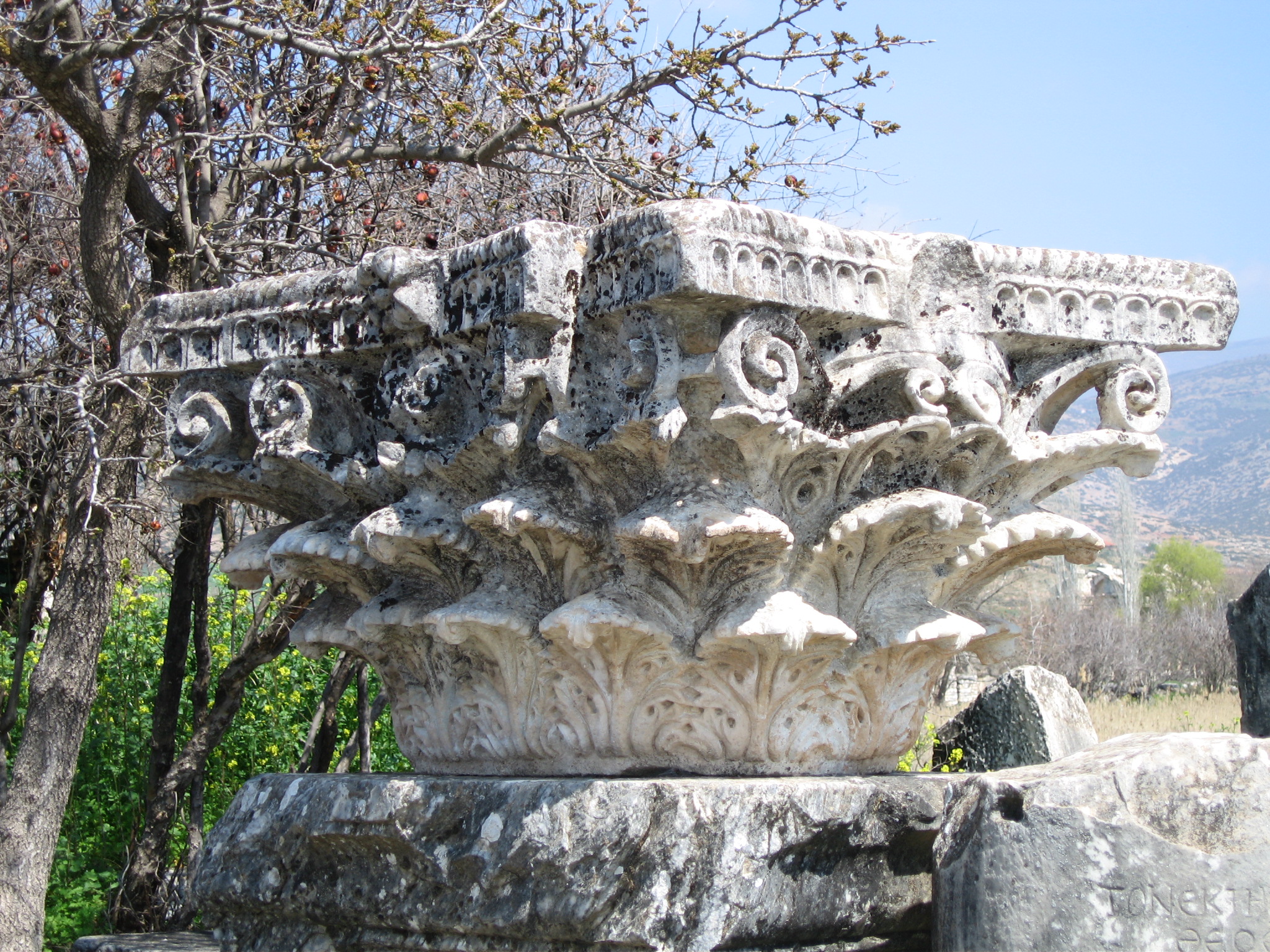
And here’s a column capital in the Corinthian style.

A column capital in the Corinthian style.

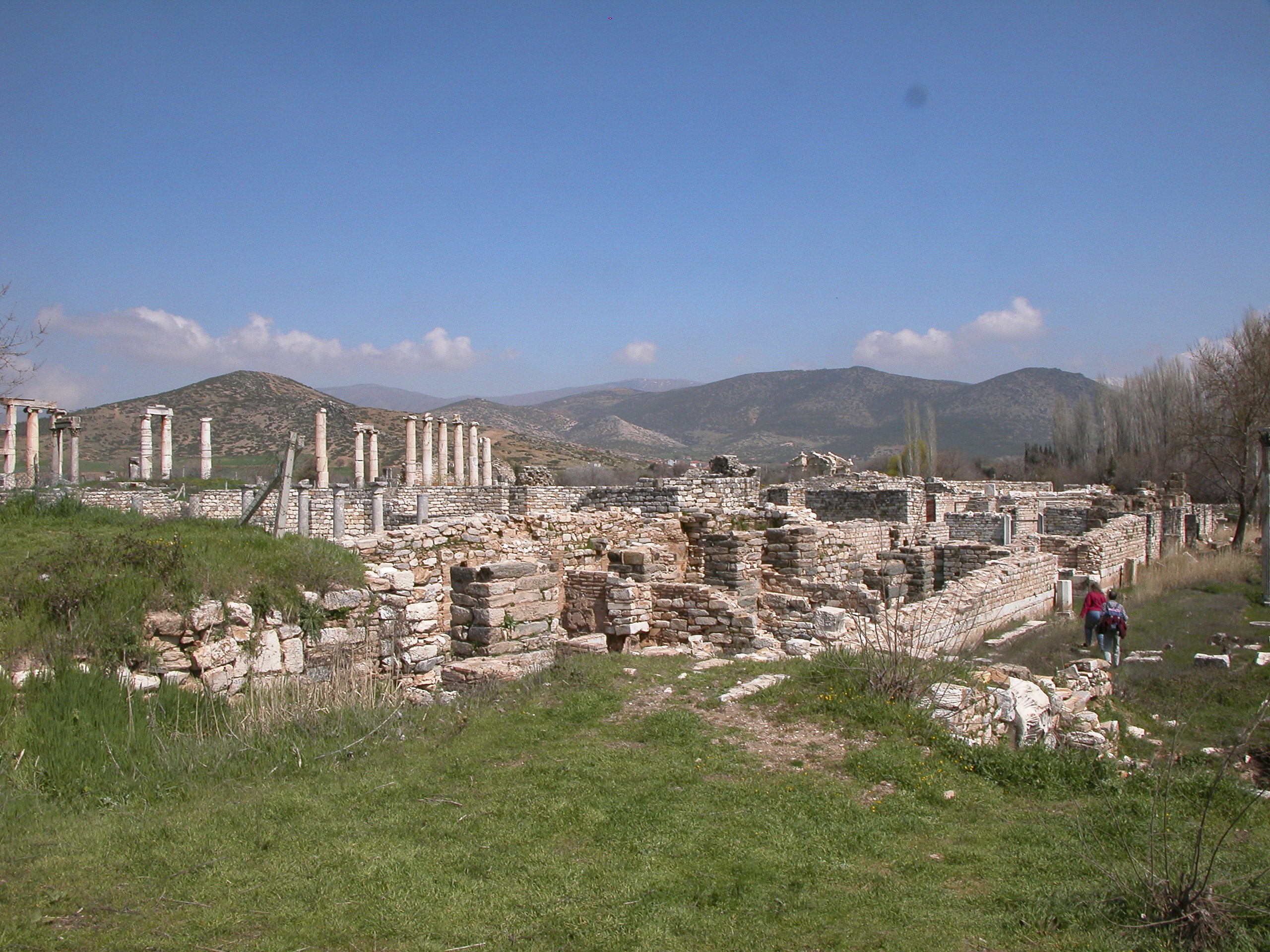
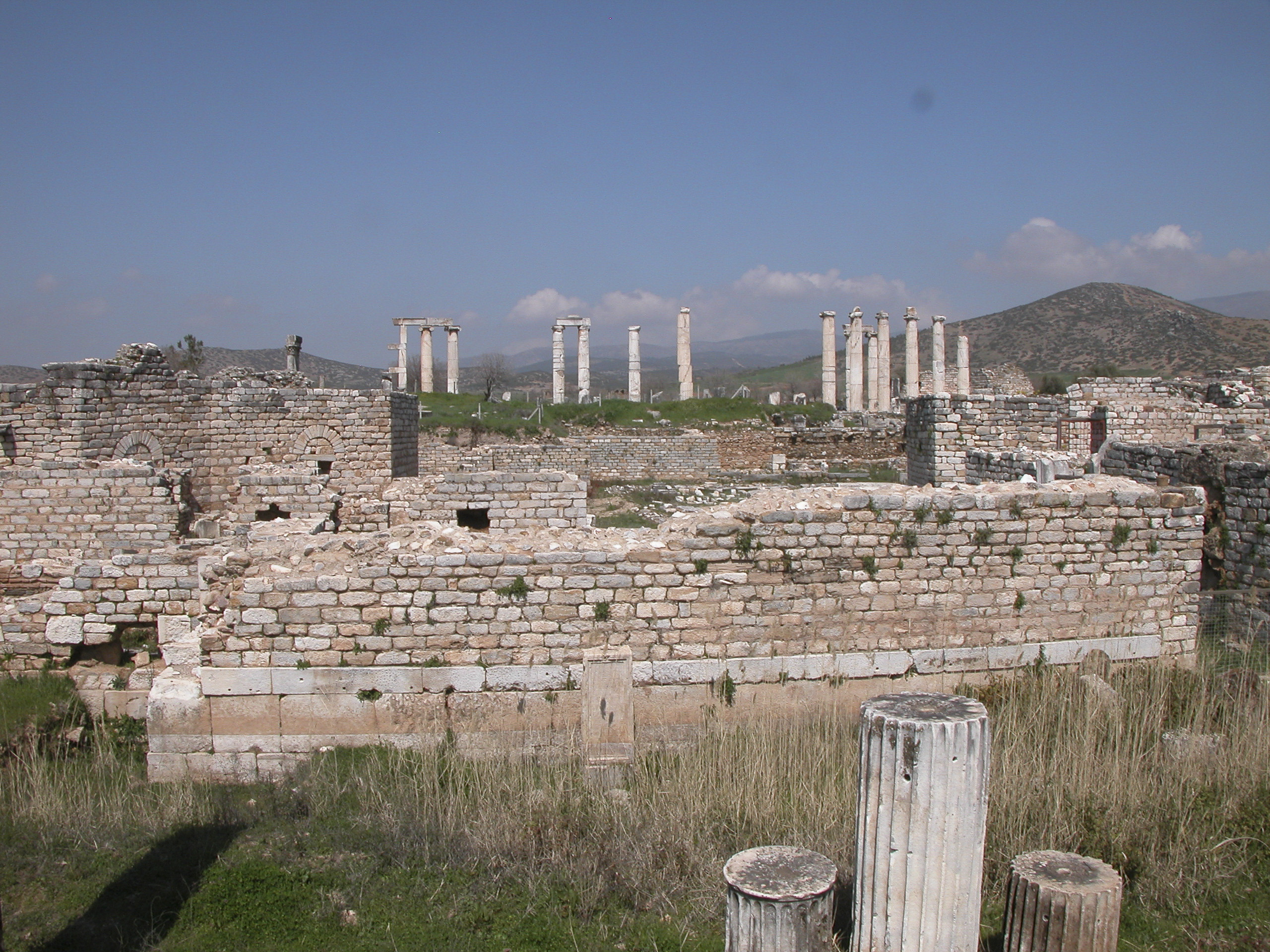
The Sanctuary, or Temple, of Aphrodite was a “focal point of the town” and one of its most magnificent structures. It was another erection of the first-century BCE building progam of the wealthy freedman Zolius, replacing an earlier structure which had been built around the 6th or 7th century BCE as the cult center of a local fertility goddess, who later became identified with Aphrodite in the same way as the local deity of Ephesus came to be identified with the Greek goddess Artemis.

After the conversion of the Roman Empire to Christianity in the fourth century AD, Aphrodisias remained a center of pagan worship and became a focus of resistance to Christianization.

After the conversion of the Roman Empire to Christianity in the fourth century CE, the imperial authorities began to persecute pagans far more effectively than the pagans had ever persecuted the Christians, and Aphrodisia, unsurprisingly considering its heritage as a pagan cult center, became a hotspot of resistance to Christianization. In the late fifth century, the Aphrodisians supported the revolt of the general Flavius Illus against the Emperor Zeno, because Illus had promised to restore the pagan rites. The revolt failed and Illus was executed. In retaliation, Zeno had the temple of Aphrodisias converted to a Christian basilica.

In the late fifth century, after the suppression of a pagan-oriented rebellion against the Eastern Roman Emperor Zeno, the Temple was expanded and converted into a Christian basilica.

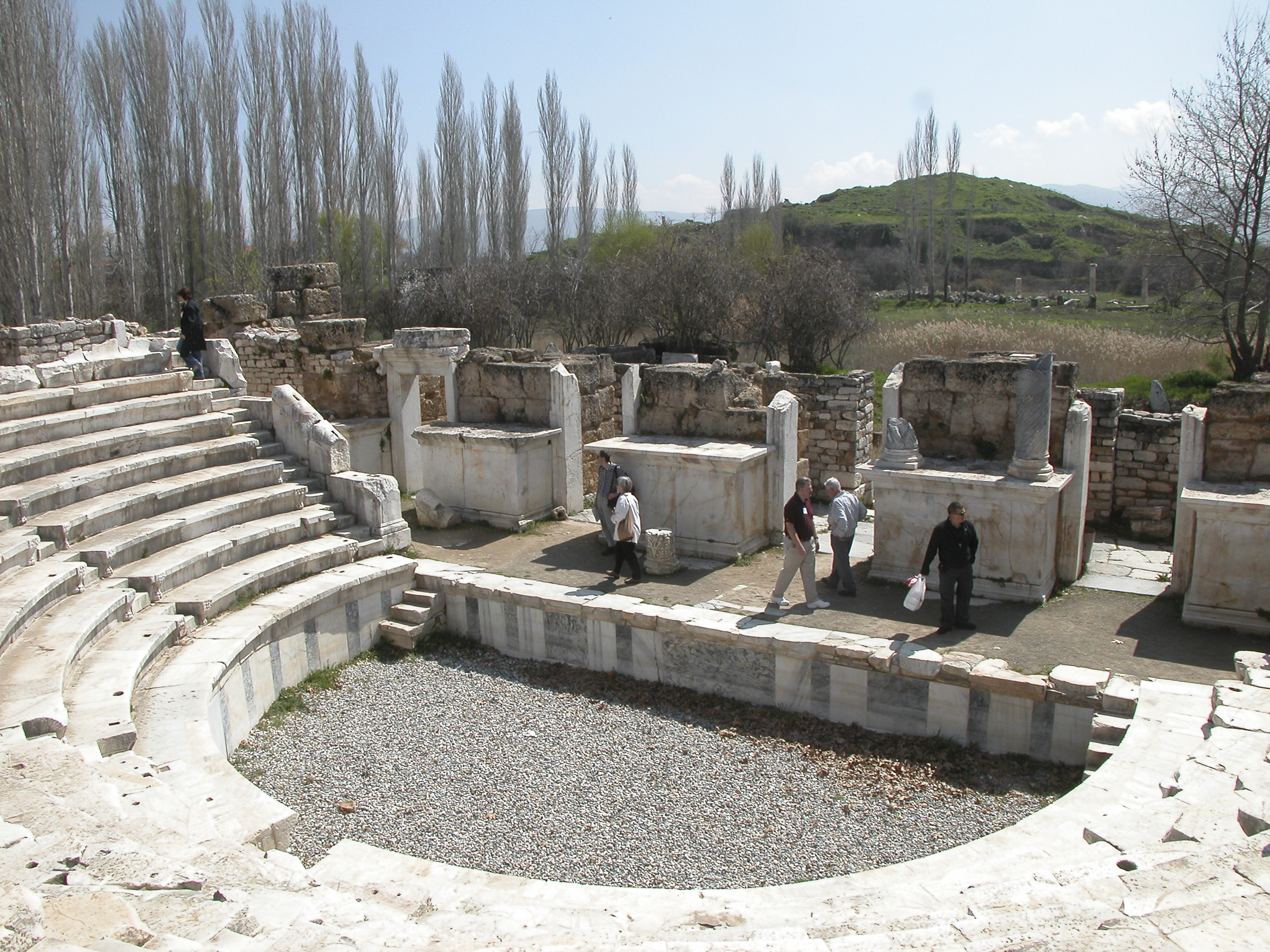
The Odeon, or Bouleterion, was a small theater-like structure where city council meetings were held, among other events. It was built in the late second or early third century CE and seated 1,750 people. It originally had a vaulted ceiling supported by massive buttresses with tall, arched windows in the curved outer wall, but the roof collapsed sometime in the late fourth or early fifth century, along with the upper twelve seating rows, so that now only nine rows are left.

The Odeon, or Bouleterion.

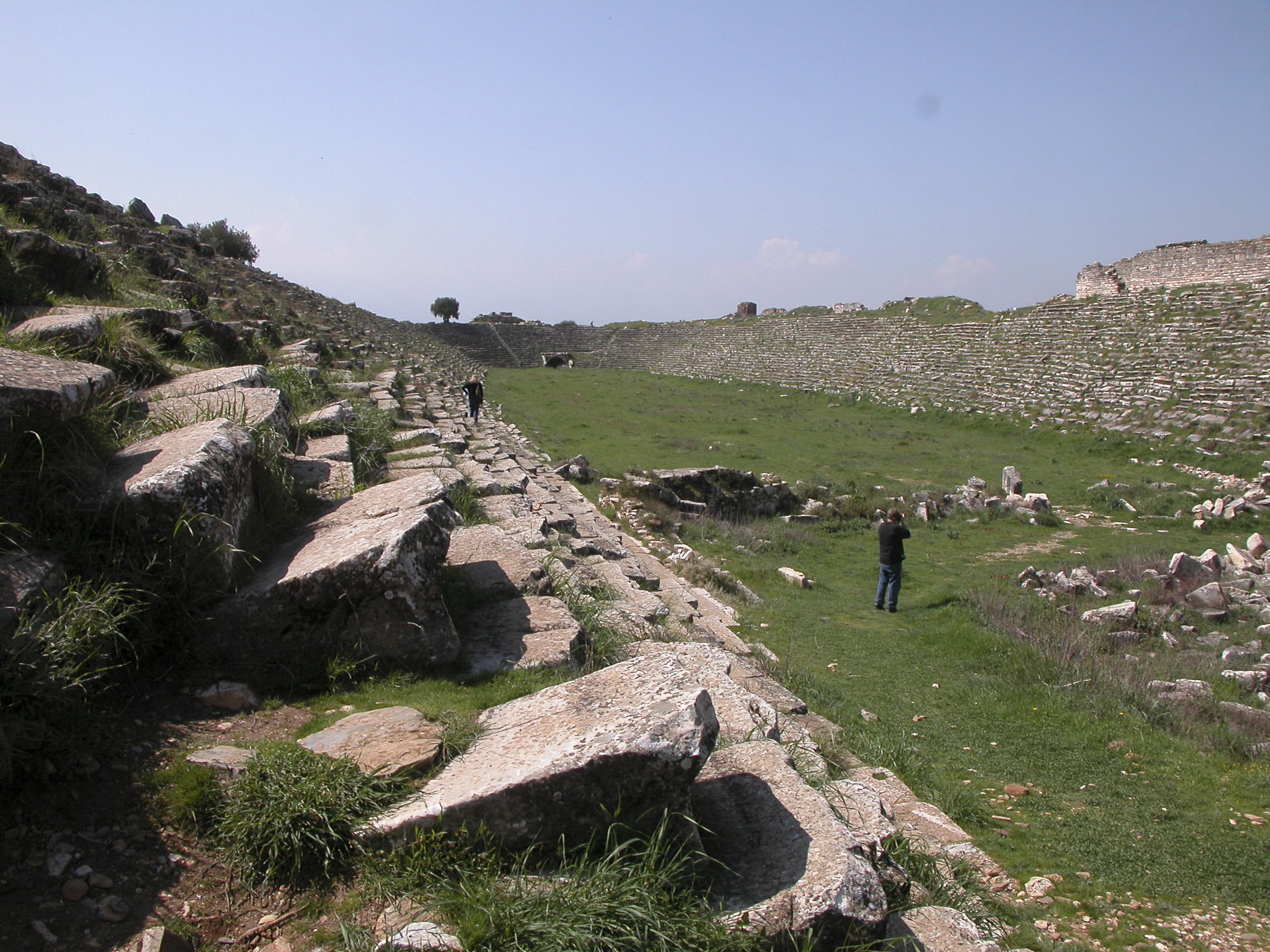
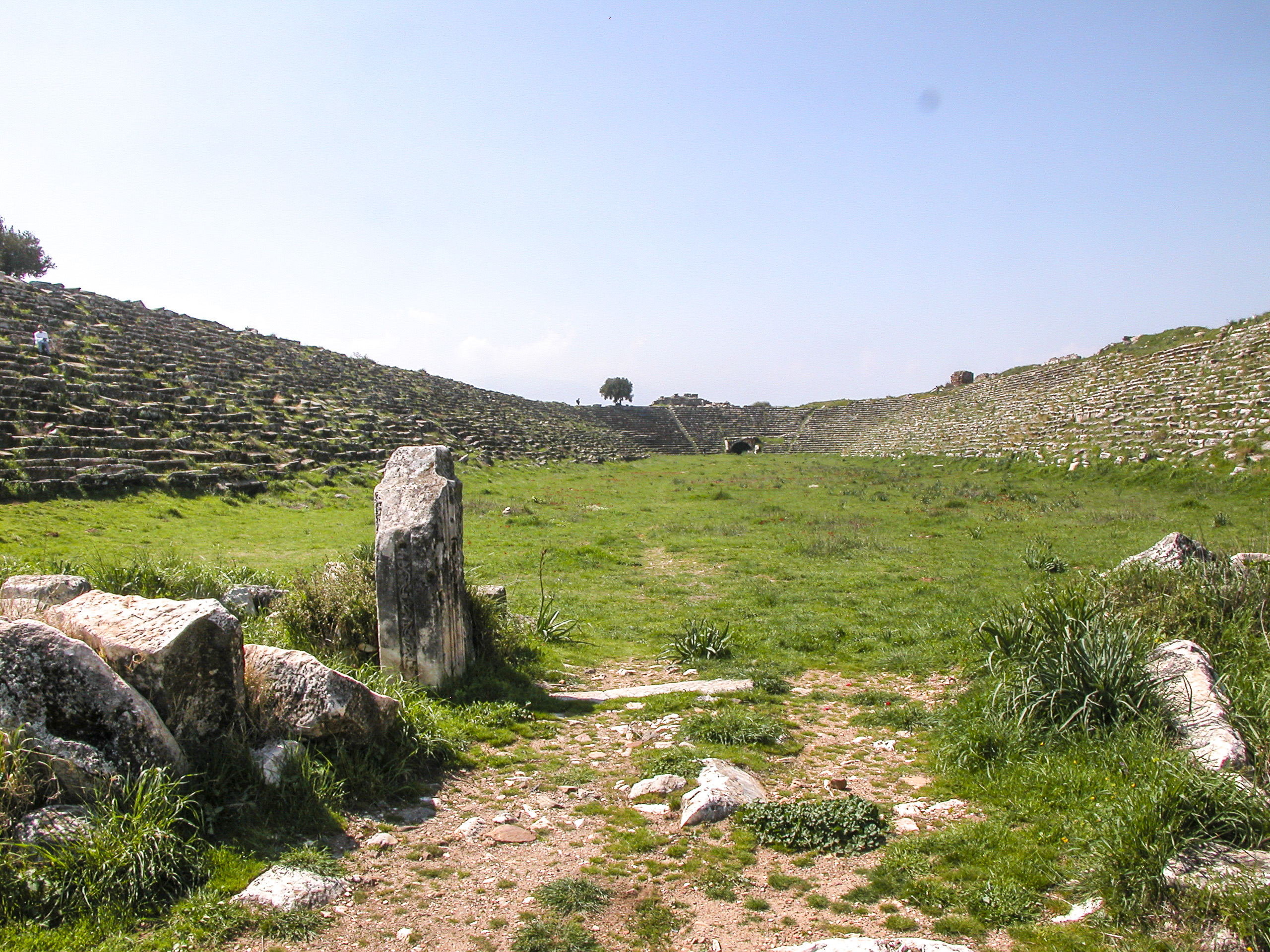
To me the most imposing edifice in Aphrodisias was the Stadium, or Hippodrome, one of the largest and best-preserve structures of its kind in all of classical antiquity. It measured 270 meters (890 ft) by 60 meters (200 ft), had 30 rows of seats on each side and around each end, and had a maximum capacity of around 30,000 spectators.

The Hippodrome of Aphrodisias.

The scale of the Stadium dwarfed the members of our tour group who infested it.

Humans infest the ruins of the Stadium of Aphrodisias.

Roman and Byzantine stadia were generally built to accommodate horse and chariot races – hence the name hippodrome. (Hippopotamus, for example, is a Greek word meaning river horse.) One can easily imagine Ben-Hur and his nemesis Messala duking it out in chariot races here.

Chariot racing was a frequent spectacle in stadia of this kind.

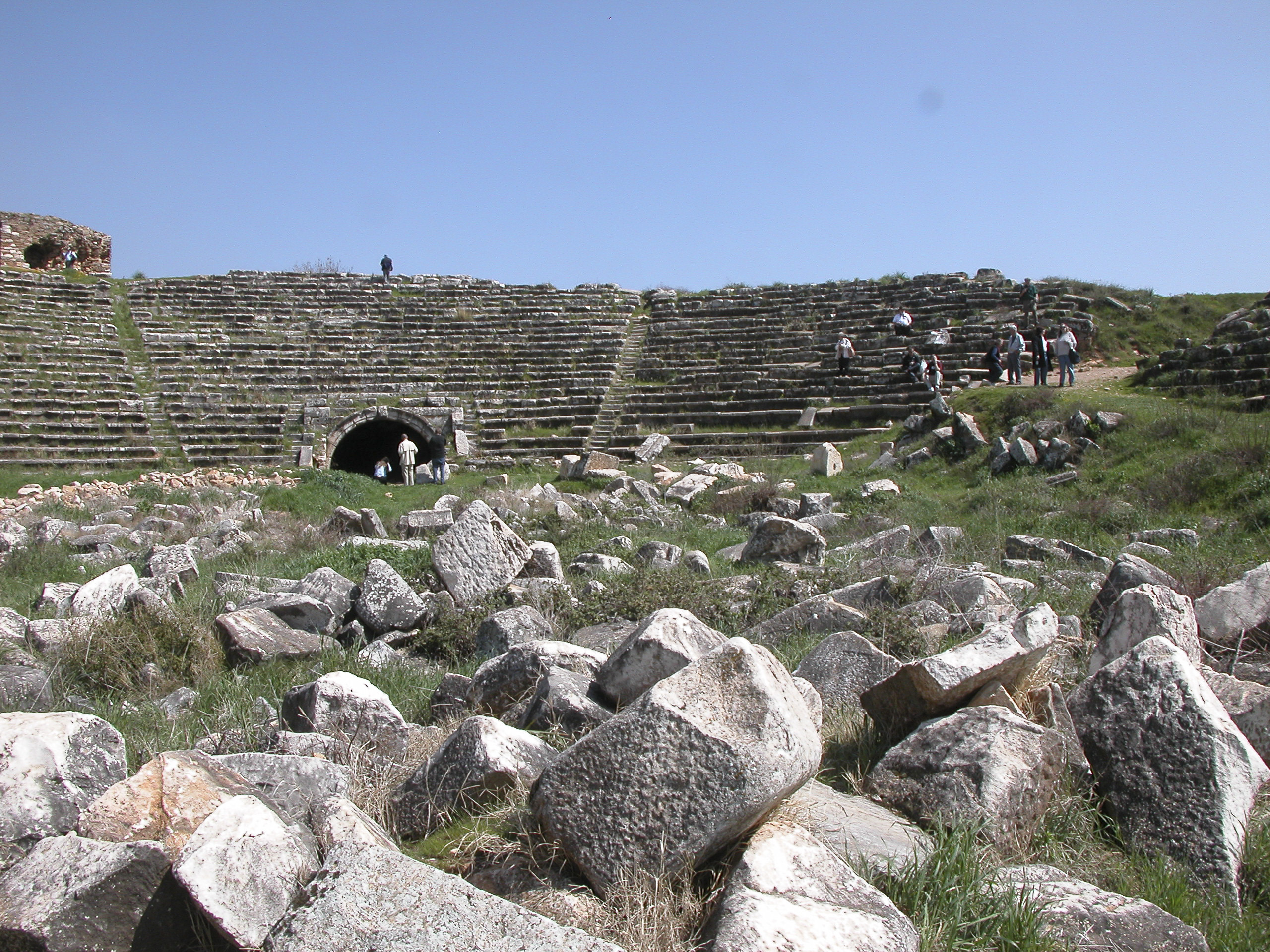
Atop the walls, the Stadium had structures which appeared to be VIP boxes, just as in modern-day stadia like the LA Coliseum.

Pam Bloxham, Jim Windlinger and the Lindquists check out the Stadium.

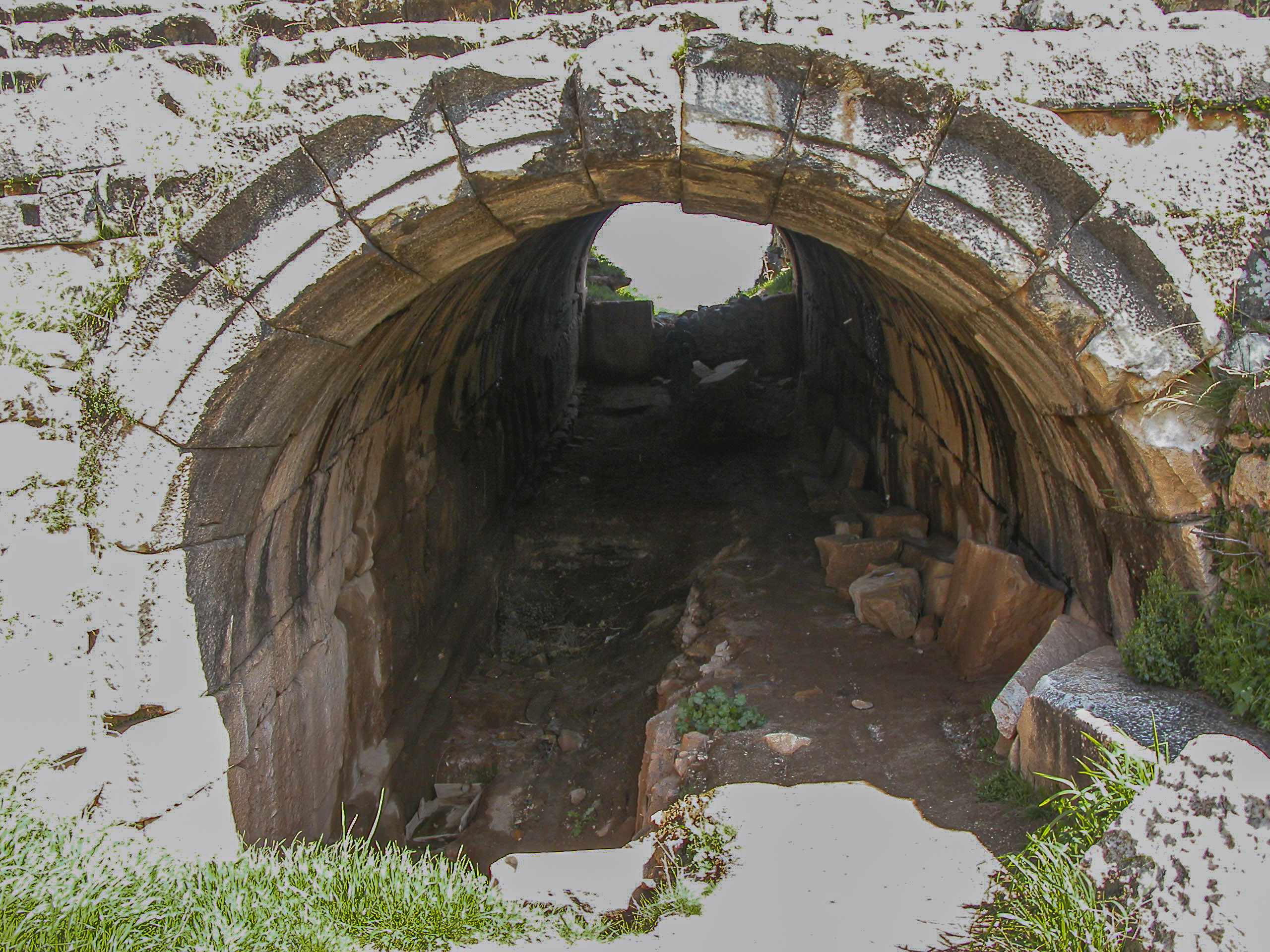
Culvert-like tunnels provided entry to the Stadium.

The culvert-like stadium entrance.

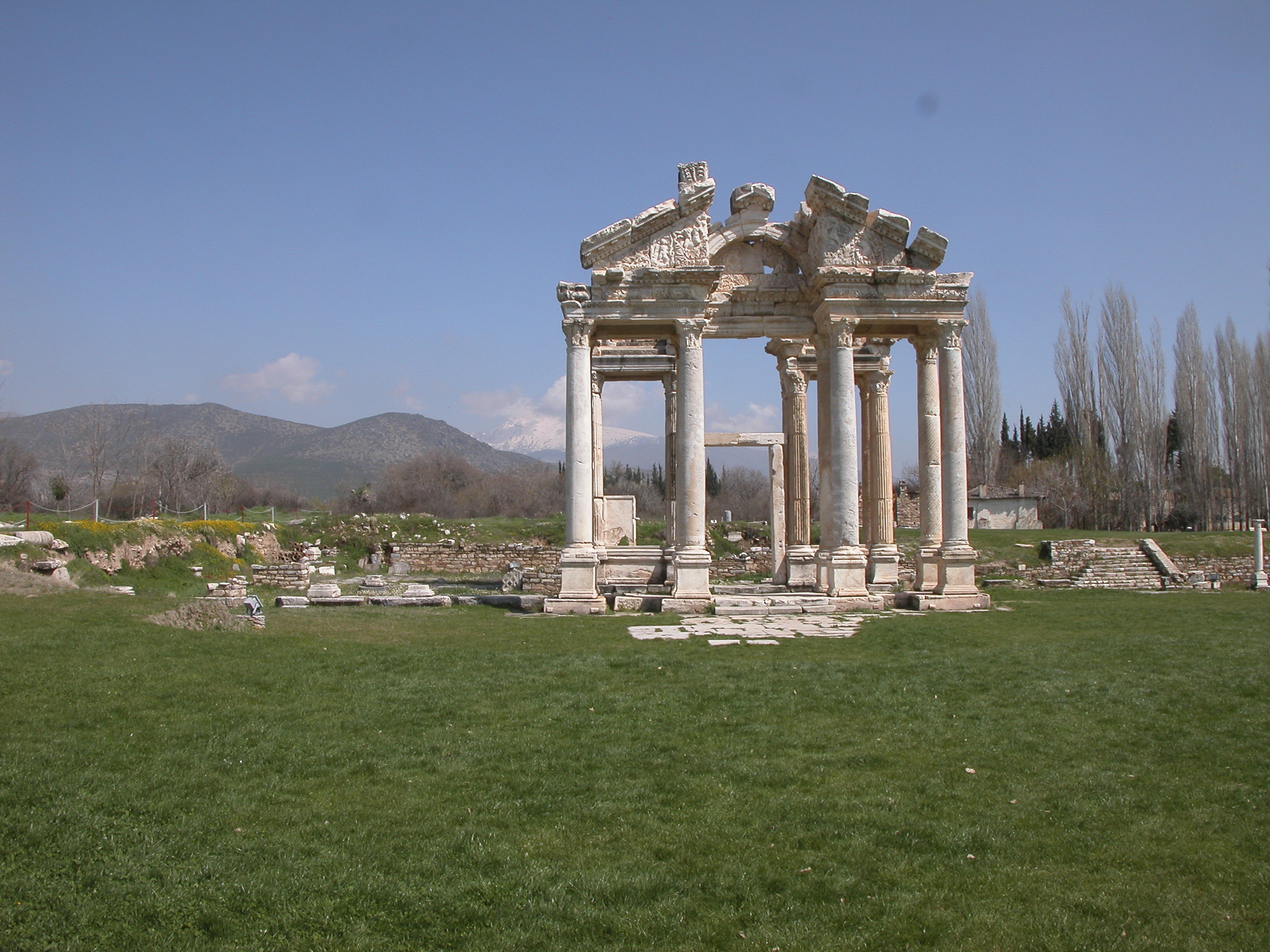
The first structure a visitor would normally see approaching Aphrodisias was the Tetrapylon, a monumental gateway opening to the sacred way to the Sanctuary of Aphrodite. For us it was the last structure we saw of the ancient city, because we toured it back to front, and from there headed back toward the Museum.

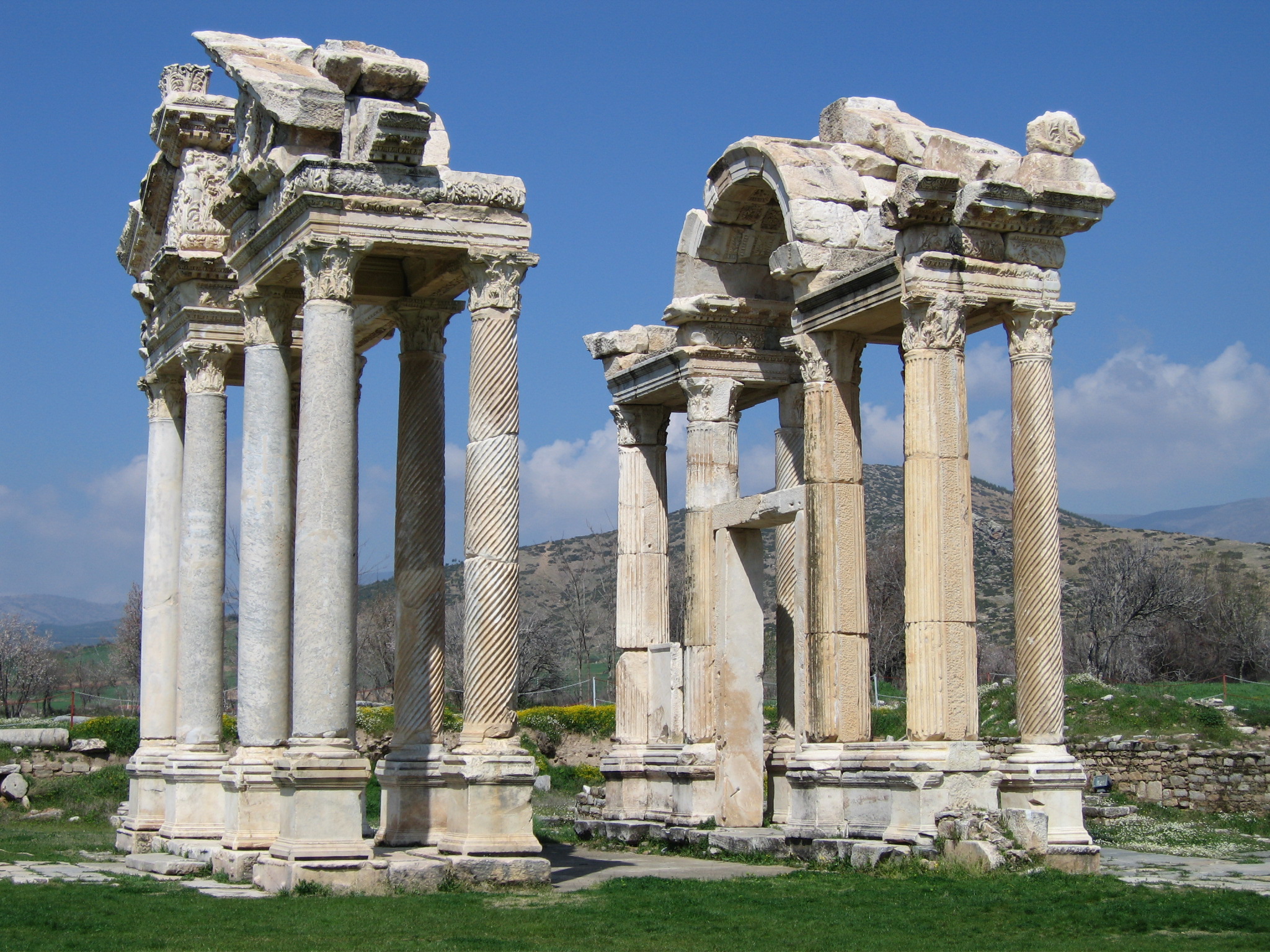
The Tetrapylon, gateway to the city of Aphrodisias.

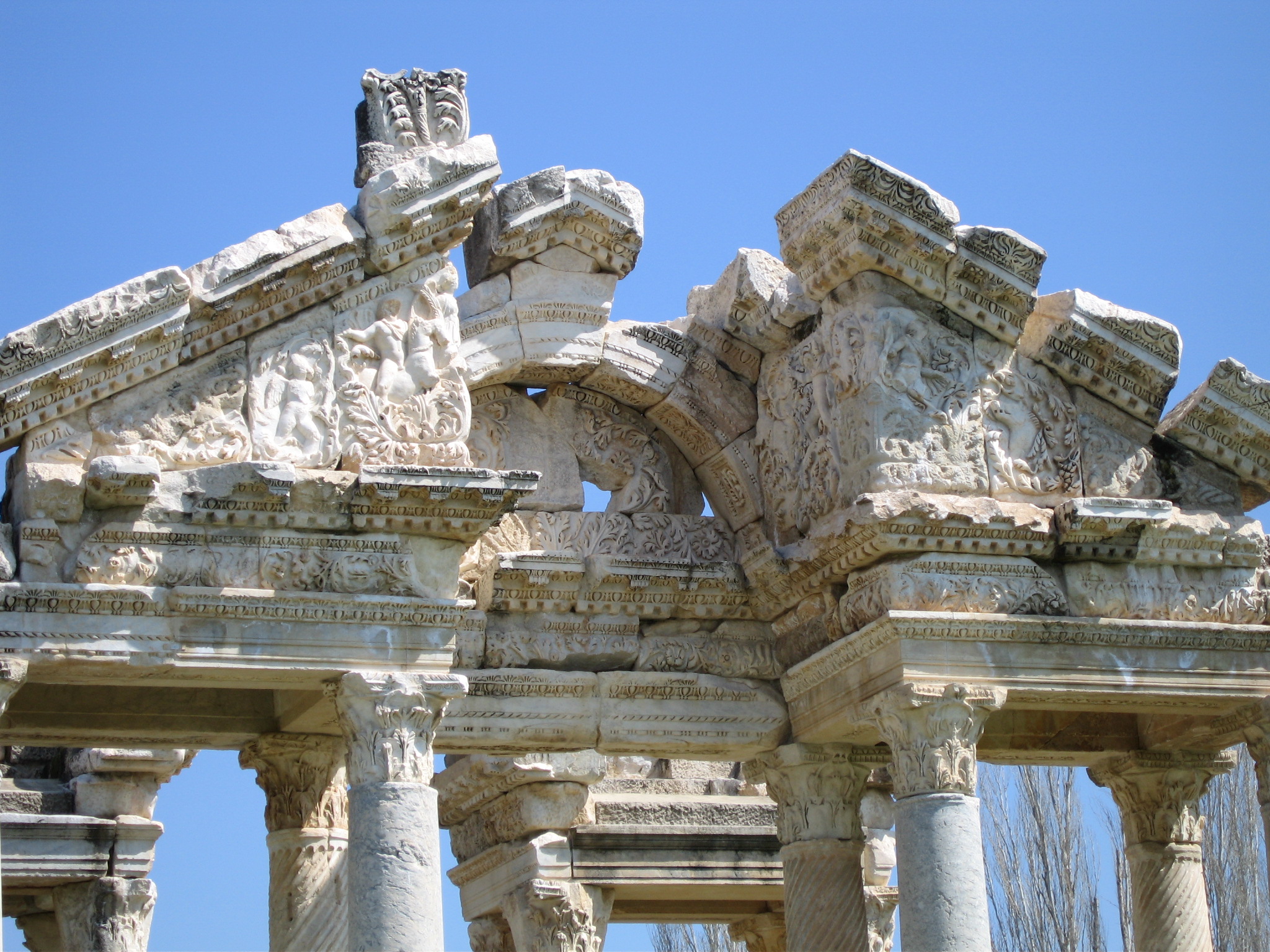
Built around 200 CE, the Tetrapylon consisted of four rows of four columns (tetra = four and pylon = gateway in Greek). The pediment was decorated with relief figures of Eros and Nike hunting among the acanthus leaves.

The pediment of the Tetrapylon.

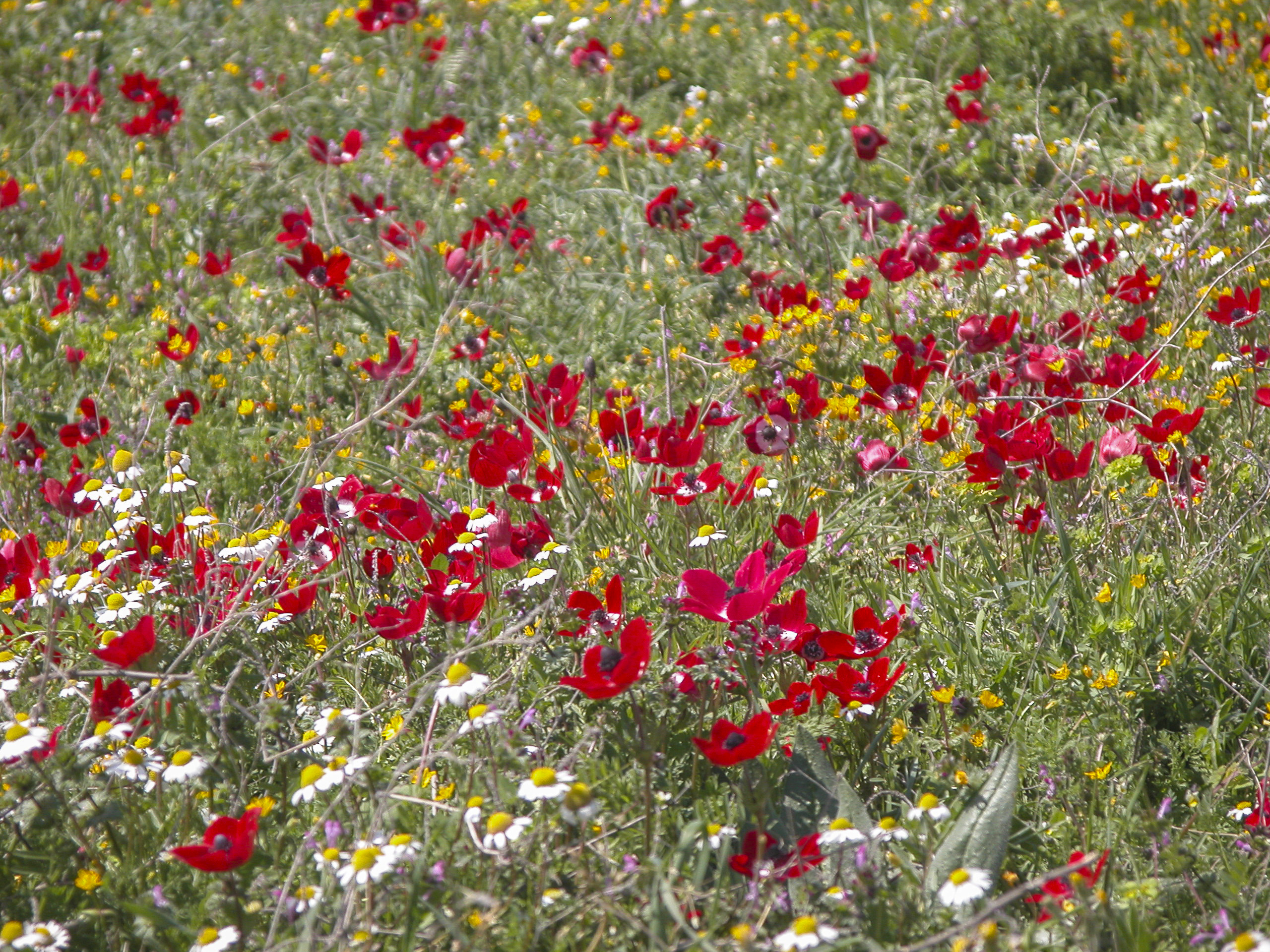
The Tetrapylon as seen here was in rather sorry shape by the time excavations began in the 20th century. It was the object of a massive restoration effort, culminating in its re-erection in 1990. Here we took our leave of the ancient city of Aphrodisias, and made our way through poppy fields back to the Museum.

Built in the second century CE, the Tetrapylon was restored in 1990.

In Flanders fields the poppies blow
Between the crosses, row on row,
    That mark our place; and in the sky
    The larks, still bravely singing, fly
Scarce heard amid the guns below.

We are the Dead. Short days ago
We lived, felt dawn, saw sunset glow,
    Loved and were loved, and now we lie,
        In Flanders fields.

Take up our quarrel with the foe:
To you from failing hands we throw
    The torch; be yours to hold it high.
    If ye break faith with us who die
We shall not sleep, though poppies grow
        In Flanders fields.

— John McCrae

These words, written to commemorate the ghastly slaughter in Belgium and Northern France during World War I, equally well apply to Turkey, which was another major theater of battle in that war, and continued to be an area of bloody strife after the end of hostilities in the rest of the world.

In Turkish fields the poppies grow…

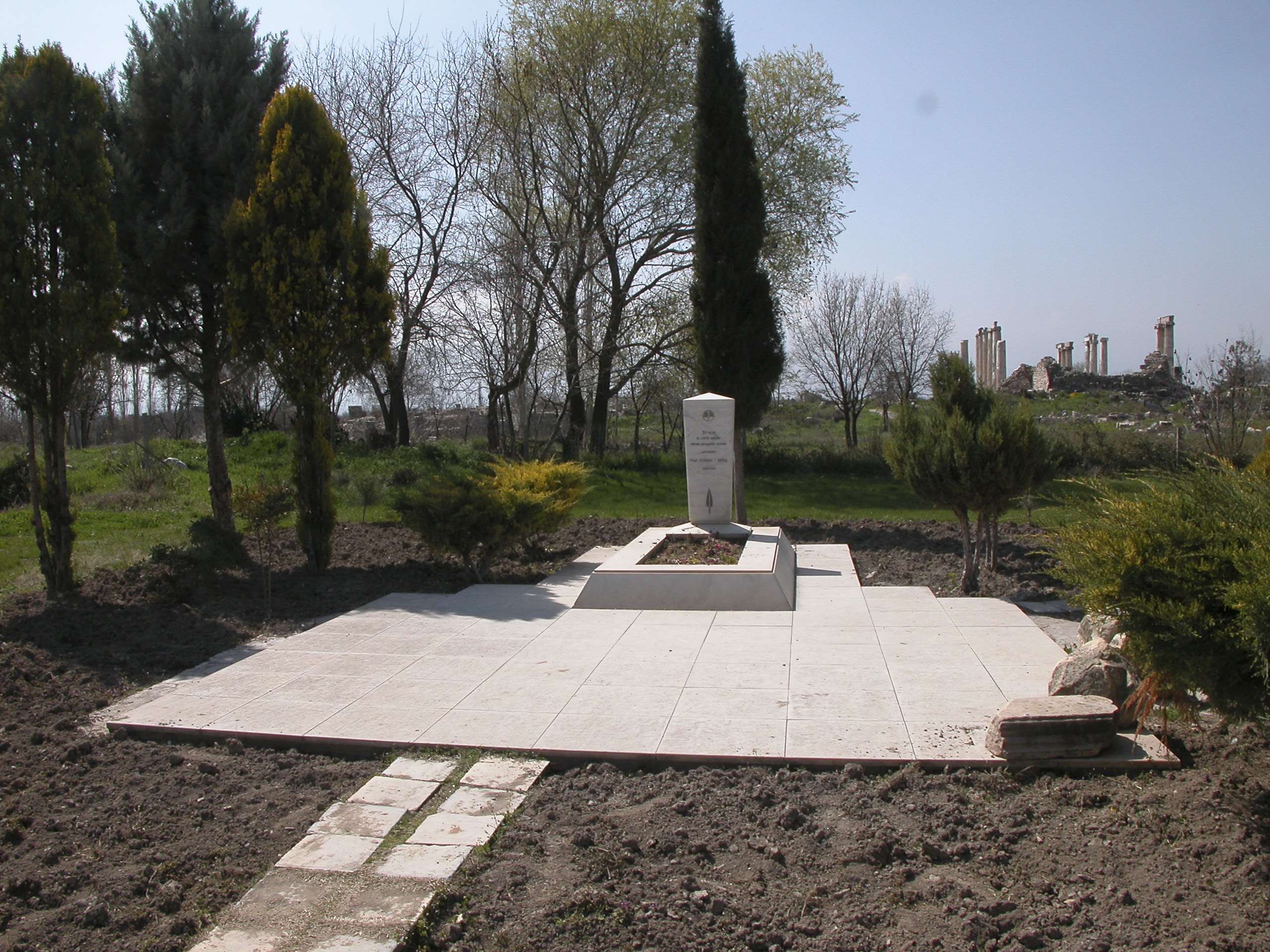
Speaking of graves, on the way back to the Museum we encountered the last resting place of Kenan Erim, theTurkish-born archaeologist who led the excavation and restoration of Aphrodisias from 1962 to 1990.

Grave of Kenan Erim, excavator of Aphrodisias.

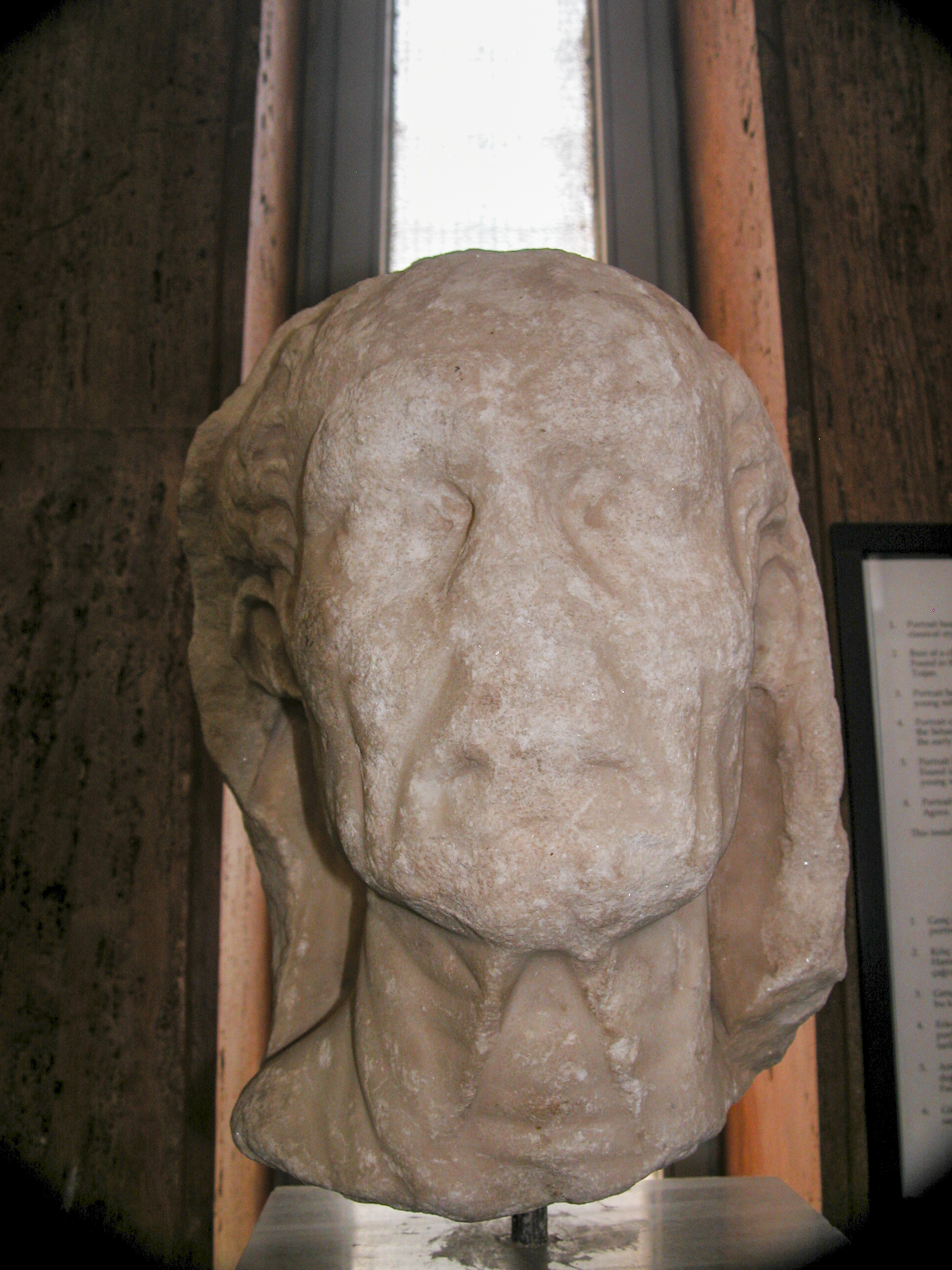
In the Museum we encountered a bust of Gaius Julius Zoilus. It has been suggested that Zoilus had been made a slave by pirates, who captured him and sold him to Julius Caesar. This was a common misfortune for inhabitants of the Mediterranean world in Greek and Roman times. In facdt, as a young man Julius Caesar himself had been captured by pirates off the coast of Turkey. Caesar, however, as a member of Rome’s elite, commanded resources that a commoner like Zoilus would not have had access to. He was able to ransom himself. Supposedly the pirates demanded a ransom of 20 talents of silver, but Caesar felt insulted at being valued so low, and insisted that they hold out for 50 talents. Other than that, his captivity was an easy one; Caesar treated the pirates as if they were his buddies, carousing and partying with them, all the while assuring them that when he was freed, he would raise a fleet, come after them and crucify them all. The pirates thought this was a great joke, until, after being ransomed, Caesar did indeed do exactly as he promised, although he had the good grace to have the pirates’ throats cut before hanging them on their crosses.

Bust of Gaius Julius Zoilus.

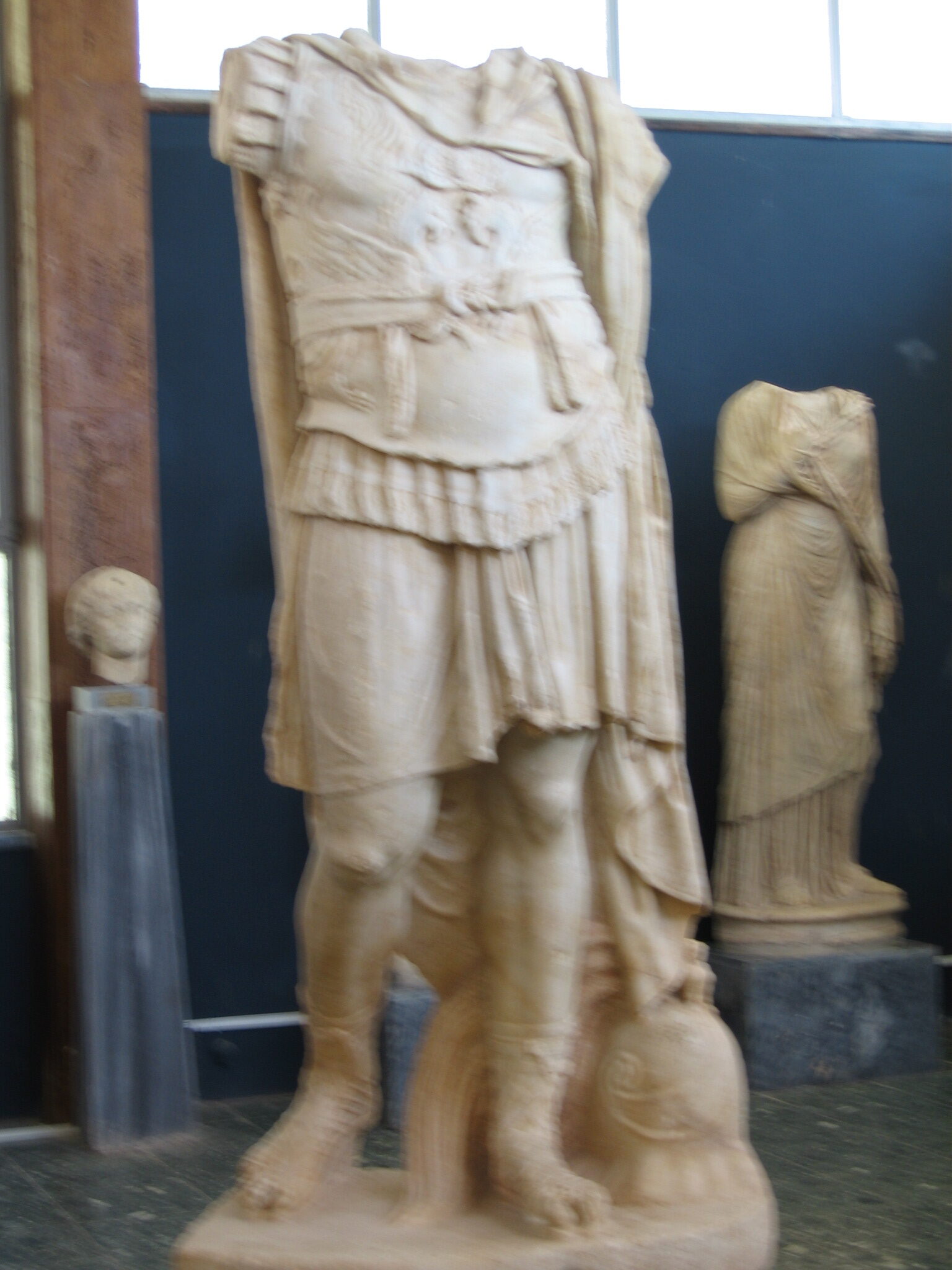
We also encountered a headless statue of a Roman. Since it was headless, I couldn’t tell whom it represented, but at a guess I’d say that it was most likely Zoilus’ patron Octavian.

The Headless Footman.

The Aphrodisian sculptors were very prolific, and their work was renowned in the ancient world. Part of the secret of their success, perhaps, was the plentiful supply of high-quality marble available in the region. We saw numerous examples of their work both inside and outside the Museum, such as the bas-relief below with its intricate stonework.

A bas-relief in the Aphrodisias Museum.

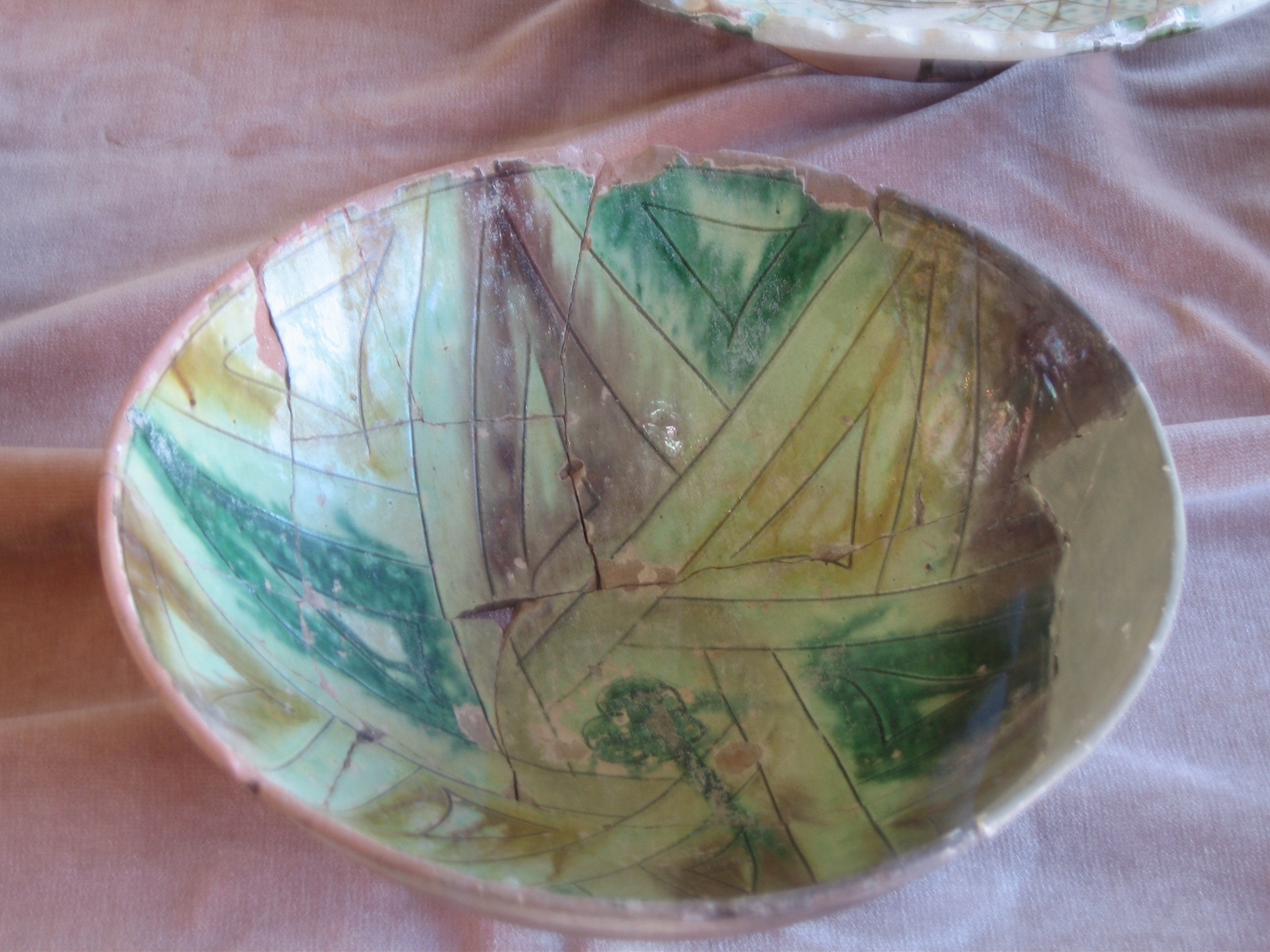
The Museum also had some nice pottery, such as this lovely multi-colored bowl, which Sandie much admired.

Colorful bowl in the Aphrodisias Museum collection.

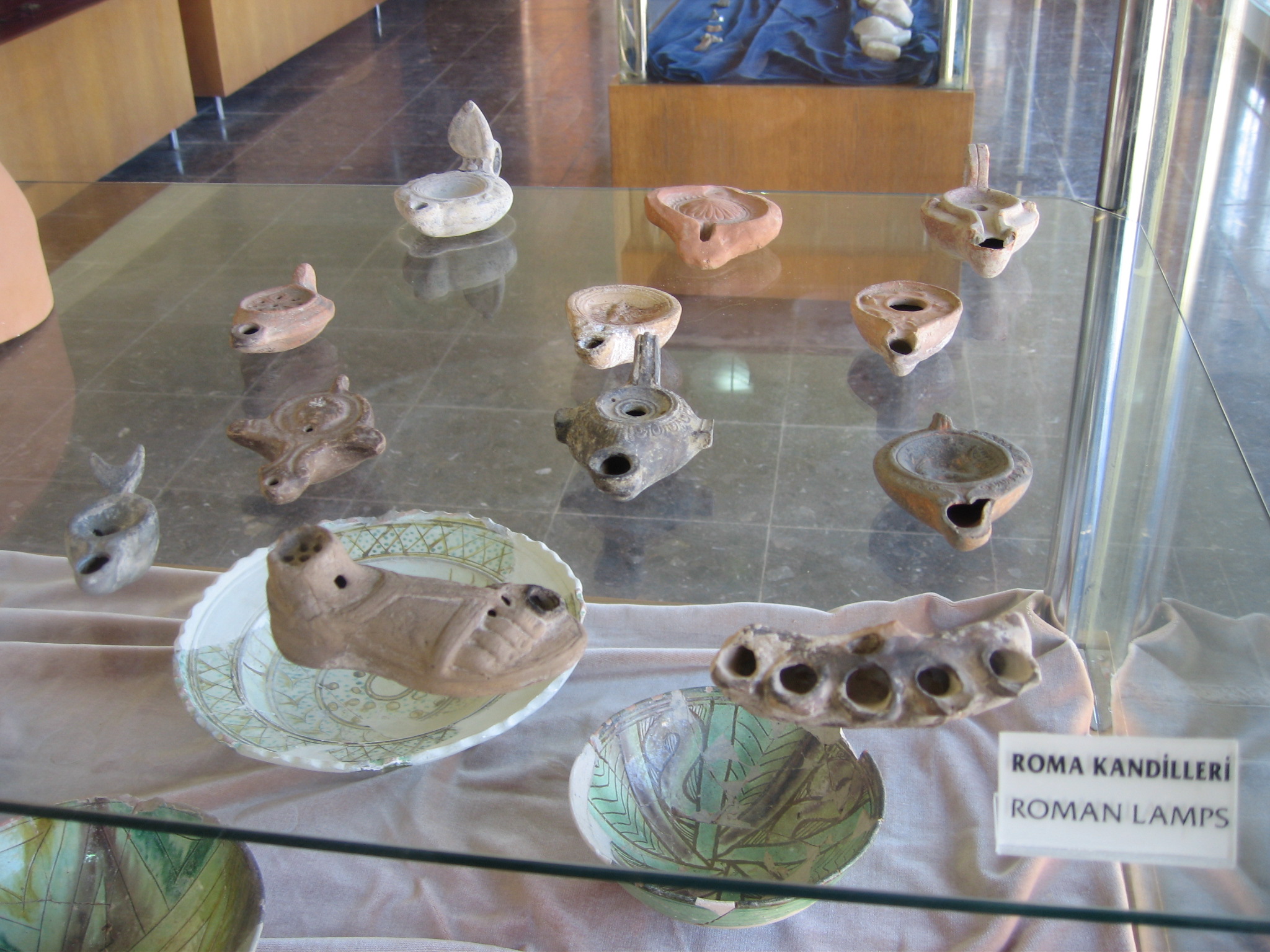
The Museum had a collection of exquisitely made “Roman Lamps,” actually candle-holders, excavated from the Aphrodisias site. I especially like the one shaped like a foot.

Candle-holders, in various interesting shapes.

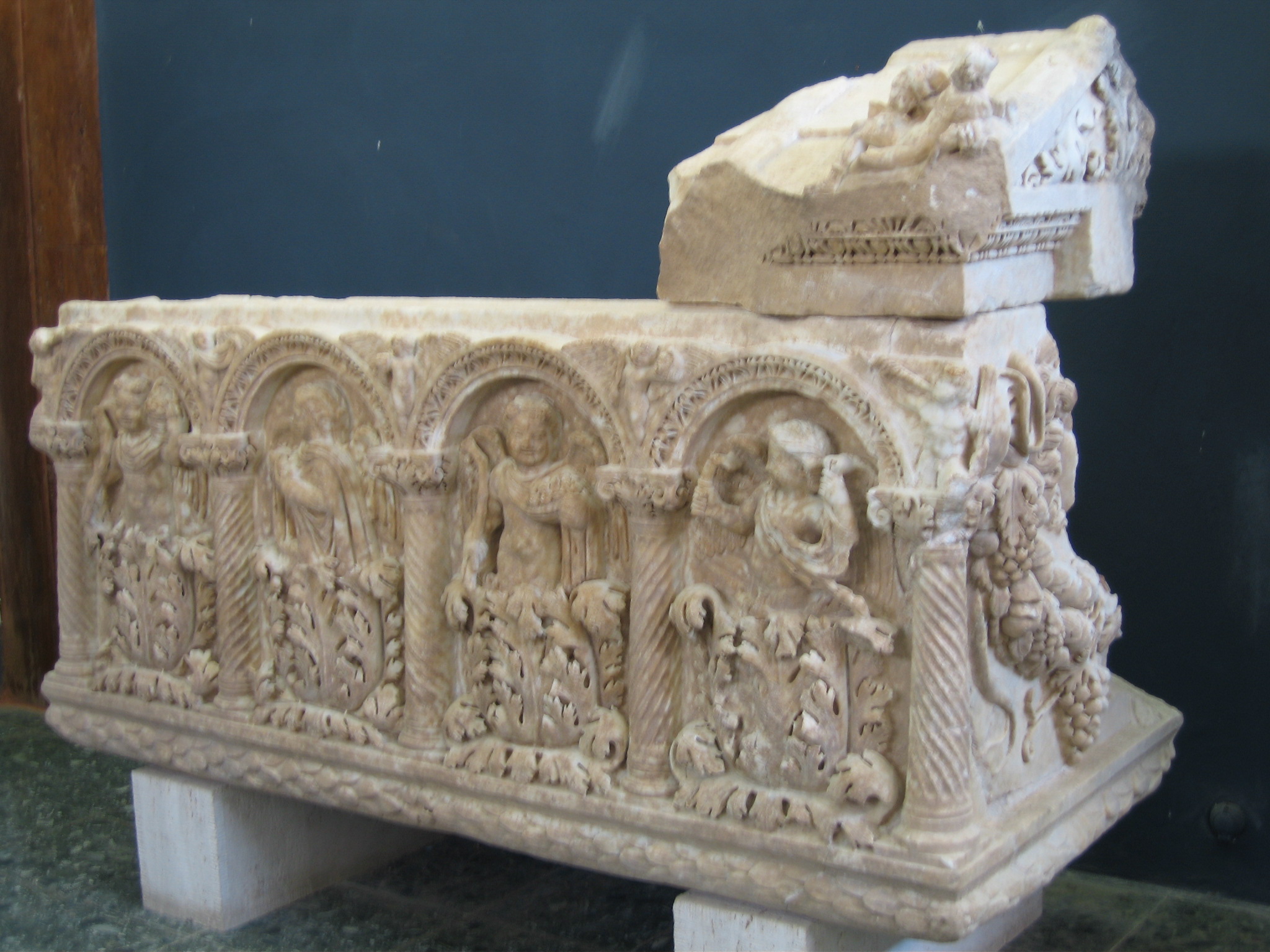
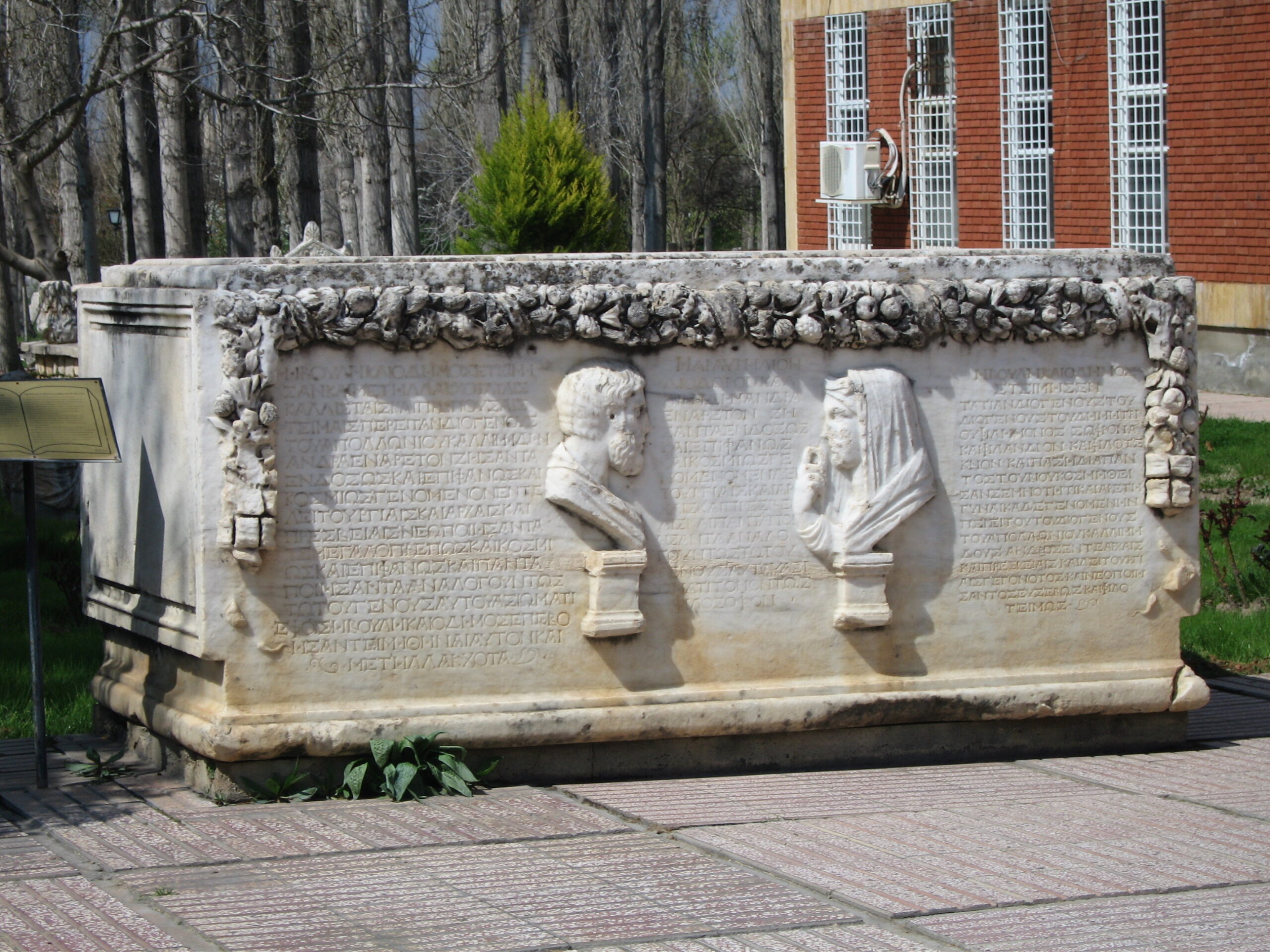
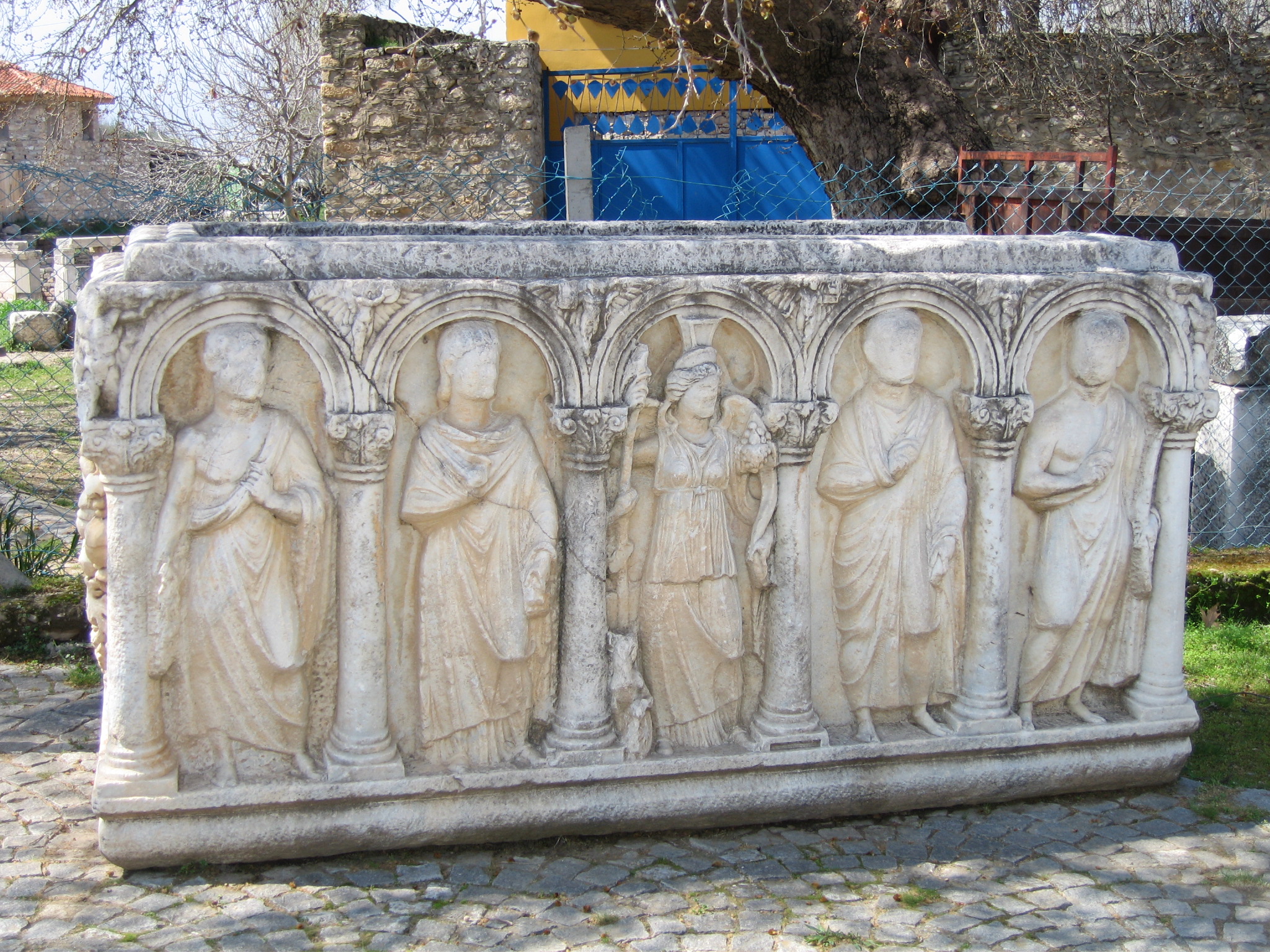
The Museum’s collection included a number of sarcophagi, stone coffins decorated with sculpture, many of them stored outdoors. I didn’t have time to decipher the inscriptions to determine whom had been buried in any of them.

Don’t know who belonged to this sarcophagus.
One of the extensive collection of sculptures on display outside the Museum.

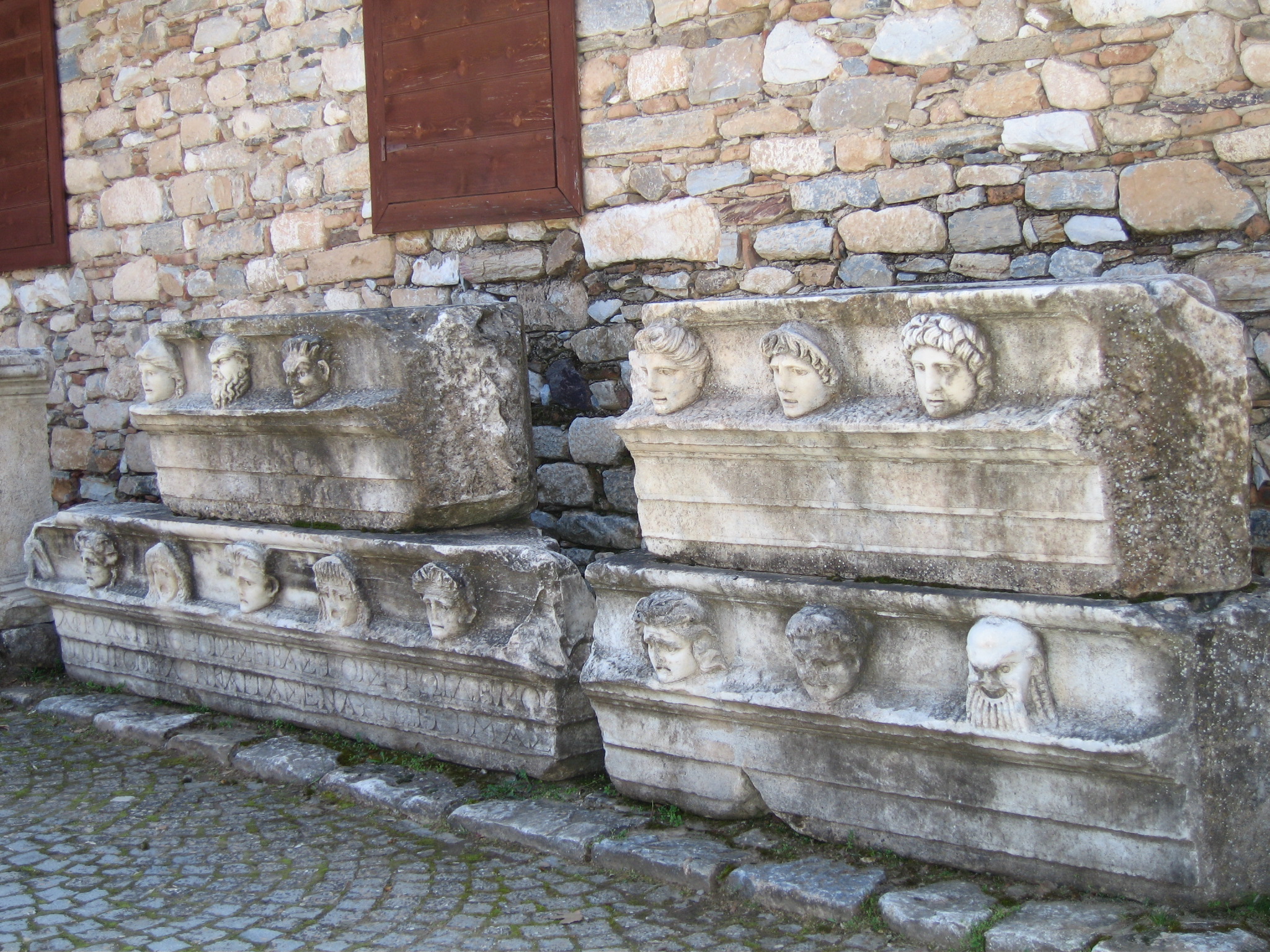
One of the last pieces we encountered on our way back to the bus featured a set of heads in bas-relief. I was tempted to purloin one of them to put on the decapitated statue in the museum. I think I would have chosen the rightmost one in the lower row.

Disembodied heads looking for bodies to be reunited with.

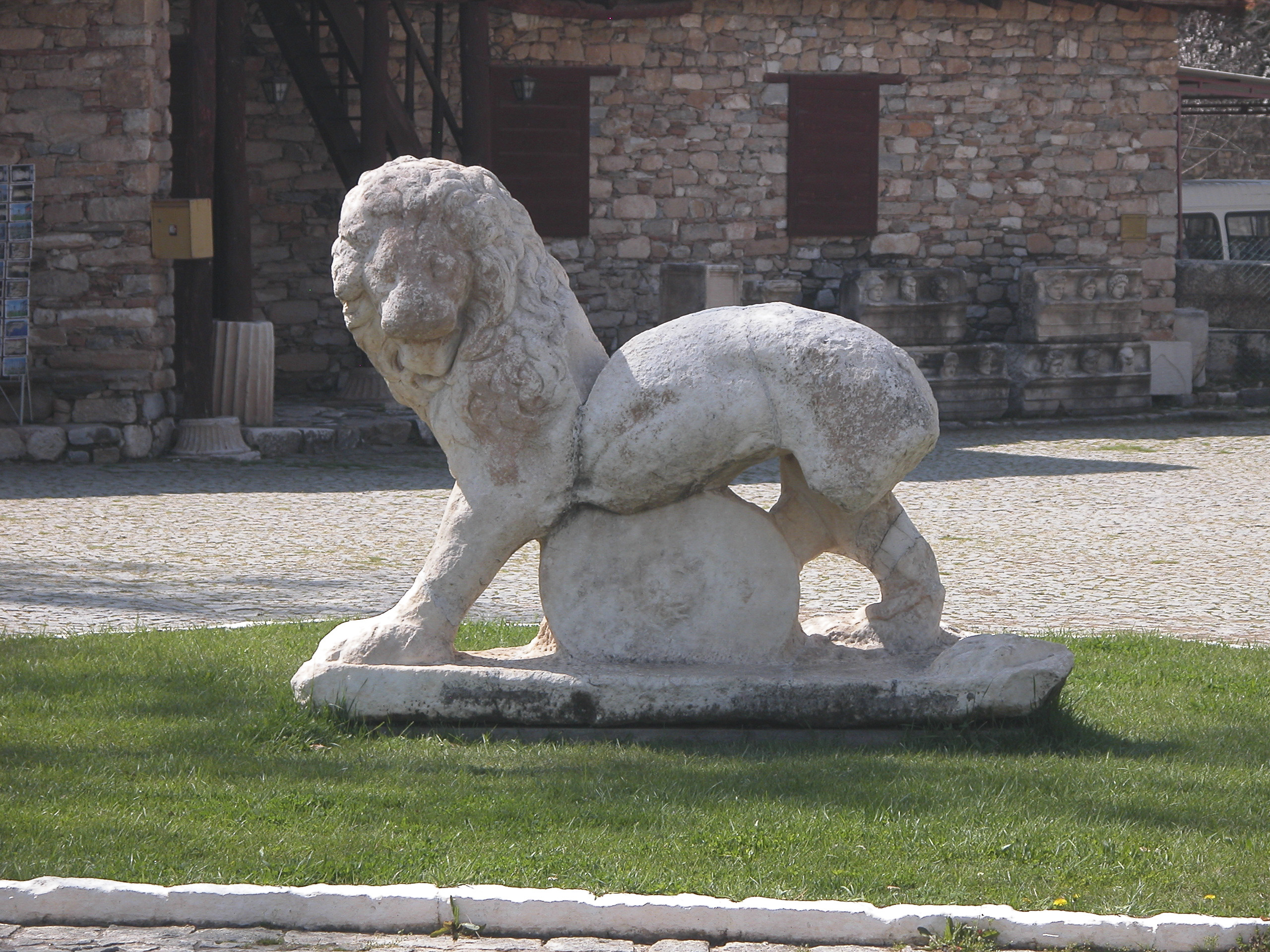
Also outside the Museum was the stone lion, everyone’s favorite.

On display near the Aphrodisias Museum.
Categories
Turkey, March-April 2006

Aegean Free Zone, March 25, 2006

Finishing our Space Camp tour by early afternoon, we spent the rest of the afternoon exploring the Aegean Free Zone.

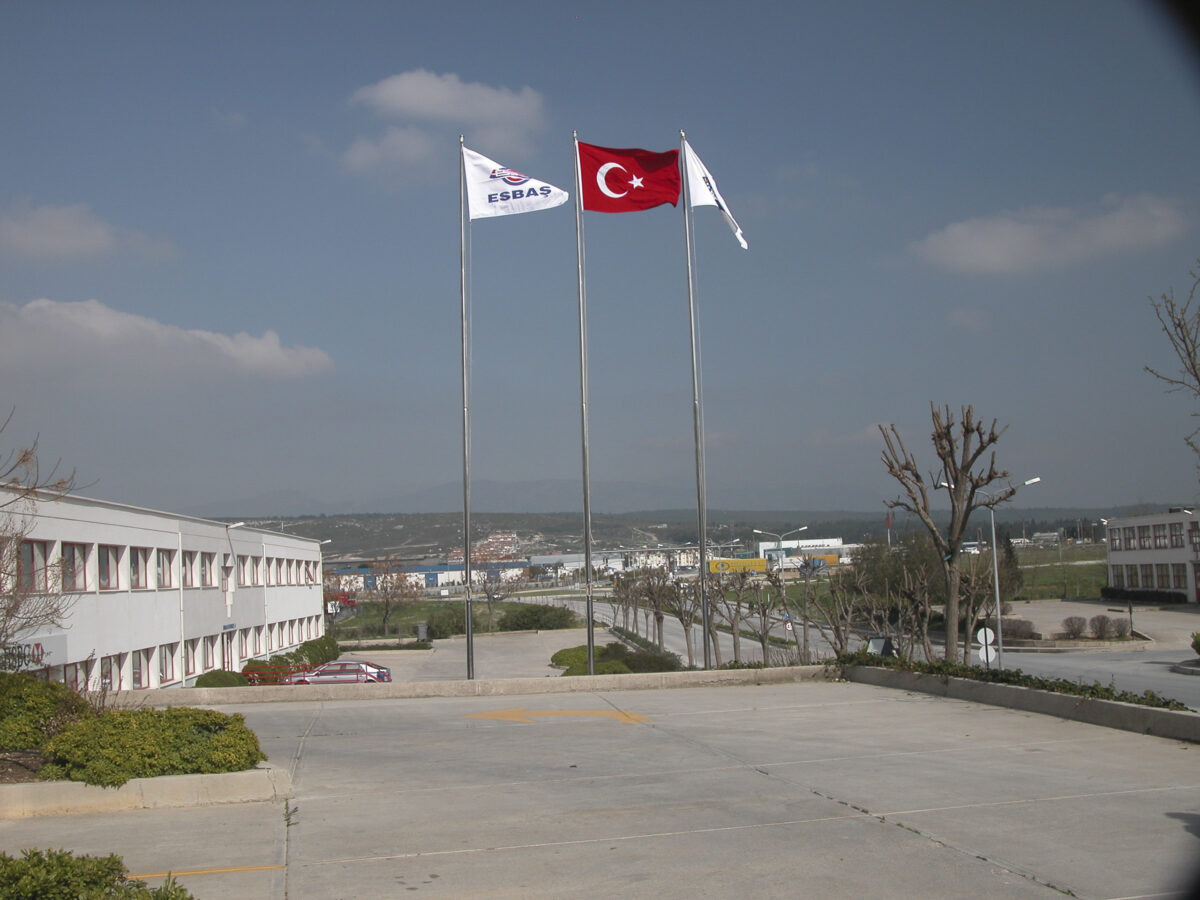
Beginning in 1987, Turkey began to establish a number of Free Zones — sequestered industrial parks offering special regulatory privileges for participating enterprises, with the particular aim of promoting export-oriented investment and production. The prime mover behind the establishment of the Aegean Free Zone in 1990 was Kaya Tuncer, and ESBAŞ, the company which he founded, is its developer and operator. ESBAŞ claims a trade volume of over $4 billion annually and employs 21,000 persons. With his wife Mary, Kaya Tuncer was also the founder of Space Camp Turkey.

Time constraints permitted us to visit only two additional attractions in the Aegean Free Zone. One was a plant which manufactures blades for wind turbines; the other was Kaya Tuncer’s car collection.

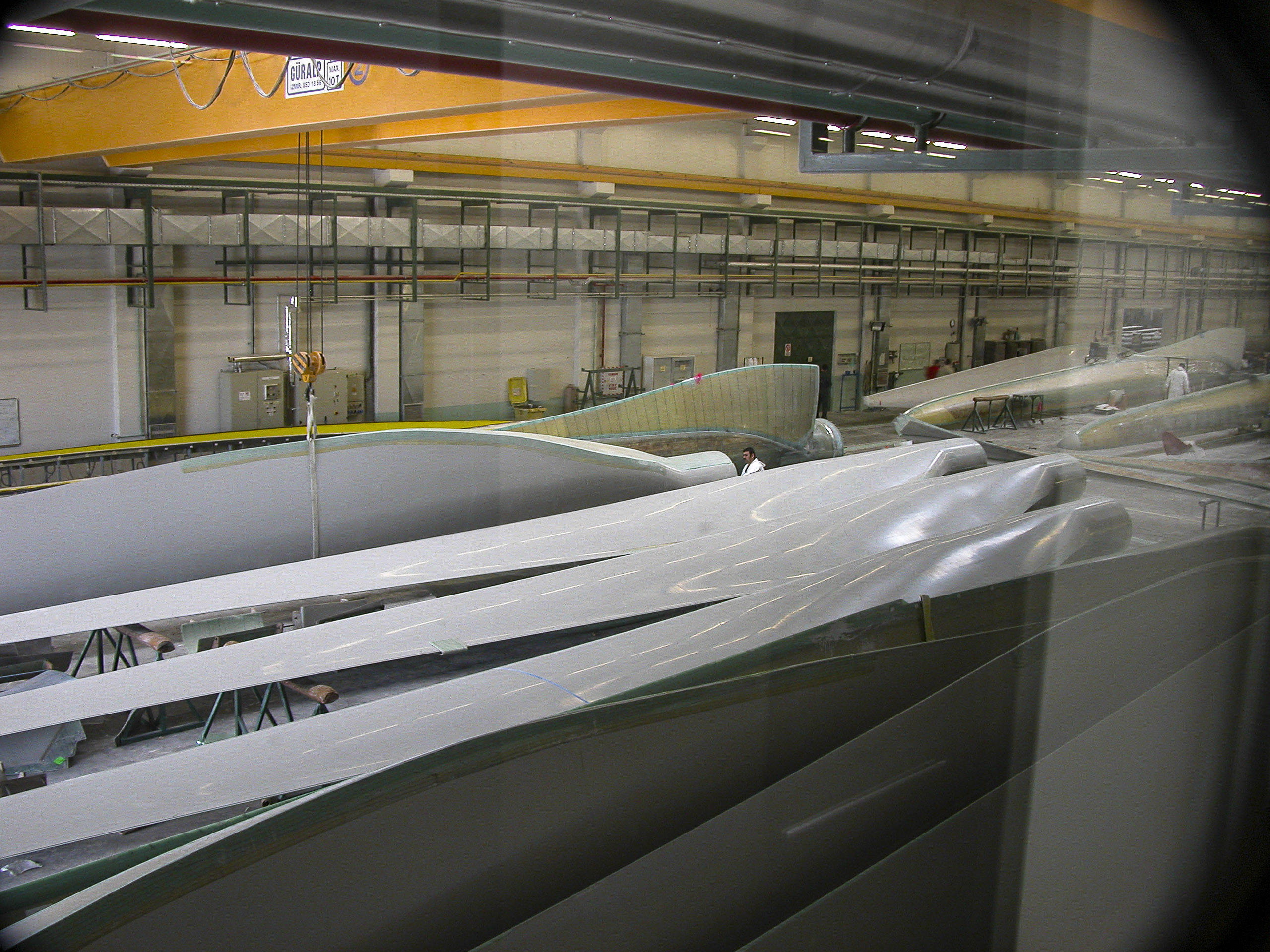
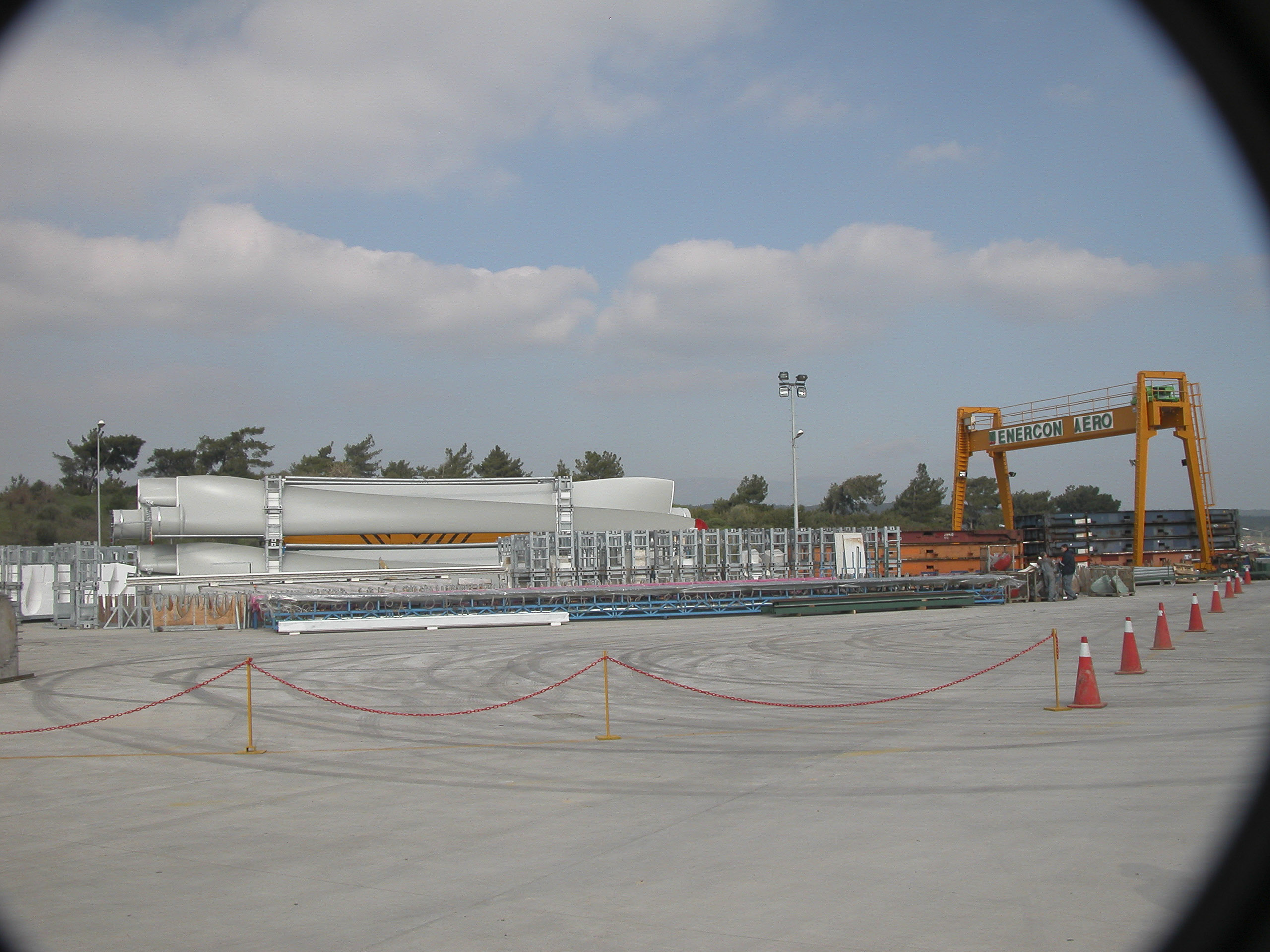
The manufacture of blades for wind turbines is one of the largest enterprises in the Aegean Free Zone. It is technologically a highly sophisticated business, consistent with the Free Zone’s emphasis on high-tech industry – because high-tech means more added value than low-tech, and hence more profit, benefiting both the investors and the host government, which realizes increased tax revenue.

A view of the interior of the turbine blade factory.

Wind turbine blades are enormous; you can get an idea of their size by checking out the tiny figure standing at the tip of one of the blades in the photo below.

The man standing by the tip of the blade gives you an idea of the size of these things.

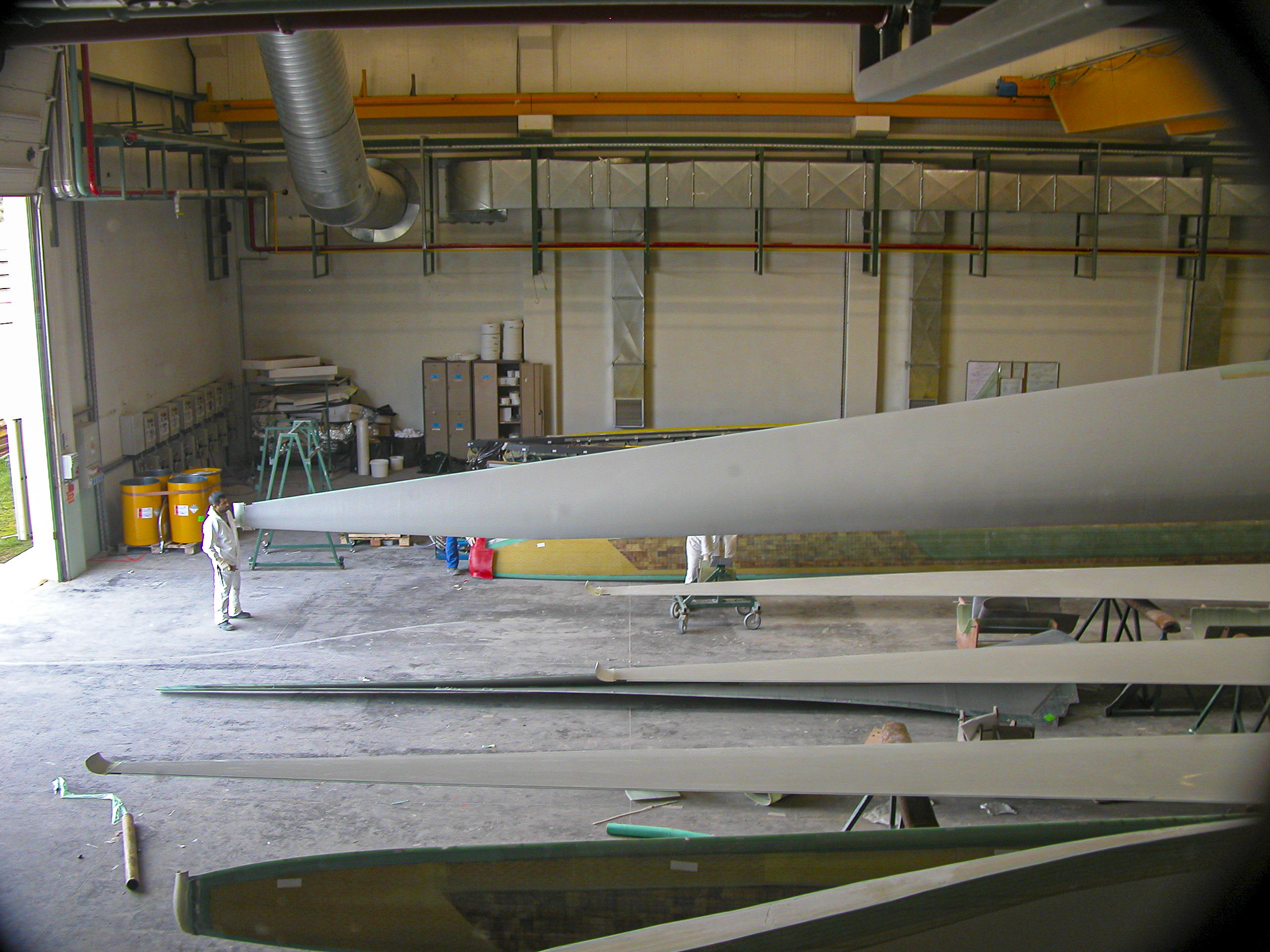
The interior of the turbine blade factory reminded me of the Douglas (now Boeing) Aircraft plant in Long Beach. After all, airplane wings and turbine blades are both airfoils, so the same technology is involved. Here we see the finished blades coming off the production line.

The turbine blades come rolling off the production line and out to the storage area.

Giant cranes are required to move the turbine blades into and out of the storage area.

Here the completed turbine blades are stacked prior to shipping.

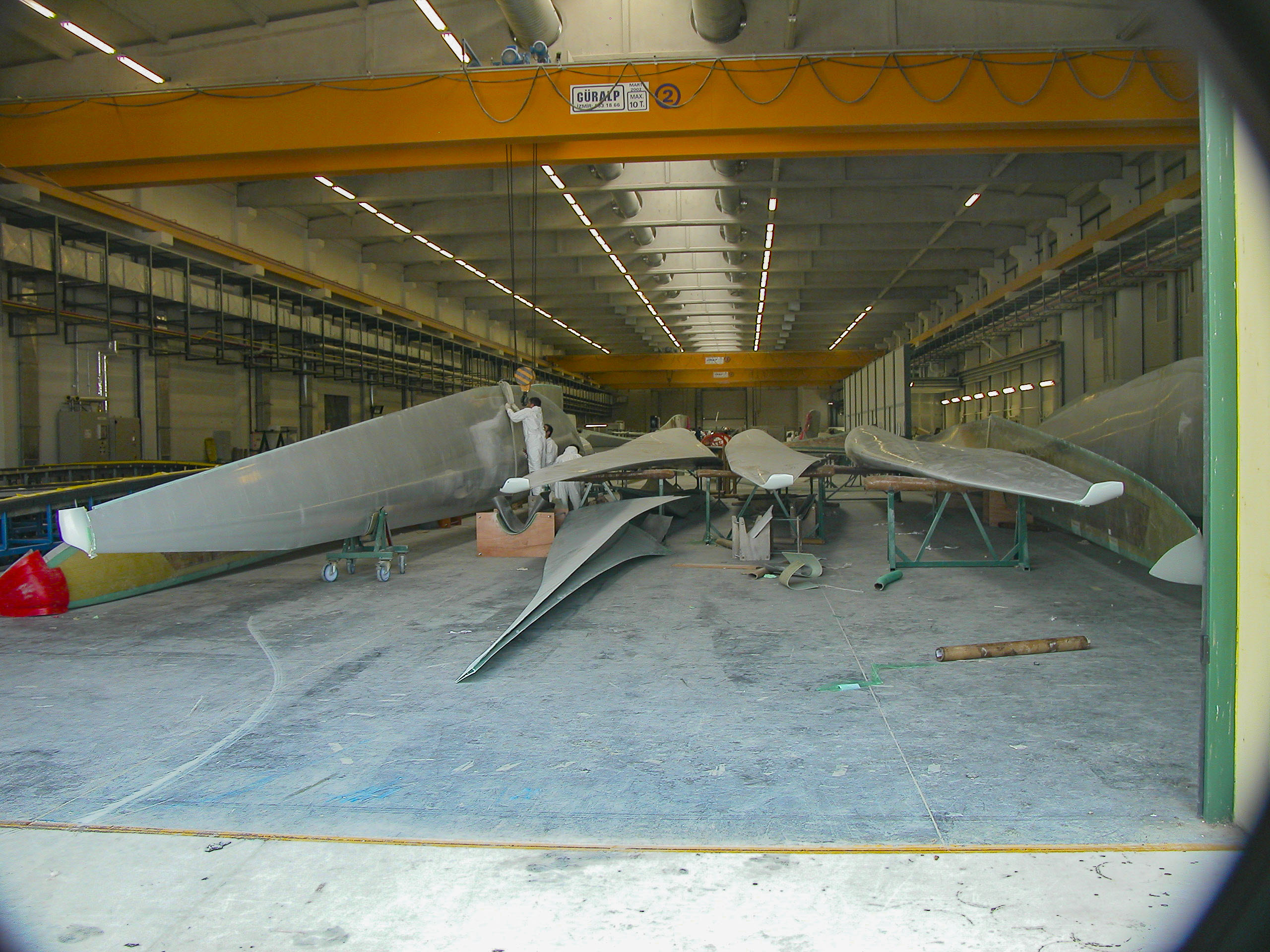
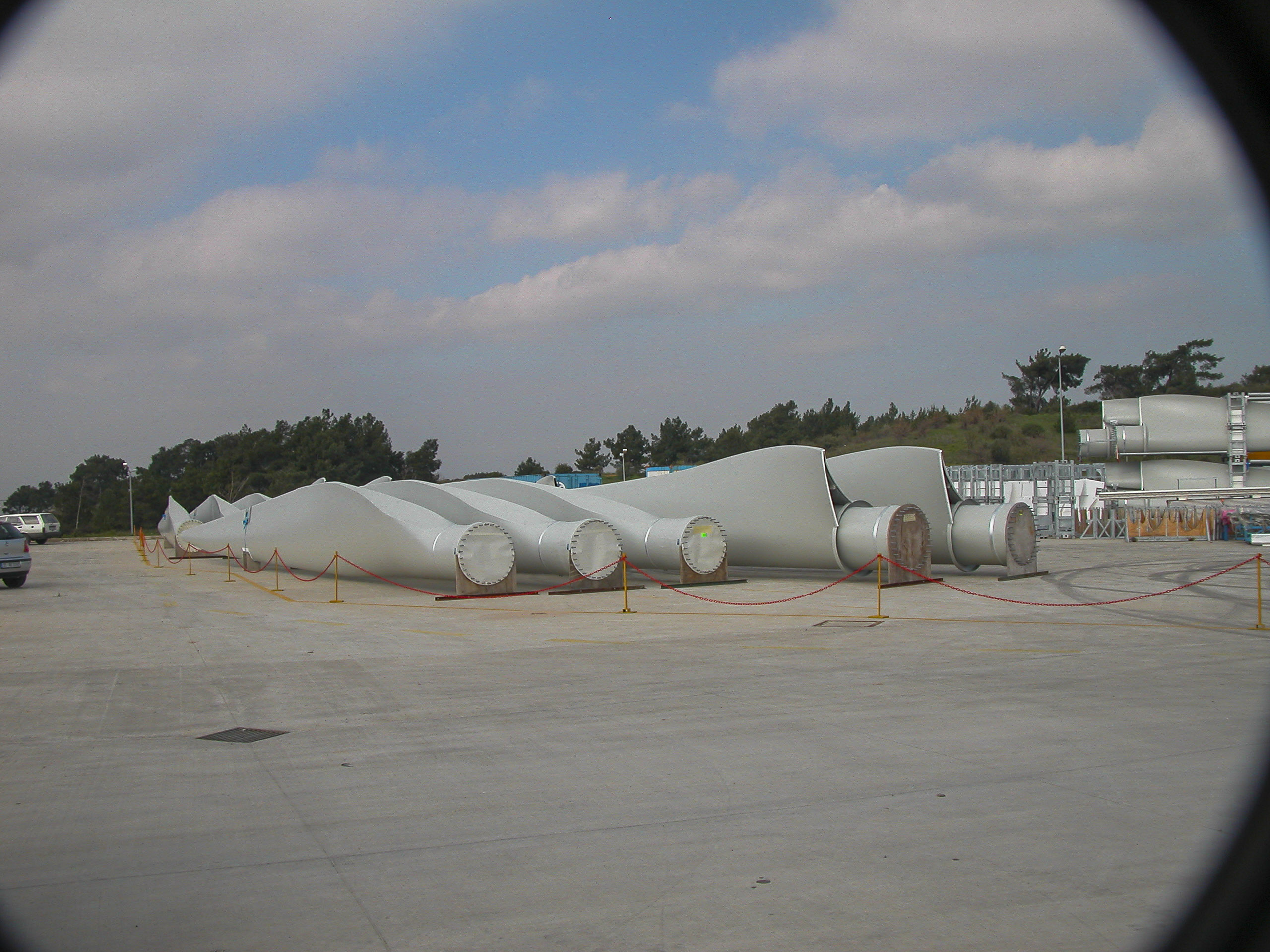
I wanted to get a shot of the turbine blades at the end where they attach to the rotor shaft. The blades in this picture appear to be of different types, but I wasn’t able to find out any of the specifics.

The end where the blades attach to the rotor shaft.

Kaya Tuncer’s car collection was not among the largest or most exotic that I’ve seen, but I found it great fun anyway. It seemed a little odd to go halfway around the world to see vintage American cars from the 20s and 30s, but it was gratifying to find that these old classics were valued and appreciated in Turkey as much as in the USA, if not more so.

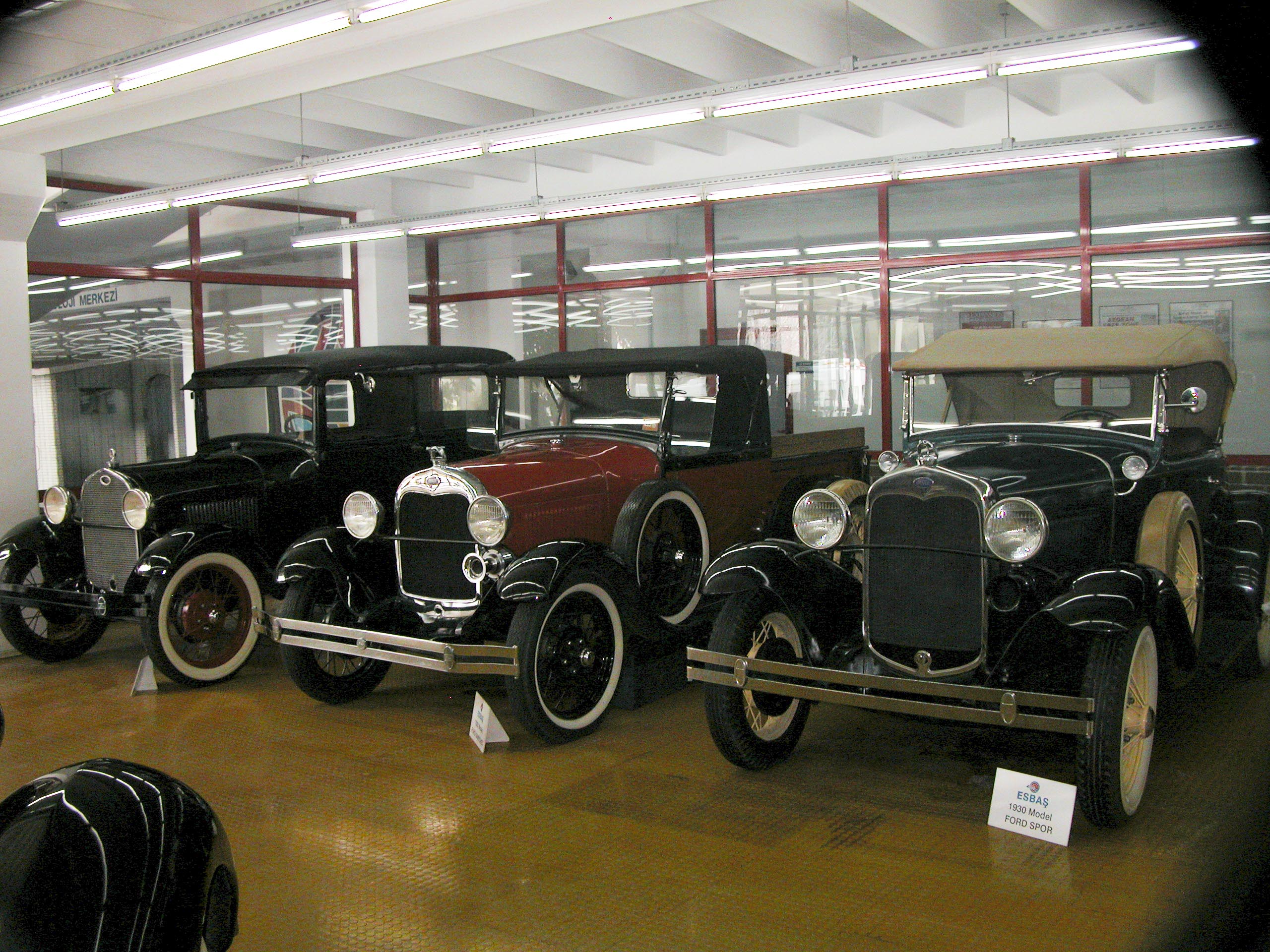
The collection included an amazing array of early Fords, including the late-20s Model As shown below. The leftmost is a 1928 sedan, the middle one a 1928 truck, and the rightmost a 1930 convertible.

Late 1920s Model A Fords in pristine condition.

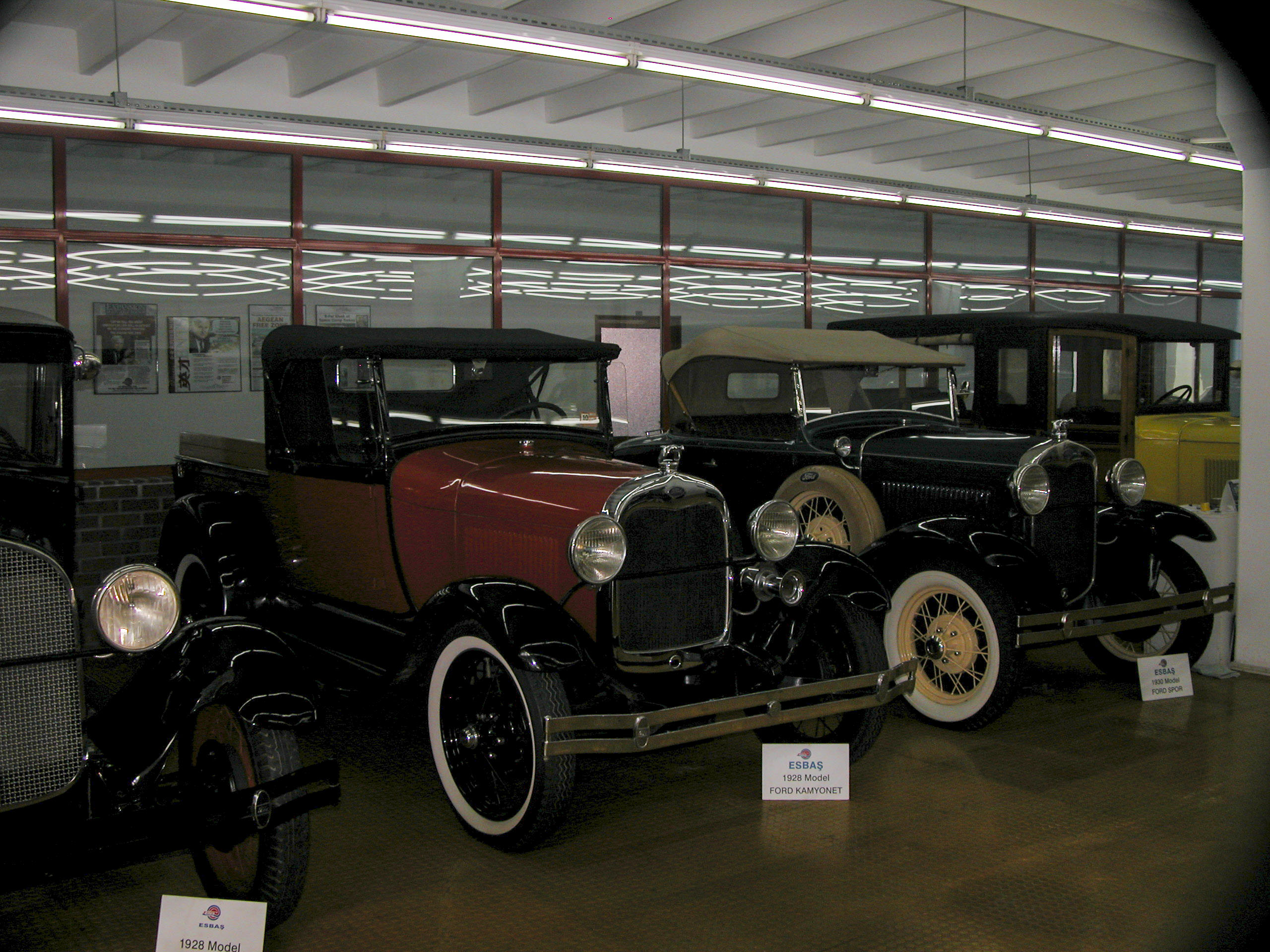
The placard for the Model A truck identified the model as a “Kamyonet,” which is a Turkified rendition of the French word “camionette,” which means “trucklet.” Quite appropriate. However, the model name listed for the convertible was “SPOR,” and I could only guess that this was meant to be “Sport.”

Model A “Camionette” and “SPOR” convertible.

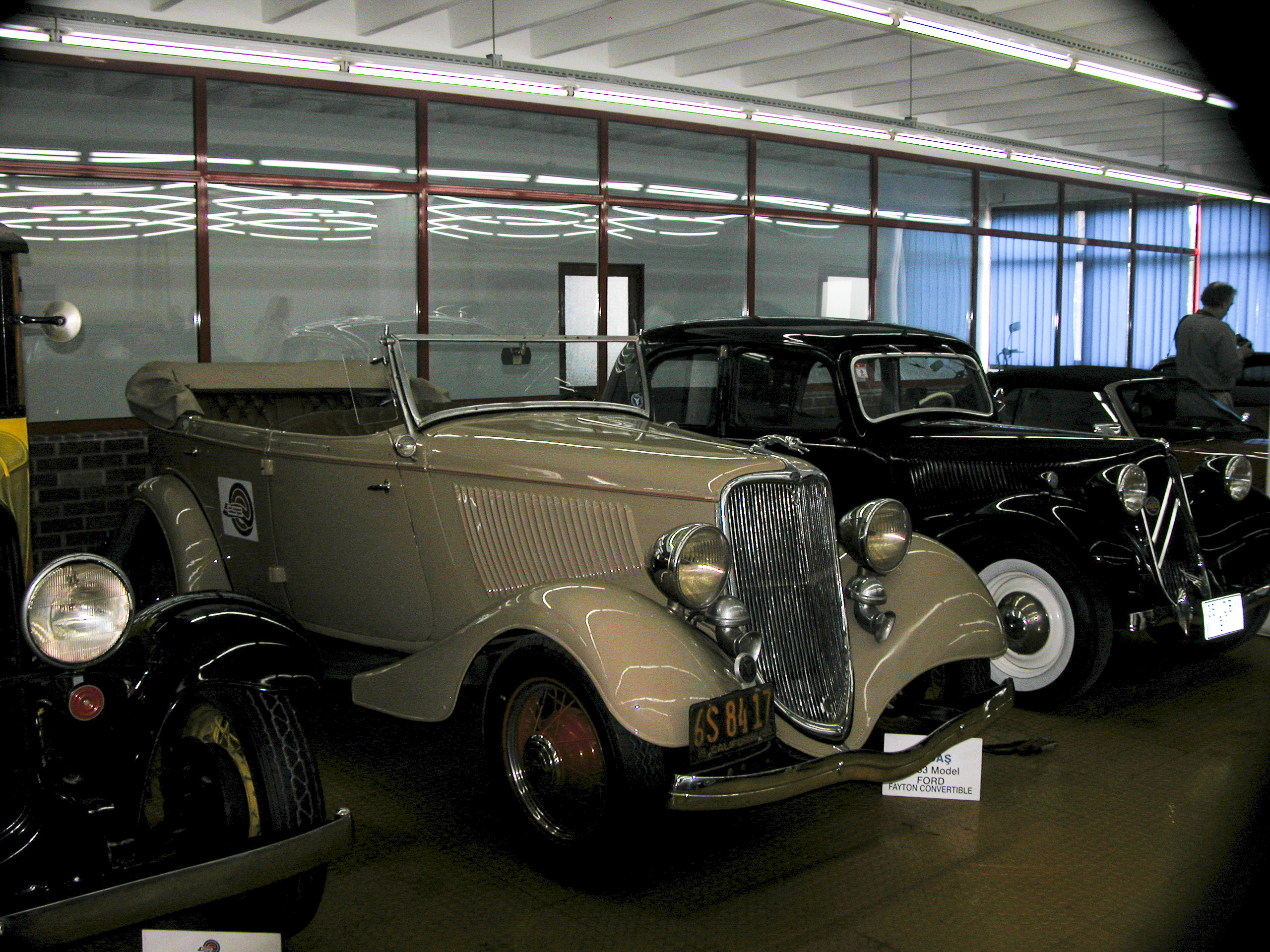
Another early Ford in the collection was a 1933 “Fayton” (Phaeton) convertible. When I was in high school in the 1950s, the 1932-34 Fords were the hot-rodders’ Holy Grail – I remember going around to car lots looking for them, but they were out of reach even then. The same was true for the Model As and Ts. I don’t think things have changed much since since then, except maybe that the later ’30s Fords, up through 1940, became equally sought-after. Hot rodders would kill to get these cars. I bet Mr. Tuncer shipped them to Turkey so that they wouldn’t get stolen.

1933 Ford Phaeton convertible

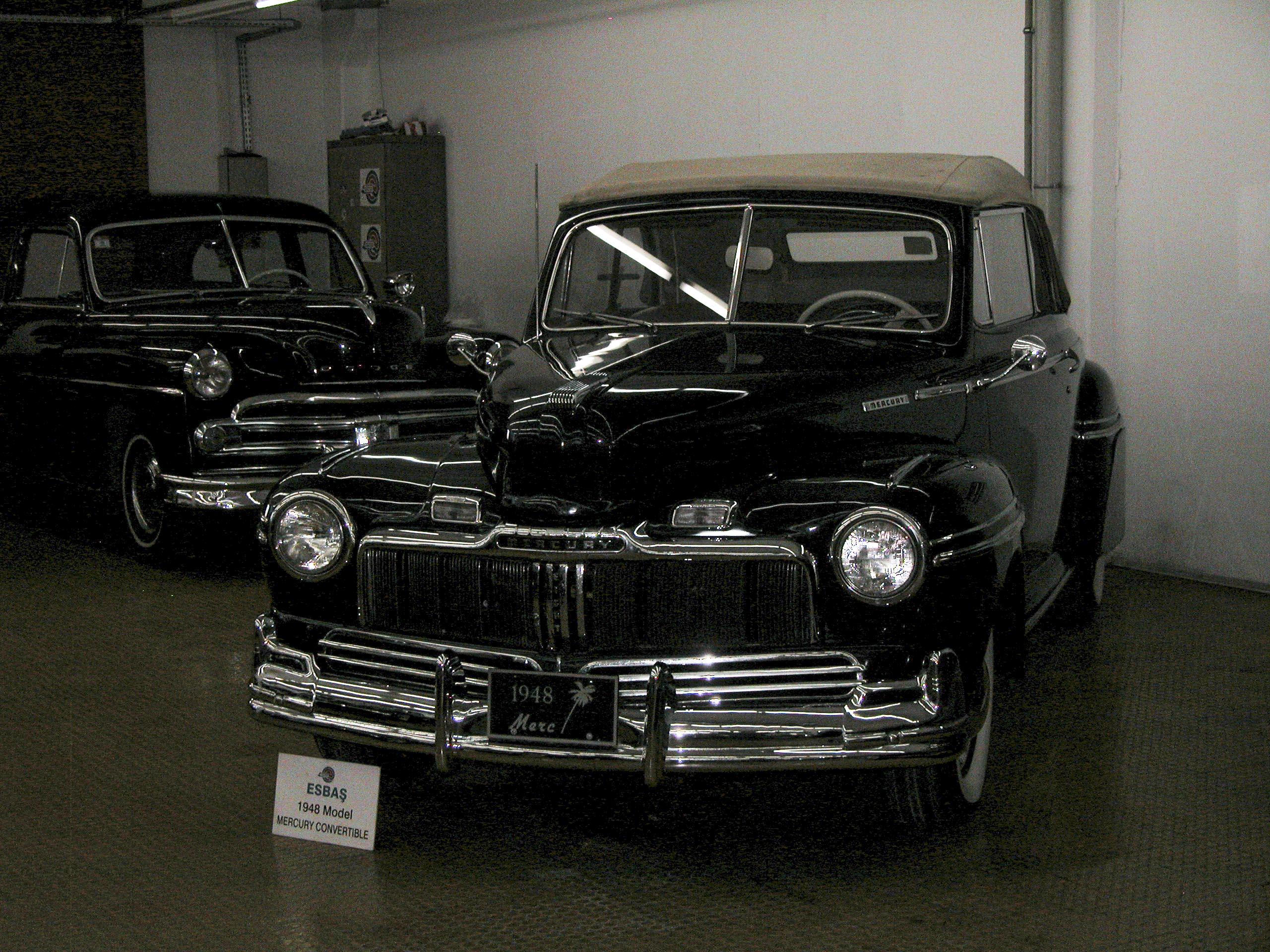
The early post-World-War II Ford lines, like this ’48 Mercury convertible, had nothing like the mystique of the prewar Fords; we considered them dowdy and ungainly, and they were assigned the derogatory sobriquet “Wombat”. Nevertheless, kids bought and drove them because they were plentiful and cheap.

1948 Mercury “Wombat” convertible. Behind it is an early ’50s Dodge.

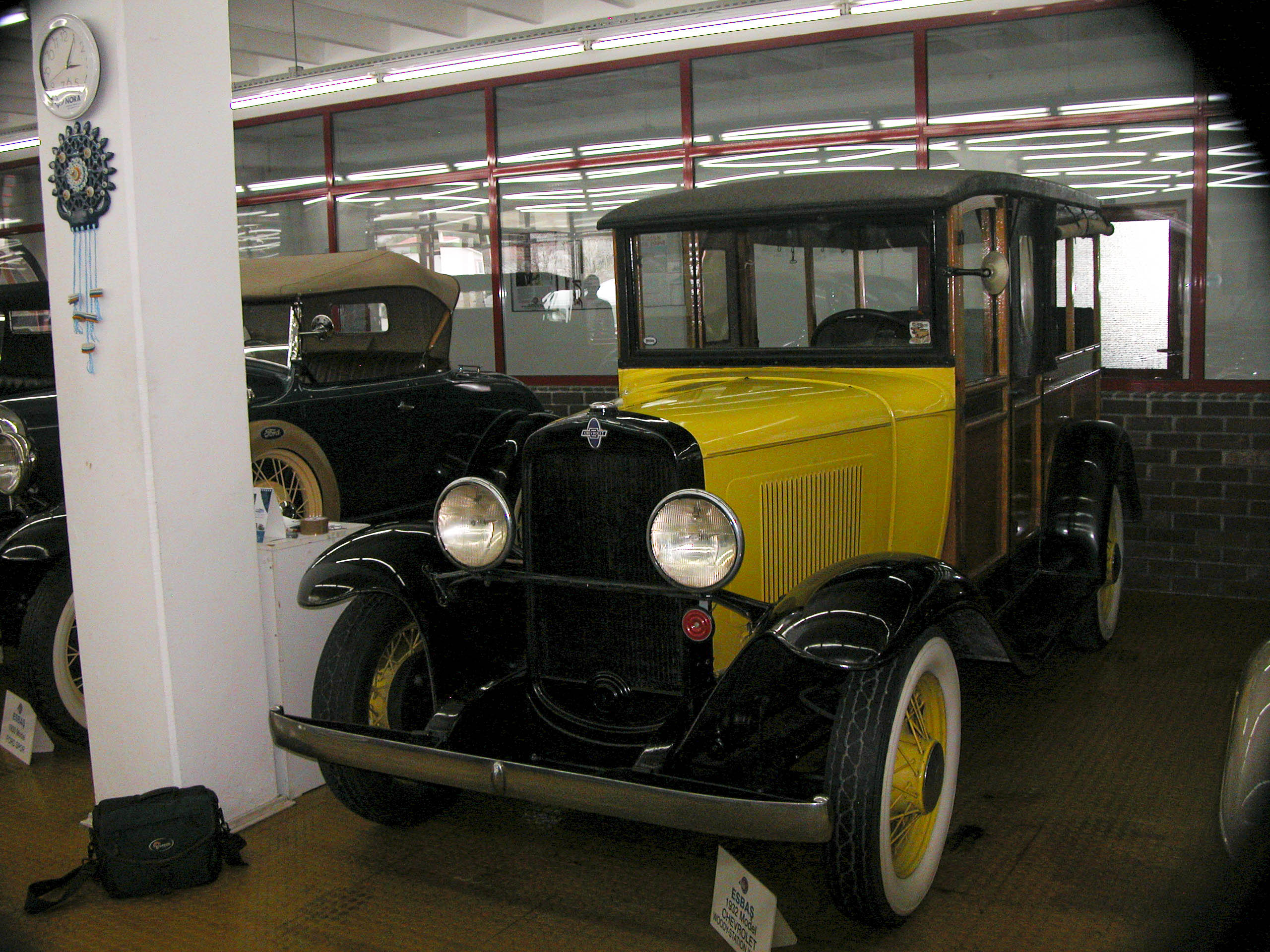
For the surfers of the ’60s – the generation after mine – the iconic vehicle was the Woody station wagon, which was ideal for transporting surfboards to the beach. Typically they were late ’30s or ’40s Fords, but the Tuncer car collection boasted a much more exotic one, a 1932 Chevrolet, one that would inspire unrestrainable lust in the heart of any self-respecting surfer.

1932 Chevrolet Woody Station Wagon

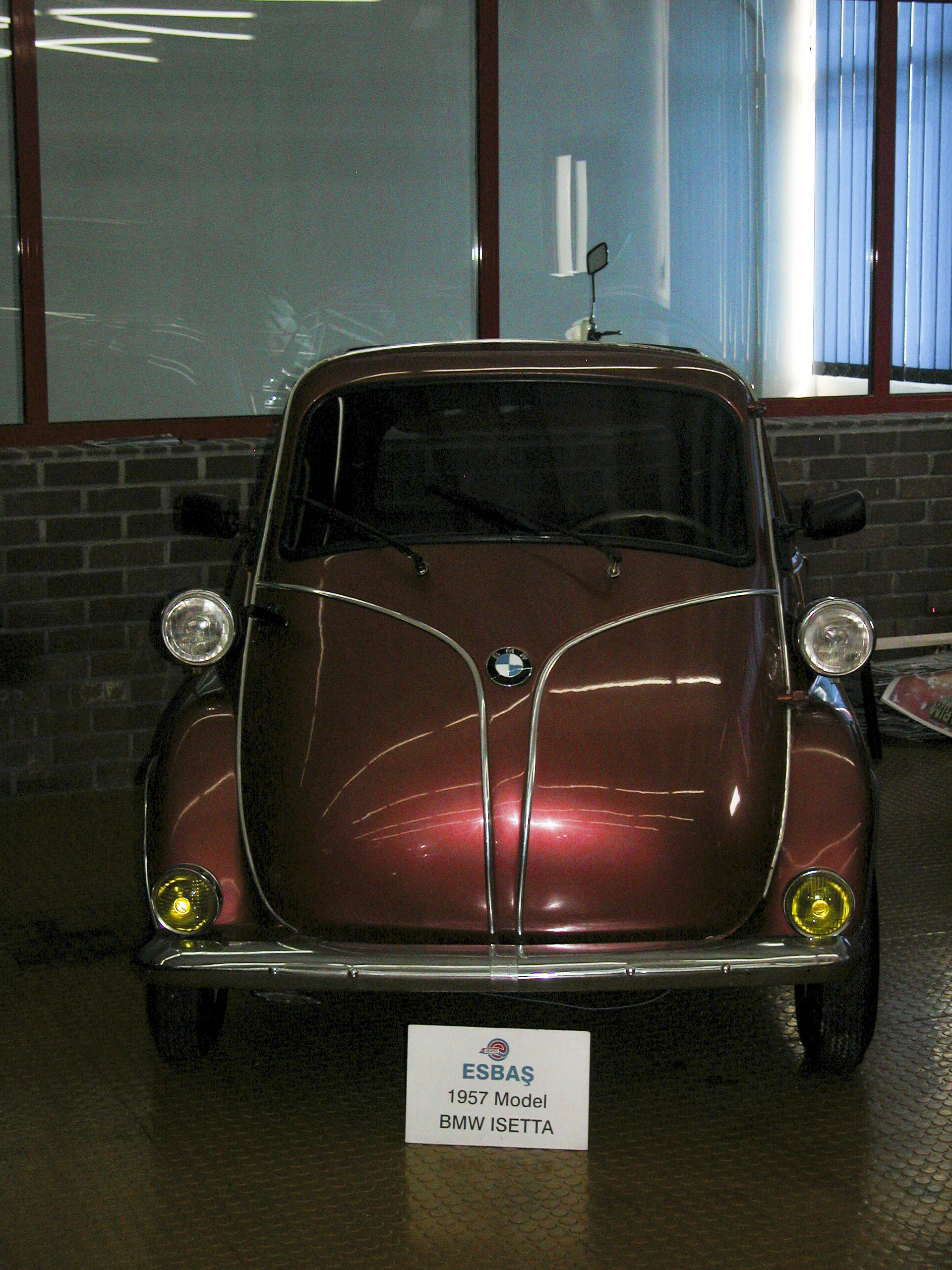
A departure from the usual fare of the museum was the 1957 BMW Isetta in the following photo, the result possibly of miscegenation between a motorcycle and a golf cart. These days it seems incredible that BMW would ever make such a car, but in the early post-WW-II years automobile ownership was an exotic and expensive luxury for most Europeans and there was plenty of demand for minimal, inexpensive, high-mileage cars (the Isetta got 78 mpg). The Isetta actually originated in Italy in 1953 with a company called Iso (hence the diminutive “Isetta”) and was made there, in France, Spain and South America before BMW acquired the marque. The Isetta had a one-cylinder 12-horsepower motorcycle engine, seated two plus one small child if squeezed hard, and the only door was at the front – actually it was the front – of the vehicle. It was derisively known in US sports-car circles as “The Egg” and more affectionately in Europe as the “Bubble Car.” It had a top speed of 47 miles per hour and took 30 seconds to get from zero to 30 mph. BMW ceased production in 1962 after 161,728 units had been sold. In 1957 a BMW Isetta sold for $1,048; today you would have to fork over $45,000 to $55,000 for an Isetta in top condition, like the one in the Tuncer collection.

Also known as “The Egg.”

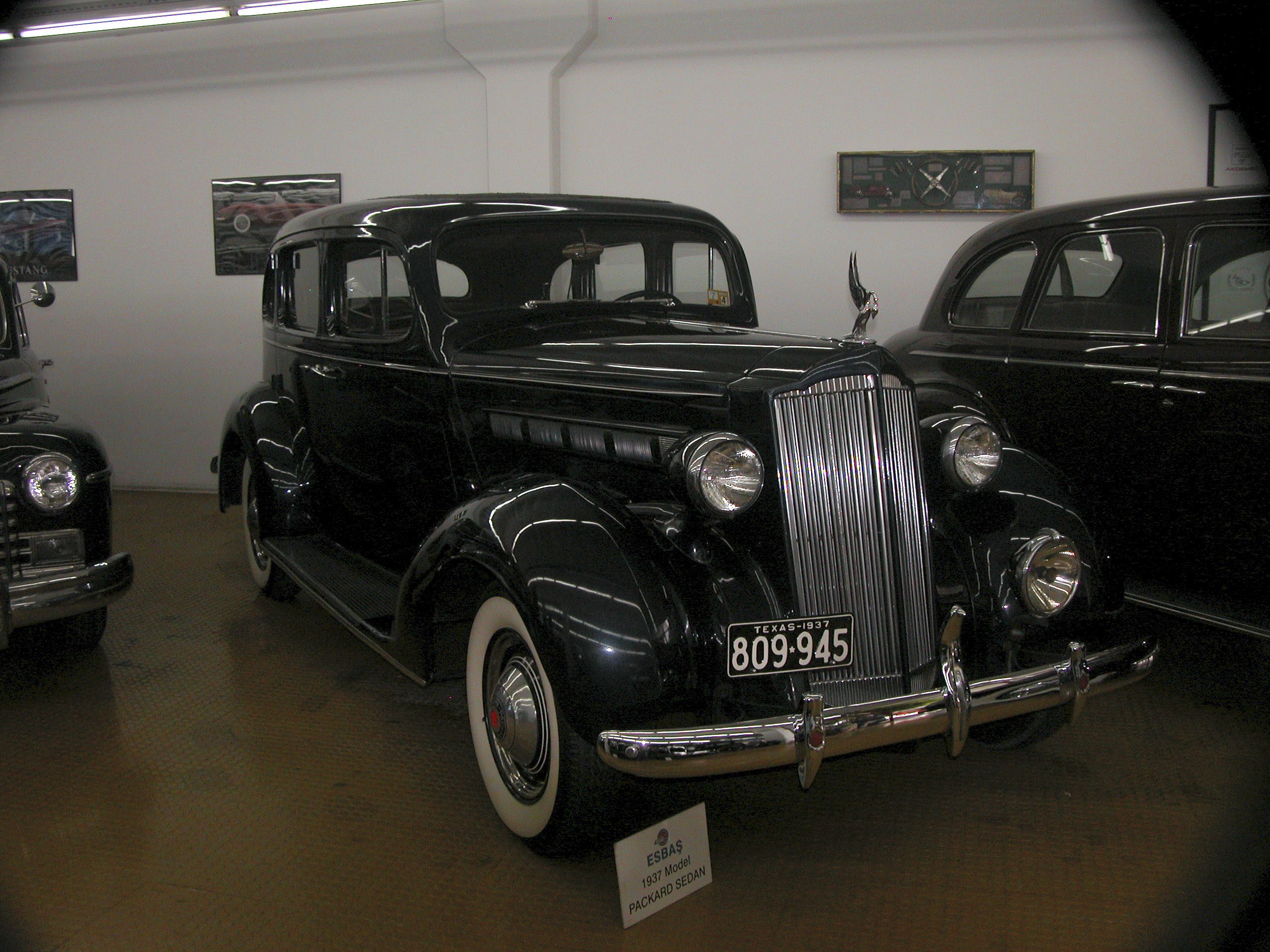
A more upscale vehicle was the 1937 Packard sedan shown in the following photo. At one time, during the late 1920s, Packard was the top-selling brand among American luxury cars, and enjoyed a worldwide reputation for quality, exporting more cars than any other in its price class. The company’s slogan, “Ask the Man who Owns One,” was a byword at home and abroad – you could ask the Tsar of Russia and Emperor of Japan about their Packards, for example. During the 1930s, buoyed by the support structure of their parent organizations GM and Ford, Cadillac and Lincoln began to catch up, but Packard remained strong until after World War II, when a series of poor business and engineering decisions, among other problems, led to its gradual decline and demise.

“Ask the man who owns one.” Damn few of those around anymore.

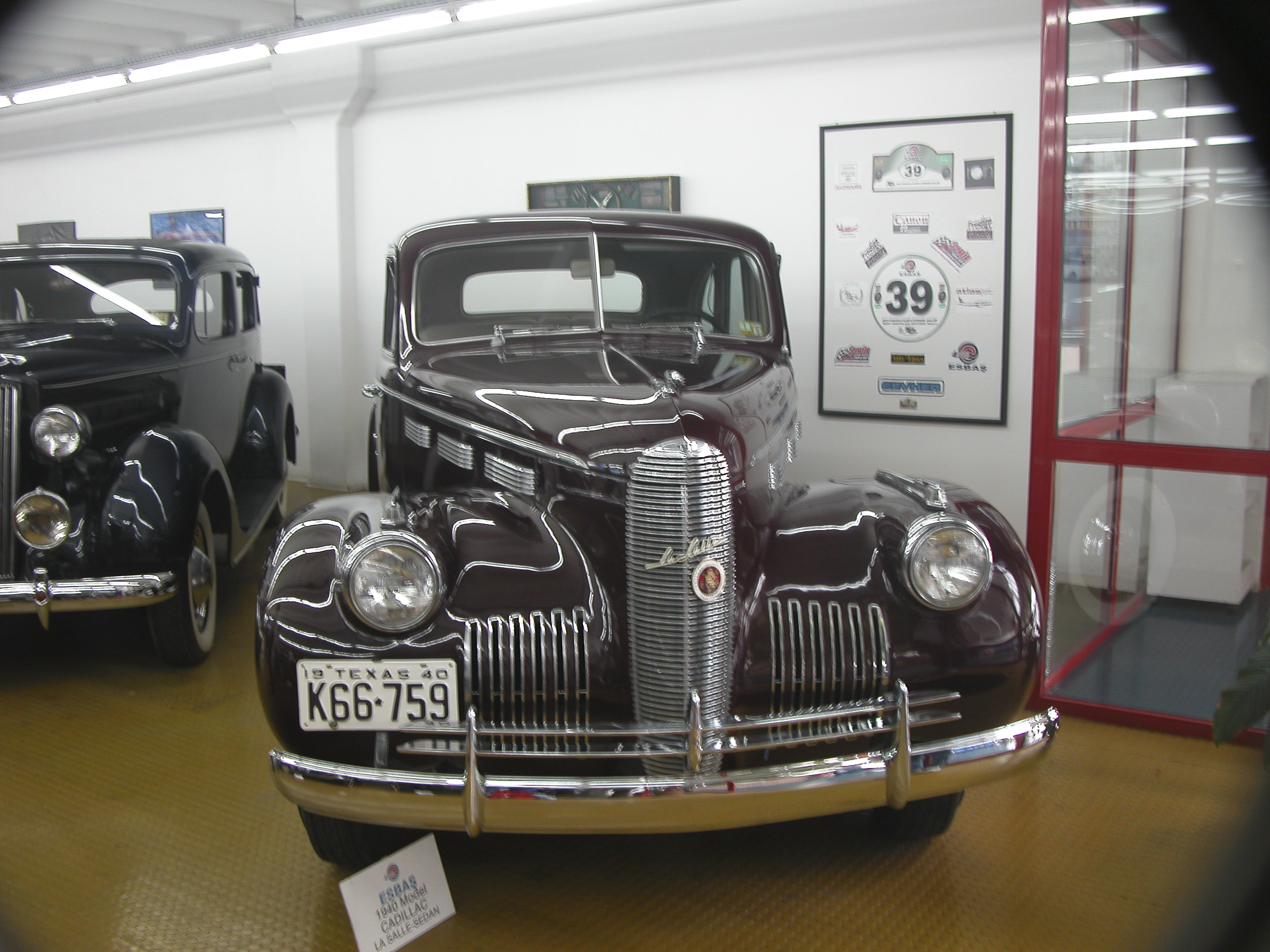
The Tuncer collection also included a 1940 Cadillac LaSalle. The LaSalle was kind of a junior Cadillac, built and marketed by Cadillac but marketed as a separate brand, and priced lower than a regular Cadillac. LaSalles were built from 1927 to 1940, so the car in the picture below is one of the last LaSalles ever built. GM’s management killed the LaSalle in 1941 because they had begun to see it as a superfluous sibling of Cadillac and Buick, overlapping the market positions of both and stealing sales from them.

1940 Cadillac LaSalle sedan.

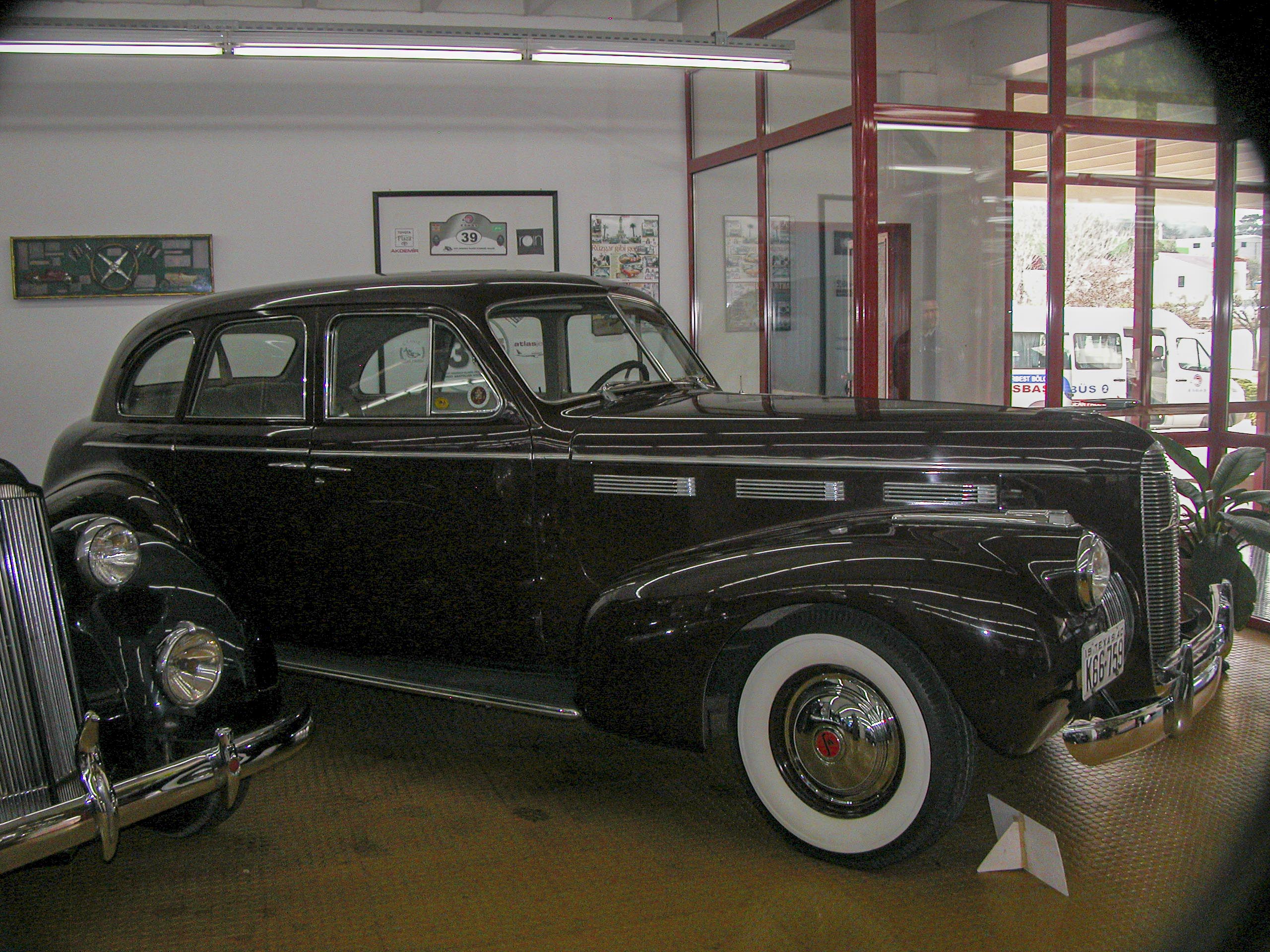
The ’40 LaSalle 4-door sedan closely resembled a car I used to own, a 1940 Buick. It originally had a straight-8 engine, but it threw a rod, and the car was then acquired by the master mechanic and engineer extraordinaire Steve Stephenson, who dropped a 55 Buick V-8 into it before selling it to me for $150. I owned it during my last year in college, along with a Honda 305 Super Hawk motorcycle. I had it painted Honduras maroon metallic (a bad choice; Steve suggested a dark brown, which would have been far more appropriate for such a dignified automobile) and had it upholstered in Tijuana with black tuck-and-roll vinyl. After graduating from college, I went into the Navy and sold the car back to Steve.
The ’40 LaSalle 4-door sedan closely resembled a car I used to own, a 1940 Buick.

One summer night I was driving the Buick down Second Street in Belmont Shore, Long Beach, when some tough-looking dudes in an old Chevy pulled up alongside. They started shouting insults at me and following me as I drove down Second Street through Naples and turned right on Pacific Coast Highway toward Seal Beach. As I was driving down PCH they pulled up alongside and threw a full beer can at my car, which put a chip in the right rear windshield. At that point I slowed down, pulled behind them as if I were getting their license plate number, then shot around them on the left, took the Buick up to 75 mph and left the Chevy far behind in my rear view mirror as I rocketed toward Huntington Beach.
Categories
Turkey, March-April 2006

Space Camp Turkey, March 25, 2006

Space Camp Turkey is a space and science educational institution based in the Aegean Free Zone near Izmir, Turkey. According to its website, it opened in 2000 with a primary mission of motivating young people from around the world to pursue careers in science, math, and technology, using interactive, space-related simulations, in which “both youth and adults learn about communication, teamwork, and leadership in a dynamic, fun-filled environment….Programs at Space Camp Turkey focus on simulators to give participants the sensations of working and living in space.” Another major aim is to promote international amity: “Our state-of-the-art facility offers an ideal environment where young people from different nations can come together to build long-term friendships and understand other cultures.” I must say that we saw abundant evidence of this as we met participants from all over Europe and Asia, including from such nations not known for mutually friendly relations such as Greece and Turkey, who were clearly getting along very well together.

Our tour organizers and sponsors, the Orange County Space Society and Kaya Tuncer, had a long and close association with Space Camp Turkey, so a visit to their facility was a priority, and it turned out to be great fun as well as an edifying experience.

Space Camp Turkey is the second institution of its kind to open in the world, the first being the Space Camp in Huntsville, Alabama. It also claims to be the only such facility in Turkey, the Middle East, Europe and Asia.

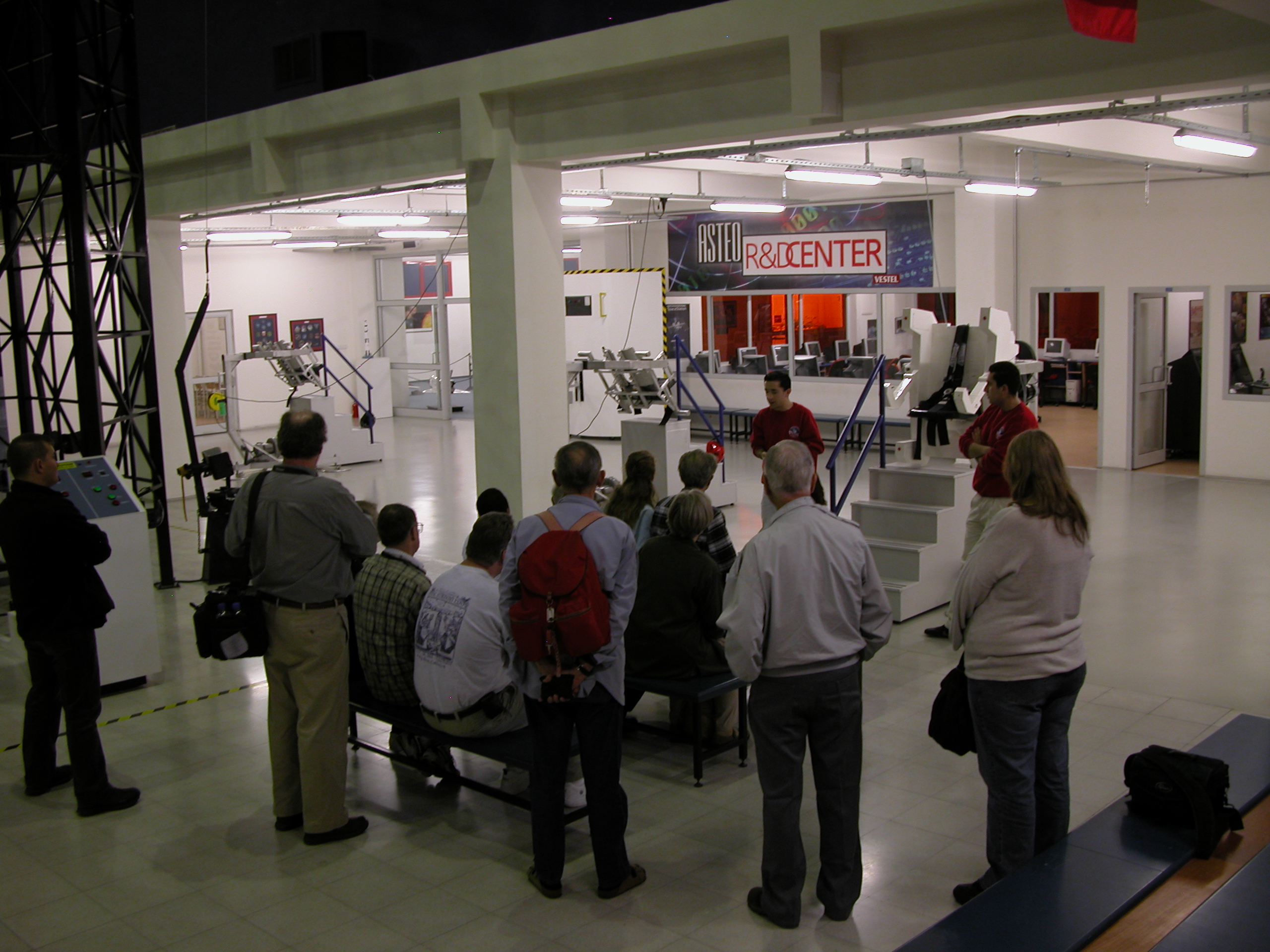
Upon our arrival at Space Camp Turkey, and following a brief meet-and-greet session with the staff, we were given an orientation which described the facilities, told us what to expect during the simulations, and gave us some idea of our chances of survival.

Orientation session at Space Camp Turkey

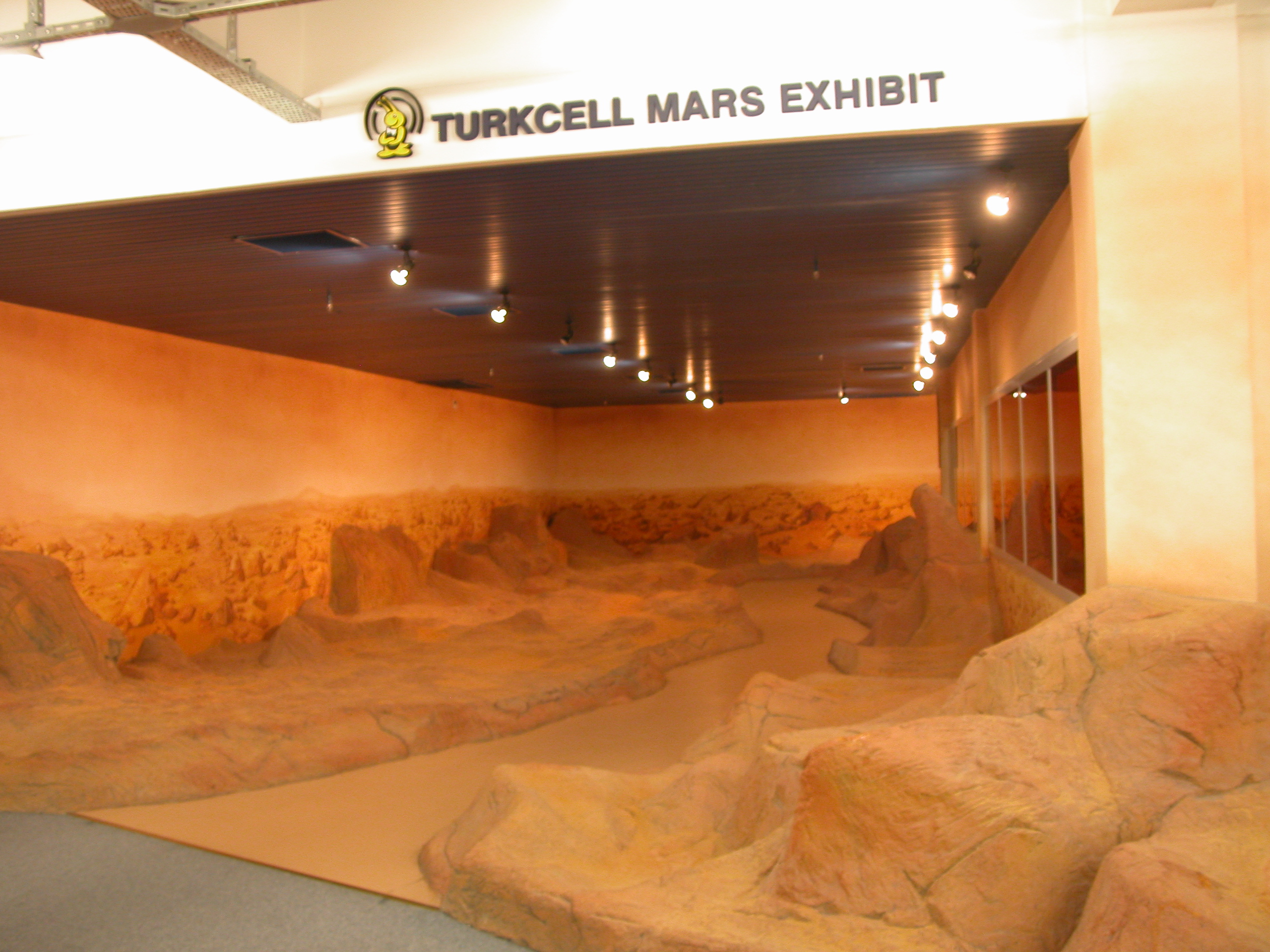
The Mars Exhibit was built to prepare prospective colonists for an eventual landing on the Red Planet. Here trainees would be cast adrift on the dry, inhospitable surface to survive as best they could, without food, water or protective clothing, subject to ambush by hostile Martians from the movie “War of the Worlds.” A few of our party wandered by mistake into this exhibit and were lost.

A simulation of the surface of the planet Mars. No Martians in evidence.

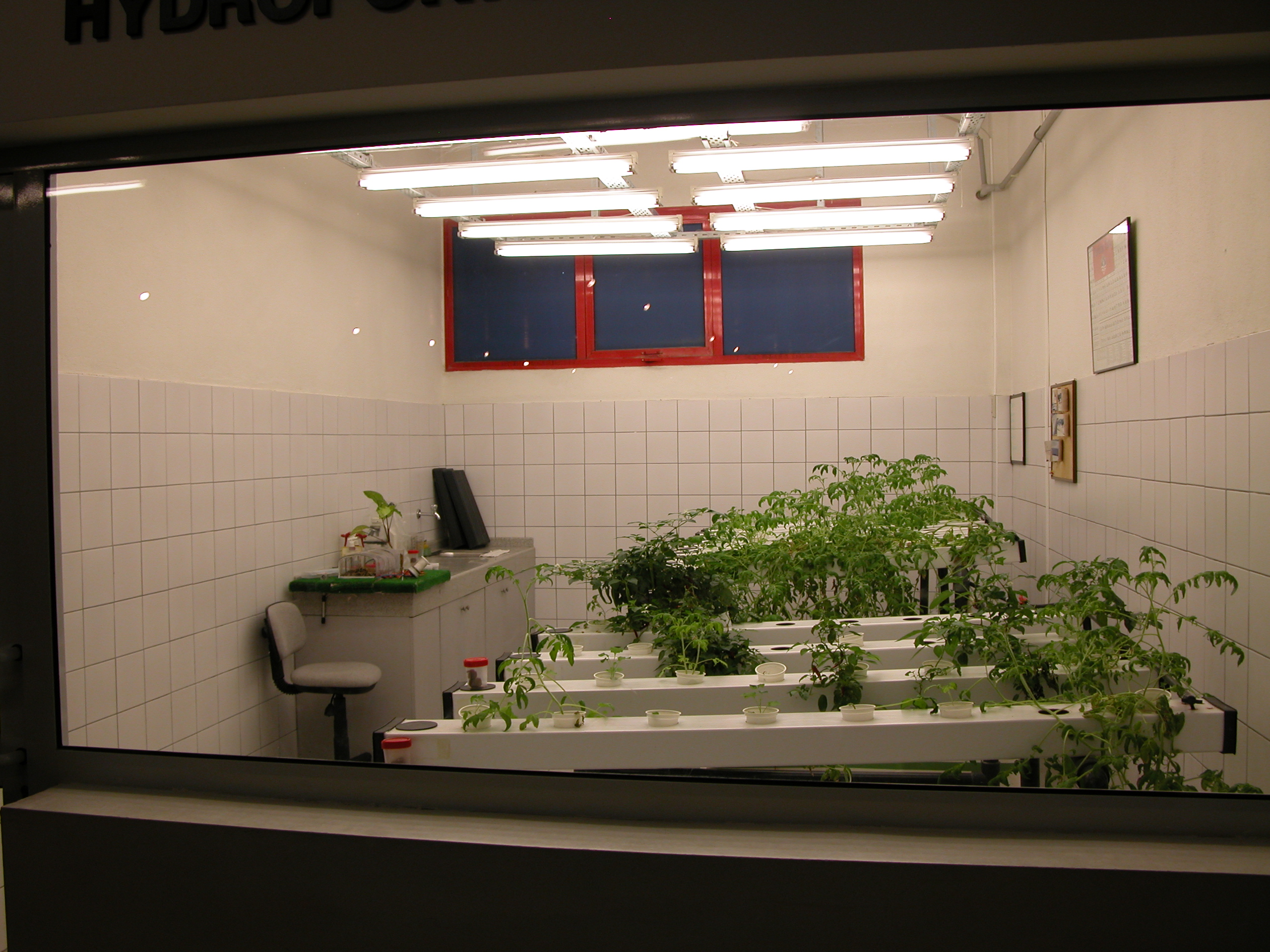
Part of Space Camp’s mission was to conduct research in support of space exploration and colonization. This included a lab where carnivorous Martian plants were grown to prepare trainees for conditions they would encounter when sent to colonize the Red Planet. We only lost one or two of our party to this hazard.

The lab where Martian carnivorous plants are grown to prepare trainees for an eventual landing on the Red Planet.

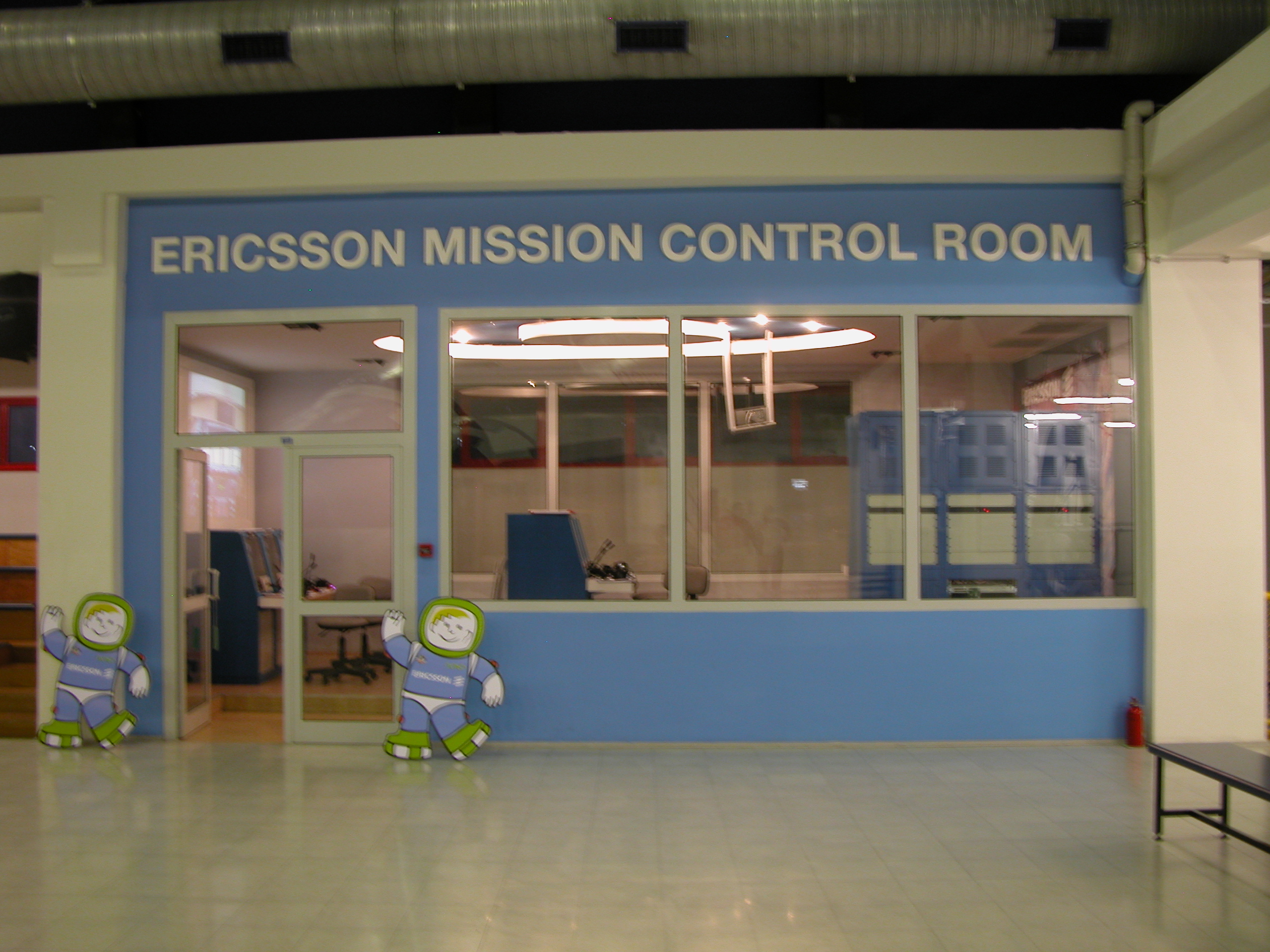
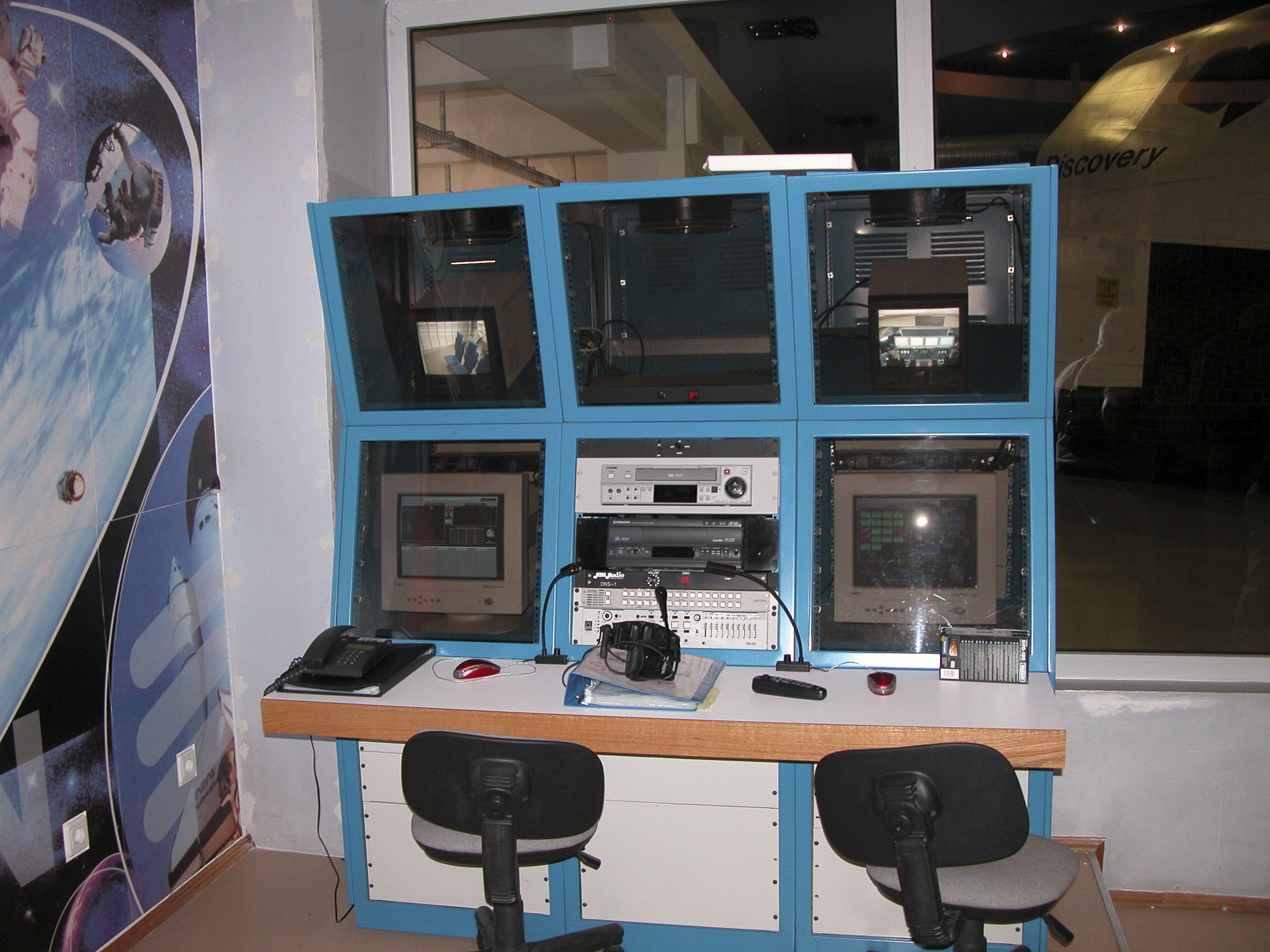
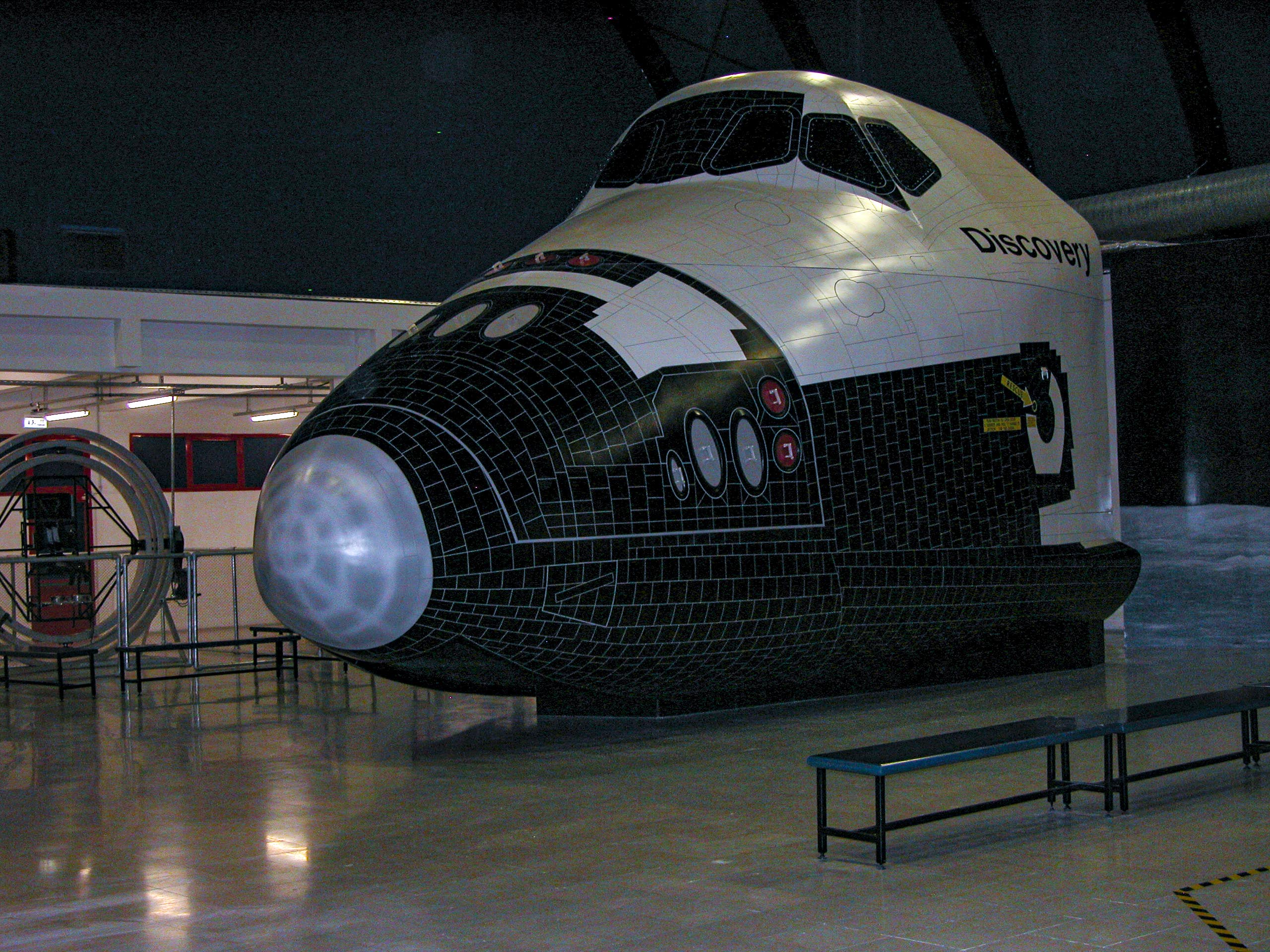
At the time of our visit in 2006, Space Camp training was largely focused on the Space Shuttle program, featuring a mockup of the Space Shuttle Discovery, complete with a ground-based mission control, shown in the picture below. Despite the demise of the real Space Shuttle program, I have the impression that it is still alive and well at Space Camp Turkey. In any case, we’ll be seeing lots more of the Space Shuttle on this page.

Ground control center for the Discovery Shuttle mockup. Named after Leif Ericsson, Viking discoverer of America. (I made that up, of course, just like I made up all the more outrageous statements in this blog; I have no idea who the Ericsson being honored here was.)

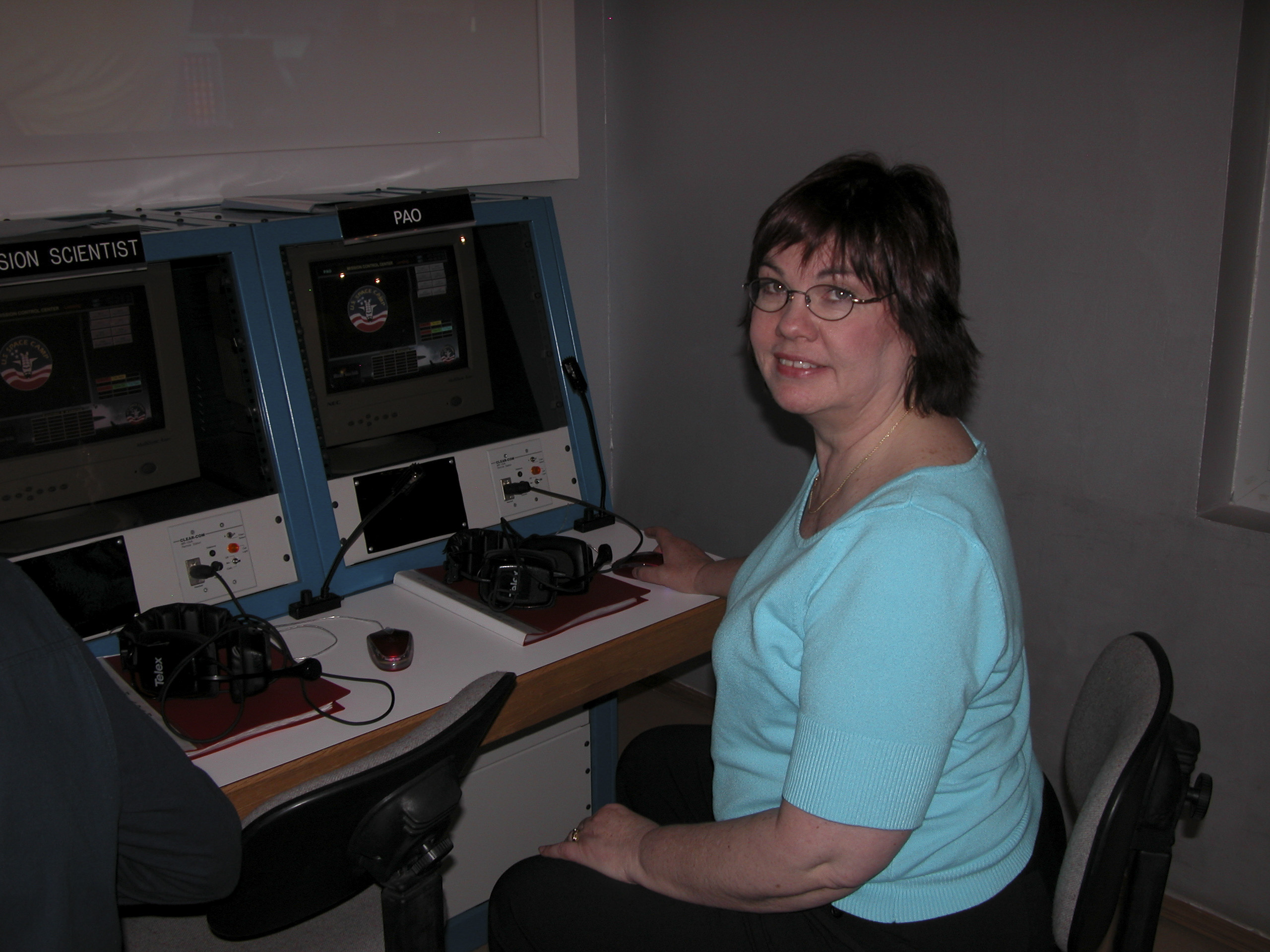
Inside the control center, there was a desk for controllers to sit at and do their thing. It probably wasn’t as elaborate as the one in Houston, but it worked for us.

Control desk for the Discovery Space Shuttle.
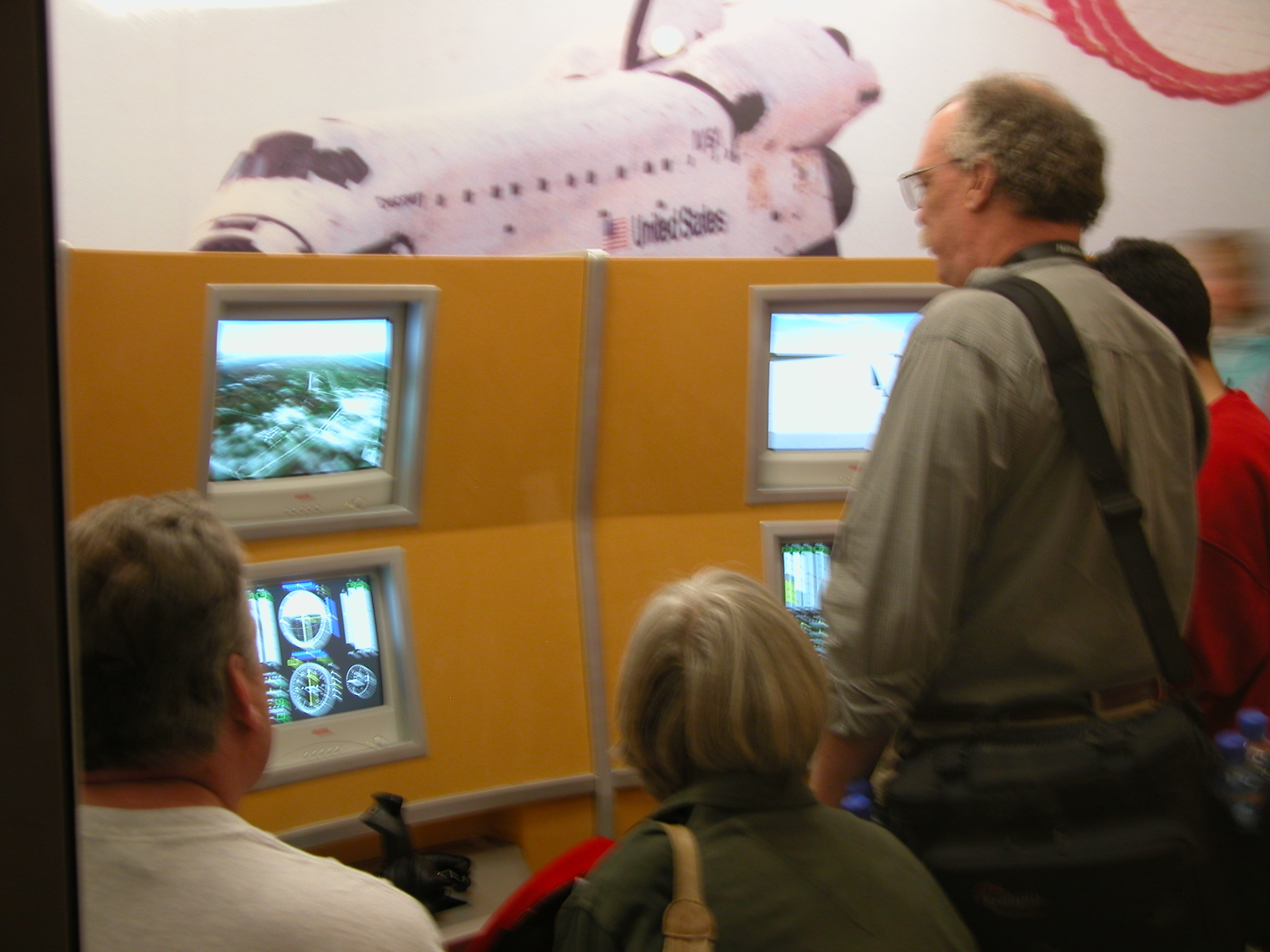
Jim Windlinger, Pam Bloxham and Rick Gering in Mission Control.
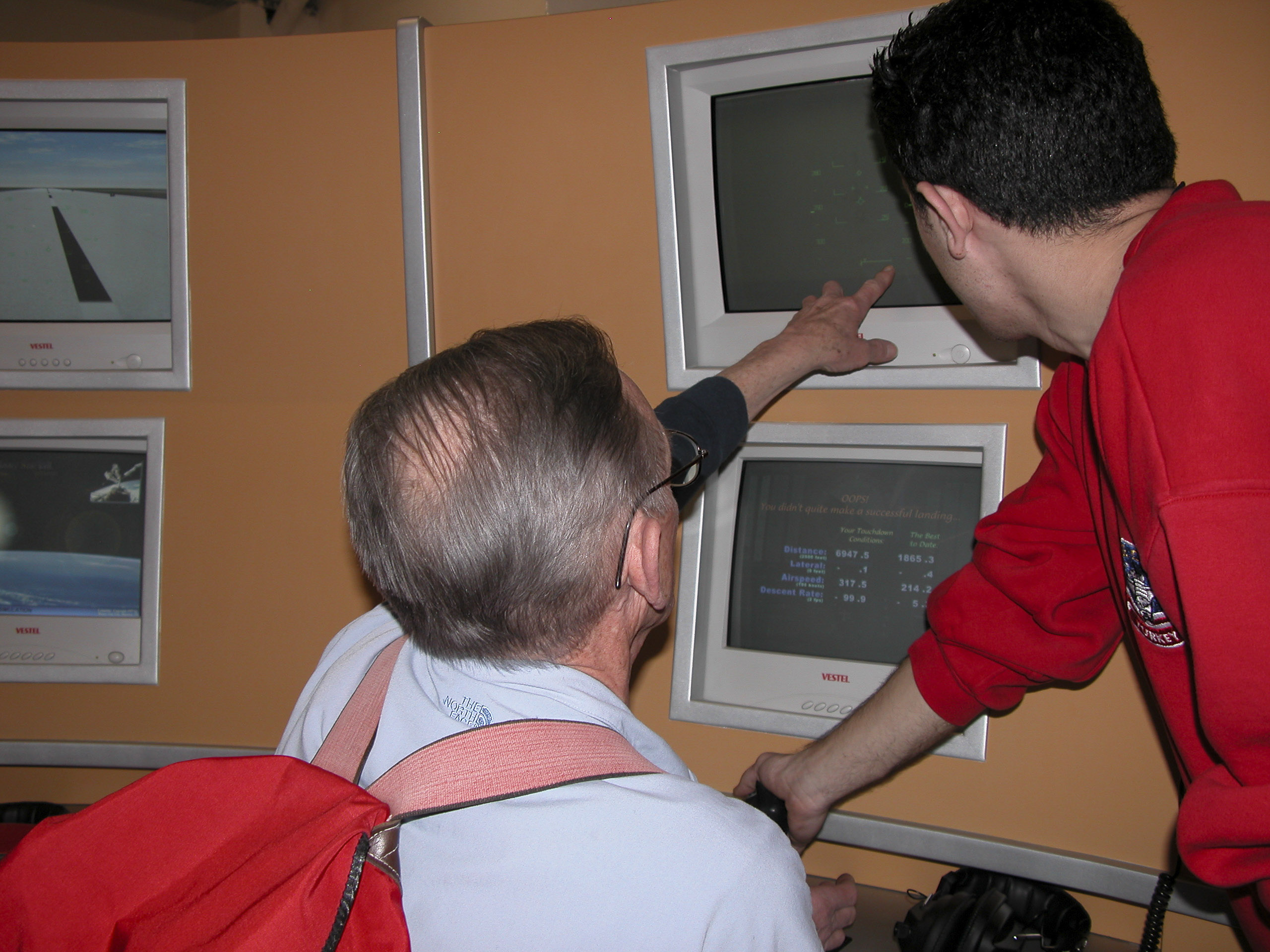
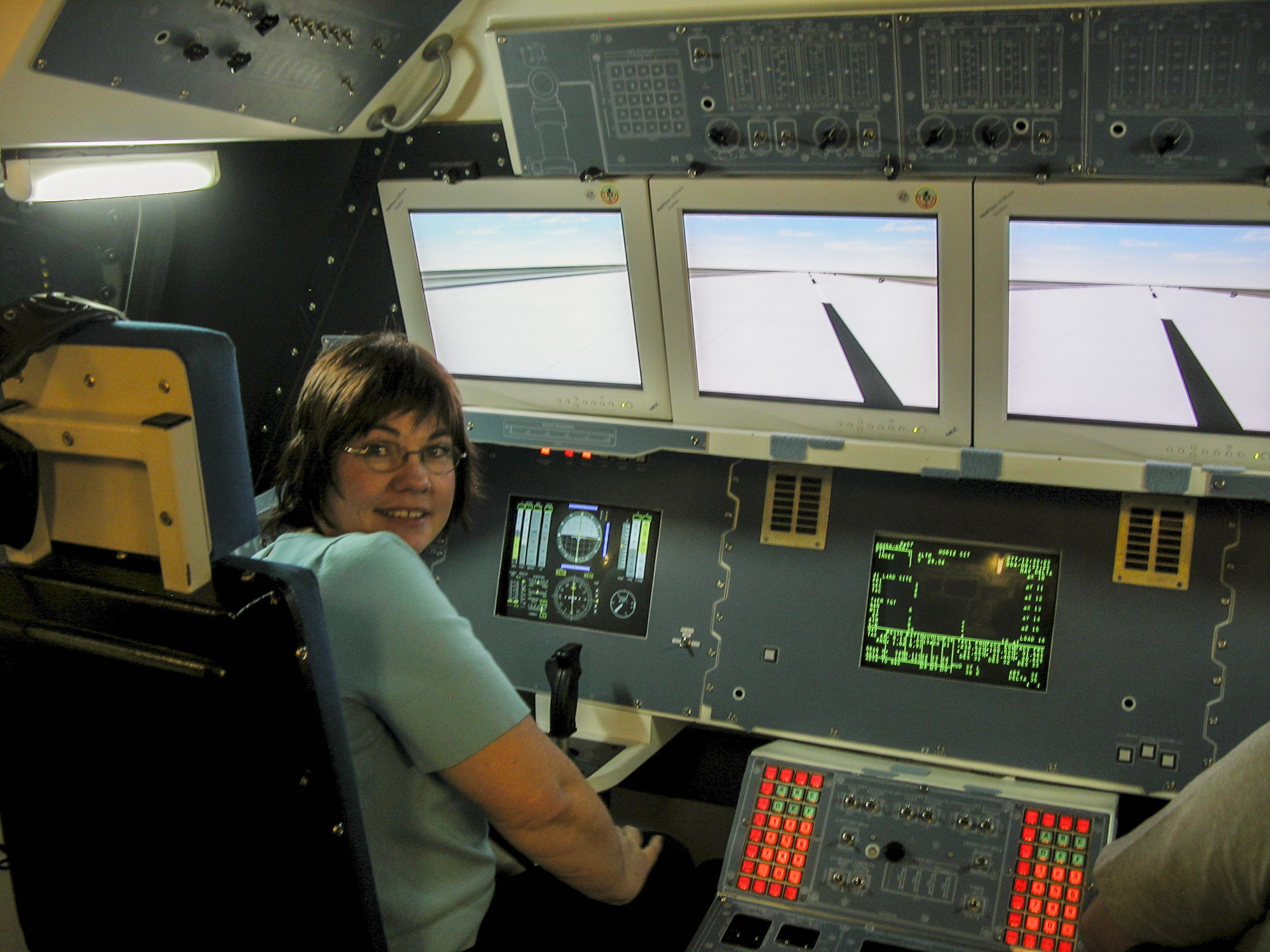
Chuck Mattox gets help from the instructor in learning how to guide the Space Shuttle.
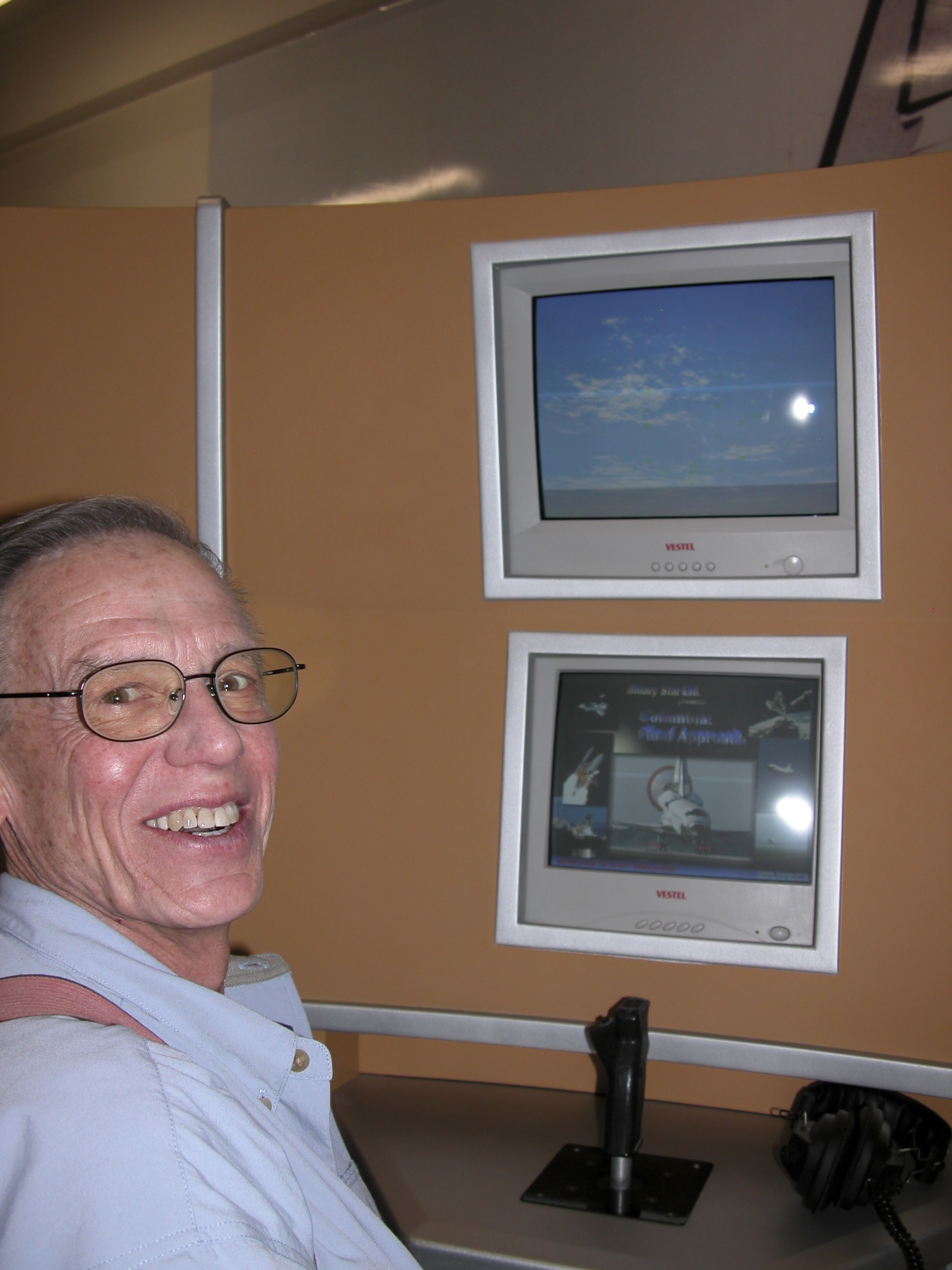
Chuck beams his satisfaction at bringing the Discovery to a successful touchdown.

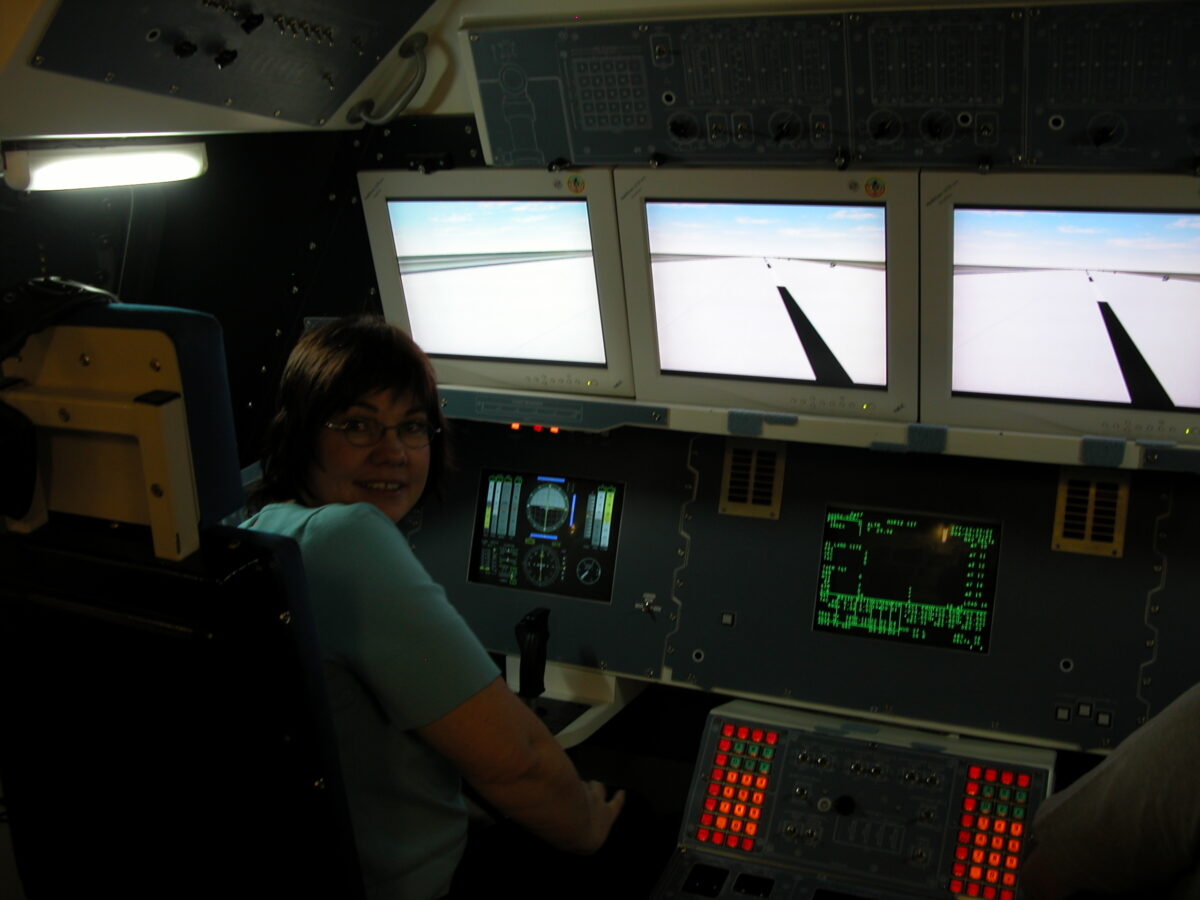
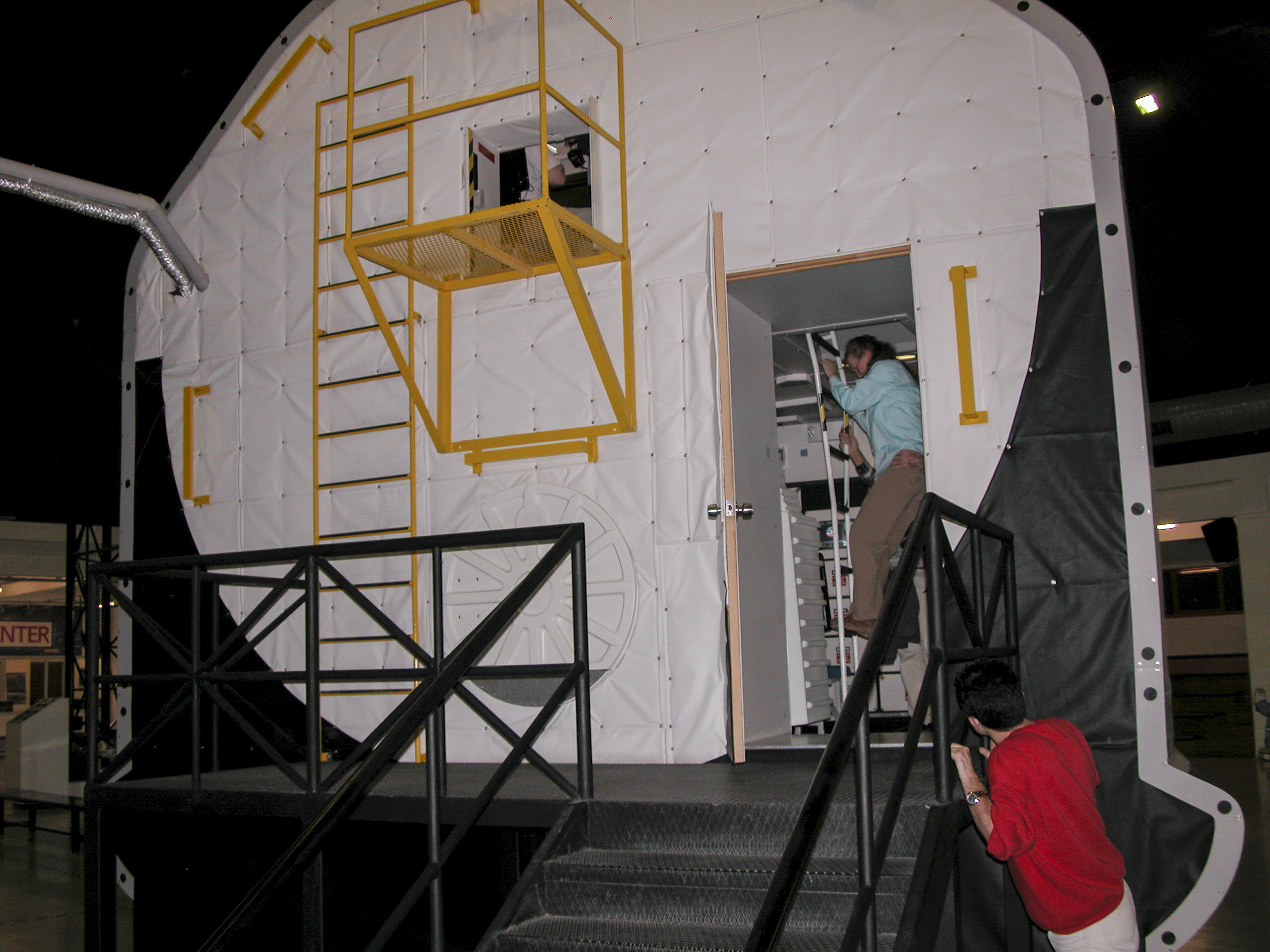
Space Camp Turkey’s mockup of the Space Shuttle was limited to the nose section, which included the cockpit and controls; it omitted the cargo bay, wings, tail, etc., which of course were unnecessary for its purpose and would have entailed a superfluous expense.

Space Camp Turkey’s mockup of the nose section. No cargo bay, wings, tail, etc.

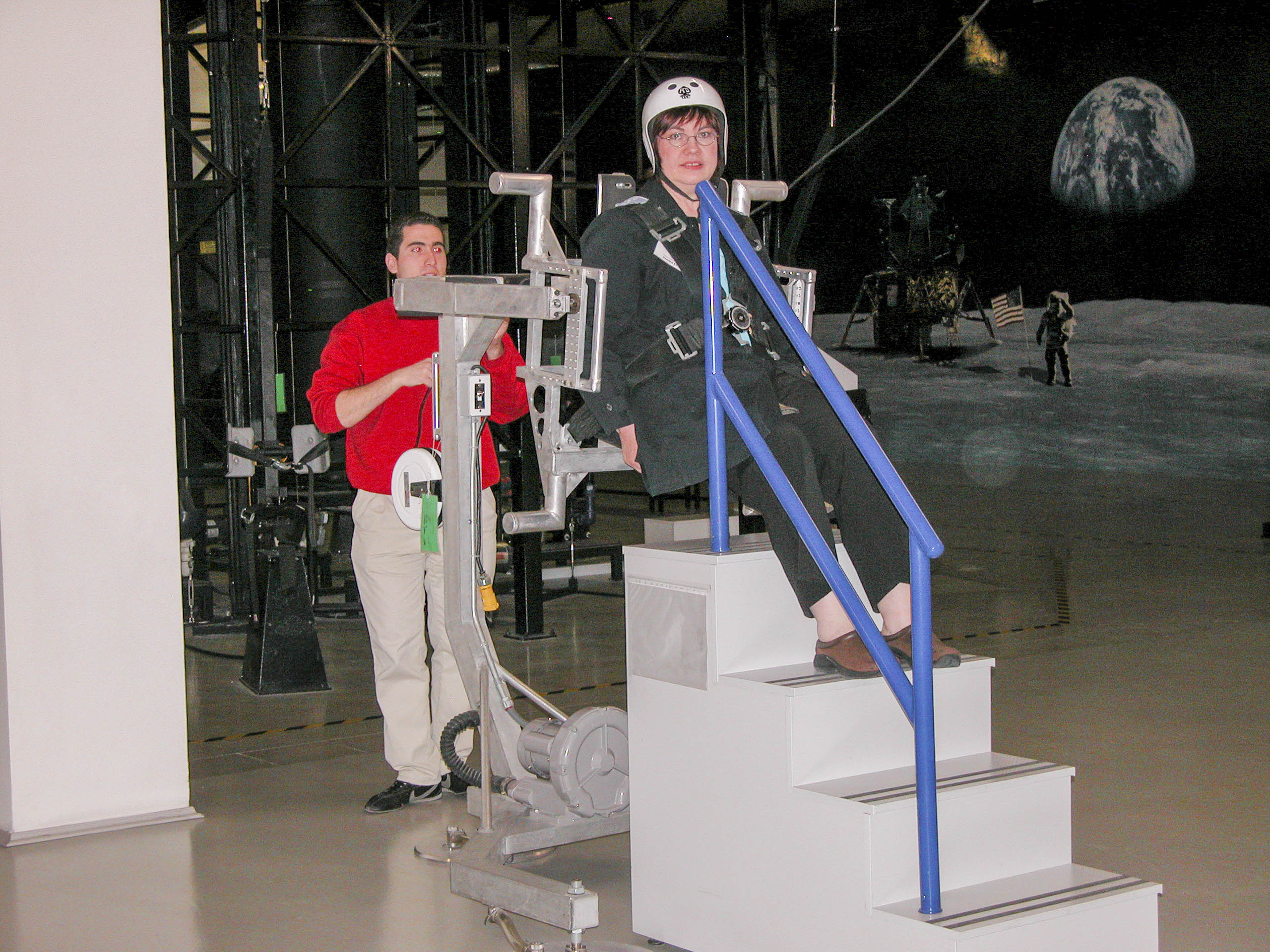
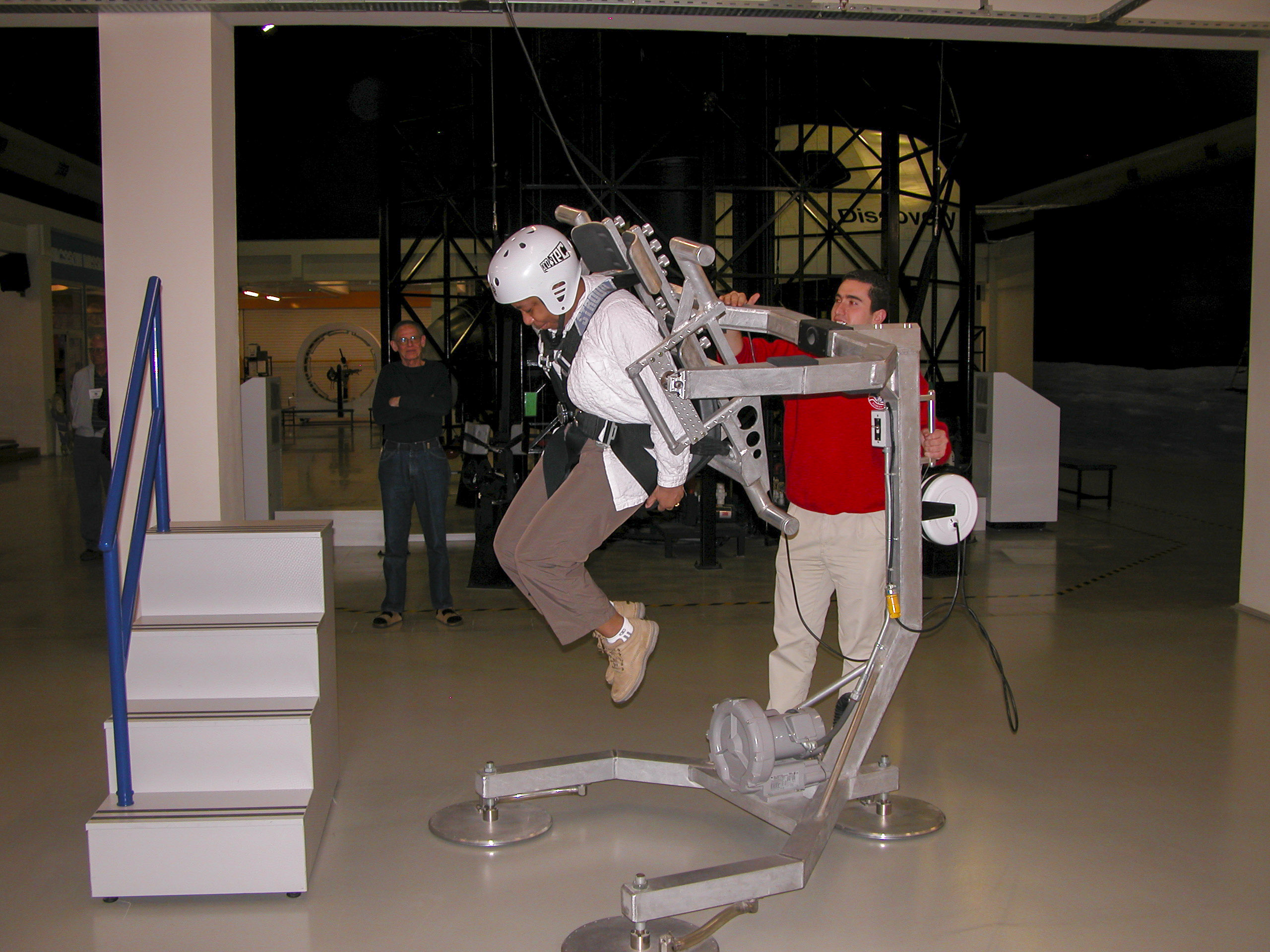
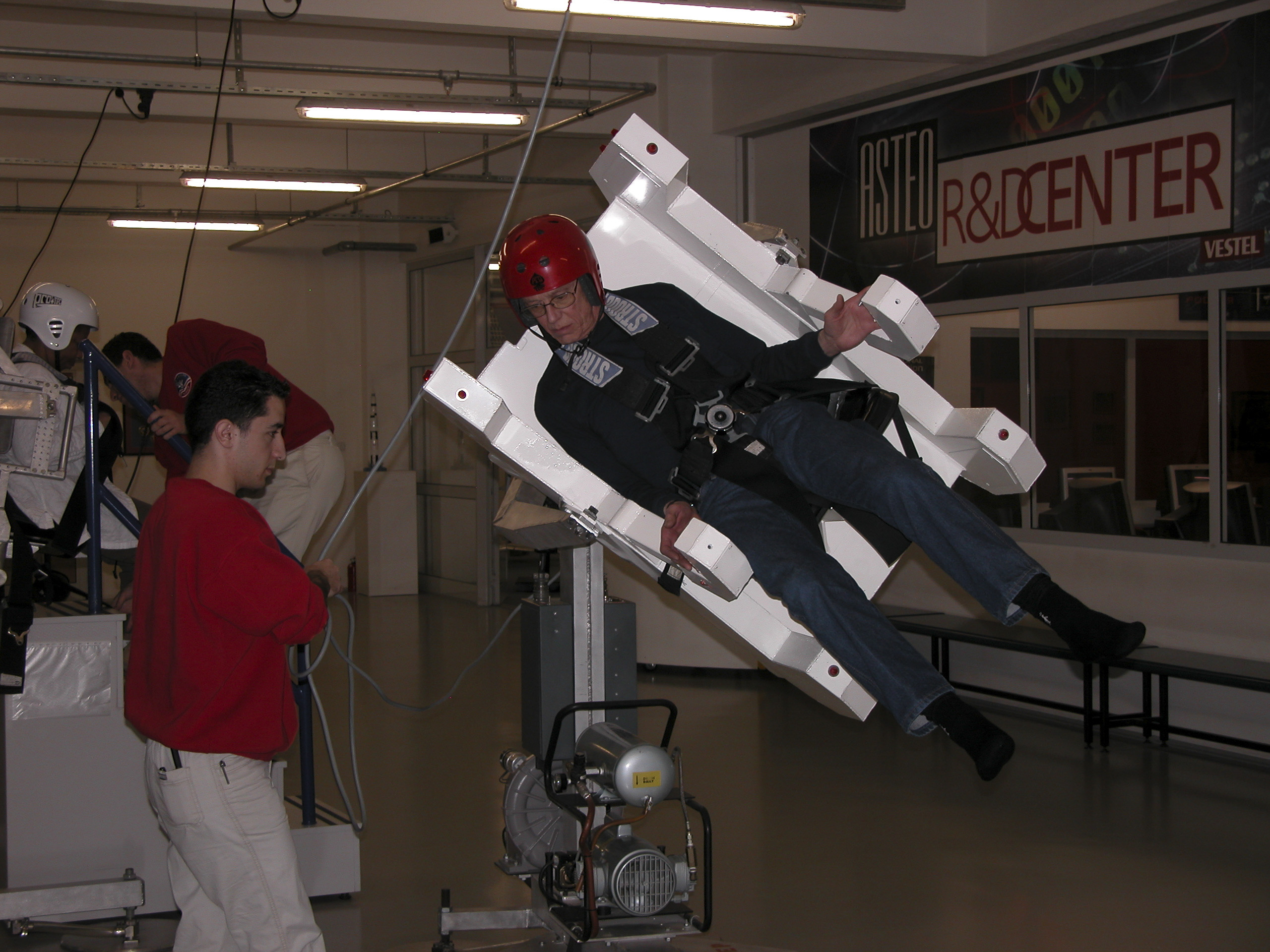
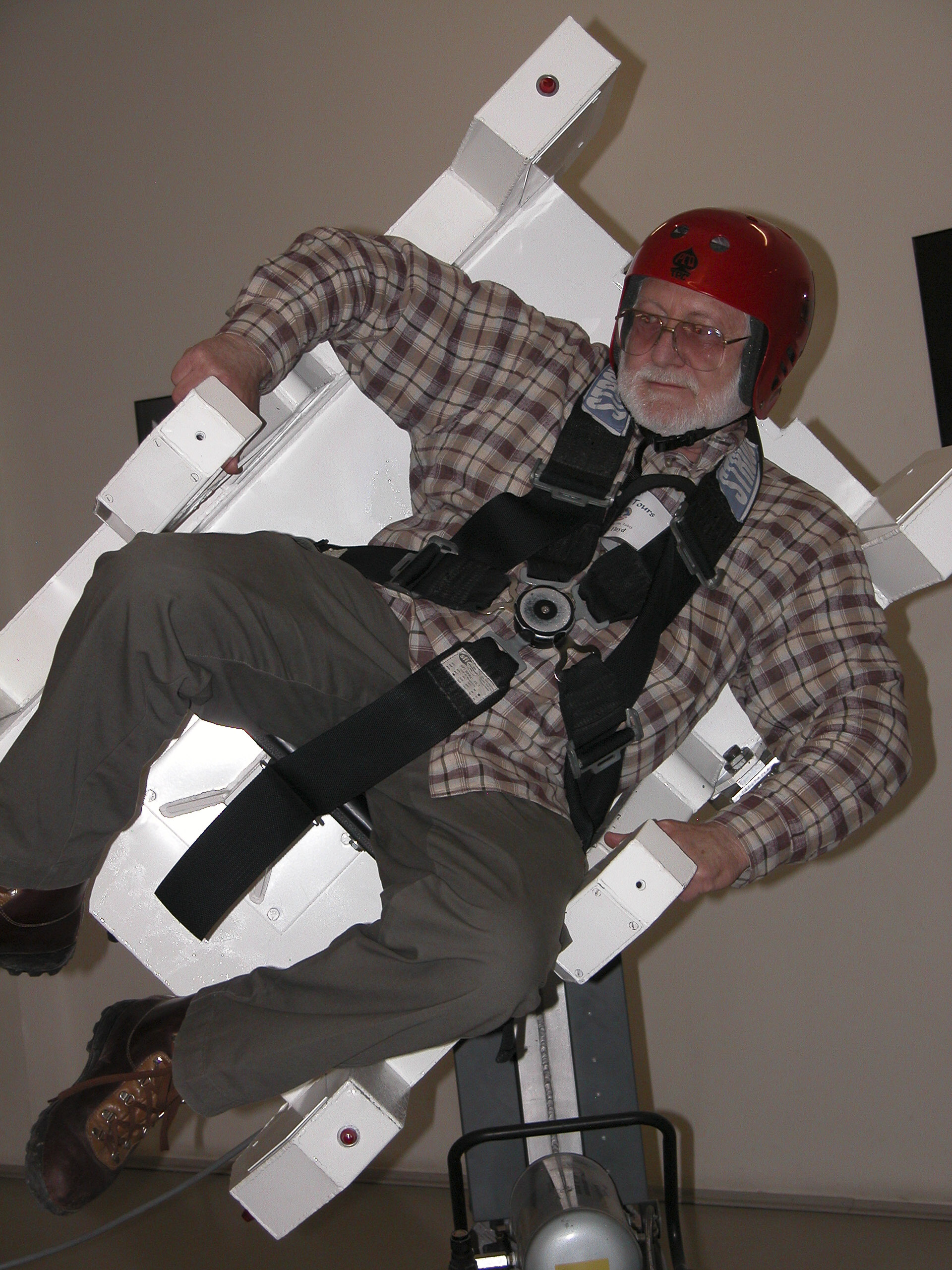
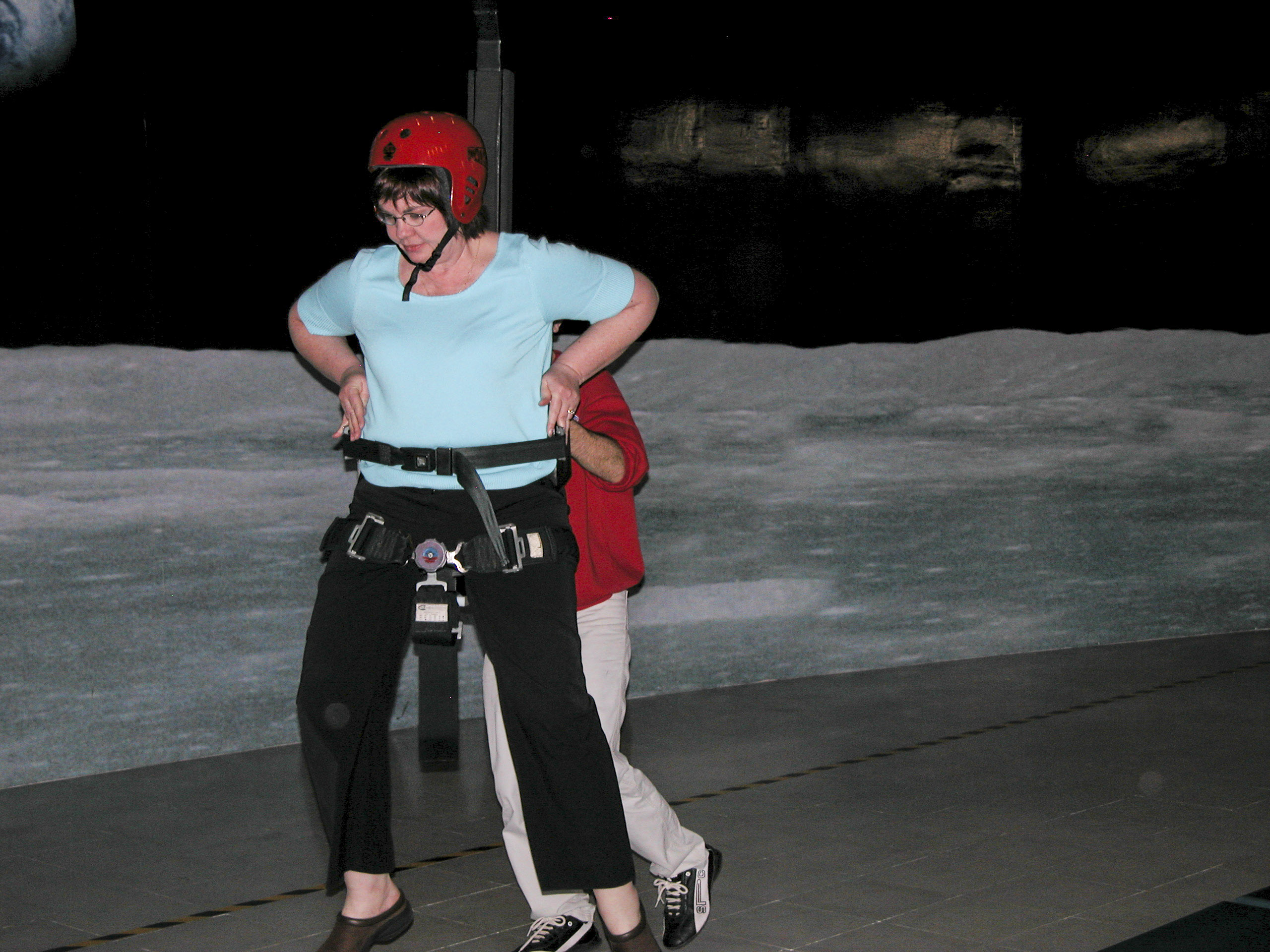
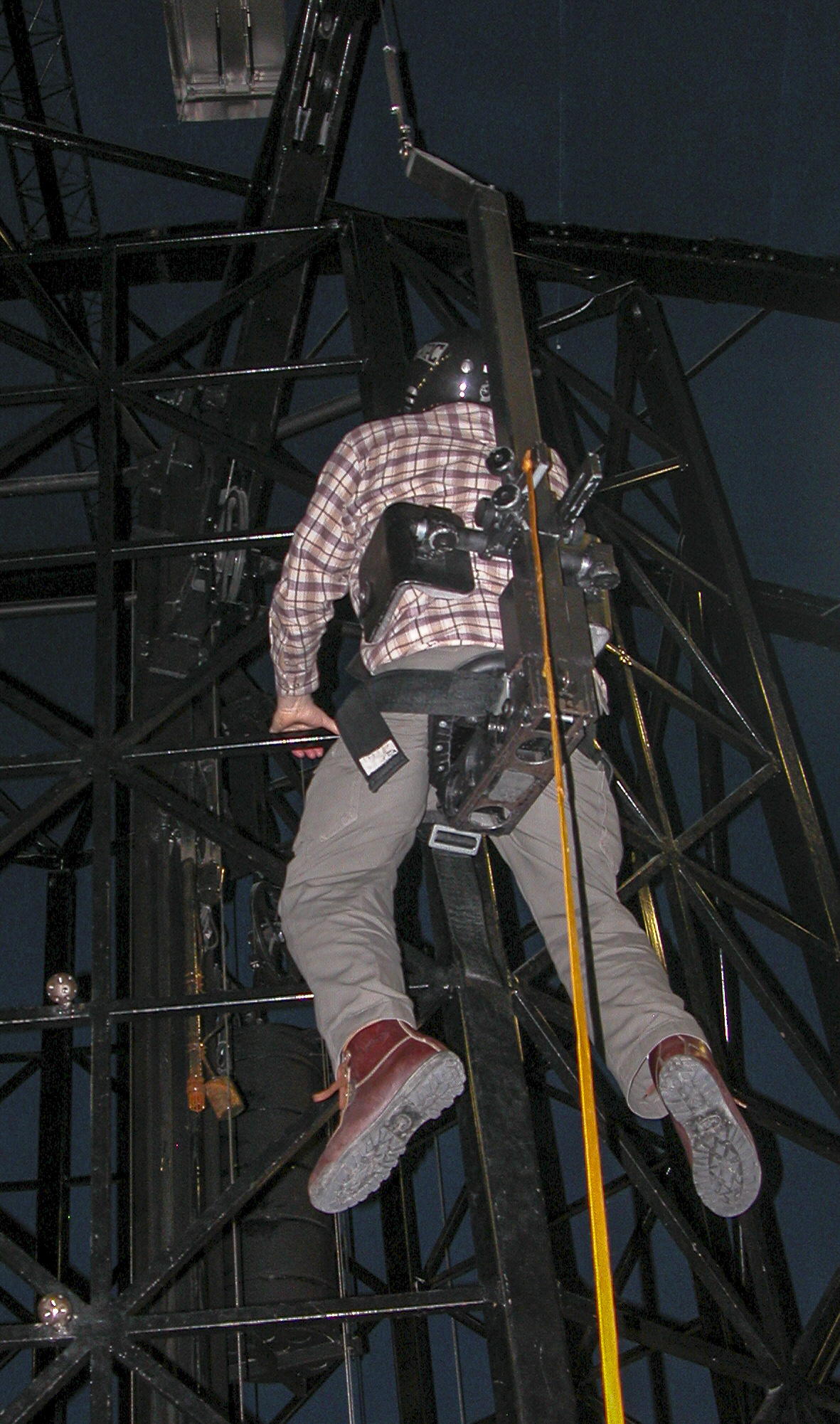
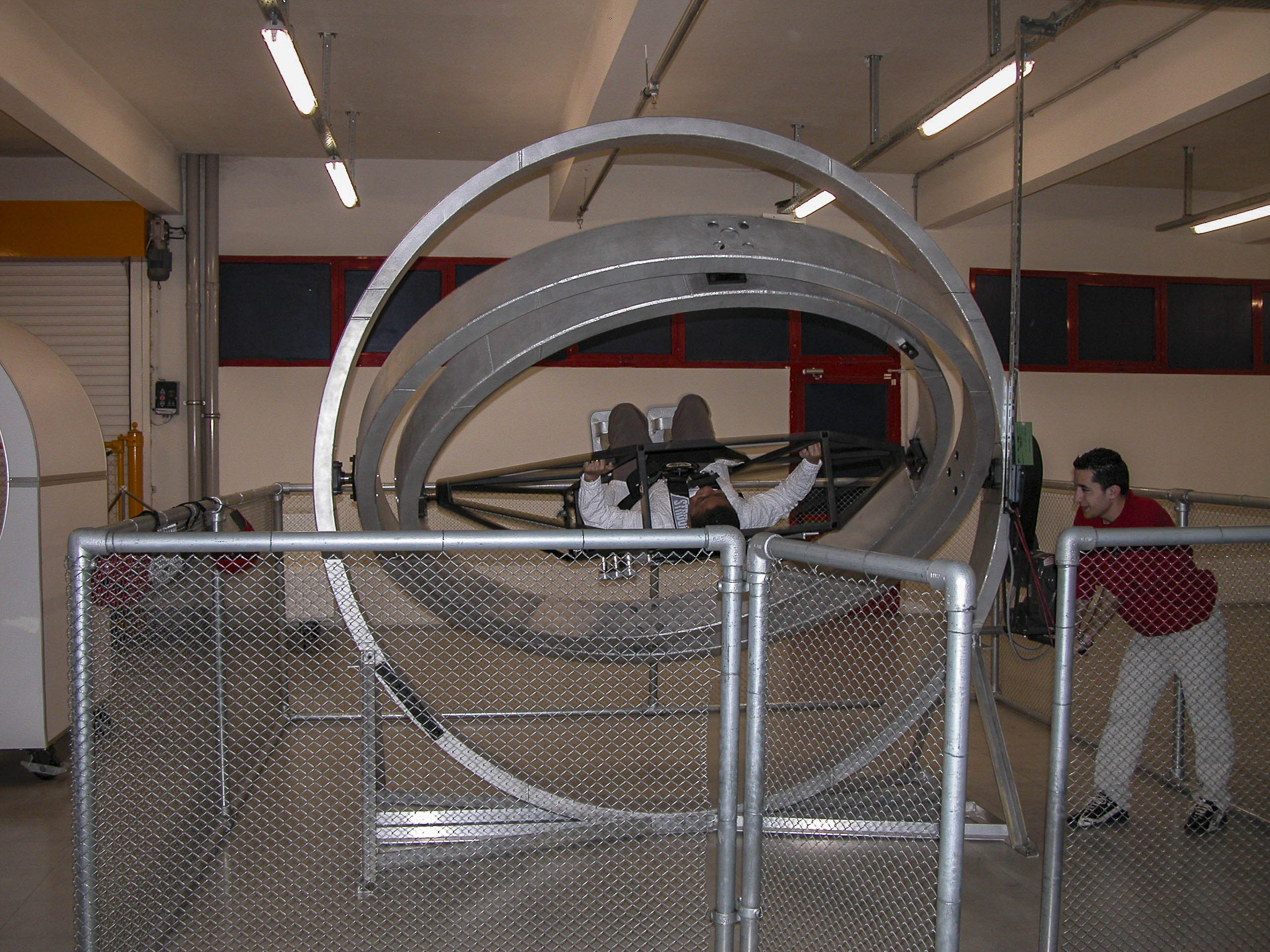
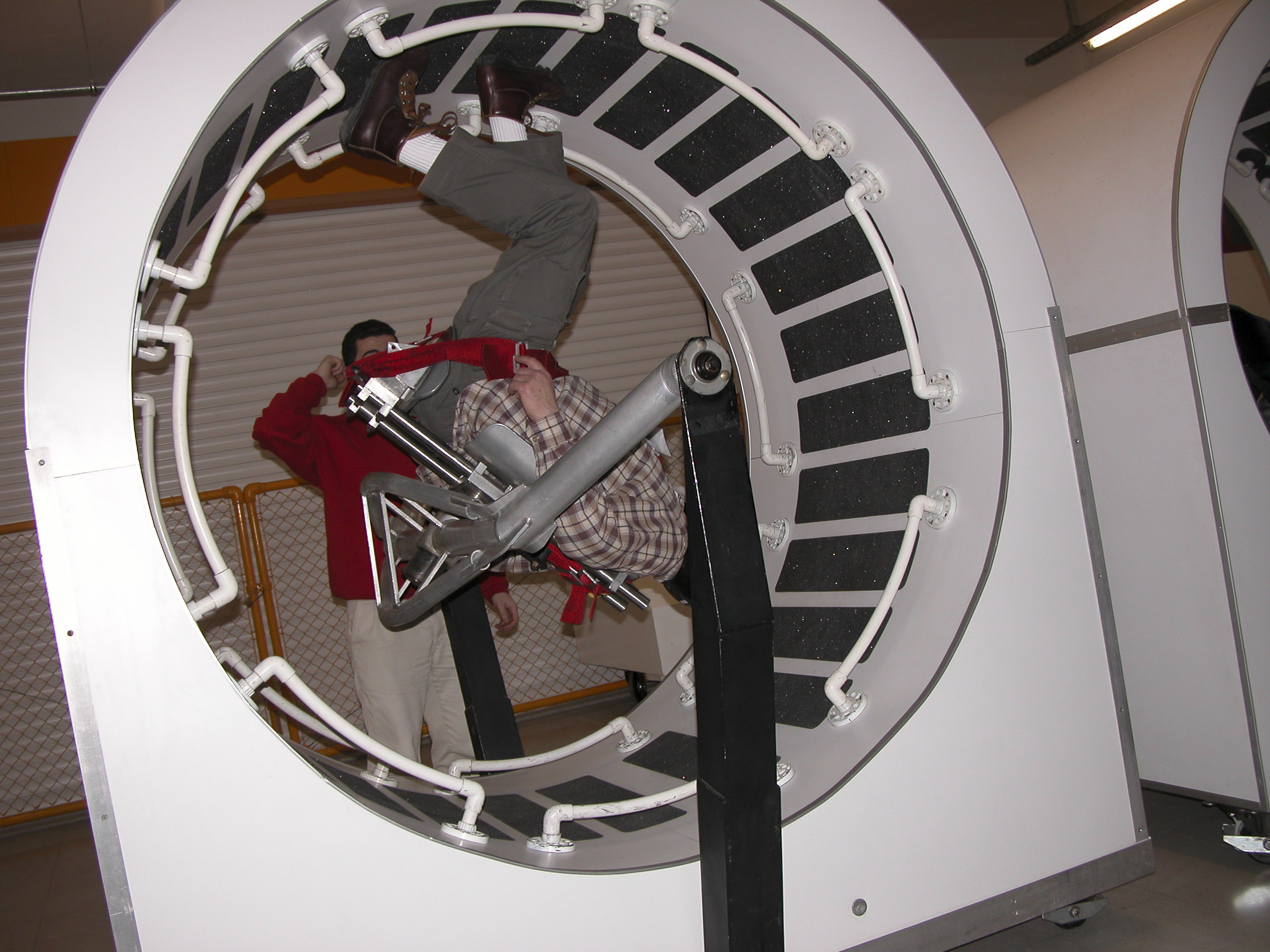
The real test of whether we were cut out to be astronauts was going on the simulators. There was a wide variety of these, most of them completely incomprehensible to me. I mean, I could understand the purpose of the Moon Walk trainer and the Zero Gravity Wall, but others, such as the 5-Degrees-of-Freedom trainer shown below, completely mystified me.

Sandie is about to go for a ride on the 5-Degree-of-Freedom (5DF) trainer, the purpose of which I’ve never been able to figure out.

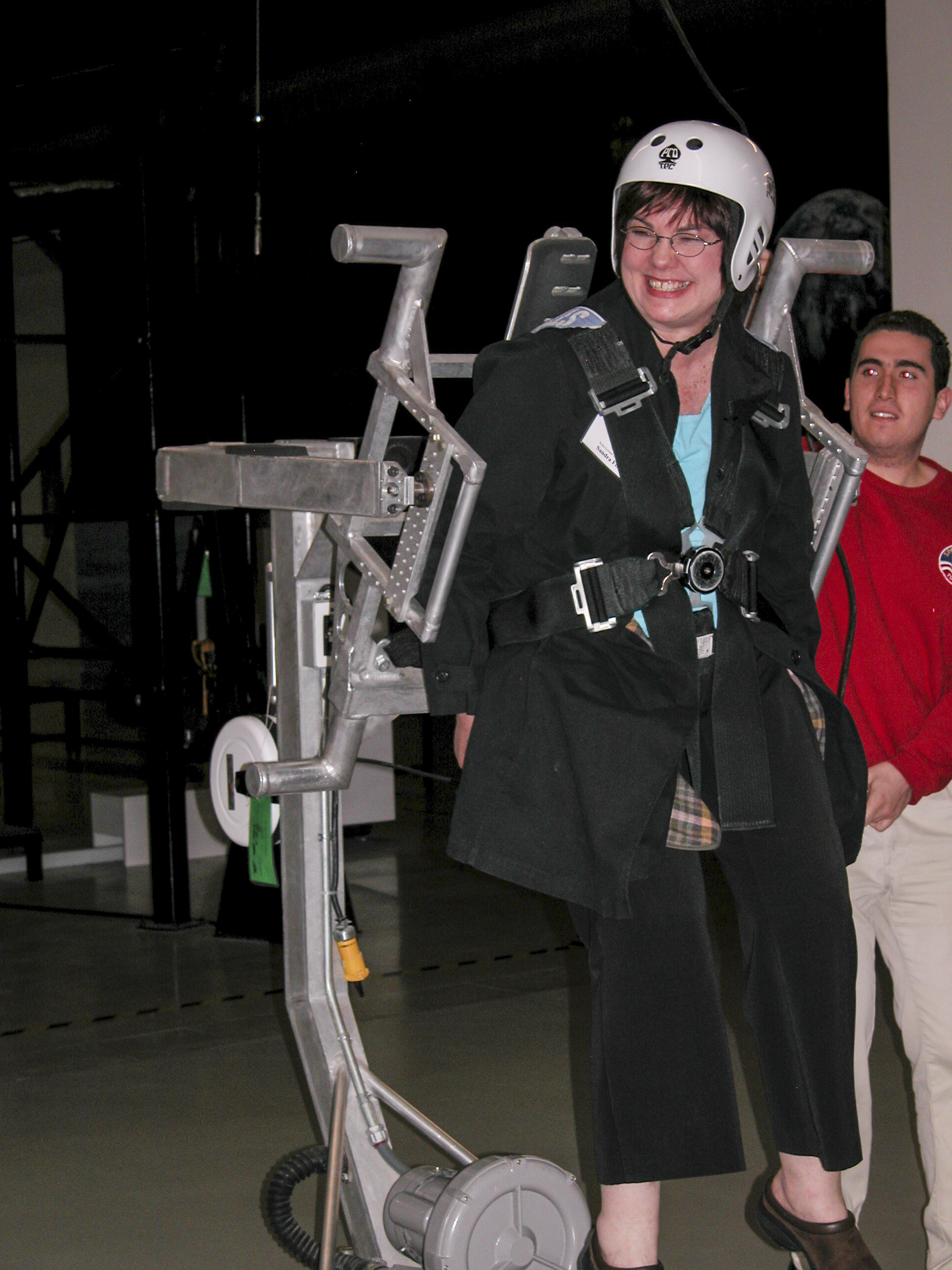
Sandie, however, despite an initial moment of apprehension, quickly took to the 5DF like a duck to water.

Who’s afraid of the 5DF? Not Sandie – she’s having way too much fun on this contraption!

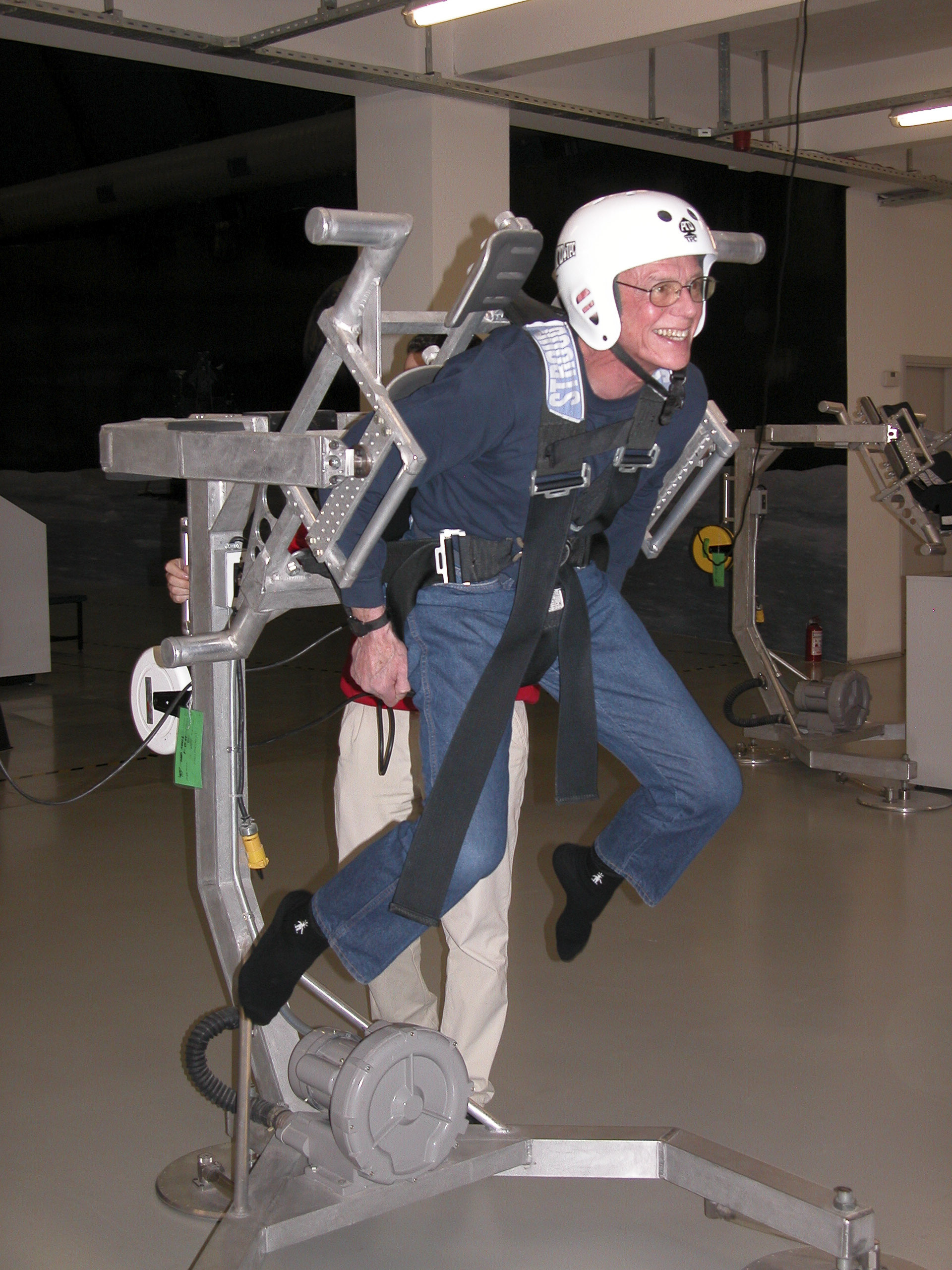
Another person who did well on the 5DF was Chuck Mattox. He had a blast on all of the simulators. He really should have been an astronaut.

Chuck seems to be having a blast. He should have been an astronaut.

Whereas for Patricia Bush, the 5DF was a matter of stoic endurance.

Pat Bush on the 5DF.

The Manned Maneuvering Unit (MMU) was and is another contraption the purpose of which I’m totally ignorant, and Chuck Mattox at first appeared to be a bit bemused by it too.

Chuck Mattox on the Manned Maneuvering Unit (MMU).

I let them strap me into the MMU also. I soon figured out that it wasn’t my cup of mung.

Get me outta here now!!!

The moonwalk simulator involved being strapped into a chair contraption that simulated one-sixth of the gravity experienced on earth, then being guided by an instructor in mastering the delicate art of getting around safely and efficiently in the low-gravity environment found on the moon.

Sandie getting ready for a moonwalk.

Sandie loved it. She savored the exhilarating feeling of being one-sixth of her Earthbound weight.

Sandie doing the moonwalk

But it was Chuck Mattox who really got into the unbearable lightness of being on the moon (pace Milos Kundera). He took off like a shot, and there was no holding him back. The Space Camp instructor tried valiantly to keep him within the bounds of sanity, but failed miserably.

The unbearable lightness of being on the Moon, pace Milos Kundera.

Finally, unable to keep Chuck from breaking all the speed limits and safety rules, the Space Camp instructor gave up in disgust and ran away, leaving Chuck to savor his freedom gleefully.

Chuck Mattox running wild on the Moon.

I tried the Zero Gravity Wall, which seemed tame enough for me – although I don’t usually do well with heights, being strapped into a chair made me feel reasonably secure.

I believe in lifting myself by my own bootstraps. It’s easy in zero gravity.

I thought of it as a zero-gravity jungle gym rather than a wall.

Up, up and away

The next simulator, the Multi-Axis Trainer, was one I didn’t dare try. But Pat Bush did fine.

Pat Bush on the Multi-Axis Trainer.

What NASA and the media never tell you is that because the Space Shuttle can carry only a limited amount of fuel, due to limitations of space and weight, is that once they arrive in orbit, having exhausted their fuel getting there, power for all operations thenceforth has to be generated by an apparatus similar to hamsters running in a treadmill cage, except that in this case, since hamsters are not allowed on the Shuttle, humans have to do the work instead. This was a closely guarded secret, and we didn’t find out about it until we went to Space Camp Turkey, where we learned about it the hard way. Here yours truly fulfills the hamster role on what was euphemistically called the “Space Station Mobility Trainer” (SSMT).

Upside down in the SSMT.

The finale for our tour group was the simulated Space Shuttle flight, in which we all got to be astronauts. However, in order to take the flight, each of us first had to pass a test, which proved to be unexpectedly difficult: we had to figure out how to get into the shuttle’s cockpit. I don’t know how it was done in the real Space Shuttle, but for us it involved entering by a back door, shown below, then climbing up a flimsy metal ladder, then contorting oneself to squeeze through a narrow hatch.

Kathy Lindquist picking her way through the Shuttle entry obstacle course.

A camera linked to a monitor in the control room allowed the ground controllers to keep an eye on the Shuttle cockpit and crew during the flight. In this view, we see Elouise Mattox, Pam Bloxham and Pat Bush warily eyeing the camera, wondering just who is spying on them in the control room, while awaiting takeoff.

Elouise Mattox, Pam Bloxham and Pat Bush about to go for a ride in the Space Shuttle.

As it turned out, they needn’t have worried; it was Sandie who was spying on them from the control room, cooly and capably guiding their flight to crash into the Moon. Just kidding, of course. She brought them all safely back to Earth, then took her own turn on a Shuttle flight.

Sandie getting ready to bring Elouise, Pam and Pat safely back to Earth.

When Sandie’s turn came, she got to be the pilot, which was a big thrill for her.

Sandie had a blast piloting the shuttle.

The Space Camp tour ended on a rather somber note: we were shown some of the tiles from the thermal protective system which prevents the shuttles from burning up in the atmosphere during re-entry. These were real tiles from real shuttles which had been obtained by Space Camp Turkey after completing several missions. The effects of the wear and tear to which they had been subjected were striking, and gave us some insight into the disaster which had befallen the Columbia.

A thermal protective system tile from one of the shuttles, showing the wear and tear inflicted during the course of several missions.
Categories
Turkey, March-April 2006

Ephesus, March 24, 2006

Ephesus was one of the great cities of the ancient world.  It was founded by Greek colonists in the 10th century BCE and became the site of the Temple of Artemis, one of the Seven Wonders of the ancient world.  It came under Roman rule in 129 BCE.  It was an important center of early Christianity, and the Apostle Paul lived there for several years in the early 50s CE.  The silversmiths of Ephesus, who made a living from crafting and selling statues of Artemis, felt threatened by Paul’s preaching, and one of them, named Dimitrios, famously instigated a riot against him.  The rioters marched to the amphitheater shouting “Great is Artemis of the Ephesians!”  City authorities intervened to prevent Paul from being lynched, but he was imprisoned for a while as a threat to public order and forced to leave Ephesus.  The Gospel of St. John may also have been written in Ephesus ca. 90-100 CE.  During antiquity Ephesus was one of the greatest seaports of the Mediterranean, and for a time the most important city of the eastern Roman Empire after Constantinople; it was destroyed by the Goths in 263 CE, but rebuilt afterward.  Later, however, it began to decline owing to the silting up of its harbor by the Küçük Menderes river, which repeating dredging could not delay indefinitely.  In 614 the city was wrecked by an earthquake, and the depredations of Arab and Turkish invaders thereafter completed its ruin.

The castle where St. Paul was supposedly jailed prior to his expulsion from Ephesus. He ay have written the First Epistle to the Corinthians while staying there.

We entered the ancient city of Ephesus from the east, at the Varius Baths. The spelling of the name is not erroneous; there were not various baths at this location but rather one large bath complex, named after a wealthy citizen named Varius, who forked over the money to build it during the second century CE. The bath complex consisted of three sections: the frigidarium with cold water, the tepidarium with warm water and the caldarium with hot water. There were also resting, sitting and reading rooms.

The Varius Baths.

Just beyond the Varius Baths lay the Odeon, a “small” amphitheater (capacity 1500) commisioned in the second century by Publius Vedius Antonius, a wealthy citizen of Ephesus, and his wife. It was used for political meetings, concerts, theatrical performances, etc.

The Odeon at Ephesus

Ephesus had two agoras, one for state business and one for commerce. The Odeon stood on the north side of the State Agora. Dating from the reign of Augustus (d. 14 AD, this was a 160-meter arcade which hosted both commercial enterprises and law courts. It was connected via three gates to the Varius Baths, presumably so people who felt soiled by their dealings with lawyers could quickly duck out to cleanse themselves.

Jerry and Sandie pose for a picture at the State Agora of Ephesus.

Just to the west of the Odeon stood the Prytaneion, a government building where receptions, religious ceremonies and banquets were held. It also contained the sacred fire of Hestia, which was supposed to never be extinguished. To that end it was tended by priests called Curetes, who gave their name to the main street which leads from the State Agora down to the main residential district and the Commercial Agora.

Sandie at the Prytaneion.

Roman rule in Asia was initially quite unpleasant for the Ephesians, as well as all the inhabitants of Roman Asia, who were subject to rapacious taxation and corrupt administration. This created an ideal opportunity for Mithridates VI, King of Pontus, who took advantage of the unrest to invade and massacre the Romans in 87 BCE. The hiatus in Roman rule, of course, was only temporary; in response Rome dispatched the general Lucius Cornelius Sulla, who defeated Mithridates, retook Ephesus and, using the cachet conferred by his army command, went on to make himself dictator of Rome. At the beginning of Curetes Street stands a monument erected by Gaius Memmius during the reign of Emperor Augustus to commemorate Sulla’s reconquest of Asia. Memmius was Sulla’s grandson.

The Memmius Monument

Just off the State Agora was the Fountain of Pollio, so-called because people who had polio were cured by bathing in it. No, I made that up. Actually, it is named for the Pollio family, a prominent Ephesus family who had it built in 97 AD. Unfortunately, the scene was spoiled by a scruffy tourist who happened to be strolling through when Sandie took the picture. You’d think that the Turks would know better than to let such riff-raff into their treasured historical sites.

The Pollio Fountain.

Near the southwest corner of the State Agora stands the Temple of Domitian, erected in the first century BCE. The name seems to have been given erroneously, since it is now believed to have been erected in honor of the Emperor Titus, who would have been a much better choice than his successor Domitian, a brutal and unpopular tyrant who was killed by one of his servants. The official name was the Temple of the Sebastoi (“venerable ones”), the Greek form of the Roman imperial title Augustus.

Temple of Domitian, or Temple of the Sebastoi

Chuck Mattox, who appears in the photo below, on this occasion was wearing a t-shirt he had acquired after a previous eclipse, which he and Elouise had viewed in Austria in 1999. Chuck and Elouise Mattox are inveterate eclipse-chasers; the one in 2006 was at least their fourth – I may have lost track!

Chuck Mattox at the Temple of Domitian

From the Temple of Domitian we strolled down Curetes Street toward the residential district. Along the way we noticed columns of smoke billowing from fires set at seemingly random places around the city. We concluded that these fires were set by descendants of the Goths, trying to emulate the exploits of their ancestors, who had burned the city in 263 CE. Fortunately, it was a rainy day (note the distant rain shower in the scene below), and the fires didn’t really do much damage.

A scene from Curetes Street, with our guide Attila holding forth to members of the group at center right.

On the way down Curetes Street, we came across a statue of a woman with no head. We found out it had been erected during the Byzantine era in honor of a woman doctor who had rendered great services to the city. It was not known when the head was taken or by whom, but it was common for plunderers to cut the heads off statues since the entire statue was much heavier and hard to cart away.

The Headless Doctor.

Curetes Street proved to be a bustling area, just as it must have been in antiquity, with many attractions.

A view of Curetes Street, looking down toward the Library of Celsus.

A side entrance to Curetes Street is framed by the Gate of Hercules, which features twin columns with reliefs of Hercules performing one of his Twelve Labors, strangling the Nemean Lion. Hercules had been tasked with killing a lion which had been terrorizing the people of Nemea. The lion had a skin so thick that arrows were useless against it, so Hercules had to strangle it instead.

The Hercules Gate

Beyond the Hercules Gate, we passed the Fountain of Trajan, dedicated to the Emperor who reigned from 98 to 117 BCE), under whom the Roman Empire reached its greatest territorial extent. Originally the fountain was graced by a gigantic statue of the emperor, but now only the feet remain.

The Fountain of Trajan.

Further down on Curetes Street, we came to the residential district, seen at left in the following photo. The exhibits feature excavated interiors of houses, which have been covered with tin and plastic to protect them from the weather. The two-story structure at the bottom of the hill is the Library of Celsus.

The residential district, seen at left along Curetes Street.

The floors of upscale houses in the Roman Empire often contained beautiful mosaics, and some of them still survive in Ephesus.

In the Houses on the Hill.

Toward the bottom of the hill we encountered the Baths of Scholastica. Originally built in the first century CE by Varius, these baths were renamed after a Christian woman who undertook their restoration in the 4th century. They were the largest baths in Ephesus.

The Baths of Scholastica

One of the best-preserved structures on Curetes Street is the Temple of Hadrian, built around 138 BCE to honor the Emperor Hadrian, who came to visit the city in 128.

The Temple of Hadrian, with members of our tour group in the foreground.

The facade of the temple has four Corinthian columns supporting a curved arch, in the middle of which is a relief of Tyche, goddess of victory. 

Detail of the Temple of Hadrian.

Near the Temple of Hadrian, Pam Bloxham and Cherie Rabideaux paused to frolic with one of the local felines who inhabited the ruins.

One of the most noteworthy features of ancient Greco-Roman cities was the abundant provision of running water, via the aqueducts built by the Roman authorities. Most houses did not have interior plumbing, but access to water was available via public fountains, baths and latrines. With the decline and fall of the Roman Empire, this amenity was lost and not regained in Europe until modern times.

A member of our tour group, Dr. Patricia Bush, M.D, inspects a public latrine in Ephesus. The latrines featured running water 24/7.

The toilet facility was conveniently located next to the Scolastica bathss. Unlike modern airport pay toilets, the ancient ones in Ephesus were not coin-operated.

The toilets were an adjunct to the Scolastica Baths, near the Temple of Hadrian.

Since most people in antiquity were illiterate, public advertising had to take purely pictorial forms. On Curetes Street we encountered an ad for a brothel embedded in a concrete paving block. The footprint showed the way to go; the purse indicated that the service wasn’t free; and the hole provided a way to measure whether one had enough coins to afford it.

Advertisement for an ancient brothel.

Located near the corner of Curetes and Marble Streets, the Brothel originally contained a figurine of Priapus, suitably endowed. Unfortunately, it was removed to the Ephesus Museum in the nearby town of Selcuk, which we didn’t get to visit.

The interior of the brothel.

Sandie inspects the remains of the brothel, warily keeping an eye out for janissaries.

Below is a shot of another room of the brothel, this time looking through the interior toward the nearby Library of Celsus, with Chuck Mattox framed in the doorway. I have a theory that the altar in the center of the room was where virgins destined for the trade were brought to sacrifice their maidenheads.

Looking through a room of the brothel toward the Library of Celsus.

Tiberius Julius Celsus Polemaeanus was a Roman official of Greek origin, and a native of Ephesus, who served as governor of the province of Asia in 105/106 CE. At his death he bequeathed a large sum of money to have a library built by his son, Julius Aquila Polemaeanus, to serve as his monument and his burial place. The library was completed during the reign of Hadrian, after the death of Aquila himself, and came to hold more than twelve thousand scrolls, making it the third largest in the Roman Empire, after Alexandria and Pergamum. It was also an architectural triumph. The main floor served as a reading room and was lit exclusively by natural light from the windows.

The Library of Celsus, one of the great libraries of the ancient world, said to contain 12,000 scrolls.

Over the centuries invasions, fires and earthquakes left the library in ruins. In the 1970s archaeologists were able to reconstruct the facade, though the interior remains to be restored.

Detail of the Celsus Library. The four sets of columns adjacent to the doors of the library were adorned with statues depicting Wisdom, Knowledge, Intelligence and Fortune. This one would presumably be Intelligence.

Next to the Library of Celsus stood the twin Gates of Mazeus and Mithridates, which led to the Commercial Agora. These predated the Library, having been built by two former slaves to honor the Emperor Augustus, who gave them their freedom.

The Gates of Mazeus and Mithridates.

The Commercial, or Lower, Agora is the larger of the city’s two agoras.

Jim Windlinger strolling through the Commercial Agora.

The Lower Agora was indeed quite spacious.

Along the east side of the Lower Agora, ran Marble Street, which led to the Great Amphitheater, our next destination.

Marble Street

The Great Amphitheater of Ephesus was first built in the third century BCE and expanded and renovated several times during the Roman period. It was the largest in Anatolia, with a capacity of about 25,000 spectators. (By comparison, the Colosseum in Rome could accommodate up to 80,000 people.)

Entrance to the Great Amphitheater of Ephesus.

The Grand Amphitheater was built at the base of Panayir Mountain, using the rock of the mountain as a natural foundation for the seating. Other than the Temple of Artemis, which no longer exists, it was the most imposing structure of Ephesus.

The Grand Amphitheater is situated at the foot of Panayir Mountain.

The Grand Amphtheater was also the scene of the Riot of the Silversmiths that ended St. Paul’s residence in Ephesus. The next photo provides an idea of the scale of the seating.

From the Great Amphitheater we headed for the site of the Temple of Artemis. Two paltry columns next to a drainage pond are all that remains of what was once one of the Seven Wonders of the ancient world.

Remains of the Temple of Artemis

Near the exit which took us back to our bus, a sign advertised the location of the modern pay toilets, which are coin-operated.

I thought this was an odd way of putting it.