Categories
Australia, November-December 2002

Featherdale, November 26, 2002

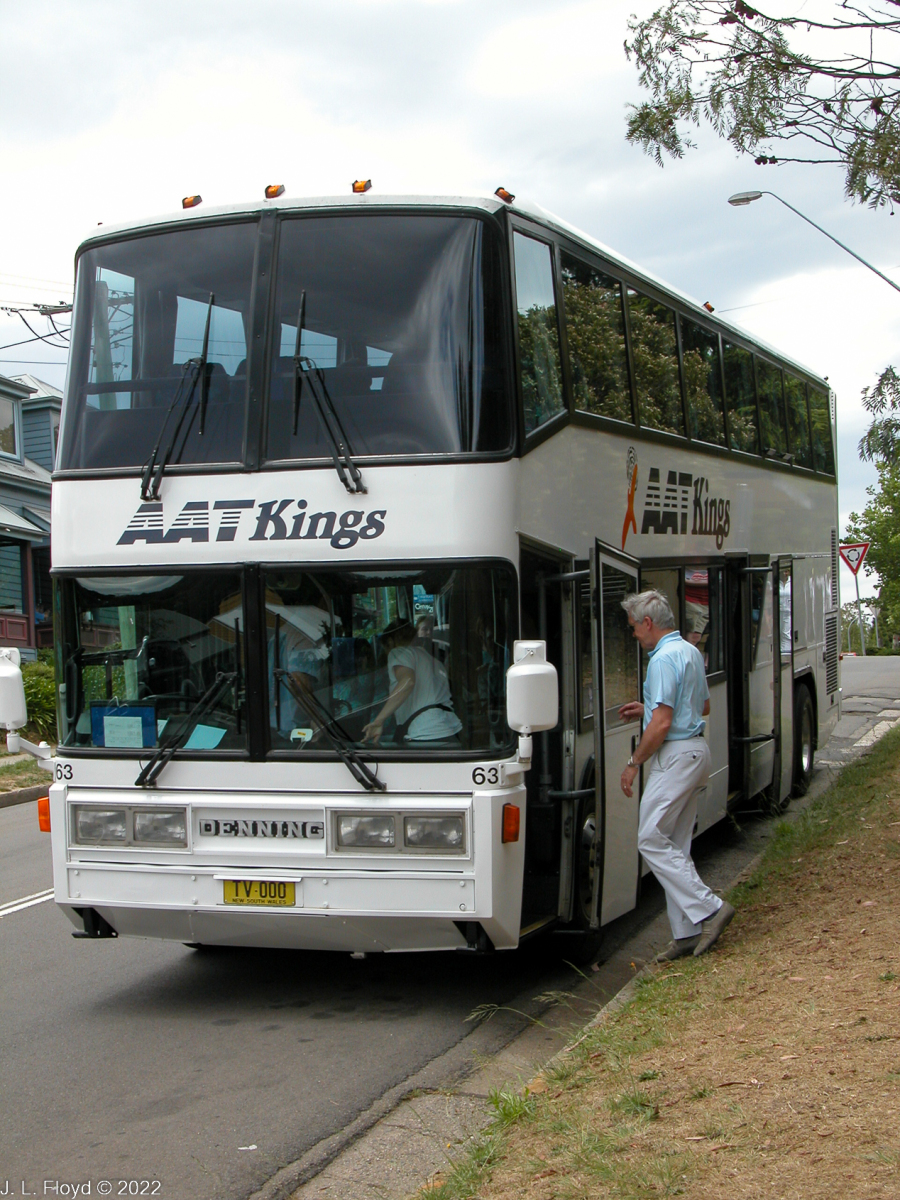
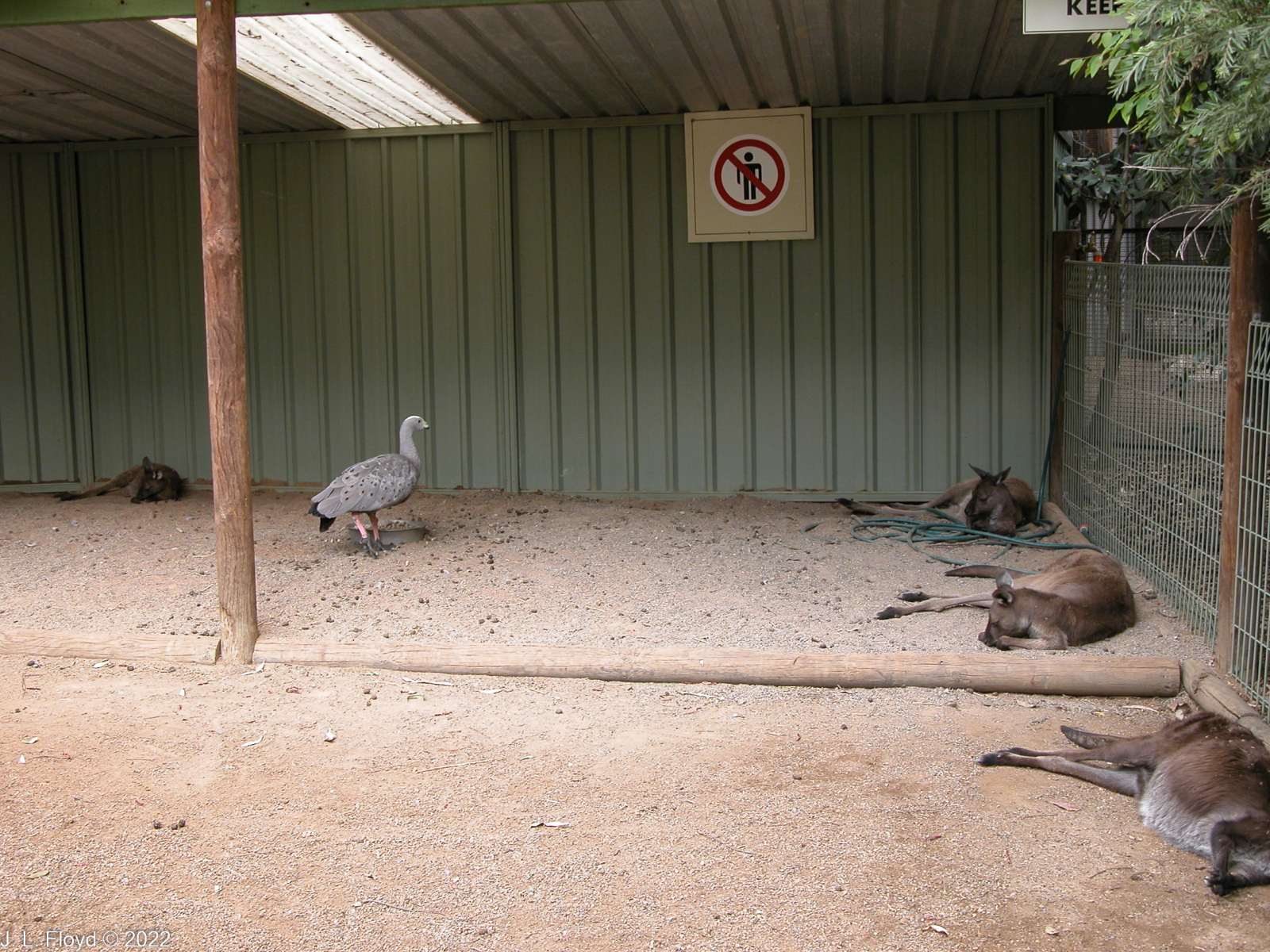
On the way back from the Blue Mountains our bus took us to the Featherdale Wildlife Park in the parklands just west of Sydney. Featherdale featured a wide variety of native Australian creatures, birds as well as terrestrial animals, and of course kangaroos were well represented among them.
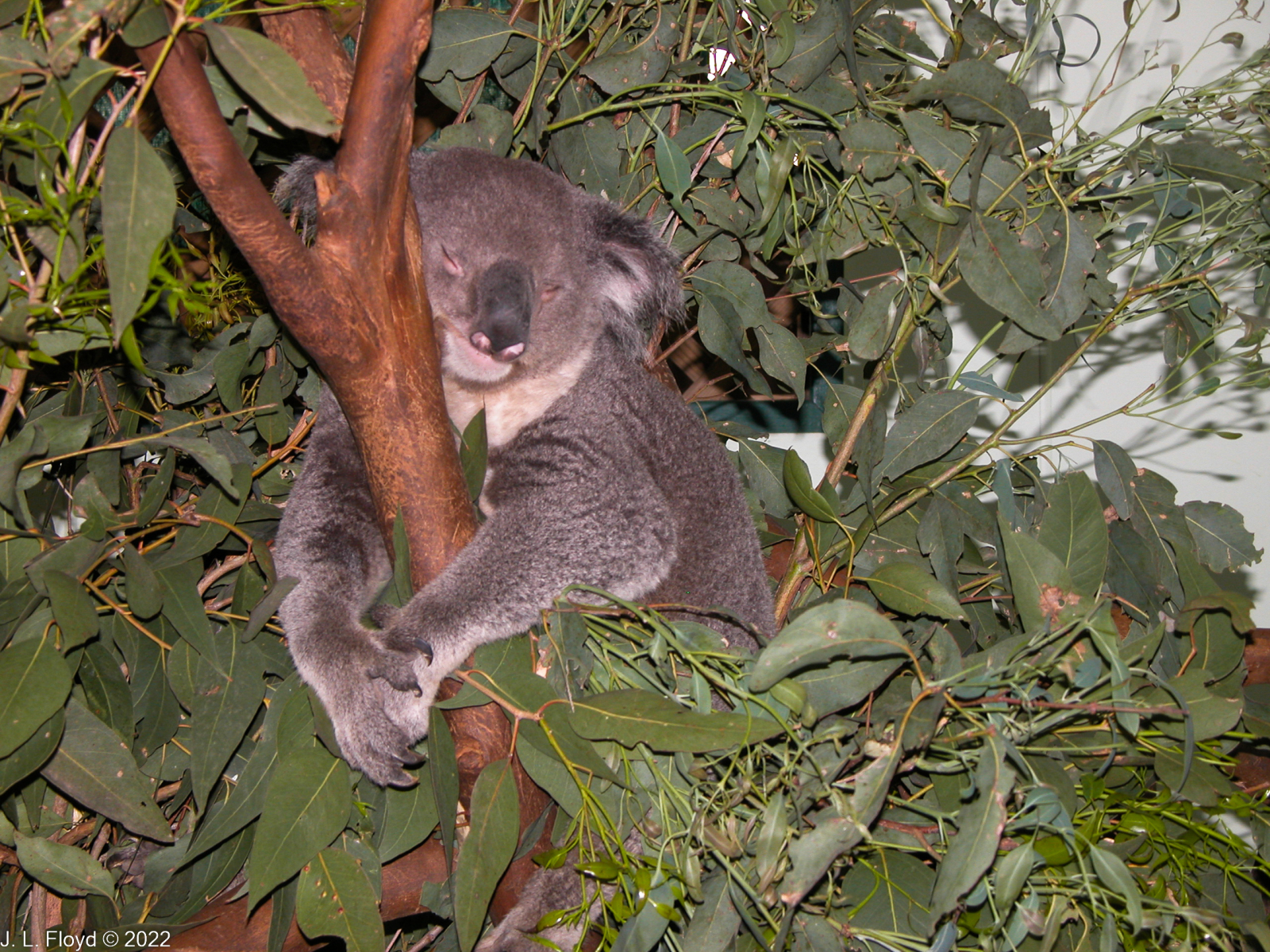
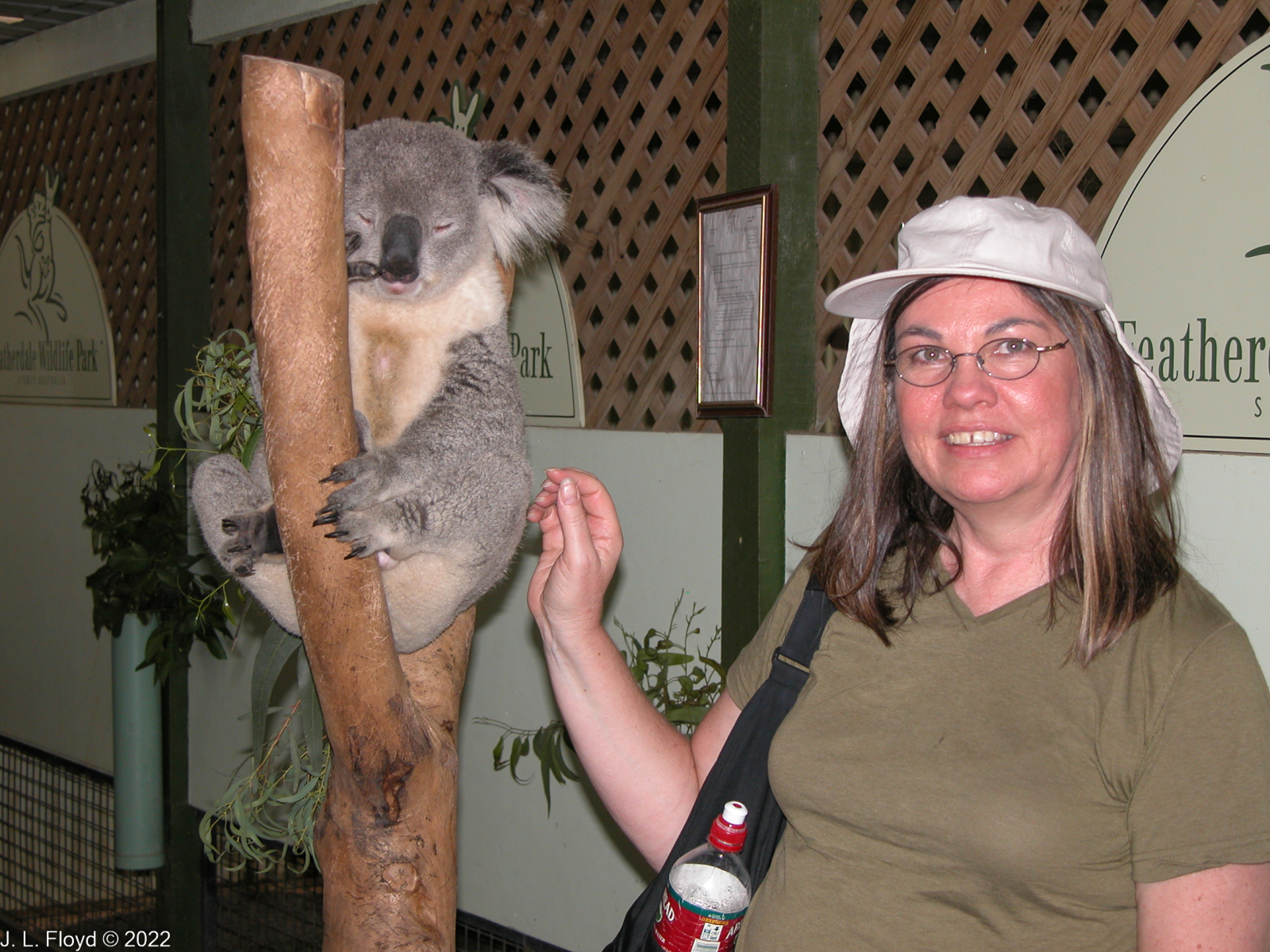
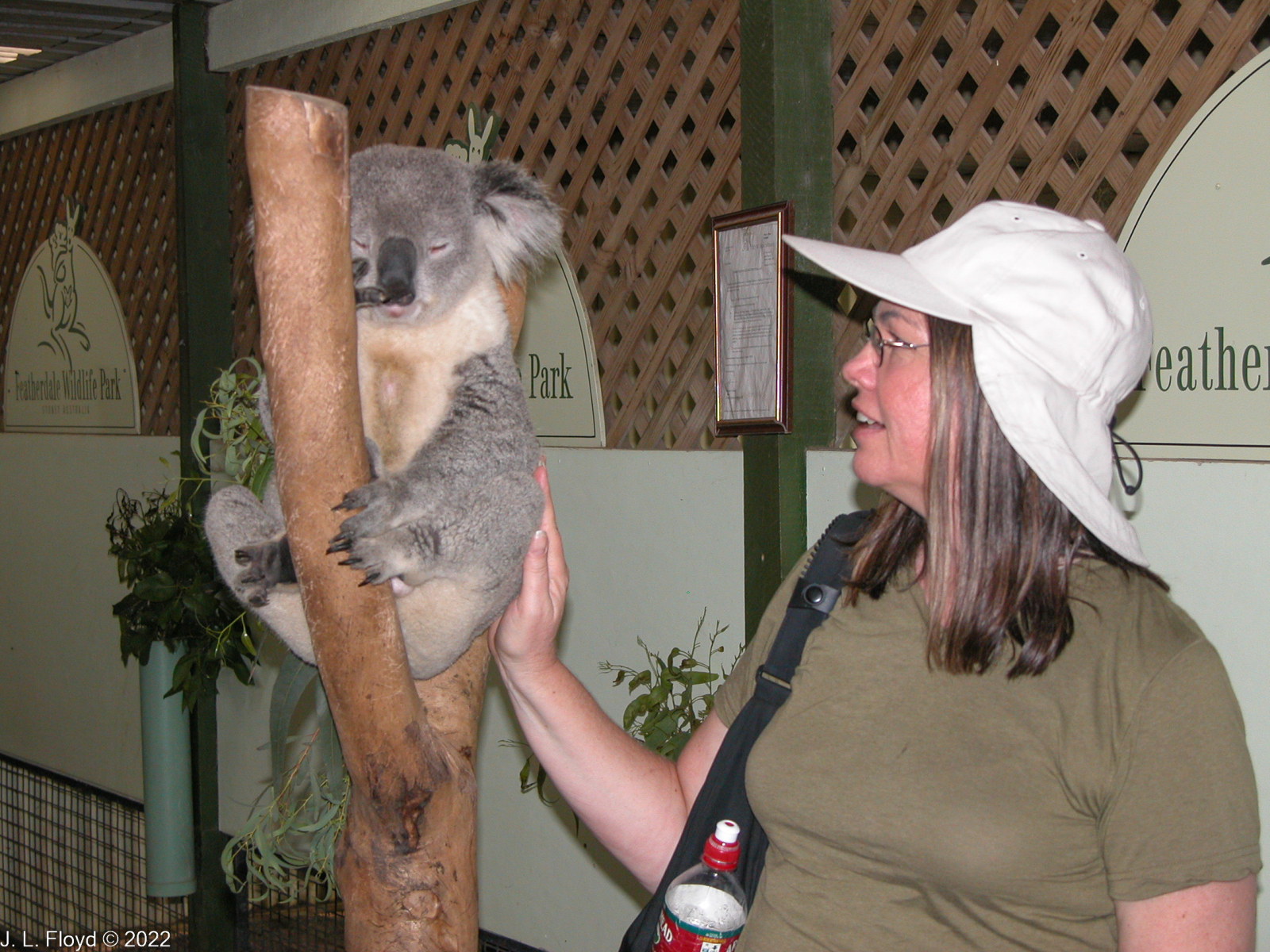
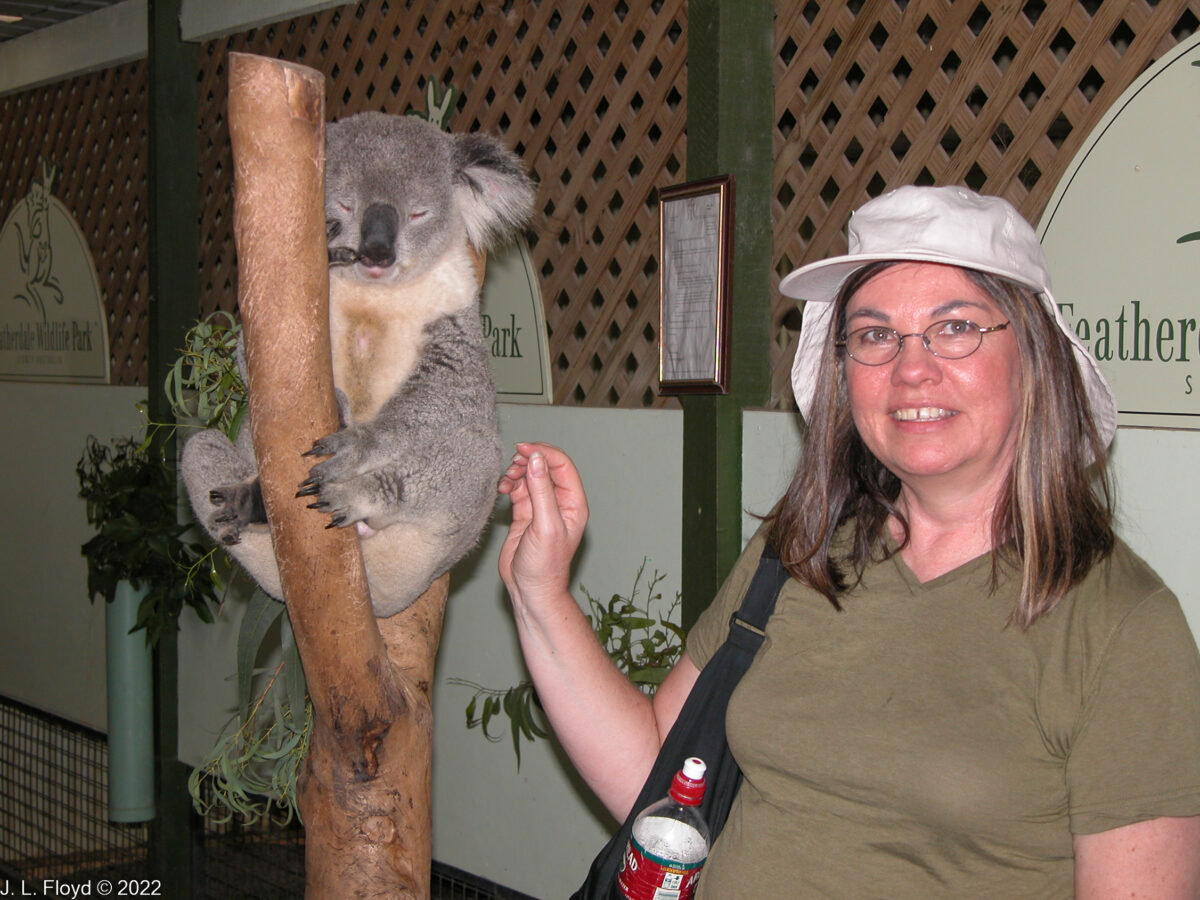
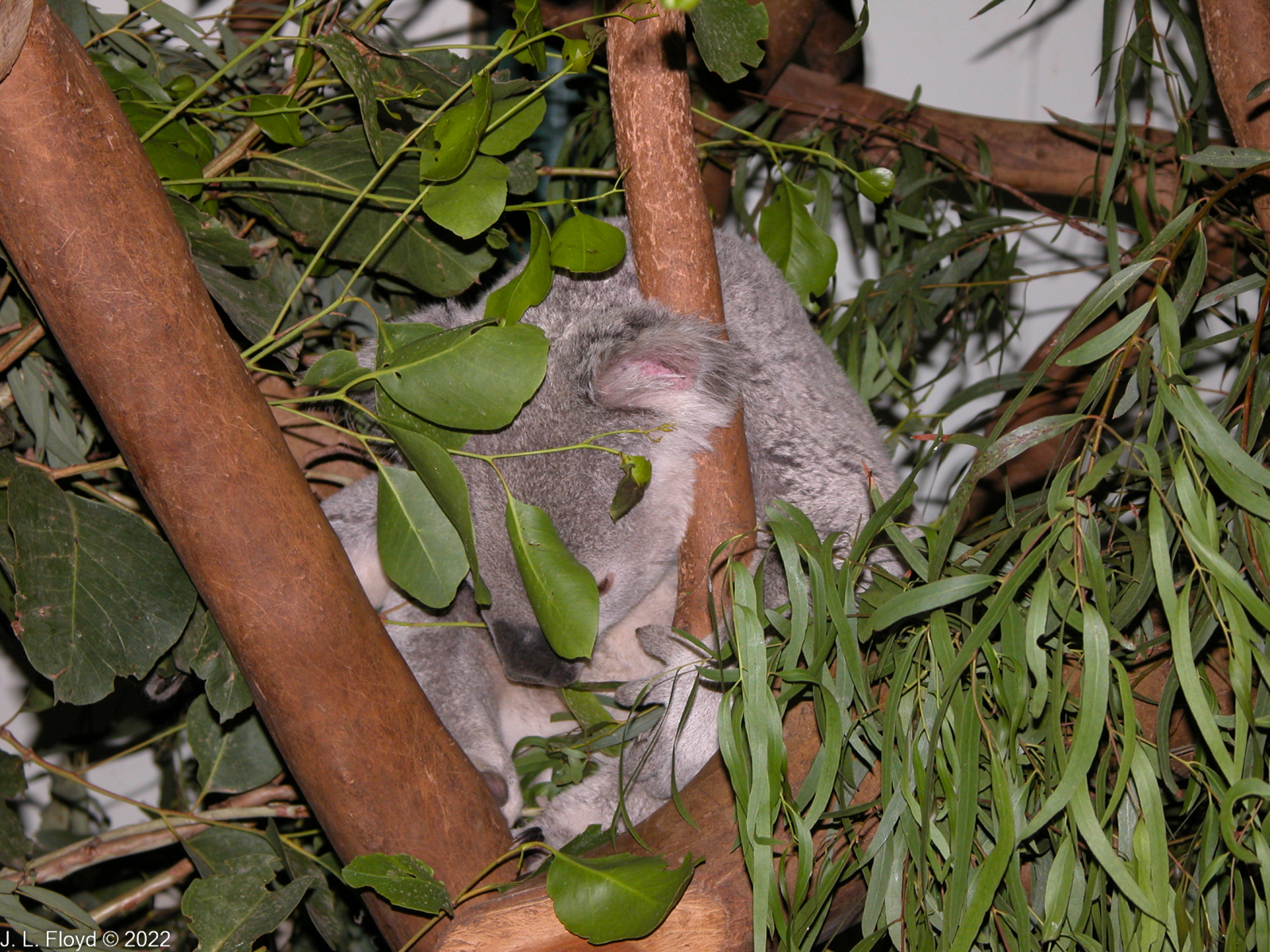
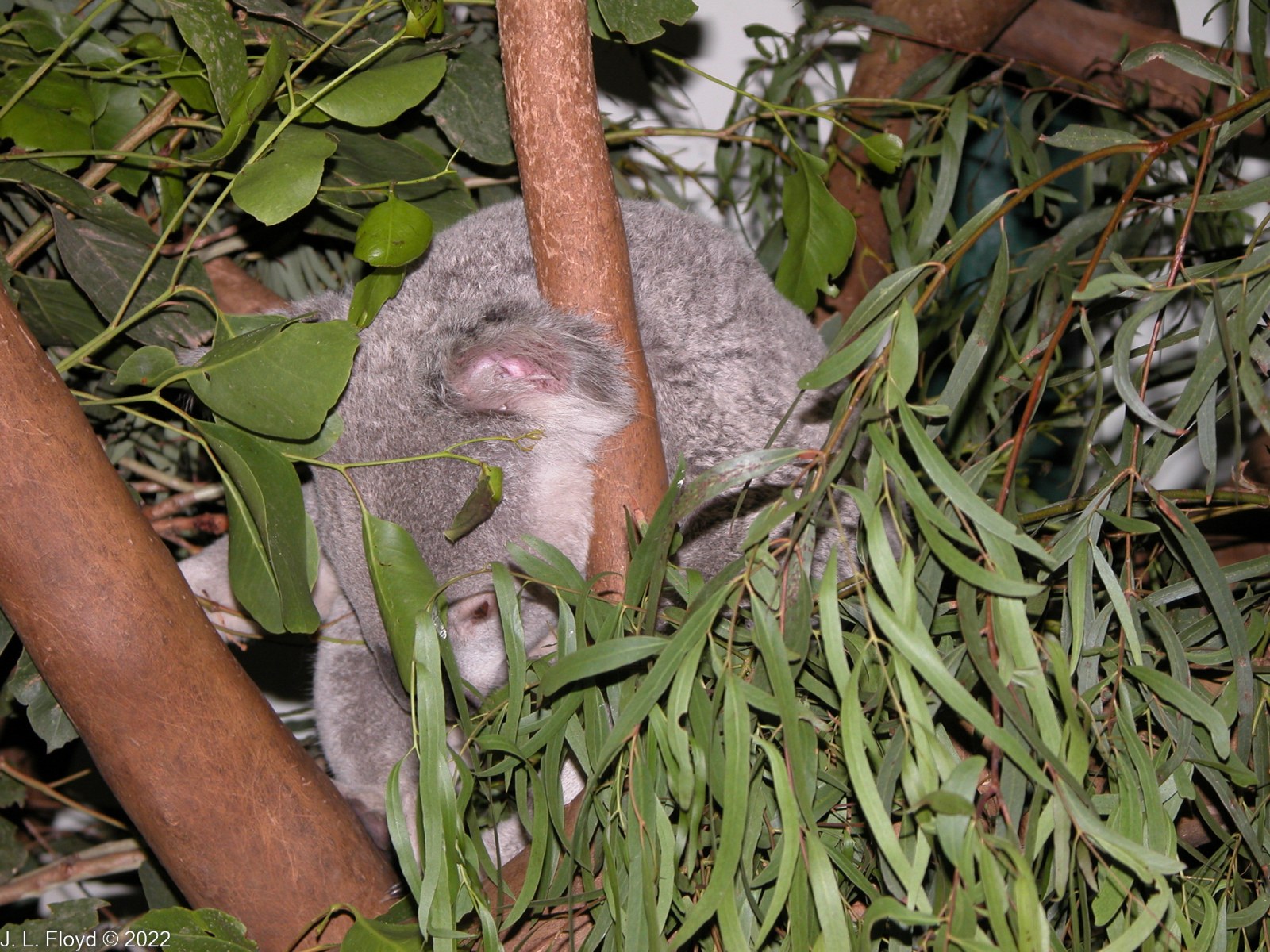
Like everyone else, we were captivated by the koalas, who seem to have an irresistible appeal. Also, unlike kangaroos, they are approachable; they don’t seem to mind being petted and admired, despite what the Qantas ads would have you believe.
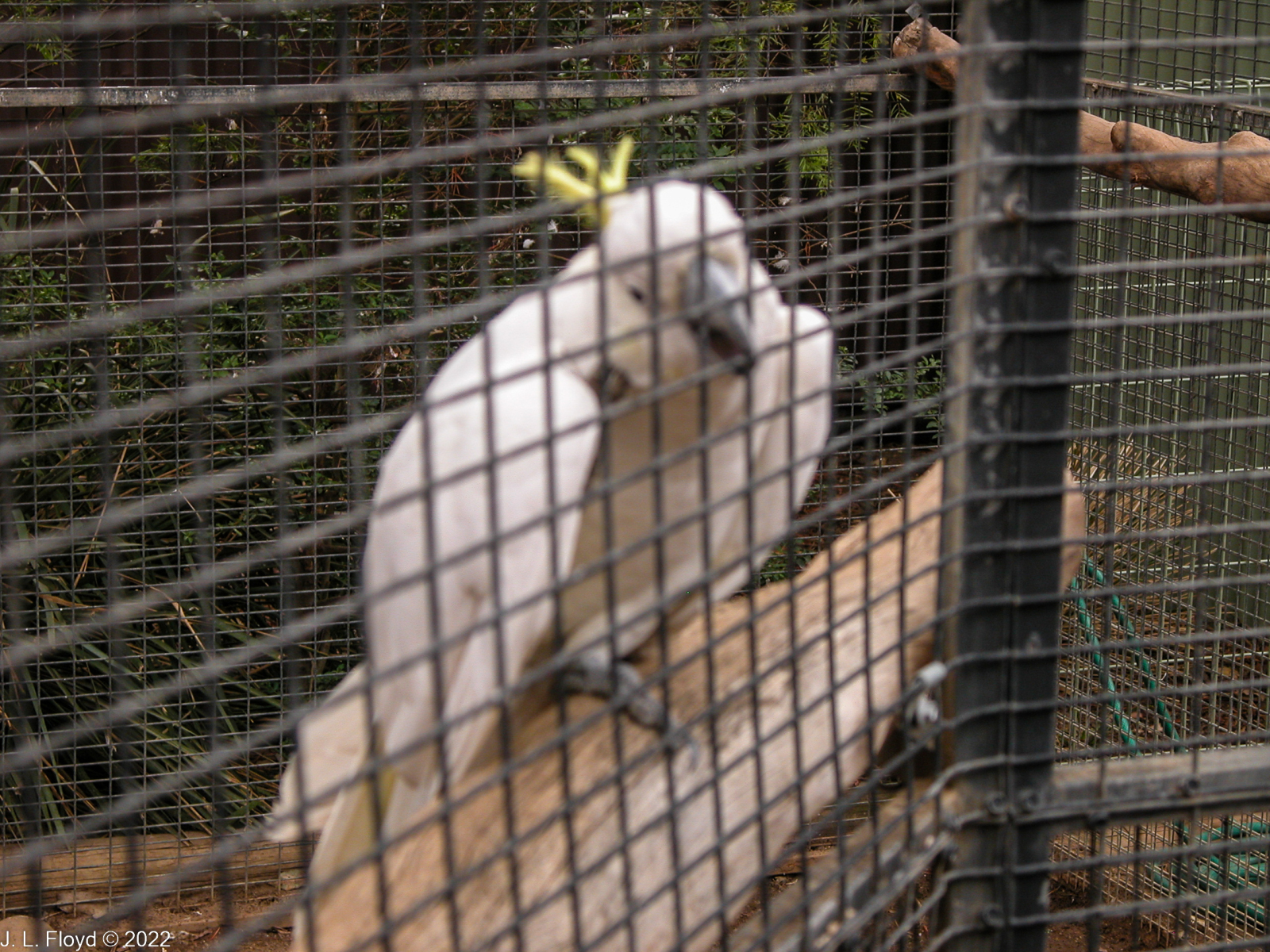
But I think it was the birds at Featherdale that most surprised and delighted me. Australia is a bird-watcher’s paradise; their variety, colorfulness and weirdness exceeded anything I ever could imagine. And Featherdale seemed to have them all – parrots, cockatoos, swans, kookaburras, emus, penguins, herons, you name it. The onliest problem was that many of them were in cages (or locations within the cages) that were not camera-friendly, so the photos here represent only a limited selection of what we actually saw.

I have seen sulfur-crested cockatoos in the USA, where they are bred for sale as pets, but in Australia they are common in the wild. They are all white except for their yellow crest; they are extremely curious and intelligent birds and are known for being able to learn to talk and to open garbage cans in Sydney to raid them for food. But that’s just the beginning for them; they have been rapidly begun to master new tricks, such as raiding gardens and farms for produce, hijacking mobile food trucks, using microwave ovens to cook their food, etc. In fact, the one in Featherdale told me that they were making plans to reverse the extinction of the dinosaurs 65 million years ago and take back the world from humans and other mammals. (Birds are known to be descended from theropod dinosaurs.)

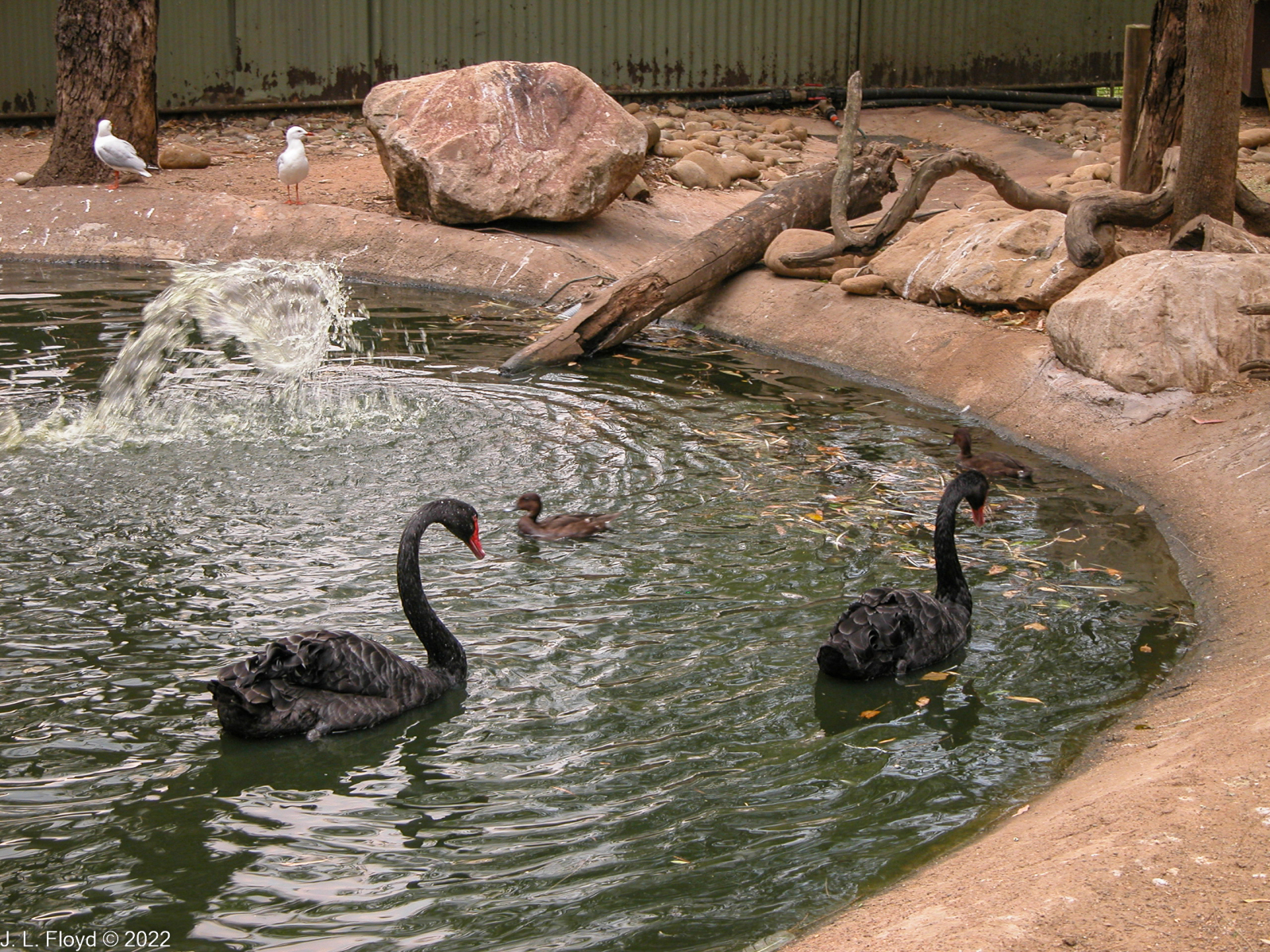
Black swans are also common in southeast and southwest Australia, and we had already seen a few, e.g. at Disneyland in Anaheim. But I have never seen one in flight; they are said to have white flight feathers, which should make them a spectacular sight on the wing. The pair in Featherdale had cygnets – baby swans – with them.

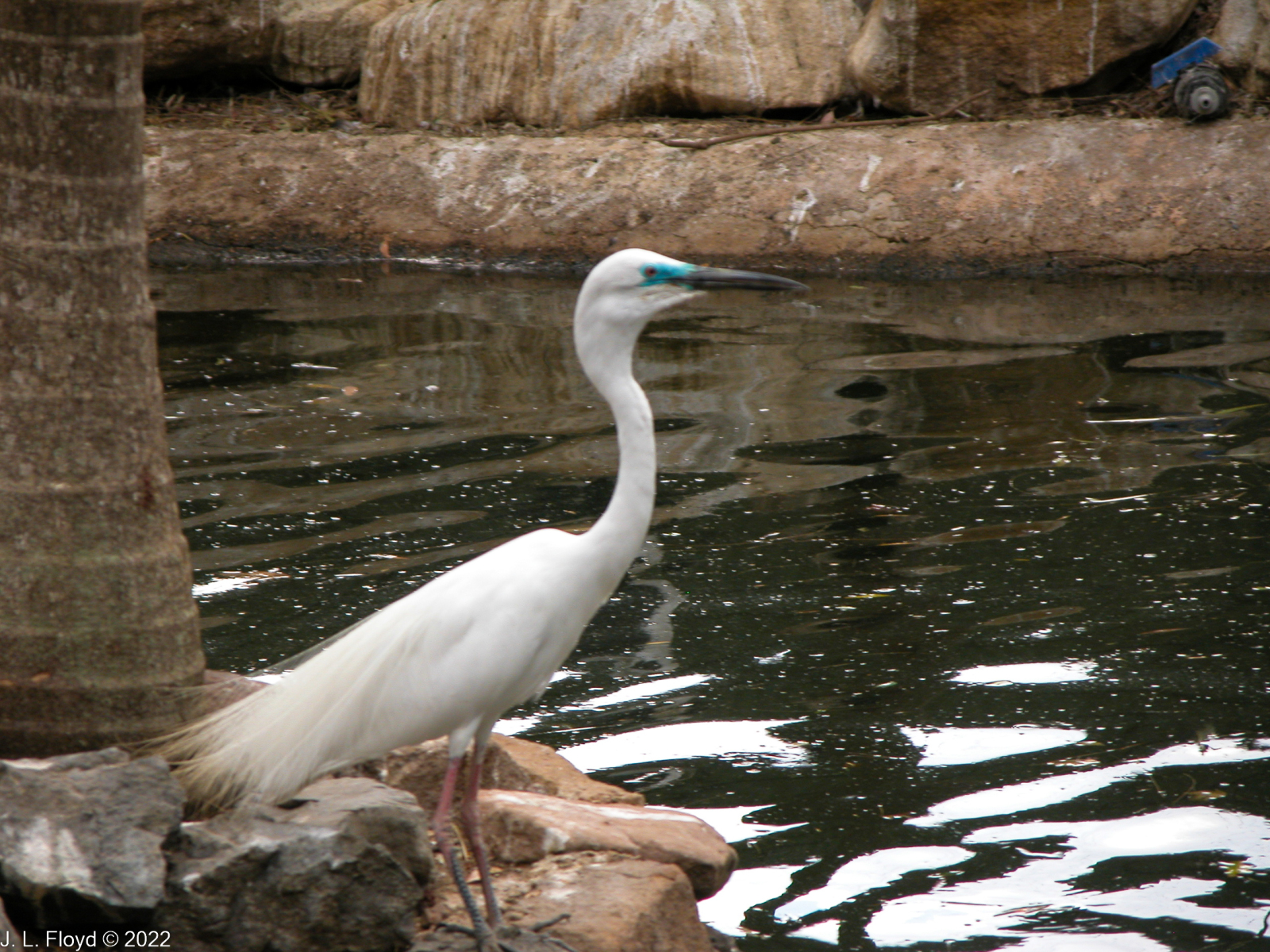
The Eastern Great Egret was a beautiful sight: all white except for its black bill and green face mask. I later found out that ordinarily it is entirely white with a yellow beak, and the colors we saw appear only in breeding season.

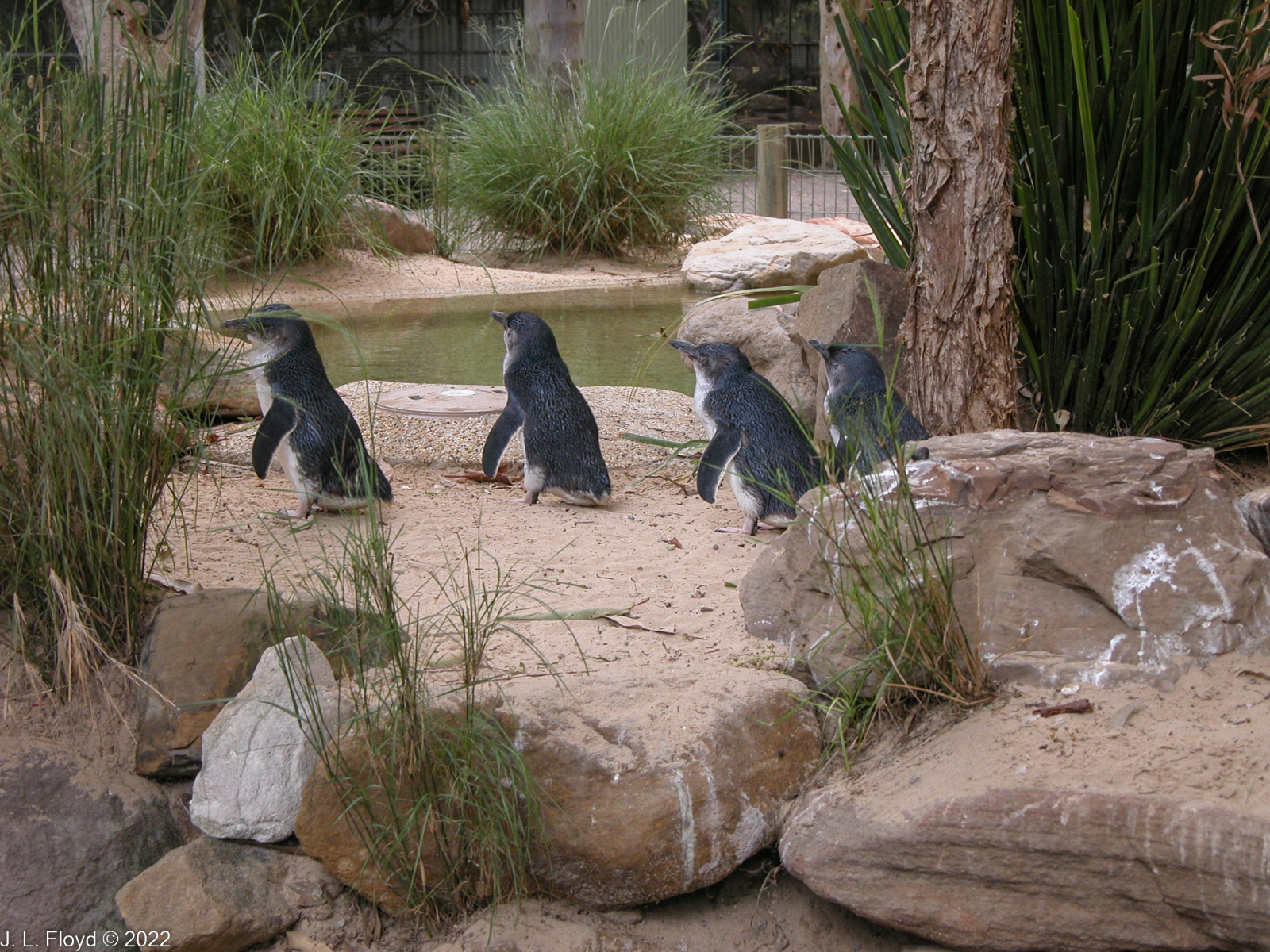
We also saw some cute little penguins, and it turned out that it’s not only a description but also the species name. There are two species of these, one native to Australia, and the other to New Zealand. (The Australian variety has also invaded New Zealand.) The Little Penguins in Australia live on the southern coasts and offshore islands.

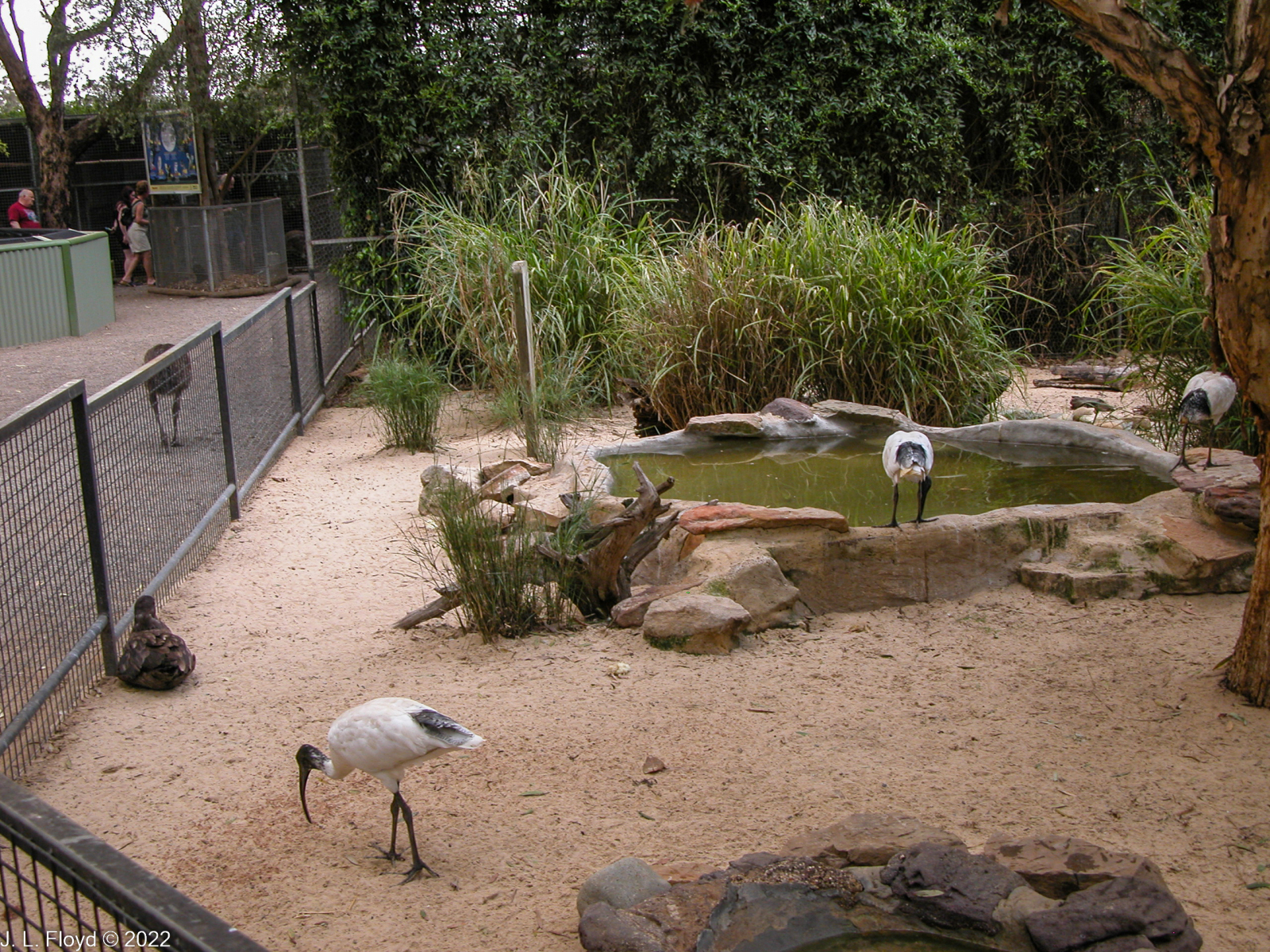
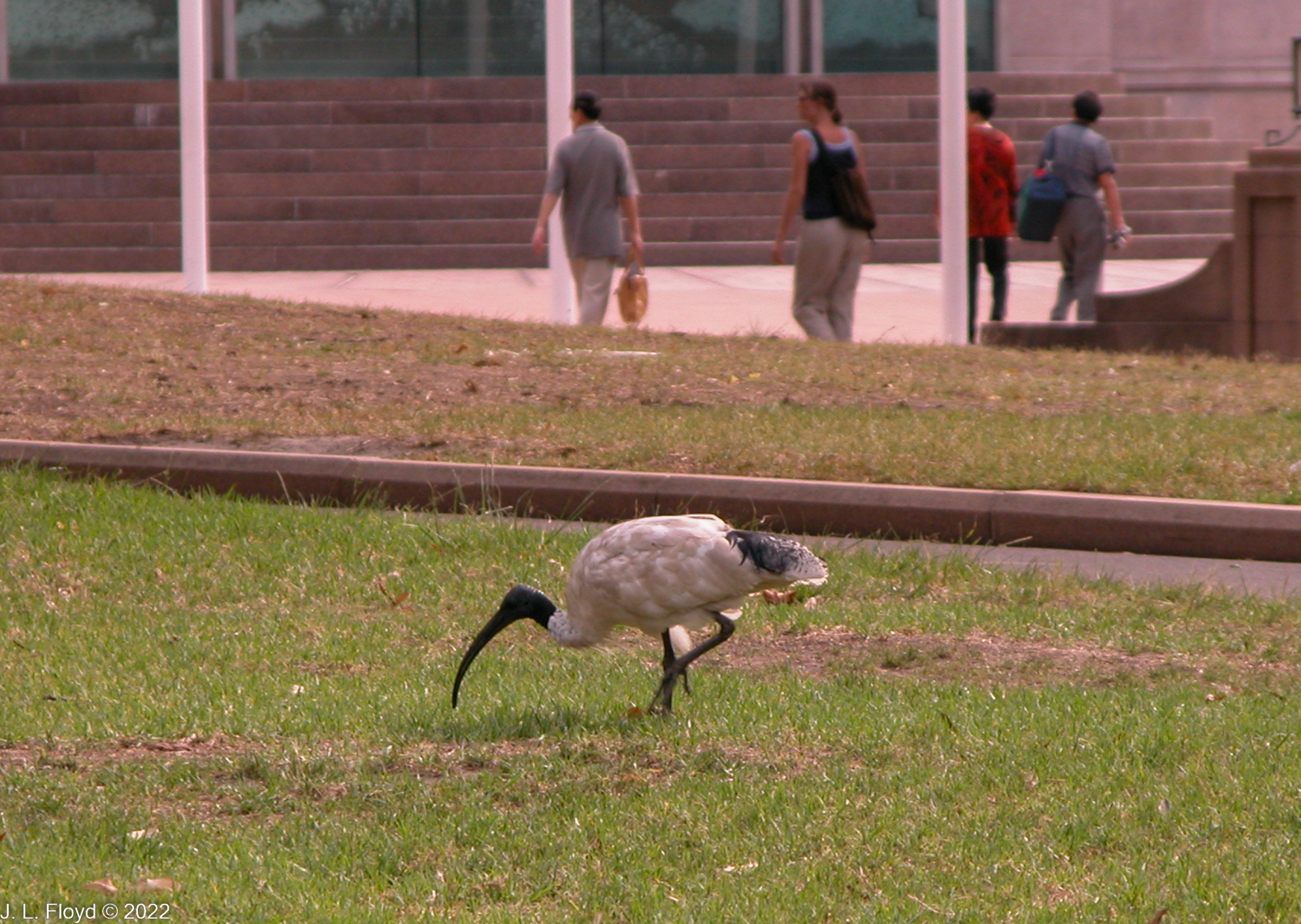
We had been introduced to the Australian White Ibis in Hyde Park in Sydney, so we were not surprised to see them in Featherdale. They are widespread over much of Australia, but it turns out that they have only invaded urban areas of Australia since the 1970s. It seems they have developed a taste for human food scraps, which they enjoy in addition to their natural diet of various invertebrates – they especially favor clams and mussels, which they dig out with their long bills. I don’t doubt that they have now joined forces with the cockatoos in their scheme to displace humans.
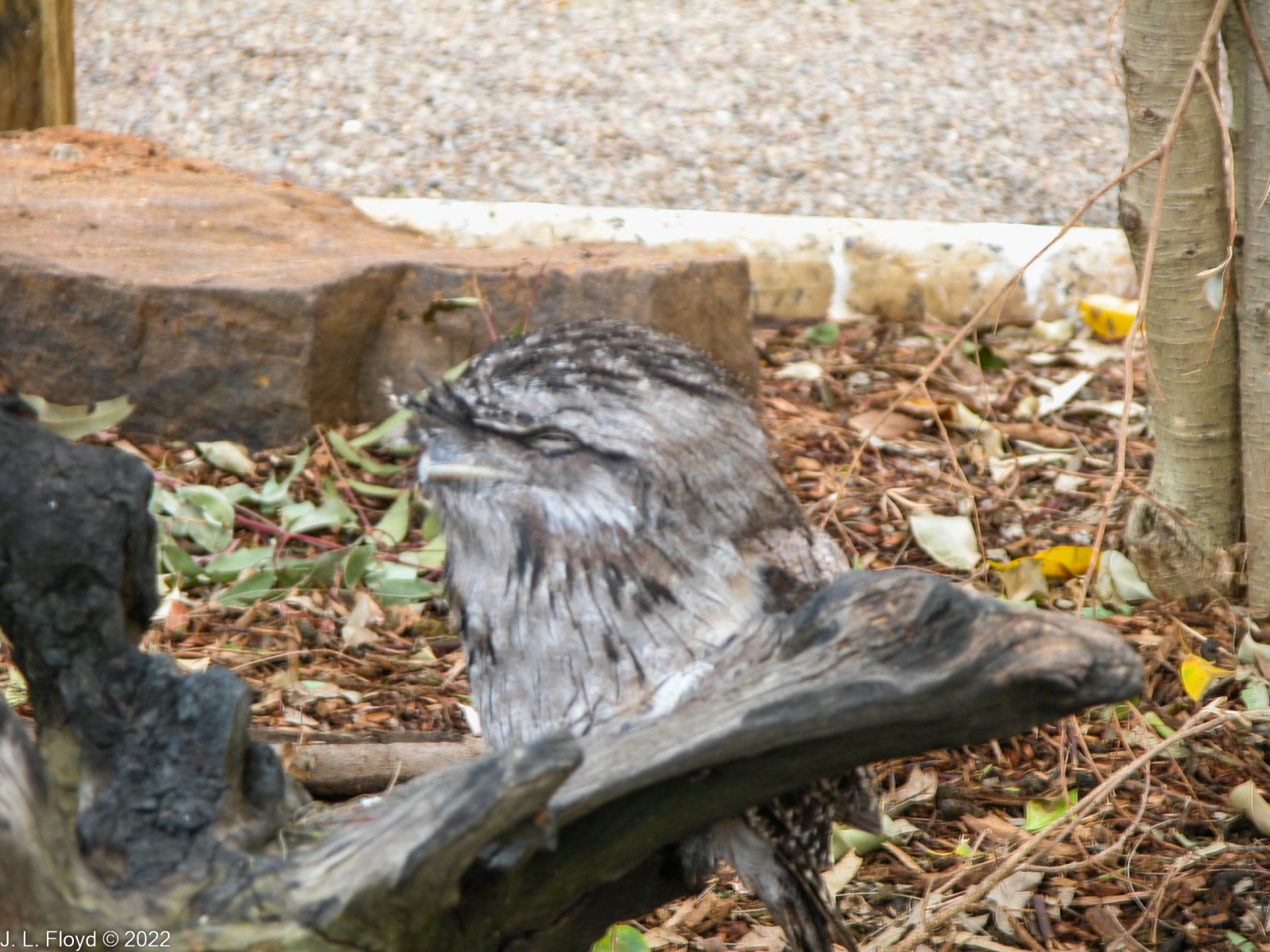
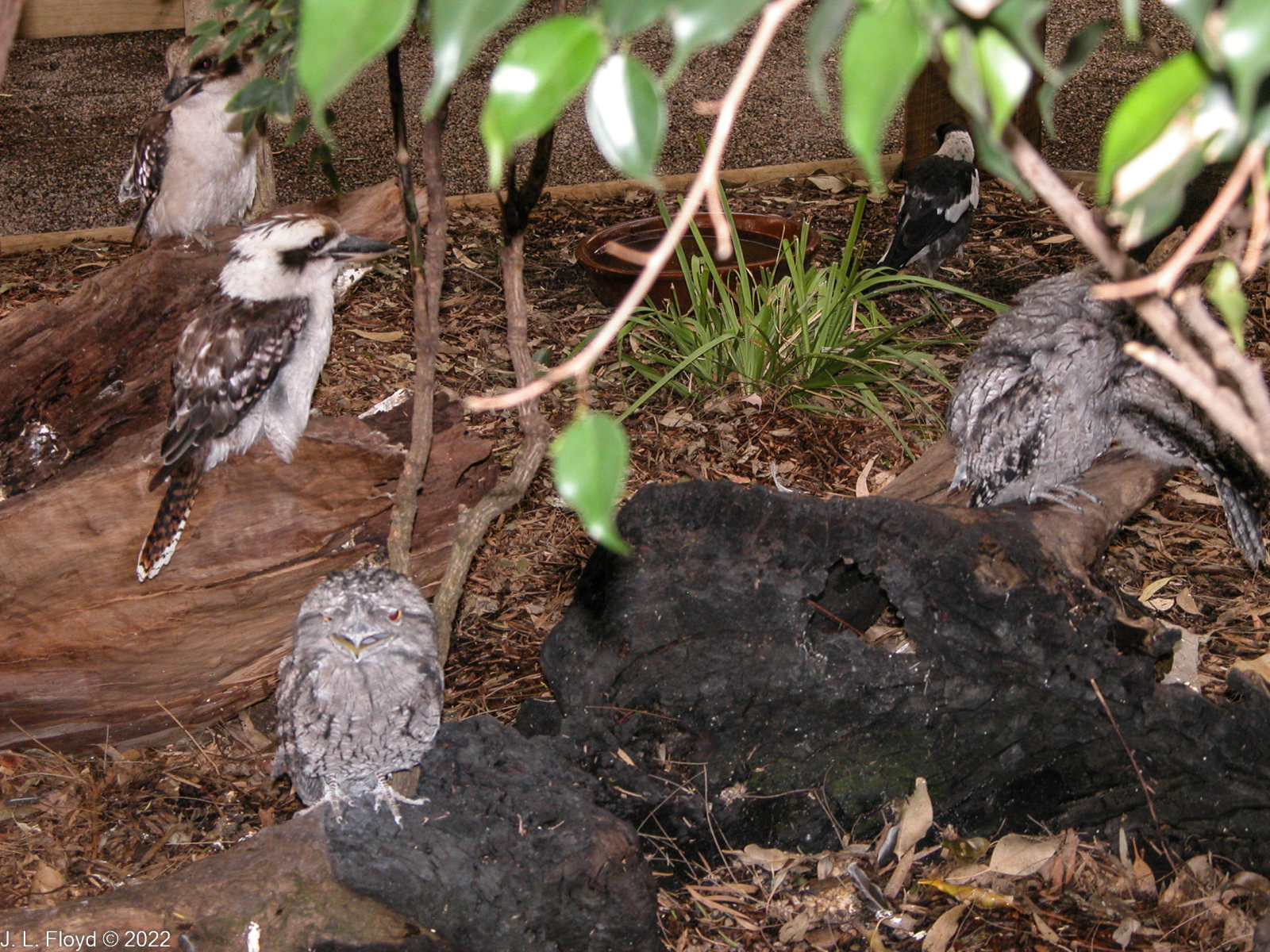
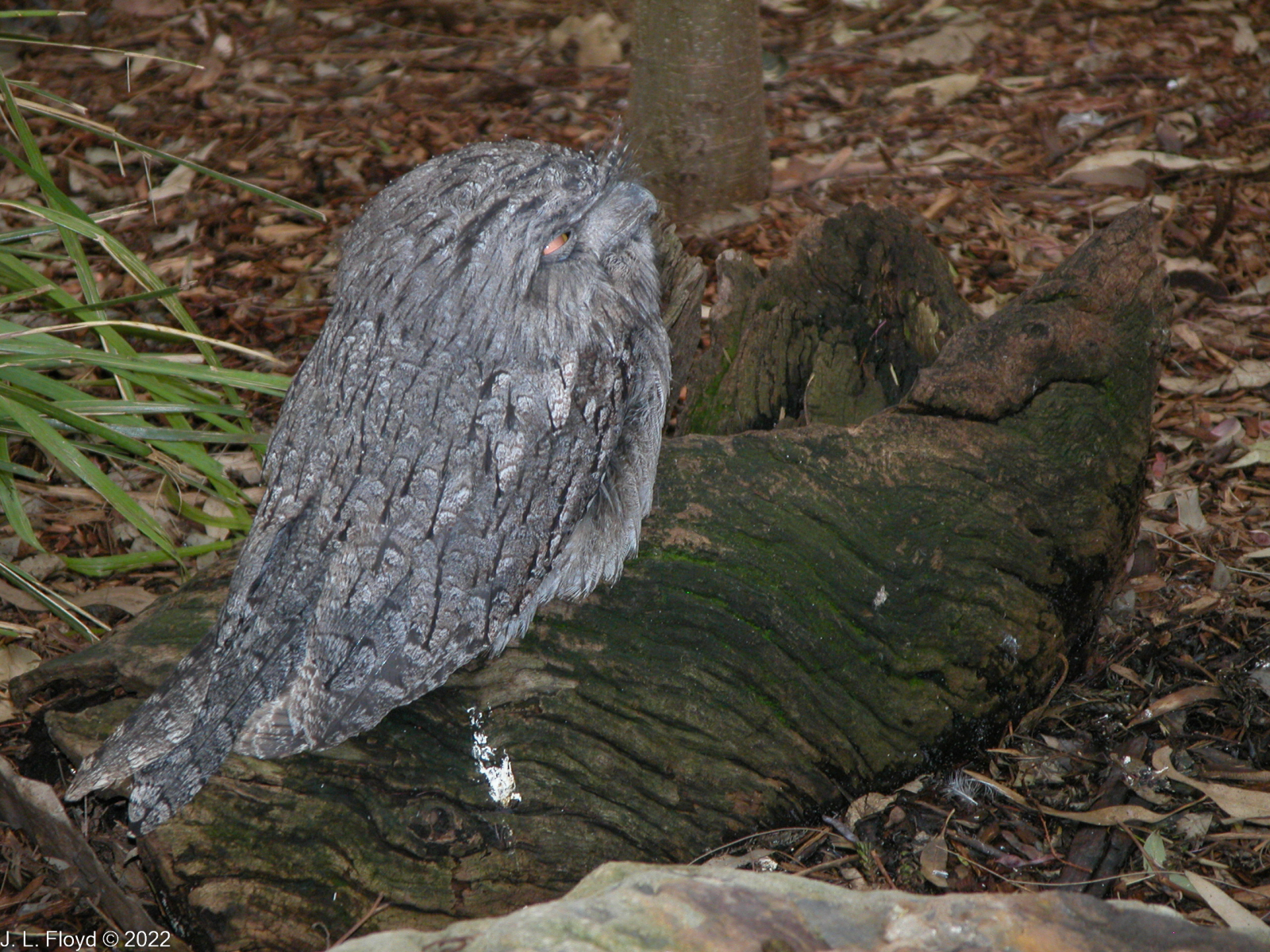
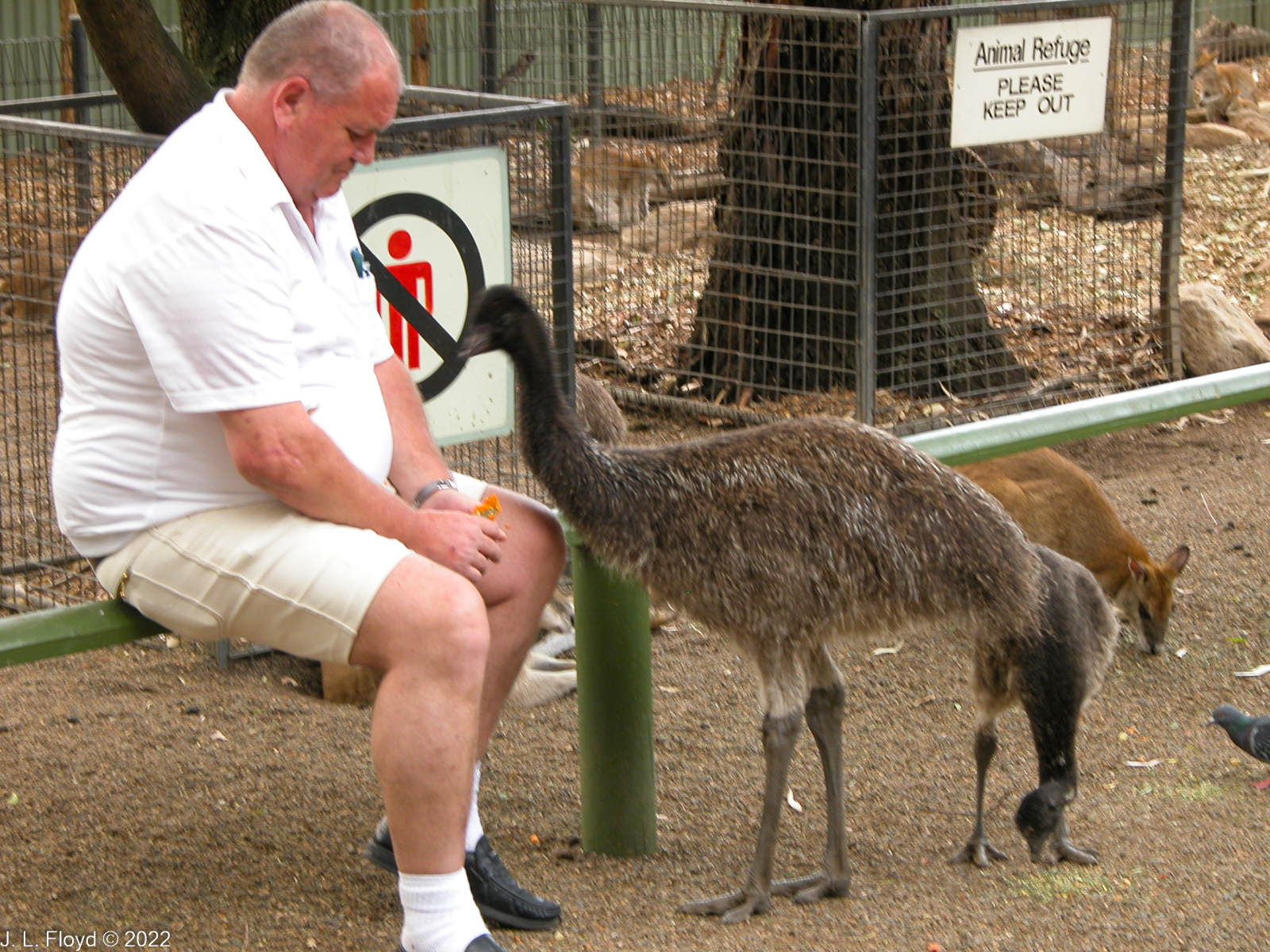
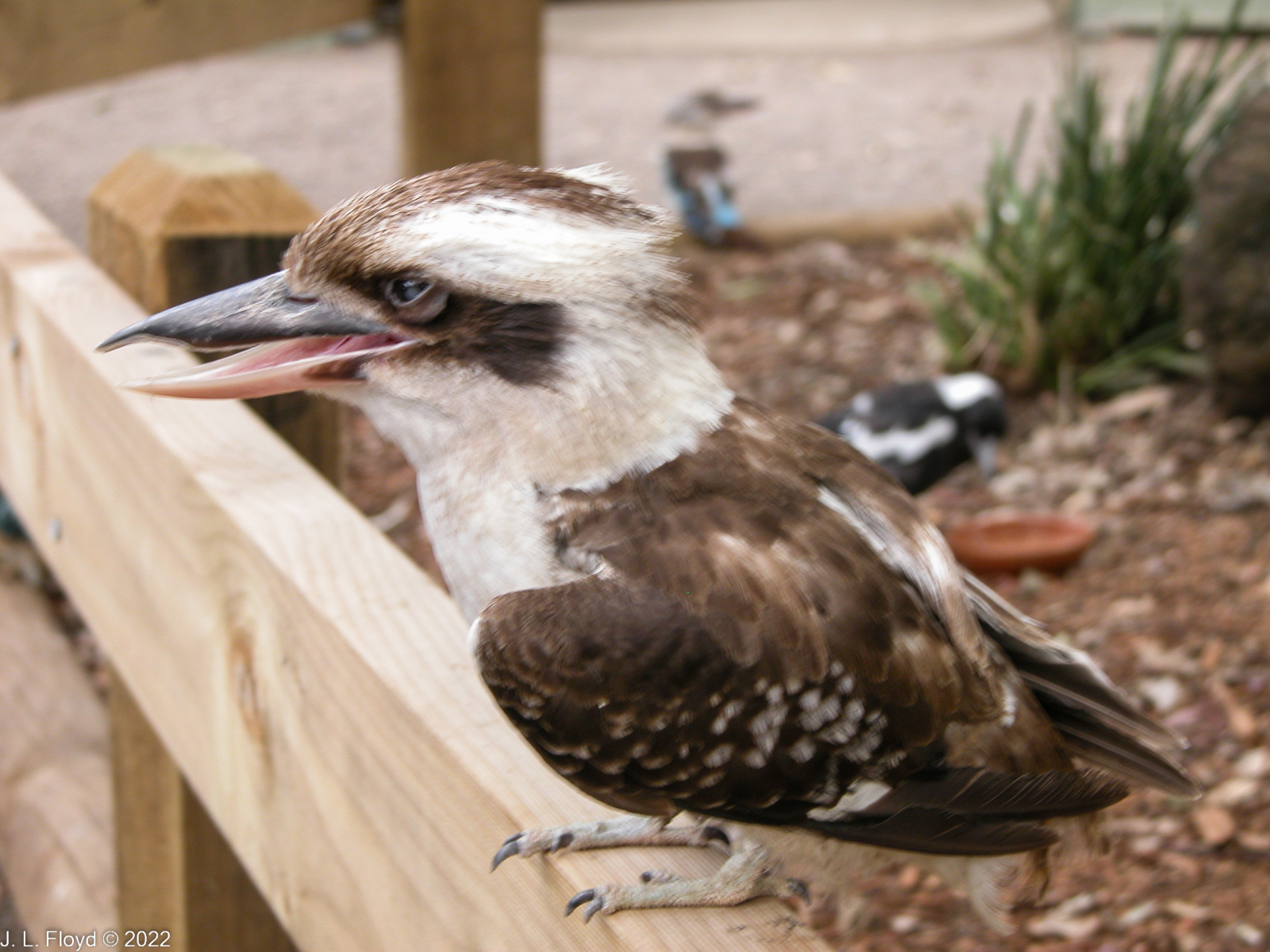
There was no end to the delightful and sometimes bizarre avians at Featherdale. We came across an emu who was investigating a middle-aged gentleman seated on a railing; he claimed to be conducting a scientific study of humans. Next we encountered a laughing kookaburra, another iconic Australian bird, who thought we were hilarious. But in the same pen with the kookaburras was the most bizarre and ridiculous bird I have ever seen, which was billed as a Tawny Frogmouth. It somewhat resembled an owl, and we thought at first that it was an owl, but we were informed that it is related not to owls but to swifts and hummingbirds, which I find quite difficult to believe. Like the owl, the frogmouth is a nocturnal feeder, but unlike the owl it is a weak flyer, so it depends primarily on camouflage for success as a hunter, as well as its broad flat hooked bill, which it uses to capture insects; frogmouths also like small vertebrates such as mice and frogs.
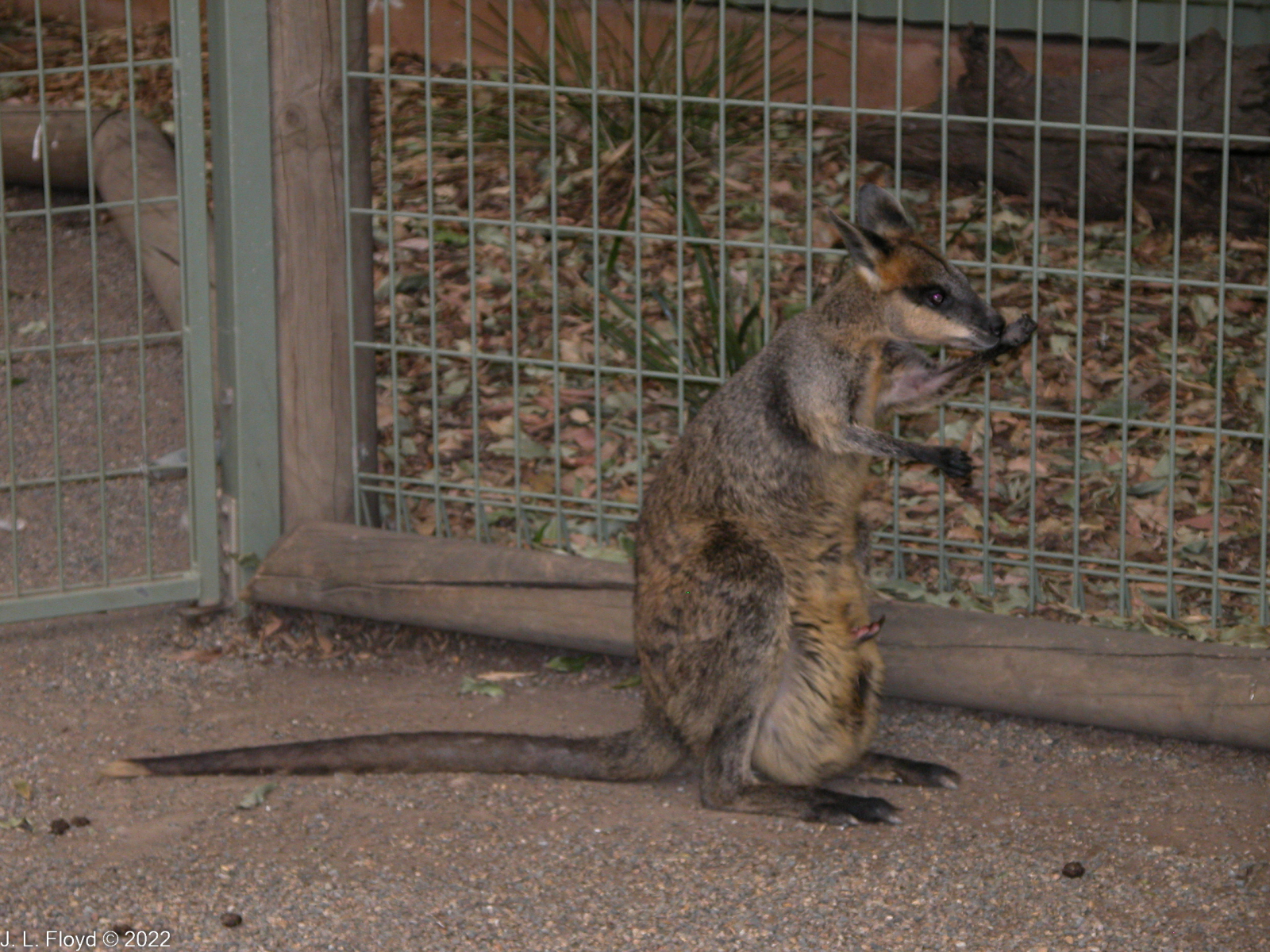
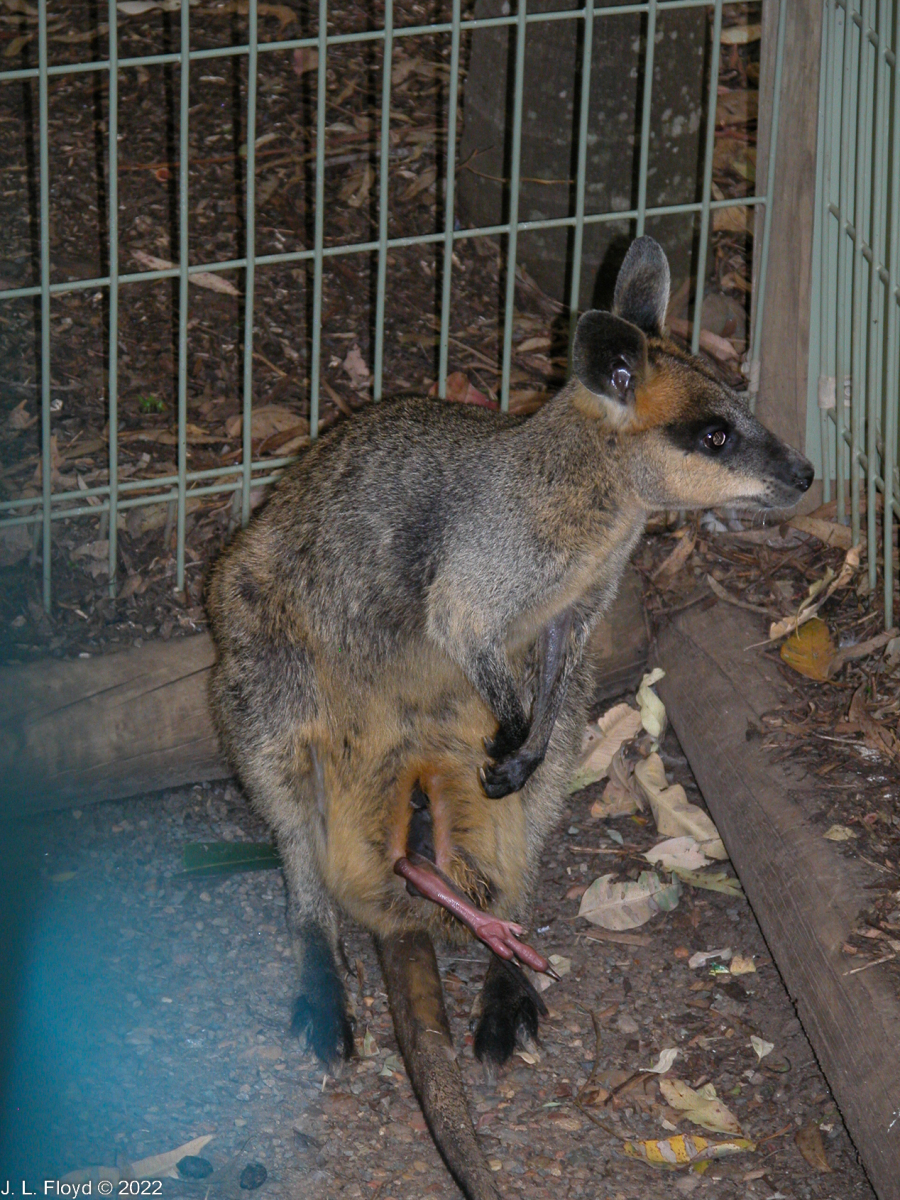
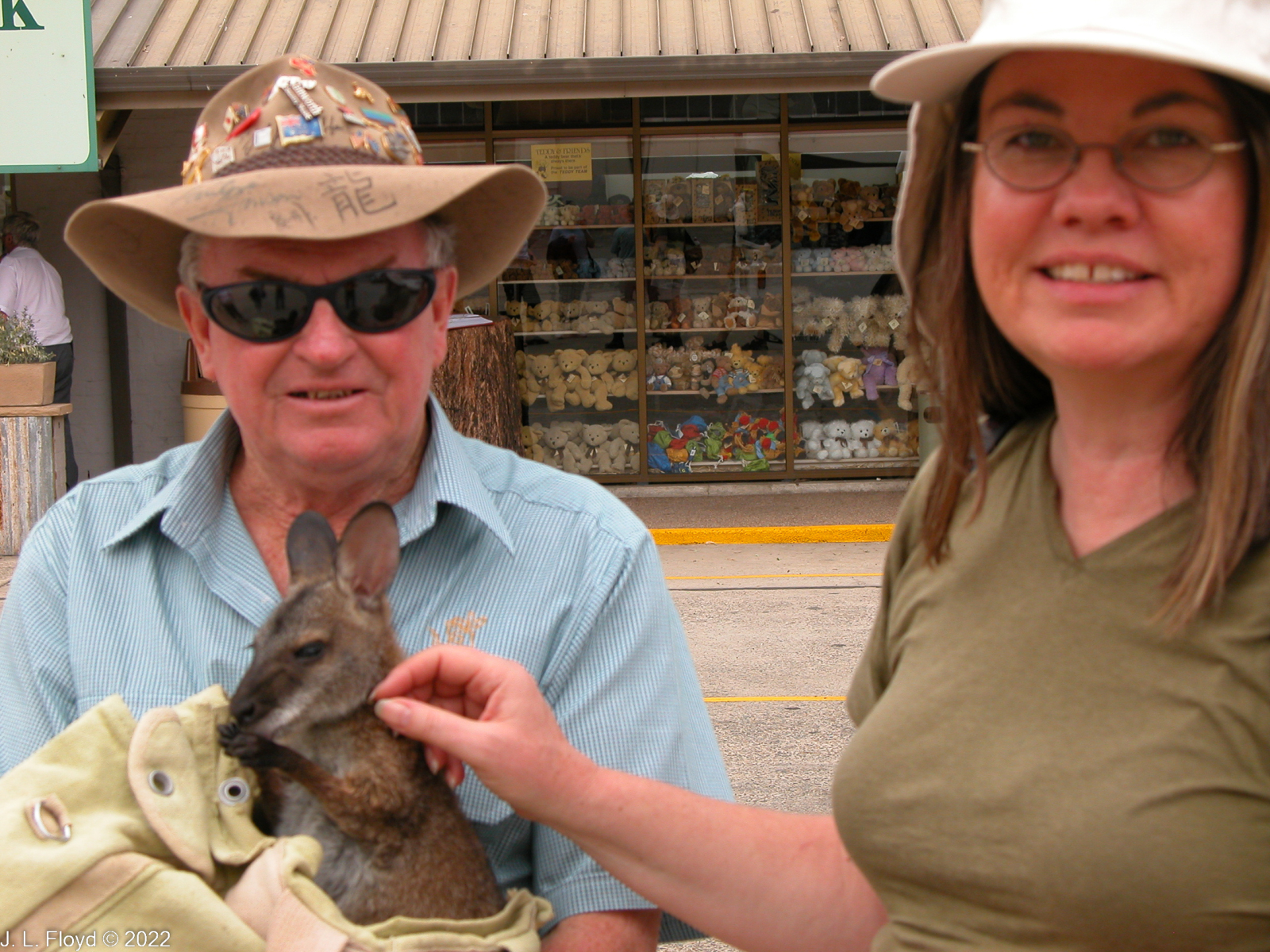
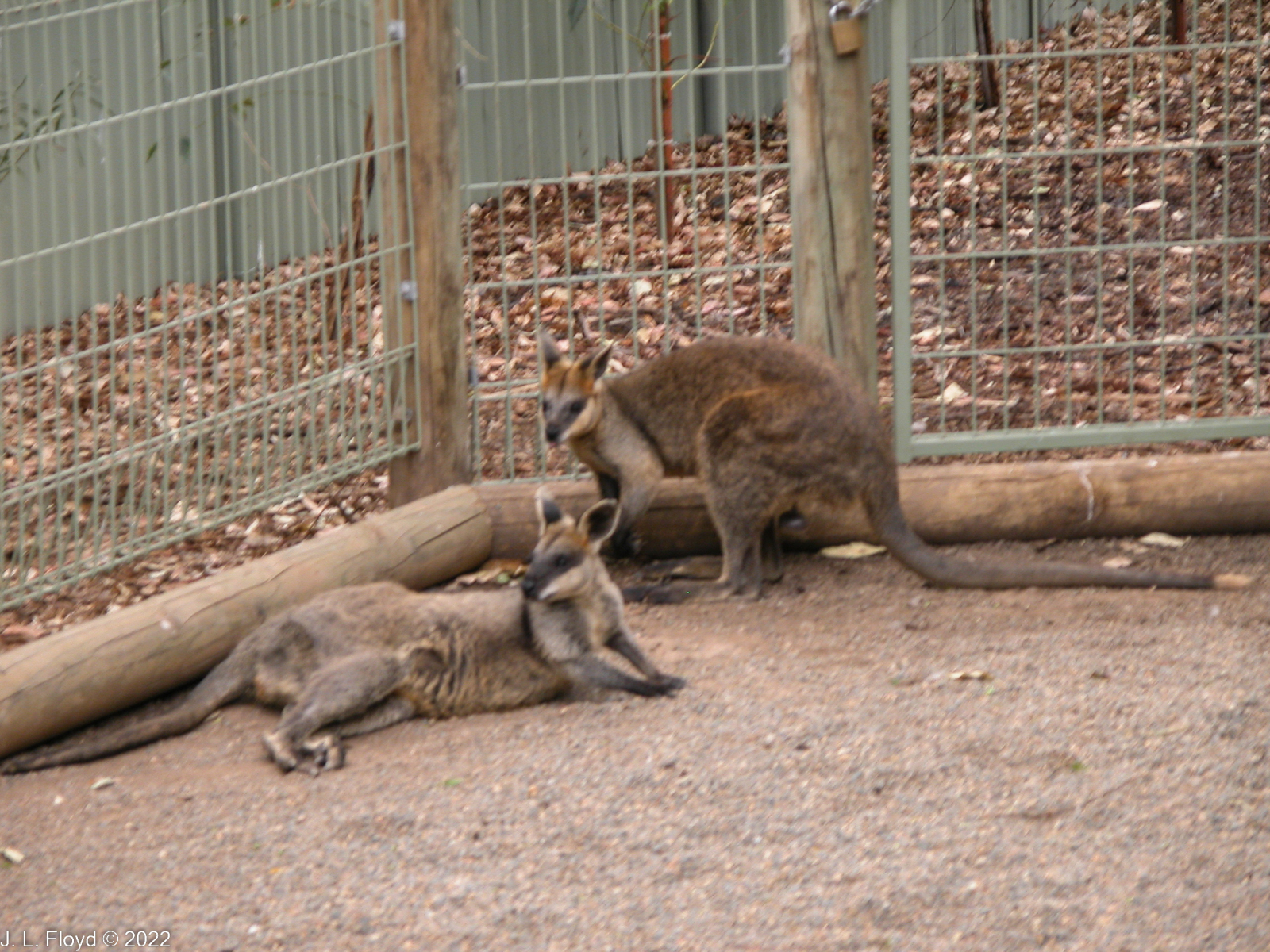
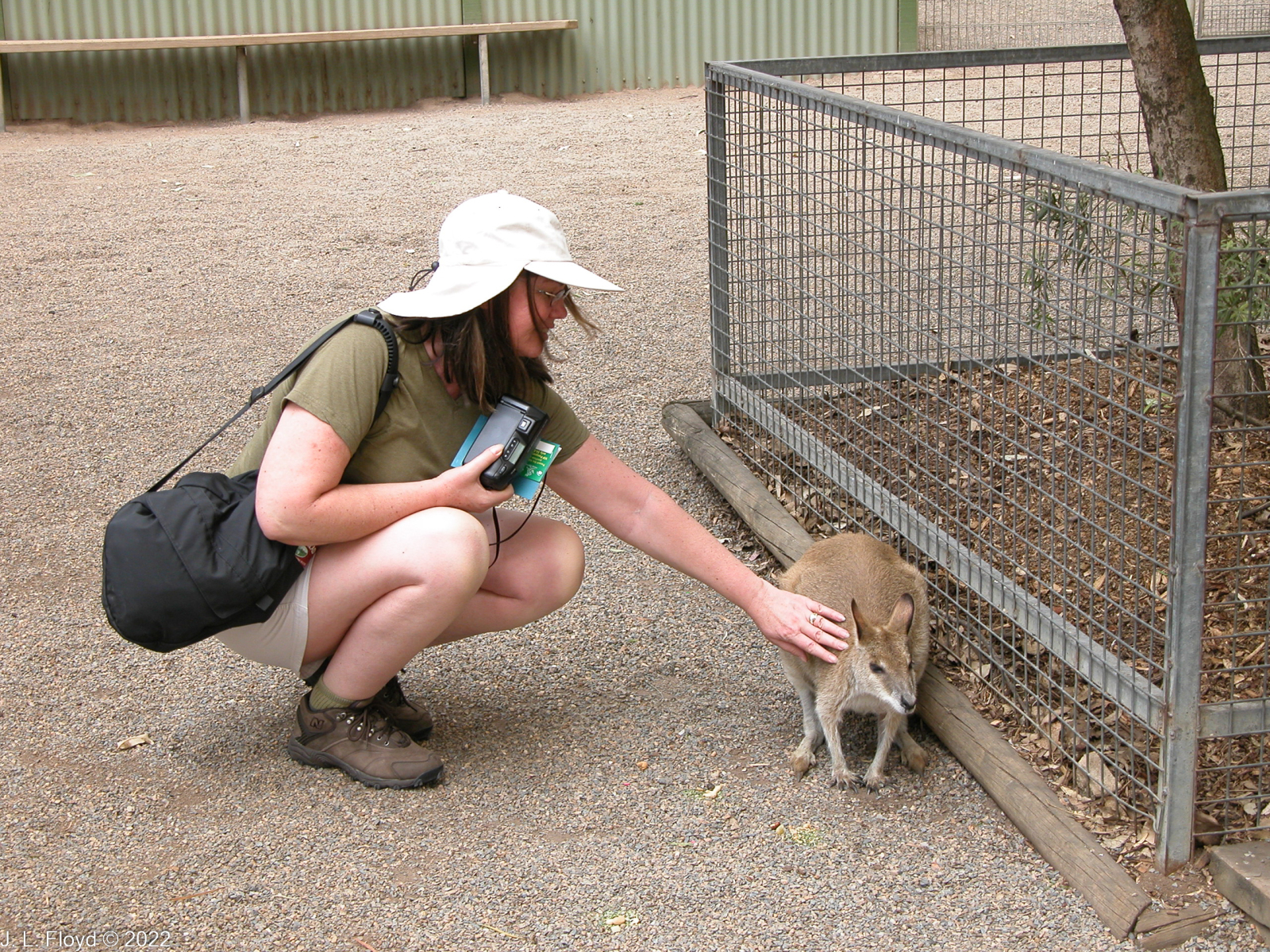
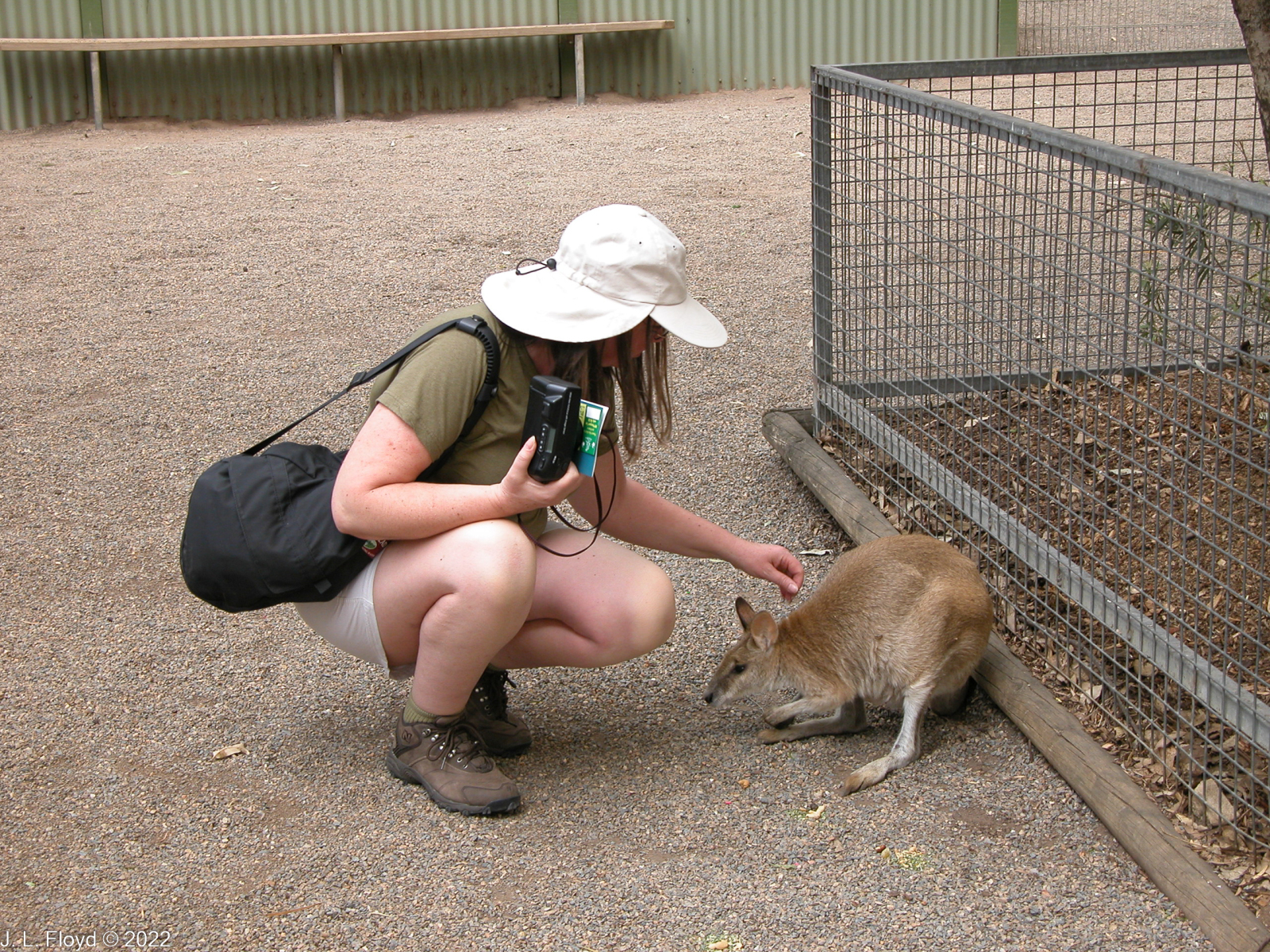
Getting back to the mammals, Sandie found a cute little marsupial in one of the open gardens – I’m not sure whether it was a baby kangaroo or a wallaby – and quickly made friends with it.

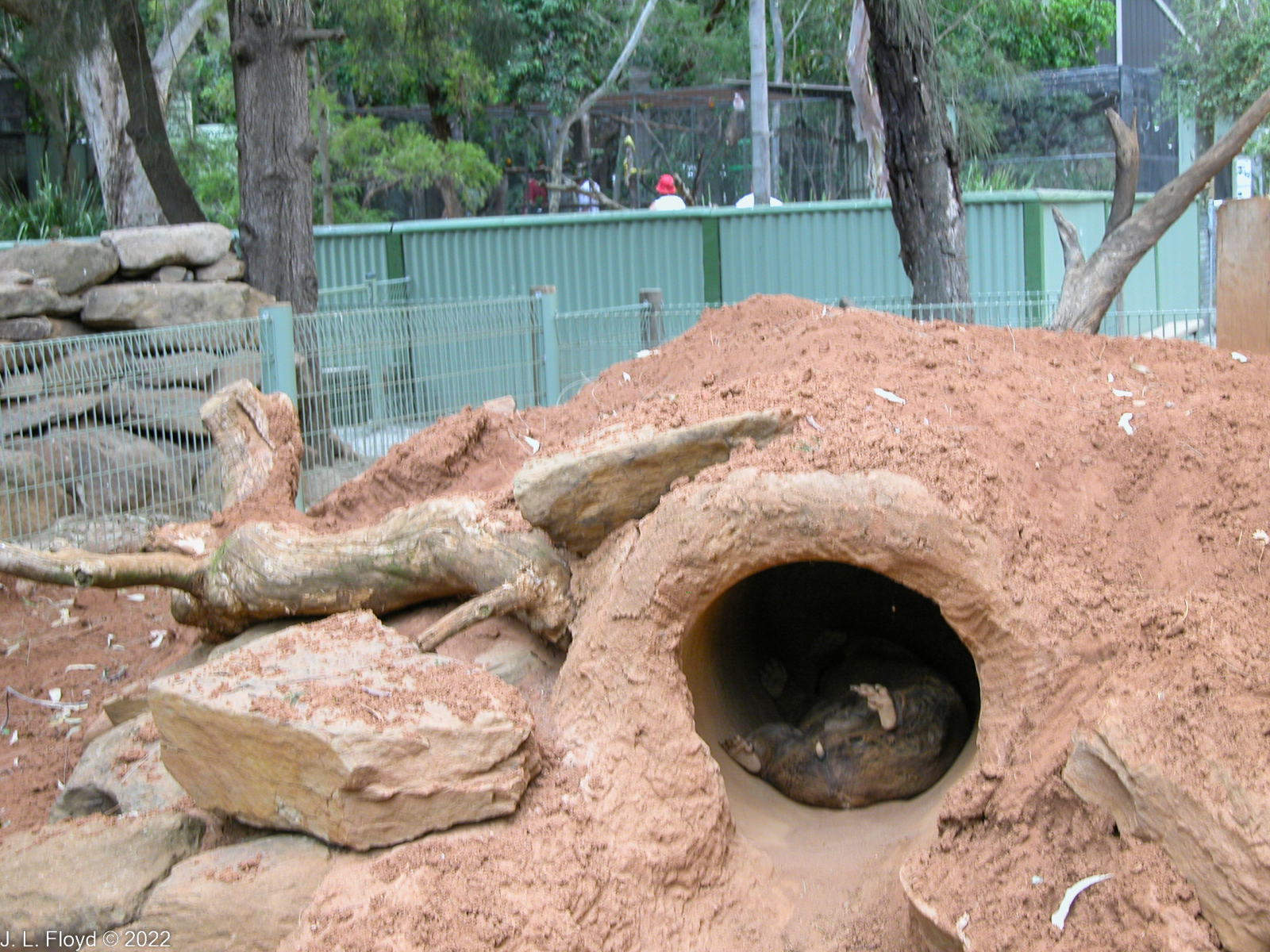
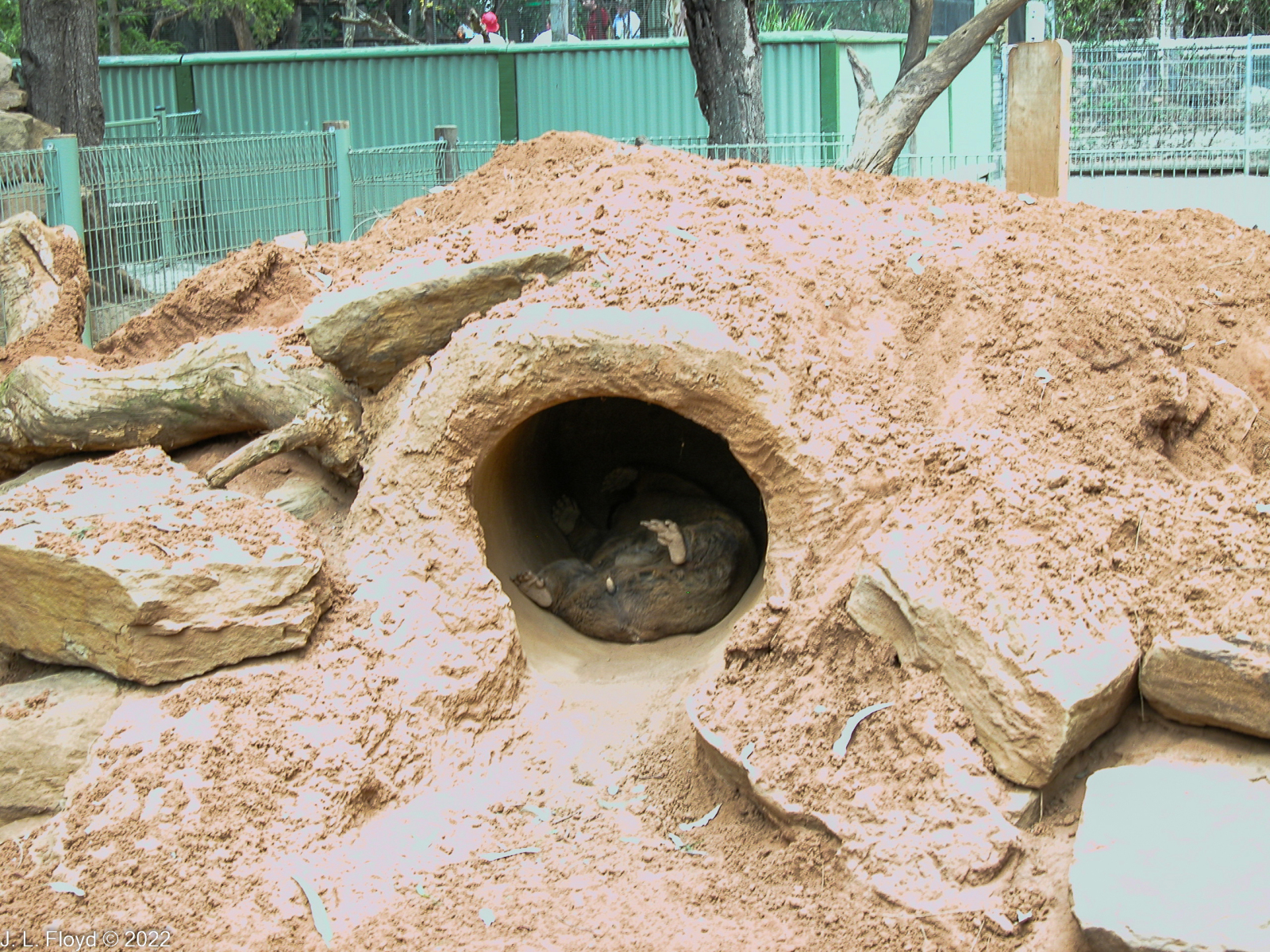
Next we came across a den with – or so it appeared at first – nobody home. But then in the darkness we could make out the hindquarters of a creature that turned out to be a sleeping Tasmanian devil. I had never seen one of these outside of a Looney Tunes cartoon, so I really wanted to know what they look like; but try as I might, I couldn’t coax the creature to come out of its den, or even wake it up. I had to look up the species on Wikipedia to find out what it looks like. Turns out it looks (and behaves) somewhat like a cross between a dog and a wolverine. According to Wikipedia, “It is characterised by its stocky and muscular build, black fur, pungent odour, extremely loud and disturbing screech, keen sense of smell, and ferocity when feeding.” It is carnivorous, both a hunter and a scavenger, and has the strongest bite for its body mass of any extant land animal.

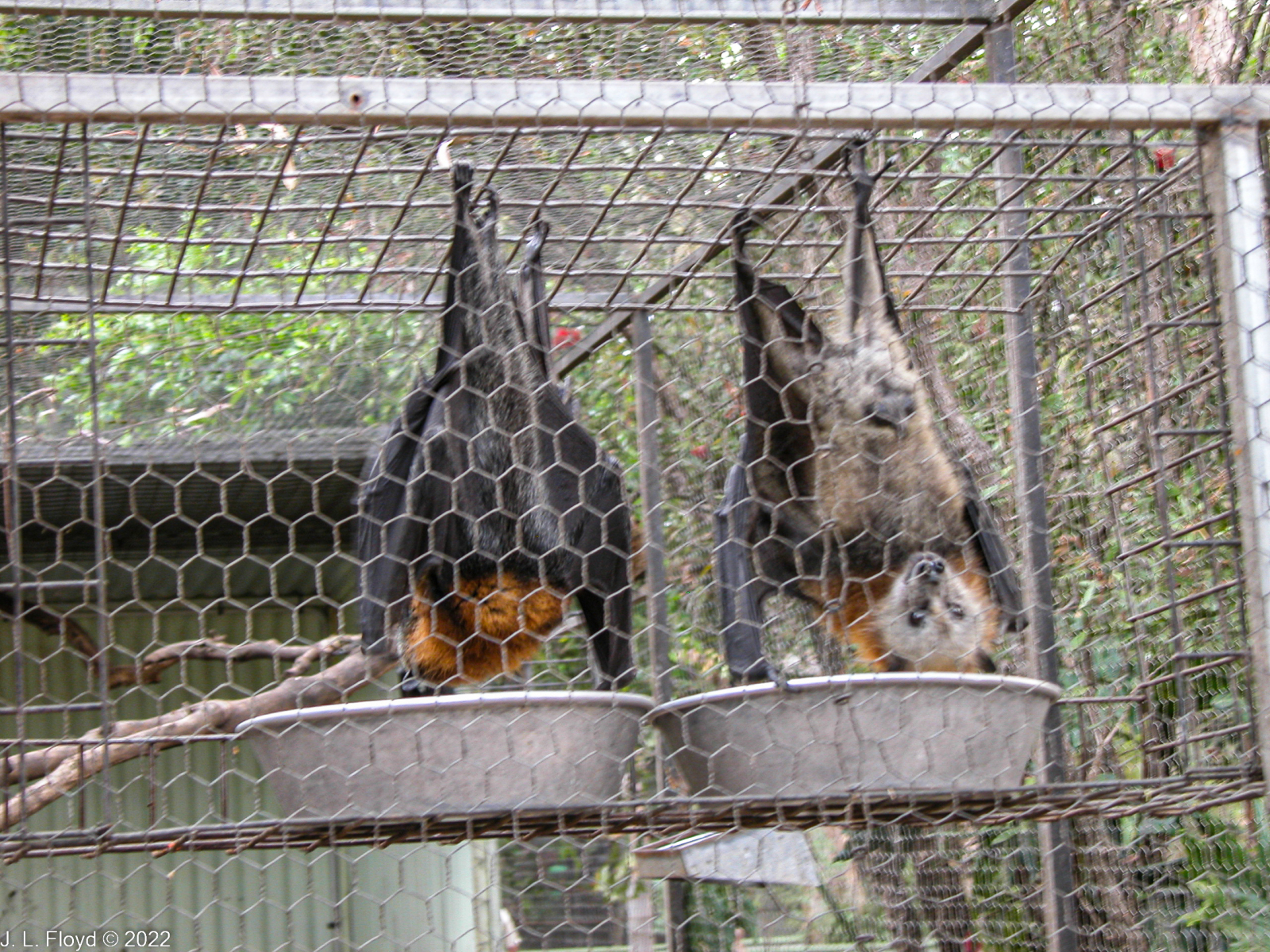
A couple of rather large bats hanging upside-down in their cage caught my attention. I expected to find out that they were vampires, but it turns out that they eat pollen, nectar and fruit, and moreover are key pollinators. The grey-headed flying fox, as the species is known, is the largest bat in Australia and lives mainly in the southern and eastern regions of the continent. It does not echolocate but rather relies on sight and smell to find its food; the expression “blind as a bat” does not apply in this case.

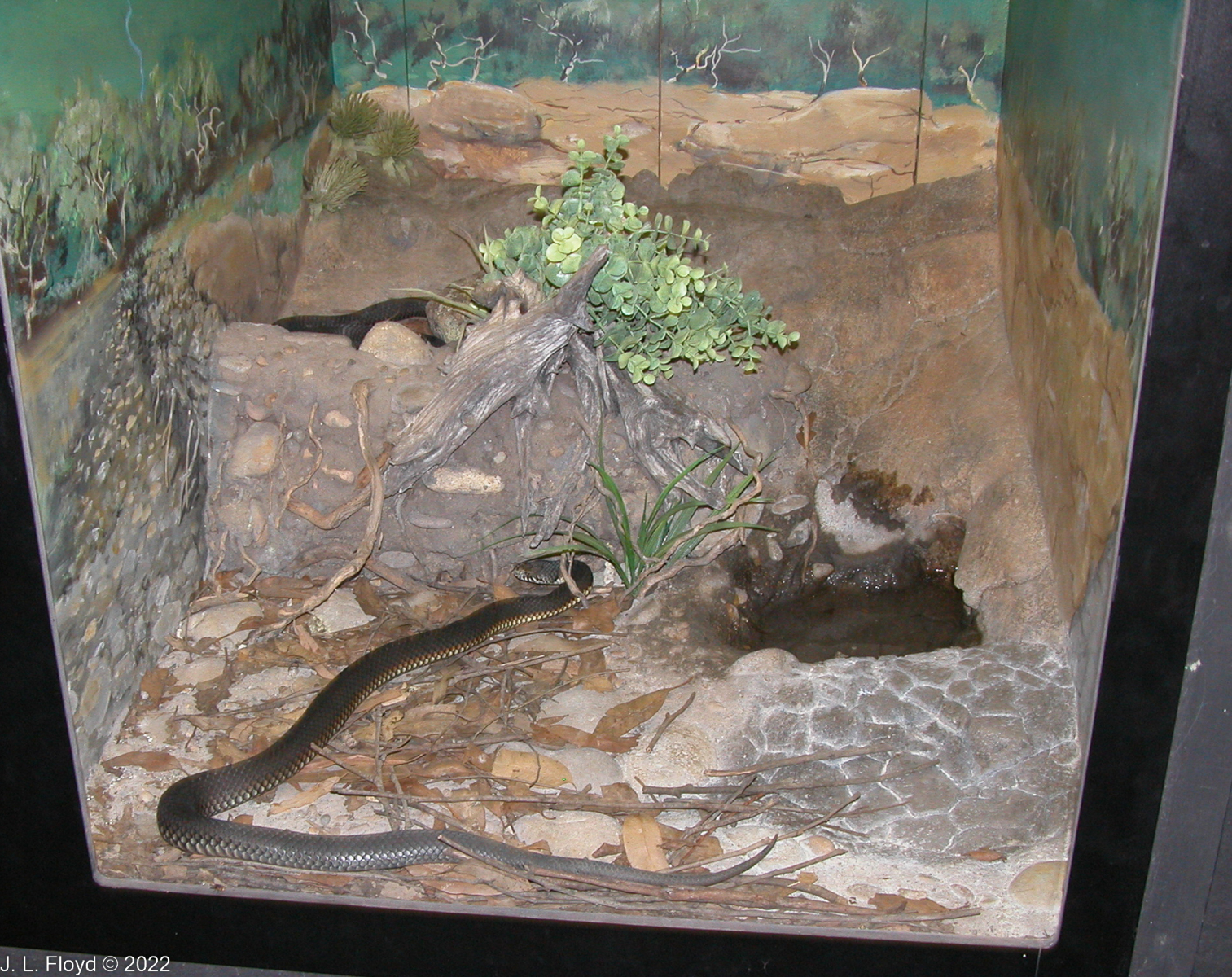
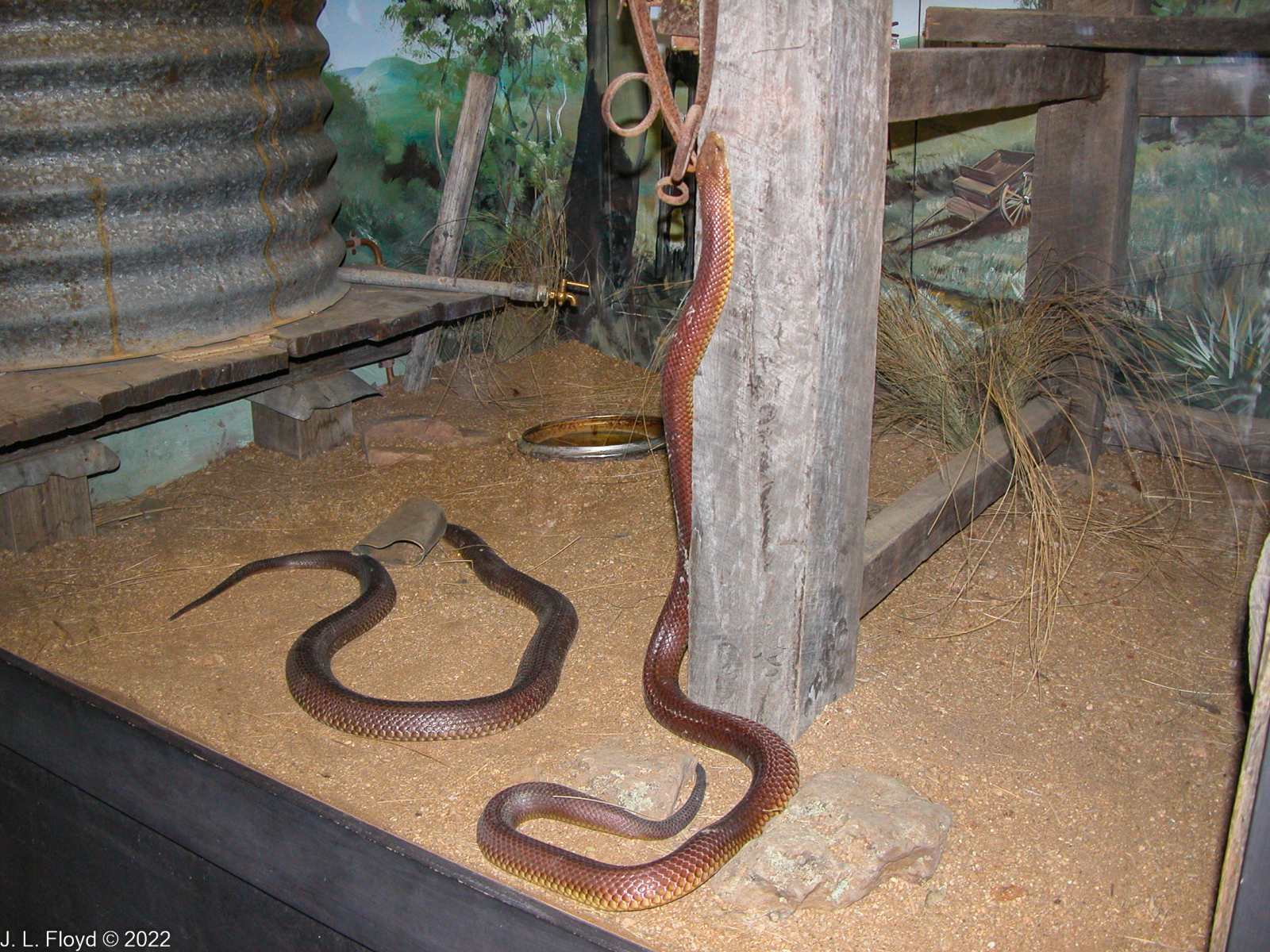
And finally there were the serpents. I find snakes to be both fascinating and repellent. Australia is known for its venomous snakes, of which there are many varieties, most of them quite deadly. The inland taipan snake is supposed to have the most toxic venom in the world. However, we were informed that once bitten by an Australian snake, if you can get the antitoxin in time, you will recover more quickly and completely than if you were bitten by a cobra or a rattlesnake, whose venom supposedly has more long-lasting complications. I resolved not to test this assertion. The Australian snake with the second most toxic venom in the world is the Eastern Brown, a fast and agile snake which is responsible for about 60% of human snake-bite deaths in Australia. At Featherdale we saw tiger snakes, eastern browns and Australian copperheads; I’m not sure exactly which ones appear in the following photographs.
I can’t finish this post without bringing up the 1962 Rolf Harris song “Tie Me Kangaroo Down, Sport”:

There’s an old Australian stockman lying, dying
And he gets himself up onto one elbow and he turns to his mates
Who are all gathered around and he says

Watch me wallabies feed, mate
Watch me wallabies feed
They’re a dangerous breed, mate
So watch me wallabies feed
Altogether now!

Chorus (repeats after each verse):

Tie me kangaroo down, sport
Tie me kangaroo down
Tie me kangaroo down, sport
Tie me kangaroo down

Keep me cockatoo cool, Curl
Keep me cockatoo cool
Ah, don’t go acting the fool, Curl
Just keep me cockatoo cool
Altogether now!

Take me koala back, Jack
Take me koala back
He lives somewhere out on the track, Mac
So take me koala back
Altogether now!

And mind me platypus duck, Bill
Mind me platypus duck
Ah, don’t let ‘im go running amok, Bill
Just mind me platypus duck
Altogether now!

Let me Emus go loose, Bruce
Let me Emus go loose
They’re of no further use, Bruce
Let me Emus go loose
Altogether now!

Play your didgeridoo, Blue
Play your didgeridoo
Keep playin’ ’til I shoot through, Blue
Play your didgeridoo
Altogether now!

Tan me hide when I’m dead, Fred
Tan me hide when I’m dead
So we tanned his hide when he died, Clyde
And that’s it hangin’ on the shed!
Altogether now!

OK, I have to admit that I put in my own version of one of those verses. Originally it was “Let me Abos go loose, Bruce,” and that was the way I first heard the song on the jukebox when I was working in the Blue Door Cafe in Long Beach in 1963, but that verse was later deleted because the reference to “Abos” – aborigines – was considered racist. I don’t understand why they didn’t just replace “Abos” by “emus,” which has the same number of syllables and is an Australian animal, so I did it myself. So far, the emus haven’t objected to that.
Categories
Australia, November-December 2002

Blue Mountains, November 26, 2002

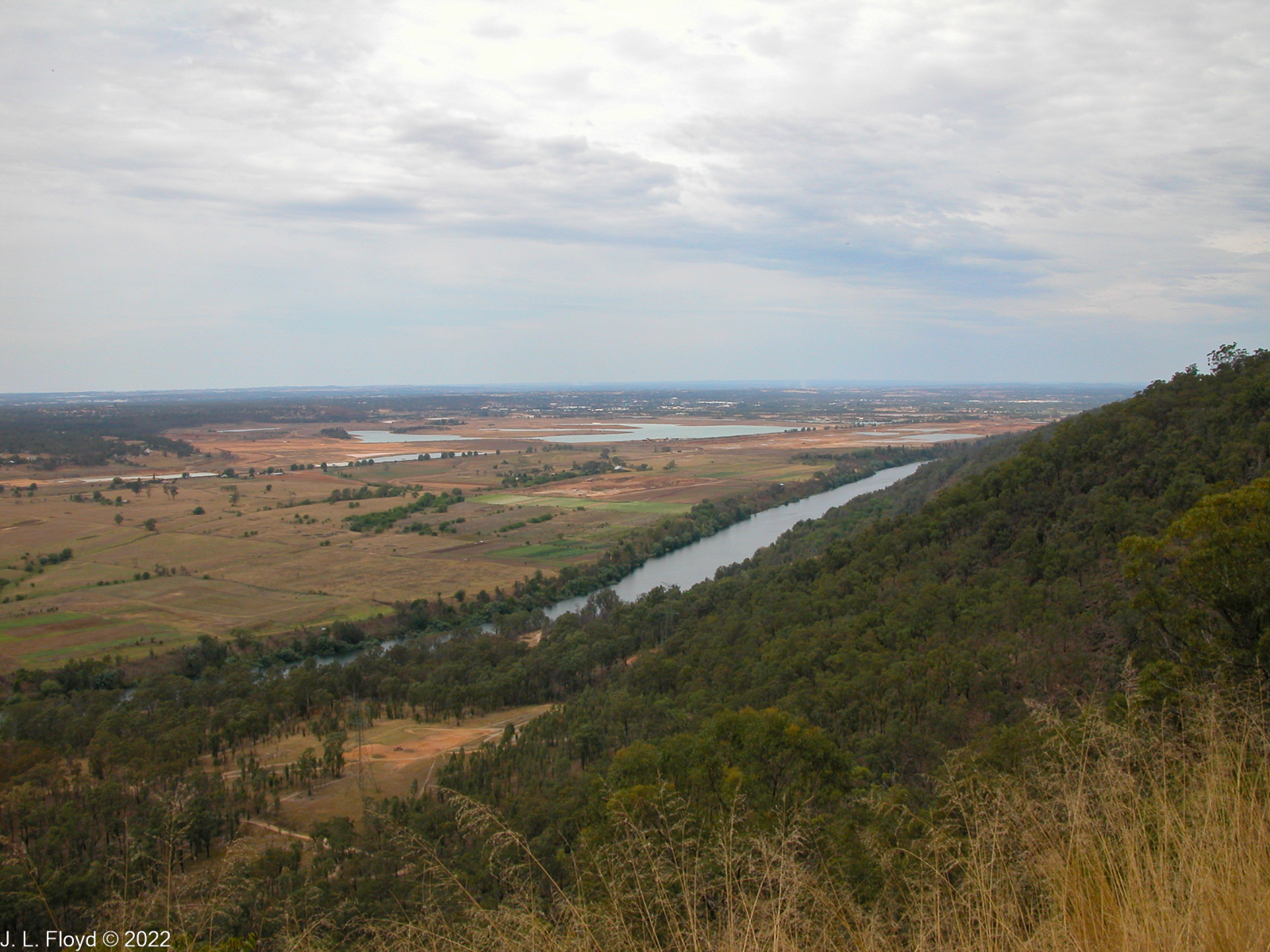
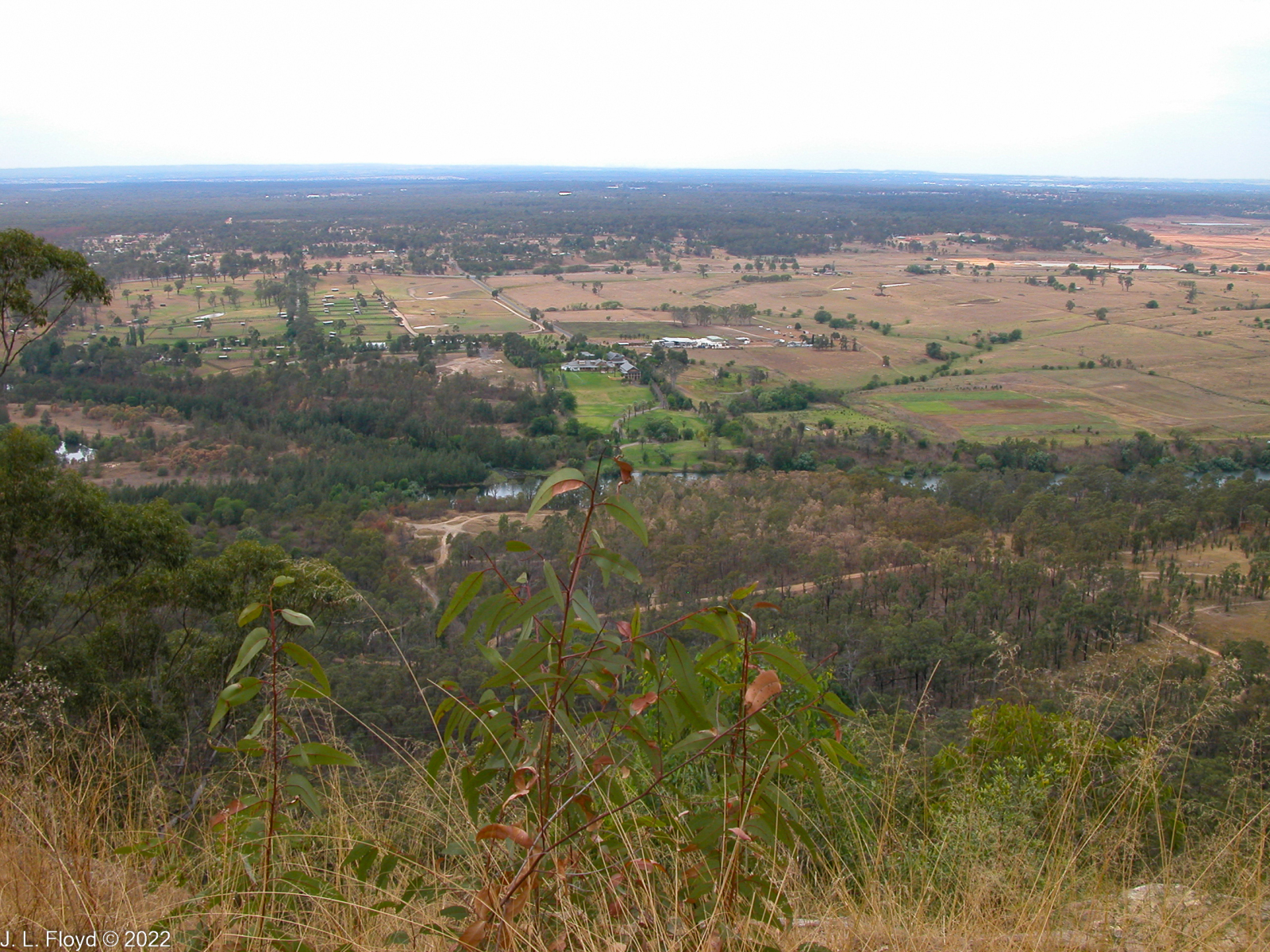
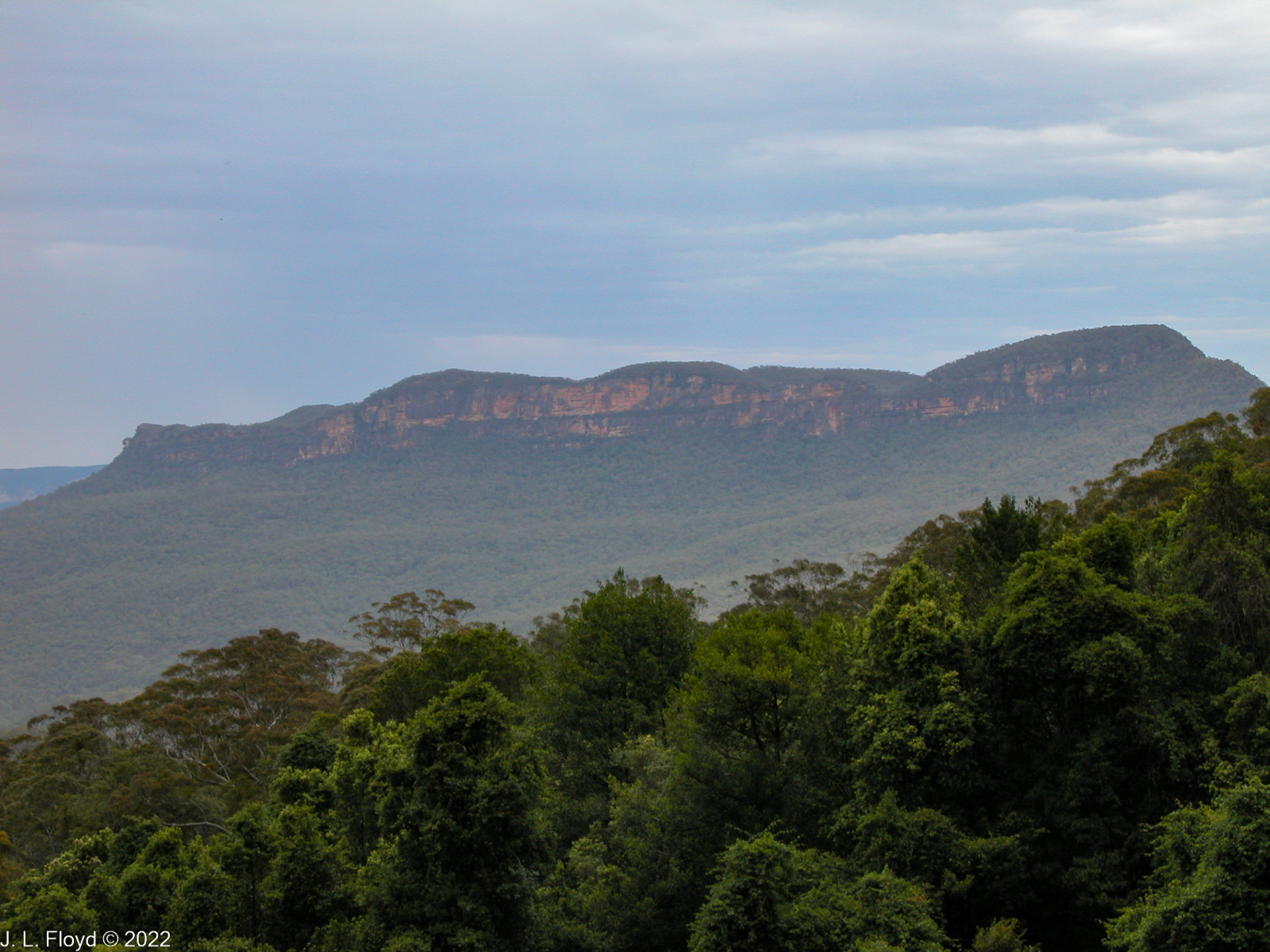
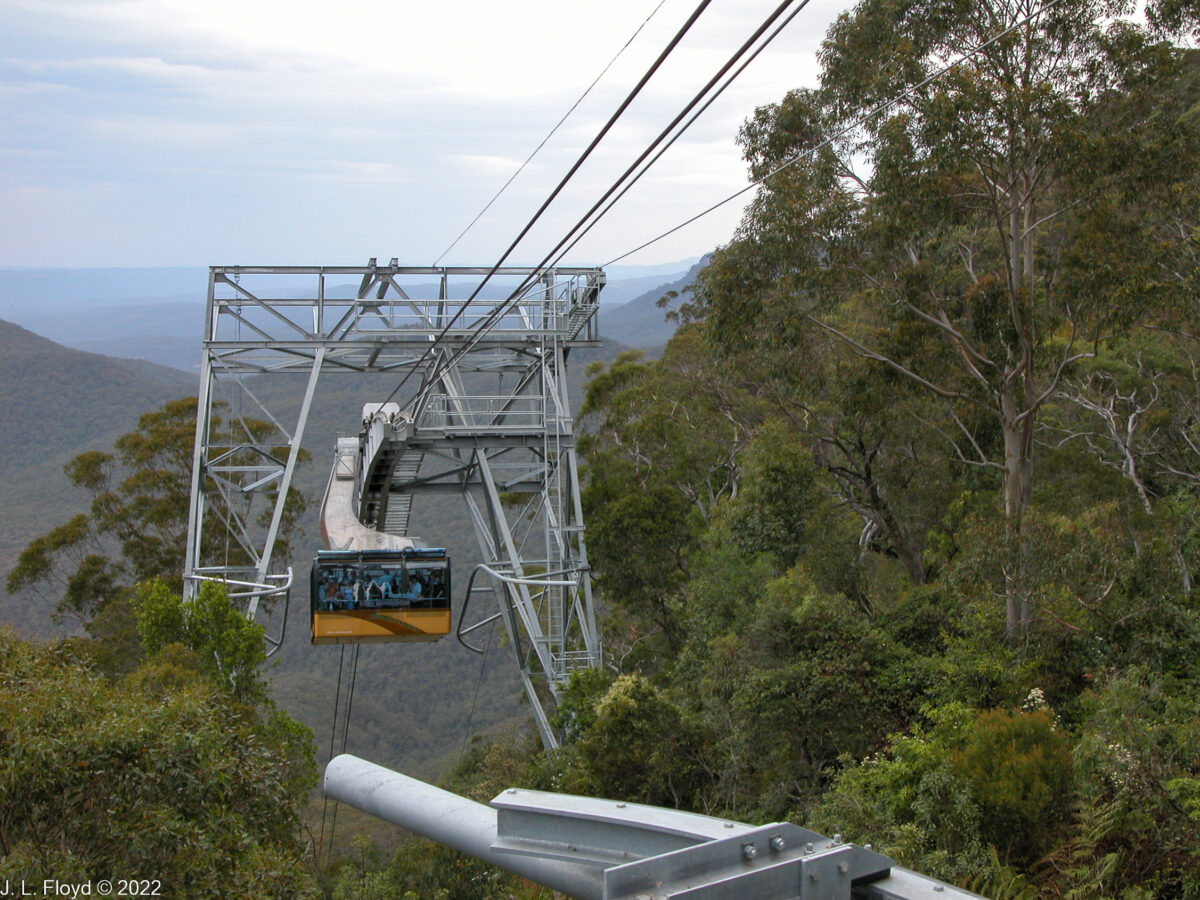
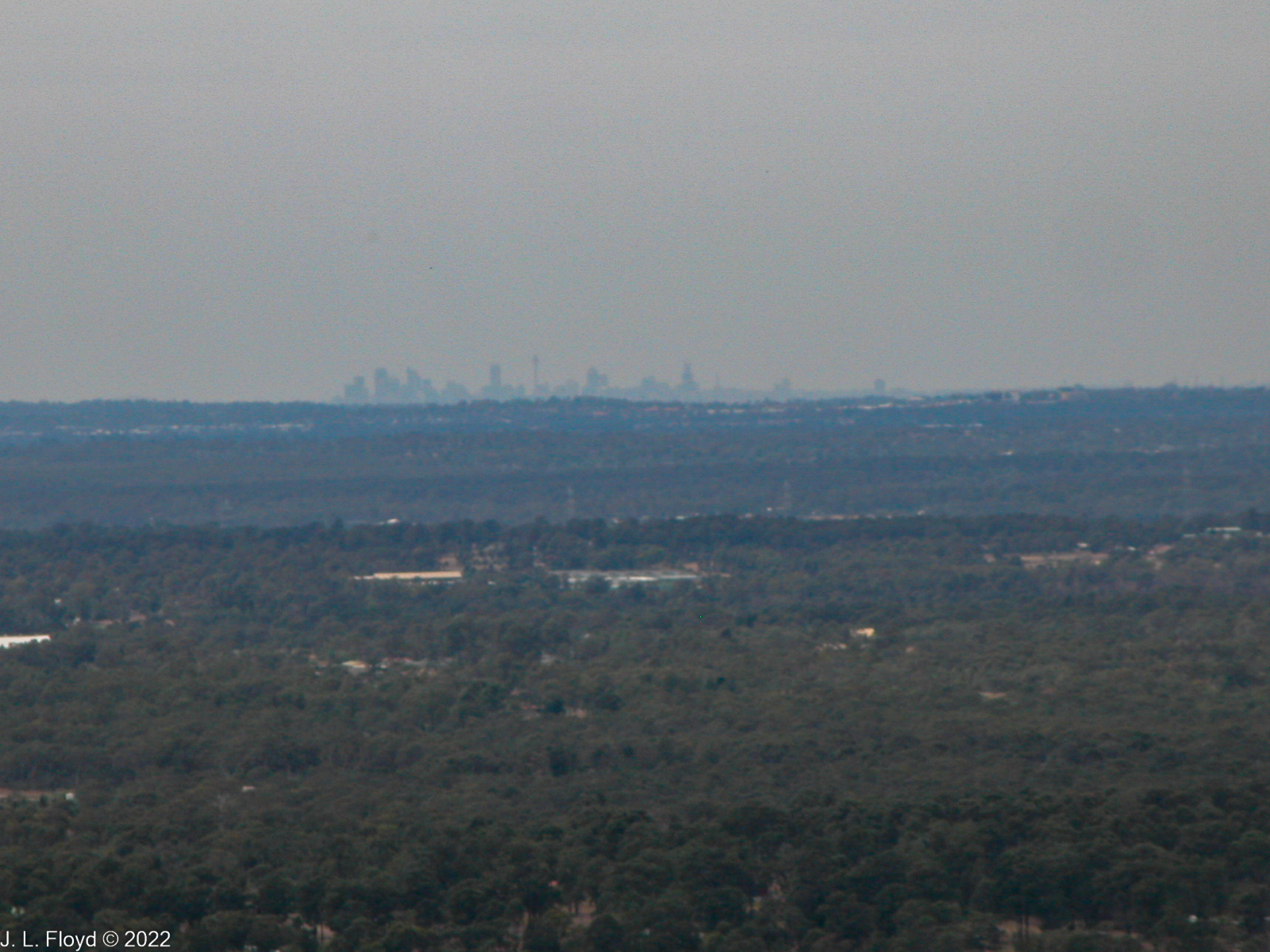
On Day 4 in Sydney our tour bus headed up the Great Western Highway to the the Blue Mountains. Our destination was a town called Katoomba. As we climbed up into the hills we got some nice views of the coastal plains west of Sydney from the bus.

Our first stop in the Blue Mountains was the village of Leura, which provided a pleasant introduction to the area.

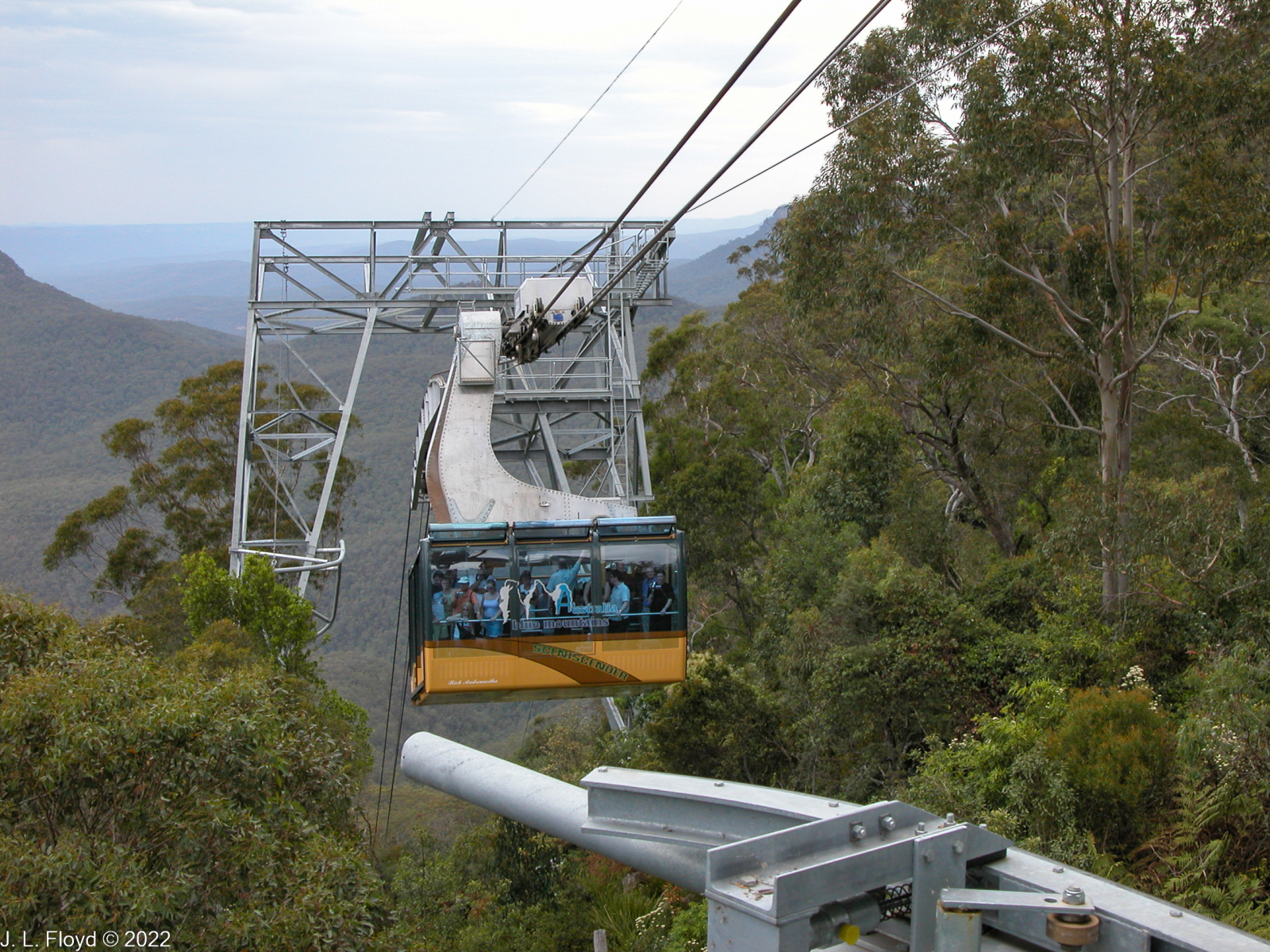
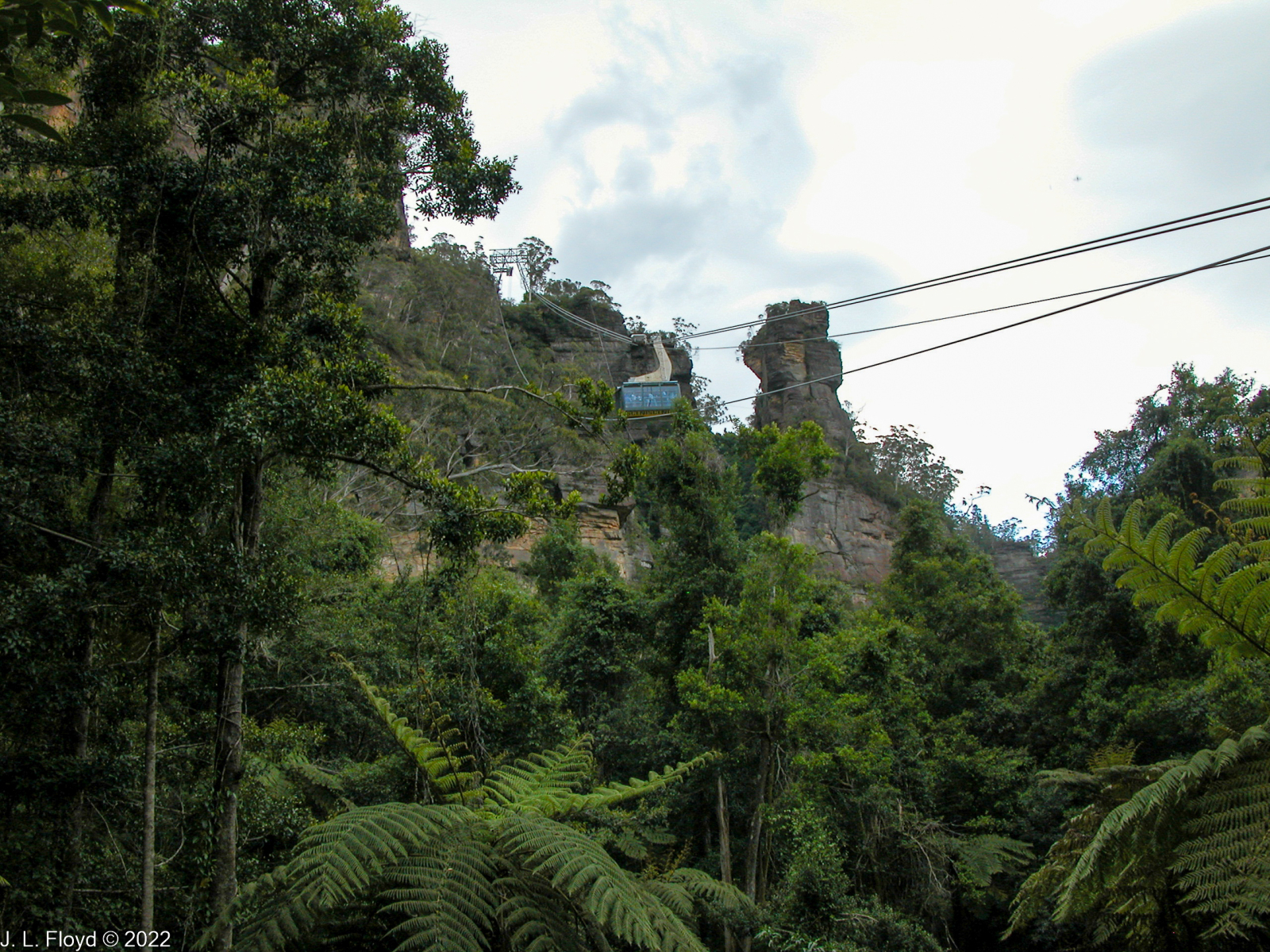
From Leura it was just a short ride to Scenic World in Katoomba, where we hopped aboard a Scenic Cableway gondola for a ride to the floor of Jamison Valley.

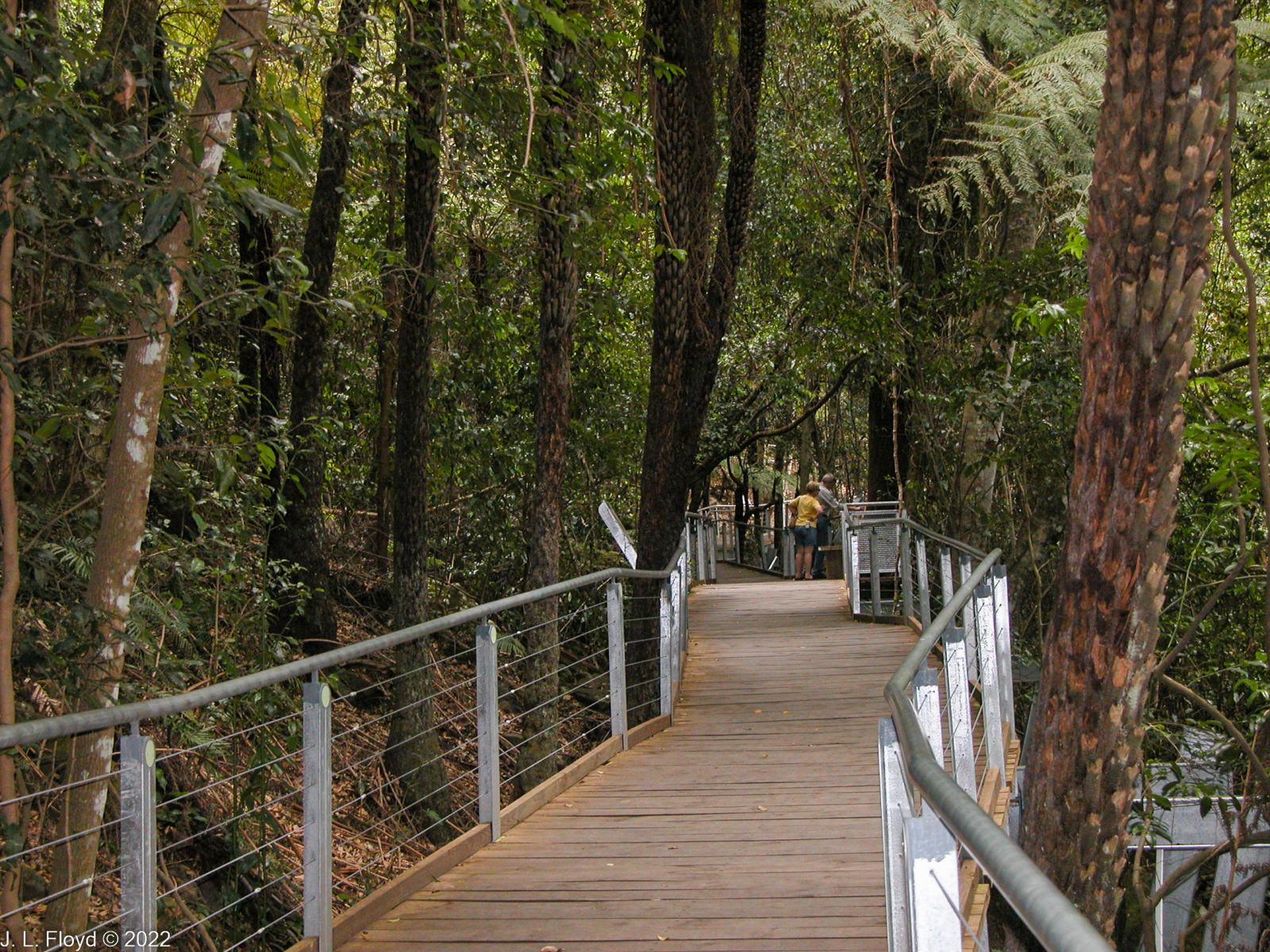
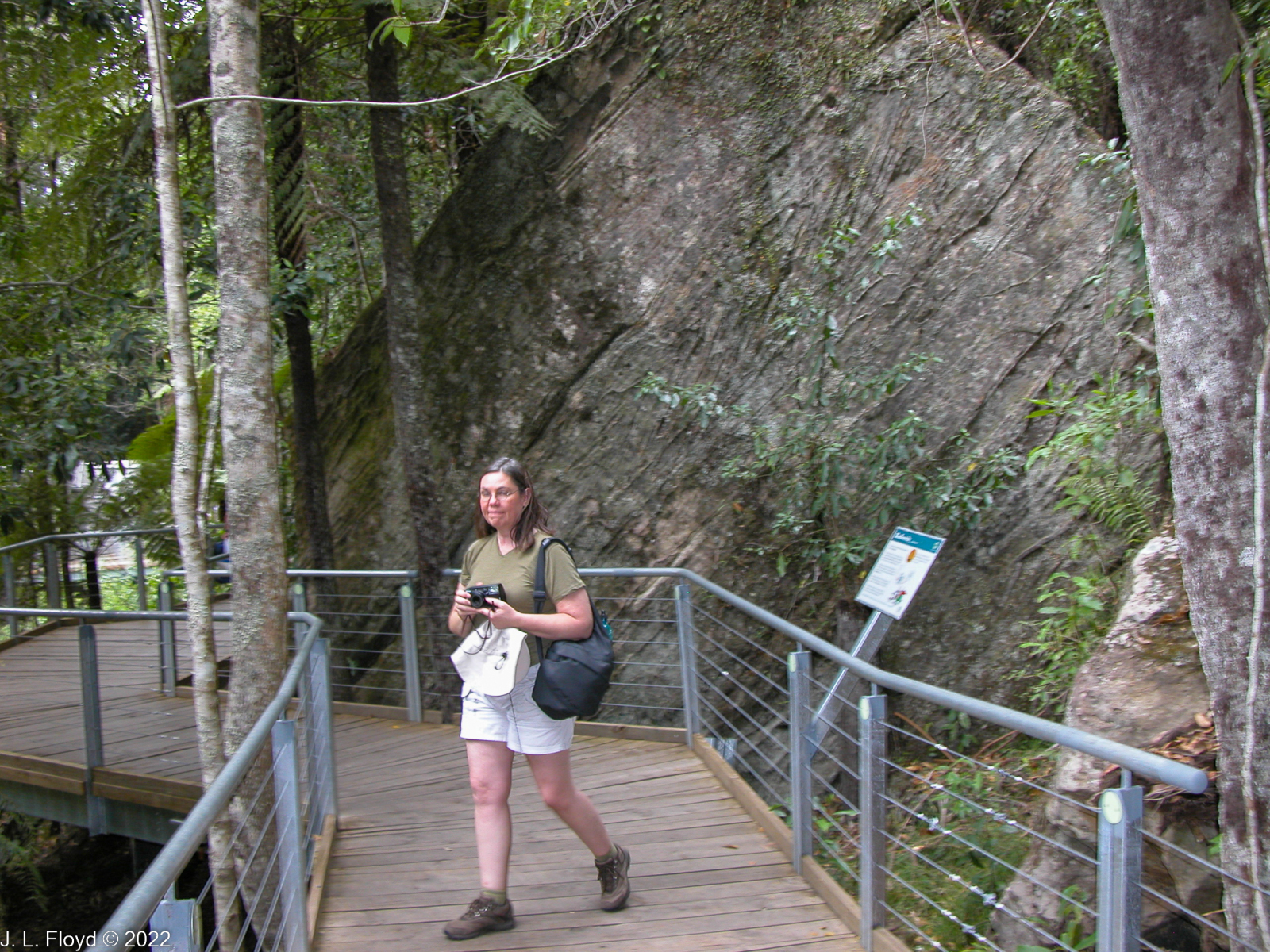
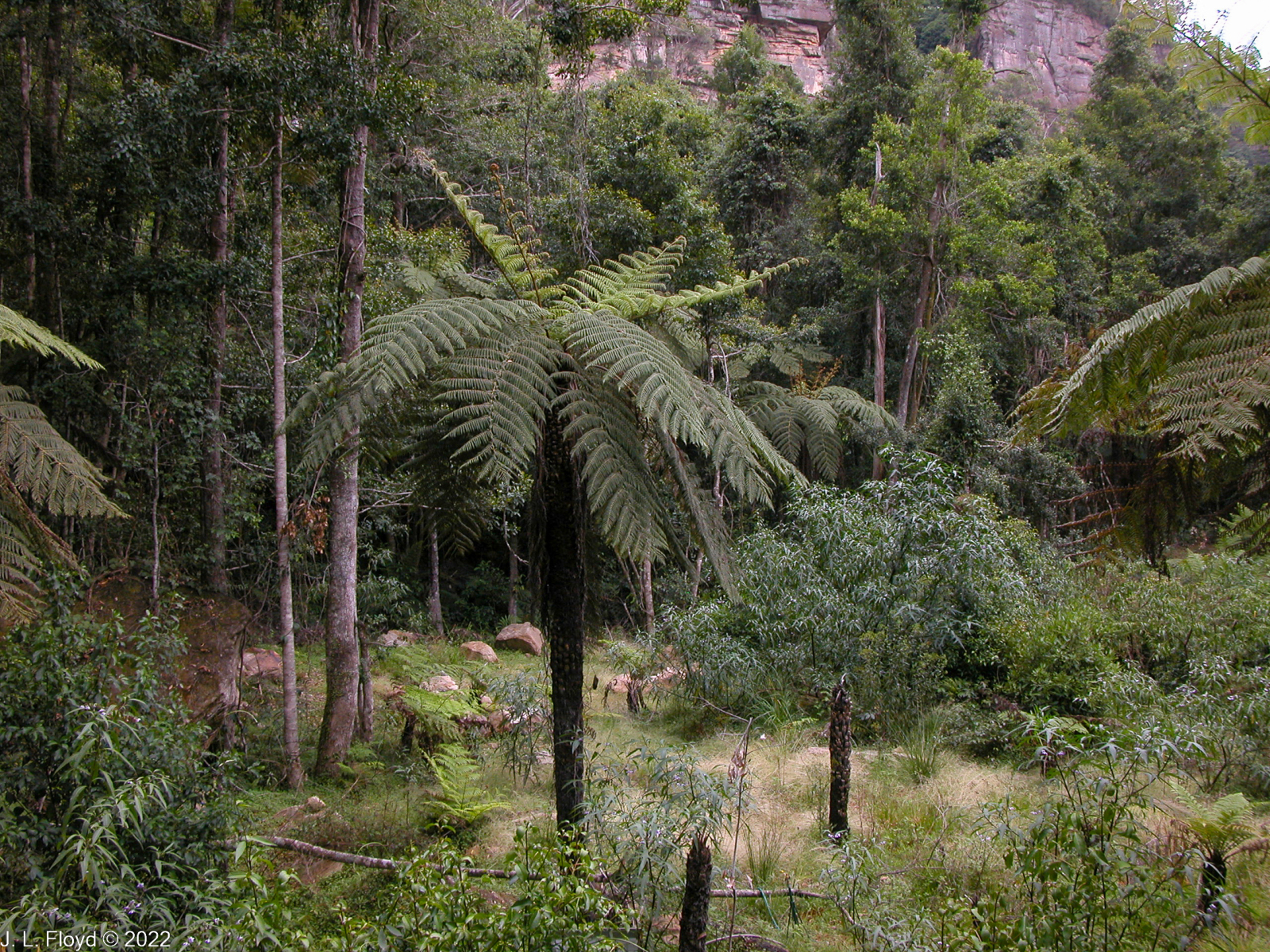
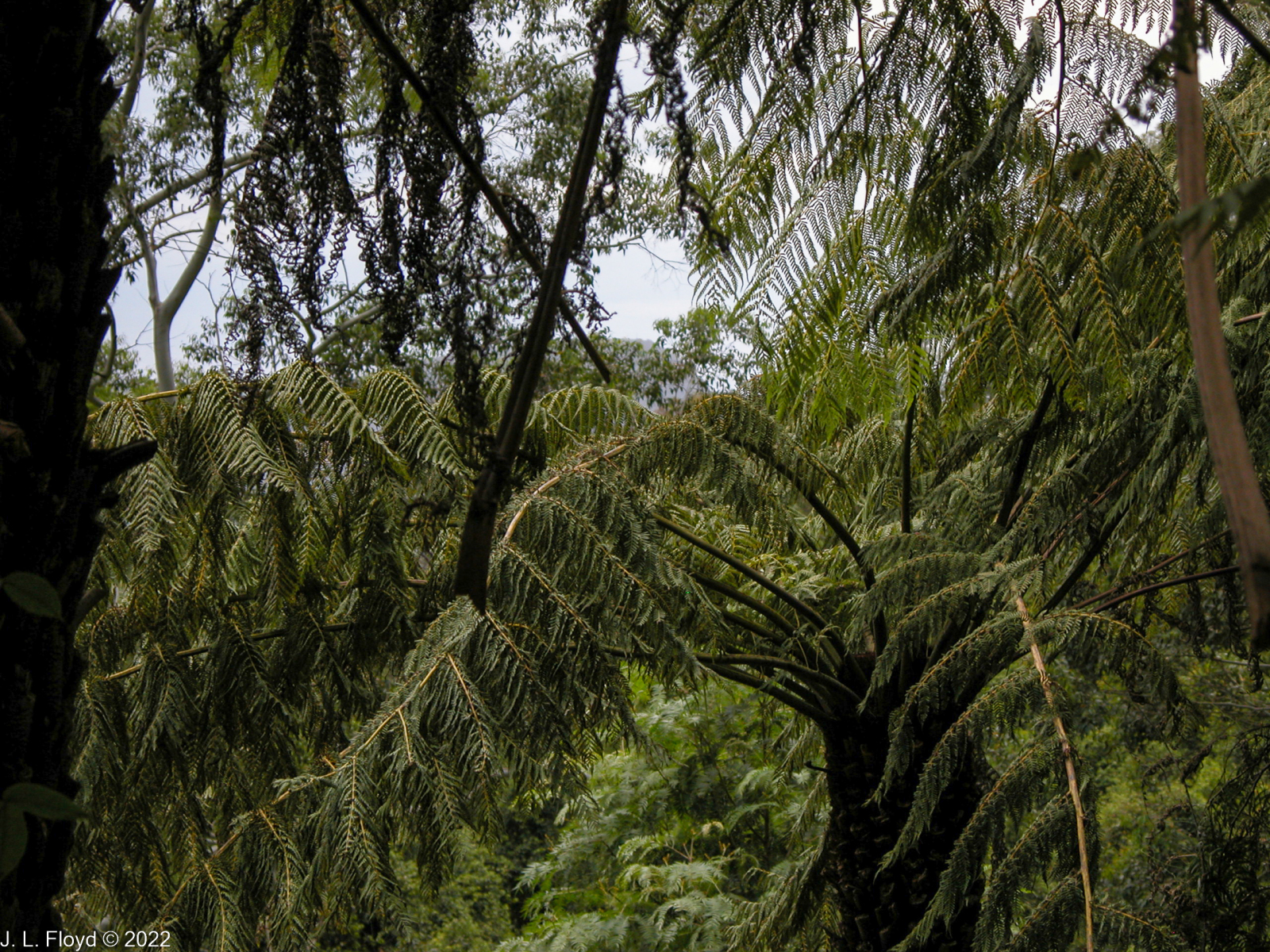
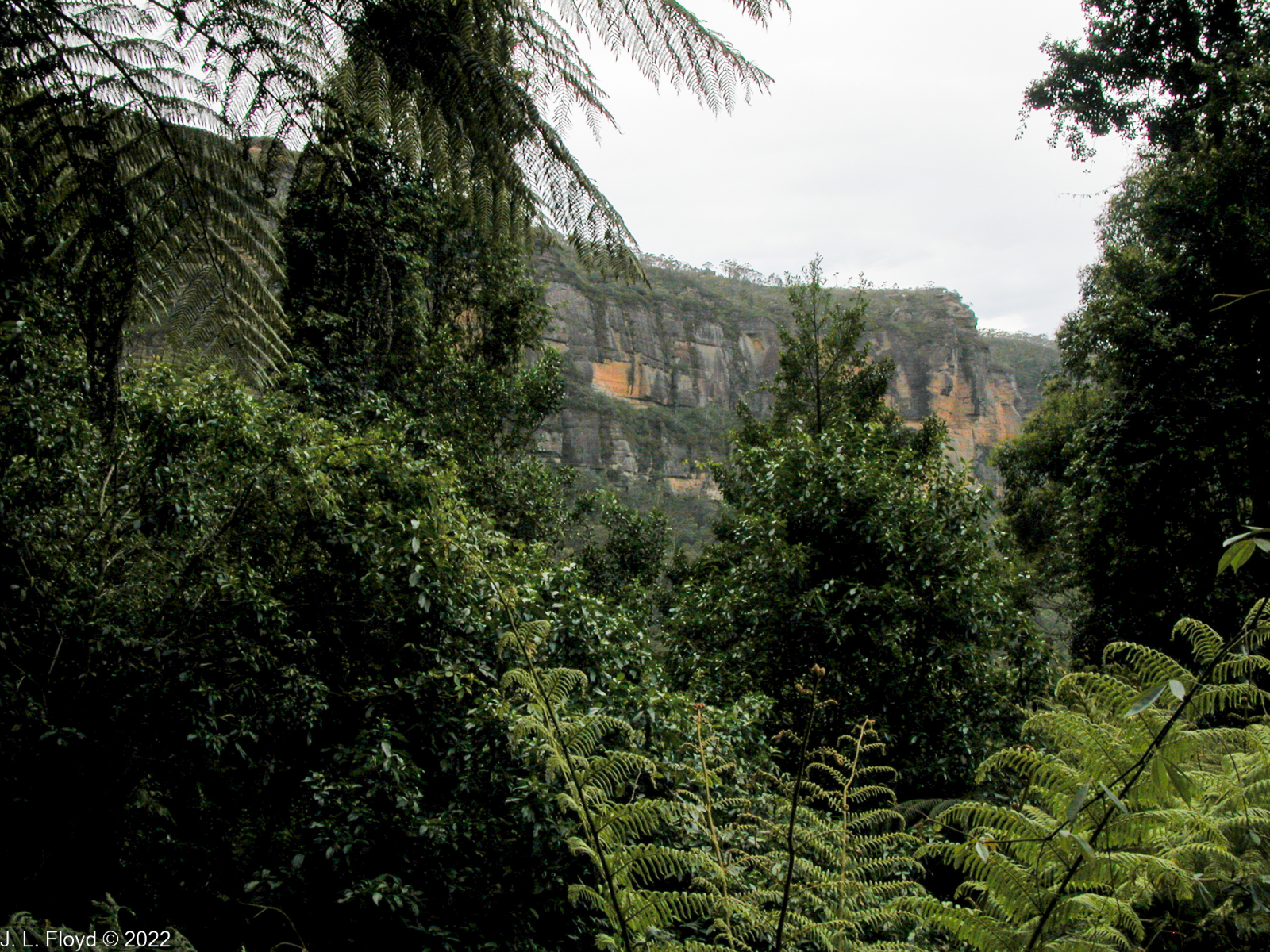
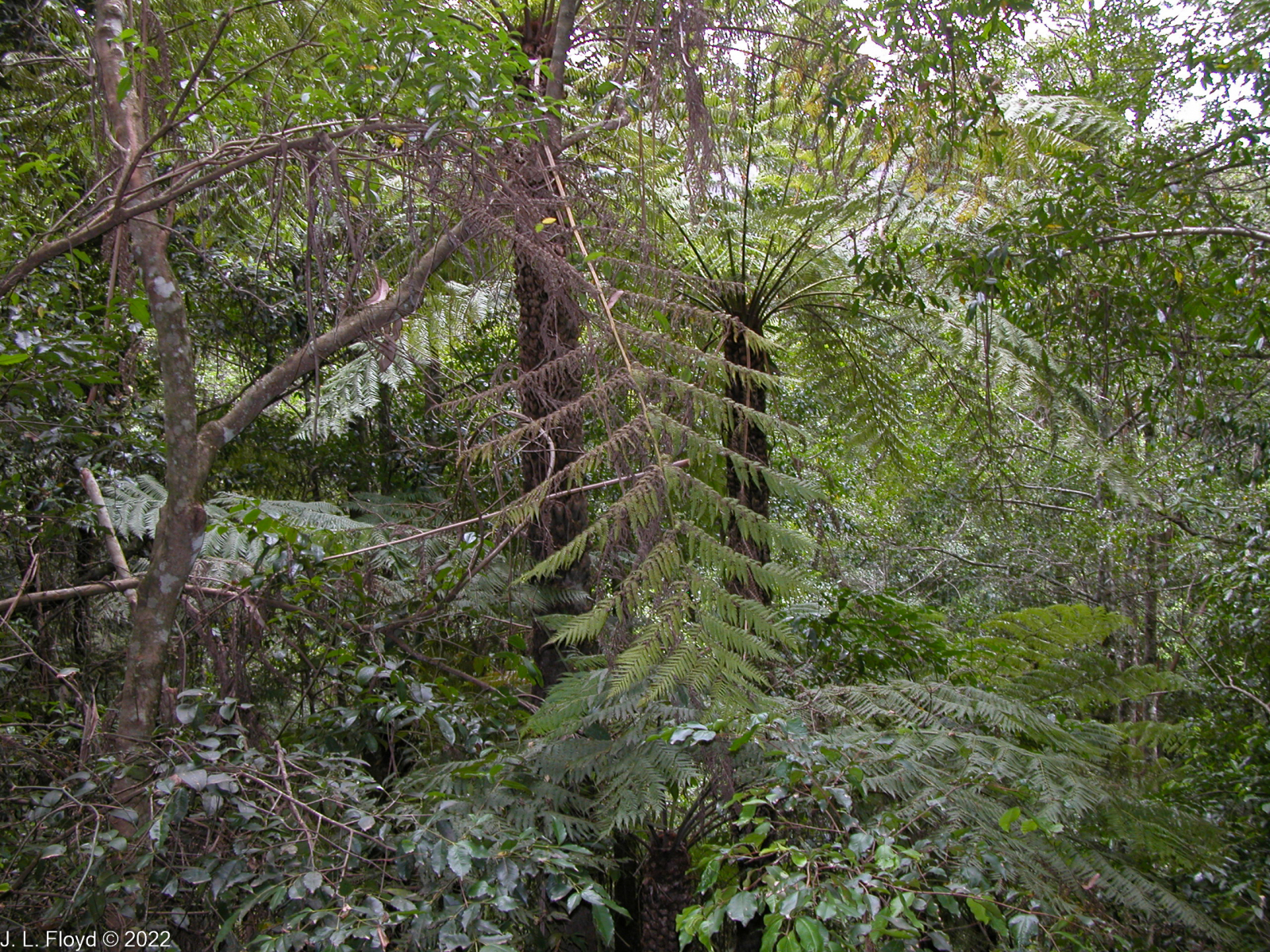
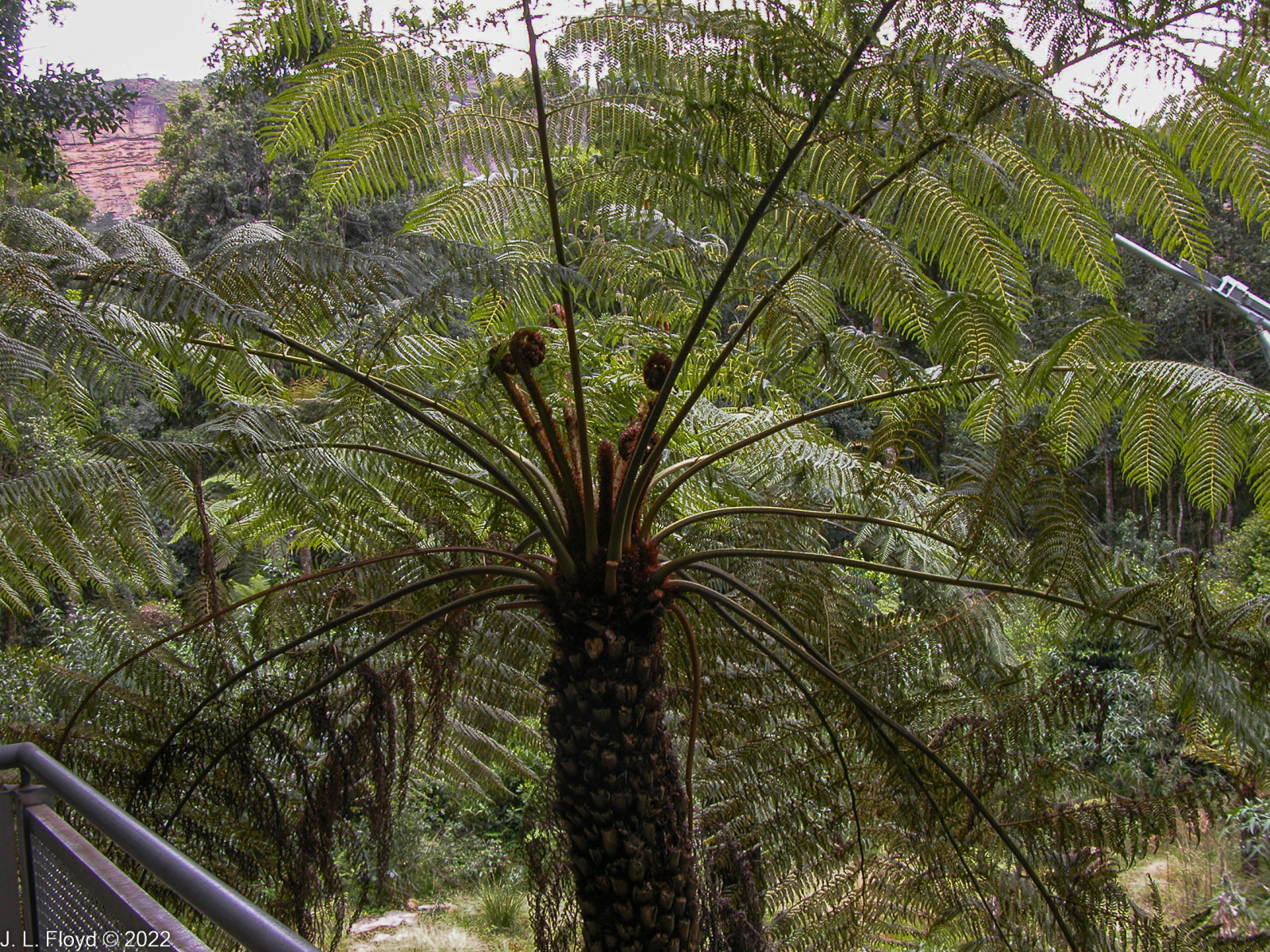
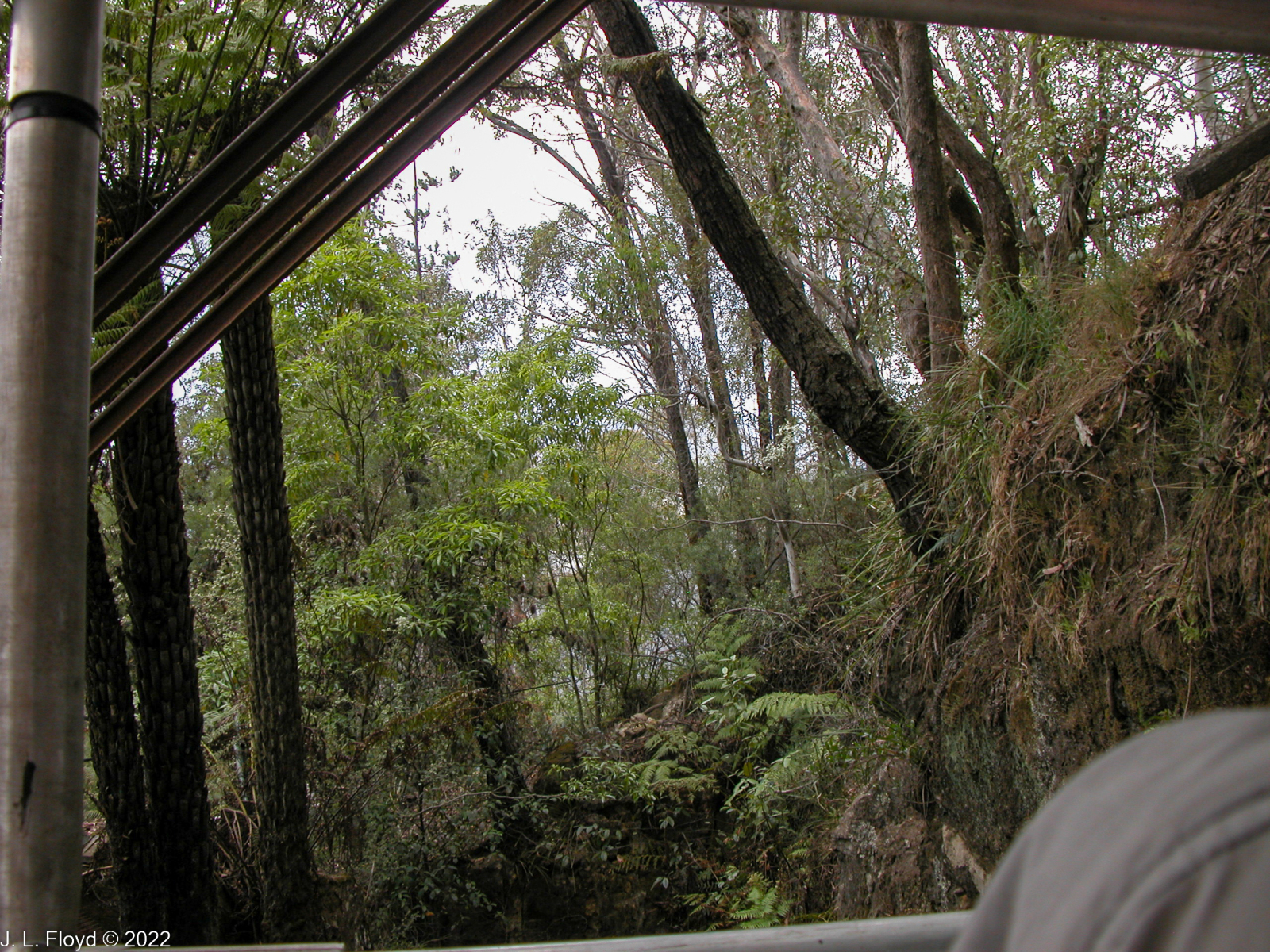
On the floor of the Jamison Valley we found a lush, dense temperate rain forest, which we could observe from a walkway constructed above the ground so as to preserve the forest floor from damage by thousands of human feet tramping over it, and saving the humans themselves from having to stumble over rocks and tree roots or blunder into hanging vines.

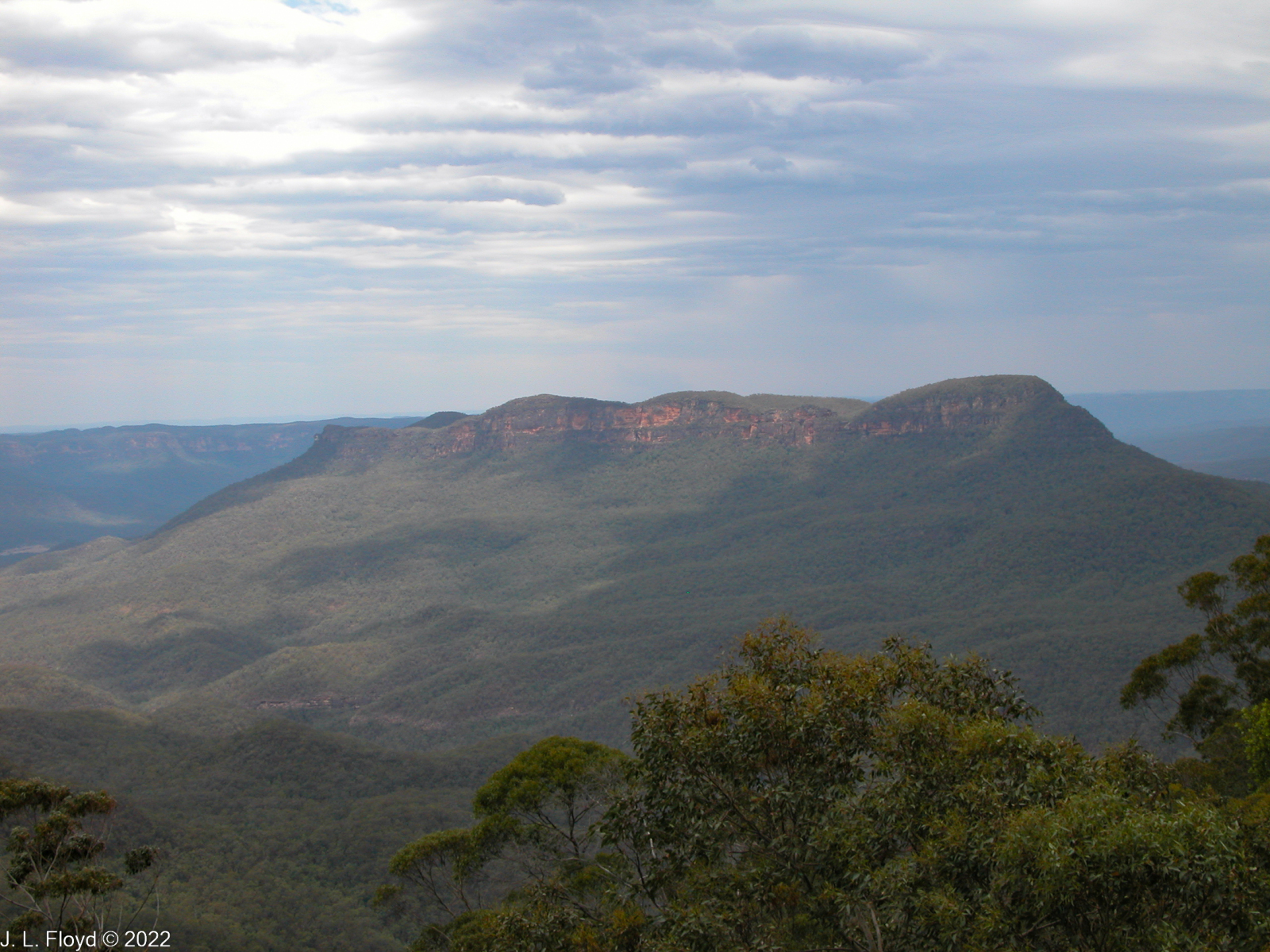
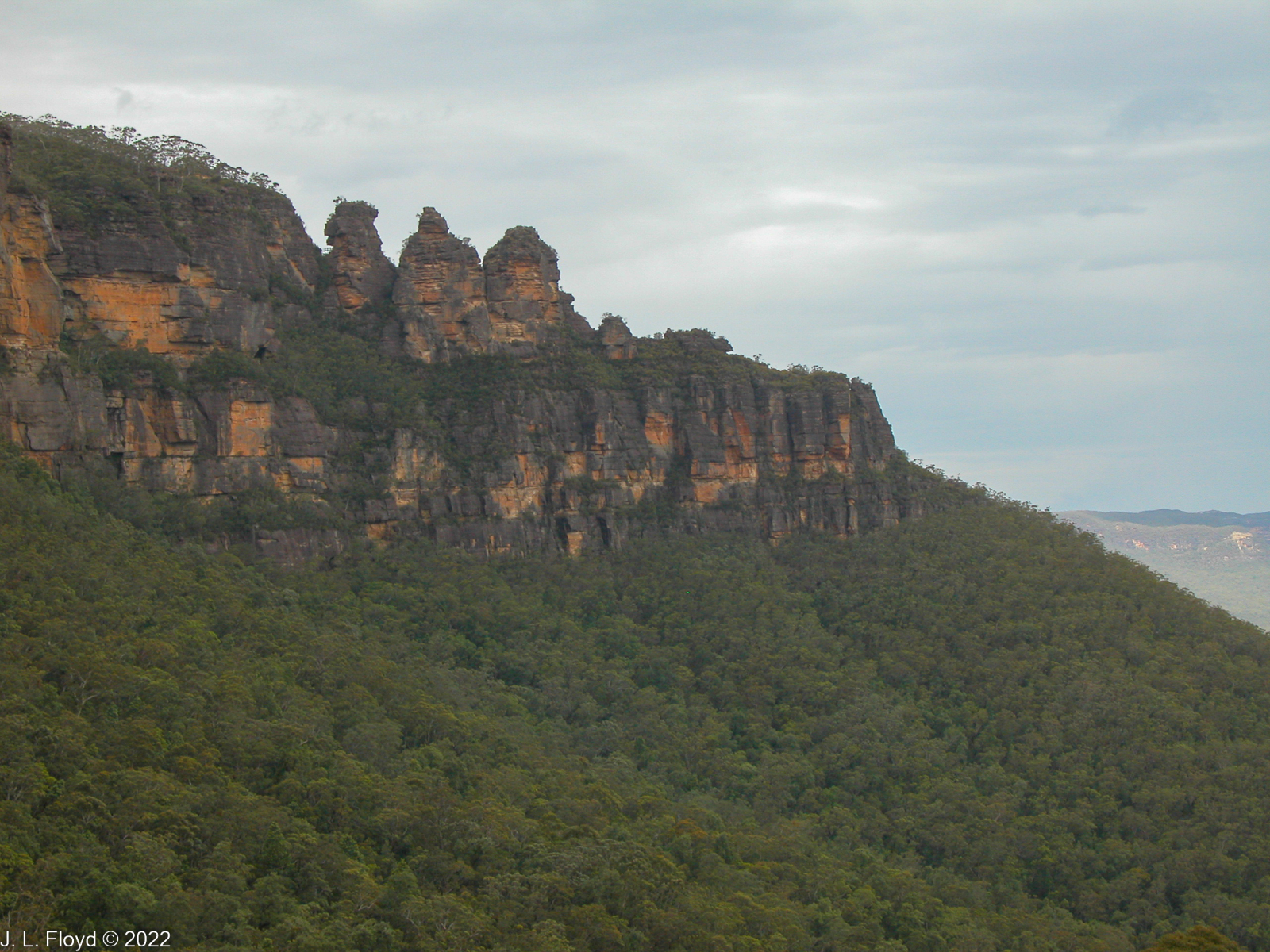
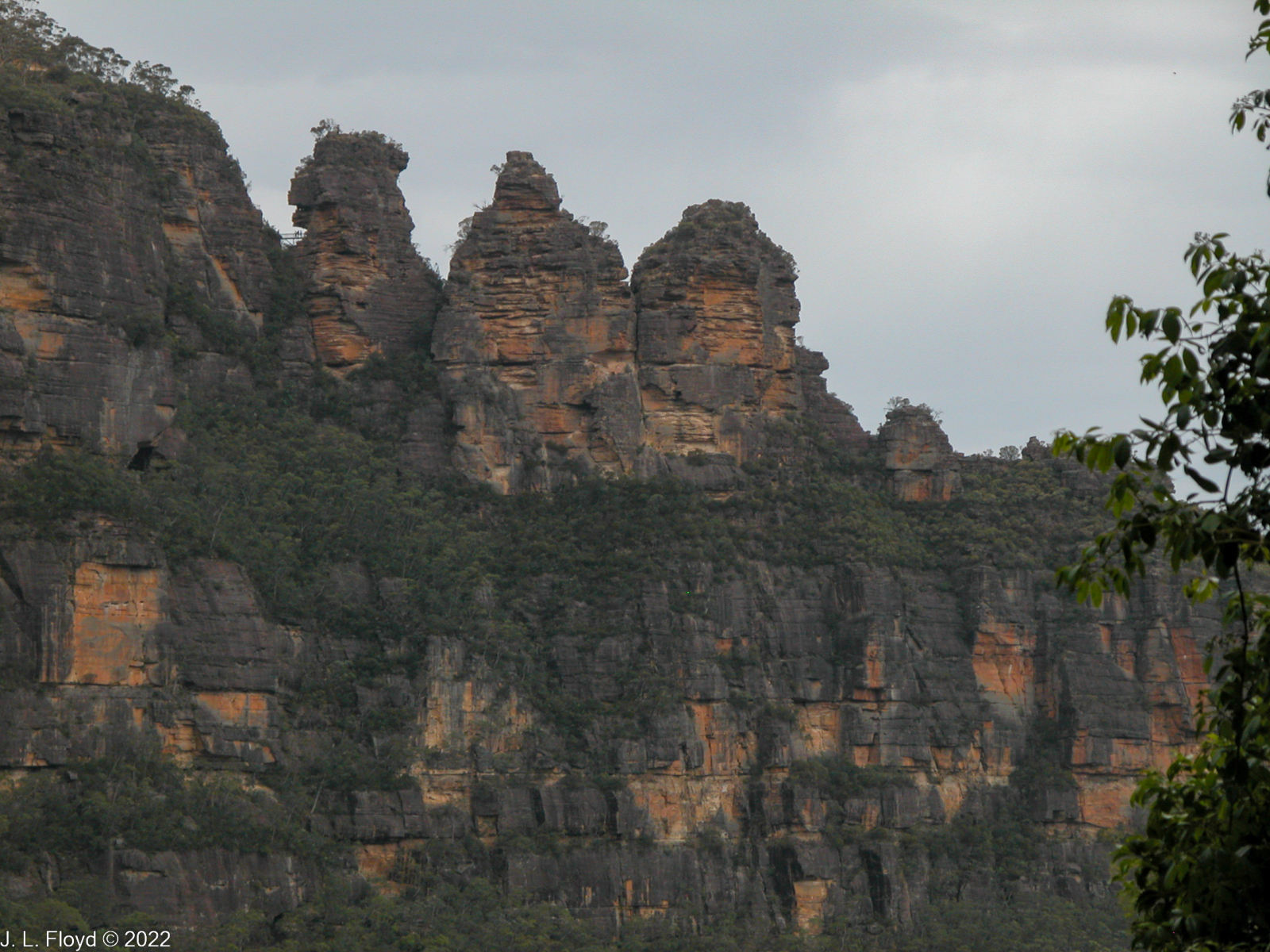
From the valley floor we also had stunning views of the geological features of the area, including the towering cliffs of Katoomba with their spectacular rock formations.

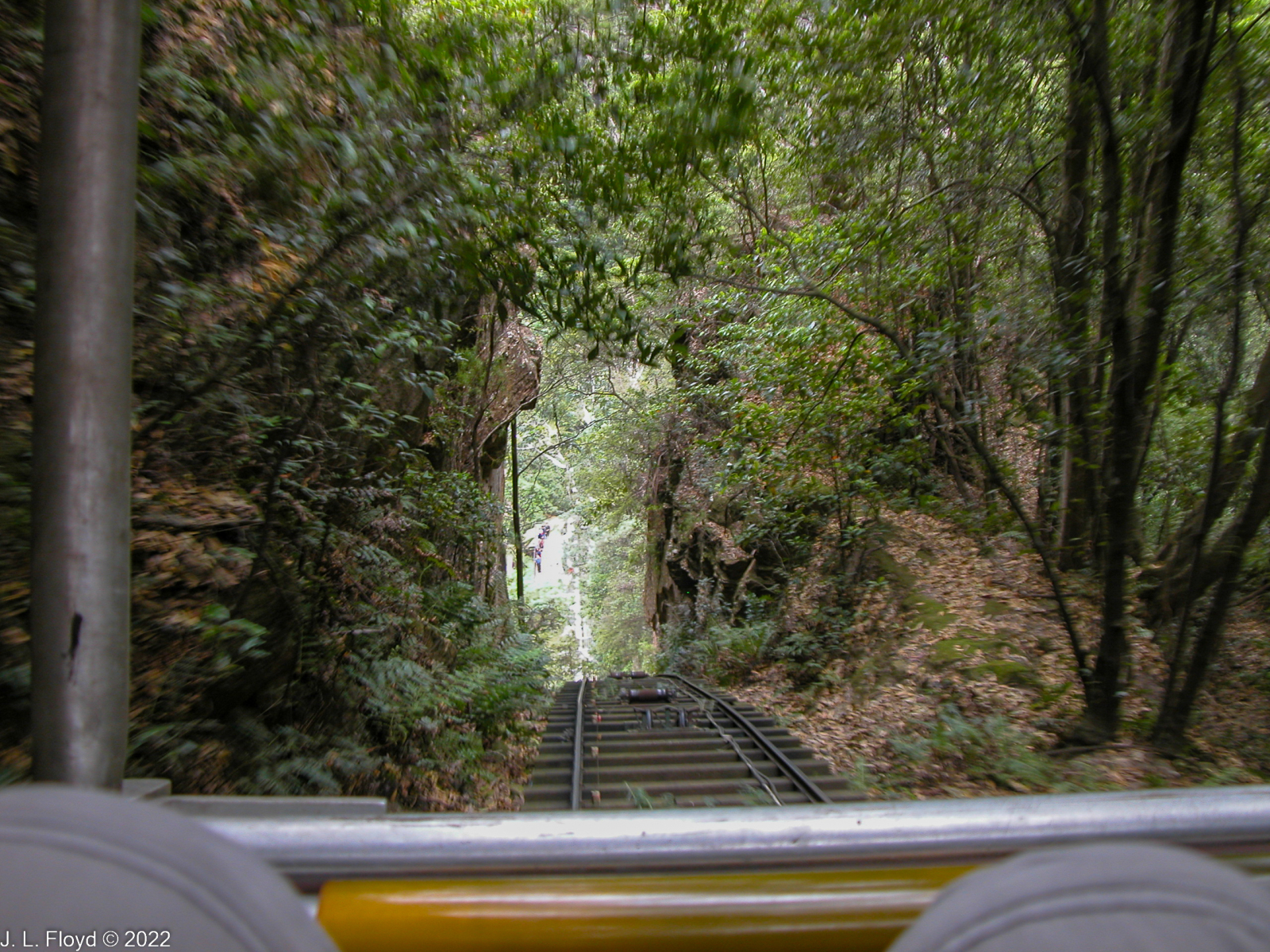
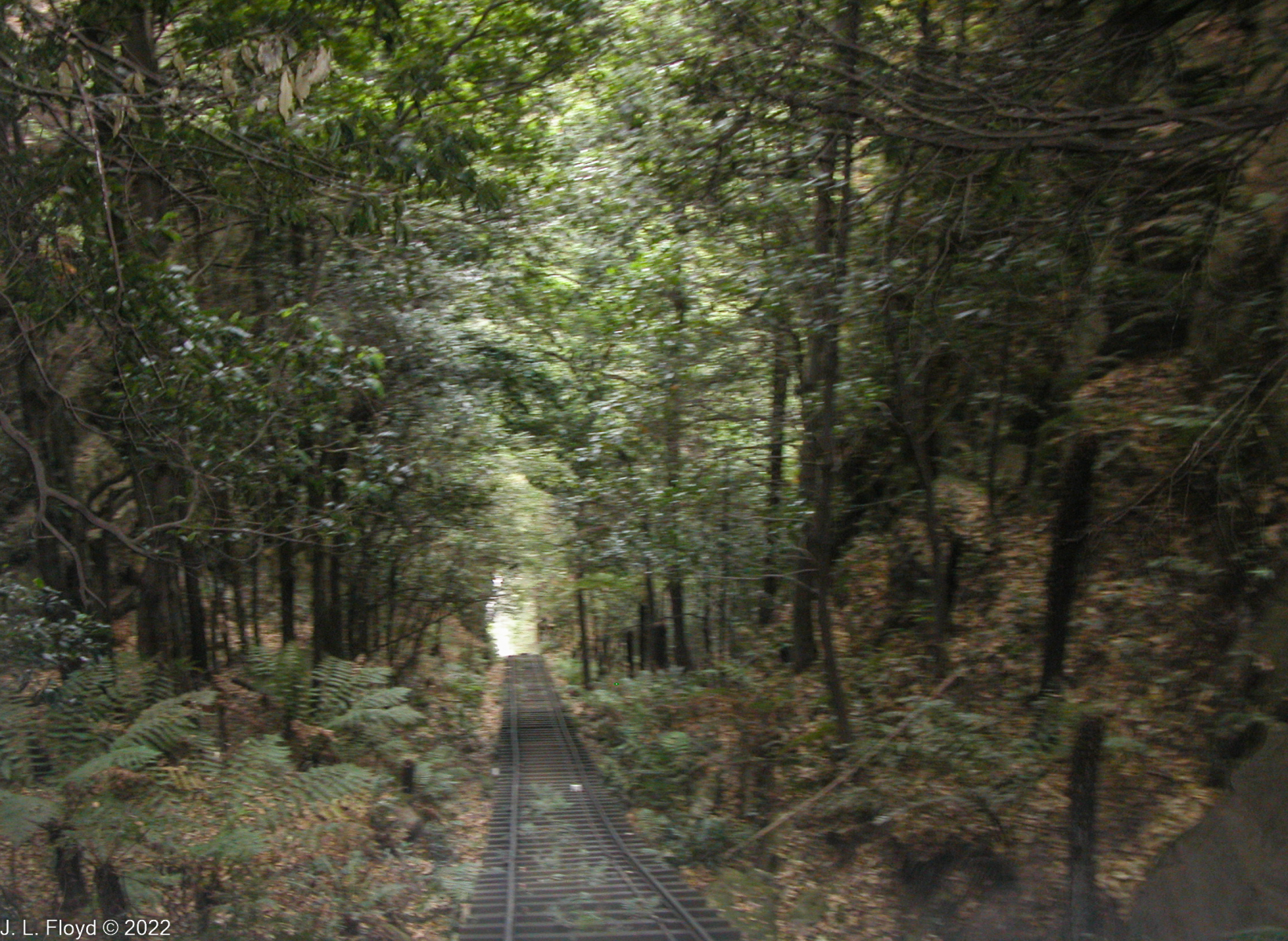
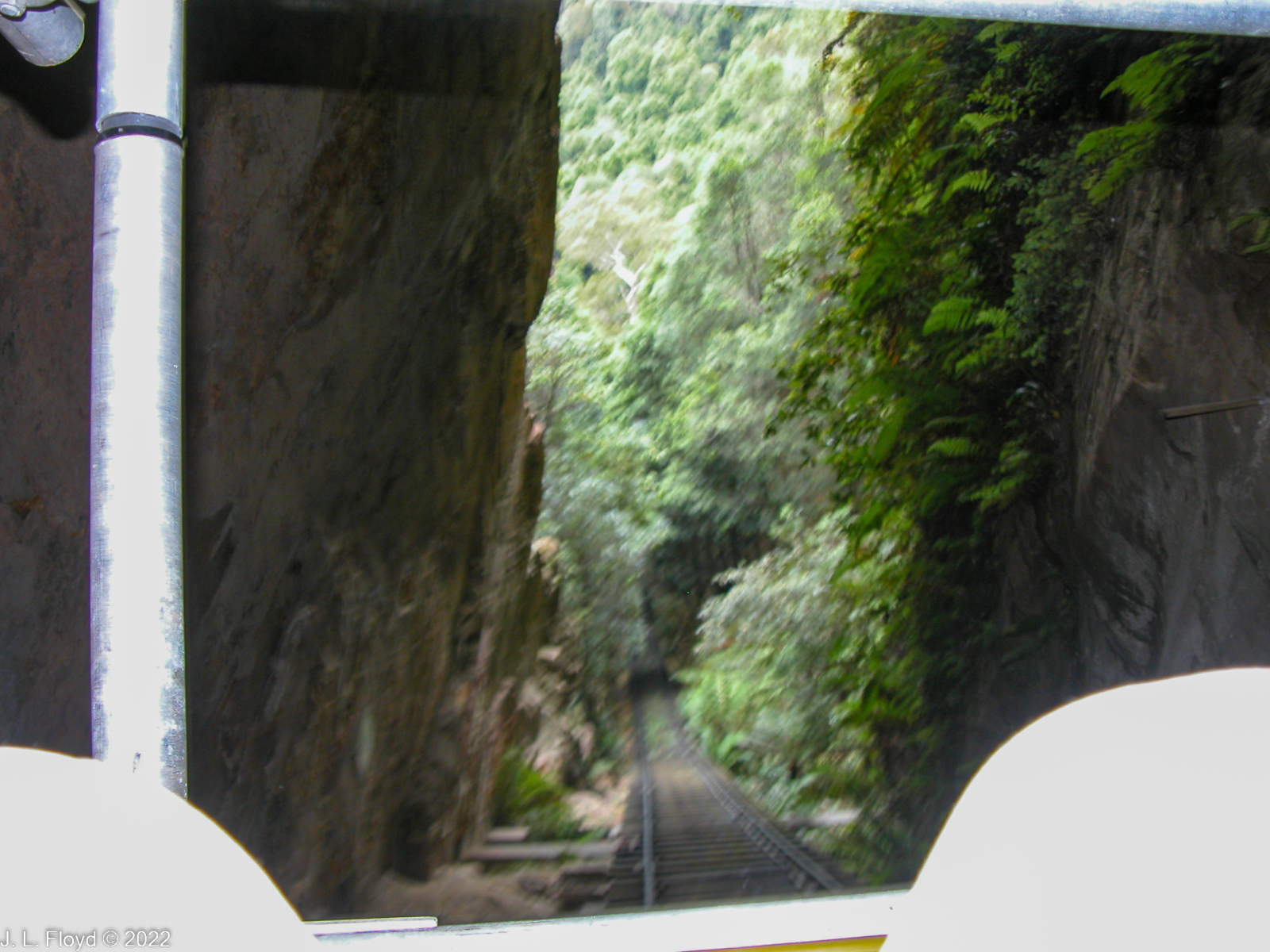
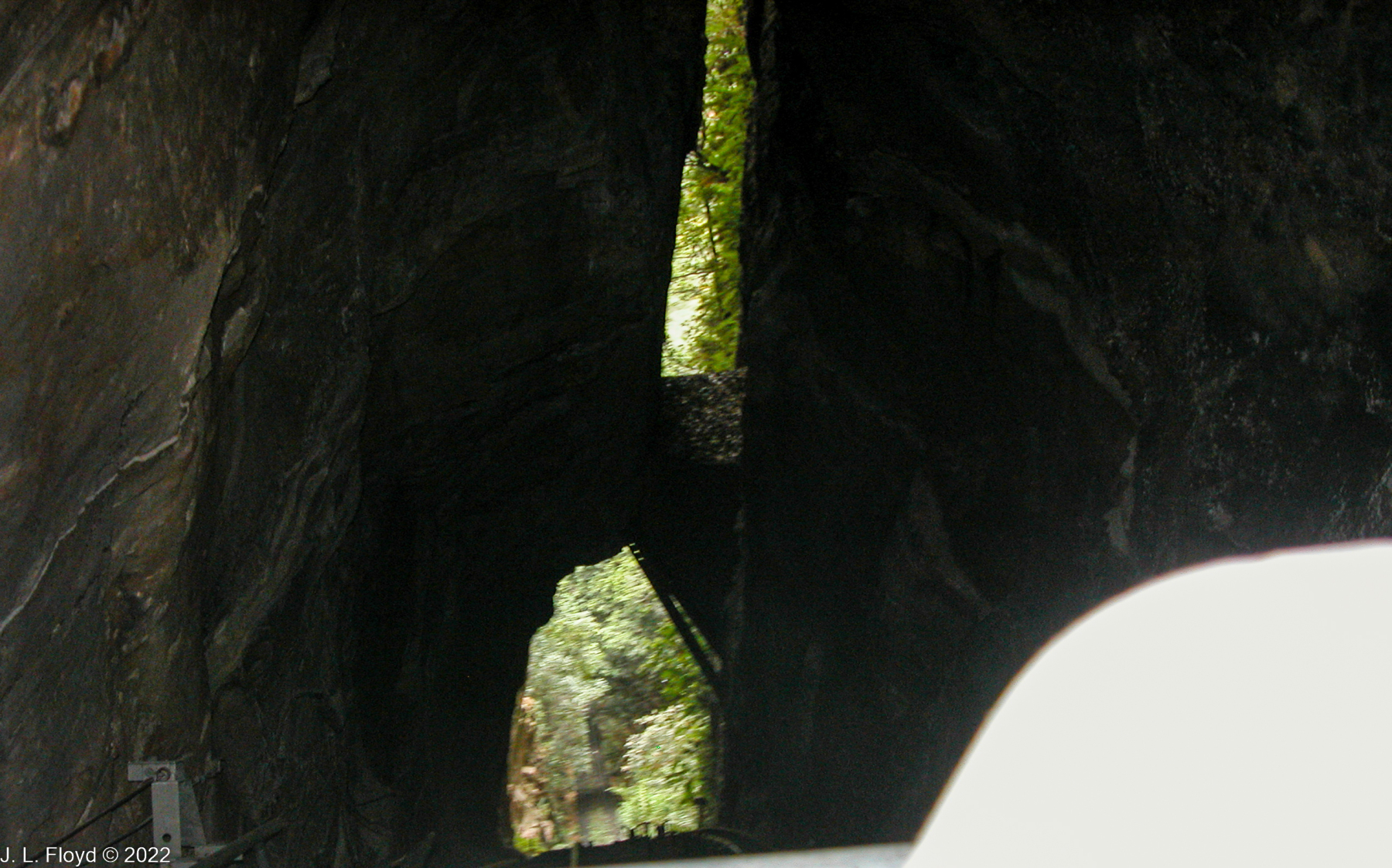
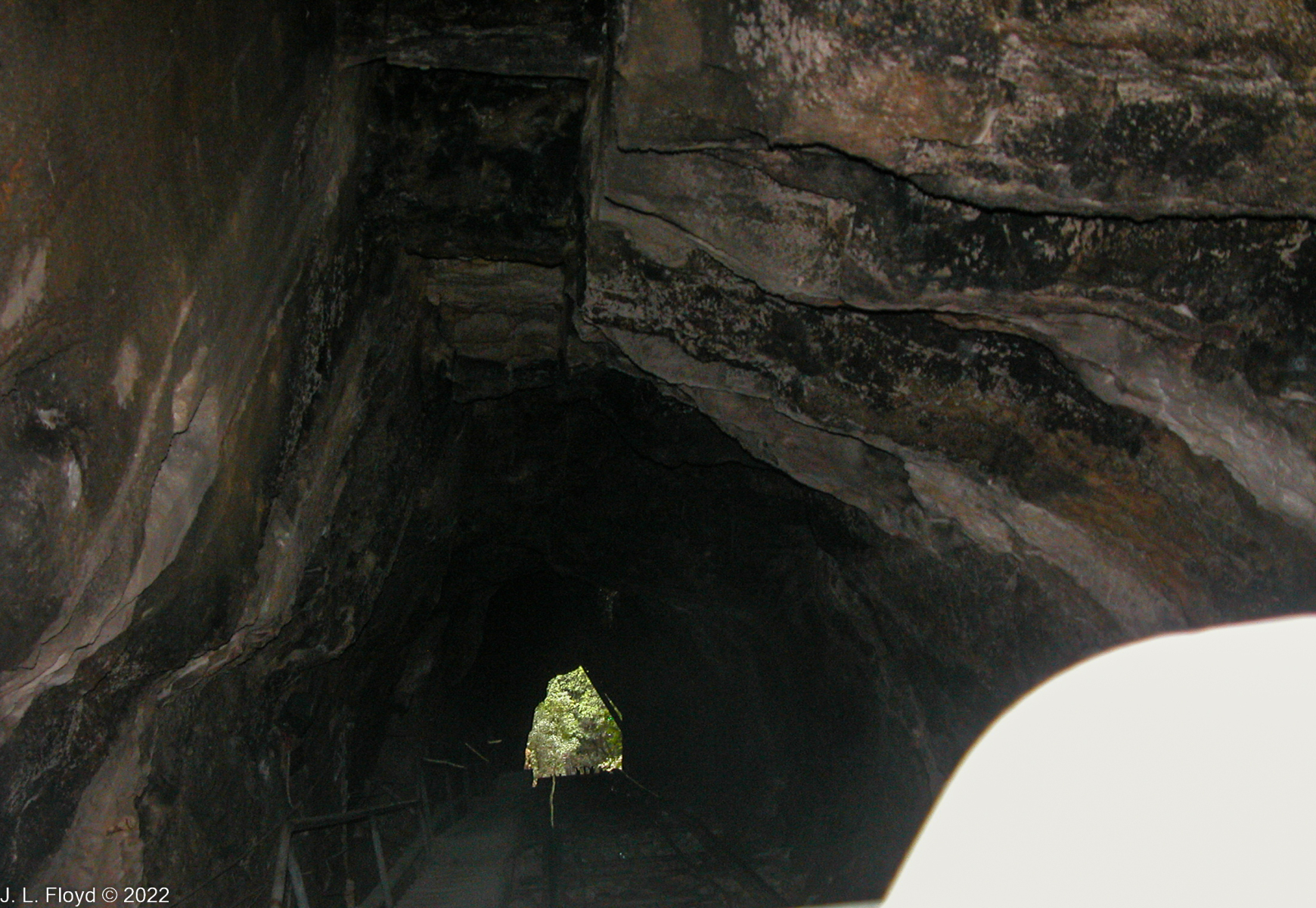
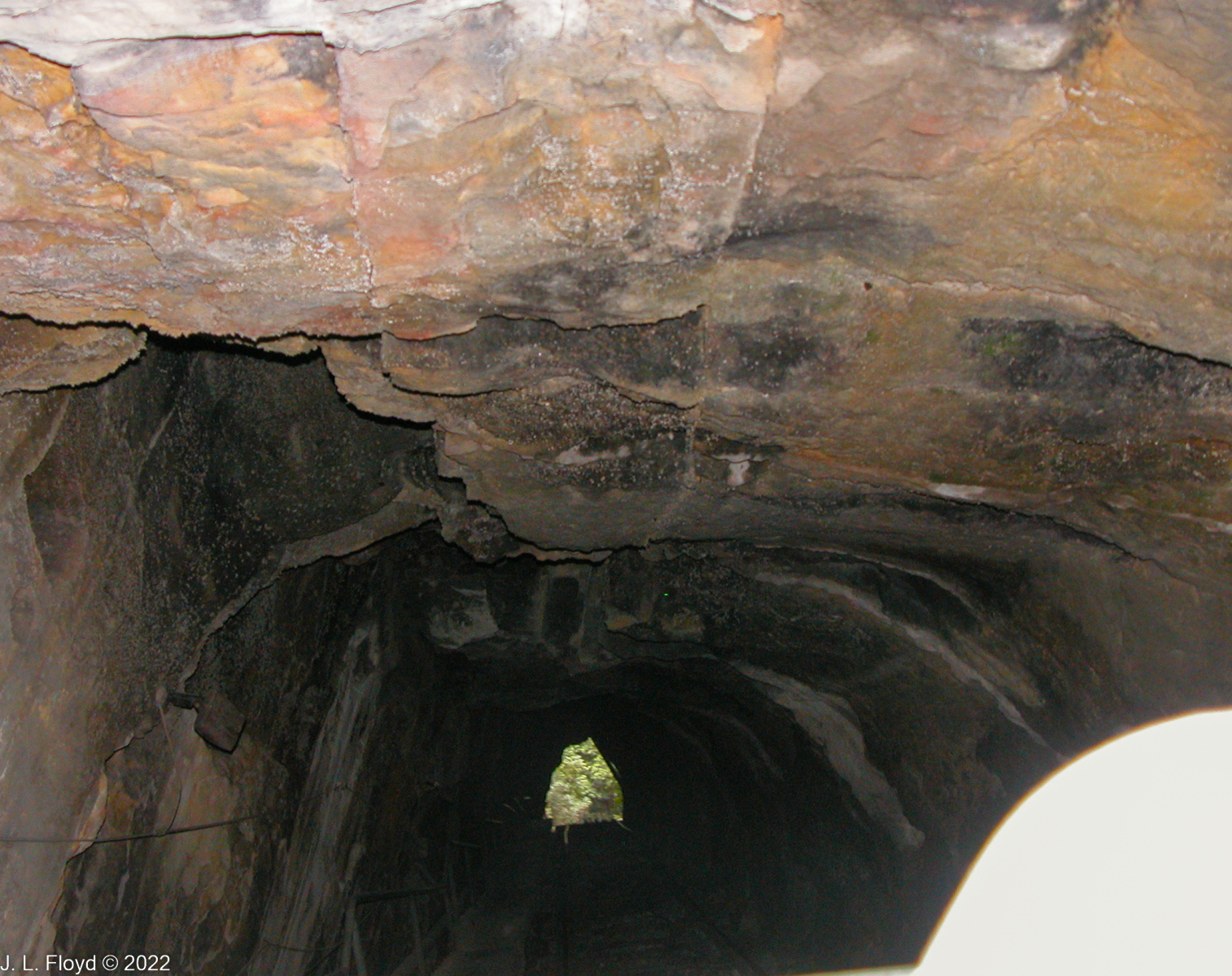
After completing our stroll along the Scenic Walkway, we jumped on the Scenic Railway for the ride back up to the clifftops. It was a pretty exciting ride. The Katoomba Scenic Railway claims to be the steepest funicular railway in the world and I don’t find that hard to believe. It was better than an amusement park roller coaster.

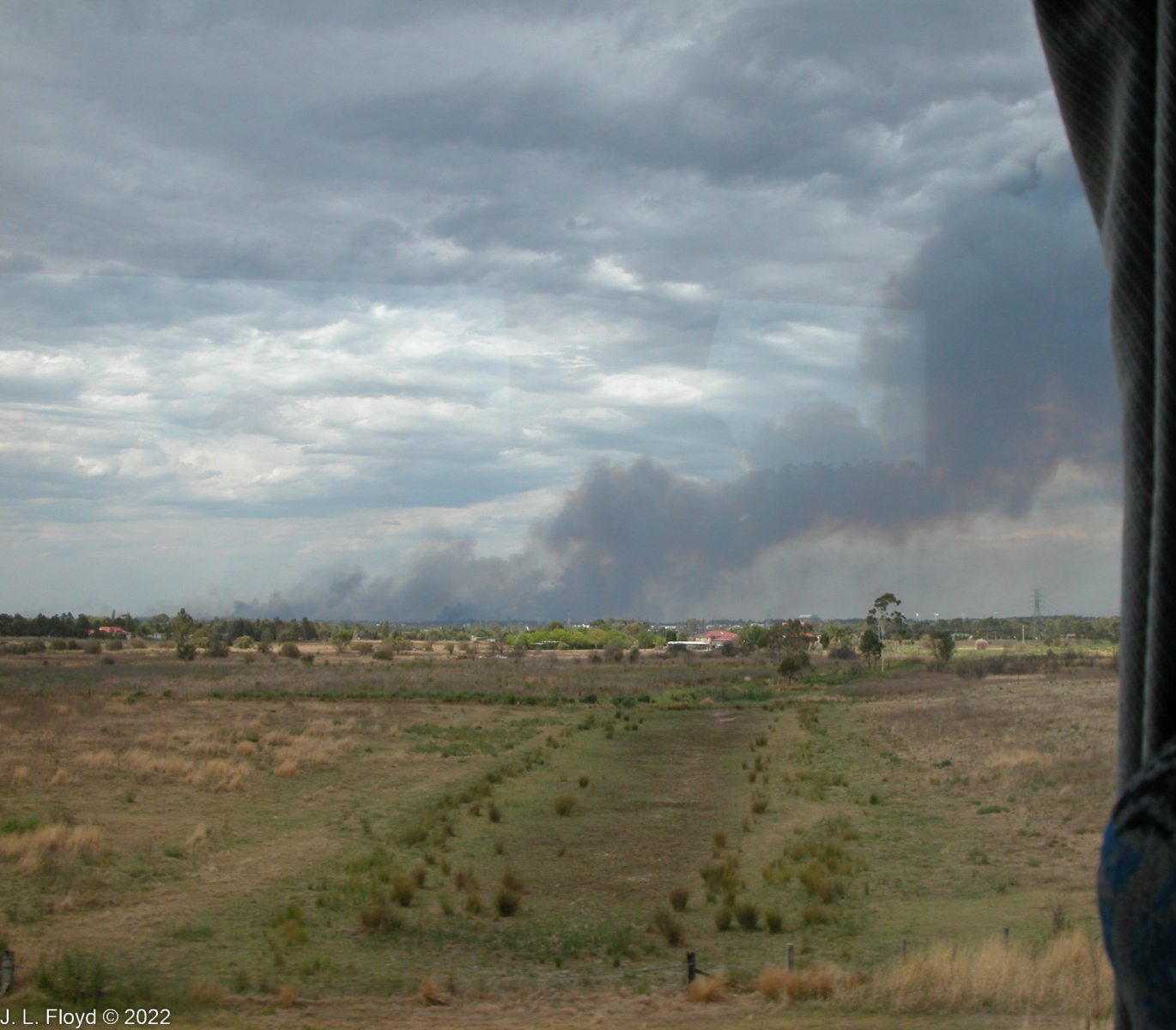
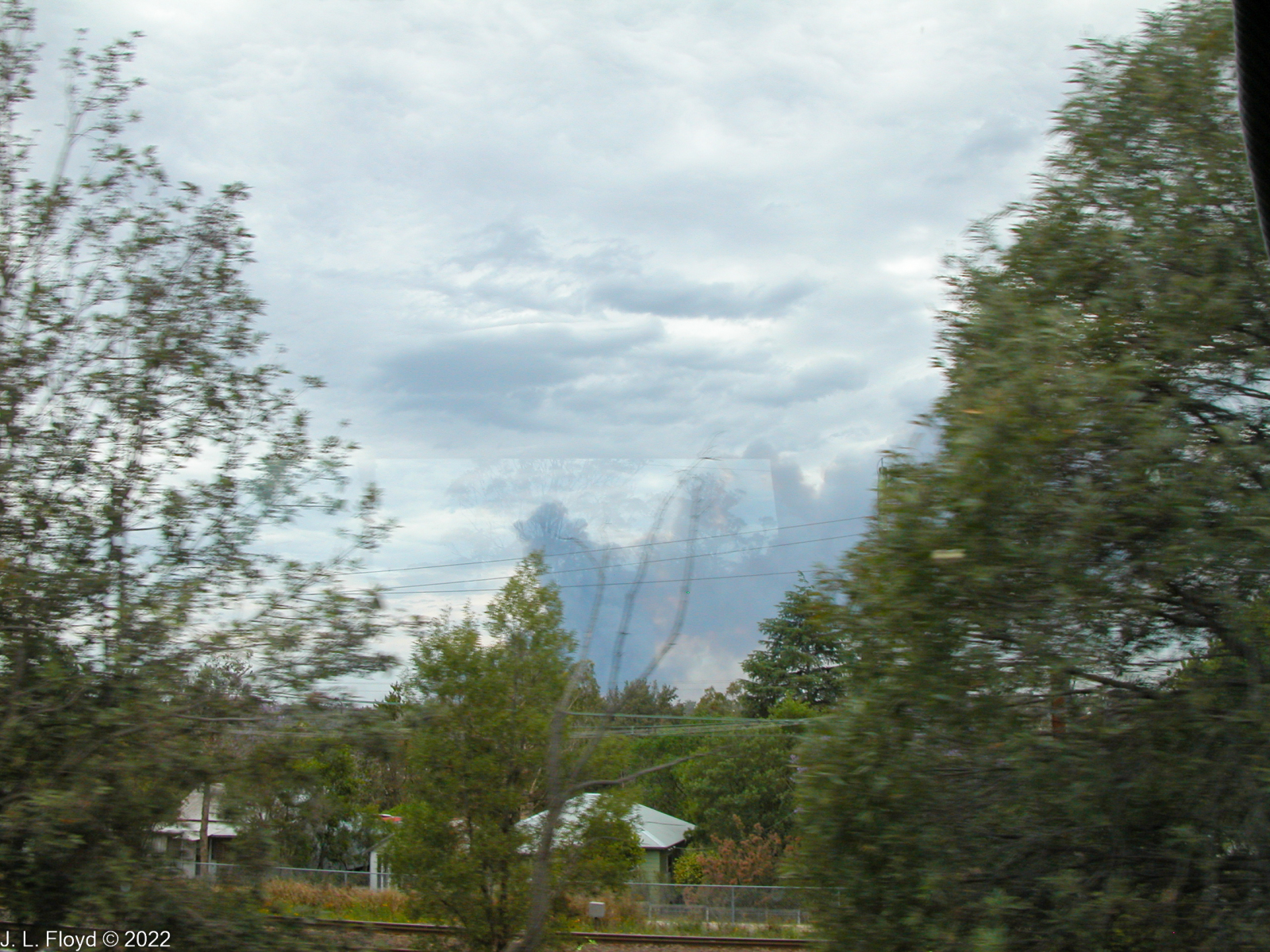
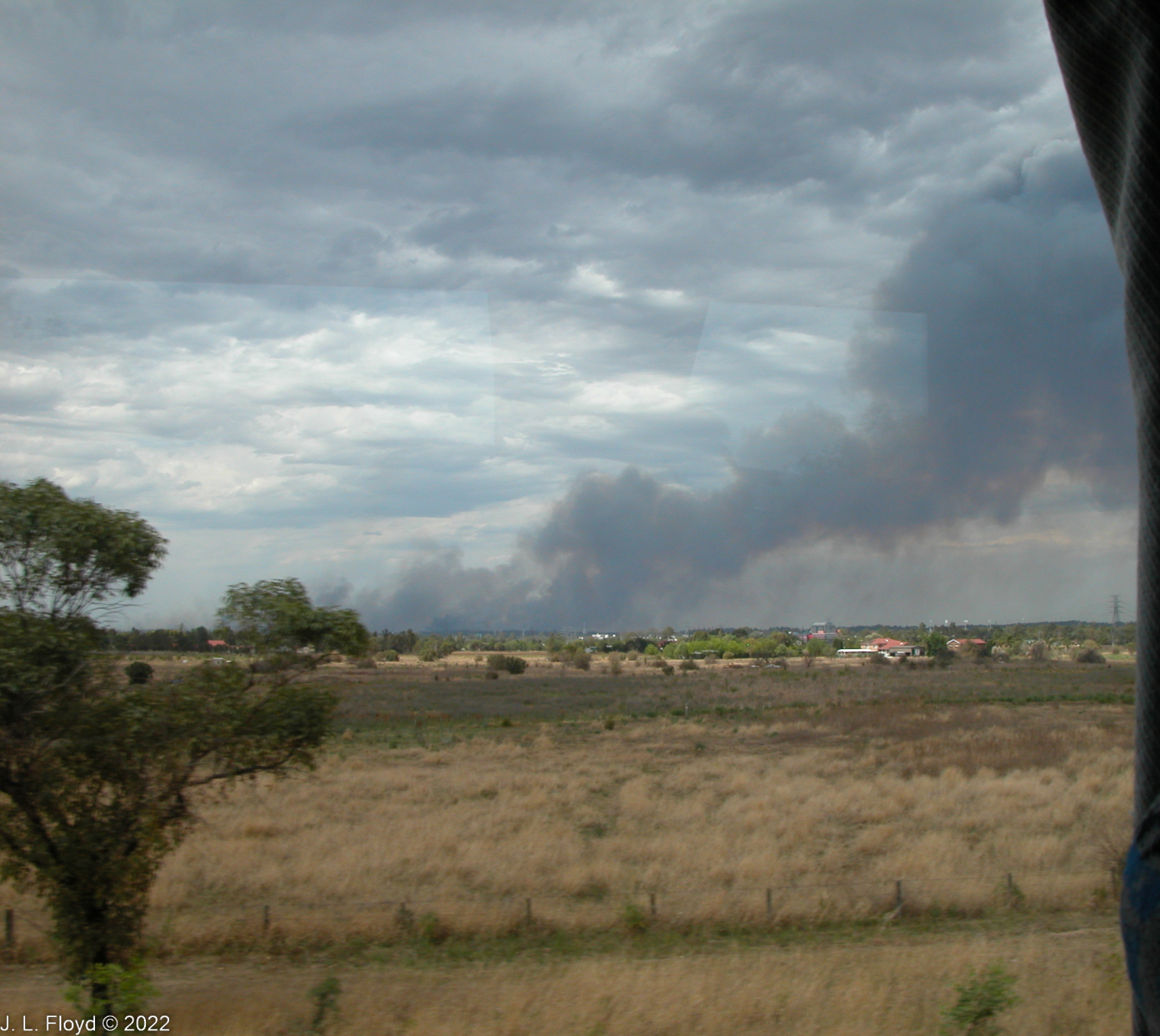
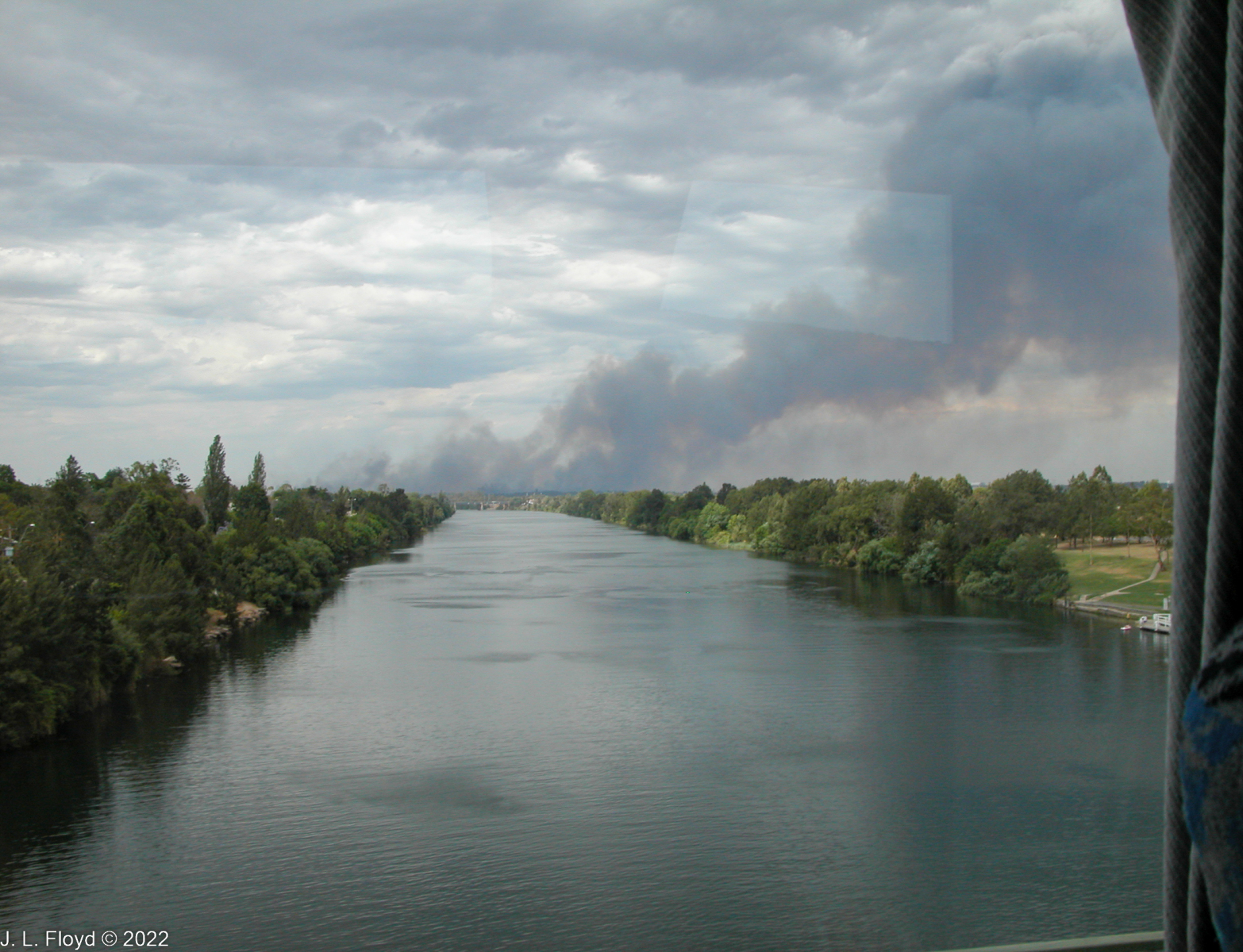
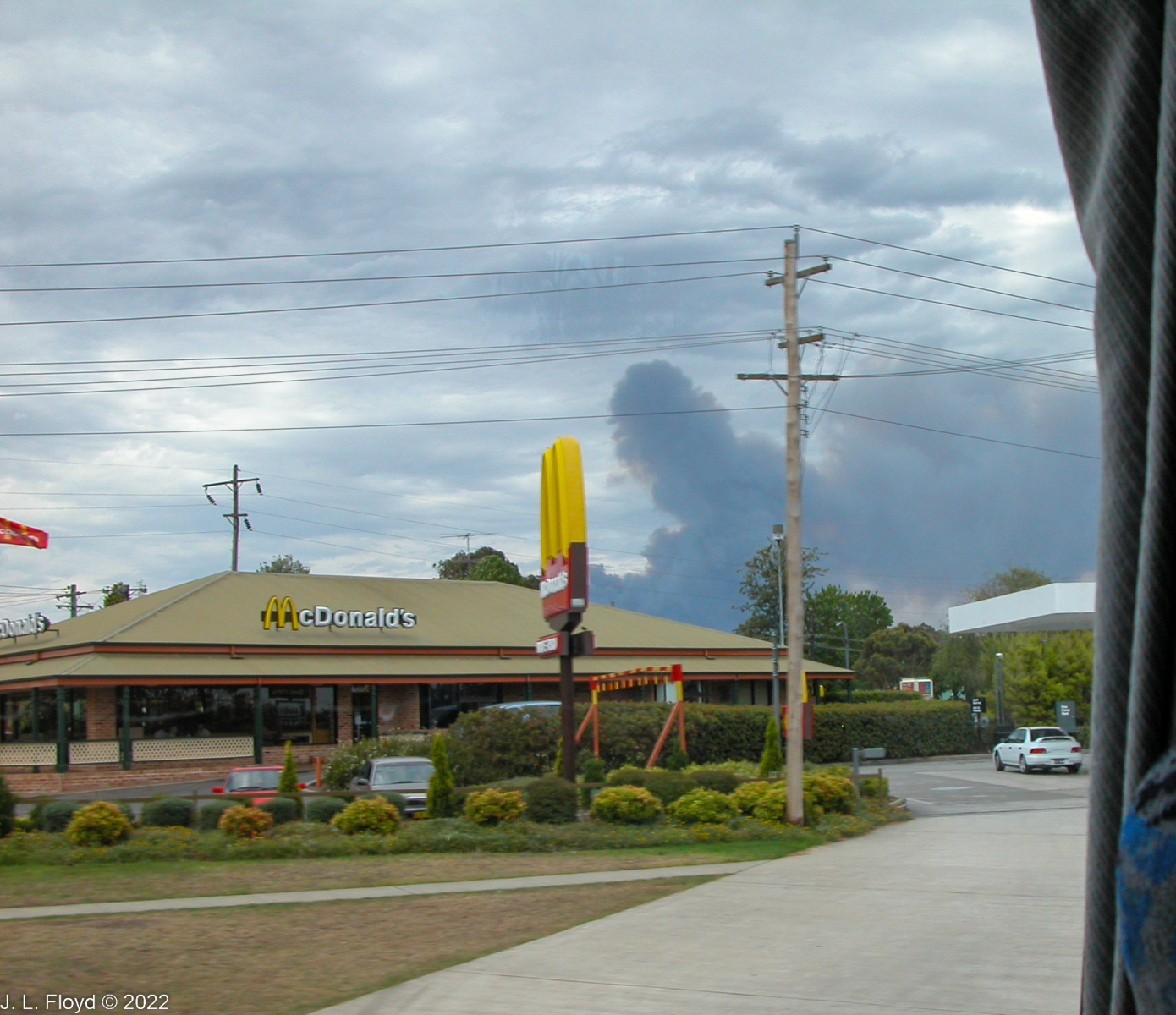
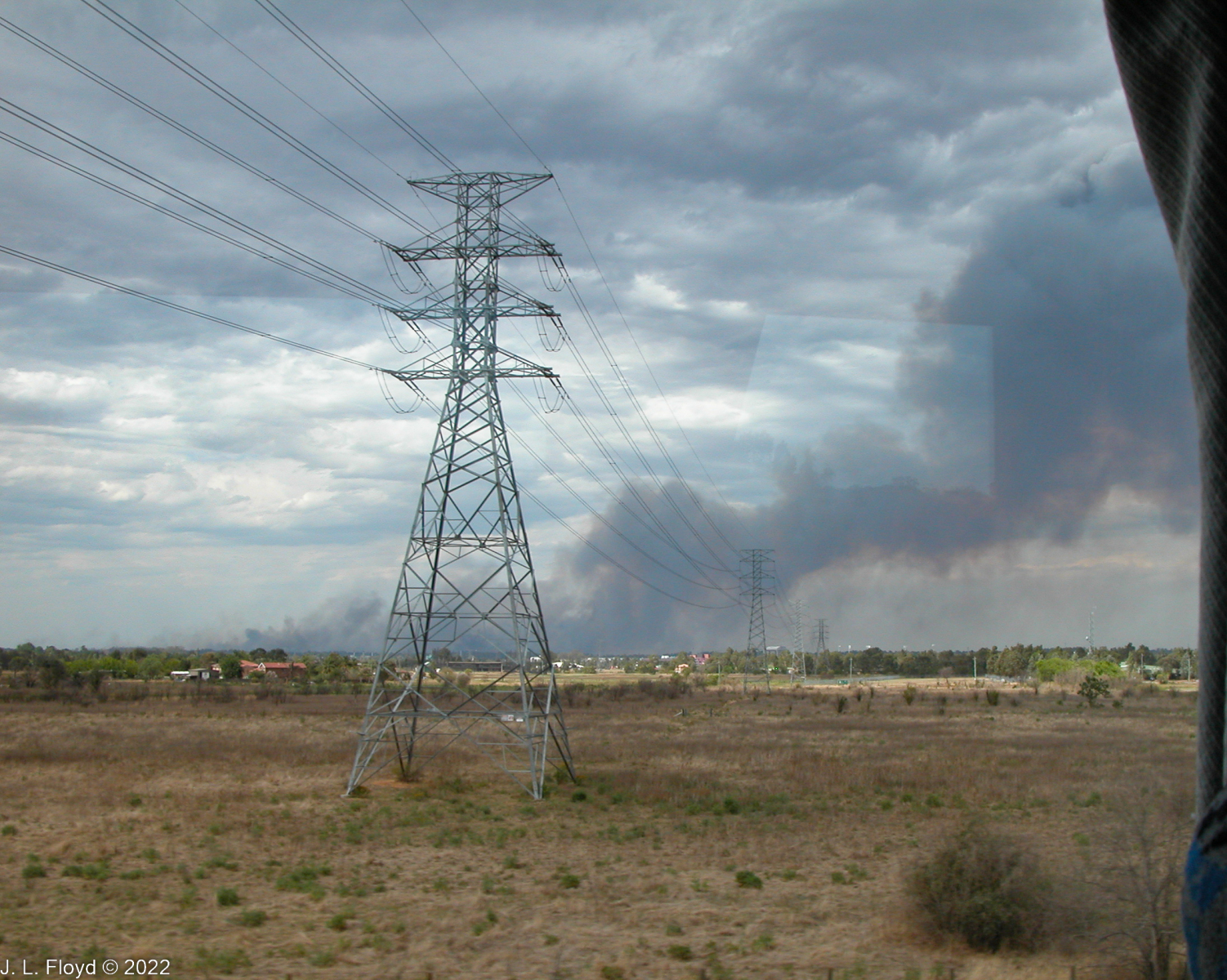
The Scenic Railway ride ended our stay in Katoomba, but our tour day wasn’t over yet. We still had the Featherdale Wildlife Refuge west of Sydney to visit. But on the way there, we had to witness a spectacle that was all too familiar to Aussies, and would become even more so in subsequent years: a bush fire.
Categories
Australia, November-December 2002

Sydney Harbor Cruise, November 25, 2002

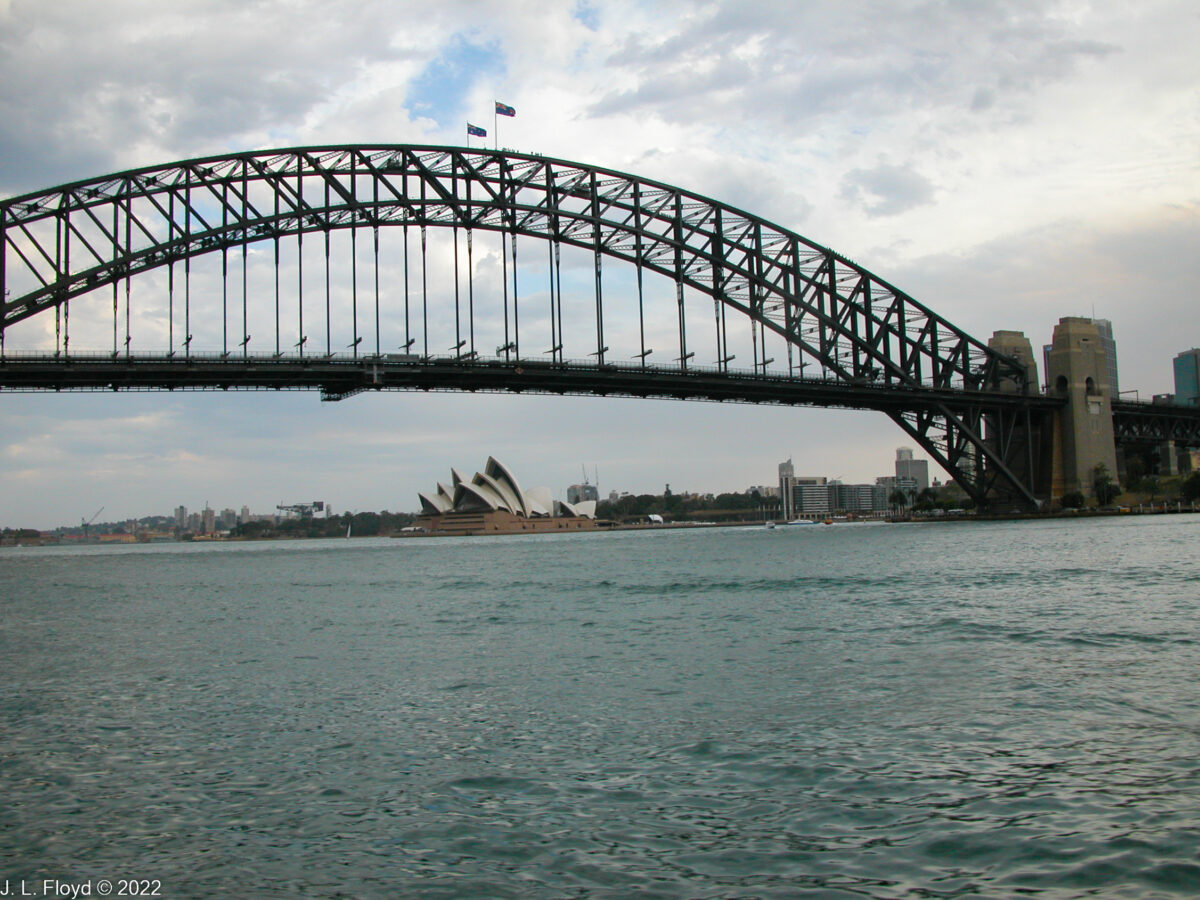
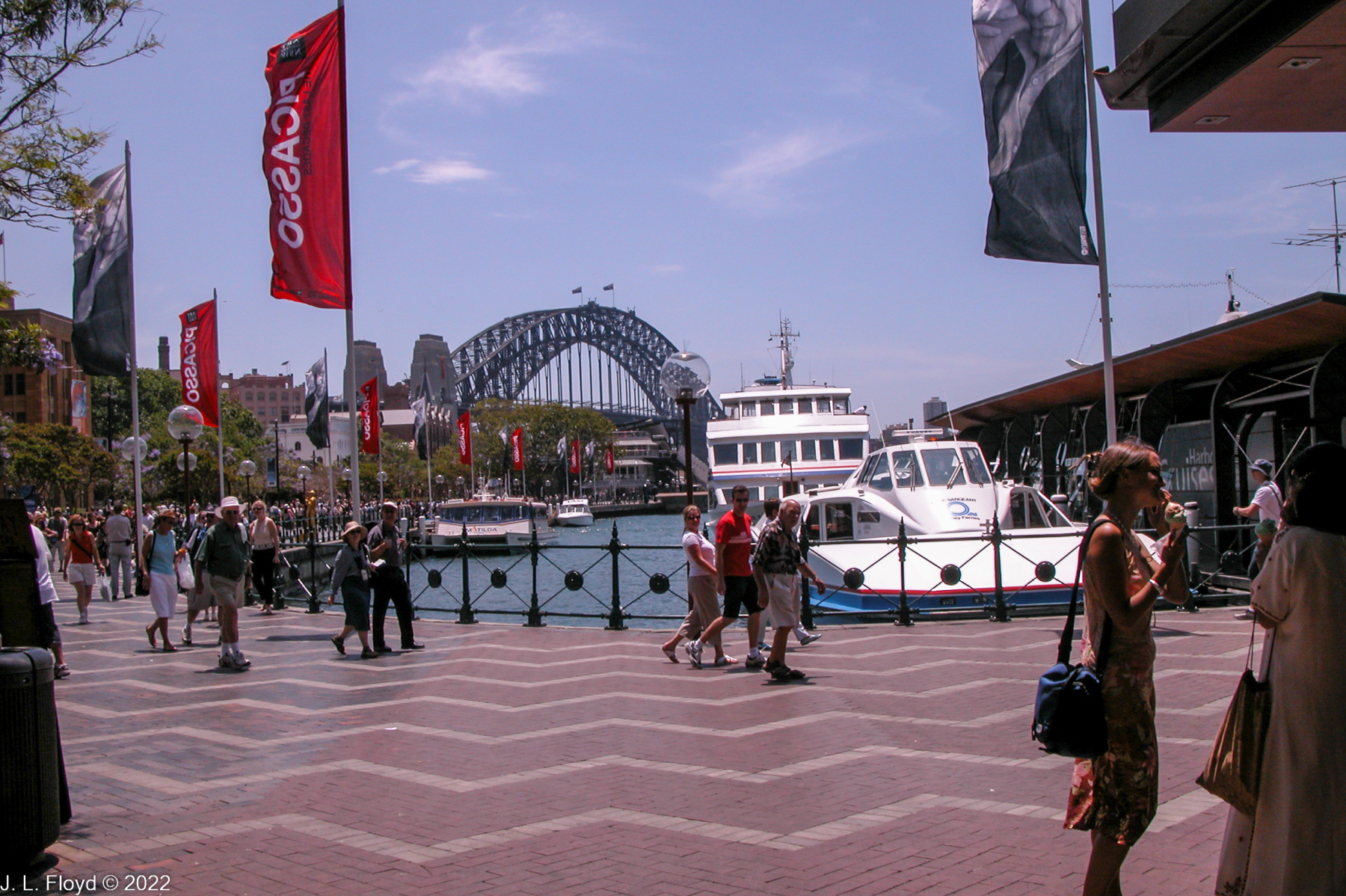
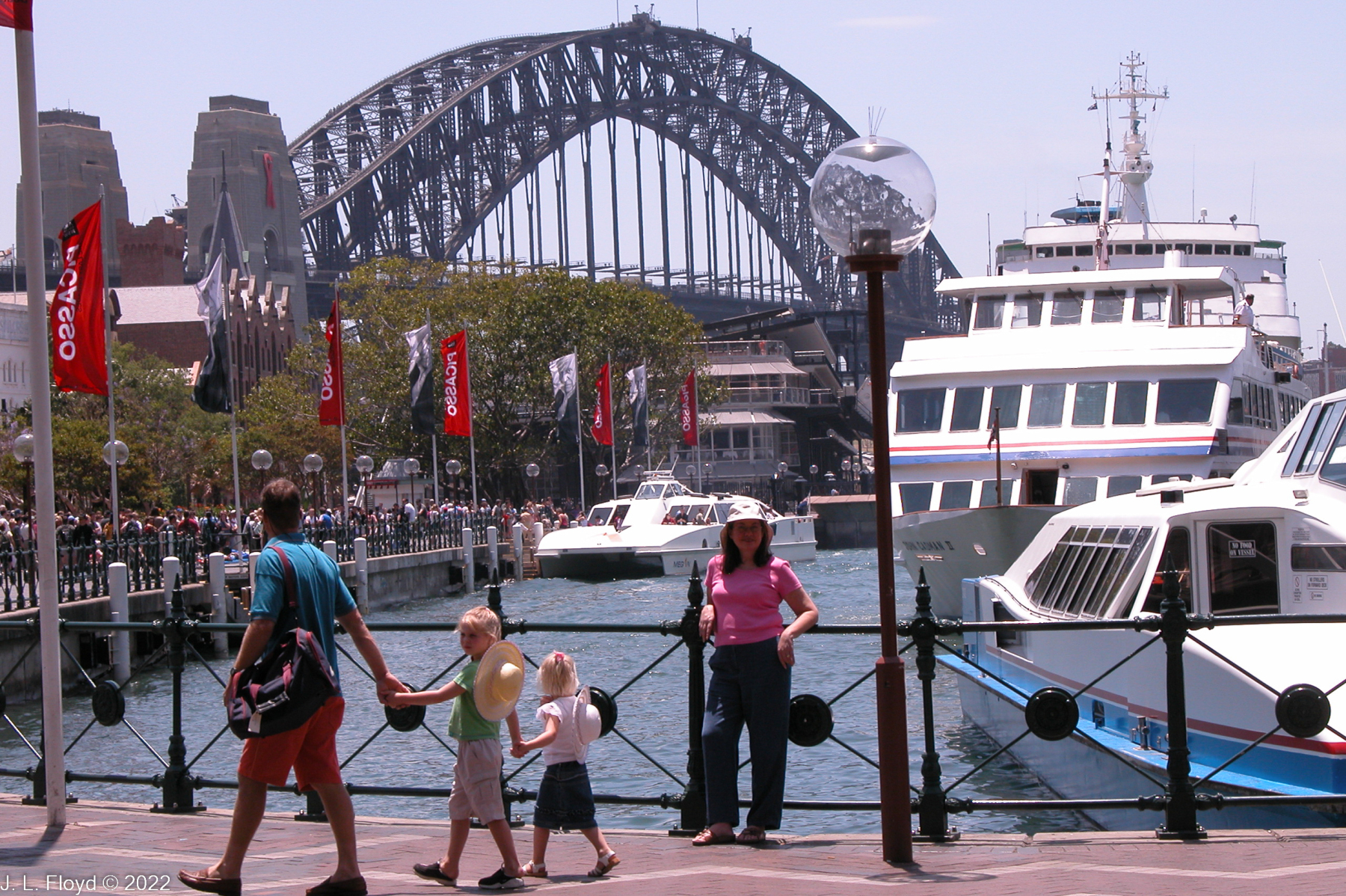
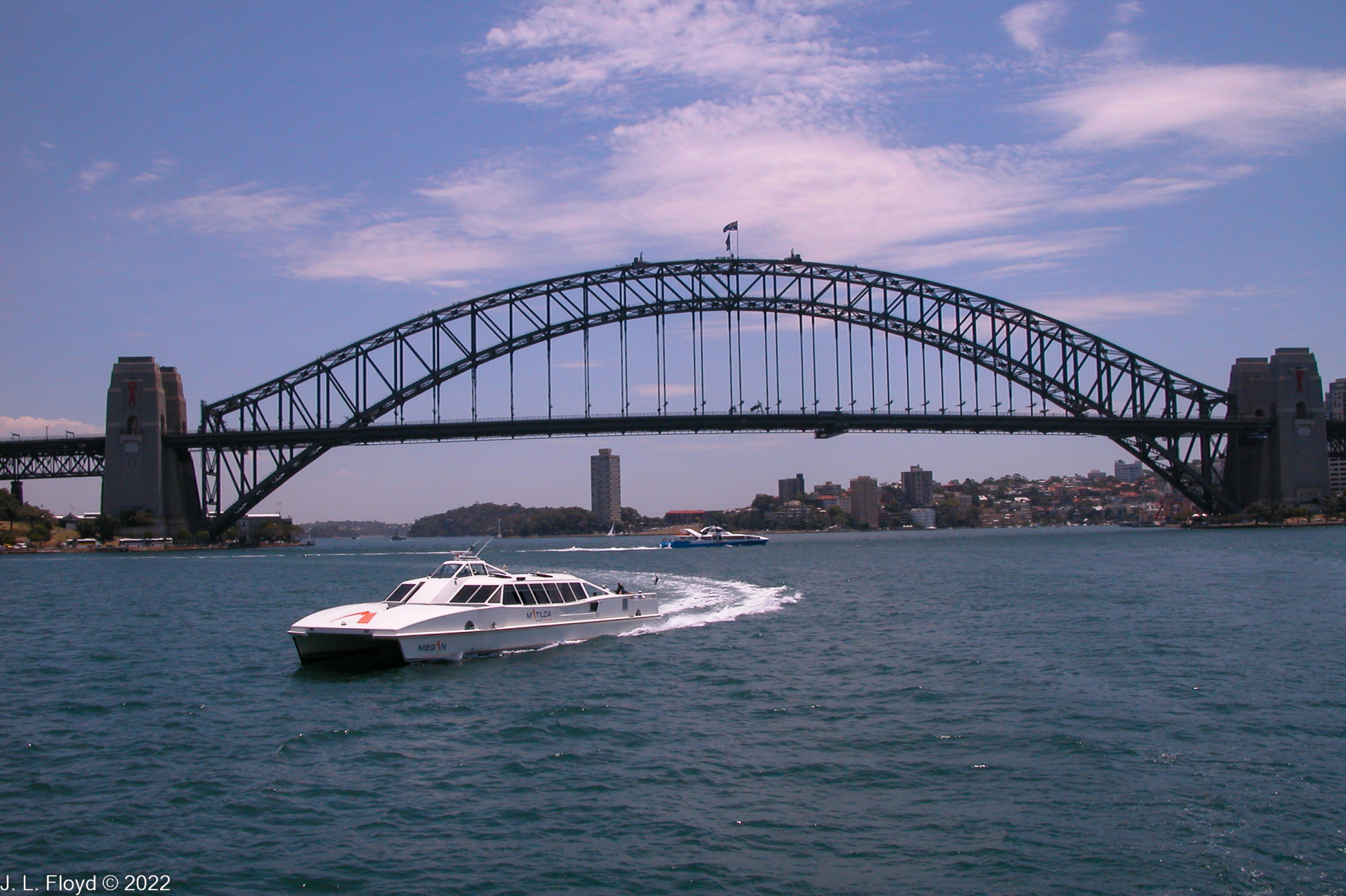
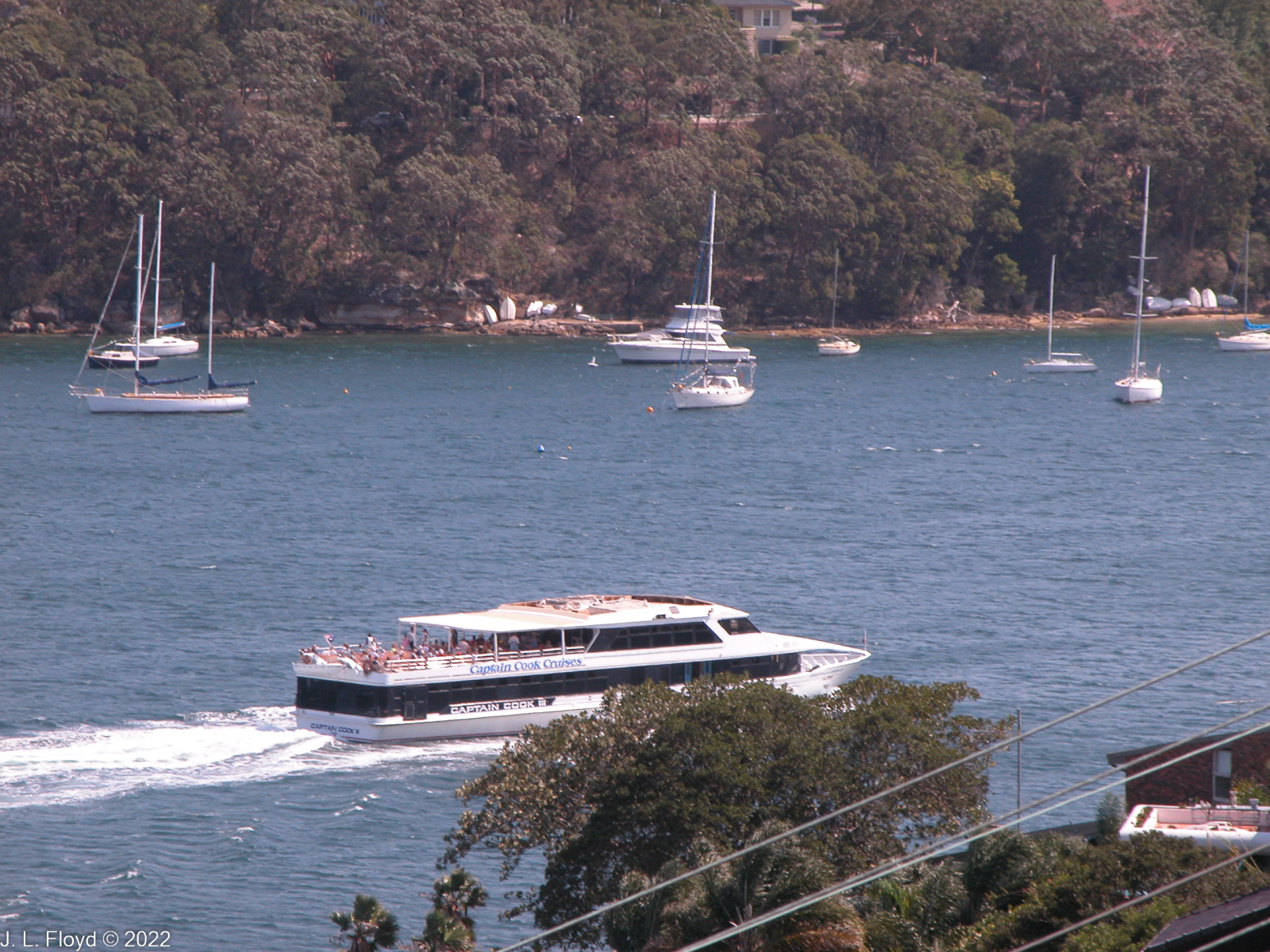
On the afternoon of our day in Sydney we went on a harbor cruise. We boarded the cruise boat at Circular Quay, in The Rocks district right next to Sidney Harbor Bridge.

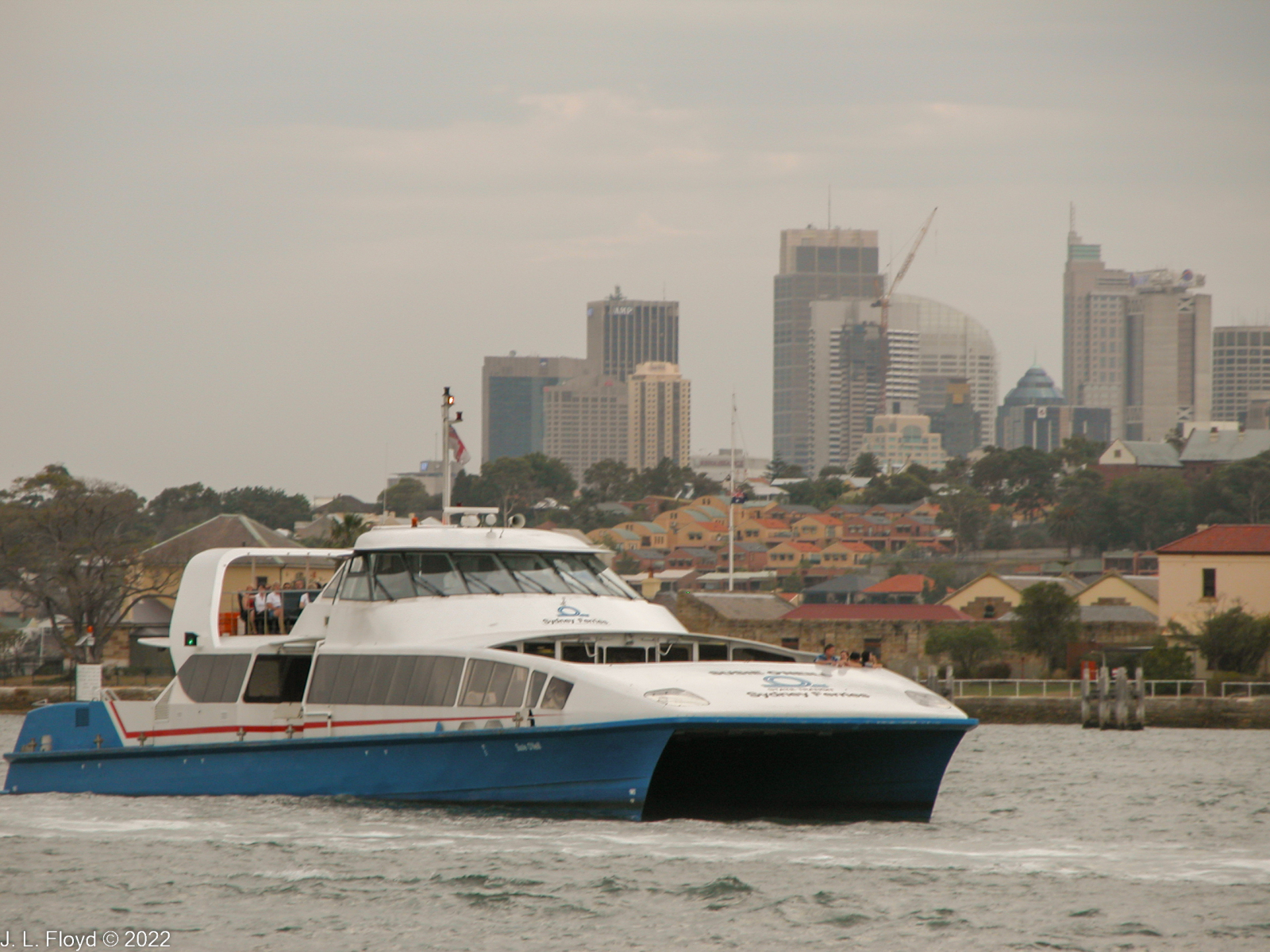
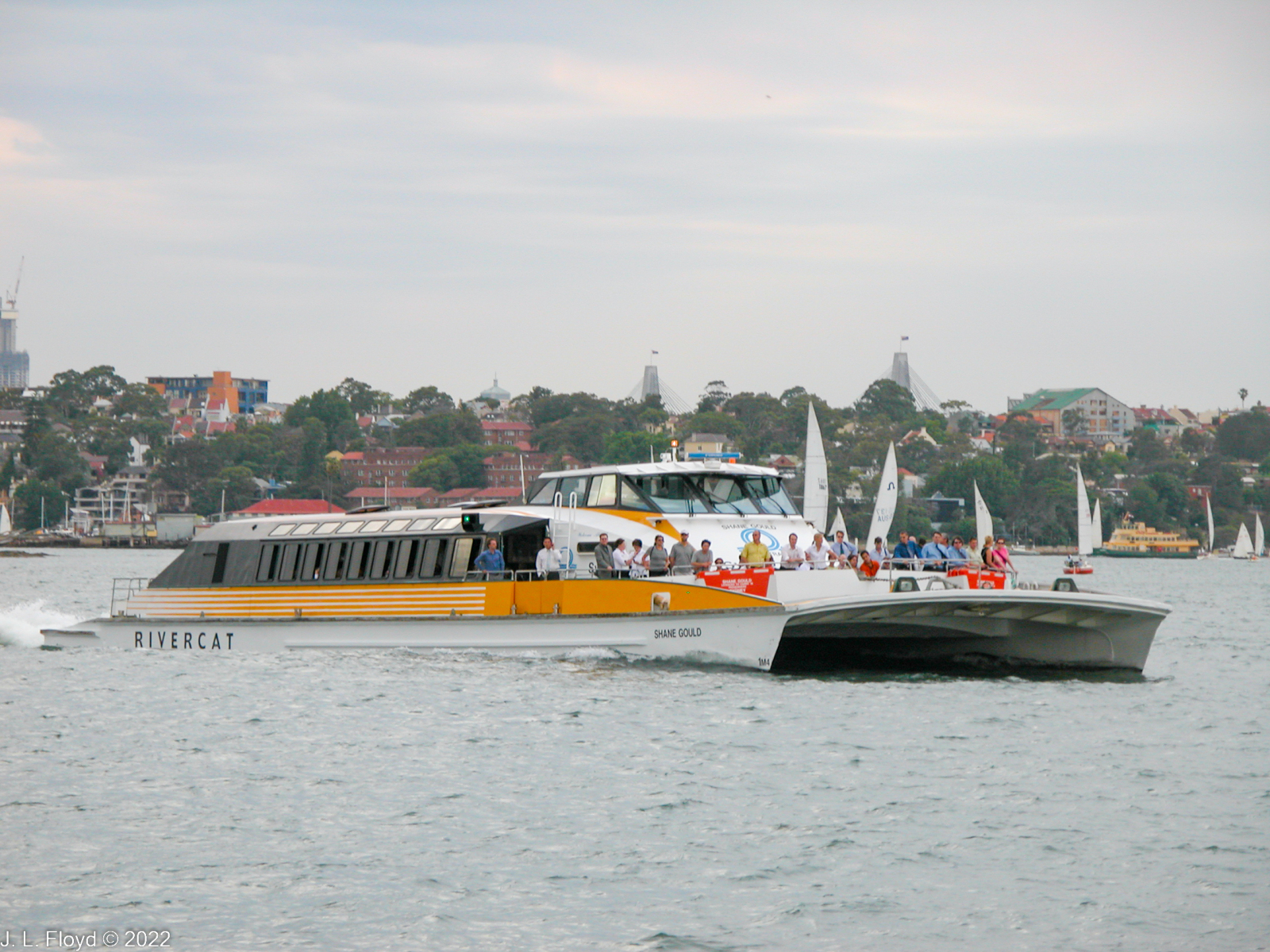
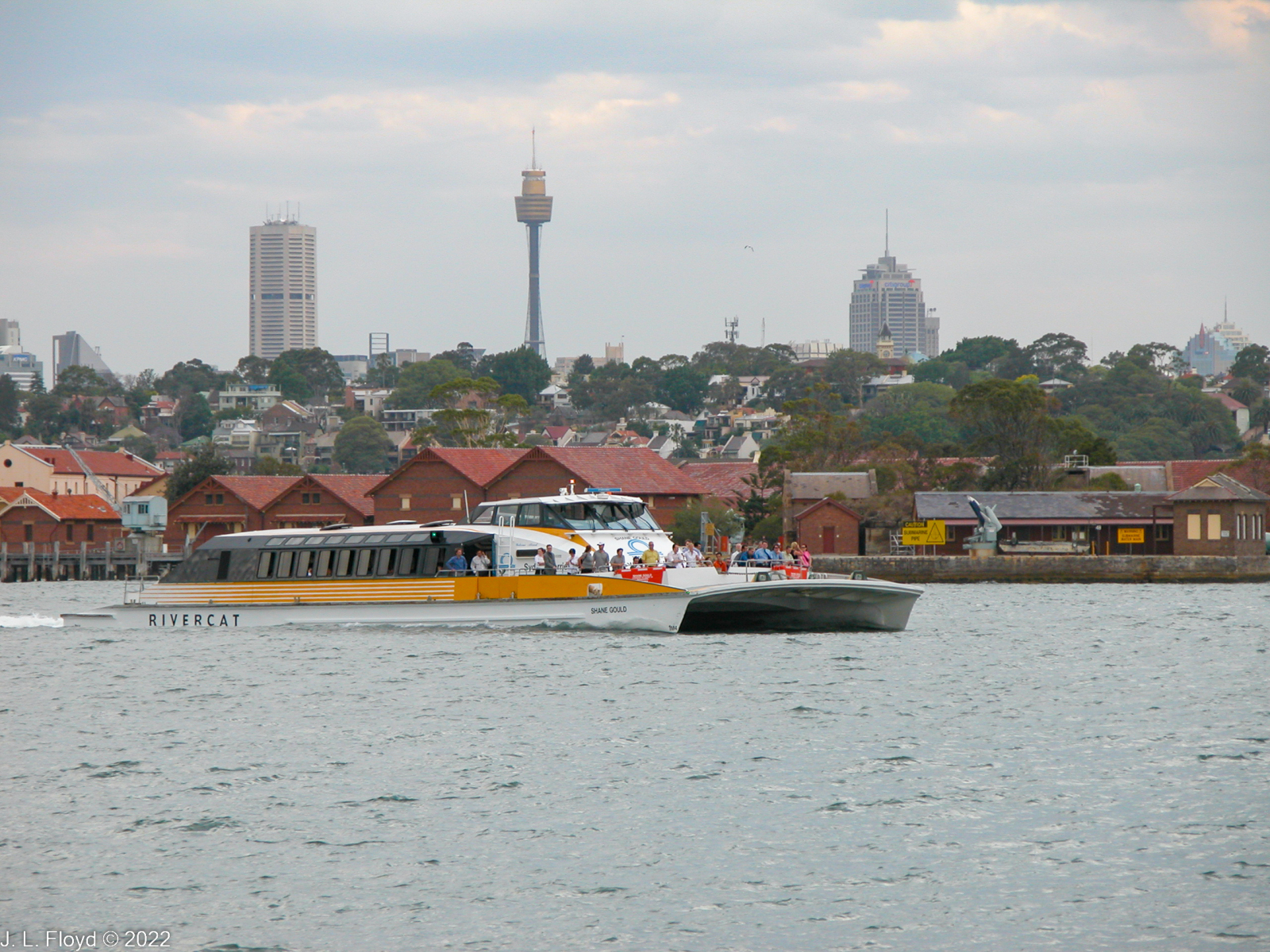
Sydney Harbor cruise boats come in many shapes and sizes, but most of them are catamarans like the ones shown below.

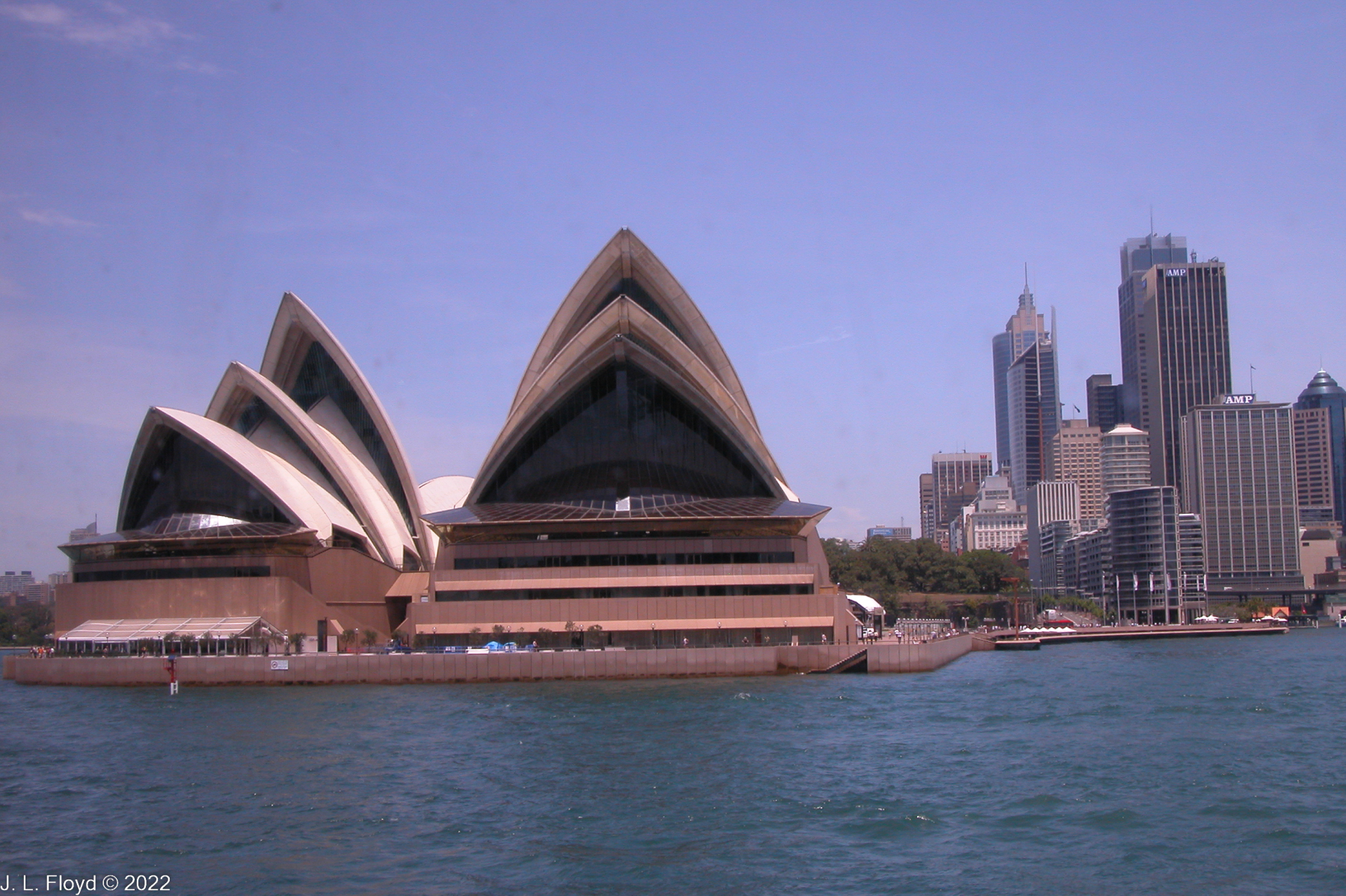
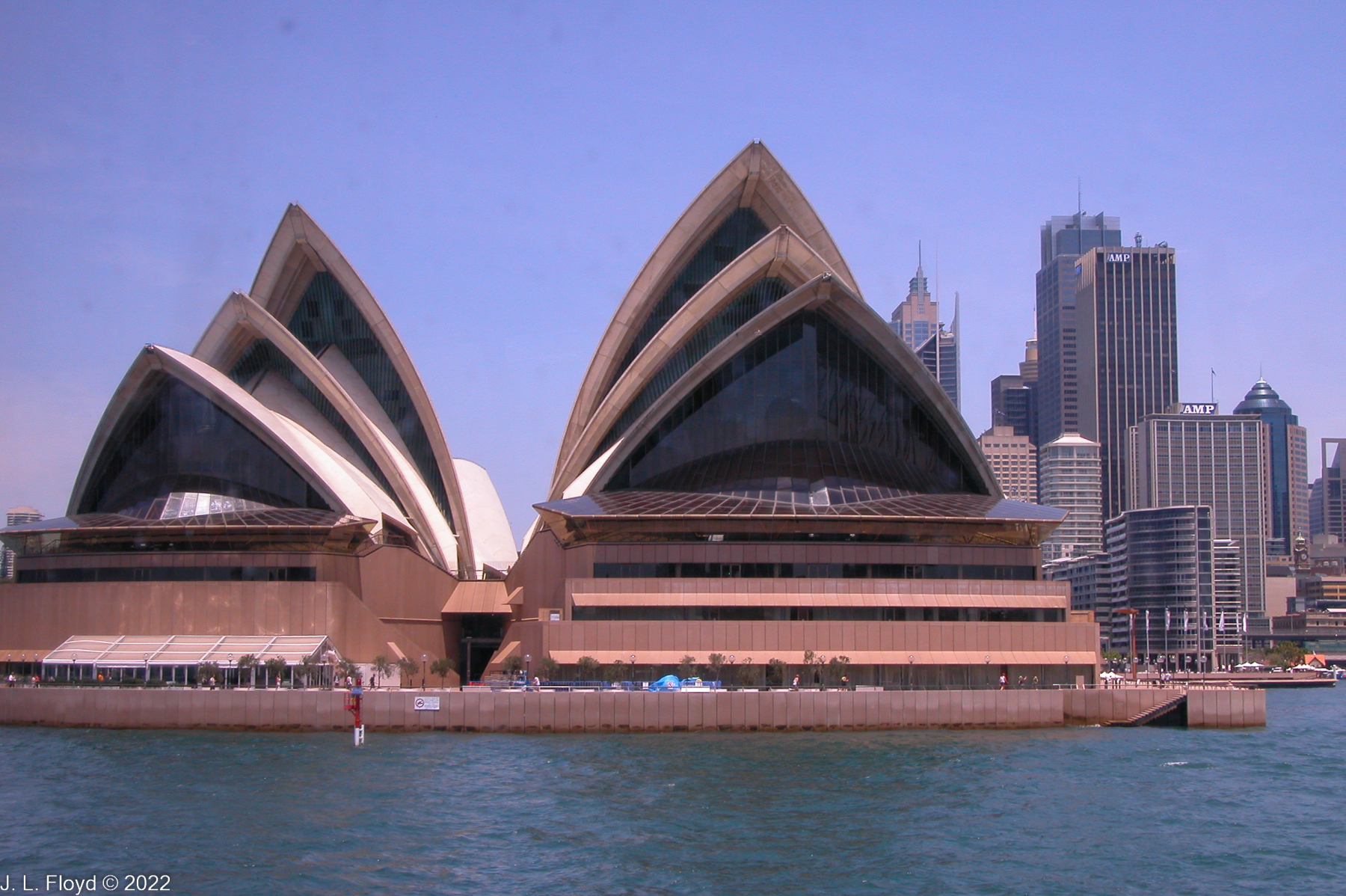
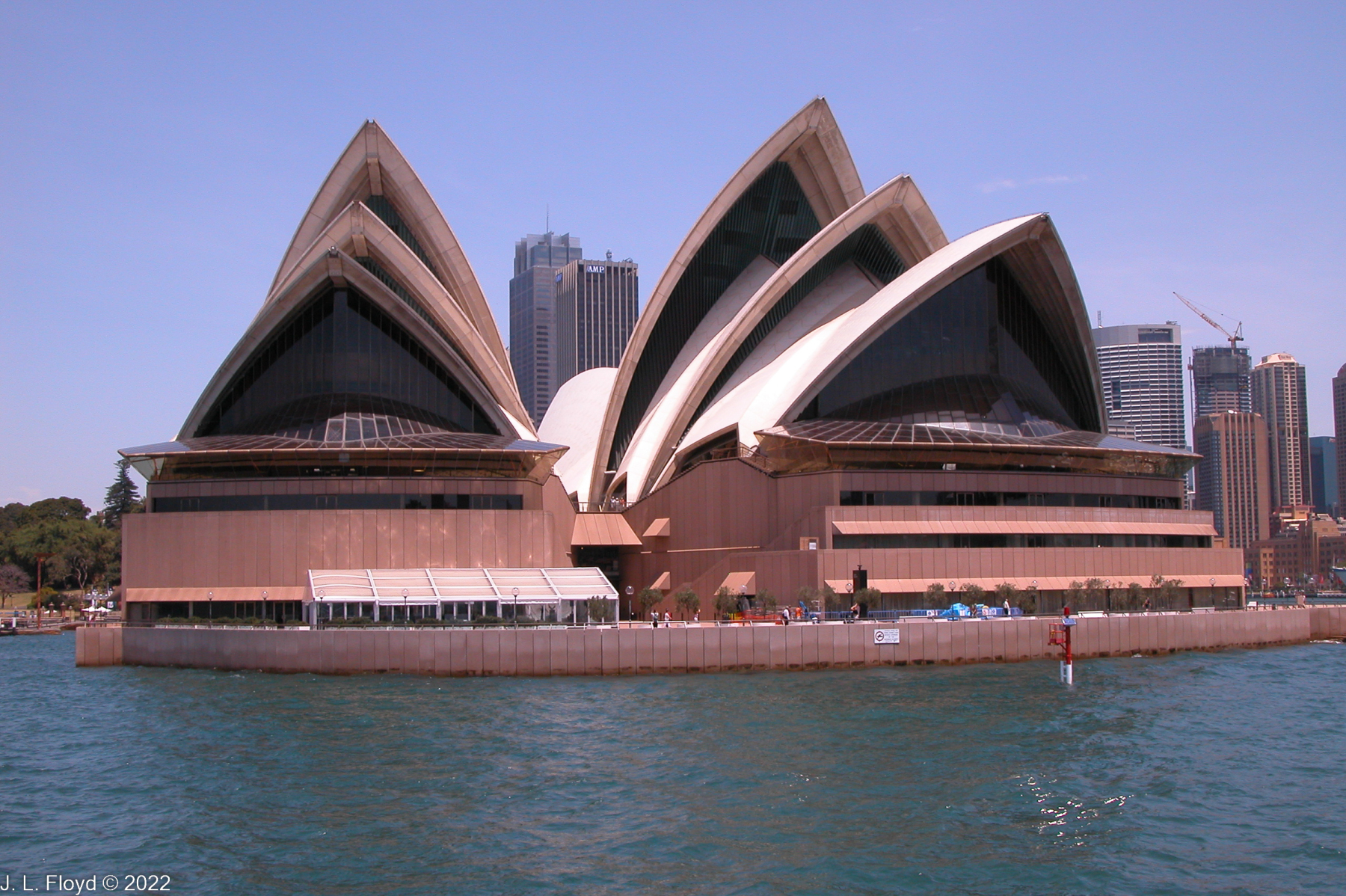
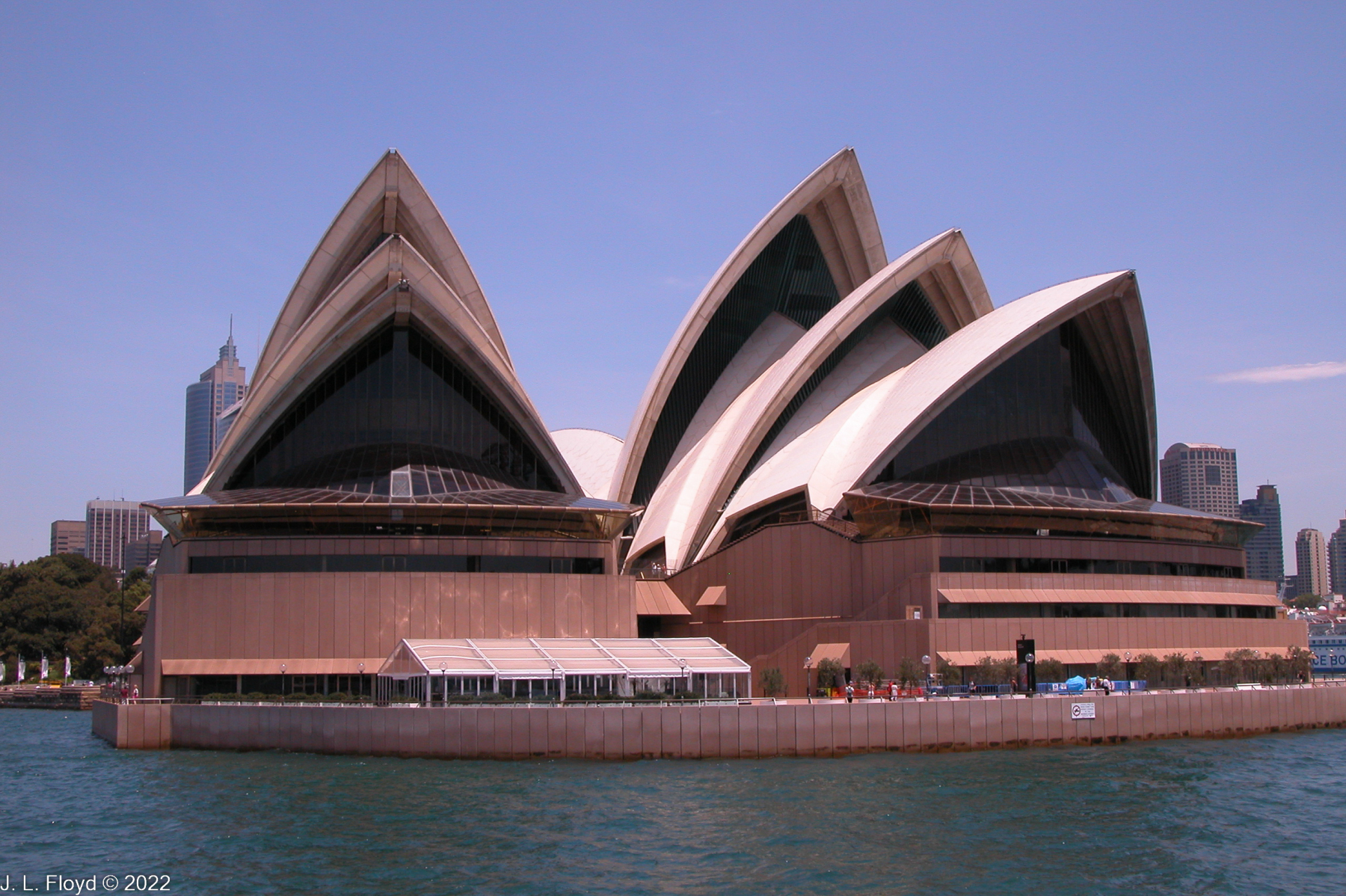
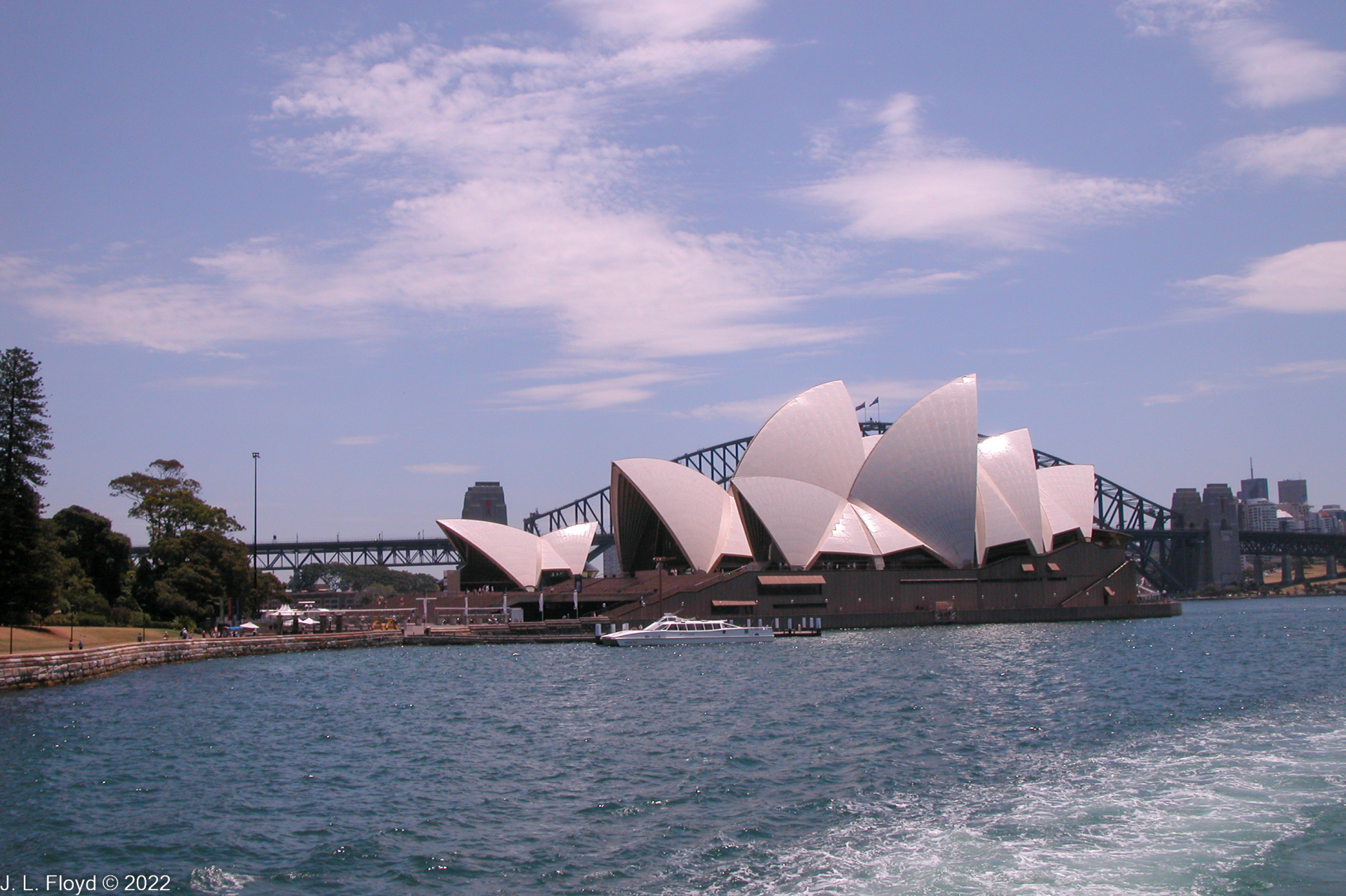
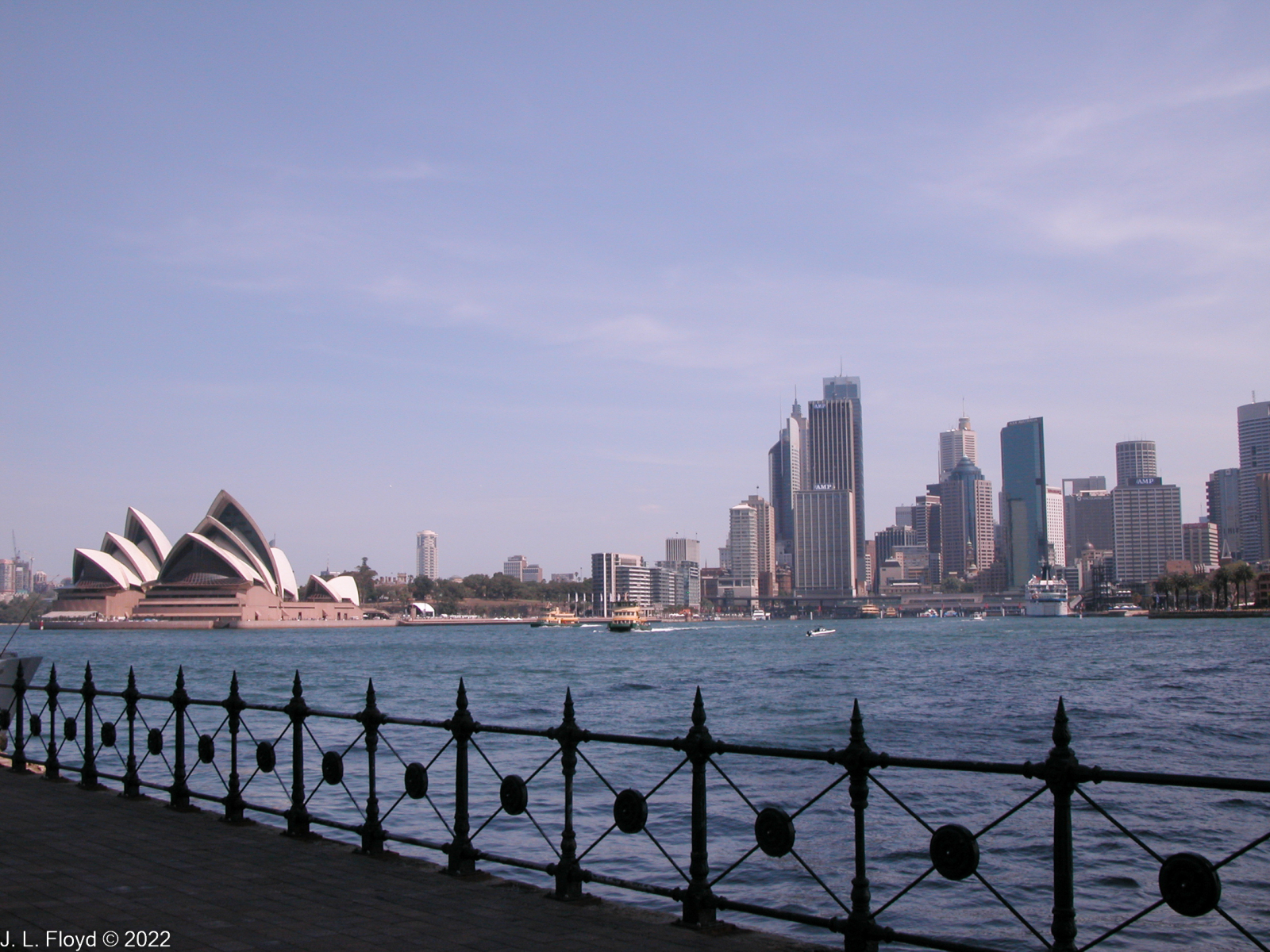
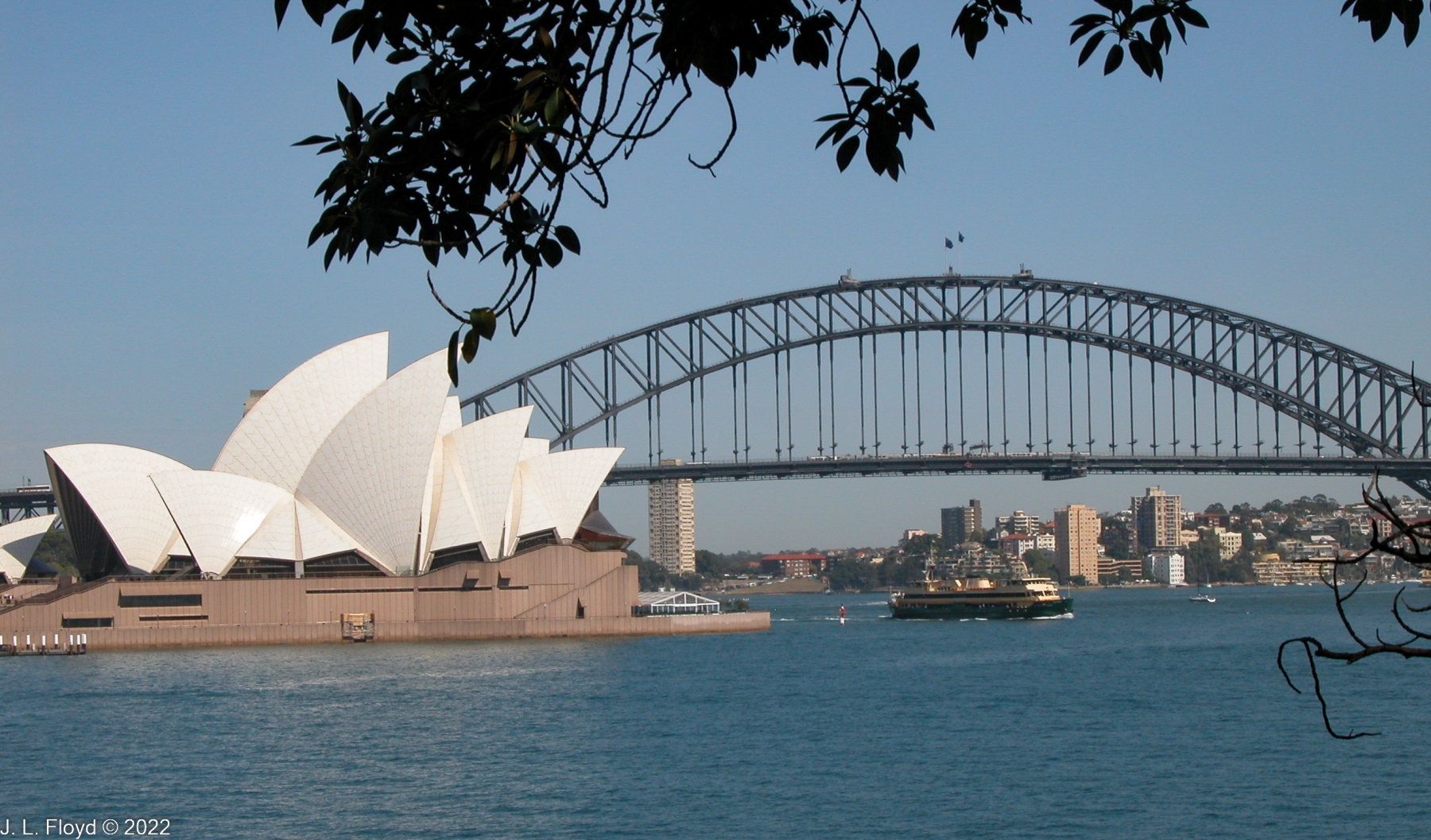
As we pulled away from the dock we got a great view of the Sydney Opera House. Photos of the Opera House are a dime a dozen – it’s probably the most photographed landmark in Sydney – so it didn’t make sense for me to take a bunch of pictures of it, but I did anyway, and here they are – I’ll just put all of them out here at once.

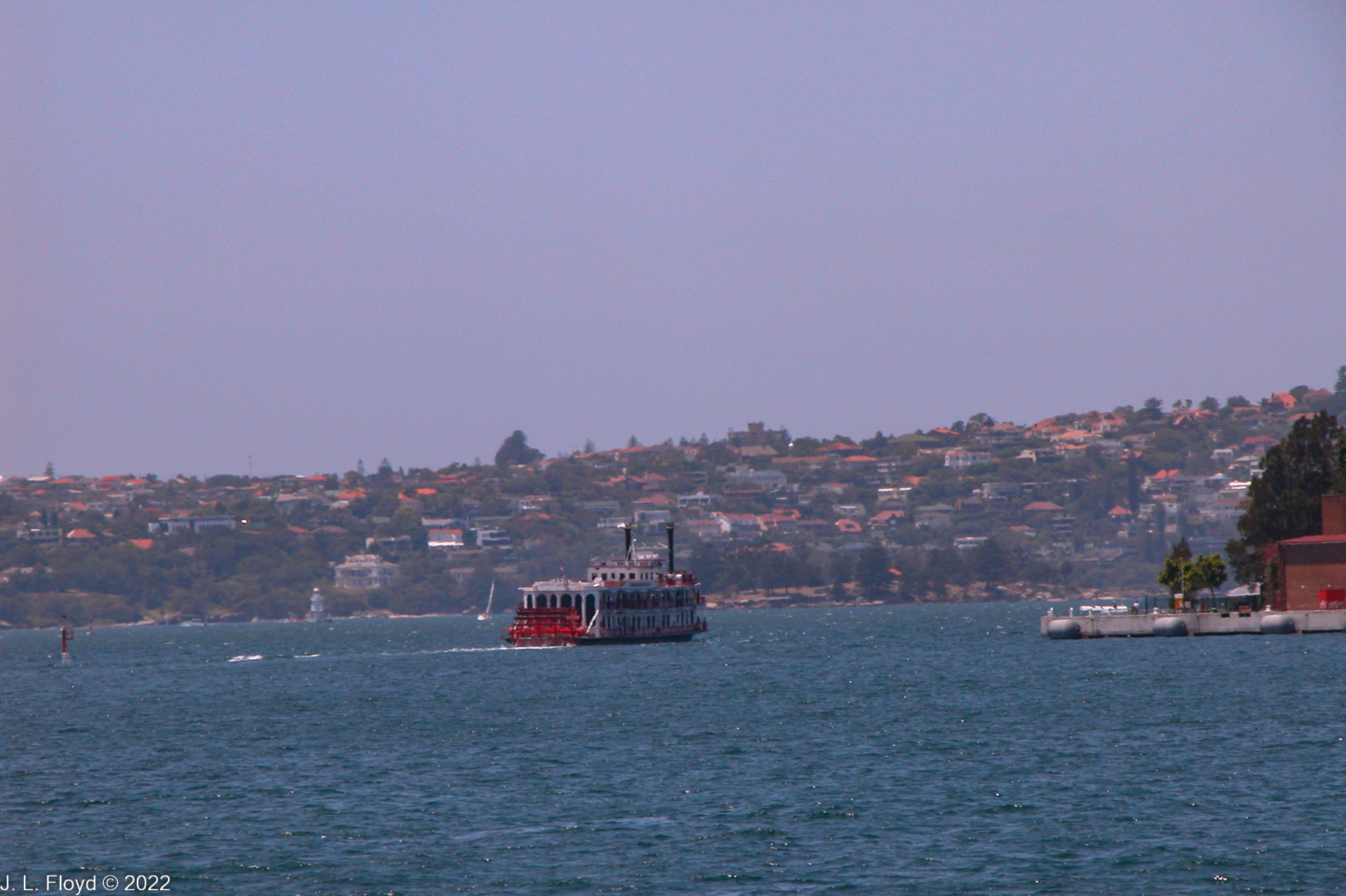
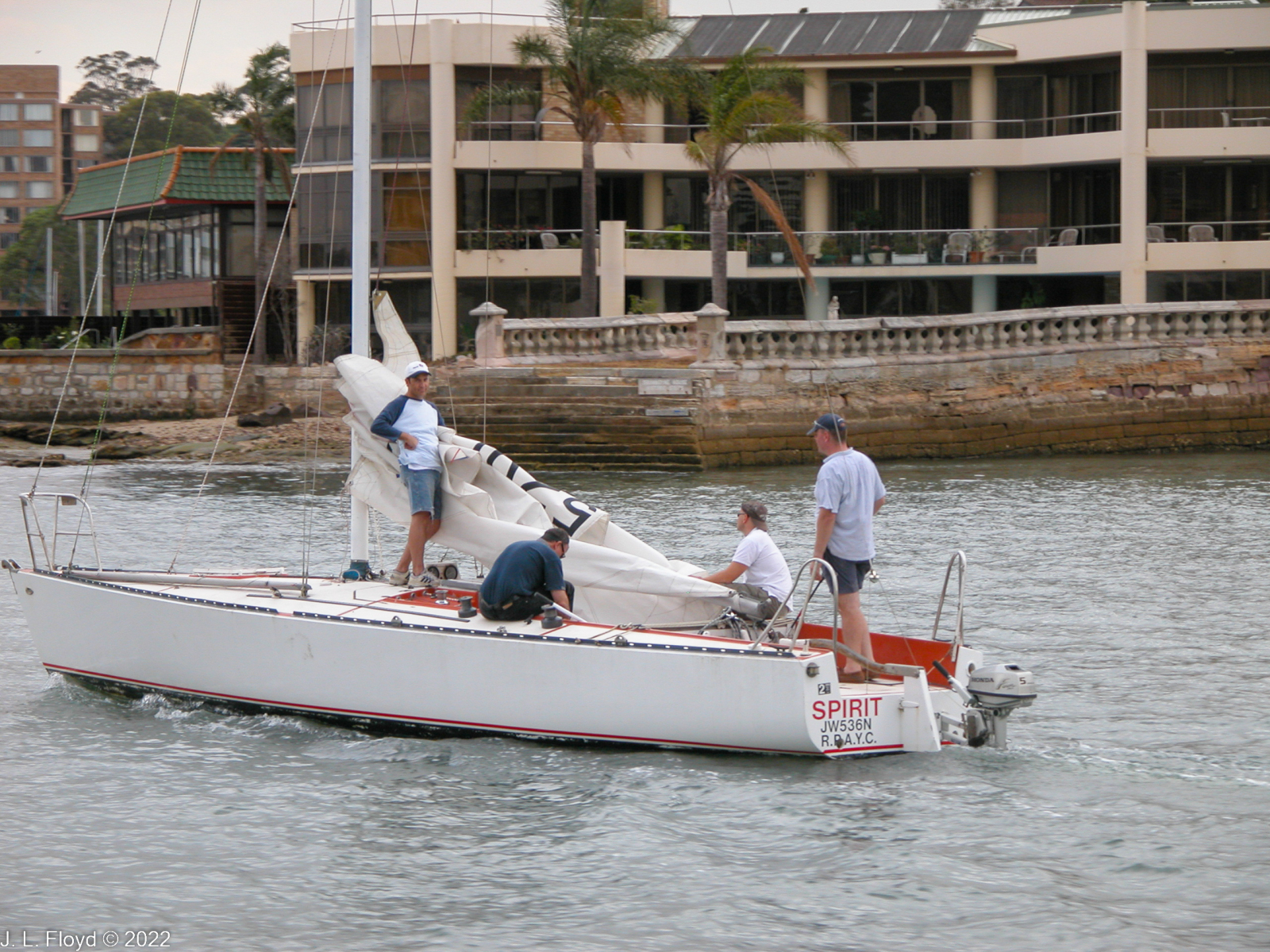
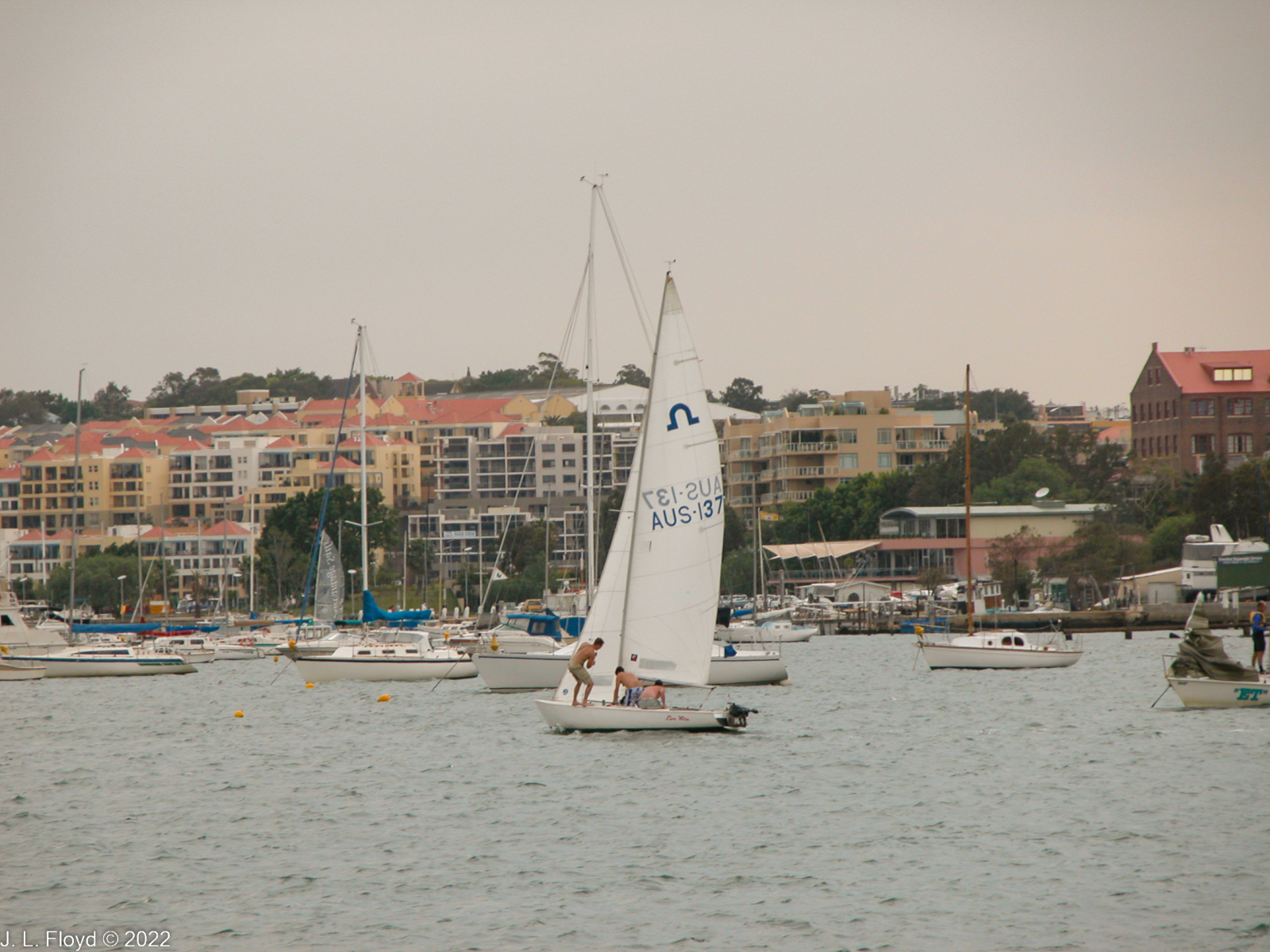
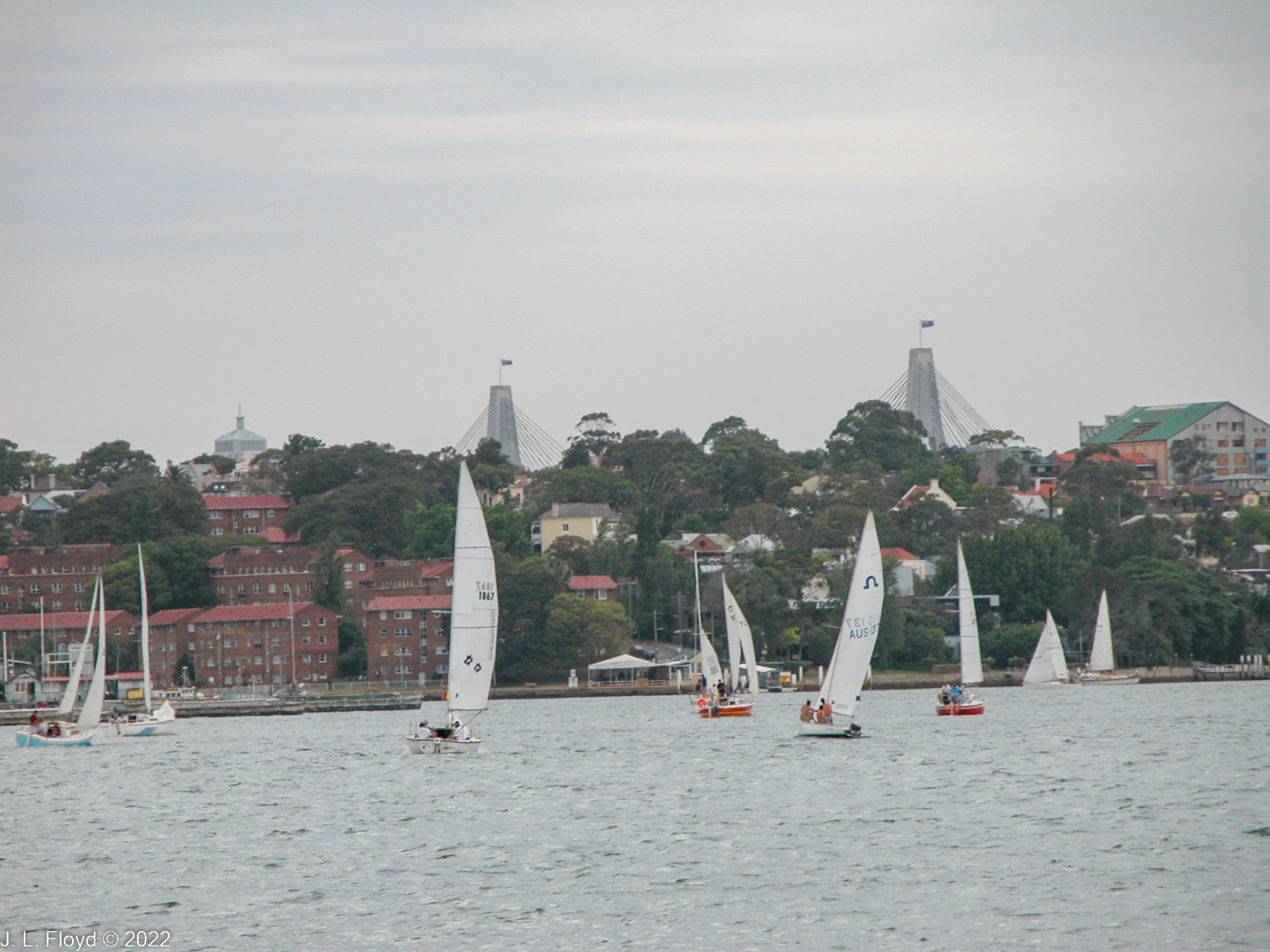
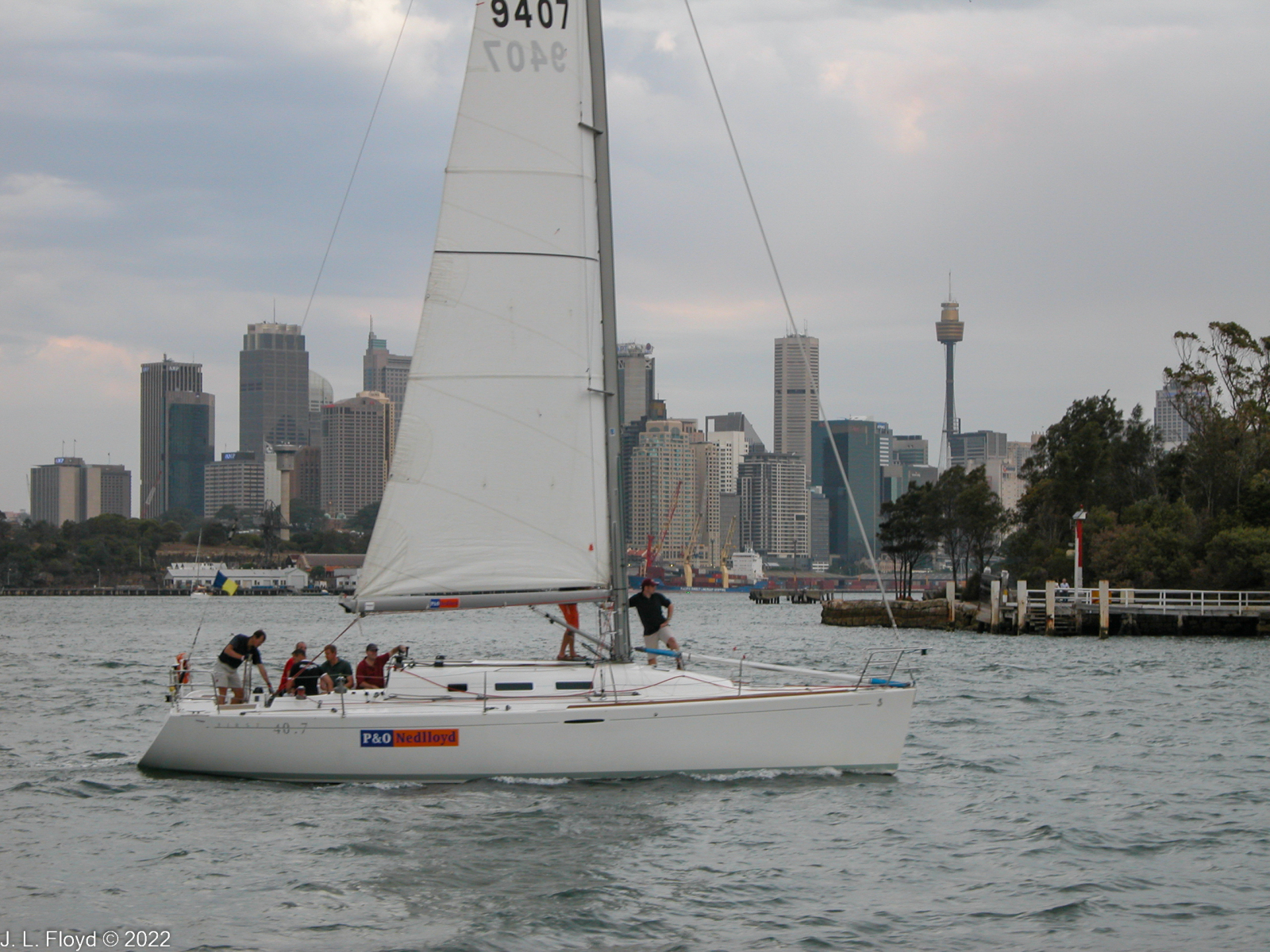
As you might expect, we saw a profusion of pleasure boats of all kinds in Sydney Harbor, both wind- and motor-powered. Having crewed on a few sailboats in my younger days, I was mostly interested in the wind-powered kind, and I shot a plethora of pictures of them, ranging from centerboard dinghies to luxury yachts.

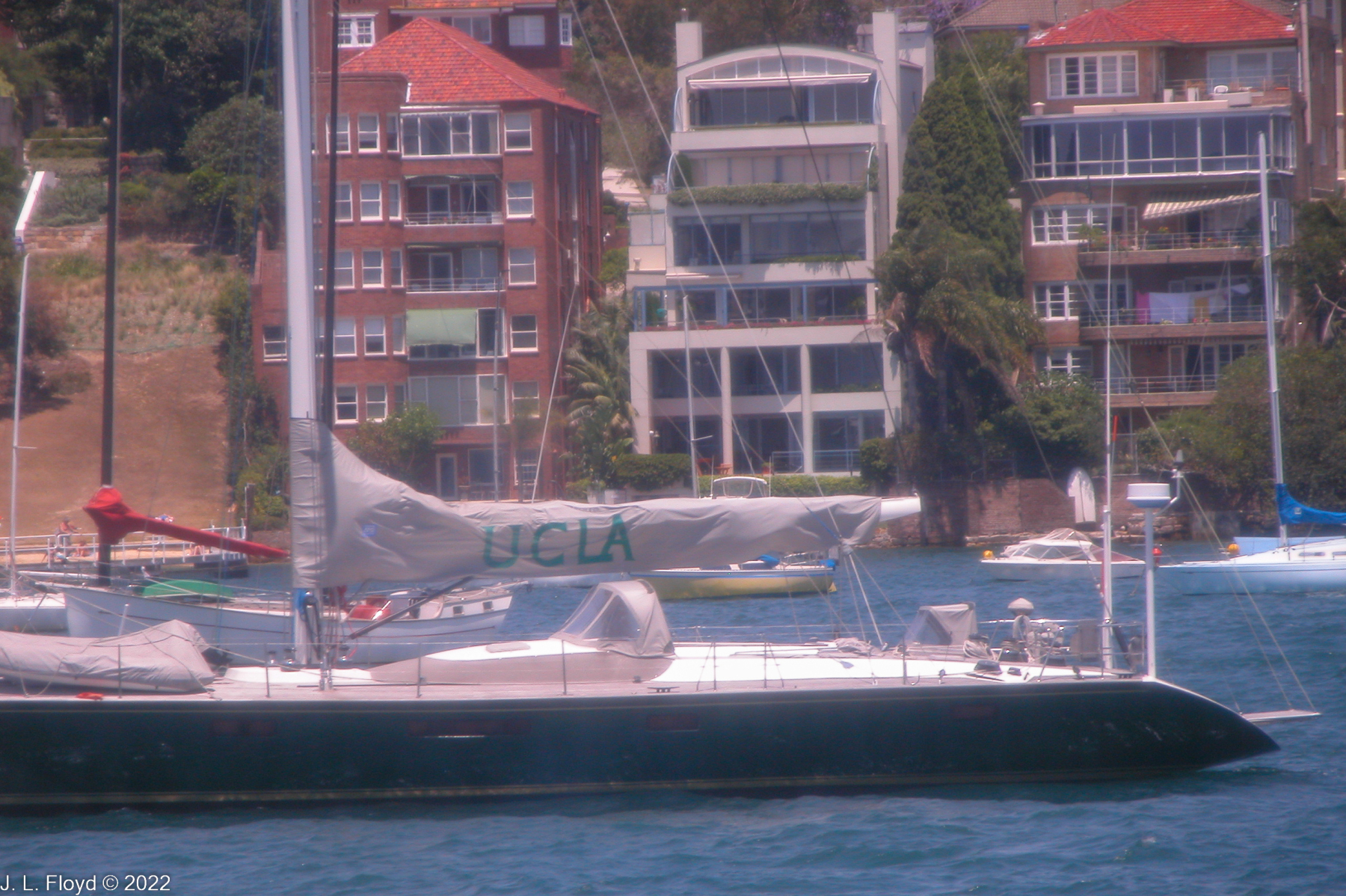
One sleek sloop moored off Darling Point got my attention because it bore the letters “UCLA” on the sail cover. I wondered whether the boat belonged to UCLA, or the owner was a UCLA alum, or whether “UCLA” in this case stood for something other than “University of California at Los Angeles”, such as “United Calvinist Laymen of Australia” or “Undersea Congress of Lustful Anchorites.”

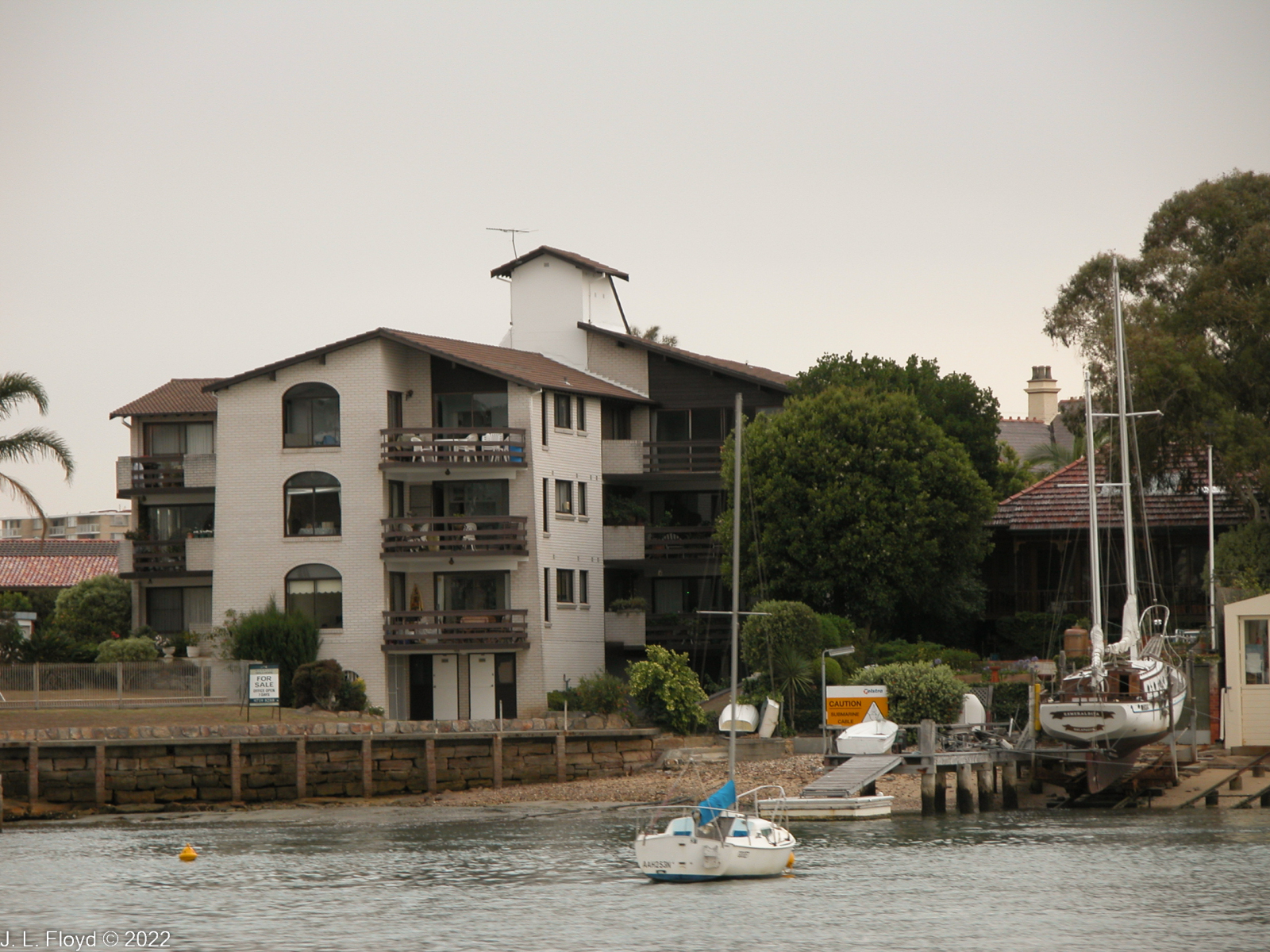
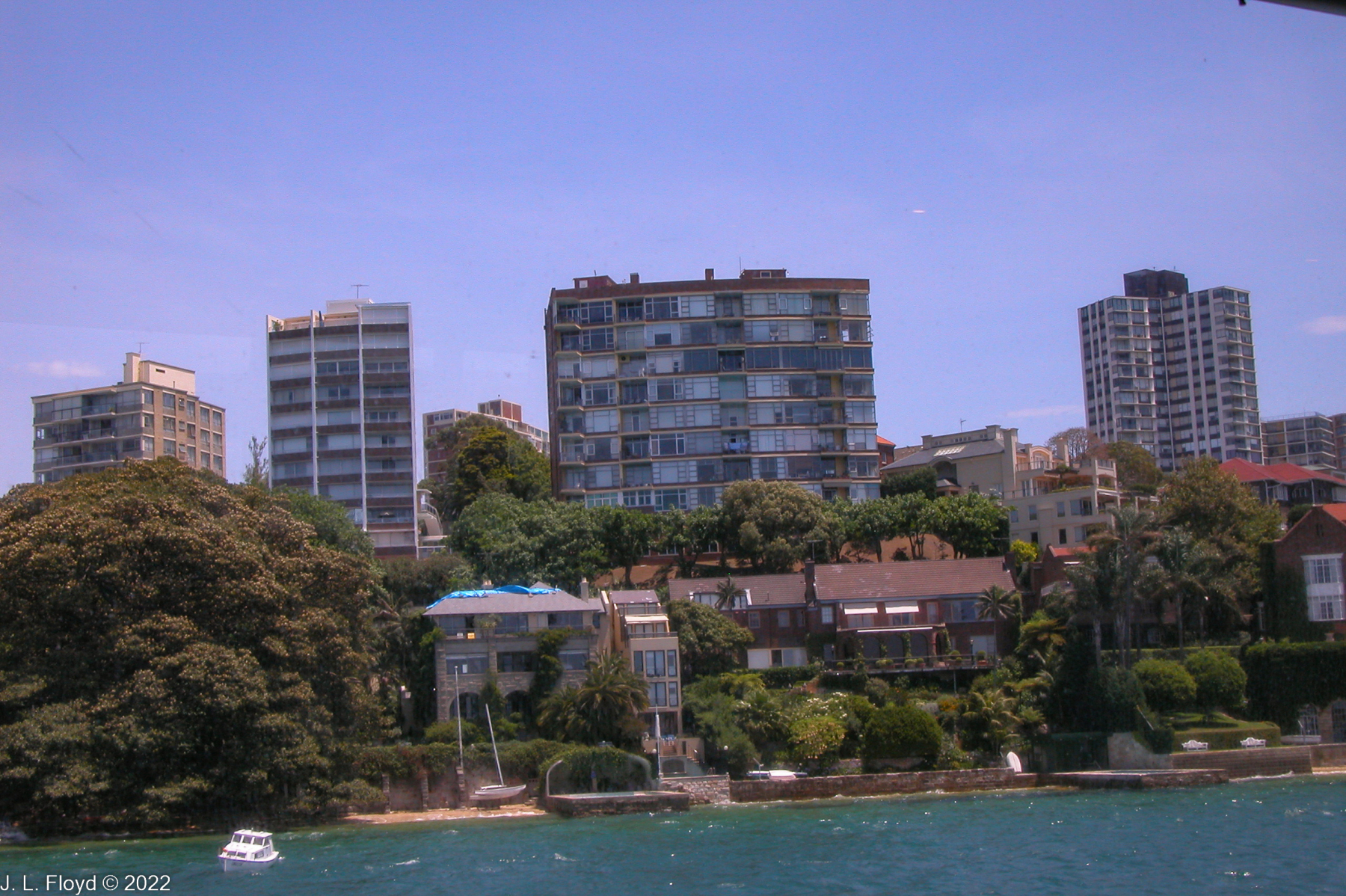
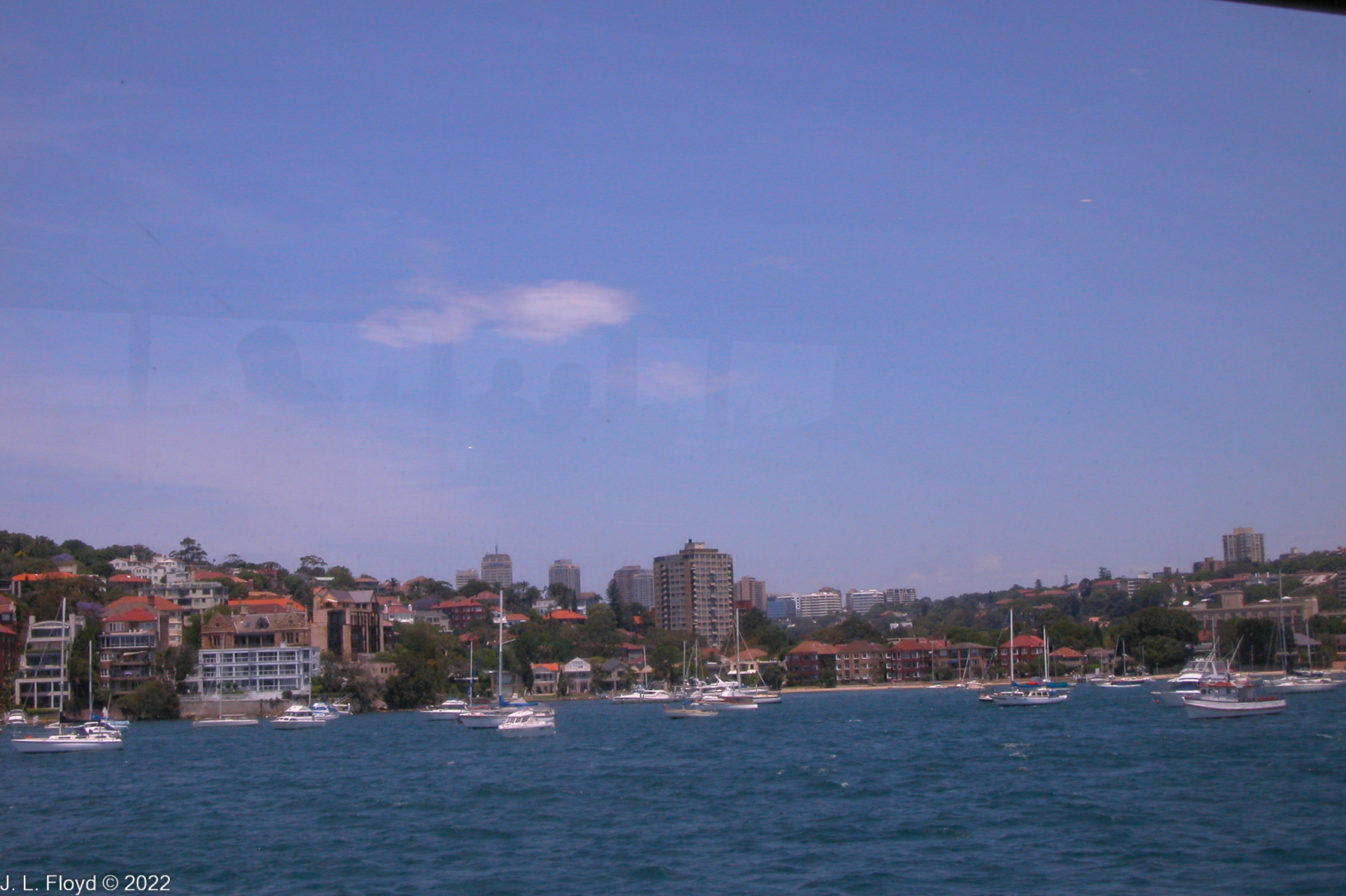
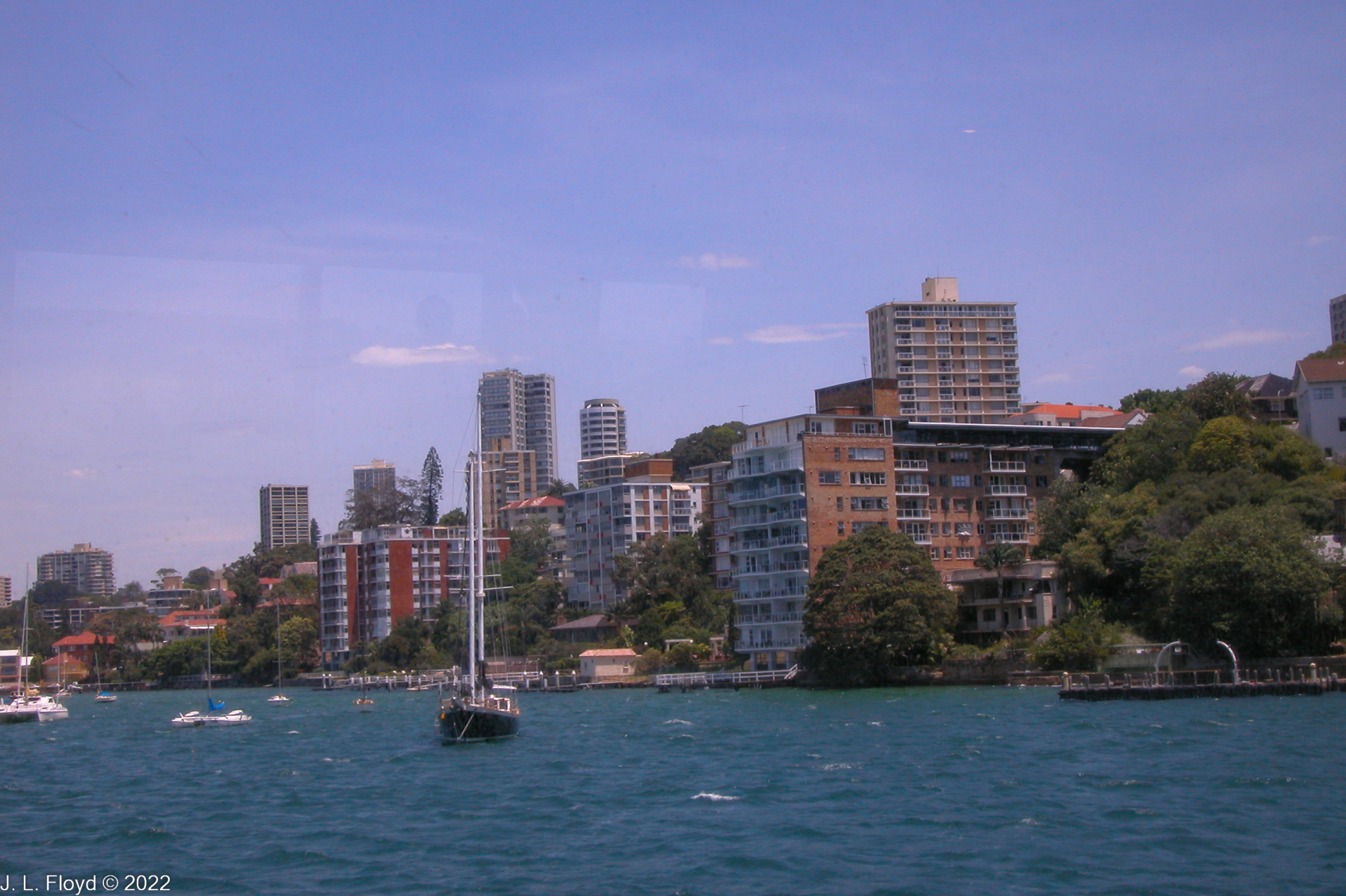
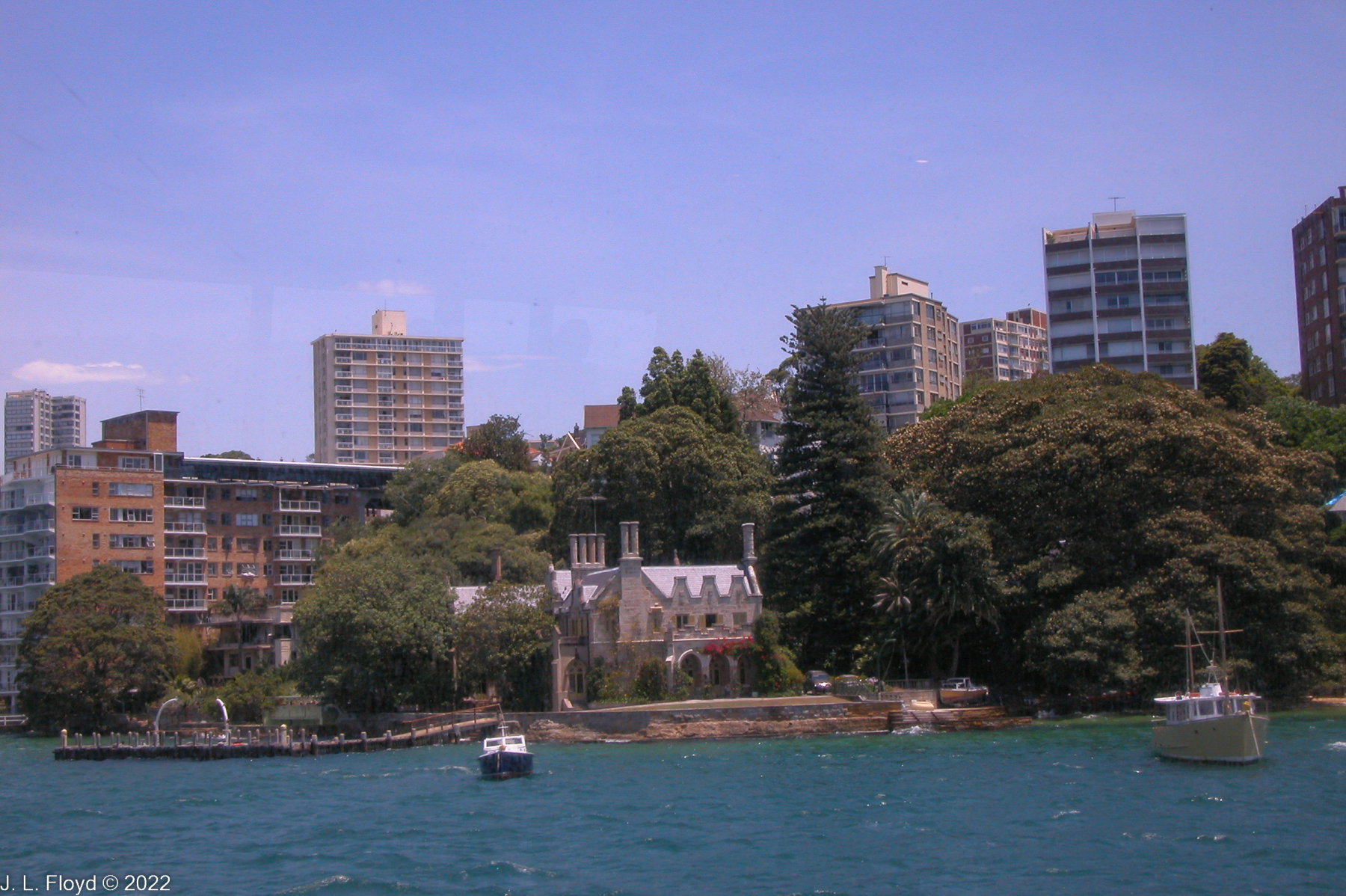
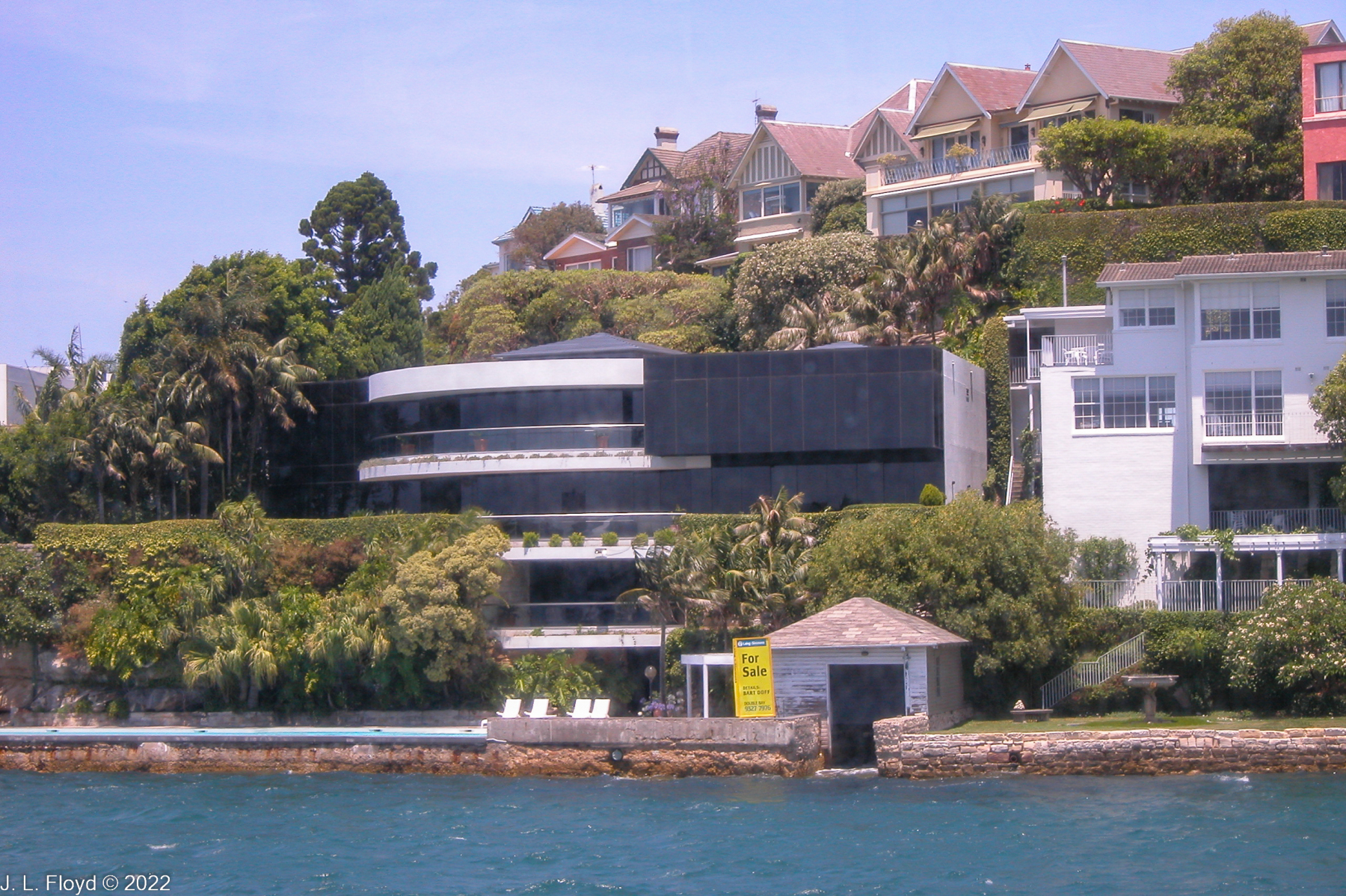
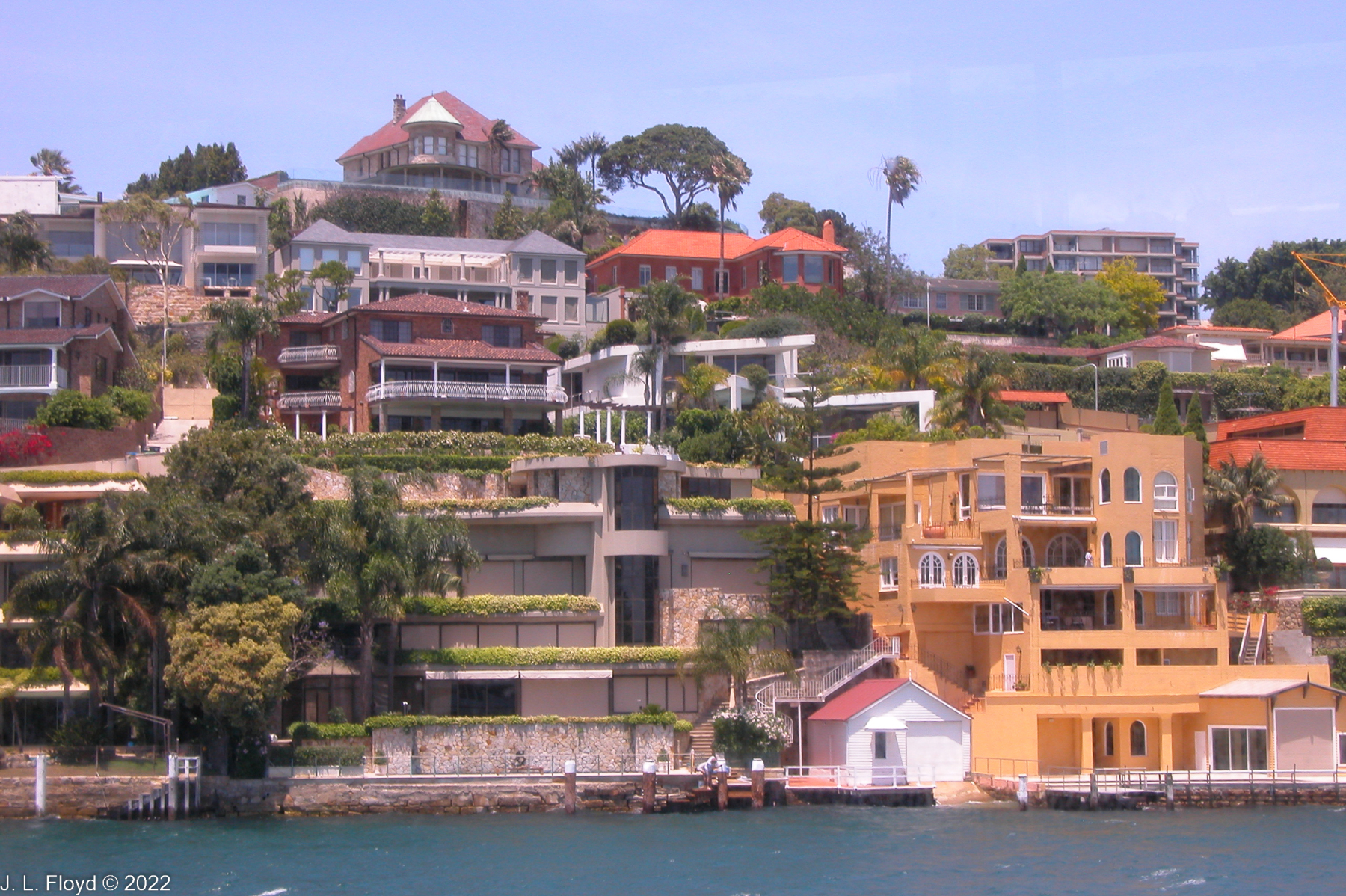
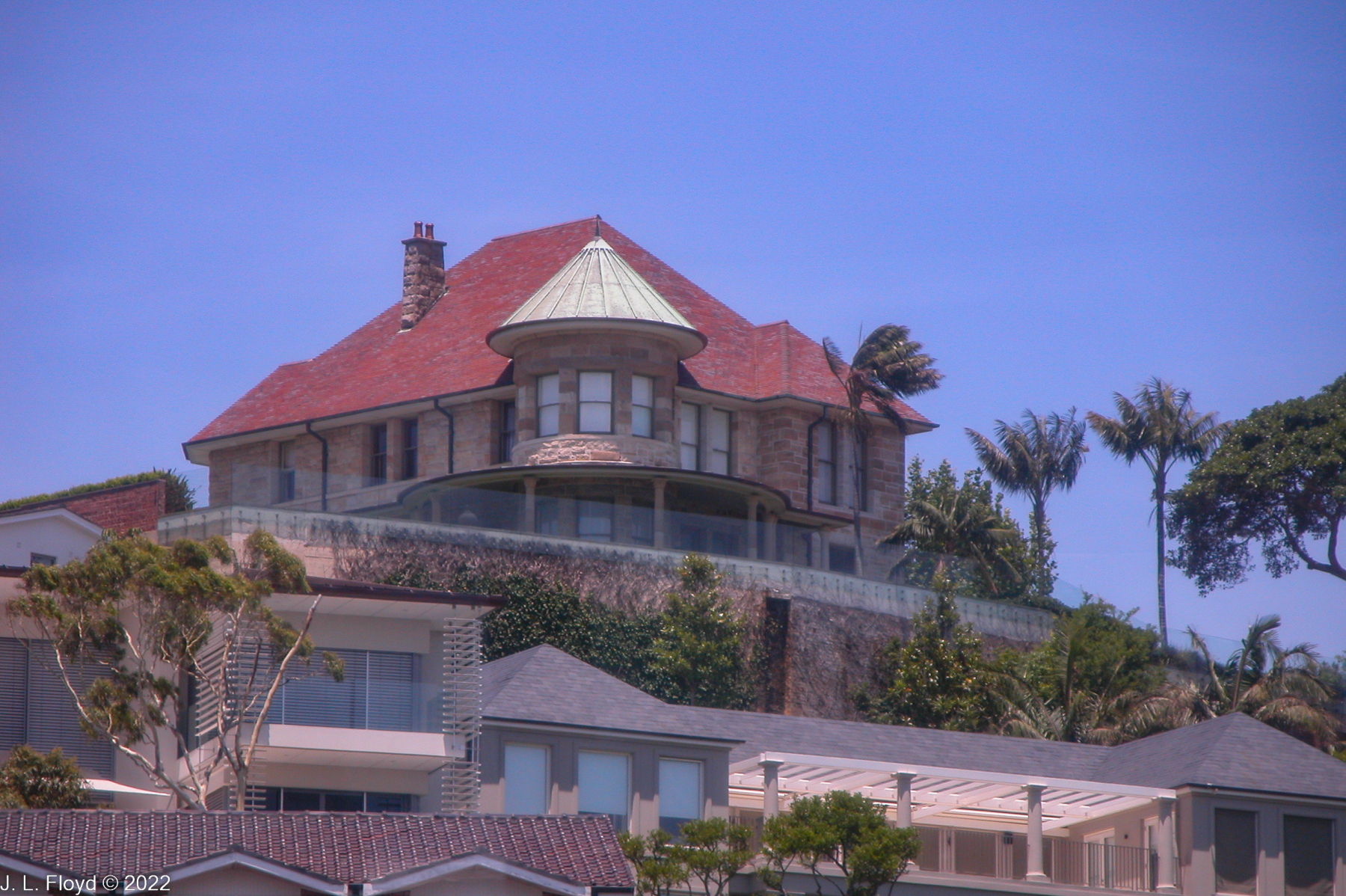
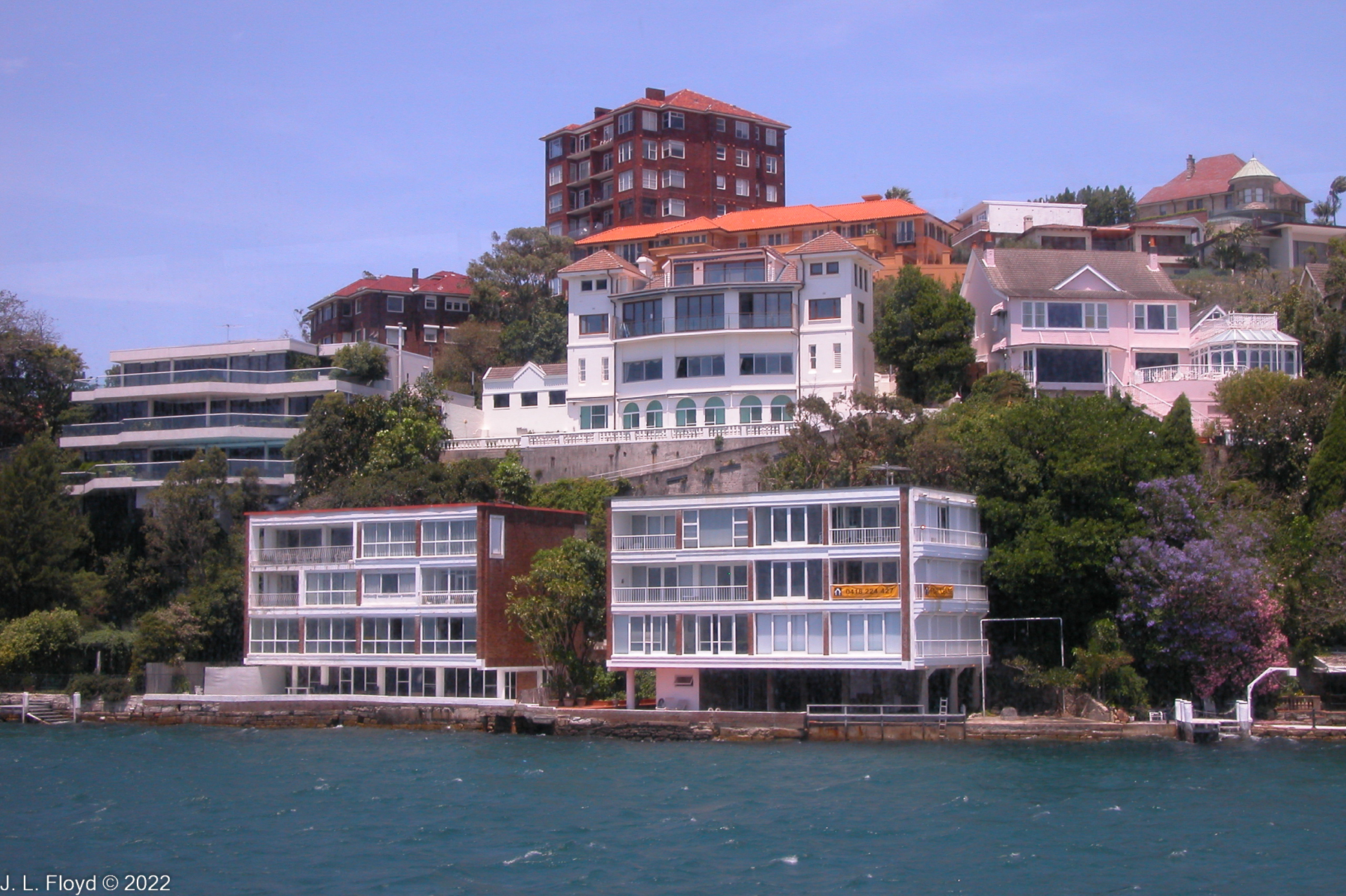
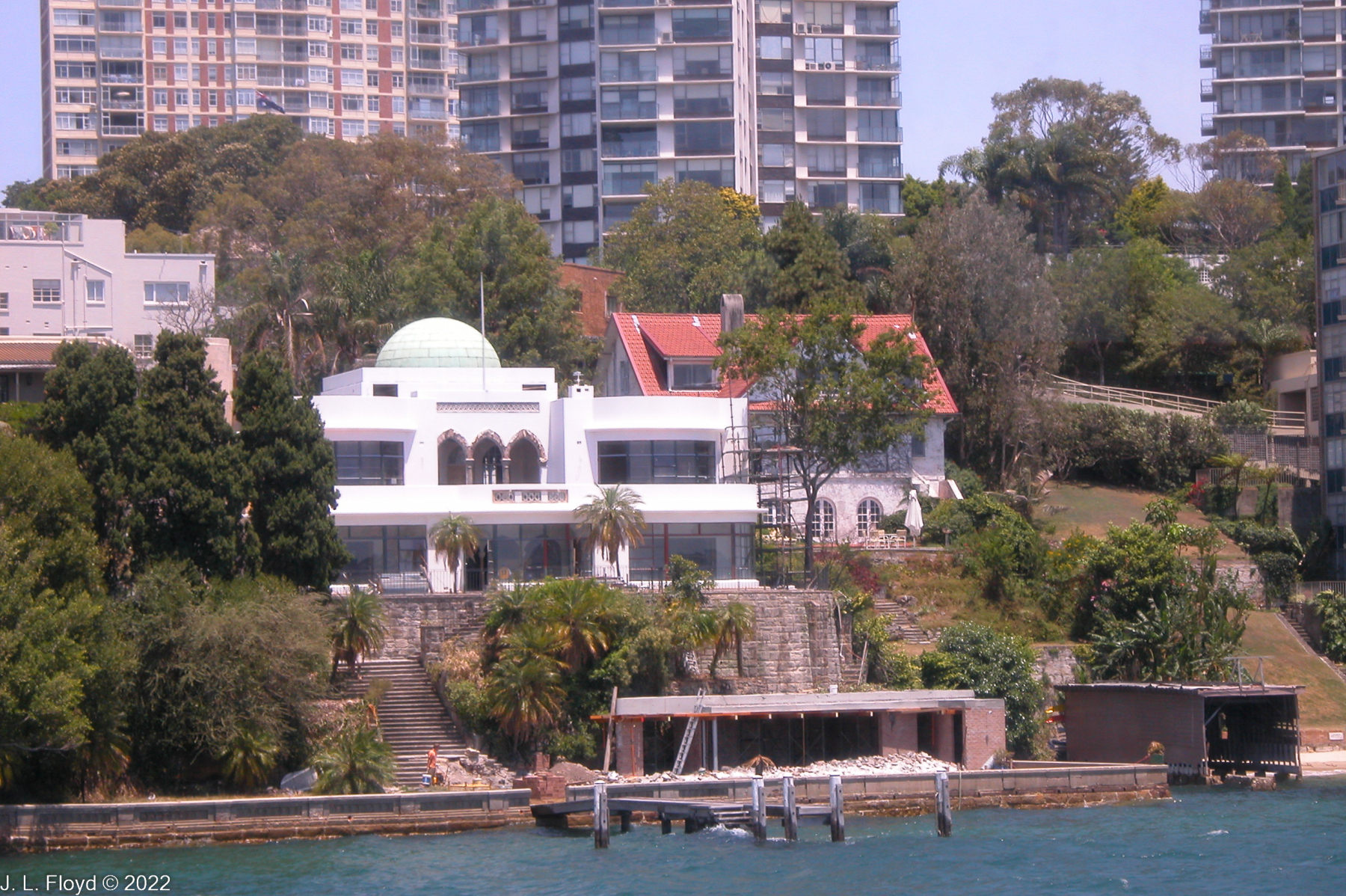
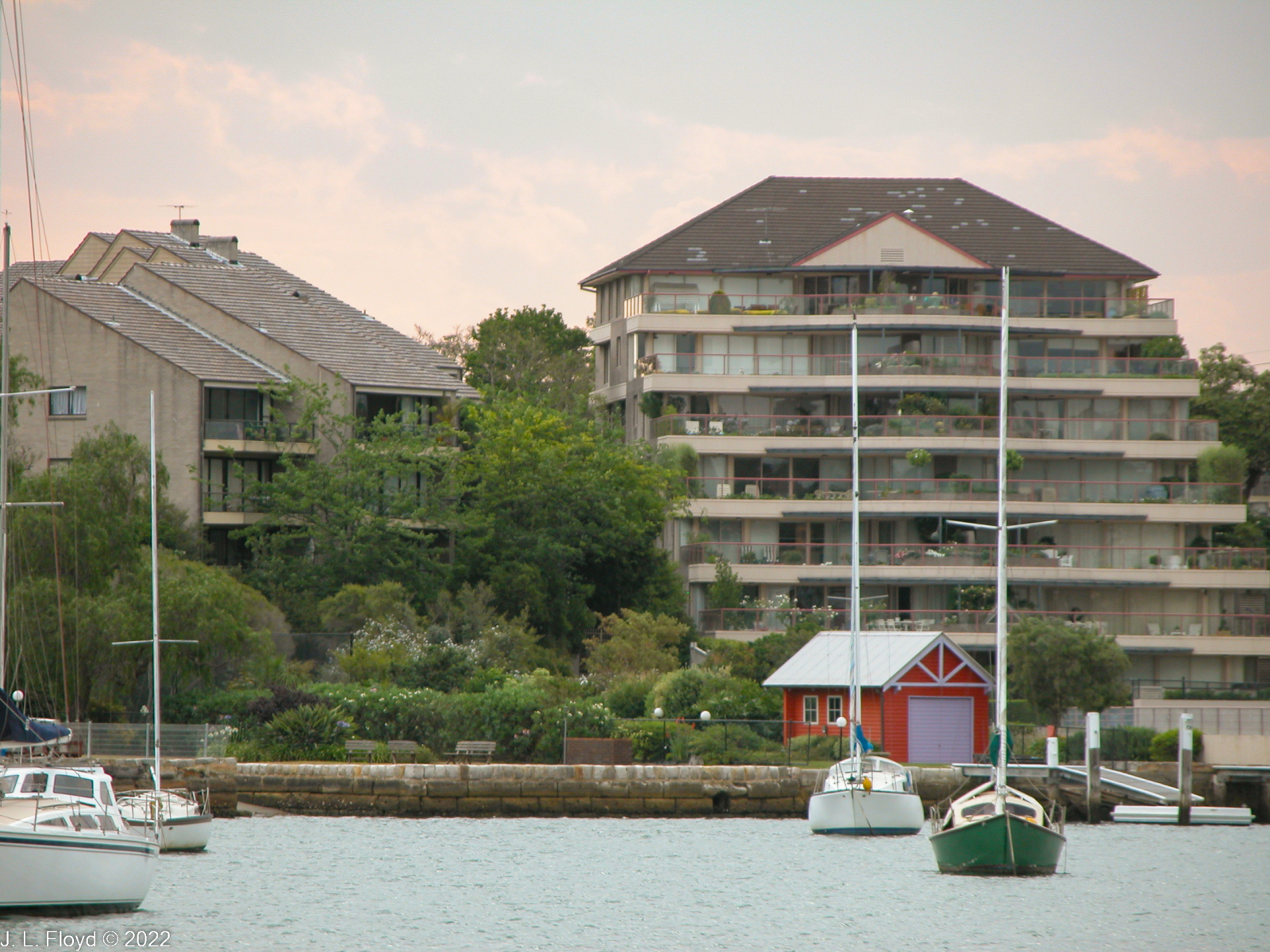
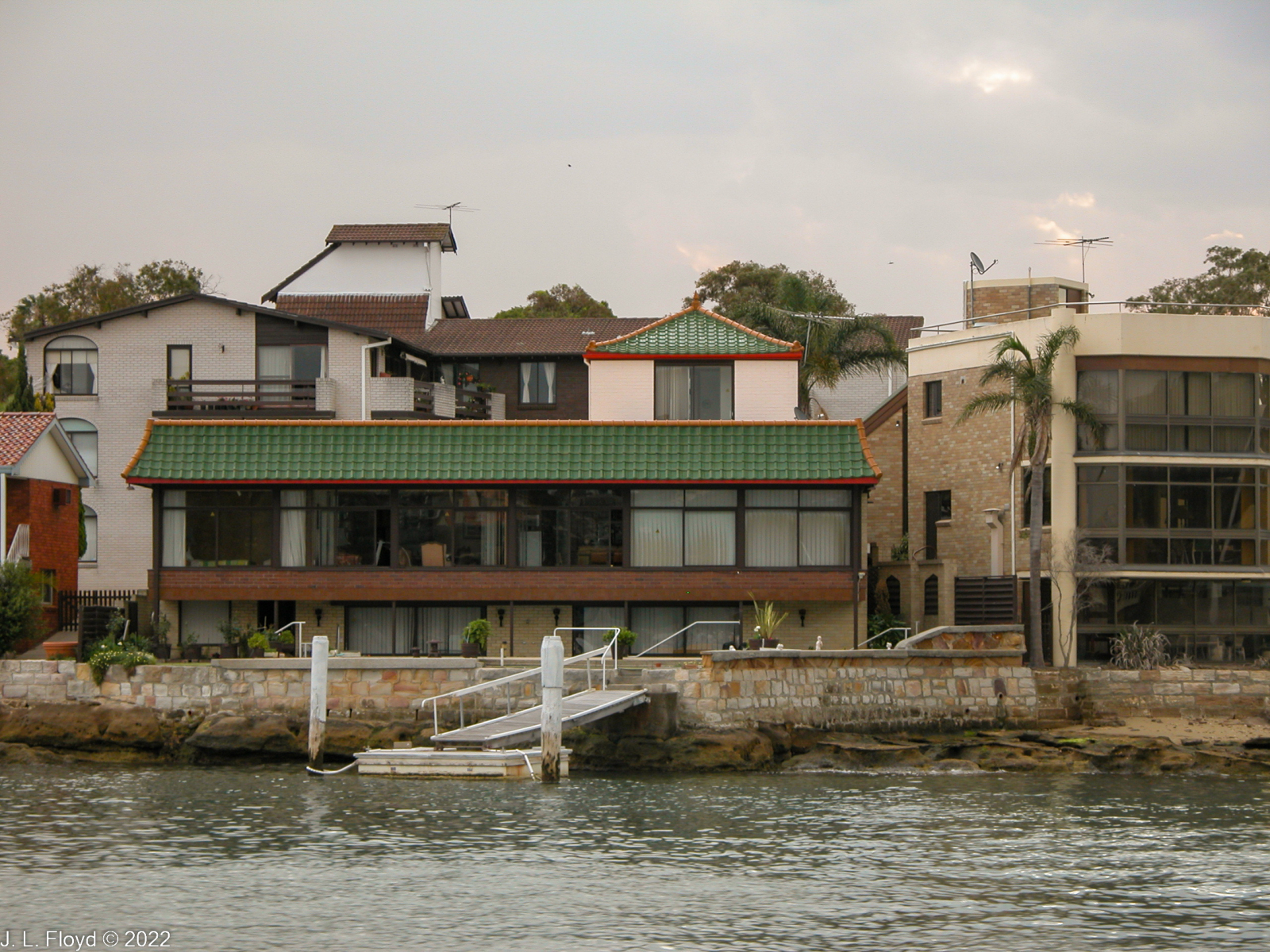
Sydney is one of the world’s ten or fifteen most expensive cities to live in, and the shores of Sydney Bay, lined with opulent residences, have some of the most pricey real estate in the world. Of course, many of these properties are right down on the waterfront and one wonders whether they will retain their value in an age of rising sea levels incurred by climate change.

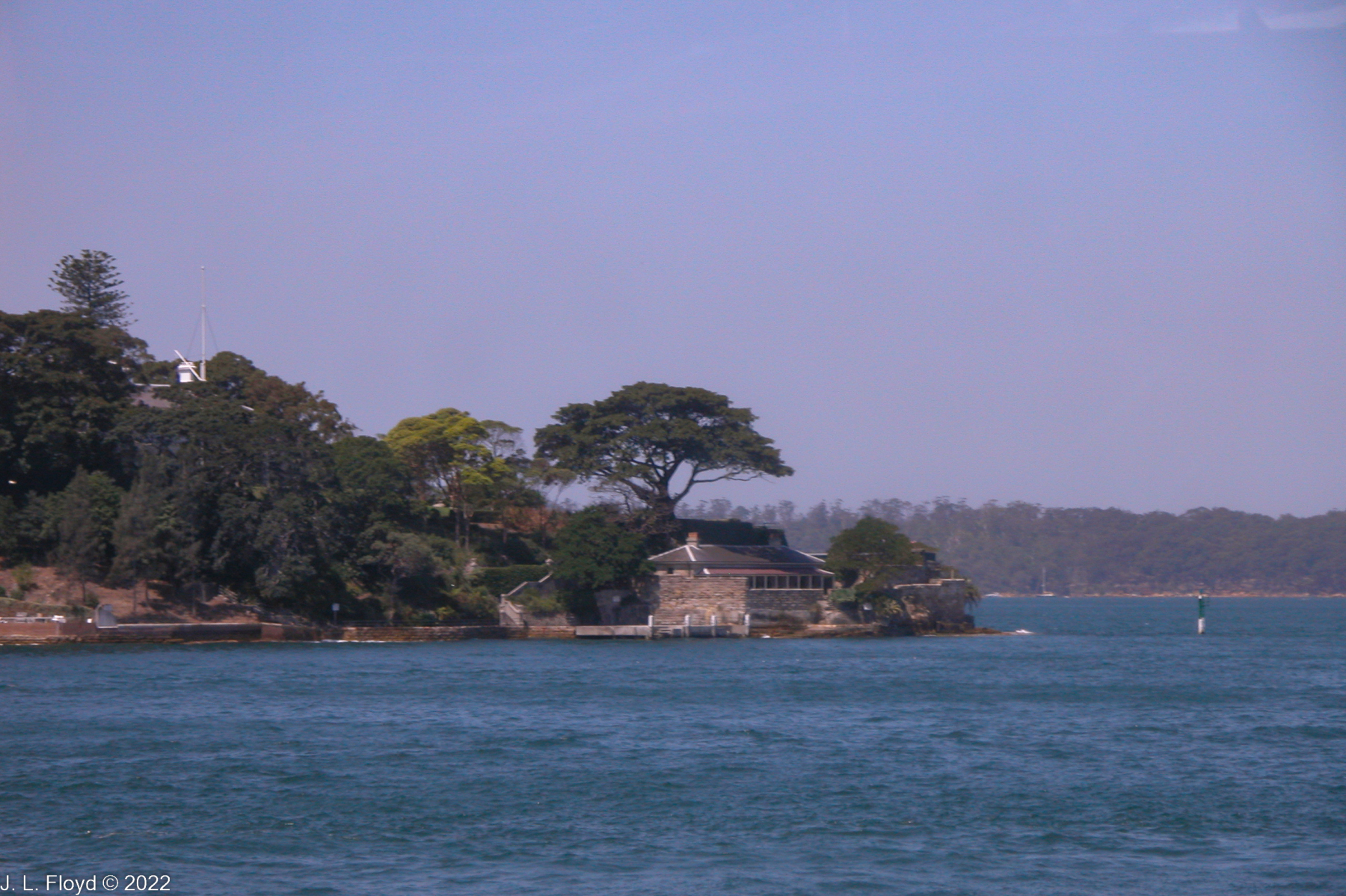
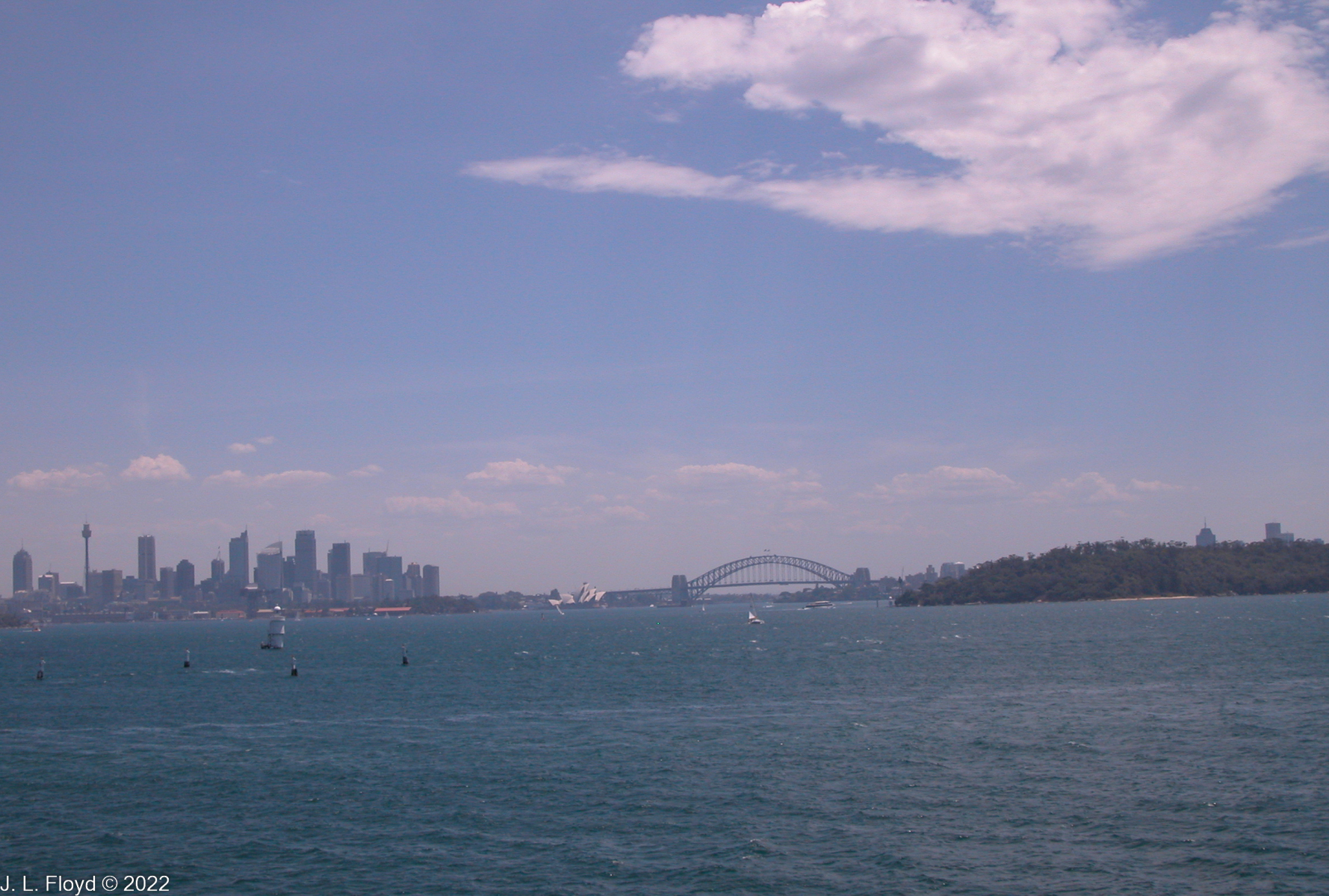
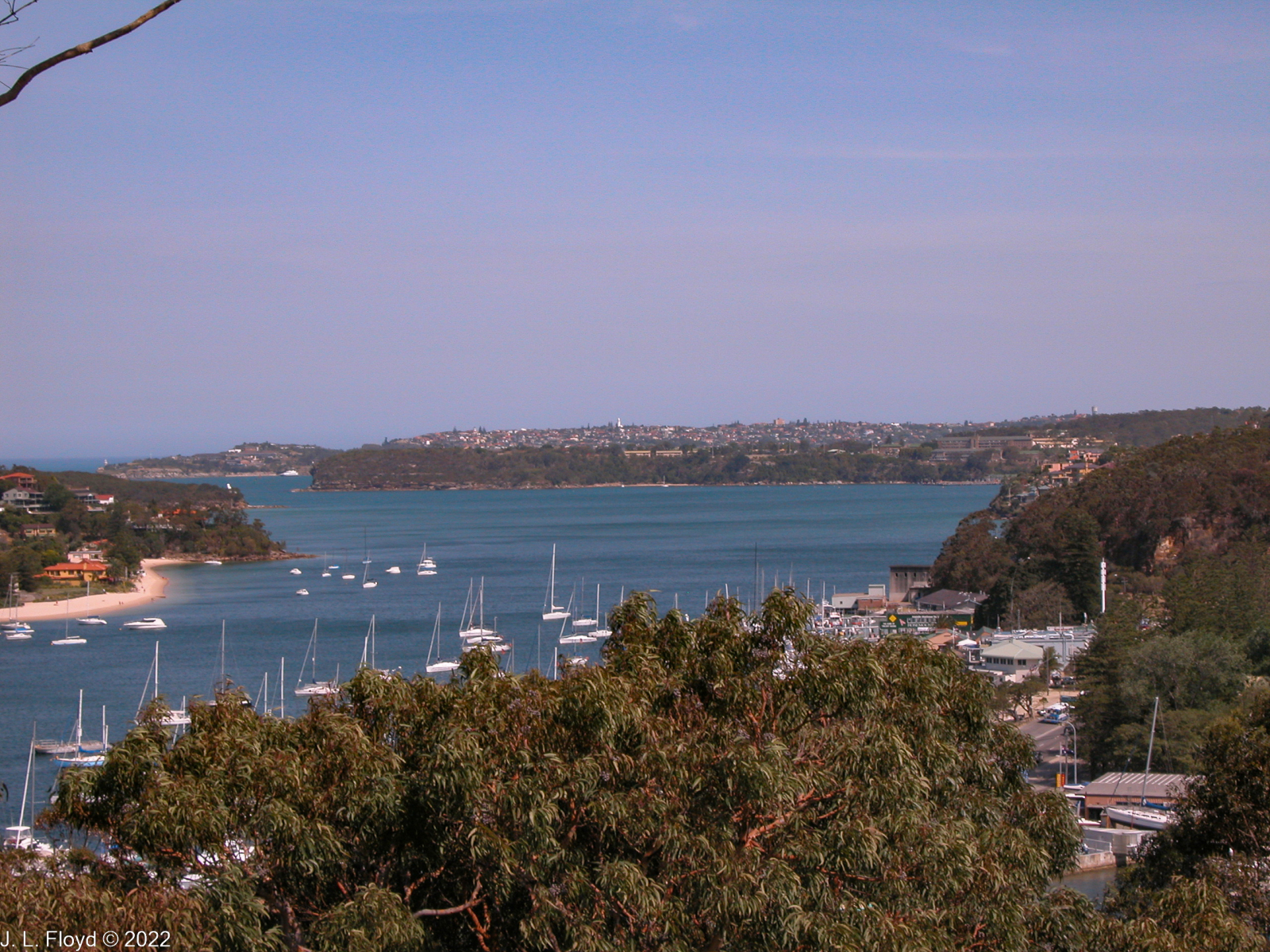
Our cruise boat took us along the southern shore of Sydney Bay to the east of the Harbor Bridge, almost to the mouth of Sydney Bay, then went to the north shore and circled back to the bridge. Here are scenes from the eastern circuit of the bay.

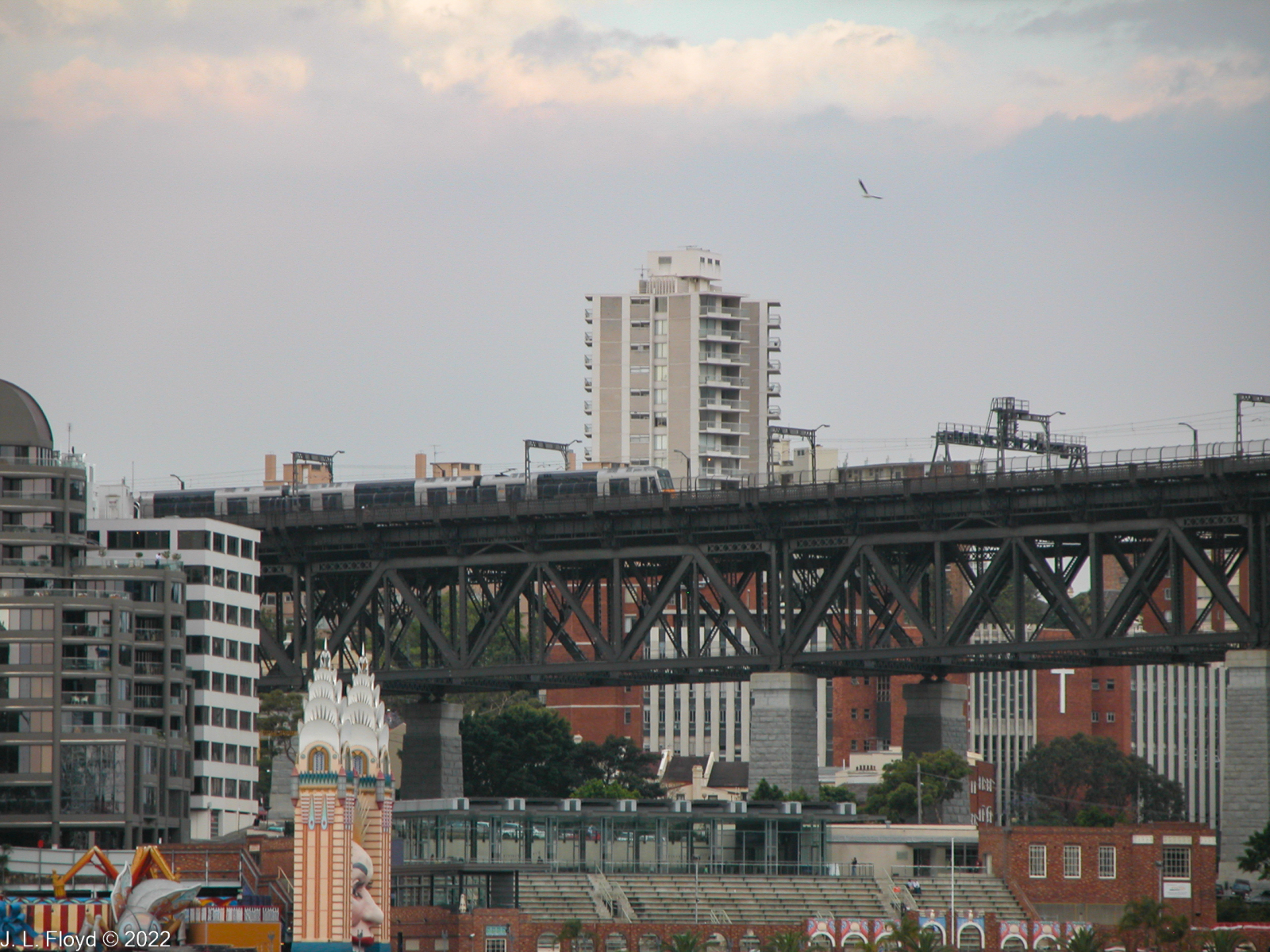
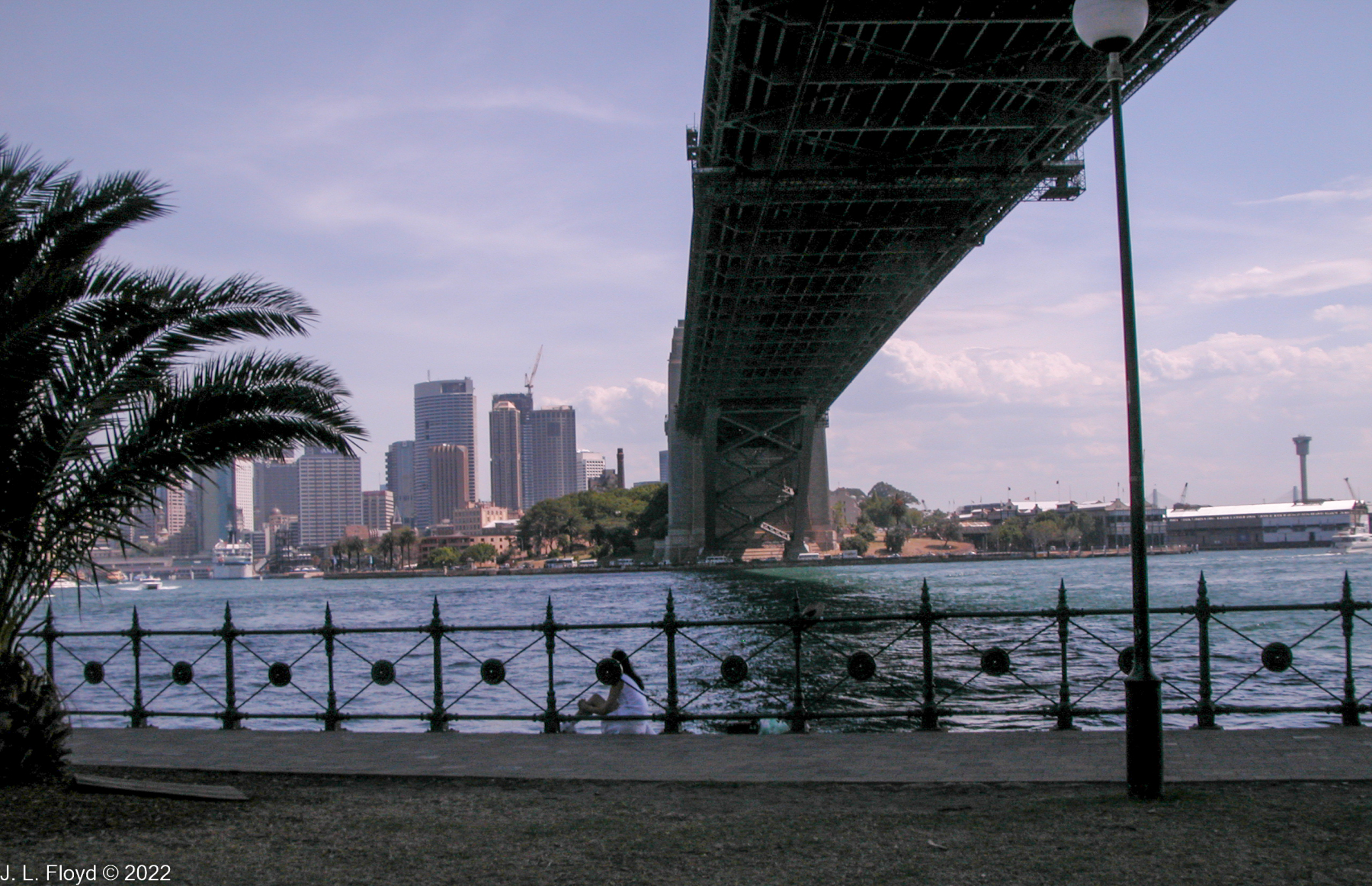
Entering the west part of Sydney Bay under the Harbor Bridge, our cruise boat hugged the north shore, giving us a close view of the north end of the bridge and the area nearby, known as Milson’s Point. This is the location of a famous amusement park, Luna Park, which opened in 1935. For many years it was one of Sydney’s premier attractions, but in 1979 a terrible catastrophe occurred, the Ghost Train Fire, in which six children and an adult were killed, leading to the closure of the park. It was rebuilt and reopened but continued to be troubled by financial and safety issues for years thereafter, resulting in further closures. At the time of our visit in December 2002, it was still inoperative, but a new redevelopment plan was underway which led to its reopening in 2004.
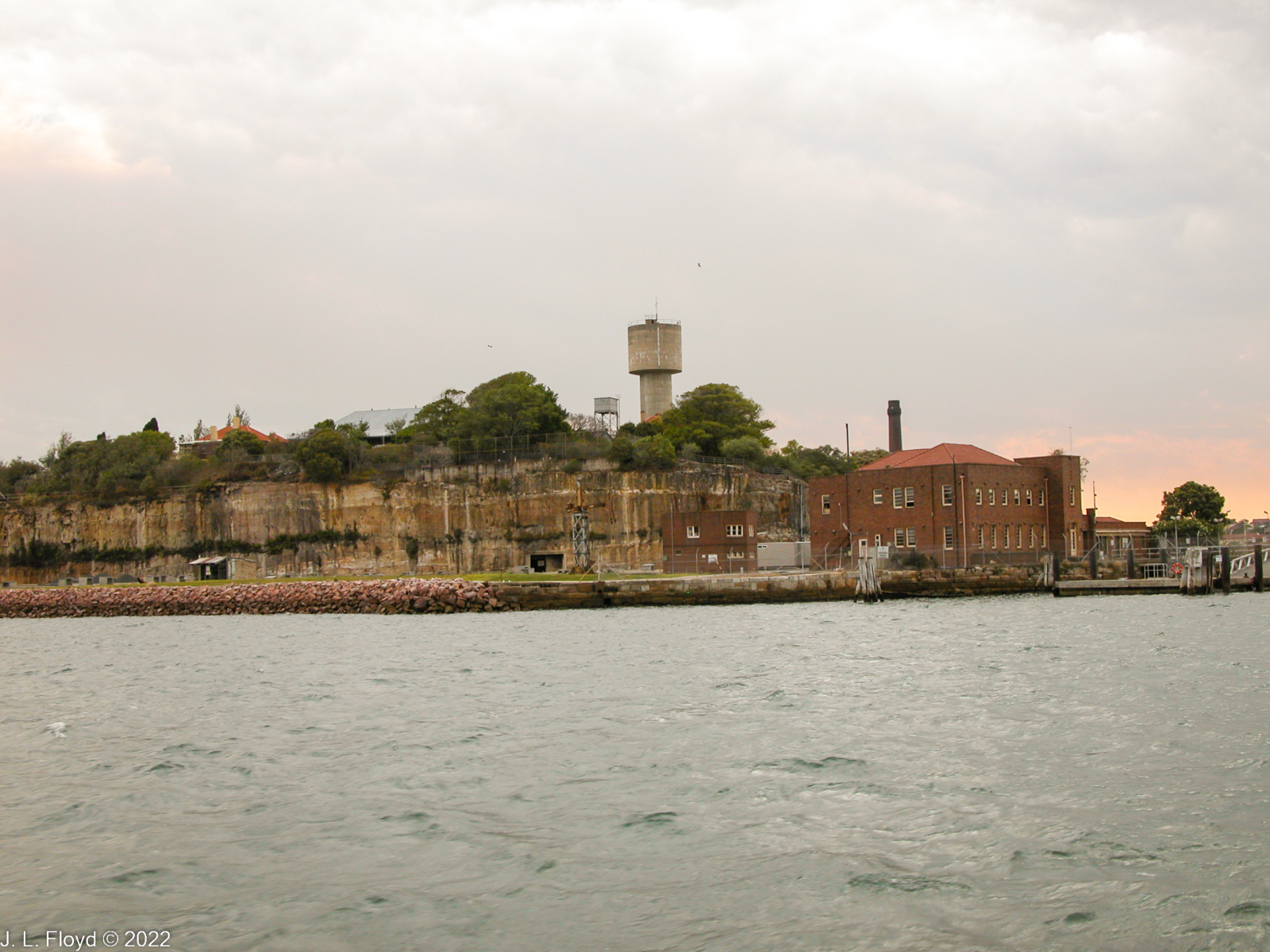
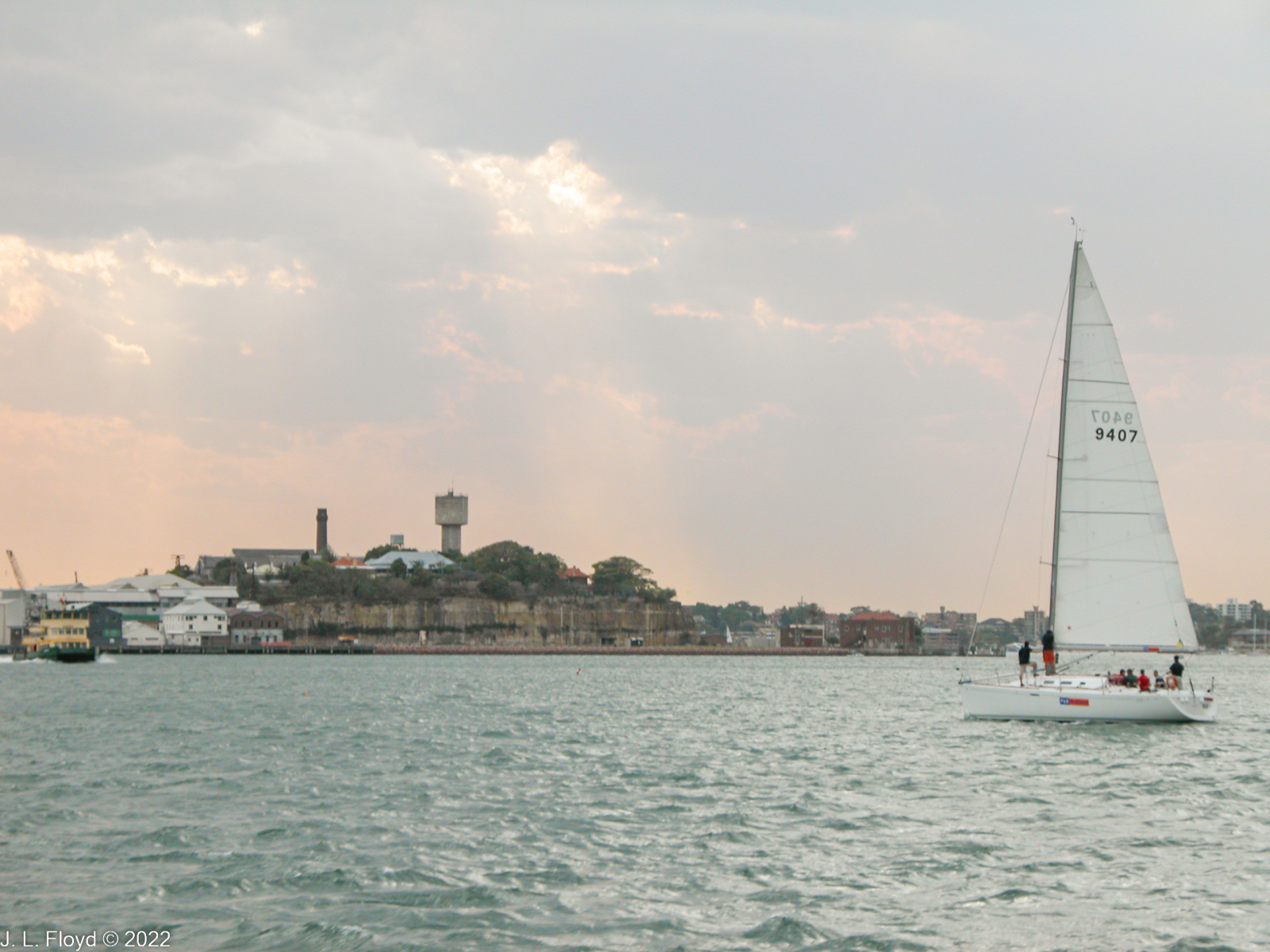
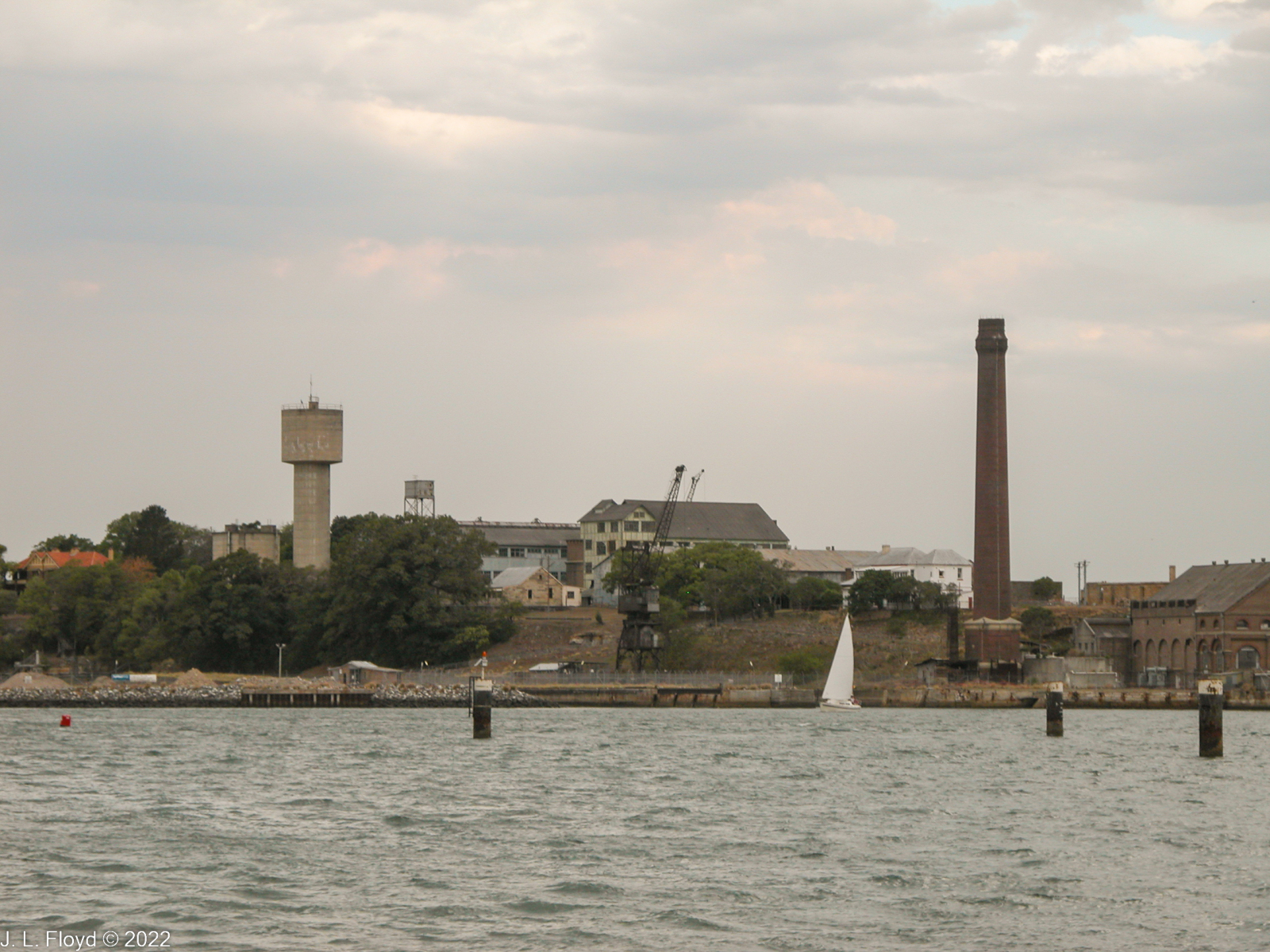
Our cruise boat next took us west to the confluence of the Parramatta and Lane Cove rivers, which join to form Sydney Bay. At the mouth of the Parramatta lies Cockatoo Island, the largest island in Sidney Harbor, which our cruise boat circled before heading back to Circular Quay. From 1839 to 1869 Cockatoo Island served as a prison, reserved for convicts who, having been transported to Australia as a punishment for crimes committed in Britain, were found guilty of new offenses in Australia. In 1857 the convicts housed there were pressed into service to start building a shipyard, which eventually became one of Australia’s largest shipbuilding facilities and remained in operation until 1991. Since the shipyard closed, Cockatoo Island has become a site for camping, art festivals and other cultural events, and historical exhibits.

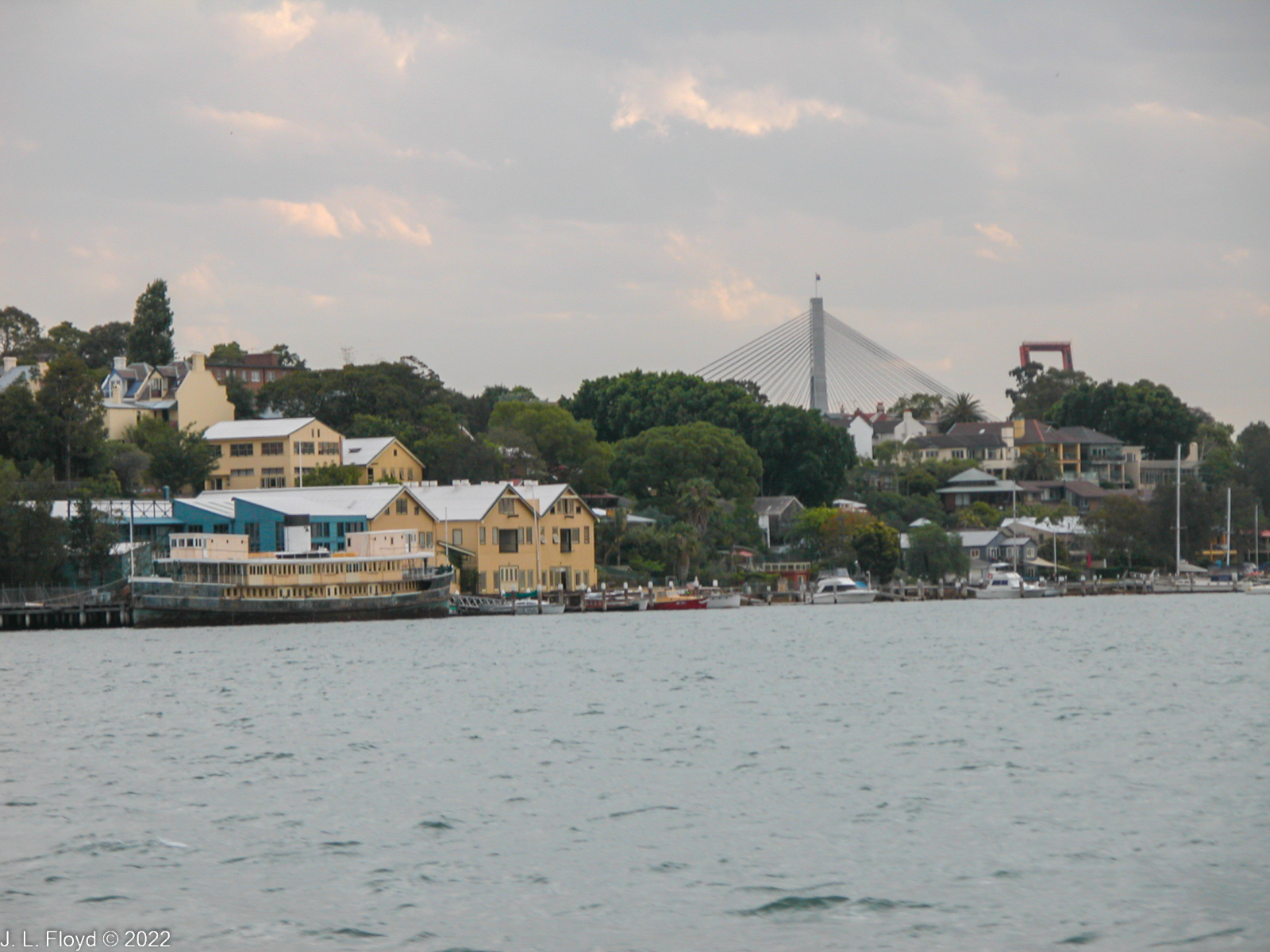
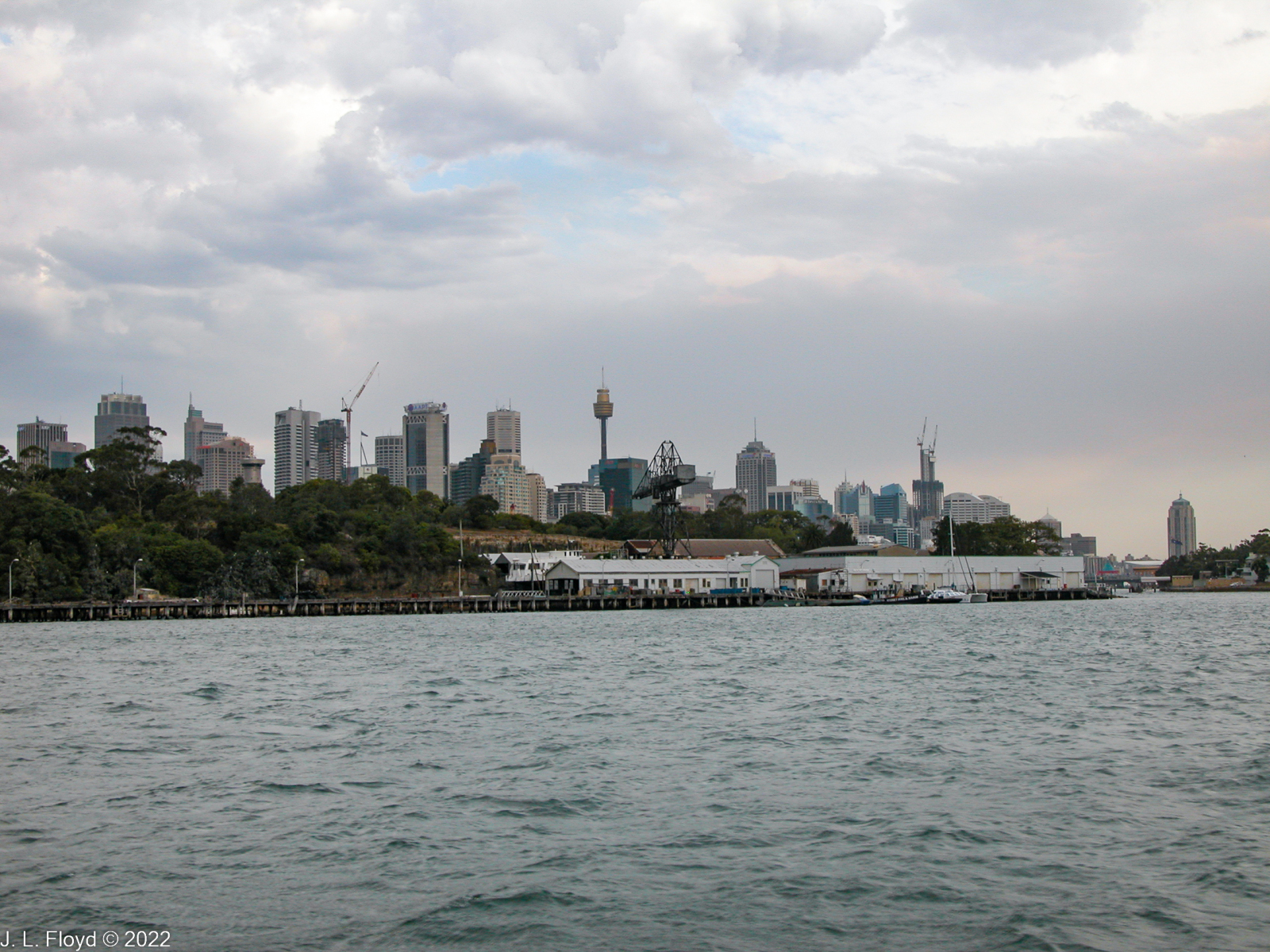
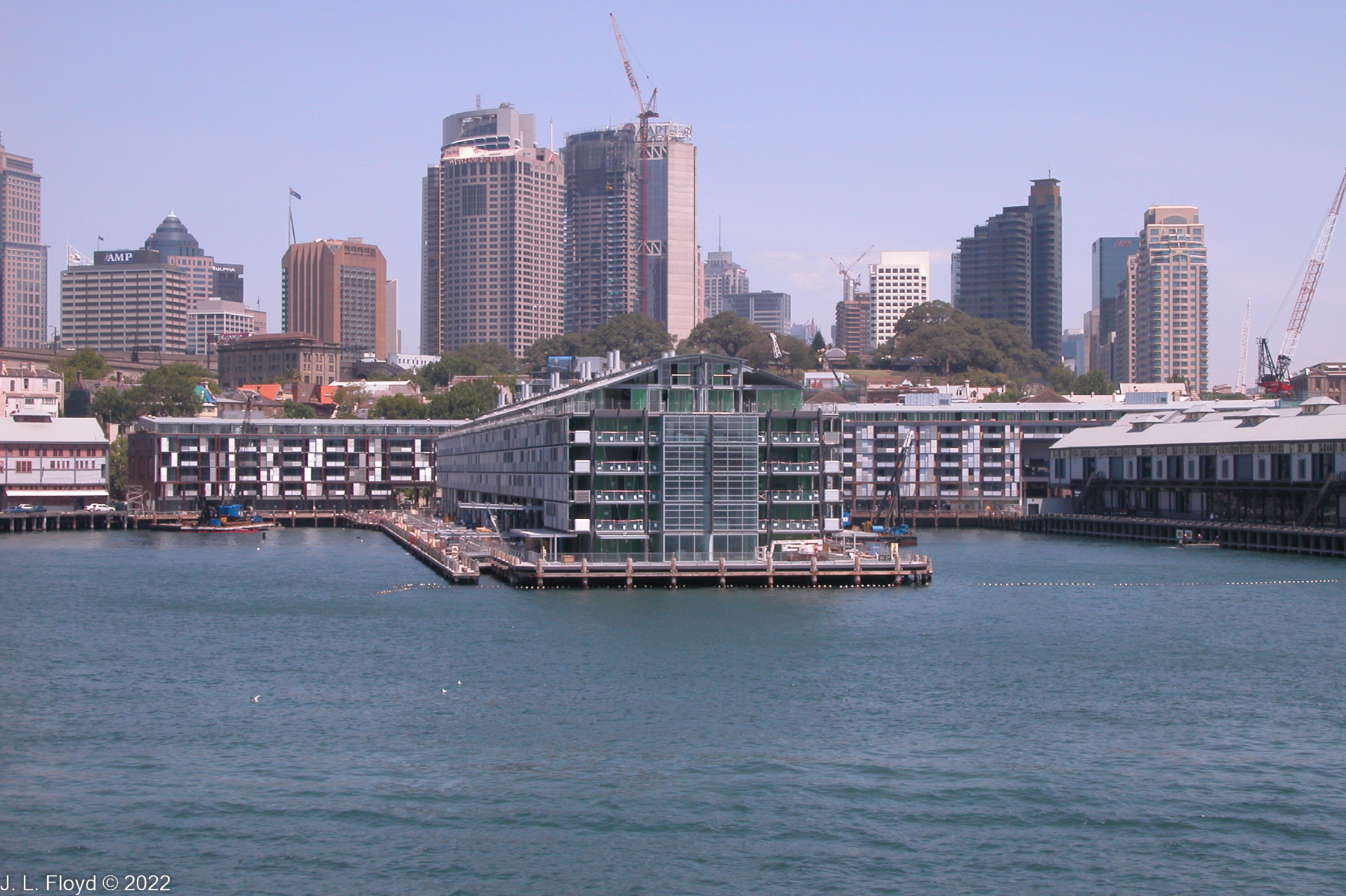
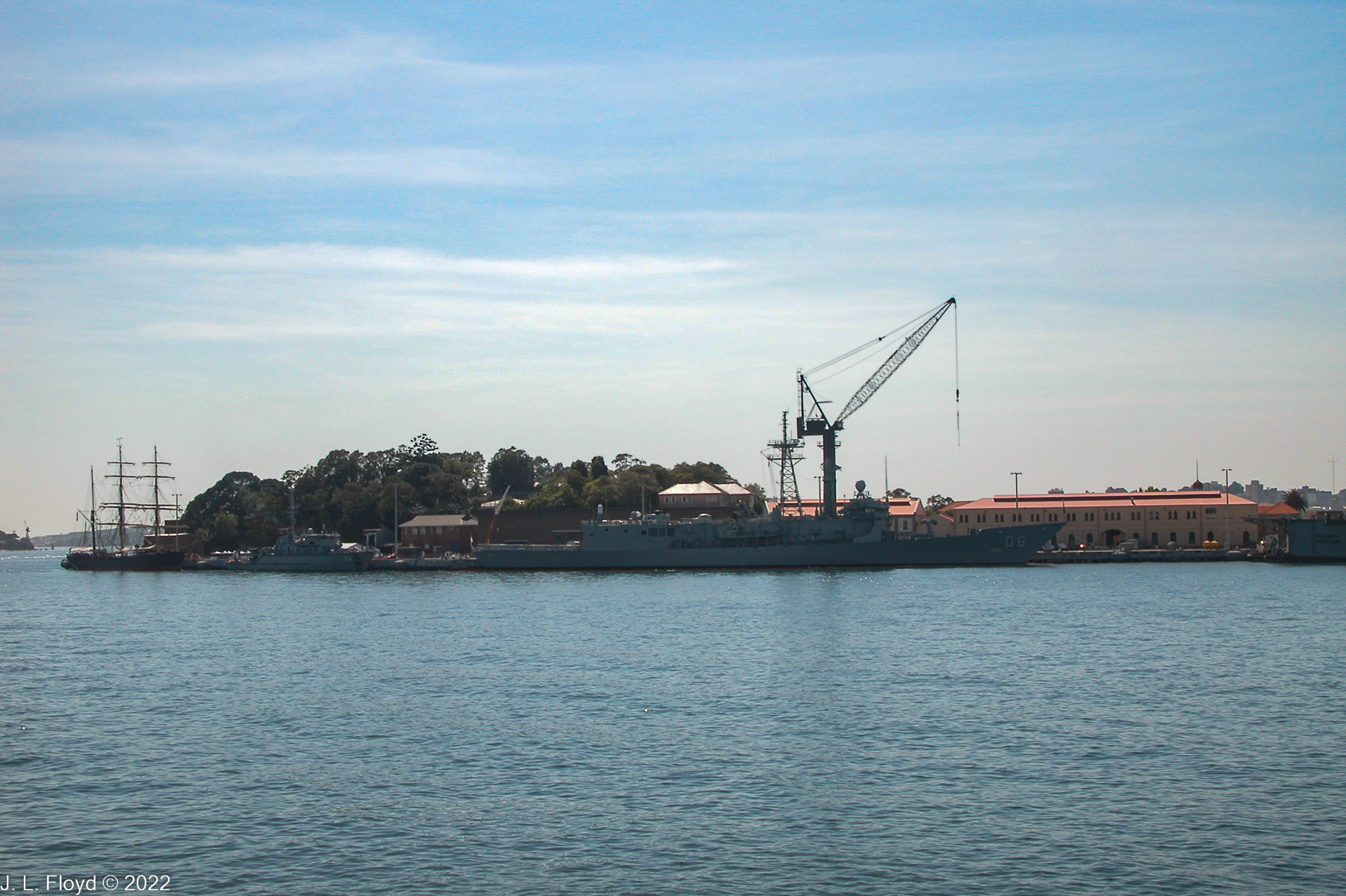
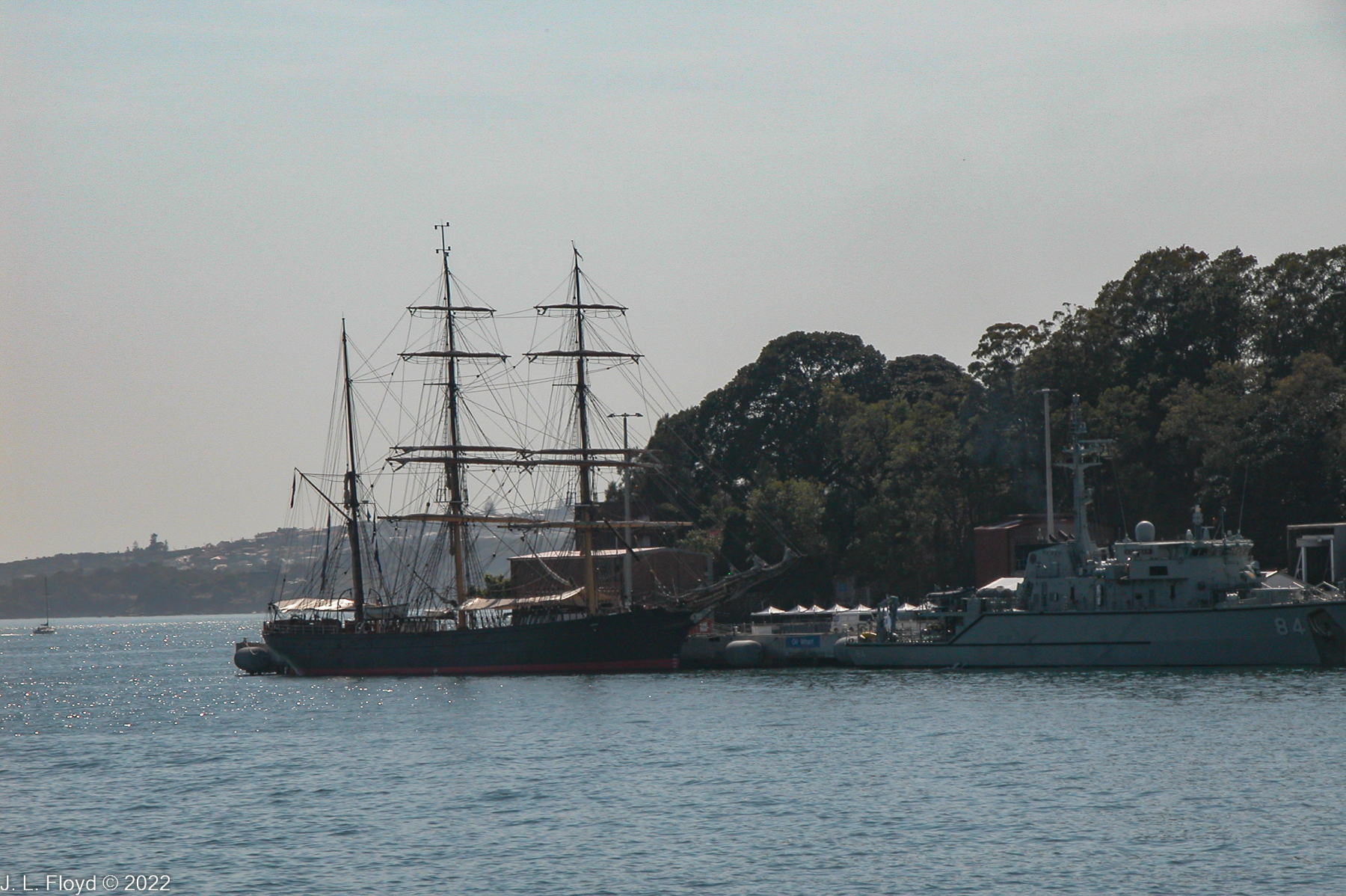
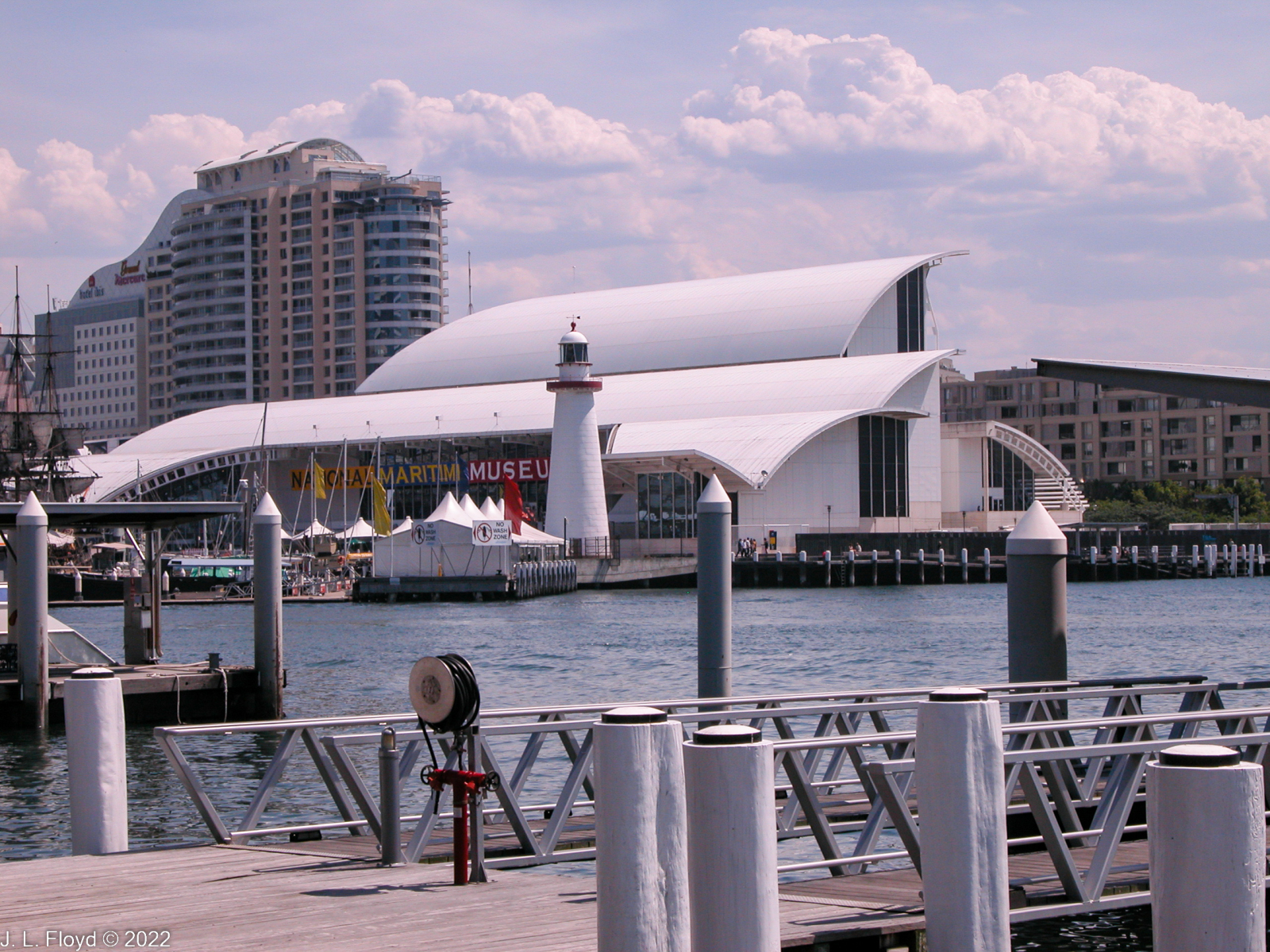
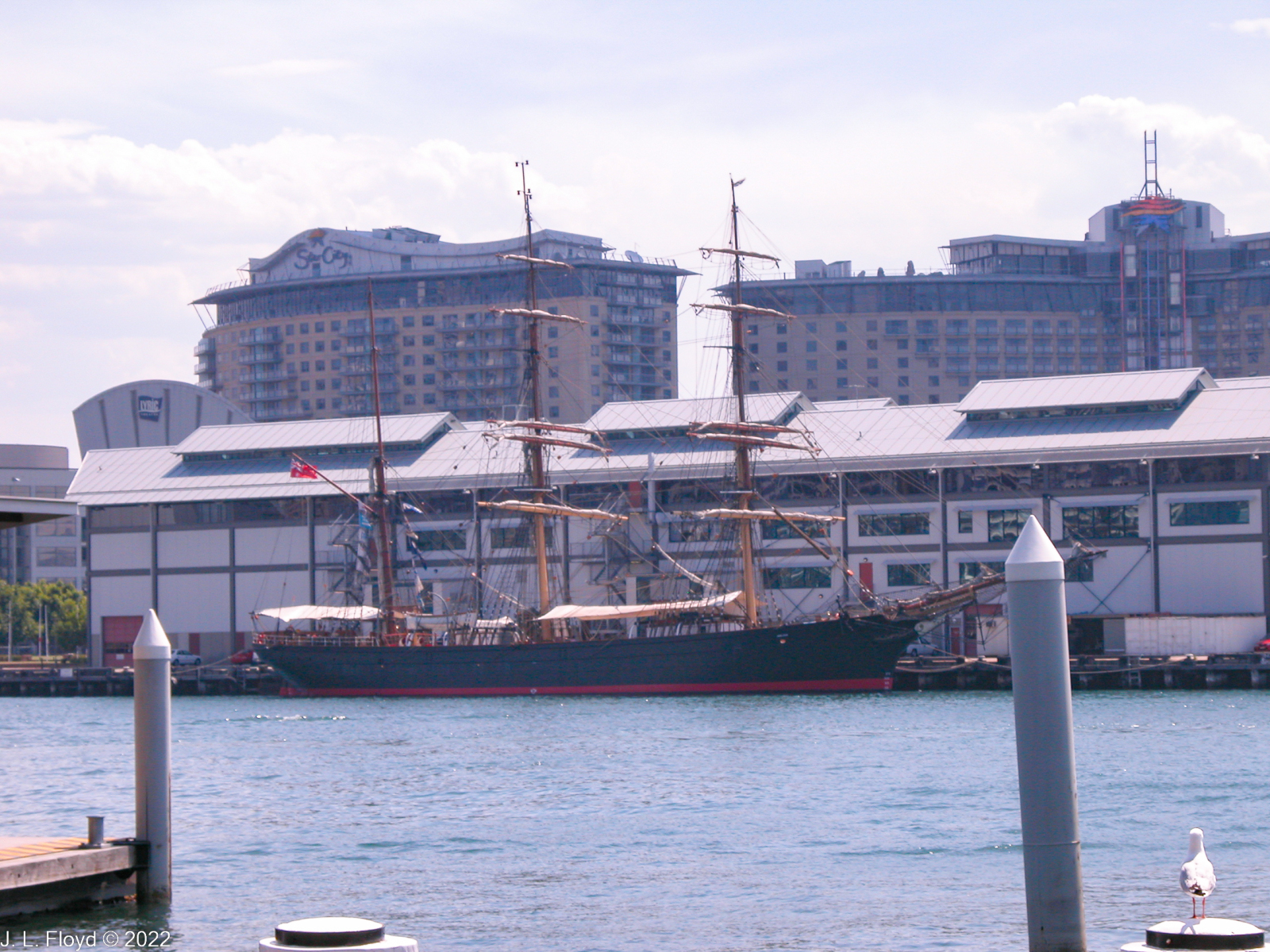
Our route back from Cockatoo Island took us past some of Sydney’s most engaging sights and attractions. On Balmain Peninsula we saw a group of colorful buildings known as the Waterview Wharf Workshops, formerly the location of a ship repair yard, which have been preserved as a prime example of industrial maritime architecture and now house a variety of creative businesses. Passing Jones Bay Wharf, another restored port landmark, we entered Darling Harbor, the site of some of Sydney’s major attractions. One of them is the Australian National Maritime Museum, opened in 1991. It serves as home-port to a number of historic vessels, such as a replica of the bark Endeavor, which Captain James Cook sailed in to chart the eastern coast of Australia and New Zealand. I shot a picture of a large three-masted sailing ship docked at the museum which I thought was the Endeavor replica, but I later discovered that it did not arrive in Sydney until 2005; the ship turned out to be an original 19th-century barque (not a replica), the James Craig. Opposite the museum on the other side of Darling Harbor is King Street Wharf, a picturesque waterfront promenade with restaurants and shops, and just to the south of it is Sea Life Sidney Aquarium.

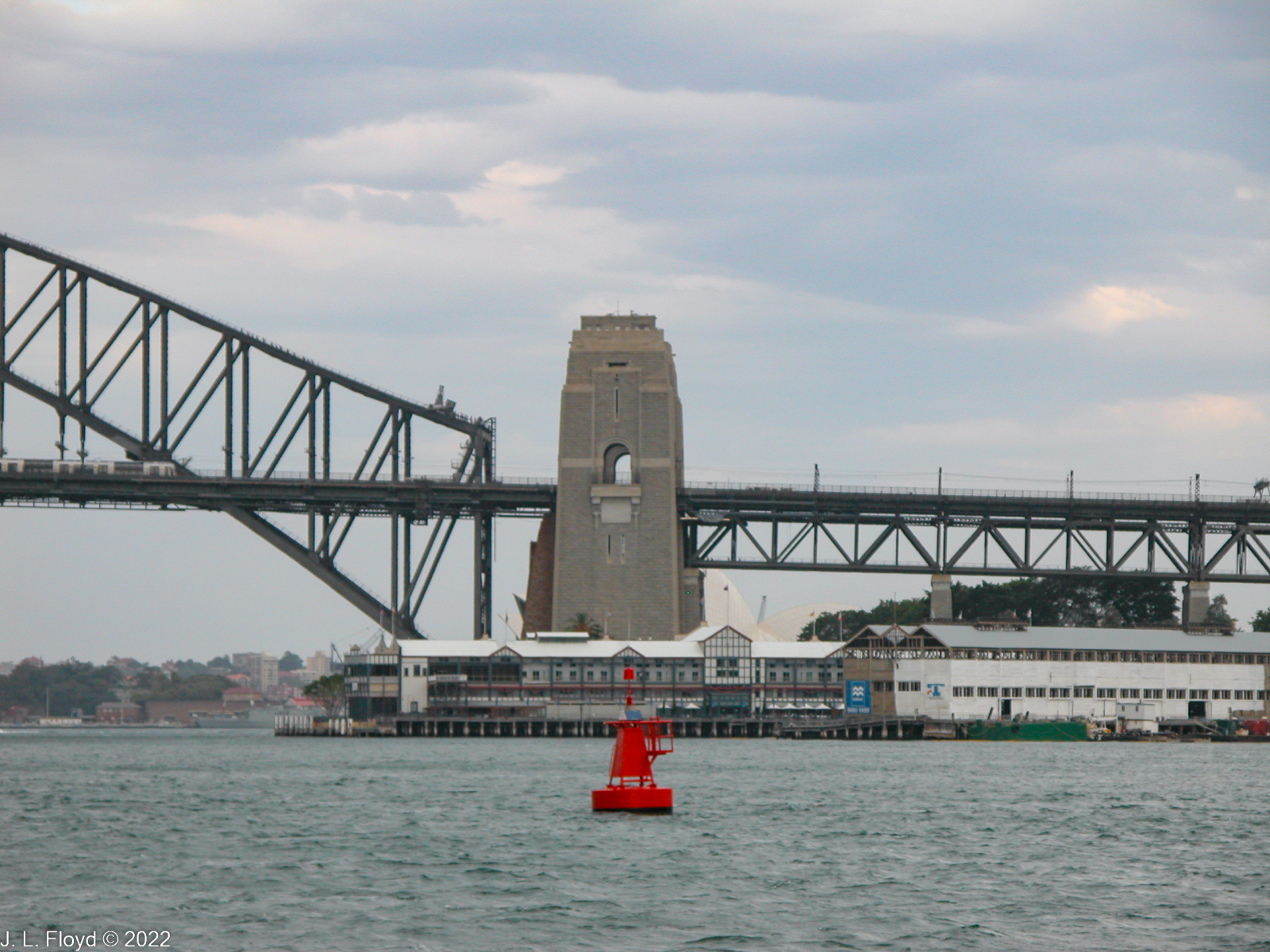
Emerging from Darling Harbor at Millers Point, we cruised past Walsh Bay, next to Sydney Harbor Bridge, another historic port area now transformed into a playground with theaters, restaurants, bars and shops, before returning to dock at Circular Quay.

After completing the cruise, we had dinner at a restaurant at King Street Wharf, where we were introduced to barramundi, a white-fleshed fish that is also known as Asian sea bass and is absolutely delicious. After that we dined on barramundi whenever we could.

Categories
Australia, November-December 2002

Sydney Bus Tour, November 25, 2002 (North)

After completing the southern segment of the tour, our bus took us across the Harbor Bridge to North Sydney, where we were able to get some nice views and photos of the Central Business District with its skyscrapers and Sidney Tower, as well as the Opera House and Darling Harbour.

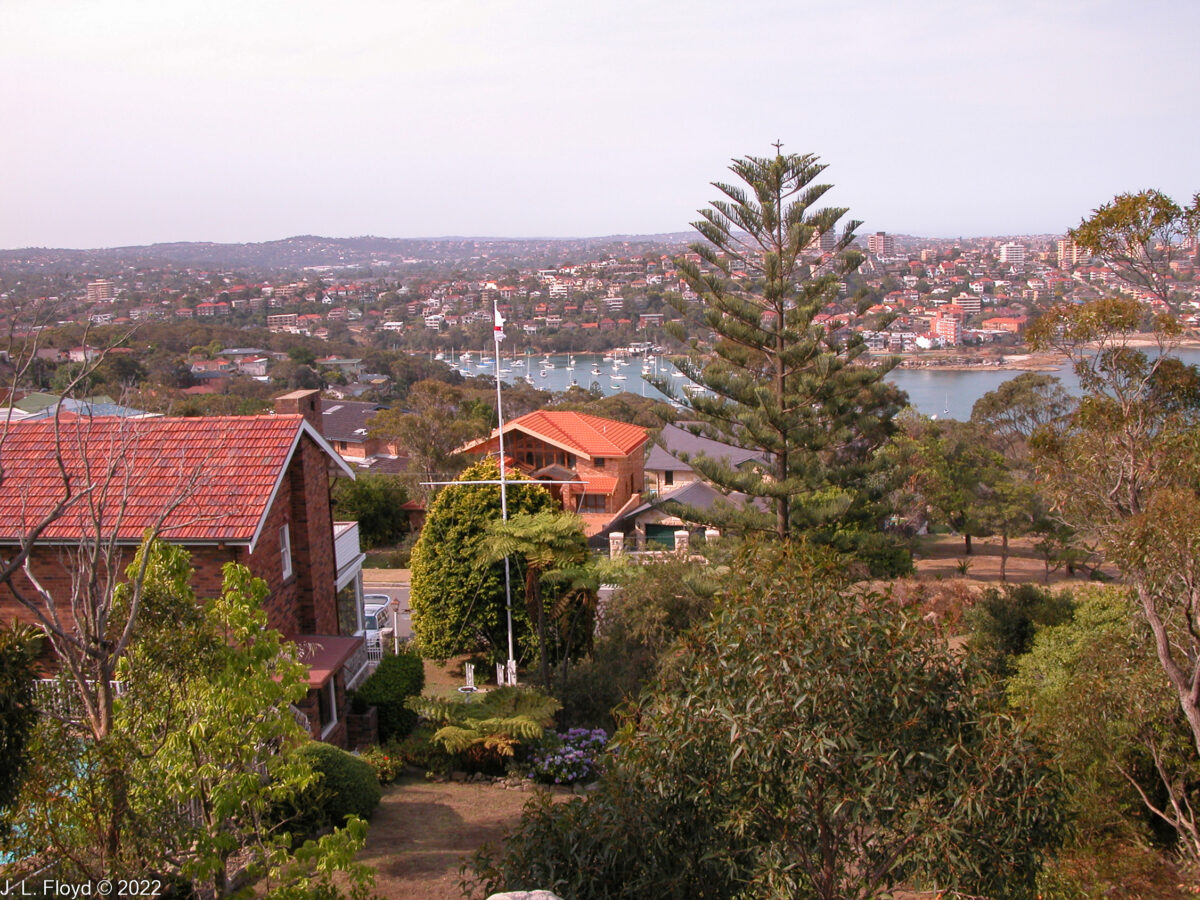
The north shore of Sydney Harbor is more suburban and residential than the south, but no less picturesque. Our tour bus took us to several vantage points from which we were able to obtain fabulous views of the harbor area, while the driver continued to regale us with tales from the history of the city and point out examples of local color.

At one of the stops, Arabanoo Lookout, we learned about Arabanoo, the first Australian aborigine to live among Europeans. In 1788, the first year of the colony’s settlement, relations between the settlers and the aborigines were going very poorly, and Admiral Arthur Philip, the first governor of New South Wales, decided that radical measures needed to be taken to improve communications between them. The means by which he chose to accomplish this was to forcibly kidnap a native and teach him English. Arabanoo, who became the unwilling object of his attentions, was about 30 years old. Phillip’s heavy-handed experiment was not a success; Arabanoo did not learn much English, relations with the aborigines continued to deteriorate, and after six months he died of smallpox, which also spread to the rest of the aborigine population, killing about 2000 of them.

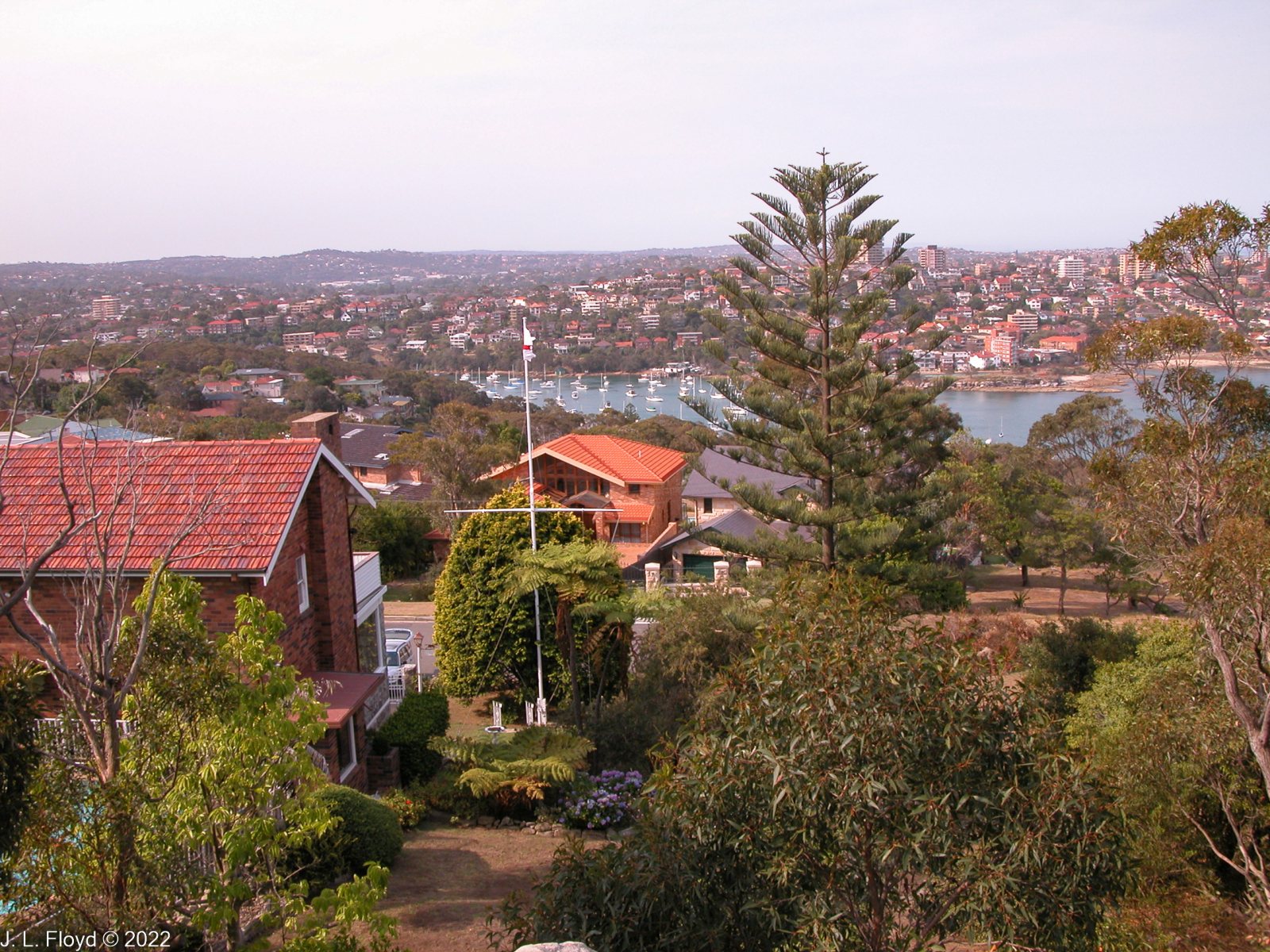
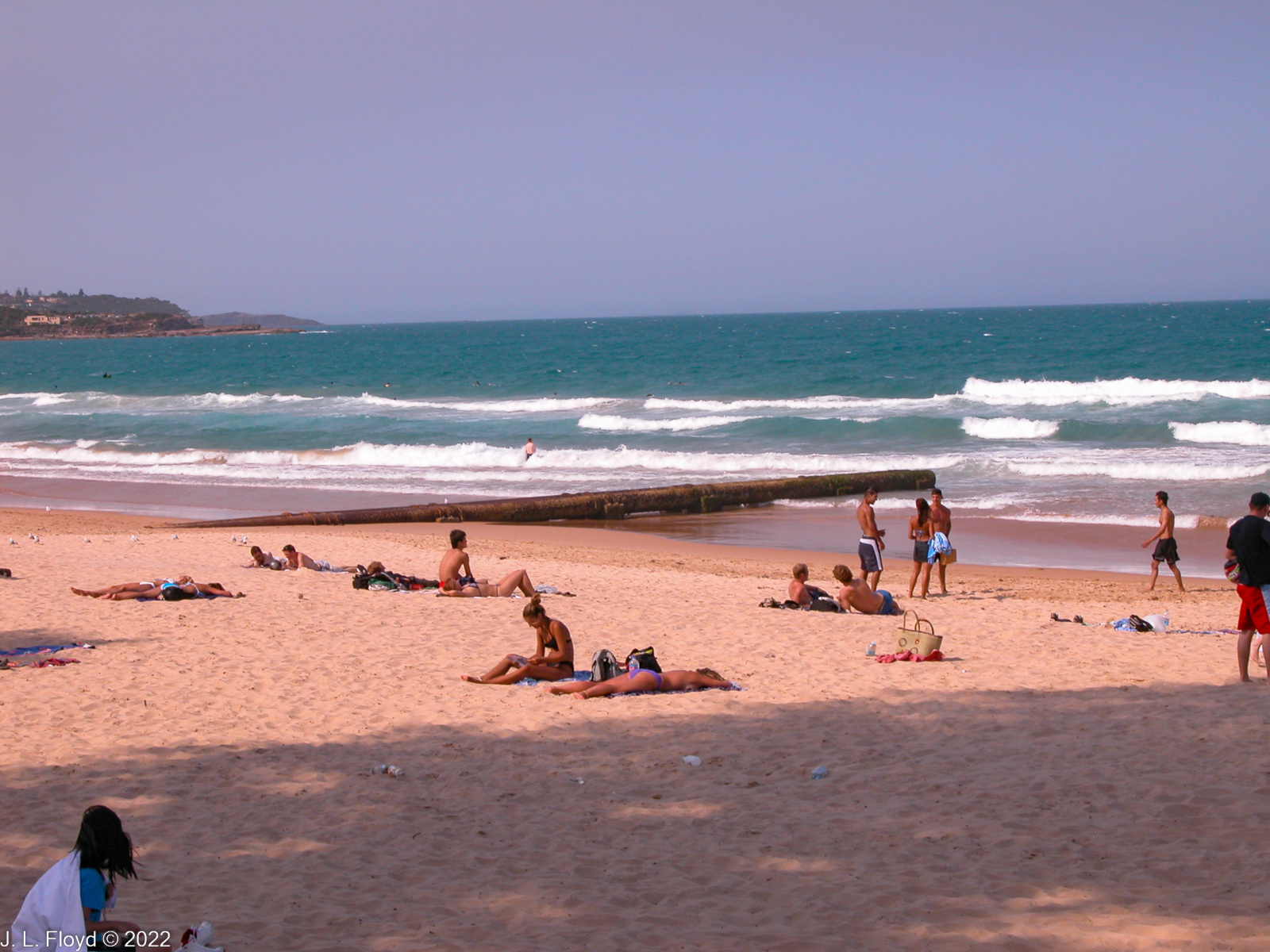
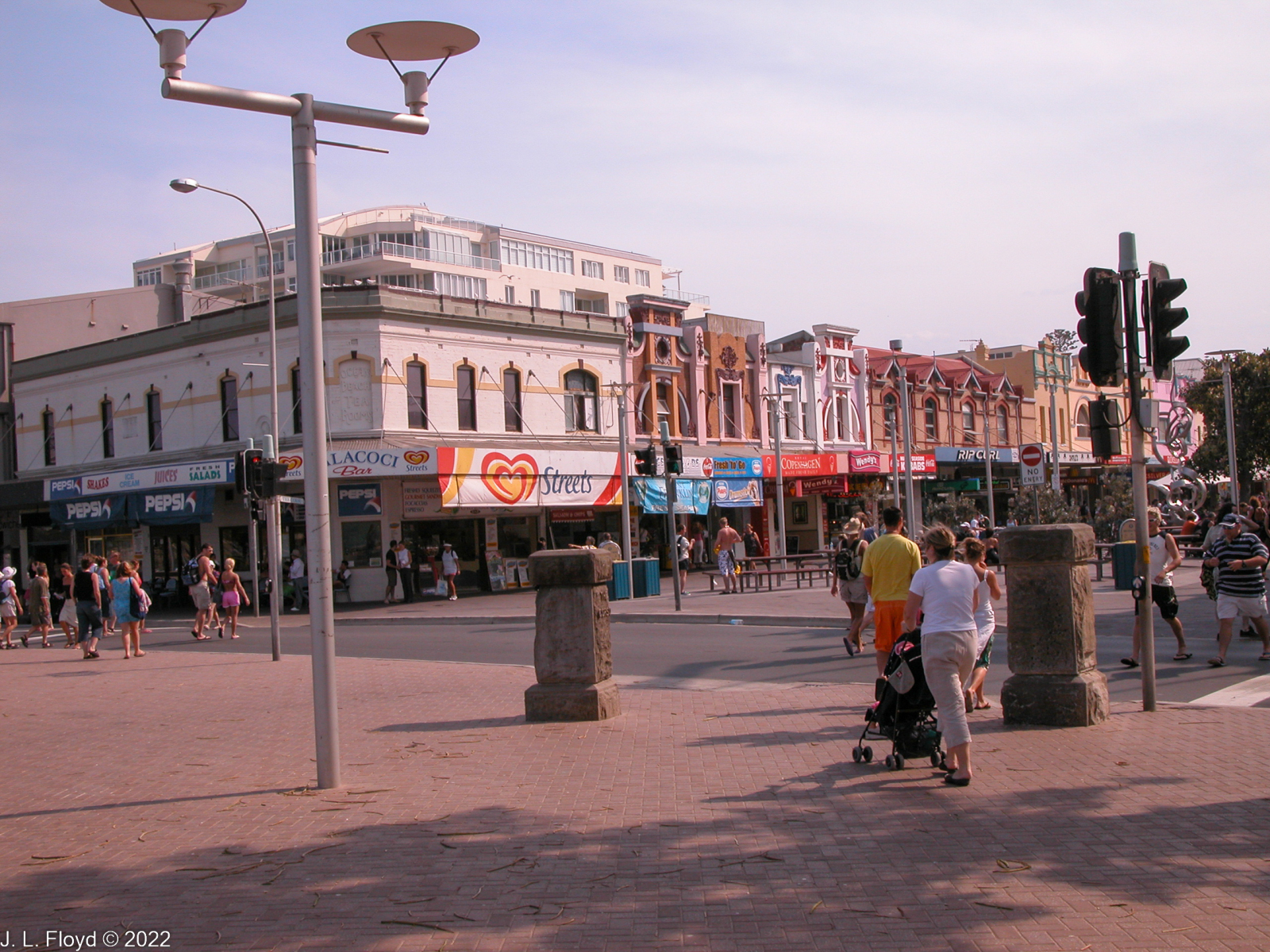
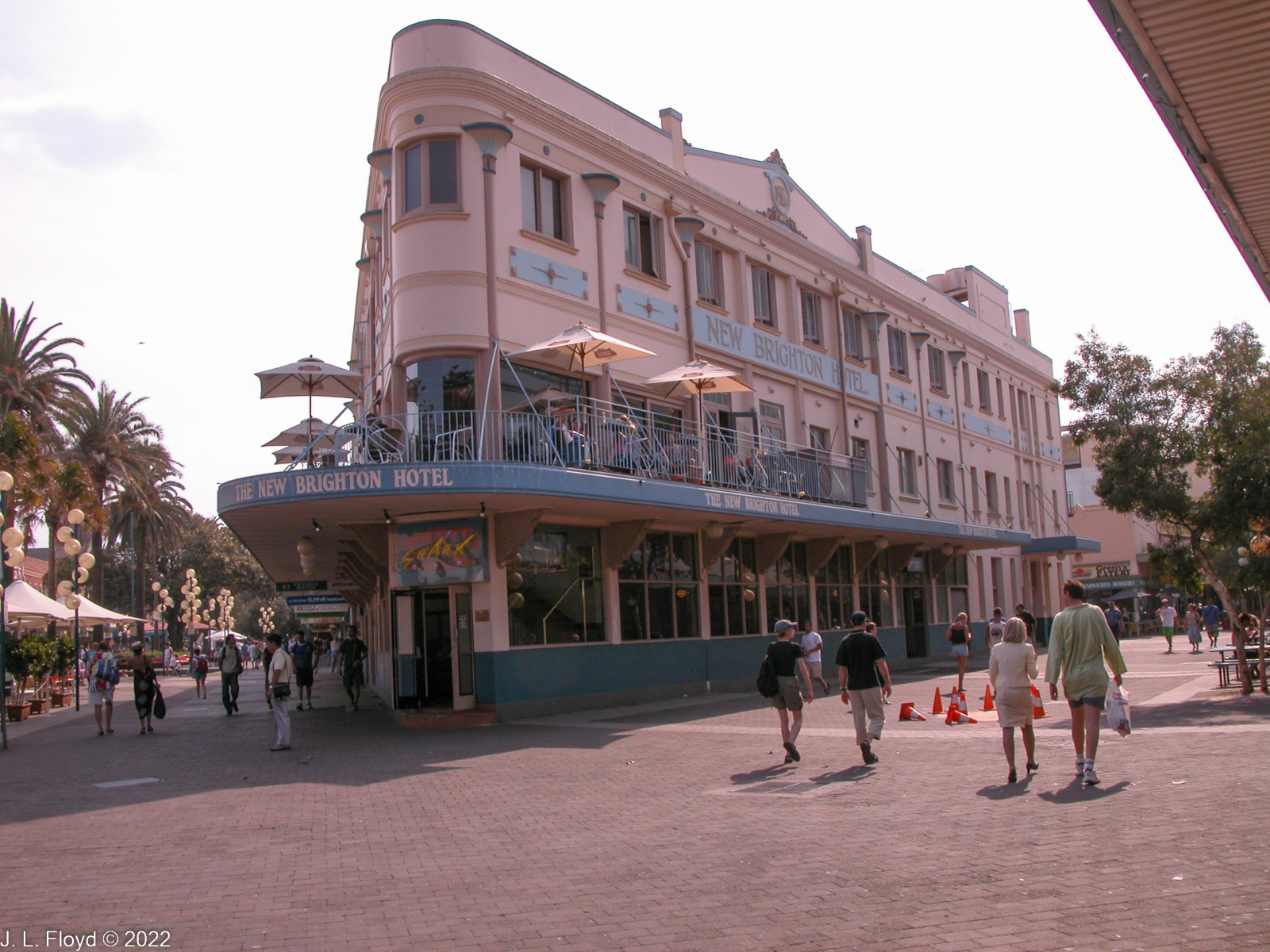
The ultimate destination of our northern excursion was Manly Beach, on the coast to the north of Sydney Harbor, the place where Arabanoo was taken captive. When first exploring the area, Governor Phillip encountered some indigenous men and commented on their robust and “manly” physique; ever after it was known as Manly Beach.

Categories
Australia, November-December 2002

Sydney Bus Tour, November 25, 2002 (South)

On our second day in Sydney we were scheduled to take a morning bus tour of the city and its immediate environs. The bus took us first to the south side of the metropolitan area, then to the north. The driver was a jovial fellow who shared a vast lore of the city and its sights with a generous combination of wit and erudition.

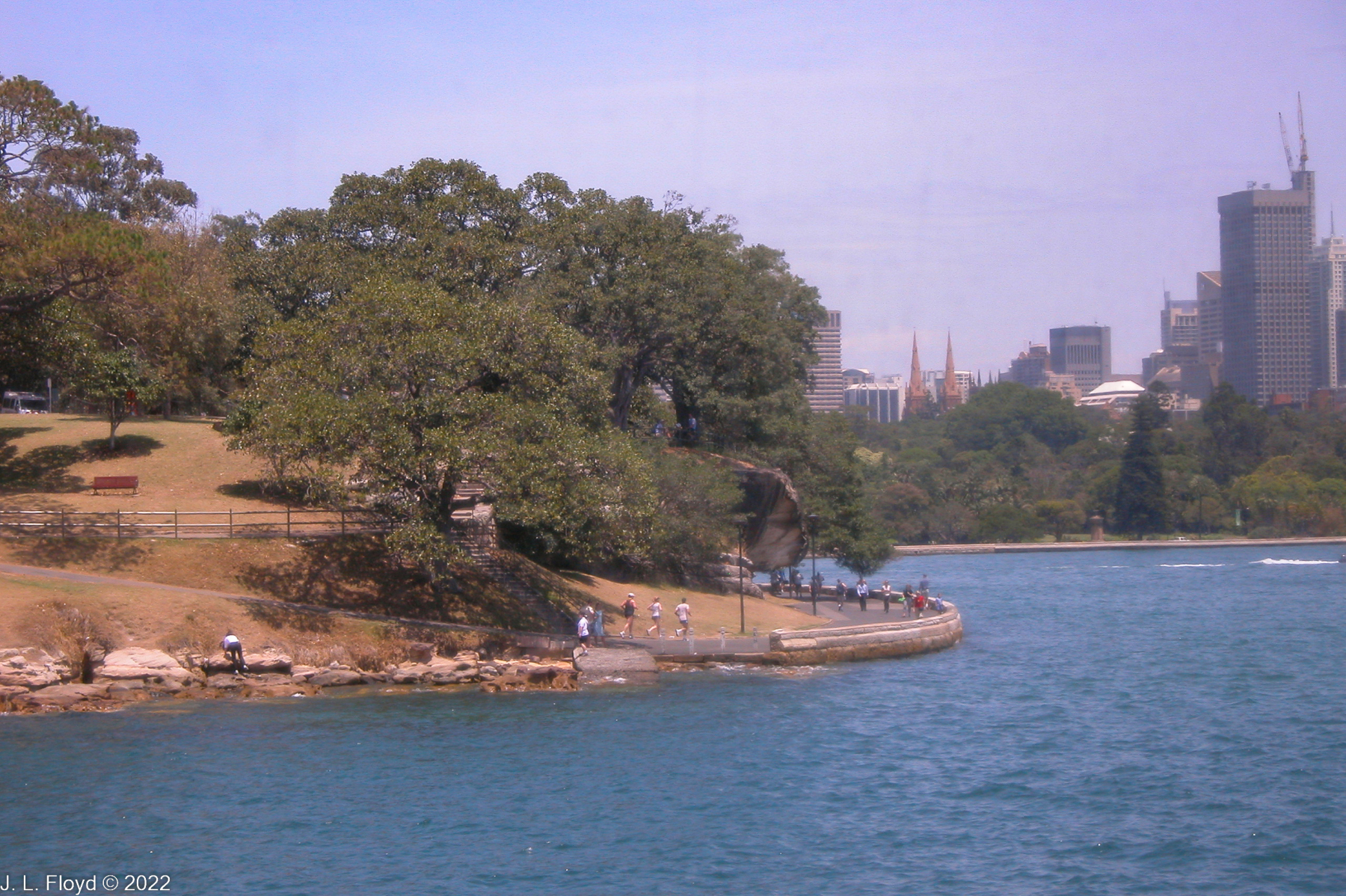
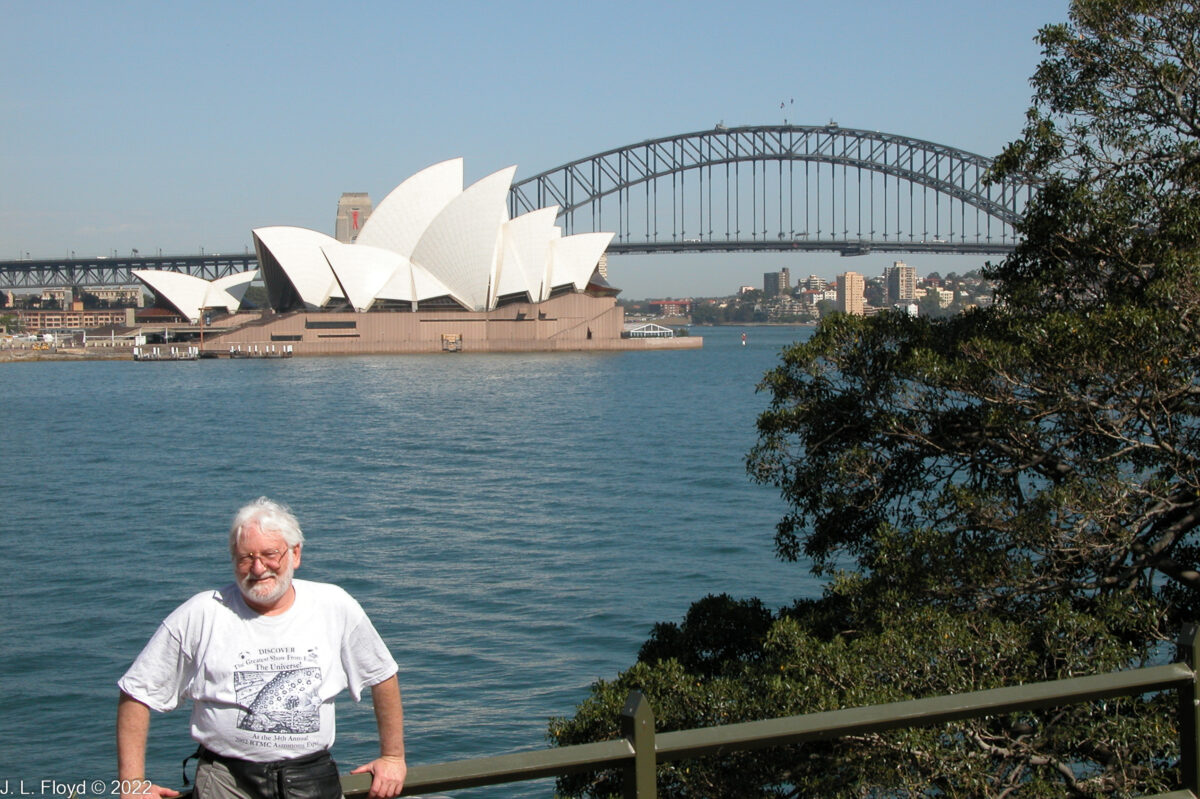
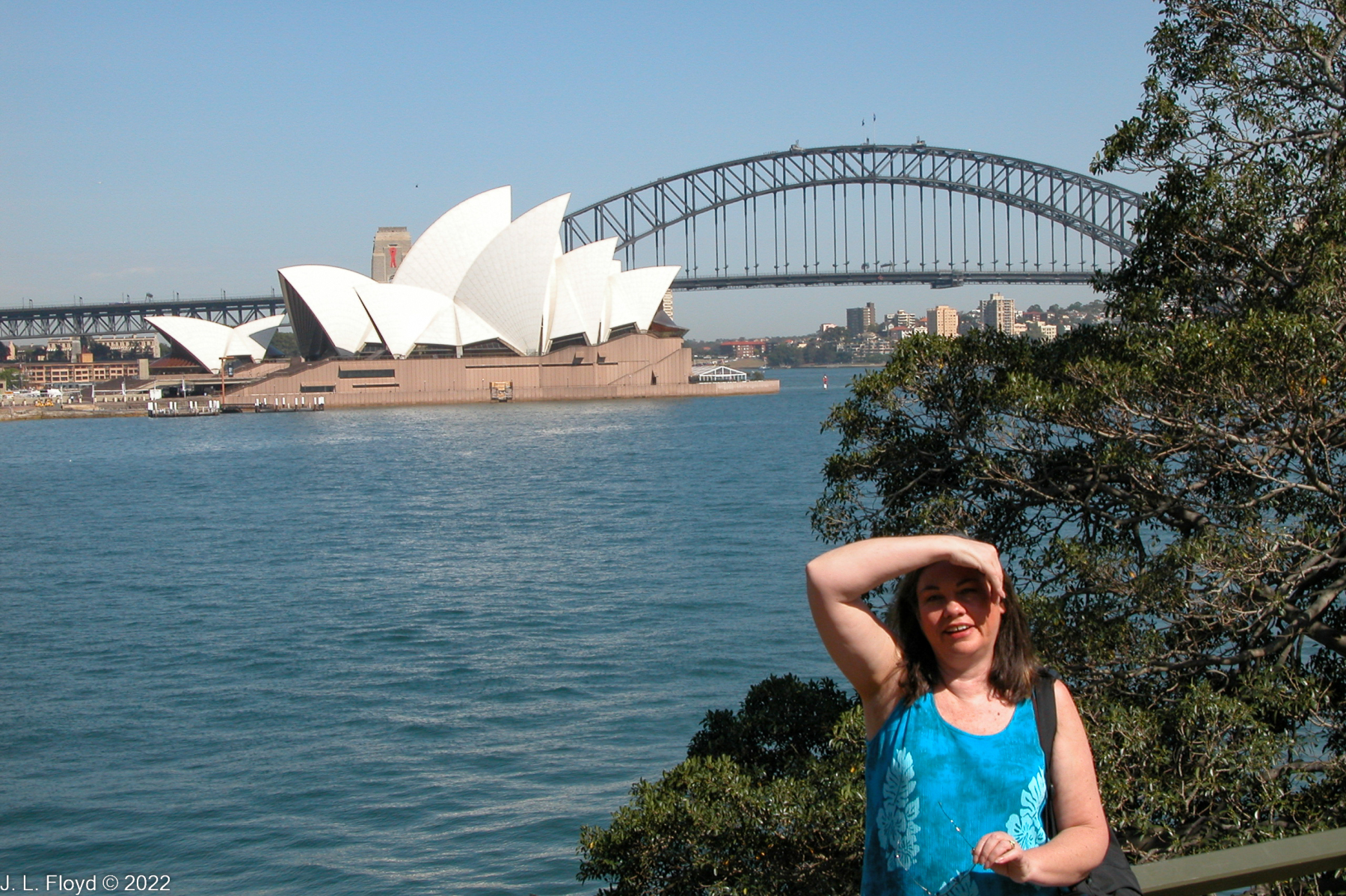
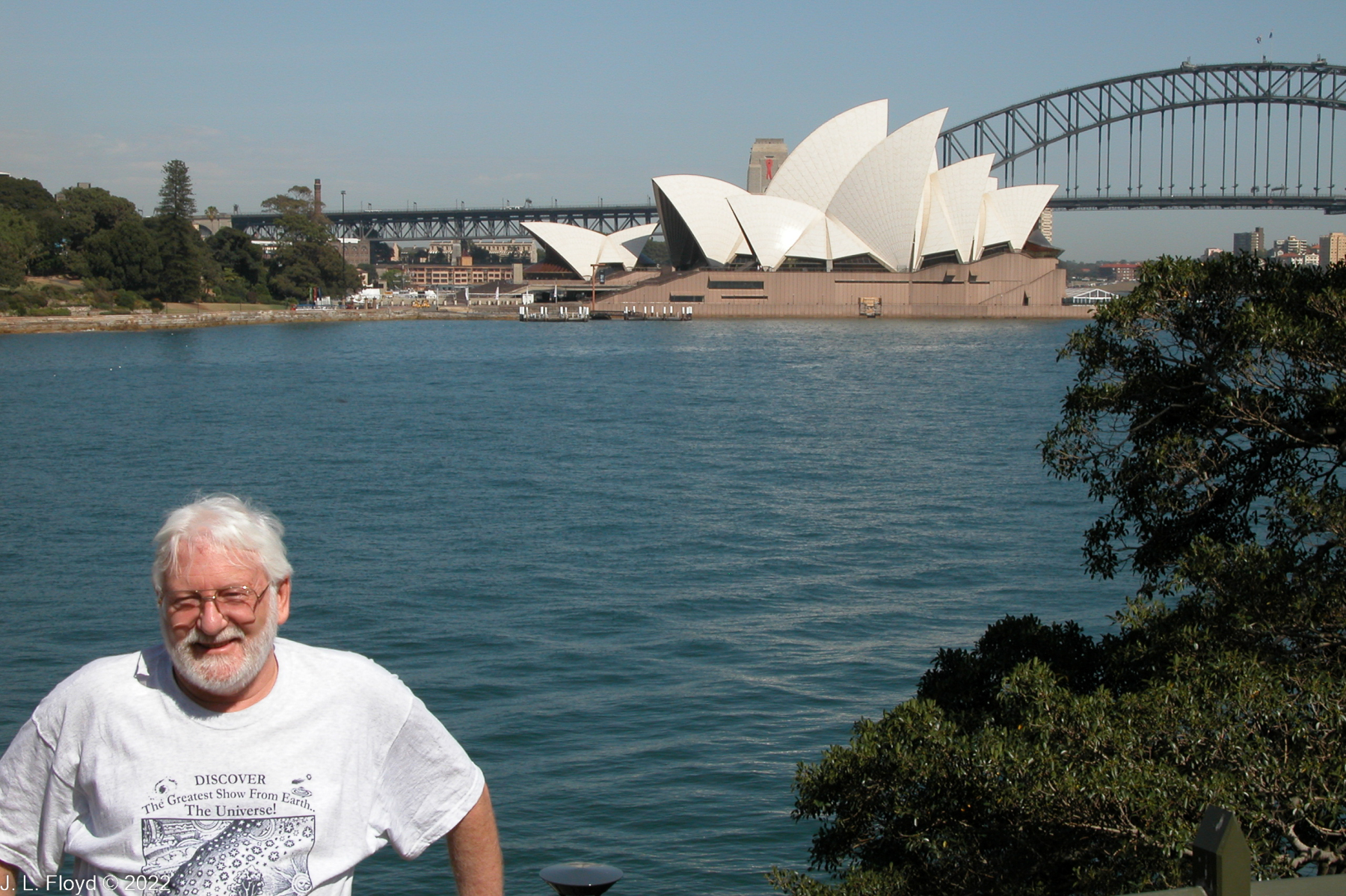
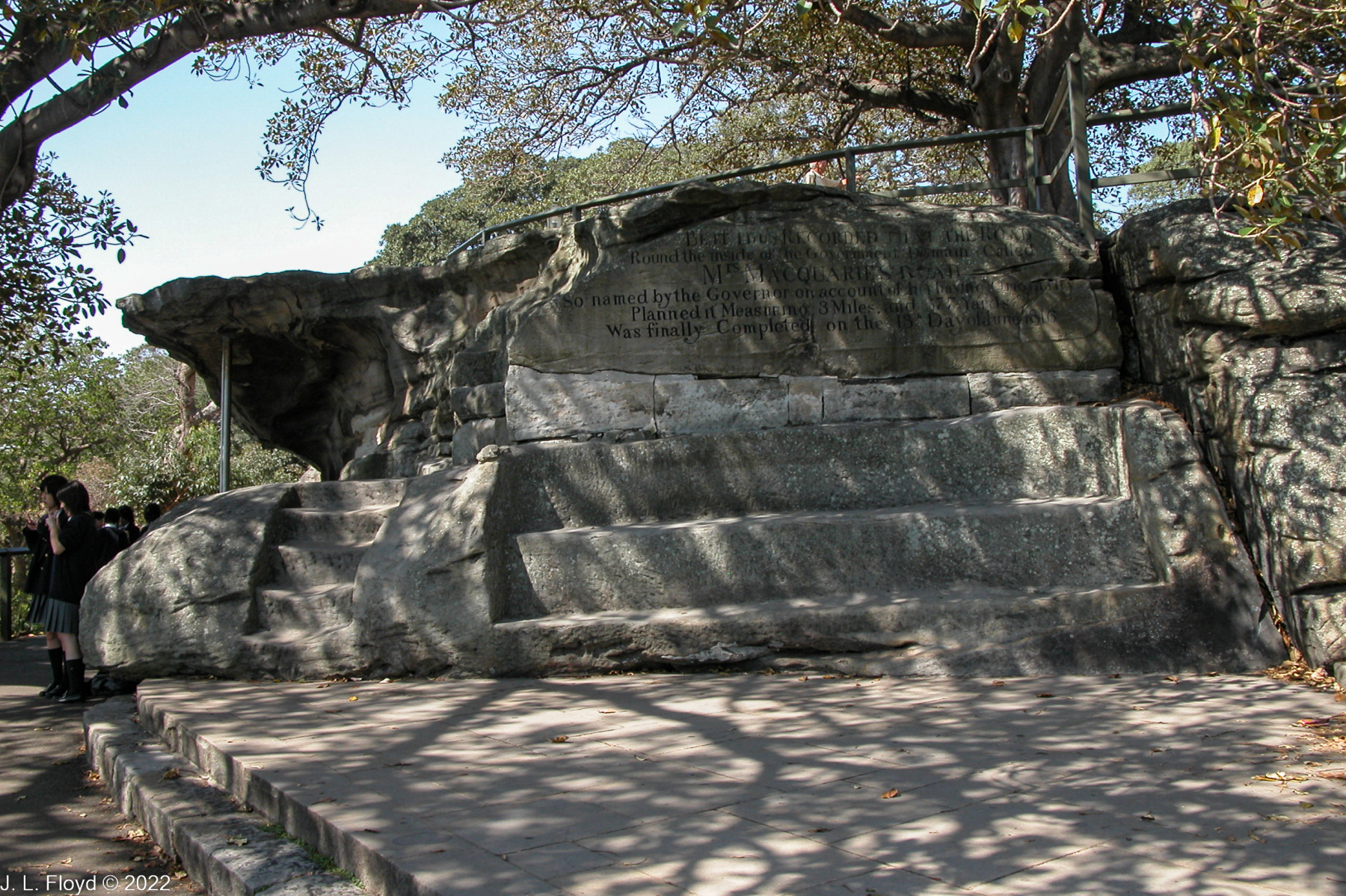
The first half of the tour began at the harbor, and our first stop was Mrs. Macquarie’s Chair. Elizabeth Macquarie was the wife of Major-General Lachlan Macquarie, Governor of New South Wales from 1810 to 1821. According to legend, she liked to sit at the end of a small promontory in Sydney Harbor, just east of Bennelong Point, where the Sidney Opera House now stands, and watch the ships sail by on their way in and out of the harbor. To provide a place for her to sit, convicts carved a large sandstone rock into a bench, now known as Mrs. Macquarie’s Chair; and the promontory is known as Mrs. Macquarie’s Point. It provides excellent views of the Sydney Harbor Bridge and the Opera House, which we used as a backdrop to take photos of ourselves.

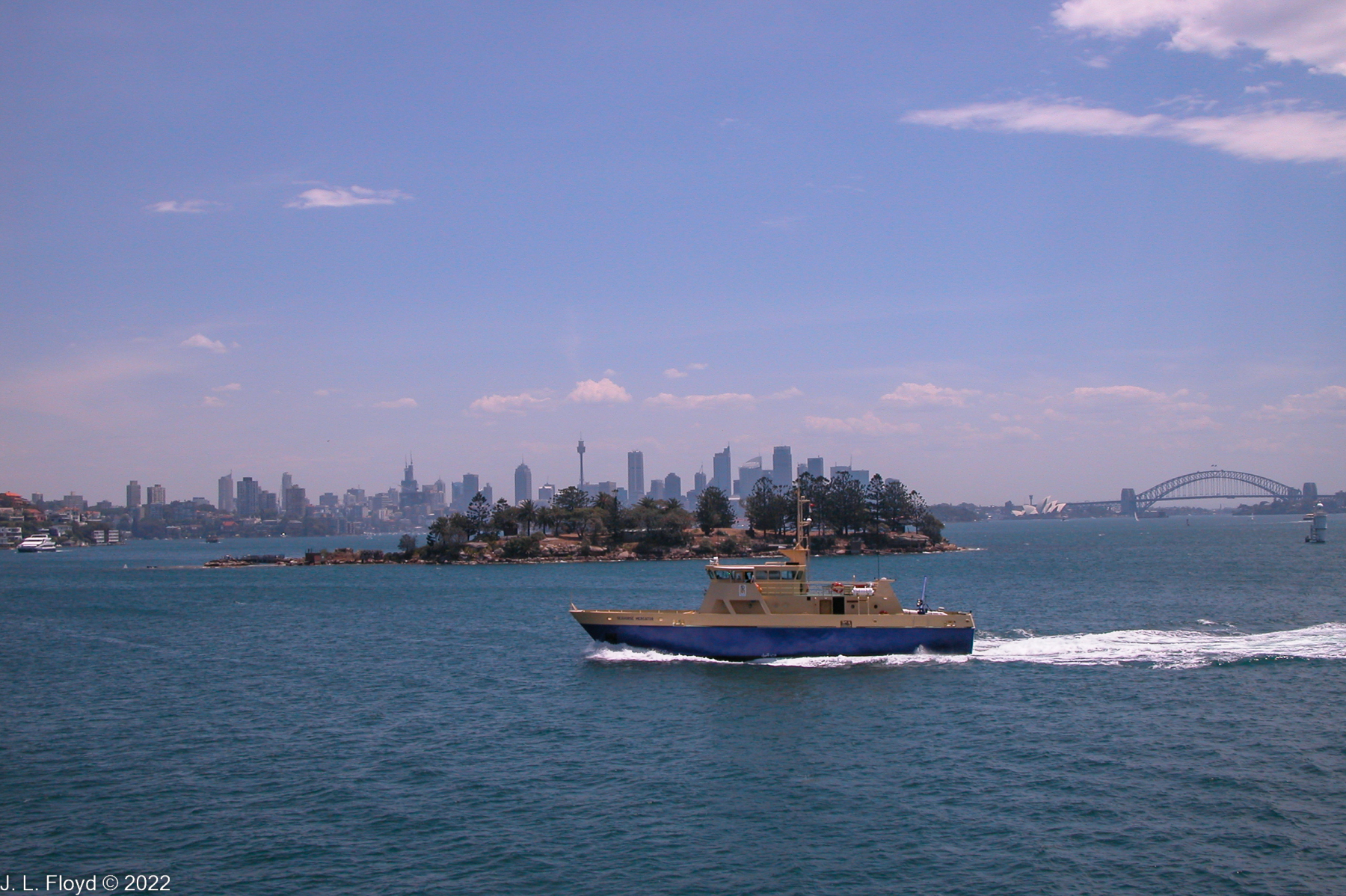
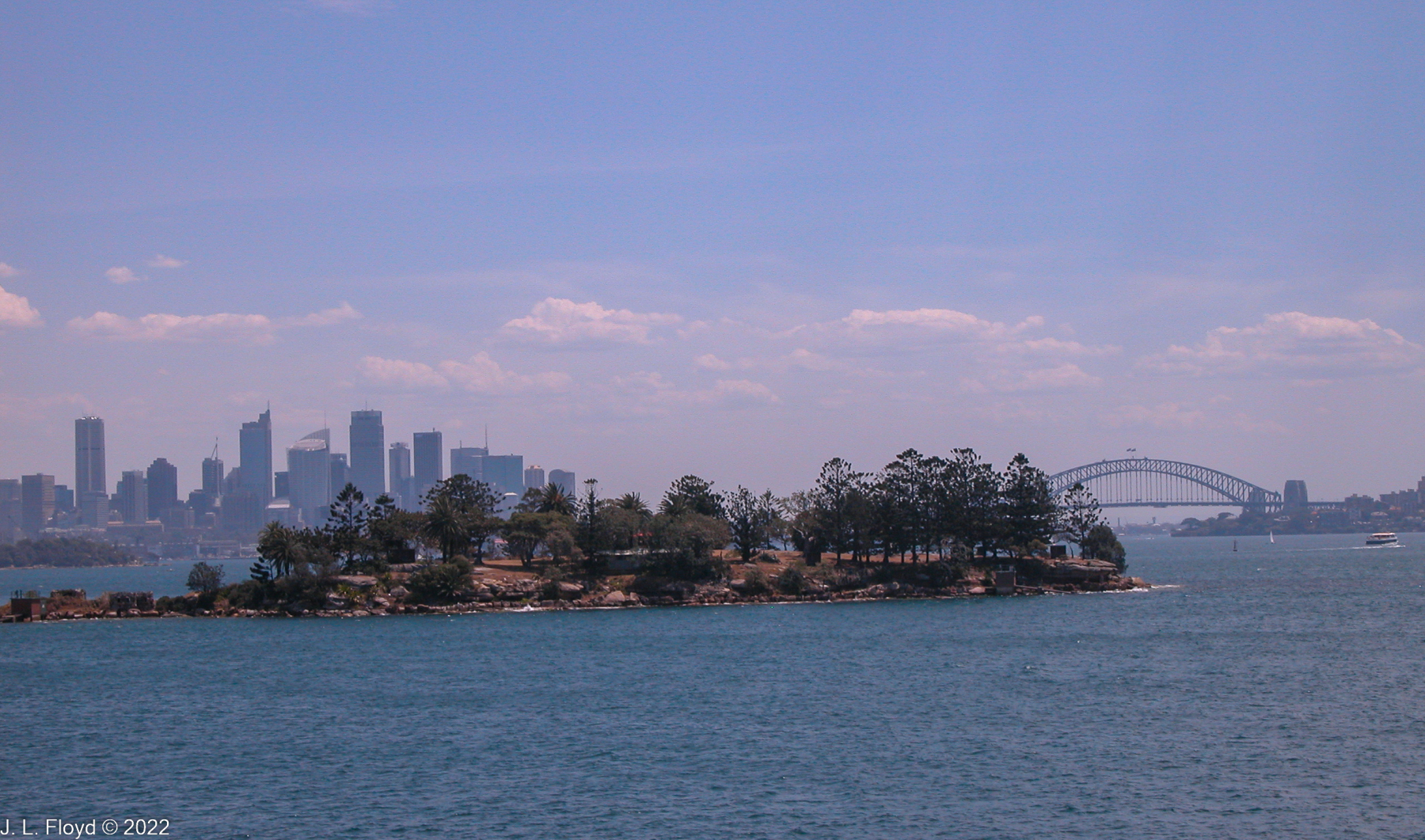
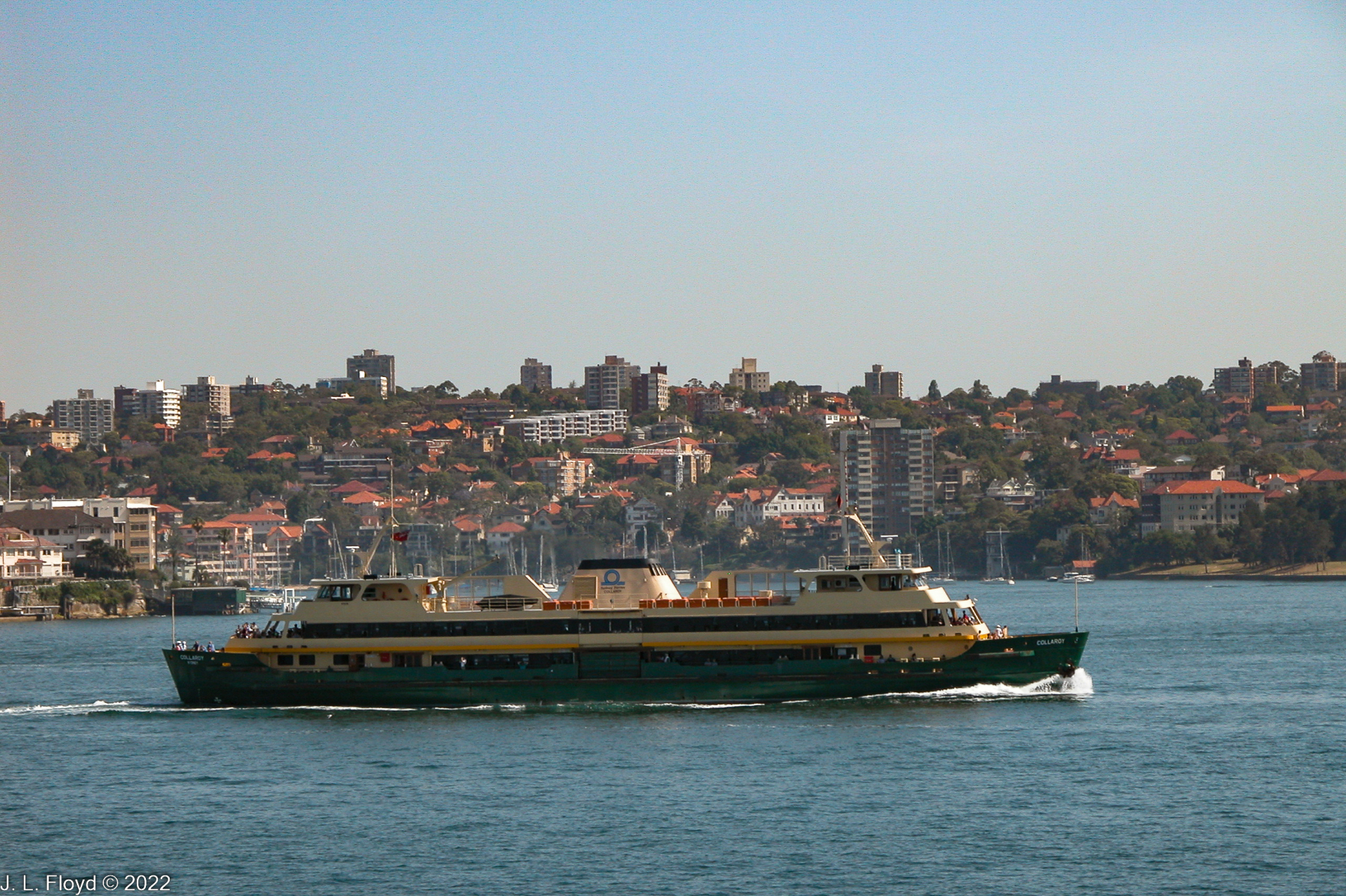
Mrs. Macquarie picked her spot well; it also provides great views of the rest of Sydney Harbor.

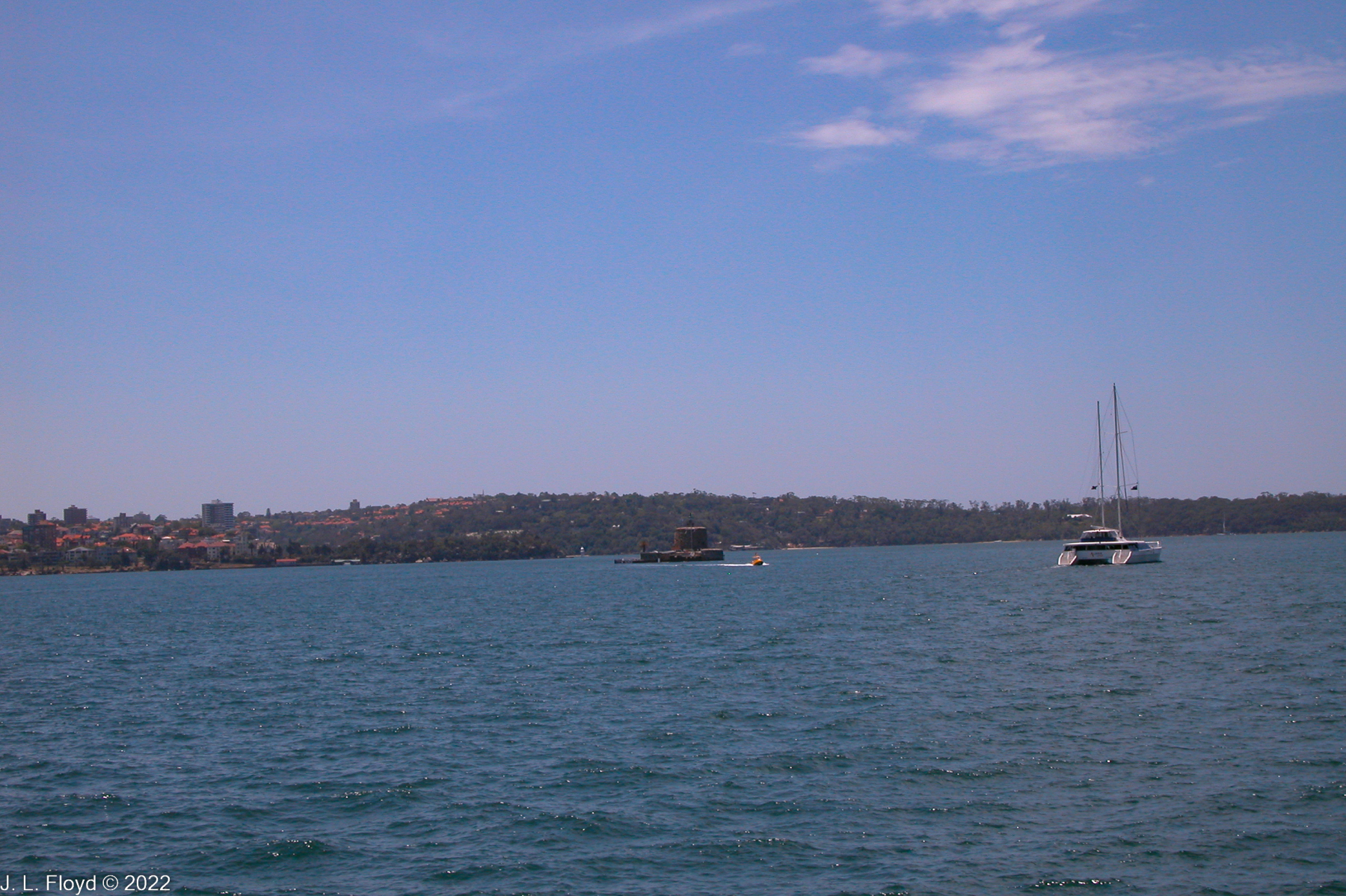
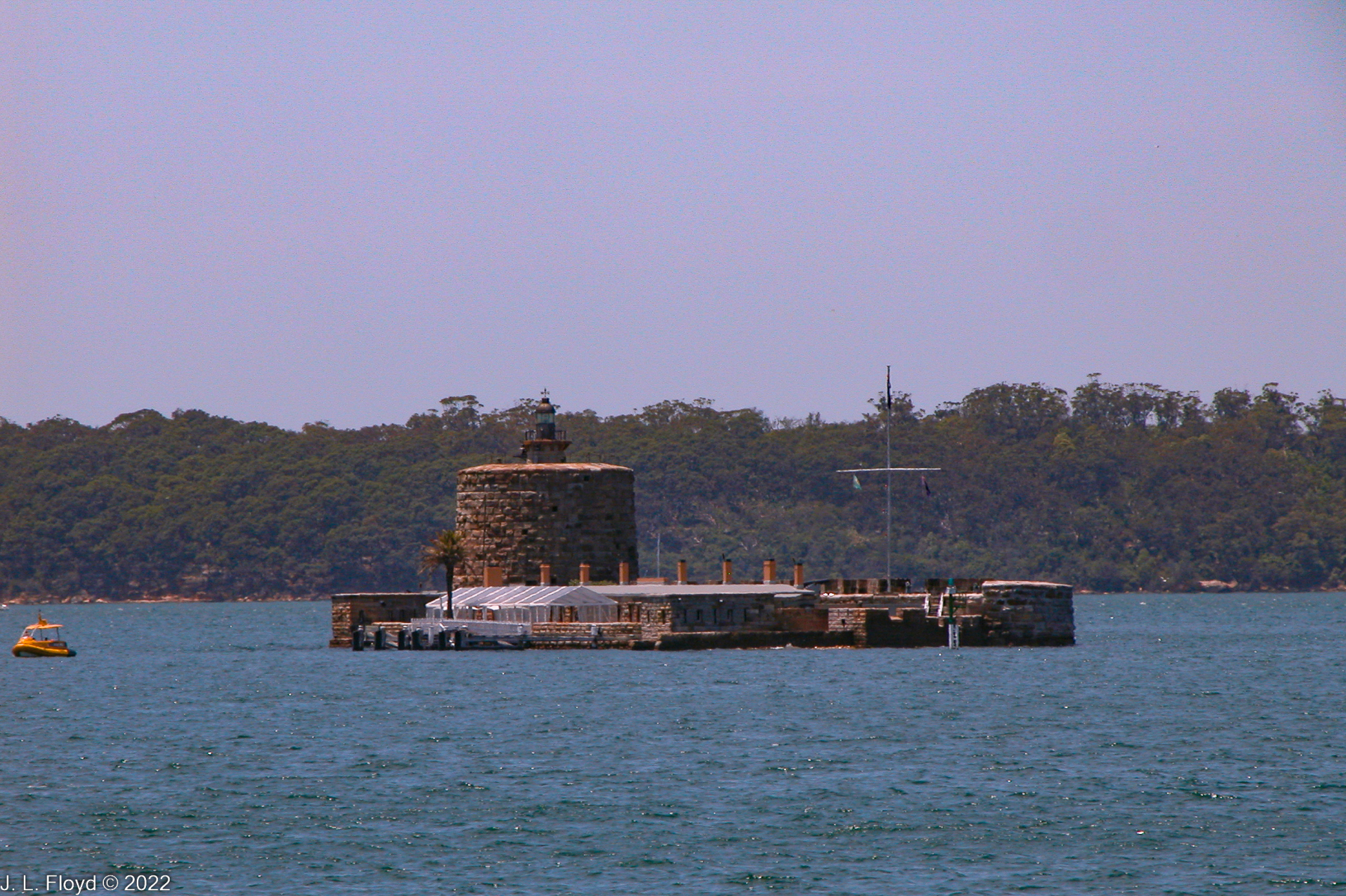
A propos of Fort Denison, the bus driver related a historical episode of particular resonance to me. During the months after Pearl Harbor, when the Japanese conquests in the Southwest Pacific reached their high-water mark, the Japanese Navy sent a submarine force to attack Australia. On May 31, they sent several two-man mini-subs into Sydney Harbor, where in addition to several Australian Navy ships, the U. S. heavy cruiser Chicago was anchored. The captain of the Chicago, Howard Bode, a notorious martinet, was ashore at the time, dining with Rear Admiral Gerard Muirhead-Gould of the Royal Navy, the officer in charge of Sydney Harbor. Neither took the attack seriously at first. One of the midget submarines fired two torpedoes at Chicago and missed. The torpedoes instead hit an Australian barracks ship, the HMAS Kuttabul, which sank with the loss of 21 lives. A Chicago searchlight operator spotted the attacking mini-sub before it fired its torpedoes, and the Chicago fired on the submarine, but it could not depress its guns sufficiently for the close range of the target and the shells missed, hitting Fort Dennison instead, though doing little damage. Bode came back to the Chicago about 23:30; the ship got underway and left port at 2:14 without damage. The significance of this episode to me was that my biological father, Jewell Marion Floyd, was a sailor on board the Chicago during this period. The cruiser had escaped the Pearl Harbor disaster in December 1941 because it was at sea at the time. Later, on August 9, 1942, the Chicago participated in the Battle of Savo Island, and was damaged by a Japanese torpedo. Bode’s judgment in this action – an overwhelming Allied defeat entailing the loss of four heavy cruisers – was called into question; he was relieved of his command and assigned to command the Panama Canal District, a backwater reserved for officers put out to pasture. Feeling himself disgraced, Bode committed suicide on April 19, 1943. The Chicago was repaired and returned to the South Pacific in 1943, under a different captain, where, on January 30, it was sunk by Japanese bombers at the Battle of Rennell Island, taking Jewell Marion Floyd down with it.

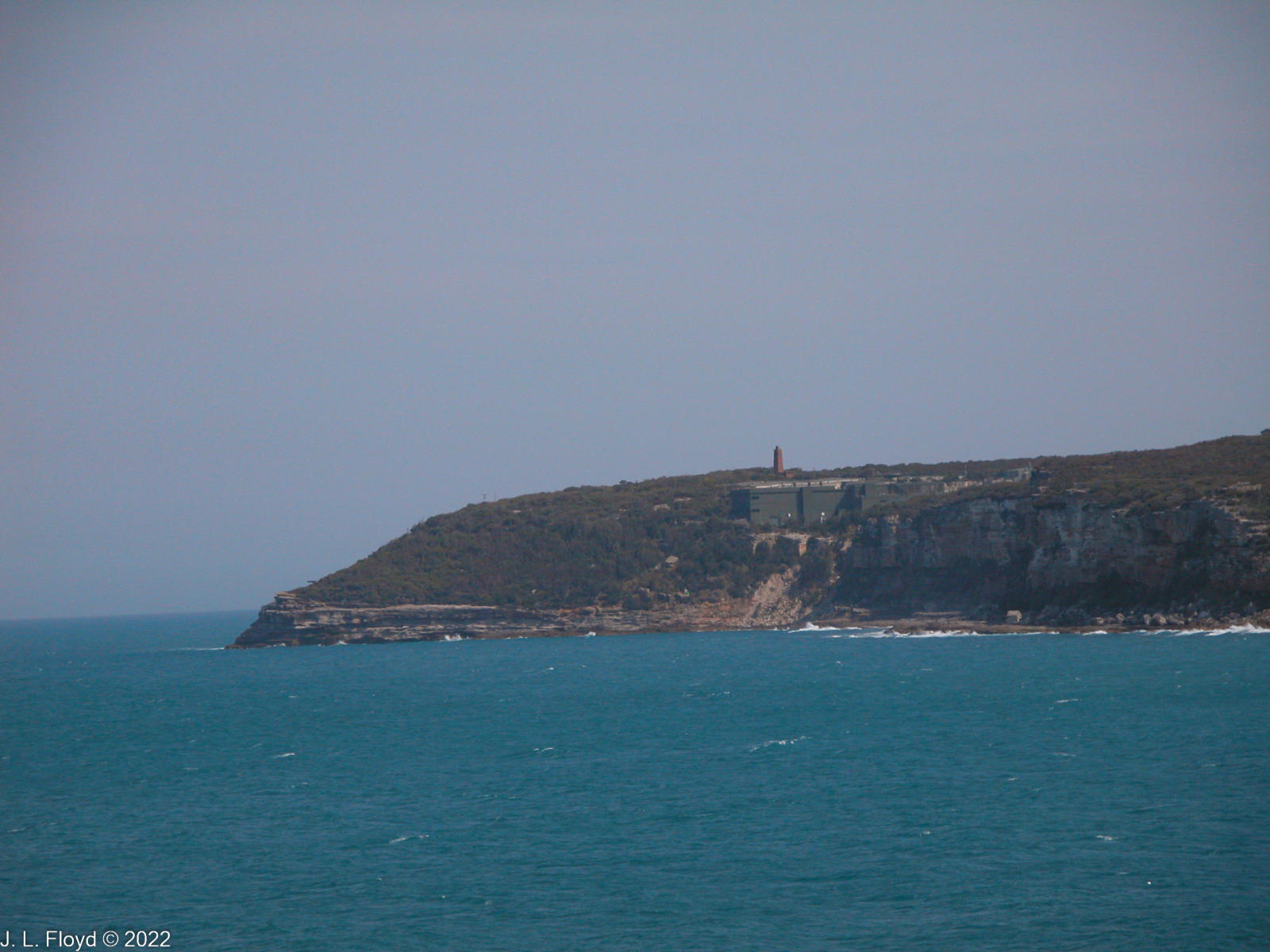
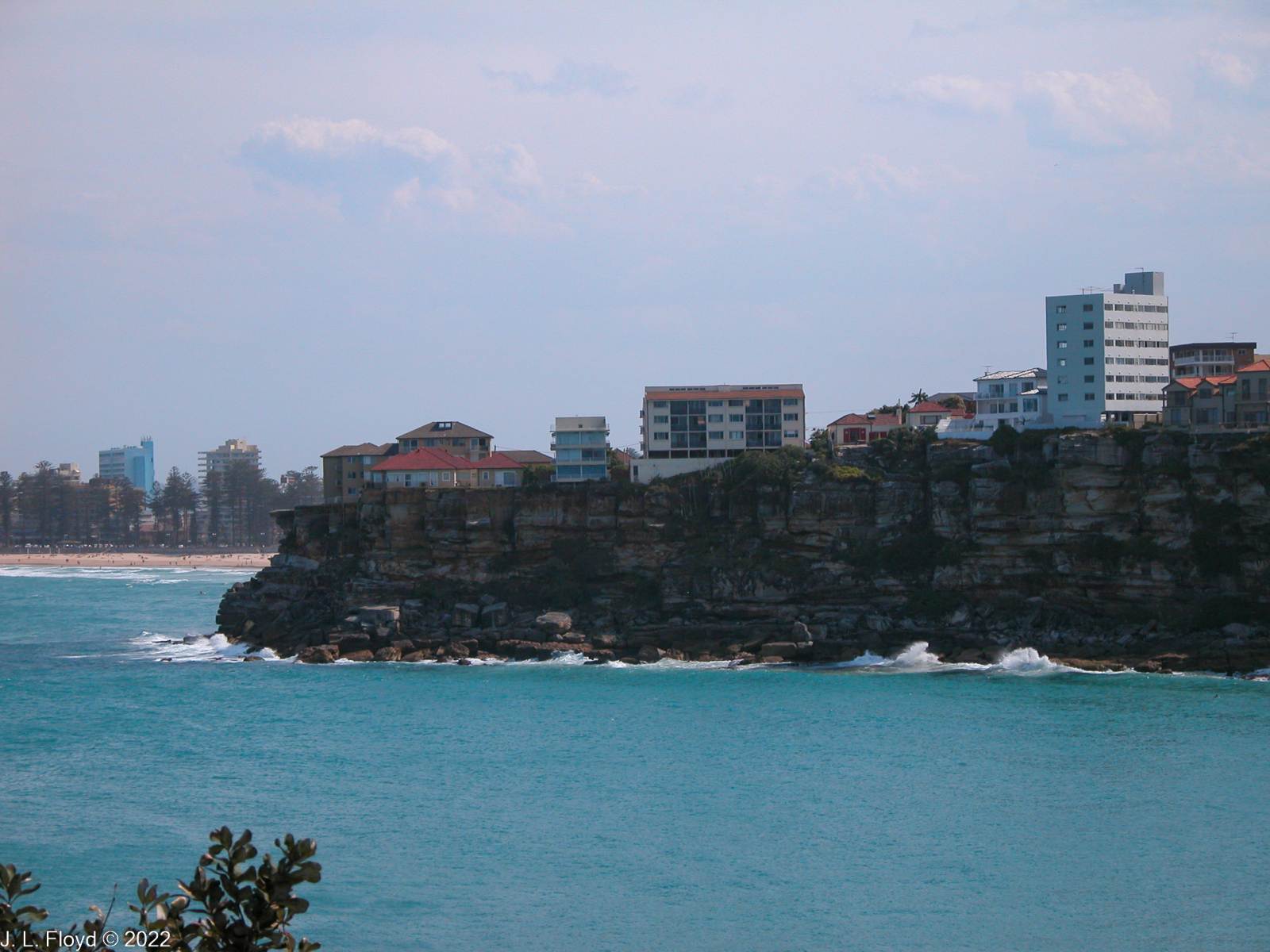
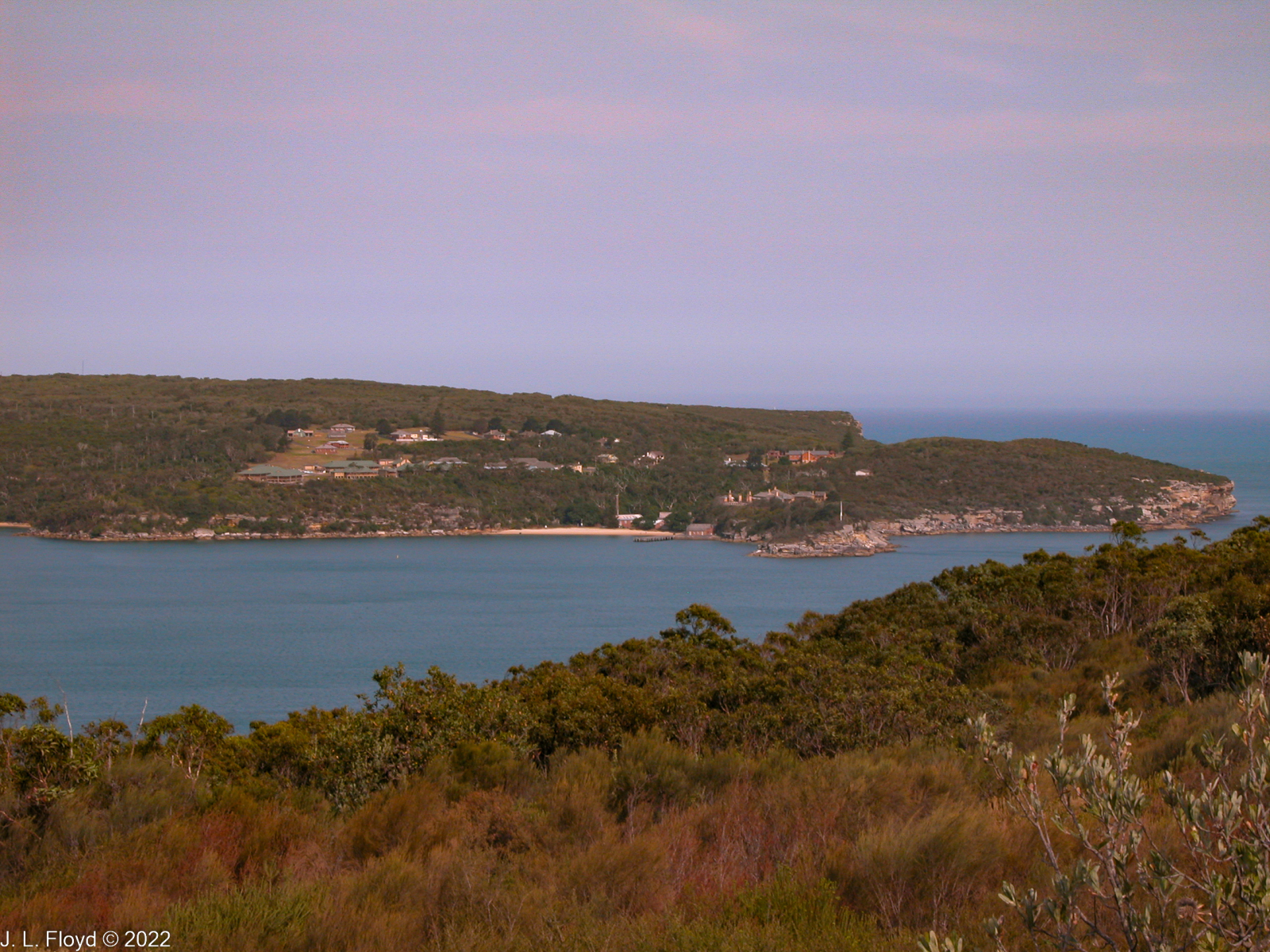
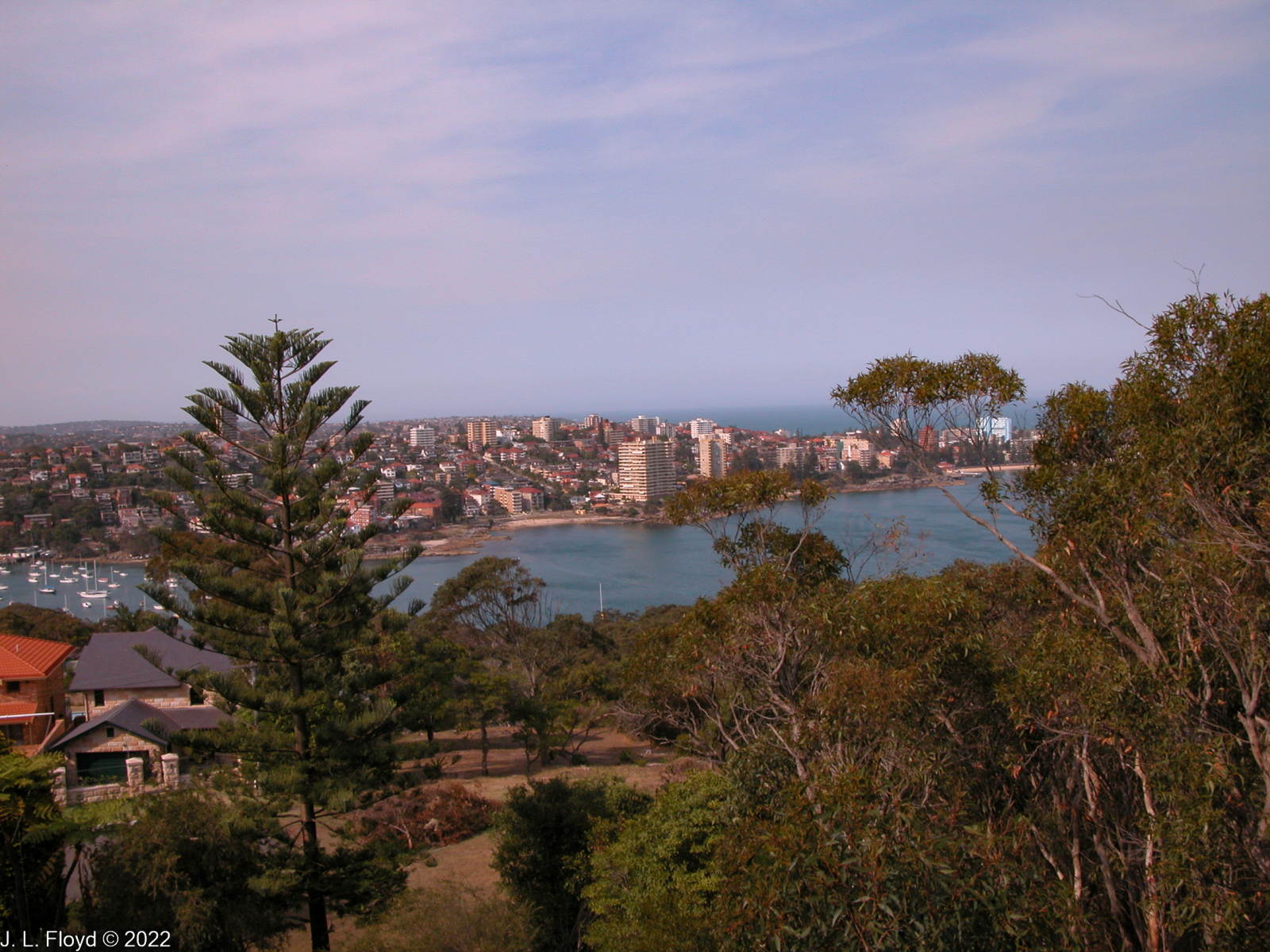
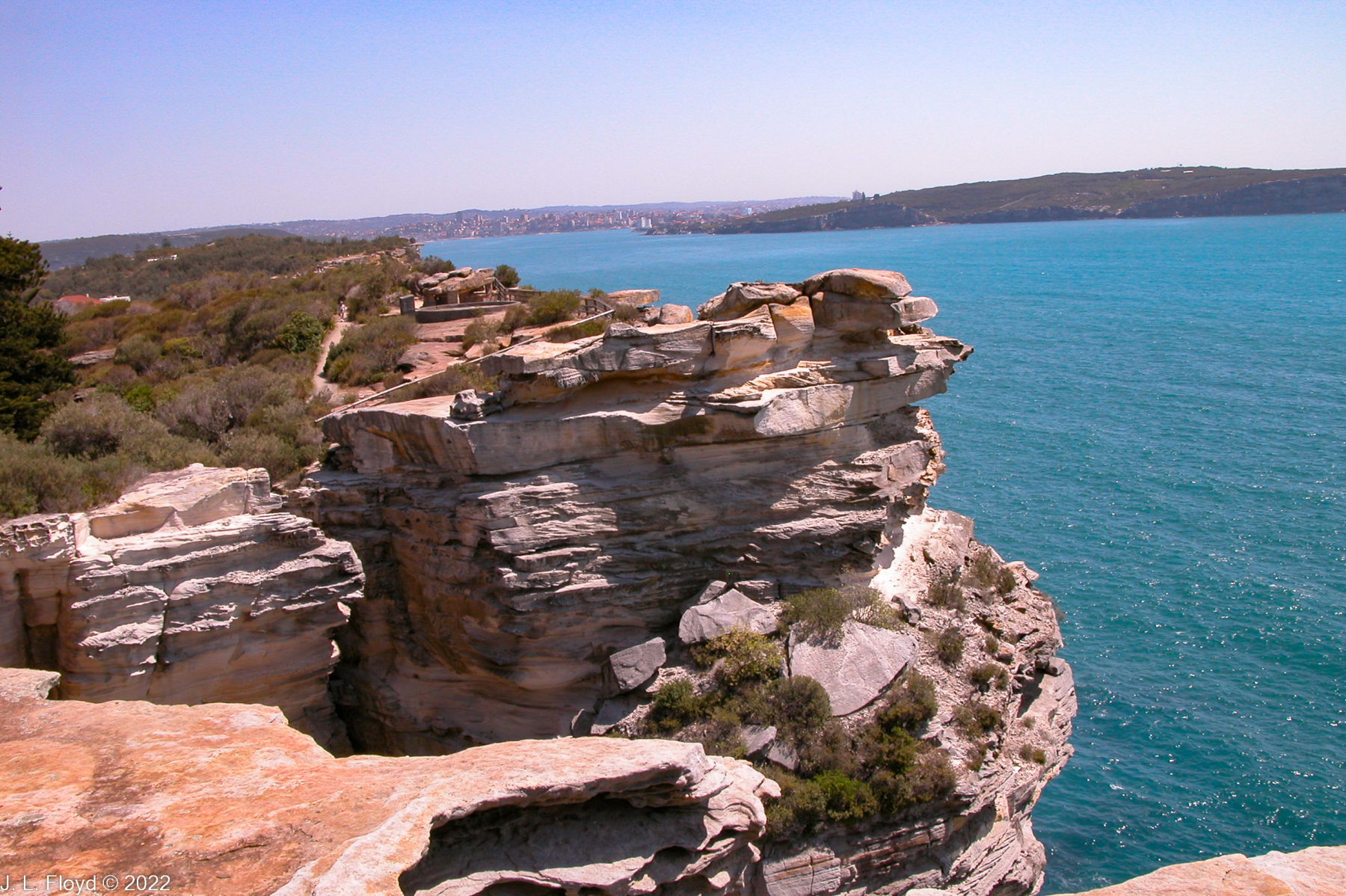
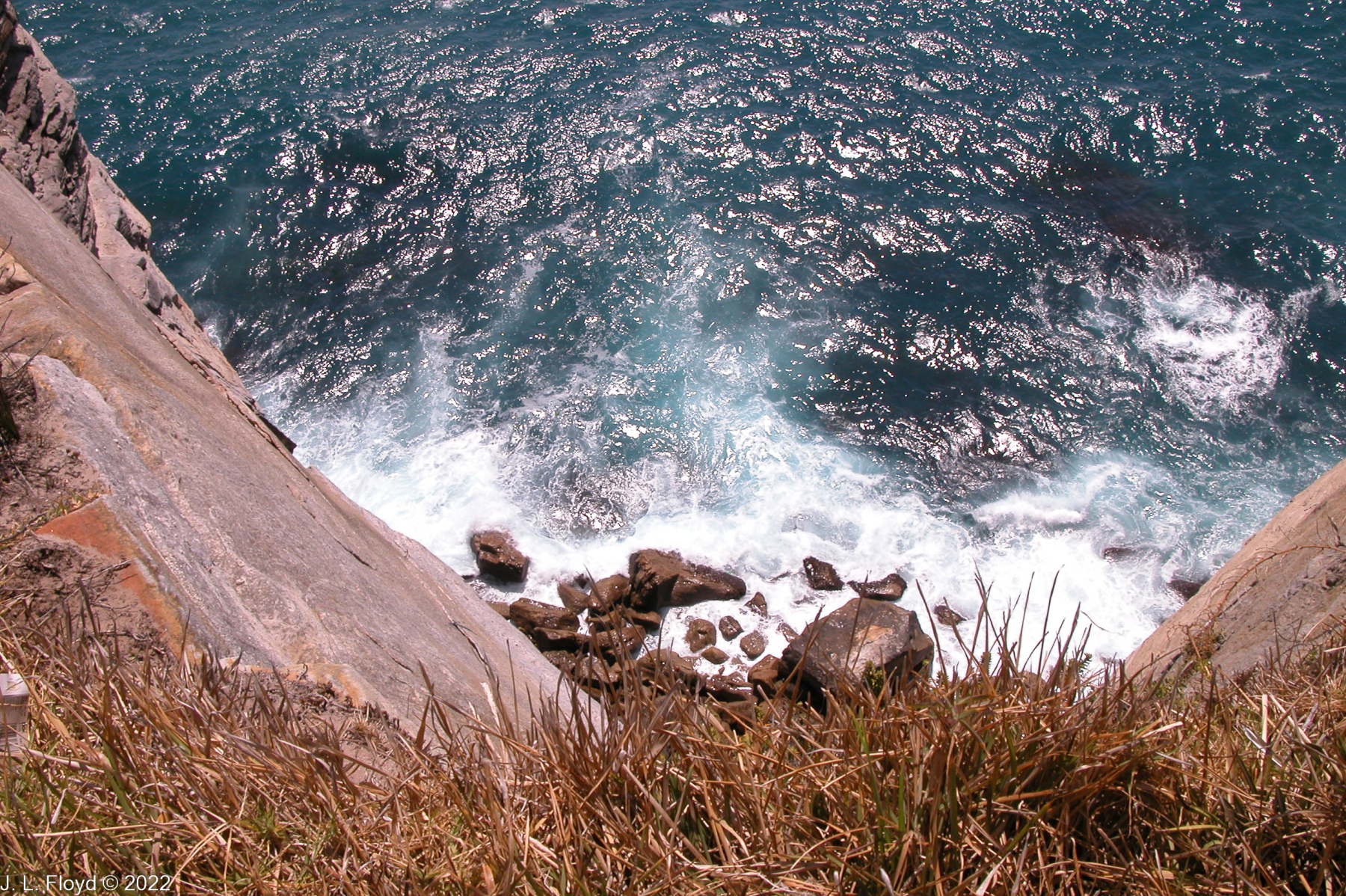
After Mrs Macquarie’s Point, our next stop was Federation Cliffs, where we were able to obtain spectacular vistas of the harbor mouth and the Pacific Ocean beyond.

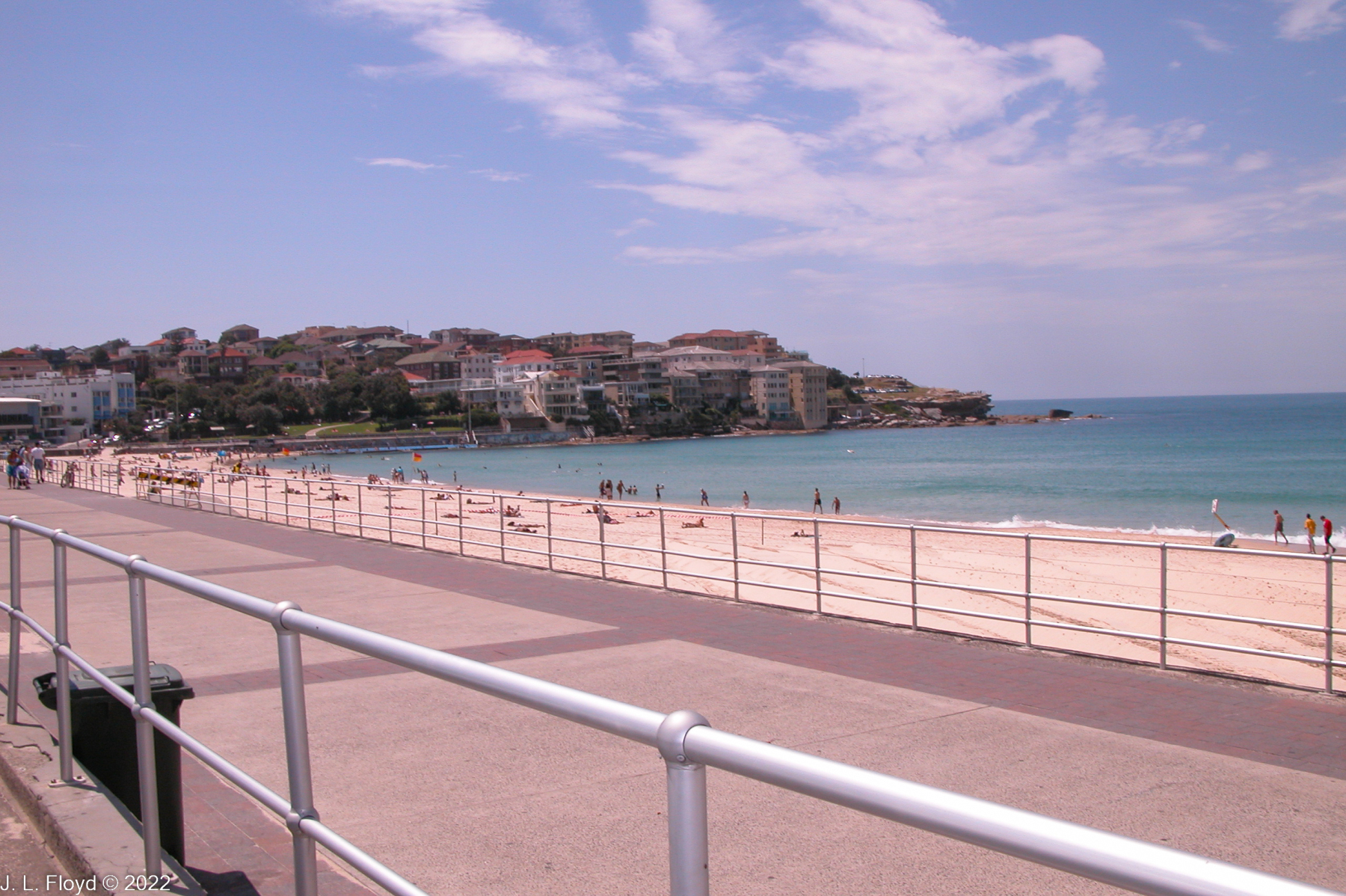
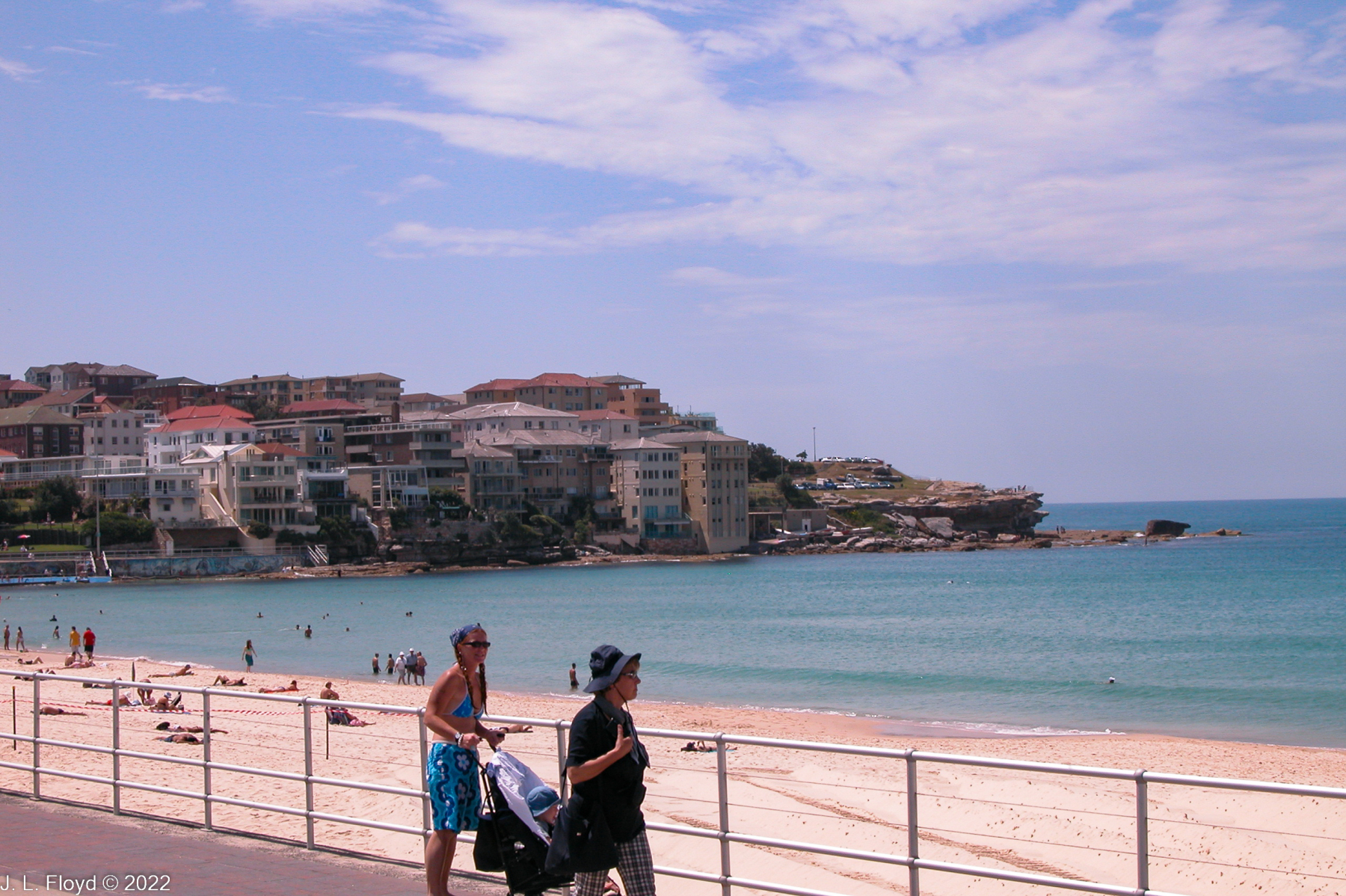
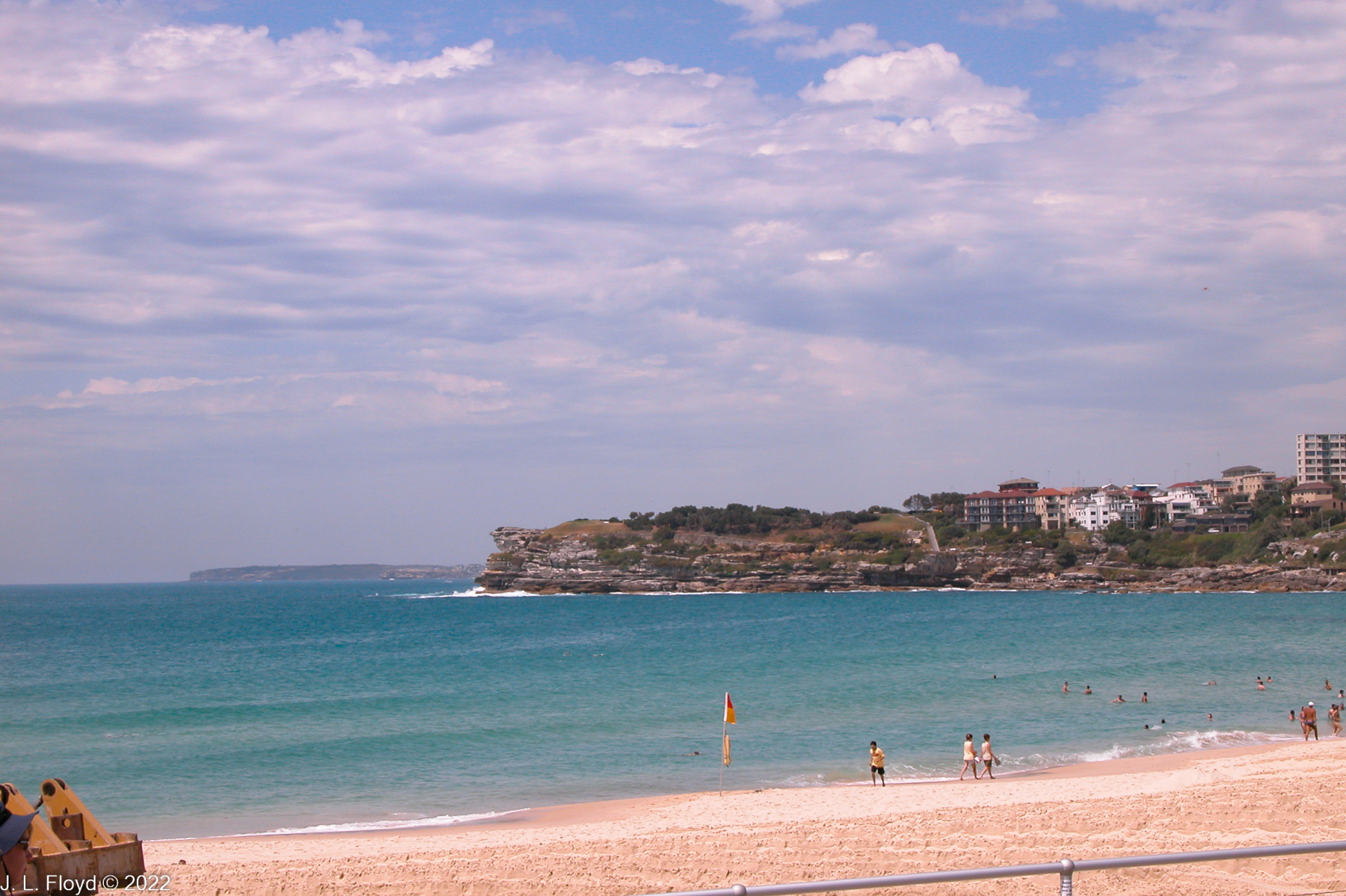
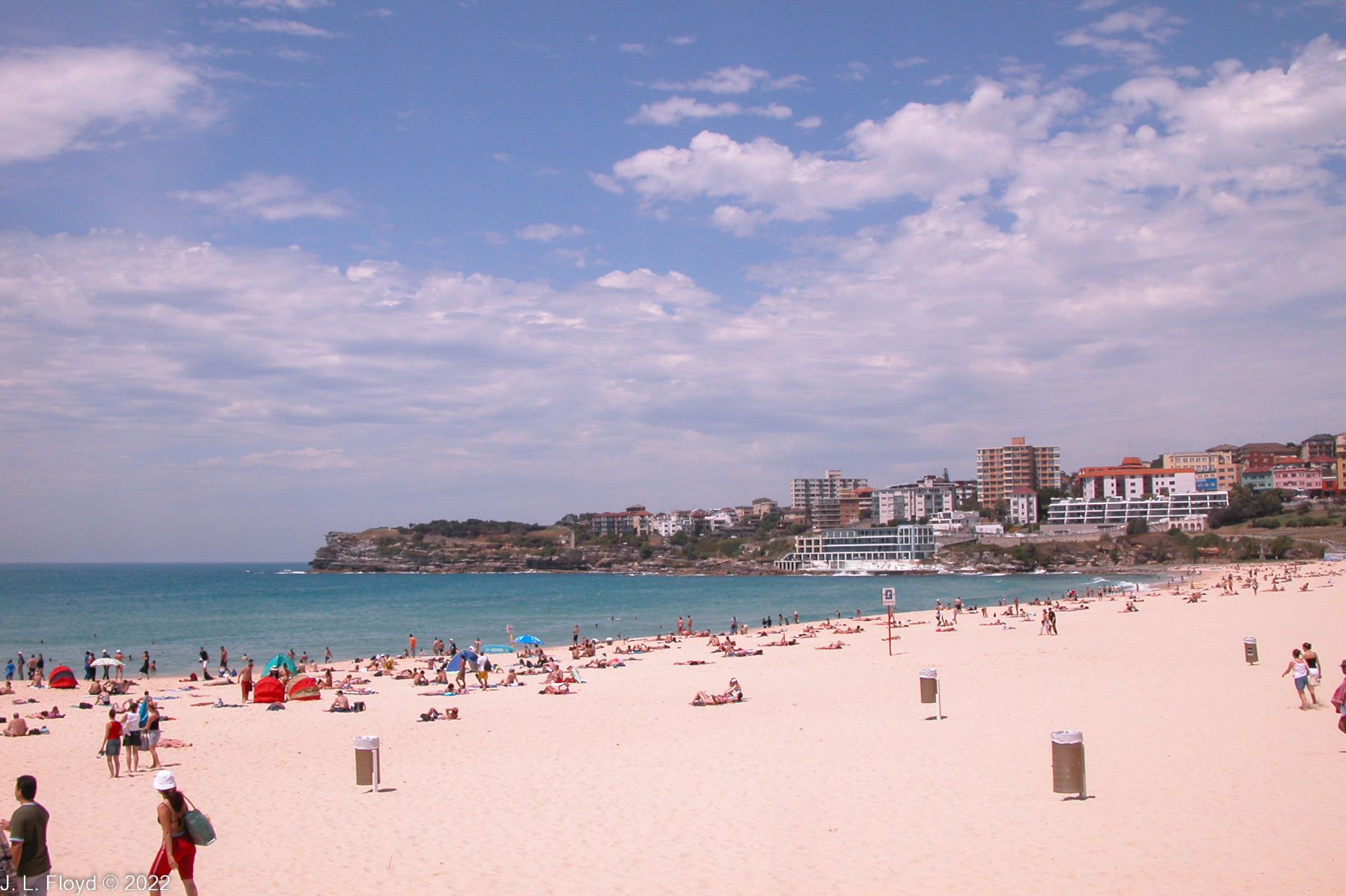
The first half of the bus tour culminated at Bondi Beach, on the Pacific a few kilometers south of Sydney Harbor. Bondi is a spectacular beach with pristine white sands and clear turquoise-blue water, and is rated as Sydney’s best, though I personally preferred Manly Beach, on the north side of Sydney, which we visited in the second half of the tour.

Categories
Australia, November-December 2002

Arrival in Sydney, November 24, 2002

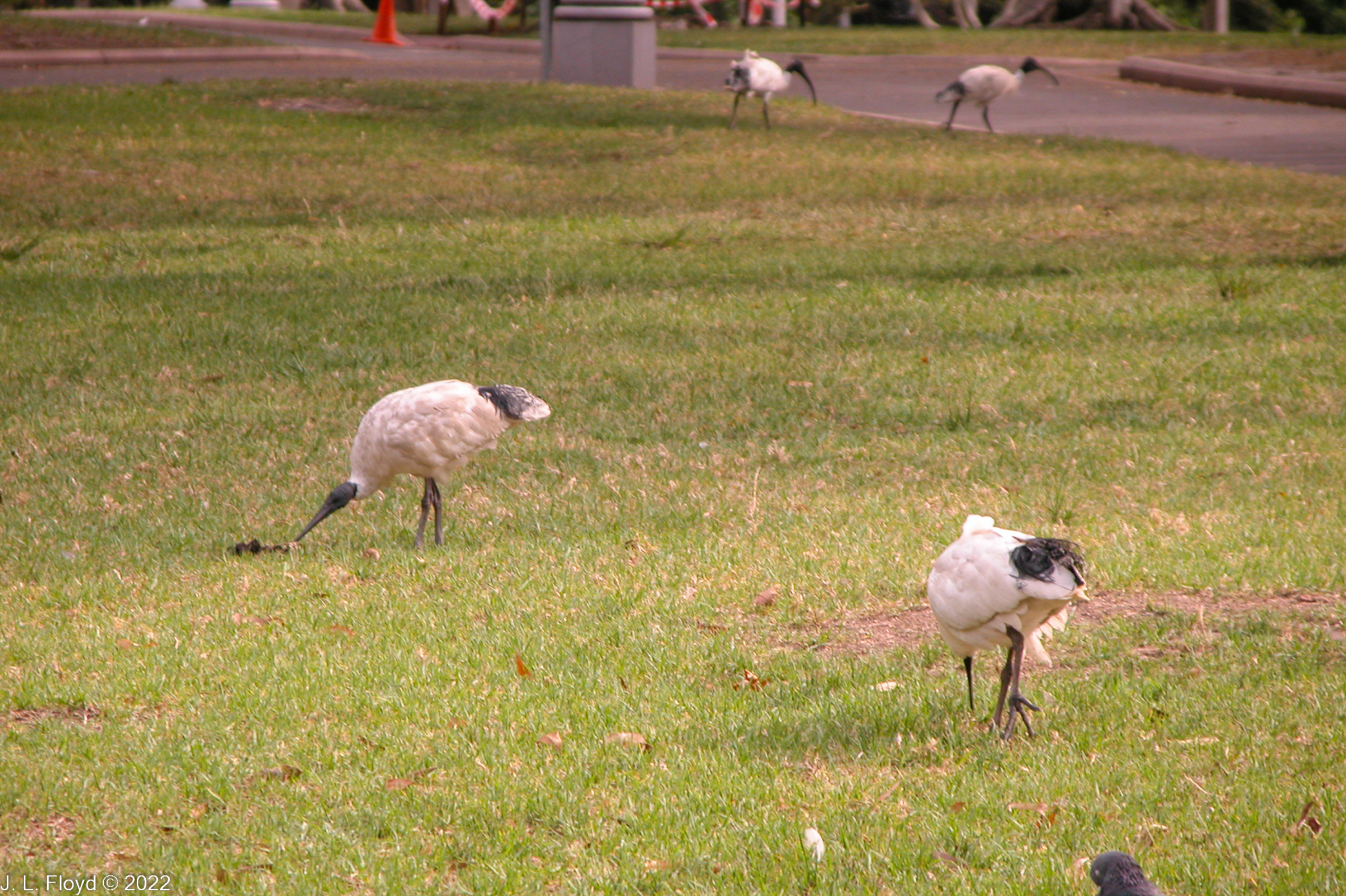
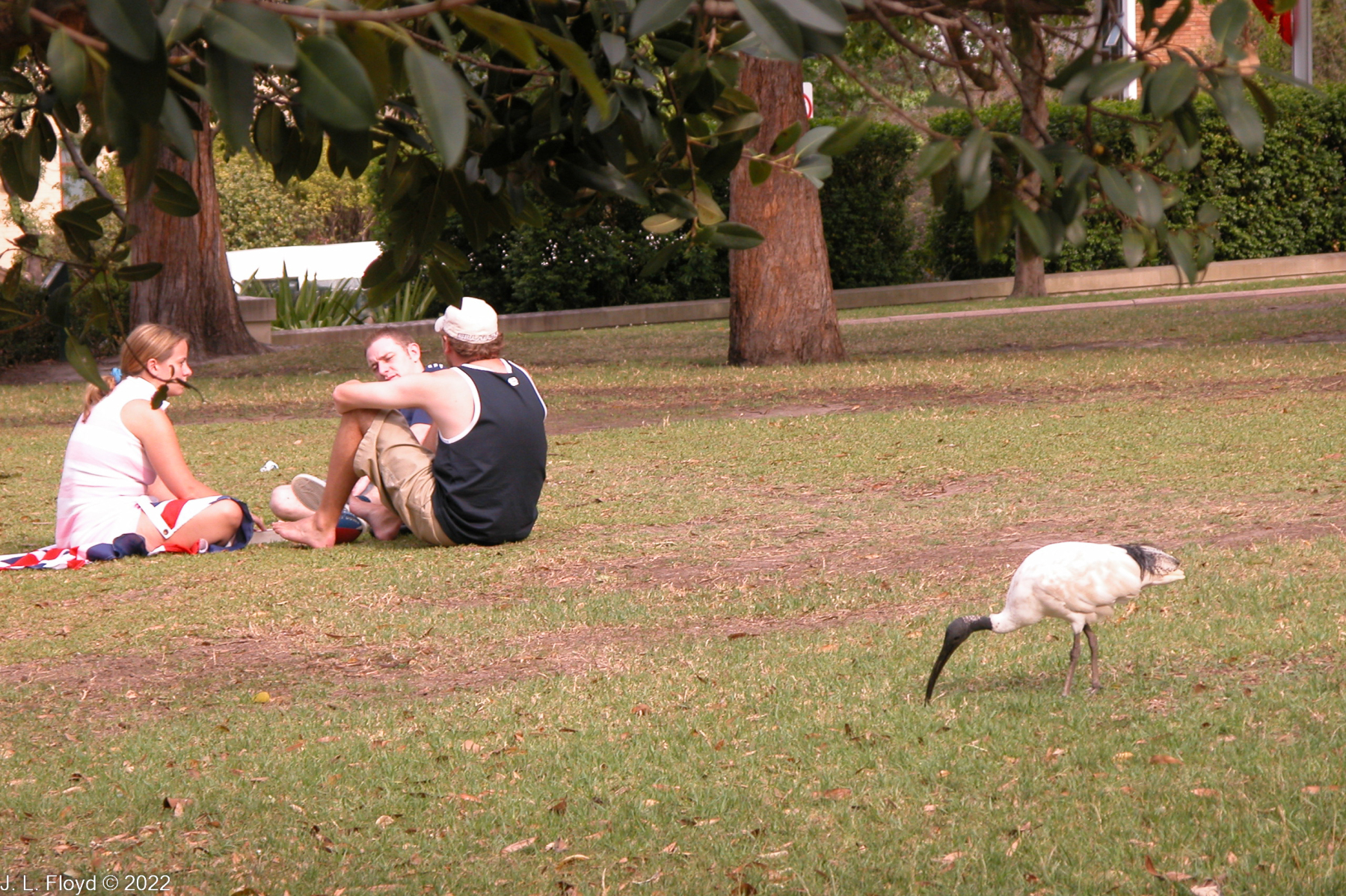
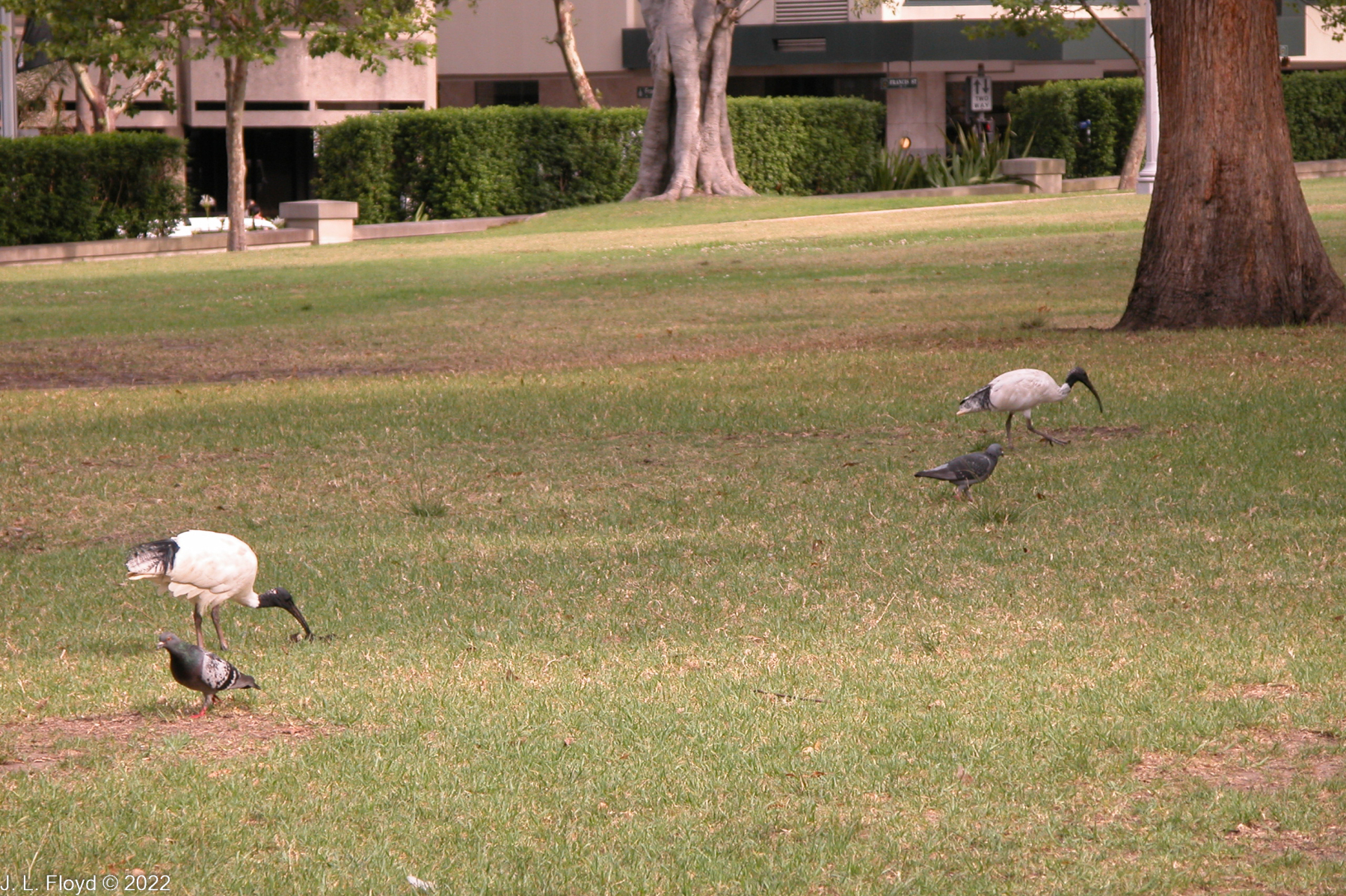
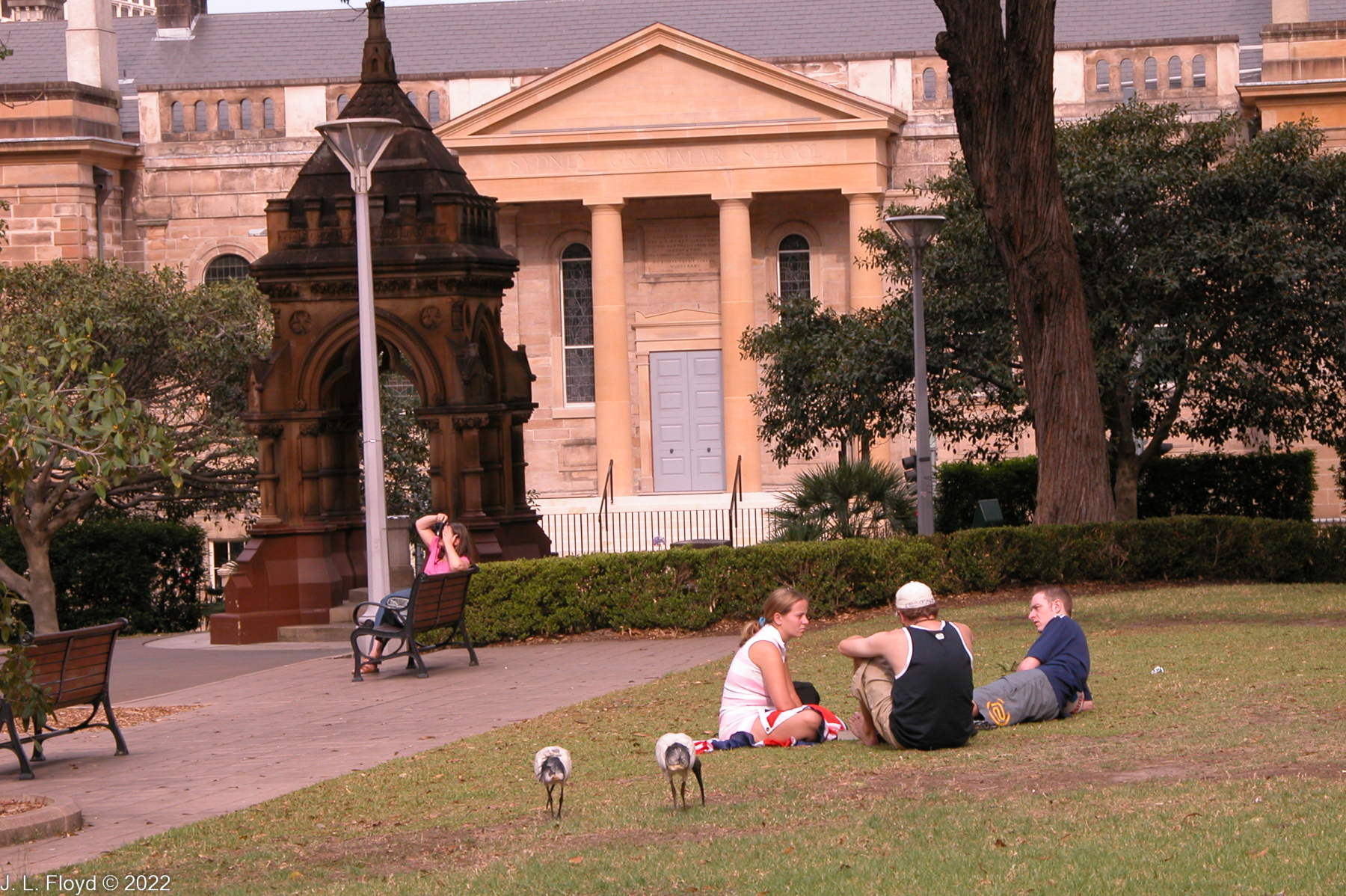
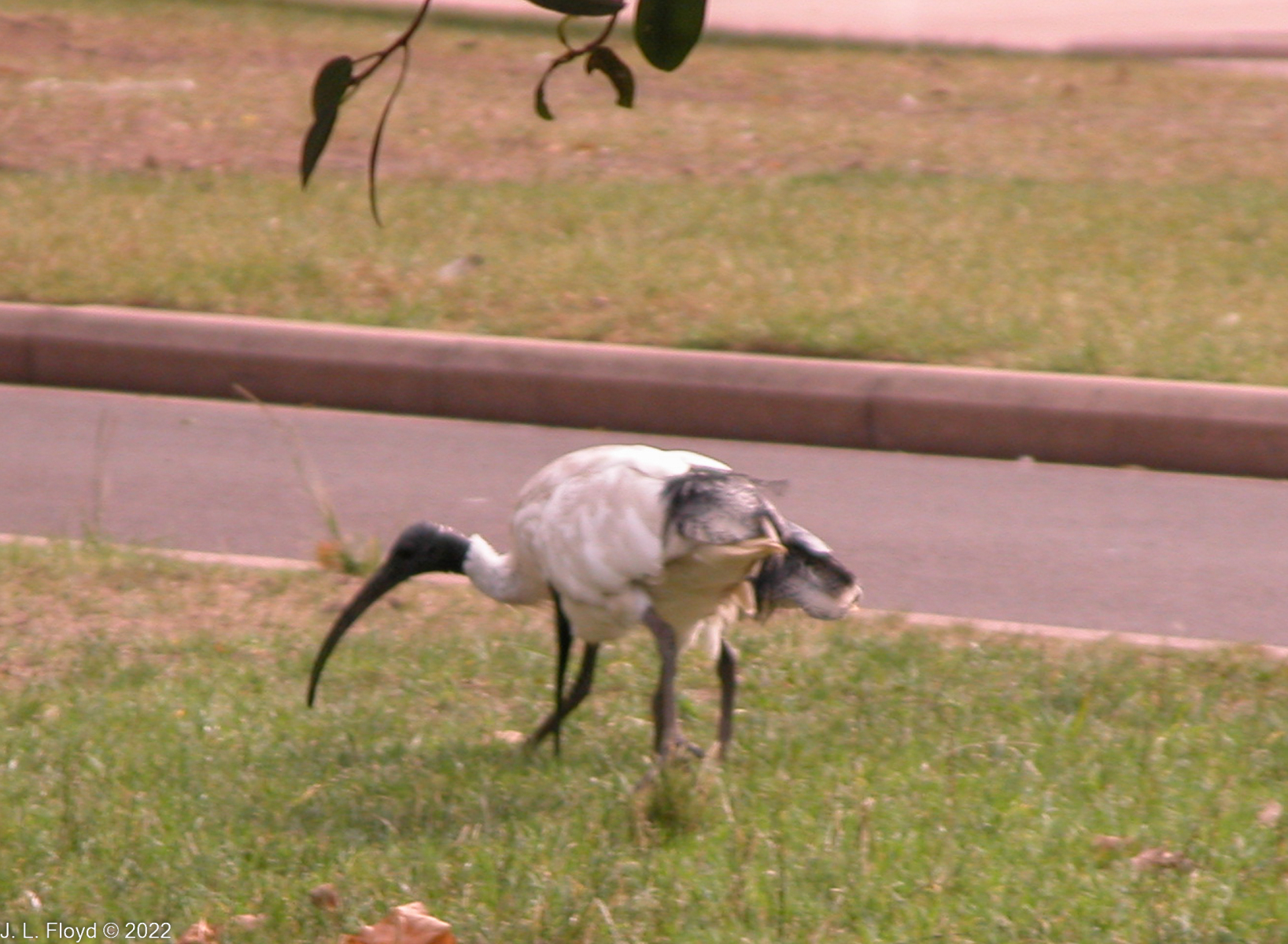
The big surprise of our first day in Australia was the birds.  Really weird birds, with fat bodies, short necks, tiny heads, long legs and even longer beaks.  I had never before seen anything like them except in pictures, and here they were, right out in a public park, nonchalantly poking around in the grass, mostly oblivious to the humans strolling and picnicking around them.  Except for Sandie and me, those humans didn’t pay much attention to them, either, so they must have been a common sight in Sydney.

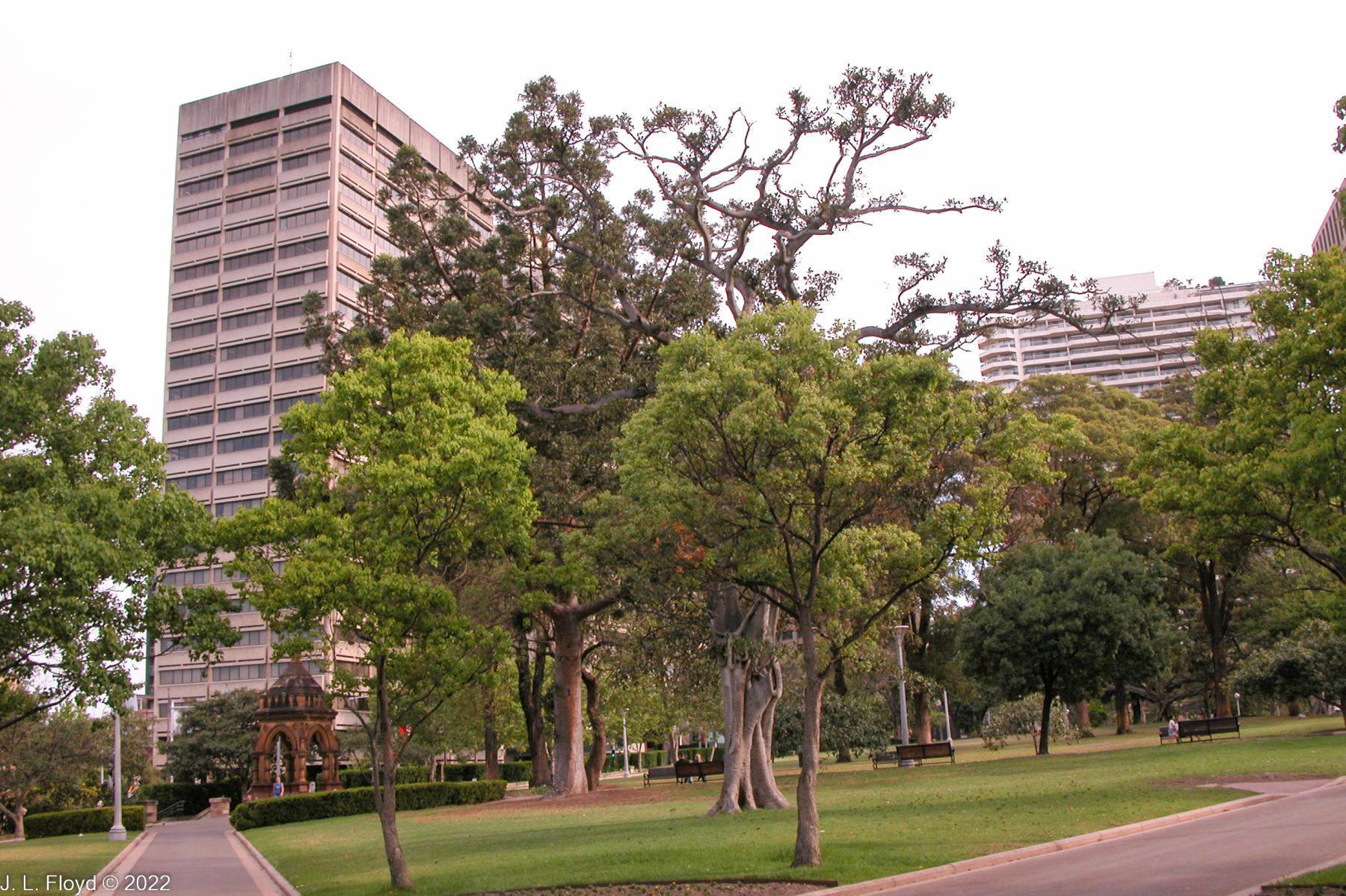
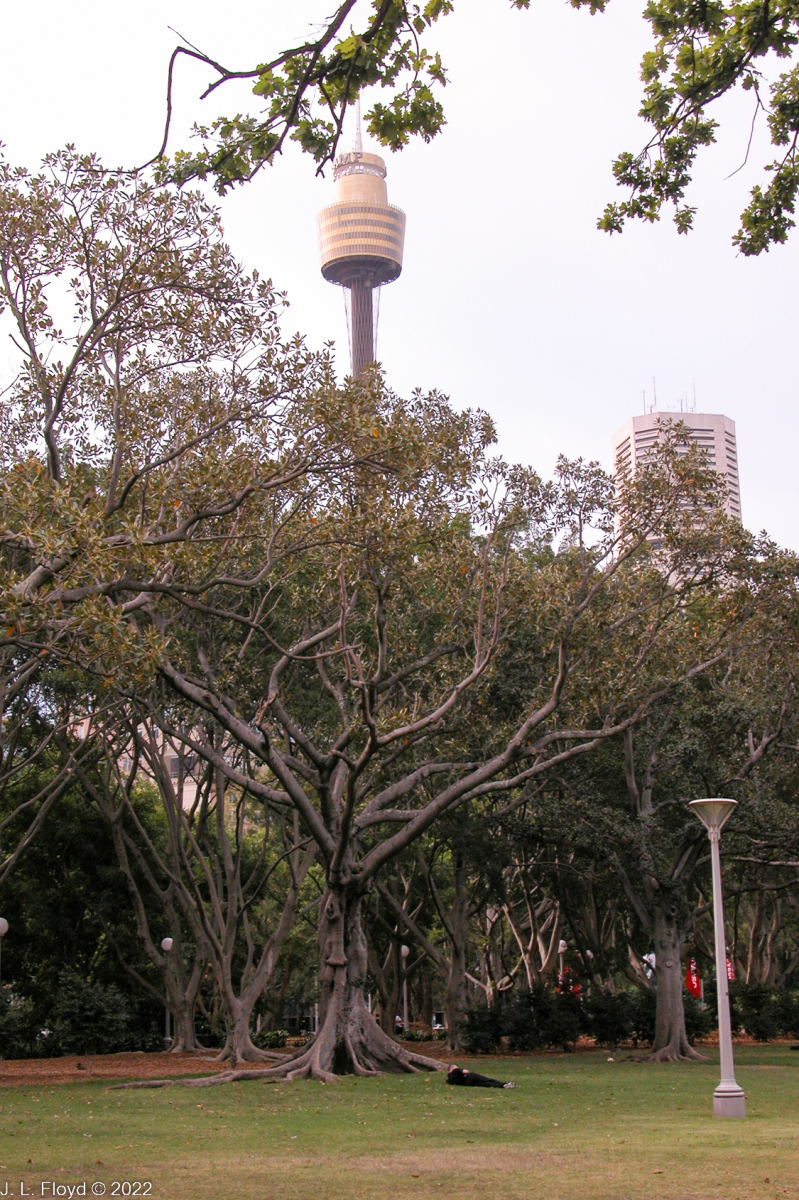
Eventually I found out that these were Australian white ibises. They would not be the last exotic and bizarre avians we encountered in Australia. We had arrived in Sydney via Qantas early in the morning, and had the whole day to wander around and recover from a 17-hour flight. We headed for downtown Sydney and soon found ourselves in Hyde Park, Australia’s oldest public park and the location of some of Sydney’s major attractions.

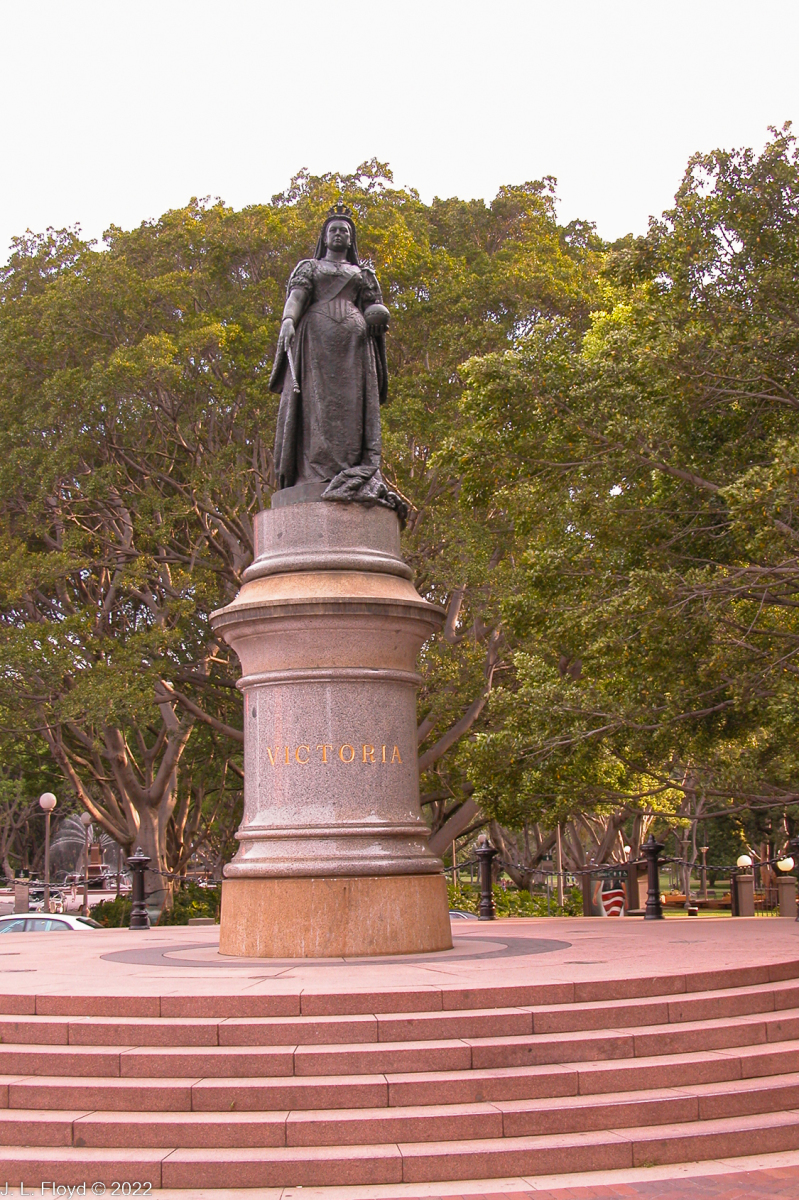
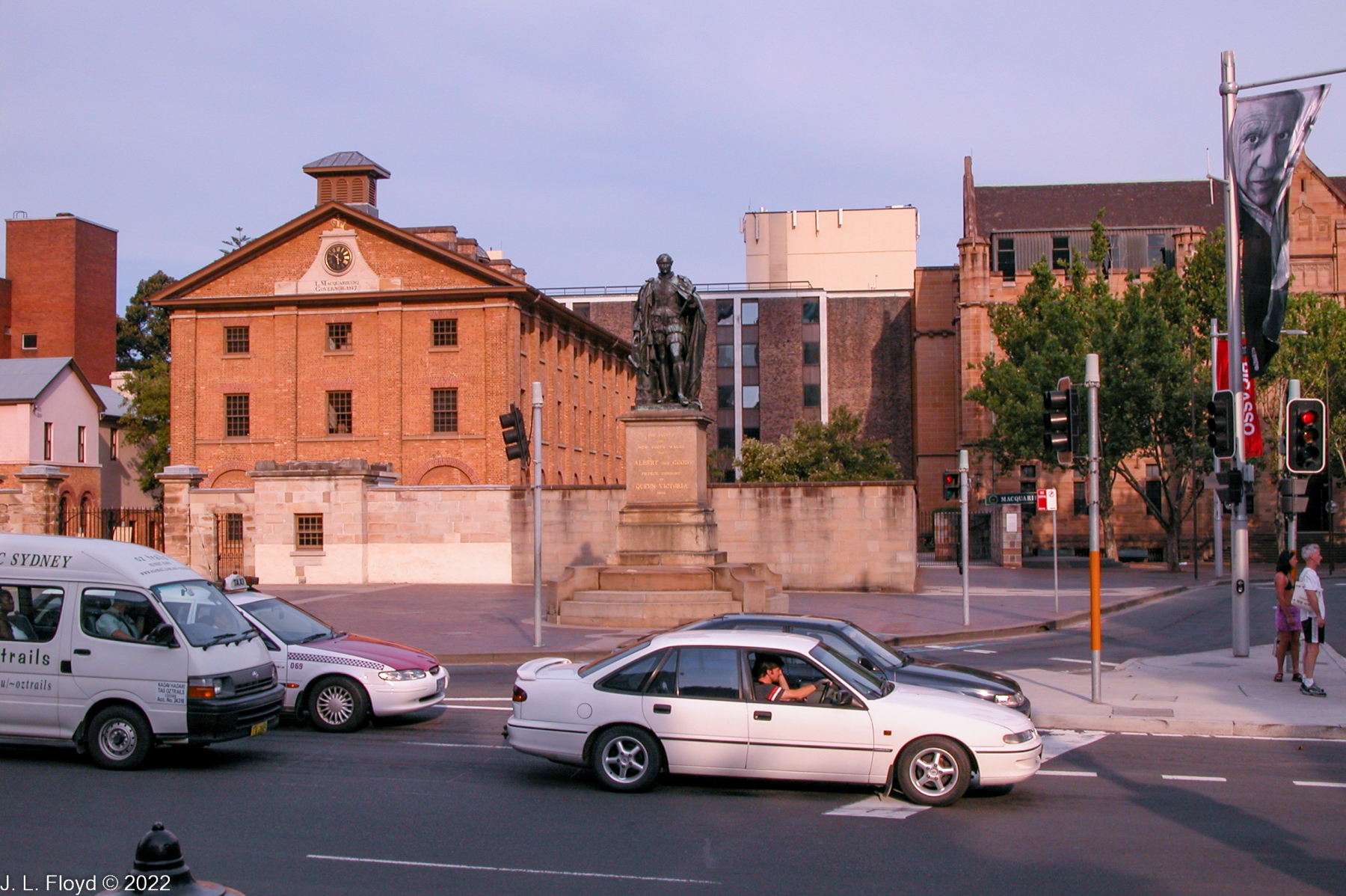
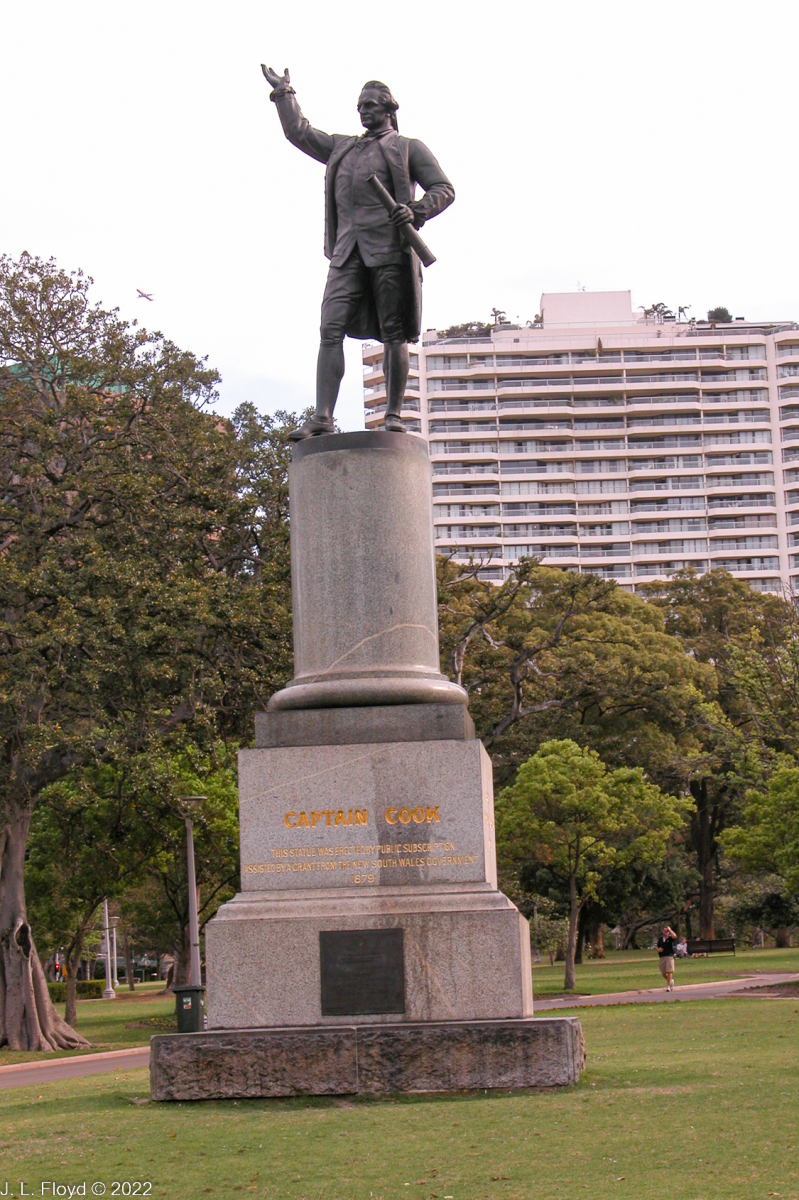
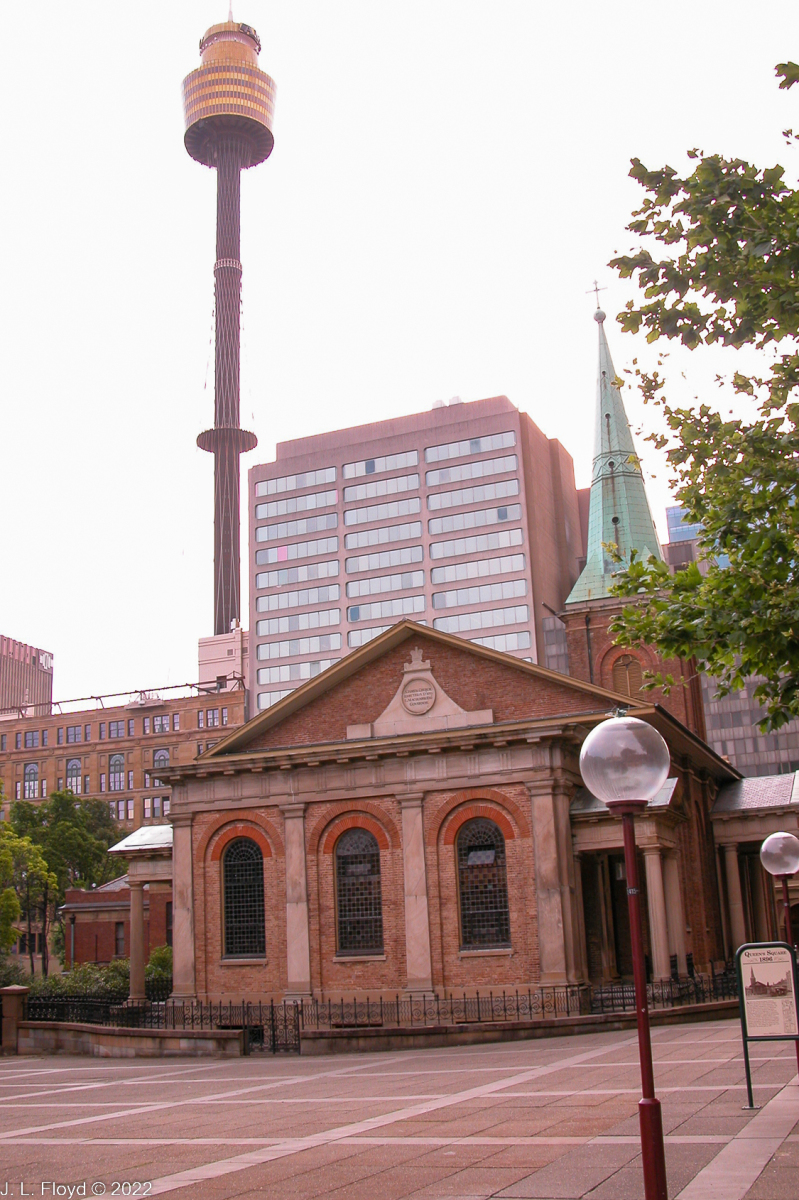
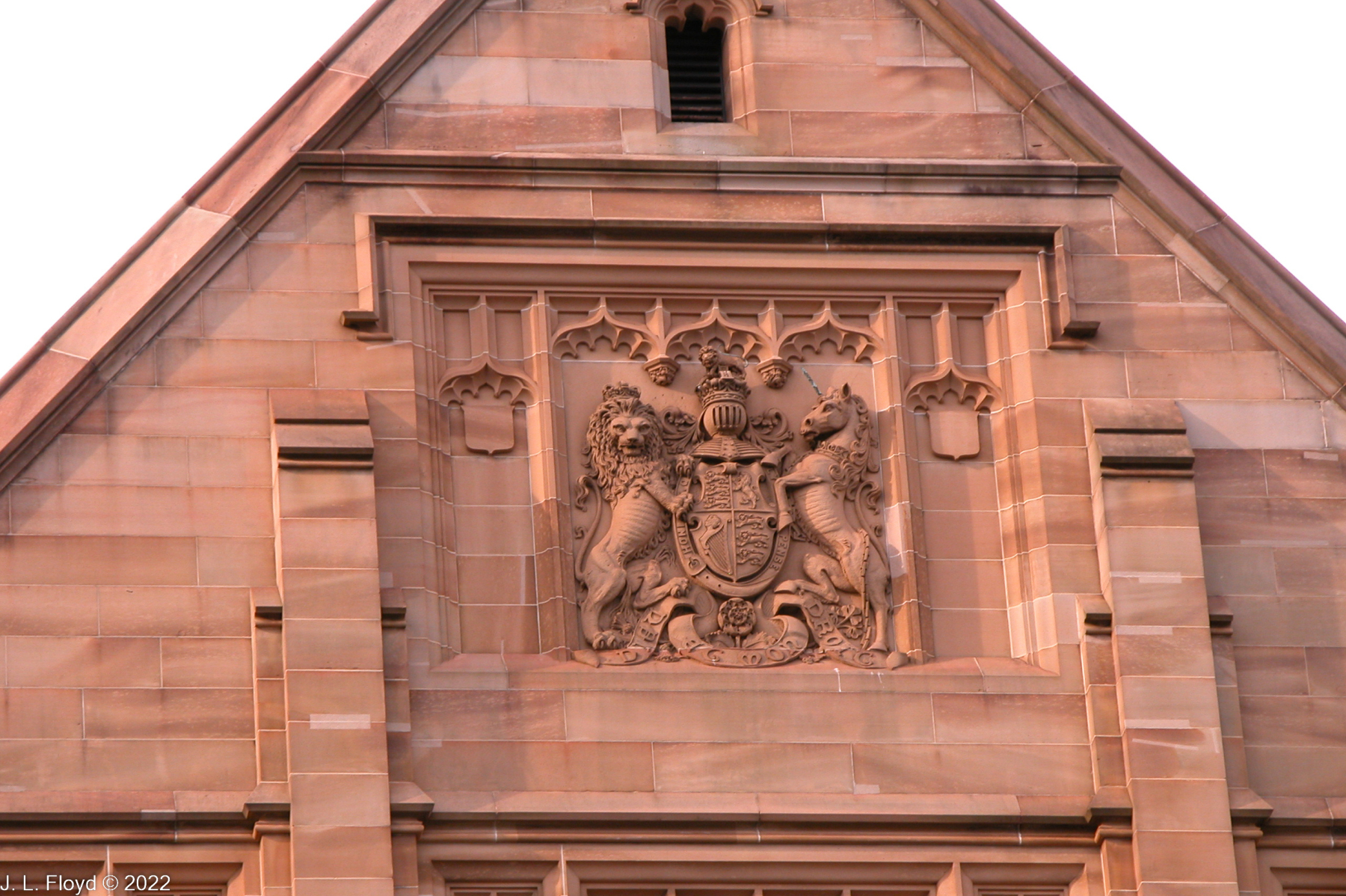
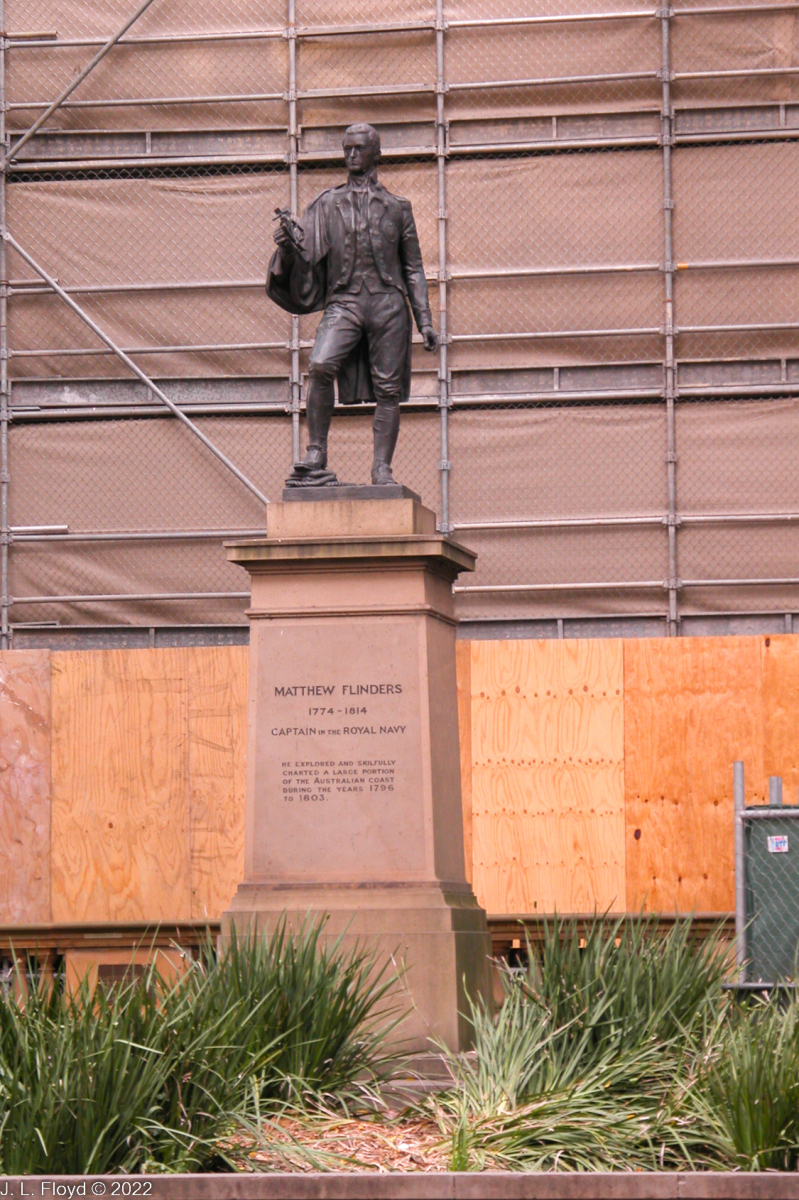
Hyde Park in Sydney of course takes its name from the original in London, and the British Empire is very much in evidence in its Australian incarnation. Strolling around the park, we encountered statues of Queen Victoria, her consort Prince Albert, and the explorer Captain Cook. We found a lovely old Anglican church, St. James’, dating from 1824. On the east side of the park, we found the Australian Museum, Sydney’s oldest museum, dating from 1827; it features zoological and anthropological exhibits. We spent a couple of hours there, and then went on to continue our exploration of the Hyde Park area.

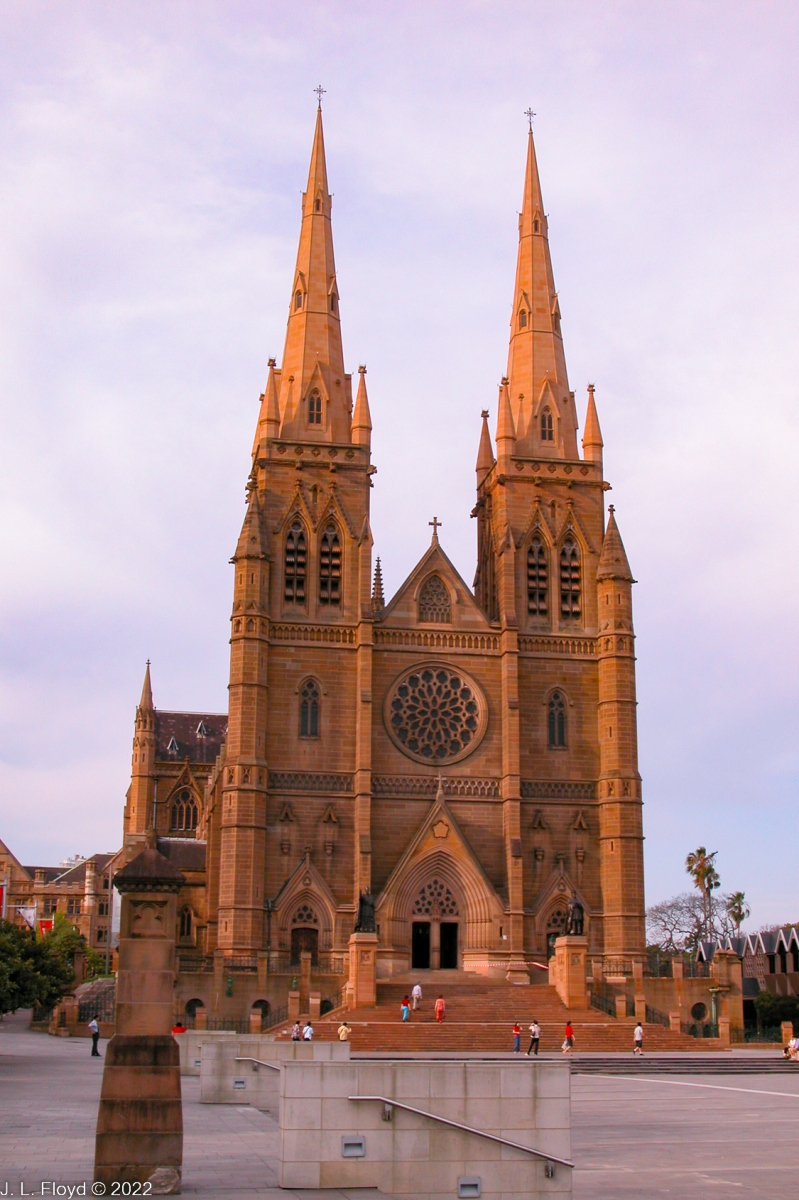
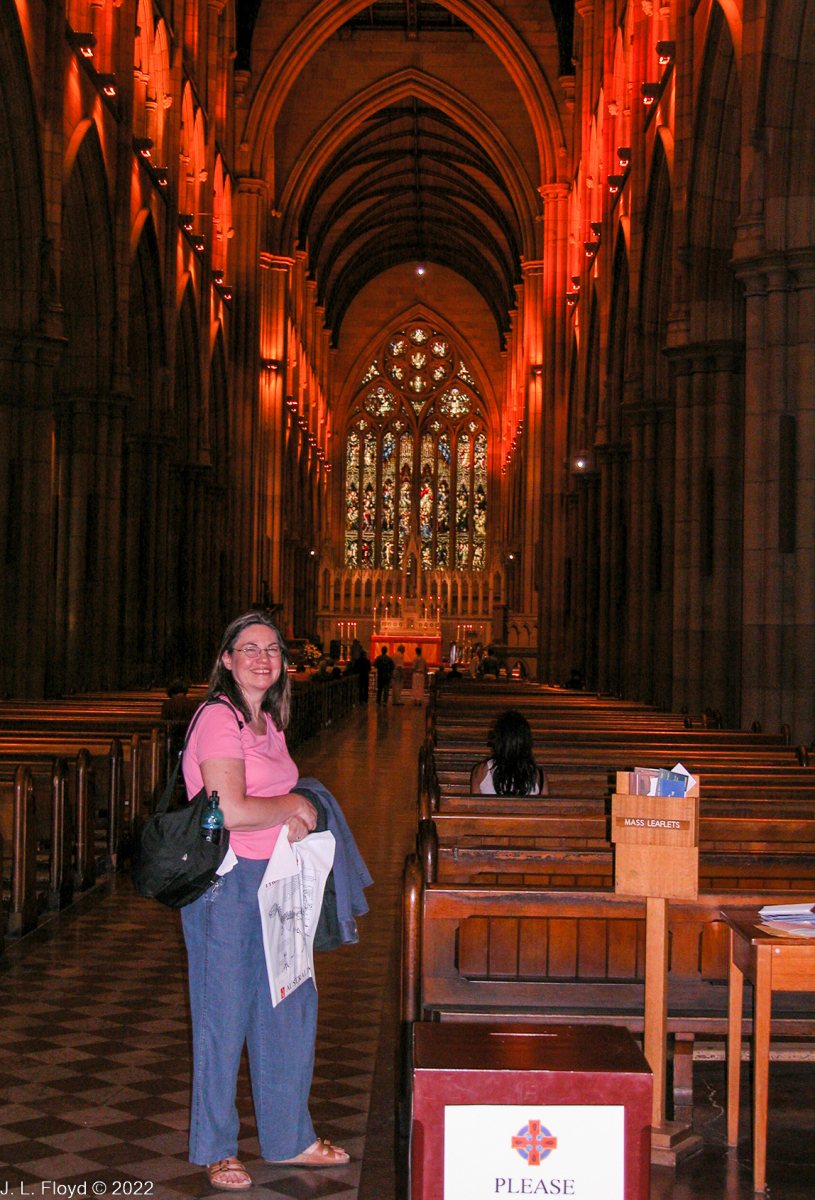
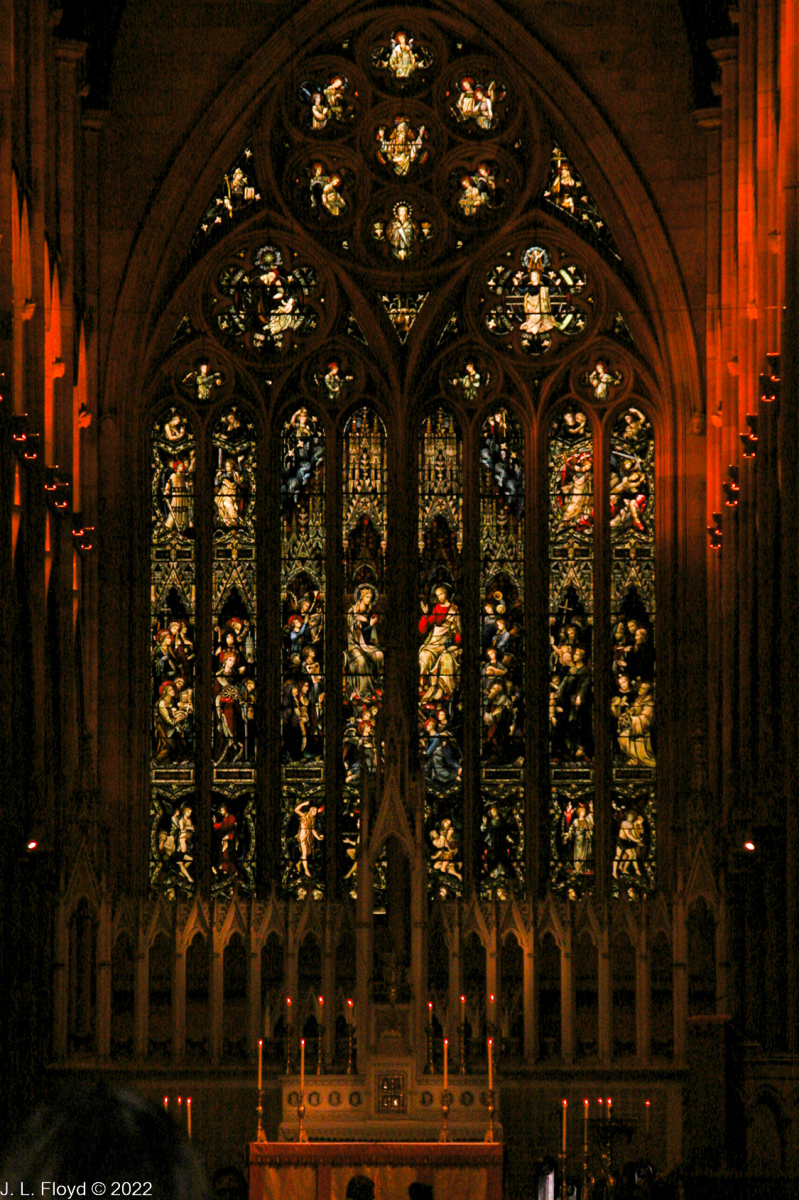
On the northeast of Hyde Park we found St. Mary’s, an imposing Gothic-style Roman Catholic cathedral which is the seat of the Archbishop of Sydney. It was begun in 1868 and largely completed by 1928, when the nave was dedicated, although the spires were only added in 2000.

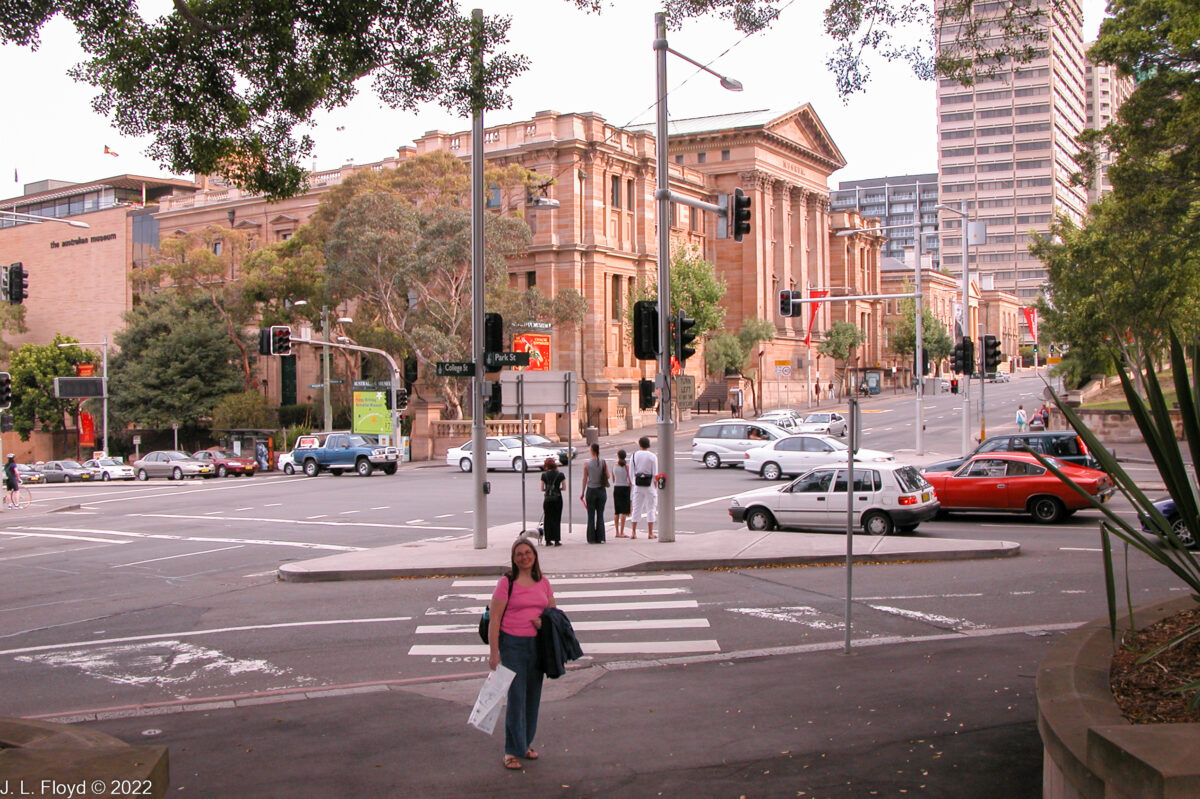
After exploring Hyde Park and its environs, we didn’t have much time to explore the rest of downtown Sydney before we had to call it a day and return to our hotel. We wanted to ascend Sydney Tower, where one can obtain a fabulous view of the city and surrounding areas from the observation deck, but by this time we were exhausted and decided to leave it for another day. Because our subsequent days in Sydney were so full, though, we never made it to the top of Sydney Tower; but I did manage to capture a few snapshots of interesting sights in the city as we wended our way back to the hotel.

Categories
Japan, April 1996

Miya Jima, April 18, 1996

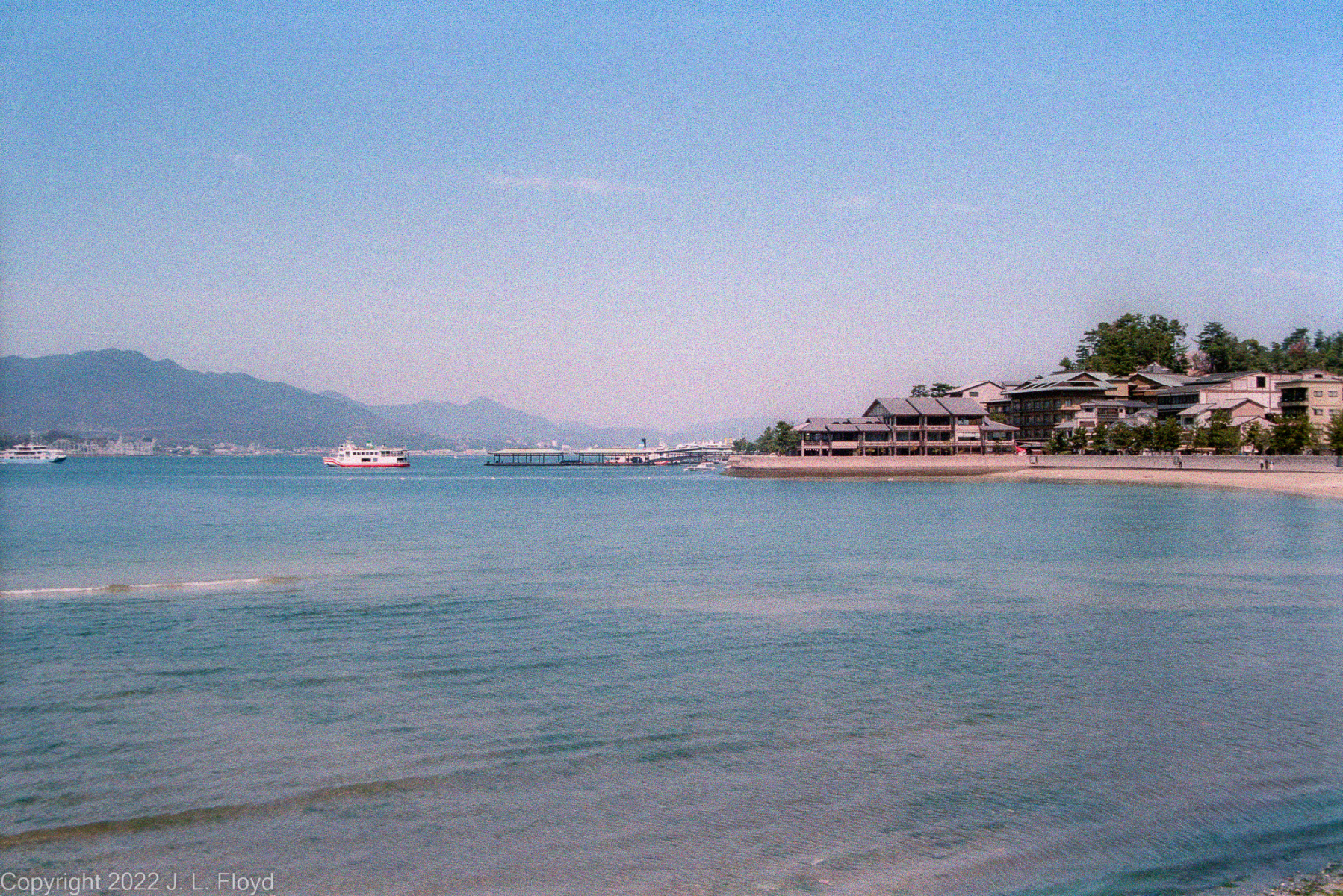
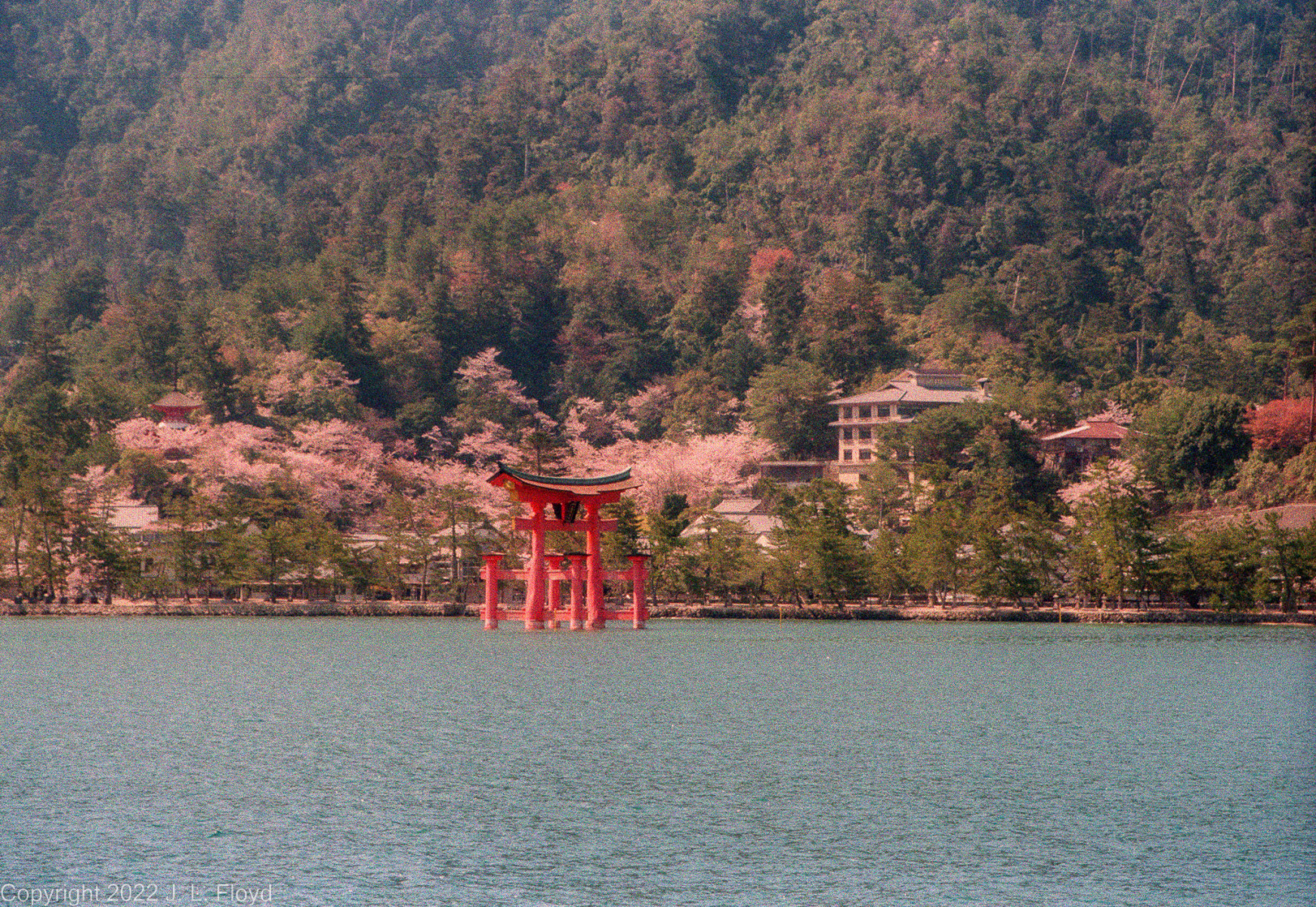
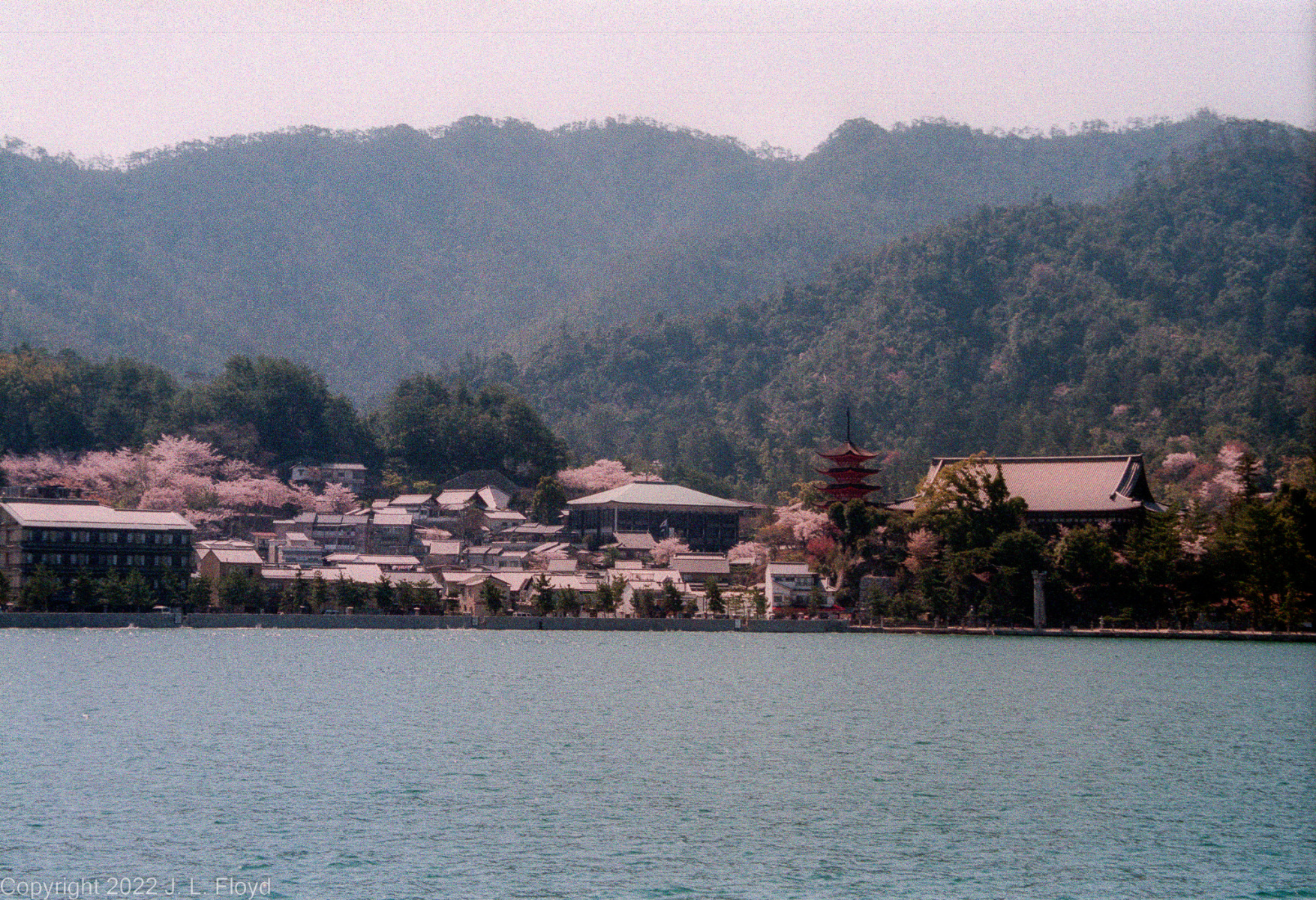
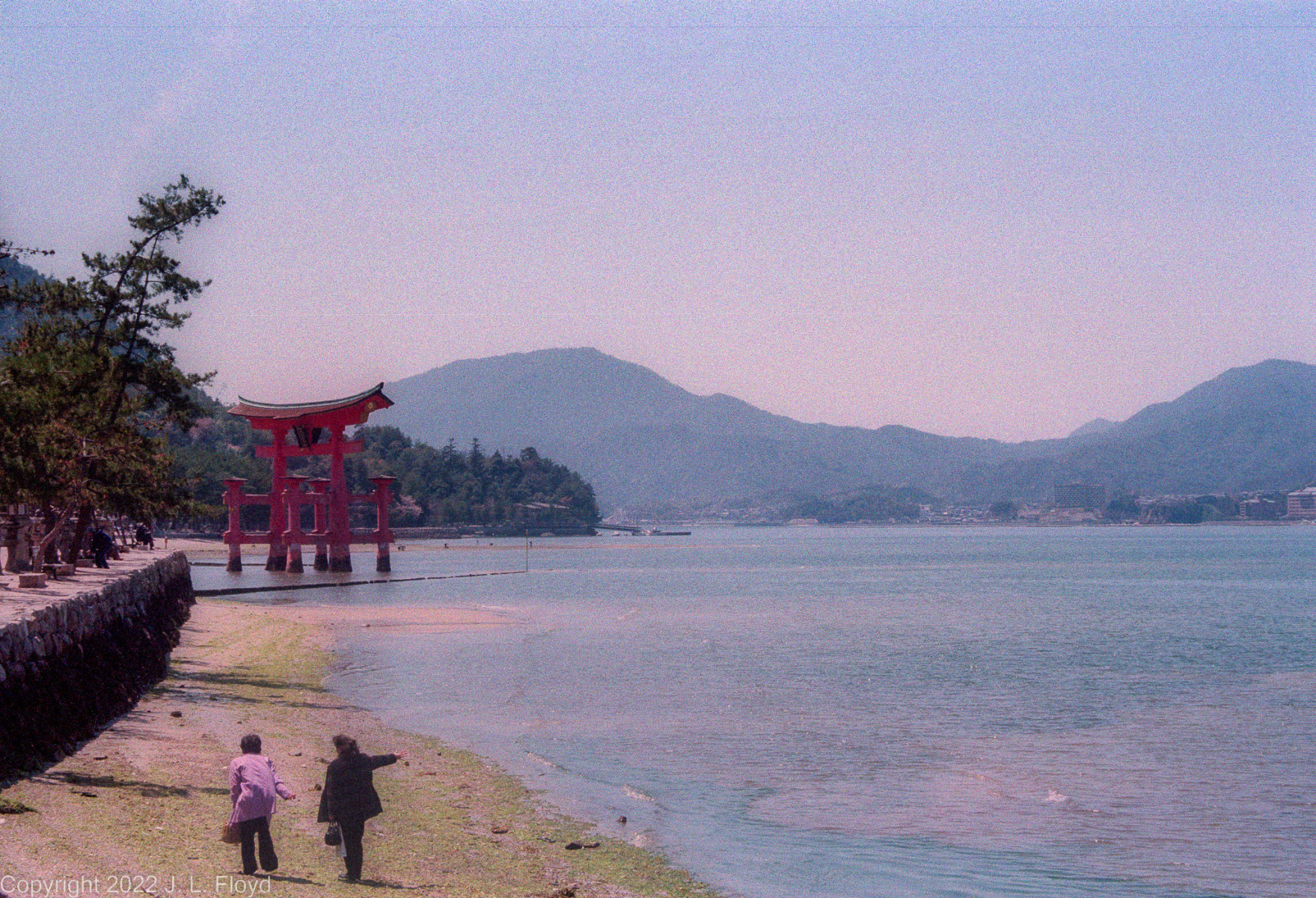
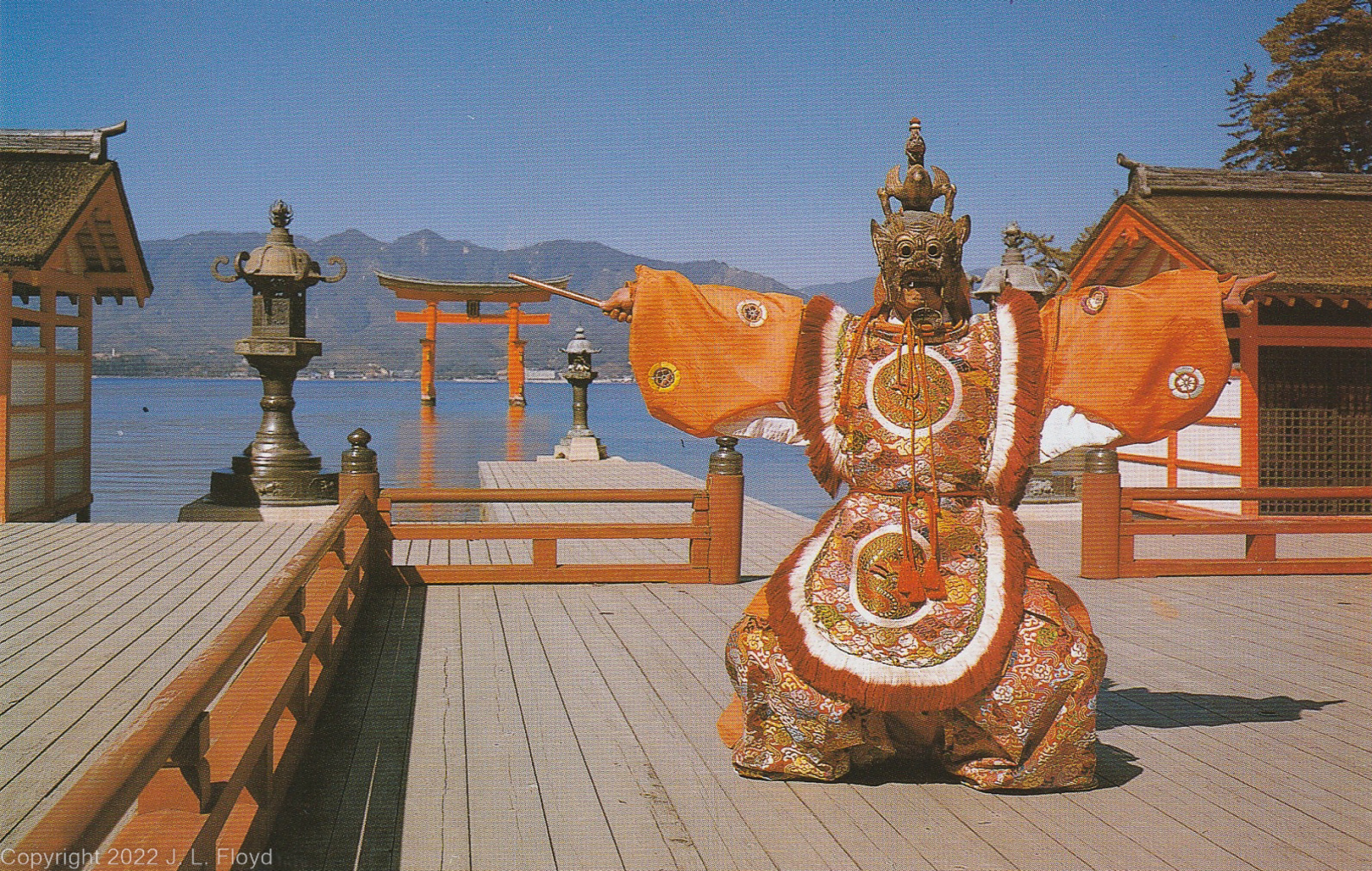
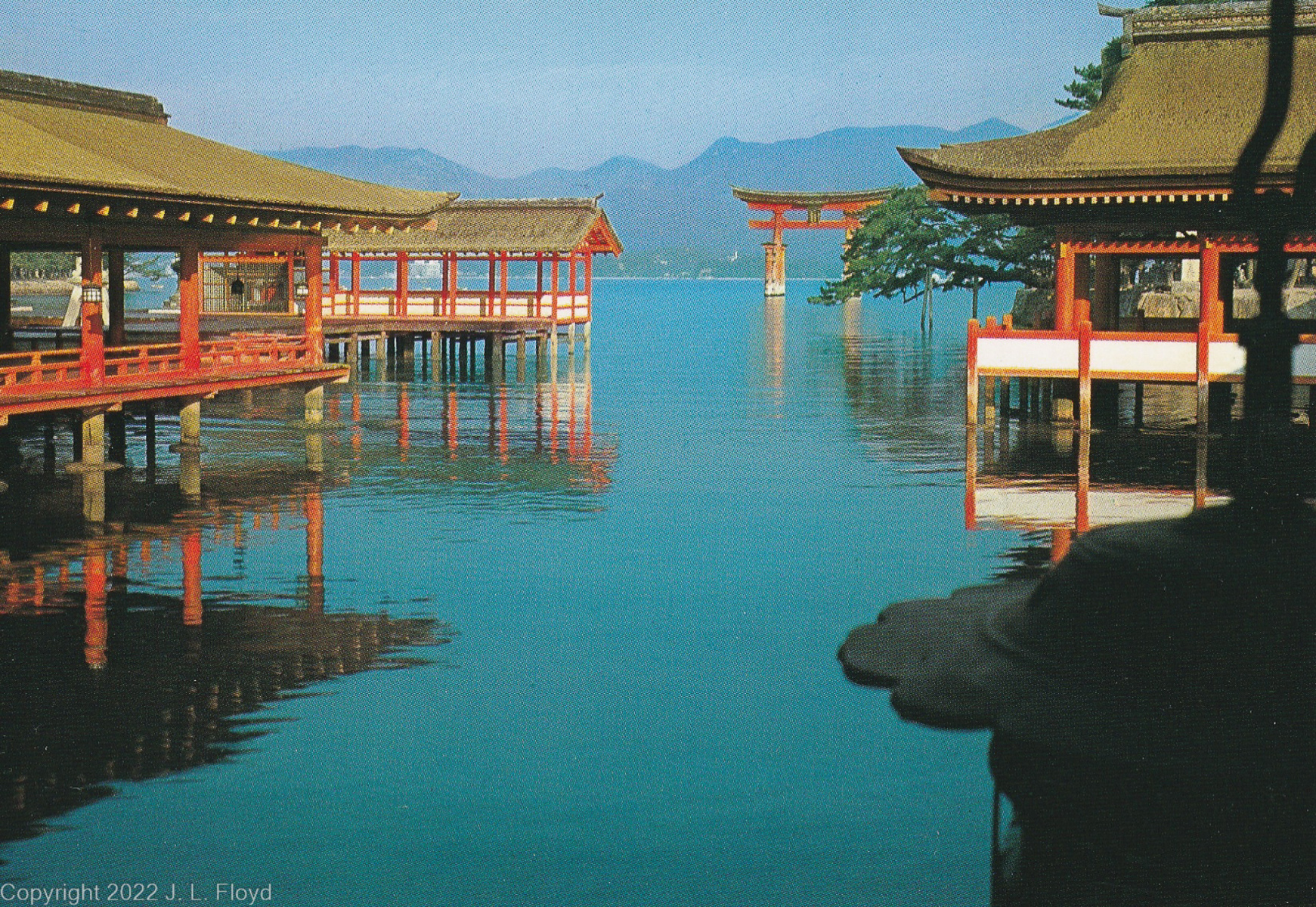
Miya Jima is a small island across the bay from Hiroshima. It is the site of Itsukushima Shrine, one of the most famous in Japan, and a place of spectacular beauty.

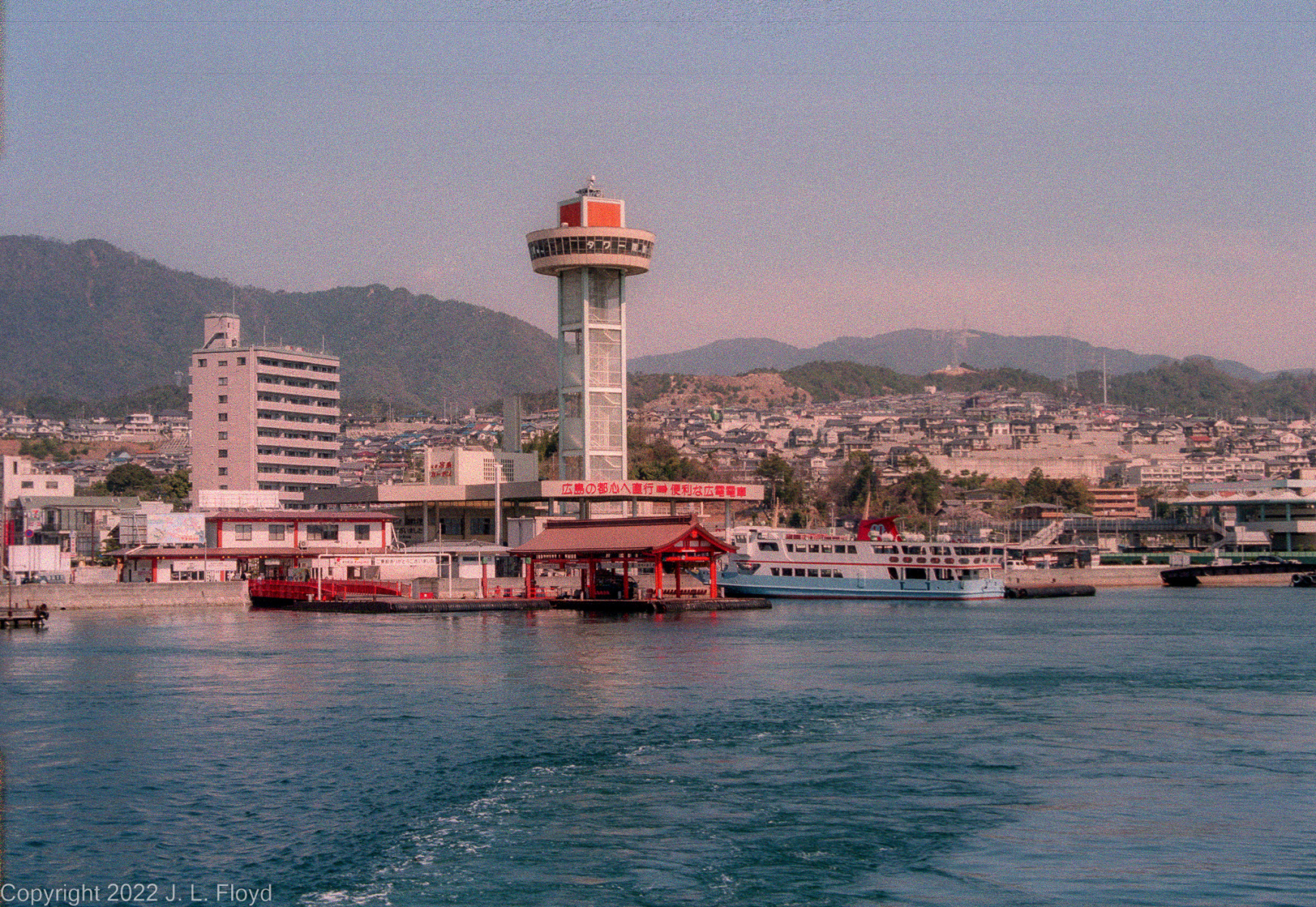
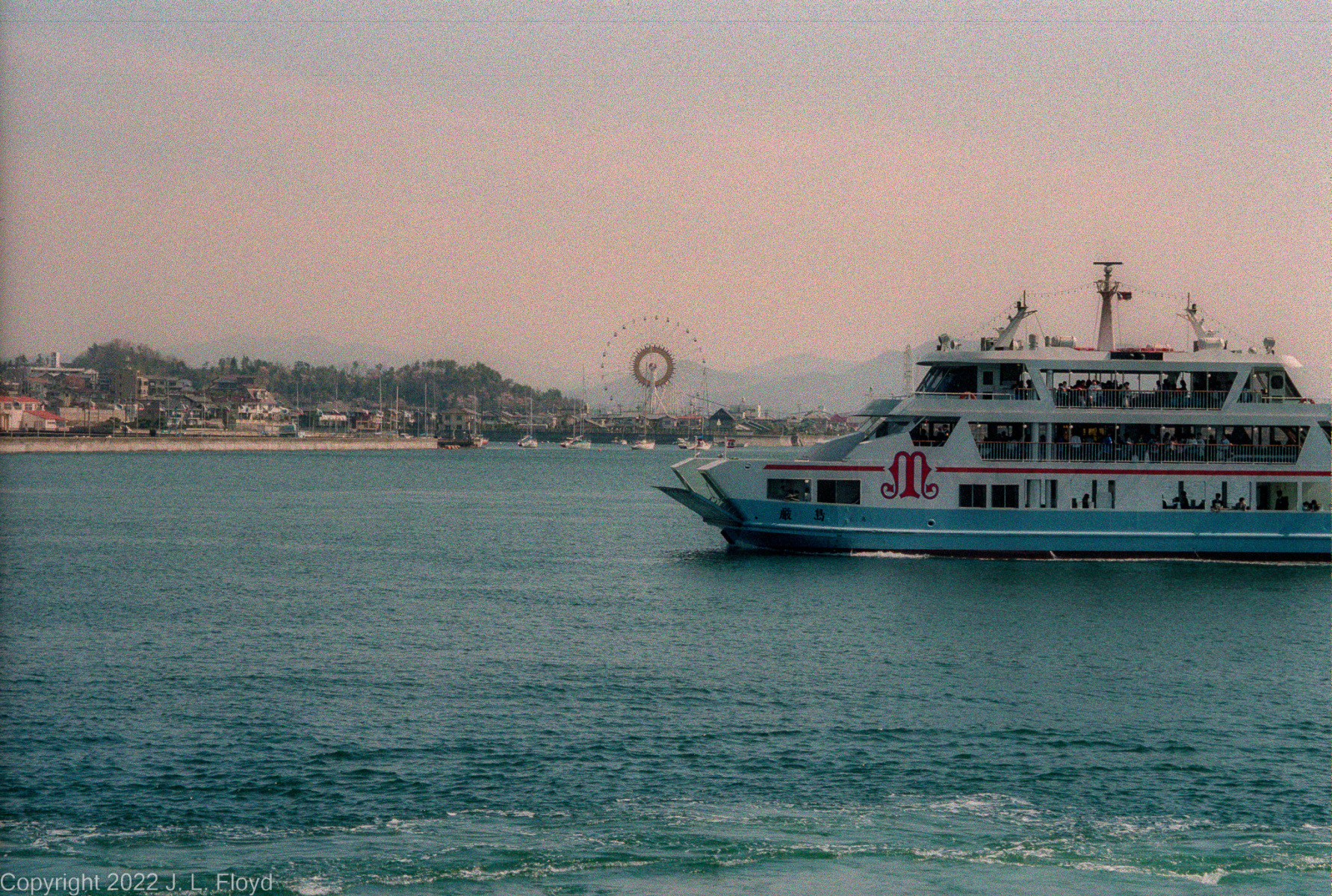
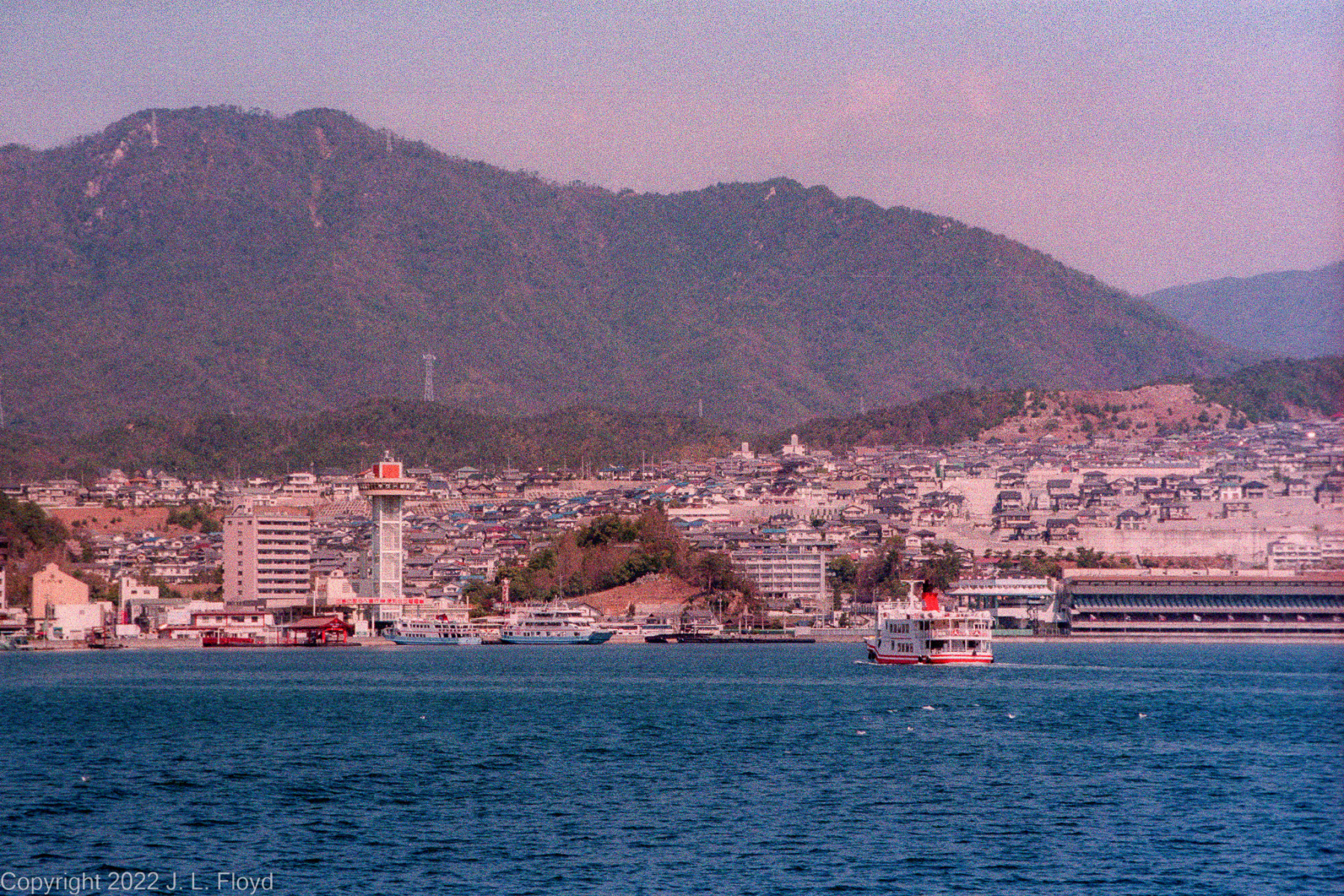
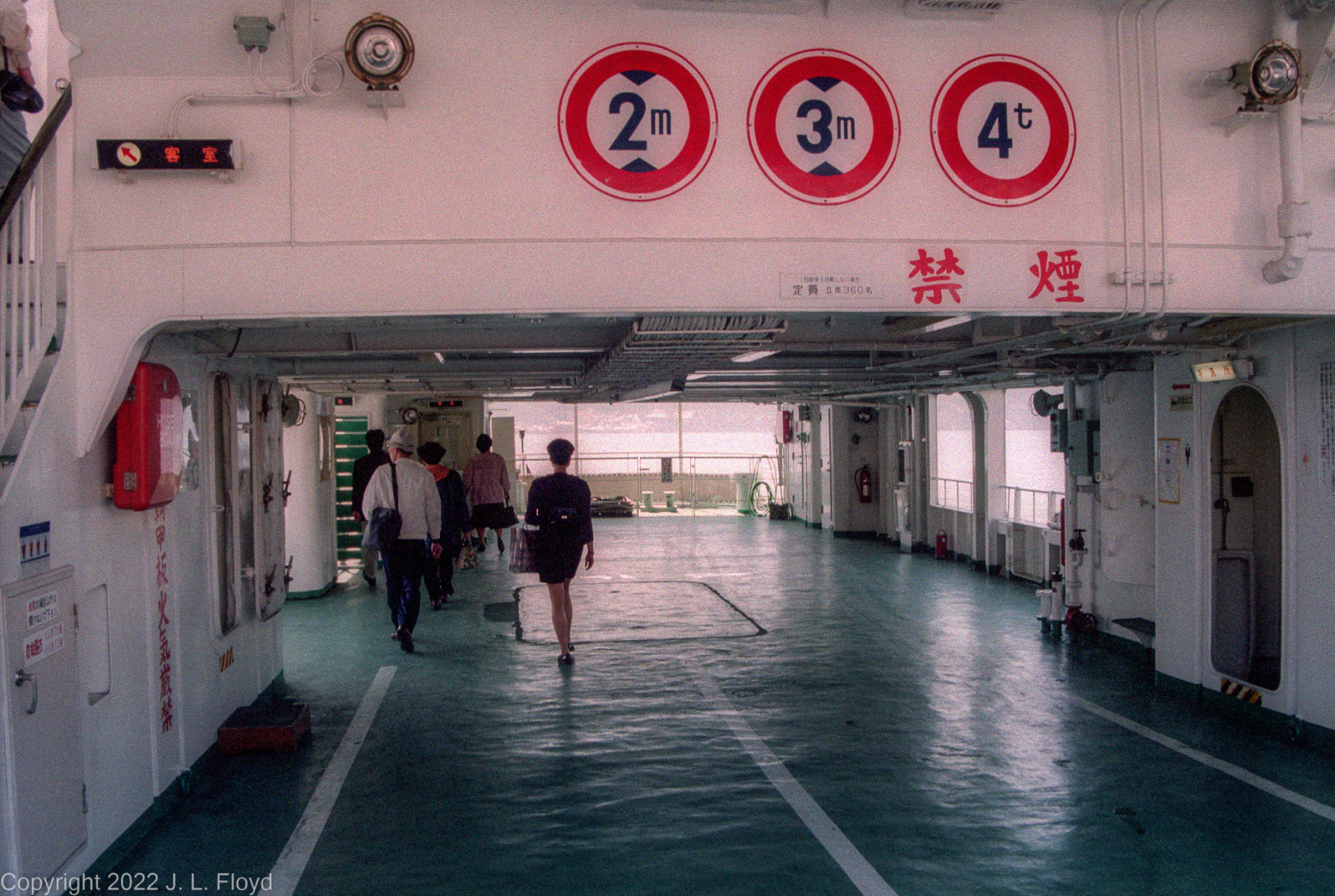
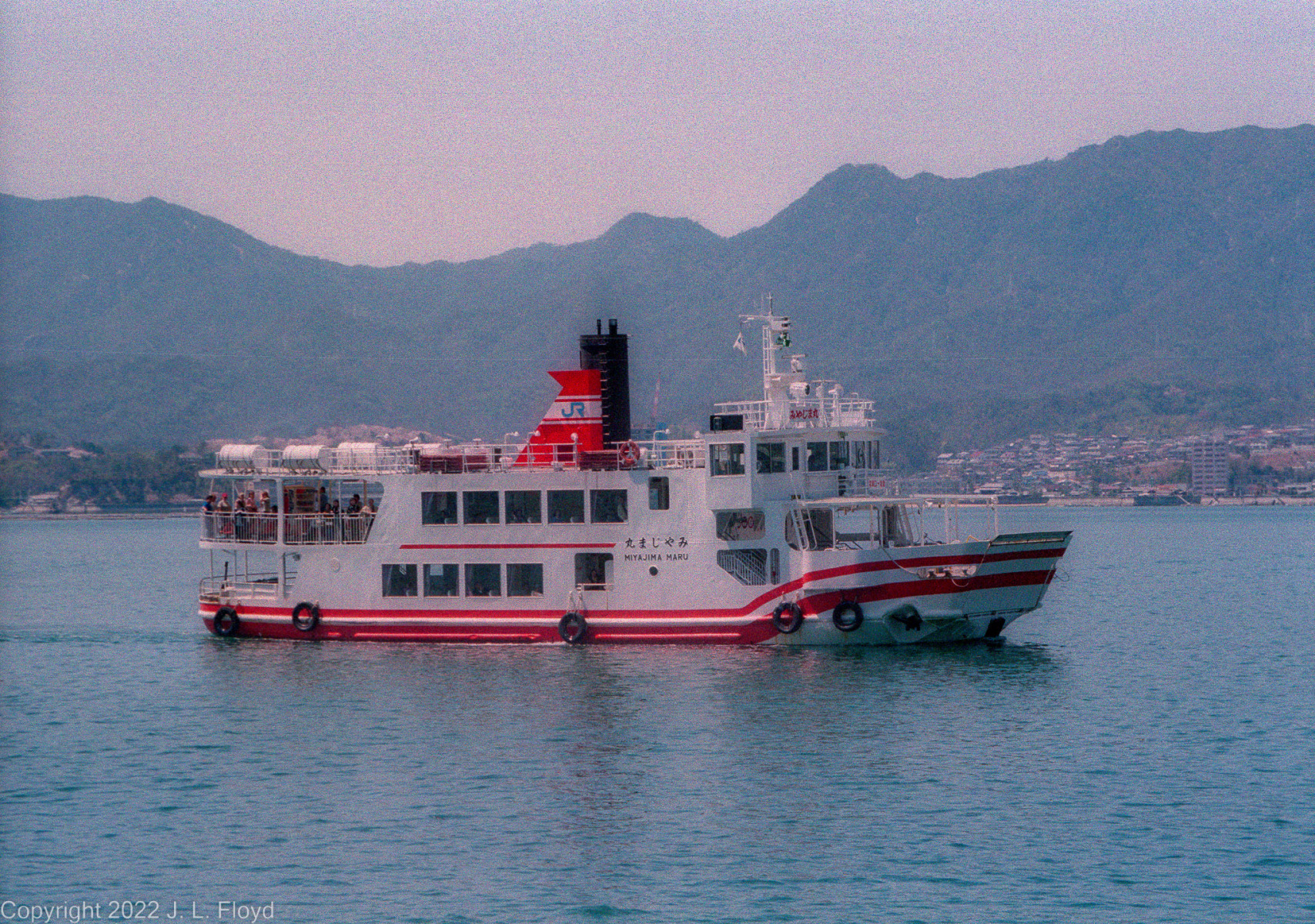
One reaches Miya Jima by taking a ferry from Hiroshima harbor. The trip takes less than half an hour and is worth going on in itself.

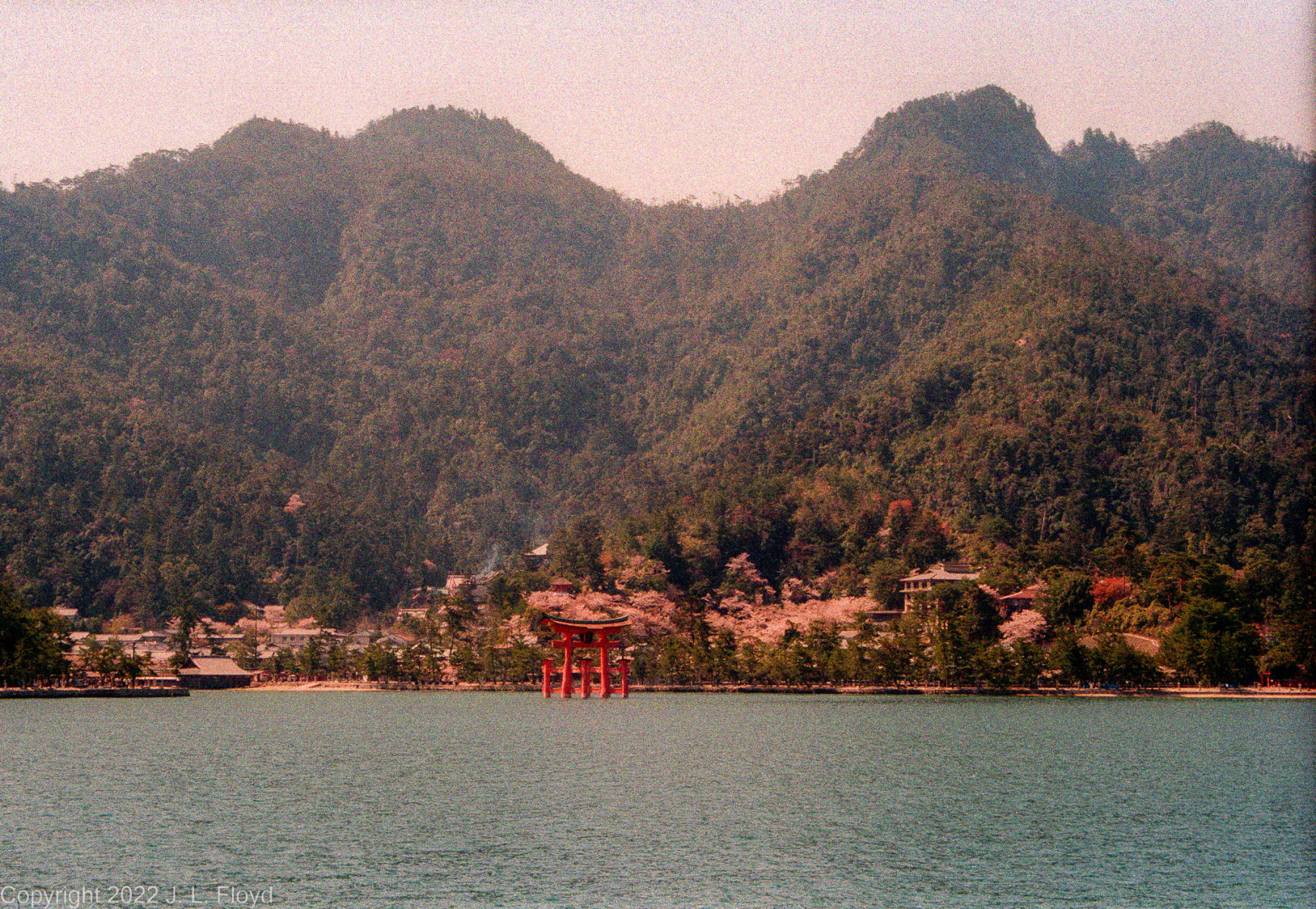
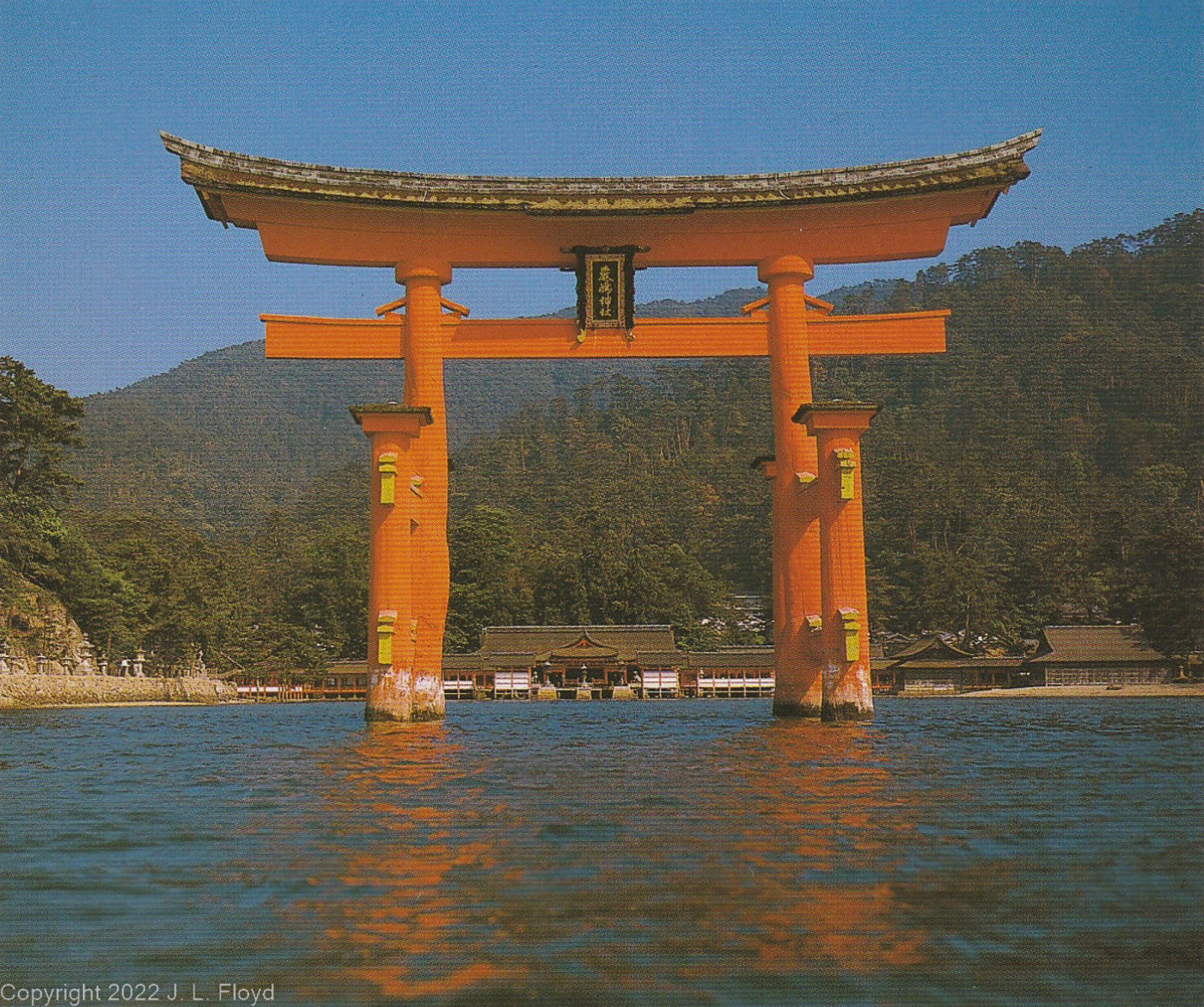
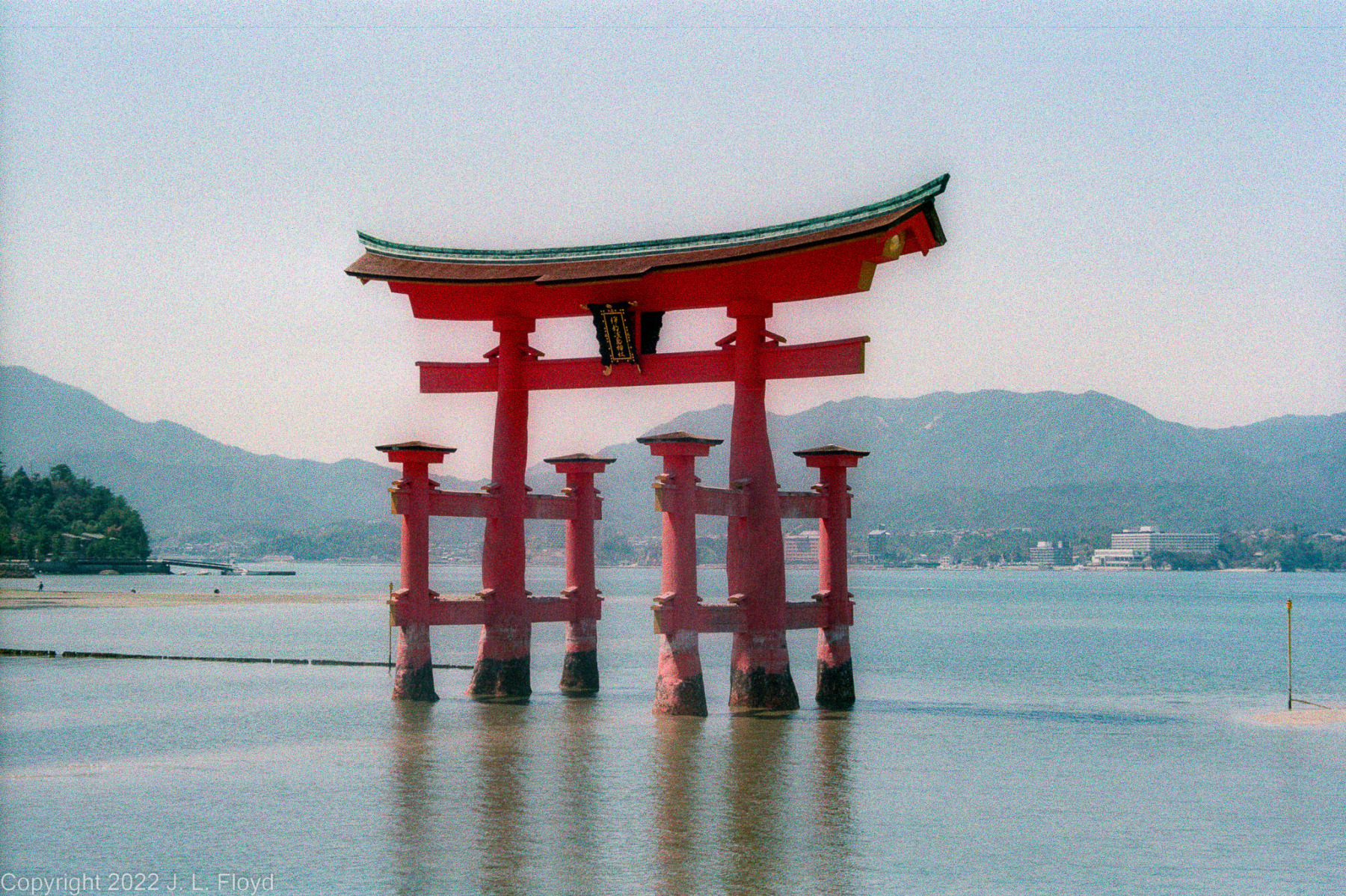
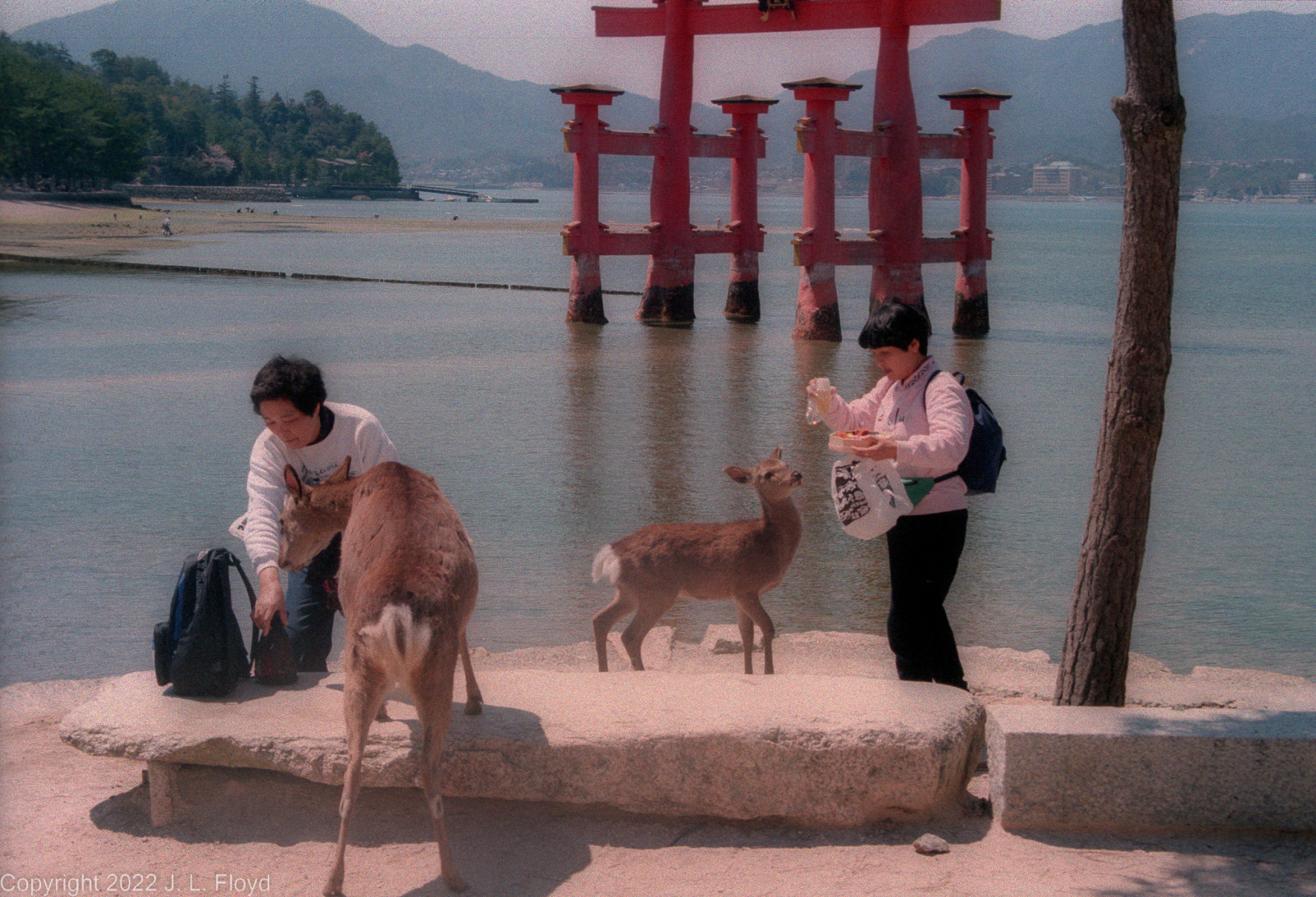
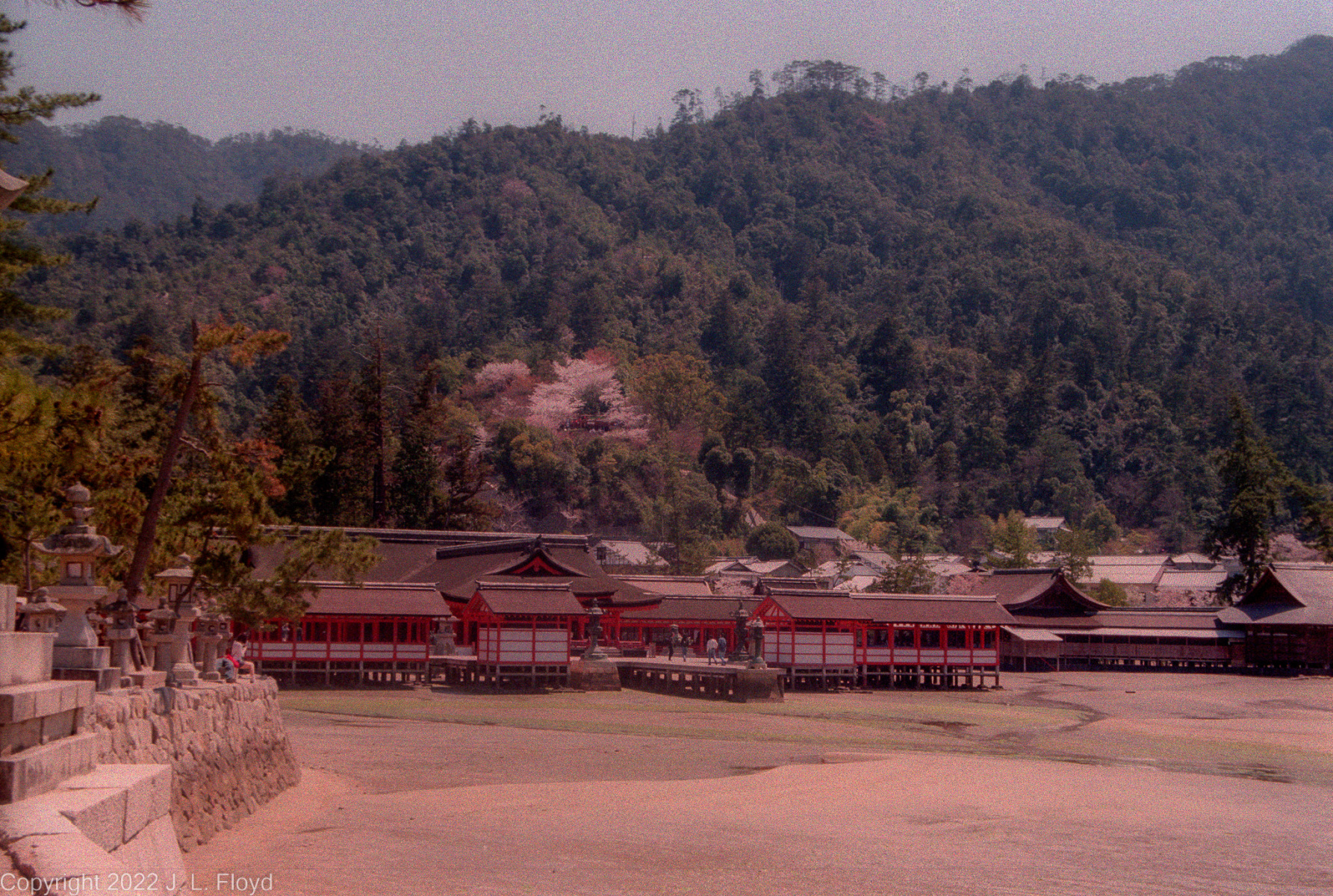
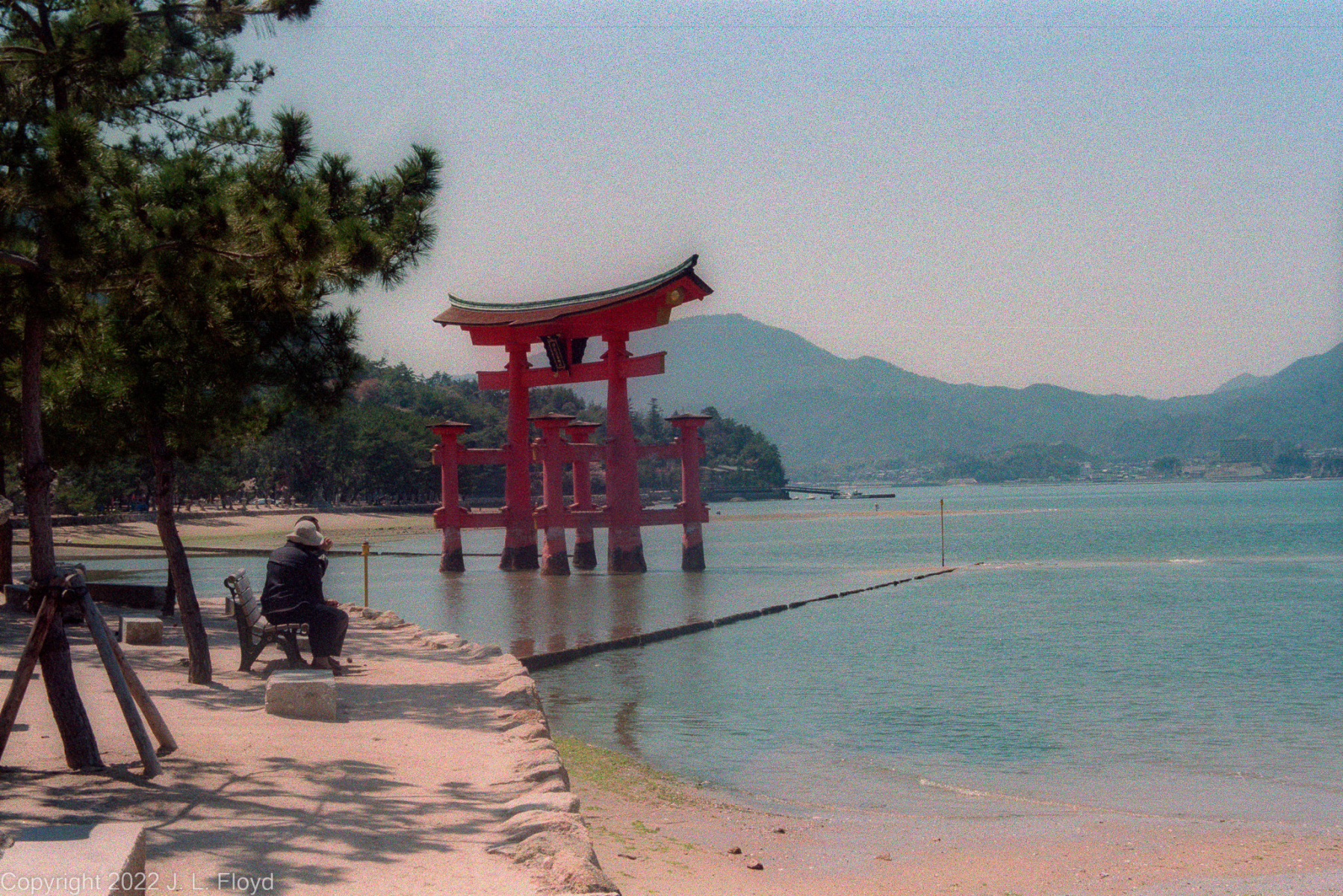
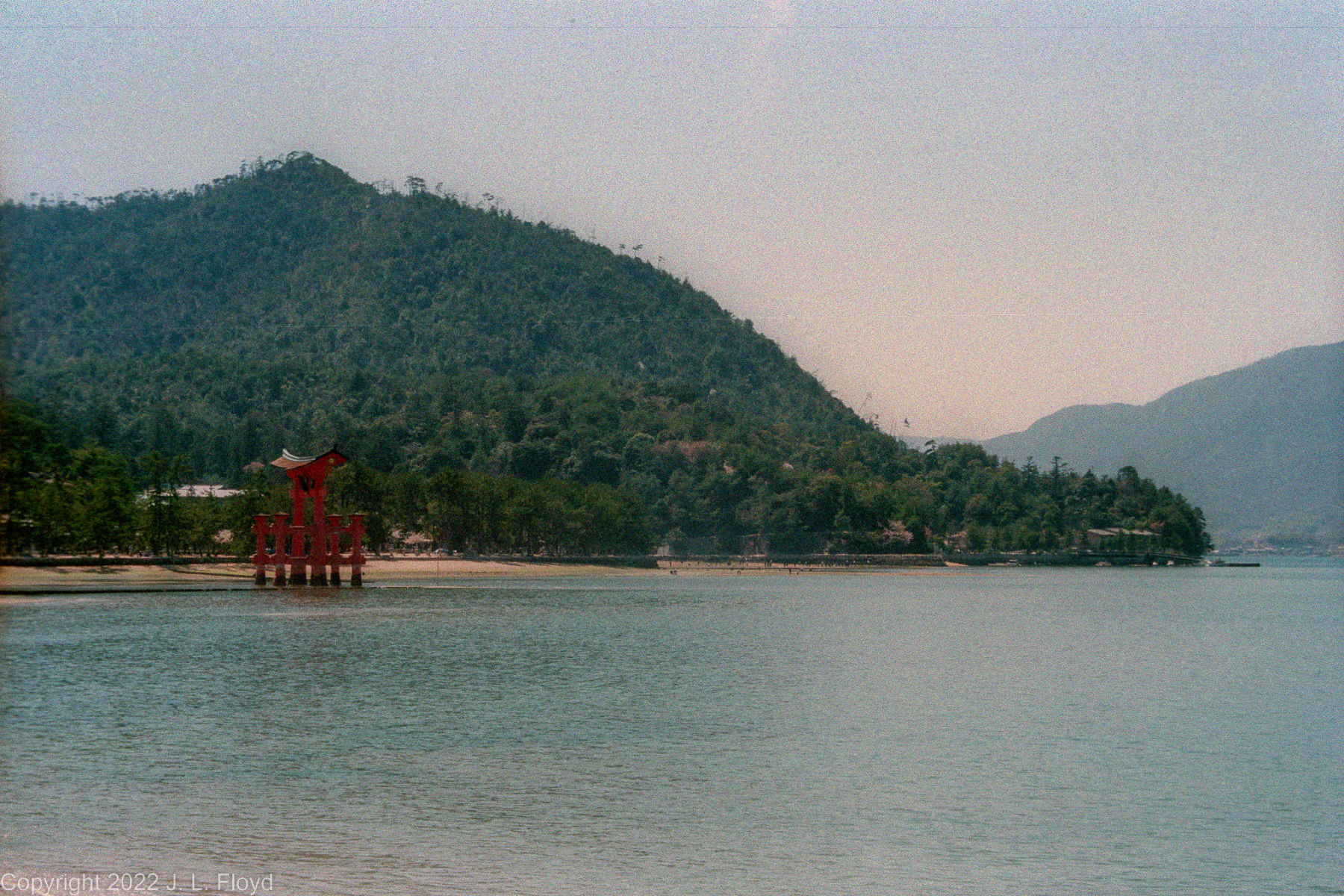
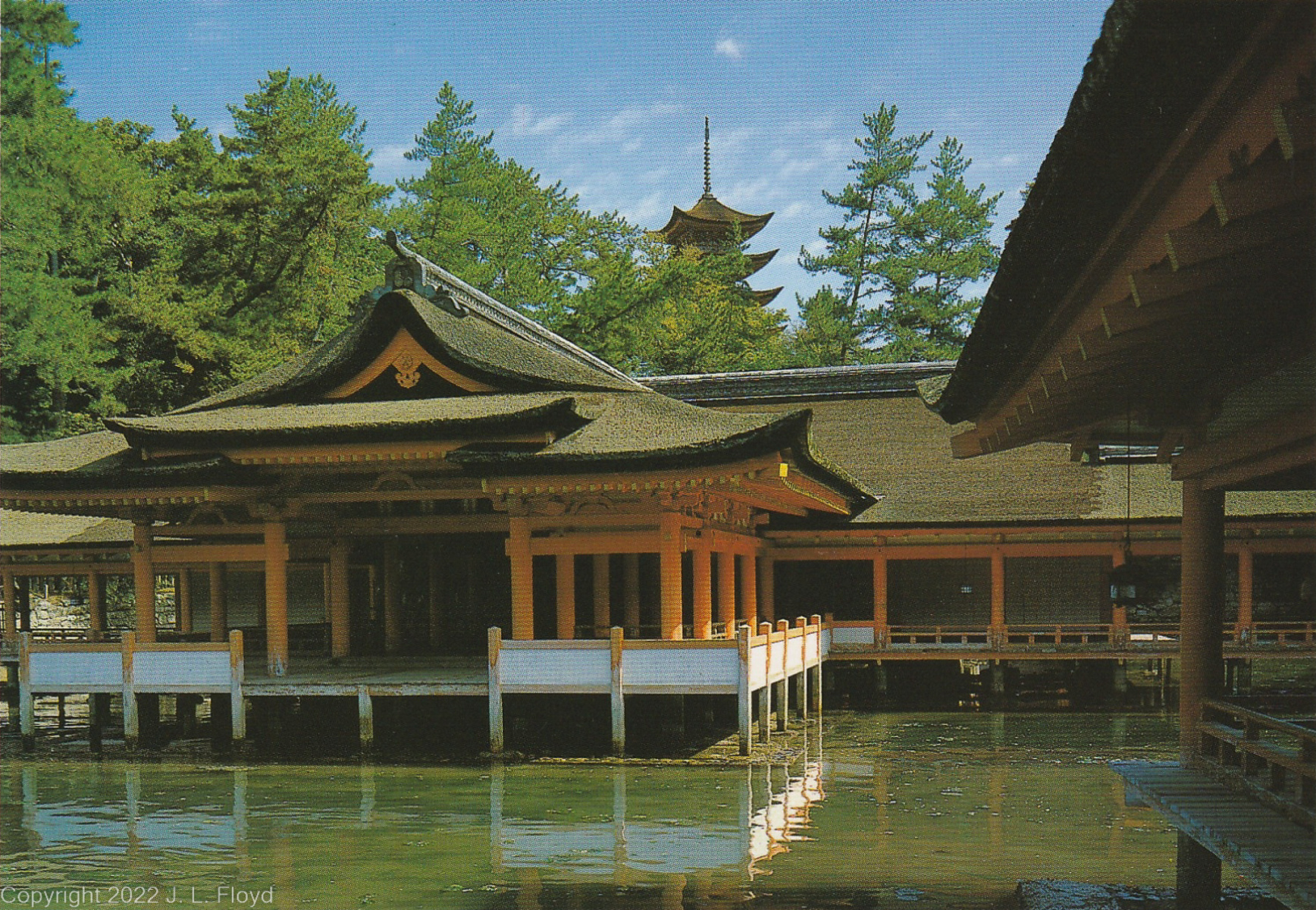
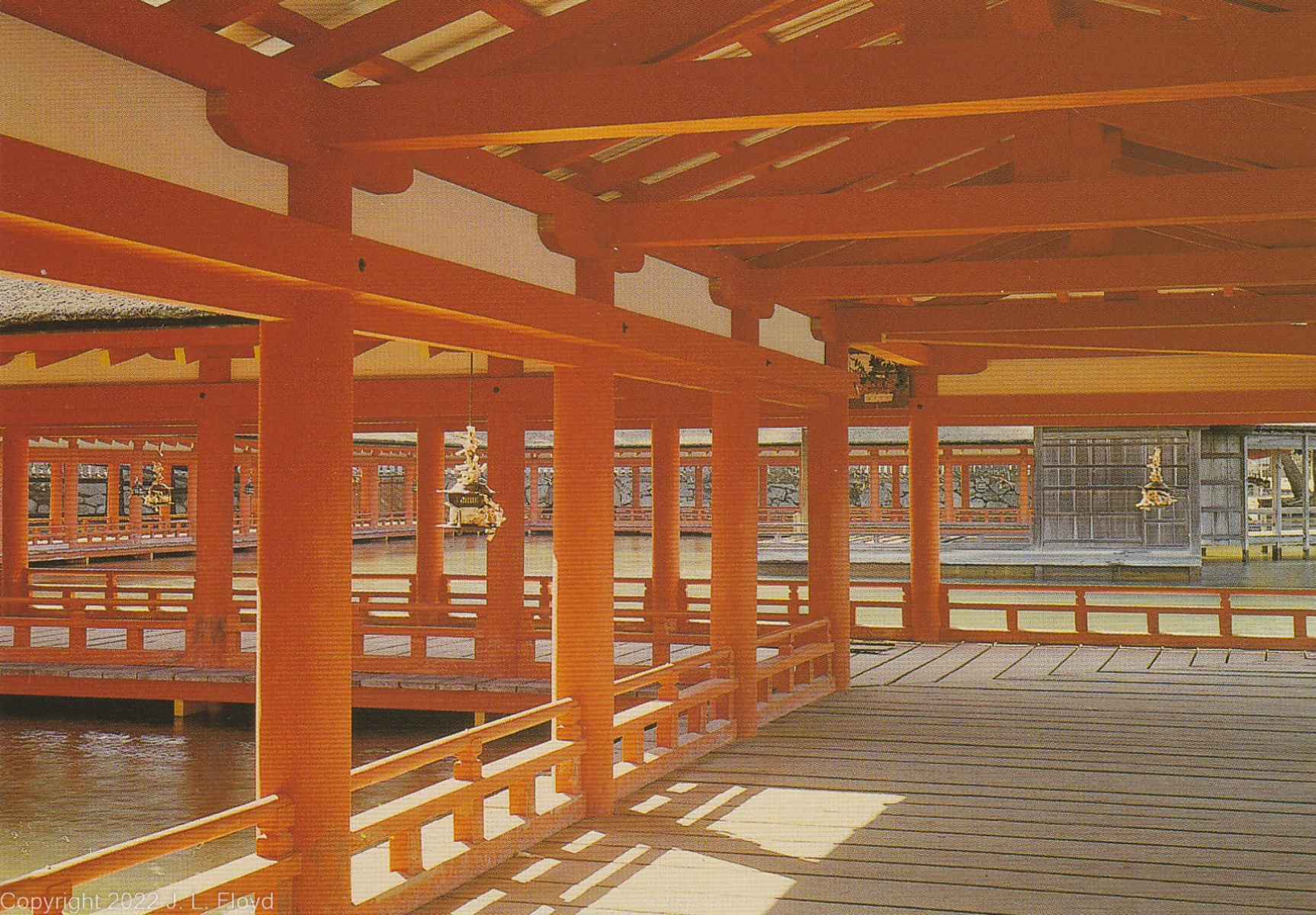
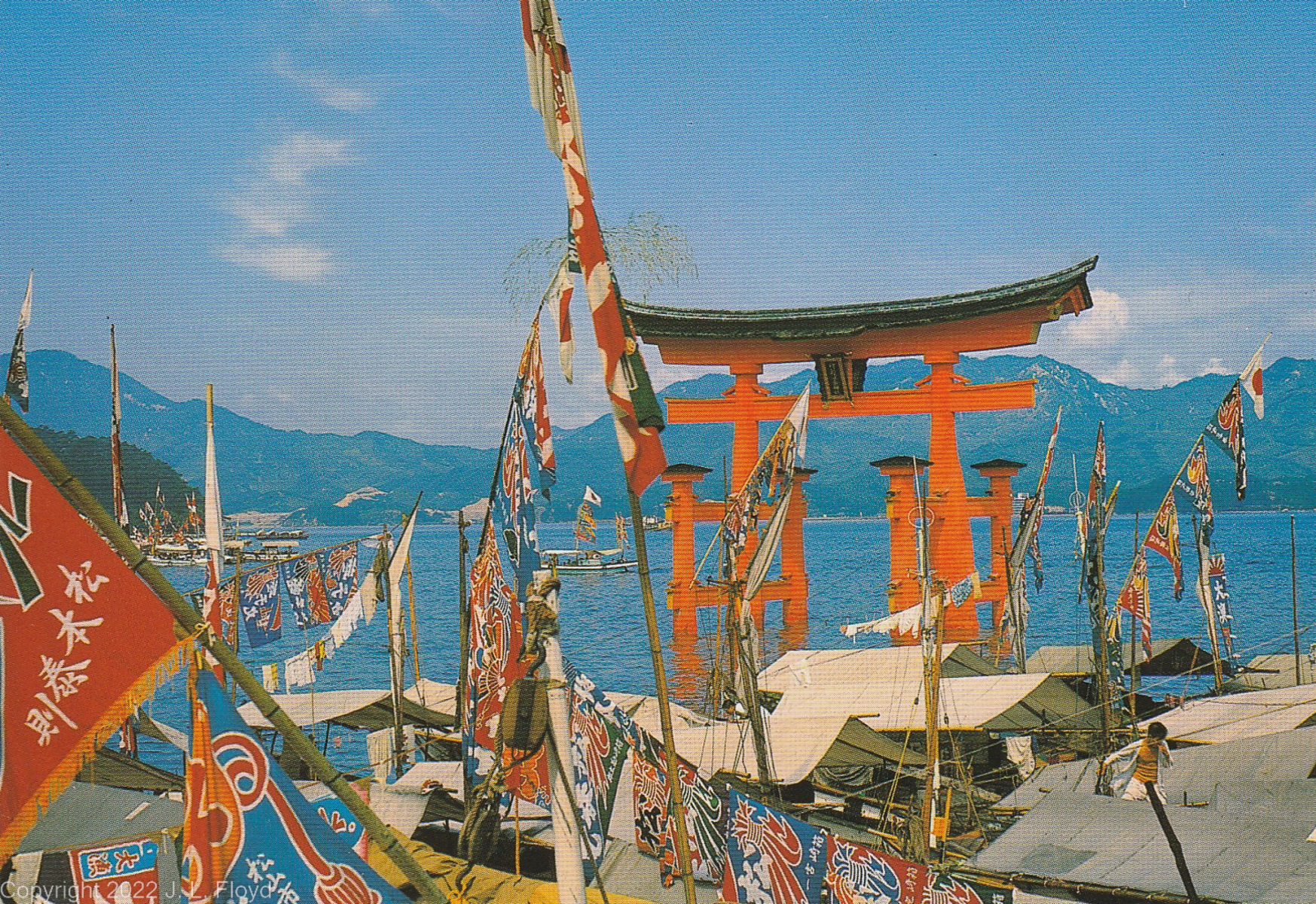
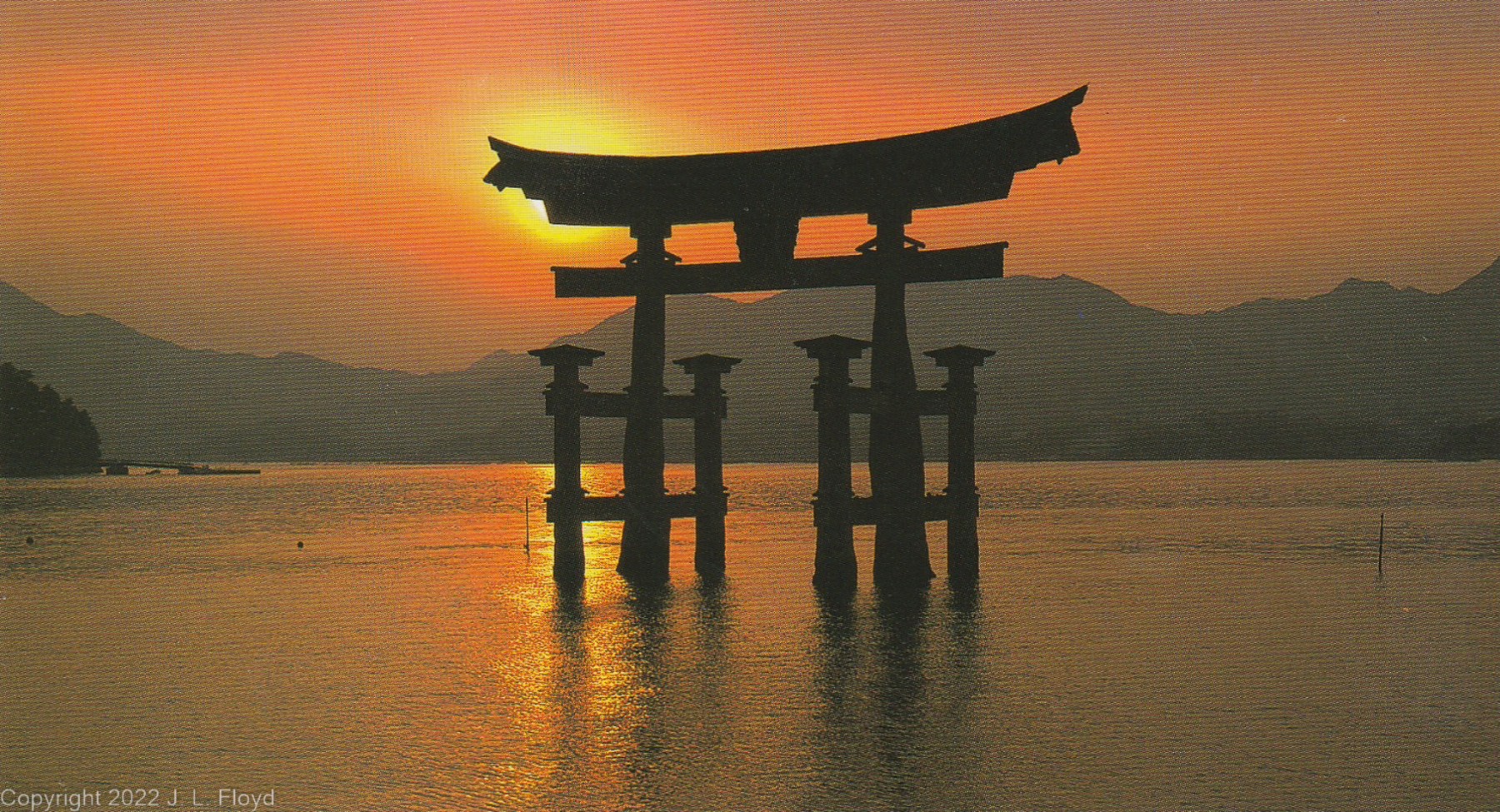
Itsukushima Shrine is most famous for its “floating torii,” the red-orange gate built a few feet off the shore which at high tide appears to be floating in the water. At low tide, one can see the base anchored in the mud of the sea bottom. The buildings of the shrine itself extend over the water, constructed on piles driven into the sea bottom. I would guess that in a few years their interiors will be flooded by rising sea levels. The torii and the shrine proper present a striking appearance as one approaches the shore and are equally stunning as seen from the shore itself.

At the water’s edge near the shrine, I encountered sika deer being fed by local women. As in Nara, the deer are considered sacred – indeed, so is the entire island, and everything on it. For example, trees are sacred and may not be cut down.

The island is also part of Setonaikai National Park, the largest national park in Japan, a huge area which encompasses 3,000 islands and the waters around them.

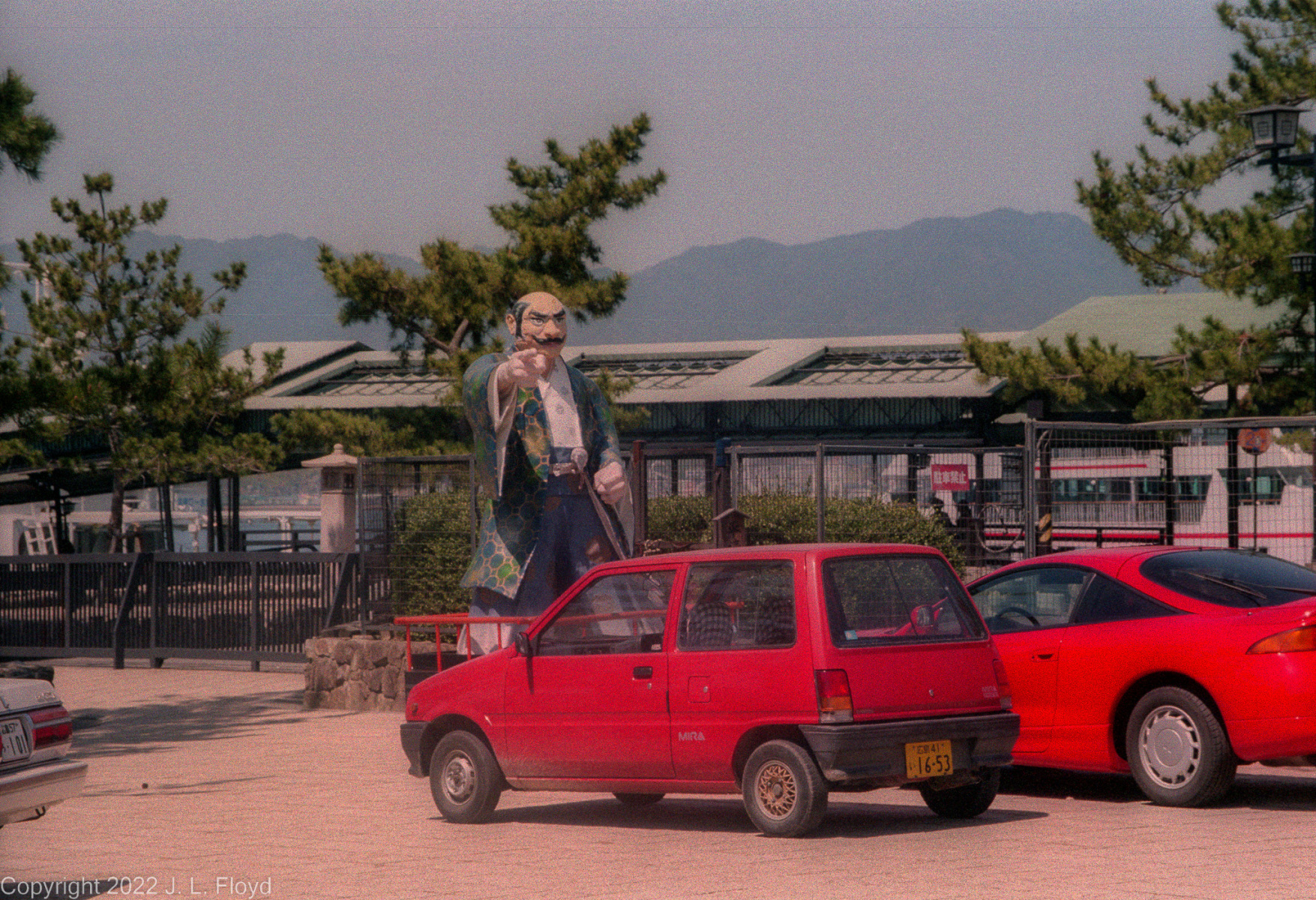
After touring the shrine, I wandered about the paths of the lower island for a while before taking the sacred cable car to the top of the sacred mountain, Mt. Mizen. Early on I encountered a colorful statue out of a comic book, looking somewhat like a pirate, who appeared to be directing traffic or, more likely, telling cars to turn around and go home. I never found out who this figure was supposed to represent, but he was a welcome relief from the general solemnity of the shrines.

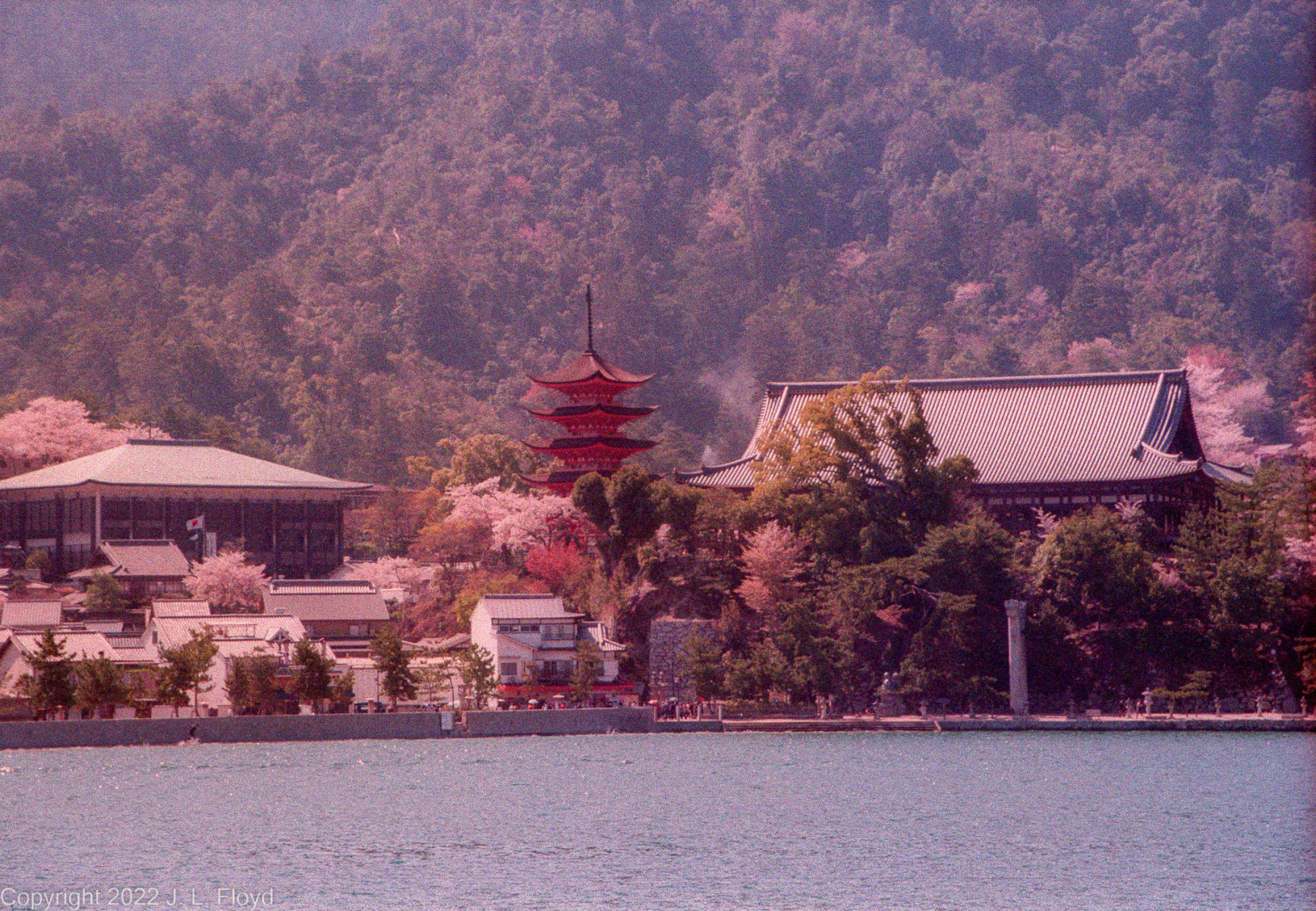
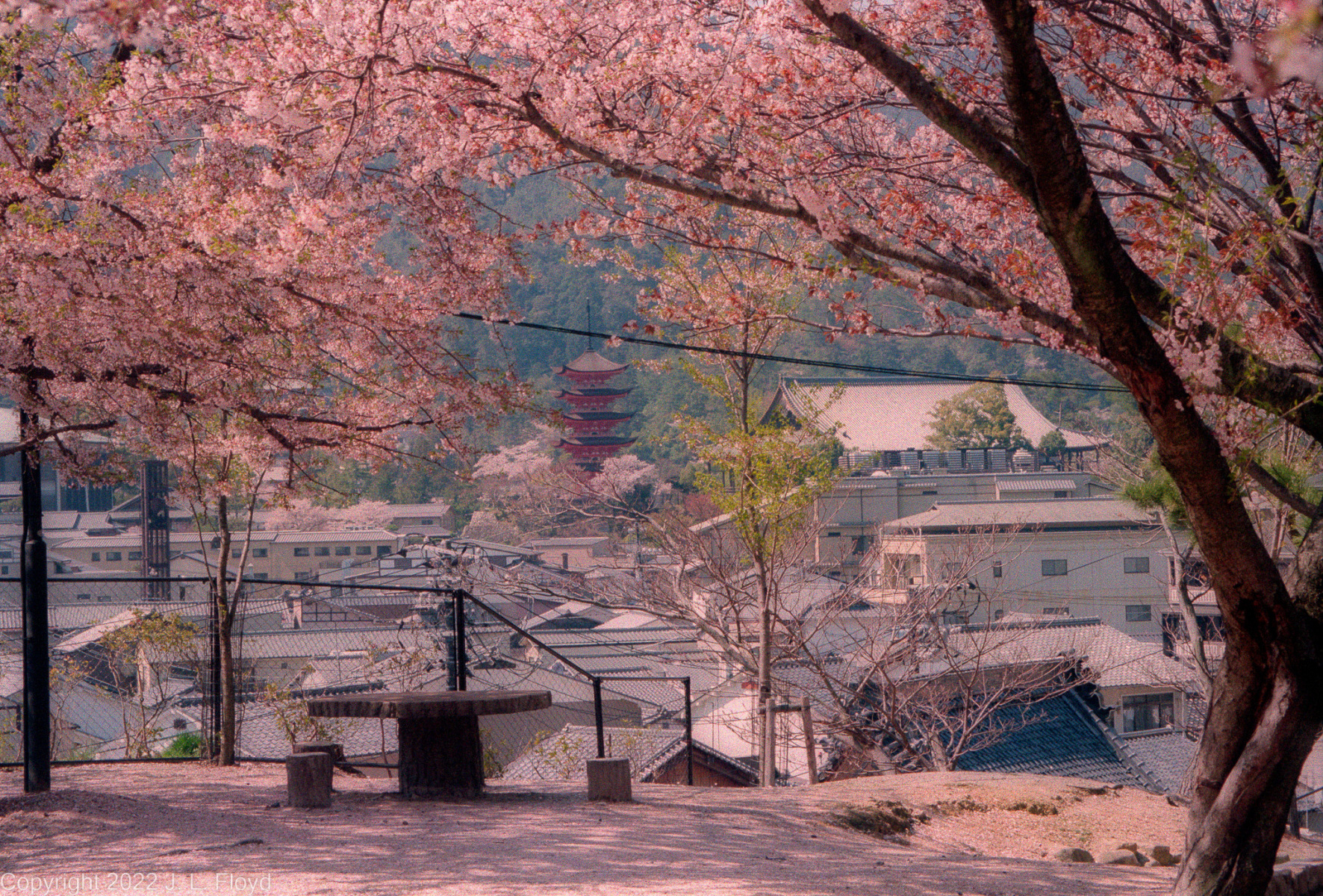
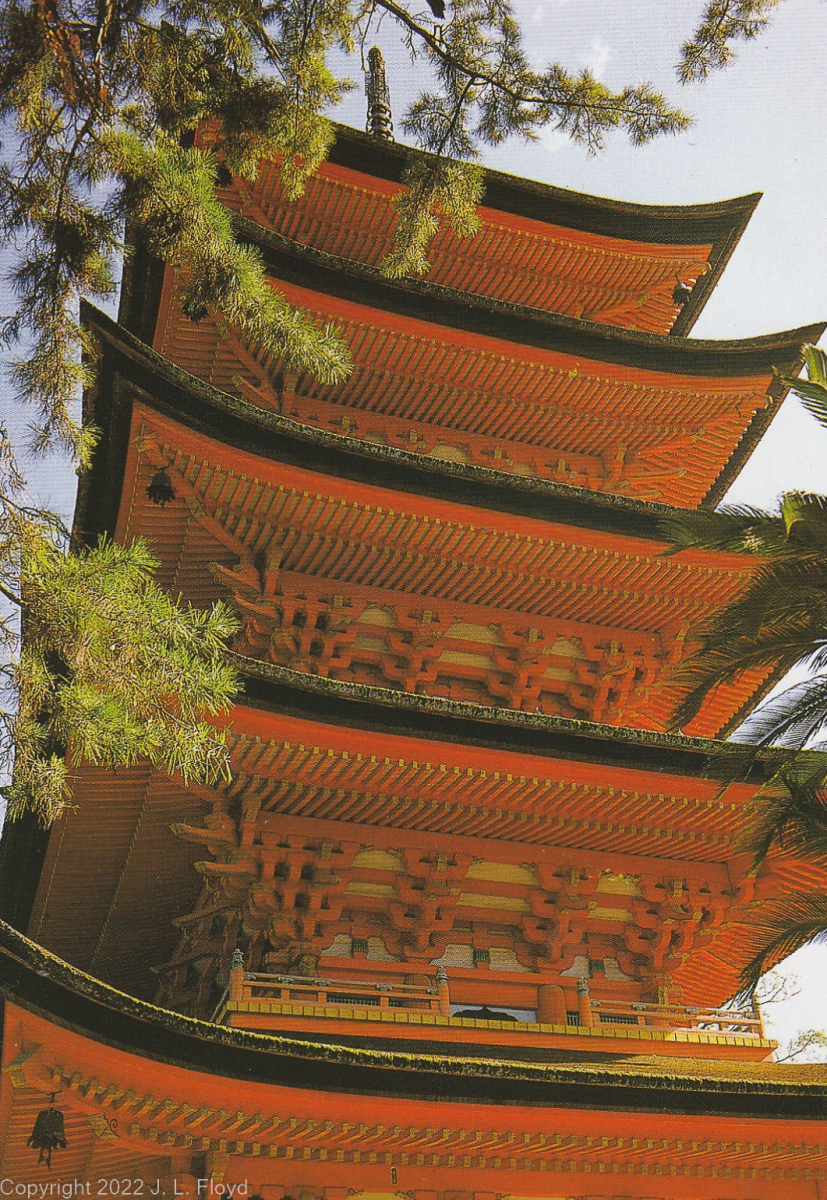
Shortly afterward I came across Toyokuni Shrine with its striking red five-story pagoda, built in 1407, which I had glimpsed earlier from the ferry. It stands near the Senjokaku Pavilion, the largest building on Miyajima; its name means “Thousand-tatami pavilion.” Its construction was initiated by Hideyoshi Toyotomi (the “Taiko” Nakamura of Clavell’s novel Shogun) in 1598 as a place for chanting Buddhist sutras for Japanese warriors killed in battle in his many campaigns. Hideyoshi was the second great unifier of Japan at the end of the chaotic Sengoku Jidai period of the 16th century; he was a talented general of peasant origin who quickly put down the rebellion of Akechi Mitsuhide, assassin of Oda Nobunaga, and in short order repeated Nobunaga’s achievement in bringing the powerful warlords, the daimyo, to heel. Then, in 1592, to keep the daimyo occupied and glorify himself, he undertook an invasion of Korea, conceived as a first step toward the conquest of Ming China and then of all East Asia, if not the world. After spectacular initial successes, the invasion was frustrated first by the decrepit but still functioning Ming government, which dispatched a relief army to the aid of the Koreans; and finally by the Korean navy, under Admiral Yi Sun-sin, which eventually destroyed the Japanese fleet, leaving the Japanese army stranded and unable to resupply itself. When Hideyoshi died in 1598, the regents who first took over from him ended the Korean adventure and discontinued work on the Senjokaku Pavilion, which was also left unfinished by the succeeding Tokugawa Shogunate. In 1872, following the Meiji Restoration, the Senjokaku was converted to a Shinto shrine and rededicated to the memory of Hideyoshi.

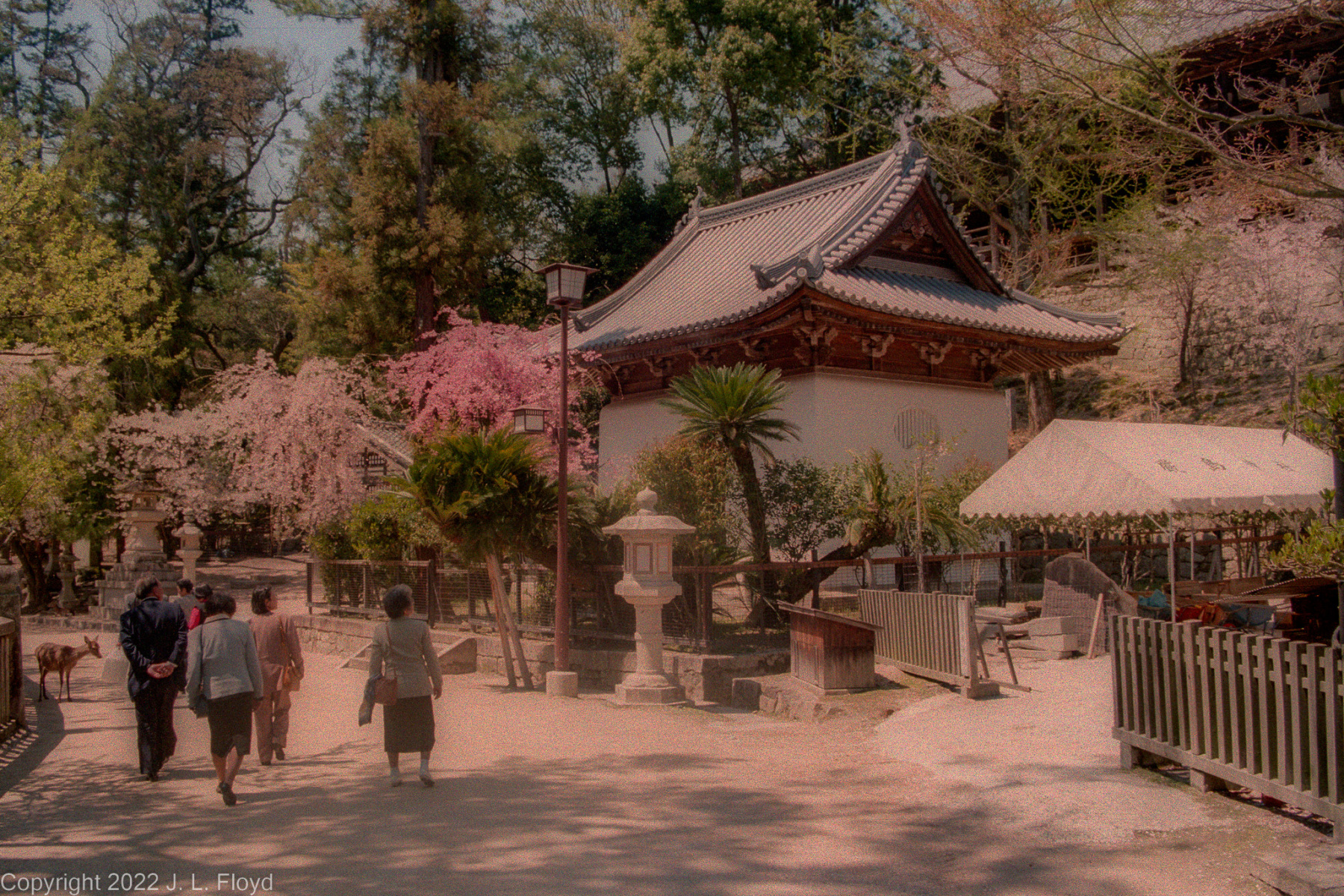
Near the 5-story pagoda and the Senjokaku Pavilion stands a small but elegant Shinto shrine, the name of which I never found out.

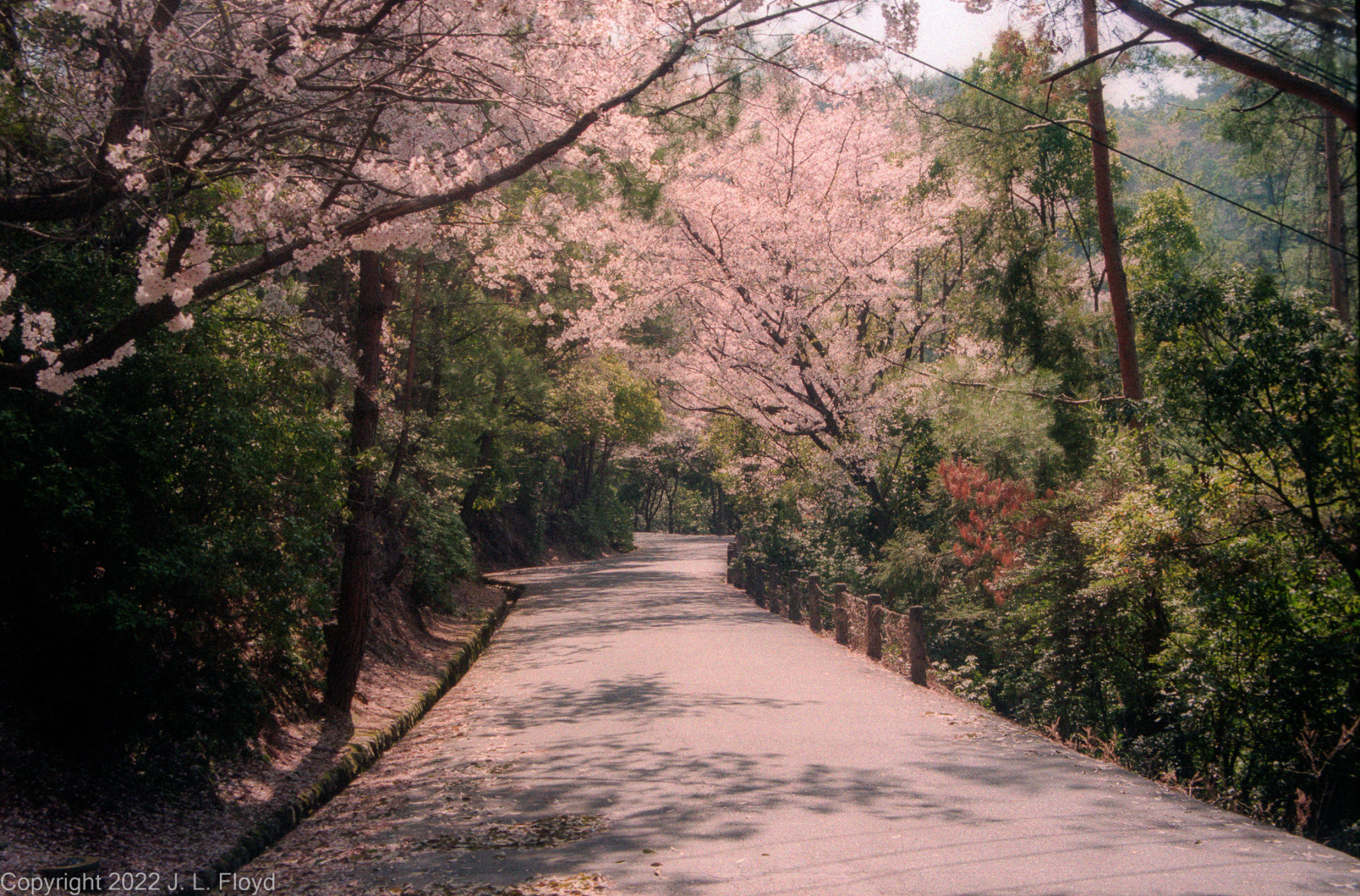
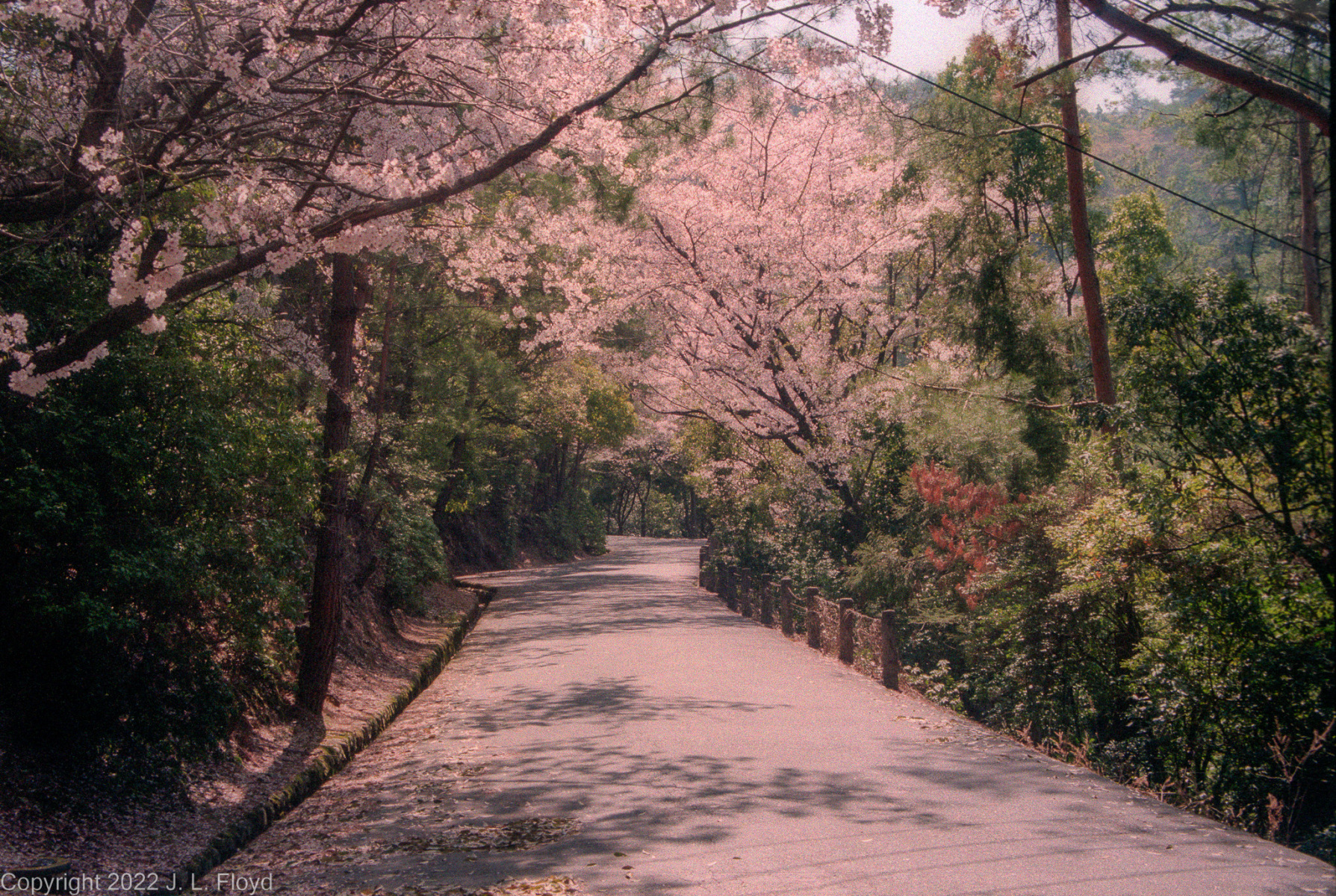
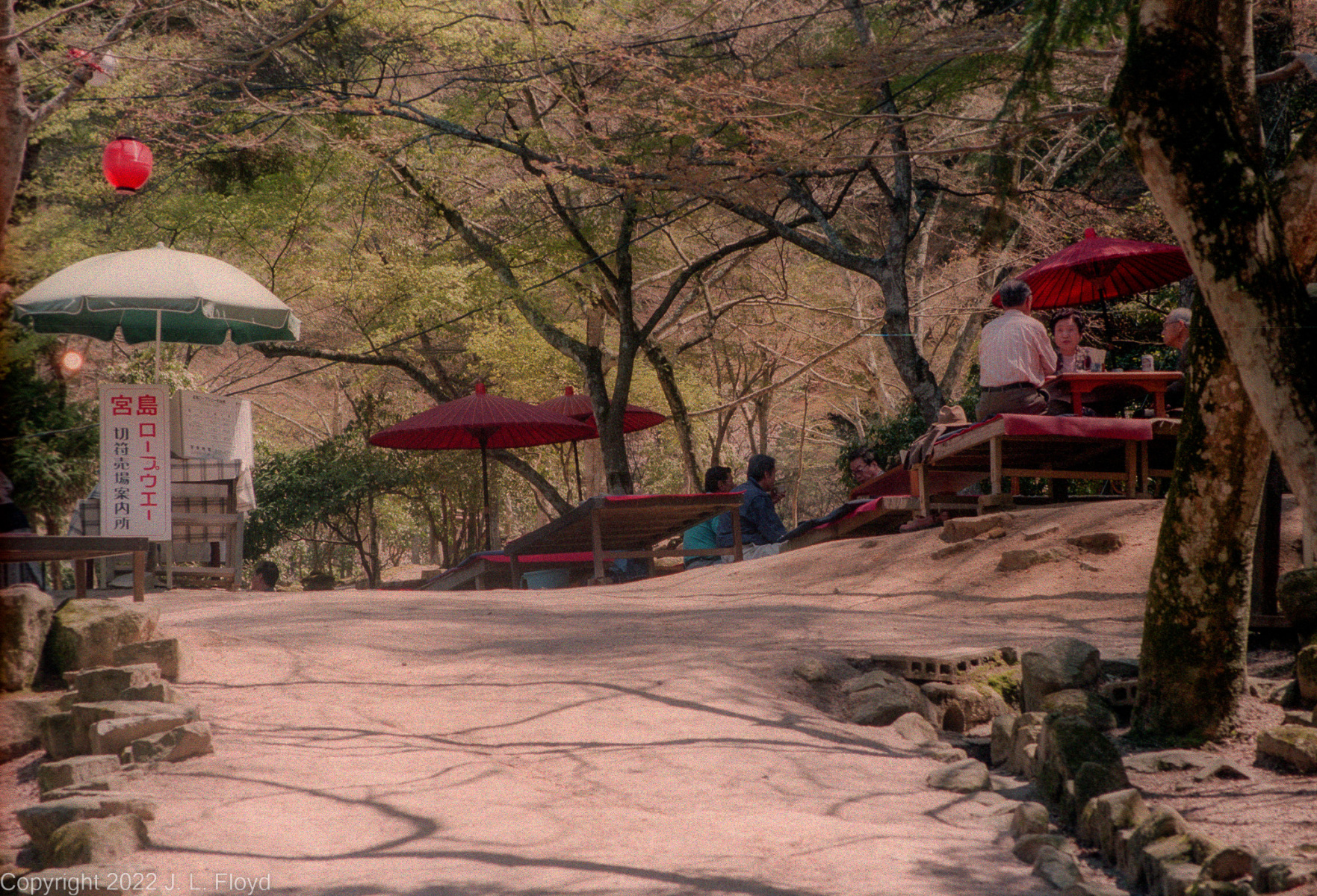
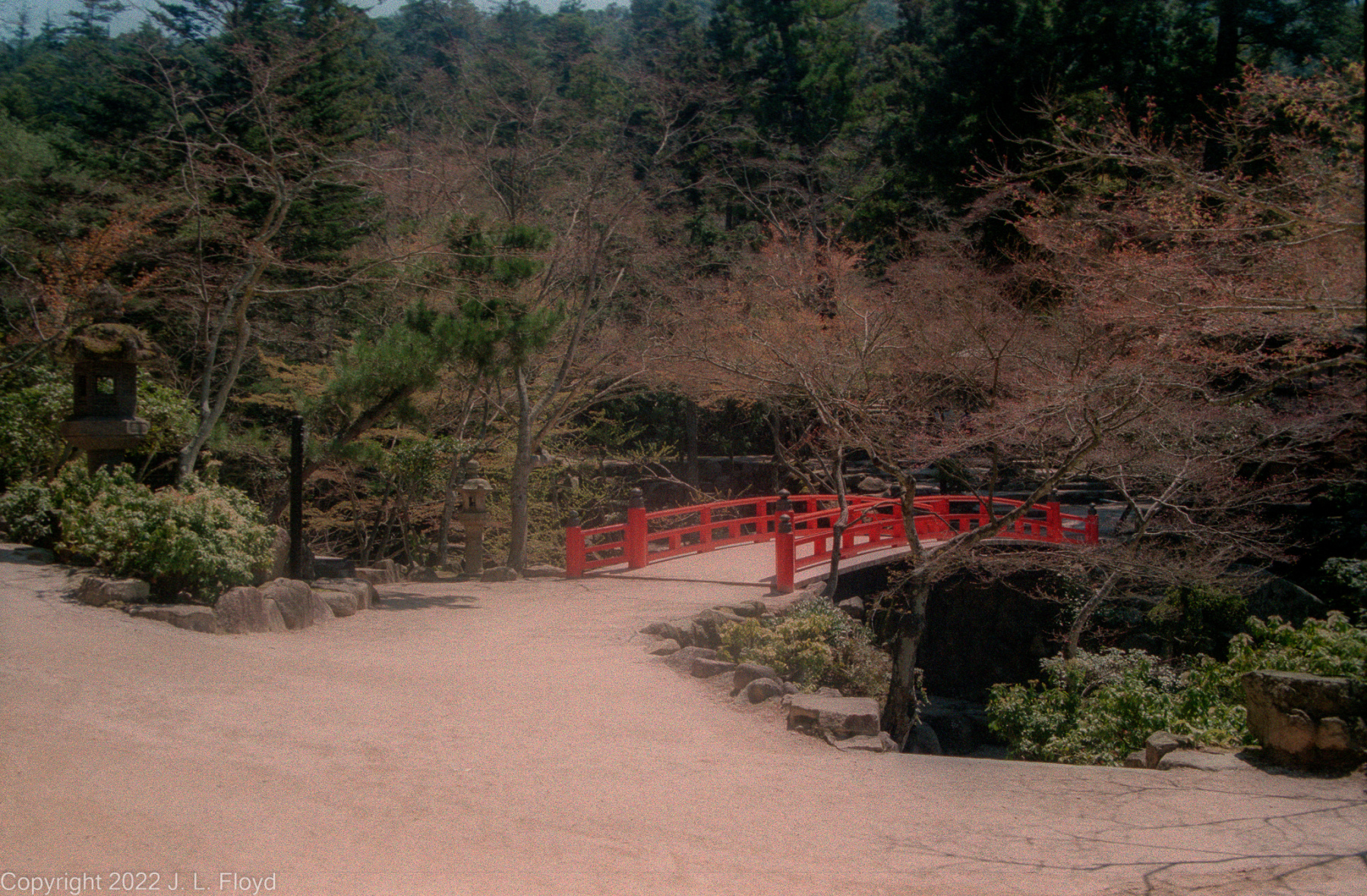
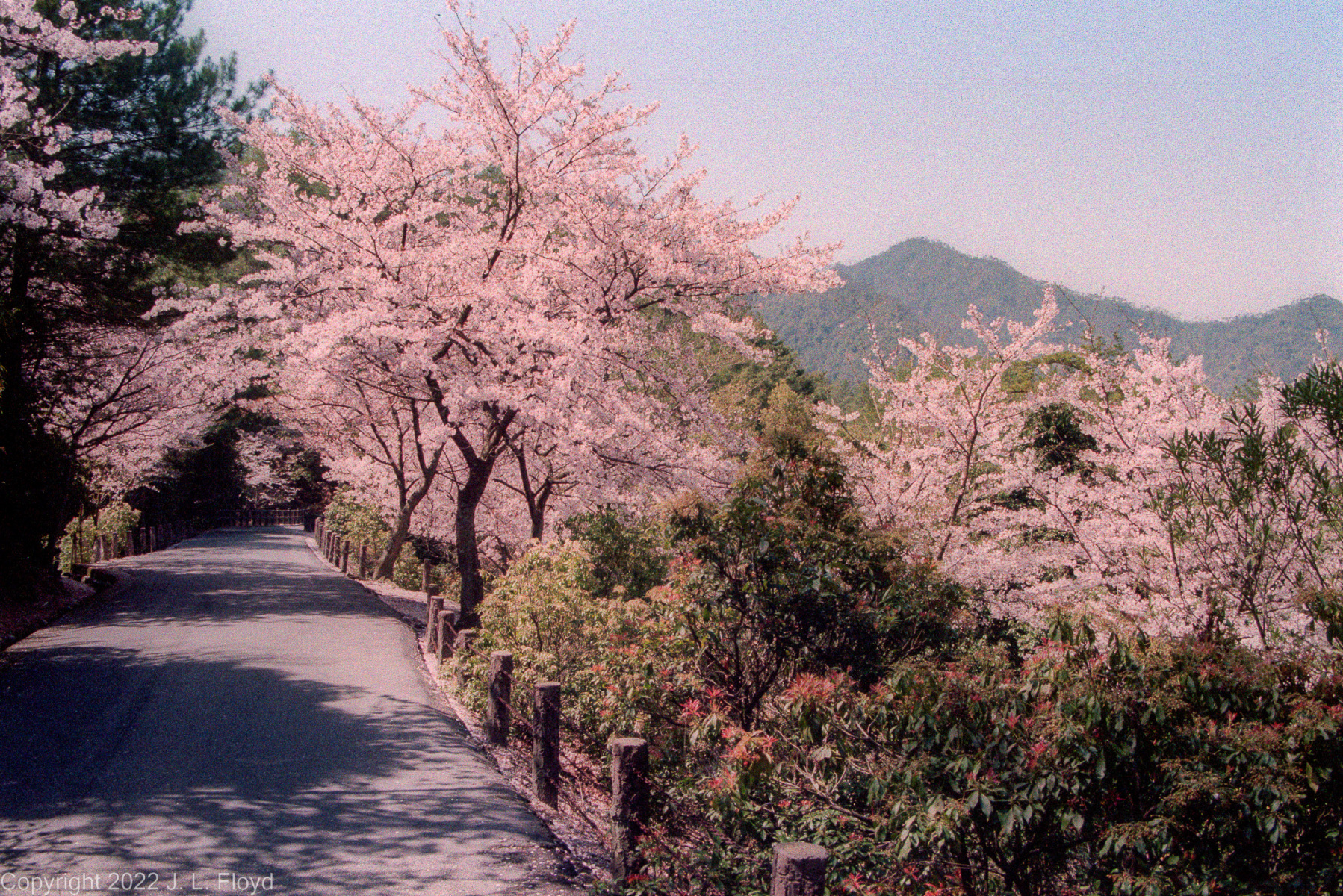
While wandering amidst peaceful rustic lanes teeming with cherry blossoms, I stumbled into beautiful Momojidani Park, famed for its more than 200 maple trees of several different species. In autumn, when the maple leaves turn red, yellow and orange, the park presents a riot of color. It is a mecca for picnickers and also has one of the loveliest bridges in Japan.

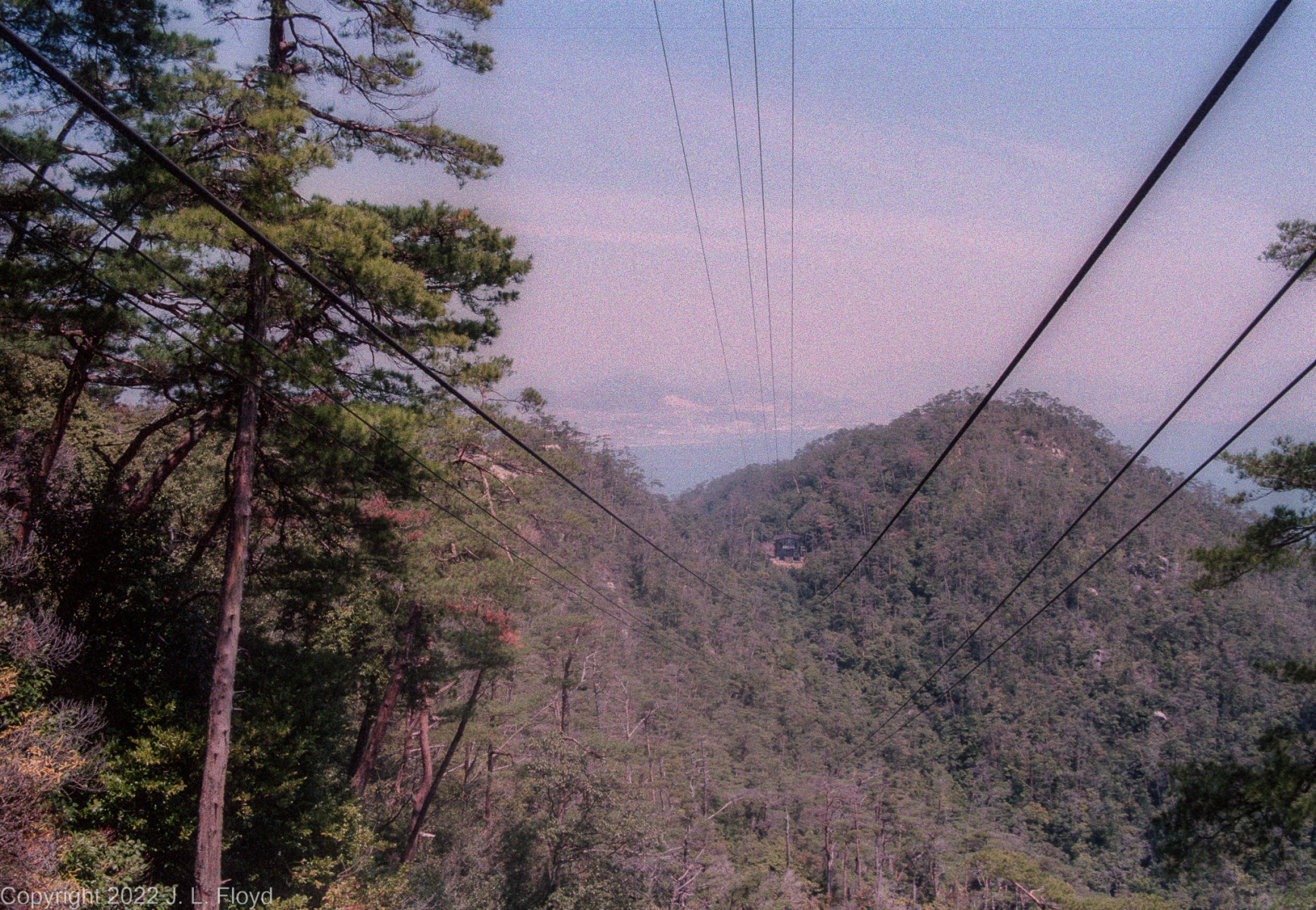
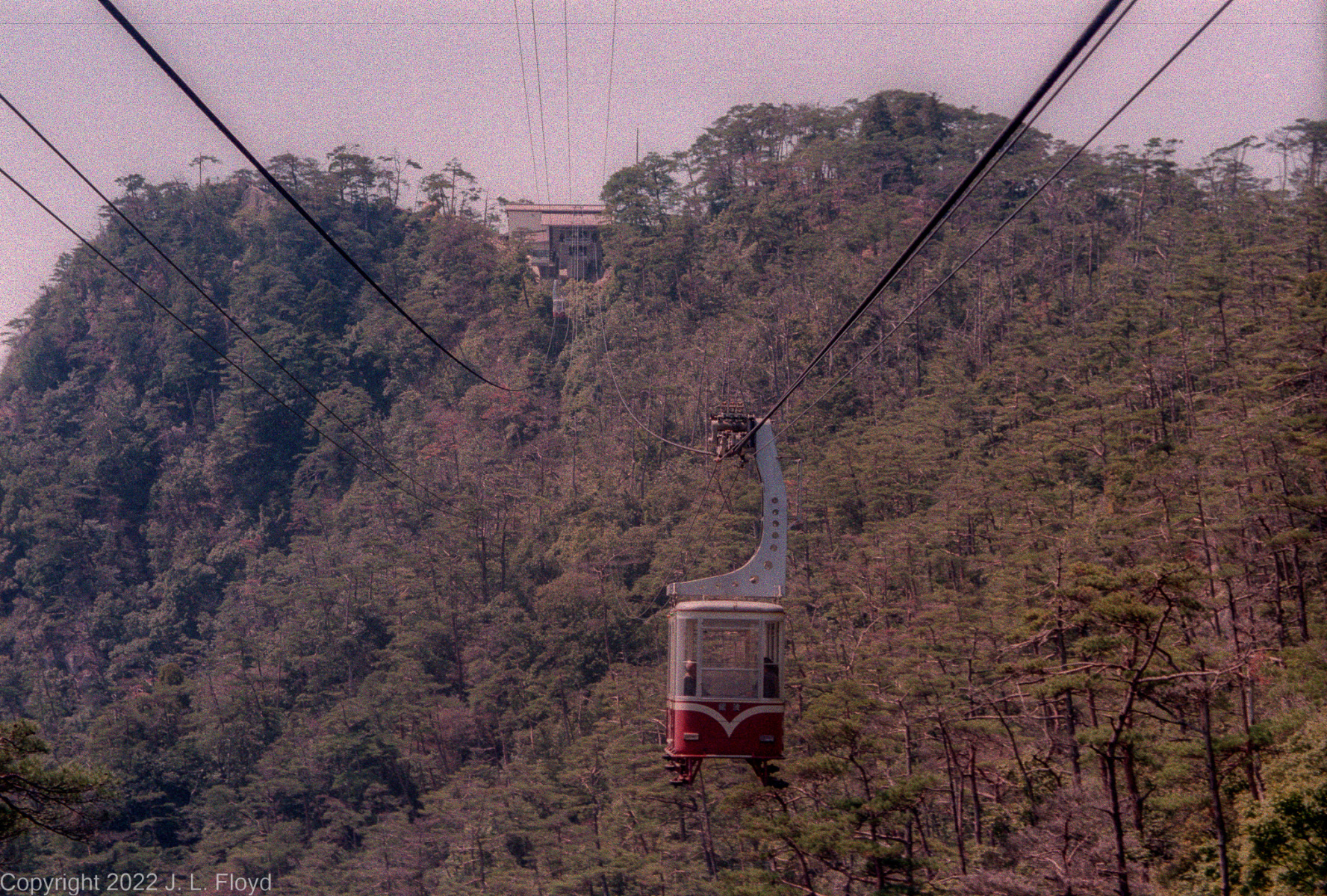
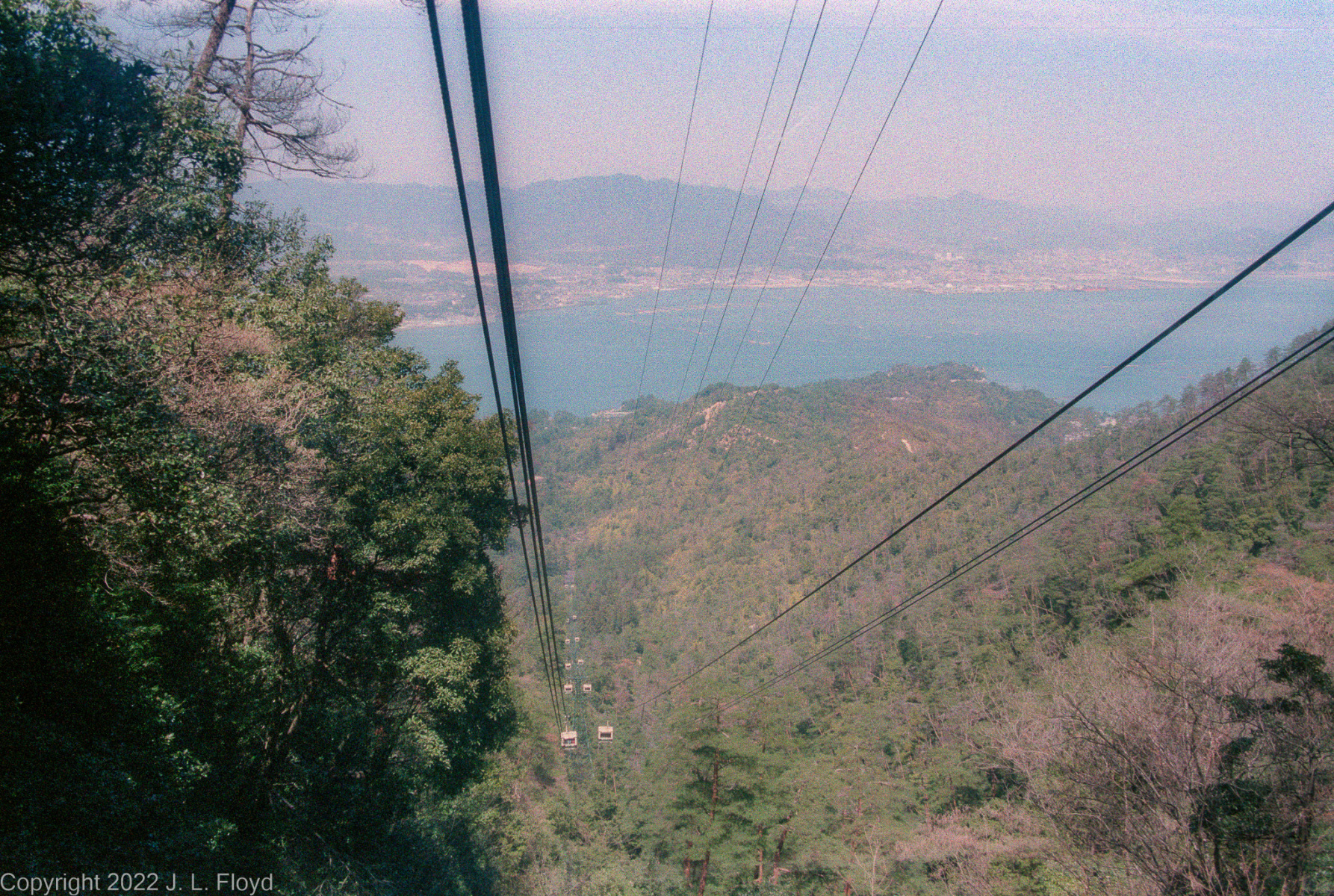
From Momojidani Park it was a hop, skip and a jump to the cable car terminus at the base of Mt. Mizen. (They call the cable car a “ropeway,” but the ropes are of course steel cables.) It has two stops, one halfway up the mountain and another near the top. I got off at the first terminal and took a stroll along the paths there, before continuing on to the upper terminal.

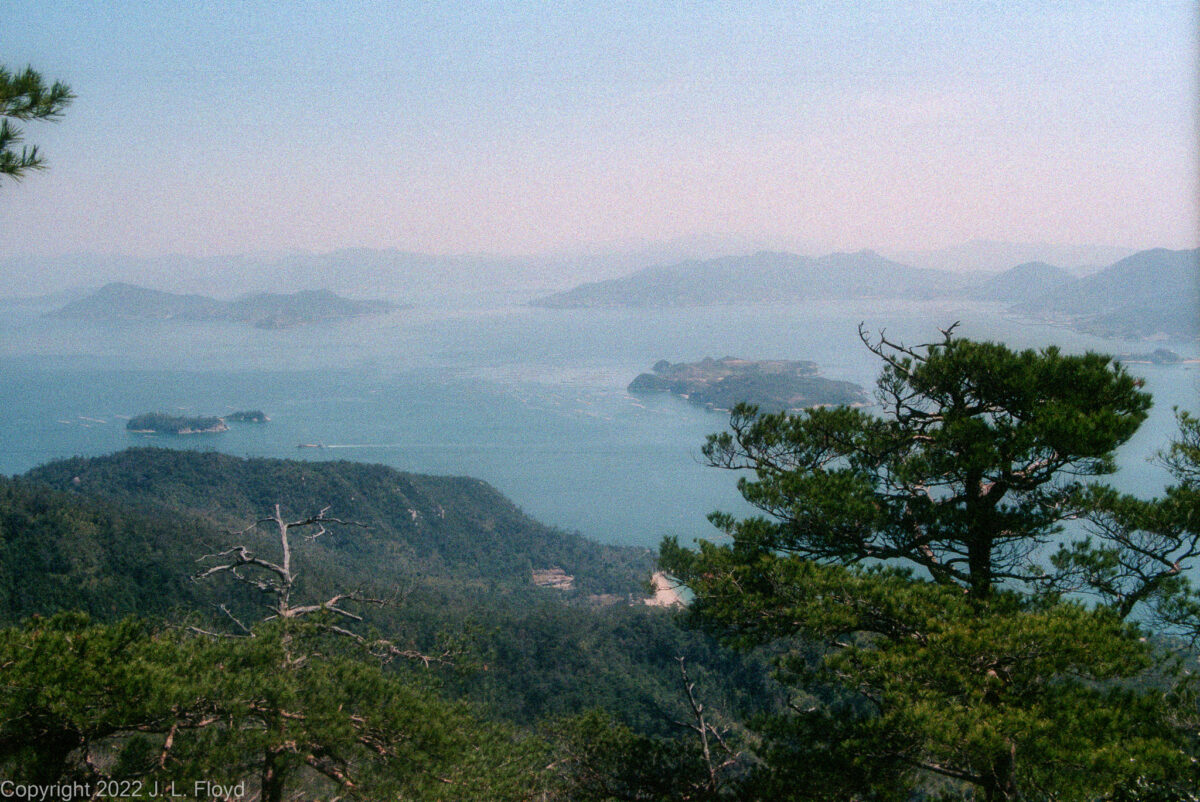
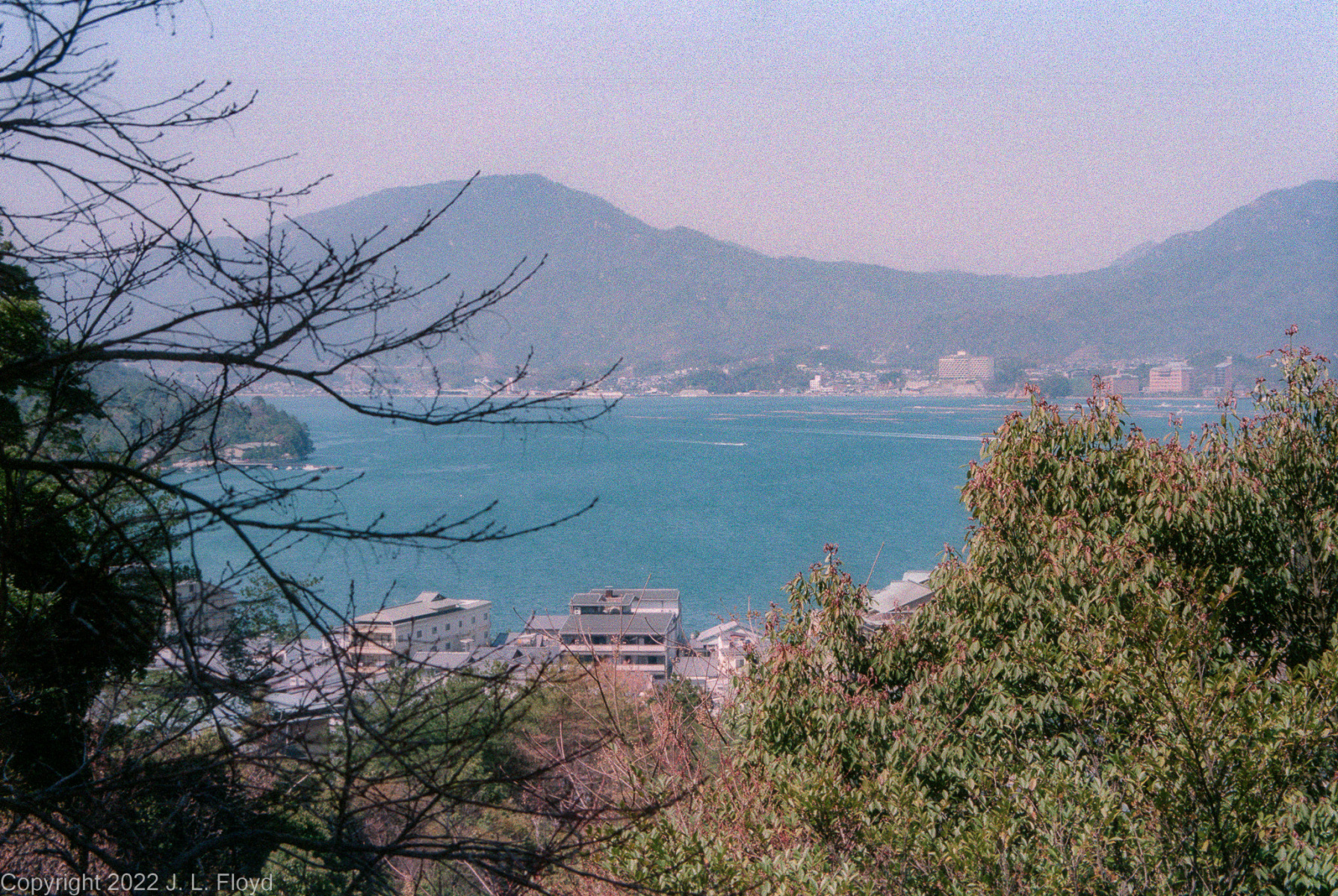
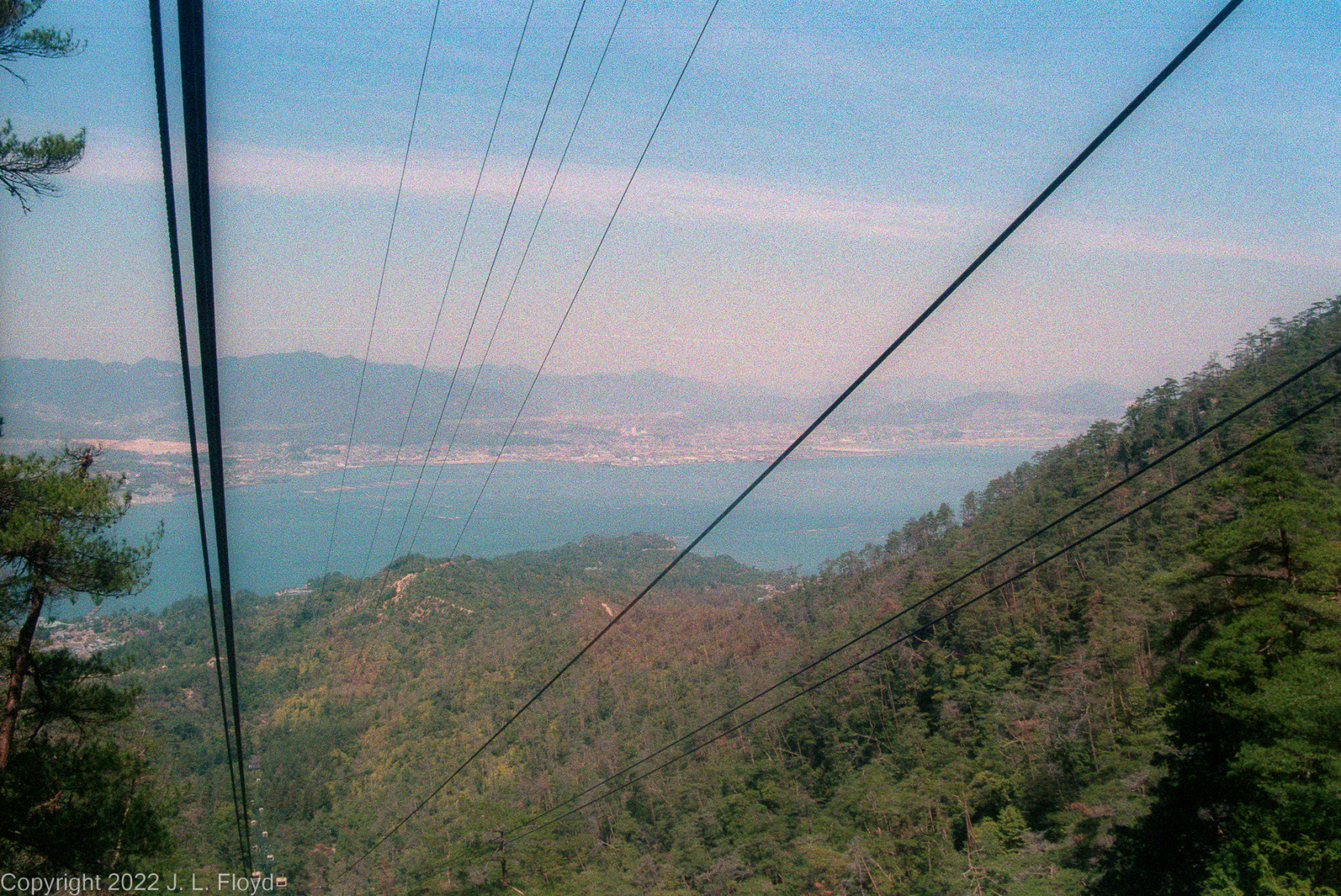
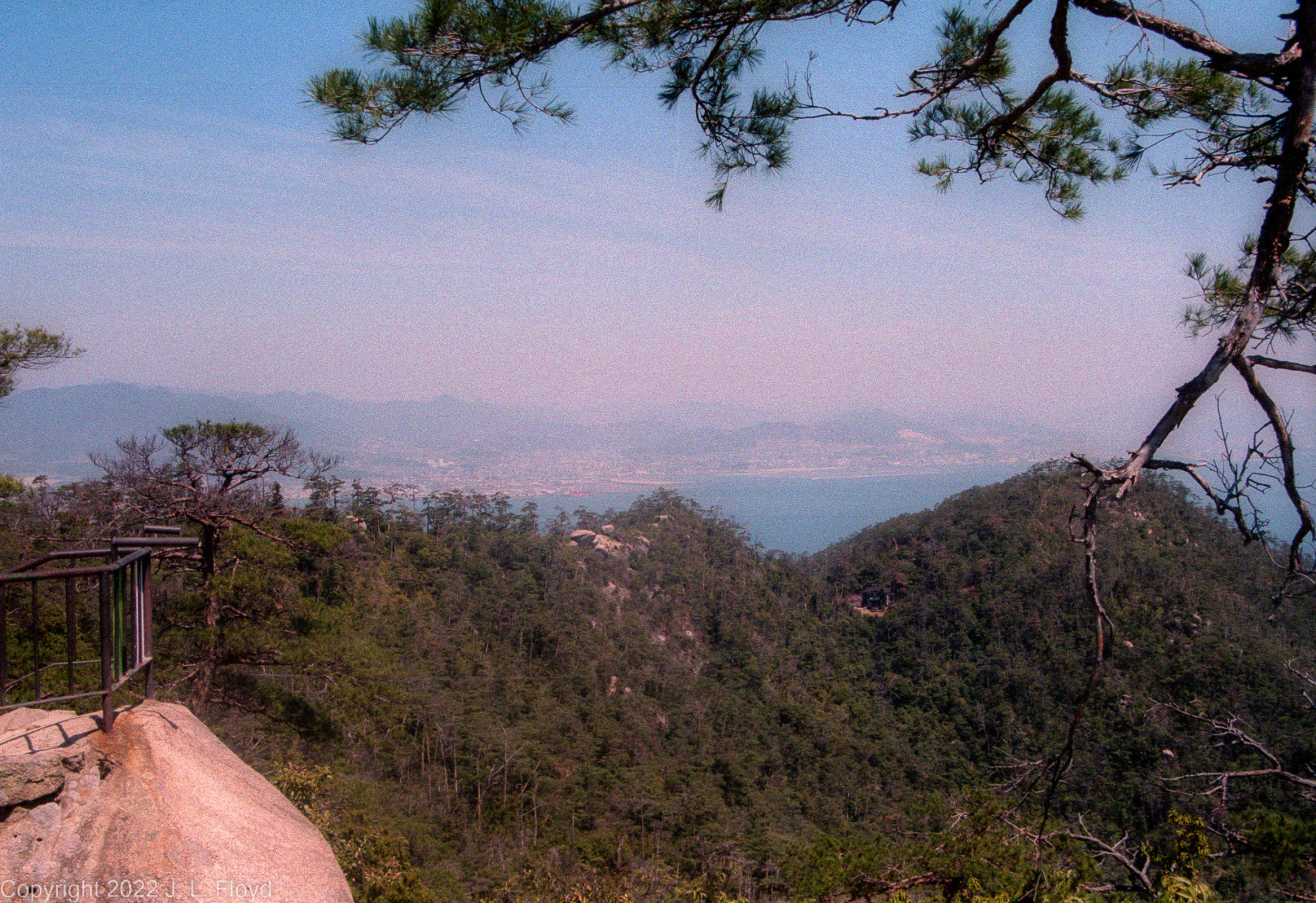
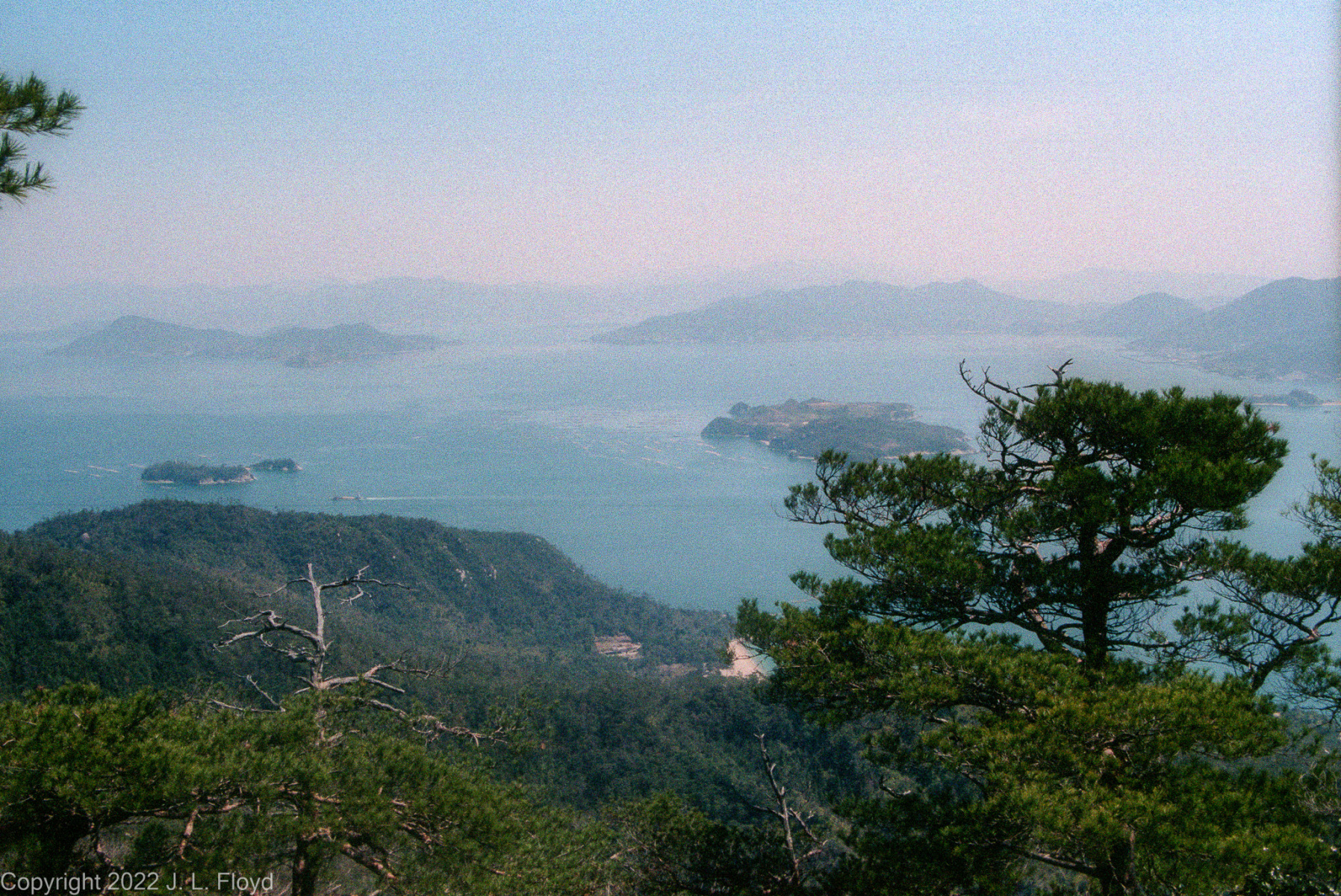
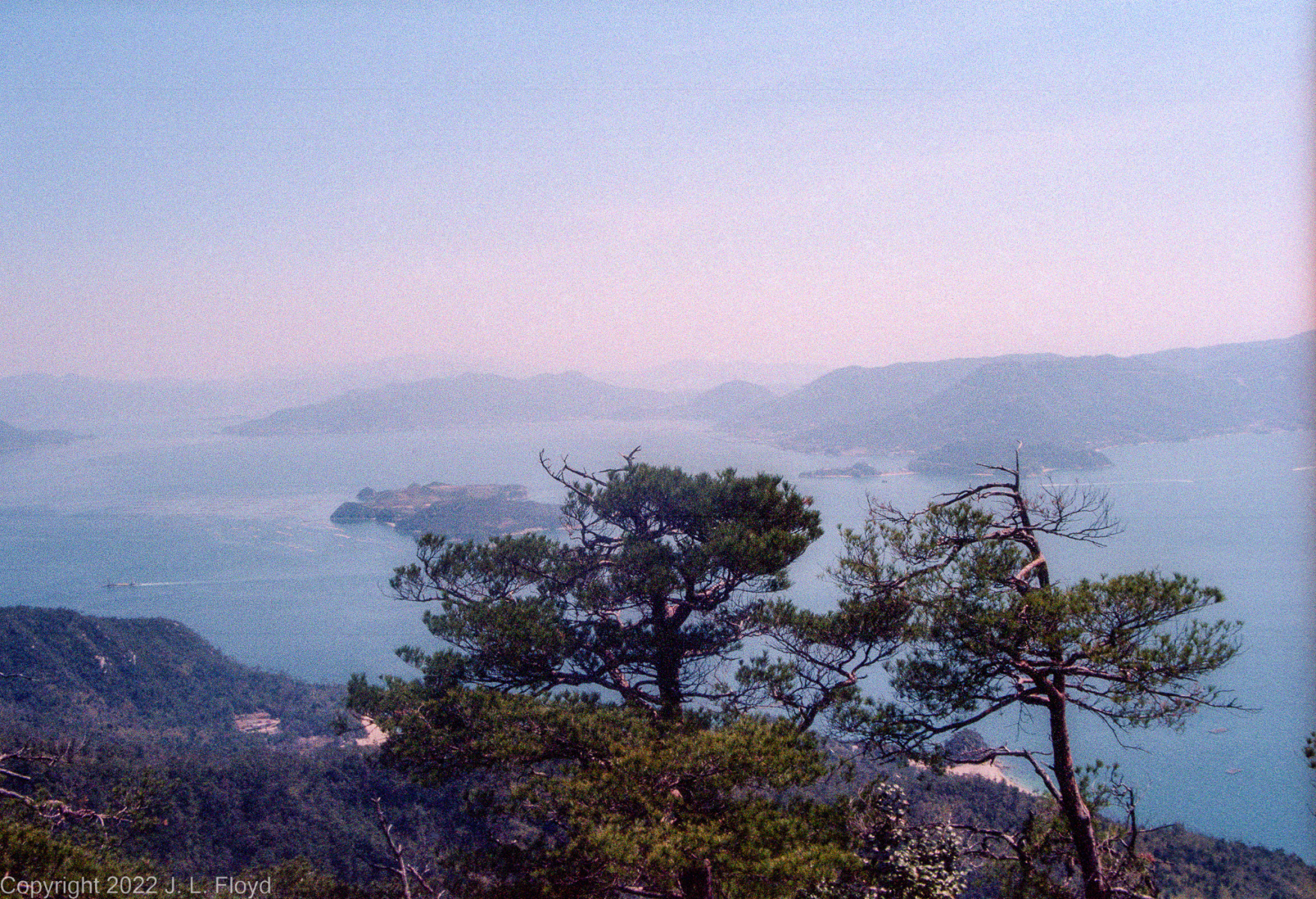
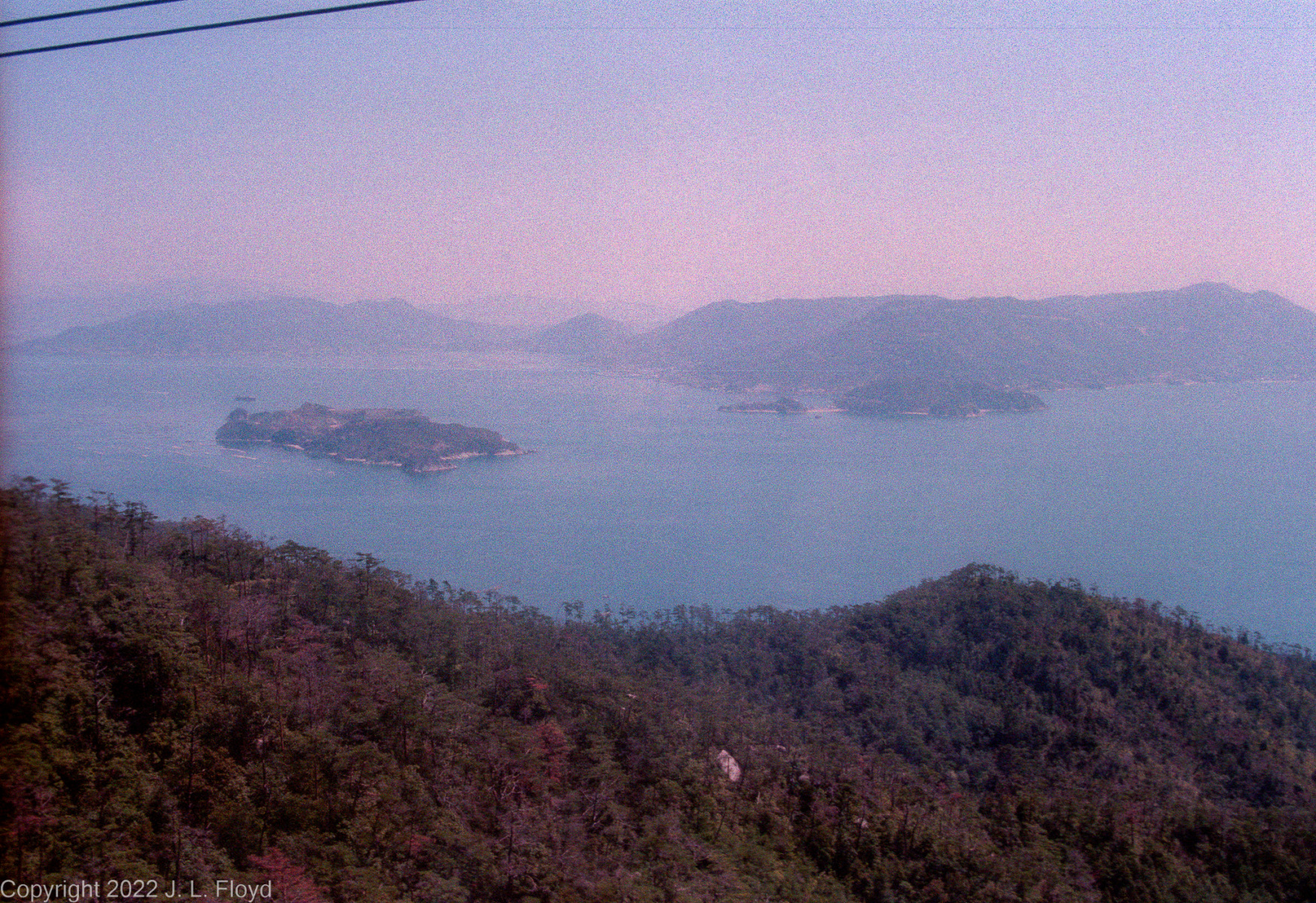
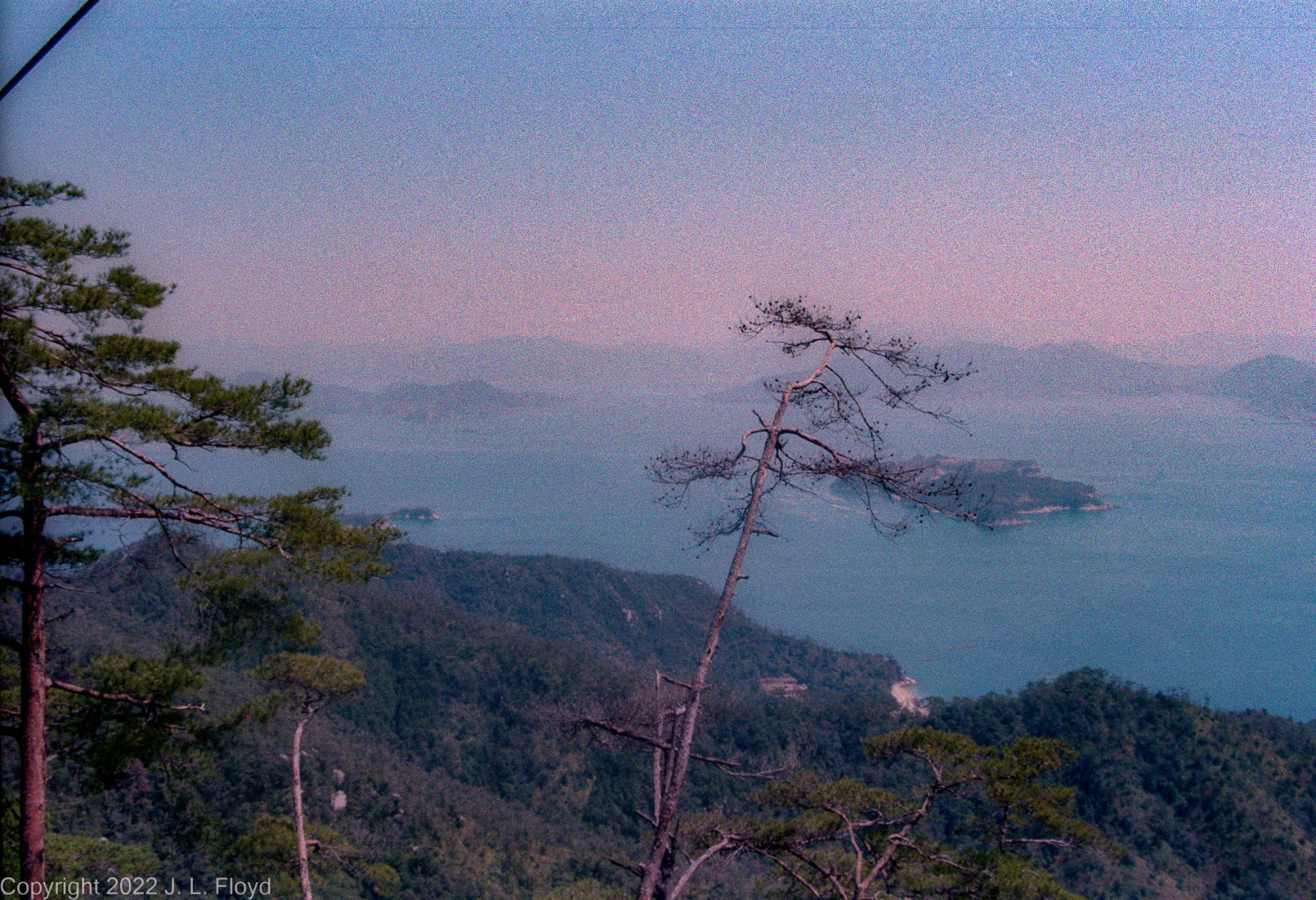
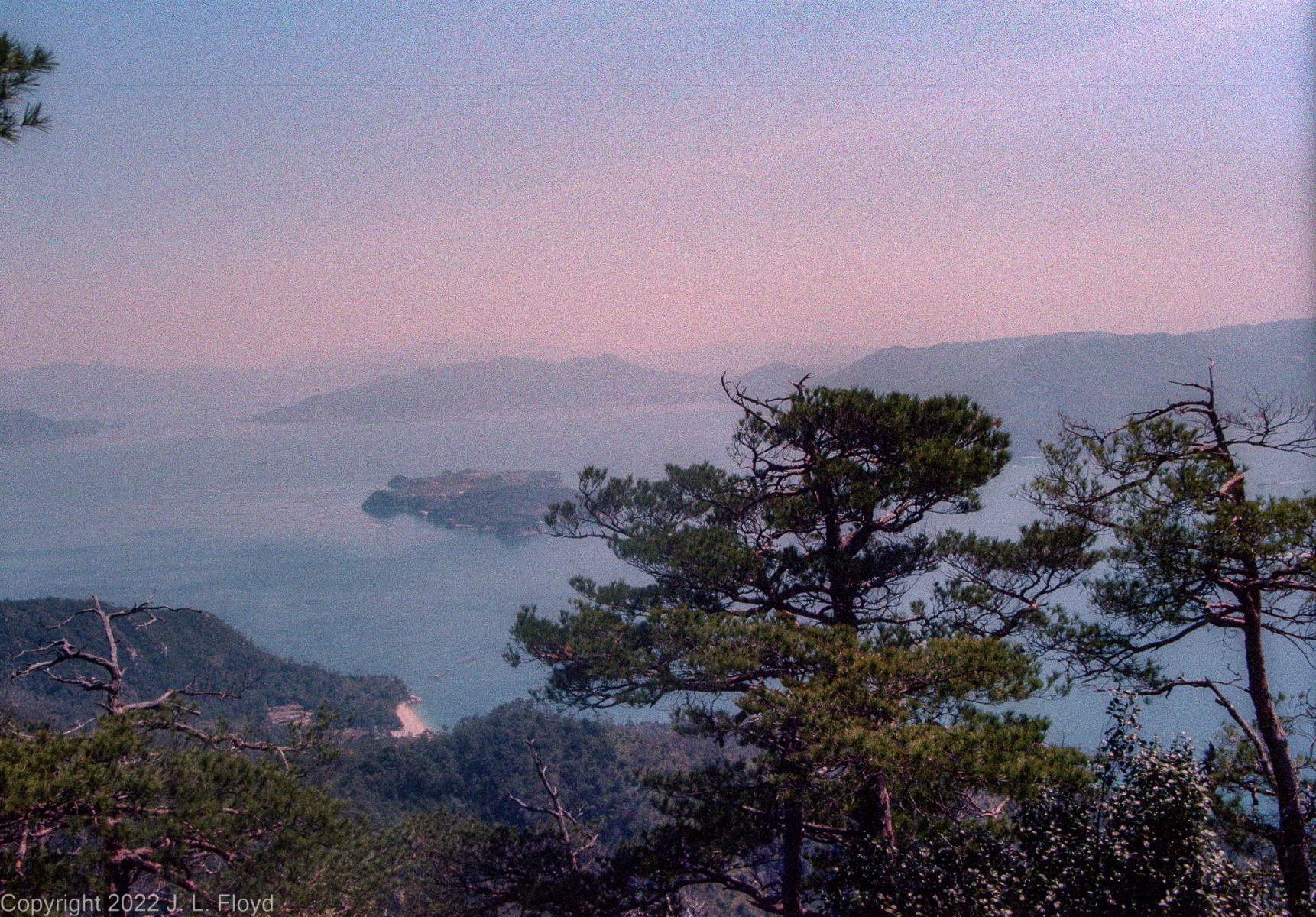
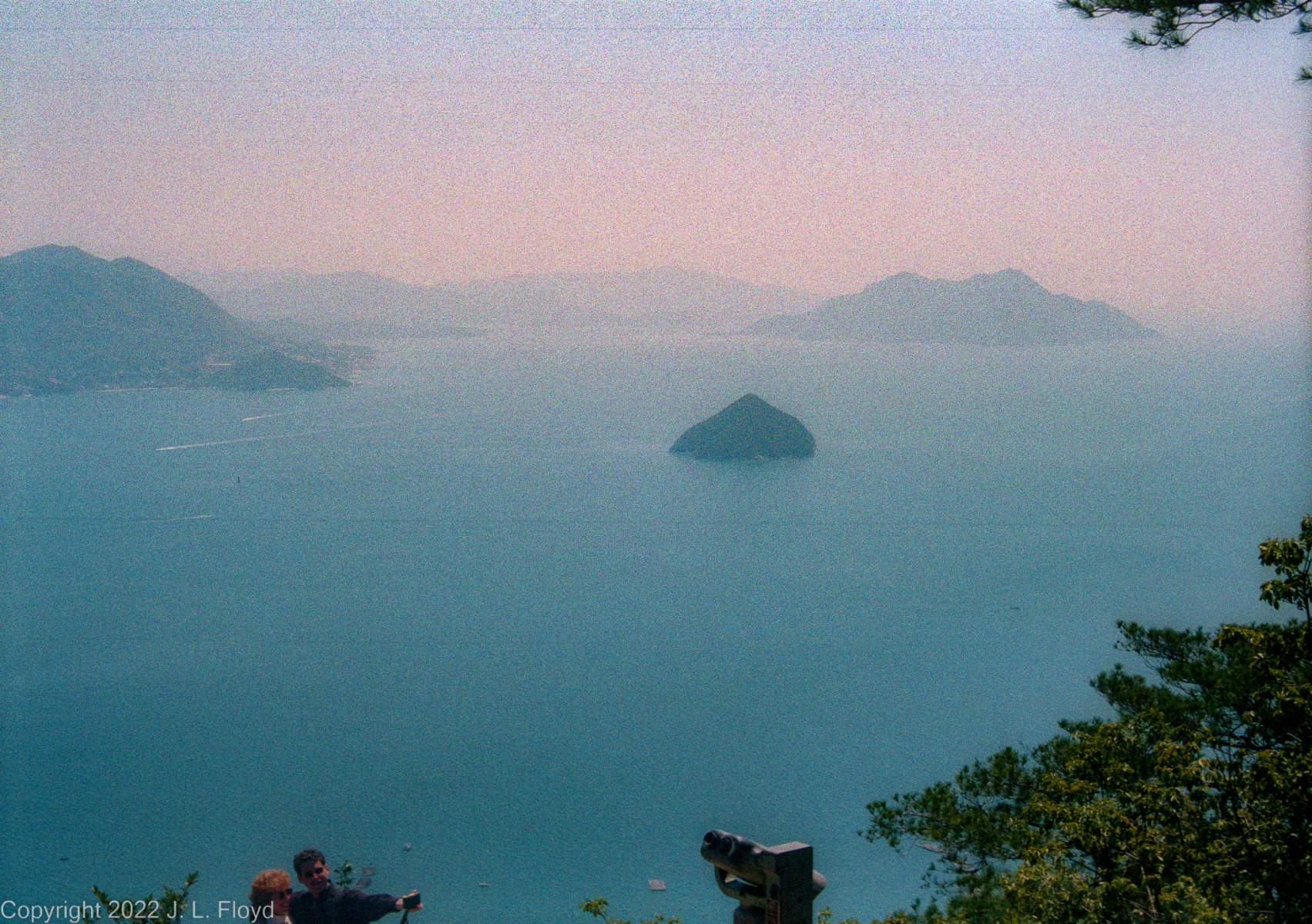
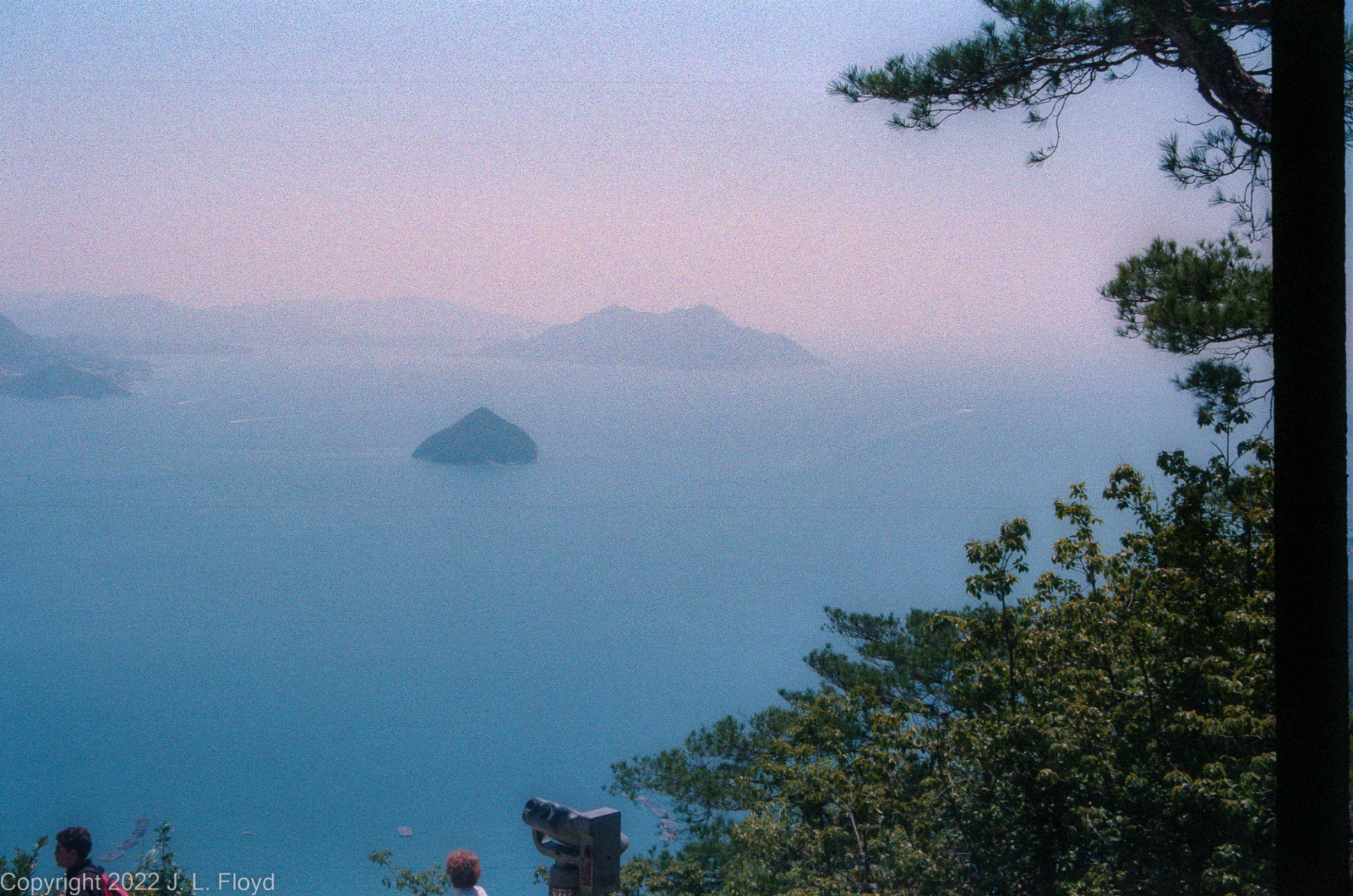
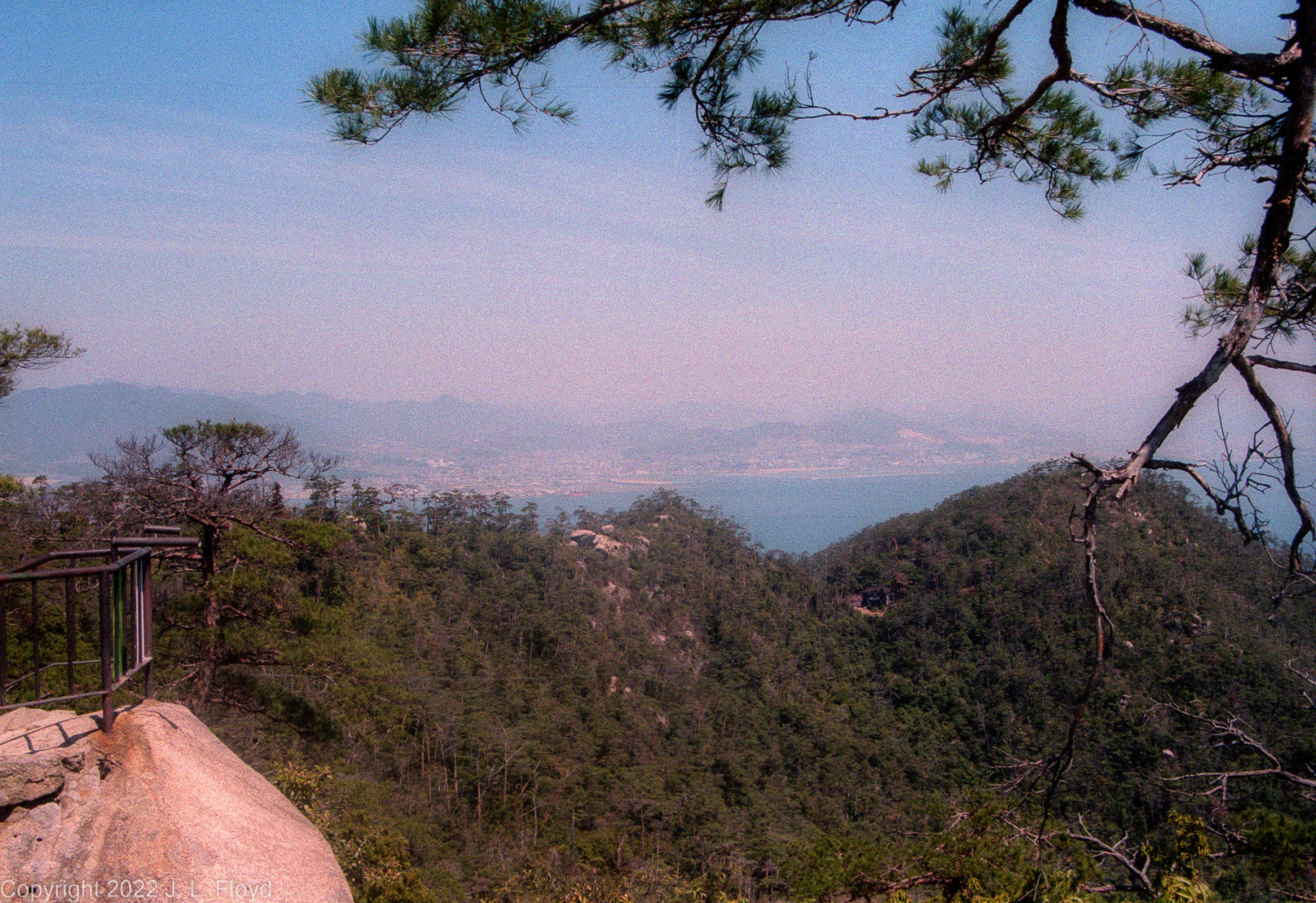
The observation deck at the top of Mt. Mizen affords breathtaking views of Hiroshima Bay and the Inland Sea.

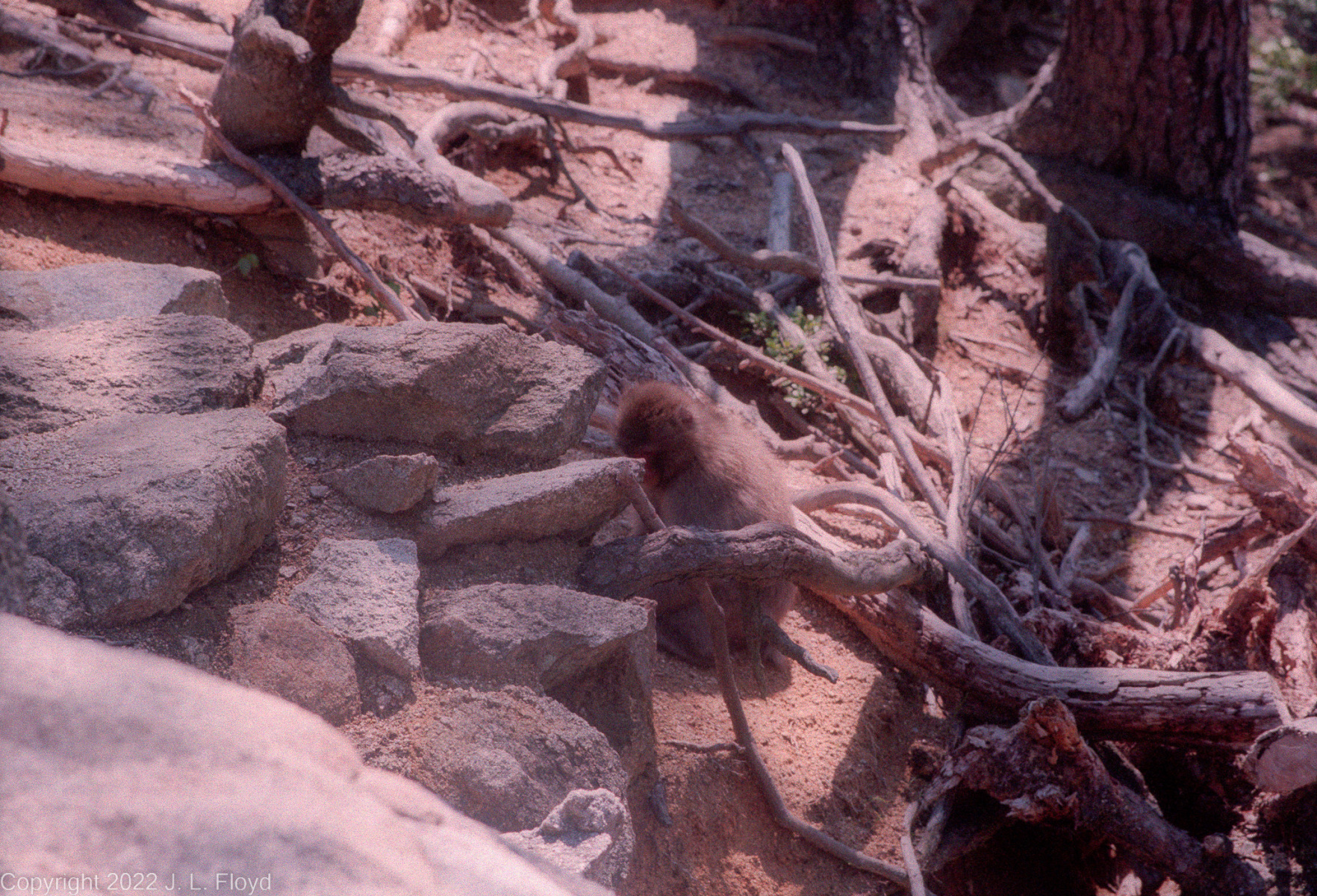
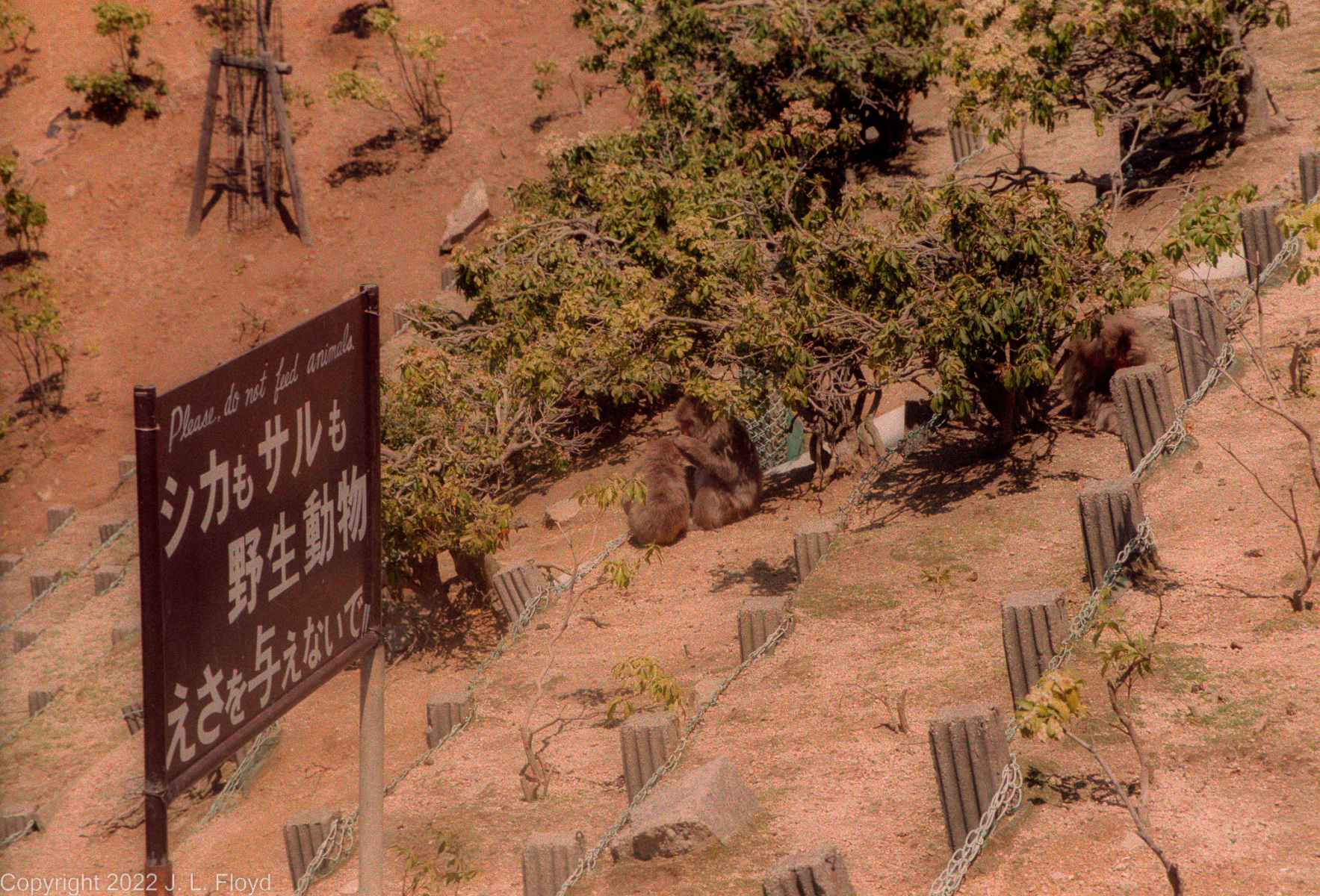
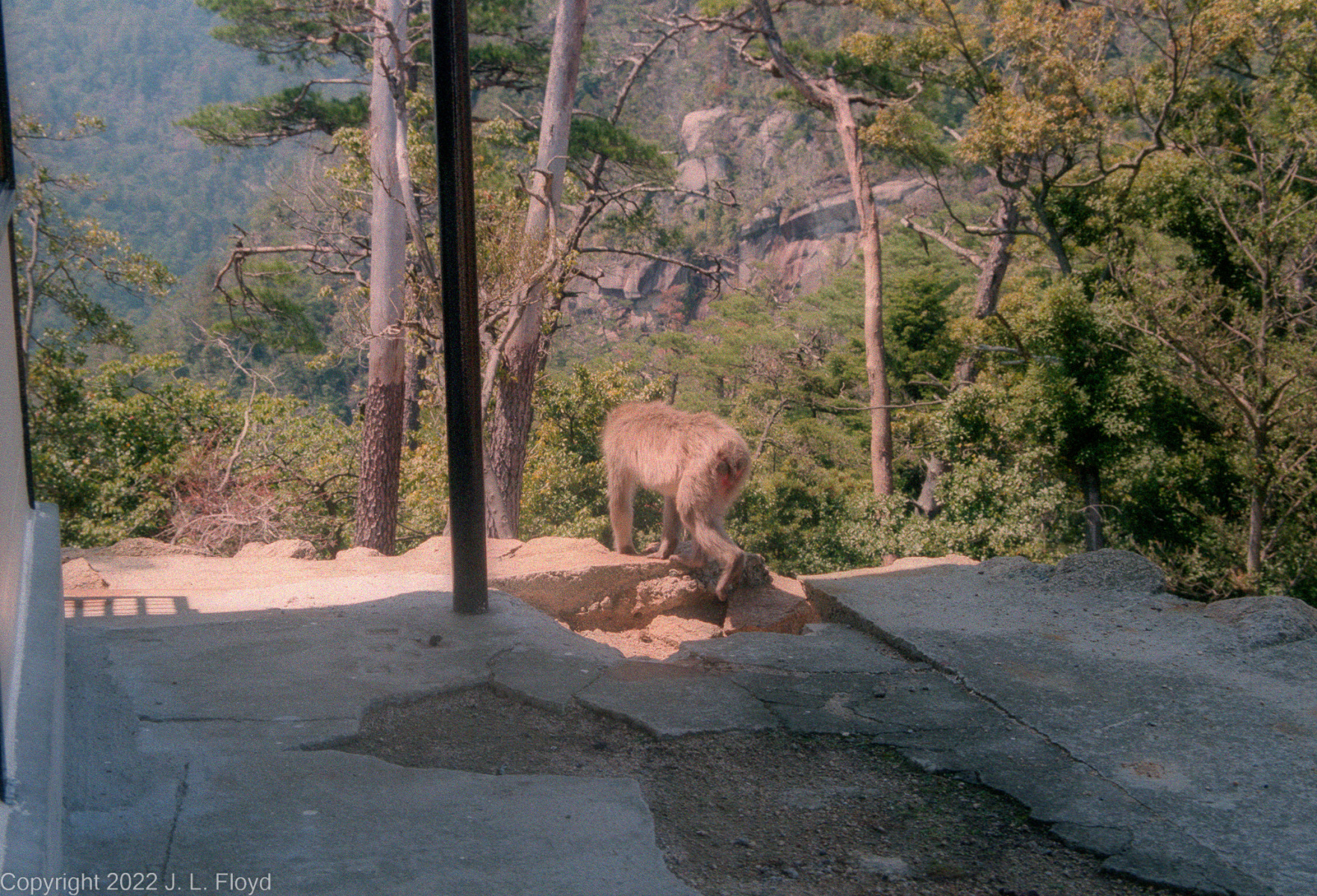
I wandered around the paths near the summit of Mt. Mizen for a while. This was the area that the sacred monkeys – Japanese macaques – were said to frequent, and indeed there were signs posted cautioning visitors to be wary of them, not to feed them, not to approach them, and even to avoid looking them in they eye – apparently they tended to regard that as a challenge. I had no problems; the few monkeys I saw were not interested in me or much concerned about my presence, and went about their business as if I were not there. However, Dave Winter said it was much different when he was there; wherever he went, the monkeys were lurking and they always looked him in the eye – he couldn’t avoid it. Maybe it had something to do with the season or phase of the moon. I have since read, however, that in 2010 the authorities decided to round up and deport the monkeys from Mt. Mizen, Stalinist-style, without asking them their preference, and transplant them to the Japan Monkey Center in Aichi Prefecture, near Nagoya. Actually, there was some justification for this, because it has since been determined that the monkeys had been watching Planet of the Apes and had thereby been inspired to plot the overthrow and subjugation of humans. Unfortunately, evicting the macaques from Mt. Mizen did not succeed in foiling their schemes; more recently, in Yamaguchi, a city down the coast from Hiroshima, a serious of ominous attacks on humans by macaques has taken place. Should anyone be unduly perplexed by this, I would like to point out that monkeys are primates, closely akin to humans, and share many of the vices and foibles of that species, including a penchant for violence. Also, one may speculate that the radiation released by the atomic bomb in 1945 quite likely could be responsible for many mutations among the fauna of southern Honshu, including the macaques, who may have had their evolution thus accelerated to develop more advanced intelligence, and used it to conclude that maybe they should get rid of humans before humans exterminate all other primates as well as themselves.

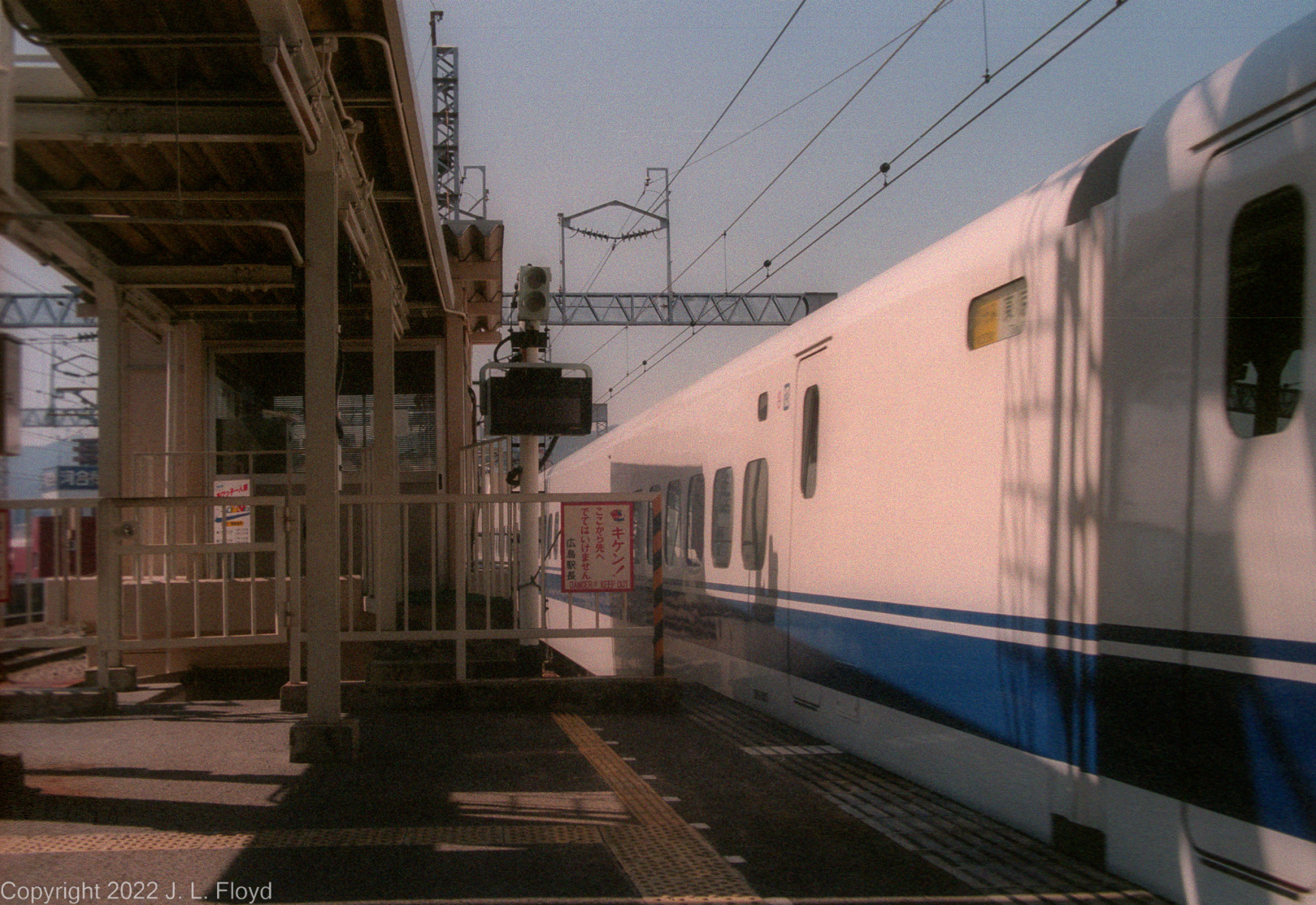
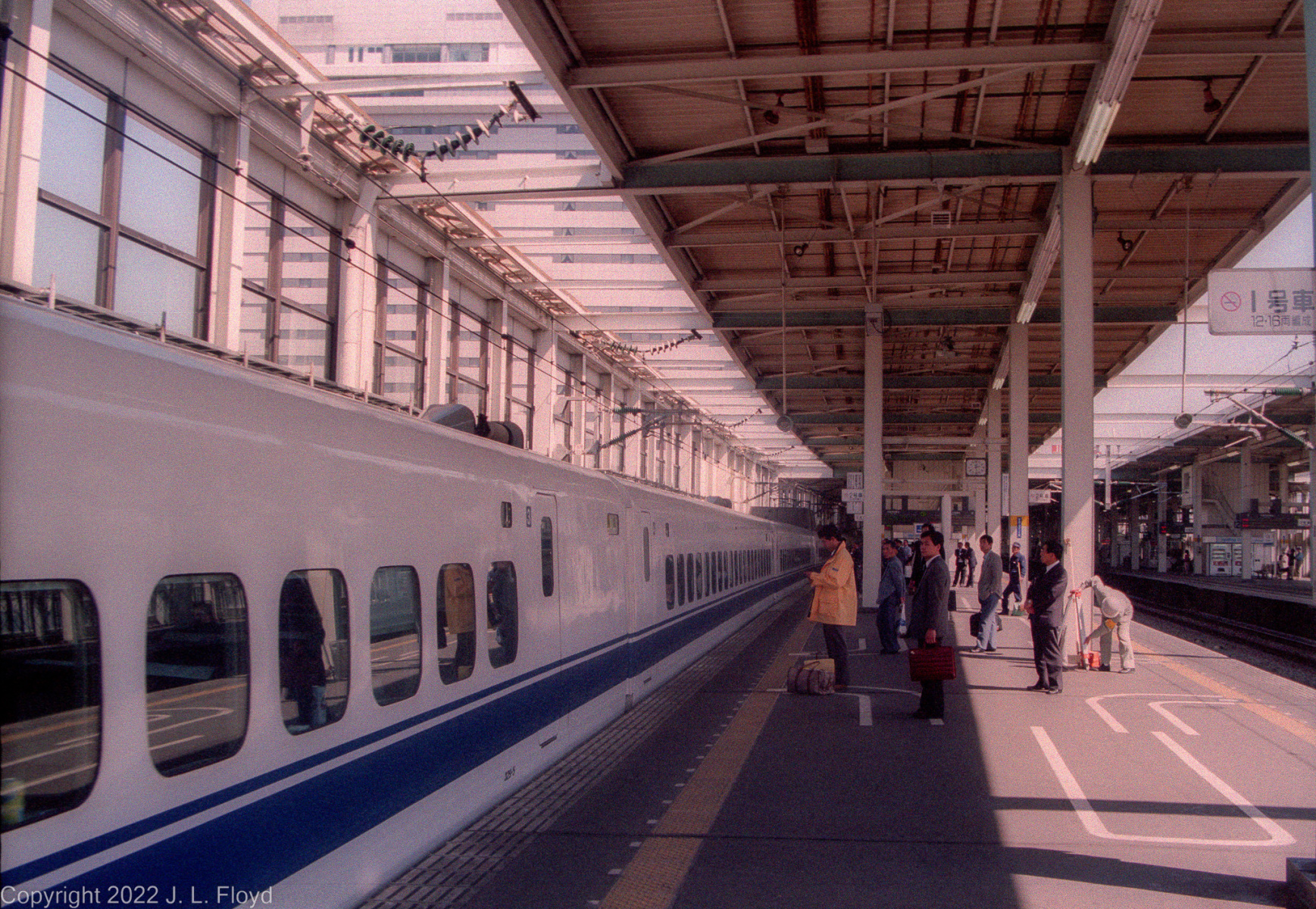
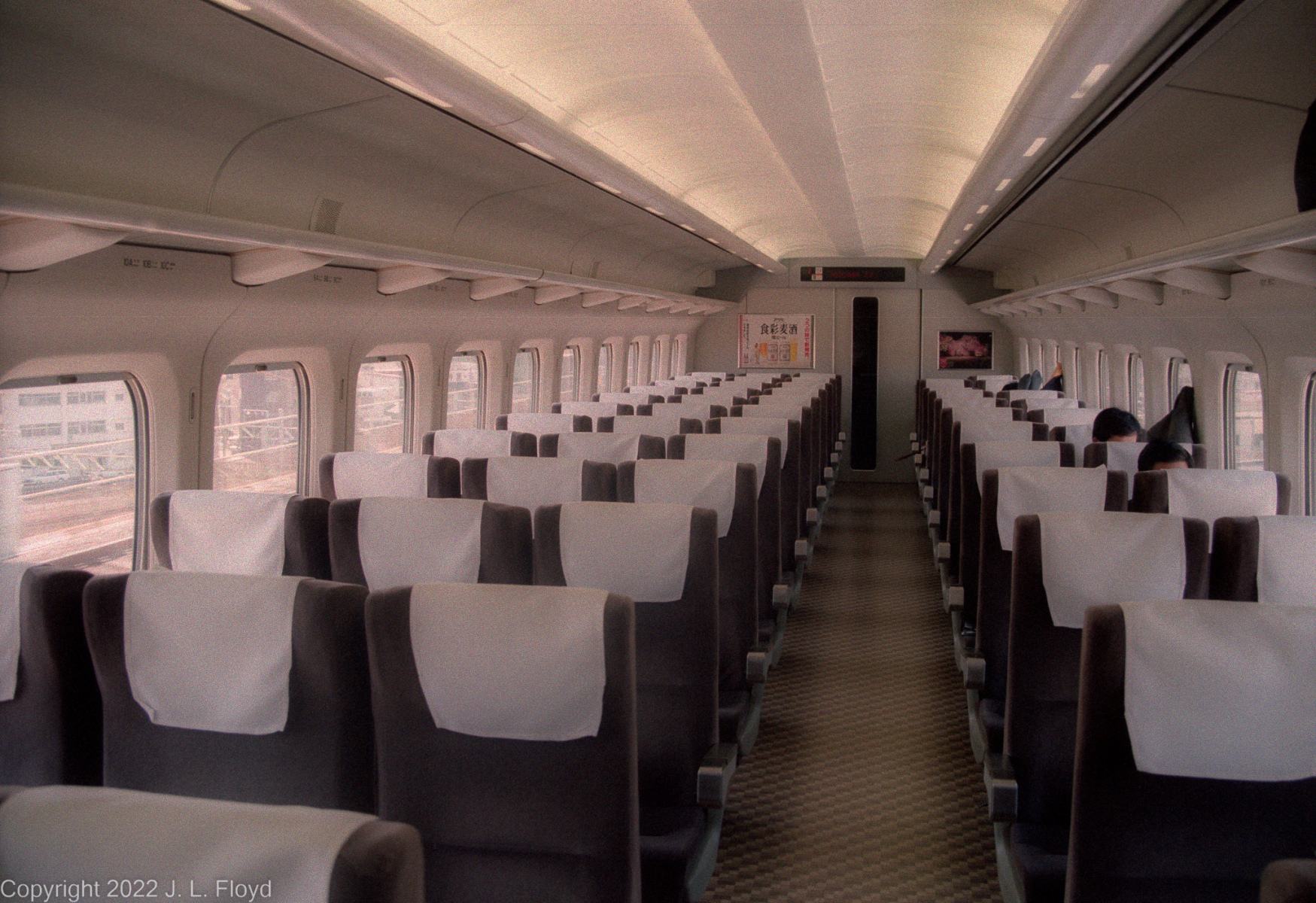
I returned to Tokyo the next day aboard the super-fast Nozomi Shinkansen. While waiting at Hiroshima Station to depart, I shot a few pictures of the train in the terminal before boarding the train. To my surprise, there was someone asleep in the seat that my ticket assigned to me. I felt reluctant to wake him up and ask him to move, but fortunately just at that moment someone came up and asked me, “Can I help you?” This was a frequent occurrence in train and metro stations in Japan – people were extremely helpful and liked to practice their English – and I explained the problem, showing him my ticket with its seat assignment. He looked at it and said, “Oh, this is the Hikari. You want the Nozomi!” He thereby saved me from an embarrassing mistake – otherwise I might have found myself several hundred miles up the line on the wrong train, going to the wrong place.

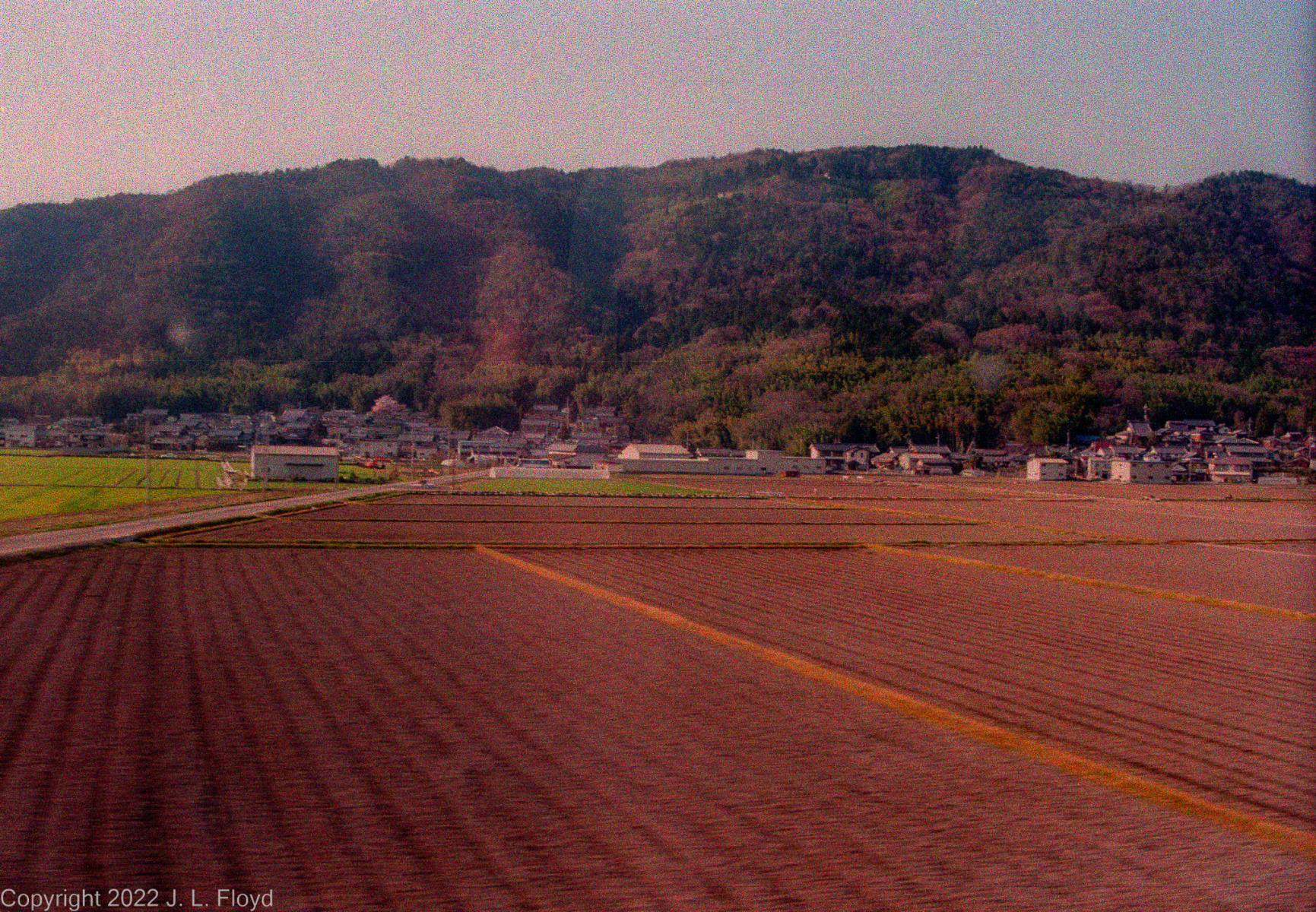
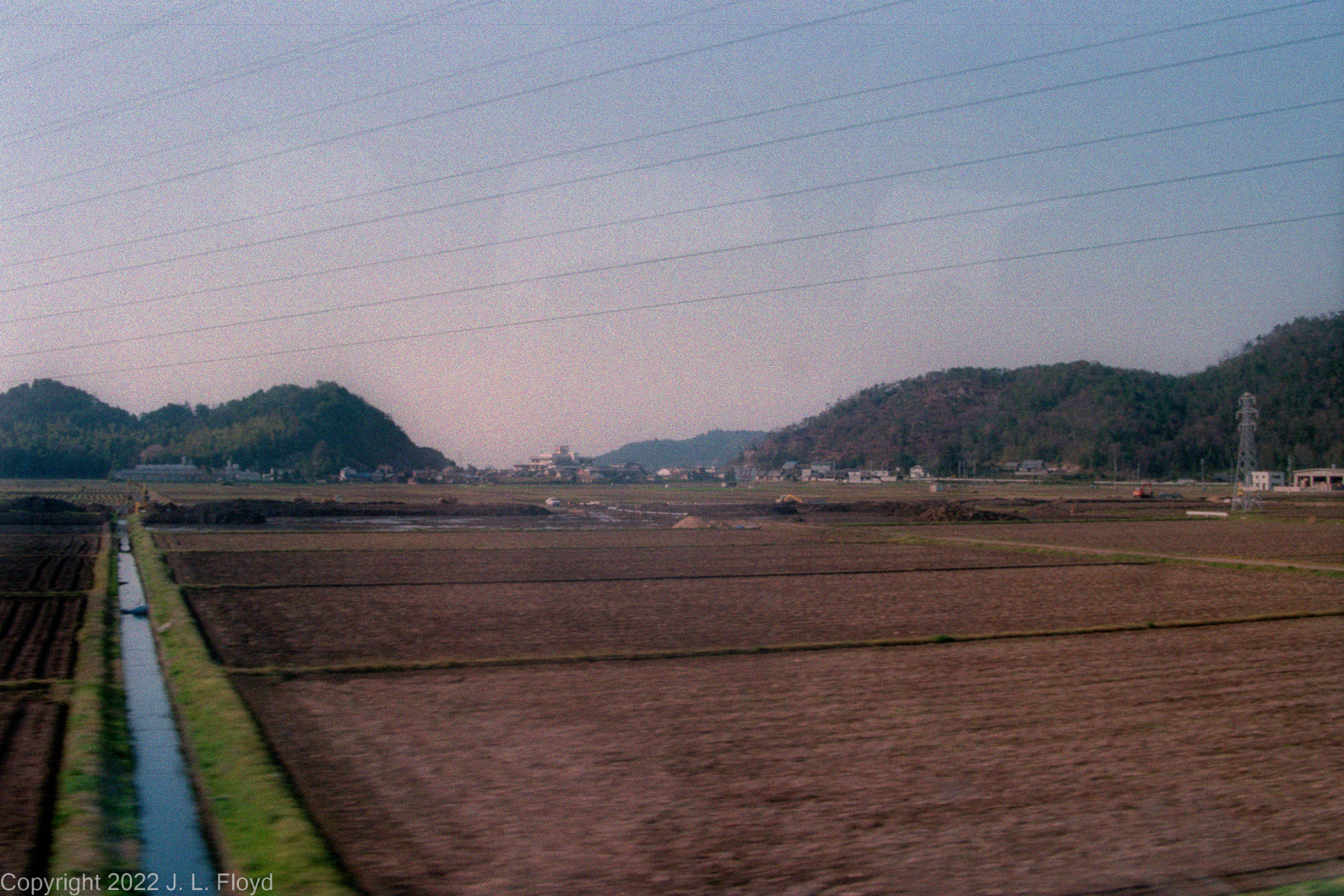
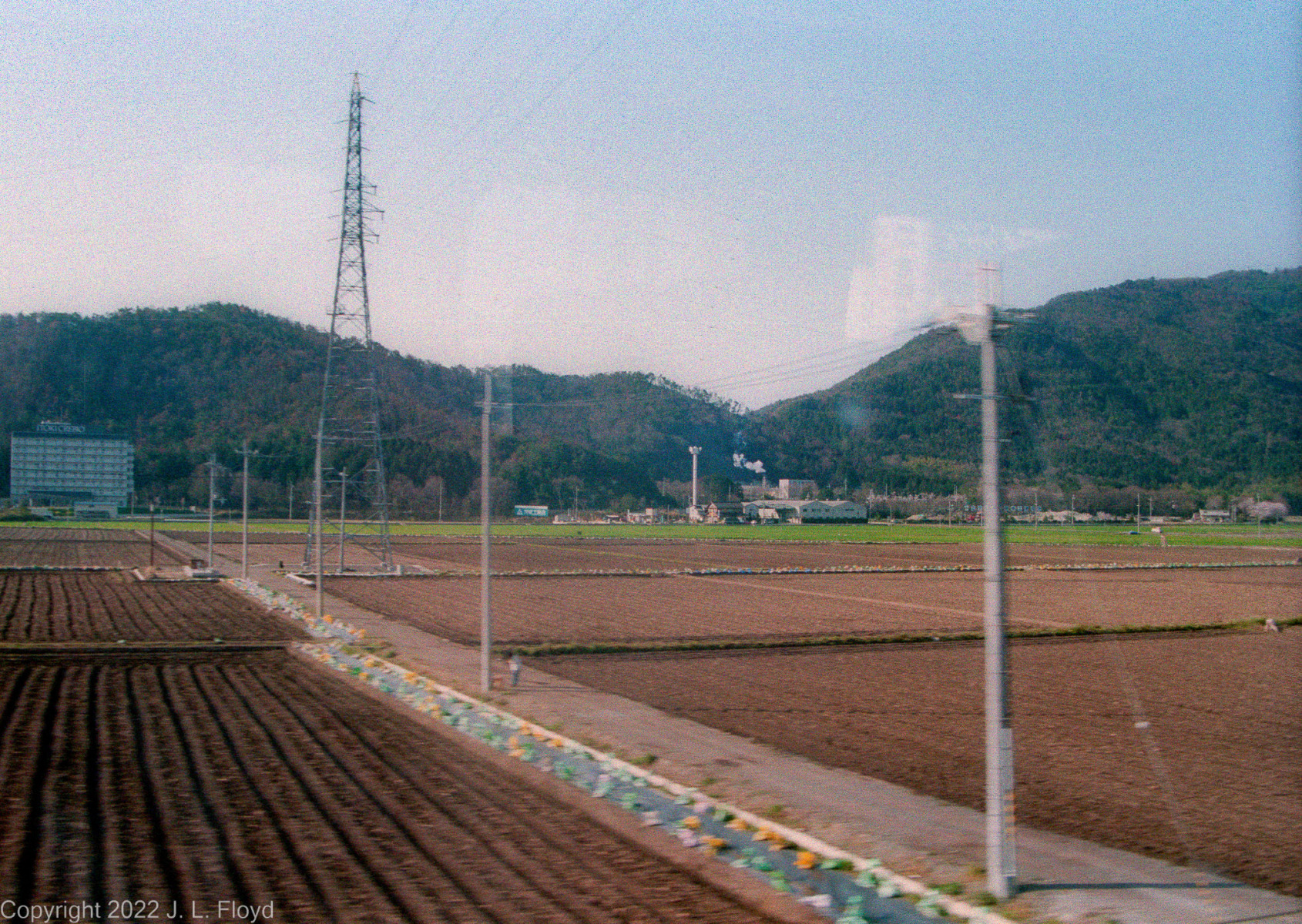
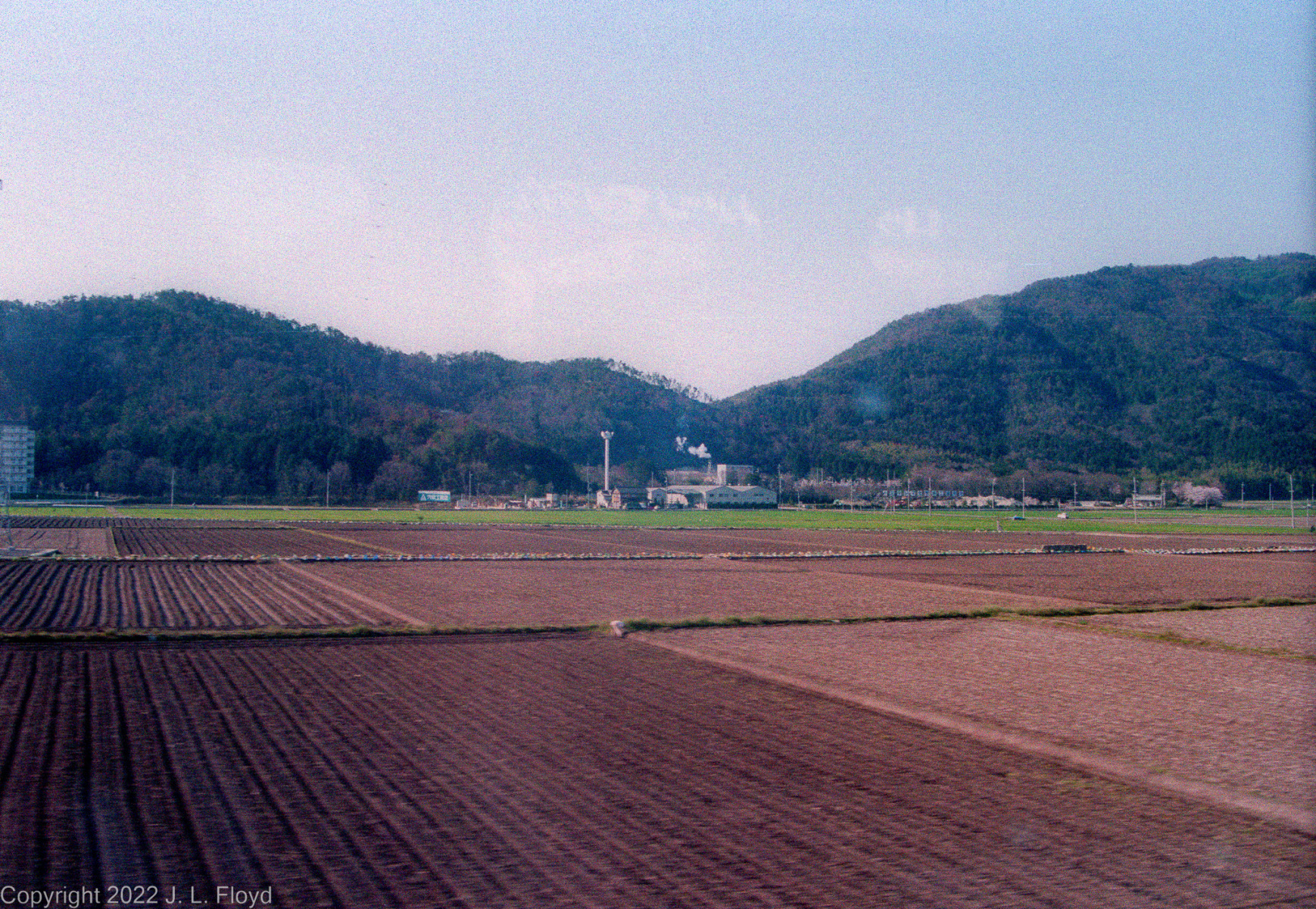
The Nozomi sped me back to Tokyo at 180 miles per hour, covering the 821 km/513 miles in about five hours (stopping in Kyoto). I was able to shoot a few pictures from the train windows – mostly rather boring scenes of Honshu farmland, but at least I was able to verify that there are open spaces in Japan. Unfortunately I fell asleep and missed a great shot of Mt. Fuji, waking just in time to see it go by but too late to grab my camera and set it up for the picture before it disappeared from view.

I am quite disappointed that high-speed trains of the Shinkansen type have not caught on in the USA. Long-distance travel in the United States is far too dependent on airlines, which seem to be getting more crowded, expensive and unpleasant with each passing year. The high-speed trains I have taken in Japan and Europe are far more pleasant and comfortable to ride than any airplanes I’ve been on. It’s obvious that the vast distances of the North American continent limit the applicability of train travel to the longest trips, such as coast-to-coast. Yet for short and medium distances, such as LA to Las Vegas or San Francisco, trains would seem to be a far better choice than airplanes. Yet the California high-speed rail project, which was projected to enable travel from LA to San Francisco in 3 hours, has so far taken 14 years and $5 billion to lay tracks to…nowhere. Originally projected for completion in 2020, it’s now estimated to be on-line by 2030, but only from Merced to Bakersfield. More ambitious plans for a nationwide high-speed train network during the Obama administration foundered on a combination of inexperience, mismanagement and political opposition. Critics never tire of pointing out that the countries where high-speed rail has been successful generally have more centralized or authoritarian governments than the US, where the competing jurisdictions of federal, state and local governments, in addition to the cost of purchasing land from private owners, drives the cost of building high-speed railways to astronomical levels and dictates that rail travel will always be uneconomical compared with automobile and air. I don’t buy this. Autos and airplanes are currently dependent on fossil fuels, which are obsolescent and must be eliminated as a major energy source if humans are to survive on this planet. Even if electric cars and trucks replace gasoline and diesel-fueled vehicles, and hydrogen becomes a viable fuel for airplanes, trains make more sense in lots of ways.

Categories
Japan, April 1996

Hiroshima, April 17-18, 1996

As a historian, an American and a citizen of the world, I felt an obligation to visit Hiroshima. I wanted to deepen my understanding of what had happened on the terrible day of August 6, 1945, and to pay homage to the thousands who died there as well as the survivors who continued to suffer from the effects of nuclear radiation and social discrimination. And I wanted to see how the city had recovered from the ghastly catastrophe inflicted on it.

I arrived in Hiroshima on the Shinkansen on a sunny April day and immediately found my ryokan, which was a short walk away. It was a very plain, unremarkable room, tucked away in a high-rise building, sort of a cross between a hotel and a traditional ryokan – the only traditional aspect I remember was that the floor was covered with tatami rather than rugs. I have no need for luxurious hotels in any case and I found it quite comfortable for the two nights I was there.

I had a memorable dinner in a tiny hole-in-the-wall restaurant near the hotel. It was a bar-and-grill type of place where you sit at on stools at the bar and the food is cooked right in front of you. The specialty of the house was oekenomiyaki, a type of pancake featuring all sorts of ingredients cooked together in a delicious melange. The oekenomiyaki were exceptionally tasty as well as inexpensive, and I downed them with beers, none of which I paid for; as soon as the other patrons noticed a gaijin in the bar they started buying me beers and continued to do so for the rest of the evening. I felt honored beyond measure and I’ll always be grateful for the hospitality and good feelings accorded to me in Hiroshima.

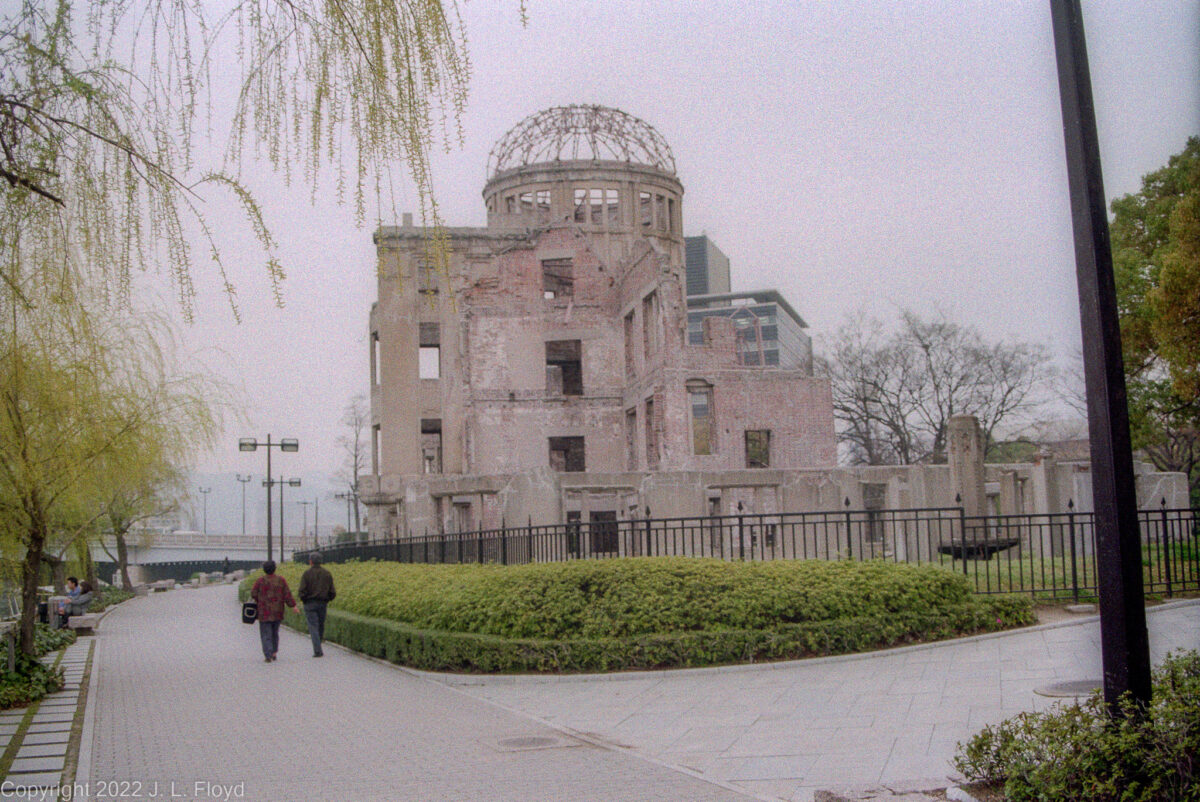
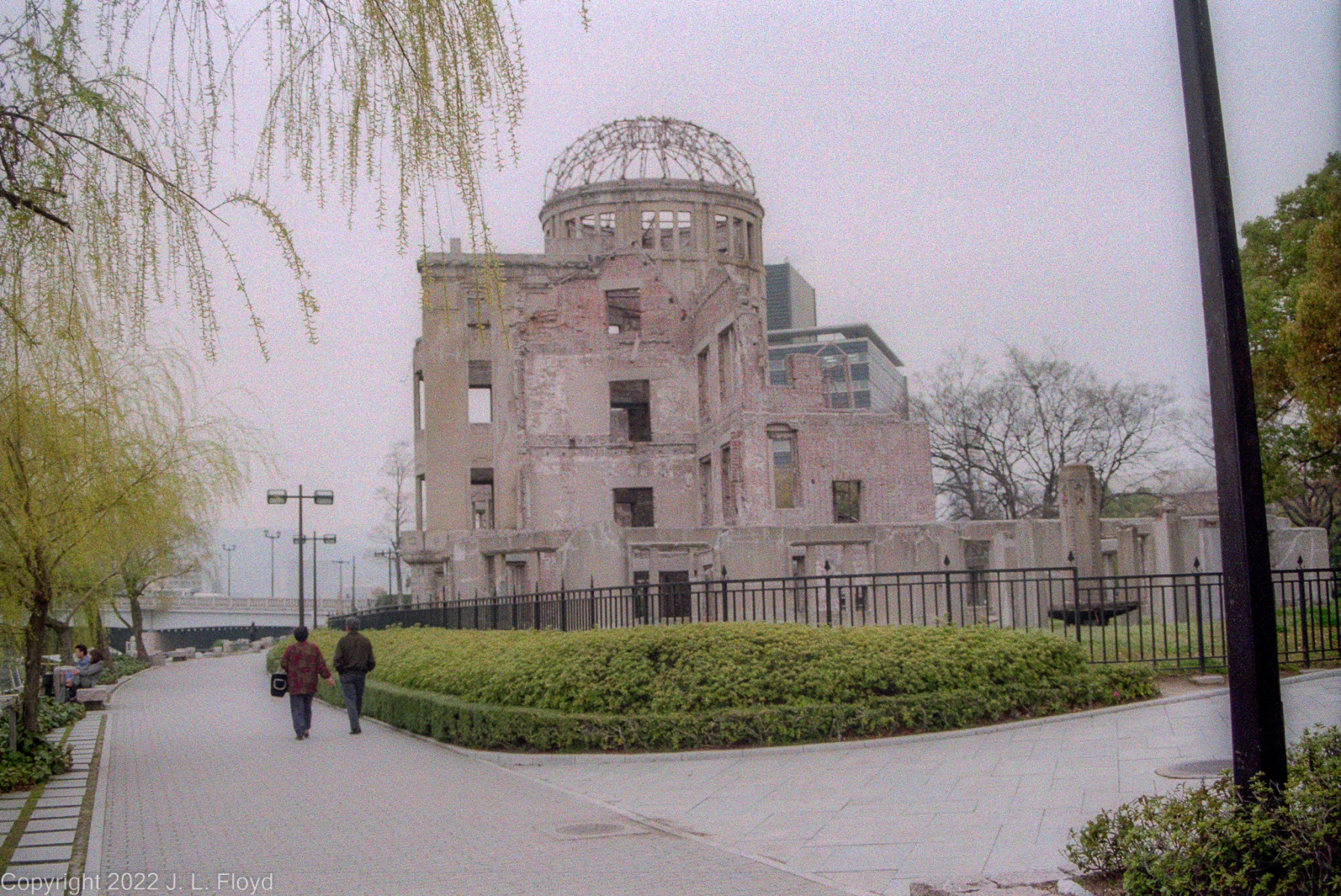
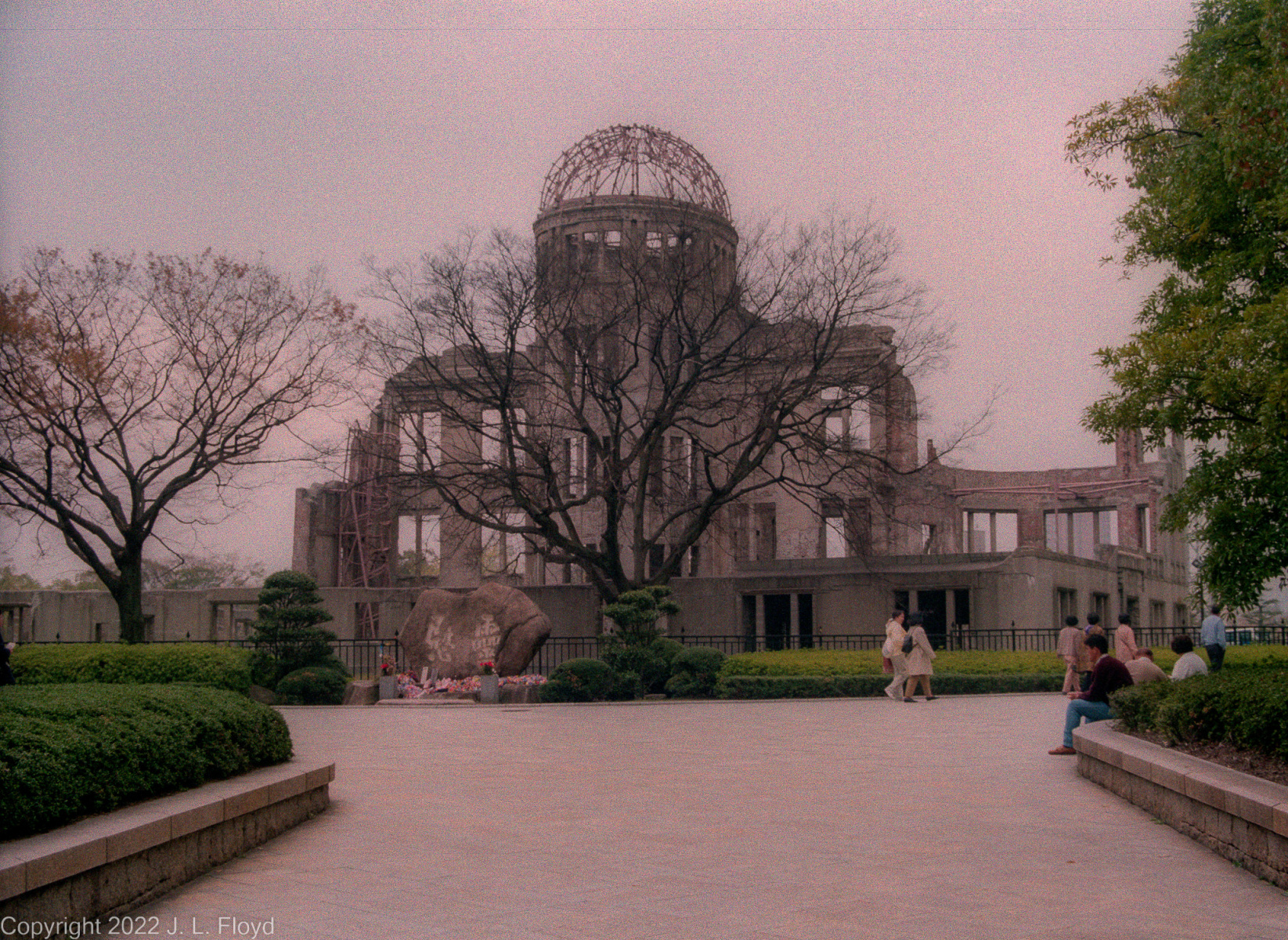
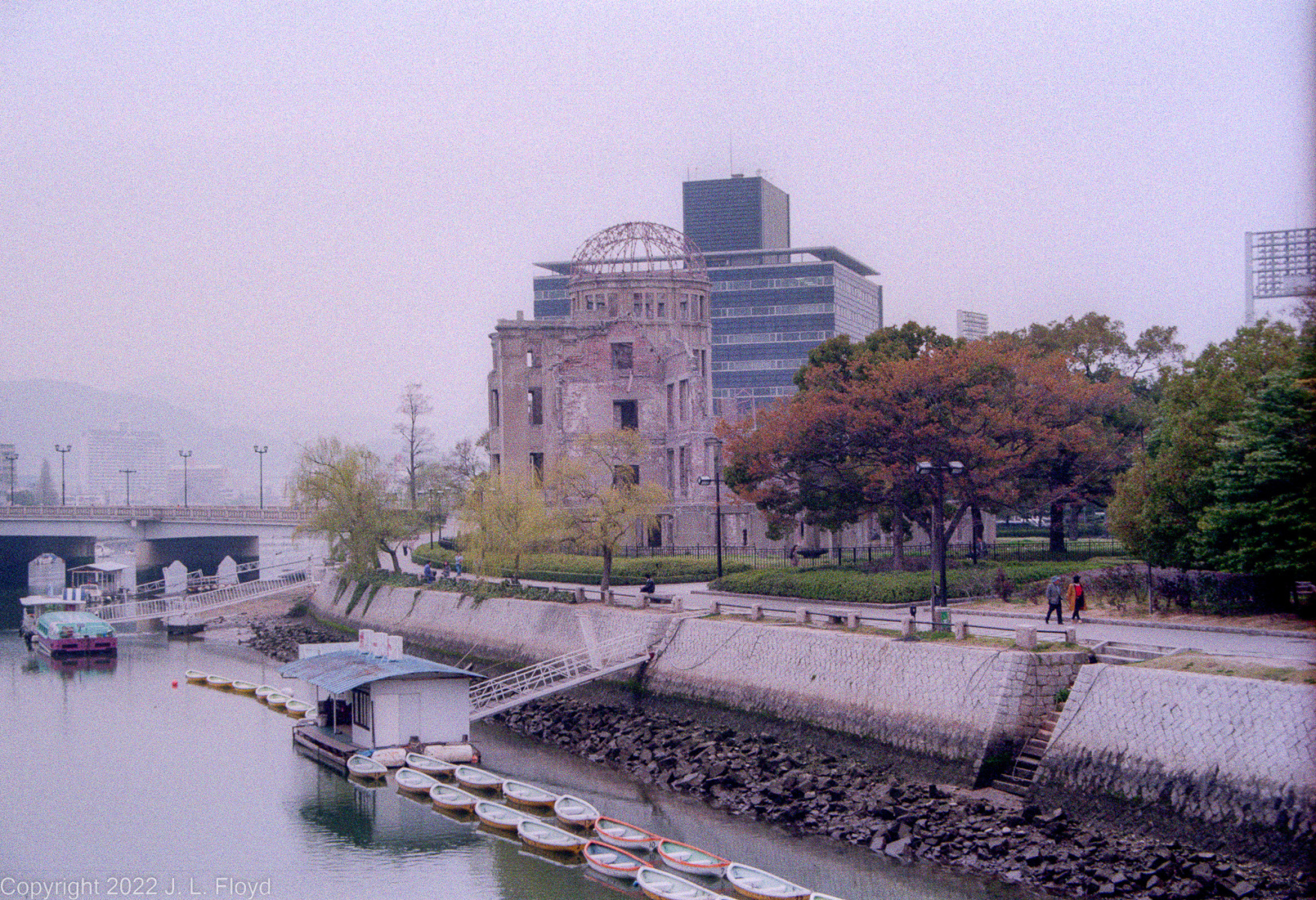
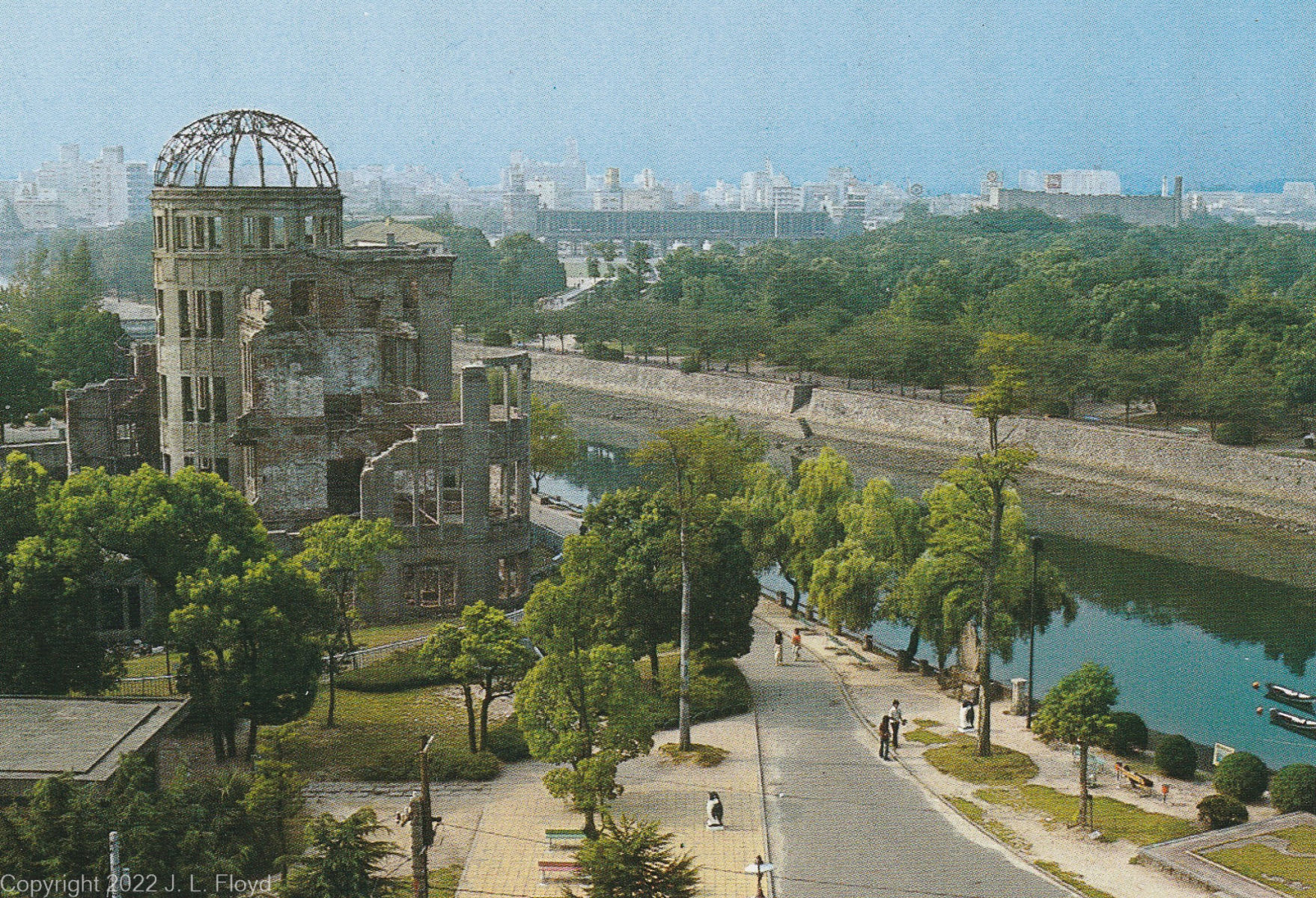
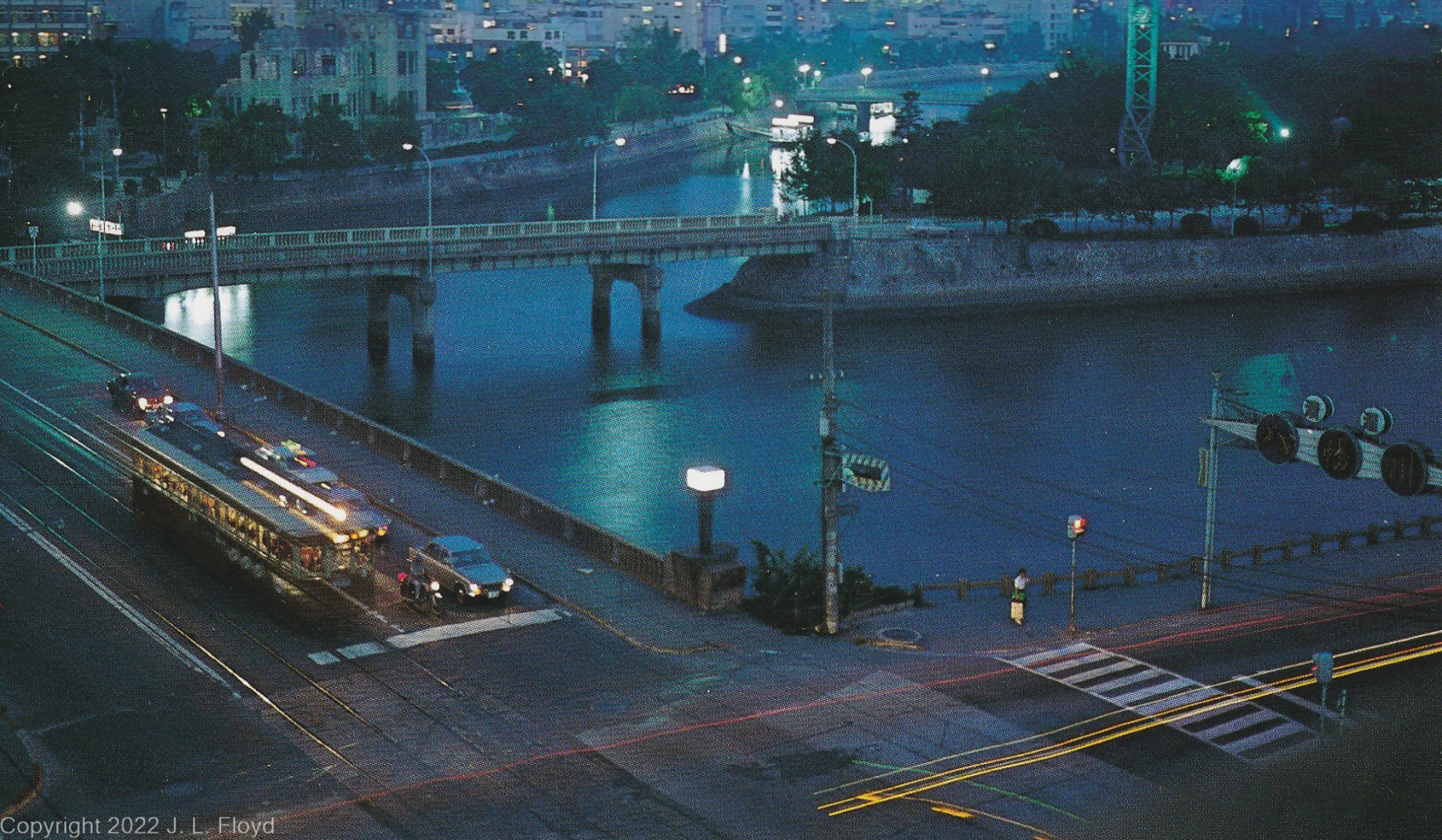
Next morning I began my explorations at the Genbaku (Atomic Bomb) Dome, aka the Hiroshima Peace Memorial. Prior to August 6, 1945 it was known as the Hiroshima-ken Sangyo Shoreikan, the Hiroshima Prefectural Industrial Promotional Hall, built in 1914. Since then it has been preserved in a state as close as possible to its condition immediately after the bombing: a ruined skeleton. The intent was to preserve it as an overwhelmingly powerful symbol of the destructive power of which humans are capable, but also as an expression of hope for peace and the ultimate elimination of nuclear weapons (and, I would add, of all weapons of war) from the world.  

The Industrial Promotional Hall was neither the intended target nor the actual ground zero of the atomic bomb. The intended target was the Aioi Bridge over the Ota/Motoyasu River, a few hundred feet away. The actual hypocenter was the Shima Surgical Clinic 800 feet to the east of the bridge and 490 feet east of the Industrial Promotional Hall. The bomb did not actually hit anything because it exploded 1,900 feet in the air over the hypocenter, but the blast leveled almost 70 percent of the buildings in Hiroshima and killed about 80,000 people, 30% of the city’s population. The Little Boy fission bomb dropped on Hiroshima was a primitive weapon by today’s standards, since only 1.7% of the fissionable material aetually ignited, a fact which would have been of little consolation to its victims. I mention this only to underline the apocalyptic nature of nuclear warfare and to reinforce the case for not engaging in it.

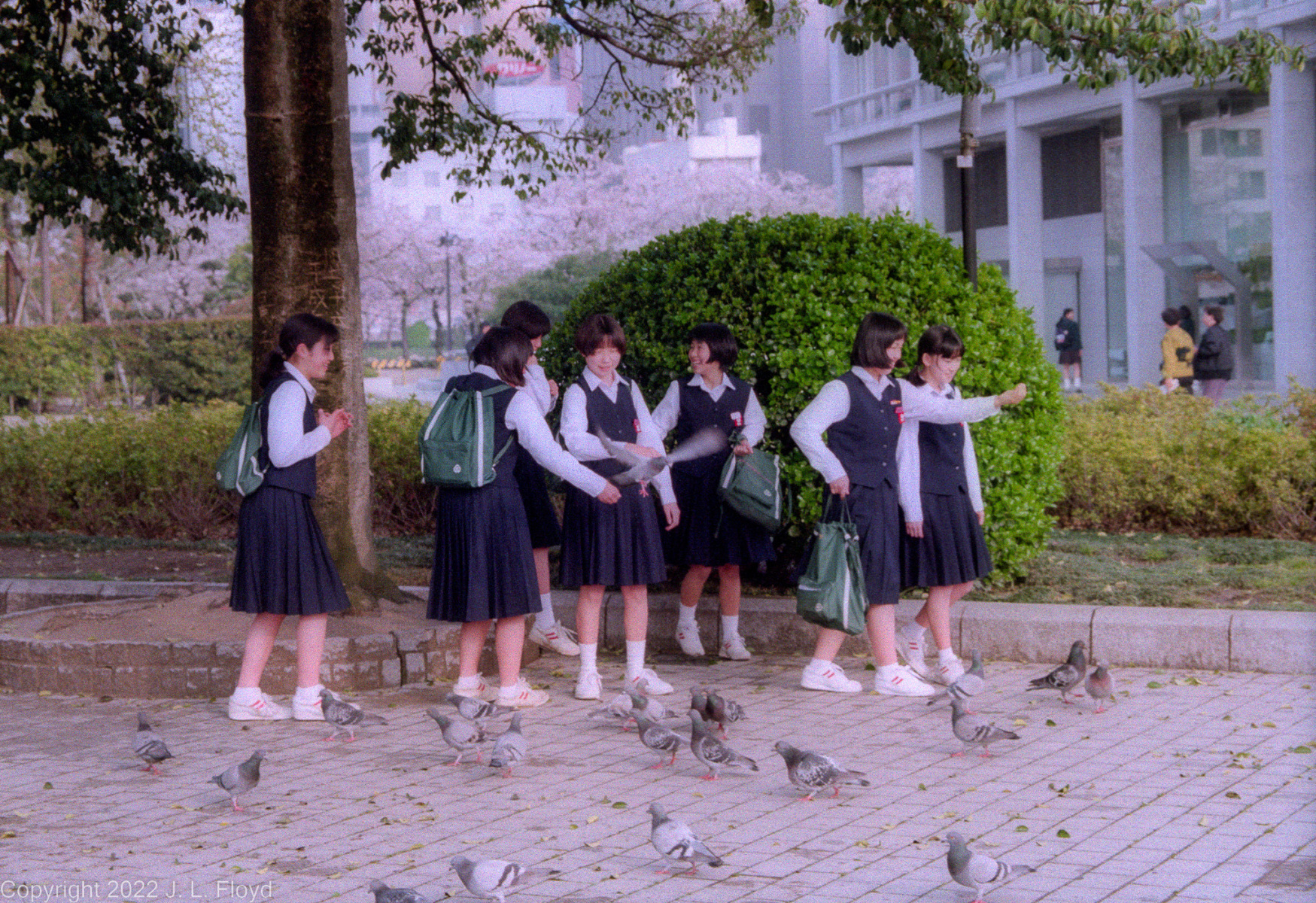
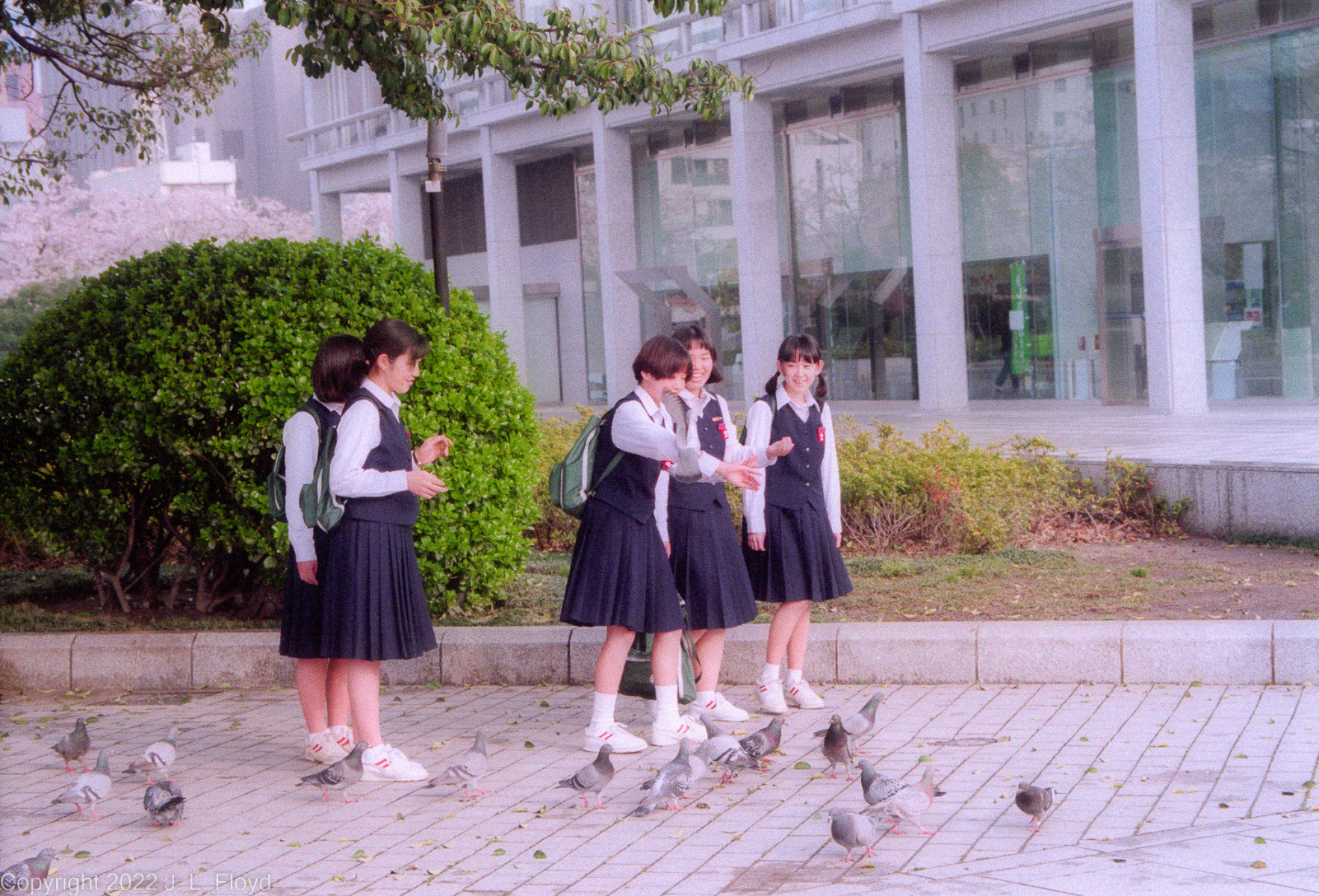
Whenever I saw happy schoolchildren like those in the following pictures I could not help thinking about other schoolchildren who perished on August 6 in Hiroshima and on August 9 in Nagasaki. I’d rather it didn’t happen again.

But the nuclear attacks weren’t really much different in their effect from the holocaust that occurred in the firebombing of other Japanese cities – such as Tokyo, where on March 9-10, 1945, the single most destructive air raid in human history resulted in the deaths of over 100,000 civilians. Such horrors might be considered just retribution for the Japanese invasion of China, during which millions of Chinese civilians and soldiers perished. But that leads into a long chain of cause and effect which involves the impact of 19th-century Western imperialism in East Asia and elsewhere, and I’m not going there. The point here, the lesson of Hiroshima, is that this madness has to stop. Nations have to learn to cooperate rather than destroy one another. Otherwise there is no future for humanity on this planet. Are you listening, Vladimir Putin?

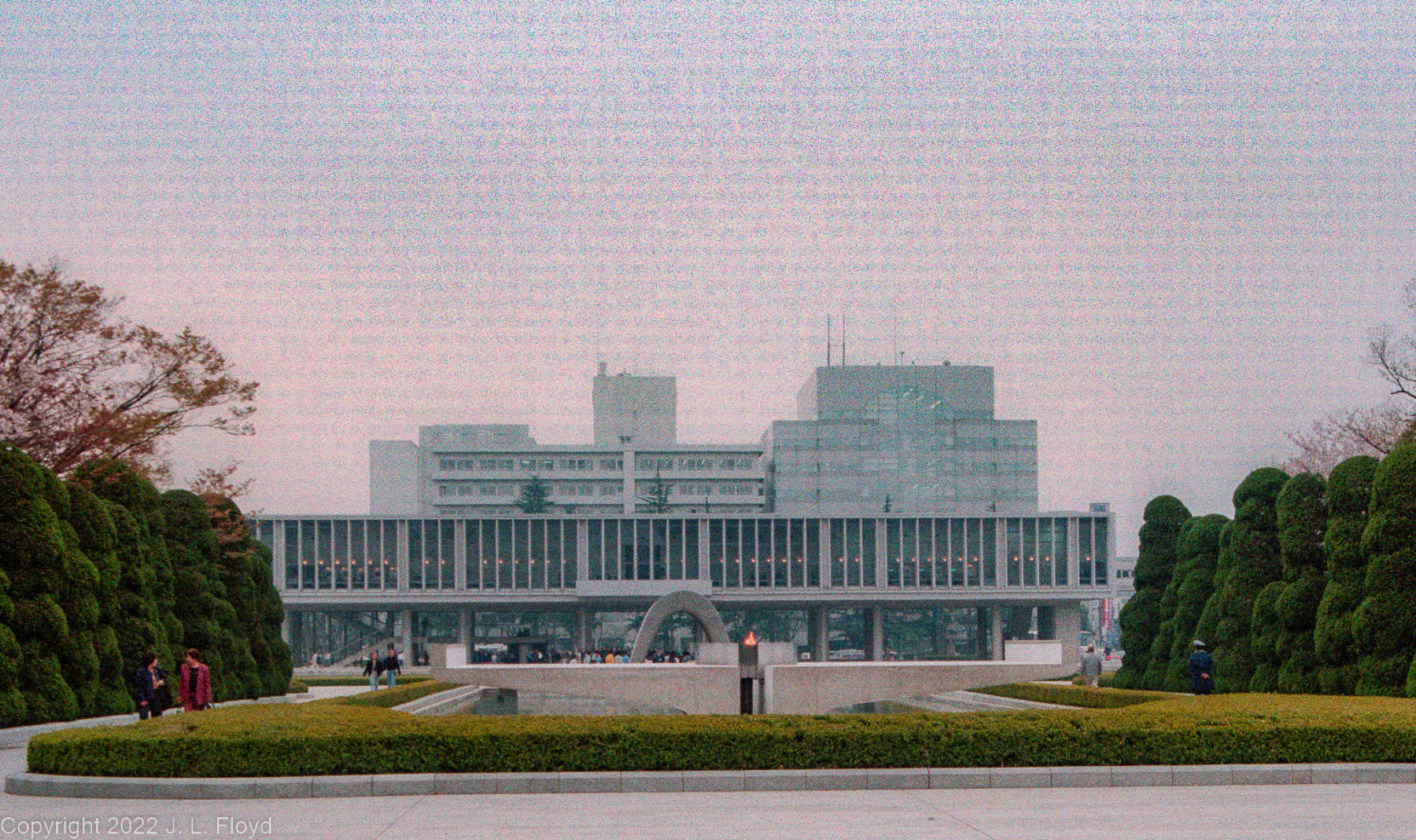
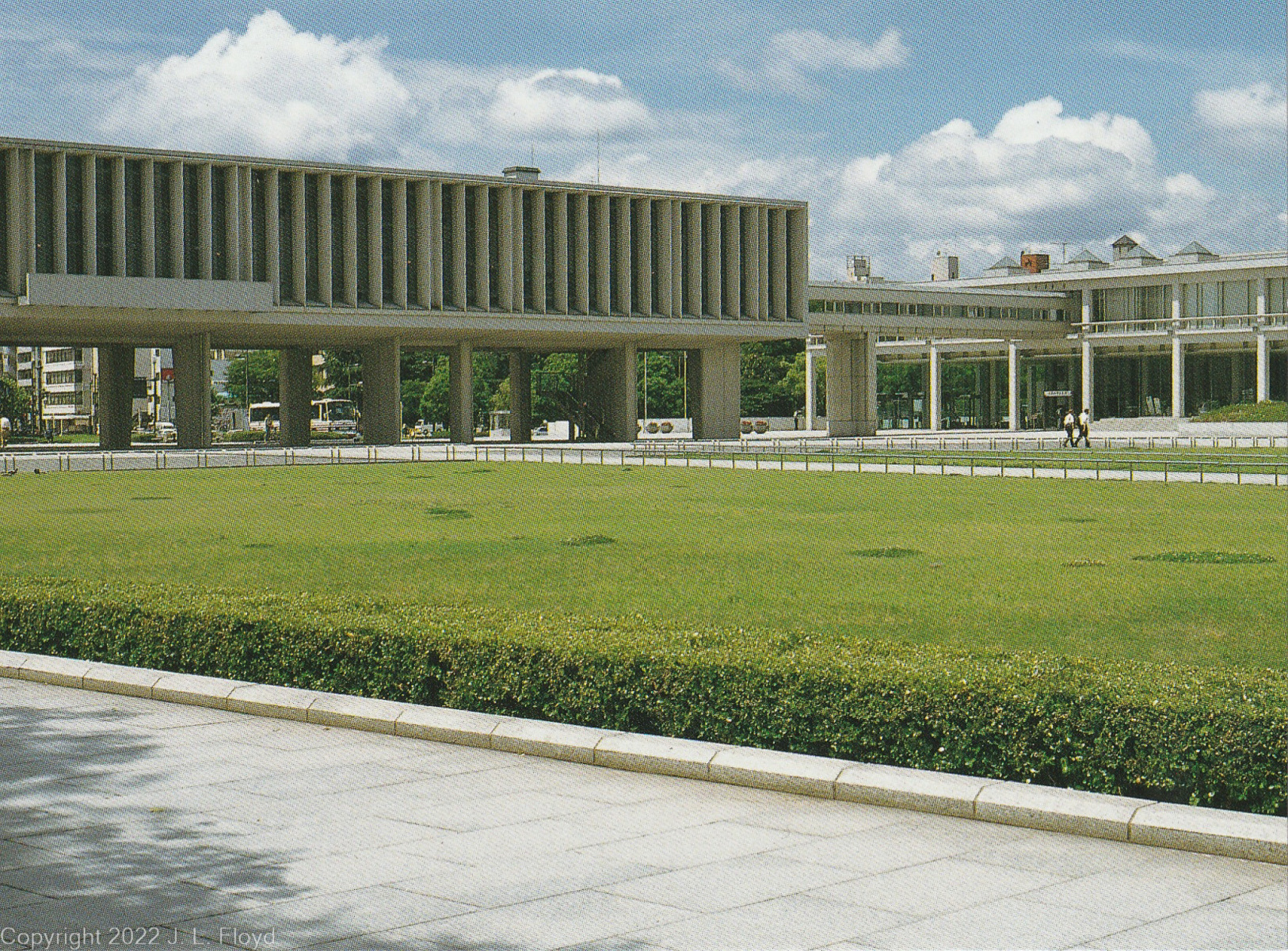
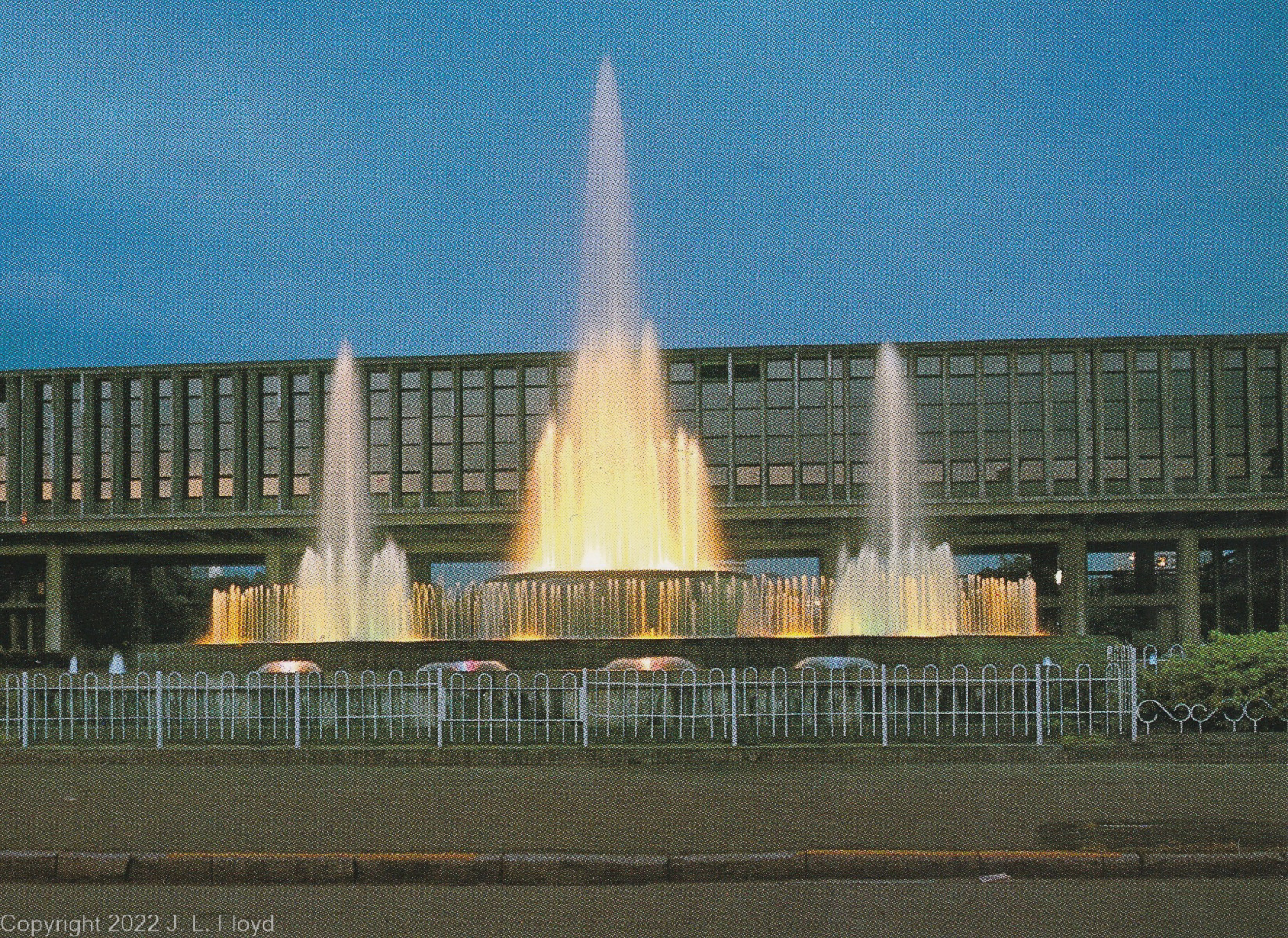
The Hiroshima Peace Park, located on an island across the river from the Genbaku Dome, reinforces this message. It contains a museum and a number of monuments. Near the entrance of the museum is a clock with the hands frozen at 8:15, the time the atomic bomb went off.  The exhibits and information include coverage of events leading to the war, Hiroshima’s role in the war, and of course the bombing and its effects. 

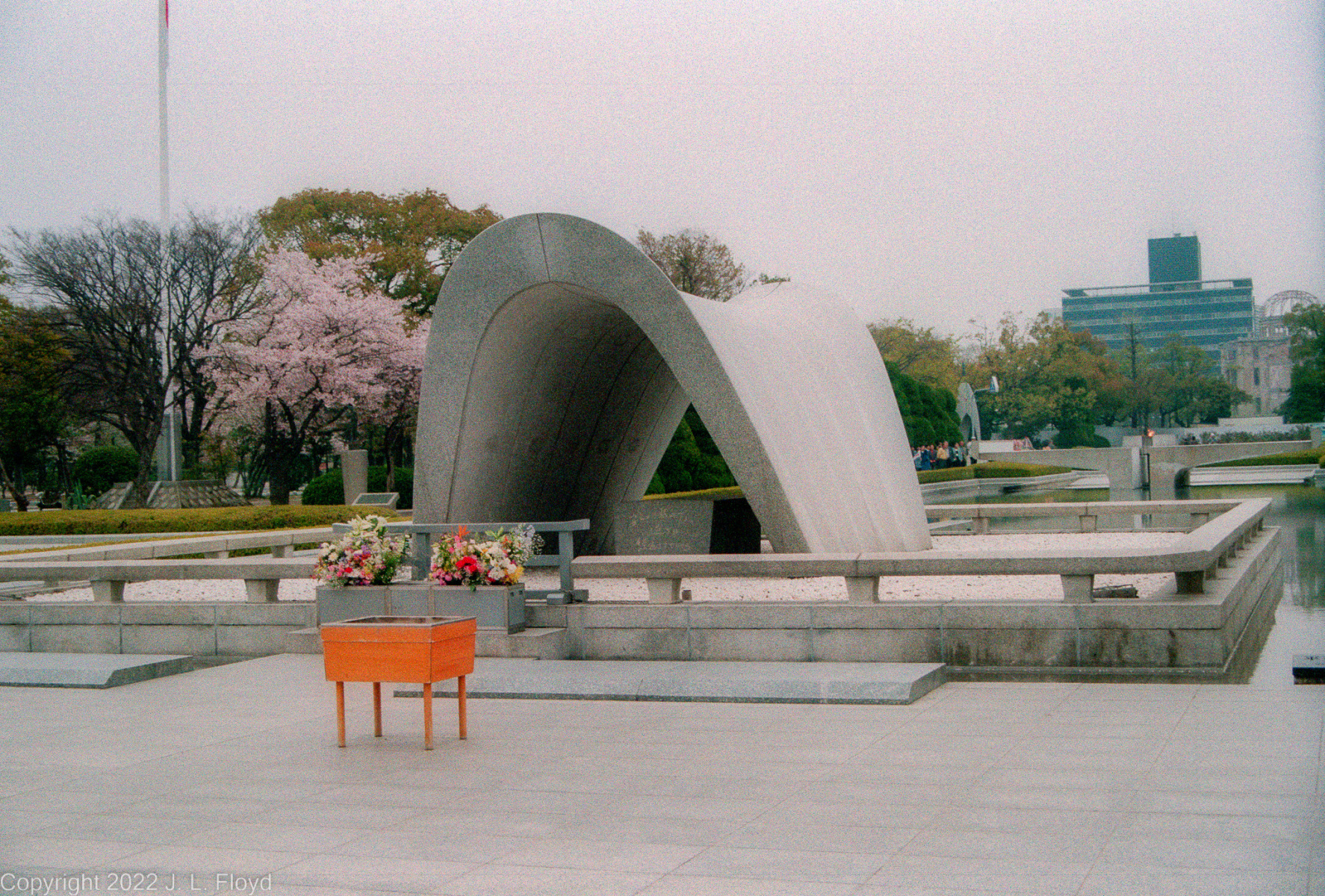
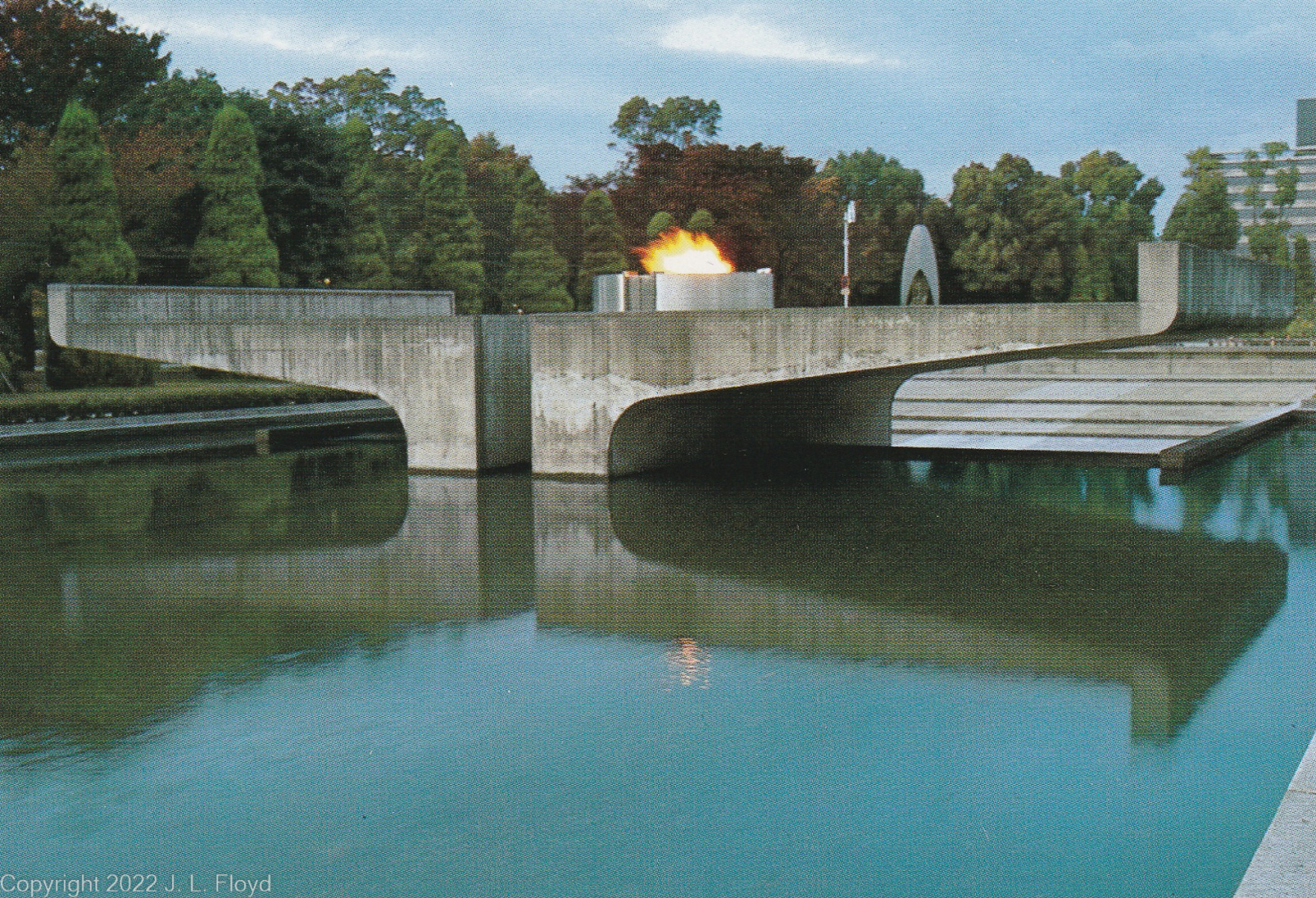
In the center of the park is a cenotaph – an empty tomb commemorating people whose remains are buried elsewhere – honoring the victims of the bomb, whose names are recorded there. A concrete arch, representing a shelter for the souls of the victims, covers the cenotaph. There is a second cenotaph in the park for Korean victims of the bomb; there were some thousands of Koreans working as co-opted laborers in Hiroshima at the time of the bombing.

In front of the cenotaph there is also a Flame of Peace, ignited in 1964; it is supposed to continue burning until all nuclear weapons have been eliminated from the world.

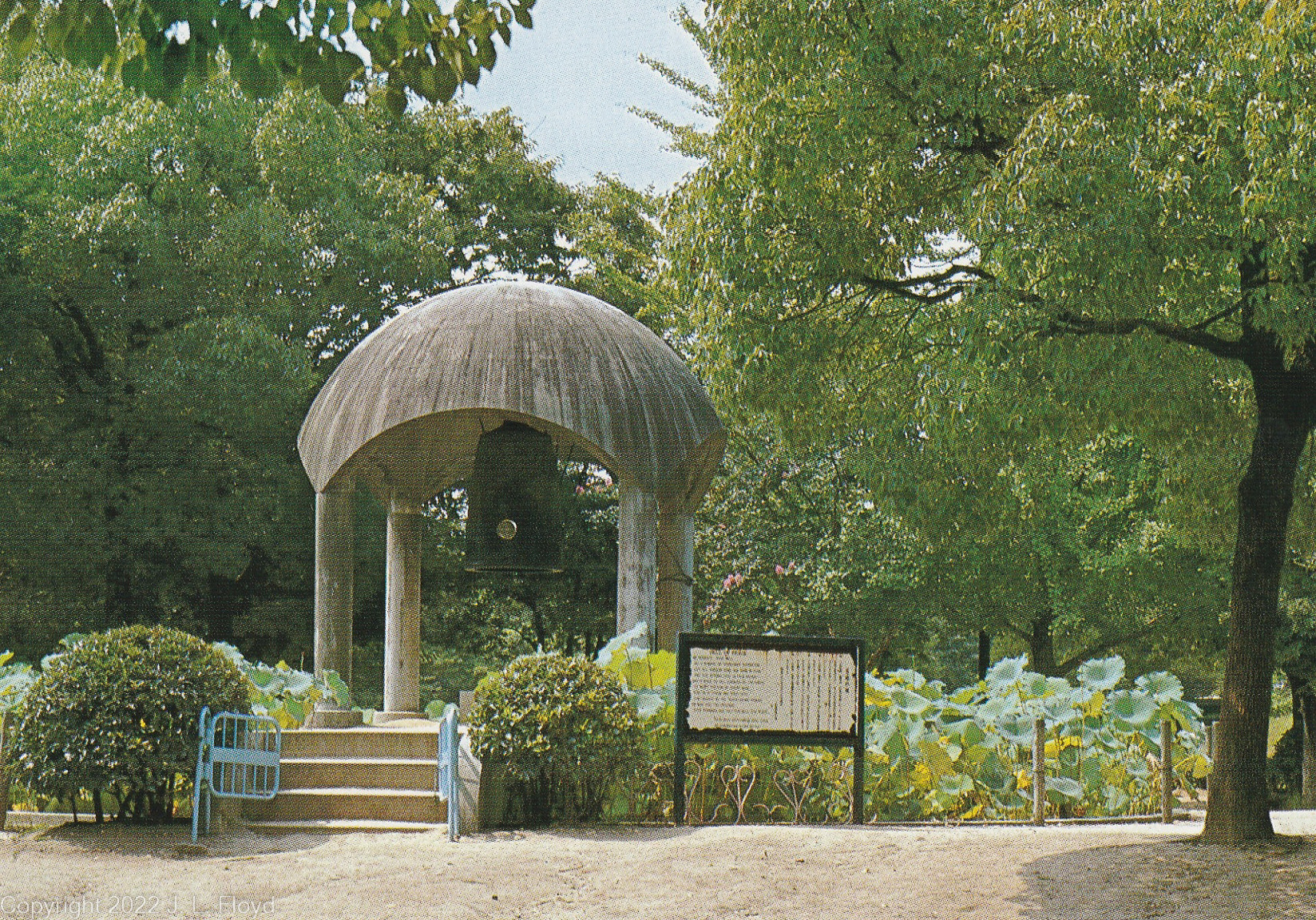
There is also a Peace Bell, located in a gazebo in the park. Although it was donated by the Greek embassy, it is a Japanese-style bell cast in Japan. On it are inscriptions in Greek, Japanese and Sanskrit. Visitors are encouraged to ring it, which they do often.

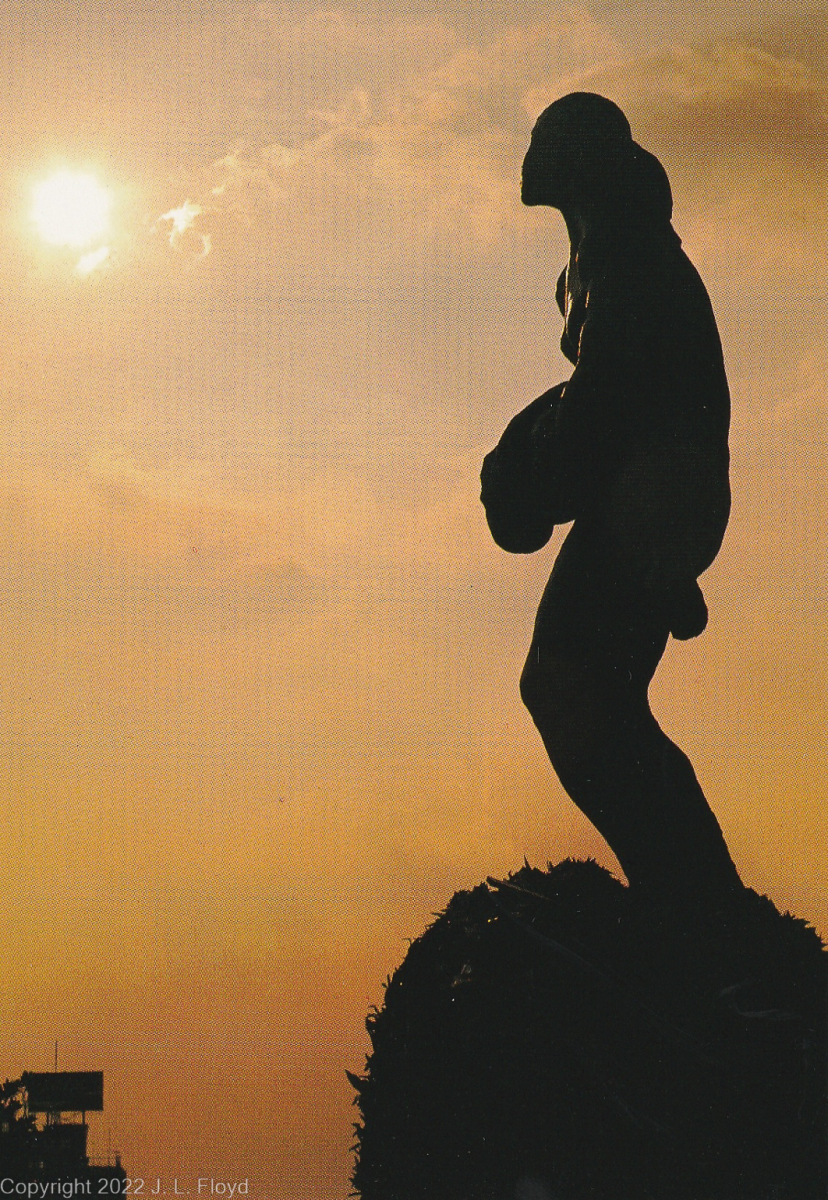
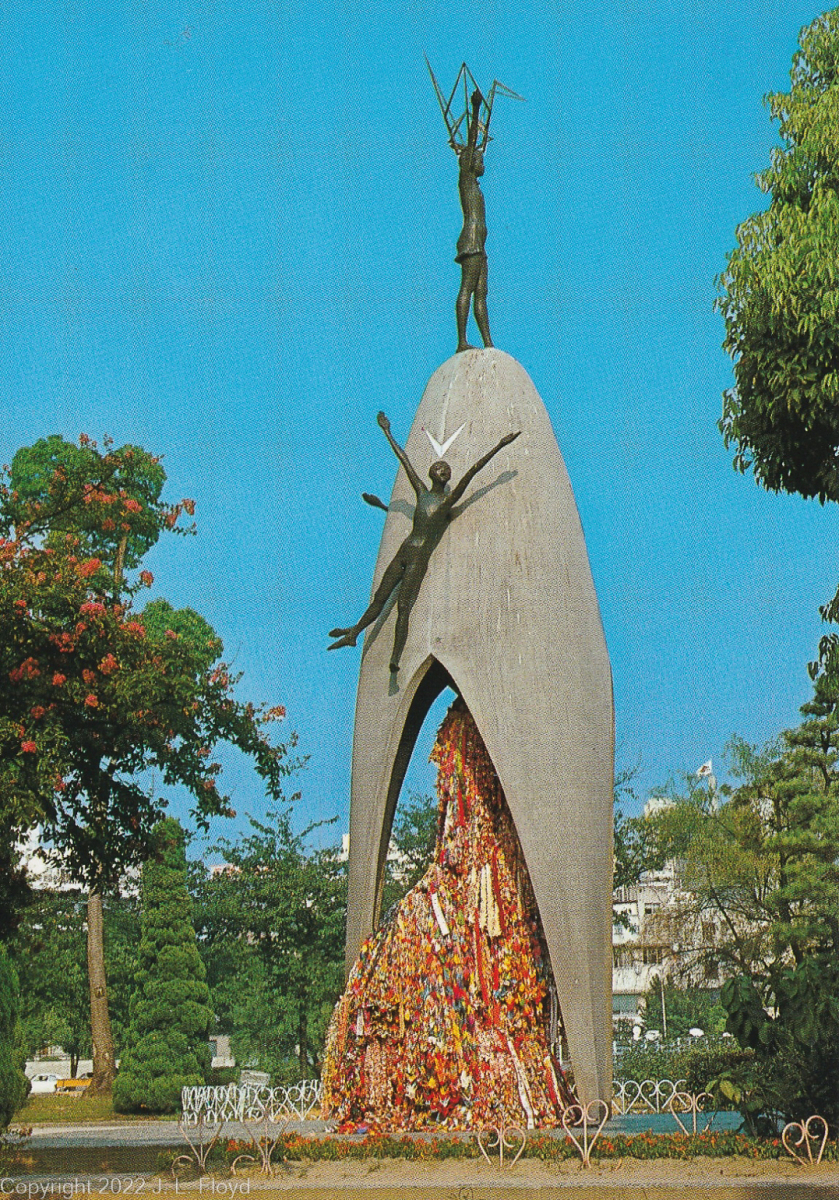
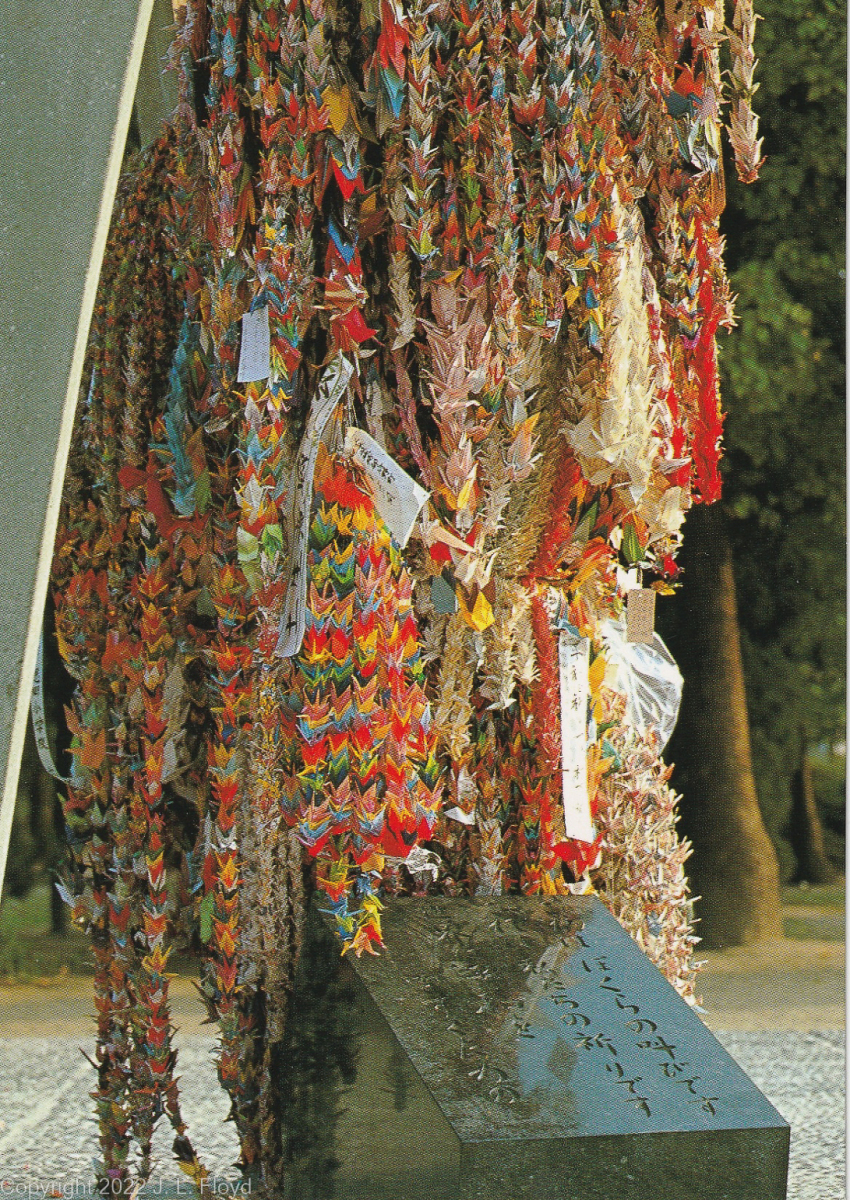
The most poignant monument in the park is the Genbaku no Ko no Zō, the Children’s Peace Monument, built in 1958 with funds donated by Japanese school children. It commemorates all the children who perished from the atomic bomb, but especially Sadako Sasaki, a girl who was two years old when the bomb struck, and later died of leukemia contracted as a result of radiation exposure. Before she died in 1955, she undertook a project of folding a thousand origami paper cranes (senbazuru). In Japanese legend, the crane is a magical bird, living for a thousand years, and a person who folds one thousand origami cranes in a year will be granted a wish by the gods (in some versions of the legend, long life or eternal bliss). There is some uncertainty about whether Sadako completed the project before she died—family members say she did—but in any case she passed away at the age of 12, and the Children’s Peace Monument honors her memory. A statue of Sadako stands on top of the monument, holding a wire crane above her head. From the ceiling of the gazebo-like monument structure hang sheafs of paper cranes on strings, contributed by children from all over Japan and from around the world, and continually replenished as they succumb to the weather, and thousands more are stored in glass boxes around the monument.

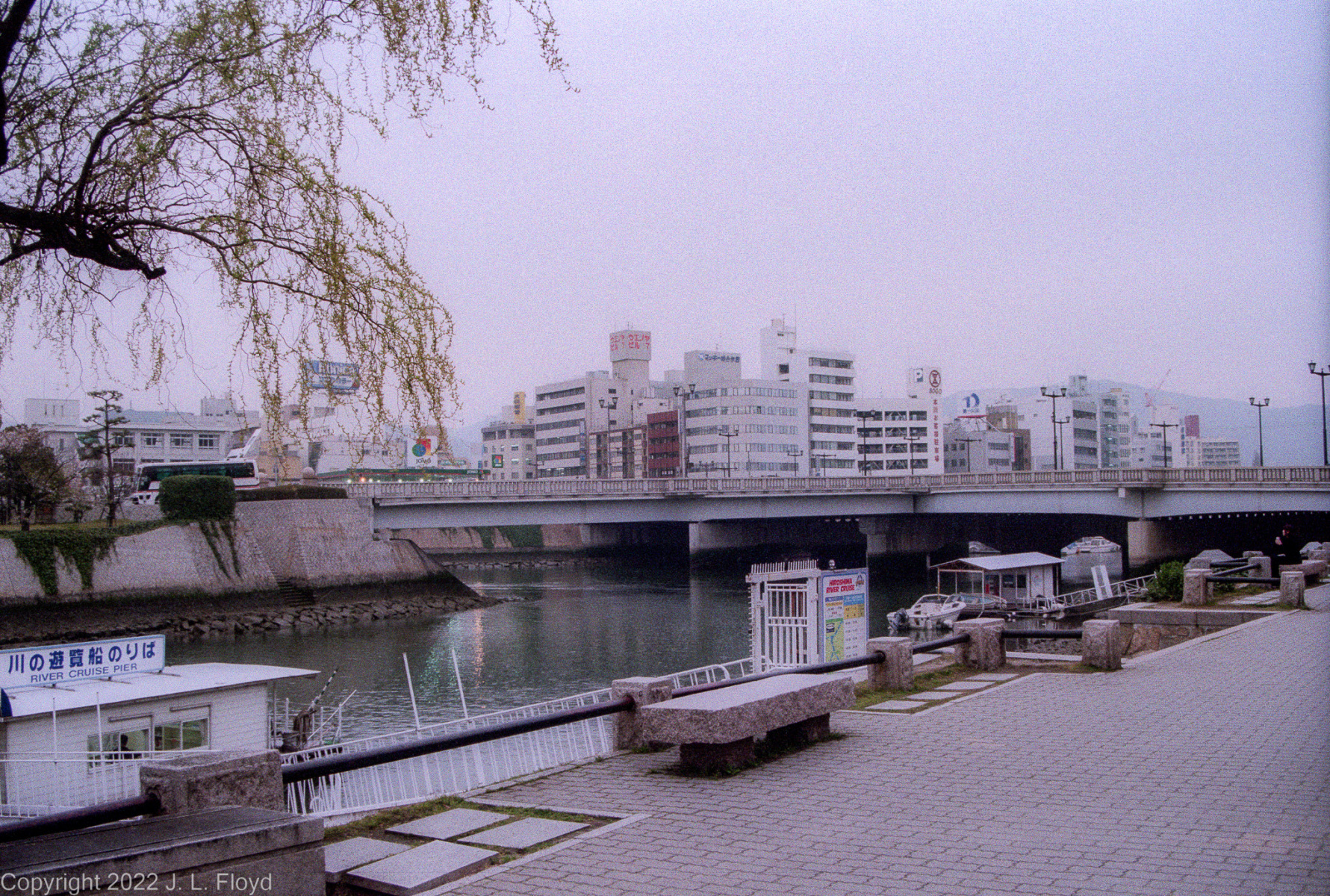
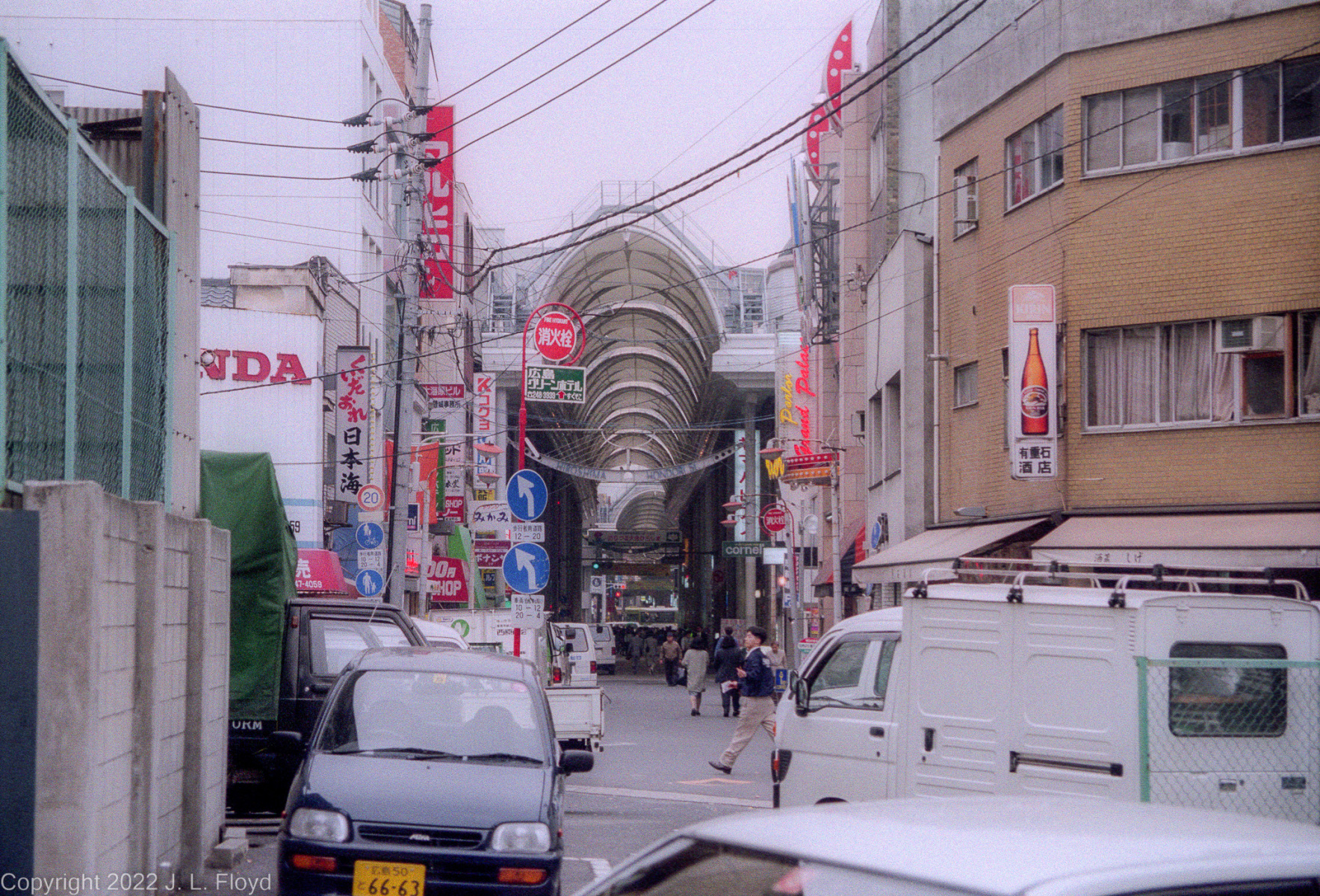
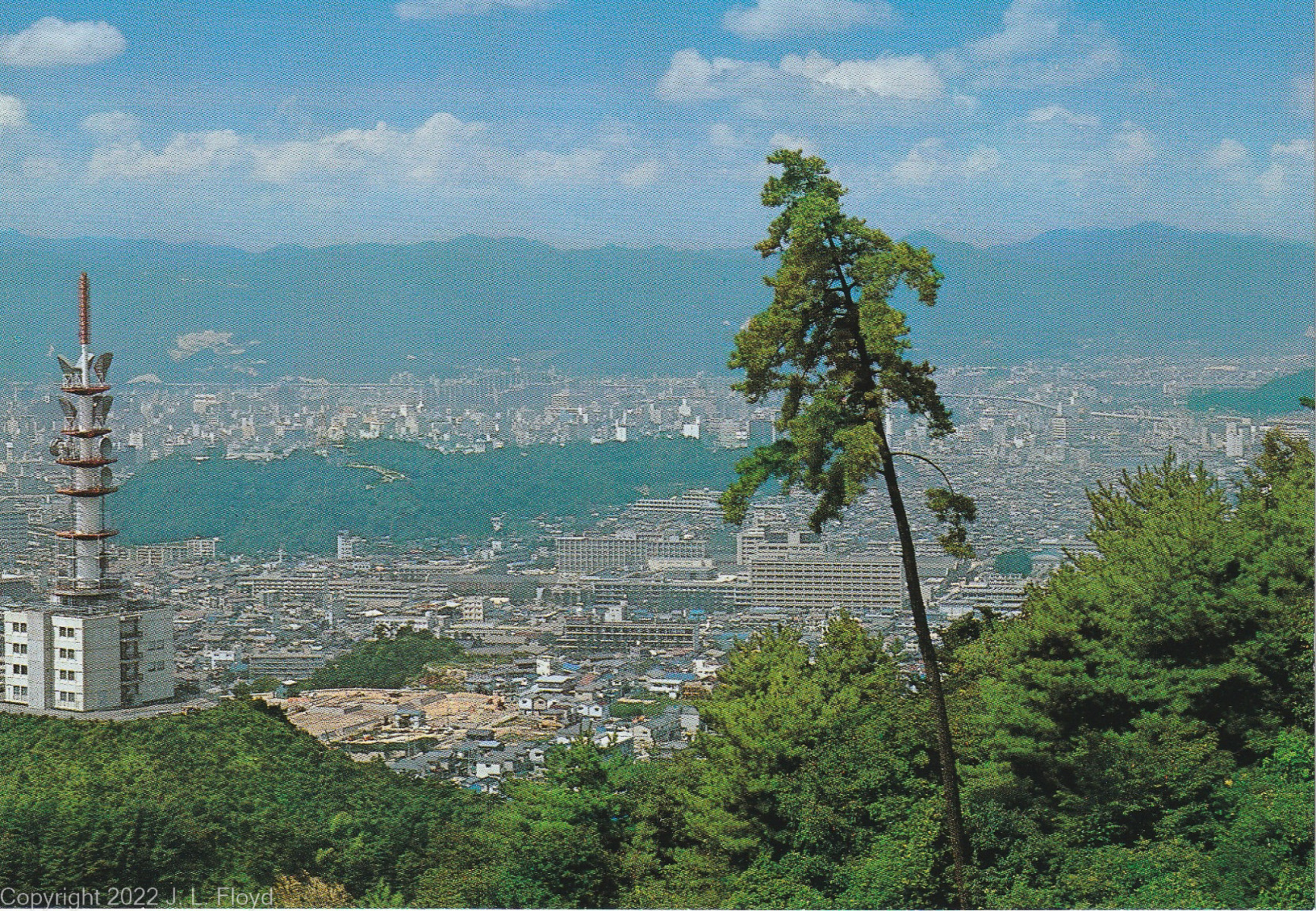
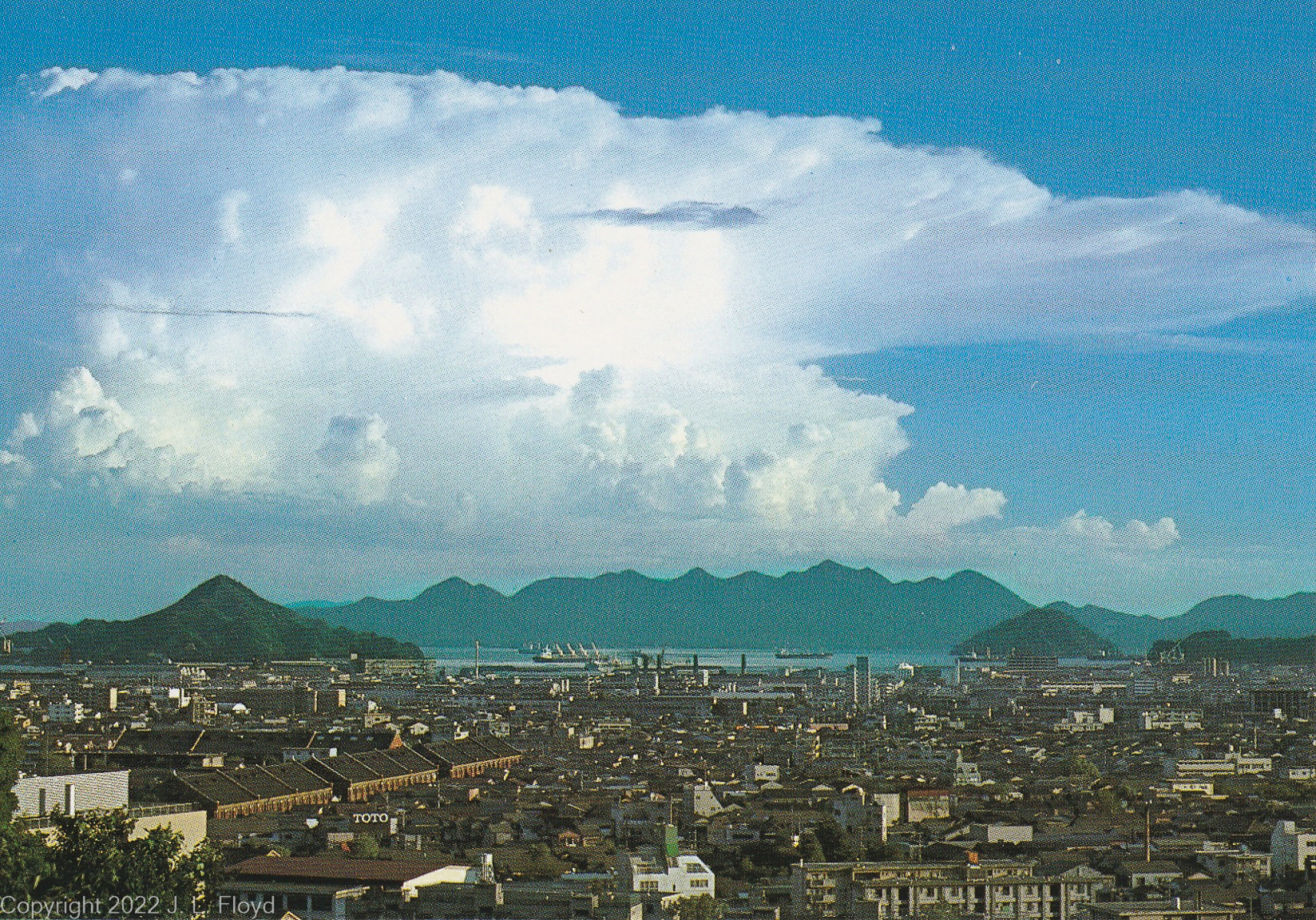
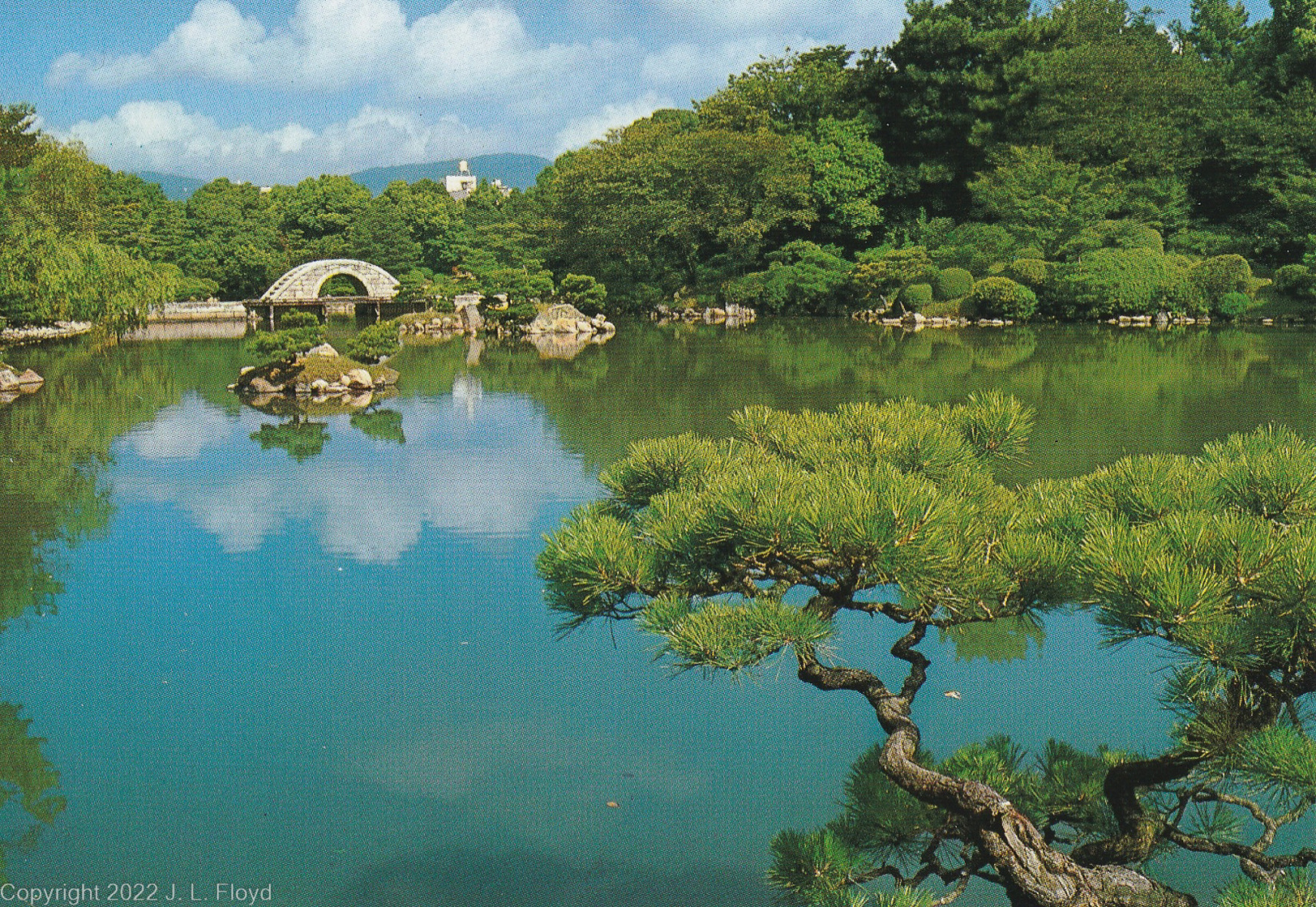
While the Genbaku dome and Peace Park in themselves provide sufficient reasons for going to Hiroshima, there are other incentives also. Not the least important is the island of Miya Jima, across the bay from Hiroshima, but I am giving it a page of its own, so I’ll end this page with a few scenes from around the city. Some of these, representing views I was not able to see or photograph in person, are taken from photos I did not take personally but acquired by other means. Unfortunately I’m unable to give proper credit to the sources as I no longer have the originals from which the pictures were digitized.

I should note in passing that Hiroshima is also the site of the headquarters of Mazda Motor Corporation, though I was unaware of it at the time, so I don’t have any pictures to show for it.

Categories
Japan, April 1996

Kyoto, Japan – April 15-16, 1996

Traveling to Kyoto, the old Imperial capital of Japan, gave me a chance to ride on the Shinkansen, Japan’s famous bullet train. The Shinkansen comes in two versions – the Hikari, which is very fast, and the Nozomi, which is faster yet and makes fewer stops. I took the Hikari to Kyoto, and although it was too late in the day to do much sightseeing, I did walk around a little in the Gion district, where I had booked my room at a modest but comfortable local ryokan, the Rikiya.

The next morning I got up and took a short train ride to Nara, spending the entire day there; the following two days I devoted to seeing Kyoto.

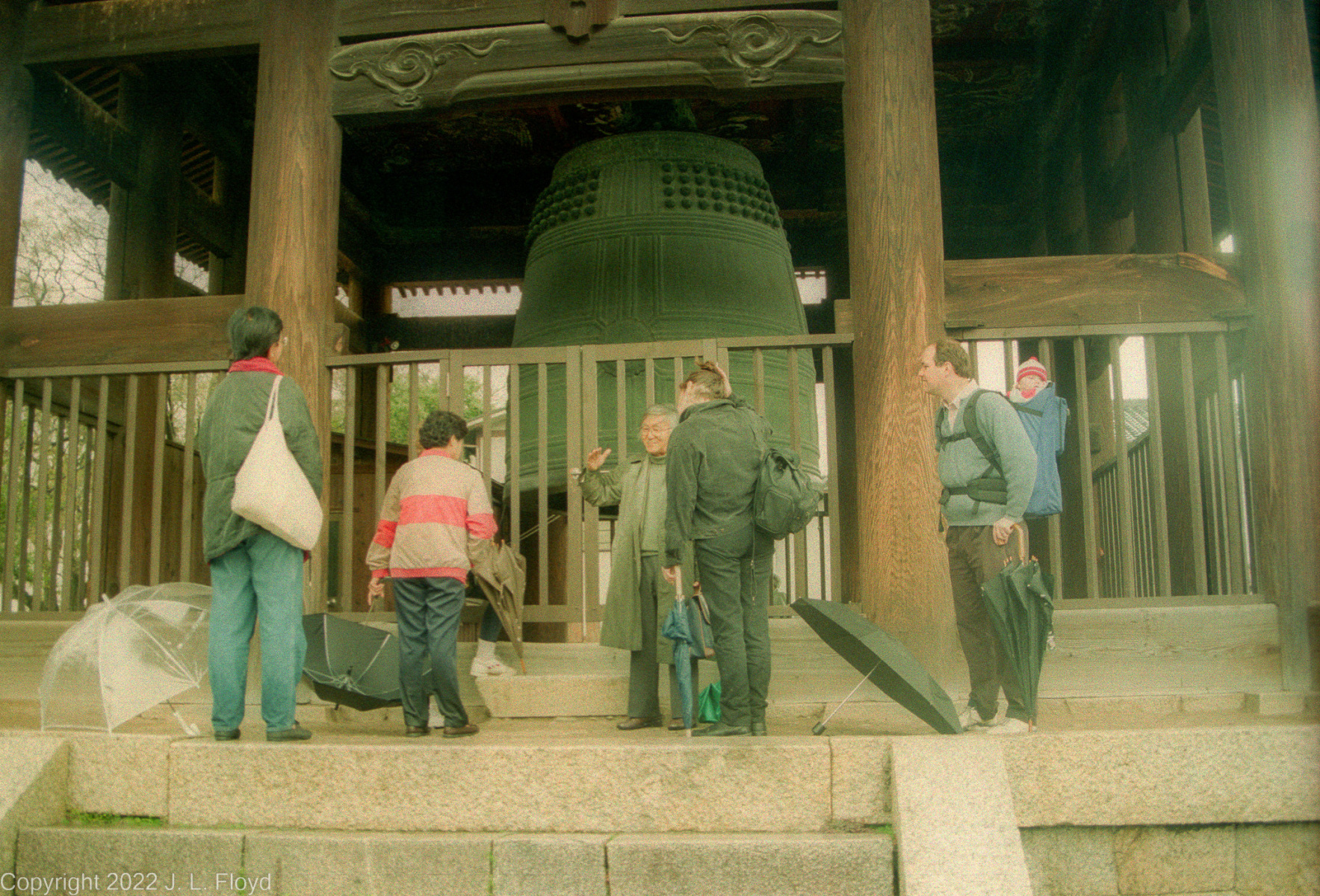
At Kyoto Station I had signed up for a morning walking tour conducted by a local guide who styled himself as Johnny Hillwalker, aka Hiruka Hajime. I met him, along with the rest of a party of 5-6 people, on a rainy, chilly spring morning at Kyoto Station. Johnny, a retired JNTO guide, proved to be a highly affable, entertaining and knowledgeable host, and of course his English was flawless. His fee was more than reasonable – I suspect that he did the tours more to keep fit and busy than to supplement his income.

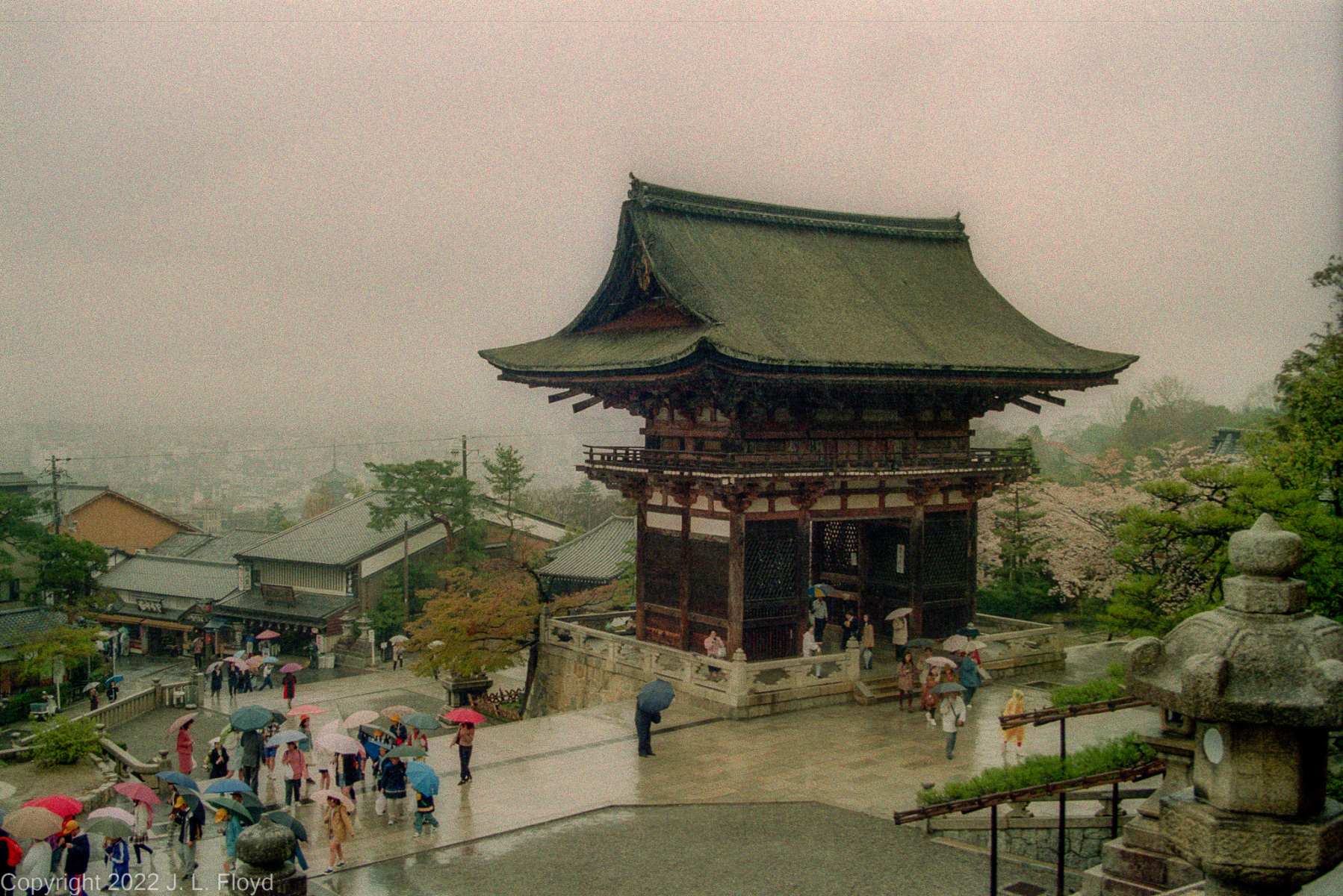
The rain was pouring down as we began our walk; it didn’t dampen our spirits, but it did impede photography somewhat – I had to be careful to avoid flooding my camera, which was not waterproof. So I took fewer pictures than I would have preferred. Later in the day, when the sky began to clear, I made up for lost time.

The walk, if I remember correctly (it’s been a long time) lasted about 3-4 hours; we visited several temples, shrines, gardens and a few local shops such as bakeries and ceramics makers.

From Johnny Hillwalker I got good directions on how to reach the attractions I most wanted to visit, which were mostly far away in the northwest part of Kyoto – the railway station and Gion are in east-central Kyoto. In the meantime I picked up where the morning walk had ended and checked out some more of the sights in Gion.

Gion is the entertainment district of Kyoto, and it is inextricably associated in the popular mind with geishas (or geiko as they are known locally). I had no particular interest in meeting up with any geishas; I had done enough research – and absorbed plenty of sage advice from Dave Winter – to know that quality geisha performances were likely to be (a) very expensive and (b) mostly unavailable to Westerners, except wealthy or well-connected ones, and I was neither. But I did feel a need for at least some cultural exposure, and I had a free evening, so I bought a ticket for a performance at Gion Corner, which, in the words of one website, offers a “budget experience…a contrived one-stop shop for geisha entertainment open nightly from 6 p.m. that panders to tourists with tea ceremonies, puppets, flower arrangement, music and dancing.” As the description suggests, it wasn’t especially memorable, but neither did it bankrupt me at about $28.

The real glory of Kyoto is in its historical sites and artistic marvels. From 794 to 1868, when Emperor Meiji migrated to Tokyo, Kyoto was the seat of the Emperor and the cultural metropolis of Japan. (The stretch from 794 to 1185 is known as the Heian period, because the original name of Kyoto was Heian-kyo.) It still retains much of that aura, not least owing to the fact that it was spared the firebombing that destroyed Tokyo and other cities during World War II. This was thanks to Secretary of War Henry L. Stimson. When army generals proposed Kyoto as a first target for the atomic bomb, Stimson, who had honeymooned in Kyoto and was familiar with the city, forcefully quashed the idea, on the grounds that Kyoto was a repository of priceless cultural treasures and could not be bombed.

There are too many such treasures in Kyoto to see in a couple of days; it would have taken months to see them properly. I was able to visit and take pictures of a few of the sites I had heard most about, and you can see them here, along with a few shots of places I missed but picked up from other sources.

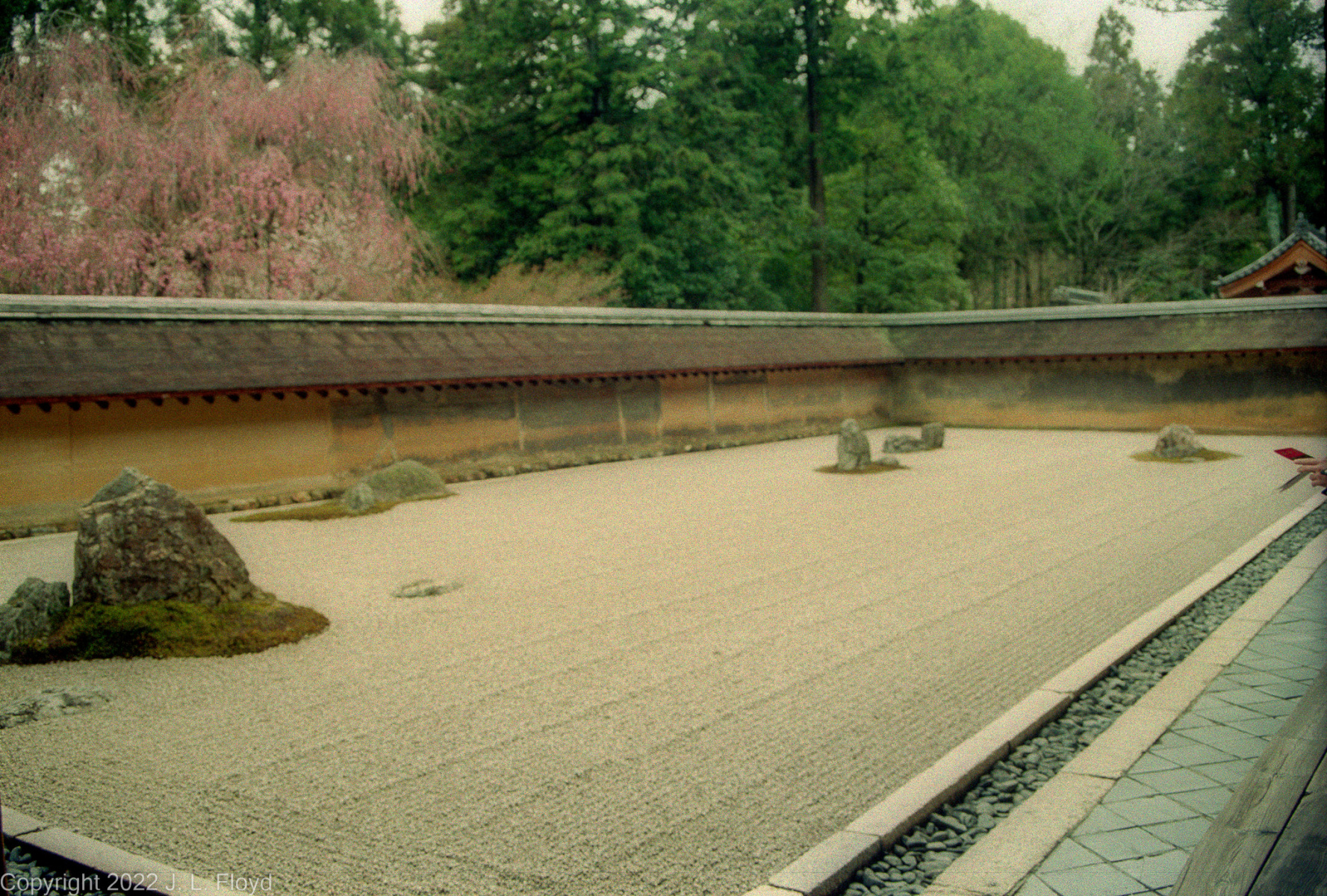
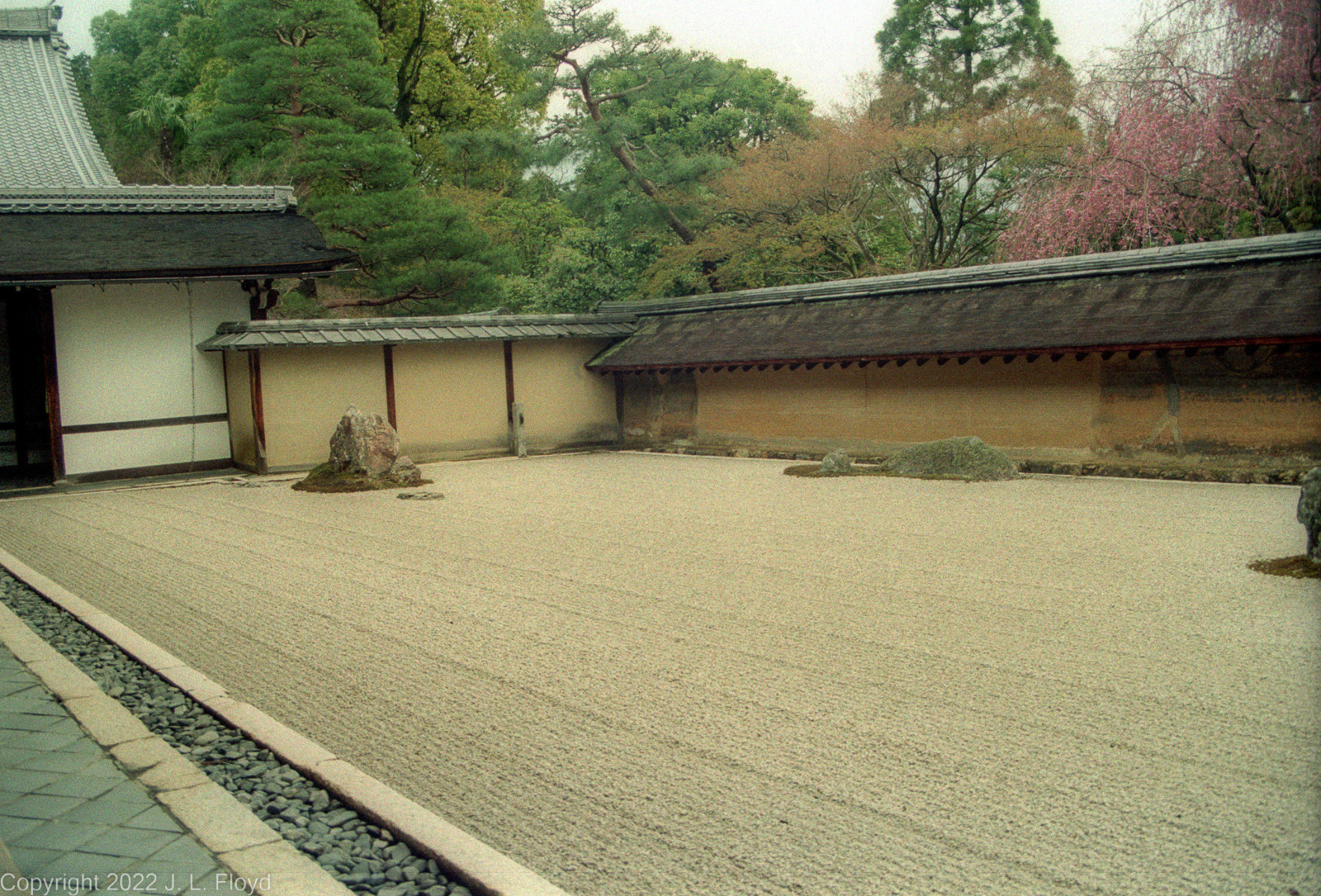
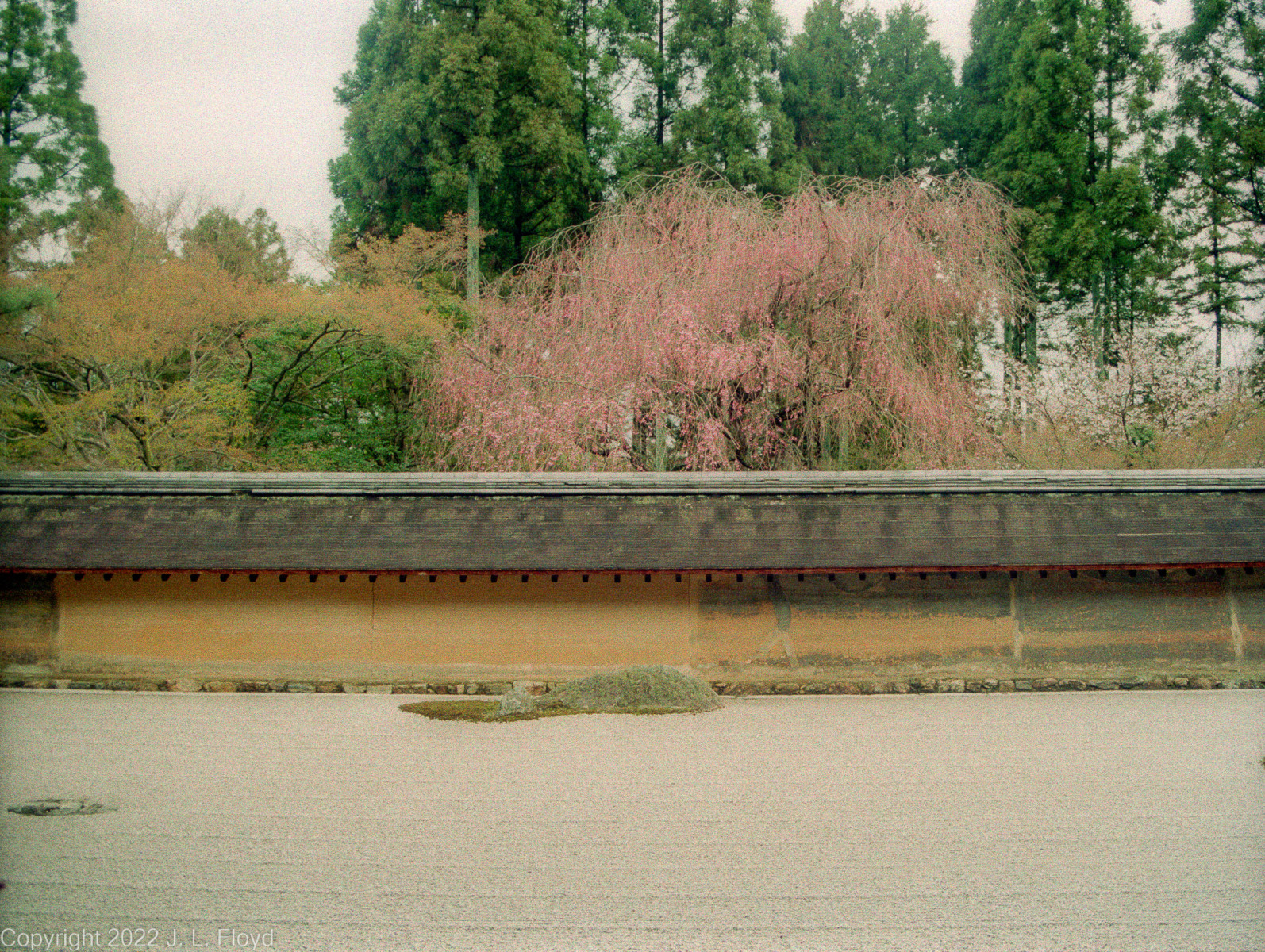
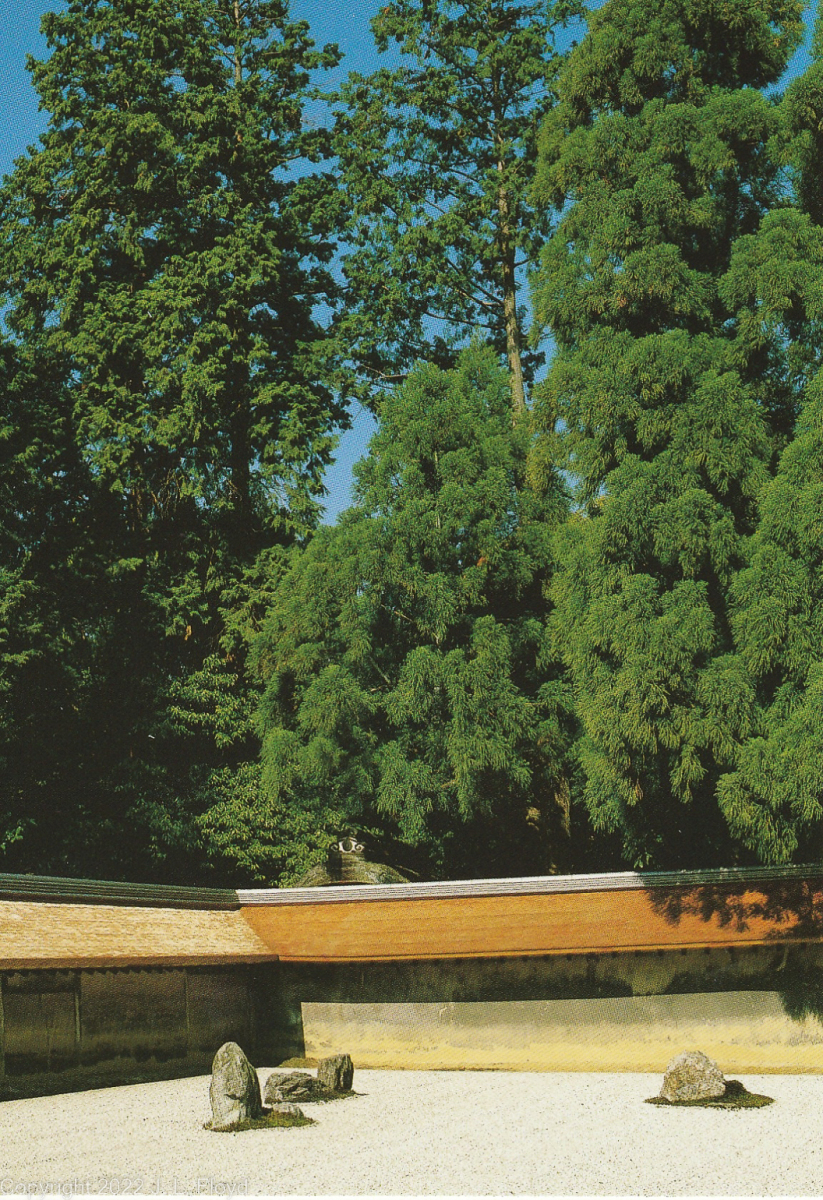
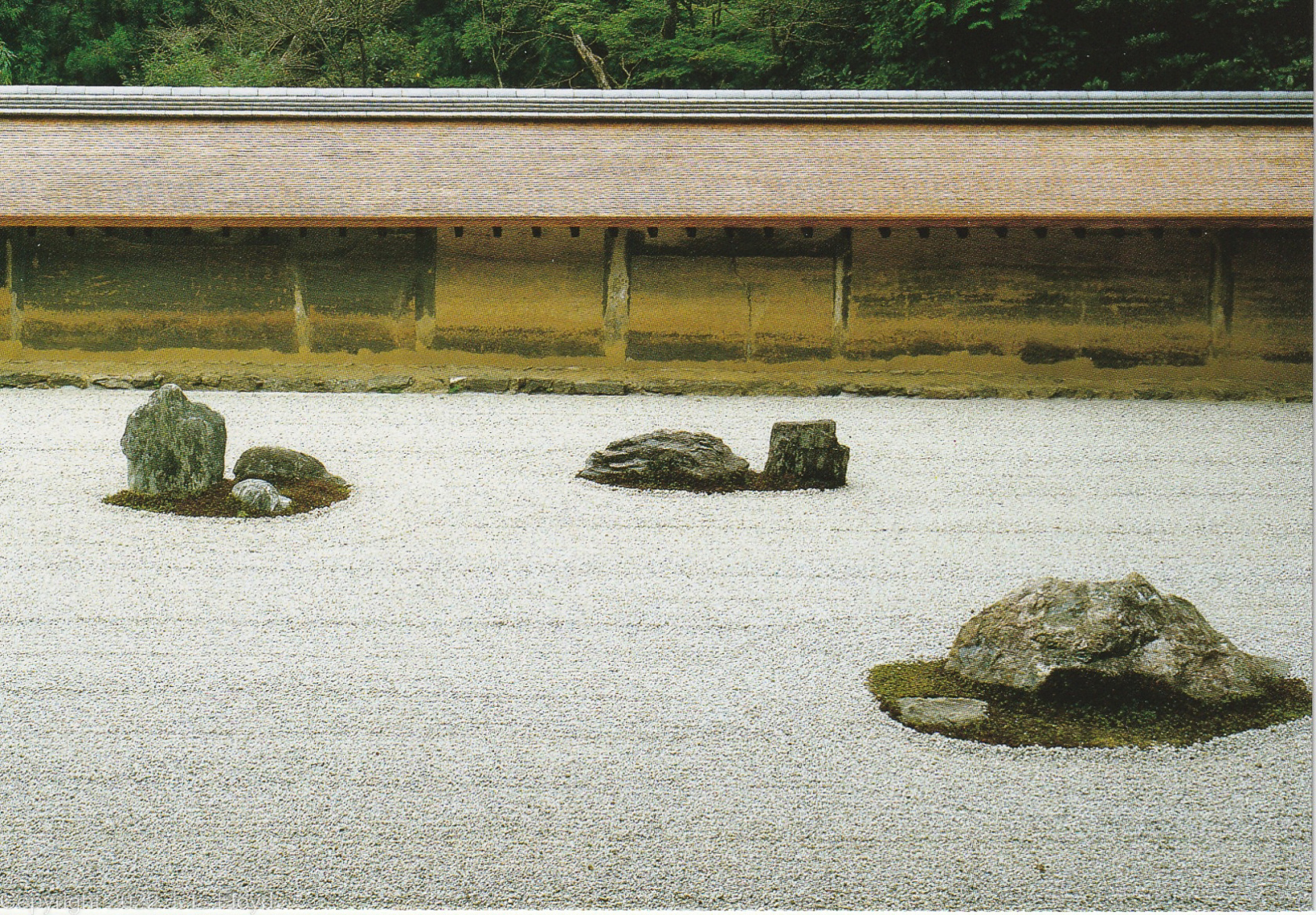
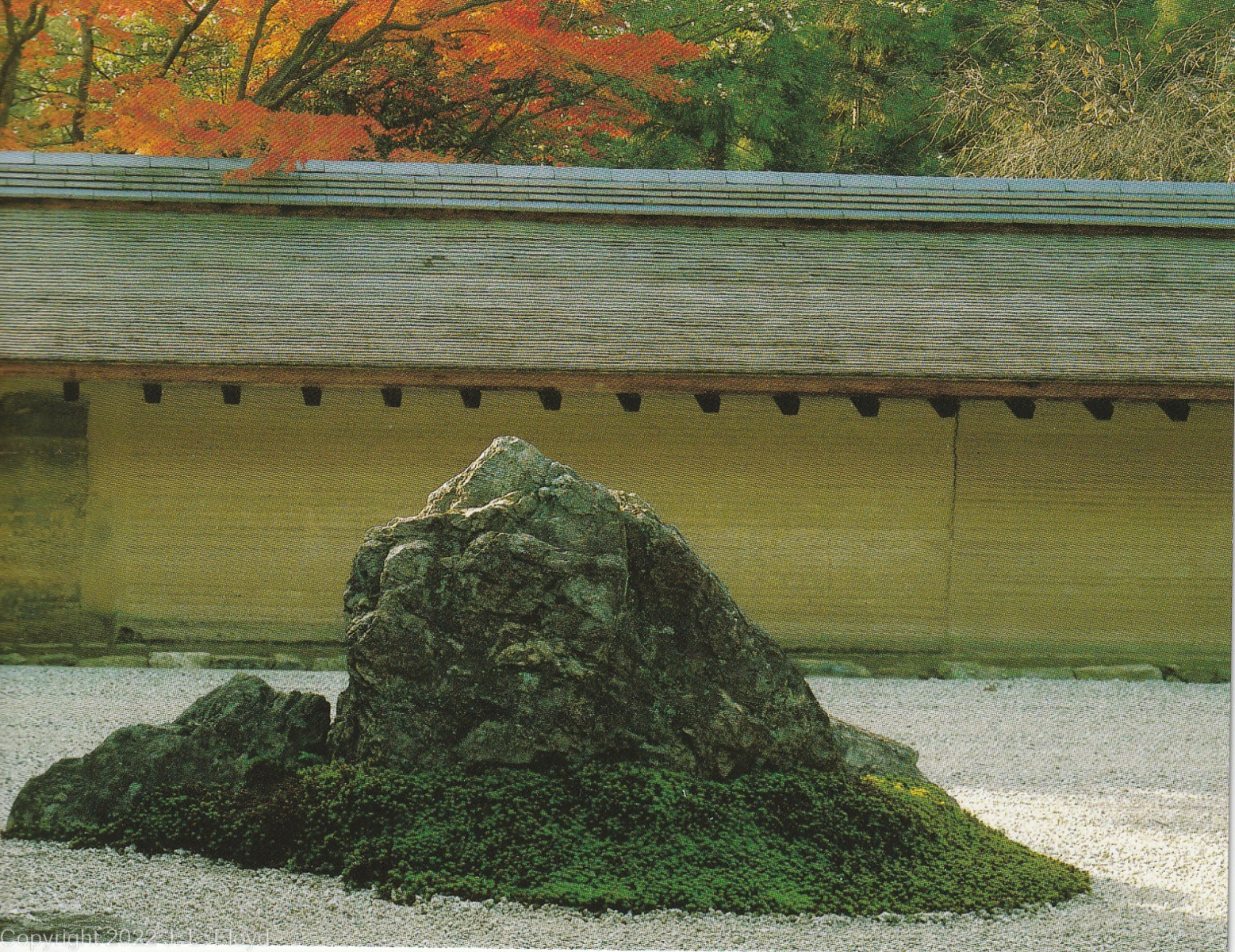
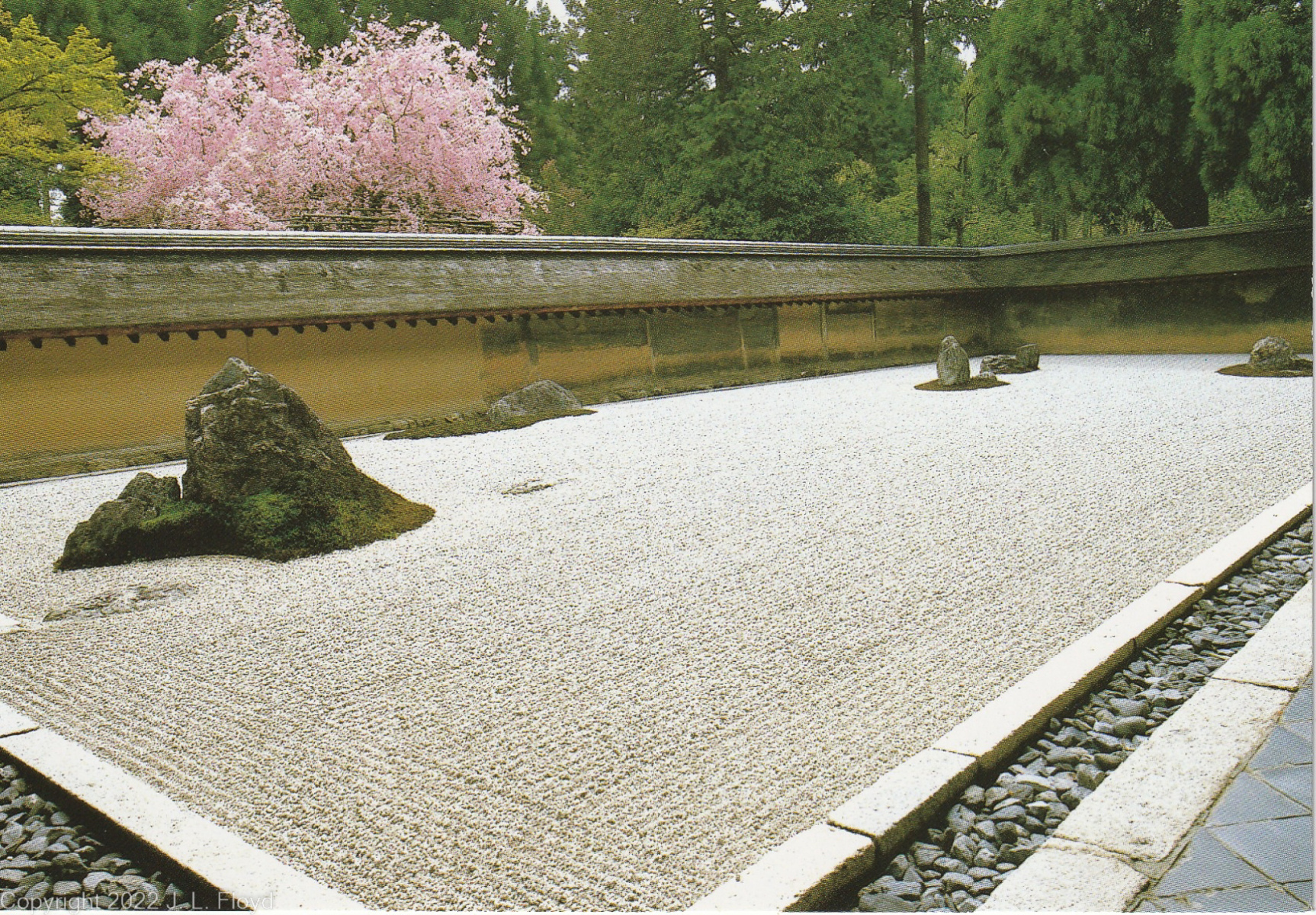
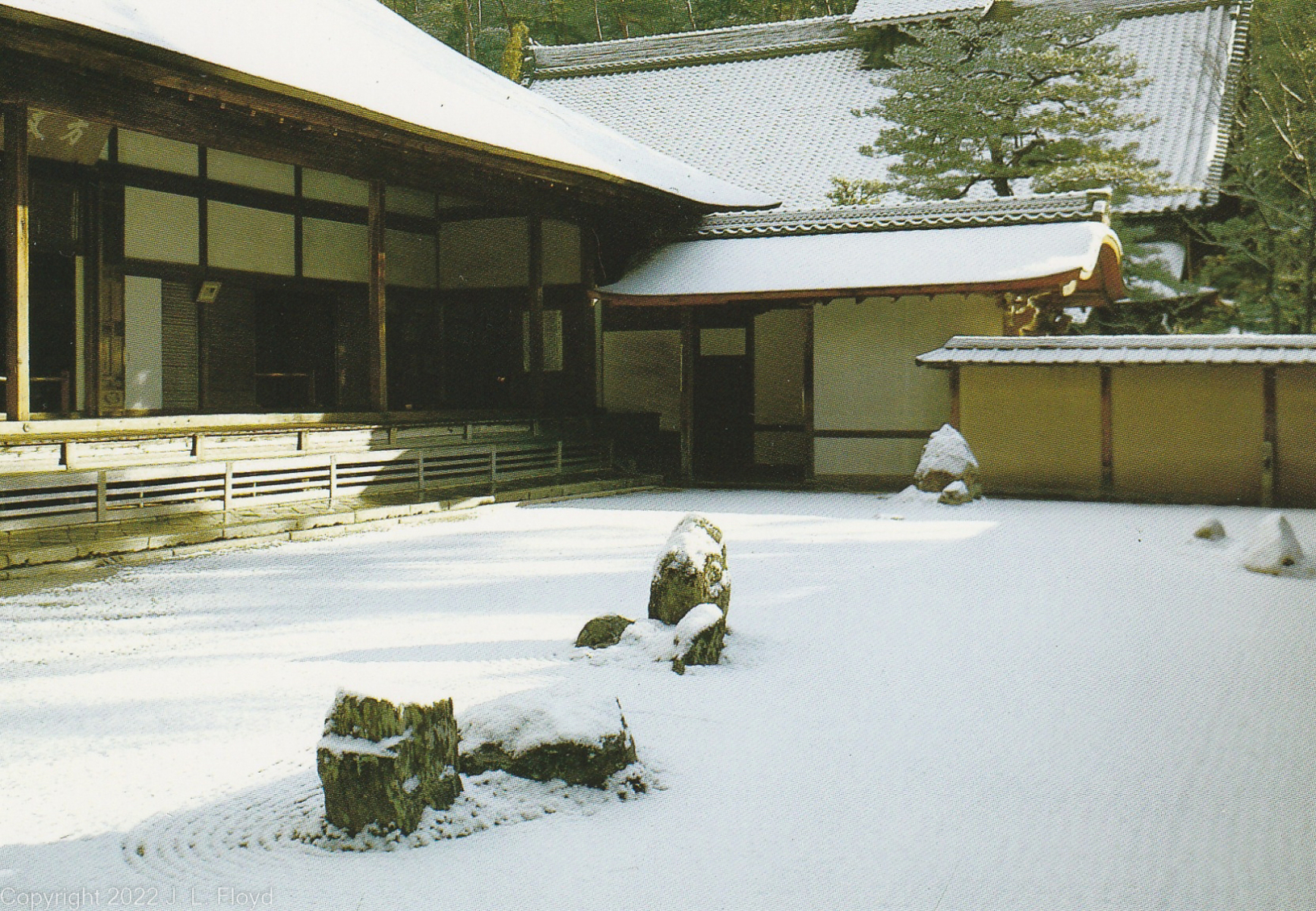
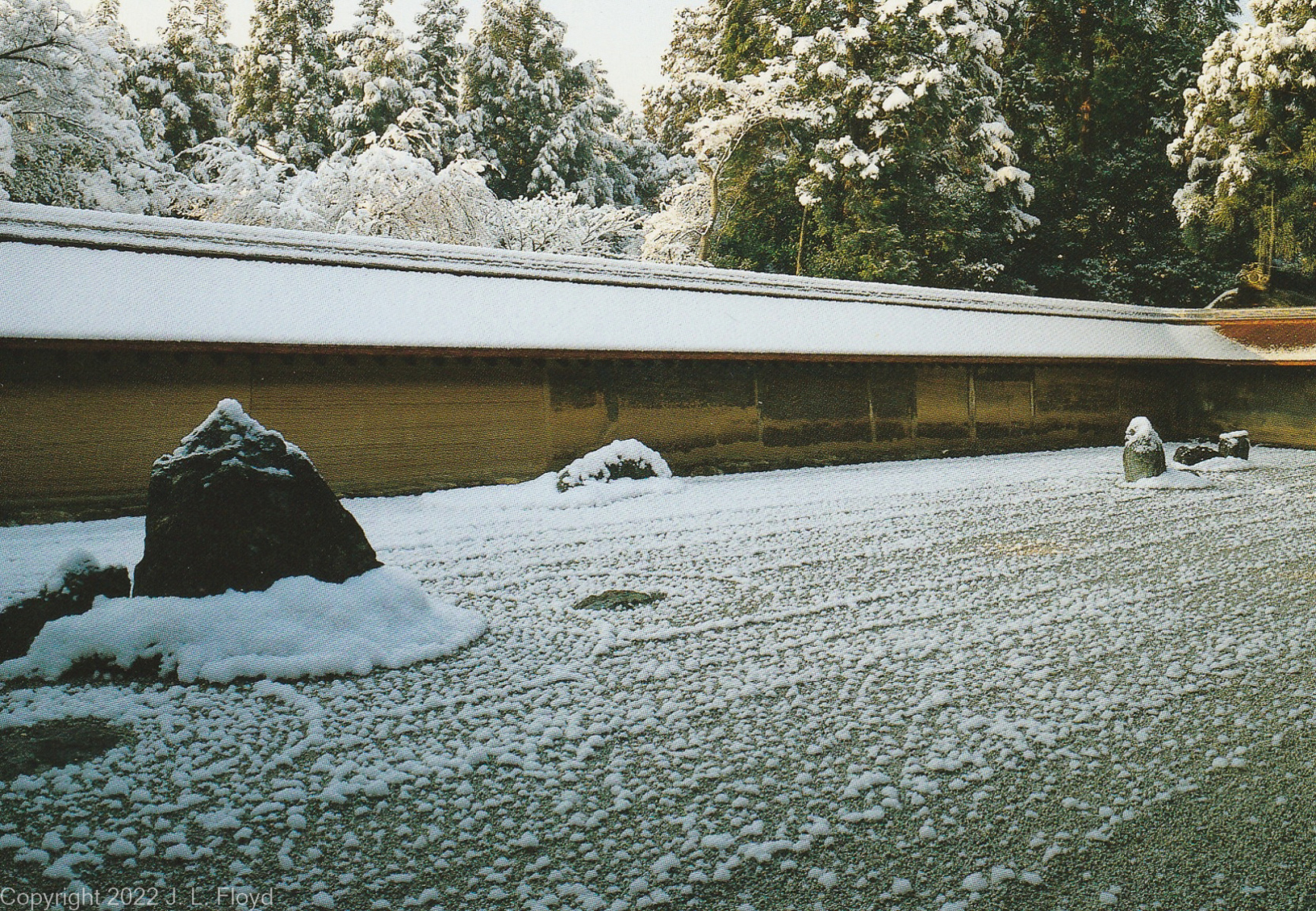
My ultimate destination in Kyoto, the one place I had come to see above all others, was the Zen rock garden known as Ryoanji. Along with the Alhambra in Spain, it was one of the two places in the world I wanted most to visit. I had first encountered Ryoanji in Edwin Reischauer and John Fairbanks’ college textbooks on Asian history, one of which actually had a picture of the garden; I had wanted to see it in person ever since. I find that the esthetic that elevates an assembly of plain, unadorned rocks to the epitome of artistic achievement has a powerful appeal. I lingered there for a couple of magical hours and shot more pictures of the shrine and the garden than of any other attraction I visited in Japan, and I’m giving it a special section as the culmination of my visit to Kyoto.

Categories
Japan, April 1996

Nara, April 14

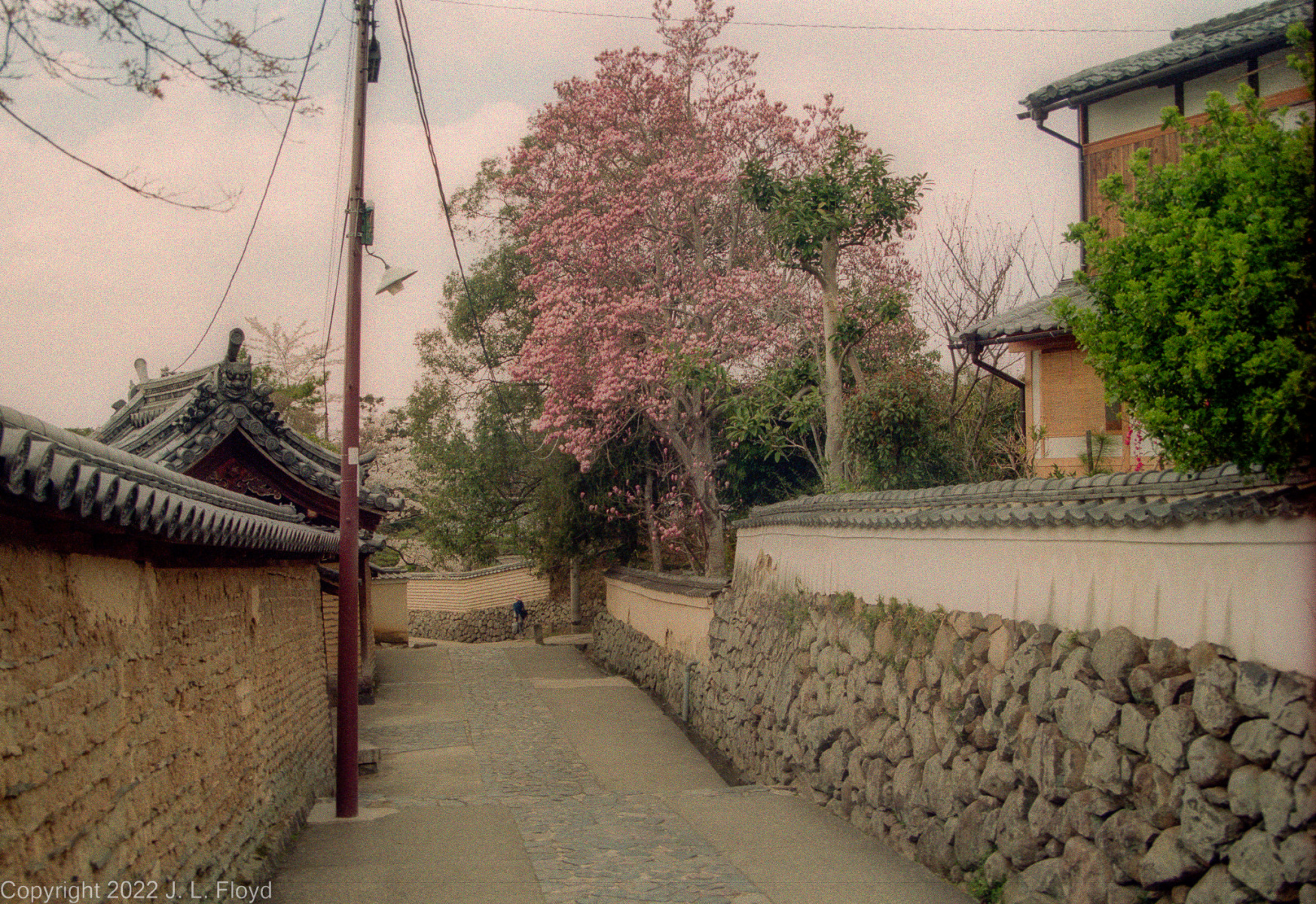
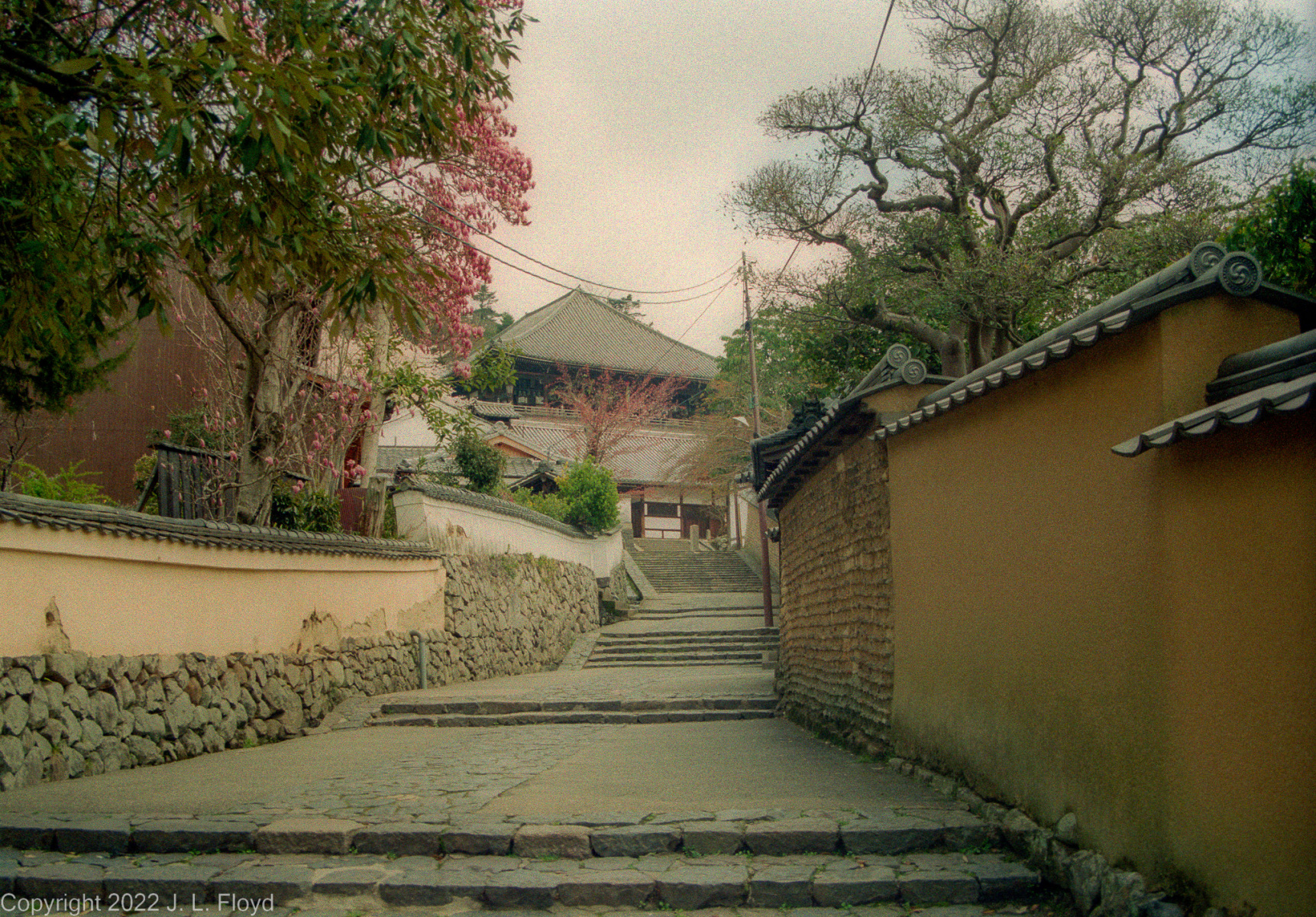
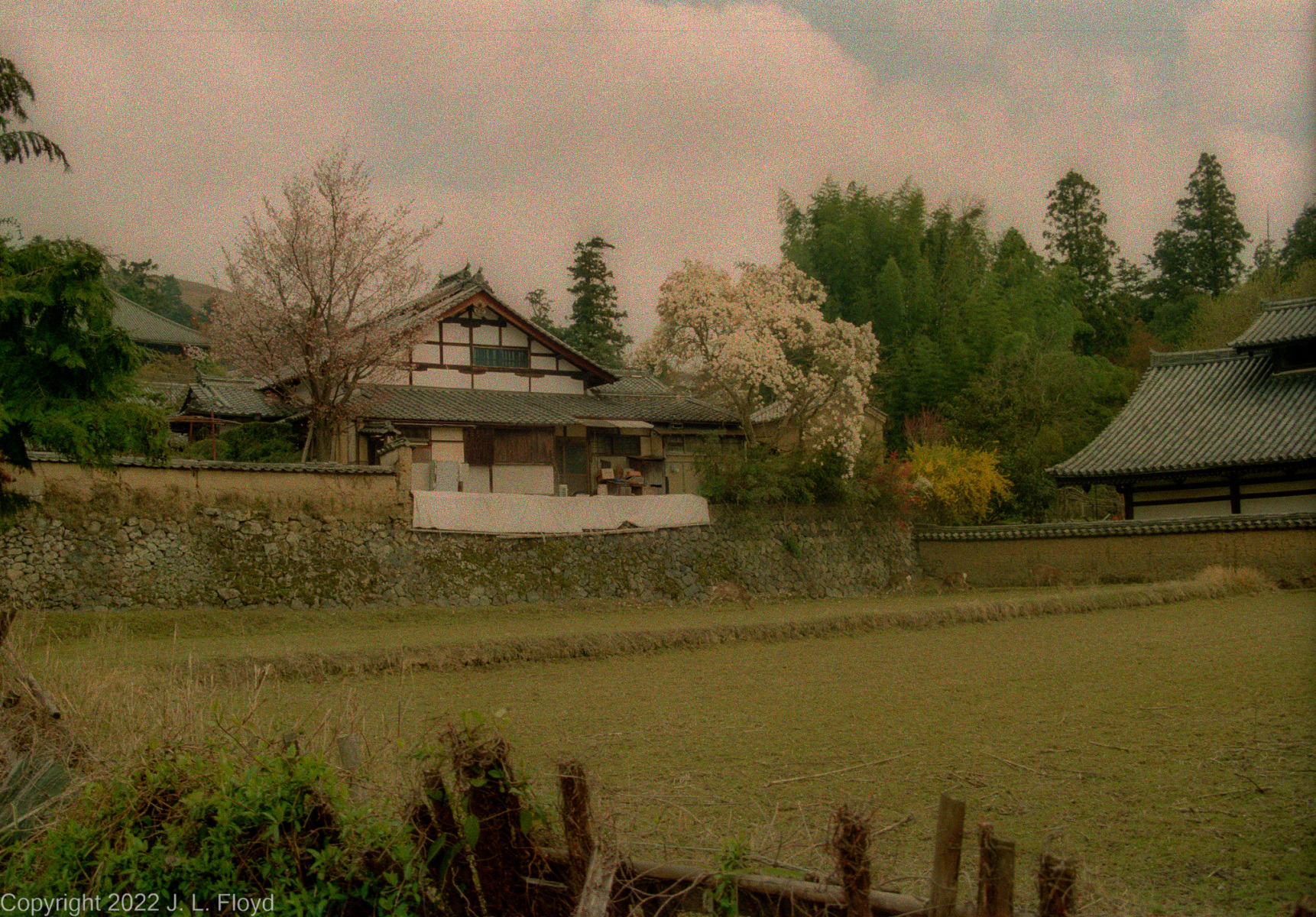
Nara was the capital of Japan, the seat of the Emperor, from 714 to 794, which is known as the Nara period. Subsequently the capital was moved to nearby Heian, which later became known as Kyoto. Today Nara is a medium-sized provincial city of 367,000 people.

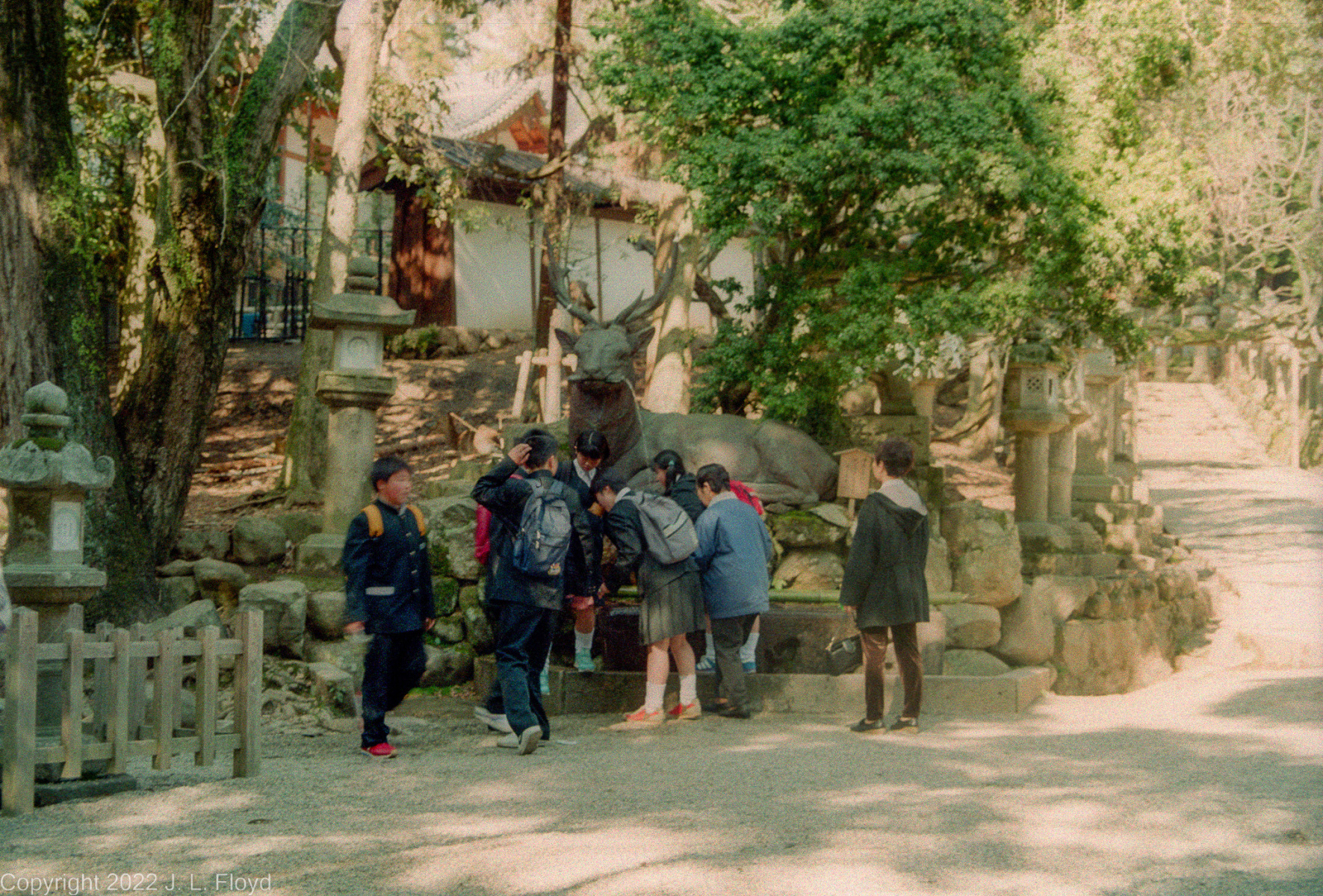
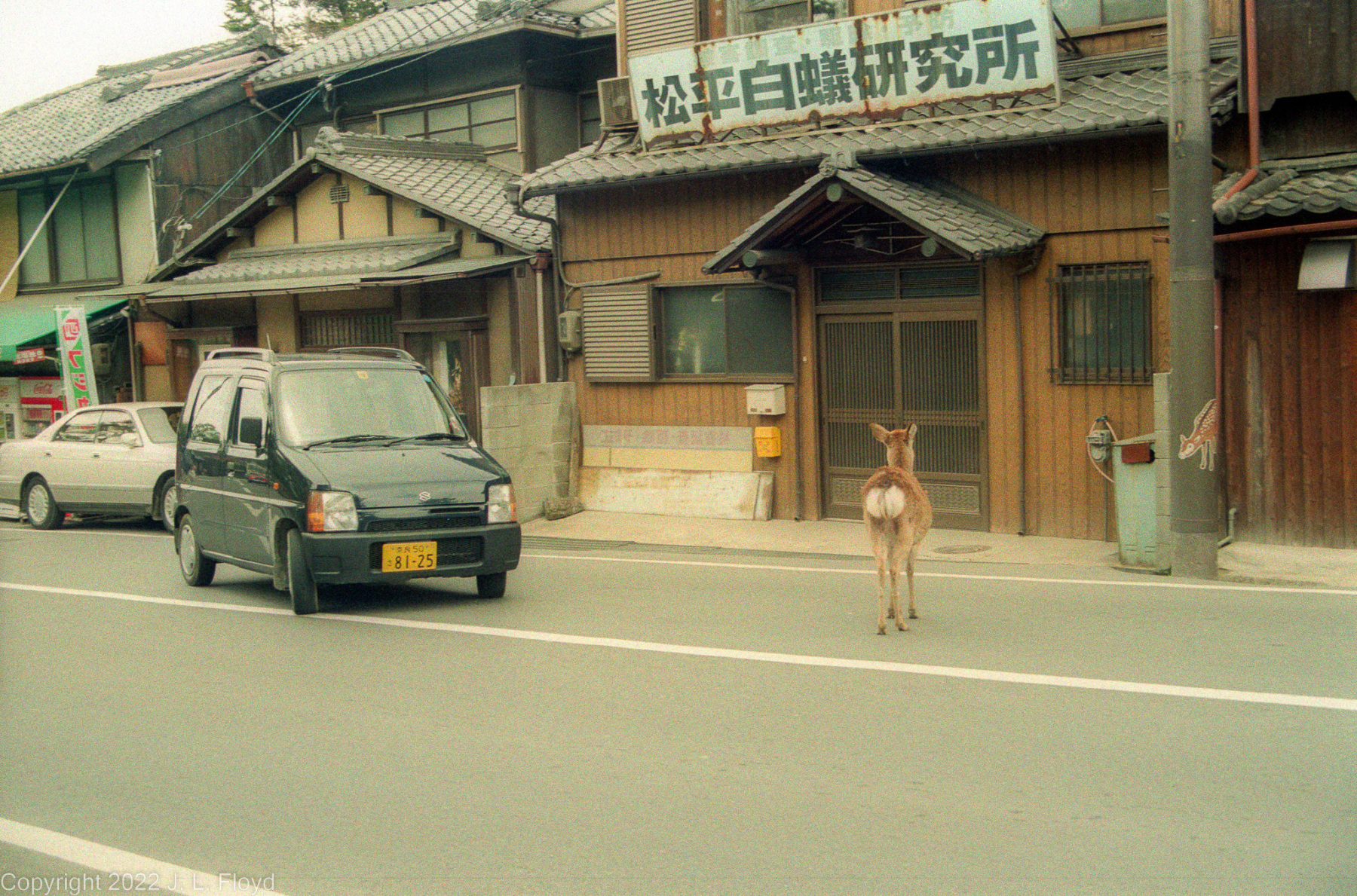
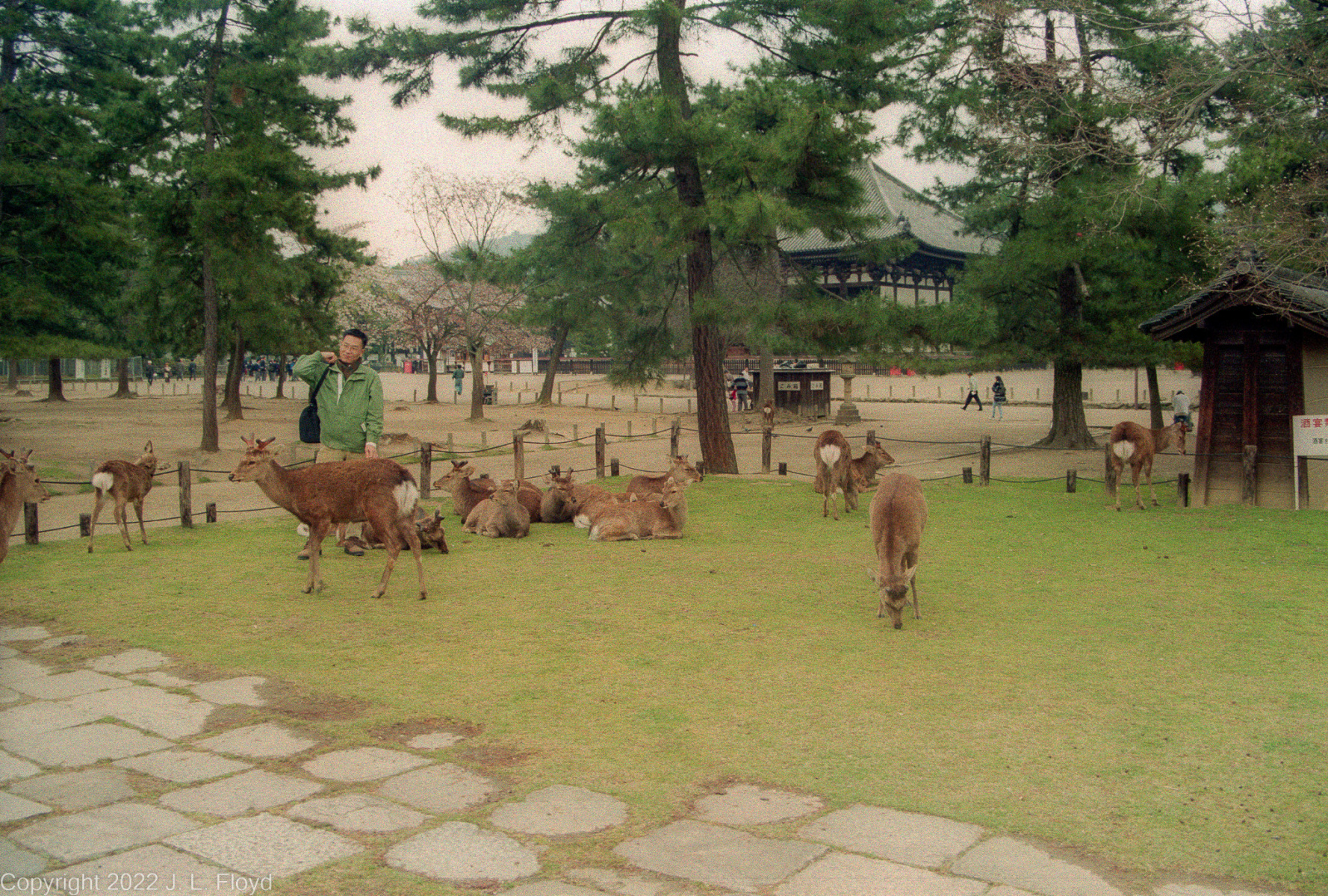
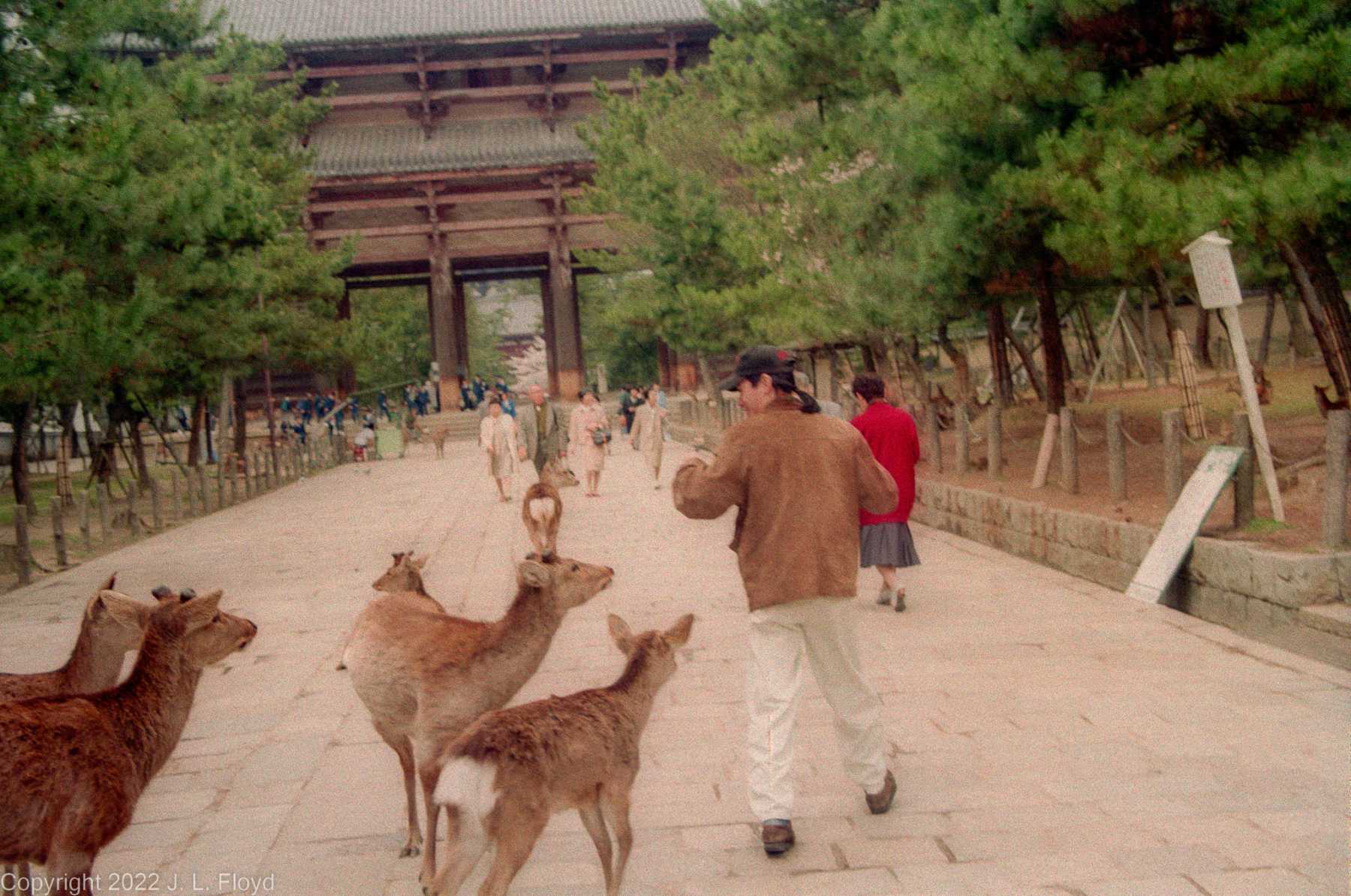
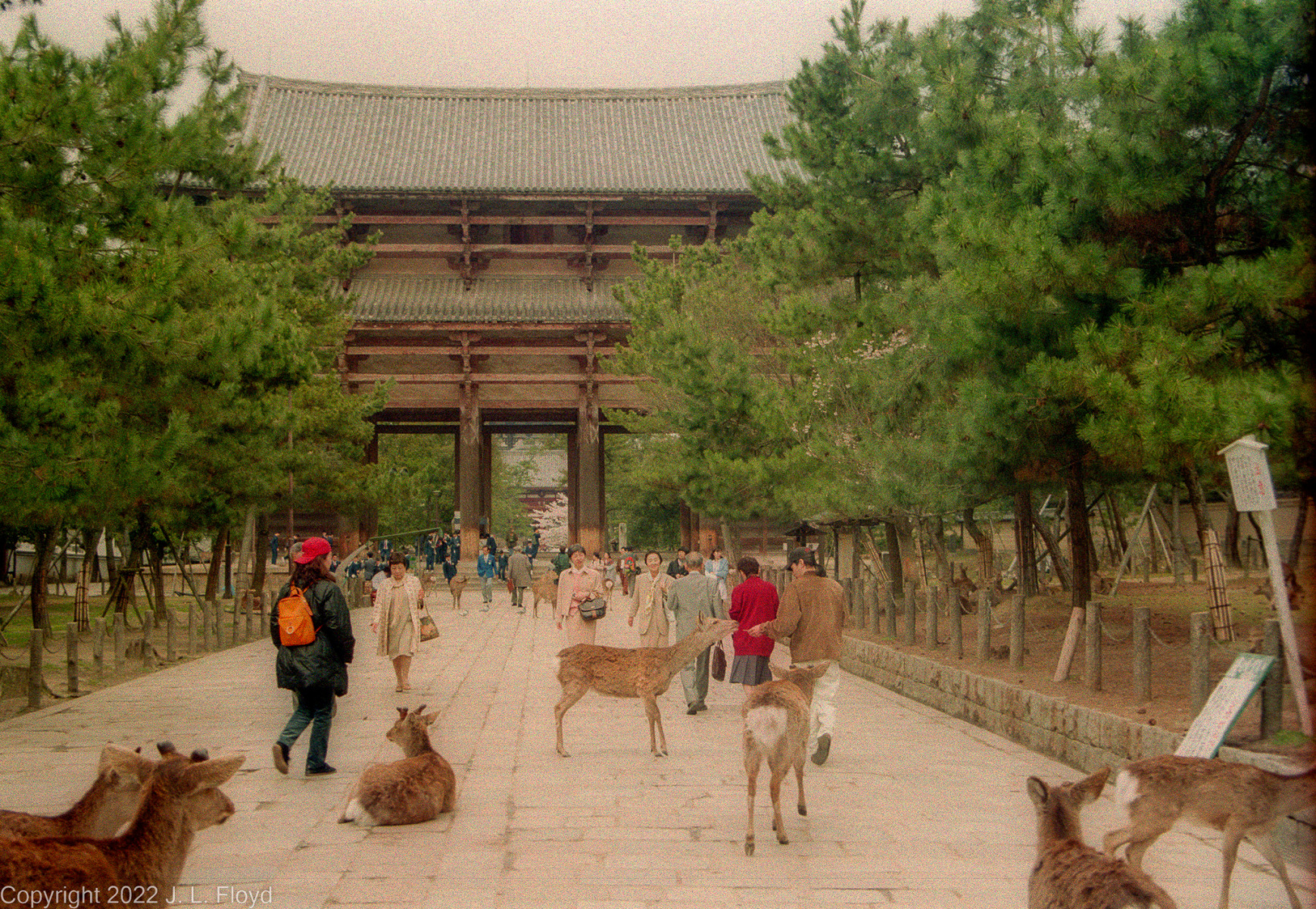
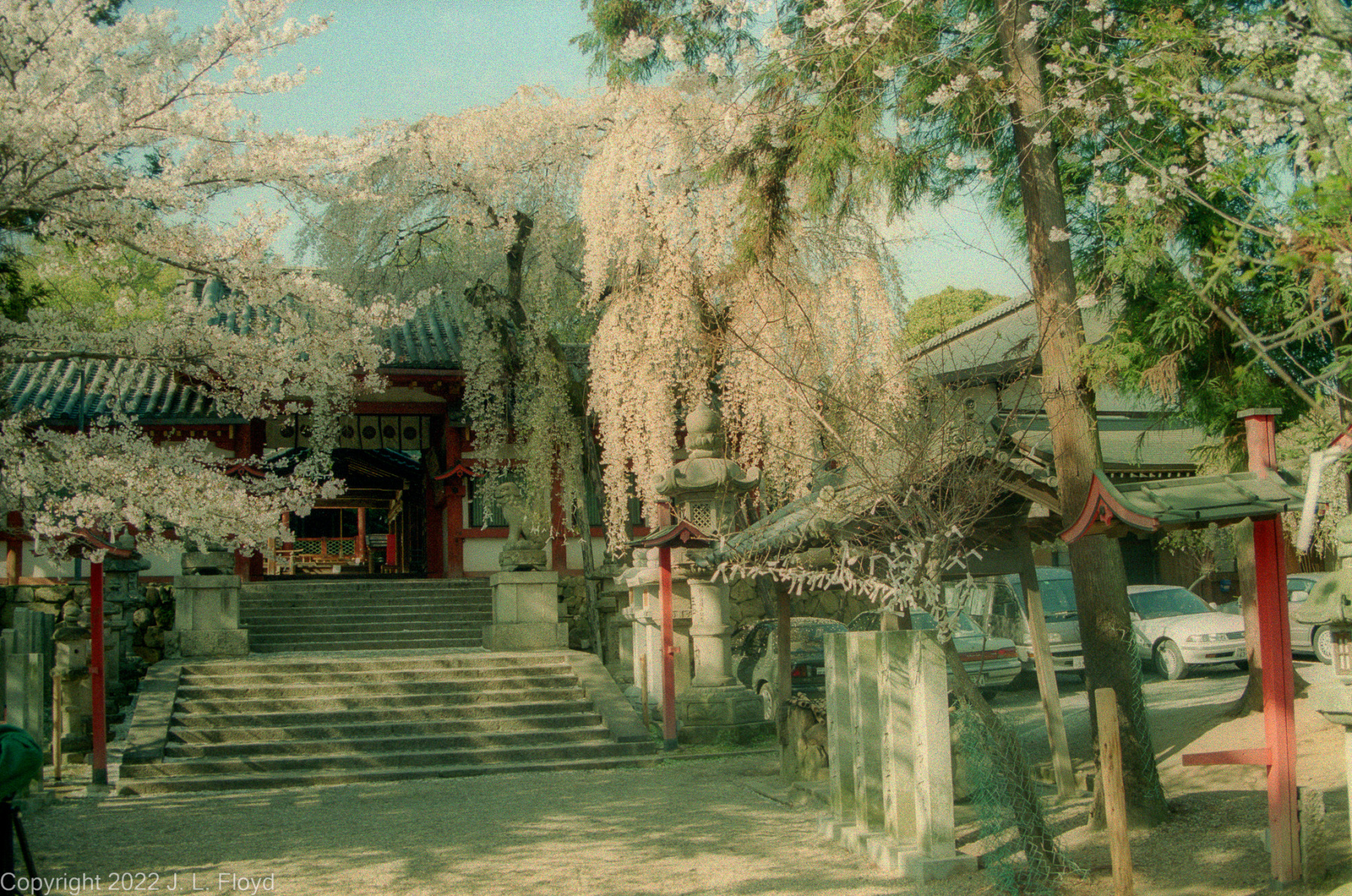
Buddhism had arrived in Japan a couple of centuries earlier, and Nara became a major center of Buddhist worship; it still has many Buddhist temples and shrines. According to legend, Takemikazuchi – the god of thunder and swords – arrived in Nara riding on a white deer to take the city under his protection, and since then the deer have been regarded as sacred protectors of the city. They roam freely about the city, getting in the way of people and cars and soliciting food from passers-by, to whom vendors sell snacks for that very purpose. I didn’t feed them myself, but I enjoyed having them around.

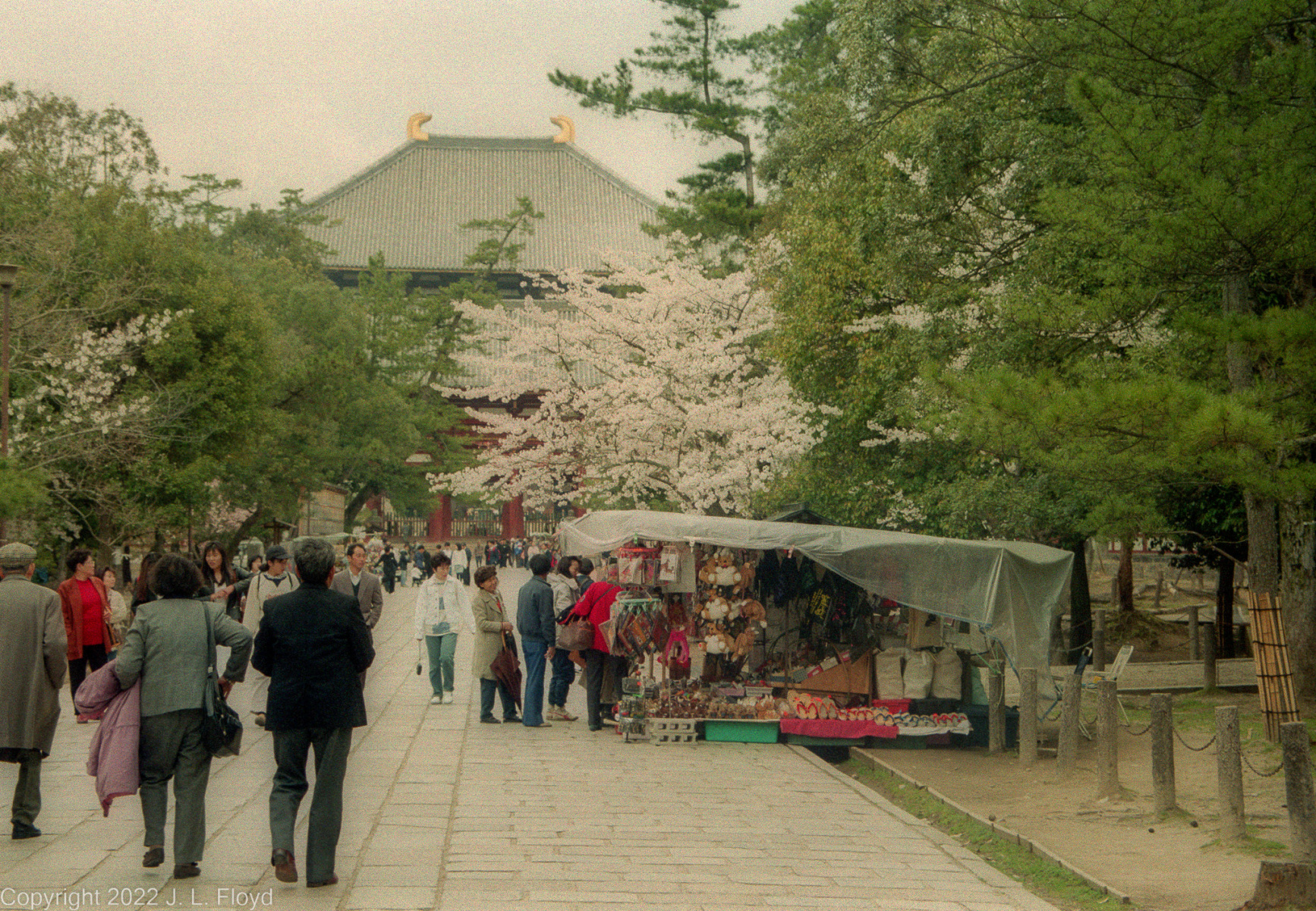
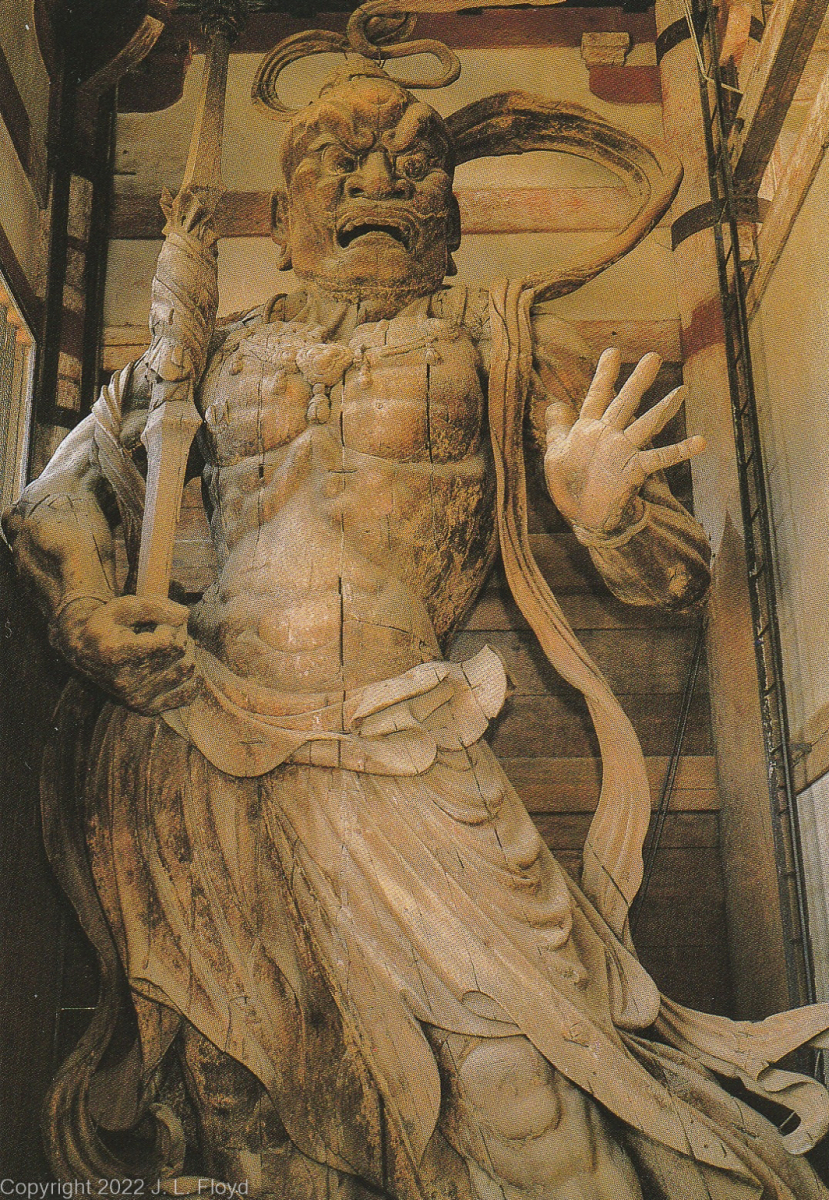
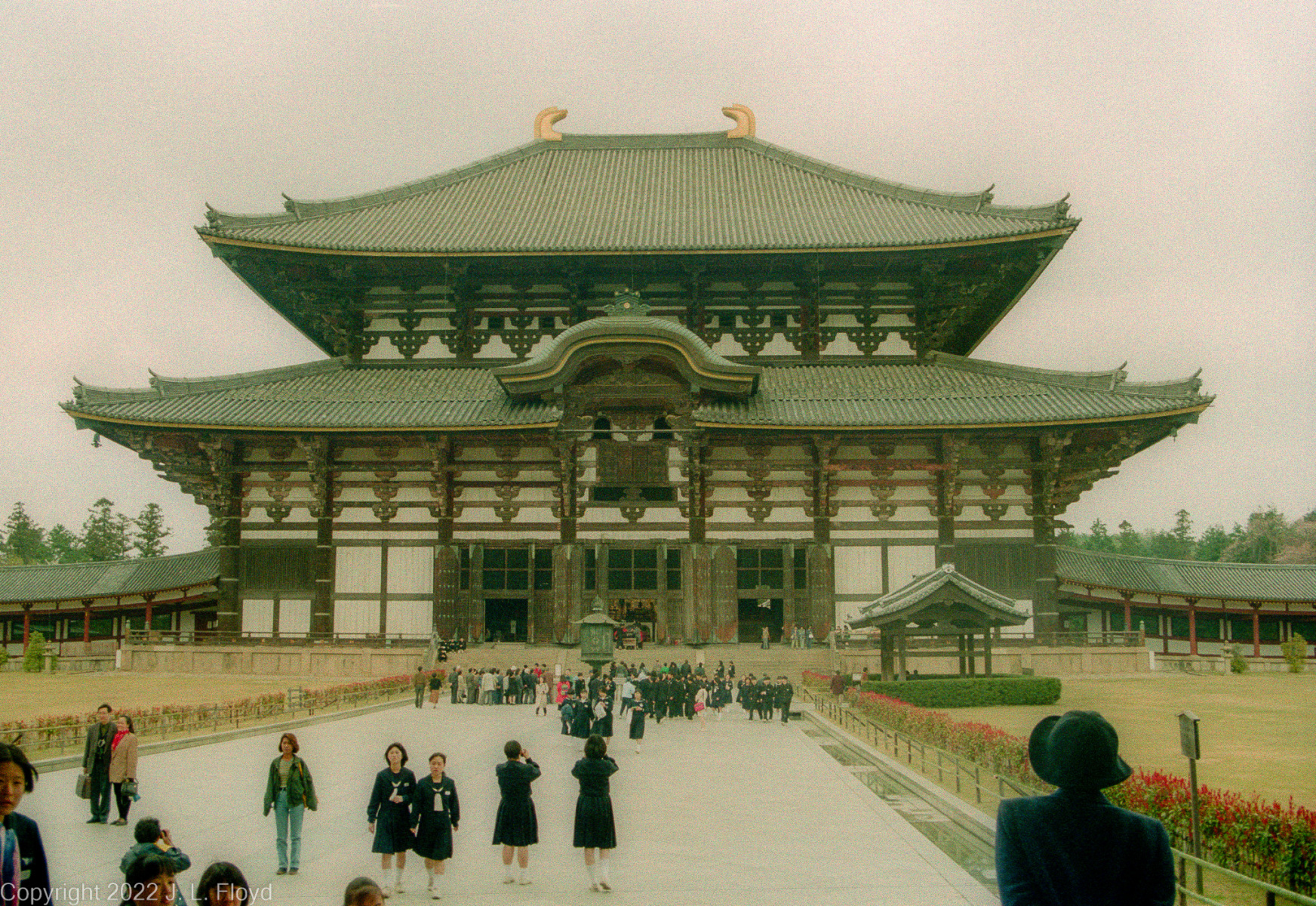
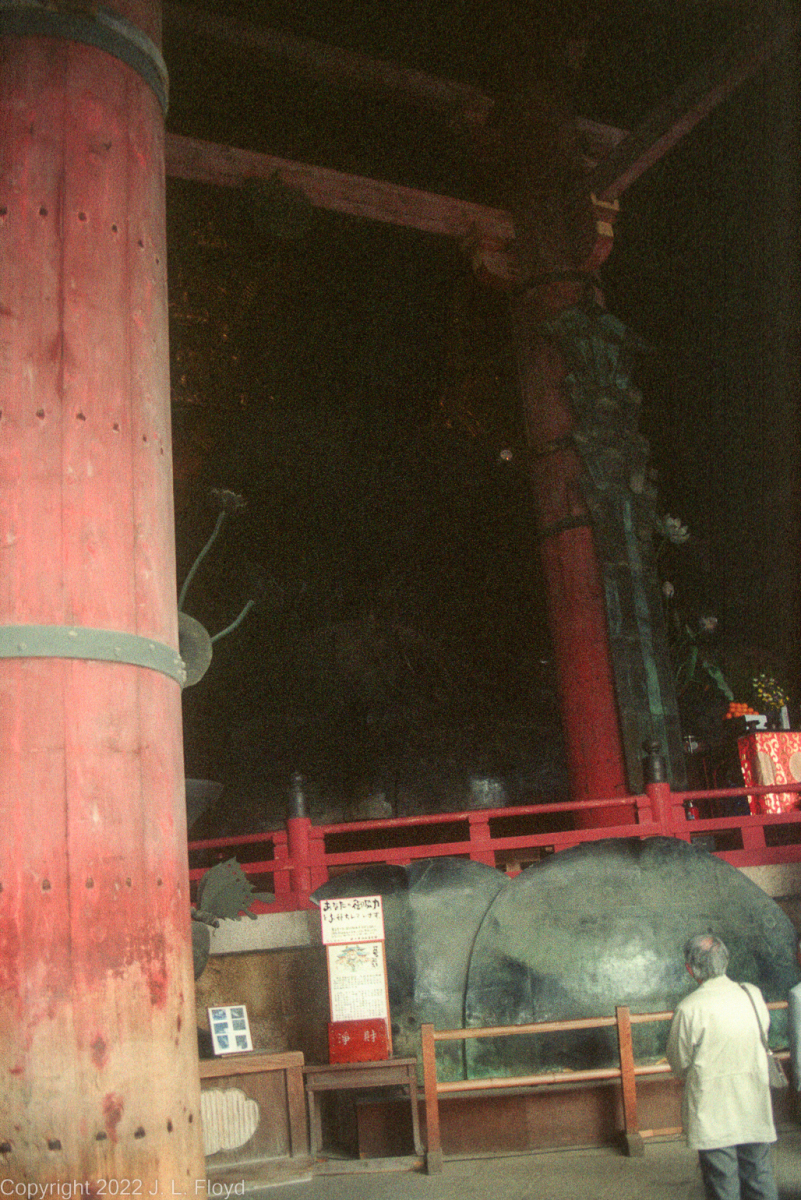
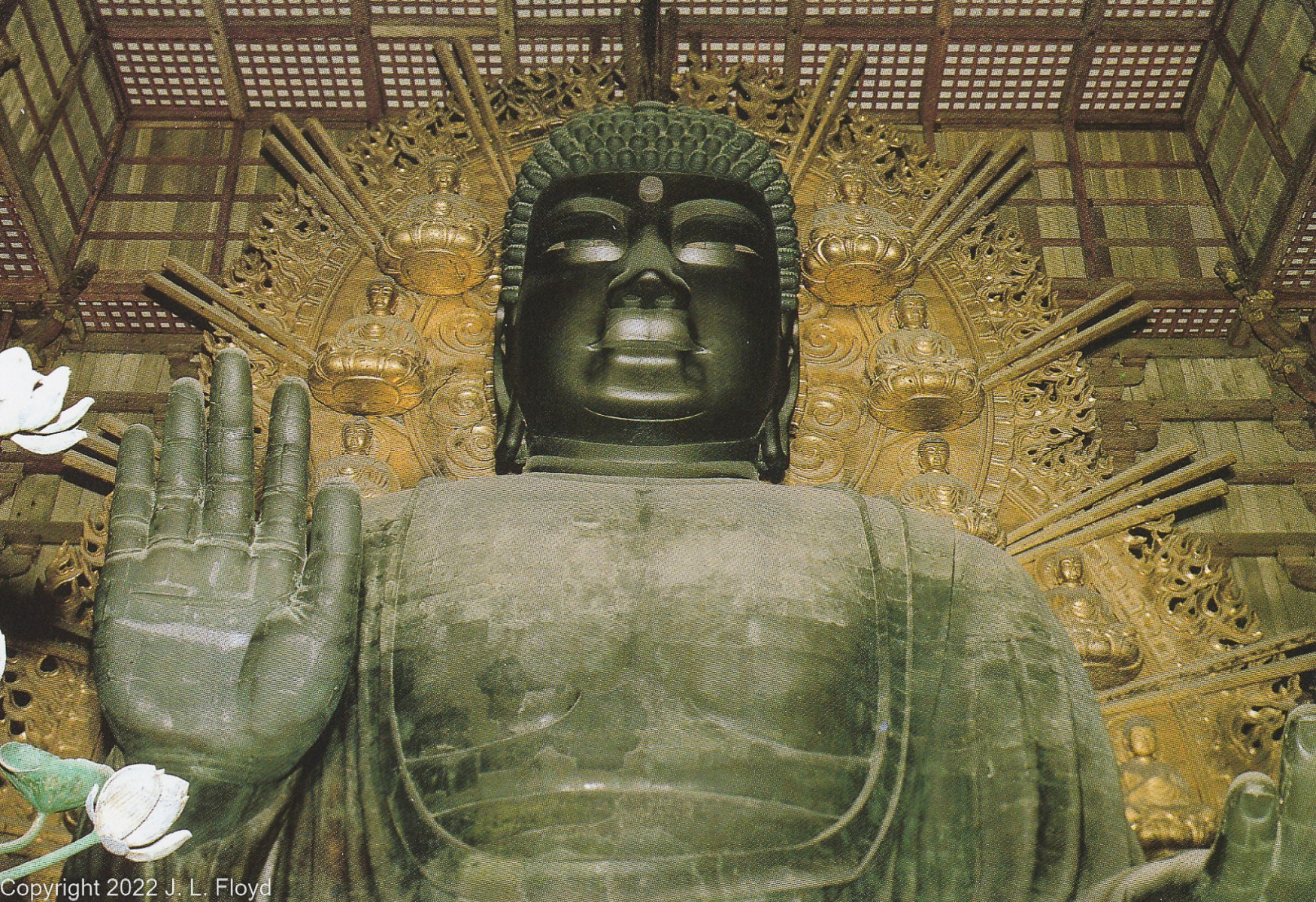
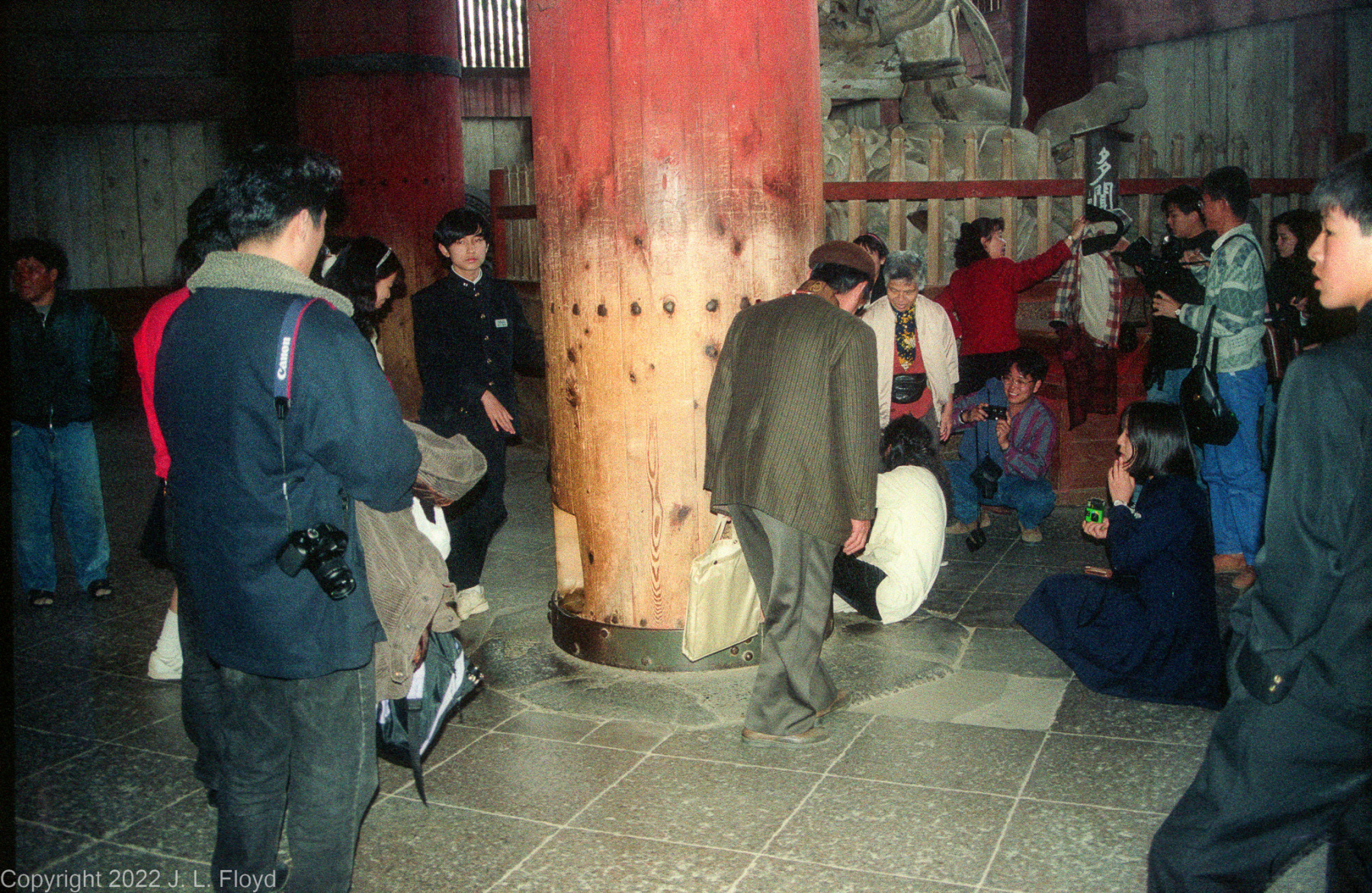
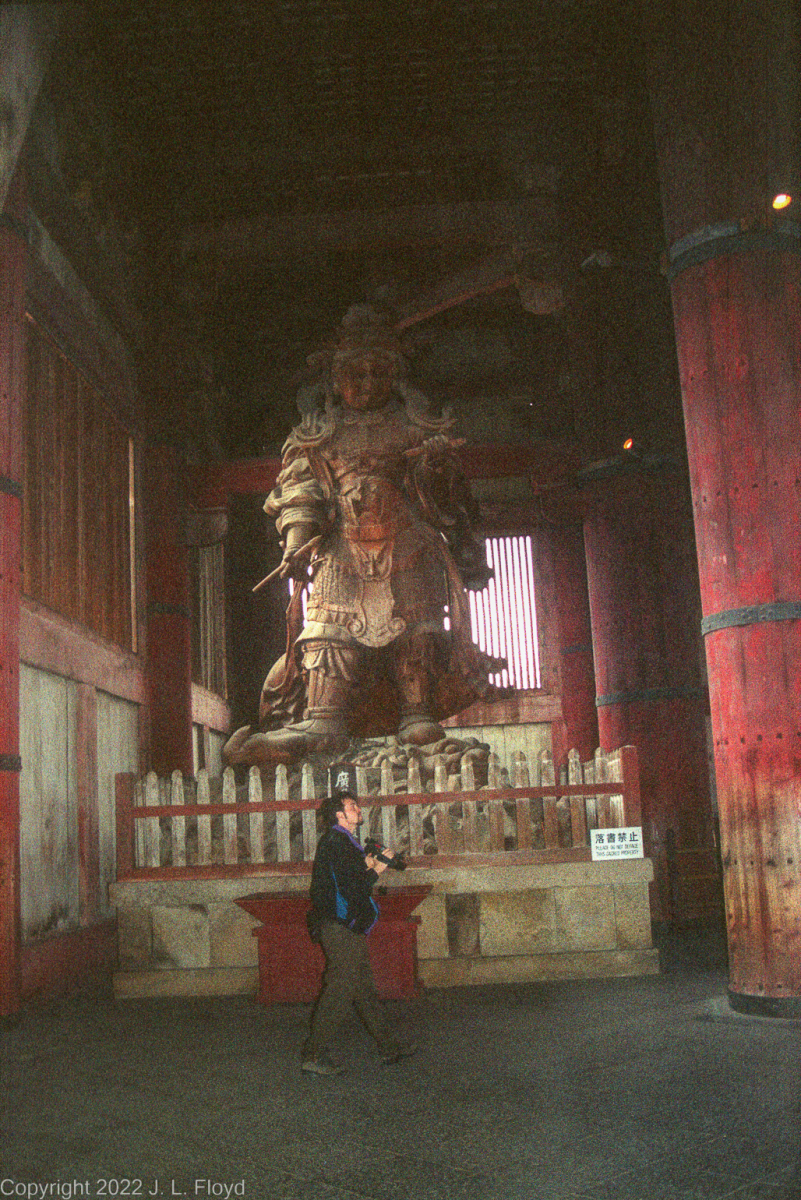
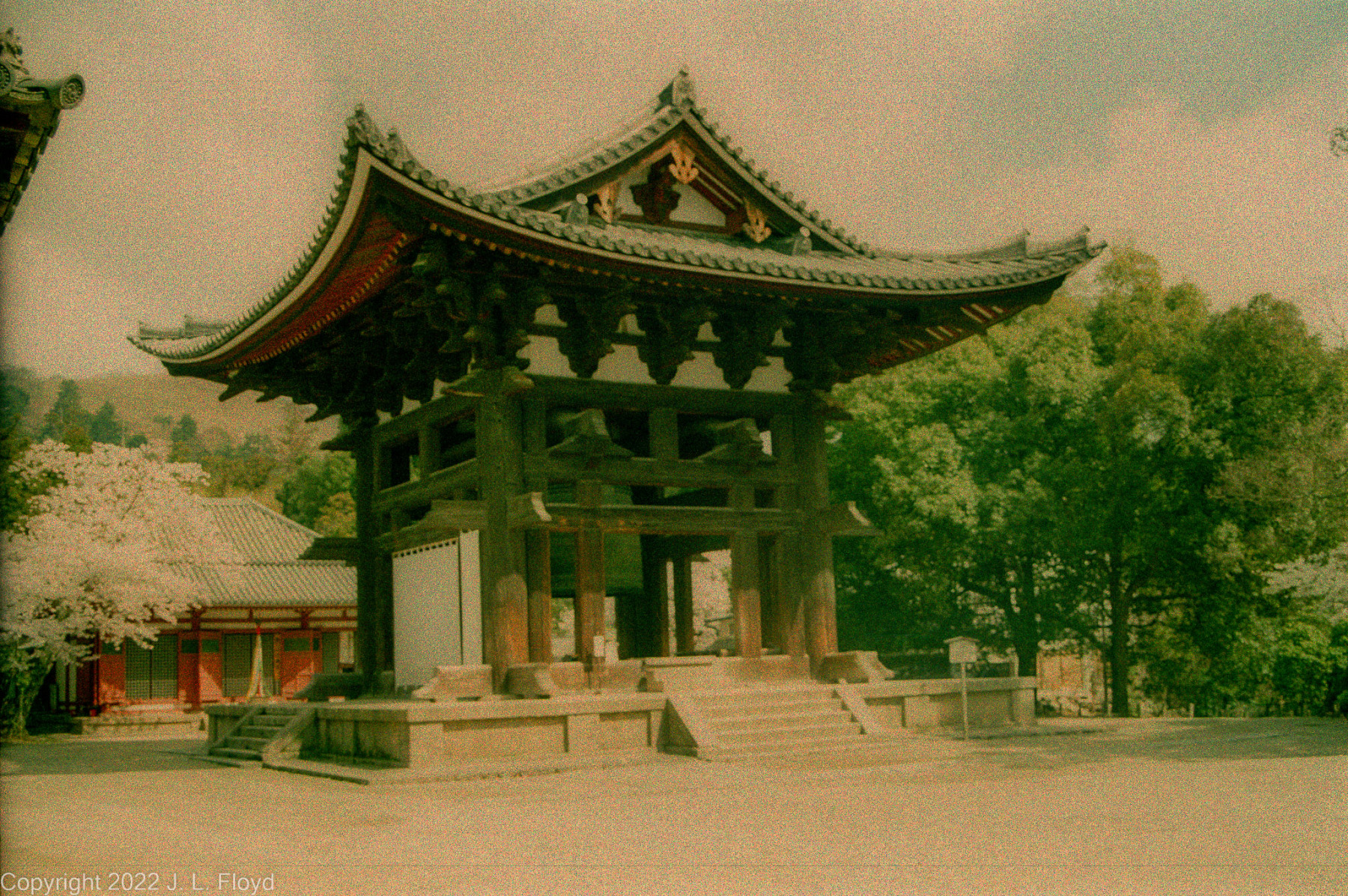
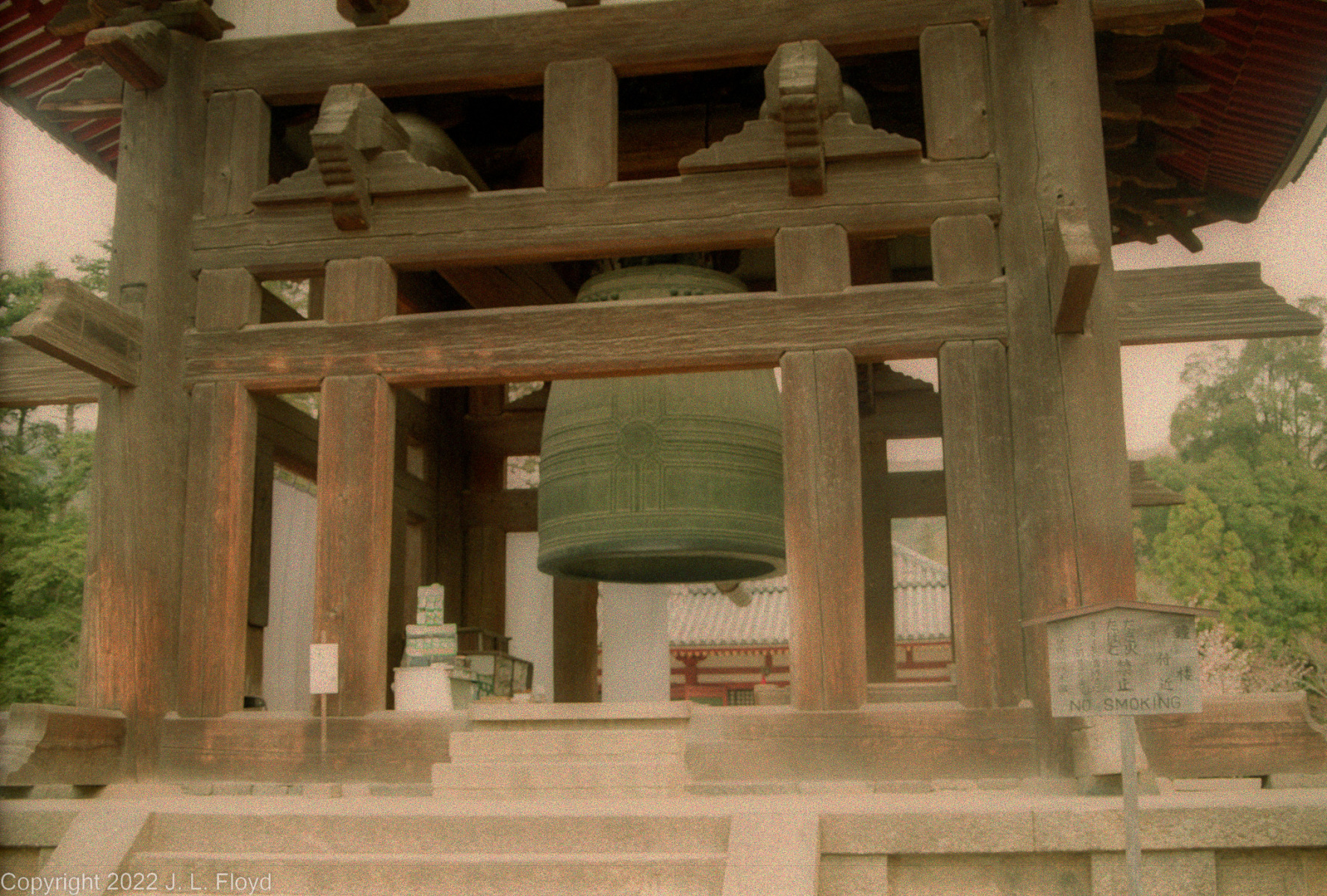
I visited several Buddhist temples, of which the most prominent was Todai-ji, founded in 738. It contains the world’s largest bronze statue of the Buddha, known as Daibutsu in Japan.

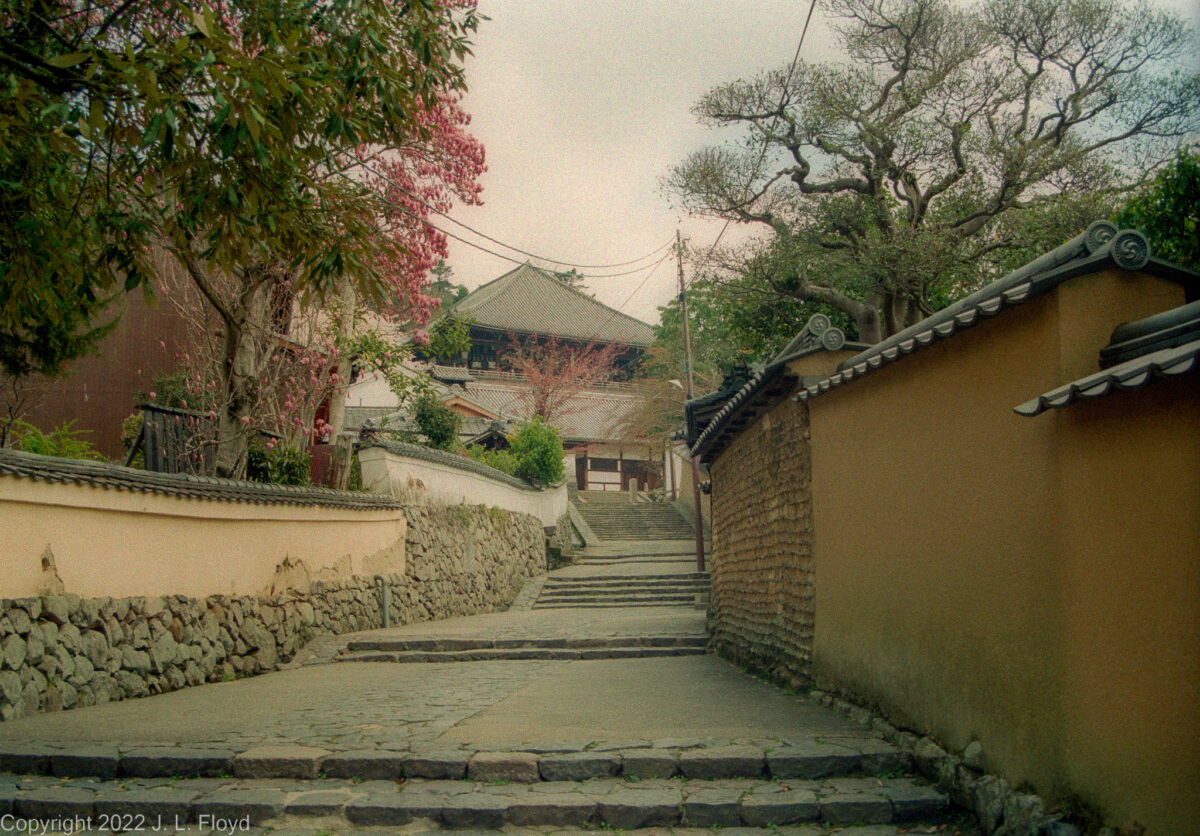
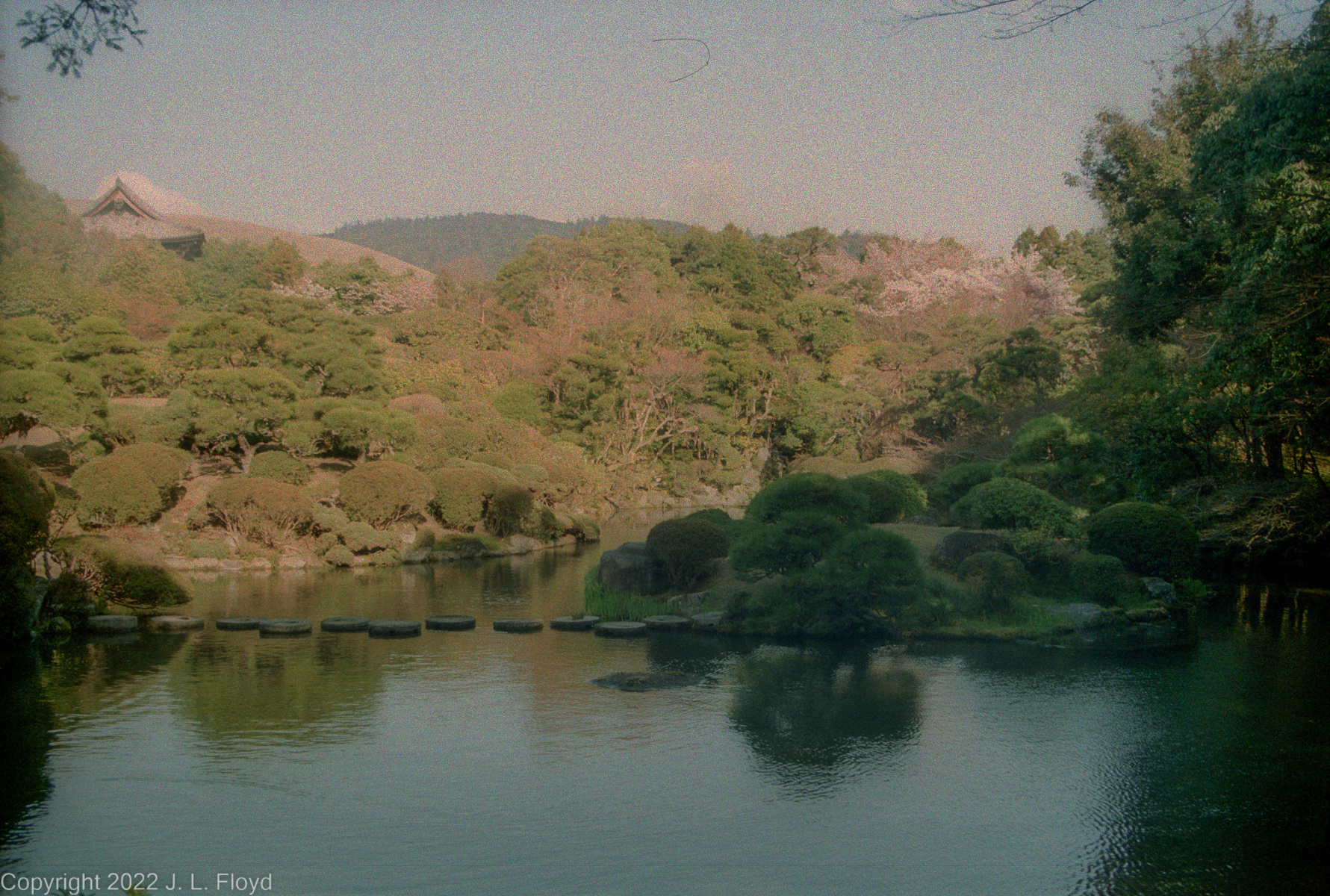
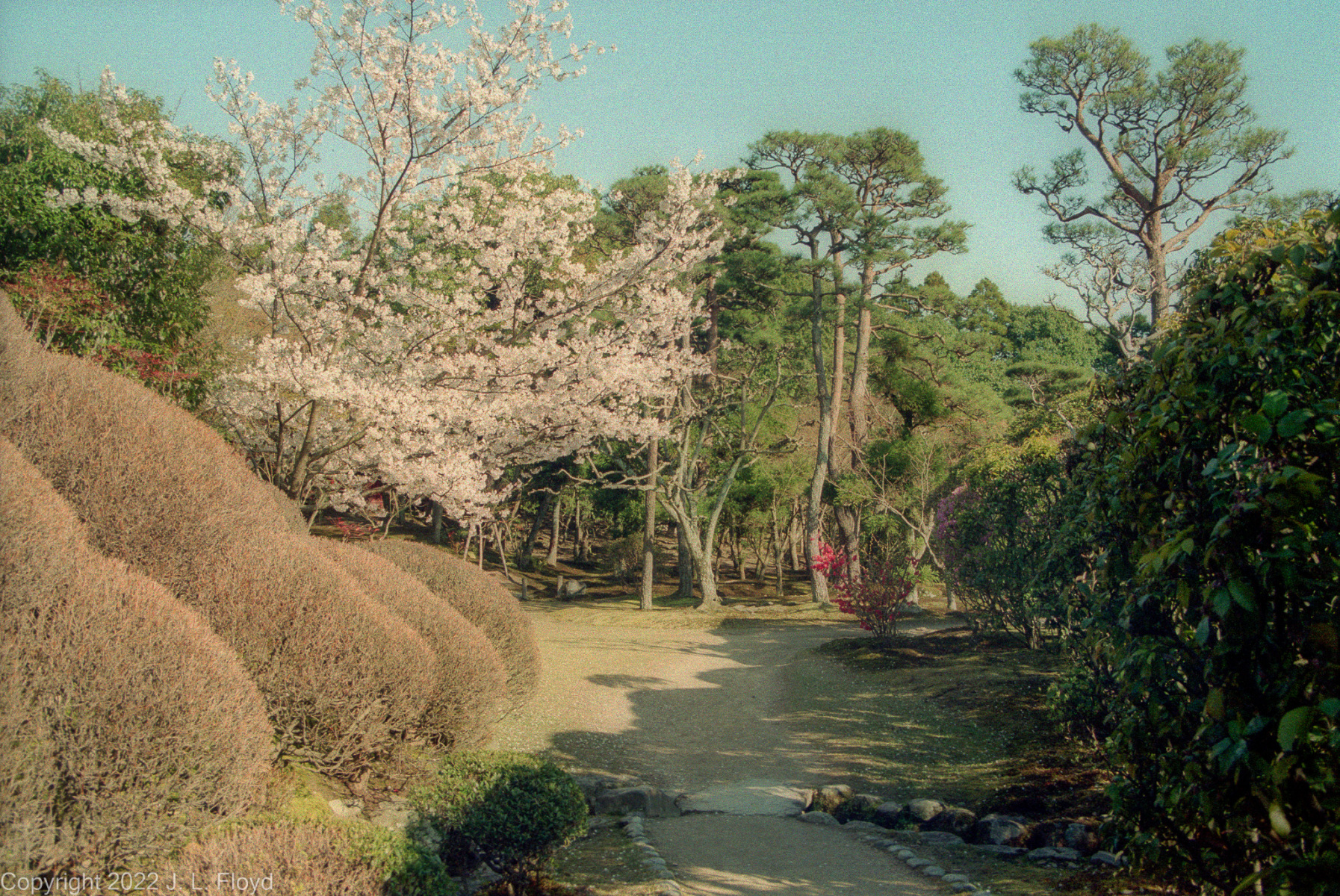
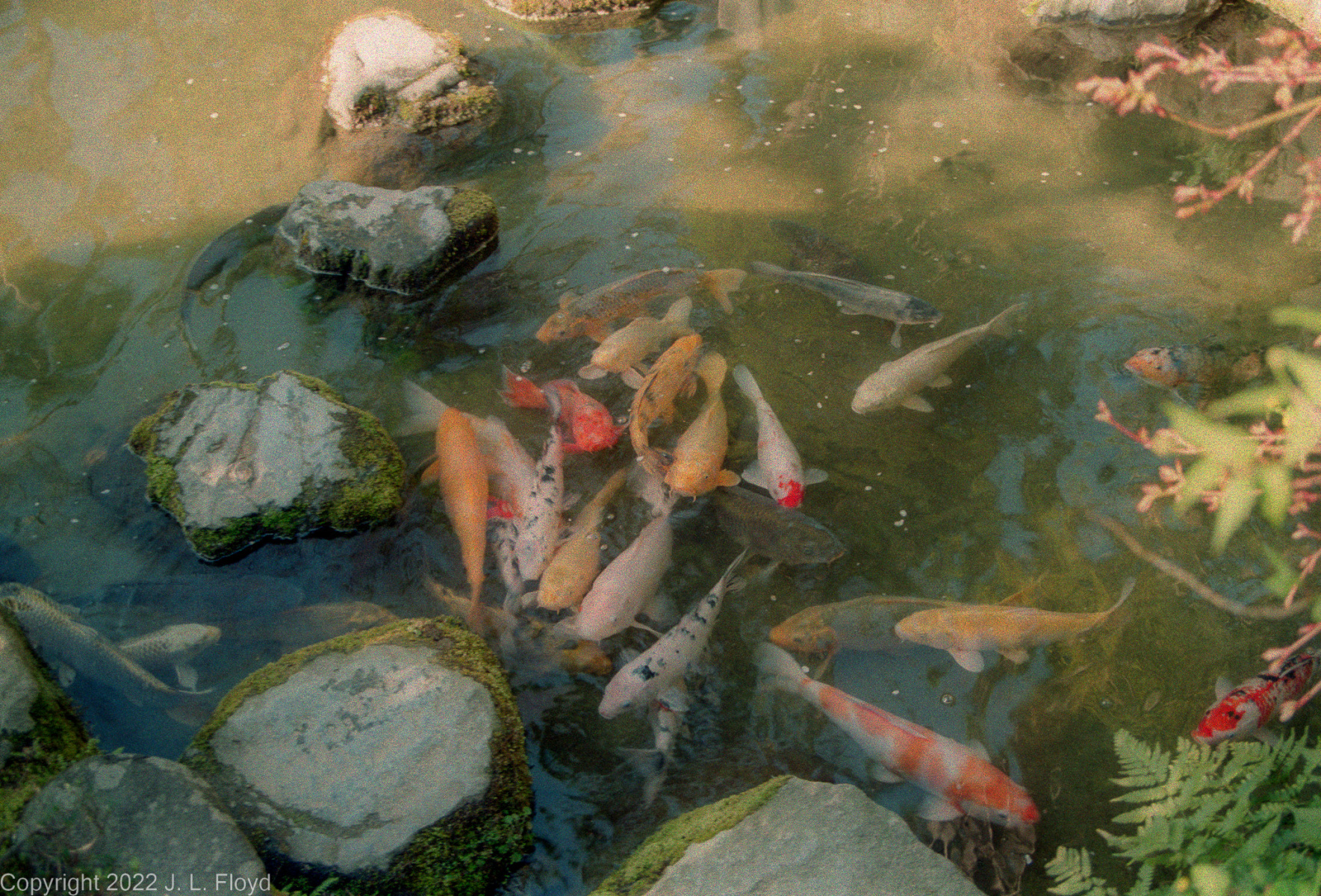
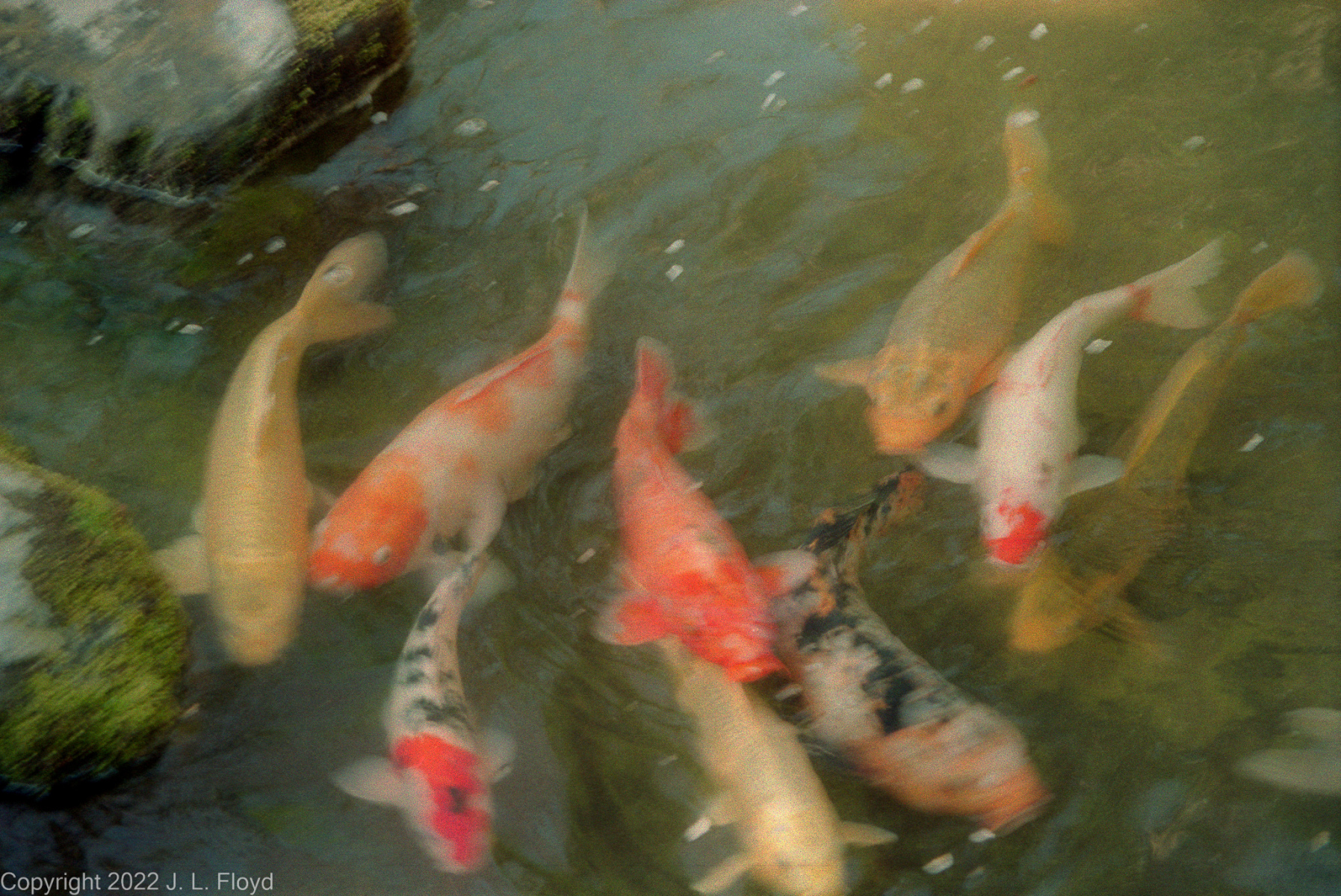
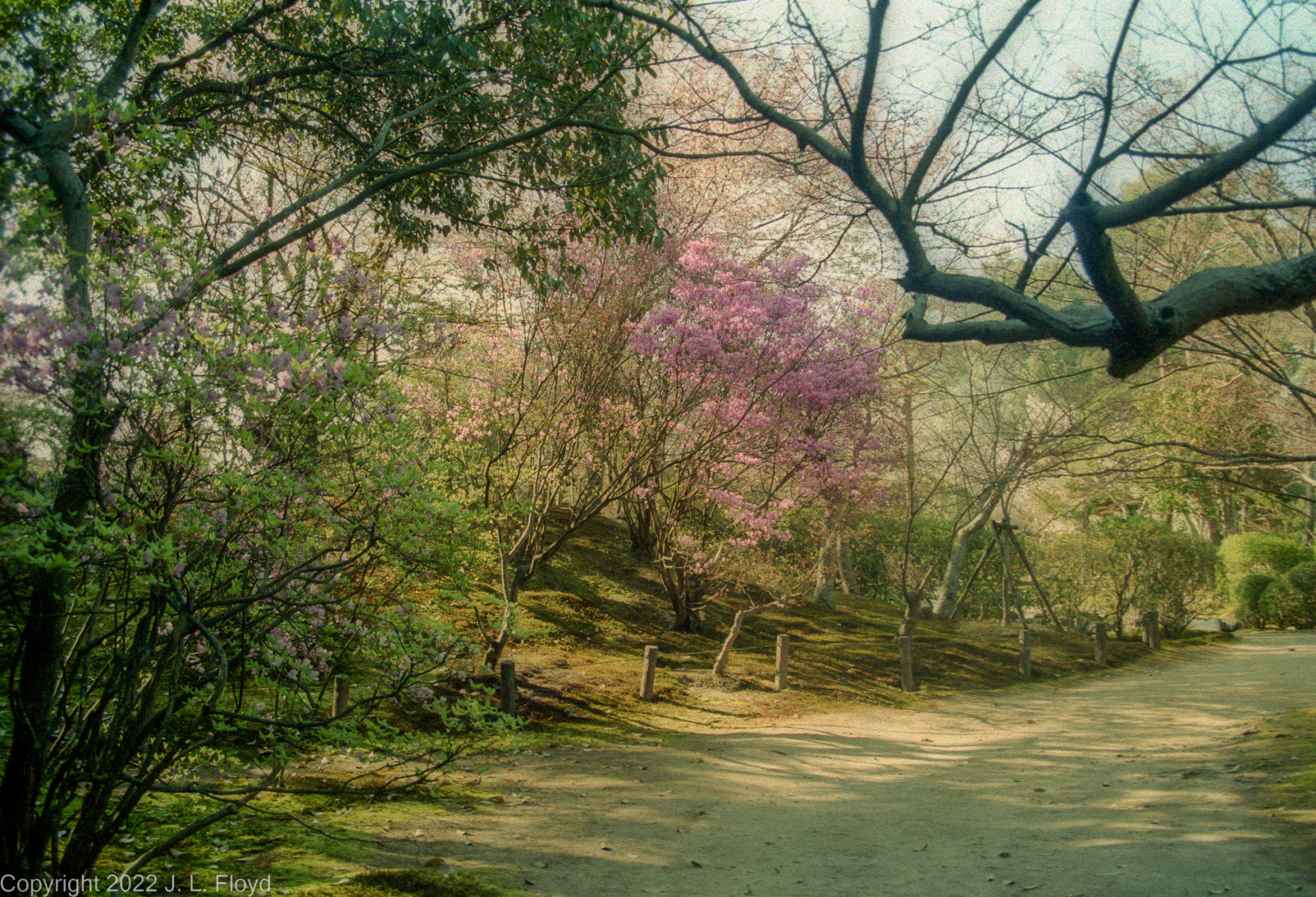
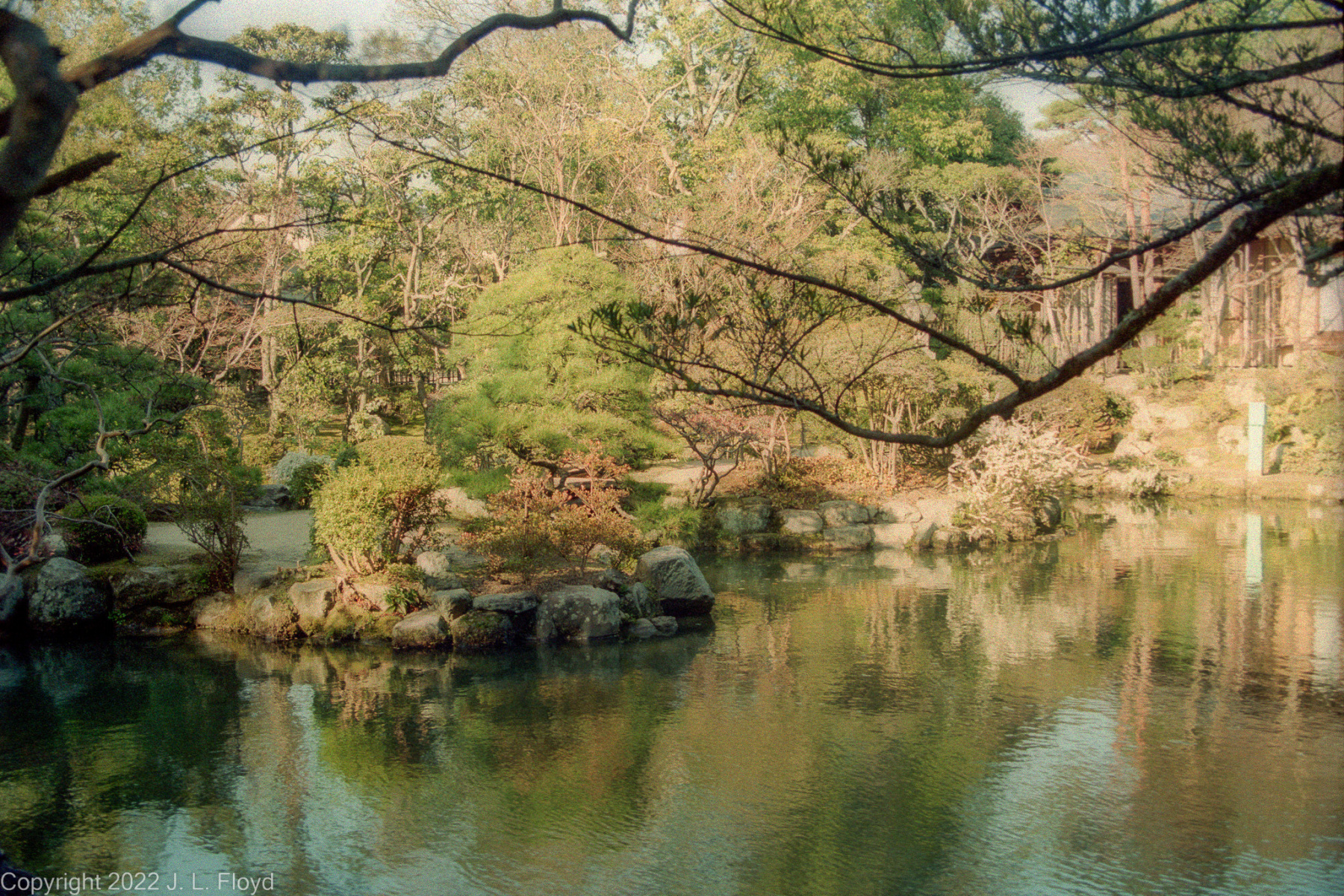
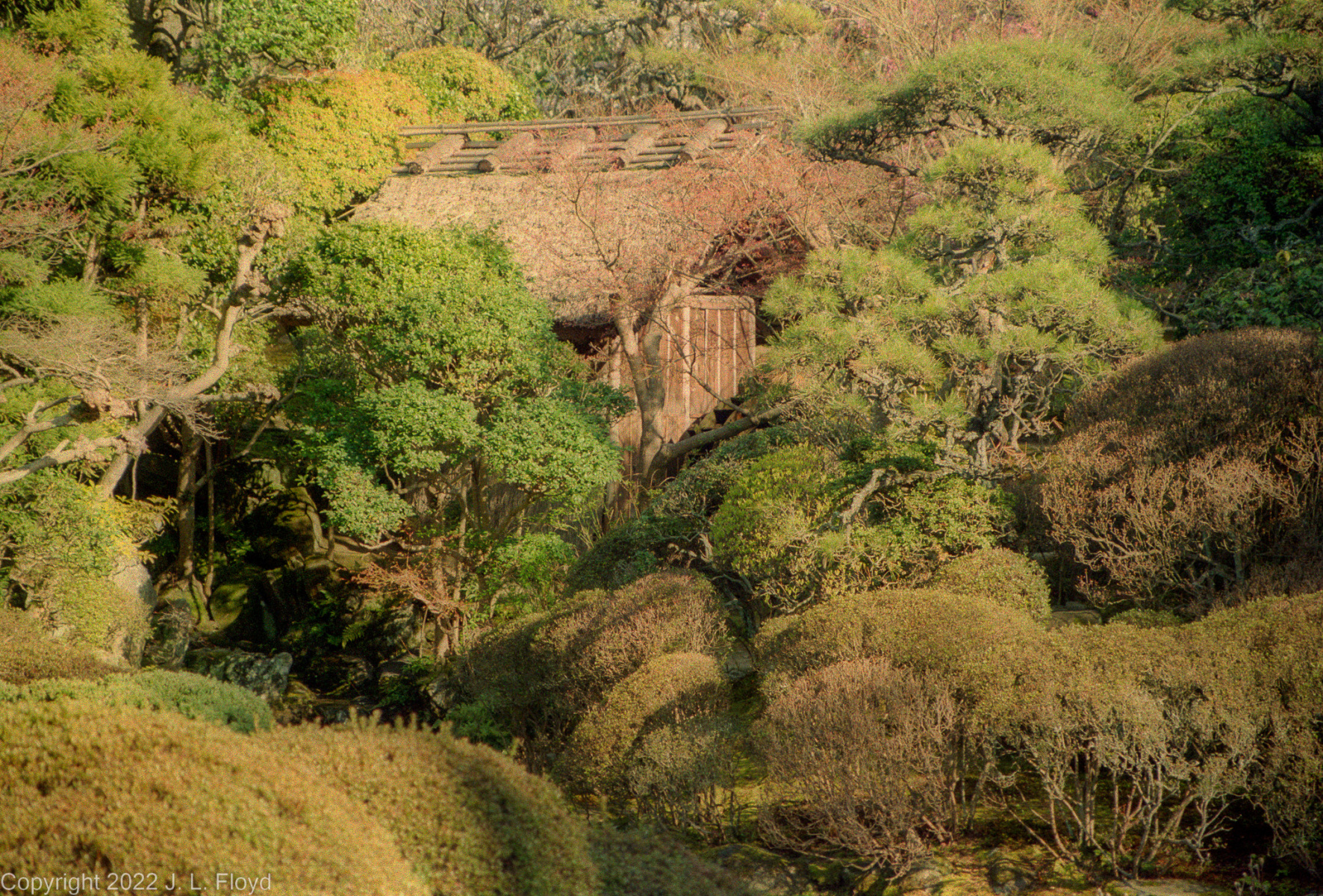
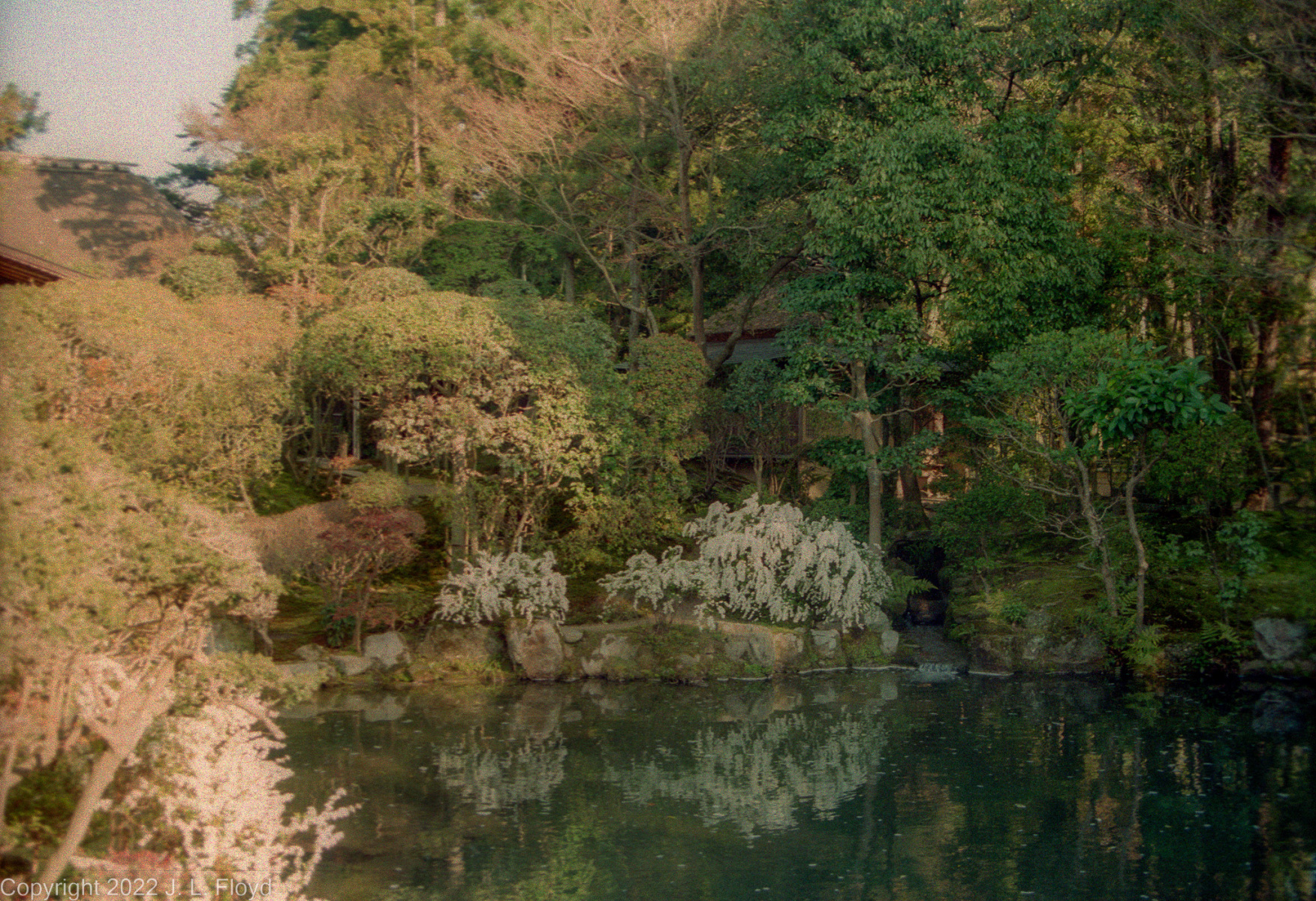
Next to Todai-ji is the Isui-en Garden, which is noted for its use of “borrowed scenery”, meaning that the architects incorporated external elements, specifically the Nandaimon or South Gate of Todai-ji Temple as well as some of the mountains around Nara, when framing the landscape of the garden. It is a vast garden, occupying 13,500 square meters or 145,000 square feet, and is actually a combination of two separate gardens, the smaller dating from the 17th century and the other from 1899. Both were created by wealthy merchants and were bought and combined by a third businessman in 1939. The garden contains large ponds, fed by a nearby river, and a couple of pleasant tea-houses. I found this garden – among many others in Japan – immensely pleasing and soothing. I never cease to be amazed by the Japanese sense of esthetics, and nowhere is it expressed more eloquently than in their gardens.

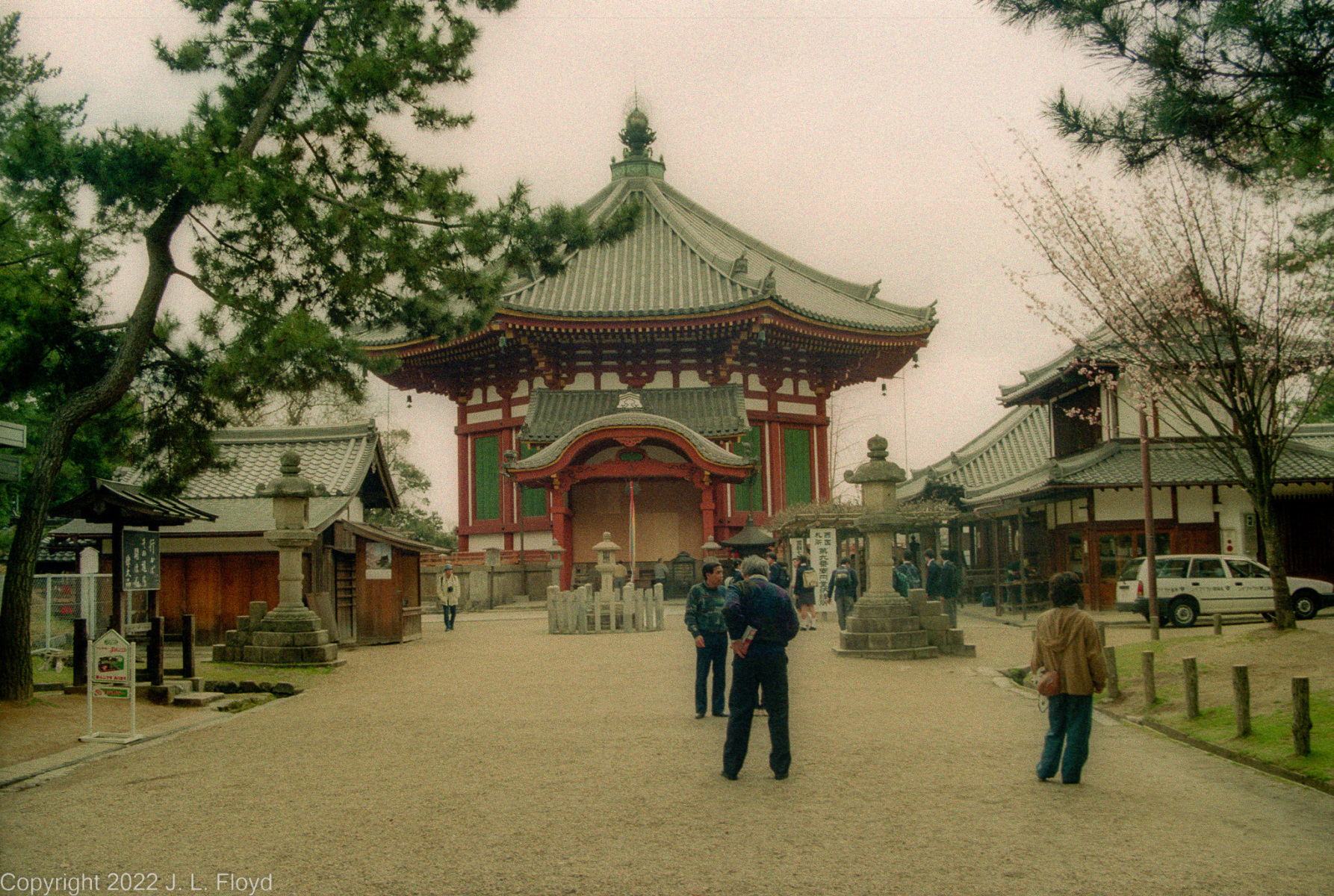
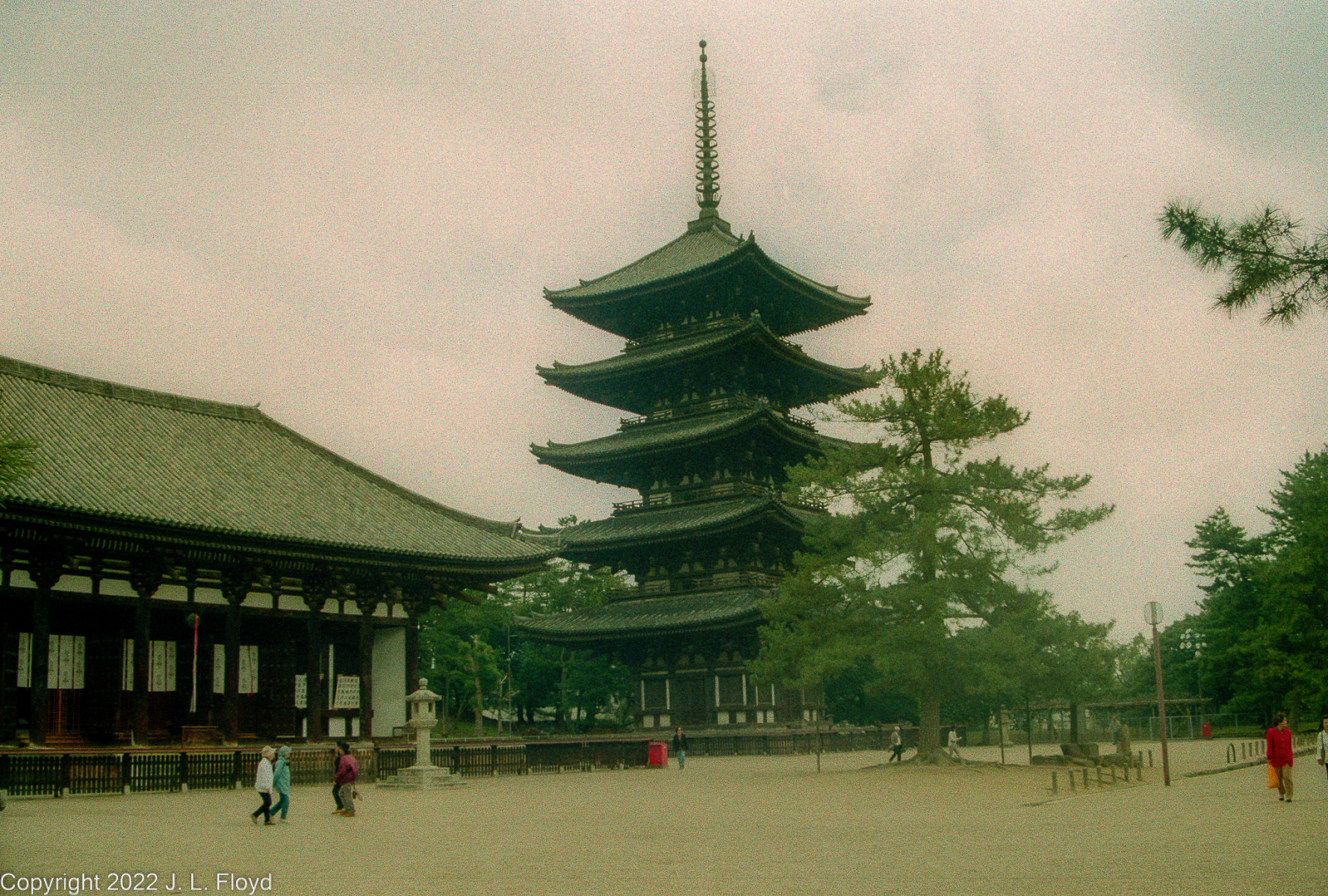
Another great temple of Nara is Kofuku-ji, located not far from Todai-ji and Isuien Garden. I should emphasize that there are many more wonderful temples and shrines in Nara than these, and I regret that I didn’t have time to explore them all.